Tag Archives: Robert Klane

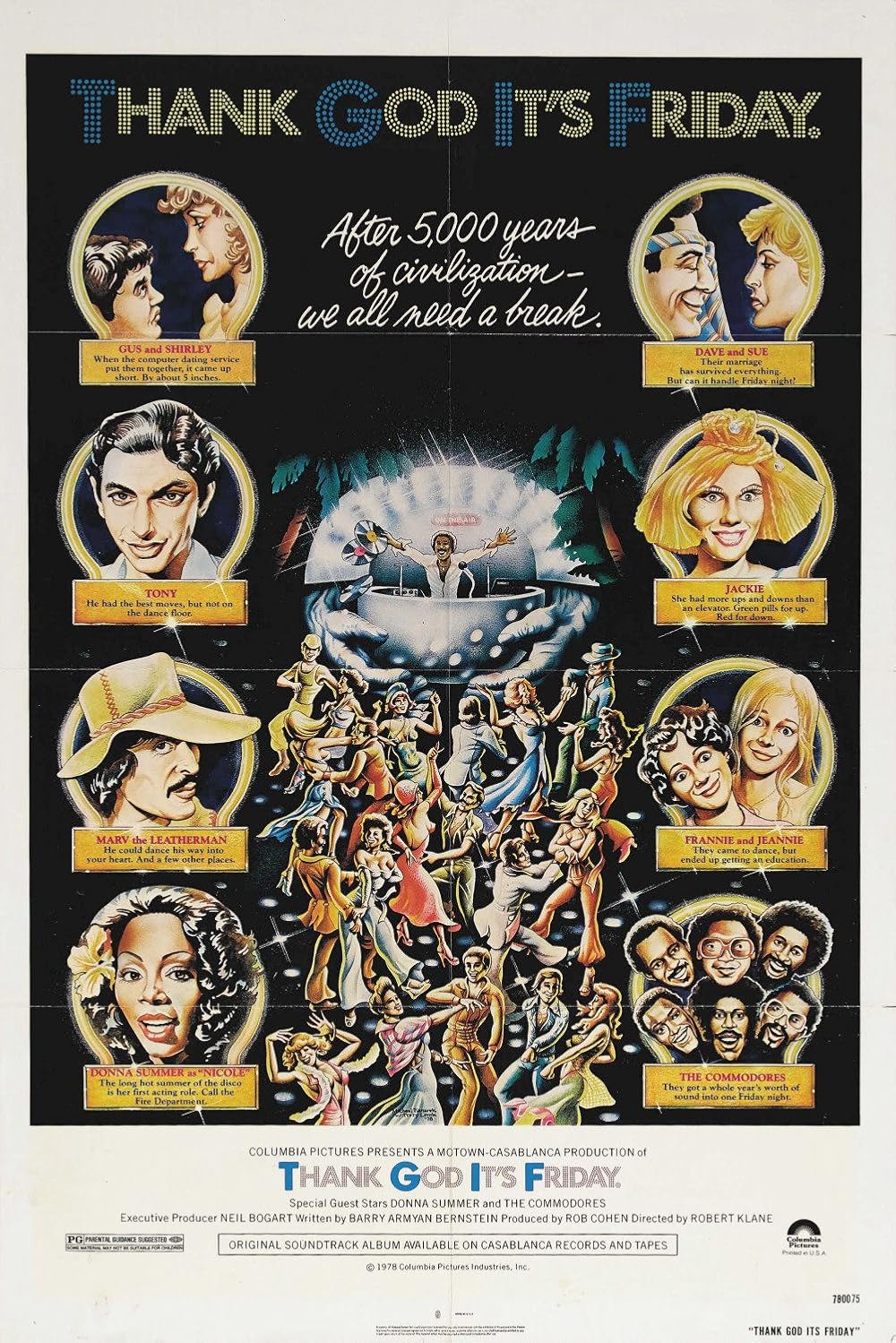
Thank God It’s Friday (1978)

By Richard Winters

My Rating: 1 out of 10

4-Word Review: A night at discotheque.

This film was requested for review and was a part of the disco craze that permeated pop culture during the mid to late 70’s. It was released just 6 months after Saturday Night Fever but was nowhere as good and didn’t have the same staying power. The plot revolves around several people who decide to spend their Friday evening at a local L.A. discotheque and the various conversations and ‘adventures’ that they have while inside the place. The main cast is Donna Summer who plays a character named Nicole who tries to ger her ‘big break’ by singing one of her songs while everyone is on the dance floor, but the club DJ (Ray Vitte) goes to great lengths to prevent that. There’s also two underage friends (Valerie Landsburg, Terri Nunn) who sneak into the club in order to win a dance contest, and a married couple (Mark Lonow, Andrea Howard) who go to the club on a lark, but then have their marriage challenged when club owner Tony (Jeff Goldblum) begins aggressively hitting-on the wife while the husband gets side-tracked by a ditzy patron named Jackie (Mayra Small) who gives him drugs that makes him behave erratically.

The biggest shock was that this lame thing was directed by Robert Klane, who burst onto the scene in the early 70’s with the dark comedy classic Where’s Poppa? that was both edgy and inventive and based on his book of the same name, but this has none of that. The dialogue and situations are quite stale, and it was like he was just selling out his career, which did eventually recover when he wrote the script for Weekend at Bernie’sbut this is definitely a black mark.  What’s even more perplexing is that the screenwriter for this, Armyan Bernstein, was able to sell six more screenplays after this one, even though this one displays no writing talent at all and his subsequent scripts that were made in the 80’s all bombed at the box office, but I guess this kind of shows how it’s more who you know in Hollywood that proves who gets the breaks and who doesn’t.

The concept of having an entire movie take place inside one location has a certain appeal, but Klane captures the proceedings in a flat sort of way. It was shot inside an actual club, that has since been torn down and was described by those who went there as a ‘labyrinth’, but I didn’t get that feeling while watching it. Most of it is shot in and around the dance floor, which quickly becomes boring visually. The various ‘dramedies’ of the characters fail to elicit any interest. To some degree you could say this was a realistic look at the club scene as I remember going out to dance clubs in the 90’s in Chicago hoping to pick-up some action, or meet ‘cool new friends’ but coming away disappointed and feeling like it was all overrated and on that level that’s exactly what you get here. The characters come in anticipating way more excitement than they actually receive, but the film still needs to convey this in some sort of compelling way, and it doesn’t.

A good example of this is the married couple, which has some potential, but the characters don’t learn anything, or change. In a good movie/script the main people are supposed to go through a character arch and end up in a different spot, either in an emotional, or intellectual way, or in their situation in life, then they were at the beginning, but the couple leaves the place returning to their ‘happy married’ mindset. However, since the wife was so quick to consider the advances from the club owner and the husband with the young punk girl, that it should’ve rattled them and they should’ve left seriously contemplating whether their marriage was really all that strong.

The same goes for Donna Summer’s character. She spends the entire evening trying to aggressively get her chance to sing. It might’ve worked better had the movie had a parent, or friend being the one that was pushy while Summer stood shyly back and thus made her seem a little less narcissistic. Either way when she finally sing and the crowd loves it, it doesn’t mean much because it wasn’t in front of a record producer, so therefore there was no contract and thus just a fleeting moment in time.

I did like Goldblum and it’s easy to see why out of the entire cast he was the one that had a long a distinguished career though it’s a little confusing why he hits so hard on another man’s wife when he has a plethora of hot women that he has slept with, or willing to sleep with him, so why get so fixated on the one? Debra Winger is an absolute delight too mainly because of her exquisite beauty, which is at the absolute peak here and makes watching the movie more than worth it just for that. In fact, that’s the only reason why I decided to give this one point.

Out of the entire runtime there’s only four mildly diverting moments that stands out. The first is when the lady holding the torch in the Columbia Pictures symbol breaks out into a disco dance. The second, in a scene that the producers strongly considered cutting, is when a guy asks if he can but into a dance that Debra Winger is having with another guy, but instead of continuing the dance with her he goes on with the other guy. The third is a nice dance routine that Marv Gomez has on the rooftops of some parked cars while the fourth consists of Goldblum’s car, a prized possession of his, that falls completely apart.

My Rating: 1 out of 10

Released: May 19, 1978

Runtime: 1 Hour 29 Minutes

Rated PG

Director: Robert Klane

Studio: Columbia Pictures

Available: DVD, Blu-ray, Amazon Video, Tubi, YouTube
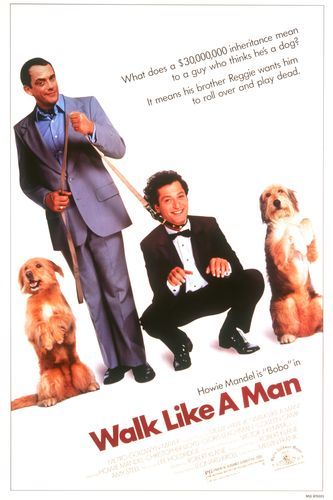


Walk Like a Man (1987)

walk

By Richard Winters

My Rating: 1 out of 10

4-Word Review: Raised as a wolf.

Henry (Christopher Lloyd) travels with his family to Alaska in the search of gold. His oldest son Reggie though doesn’t like the cold and so after finding his fortune Henry tells his family they’re leaving via a dog sled. Reggie is told that he’s now old enough to push the sled, which he doesn’t like, so when his father isn’t looking he hops onto the sled where his mother (Cloris Leachman) and younger 2-year-old brother, nicknamed Bobo, are. Bobo ends up getting pushed off the sled and lost in the icy wilderness where, despite the arduous search by his father who perishes while looking for him, is presumed dead. 28 years later a biologist named Penny (Amy Steel) comes across a man (Howie Mandel) with a pack of wolves. He gets identified through a tattoo as being the lost son and ‘returned’ to a now grown Reggie (Christopher Lloyd), his mother and Reggie’s wife Rhonda (Colleen Camp). Reggie has no interest in caring for his brother, who behaves like he’s a wolf, but because he’s squandered his father’s fortune and because Bobo was given a $30 million inheritance, Reggie agrees to let Penny teach him how to write, so he can ultimately sign over his money to Reggie.

The script was written by Robert Klane who burst onto the scene during the late 60’s with both ‘The Horse is Dead’, a highly irreverent, politically incorrect novel, but still quite funny, and ‘Where’s Poppa’, about a man trying to kill his senile mother. The latter got made into a movie, which was directed by Carl Reiner with the script written by Klane, that’s considered a landmark in dark comedy. So, how someone goes from doing stuff that’s highly inventive to this empty-headed, bare bones ‘comedy’ is hard to fathom, but the results are ‘blah’. The plot is threadbare and hinges on a lot of slapstick scenarios that prove to be predictable and overly-extended. Instead of picking up the pace, as a good comedic scene should, it saps the energy right out making the movie, as a whole, strained and boring.

The problems start out right away during the Alaska scene, which was clearly shot on a soundstage using fake snow, where the young Bobo falls off the sled, which if you think about it is quite horrifying as there is simply no way a toddler could survive in that climate. There’s no chance the wolves would ‘raise him’ either and instead would just eat him. Also, when he gets found by Penny he’s seen running around wearing a loincloth, but if he thinks he’s a wolf he shouldn’t be wearing anything at all just like the other wolves. Where did he find this cloth to wear, or did the wolves make that when they took up parenting him?

The running joke of Reggie’s neighbor, played by George DiCenzo, getting upset because Bobo keeps trampling through his freshly paved cement driveway, is overdone. The first time it happens it’s good for maybe a slight chuckle, but then several months later it goes back to Bobo doing it again, but the neighbor should’ve learned from the past and built a fence, or partition around the cement to prevent Bobo from going on it, or at the very least not be so shocked when the driveway gets ruined again since its already happened several times already.

The only interesting aspect is seeing Lloyd, who has later described this film as an ’embarrassment’, playing the lead. Usually he does likable, but eccentric character roles, so seeing him actually carry a film, which he does well despite the mess, is interesting and in fact he’s the only thing that gives it any energy and when he’s not in it it all falls flat. Mandel on the other hand isn’t dynamic enough to make his scenes work and his wolf routine is more tiresome than funny.

Leachman steals it as the mother with child-like instincts. She does have a few funny lines and her sitting with Bobo as Penny tries to teach him to read and write and her reactions to things being almost as clueless and fanciful is Bobo’s is definitely amusing. Steel, while quite bland, is good simply because she’s the only normal one in the movie, which when doing wacky comedies it’s nice to at least have one sensible person to help ground things.

I’ll give a point to the segment dealing with a trip to mall and the infamous sneezing scene, which did get me to laugh-out-loud, but everything else clunks badly. The final courtroom battle is especially cringey. Showing clips of ‘funny moments’ during the closing credits, which weren’t all that great when we saw them the first time, and acting like it’s some sort of ‘highlight reel’ just extends the pain further. If anything they should’ve shown bloopers and outtakes of the actor’s messing up their lines, which would’ve been funnier than hearing them speak the actual ones.

My Rating: 1 out of 10

Released: April 17, 1987

Runtime: 1 Hour 26 Minutes

Rated PG

Director: Melvin Frank

Studio: MGM

Available: DVD

Fire Sale (1977)

By Richard Winters

My Rating: 3 out of 10

4-Word Review: Burn down the store.

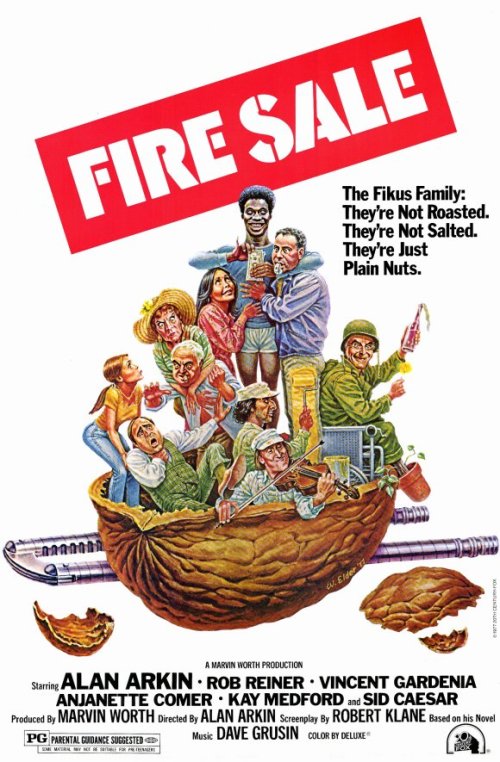
Benny Fikus (Vincent Gardenia) is the elderly owner of a struggling clothing store, who has decided the only way to recoup costs will be to have it burn down and then collecting money on the fire insurance policy. He has convinced his mentally ill brother Sherman (Sid Caeser), who still believes that WWII is happening, that the store is really a front for the Nazi Headquarters and thus motivating Sherman to destroy it. To make his alibi iron-clad Benny takes a trip with his wife Ruth (Kay Medford) to Florida when the arson is expected to occur. During the trip Benny has a heart attack causing his son Russell (Rob Reiner) to take over the business. When he realizes that the place is bankrupt he decides to cash-in the fire insurance policy and use those funds to help regenerate the place. When Benny recovers from his heart attack and realizes what Russell’s done the two, along with Russell’s older brother Ezra (Alan Arkin), go on a mad dash to stop Sherman from setting the fire before it’s too late.

It’s hard to imagine just how badly botched this thing is as I approached it with high expectations. Arkin had already directed the brilliant Little Murders, which is one of the best dark comedies ever made. Robert Klane, who wrote the screenplay and book of the same name that the movie is based on, had also 6 years earlier written the screenplay for Where’s Poppa?, another cult masterpiece. So, with those great films already under the filmmaker’s belts you’d expect good things from this and yet it’s pretty awful right from the beginning.

The main problem is that there’s no running theme. Little Murders centered around the isolating effects of urbanization and Where’s Poppa? dealt with the harsh realities of caring for elderly parents.  This film though has no point to it. Lots of sloppy, slapdash comedy as director Arkin and writer Klane seem more concerned with getting a cheap laugh than telling a story. The sets have no cinematic style making it look better suited for a low-grade sitcom. The score by Dave Grusin, is too generic with overtones more on-par with a cartoon. A good movie should have music that is distinct and matches the tone of the script, which this one doesn’t.

I’ve always considered Reiner the weakest link from the classic ‘All in the Family’ TV-show and while his talents have been much better served as a director this movie was made when producers were still trying to turn him into a star, but the attempt fails. That only thing that he does that could be considered ‘comical’ is the running joke of him going into wheezing fits from his asthma every times he gets stressed-out, which gets overdone. He shares no chemistry with Arkin and they’re too far apart in age to be a believable brotherly pair.

Anjanette Comer, who was married to Klane at the time this was filmed, gets wasted in a thankless bit as Arkin’s beleaguered wife and the scene where she tries to commit suicide by locking herself inside a refrigerator is pointless because it never shows how she got rescued. Caeser as the would-be arsonists relies too heavily on  zany slapstick that is inconsistent in tone with the rest of the film.

Medford, as Arkin’s and Reiner’s put-upon mother, is alright, but the person that impressed me most was Gardenia whose frantic, over-the-top delivery as the exasperated father/business owner is quite good and his energy, even though he is not the star, helps propel the film. He’s even good when he’s in a comatose state and doesn’t move at all. I was particularly amazed during a segment where Reiner and Arkin crawl over him during an altercation and Arkin accidently kicks him in the head, but Gardenia does not flinch and remains very much in character.

My Rating: 3 out of 10

Released: June 9, 1977

Runtime: 1 Hour 25 Minutes

Rated PG

Director: Alan Arkin

Studio: 20th Century Fox

Available: DVD-R (Fox Cinema Archives)

National Lampoon’s European Vacation (1985)

european vacation

By Richard Winters

My Rating: 3 out of 10

4-Word Review: The Griswolds tour Europe.

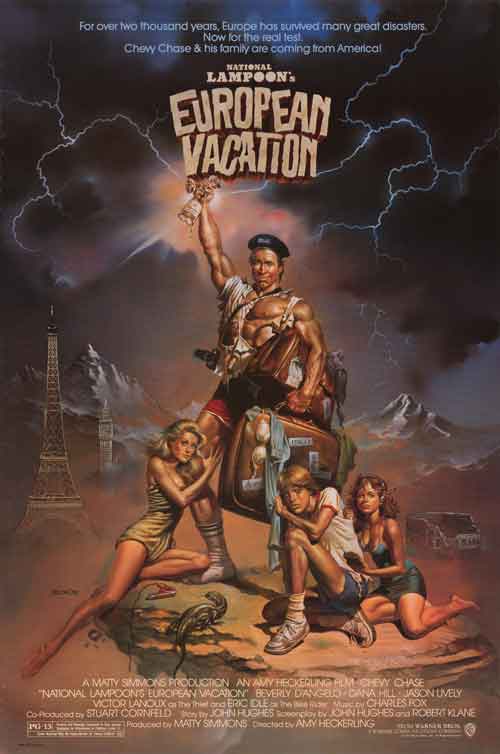
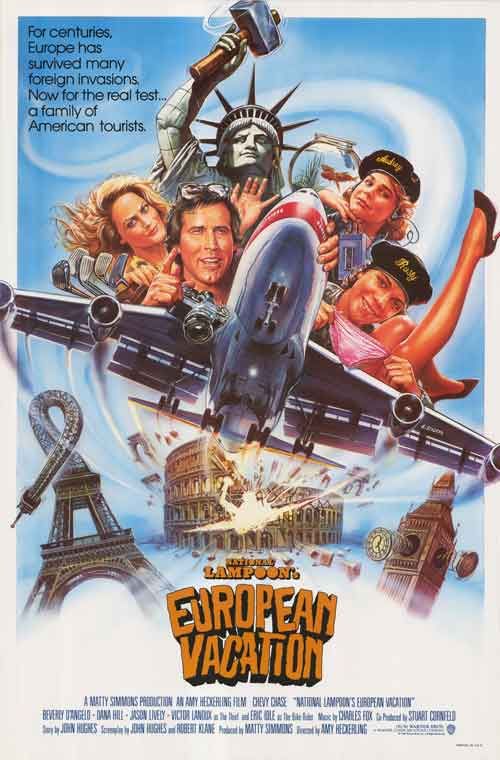
After winning a trip to Europe Clark (Chevy Chase) and his family set out to see the sights. First they go to London and France and then Germany only to end up in Italy where they get involved with a couple of thieves. Ellen (Beverly D’Angelo) also becomes an international porn star when stolen video of her singing naked in the shower gets shown at the local adult theaters.

Although John Hughes is credited as the co-writer he had nothing to do with the script and the majority of blame for this mess goes to Robert Klane. Klane burst onto the scene during the early ‘70’s with the brilliant Where’s Poppa that deserves to go down into the annals of all-time original comedy, but his output since then has proved to be mediocre and the uninspired humor here is no exception. The comedy in the first installment was solely focused on all the amusing elements that can occur when a family takes a trip, but here gags of any kind get thrown in with much of them being crude and pointless.

The performers who play Rusty and Audrey are poor replacements to the ones in the first film. Anthony Michael Hall was asked to reprise his role, but decided to commit to doing Weird Science instead. After he bowed out it was decided to then cast a new person in the Audrey role as well, but the presence of the teens here is not as fun. In the first film they were portrayed as being the sensible ones, which made for an amusing contrast to the more child-like Clark, but here they are straddled with the generic issues of the everyday teen, which isn’t funny or interesting and includes Audrey dealing with an eating disorder and having a nightmare where she stuffs her face full of junk food, which is gross.

There is also a potpourri of recognizable character actors who appear briefly in bit parts and include : Eric Idle, John Astin, Paul Bartel, Robbie Coltrane, Moon Unit Zappa and Victor Lanoux all of whom get wasted to the point where I was surprised they even agreed to appear unless they just really needed the money. The side-story dealing with the Griwolds and some thieves is dumb and looks to have been written in simply to pad the running time.

Chase himself has gone on record to state that he dislikes this film and it’s easy to see why. The on-location shooting is nice, but everything else falls horribly flat. In fact the only funny gag in the whole thing is when Clark gets trapped in a London roundabout and is unable to make a left turn, which forces him to drive in circles for hours, which apparently isn’t such an uncommon occurrence.

european vacation 2

My Rating: 3 out of 10

Released: July 26, 1985

Runtime: 1Hour 35Minutes

Rated PG-13

Director: Amy Heckerling

Studio: Warner Brothers

Available: DVD, Amazon Instant Video, YouTube

Where’s Poppa? (1970)

wheres poppa 2

By Richard Winters

My Rating: 9 out of 10

4-Word Review: Mother has to go.

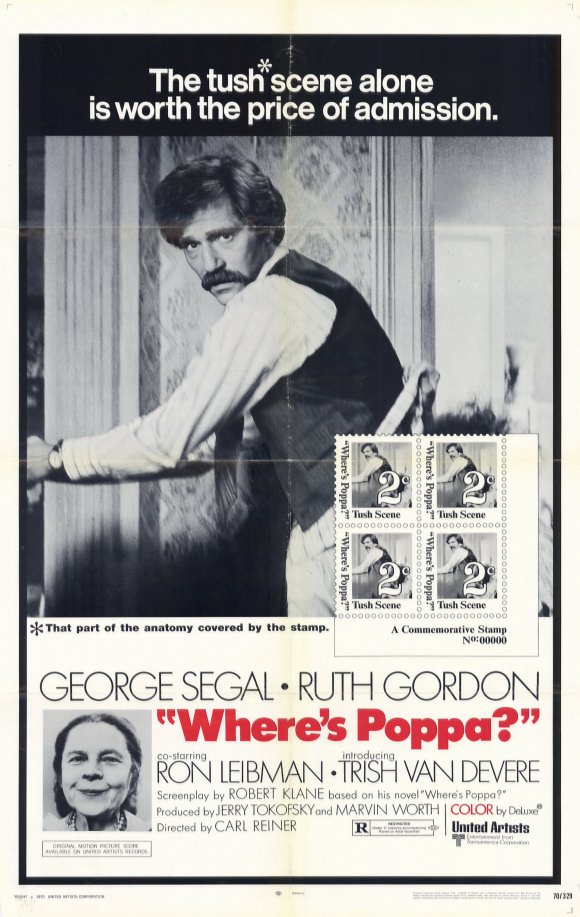
A beleaguered Gordon (George Segal) is a man who must take care of his invalid mother (Ruth Gordon). Despite being a handsome young lawyer he has literally become trapped by this very difficult woman. The majority of the film takes place in a 1940’s styled apartment. It’s gray, dusty bleakness permeates every shot and shows just how lodged Gordon is in his mother’s world. He is a normal man that is slowly being sucked into madness. He is becoming mad because the world he lives in and life in general is driving him to it. The wall between what he really wants to do in life and his obligations have become so thick that going crazy may be the only real answer.

In fact madness maybe pretty much is what this film is really about. It seems to be saying that there is a certain functioning normality to it and at times even a necessity for it. Everyone in this film conveys their own unique form of madness. There’s the overzealous war general (hilariously played by Barnard Hughes) There’s also the henpecked brother/husband Sidney (Ron Leibman) who goes to almost absurd lengths to make sure everyone is happy. Even innocent, conservative Louise (Trish Van Devere) opens into the crazy world when explaining her rather unique honeymoon experience. The film delves so deeply and consistently into the world of the absurd that at times the senile Mother really doesn’t seem so nutty.

This is the film’s genius. It takes everything we have always accepted and turns it inside out. It takes some of life’s most depressing things and then makes it into an inspired and creative masterpiece. A trip to the old folk’s home has never been considered by many to be funny or memorable, yet a trip to Paul Sorvino’s old folk’s home is. In fact it maybe one of the funniest scenes you’ll ever see.

Writer Robert Klane and director Carl Reiner show an amazing grasp of their material, which is crucial for its success. Everything is fluid and consistent in tone. It shows how you can indeed have an offbeat idea, do it in an offbeat way, and still succeed without compromising.

My Rating: 9 out of 10

Released: July 9, 1970

Runtime: 1Hour 22minutes

Rated R

Director: Carl Reiner

Studio: United Artists

Available: VHS, DVD