Tag Archives: Richard Jordan

The Friends of Eddie Coyle (1973)

eddie

By Richard Winters

My Rating: 4 out of 10

4-Word Review: Gunrunner tries avoiding sentencing.

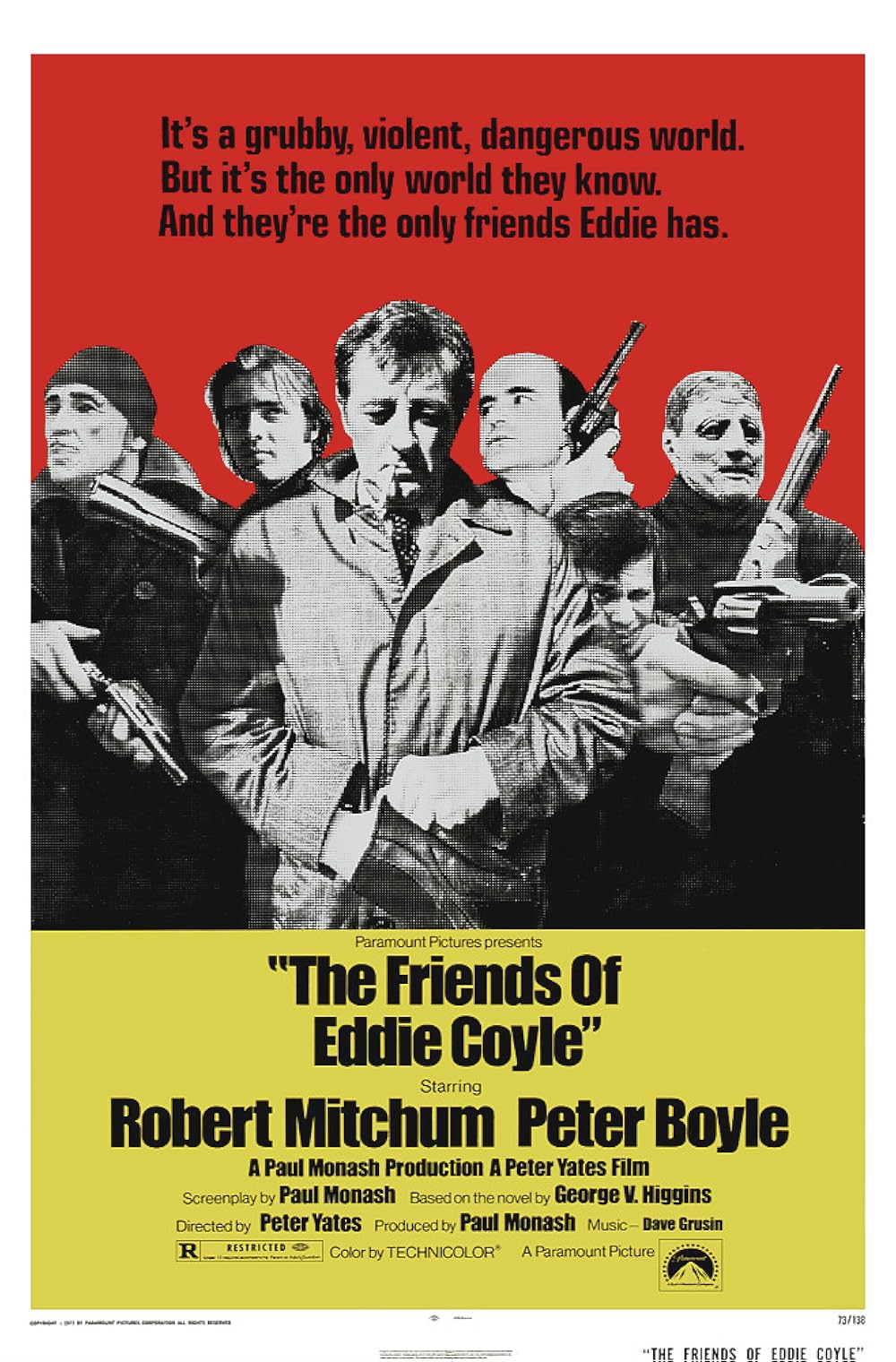
Eddie (Robert Mitchum) is an aging gunrunner living in Massachusetts whose career in crime has taken a toll on his family. He feels his life in and out of jail has caused him to lose connection with his kids and wants to avoid a repeated stint in the slammer. Another sentencing is likely as he’s been charged with hijacking a truck, so he works with special agent Dave Foley (Richard Jordan) to help reduce his pending time, or get it cleared altogether, by agreeing to give him tips of other crooks he’s worked with, of planned crimes that are about to take place including a string of bank robberies that have been occurring throughout the area and being carried out by people Eddie knows. While Eddie is able to give Dave some help it’s not enough and he continues to be squeezed to offer more names and when he does his former associates become convinced, he’ll sell-out on them, so they devise a plan that’ll quiet him once and for all. 

The film is based on the 1972 novel of the same by George V. Higgins that won numerous accolades including by such famous authors as Norman Mailer and Elmore Leonard who called it the ‘best crime novel ever written’. While the film does closely follow the story in the book, and received equally positive reviews, it did very poorly at the box office. A lot of the problem is that while the actions is captured in a gritty and unglamourous way, the idea behind the film was to give a harsher viewpoint of those working in the criminal underworld as The Godfather had been deemed at the time as being too romanticized, the characters are not people to get emotionally vested in and the plot fails to garner any momentum. The crimes get carried out in too much of a methodical way and lack tension. The viewer doesn’t care what happens to these people and thus the movie ends up lacking much of a point.

There were certain things that I did like. The gray and brown late autumn landscape helps accentuate the cold, soulless lives of the characters. The bank robberies are captivating for a while as it focuses on the intricacies of carrying out such daring heists and the planning though I felt seeing one of these was enough and having to go through two of them made it redundant and unnecessary. 

Mitchum gives an excellent performance and certainly appears and acts like someone who’s been beaten down enough by the system that’s he’s willing to do whatever he can to self-preserve. His attempts at a New England accent aren’t bad either. However, I would’ve liked to see some interaction with him and his kids as this is the whole motive for why he turns informant as he wants to spend more time with the family and not go to jail, but we never see any actual communication that he has with them albeit a brief moment with his wife. Had there been more family moments where the viewer could actually feel the character’s quandary on an emotional level than they might’ve been more wrapped-up in seeing him get through it, but by the way it gets done here there’s very little if any of that. He’s also not in it enough and there’s long stretches where we see Steven Keats, a fellow gunrunner, who’s more adept at showing the anxiety and paronia that goes into someone living the fringe lifestyle that he does and thus it would’ve been a more captivating film had it focused on him instead. 

Spoiler Alert!

The ending is the biggest letdown. While it’s the same one as in the book it’s too uneventful to be riveting or impactful. It features Eddie getting invited to a hockey game by Peter Boyle, a fellow hood, and another man who after the game take a drunken Eddie out for the ride where he passes-out and thus gives them the opportunity to conveniently shoot him, which they do. While I did enjoy close-up footage of an actual hockey game as it features players in an era where they didn’t have to wear helmets, I did find the way Eddie falls prey to the men to be too easy. This was a career criminal, so he should’ve in the back of his mind been well aware that his ‘friends’ may start to suspect him of being the snitch that he is and put on a more defensive mind set. I was fully expecting him to be faking passing out and at the last second jumping out of the car and trying to get away, which could’ve led to an exciting climactic foot chase, but stupidly falling into their trap without a peep of a fight isn’t an adequate payoff. He might as well had just shown up to the event with a bullseye tattooed to his forehead that said ‘shoot me’ as it ends-up playing-out in pretty much the same way. 

My Rating: 4 out of 10

Released: June 26, 1973

Runtime: 1 Hour 43 Minutes

Rated R

Director: Peter Yates

Studio: Paramount Pictures

Available: DVD, Blu-ray (The Criterion Collection), Amazon Video
Interiors (1978)

interiors

By Richard Winters

My Rating: 8 out of 10

4-Word Review: Artistic family harbors turmoil.

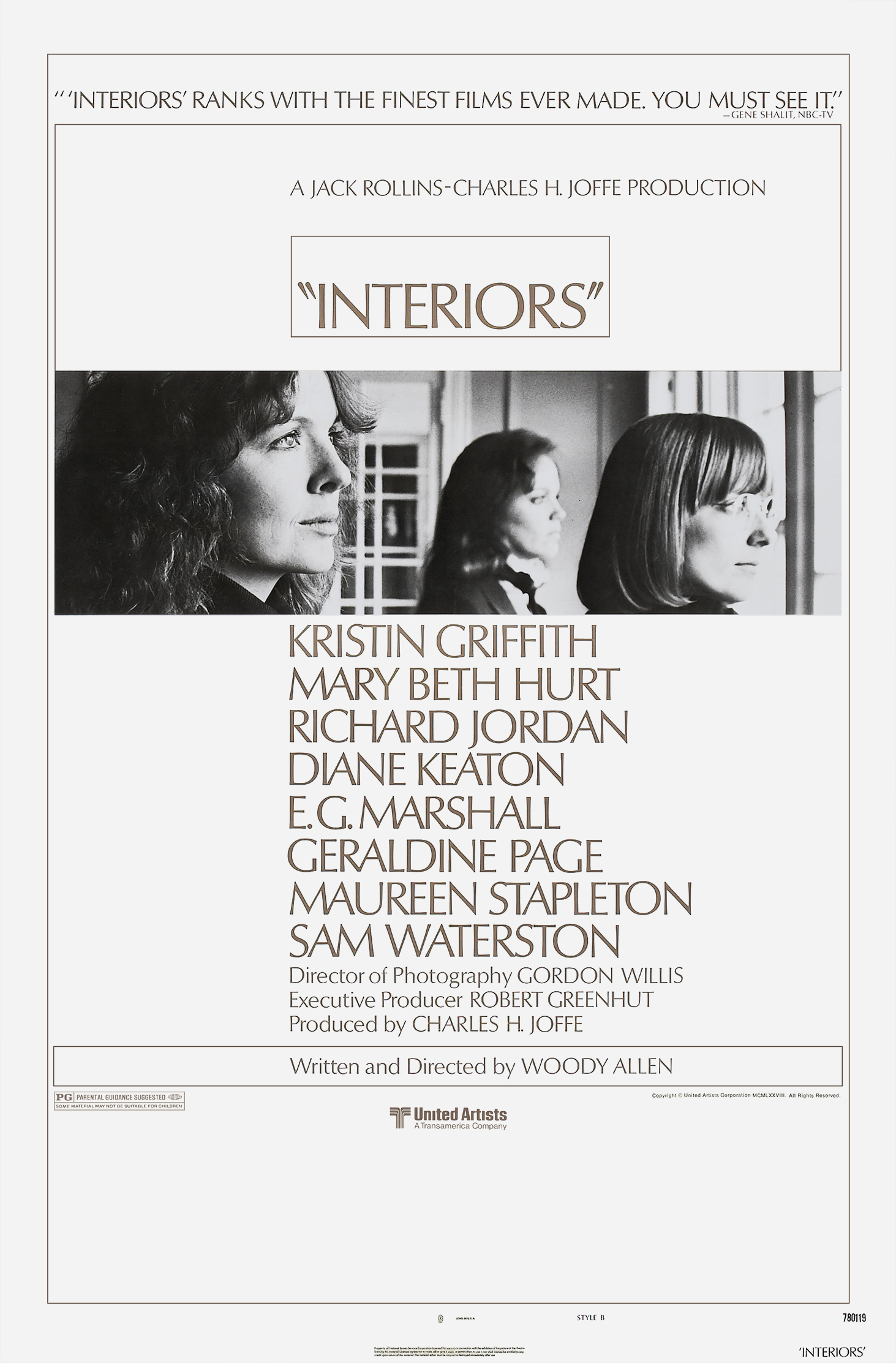
Eve (Geraldine Page) is an interior decorator whose emotions she keeps bottled-up and who also has a controlling and temperamental nature to not only her husband Arthur (E.G. Marshall), but also her three grown daughters: Renata (Diana Keaton), Flyn (Kristin Griffin), and Joey (Mary Beth Hurt). One morning, while at the breakfast table, Arthur announces to not only Eve, but also the two other daughters present, that he wants a separation though he insists it’s not ‘irrevocable’. Eve becomes upset and refuses to face it. While the two do separate she continues to cling to the delusion that they’ll ultimately reunite. When it finally becomes painfully clear that is not going to happen she then attempts suicide. While she’s in the hospital recovering Arthur goes out and meets Pearl (Maureen Stapleton) whom he quickly falls in love with. When he brings her home to meet the family they’re shocked at how he intends to marry her while his former wife is still in the hospital. This then brings out the hidden hostilities that the daughter’s feel towards their parents as well as each other and in Renata’s case the repressed envy that her own husband Frederick (Richard Jordan) feels for her.

This was Woody Allen’s first dramatic film, which was a big deal when it was first released as he’d only done wacky comedies before this and many were curious and apprehensive about him trying something so completely different from his past work. While he’d been trying to get a drama produced for years his investors constantly nixed the idea fearing that because he attracted audiences through his funny stuff that anything with a serious nature would turn-off would-be theatergoers and be a financial flop, but after the monumental success of Annie Hall they finally decidedly to relent and gave Woody the chance to spread his artistic wings.

The result overall is downright impressive. It’s clearly inspired by the films of Ingmar Bergman, his cinematic idol, but in some ways this is even moodier and more poignant than some of his stuff. While his later dramas fell into becoming a cliche of themselves using many of the same elements taken from this one, namely pretentious artistic characters living in New York who suffer from pretentious problems and relationships, here it’s fresh making the issues that they go through seem illuminating versus rehearsed and contrived like in some of his later works.

That’s not to say I didn’t find some problems here. The fact that we have characters, in this case Keaton, talking directly to the screen, apparently in an attempt to show that she’s speaking with a therapist, is a bit of a cop-put as she’s able to convey her deep seated thoughts and feelings verbally without forcing the director to have to show it through her actions and conversations, which may be more difficult to do, but also more rewarding for the viewer. Arthur’s decision to tell Eve that he wanted to leave while sitting a the meal table with the two daughters present seemed rehearsed. Normally when a couple decides to split they do it privately and have it out through a discussion or argument versus a canned speech that Arthur does, which comes-off like he’s orating in front of a group of people.

Woody’s attempts though to show the struggles and challenges people have who pursue creative endeavors I felt were quite well done. In his later dramas I found it annoying how many characters worked as artists because it reality only a very small portion of the populace can make a living that way, but here I was able to forgive it. I liked how we see close-up the challenges of this by the way Renata writes a poem on paper but is constantly scratching out words that she puts down showing the many drafts an author must go through before it eventually might come-out perfectly. The fact that it’s later revealed that her father helps fund her poetic passions made sense too as a poet able to live-off of their writings is about as rare as it gets.

Richard Jordan’s character is the one I found the most fascinating and I was genuinely surprised that while other cast members were nominated for the Oscar he wasn’t even though to me he’s superb.  The way his character broods incessantly about not getting the critical accolades that he expects and how it turns him into a mopping, alcohol drinking mess who snips at his wife’s perceived shortcomings in an immaturely emotional attempt to bring her down to his level was completely on-target composite of the insecure artist. The scene where he tries to rape Flyn, so he can have the pleasure to ‘fuck someone who’s inferior to me’ fit the personality of someone who harbors frustration that they’re able to mask with a veil of civility most of the time but will allow it to come-out when alone in the presence of someone more vulnerable.

The real star though is the cinematography by Gordon Wills, who ironically went on to make his directorial debut in a movie called Windowswhich was the original title for this one. The gray, cold color schemes and shots showing an ice-covered tree branch effectively reflects the icy emotions of the family and the lack of music with long pauses of silence and empty rooms help symbolize how alienated each member is from the other. The most pronounced moment involving the crashing waves of the ocean and the almost dream-like ‘conversation’ that Joey has with her mother is by far the film’s most memorable element and something that will stay with you long after it’s over.

My Rating: 8 out of 10

Released: August 2, 1978

Runtime: 1 Hour 32 Minutes

Rated R

Director: Woody Allen

Studio: United Artists

Available: DVD, Blu-ray, Freevee, Pluto, Amazon Video, YouTube

Logan’s Run (1976)

By Richard Winters

My Rating: 6 out of 10

4-Word Review: Life ends at 30.

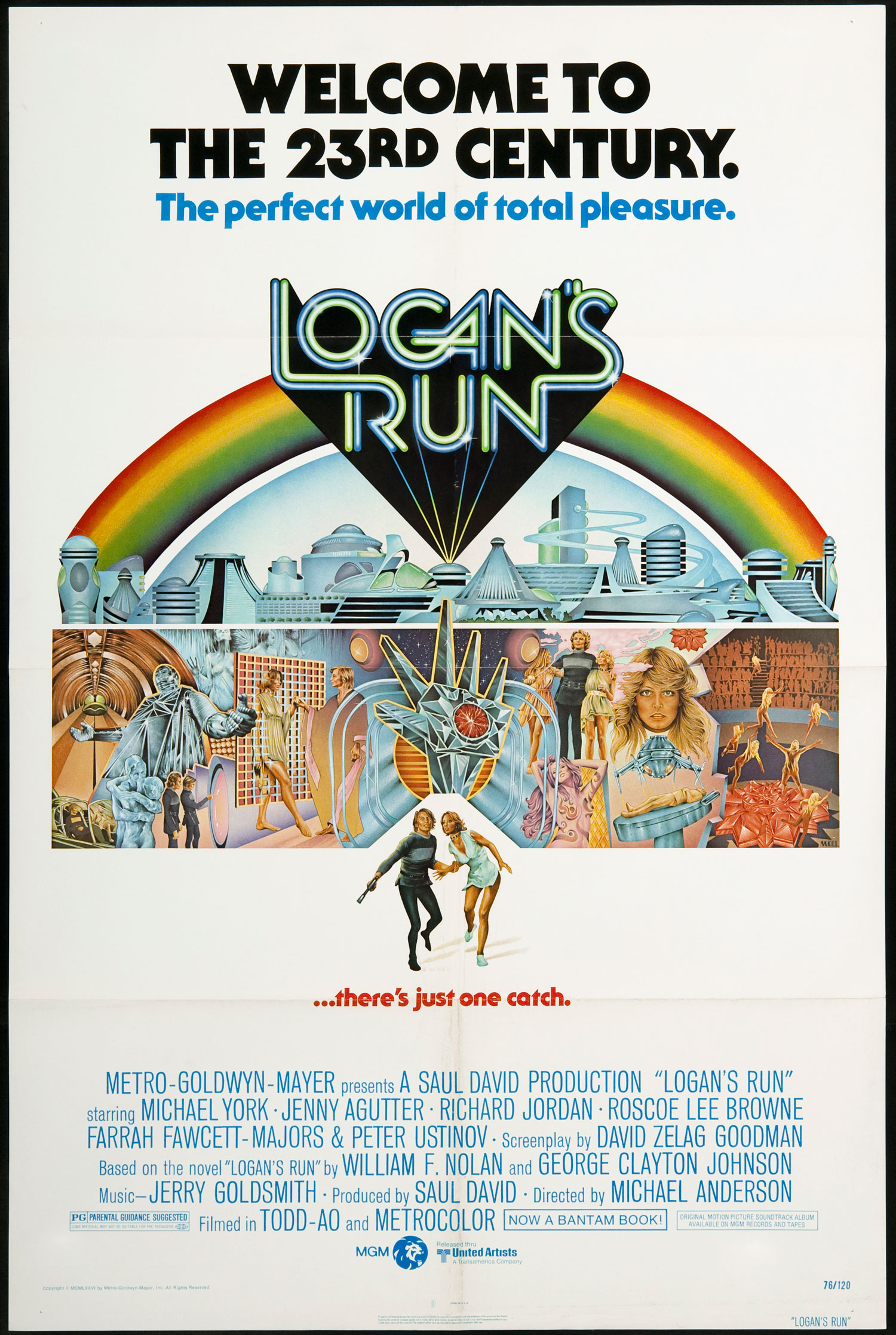
In the year 2274 no one is required to work and all desires fulfilled with the only catch being that everyone must die at 30, or at least go through the so-called carrousel to see who can be ‘renewed’. Logan (Michael York) works as a sandman who is in charge of tracking down the ‘runners’, which are people who try to escape the fate of the carrousel and instead find refuge in a secret underground community known as the sanctuary, which is somewhere outside of the domed city where everyone lives. The computer, which runs the domed city where Logan resides, orders him to find the sanctuary and destroy it. To do so Logan must pretend that he is a runner and uses the help of fellow runner Jessica (Jenny Agutter) to guide him, but what they end up discovering shocks them both.

The film’s selling point is its special effects, which weren’t bad for its time period. The most impressive is the sequence dealing with the carrousel where actual holograms were used. The opening bit where the camera shows a bird’s-eye view of the domed city then zooms into it is impressive too due to all of the painstaking detail that must’ve been put in to create it, but it also becomes clear that it is simply a miniaturized reproduction that looks a bit hokey. The interiors resemble the lobby of a swanky hotel and isn’t visually interesting while the costumes show no imagination as everybody wears essentially the same outfit with the only difference being some are red and others green.

The film deviates quite a bit from the 1967 source novel, which was written by William F. Nolan and George Clayton Johnson with the biggest change being that in the book the age to die was 21. Supposedly the reason the age got upped was to allow for a broader range of actors to choose from, but even here they cheat because York was already 33 when he did this and Richard Jordan, who plays a fellow sandman was 38. Having the script stick to the original age of 21 and hired actors who were that exact age would’ve made a far stronger visual impact especially having them put to death when they barely looked ready for adulthood.

York’s character is annoyingly naïve as he never questions the authority while fully drinking into their propaganda and it takes Jessica to get him to see things differently, but it’s hard to empathize with a guy who can’t think for himself and kills others without question. Also, when they make it outside the dome they have no idea what the sun is, which seems almost absurd. Yes, they’ve been living in a doomed city all of their lives, but wouldn’t they at some point have some curiosity of what was outside of it, or learn in school about the outside? Maybe it was just me, but the character seemed too transparent and almost non-human.

Spoiler Alert!

The weakest point is the ending where they find out unlike the book that there really isn’t any sanctuary, which comes off as anti-climactic and then having them instead come upon a desolate grounds of Washington D.C., which seems too reminiscent to the ending in Planet of the Apes. It also doesn’t make sense. Although never fully explained one can surmise that apparently civilization was destroyed by some sort of nuclear holocaust, but if that were the case it would’ve caused a nuclear winter, which would’ve blotted out the sun and not allowed anything to grow for decades. Having all the green foliage everywhere would’ve been impossible and how exactly was the old man character played by Peter Ustinov that they come upon able to survive it?

The way Logan is able to destroy the computer, which then destroys the whole city when he returns to it by simply not giving it the answer it wants to hear is too convenient. A computer system that is able to run a city for so long would’ve had  some sort of back-up system installed in case something overloaded it otherwise the city would’ve blown many years earlier if it were really that easy to do. It also never explains who ultimately was behind the creation of the doomed city and secretly running things from behind-the-scenes as every computer must have some person, or group of people who initially made it and then programmed it, so who were they?

End of Spoiler Alert!

Farrah Fawcett has a good bit part as a girl working at a saloon that allows people through laser surgery to change their identities. Ustinov is also quite good as the old man who easily steals the film from the younger performers without much effort. The story it mildly compelling, but compared to classic sci-fi films it is pretty vapid.

My Rating: 6 out of 10

Released: June 23, 1976

Runtime: 1 Hour 58 Minutes

Rated PG

Director: Michael Anderson

Studio: MGM

Available: DVD, Blu-ray, Amazon Video, YouTube

Lawman (1971)


lawman

By Richard Winters

My Rating: 5 out of 10

4-Word Review: He does not compromise.

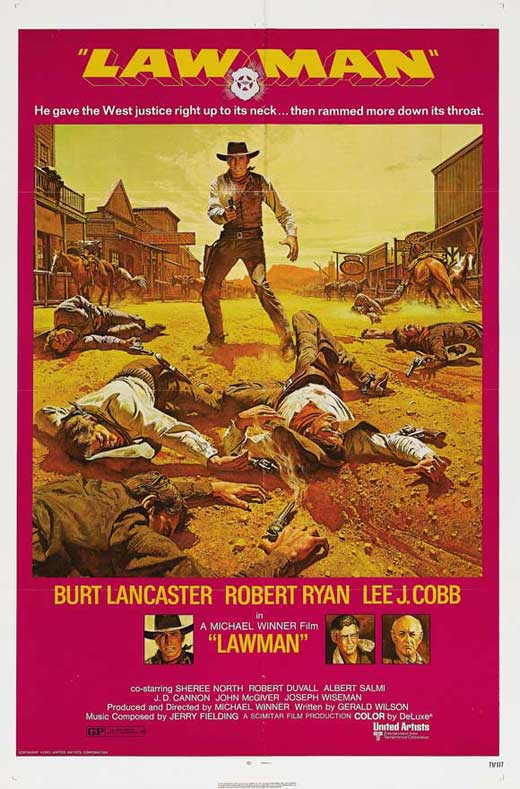
Aging western marshal Jarrod Maddox (Burt Lancaster) rides into the town of Sabbath determined to retrieve five ranchers whose drunken revelry the year before resulted in the death of one of his town’s older citizens. The marshal of Sabbath (Robert Ryan) is reluctant to help Maddox while informing him that the town is ruled by land baron Vincent Bronson (Lee J. Cobb) with a judicial system that is less than stellar. However, Maddox refuses to compromise on any issue no matter what odds or obstacles lay in the way.

During the ‘70s there was a trend to reinvent the western by instilling storylines that did not go along with the age-old, black-and-white formula while questioning the cowboy heroes of yesteryear and putting a grittier slant to the realism. Typically these newer westerns proved to be a refreshing change-of-pace and more in-tune with a hipper generation, which I normally would applaud, but in this rare case I wished that it had fallen back to the old ways.

For one thing Lancaster was still identified with the older film-goer and not in tune with the younger ones. His stiff and detached manner was a better fit to the film’s rigid character and quite frankly I was just plain intrigued to see how this man was somehow going to get all of these other men back to his town to stand trial when everyone else was entrenched to stop him.

Director Michael Winner however decides to switch gears on it and in an apparent attempt to make it more ‘relevant’ to the modern viewer slows the pace down to an almost screeching halt by implementing long-winded conversations and containing the action to only brief interludes while having an initially strong-willed character turn weak and indecisive. To me it was like slashing a tire and watching the air slowly drain out of it. The showdown at the end is anti-climactic and any potential tension is lost by a talky script and a bad guy (Cobb) who is dull and benign. The supporting cast of old pros is the only thing that saves it and I enjoyed the way each of them one-by-one got caught in bed with a prostitute at the town’s local whorehouse throughout the course of the film.

The Maddox character does indeed become an interesting enigma and even going against his supposedly upstanding nature by not only stealing two horses out of a nearby ranch when his is shot dead, but also at one point shooting an unarmed man in the back. Maybe this was the filmmakers attempt to show that western heroes where really human like the rest of us and full of the same contradictions, which could’ve elicited more discussion had the script been tighter.

This also marks the film debut of Richard Jordan a gifted character actor who died much too young, but managed to make some memorable movie appearances along the way. Here he portrays an young gunslinger attempting to stand up to Maddox, but unable to and at one point displays a cut on his face that looks more like a red leech stuck to his cheekbone.

My Rating: 5 out of 10

Released: August 4, 1971

Runtime: 1Hour 39Minutes

Rated R

Director: Michael Winner

Studio: United Artists

Available: DVD, Amazon Instant Video, YouTube

The Mean Season (1985)

mean season

By Richard Winters

My Rating: 4 out of 10

4-Word Review: Killer taunts newspaper reporter.

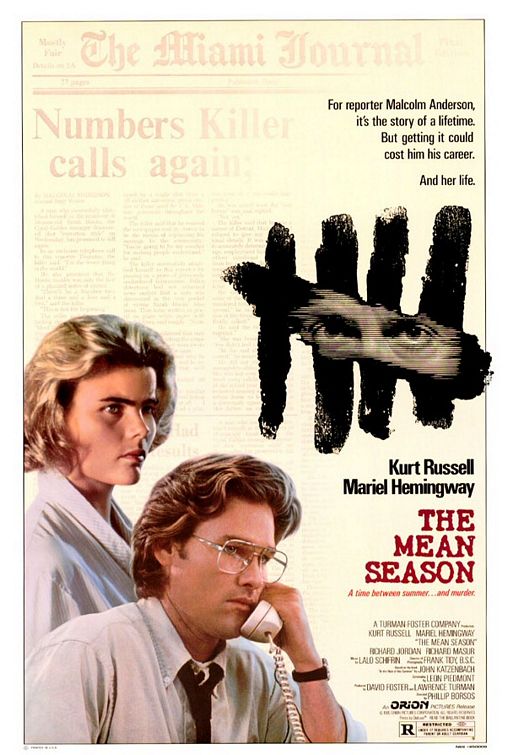
Feeling burned out from years of reporting on the local crime scene journalist Malcolm (Kurt Russell) has promised his girlfriend Christine (Mariel Hemingway) that he wants to get out of the business and move away to somewhere quiet and less hectic. Just as he’s ready to quit he gets a call from Alan Delour (Richard Jordan) the man who has been committing the recent killings that Malcolm has been covering in his newspaper. Malcolm sees this as a goldmine of information and thus delays his resignation. The two then begin a weird cat-and-mouse relationship until Malcolm becomes more of the story than the killer.

The movie starts out promisingly with a realistic look of the inner-workings of a big city newspaper. The film was shot during the overnight hours in the actual newsroom of The Miami Herald with Herald reporters used both as extras and consultants. Richard Masur makes for the perfect composite of a newsroom editor and I liked how the film shows the behind-the-scenes politics and the thin line reporters’ tow between reporting the news and becoming it.

I loved the on-location shooting done throughout Florida that helps bring out the varied topography of the state. Masur’s view out of his office window is dazzling and the climatic chase through the Everglades is exciting as is the speedboat ride in the swamps. The shot of a distant storm on the edge of an open field nicely juxtaposes the tension and dark story elements. The phrase Mean Season is actually a term used to describe a South Florida summer and gets mentioned in an early scene by a radio announcer as he is giving the weather report.

Russell is solid in the lead and it’s great and a bit unusual to see a protagonist who is not playing the nerd type wearing glasses. The segment where he jumps across a bridge as it’s going up and then watching him tumble down when he reaches the other side is well shot. Jordan makes for a good villain that manages to convey both a sinister side and a vulnerable one. Richard Bradford also deserves mention playing a tough cop that is at times quite abrasive, but also sensitive particularly in a couple of scenes where he comes into contact with scared children, which are two of the best moments in the movie.

The provocative concept has potential, but the film doesn’t go far enough with it. Instead of becoming this searing expose on journalism and the media it timidly steps back and turns into just another run-of-the-mill, by-the-numbers-thriller that becomes predictable, formulaic, and just plain boring during the second half and helps make this movie a big letdown.

My Rating: 4 out of 10

Released: February 15, 1985

Runtime: 1Hour 43Minutes

Rated R

Director: David Borsos

Studio: Orion Pictures

Available: VHS, DVD, Blu-ray, Amazon Instant Video, YouTube