Tag Archives: Review

Psychic Killer (1975)

By Richard Winters

My Rating: 5 out of 10

4-Word Review: Killing through astral projection.

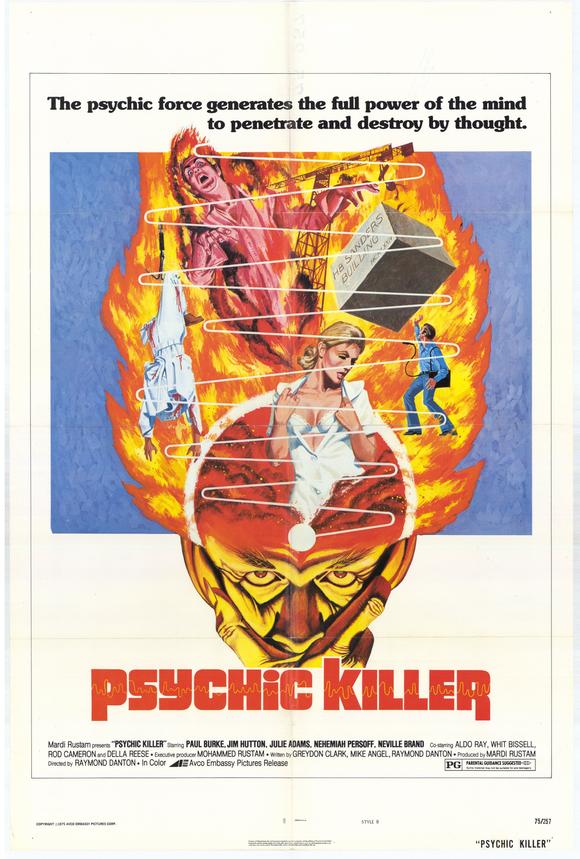
Arnold (Jim Hutton) finds himself behind-bars for a murder he did not commit. He conveys his dilemma to fellow inmate Emilio (Stack Pierce) who informs Arnold that he has special powers that can help Arnold get out of his predicament and once Emilio dies he promises to transfer those powers to him. Then 2 days later Emilio jumps to his death and later Arnold receives a small box that has an amulet inside of it. Arnold puts the amulet necklace on and discovers that he now can kill his enemies through astral projection without him having to be present when it occurs. Police Lt. Jeff Morgan (Paul Burke) suspects what Arnold is doing, but can’t seem to prove it.

The script, which was written by Greydon Clark, who went on to write scripts for many other interesting low budget films, has definite potential and I liked the idea, but the concept isn’t thought through well enough and ends up leaving many more questions than answers. For instance how is Arnold able to know where his victims are when he tries to kill them? All of the killings take place with Arnold sitting in the comfort of his own bedroom in a comatose state, but if that’s the case then what signals him to make the automobile one of his victim’s is driving in go haywire, so that it crashes? How would he know that the victim was for sure driving in it when he mentally causes the car to go bonkers?

How was Arnold able to learn the art of astral projection so quickly? This seems like something a person would have to hone their skills a bit to completely master and yet Arnold acts like a pro at it instantaneously. Also, if Emilio initially had the amulet with all these massive powers then why didn’t he use it to get himself out of jail instead of wasting away in a cell when he really didn’t have to?

With the exception of a death that occurs inside a butcher shop the rest of the killings aren’t all that impressive or gory and in many ways cheesy stuff better suited for a TV-Movie. This could be better categorized as a tacky sci-fi flick than a horror one anyways especially when one the deaths, where a man gets crushed by a giant cement block, gets played-up more in the comical vein.

Ray Danton, a former actor turned director, manages to keep it somewhat lively by introducing a variety of different settings, which is good. However, the outdoor shots get compromised by looking like they were filmed in some studio backlot, which includes a scene where a rich elderly man (Whit Bissell) takes a young chick (Judith Brown) to his isolated cabin hideaway, but cabin’s front yard looks like a giant gravel pit that nobody would either build or buy a place with that type of outdoor eyesore.

While I enjoyed Della Reese and the verbal sparring that she has with Neville Brand inside a butcher shop, the rest of the acting, which gets made up entirely of B-actors on the decline of their careers, isn’t too interesting. Hutton’s presence though is an exception. He had been a rising star in the 60’s doing light comedies, but here he takes a stab at something much darker and he delivers. I thought this would’ve helped him get more movie offers, but instead he got relegated to TV assignments afterwards before eventually dying just 5 years later from cancer at the age of only 45.

My Rating: 5 out of 10

Released: December 12, 1975

Runtime: 1 Hour 30 Minutes

Rated PG

Director: Ray Danton

Studio: Embassy Pictures

Available: DVD, Blu-ray, Amazon Video

The Silent Scream (1979)

By Richard Winters

My Rating: 3 out of 10

4-Word Review: Family’s dark secret exposed.

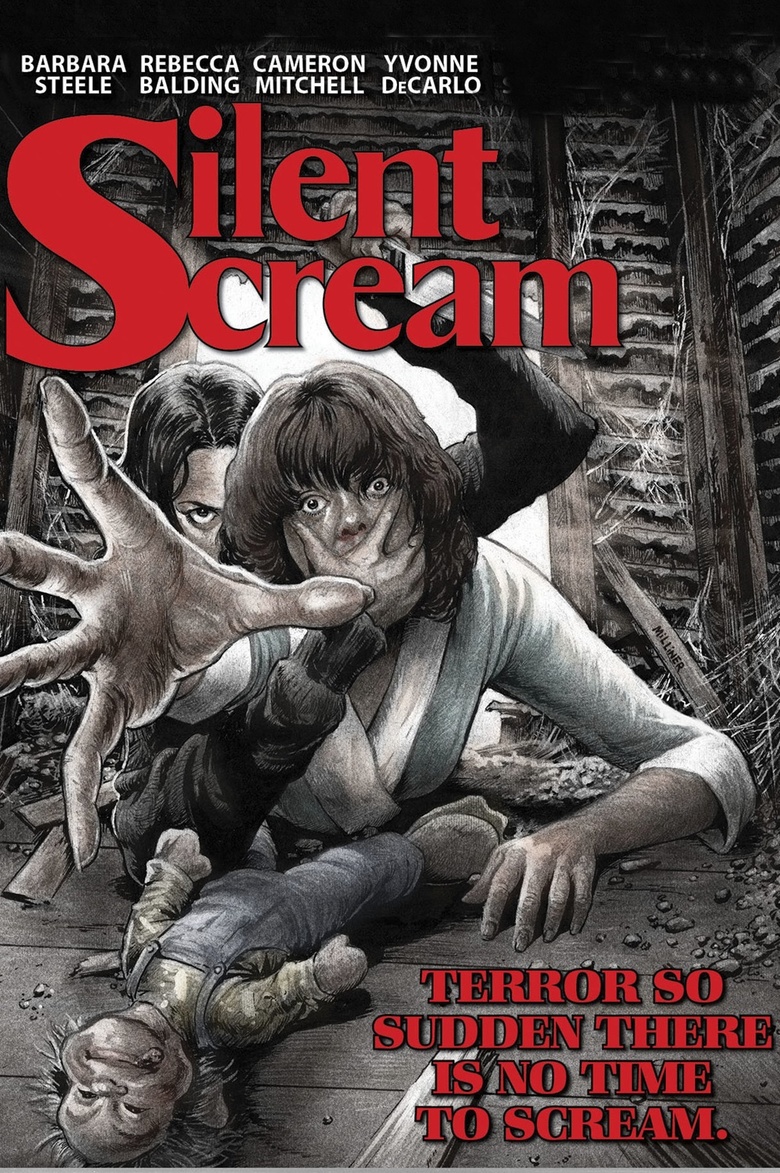
Scotty (Rebecca Balding) is a student away at college who finds nearby housing at a large stately mansion owned by Mrs. Engels (Yvonne De Carlo) and her son Mason (Brad Reardon). When Scotty moves in she meets three other college students (Steve Doubet, Juli Andelman, John Widelock) who are also living there, but during the next couple of day those other students start turning up dead. Scotty fears she may be the next victim and suspects the killings may have something to do with the mysterious person that’s hiding in the attic.

In the summer of 1977 Denny Harris, who was at that time a successful commercial director who owned his own studio, decided to take a try at directing a horror movie and he put down $450,000 of his own money to do it. Unfortunately when production wrapped the footage shot was deemed unreleasable, so Jim and Ken Wheat, two brothers, were brought in to try and salvage it, but instead decided to completely rewrite the script and reshoot almost the entire film leaving only 12 minutes of the original footage in the final cut. This includes a scene where the Mason character watches what looks to be a soft core porn flick on his TV in his bedroom, but was actually a scene from the original version with Susan Backlinie, the lady who got attacked by the shark in the opening bit of Jawsplaying one of the characters.

It would be interesting if a Blu-ray could be issued that would show the version that Harris shot alongside the Wheat brother’s one because I suspect it might not have been any worse than what we end up getting here. For one thing the plot is too skimpy and the pacing slow. Too much extraneous footage of Scotty looking for an apartment and conversations she has at a bar with friends, and even her making love with Jack that doesn’t help build the tension at all and should’ve been cut out.

When the ‘scares’ do come they’re not all that great. The stabbing sequences are particularly annoying because the same Bernard Herrmann-like score that was used in Psycho gets played here making it all seem quite cliched. The blood is another issue as it conveniently collects on a hanging white sheet as the victim gets pummeled with a knife as well as a pool of it on the floor, which our protagonist somehow misses seeing when she goes to investigate. Yet I’ve watched enough true-life crime shows to know that blood splatter doesn’t work that way, but instead sprays out all over with droplets of it splattering on the walls, ceiling, and other appliances until it would be quite obvious to anyone entering a room that a murder had occurred there and unlike what happens here.

Spoiler Alert!

The flimsy plot gets played-out too quickly. In a matter of just two days of staying there the dark family secret and all the ugliness behind it gets completely revealed, which makes for an anti-climactic feeling when it’s over. The protagonists seem to be nothing more than dressing with have very little to do as they ultimately stand helplessly on the sidelines while the bad guys kill-off each other, which isn’t very gripping.

A better idea would’ve been to have the villainous family, which are far more interesting and better acted than any of the college kids, be the stars of the film. Then having the film show how they bring in tenants through the years to help defrays costs, but reluctantly forced to kill them when they get too noisy, only to ultimately meet their match with one of them similar to how What Ever Happened to Aunt Alice? was structured.

The only riveting moment in the movie comes when a young woman, played by Tina Tyler, tries to hang herself via a noose hung from a light fixture in her bedroom. Most of the time hangings in films are either shown from the waist up or down, but here we get a bird’s eye shot where her feet clearly leave the floor with the rope around her neck and nothing else to support her making it seem like she really is hanging herself especially as her body begins to struggle, which is impressively graphic.

My Rating: 3 out of 10

Released: November 16, 1979

Runtime: 1 Hour 27 Minutes

Rated R

Director: Denny Harris

Studio: American Cinema Releasing

Available: DVD, Blu-ray, Amazon Video
Road Games (1981)

road games 1

By Richard Winters

My Rating: 6 out of 10

4-Word Review: Truck driver pursues killer.

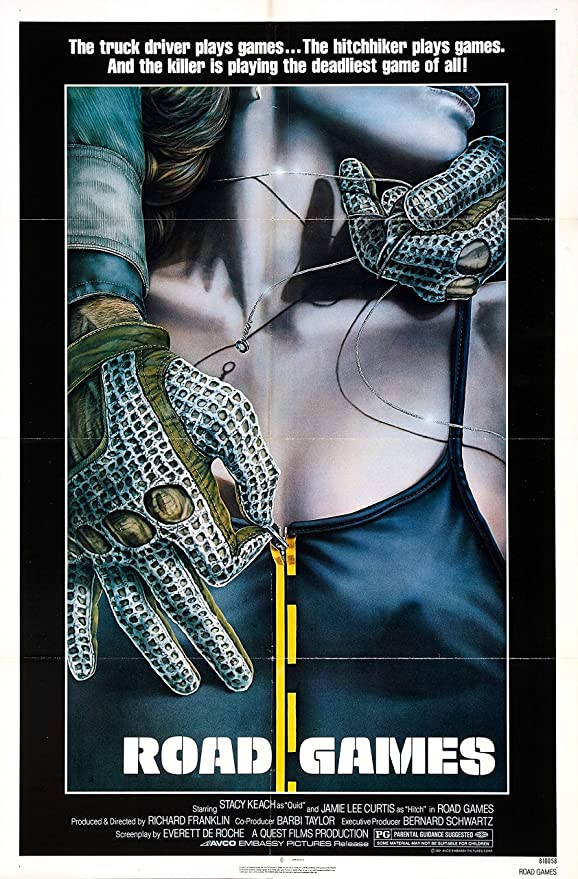
Quid (Stacy Keach) is an American working as a trucker in Australia and hauling a frozen shipment of pigs through the outback and into Perth. Along the way he becomes menaced by a strange man (Grant Page) driving a black van who has a penchant for picking-up prostitutes who then end up dying. Quid is convinced that the man is the serial killer that is being reported about on the news, but before he can go to the police he gets tabbed as the killer himself forcing him, with the help of Pamela (Jamie Lee Curtis) a hitch-hiker he picks up along the way, to find the real killer before he gets arrested for crimes that he did not do.

One of the coolest aspects of this film is its voyeuristic quality where visual clues are a requirement for the viewer to pick up on to figure out what’s going on.  Too many other movies don’t take enough advantage of this idea and usually sell-out by having everything explained through dialogue, but here director Richard Franklin, a major devotee of Alfred Hitchcock, who tried to model the story after Rear Window, keeps the viewer feeling like they’re an active participant.

The film’s drawback, and most likely one of the main reasons it didn’t do well at the box office, is that the tension  ebbs and flows. Too much labor gets put into dressing up the plot with a lot of quirky side stories. This includes having Quid  coming into contact with the same motorists through his travels, which I didn’t think was realistic that these same drivers would be taking the exact same route as him while maintaining the same speeds as he over a several day period, so that no matter where he went they were never far away. I have traveled extensively by car on long road trips similar to this one and have never kept passing the same motorists like Quid does here.

The film also lacks, with the exception of a surprise double ending that comes at the very end,  any type of actual scares. There is a running build-up making you believe that a shock is just around-the-corner, but ultimately it’s a letdown. People watch these things with the anticipation they’ll be jumping-out-of-their-seats at some point, but this is too tame and at certain points it’s almost more like a comedy.

The killer, who was played by a stuntmen and not a professional actor, lacks any type of presence to distinction. For things to get really intense, which it never does, the bad guy has to stand out and make the viewer feel on edge every time they see him, which this transparent guy is unable to do. It would have also been more interesting had his face not been shown until the very end instead of Quid seeing what he looks like early on when he spots him through his binoculars.

I was surprised why the two lead characters were played by Americans since the setting is the down-under and the story better served by performers who were native born. That’s not to say that Keach or Curtis don’t give engaging performances because they do, but I don’t believe there’s too many American truck drivers working in Australia, so there needed to be some explanation for why Keach was there and why, being that he was not from the region, he was so educated about the history of the area, as evidenced when the two camp-out overnight and he tells her the back story of an abandoned telegraph station that sits nearby.

The romantic undertones that are lightly introduced does nothing but sap away the tension. I also found it curious why Curtis would be trusting of Quid upfront as she’d have no idea whether the serial killer could’ve been him and therefore she should’ve been more guarded, which she isn’t.

The climactic sequence features a unique car chase where three vehicles follow each other around the back alleys of Perth late at night, but at very slow speeds, which surprisingly is effective. However, the script should’ve been tighter and the editing quicker. The film’s leisurely pace and colorful supporting characters works against it. There needed to be more shocks, more of a confrontation between Quid and the killer, and basically just more of a conventional thriller-like approach.

My Rating: 6 out of 10

Released: June 26, 1981

Runtime: 1 Hour 41 Minutes

Rated PG

Director: Richard Franklin

Studio: Embassy Pictures

Available: DVD, Blu-ray, Amazon Video
The Toy (1982)

By Richard Winters

My Rating: 1 out of 10

4-Word Review: Becoming a child’s pawn.

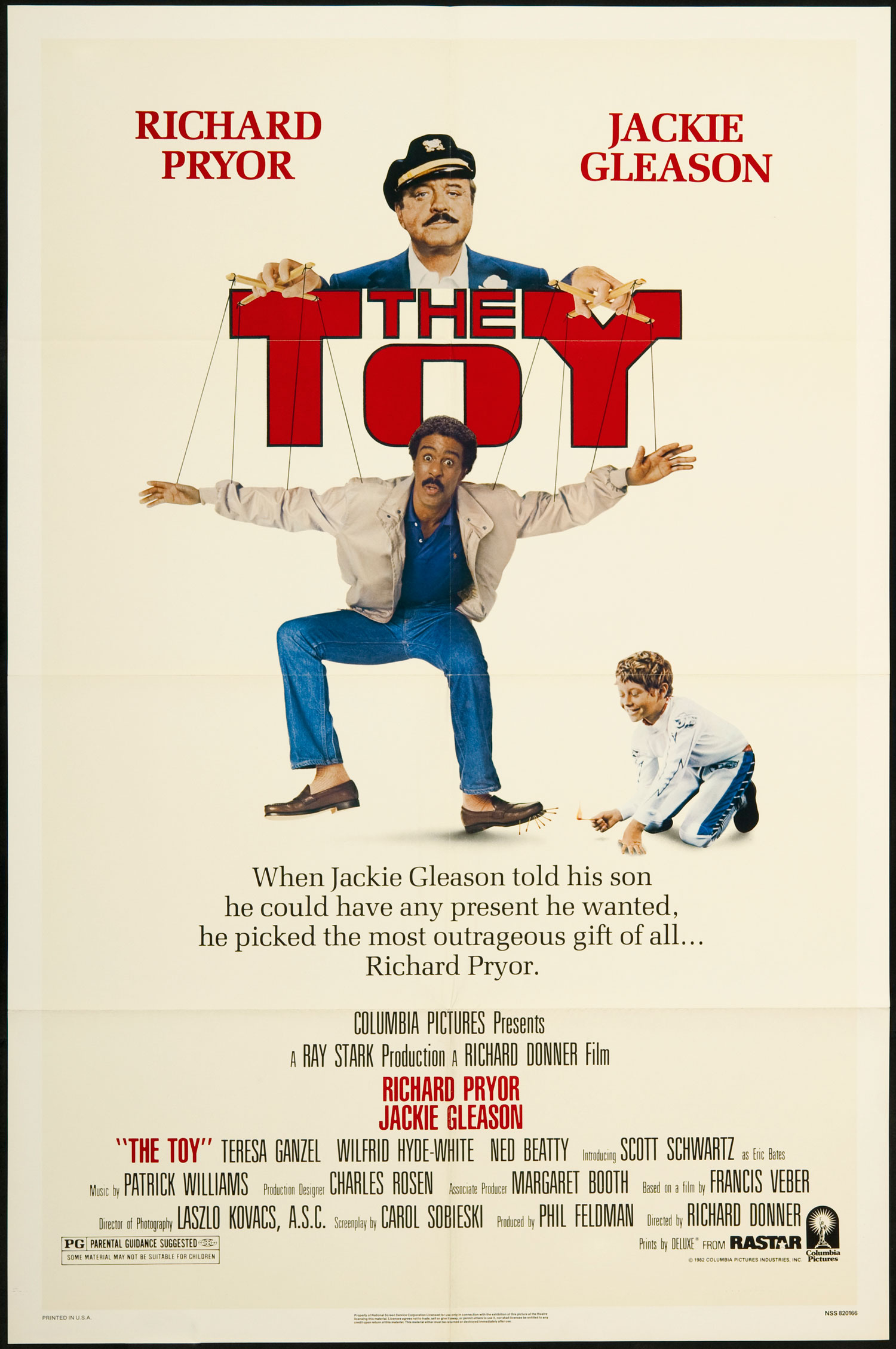
Jack Brown (Richard Pryor) is unable to find stable employment and at risk of being evicted from his home. In desperation he takes a job as a night janitor at a local toy store. It is there that he gets spotted by Eric (Scott Schwartz) the young son of business mogul Ulysses (Jackie Gleason). Eric is used to getting what he wants so when Jack inadvertently makes him laugh he decides to ‘buy’ him and turn him into his own personal ‘toy’. Jack is initially reluctant to agree to this, but when he’s offered a lot of money he eventually goes along with it. Initially the relationship between the two is quite awkward, but eventually they form a bond and Jack manages to teach Eric many important life lessons while also getting Eric’s father to realize that money can’t buy a son’s love.

When compared to the original French version this thing is painful to watch. Much of the problem stems around the fact that the satirical point-of-view from the first one gets watered down here. The French film took a lot of calculated potshots at capitalism and corporate hierarchy, but apparently Hollywood was afraid they’d be considered ‘unamerican’ if they took that route, so instead of sharp humorous insights we get tired formula dealing with a rich kid trying desperately to get his father’s attention whose selfish personality needs fixing.

Because the message is so muddled it becomes confusing what point it wants to take, so to make up for it,  they throw in all sorts of cringey life lessons crap like Pryor teaching Eric about the importance of friendship and even a a bit about ‘the-bird’s-and-the-bees’. After awhile it doesn’t seem like a comedy at all, but more like a tacky after school special your parents made you watch when you were in the third grade.

The humor that does get thrown-in gets equally botched. In the French version every comic bit that occurred fit into the film’s main them. Here though any gag that has the potential of getting a cheap laugh gets used whether it actually works with the main story or not. Many of which are tired, overused gags where you already know what the payoff will be before the set-up barely gets going.

Pryor’s casting was a bit controversial at the time due to him being black and then used as a ‘servant’ to a white kid, but the truth is Pryor is the only thing that saves it. He’s not exactly hilarious here, but his onscreen charisma is enough to at least keep it engaging. Gleason on the other hand, who was already in his mid-60’s at the time, seemed too old for the part although with the use of a wig he manages to camouflage it pretty well.

Schwartz, who is better known as the kid who gets his tongue frozen to a flagpole in A Christmas Story, and for his later career in adult movies, is annoying. In the French film I liked the kid, but the child character here is poorly fleshed-out having him go back-and-forth in irritating fashion from spoiled brat to emotionally needy tyke.

Ned Beatty makes the most of his small role, keeping his scenes funny when they could’ve easily been overlooked. Elderly character actor Wilford Hyde-White is amusing too and so is Teresa Ganzel as Gleason’s busty girlfriend, but virtually everything else falls flat. This includes an unnecessary side-story involving the Klu Klux Klan, which was not in the original film, and just extends this already excessive mess far longer than it needed to be.

My Rating: 1 out of 10

Released: December 10, 1982

Runtime: 1 Hour 42 Minutes

Rated PG

Director: Richard Donner

Studio: Columbia Pictures

Available: DVD, Blu-ray, Amazon Video, YouTube

Le Jouet (1976)

By Richard Winters

My Rating: 8 out of 10

4-Word Review: A rich kid’s plaything.

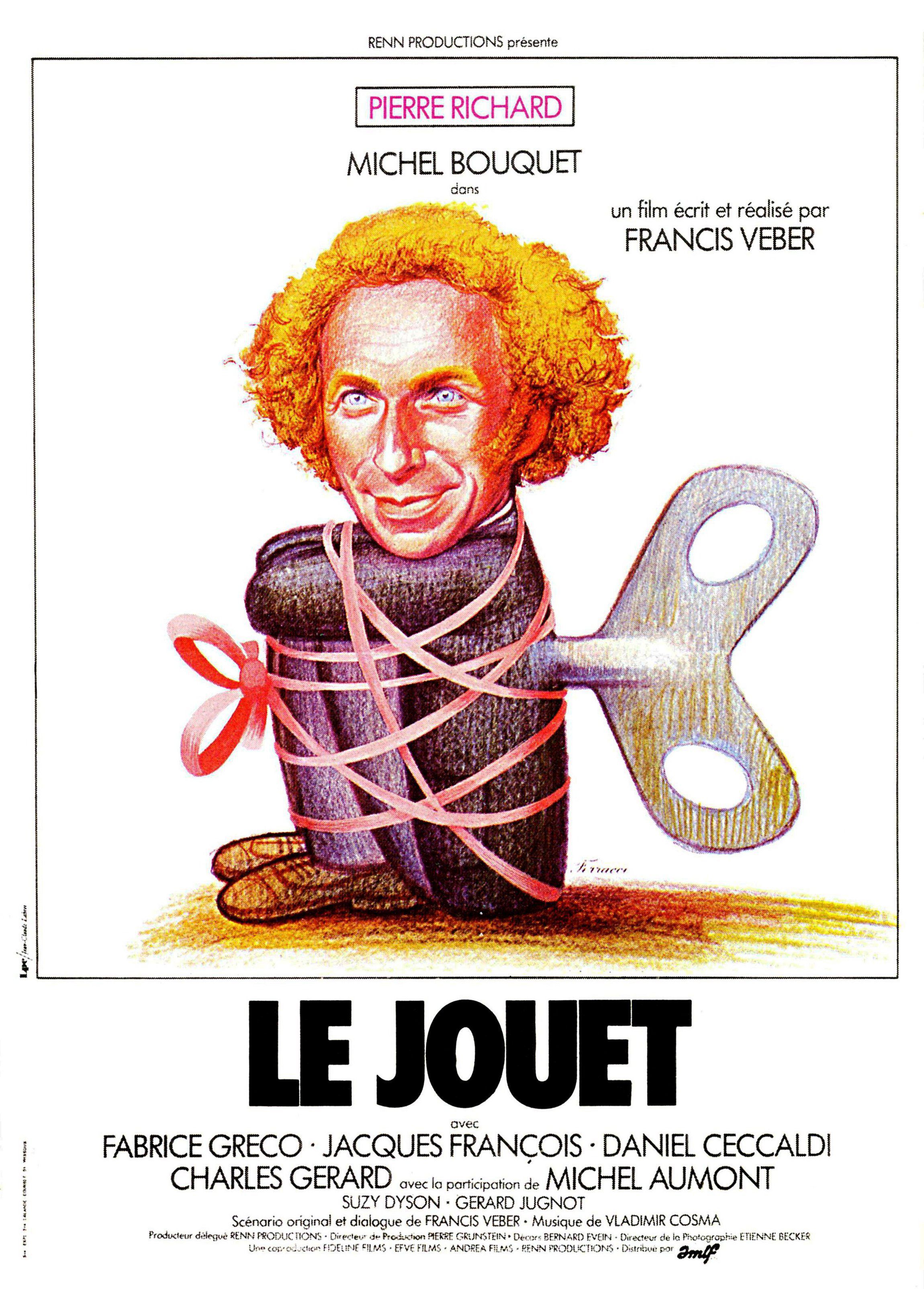
Eric (Fabrice Greco), the son of Pierre (Michel Bouqet) a rich business tycoon, is used to getting his way, so when he goes to a toy store, where he’s informed he can have anything he wants, he chooses Francois (Pierre Richard). Francois is a struggling journalist looking for income and decides to go along with the outrageous proposition of being a child’s toy because of the money he’s offered, so he gets put into a crate and ‘delivered’ to the home just like a regular large ‘toy’ would. He’s then forced to amuse the child at all times and catering to any whims of fancy that he may have. While this arrangement is initially quite awkward Francois is eventually able to form a bond with the boy and the two then set out to teach the arrogant father a lesson.

The script, which was written by the prolific Francis Veber, who also directed, lends keen insights into capitalism and the corporate company structure. While Pierre seems to be the one that is being put into a degrading position and treated like a puppet, it’s actually the company yes men that surround Eric’s father and obediently do anything he demands who are the real toys and yet none of them see it.

Richard does quite well in the lead and despite being put in a humiliating situation ends up showing much more self respect than many of the other characters. Greco is equally good in this his only film appearance. Initially I thought I was going to really hate this spoiled kid, but Veber’s adept writing creates a child character who’s very savvy to the foibles of the adult world  and ends up showing a hidden motivation for why he does what he does that eventually comes out later.

The only performance that I didn’t care for was that of Bouquet. While he has an impressive acting resume and is still appearing in movies at the ripe old age of 95 having just starred in one that came out this year and working steadily in films since 1947, which makes for one of the longest career spans of any actor ever, I still felt here he wasn’t right for this part. His facial expressions are dull and one-dimensional and he’s never funny with his grey hair making him seem too old to be the father of such a young boy.

The film does get a bit heavy-handed at times making its targets too obvious, but it’s still filled with some acerbically funny moments including my favorite scene where Eric and his father walk-in on a family eating dinner and he offers them a lot of money if they agree to on-the-spot sell their home and leave, so after a brief conference the family immediately starts packing. Even with some minor blemishes it’s still far superior to its American remake, which will be reviewed tomorrow.

My Rating: 8 out of 10

Released: December 8, 1976

Runtime: 1 Hour 35 Minutes

Rated PG

Director: Francis Veber

Studio: AMLF

Available: DVD (Region 2), Blu-ray (Region A/B/C), Amazon Video (Dubbed), YouTube (Dubbed)

Pocket Money (1972)

By Richard Winters

My Rating: 6 out of 10

4-Word Review: Herding cattle for money.

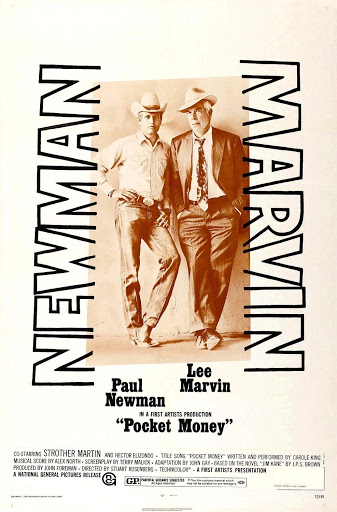
Jim Kane (Paul Newman) is a not-too-bright modern-day cowboy living in Arizona that is broke and without a job. In desperation he takes an offer from a shady businessman named Bill Garrett (Strother Martin) who promises Jim a lot of money to buy a certain breed of cattle in Mexico and then bring them up to the US. Jim has his suspicions about the deal, but decides he has no choice but to take it. He elicits the help of his longtime pal Leonard (Lee Marving) another down-on-his-luck loser. Together they find the cattle and herd them to the states despite a lot of obstacles along the way, but when they return Bill and his cronies are nowhere in sight forcing Jim to seek him out and right the injustice.

Many people have complained about the film’s slow pace and the script, which was written by Terrence Malick and based off of a novel by J.P.S. Brown, has a lackadaisical quality, but to some extent I really didn’t mind it. Too many Hollywood movies are compelled to rush right into the plot while leaving atmosphere and characterizations behind, but here Laszlo Kovacs cinematography brings the rustic western locations to life. I had traveled just recently to a small town in Mexico earlier in the year and this film captures the same ambience that I saw including all the feral dogs running around, the old rundown buildings that make up the town center, as well as the pot-holed filled roads. It was almost like I can gone there a second straight time.

Newman is brilliant in a rare comedic turn. His character is dopey, but in a funny, lovable way where you laugh at his ineptness one minute and cheer him on the next. Marvin is good too and the banter the between them as well as their contrasting approaches to things help keep things interesting. Reports where that the two did not get along and Marvin even admitted as much in interviews stating that Newman ‘finessed’ him during their scenes and when you get two big name actors with heavy egos this sometimes happens, but they were at least professional enough not to let their animosity show through on the screen. Both Wayne Rogers and Strother Martin, who co-starred with Newman just 5 years earlier in the classic Cool Hand Luke lend great support and in Martin’s case should’ve been seen more.

Spoiler Alert!

My biggest beef comes with the ending, which is a complete letdown. The intention was to show the life of two aimless men who are going nowhere, which is fine, but there still needs to be a payoff at the end. Instead when Newman and Martin finally confront Rogers and Martin in a hotel room, after searching everywhere for them, nothing happens. They never get their money, or revenge, or anything. Even losers can have a random moment of small victory, which is what I felt was needed here, and to have nothing of substance occur makes the viewer feel like the joke was on them and sitting through this, despite the marvelous production values, becomes sadly a big waste of time.

End of Spoiler Alert!

This was another case of where Leonard Maltin’s review, or whoever wrote it for him, is off from what you end up seeing. He commends the performance by Jean Peters, who plays Newman’s ex-wife, like it’s something special when in reality it’s just a throw-away-bit that lasts for a couple of minutes and isn’t too memorable. He also comments on Marvin’s car, which he states is ‘the damnedest thing you’ll ever see’ even though despite a few multi-colored panels I didn’t see what was so unusual about it. The craziest car I’ve ever seen in a movie is the one the two teens drive in Robert Altman’s 1985 flick O.C. and Stiggs, but again watch both movies for yourself and then decide, but I believe most would end up agreeing with me.

My Rating: 6 out of 10

Released: February 1, 1972

Runtime: 1 Hour 42 Minutes

Rated GP

Director: Stuart Rosenberg

Studio: National General Pictures

Available: DVD-R (Warner Archive), Amazon Video

The Long Goodbye (1973)

By Richard Winters

My Rating: 7 out of 10

4-Word Review: His cat is hungry.

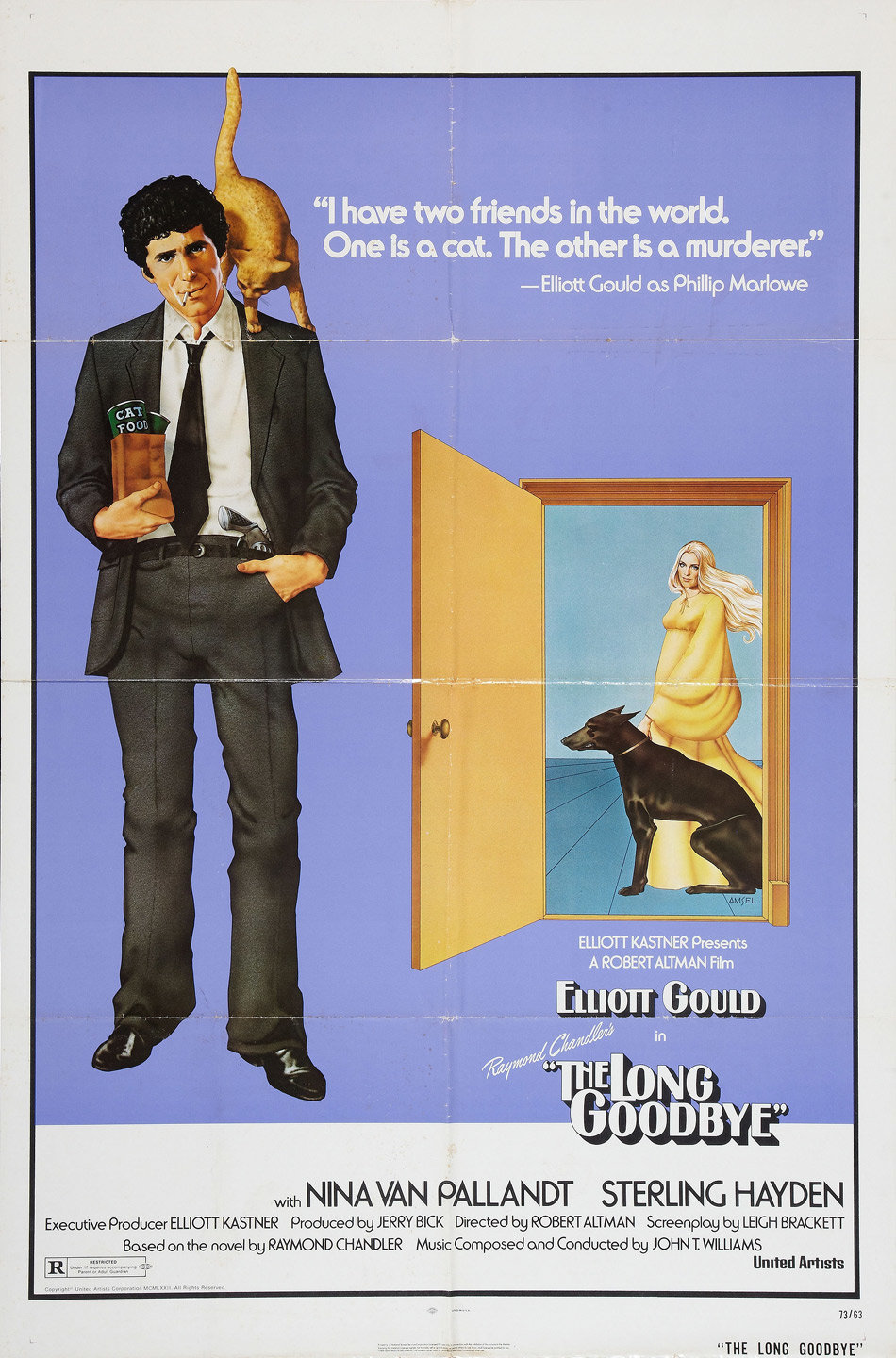
One night detective Phillip Marlowe (Elliot Gould) is visited in his home by his long time pal Terry Lennox (Jim Boulton), who informs Marlowe that he’s had a fight with his wife and asks him if he can have a ride to the Mexican border, which he obliges. When he returns home he is met by two cops (Jerry Jones, John S. Davies) who bring him into the station with questions about the whereabouts of Lennox whom they insist has just killed his wife. When Marlowe refuses to divulge anything he gets put into jail only to released 3-days later when it’s reported that Lennox has killed himself. Marlowe becomes suspicious about the suicide and determined to do his own investigation while also getting involved with Eileen Wade (Nina van Pallandt) and her alcoholic, writer husband Roger (Sterling Hayden) both of whom may hold the secret to Lennox and what really happened.

By the early 70’s only two of Raymond Chandler’s novels had yet to be filmed, this one and ‘Playback’. United Artists agreed to finance the film and commissioned Leigh Brackett, who had been the screenwriter for another Chandler novel turned into a movie 1946’s The Big Sleep, to write the screenplay for this one. Robert Altman was later approached to direct it and while he was not a fan of the Phillip Marlowe character, whom he labeled as being a ‘loser’, he agreed to take on the project due to the unexpected ending, which had not been in the novel, but that Brackett had added into the screenplay.

While Altman may have seemed an odd choice, he never even read the source novel of which the film is based, the eccentric little sidelights that he adds into the proceedings make it worth it. Some of the movies that he did towards the late 70’s became a bit too undisciplined where his films would go off on tangents with stuff that had very little to do with the main plot, but here the story is strong, so the little detours that Altman adds in helped to playfully accentuate the plot instead of drowning it out.

Some of my favorite Altmanisms included  Marlowe looking for food to feed his hungry cat, who I might add for an animal gives a spectacular performance, and how a stocker that he meets at the grocery store while searching for cat food he ends up meeting again at random at the police station. The next door female nudists, who are also into yoga and attract the attention of both the police and the bad guys who come to Marlowe’s place, are fun too.

There’s some marvelous framing by cinematographer Vilmos Zsigmond including capturing Roger and Eileen having an argument inside their home, which was filmed at Altman’s Malibu residence, through a glass patio door while at the same time in the reflection you see Gould walking along the beech. Later while Eileen and Marlowe are having a conversation by an open window you can see in a distance, which the other two are unaware of, Roger walking into the ocean in an attempt to kill himself.

Spoiler Alert!

The film also features what I feel is one of the most shocking and disturbing scenes that I’ve ever seen put into a movie and that’s a statement that I don’t use lightly. I’ve seen hundreds of gory horror films, but what happens here I’ve found far more unsettling. I think the reason is because it’s completely unexpected as it features the character played by film director Mark Rydell smashing a glass coke bottle onto the face of his girlfriend who just seconds earlier he had stated that he was deeply in-love with. Hearing her scream out in unending pain while cupping her hands over her face as blood spews out makes it come-off as very real. Even more amazing is that the part of the girlfriend was played by an amateur named Jo Ann Brody who never appeared in any other film and was a waitress that Altman and Brackett met when they went out to dinner while working on the script and who they asked on-the-spot if she’d like to be in their movie.

Altman admitted that he knew this violent scene, which had not been in the book, would upset some fans, but he felt it was important to bring the viewer back to the reality that these were violent characters at heart. This could also be seen as a foreshadowing to the surprise ending when Marlowe finds Lennox still alive in Mexico and then unexpectedly shoots him. In the novel Marlowe allows Lennox to walk away unharmed, but Altman liked the violent twist.

Personally I was ambivalent with the ending here and might actually have preferred the way it was done in the book. My main issue though with it is that Eileen spots Marlowe leaving the place where Lennox was just shot and since she was in a relationship with Lennox and also had strong criminal connections I’d think she’d end up, one way or another, going after Marlowe once she realized he had killed her lover causing the ending to leave open too many potentially interesting tangents that should’ve been followed through on.

My Rating: 7 out of 10

Released: March 7, 1973

Runtime: 1 Hour 52 Minutes

Rated R

Director: Robert Altman

Studio: United Artists

Available: DVD, Blu-ray, Amazon Video
High Anxiety (1977)

By Richard Winters

My Rating: 7 out of 10

4-Word Review: He’s afraid of heights.

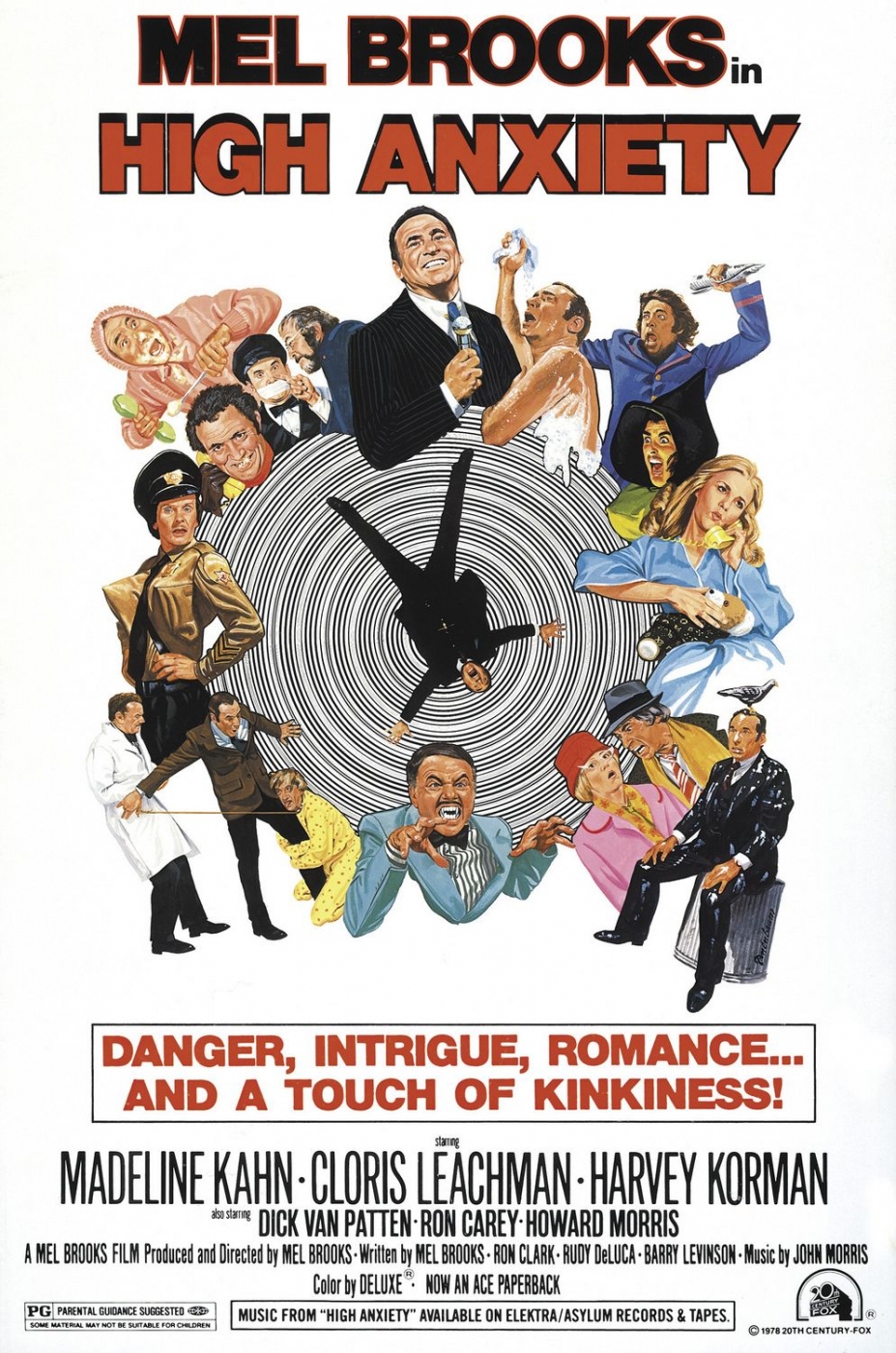
Dr. Richard Thorndyke (Mel Brooks) is hired as the new resident psychiatrist at the Psycho-Neurotic Institute for the Very, Very, Nervous where he is to replace another Dr. who died under suspicious circumstances. While there he becomes aware of many odd things occurring making him believe that the people running the hospital, Dr. Charles Montague (Harvey Korman) and Nurse Diesel (Cloris Leachman), have a scheme going on where they take in rich patients and pretend their conditions are worse than they really are, so that they can keep the patients hospitalized for indefinite periods and thus bilk the patient’s rich families for large sums of money. Richard, together with Victoria (Madeline Kahn) who is the daughter of another patient that is being held there against his will, become determined to expose the scheme, but his adversaries use nefarious tactics to try and stop him by taking advantage of his extreme fear of heights.

Per an interview that Mel Brooks gave with NPR in 2013 he revealed that he wrote a letter to Hitchcock in 1976 telling him that he wanted to do a parody of his movies and was interested in getting his feedback. Hitch wrote back saying that they should get together in his office to go over ideas. In fact it was Hitch’s suggestion to have the scene involving the birds pooping on Brooks. When the film was completed he got his own private screening and afterwards he sent Brooks a case of expensive French wine with the note: “A small token of my pleasure, have no anxiety about this.”

Two of my favorite moments include a Psycho parody where a bellhop (played by a young and soon-to-be famous director in his own right, Barry Levinson) who stabs Brooks with a newspaper while he’s in the shower. The afore mentioned Birds parody is good too with the bird droppings made up of mayonnaise and chopped spinach, but because a helicopter was used during the segment it scared a lot of the pigeons causing real bird do-do to get mixed in with the fake stuff.

I enjoyed the bits involving a parody of the ‘gliding camera’ a technique used in many films where a camera shot begins on the outside of a building, but then somehow ‘glides through’ a wall and goes inside a place without any barrier. Here the camera shatters the glass as it tries to ‘glide through’ the window of the hospital, but Brooks almost ruins the moment by having the characters react by looking up to where the noise occurred, but then going back to their conversation, which makes no sense. If a camera operator has just crashed through a window, most people would get up from their seats and inspect the damage, which would’ve overplayed the joke, so they should’ve just had the characters not respond to the crashing noise at all. This same issue occurs at the end where the camera operators are heard talking just before they crash through a wall, but the scene would’ve played better without the banter.

The plot, as thin and goofy as it is, has some interesting moments. I especially enjoyed the segments done inside the lobby of the Hyatt Regency in San Francisco and the way it takes advantage of the glass elevators there. The scene involving actor Ron Carey blowing up a picture that he took there in order to solve a crime is cool because it goes back to the old way of developing film, which will be a good education for today’s younger viewers who are more used to digital.

The performances are first-rate with Brooks in an uncharacteristic straight part though he still gets in a few zany moments including a segment where he’s a baby who falls from his high-chair. Leachman though steals it in a brilliant send-up of Nurse Ratched from One Flew Over the Cuckoo’s Nest. In fact it’s her contorted face with no make-up and a faint mustache that leaves a lasting impression. She has stated that she disliked doing the role, but it’s so hilarious that I wished her part had been given a wider storyline.

My Rating: 7 out of 10

Released: December 25, 1977

Runtime: 1 Hour 34 Minutes

Rated PG

Director: Mel Brooks

Studio: 20th Century Fox

Available: DVD, Blu-ray, Amazon Video, YouTube

Smokey and the Bandit II (1980)

By Richard Winters

My Rating: 3 out of 10

4-Word Review: Elephant in a truck.

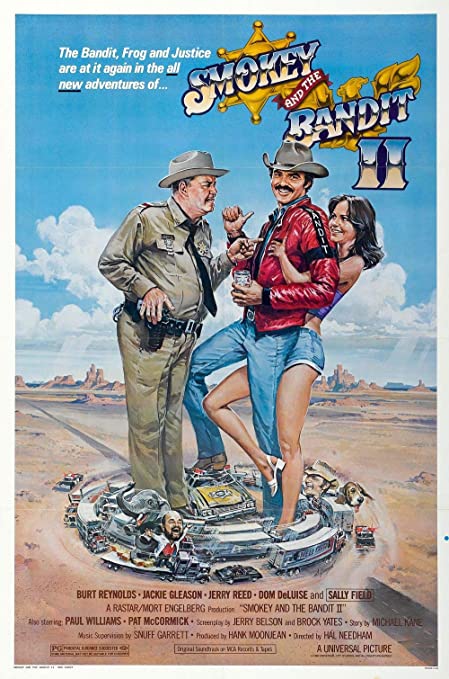
Truck driver Cledus (Jerry Reed) becomes enticed by an offer brought to him by Big and Little Enos Burdette (Pat McCormick, Paul Williams) to haul some secret cargo from Florida to Dallas for $200,000, which later gets upped to $400,000. Cledus readily accepts, but finds that Bandit (Burt Reynolds) is in no shape to make the run as he is holed-up in a seedy hotel and drunk over his break-up to Carrie (Sally Field). Cledus solves this issue by getting the two back together and then getting Bandit back in shape. Yet when they finally get to where the cargo is stored they realize it’s an elephant that is pregnant and transporting her to another state becomes a logistical nightmare especially with Sheriff Buford T. Justice (Jackie Gleason) on their tail the whole way.

To some degree I’ll give this film credit because unlike most other sequels it doesn’t try to replicate the formula of the first. There’s definite attempts to instill different ideas into the plot that were not in the first one, which is commendable as so many other sequels come-off like just a vapid redo of what we’ve already seen. Unfortunately it goes too far with it becoming too campy and surreal for its own good.

Hauling the elephant in a truck through 4-states is particularly problematic as no mention is made about what the animal will eat on the way there. This is a big creature that will most assuredly need a lot of food and yet it’s never brought up nor anything shown about getting the elephant water while it’s stuck in the hot truck for many hours, or the massive mess it would most likely make inside the truck when it has to poop and pee.

Reynolds is the best thing about it as he keeps each scene he’s in engaging in an almost effortless way. The opening bit of him drunk in a hotel is quite amusing as is his confrontation with an unappreciative fan that comes about later on at a gas station.

Field’s presence though isn’t as interesting and she has stated in a 2016 interview that she considers this to be the worst movie that she’s ever done. I don’t mind having a sensible character present during all the absurdity, but why would she want to marry Junior (Mike Henry) the son of Sheriff Justice. It’s one thing to be slightly dim-witted, but Junior is so clueless it’s like he should be institutionalized, so why would this otherwise sensible woman want to get into a relationship with him especially if it meant dealing with a cantankerous father-in-law? It’s stupid logic like this that really kills the enjoyment of the movie quickly.

Gleason is certainly good for some laughs especially his running commentary about everything that he comes into contact with. That fact that he constantly has a cigarette in his hand even while driving I found funny too, but having a Sheriff chase around the Bandit far outside his jurisdiction gets a bit ridiculous. The scriptwriters should’ve had him become a part of the highway patrol if he was going to do that, but they don’t. His car wrecks become too cartoonish as well. Where is he finding all of these brand new police cars to drive in while the other ones get completed totaled including having one submerged with water when it falls into a river?

The film’s biggest transgression though it that there isn’t enough car chases, which is the sole reason audiences came to see this movie. There is one at the very end, but it’s done in an enclosed area and features hundreds of police cars playing a game of chicken with hundreds of trucks, which is too over-the-top and silly. The only other car chase occurs in the middle part and features Sheriff Justice chasing Bandit underneath a an old roller coaster, which by using footage of the destruction of the Greyhound Coaster being torn down in Atlanta, Georgia, they inadvertently destroy.

There’s a plethora of famous faces showing up in bit parts including Terry Bradshaw with a full head of hair, the stuttering Mel Tillis, and country music legend Brenda Lee. You can even spot Chuck Yeager the man who broke the sound barrier who is seen at a party, but with no speaking lines. However, non of these cameos are interesting or make watching this film worth it.  Even the blooper reel that gets shown over the closing credits, which became a staple of Hal Needham movies, is flat and dull.

My Rating: 3 out of 10

Released: August 15, 1980

Runtime: 1 Hour 41 Minutes

Rated PG

Director: Hal Needham

Studio: Universal

Available: DVD, Blu-ray (Region B/2), Amazon Video, YouTube

Death in Venice (1971)

By Richard Winters

My Rating: 7 out of 10

4-Word Review: Man obsesses over boy.

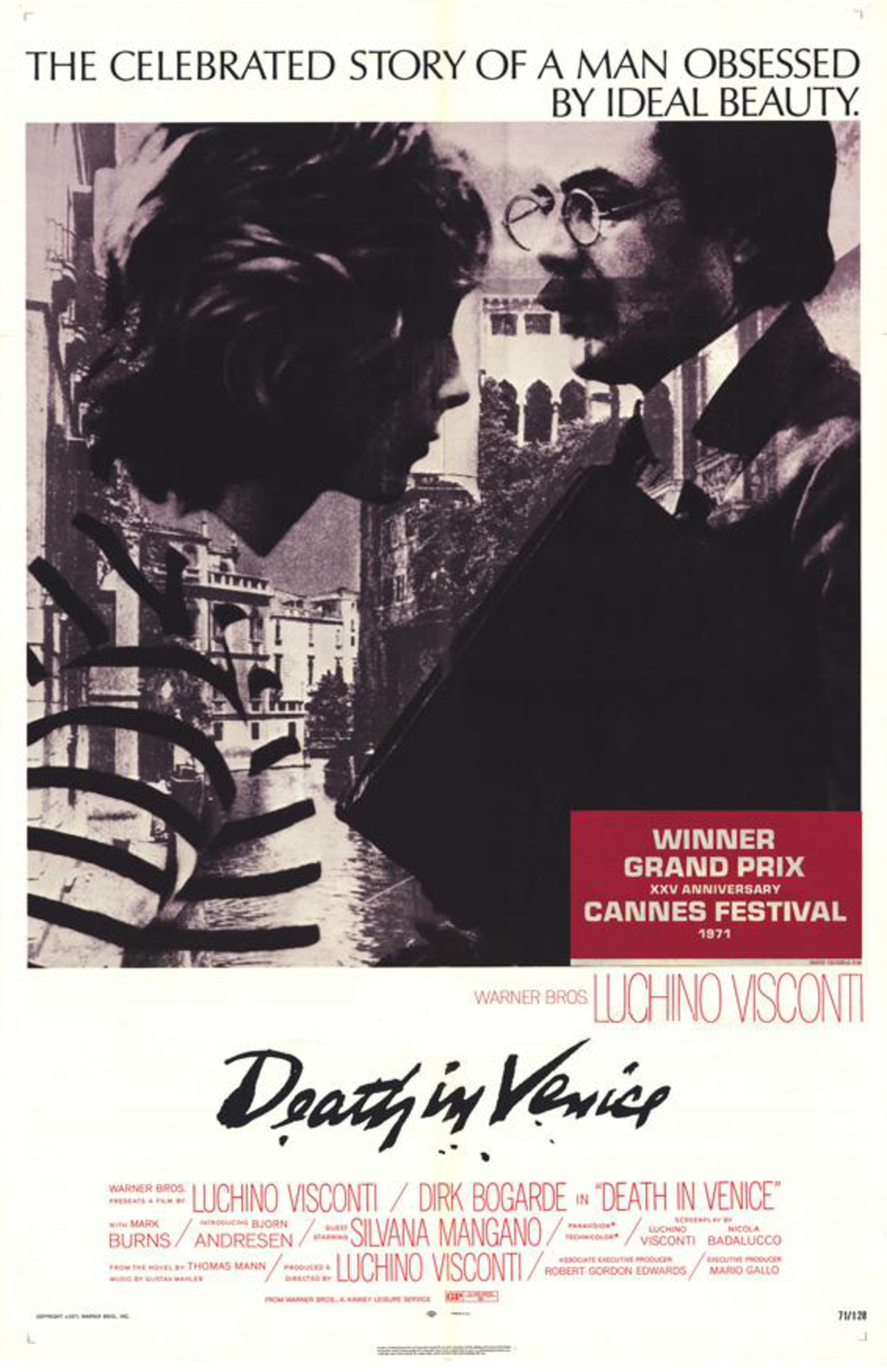
Based on the Thomas Mann novel of the same name, the story centers around Gustav von Aschenbach (Dirk Bogarde) a composer in the decline of his career and suffering from ill health. To recuperate he travels to the Grand Hotel des Bains in Venice, Italy, but finds his relaxation cut short when he becomes infatuated with Tadzio (Bjorn Andresen) a 15-year-old Polish boy who’s staying with his family. Gustav can’t seem to keep his eyes or mind off of him, but never physically approaches the teen or makes any attempt to communicate with him. While his fixation grows so does the cholera epidemic that is gripping the city, which may end up taking both of their lives.

Like with most of director Luchino Visconti’s films the pace may be too slow for some viewers, but I found it to be fascinating right from the get-go. One of the aspects that really stood out is Visconti’s ability to recreate a period atmosphere. Nothing seems stilted or rehearsed. Visconti wisely pulls the camera back and allows things to happen naturally. The people in the background don’t seem like film extras at all, but real people going about there lives that Bogarde just happens to be in. It’s also really cool that it was shot at the Grand Hotel des Bains where author Mann stayed in 1911 when the real incident that the story is based on occurred.

I liked too that Gustav does not play-out is mental fantasies and remains at a comfortable distance from the boy at all times. Too many other movies give off this impression that everyone who obsesses over somebody else immediately goes after the person they’re attracted to when in reality many don’t. For some they realize things would never work out with whoever they’re attracted to as well as the legal ramifications, or because of the fear of rejection they prefer to keep it at a fantasy level. While they may still figuratively stalk the person, or observe them intently, it never goes beyond this point. In fact the ones that do aggressively go after their target are more the exception than the rule although in the movie world you’d think the opposite was true, so it’s nice to have at least one film that takes this topic in a different direction.

The fact that its based on a true story that Mann eventually fictionalized in his novel makes it all the more interesting. According to Mann’s wife Katia in a 1974 memoir she describes how her husband kept staring at a young boy he saw at the hotel whom she described at being 13 and was portrayed in the movie as being 15, but in reality was only 11. She stated that he kept gazing at the boy the whole time and always thought about him during their vacation.

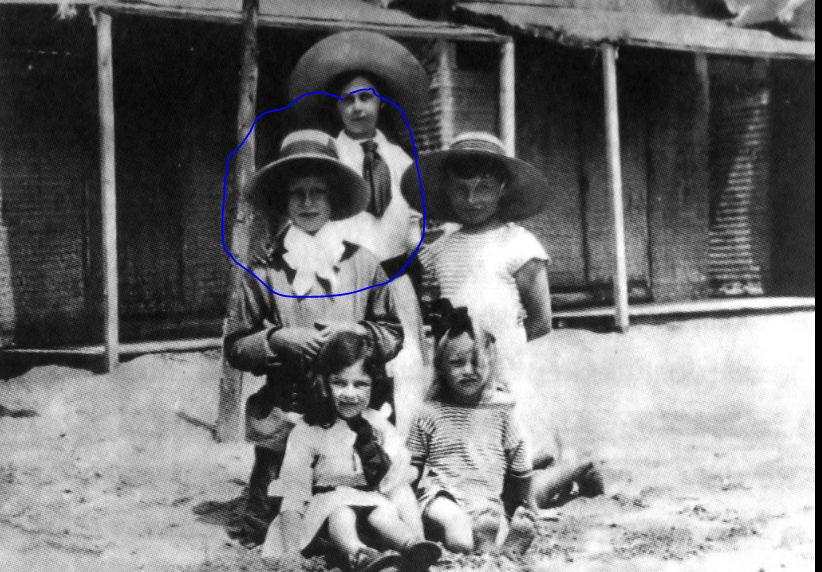
The actual source of Mann’s attraction was later discovered to be Baron Wladyslaw Moes who was on vacation with his three sisters and had no idea that he was being observed. In fact Moes only became aware that he’d been the inspiration for the book when he saw the film upon its released in 1971. The biggest irony is that Moes looked nothing like the Tadzio character in the movie as evidenced by the below photo of him (blue circle) taken in 1911 the same year as when Mann spotted him.

The biggest issue that I had was seeing Tadzio making eye contact with Gustav like he’s aware that he’s being watched. Initially when I saw this in the theaters many years ago I took this eye contact thing to being a point-of-view fantasy of Gustav, but upon second viewing it seems the intention was different. Personally I don’t like this idea because at the age of 15 I don’t believe the teen would’ve been able to handle this behavior from an older man and would’ve either confronted him about it, or told someone else. Maybe if Tadzio had been older, like in his 20’s, and use to being seen as an object then maybe, but since he was so young this would’ve been all new to him and thus making him very uncomfortable very quickly and causing him to ultimately unravel.

Andresen’s performance is rather poor to boot. There were other good looking young actors who could’ve easily played the part in a more interesting way, but apparently Visconti was looking for a very specific type of look, but Andresen  appears uncomfortable throughout and has stated in interviews that his experience on the set was not a happy one. Bogarde in turn does quite well as he’s able to create a riveting performance despite having very little dialogue.

My Rating: 7 out of 10

Released: March 5, 1971

Runtime: 2 Hours 10 Minutes

Rated GP

Director: Luchino Visconti

Studio: Warner Brothers

Available: DVD, Blu-ray, Amazon Video, YouTube