Tag Archives: Review

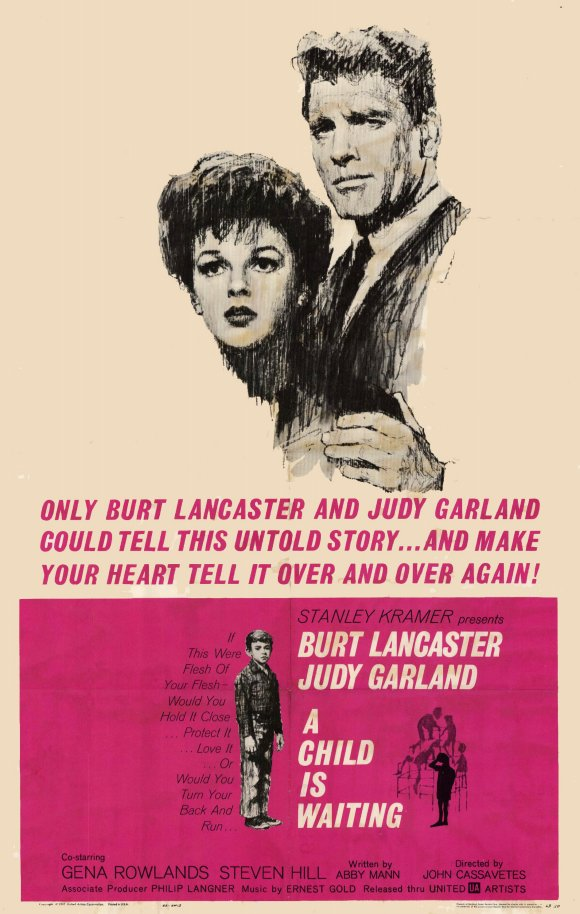
A Child is Waiting (1963)

a child is waiting

By Richard Winters

My Rating: 7 out of 10

4-Word Review: Help for retarded children.

Jean Hanson (Judy Garland) is a woman looking for direction in her life. She takes a job with Dr. Matthew Clark (Burt Lancaster) who runs a school for children with mental handicaps. She finds the work to be more taxing than expected, but also forms a strong attachment to one of the boys named Reuben Widdicombe (Bruce Ritchey).  Dr. Clark notices this bonding and considers it to be a potential problem so his has Jean moved to another building, which causes Reuben to become very upset and displays his anger in all sorts of anti-social ways.

This film is raw and compelling and offering a refreshingly vivid non-sanitized look into work with the mentally handicapped. Director John Cassavetes and screenwriter Abby Mann take off all of the Hollywood gloss and shows things in a real and uncompromising way. The majority of the children are disabled and not actors. Their responses and behaviors are genuine. Some of the best moments are when Cassavetes turns on the camera and then just let things happen particularly when Garland and Lancaster visit a hospital for mentally handicapped adults as well as when they put on a play celebrating Thanksgiving with the children as the performers.

The film is tastefully done and avoids showing some of the cruelties people with these disabilities go through and instead only talks about them lightly. What I really liked though was that it shows things from the adult perspective particularly those of the parents and the difficult adjustment they have as well as the array of emotions. The meeting between a group of doctors discussing which schools for which handicapped children should be given more money and which one of them had a better potential to being more self-sufficient was equally interesting. The movie also makes great use of silence to help propel the emotion and thankfully keeps the music to a minimum.

Garland was a good choice simply for her perpetual look of concern on her face, which remains throughout. However, she has a very worn and haggard appearance and looking much older than the forty years that she was and by looking at her here it should come as no surprise that a mere seven years after filming this she would be dead.

Lancaster is splendid and this may be one of his best roles of his already illustrious career. His soothing and calm voice is perfect for the part and his best moment comes when he patiently tries to teach the children how to correctly annunciate certain words.

Ritchey is good as the child and has a face that is very cute and full of expression. However, he seems to suffer from a severe speech impediment that makes it difficult to understand what he is saying. I wasn’t sure if he suffered from this in real-life, or it was just done for the part, but since he never appeared in any other film role makes me believe that he did.

Steven Hill is also superb playing Reuben’s father a man who turned his back on his son and virtually abandoned him when he was diagnosed as being mentally handicapped only to at the very end have a change of heart.

My Rating: 7 out of 10

Released: January 14, 1963

Runtime: 1Hour 42Minutes

Not Rated

Director: John Cassavetes

Studio: United Artists

Available: VHS
Pretty Baby (1978)

pretty baby

By Richard Winters

My Rating: 8 out of 10

4-Word Review: He’s robbing the cradle.

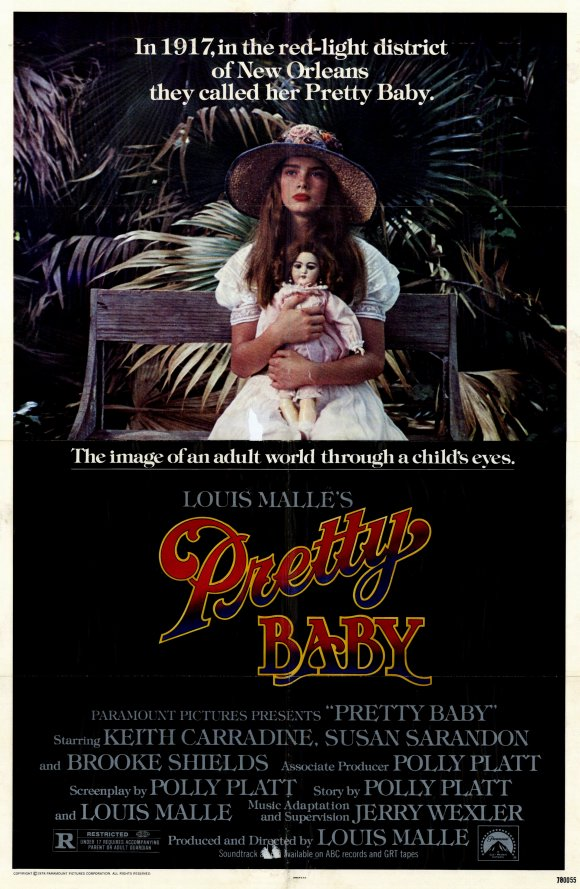
Based on actual accounts of prostitutes living and working in the Storyville area of New Orleans in 1917 the film details the life of Violet (Brooke Shields) the 12 year-old daughter of Hattie (Susan Sarandon) who works as a prostitute and eventually breaks her daughter into the business. Bellocq (Keith Carradine) is a photographer who comes to the brothel to take portraits of the women. He falls in love with the young Violet and the two eventually marry.

Louis Malle’s American film debut is fabulous. He takes a daring subject matter and makes it real and vivid. Sven Nykvist’s cinematography is so detailed that you almost think that you are looking at painted portraits of the era. Malle employs a leisurely European pace to the proceedings, which nicely reflects the slower era. The emphasis is on nuance and in that regard it is brilliant making the viewer feel that they are right there with characters and observing the daily realities around them. The story is certainly shocking, but somehow a strong human element remains making it fascinating and revealing.

The strongest moment comes when a group of middle-aged men bid on Violet to see who will get the honors to take her virginity. Having the camera pan the men’s eager faces, some of whom look to be nearing 50 and even 60 is visually potent as is Violet’s ambivalent expression as she stands on a chair in front of them. The fact that it is approached in a non-sensationalistic matter and instead more like as a slice-of-life makes it all the more disturbing and compelling.

Shields is fabulous. Her facial expressions as she observes the decadence around her is what really makes the movie. She shows a great awareness and creates an intriguing character that cannot read and write and yet acts like having sex with a middle-aged man is ‘no big deal’ and working as a prostitute is completely ‘normal’ way of life. Watching her shift between being very child-like to very jaded is fascinating. I really think this is an actress that is much more talented than she is given credit for and although many other actresses auditioned for the part including Tatum O’Neal, Meg Tilly, Geena Davis, and Diane Lane I really felt the movie wouldn’t have been as effective with them in the role. Shields is really exceptional and should have netted the Oscar, or at least have been nominated.

Sarandon is terrific as her hardened mother and unfortunately is not seen enough, but manages to light up every scene that she is in nonetheless. Singer Frances Faye is also quite good as the head of the brothel. Her old, tired face brings out the difficult, cold lifestyle. Her best moment comes when she is seen staring in a catatonic state into space while everyone else has left the place and all the belongings are being carried out.

Carradine is okay in a restrained performance as a character that is more educated and refined than the rest, which makes for some interesting interactions. The fact that this man ends up getting emotionally stung by such a young girl despite being so much more sophisticated and mature ends up being one of the film’s most definitive moments.

My Rating: 8 out of 10

Released: April 5, 1978

Runtime: 1Hour 50Minutes

Rated R

Director: Louis Malle

Studio: Paramount

Available: VHS, DVD, Amazon Instant Video

The Idiots (1998)

the idiots 2

By Richard Winters 

My Rating: 7 out of 10

4-Word Review: This is so retarded.

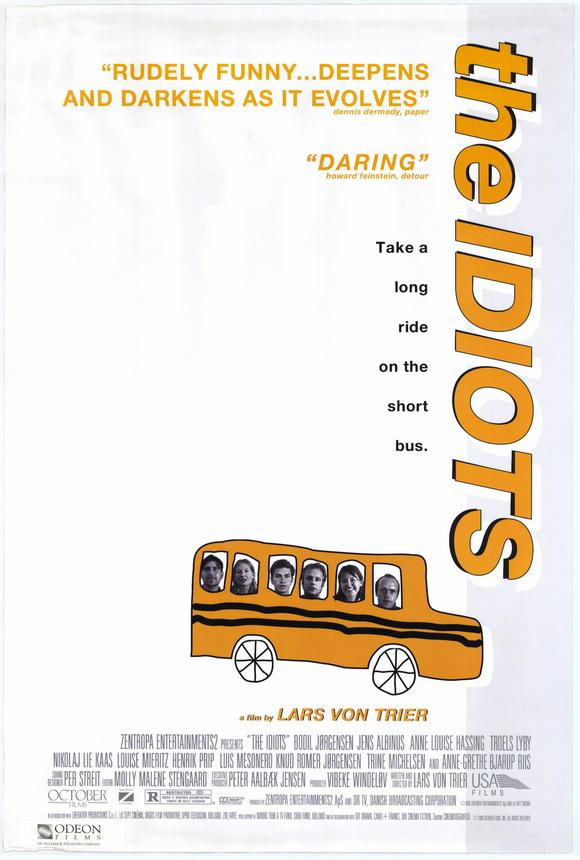
The Idiots is another shocking, controversial, and highly original work from filmmaking maverick Lars Von Trier.  This one involves a group of disenchanted people in their 20’s and 30’s, who decided to rebel from society by acting like they are mentally retarded.

Although certainly not in the best of taste, there are some funny bits here. The comedy works well because amidst all of the outrageousness it is also very revealing about human nature. One of the best segments involves an affluent couple who wish to purchase a large, upscale home.  As they are touring the place they are informed that a group of ‘retards’ live next door. The couple put on the politically correct facade by saying that wouldn’t be a problem even though their facial expressions say otherwise.  When the group pretending to be retarded pays them a visit the couple quickly runs off.  Another funny part, which may actually be the most outlandish of the whole film, involves a group of tough, tattooed bikers who help in very graphic fashion one of the group members pretending to be mentally handicapped go to the bathroom. The group’s visit to a factory is also hilarious.

The majority of the film though is actually quite serious and yes, even thought provoking. Von Trier does a good job of analyzing things from different angles while supplying no easy answers. It was interesting how the group mocks society for all of their rules and customs and yet when one of their own members starts to act erratic they tie him to a bed and refuse to free him until he ‘settles down’, thus proving that even they themselves need certain rules of behavior in order to function even if they don’t want to admit it.  Some other strong dramatic scenes involve the father of one of the members who tries taking his daughter from the group and back home with him.  There is also a revealing segment involving one of the members who decides to ‘drop back into society’ and return to his job as a college professor despite the protests from the other members.  The group also comes into direct contact with people who are actually mentally handicapped and how each of them responds to this is fascinating.

The characters are nicely fleshed out.  All of them show distinct personalities and evolve in interesting ways as the film progresses. Karen (Bodil Jorgenson) acts as they catalyst.  She comes upon the group by chance and acts as a sort of ‘conscience’ for the film.  Initially she is shocked and confused by the group’s behavior, but because she is stuck in an unhappy relationship and grieving the recent death of her son, she decides to tag along. Eventually she starts to see the benefits of ‘spassing out’ which is the group’s term for ‘finding your inner idiot’.

I liked how the film challenges the concept of true rebellion and shows how complex the fabric of society really is. Everyone would like to ‘drop-out’ at certain times and there is even a need for it, but finding the right place can be complicated. I have often felt that the true nonconformist is either living on the streets, is in prison, or a mental institution and the film pretty much comes to this same conclusion, but without advocating ‘fitting-in’ with the establishment as the answer either.

My complaints for the film centers mainly on the over use of the hand-held camera, which tends to get distracting after a while and gives the film a needless amateurish feel. I know with Von Trier’s ‘Dogma 95′ manifesto the hand-held camera is a major factor, but I think he could back off a little with it. There is also a ‘gross-out’ segment at the end where the group member’s start to drool out their chewed up food, which I found completely disgusting especially the way the camera captures it in close-up. The pacing is pretty good, but it does drag a little at times and I felt the film went on about twenty-five minutes too long.

Obviously this is a film that will not appeal to everyone and in fact I would say that the majority of people may find it off-putting.  That doesn’t mean it is a bad film because I think it is a pretty good one and I liked it overall.  However, what makes it a good film is the fact that it works off of its own vision and makes no compromises in doing so.  For most viewers especially American audiences who are used to a ‘mass-appeal’ approach to film-making, this type of concept may not connect. 

the idiots 3

My Rating: 8 out of 10

Released: May 20, 1998

Runtime: 1Hour 57Minutes

Rated R

Director: Lars Von Trier

Studio: Zentropa Entertainments

Available: VHS, DVD

The Morning After (1986)

the morning after

By Richard Winters

My Rating: 5 out of 10

4-Word Review: She can’t remember anything.

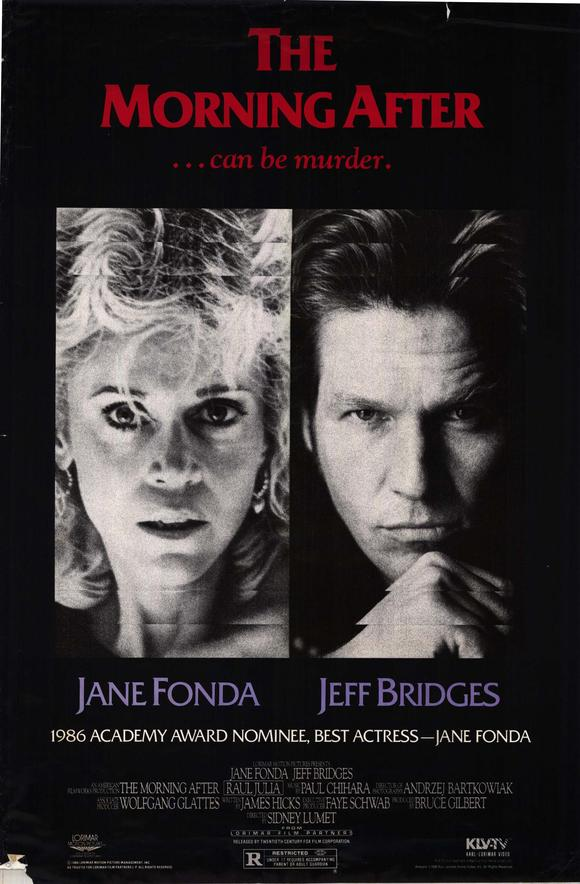
Alex (Jane Fonda) is an out of work actress and alcoholic who is prone to black outs. One morning she wakes up to the find that the man lying beside her has been murdered. She isn’t sure if she did it or not as she can’t remember anything. She cleans up the place and then by chance meets Turner (Jeff Bridges) a former cop who tries to help her prove her innocence.

Starting out right away with her waking up to find the dead body doesn’t work. Some background to the character would have been better as without it the viewer doesn’t particularly care about the character’s predicament. It took me a long while before I could get into it and even then it was only at a lukewarm level. The laid-back and melodic jazz soundtrack doesn’t help. For a thriller it is completely out-of-place and as good as a director as Sidney Lumet is he seems to have problem in that area as the musical score selected for Family Business another film that he did was also a terrible choice.

The film has one interesting twist near the middle, but the pacing is so slow that whatever intrigue it gave me quickly subsided, which is the film’s biggest problem. It doesn’t know if it wants to be a thriller, mystery, drama, or love story. Too much time is spent dealing with Alex’s budding relationship with Turner, which isn’t interesting. By the time they do get back to the mystery you really don’t care anymore. There are also not enough suspects and I had figured out who the culprit was long before the revelation comes about.

Fonda is competent particularly in a teary-eyed emotional sequence where she tries to somehow justify her pathetic self-destructive existence. The character though is unappealing and it may take a while for the viewer to warm up to her if at all. I did like her in the blonde, puffy 80’s hairstyle, but at the half way mark she changes back to her more natural brunette look, which I felt made her look older.

Bridges character helps stabilize Fonda’s and in that regards his presence is helpful, but having them meet by complete chance and then having him get so involved in her quandary seemed implausible. It would have been better and made more sense had he been a longtime friend who she turned to in her time of crisis. Although Raul Julia has a less screen time he still adds a lot more energy than Bridges.

Kathy Bates, Bruce Vilanch, and Frances Bergen (Candice’s Mom) can all be seen in brief bits. I also want to mention Richard Foronjy who nails the caricature of a streetwise big city cop perfectly.

Although the film is now 27 years old it really isn’t too dated. Only two issues in this area come to mind. One is when Alex can’t get any money out of the bank because it is closed due to a holiday and there doesn’t seem to be any such thing as ATM machines. Another occurs when a police investigator asks the Raul Julia character if he is gay by using a derogatory term, which wouldn’t go over today. However, Julia’s comeback line “How bad do you want to know?” is a good one.

My Rating: 5 out of 10

Released: December 25, 1986

Runtime: 1Hour 43Minutes

Rated R

Director: Sidney Lumet

Studio: Lorimar Productions

Available: DVD, Amazon Instant Video

The Luck of Ginger Coffey (1964)

the luck of ginger coffey

By Richard Winters

My Rating: 7 out of 10

4-Word Review: He needs a job.

Ginger Coffey (Robert Shaw) is a middle-aged man living in Montreal whose dreams and ambitions far outweigh his grim predicament. He moves from one low paying job to another convinced that his lot in life will improve. His wife Vera (Mary Ure) decides to leave him and Ginger tries to win her back while juggling two jobs and hoping to get a promotion in one that never seems to come.

As a vivid look at the daily lives of the everyday working class this film hits a solid bullseye. The conversations between the co-workers and the monotonous and sometimes demeaning job interview process and Ginger’s on-going arguments with his wife and daughter are all true to form. There is no pretension and director Irvin Kershner keeps everything at a bare-bones minimum giving it almost a documentary style and making the viewer feel immersed in the bleak environment. The outdoor shots of the city are unexciting and cinematically unappealing, but help reflect the grim level. Watching Ginger get kicked out of his apartment and have to carry what is left of his belongings and then place them on the outside sidewalk while he goes in to visit his daughter in her school is quietly powerful.

Robert Shaw is excellent. This is a man who had by all accounts had a very dominating and proud personality in real-life and usually played characters with the same traits, so seeing him play against type and succeed is interesting. What is really effective is that he makes the character very human and likable despite his constant goof-ups, which keeps the viewer compelled to his situation.

Ure, who at the time was married to Shaw in real-life, gives an equally outstanding performance. Her perplexed facial expressions are perfect and the fact that we see her character grow and become more confident is good.

I also must mention Liam Redmond as Ginger’s cantankerous boss, who is nicknamed by his employees as ‘Hitler’. Ginger’s rushed job interview that he has with him is one of the film’s highpoints as is the moment when Ginger dashes away from him when he is caught making a personal phone call.

The only real complaint I have with the film is the ending, which is for the most part non-existent. I have seen vague wide-open endings in my movie viewing lifetime, but this thing is a cop-out and really boring one at that. I think when a viewer has spent nearly two hours empathizing with his difficult  and precarious situation that they deserve some sort of finality, or at least a hint of what became of him and whether he ever did find that ‘luck’ that he was so convinced was out there.

My Rating: 7 out of 10

Released: September 21, 1964

Runtime: 1Hour 40Minutes

Not Rated

Director: Irvin Kershner

Studio: Continental Distributing

Available: YouTube

Candy Stripe Nurses (1974)

candy stripe nurses

By Richard Winters

My Rating: 2 out of 10

4-Word Review: They specialize in sex.

The fifth edition of Roger Corman’s Nurses series has gone well past its expiration date and mercifully this was the final one. A creative animated opening and a funky, edgy soundtrack fail to camouflage the tired formula. Uneven balance of farcical humor and stilted drama doesn’t work and they should’ve just stuck with the comedy. The scenarios themselves are extremely trite and not worth describing.

Initially I liked the Maria Rojo character who is this punk, streetwise gal who is ambivalent to her school work and gets thrown in as a volunteer candy stripe nurse simply to give her some responsibility, but she remains apathetic to that as well. The story though shifts to her falling almost immediately in-love with one of the male patients (Roger Cruz) and then spending an excessive amount of screen-time going way out of her way to find a witness that can testify on his behalf to keep him out of jail. This segment flops mainly because I couldn’t buy into the fact that she would be so convinced of his innocence when she had just met him. Also, for a streetwise girl she ends up being too trusting and naïve. Her acting also gets worse the more the film progresses.

Candice Rialson comes off best. I’ve seen her in other drive-in films, but she seems to be having the most fun in this one particularly the scene where she works in a sex clinic and answers the phone from perverted callers. She also possesses (ahem) a really nice rack, which gets amply shown.

The sex is a little more erotic and impulsive here. The segment showing a breast in close-up amidst some shadowy lighting has some artistic flair and a nude scene involving now famous soap opera actress Robin Mattson is good. However, for the most part the sex and nudity is pretty sparse.

Famous television writer Stanley Ralph Ross hams it up as Dr. Kramer the head of the sex clinic. Dick Miller can also be seen briefly as a spectator at a basketball game. He has been in so many low budget films and many times in small and insignificant roles that it makes me wonder; is he desperate for money or just willing to do anything for it?

My Rating: 2 out of 10

Released: May 1, 1974

Runtime: 1Hour 17Minutes

Rated R

Director: Allan Holeb

Studio: New World Pictures

Available: DVD (The Nurses Collection)

The Lonely Guy (1984)

the lonely guy

By Richard Winters

My Rating: 6 out of 10

4-Word Review: He needs a girlfriend.

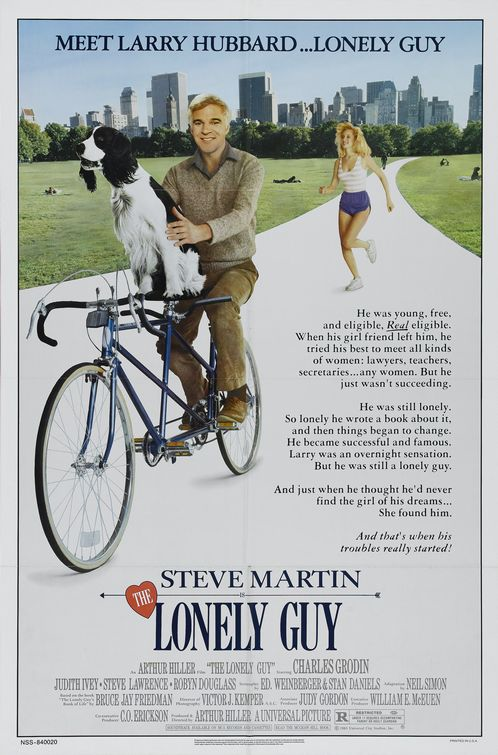
This film almost seems like an extension of Steve Martin’s character in The Jerk and could probably be retitled ‘The Jerk Goes to the Big Apple’. Here we find the same incredibly vapid, highly benign character looking for love and adjusting to the pitfalls of being single.

Like with The Jerk the film taps into the same absurd type of humor some of which is quite funny, but other parts become stretched and even stupid. The best stuff comes at the beginning and then starts to get strained by the end. There is no real story and the whole thing is just loosely structured hit-or-miss comical bits casually tied around the theme of loneliness.

Based on the novel by Bruce Jay Friedman the script was written by Neil Simon, Ed Weinberger and Stan Daniels three titans of comedy who have written some smart stuff in the past and yet I found their script here to be a bit annoying. It takes on the serious issue of social alienation with kid gloves. The points that it makes are superficial with no effort to dig deeper or make any type of real statement. The single male characters are too hopeless and needy and too much emphasis is placed on relationships and the misconception that people who are in them are always happier than those who are not. It also acts like being in relationships will somehow solve everything.

Judith Ivey makes a nice addition as Martin’s eventual girlfriend. She is not glamorously beautiful and therefore the two make a nice and realistic looking pairing. Her scenes and interactions with Martin make the film much stronger.

Unfortunately with Charles Grodin, who is dynamic at dry deadpan humor, is not used to his full potential. Merv Griffin has an unfunny cameo and the recently departed Joyce Brothers also appears with her nerdette persona that was beginning to wear thin.  Singer Steve Lawrence is completely miscast as a ‘chick-magnet’.

The bit involving lonely men jumping off the Brooklyn Bridge every two minutes borders on being tasteless and the running gag involving Ivey having an orgasm every time a man sneezes is just plain dumb. However, the part where Martin argues with a policeman over whether the poop on the sidewalk is from his dog is a gem. There is also a hilarious bit involving Groodin throwing a party with cardboard cutouts of famous movie stars as his ‘guests’ although don’t look for one of Gene Hackman because his have to be reserved one-week in advance!

My Rating: 6 out of 10

Released: January 27, 1984

Runtime: 1Hour 30Minutes

Rated R

Director: Arthur Hiller

Studio: Universal

Available: VHS, DVD, Amazon Instant Video

The Power (1968)

the power 2

By Richard Winters

My Rating: 6 out of 10

4-Word Review: Who has the power?

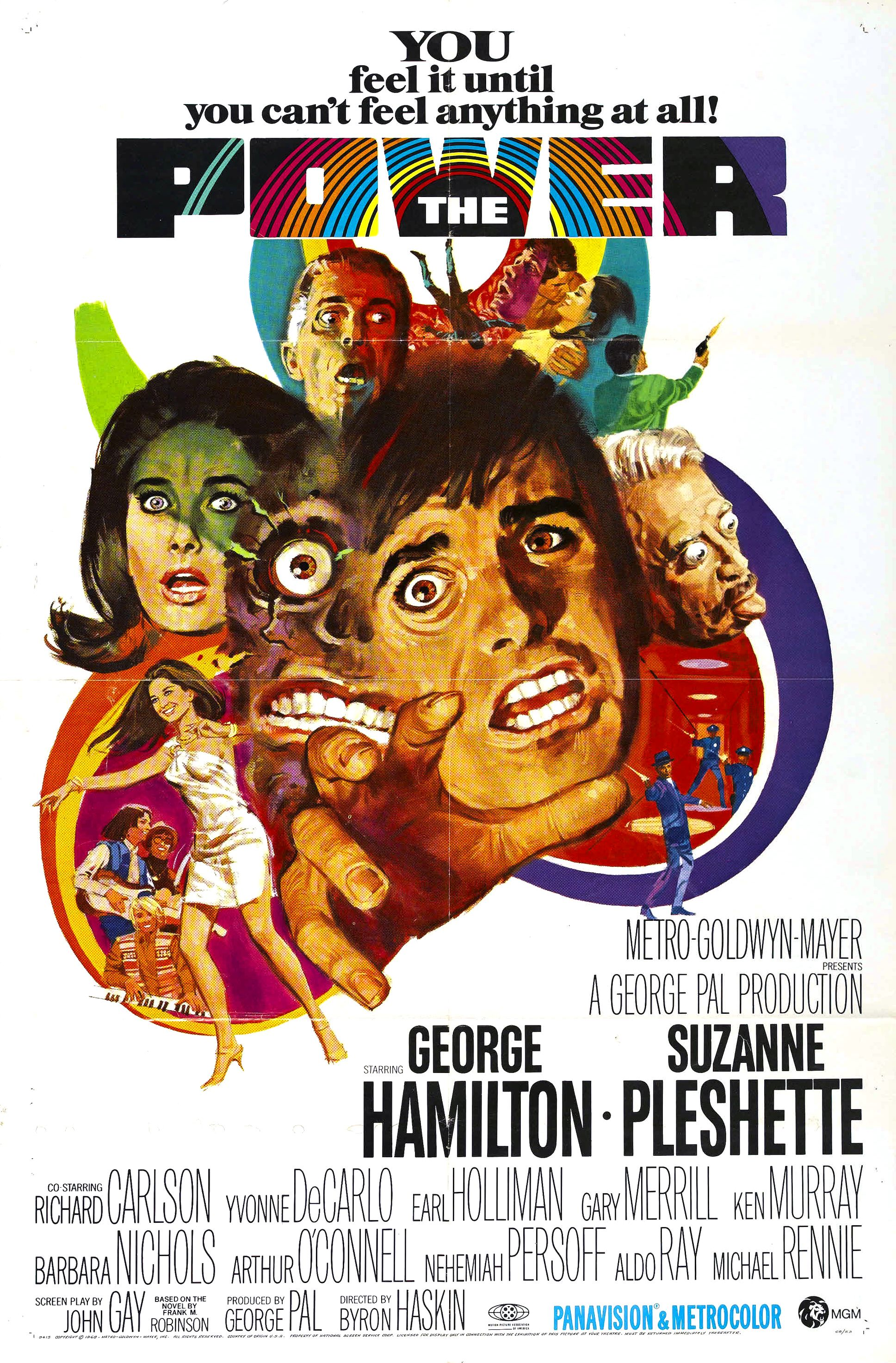
Professor Jim Tanner (George Hamilton) is the head of a scientific research group who come to realize that one of their members has strong telekinetic powers and is slowly killing off the other members one-by-one by fantastic and bizarre means. It is up to Jim and his assistant Margery (Suzanne Pleshette) to find out who it is and try to put a stop to it before they become his next victim.

There are definite shades to Agatha Christie’s classic mystery novel ‘And Then There Were None’ and in fact that title even gets mentioned here. Despite a pace that ebbs and flows Director Byron Haskin gives the proceedings a flashy and creative flair. Watching Jim getting attacked by toy soldiers in a display window is cool as is the part where he gets stranded in the middle of a desert. The ending features visuals of faces melting and skeletons dancing that reminded me a bit of the one in Raiders of the Lost Ark. I also enjoyed the scene showing an actual heart inside a man’s body getting squeezed and forcing it to stop.

The supporting cast is fabulous and almost of half of the film’s entertainment alone. Yvonne De Carlo is terrific in a brief, but fun bit as the tipsy wife of one of the victim’s. Gary Merrill is solid as a hard-bitten police detective and Aldo Ray is good as a menacing bad guy. Michael Rennie better known for his starring role in another sci-fi classic The Day the Earth Stood Still is effective here as the mysterious Arthur Nordlund, but my favorite of them all would have to Arthur O’Connell as the nervous and high-strung Henry Hallson. The look on his face after he is spun around at high speeds in a space compressor is probably the film’s best moment.

Where the film fails is that this mysterious person’s powers are much too broad with no limitations of any kind. I can handle the idea of telekinesis, but this guy can also make walls of buildings grow and make doorways disappear. He can even change the words on street lights to go from ‘Don’t Walk’ to ‘Don’t Run’. To me this made it seem too fabricated and far-fetched. Even in sci-fi there needs to be same perimeters and basis of logic of some kind and this film offers none. The fact that there is never any explanation given for how this person got these amazing powers, or what might have caused it makes it even weaker and hurts what is otherwise an interesting idea.

My Rating: 6 out of 10

Released: February 21, 1968

Runtime: 1Hour 48Minutes

Not Rated

Director: Byron Haskin

Studio: MGM

Available: DVD (Warner Archive)

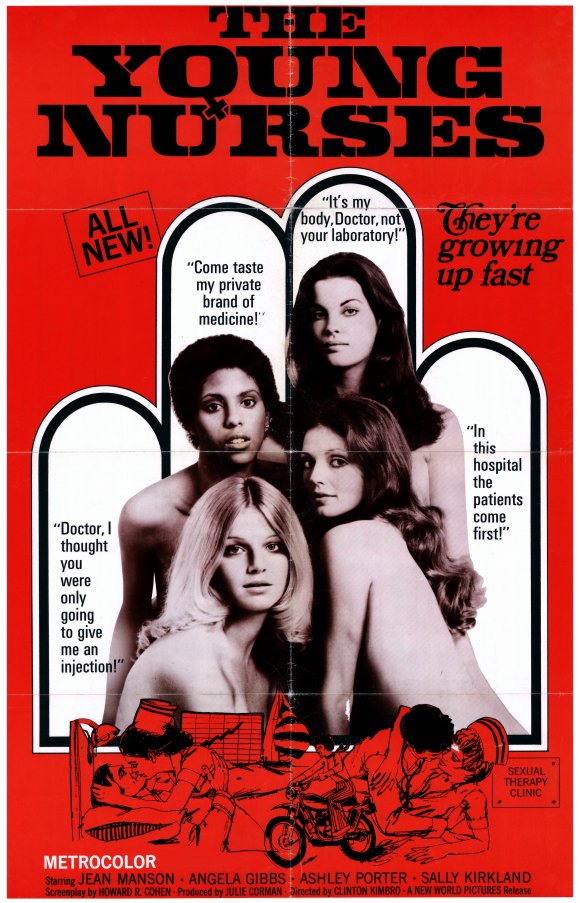
The Young Nurses (1973)

the young nurses

By Richard Winters

My Rating: 3 out of 10

4-Word Review: More sex than medicine.

More amorous nurses, more stilted dialogue, more bad acting and more cheap production values in this the fourth edition of the Roger Corman produced series.

The formula is starting to become old and outside of some scenic ocean beach scenery and a bouncy opening tune there is very little to recommend. The story of one of the nurses (Jeane Manson) falling in love with a handsome young hunk and nursing him back to health only to have him go out and recklessly put his life on the line again is too reminiscent of story threads used in past editions of this series. This time it has to do with sailboating and the man’s broken shoulder not yet healed enough to go back out, but because of pressures from his father he decides to get into a sailboating race, which is picturesque to watch, but offers little else.

The second story line involving a drug ring working inside the hospital is equally contrived, but does at least involve one exciting chase sequence.

There is of course the expected nudity with this one having a bit more than the ones in the past. Unlike the first three this one shows full frontal nudity particularly with Manson who goes dancing along the beach naked and even into the ocean. The segment involving one of them hallucinating about a sex orgy at a black nightclub is somewhat provocative as is the vaginal self-examination booth.

However, unlike the past films of the series not all of the three leads are seen sans clothes. Although she comes close Angela Gibbs is never seen nude, but at least makes up for it by giving the best acting performance. Ashley Porter is seen nude and looks good, but her acting is terrible and possibly the worst performance of the entire series. She says her lines in a robotic fashion that quickly becomes irritating.

The film does offer some fun cameos by famous B-movie actors. Allan Arbus is amusing as a sarcastic doctor yelling at a nurse for handing him incorrect utensils during surgery. Jay Burton hams it up as an overzealous manager to a rock group. Mantan Moreland can be seen as an old man who is almost run over by a motorcycle. Dick Miller plays an abrasive cop and Samuel Fuller is the head of the drug ring. Sally Kirkland is one of the patients, Nan Martin plays a woman reporter and Mary Doyle, sister of actor David Doyle, is engaging as a bitchy older head nurse.

The picture quality is excellent and the ocean side views are scenic. Unlike with the transfers of the first two features this one, which is all part of the Nurses Collection by Shout Factory, does not have any annoying sound distortion.

My Rating: 3 out of 10

Released: March 10, 1973

Runtime: 1Hour 17Minutes

Rated R

Director: Clinton Kimbrough

Studio: New World Pictures

Available: DVD (The Nurses Collection)

Antonia and Jane (1991)

antonia and jane 1

By Richard Winters

My Rating: 7 out of 10

4-Word Review: Friends aren’t always friends.

Jane (Imelda Staunton) is a depressed single woman slipping into middle-age and jealous of her lifelong friend Antonia (Saskia Reeves) who she feels is prettier and gets all the breaks. Jane pours her thoughts out to her therapist (Brenda Bruce), but the twist is that Antonia sees the same therapist and is having the same problems only in reverse as she is jealous of Jane. The first half-hour looks at things from Jane’s point-of-view while the second half shows it from Antonia’s.

The element that really makes this movie so enjoyable is the cutaways. Everything talked about during their sessions is recreated visually. These recreations are all quite funny. Some of my favorites are when Jane talks about a trip to Canada and we see her pushing over a tall pine tree with one hand. There is also the segment where Antonia’s 10-year-old son gives a raunchy stand-up comedy routine to his friends during his birthday party. The part where the two find themselves trapped in an old French war movie complete with them speaking fluid French and subtitles is quite creative as is the many different and colorful outfits that the two wear each year when they get together for their annual visit with the other.

Somehow friendships between females are quite different than the ones of their male counterparts. Harbored jealousies and insecurities seem to always lurk beneath the surface no matter how ‘happy’ their facades and this film explores them with biting and accurate detail as well as showing how skewed people’s perspectives can sometimes be. I also found myself digging the name Antonia and wondered why we don’t hear more women named that so…

Memo to all young couples and parents to be: Let’s get a few more  Antonias out there and a few less Ashleys. Thank You.

The Howard character played by Bill Nighy is also quite amusing. Jane meets him at an art exhibit where he displays big blown-up black and white photographs of twenty-four different naked rear-ends. The two go down the line and analyze each and every one, which in a strange way I thought was kind of interesting. I also got a kick out of the way he asks Jane out on a date.

Howard: Are you involved in a long-term monogamous mutually self-absorbed sexual relationship?

Jane: No.

Howard: Me neither.

In an effort to keep the quirkiness going the two women characters sometime do strange things that at times makes them hard to relate to and is the film’s only real weakness. For instance Antonia tells Jane that she is having an affair with Jane’s husband and Jane becomes very supportive of it and attends their wedding even though most people would probably want to kill their friend if they told them that and the unfaithful husband to boot. There is another scene where Antonia meets a stranger at a theater and goes back to his place for sex and even allows herself to get tied up during some kinky bondage games, which most viewers will consider being too reckless and putting oneself into too vulnerable a position with someone they don’t even know.

Usually films that seemed obsessed with tying everything together get overdone and annoying, but here the ironies are hilarious and become funnier as it goes along. Strangely it is the very end where the film loses it flamboyance and instead gives us a nice, simple scene of genuine human affection that leaves the strongest impact in this very offbeat and entertaining gem.

My Rating: 7 out of 10

Released: November 2, 1991

Runtime: 1Hour 15Minutes

Rated R

Director: Beeban Kidron

Studio: Miramax

Available: VHS