Tag Archives: Ned Beatty

The American Success Company (1979)

americansuccess

By Richard Winters

My Rating: 7 out of 10

4-Word Review: Taking on different personality.

Harry (Jeff Bridges) is a highly passive man that gets routinely dominated by both his boss (Ned Beatty) and wife (Belinda Bauer), who also happens to be his boss’ daughter. Determined to change his ways he decides to emulate the personality of a local tough-guy, who always seems to get his way and most importantly get the women. He works with a local prostitute (Bianca Jagger) to improve his bedroom skills and then finally ‘introduces’ himself to both his wife and boss. Surprisingly the ‘new Harry’ works to perfection as his domineering father-in-law learns to back-off and no longer humiliates him. His wife too likes the change, but he plays the part so well she refuses to believe it’s the same person. When he tries to go back to his old self she rejects him wanting only to be with the tough guy who she insists must be a totally different person and she can only be happy if she’s with him and no one else.

Back in 1978 while filming Winter Killswhich also starred Bridges and Bauer, the funding for the project, which was through AVCO Embassy Pictures, was pulled leaving the shooting of the film only half completed. Director William Richert then decided to do this film in-between, using much of the same cast, in order to bring in the extra money he needed to complete the other one. The script was written in 1974 by Larry Cohen who intended it to be a vehicle of Peter Sellers, but at the time Sellers was in a career lull having starred in a lot of box office duds, so investors didn’t want to take a chance on it and Cohen was eventually forced to sell the script, which remained in turn-over until Richert finally decided to take it on. While the film failed to turn a profit and was barely released, Cohen often stated that the changes Richert did to the script helped ‘ruin’ it, he was still able to make enough through the selling of the distribution rights to resume the shooting of Winter Kills and get it completed.

On the whole there’s enough directorial touches to keep it engaging and Richert, who has a small role as one of the employees of the firm whose constant leering grin is great, clearly knows how to make it entertaining enough despite the story’s absurdities. The setting though of Munich, this was apparently one of the stipulations he had to agree to in order to get it made, is off-putting especially when the plot revolves around corporate America and is a satire on the American mindset. The heavy use of a white color makes the office interiors seem almost like a hospital and Ned Beatty, who was only 41 at the time, but with his hair dyed a tacky white color to come-off as an overbearing elderly man in his 70’s, doesn’t work at all. Since John Huston was also in Winter Kills and they were using the same cast from that one to do this one then he should’ve been cast in the part especially since he was really old and better at playing dominating characters.

Bridges is fun as he plays against his good-guy image. Some critics have considered him a bland actor whose characters are at times ‘too good to be true’, so having him turn around and be overly passive and downright wimpy who jumps in terror at his neighbor lady’s pet poodle is definitely amusing. However, the transition to the brazen alter ego is too quick and seamless. If he’s truly timid at heart then that trait should trickle through even when he’s pretending to be someone else, which doesn’t happen here, but should’ve. No explanation about how he gets this big colorful tattoo on his chest, which he wears while being the tough guy, nor how he’s able to remove so quickly when he goes back to being himself.

The biggest plus is Bauer, who started her career in Australia where she studied ballet and competed in beauty contests before coming to the US. Here she becomes the sole reason to watch the film as she’s not only gorgeous, but displays a delightful way of morphing from a spoiled rich girl persona, to demanding wife, and then back to submissive woman. Her accent helps enhance her character and plays off of Bridges well. The only issue is if she couldn’t stand her husband why did she marry him in the first place? This is a highly attractive women born into money, so there was no need to settle, so what was it about his original personality that she liked in order to get hitched? If she craved a more domineering man then why not go after that type of guy in the first place? The film fails to explain this crucial point and thus ultimately makes it shallow and empty-headed.

My Rating: 7 out of 10

Released: September 28, 1979 (Test Screening)

Runtime: 1 Hour 31 Minutes

Rated PG

Director: William Richert

Studio: Columbia Pictures

Available: DVD, Amazon Video
The Big Bus (1976)

bigbus1

By Richard Winters

My Rating: 6 out of 10

4-Word Review: Bomb planted on bus.

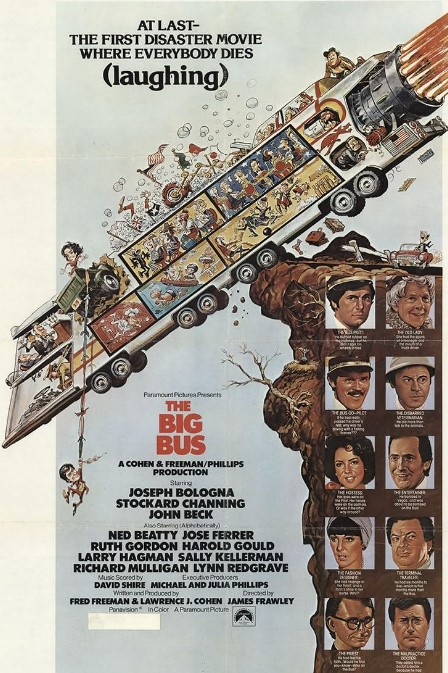
Cyclops is the new revolutionary designed double-decker bus that because it’s powered by nuclear fuel will allow it to travel non-stop between New York and Denver. Just before it’s set to make its maiden voyage a bomb goes off within the facility it’s been housed in, which seriously injures the bus’s designer Professor Baxter (Harold Gould). The vehicle itself remains unscathed, so the Professor’s daughter, Kitty (Stockard Channing), takes control of the project and hires a new driver named Dan (Joseph Bologna) whom she had a relationship with in the past. Dan though is still fighting-off the stigma of having crashed another bus into the mountains, and after being stranded for many days ended up reverting to cannibalism by eating all the rest of the passengers. The trip faces further obstacles when unscrupulous billionaire Iron Lung (Joes Ferrer), who resides inside a iron lung due to having polio as a child, orders his henchmen Alex (Stuart Margolin) to plant a bomb on the bus, so that it will be destroyed and prevent nuclear fuel from overtaking gasoline of which he owns much stock. Will Dan be able to overcome both his past and personal problems to both find and prevent the bomb from going off, or will this become yet another disaster on his already checkered past?

While Airplane! is widely thought-of as being the original parody of 70’s disaster flicks it’s really this one that came out a full 4 years earlier that deserves the credit. While it didn’t do well at the box office, which essentially pushed it off into obscurity it still upon second look has a lot of funny moments and deserves much more attention than it has gotten.  Not every gag works and some do fizzle, but the script by writing team Fred Freeman and Lawrence J. Cohen has far more hits than misses. Some of the best bits are the indoor swimming pool on the bus as well as the bowling alley and disco and the radiation suit to put on in times of emergency including the reaction of the passengers when it gets hung down from the ceiling compartment during the flight instructions. The attempt to treat the bus like it’s a metaphor for an airplane, which was the mode of transportation used in most disaster flicks, is quite funny especially the scene where crews in a small town try to halt the bus, or essentially ‘force it to land’ by spraying the main street with foam in order to slow the vehicle down.

The acting is in top form with many familiar faces from both television and the big screen. Stockard was probably my favorite she pretty much plays her part straight, but still manages to be quite amusing especially during the segment when she gets stuck inside a room that fills up with soda, which she stated in later interviews she almost drowned in.  Richard Mulligan and Sally Kellerman are equally amusing as a soon-to-be-divorced couple who share a rather unusual love-hate relationship. Larry Hagman as a dubious doctor, Ned Beatty as a moody technician and Murphy Dunne as a caustic pianist all help to top-it-off. Even Bologna, whose normally brash persona doesn’t make him a likely hero, scores comedic points though John Beck as his co-driver with a tendency to pass-out the second he gets nervous steals away most of the scenes they share.

Spoiler Alert!

The actual disaster, where the bus precariously balances over a cliff, is nicely photographed in a way that makes it seem real with some good stunt work, but I was disappointed that this ends up being the only real exciting moment. I didn’t like either that at the very end, just before the final credits begin to roll, the bus splits apart, which creates screams from the passengers. This was the type of movie where despite their oddball nature I had grown kind of fond of the daffy bunch and wanted to see them arrive safely, which with the ending here doesn’t occur. Instead the viewer is left (no pun intended) hanging, which is a giant cop-out. Just about every disaster flick made offers a conclusion where we see if the people ultimately make it out alive, or not and doing it the way they do here makes the viewer feel like they’ve seen only half a movie, which could explain why this did poorly at the box office.

A  good way to have prevented this would’ve been to chop up the beginning, which has a lot of unnecessary back-story. The bombing of the facility wasn’t needed as all of the calamity should’ve been saved for the bus ride itself. Dan’s visit to a bar in which the patrons harass him about his notorious past gets cheesy, particularly the cartoonish barroom brawl. This should’ve been cut- out too. The rumors of Dan’s supposed cannibalism could’ve been brought up at the press conference announcing the bus’s initial trip and seeing Dan’s uncomfortable response would’ve been enough to make the audience realize he had personal demons to overcome. The rest of the time could then be spent on the various problems that the bus runs into as it travels on road, which would’ve allowed for more excitement versus having the disaster portion seem like a side-story to the barrage of jokes that don’t always work.

My Rating: 6 out of 10

Released: July 23, 1976

Runtime: 1 Hour 28 Minutes

Rated PG

Director: William Frawley

Studio: Paramount

Available: DVD, Blu-ray, Amazon Video, YouTube

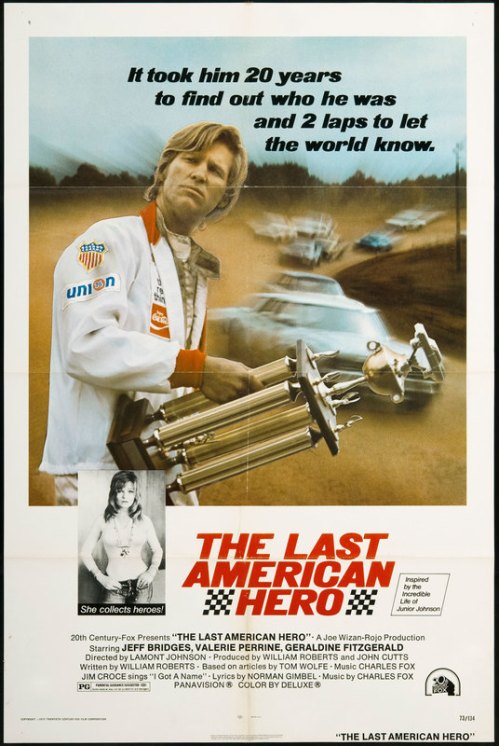
The Last American Hero (1973)

lasthero

By Richard Winters

My Rating: 7 out of 10

4-Word Review: He follows his dream.

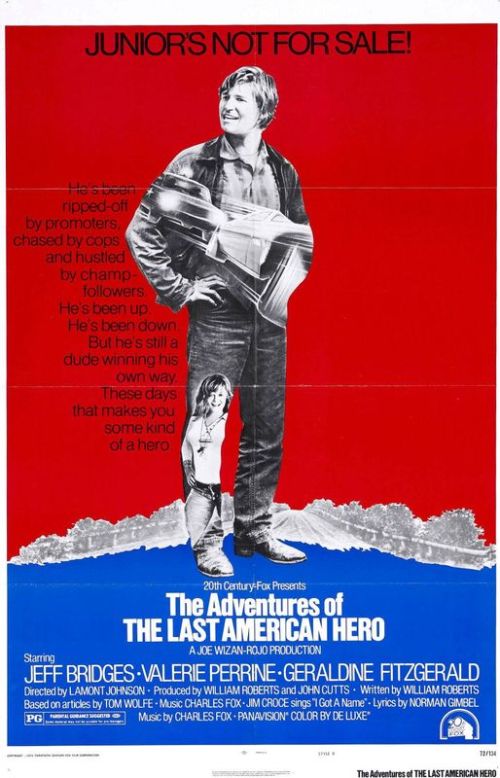
Junior Jackson (Jeff Bridges) works in his family’s moonshine business as a driver who transports the liquor and uses his superior driving skills especially his patented ‘bootlegger-turn’ in which to avoid capture he gets the vehicle to make a 180-degree turn by using the emergency brake, which then allows his car to go speeding off in the opposite direction. However, the authorities are able to catch-up with his father (Art Lund) and they throw him in jail for 11-months. With no moonshine business Junior is forced to find other means for an income, so he decides to try and turn his driving skills into a profit venture by entering into a demolition derby run by Hackel (Ned Beatty). He does well in this and eventually moves up to the higher levels and makes enough money for him to decide on turning it into his career, but his family does not approve as they feel it’s too dangerous. Junior is also forced to buy his own race car and pay for his own pit crew, which causes him to go back into the bootlegging business as a runner all to the disapproval of his father who feels it will just lead Junior into the same prison that he was in.

Overall this is one of the best bio’s out there and impeccably filmed and edited by actor-turned-director Lamont Johnson, who appears briefly as a hotel clerk. Johnson’s directing career was a bit spotty, he also did notorious clunkers like Lipstick and Somebody Killer Her Husbandbut this one is virtually flawless and there’s very little to be critical about on the technical end. The racing footage is both intense and exciting and one of the few racing movies where I was able to follow the race as a whole and not just be bombarded with a lot of jump cuts. I also appreciated how it captures the pit stops and the different conversations that the driver has with his crew during these moments and how sometimes this can be just as intense in its own way. The on-locations shooting done in and around Hickory, North Carolina as well as some of the neighboring race tracks during the fall of 1972 helps bring home both the ambiance and beauty of the region.

For me though what really stood out was Junior’s relationship with his family and how they were not supportive, at least initially, to his dreams as a racer and forcing him to have to pursue it on his own. Many times people who have ambitious goals don’t always have their friends and family on the same page with it and the road to success can definitely have its share of loneliness while also testing one’s own inner fortitude. One of my favorite scenes, that goes along with this theme, is when Junior is inside a K-mart and comes upon a recording booth that allows him to make a voice tape message that can be sent via the mail to one’s family or friends. Junior conveys into the microphone what he wants to say to his family, but ultimately seems to be talking more to himself than them, as a kind of self therapy to release the inner tensions that he’s been feeling, and subsequently never actually sends it out.

The acting is top-notch particularly by Bridges. Normally he’s good at playing mellow, level-headed characters, but here does well as someone who at times is quite volatile and caustic. There’s great support by Beatty as an unscrupulous race track owner, Ed Lauter as a highly competitive owner of a competing racing teams as well as Valerie Perrine as a woman who enjoys bed-hopping between different men, sometimes with those who are friends with each other, and yet completely oblivious with the drama and tensions that this creates. William Smith is good as a competing racer and while his part is small the scene where he walks in on Junior sleeping with his girl (Perrine) and the response that he gives is great. I thought Geraldine Fitzgerald, who plays Junior’s mother, was excellent and her Irish accent somehow effectively made to sound southern, but she should’ve been given more screen time.

The story is based on an Esquire article written by Tom Wolfe that was entitled ‘The Last American Hero was Junior Jackson. Yes!’, which in turn was based on NASCAR racing champion Junior Jackson (1931-2019) who also served as the film’s technical advisor. The movies pretty much stays with the actual account, but does change one pivotal point in that it has the father going to jail when in reality it was Junior who was sentenced to 11-months in 1956. Why this was changed I don’t know, but it usually helps the viewer become more emotionally connected to the protagonist when they see them going through the hardship versus someone else, so having Bridges spend time in the slammer would’ve made more sense. The film is also famous for its theme song ‘I Got a Name’ sung by Jim Croce, but this song has been played so much on oldies radio that one no longer connects it with the film and in fact when it does get played it takes you out of the movie because it reminds you of somewhere else where you’ve first heard it, which most likely wasn’t this movie.

lasthero2

My Rating: 7 out of 10

Released: July 27, 1973

Runtime: 1 Hour 35 Minutes

Rated PG

Director: Lamont Johnson

Studio: 20th Century Fox

Available: DVD, Amazon Video, YouTube

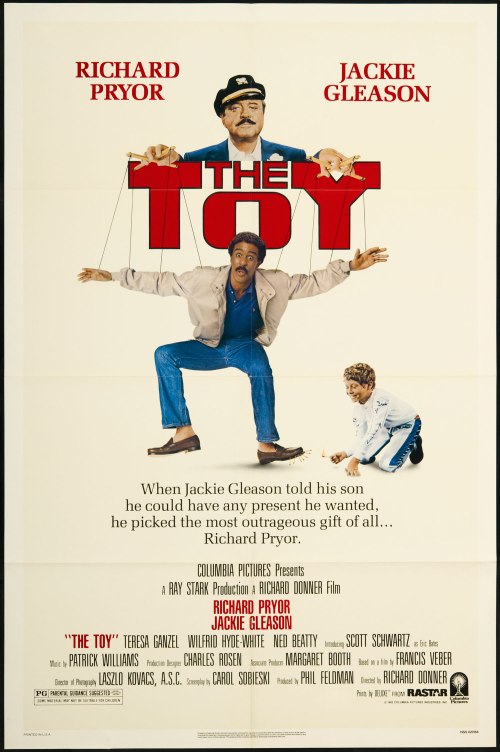
The Toy (1982)

By Richard Winters

My Rating: 1 out of 10

4-Word Review: Becoming a child’s pawn.

Jack Brown (Richard Pryor) is unable to find stable employment and at risk of being evicted from his home. In desperation he takes a job as a night janitor at a local toy store. It is there that he gets spotted by Eric (Scott Schwartz) the young son of business mogul Ulysses (Jackie Gleason). Eric is used to getting what he wants so when Jack inadvertently makes him laugh he decides to ‘buy’ him and turn him into his own personal ‘toy’. Jack is initially reluctant to agree to this, but when he’s offered a lot of money he eventually goes along with it. Initially the relationship between the two is quite awkward, but eventually they form a bond and Jack manages to teach Eric many important life lessons while also getting Eric’s father to realize that money can’t buy a son’s love.

When compared to the original French version this thing is painful to watch. Much of the problem stems around the fact that the satirical point-of-view from the first one gets watered down here. The French film took a lot of calculated potshots at capitalism and corporate hierarchy, but apparently Hollywood was afraid they’d be considered ‘unamerican’ if they took that route, so instead of sharp humorous insights we get tired formula dealing with a rich kid trying desperately to get his father’s attention whose selfish personality needs fixing.

Because the message is so muddled it becomes confusing what point it wants to take, so to make up for it,  they throw in all sorts of cringey life lessons crap like Pryor teaching Eric about the importance of friendship and even a a bit about ‘the-bird’s-and-the-bees’. After awhile it doesn’t seem like a comedy at all, but more like a tacky after school special your parents made you watch when you were in the third grade.

The humor that does get thrown-in gets equally botched. In the French version every comic bit that occurred fit into the film’s main them. Here though any gag that has the potential of getting a cheap laugh gets used whether it actually works with the main story or not. Many of which are tired, overused gags where you already know what the payoff will be before the set-up barely gets going.

Pryor’s casting was a bit controversial at the time due to him being black and then used as a ‘servant’ to a white kid, but the truth is Pryor is the only thing that saves it. He’s not exactly hilarious here, but his onscreen charisma is enough to at least keep it engaging. Gleason on the other hand, who was already in his mid-60’s at the time, seemed too old for the part although with the use of a wig he manages to camouflage it pretty well.

Schwartz, who is better known as the kid who gets his tongue frozen to a flagpole in A Christmas Story, and for his later career in adult movies, is annoying. In the French film I liked the kid, but the child character here is poorly fleshed-out having him go back-and-forth in irritating fashion from spoiled brat to emotionally needy tyke.

Ned Beatty makes the most of his small role, keeping his scenes funny when they could’ve easily been overlooked. Elderly character actor Wilford Hyde-White is amusing too and so is Teresa Ganzel as Gleason’s busty girlfriend, but virtually everything else falls flat. This includes an unnecessary side-story involving the Klu Klux Klan, which was not in the original film, and just extends this already excessive mess far longer than it needed to be.

My Rating: 1 out of 10

Released: December 10, 1982

Runtime: 1 Hour 42 Minutes

Rated PG

Director: Richard Donner

Studio: Columbia Pictures

Available: DVD, Blu-ray, Amazon Video, YouTube

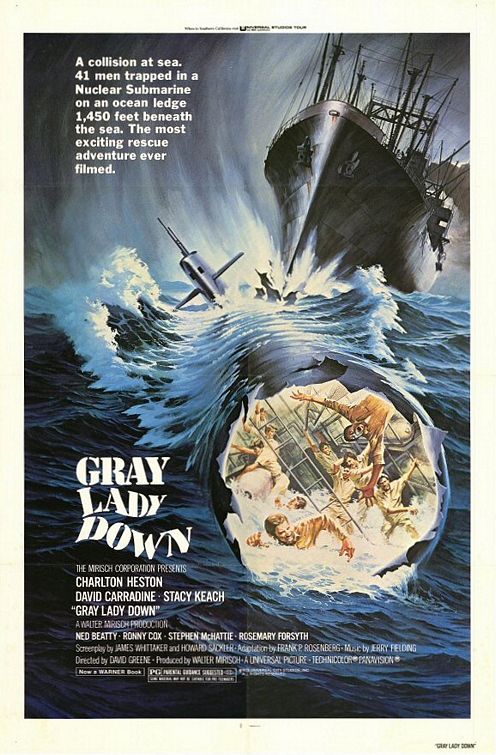
Gray Lady Down (1978)

By Richard Winters

My Rating: 7 out of 10

4-Word Review: Submarine crew needs rescue.

Captain Paul Blanchard (Charlton Heston) is on his final submarine mission, but just as the vessel surfaces it gets struck by a Norwegian freighter, which sinks it to the ocean bottom. The navy’s rescue team is unable to get to the crew due to a rock slide that covers the escape hatch. Eccentric Navy Captain Gates (David Carradine) is brought in as he has created a submersible vehicle that can go down the depths of the ocean and remove the rocks from the sub, but his personality clashes with that of Captain Bennett’s (Stacy Keach), which further hampers the rescue efforts.

The story, which is based on the 1971 novel ‘Event 1000’ by David Lavallee gets off to a shaky start. Although the interiors of the vessel look quite authentic the exterior shots, especially those showing the crew sticking their heads outside the vessel’s port hatch, were clearly done on a soundstage in front of a green screen and nothing is worse than a film that tries hard to be meticulous in one area only to compromise in another. When the sub gets hit many of the crew, which were made up of stunt men and not professional actors, overreact giving it an unintentionally comical feel.

The cutting back and forth to scenes inside the Norwegian ship and how that crew becomes panicked was not necessary. Again, the acting gets a bit over-the-top here too and the dialogue is shown in subtitles due to them speaking in their native language. It might’ve actually added to the intrigue had we not seen what went wrong with the other ship to cause the collision especially since the focus of the film is on the rescue effort anyways.

Once the rescue gets going it gets better with a solid pace that keeps things on a realistic level and continues to throw in new twists that makes the attempted rescue continually more difficult. Although it does get to a point where it seems nightmarish scenarios are introduced simply for the sake of drama and almost like it was piling-on the problems making the submarine crew look like they were the most unluckiest people on the planet in order to have one bad luck situation happen after another.

The scenes involving Carradine and his relationship with his pal Mickey (Ned Beatty) as well as his animosity with Stacy Keach are more interesting than the ones involving the crew stuck in the ship. Part of the reason is there is no backstory given to any of the characters, so we never see them as three dimensional people and our empathy for their welfare isn’t as much as it could’ve been. A brief bit shows the wives of the crew upset at the news, but an added side-story would’ve helped. In fact I was genuinely shocked that Rosemary Forsyth, who plays Heston’s wife, has only a single line of dialogue. I realize she may not be an A-list star, but she has a respectable enough body of work to expect something more than a just a token walk-on bit and I’m surprised she took the part.

Spoiler Alert!

The ending is tense and filmed in a way that you’ll never realize that the subs used were simply miniaturized models shot on a soundstage with smoked used for the underwater effects. However, the drama could’ve been heightened especially when one of the characters sacrifices their life to save the others, which should’ve come off as a shock, but the film telegraphs it, which lessens the effect.

End of Spoiler Alert!

Heston’s a stiff acting doesn’t always work, but here he’s excellent and despite being well over 50 appears amazingly young and agile. This marks Christopher Reeve’s film debut who looks absolutely boyish as well as a reunion of sorts for Ned Beatty and Ronny Cox who starred together 6 years earlier in Deliverance although here they do not share any scenes together.

My Rating: 7 out of 10

Released: March 10, 1978

Runtime: 1 Hour 51 Minutes

Rated PG

Director: David Greene

Studio: Universal

Available: DVD, Amazon Video, YouTube

The Thief Who Came to Dinner (1973)

the thief who came to dinner 3

By Richard Winters

My Rating: 5 out of 10

4-Word Review: Detective hounds jewel thief.

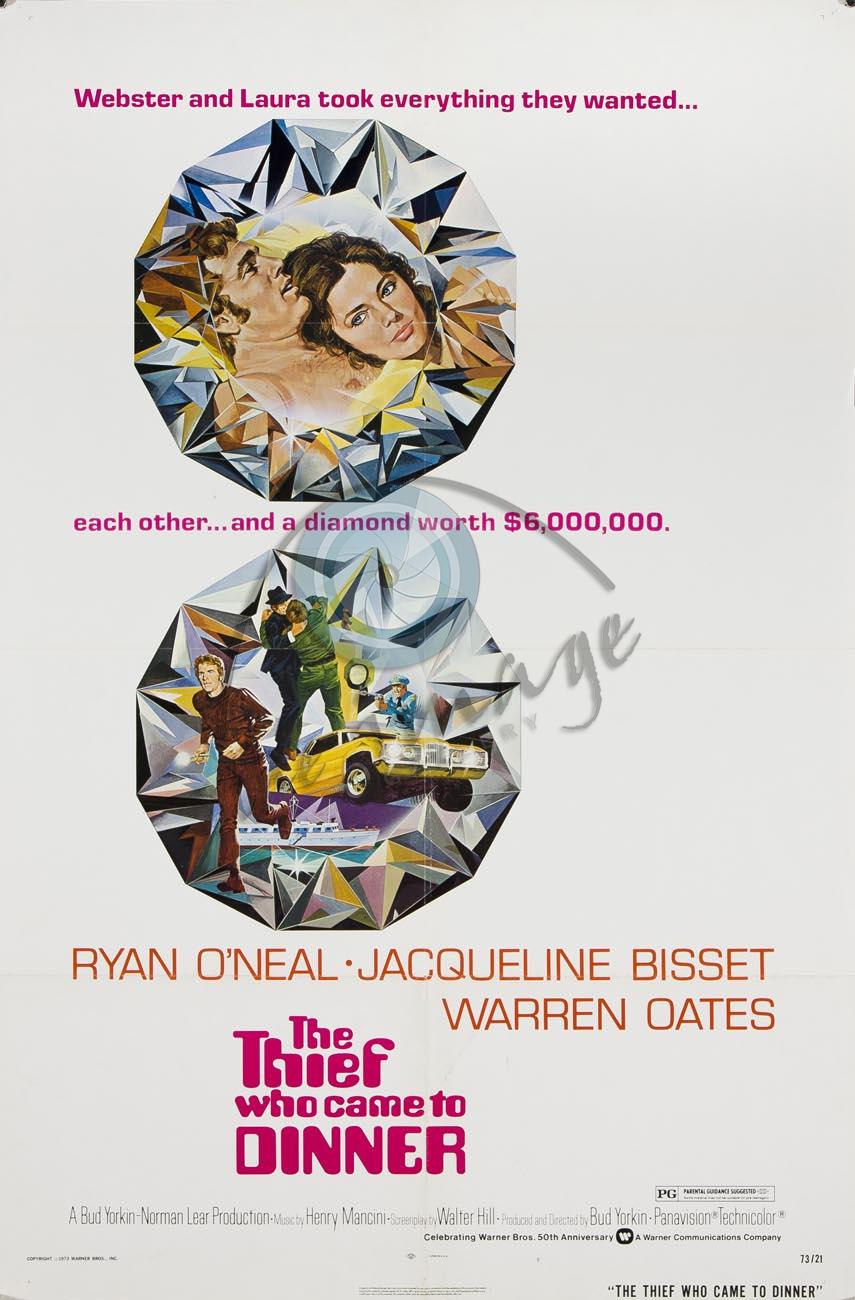
Webster (Ryan O’Neal) is a bored computer programmer who has grown cynical of the business world and decides to become a modern day Robin Hood. He does so by stealing paperwork listing illegal activities of a corrupt politician (Charles Cioffi) and uses this to blackmail him into giving the addresses of his rich and equally corrupt pals. He then robs them of their jewels while with the help of a local fence (Ned Beatty) resells them and keeps half the profits. He even manages to get into a hot relationship with a beautiful woman (Jacqueline Bisset), but just as things start to click insurance investigator Dave Reilly (Warren Oates) gets on the case who’s determined to expose and nab Webster anyway he can.

The film, which was written by Walter Hill and based on a novel by Terence Lore Smith, has a slick even smug attitude about it. It has some interesting ingredients, but never really gels. Webster pulls off these robberies with such relative ease that they are barely interesting to watch. The scene where he gets rear-ended by an old lady and then chased throughout the streets of Houston when he cannot produce proper identification to the police is fun, but there needed to be more of this and the otherwise laid-back pace does not help.

the thief who came to dinner 2

Despite his good looks O’Neal is a weak leading man although here he isn’t too bad. Still the supporting cast easily upstages him especially Oates and had he been made the star this film would’ve been far better. The scene where his car breaks down while tailing O’Neal and then having O’Neal turn around to help him fix it is quite amusing as is Oates’ final act of defiance towards his superiors after he gets fired.

Austin Pendleton is quite funny as an obsessed chess player and Beatty is great as a caricature of a ‘good ole’ boy’ Texas con-man and he really deserved more screen time. Bisset is wasted, but looks beautiful as always and I really digged her ritzy, spacious house that outside of a two lamps had no furniture at all.

The production has very much of a European flair, but its sophisticated façade quickly wears thin. You keep waiting for it to catch its stride, but it never does making it fluffy and forgettable including its wide-open non-ending.

the thief who came to dinner 1

My Rating: 5 out of 10

Released: March 1, 1973

Runtime: 1Hour 40Minutes

Rated PG

Director: Bud Yorkin

Studio: Warner Brothers

Available: VHS