Tag Archives: Geoffrey Lewis

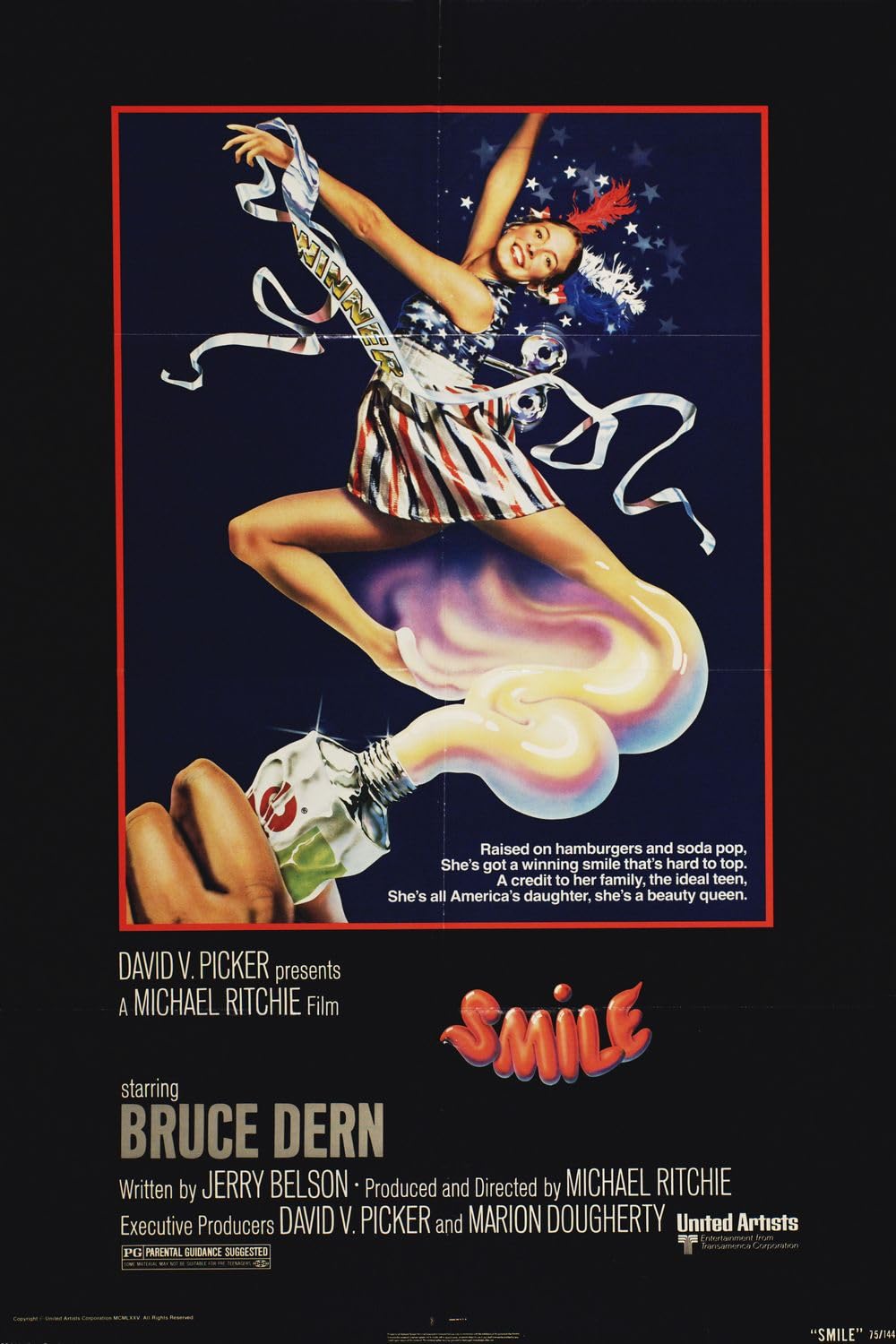
Smile (1975)

By Richard Winters

My Rating: 9 out of 10

4-Word Review: Producing a beauty pageant.

Santa Rosa, California is the site of this year’s Young American Miss Pageant. Each person that’s involved in the pageant approaches it differently. Bob (Bruce Dern), a middle-aged man who works as a car salesman, sees his position as a judge on the panel as a diversion from his otherwise mundane suburban life. Brenda, the pageant’s executive director, considers it a way to display her perfectionist qualities of control and leadership. Her husband Andy (Nicholas Pryor) views the proceedings in a much more cynical fashion and another added element to their already troubled marriage. Tommy (Micheal Kidd), the dance choreographer, approaches it as just another paycheck while Doria (Annette O’Toole), one of the contestants, considers it an opportunity to bolster her name and face even though Robin (Joan Prather), who’s competing against Doria, enjoys the whole thing just for the experience and isn’t concerned with who wins it, at least not initially.

The film marks the third entry in director Michael Ritchie’s American Dream trilogy and one of many he did dealing with competition and how this can change people in both good and bad ways with The Bad News Bears being the most famous of those. The gifted Jerry Belson wrote the script that was based on Ritchie’s own experiences as a pageant judge and many of the situations shown here were ones he went through. Unfortunately, despite the script being absolutely top notch to the extent of being one of the best satires ever written and equal to the more well-known Network that came out a couple years later the movie has not been seen by many, and the title has in recent years been eclipsed by the horror movie franchise. The is because the film’s studio, United Artists, had no confidence in the material and didn’t believe it would generate any profit and thus released it to only 4 theaters nationwide and thus few people ever saw it though in the following decades it has generated a small cult following and even a stage musical.

The finely etched, well-defined characters are what really sets it apart and each of them could be the centerpiece of their own movie if they wanted. Dern, who usually plays psycho roles, is excellent as a father who’s still clinging to his optimism even as everything around him deteriorates. Pryor equally good as his friend and counterpart who finds the suburban dream to be full of letdowns and lies and tries adamantly to break through Dern’s upbeat shield in order to get him to see the truth too. Feldon, best known as Agent 99 in ‘Get Smart’ TV-show, is terrific as well as a complete control freak and her defining moments coming during a scene in her living room, with all the furniture draped in protective plastic, and where she tries to literally goad her husband Andy into killing himself.

Even the minor characters display a unique angle and perspective on things including the janitor (Titos Vandis), who seemingly has a bottle of alcohol hidden everywhere, and makes keen observations on the others as well the music director (William Traylor) whose sarcasm and sexism knows no bounds. Geoffrey Lewis is memorable too as a marketing director who tries to promote the wholesome image of the contest only to in one really funny moment blurt his true cynical feelings about it. Prather and O’Toole though are the ones who drive it as it’s through them we see the inside mindset of those being judged and it’s interesting how at the start it’s O’Toole who’s the more jaded of the two while Prather is the wide-eyed one, but by the end after her experiences here Prather has more than been able to catch up with her.

Spoiler Alert!

The direction is done in a way that makes it seem like a docudrama where everything is captured through an unfiltered lens showing it as it happens with none of the scenes being set-up in a way that makes it feel staged, which is to its benefit. However, this gets ruined, in one of the movie’s few weak points, when Dern’s son Little Bob (Eric Shea) gets caught taking polaroids of the women in their undress. Instead of hearing the dialogue of the people when they catch him, as well as Dern’s when he finds out, which could’ve been quite revealing, music gets played over it, which is jarring as it reminds the viewer they’re watching a movie, even though it had spent the rest of the time trying to convince us we were seeing reality as it unfolded.

The ending is a bit of letdown too. Ritchie and Belson wanted the winner to be a complete surprise both to the cast and crew, which explains why the camera swerves around in a jerky style as even cinematographer Conrad Hall didn’t know who it was and thus had to try to find her when her name is announced. However, having it be a girl (Shawn Christianson) who has no lines of a dialogue, and only seen briefly in a few group shots, was a mistake. The attempt was to show how pointless these contests are and how not much thought or care goes into who’s picked, as evidenced by one of the judges seen flipping a coin before he makes his decision, but it still should’ve been someone we had seen and heard earlier. Maria O’Brien, who plays an obnoxious contestant who annoys the others so much they even sabotage her talent act, would’ve been a better choice and the film would’ve still made the same point and allowed a little more of a lasting emotional effect. With the way it gets done here the viewer leaves feeling miffed and confused.

My Rating: 9 out of 10

Released: March 20, 1975

Runtime: 1 Hour 57 Minutes

Rated PG

Director: Michael Ritchie

Studio: United Artists

Available: DVD, Blu-ray
Bronco Billy (1980)

By Richard Winters

My Rating: 4 out of 10

4-Word Review: Rich lady and cowboy.

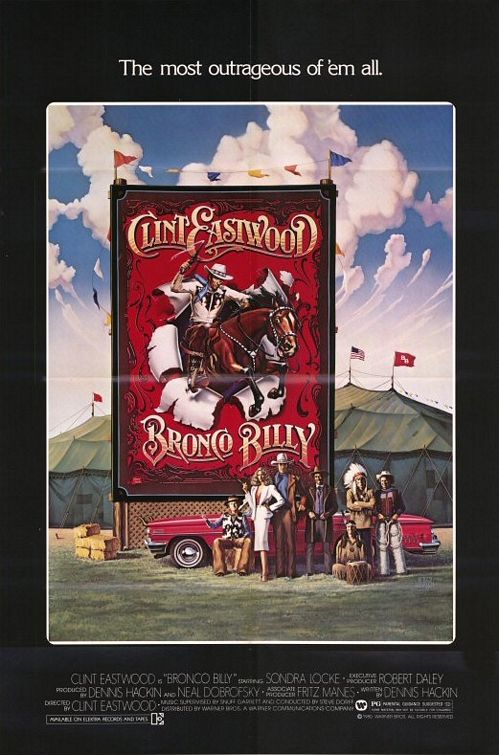
Bronco Billy (Clint Eastwood) is an aging modern-day cowboy who runs a traveling wild west show that is no longer attracting customers and making it hard for him to pay his employees. While at a gas station he meets Antoinette (Sondra Locke) a rich heiress with a haughty attitude who has just gotten dumped by her husband (Geoffrey Lewis) who also absconded with all of her money. Billy decides to hire her onto his show despite the fact that her presence causes animosity amongst the rest of his crew.

After Locke’s recent death, one person on Twitter, I don’t remember who, stated that this was the ‘greatest movie ever made’ and I’m not sure if he was joking or not, but if he wasn’t then I adamantly must disagree.  The film does start out okay and even has a certain charm to it, but the story and situations get too exaggerated until it’s impossible to take any of it seriously while also being too hokey to find funny.

The biggest logic gaps occur during the story thread dealing with Lewis being convinced to lie to the authorities that he killed Locke even though he really didn’t, so that he can get his share of her inheritance once he gets out. He’s told that if he pleads insanity that he will be ‘guaranteed’ to be released in only 3 years, but when in the history of the world has this ever happened and who would ever be dumb enough to believe it?  And that staying at a mental hospital is ‘no big deal’ and almost like a ‘resort’, which describes no mental hospital that I’ve ever head of.  There’s also no attempt by the police, or at least none is ever shown, to investigate the case to make sure Locke really has been murdered and try and retrieve her body.

The proverbial barroom brawl segment (must every western-themed film have this?) that occurs in the middle is as cliched and silly as it sounds and puts the whole rest of the film on a very cartoonish level. What’s even dumber is that during the brawl Locke goes outside to the parking lot where she gets accosted by two men, but just before they’re able to assault her Eastwood and his buddies magically appear to save her, but how could they have no known that she was in trouble when just a minute before they were shown taking part in the wild ruckus inside?

Locke’s rich-bitch personality is too much of a caricature and quickly becomes irritating to the point that when she eventually does soften, which takes awhile, it still doesn’t help. Having her able to shoot a pistol just as well as Billy seems out of character and never sufficiently explained. It would’ve been funnier had her dainty, cushy lifestyle been challenged more by throwing her into a rugged experience that she wasn’t used to, which doesn’t get played-up half as much as it could’ve or should’ve.

Eastwood’s character isn’t likable either. I would hate working for somebody that couldn’t pay me fore several months straight nor not allowing his employees to ad-lib any of their lines that he writes for them during the western skits that they put on even though people work better in their jobs when their allowed to have creativity and leeway in what they do and how they do it.

Why he would immediately fall head-over-heels for this woman is a mystery as Locke is only average in the looks department and her arrogant attitude is such an extreme turn-off that just about any guy would quickly dump her and never look back instead of continually pursuing her like Billy pretty much does here. Having them consummate their relationship should’ve only occurred at the very end while displaying much more of their personality clashes, which gets underplayed.

The scene where Billy and his gang try to hold-up a train is really funny and I enjoyed the inspired casting of having Woodrow Parfrey, who usually plays weirdo types, being cast as the head of the mental hospital, but other than that I felt the film was too predictable. You know where it’s headed right from the start and the theme of the old-fashioned, rugged individualist fighting more modern-day sensibilities has been done in so many other Eastwood films that here it becomes redundant.

My Rating: 4 out of 10

Release: June 11, 1980

Runtime: 1 Hour 56 Minutes

Rated PG

Director: Clint Eastwood

Studio: Warner Brothers

Available: DVD, Amazon Video, YouTube

Thunderbolt and Lightfoot (1974)


By Richard Winters

My Rating: 8 out of 10

4-Word Review: The one room schoolhouse.

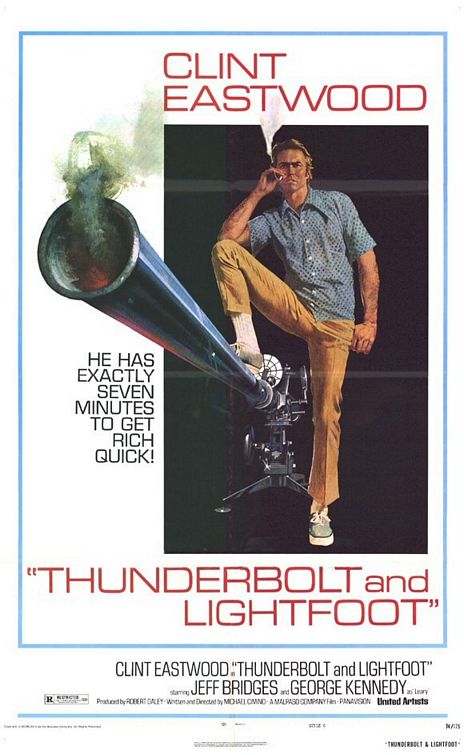
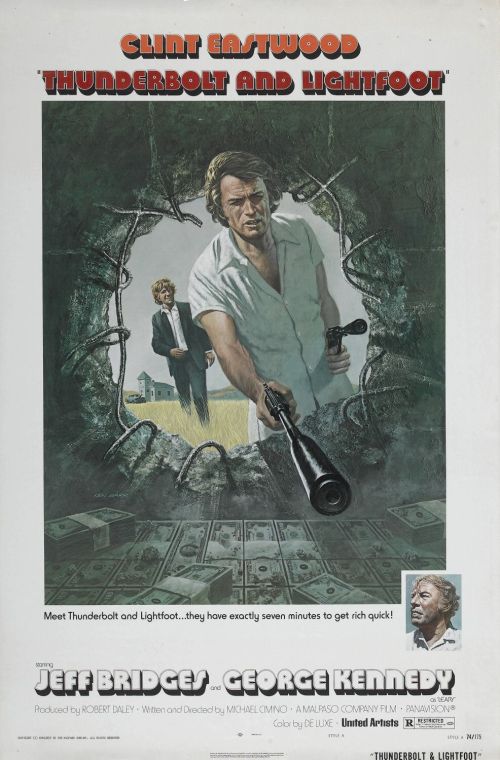
Thunderbolt (Clint Eastwood) is a former bank robber hiding out as a Montana preacher while trying to avoid Red (George Kennedy) and Eddie (Geoffrey Lewis) who are his former crime partners that mistakenly believe he double-crossed them. One day they manage to catch up with him and try gunning him down during one of his church services. Thunderbolt escapes by hopping into a car driven by Lightfoot (Jeff Bridges). Despite their contrasting temperaments and ages of the two end up hitting-it-off and even manage to bring Red and Eddie into the fold once it’s explained to them that Thunderbolt hadn’t sold them out. Now the four plan to rob the same bank again using a 20 millimeter cannon to break into the safe.

This was the Michael Cimino’s first foray behind the camera after having success co-writing the screenplays to Silent Running and Magnum Force.  For the most part it’s a success and I particularly enjoyed the way he captures Montana’s majestic landscape, which helps add a strong flavor to the story. Some of the comical bits and throwaway lines are hilarious and gives the film an edge over the usual bank robbery storyline.

The drawback is that like with Cimino’s other films it takes too long for the story to get going. The Thunderbolt’s backstory doesn’t get explained until almost 50 minutes in and we never learn much of anything about Lightfoot or why he would simply appear almost out of nowhere in this tiny, isolated town for literally no reason. There are certain scenarios that get introduced, but offer no payoff and the robbery itself gets pulled off a little too easily while not taking enough advantage of its unique premise.

The acting though is uniformly excellent including Bridges who is at his most engaging and even looks weirdly sexy when disguised as a woman and I loved the part when he talks to himself in the mirror. Kennedy gets one of his better post Cool Hand Luke roles as the cantankerous Red and Lewis is funny as his dim-witted partner.

The film also has some great bits for its supporting cast. Cliff Emmich is amusing as an overweight security guard with a porn fetish and Jack Dodson has a memorable moment when he finds to his shock that his teenage daughter isn’t quite as ‘innocent’ as he thought she was.

Bill McKinney is goofy as a crazy man driving around in a car with a trunk full of rabbits, but like with a lot of other things in the film it introduces something that doesn’t get fully explained including the fact that the character seems to be acting erratically because he is overcome by toxic gas fumes from his own car, but when Thunderbolt and Lightfoot take over the car and drive it for themselves they don’t for some reason end up having the same issue.

My Rating: 8 out of 10

Released: May 22, 1974

Runtime: 1Hour 55Minutes

Director: Michael Cimino

Rated R

Studio: United Artists

Available: DVD, Blu-ray, Amazon Video

Lucky Lady (1975)

lucky lady

By Richard Winters

My Rating: 6 out of 10

4-Word Review: Three’s not a crowd.

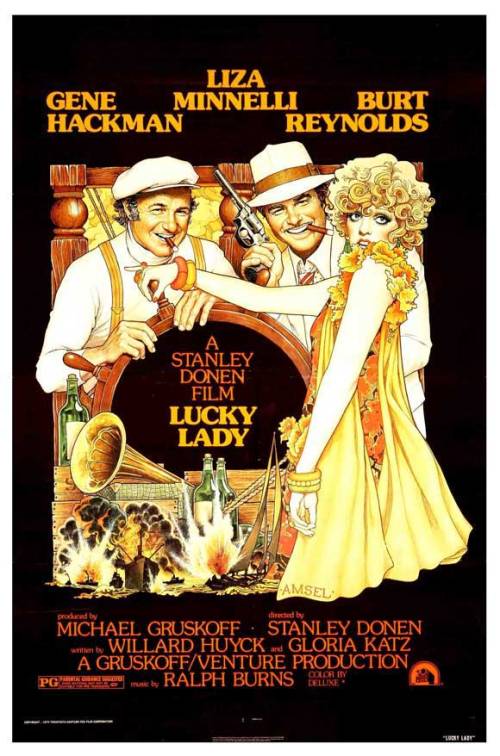
Walker (Burt Reynolds) and Claire (Liza Minnelli) make money by helping people illegally cross the Mexican border into the states, but when their third partner in the business dies and they almost get arrested they decide to get into an easier line of work. With the help of Kibby (Gene Hackman) they become rum-runners who transport liquor by boat under the cover of night during the prohibition era. As the three start to have some success and get to know each other they also form a love triangle and spend their evenings involved in a ménage-a-trois.

If you’re in the mood for non-think, grandiose style entertainment made in the same vein of classic movies from Hollywood’s golden era then you should find this more than satisfying. The plot moves along at a nice breezy pace with characters that are distinct and fun and full of snappy dialogue. The majority of the story takes place on water, but manages to remain quite exciting and ironically only becomes waterlogged when it goes on land. The lavish sets are splendid and the film could be enjoyed by simply taking in those alone.

The three leads are in top form and play against type. Minnelli, who actually looks sexy here in a flapper styled hairdo, is quite amusing with her acerbic one-liners. Reynolds is great as the klutzy member of the trio and Hackman is solid as always playing someone who seems meek at first, but eventually takes over things with his patented strong personality. Unfortunately John Hillerman, best known for playing Higgins in the ‘Magnum P.I.’ TV-series, is the only weak link of the cast playing a bad guy that never conveys enough menace to be truly threatening.

A young Robby Benson who was 18 at the time, but looks more like 14 is quite good in support. I was never all that impressed with the former teen heart throb, but here he is effective playing a shy kid who says little, but when he does say something it’s a gem. Geoffrey Lewis is also quite funny as an inept Captain of the Coast Guard. Mills Watson, who is best known for playing Deputy Perkins on the ‘The Misadventures of Sheriff Lobo’ TV-series can be spotted in a couple of scenes. IMDb does not have him listed here, but I recognized him and his name does come up on the closing credits as a character named Giff.

For lightweight entertainment the film does have quite a few action sequences that are surprisingly well choreographed and even quite bloody, but the climatic sequence becomes too cartoonish. I was also disappointed that the one unique element of the story, which is the three getting into a relationship, is only mildly touched upon and basically forgotten after the first hour. The film could’ve gone a lot farther with that and even made it the centerpiece of the plot, which would’ve helped make it more character driven and groundbreaking.

My Rating: 6 out of 10

Released: December 25, 1975

Runtime: 1Hour 58Minutes

Rated PG

Director: Stanley Donen

Studio: 20th Century Fox

Available: DVD


10 to Midnight (1983)

10tomidnight

By Richard Winters

My Rating: 3 out of 10

4-Word Review: Killer in the nude.

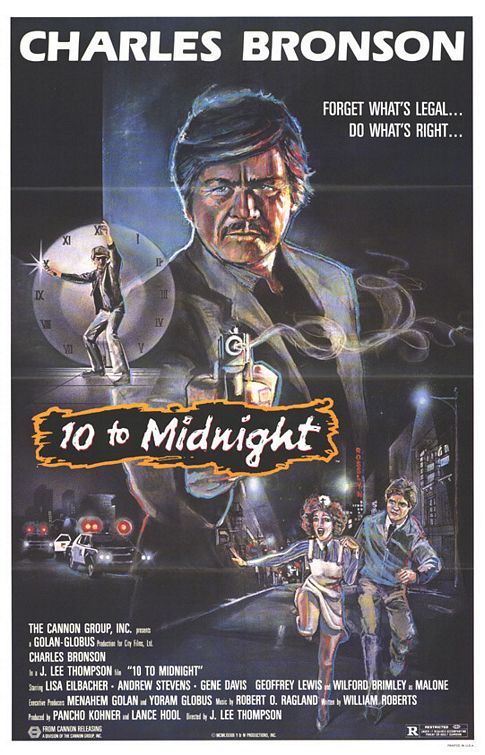
Warren Stacy (Gene Davis) has little luck with women and kills those who have previously rejected his advances and does so while being in the nude. Leo Kessler (Charles Bronson) is the cop on his case, but doesn’t have enough evidence to arrest him, so he decides to steal some of the blood sample from Warren’s latest victim, which is being stored at the police lab and is the very rare AB type and plant it on Warren’s clothing when he is not in his apartment. Warren is then brought in for questioning and when police find the clothing and blood evidence he is arrested, but Leo eventually admits to planting the evidence and is fired. The incensed Warren decides to get his revenge by going after Leo’s grown daughter Laurie (Lisa Eilbacher) and it is up to Leo to try and stop him before it is too late.

The film has an interesting twist to the Dirty Harry police-type dramas that too many times were solely focused on the renegade cop doing whatever it takes to bring in the bad guy no matter how many rules he broke in the process. However, this film nicely explores to an extent the reason for due process and how an overzealous cop can sometimes be more of the problem than the solution. Unfortunately it is not enough to save it as the majority of the movie is too routine and mechanical.

The action segments are unexciting and poorly directed. The scene where one of Warren’s victims just stands there whimpering while making no attempt to struggle and fight back seems artificial and dull. The final foot chase between Warren and Laurie looks staged and photographed in a way that offers no tension.

Davis is boring as the villain and has a deer-in-headlights look. His body movements are stiff and robotic and he delivers his lines in a monotone fashion. His pretty-boy male model face adds nothing and his nude scenes, which are shown only from the back does not add the spark that was intended. A good thriller needs a bad-guy actor that commands the screen, but Davis doesn’t even come close and makes Bronson who isn’t considered all that strong of an actor to begin with look brilliant by comparison. This film could have been much stronger had an established and talented character actor been given the role like John Malkovich or John Turturro.

Andrew Stevens is adequate as Leo’s young by-the-book partner, but Eilbacher is quite dull. Wilford Brimley adds some personality as an investigator, but is underused and Geoffrey Lewis scores a few points as Steven’s conniving lawyer.

There is a scene where Leo and Andrew are driving alone and having a conversation inside an unmarked squad car that brought to mind one of my biggest pet peeves, which are characters in movies never wearing their seat belts. I have always worn mine whether I am in my car or someone else’s and of course these days it is the law, but it seems almost insane that police characters wouldn’t especially since they could be careening down the street at high speeds at any second if they are suddenly dispatched to a crime scene. Having them not wear seat belts does not make them look anymore macho and instead makes them come off as stupid and reckless.

My Rating: 3 out of 10

Released: March 11, 1983

Runtime: 1Hour 41Minutes

Rated R

Director: J. Lee Thompson

Studio: Cannon Film Distributors

Available: VHS, DVD, Amazon Instant Video