Tag Archives: Gene Wilder

The Frisco Kid (1979)

friscokid

By Richard Winters

My Rating: 4 out of 10

4-Word Review: Rabbi travels across America.

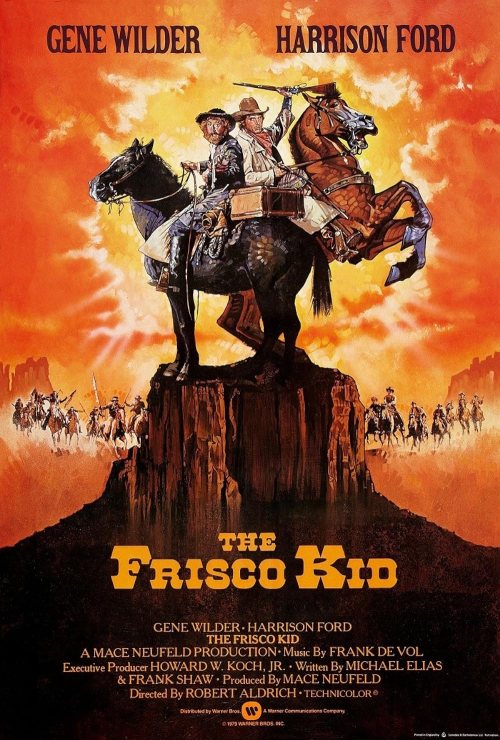
Avram (Gene Wilder) is a Polish rabbi traveling across the U.S. from Philadelphia to the west coast where he plans to head a congregation in San Francisco. He has all of his money taken from him by three unscrupulous men (George Di Cenzo, William Smith, Ramon Bieri) who initially befriend him only to eventually leave him stranded in the middle of nowhere. Avram is then offered some help by a local Amish community and even gets a job for awhile as part of a crew laying down train tracks. He’s eventually earns enough to buy himself a horse, so he can continue his travels. It is then that he meets up with Tommy (Harrison Ford), who unbeknownst to Avram is a robber. When Tommy steals money from one of the banks in a town that they pass through both he and Avram must go on-the-run in an effort to avoid getting caught.

The script was originally written in 1971 under the title ‘No Knife’ in reference to Avram who traveled with no weapon of any kind for protection. Originally John Wayne was considered for the role of Tommy, who was interested, but the studio could not meet his fee requirements so along with his declining health, he bowed-out. Dick Richards, who won praise for helming another western The Culpepper Cattle Companywas originally tabbed to direct this one, but during the pre-production phase he left the project, so it was given to Robert Aldrich, who, as Roger Ebert explained in his review, treated it like a routine assignment and didn’t put in a lot of heart into it.

The  shoddy effects are noticeable and really hurts the production. The interiors have a stage play quality and all of the outdoor scenes look like they were shot on a studio backlot. Certain long shots show steel silos in the background, which wouldn’t have existed during the turn-of-the-century time period that the story takes place while other shots are clearly just a matted photograph edited in. For a western to be fully effective it has to have some grit and atmosphere and this film unfortunately has neither. The first hour works more like darkly humored comical vignettes and while they succeed at being slightly amusing aren’t really all that captivating.

Wilder is excellent and probably the sole reason to see it, but I was more surprised by the presence of Ford who had just came-off starring in the landmark Star Wars, but here accepts second billing and isn’t even seen until 22-minutes in. I was more baffled by the motivations of his character and didn’t understand why he’d take-on the mission of helping Avram, a virtual stranger, through the perilous journey. This was a man who was quite self-sufficient and excellent with a gun and easily getting away with robbing people, so befriending a rabbi was just going to hold him back. A backstory was needed showing why he might seek-out a partner, even an awkward one like Avram. Possible  showing Tommy being a part of a larger gang who kick him out of the group and thus in a desperate need for companionship he befriends Avram, or maybe Avram gets Tommy out of some sort of jam and thus Tommy decides to help the rabbi on his travels in an effort to show his gratitude, but just having Tommy show up out of nowhere and become Avram’s instant buddy doesn’t really work. I would’ve liked to have seen a wider relationship arch too where Tommy would take much longer to warm-up to and understand Avram’s unique personality than he does.

Spoiler Alert!

The scene where Avram befriends an Indian Chief, played by Val Bisoglio, and teaches the Indian tribe how to do a Jewish dance is fun and the climactic duel between Wilder and Smith merits a few point as well. The scene though where Avram shoots a man gets botched. He had never used a gun before, so I would’ve expected him to miss his target especially since he was nervous and his hands shaking. The fact that he’s able to shoot the guy right through his heart the very first time he’s ever pulled a trigger is beating astronomical odds and not the least bit believable.

My Rating: 4 out of 10

Released: July 13, 1979

Runtime: 1 Hour 59 Minutes

Rated PG

Director: Robert Aldrich

Studio: Warner Brothers

Available: DVD, Blu-ray, Amazon Video, YouTube
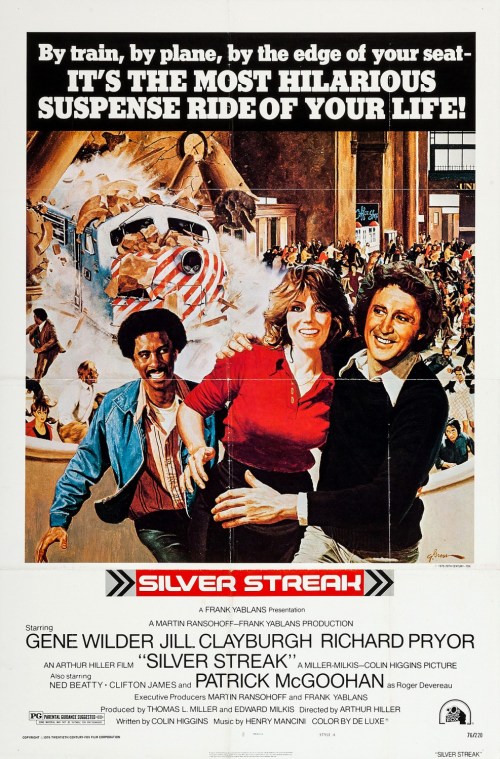
Silver Streak (1976)

silver

By Richard Winters

My Rating: 8 out of 10

4-Word Review: Murder on a train.

George (Gene Wilder) is a book editor taking a train ride from Los Angeles to Chicago. Along the way he gets into a relationship with Hilly (Jill Clayburgh) who is staying in the neighboring compartment. After a night of drinks they go back to her bed and begin making-out only for George to see a murdered body of a professor, whom Hilly works for as his secretary, get thrown off the train. Nobody else sees it except for him and everyone, including Hilly, believe it was a figment of his imagination, but George persists by doing the investigating himself. He goes to the compartment that the professor was staying in to see if he’s there, but instead he meets two men (Ray Walston, Richard Kiel) who throw him off the train. George then must find a way, in the middle of the empty desert, to get back on the train, so as to warn Hilly, whom he fears may be their next victim.

The script was written by Colin Higgins who up to that time was best known for having done Harold and Maude. He said he had always fantasized about meeting a beautiful blonde on a train and when it never panned-out in real-life he decided to write it into a story. Initially he was expecting an uphill battle to get it sold, but to his amazement it instead set-off a bidding war between Paramount and 20th Century Fox who both wanted to purchase the rights and it ended up selling for a then record $400,000. Originally Amtrak was going to be used as the setting for the Silver Streak, but the company became panicked that the film could cause bad publicity for them and ultimately refused to allow the studio to use any of their trains, so the film crew was forced to go north of the border and use the Canadian Rail System in its place while still pretending that it all takes place in the US when really all exteriors are Alberta, Canada and the skyline that gets seen in the distance that’s supposed to be Kansas City is really Calgary.

The reason the film works so well is that the comedy is on-target the whole way, but also manages to deftly blend it in with some nerve wracking action making the viewer let out belly laughs while also sitting-on-the-edge-of-their-seat at the same time. The pace is brisk with some amazing and very realistic stunt work that not only shows the train crashing through the wall of Chicago’s Central station, but also a few scenes with the character’s dueling it out on the roof of the locomotive as it’s going at high speeds. In fact the only slow spot in the entire movie is when Gene and Jilly make-out in the train car, which goes on too long and may make some people, including my conservative parents who watched the film with me when I first saw it on Showtime in 1982, as thinking this might be more a soft core porn flick than an action thriller and about ready to turn-if-off before it finally gets going with the plot.

Wilder, who was not Higgins’ first choice for the role as he intended it to be played by George Segal, is quite engaging and this was the first of several pairings that he did with Richard Pryor, who doesn’t appear until an hour in, but manages to take over quite nicely and makes a strong, memorable impression. Patrick McGoohan is sinister as the villain and one of the rare instances where in an otherwise comedy the bad guy isn’t funny and instead nasty, usually in comedies it’s considered mandatory that all the characters, even the bad guy, have some amusing moments, or lines, but McGoohan is just mean, which enhances the suspense element. Scatman Crothers, who initially seems to be playing an insignificant roles as the train’s porter, but in the end becomes quite crucial in getting everyone saved. Richard Kiel is good, though he speaks no dialogue, as one of McGoohan’s henchmen, in a role quite similar to the Jaws character that he played in two James Bond films that came out a year later, he even walks around with the same mangled up dental work in his mouth.

Spoiler Alert!

While the film works for the most part quite flawlessly I did find a few tidbits to quibble about. One is the scene where Gene accidentally bursts open the patrician door that divides his room from Jill’s who is busy dressing and doesn’t act startled when he suddenly breaks into her room, which I would think anyone, especially in a state of undress, would’ve responded with a scream and a look of shock, which would’ve made the segment funnier if she had.

Later on a police chief, played by Len Birman in a very bad impression of Mike Connors from ‘Mannix’, tells Gene that they know he’s innocent and have simply been putting-up manhunt posters with his picture on it for his own safety, so they could catch him and get him away from the evil McGoohan and his cronies who want to kill him. However, after he explains this he then hands Gene a gun and some bullets and tells him to come along with his men to help nab McGoohan who is still on the train, but how would this police chief know that Gene could handle a gun and was trained on how to shoot it, let alone even need him since his own men were well armed with rifles and could easily shoot down the bad guy themselves? There’s also another moment where the police chief shoots into a large crowd in an effort to hit McGoohan, which sends everyone into a panic and would be considered a major act of negligence for a cop to do.

Another scene has McGoohan explaining to Jill, Gene, and Richard about how he and his men never meant to really kill the professor, or at least not upfront, but when he did die that’s when they had to immediately ‘get’ a lookalike as an imposter to give everyone the idea that the professor was still alive. However, how exactly where they going to be able to find someone who looked so similar to the professor in such a quick, speedy way and then get him on the non-stop, fast-moving train?

The biggest exaggeration for me though is when Gene unhooks the back part of the train from the engine, while standing on a thin ledge and holding on for dear-life via a small metal rail and then able to successfully hop onto the train car that he had just decoupled from the other one. With them both going at high speeds I don’t think he’d be able to do it. Of course in the movie it gets done by a professional stunt man, who was able to time it, and rehearse it, to make it look easy, but in reality the average person would’ve either slipped, or missed grabbing the rail and thus fallen to the side of the tracks. This though could’ve actually been funny as we would then see Gene’s body roll on the ground and initially make it seem like he was hurt, or injured and then have him look up in aggravation and go: ‘Damn, I got thrown off the train for a fourth time!”

My Rating: 8 out of 10

Released: December 8, 1976

Runtime: 1 Hour 54 Minutes

Rated PG

Director: Arthur Hiller

Studio: 20th Century Fox

Available: DVD, Blu-ray, Amazon Video, YouTube
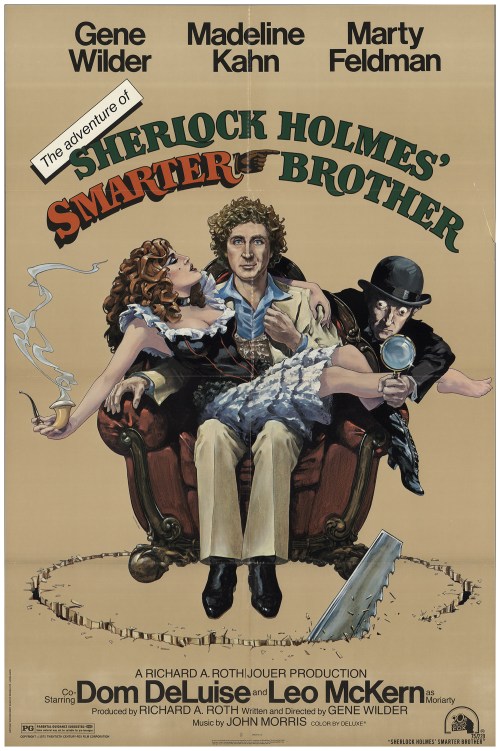
The Adventure of Sherlock Holmes’ Smarter Brother (1975)

sherlock

By Richard Winters

My Rating: 6 out of 10

4-Word Review: Sibling solves the case.

Gene Wilder plays Sigerson Holmes, the jealous younger brother of Sherlock, who is upset that his sibling is so famous for solving crimes while he sits in obscurity having not seen as much success though he feels he’s just as smart if not smarter. One day Sigerson gets a case that his brother doesn’t want to get involved in due to him desiring to lay low for awhile. It involves Jenny Hill (Madeline Kahn) who’s a beautiful music hall dancer who is being blackmailed by an opera singer named Eduardo (Dom DeLuise) over a lewd letter she sent him years ago. However, the document proves to be much more than just a letter and is in fact an important paper that foreign powers will pay high price to get their hands on. Eduardo agrees to sell it to the evil Professor Moriarty (Leo McKern), but will only hand it over to him during one of his operas, which Sigerson and his loyal partner Orville (Marty Feldman) plan to attend in order to intercept the paper before it gets into the wrong hands.

Gene Wilder was approached by producer Richard Roth to do a parody of Sherlock Holmes, but Wilder didn’t like the idea of poking fun of what he felt was an iconic character. Roth told him to think about it and then approached him a week later. By this point Wilder said he had come up with a better idea instead of it being about Sherlock it would focus on his jealous brother Sigerson. Roth found the premise intriguing and suggested Wilder begin writing the screenplay which he did while working on Young Frankenstein. Once completed he asked his friend Mel Brooks to direct, but Brooks declined saying he didn’t like working on projects that were not his own idea, so Wilder took the reins himself calling it a ‘terrifying commitment’.

While the movie has some good moments the Sigerson character is not interesting. For one thing he’s poorly defined. One minute he’s cunning and sharp and then the next he proves dimwitted and clumsy almost becoming another Inspector Clouseu. The comedy should feed off the character, but with it unclear whether he’s brilliant or buffoon it never catches its stride and for the most part the scenes with him in it are boring and the audience doesn’t care if he solves the case nor feel that there’s any redemption if he does. He’s also genuinely unlikable particularly with the way he snaps at Jenny Hill making you almost want to despise the guy and hope he doesn’t succeed. Also, if he really is Sherlock’s brother then I felt there needed to be some scenes with them together and the interplay between the two could’ve been amusing if done right, but this never happens.

Wilder directs the film the way most actors turning director do by having the scenes more extended and allowing the actors to drive the pace and momentum versus the editing. With a so-called ‘zany’ comedy like this that doesn’t work and there’s several segments that go on too long until it becomes dull and looking a bit amateurish. The biggest example of this is when Jenny arrives a Sigerson’s place to tell him about the letter. Their interplay doesn’t go anywhere and ultimately in order to get out of it the characters, for some unexplained reason, break-out into song and dance making it seem like its a musical, which it isn’t, but either way it’s dumb and not funny. During Jenny’s music hall show, which Sigerson and Orville attend, she sings a long song there too, which wasn’t needed and saps the comic energy.

There are though some offbeat moments much of which comes from McKern a usually serious actor who shines in his campy part and really plays it up to the point that he becomes the highlight. The part where he goes to a fortune telling machine, that he has inside his residence, is inspired and his visit with Eduardo in which the two strangely fondle each other and even go to bed together that gives off weird homoerotic vibes is good too in a sort of bizarre ‘what am I looking at’ type of way.

The best part though is when a giant saw blade cuts off the back of Wilder’s and Feldman’s trousers causing their bare behinds to be exposed. They then go to a formal dance party and shock everyone who sees their asses with them still not aware that they’re showing. What’s so interesting about this part is that they both have really good looking butts especially Feldman. You’d think with his freaking looking face that his rear wouldn’t be so hot either, but it amazingly is, so in keeping with our current male ass scorecard we still have Dabney Coleman, who bears his behind in Modern Problemscoming in first and Tim Matheson’s in Impulsebeing a close second and then Wilder and Feldman tying for third place.

My Rating: 6 out of 10

Released: December 14, 1975

Runtime: 1 Hour 31 Minutes

Rated PG

Director: Gene Wilder

Studio: 20th Century Fox

Available: DVD, Blu-ray

Haunted Honeymoon (1986)

haunted

By Richard Winters

My Rating: 1 out of 10

4-Word Review: Boyhood home is haunted.

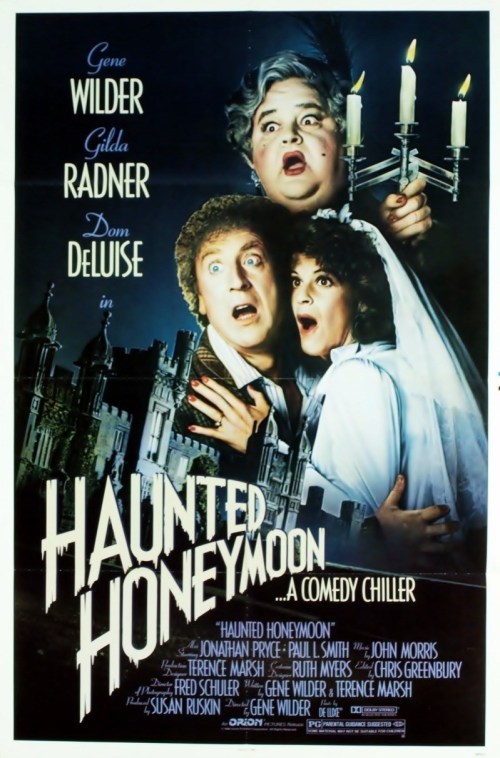
Larry (Gene Wilder) and Vickie (Gilda Radner) are performers on a popular radio show who are also engaged to be married. Ever since the wedding date has been set Larry has been going through a variety of odd behaviors including flubbing his lines and even making incoherent statements during the production that go over the air. Vickie thinks it’s just his nerves about getting married, but Dr. Paul Abbott (Paul L. Smith), who also happens to be Larry’s uncle, thinks it’s much more than that. He feels the only way to cure him will be shock therapy, or in this case to ‘scare him to death’. Since Larry plans on having his wedding at his boyhood home, which is an old rural castle, the doctor feels this will be the perfect spot to engage with the frights. Everyone on the premises is in on the plan, eventually even including Vickie, but as the make believe haunting commences it soon becomes obvious that there’s some real scares too that frightens everyone.

Gene grew up as a child reportedly scared of horror movies and tried to avoid them, but did enjoy what he called ‘comedy chillers’, which were movies that had some scares, but also balanced with laughs and sought out to create one of his own. He started writing the script while he was starring in Silver Streak, but then lost interest and put it away. While he was filming Hanky Pankyin which he met Radner whom he later married, he got interested in continuing with the script especially at her insistence as she felt it would make a great vehicle for the two.

The problem with it is that he created something completely out of touch with the times. Haunted houses, werewolves and other elements from 1930’s movies had all been parodied for decades to the point it had almost become a cliche in itself. This film adds nothing fresh to the mix and feeds off of gags and stunts that had been done hundreds of times making it lame right from the start. Had it been more updated to add in elements from modern day horror movies, or changed the setting so it wasn’t just the predictable rural castle complete with thunder and lightning outside, then maybe it might’ve had a chance, or at least piqued people’s interests, but as it is here the stuff is routine and lacking in originality.

The biggest shock is that you have Dom DeLuise in full drag and yet he isn’t funny at all. Wilder got the idea to use him for the part when he saw him impersonate Ethel Barrymore years earlier at a dinner theater he attended, but the mistake was that Gene wanted him to literally play it straight, but why put a guy in full female get-up if you’re not going to give it any type of payoff? It’s a shame too because I’ve found Dom to sometimes be quite hilarious and even be the scene stealer in some of his other films. Jonathan Pryce, who was also in the movie, stated how the entire cast and crew would sit around and let Dom entertain them between takes, but whatever he said and did off camera was missing onscreen and even the duet that he sings with Gilda fails to elicit even a chuckle.

The story creates this big set-up and then goes nowhere with it. Gene gives himself a few amusing bits and I suppose Bryan Pringle, who plays the aging butler named Pfister, and even Ann Way with her distinctive hawk-like facial features, have a couple of funny moments, but everything else falls flat including Radner who isn’t funny at all and overall given a very thankless part by no less than her own husband.

The film lost money at the box office and despite a month of promotions and ads it only managed to remain in theaters for week before it was pulled. It polled poorly amongst critics and audiences alike, which is probably the only real funny thing is what occurred behind-the-scense as the studio, Orion Pictures, refused to screen it for critics before giving it a general release. Usually when this happens it’s a sign that the studio heads know they have a stinker on their hands, but they denied this saying they were ‘very comfortable’ with the movie and ‘behind it 100 percent’ and only avoided the advance screening because there had been a ‘tendency lately by critics to be quite vicious about films’ in general and they didn’t want to ‘cater’ to that, but you’d think if they really knew they had a great movie their fear of ‘vicious reviews’ wouldn’t have been a factor.

My Rating: 1 out of 10

Released: July 25, 1986

Runtime: 1 Hour 22 Minutes

Rated PG

Director: Gene Wilder

Studio: Orion Pictures

Available: DVD, Blu-ray

Sunday Lovers (1980)

sunday1

By Richard Winters

My Rating: 4 out of 10

4-Word Review: Stories about illicit sex.

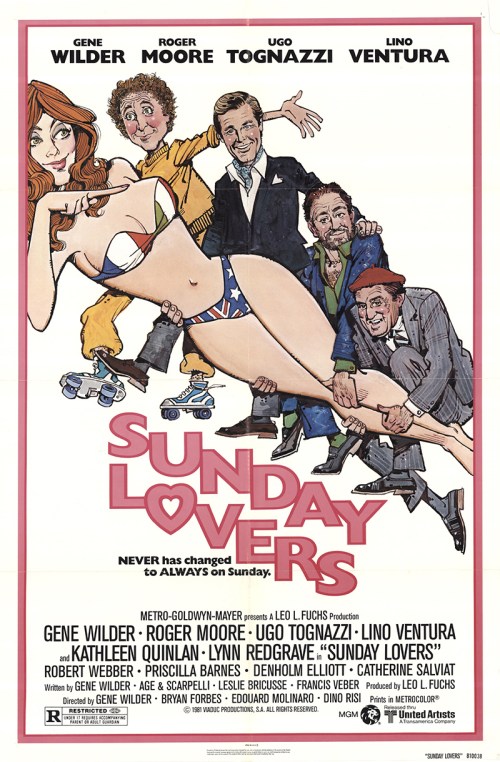
International production has 4 stories taking place in a different country with a famous male movie star and director native to that region. The stories central theme revolves around love-making, or attempts thereof, and all outside of marriage. The concept sounds like it should’ve been a creative experiment especially with all the big-name talent, but the results are flat and forgettable.

The first story, ‘An Englishman’s Home’, stars Roger Moore as Harry Lindon, a rich man who owns a villa that Winston Churchill once resided in. He meets by chance a beautiful young blonde named Donna (Priscilla Barnes), who’s an airline stewardess in London on layover and who becomes impressed with Harry’s home and goes with him to visit it. It’s there that Harry plots with his loyal butler (Denholm Elliot) to get her to go to bed with him, but his plans are disrupted when his lady friend Lavina (Lynn Redgrave) comes for a unexpected visit. He and his butler spend the evening trying to avoid having the two meet by creating a scheme where Harry will be ‘forced’ to leave the dinner table with one to answer a phantom phone call, which allows him to then visit the other one before being informed by his butler of yet another ‘phone call’.

Moore is funny with his glib and sarcastic delivery and Barnes is amusing playing-up the ditzy blonde persona. The plot though is neither original, or entertaining and becomes boring quite quickly. The ending has a novel twist, but this is where I felt the story should’ve begun, which would’ve been more interesting.

The second segment, ‘The French Method’ was written by the prolific Francis Veber and deals with Francois (Lino Ventura), a French businessman, trying to close a deal with an American businessman named Henry (Robert Webber) The problem is that Henry is a middle-aged lech who’s got the hots for Francois’ attractive receptionist Christine (Catherine Salviet). Henry insists that before any deal is made he must have dinner with both Francois and Catherine. Francois is reluctant to ask Catherine to come along, but he’s so desperate for the deal to go through he becomes willing to do almost anything. Christine agrees despite disliking Henry. Once the dinner engagement commences Henry makes clear that he wants Francois to come-up with a polite excuse to leave, so the two can be alone together. Francois does as he’s asked, but then returns to have a confrontation with Henry, which leads to unexpected results.

This segment is expertly played by the three leads particularly Ventura and the characters are fleshed-out enough to keep it intriguing. The final twist is fun making this easily the best of the four.

The third segment, ‘Skippy’, was written and directed by Gene Wilder who also stars in the lead. It’s about a suicidal patient who’s allowed a weekend pass out of a mental hospital. He then meets-up with a younger woman (Kathleen Quinlan) at a disco. They hit-it-off especially after finding that each of them are ‘nutcases’. They go back to her place and share a passionate night of lovemaking only for him to have his heart broken the next day when she confides in him a surprising revelation.

This story is helped greatly by Quinlan who is young and beautiful and you even get to see her topless though you also have to put up with Gene’s bare bum too. Either way she gives a sprightly performance, but the story is odd and takes too long to play out. I was expecting it to go in a different direction than it does and the ending offers no pay-off.

The final segment, ‘Armando’s Notebook’, stars Ugo Tognazzi as a married man whose wife goes off on a trip to visit her sick mother. Armando uses this as an excuse to hook-up with old girlfriends from the 60’s by using his little black book that still lists their addresses and phone numbers. Unfortunately when he meets them he finds that things have changed quite a bit and not for the better. Many have aged to the point that they’re no longer attractive, or have become ‘liberated’ through feminism and won’t allow him to take advantage of them like they used to. One turns-up dead while yet another has become a high class prostitute who even accepts credit cards.

While this story is watchable it’s also too jokey and features a weird bit where one of the women, played by Sylva Koscina, has acquired the ability to suck in a massive amount of air and then blows it out with hurricane force, which has a strange supernatural vibe that doesn’t fit with the rest of the material.

My Rating: 4 out of 10

Released: October 31, 1980

Runtime: 2 Hours 5 Minutes

Rated R

Directors: Bryan Forbes, Edouard Molinaro, Dino Risi, Gene Wilder

Studio: Viaduk Productions

Avaliable: None

Quackser Fortune Has a Cousin in the Bronx (1970)

By Richard Winters

My Rating: 7 out of 10

4-Word Review: He learns to adapt.

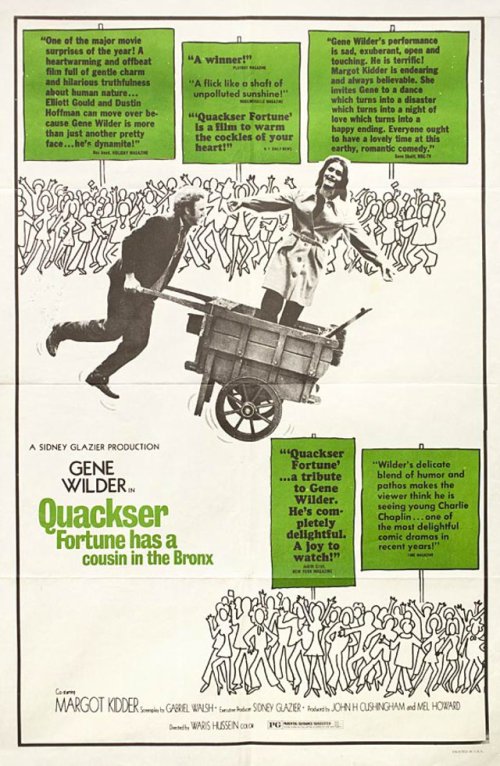
Quackser (Gene Wilder), a nickname given to him as an infant because he would make noises that sounded like a duck, enjoys his life working an alternative job that has him scooping up horse manure from the streets of Dublin, Ireland and then reselling it as fertilizer. His parents (May Ollis, Seamus Forde), of which he still lives with, feels this is not a suitable long term profession as it will never pay enough for him to live on his own, but Quackser refuses to work at the refinery where everyone else in his neighborhood does. He then meets Zazel (Margot Kidder) an American college student who’s studying abroad. He hopes to start up a relationship with her, but finds this to be a challenge when the milk company replaces all of their horse drawn carriages with trucks, which takes all the horses off of the streets. With no horses there’s no manure forcing Quackser to consider other ways to make  an income.

The script, by Gabriel Walsh, has a wonderfully unpretentious quality to it as it tells a story about a simple man living a simple life and on that level it succeeds and even stands out as so many other films seem to feel the need to jazz things up, but this one doesn’t. I particularly liked the on-location shooting done in Dublin that nicely captures Quackser’s humble economic settings and the starkness of his blue collar neighborhood and yet later in the film we see him inside a luxurious hotel, which is also inside the same city. I found this fascinating as it shows how close in physical proximity Quackser is to the more affluent area, but economically, and educational-wise, he was still a long way from ever getting there.

Wilder plays his part quite well if you can get past his thick Irish accent, which is off-putting at first. I liked how he approaches the character as not being this one-dimensional simpleton, but someone who, despite being an overall nice person, can have his angry and even arrogant side to him. Kidder is at her peak of youthful beauty and their quasi-romance allows for an interesting dynamic although I did find it put a strain on the plausibility.

My biggest complaint was that I couldn’t understand why this attractive young woman from a completely different socio-economic background would find this poor, less educated individual so fascinating, or why she’d want to bother to get to know him better. As a quant little friendship it might’ve possibly worked, but as a relationship, even a potential one, it was just too much of a stretch especially with such a drastic 15-year age difference. Sharing a passing kiss during a random moment is as far as this thing would’ve gotten in real-life, but to have her later on go to bed with him, not so much because she loves him, but more as a ‘pity-fuck’ before she leaves, is something that only happens in movieland. It’s also never clear whether she genuinely likes the guy, or has a secret cruel streak and enjoys setting him up for humiliation as there are times when it could easily be seen as going either way.

Spoiler Alert!

The twist ending where Quackser inherits a load of money from his cousin in the Bronx, which he uses to buy a bus in order to be a tour guide when he realizes he can no longer collect manure, doesn’t work. For one thing why did this cousin just out-of-the-blue give the money to Quackser not the other family members as well especially since the two shared no special relationship, or correspondence? Having him go to the Bronx like he was initially going to do and maybe get a job recycling trash would’ve been more of a connection to what he had done in the past. Even having him working in the refinery, which he dreaded, but finding it not as bad as he feared, or that he could do some function there different than the others, which would make him feel ‘special’ would’ve been a better ending, but either way it’s still a cute movie perfect for those looking for a working class ‘kitchen-and-sink’ drama without any of the fashionable dressings.

My Rating: 7 out of 10

Released: July 13, 1970

Runtime: 1 Hour 30 Minutes

Rated PG

Director: Waris Hussein

Studio: Universal Marion Corporation

Available: DVD, Amazon Video

The World’s Greatest Lover (1977)

By Richard Winters

My Rating: 7 out of 10

4-Word Review: Seeking silent film stardom.

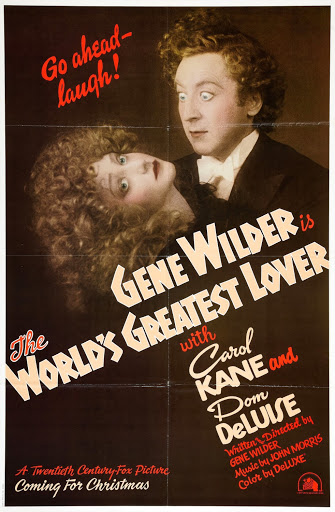
Adolph Zitz (Dom DeLuise) is upset that Rainbow Studios, which he heads, is not making as much of a profit as his rival and figures it’s because they don’t have silent film star Rudolph Valentino. He decides, after a meeting with his yes men who constantly surround him, to put out a national search for the world’s greatest lover who will come to Hollywood for a screen test to then become the next big star to rival that of Valentino. Rudy (Gene Wilder) is a hapless baker recently fired from his job who figures that entering this contest could be his ticket out of his penniless doldrums and travels to Hollywood for a screen test. However, once they get there his wife (Carol Kane) breaks away from him and sneaks off to the rival studio in order to try and have a chance encounter with her screen idol Rudolph Valentino (Matt Collins).

While the film did well at the box office bringing in a profit of $21 million off of a $4.8 million budget it flopped badly with the critics who ravaged both Wilder’s screenplay and direction. In a lot of ways they had valid points as the script veers off from the main theme quite a bit and seeming more like a collection of broad gags than a story. The comic bits take a long time to play out becoming almost like skits within a movie. The period atmosphere is poor and you never feel like you’re being transported back to a different era, or that there was even much thought or effort in this area to be authentic. Wilder’s character is problematic too. He can be great when he’s in an exasperated, frantic state and shouting at the top of his lungs, but he goes to this well too often making his character come-off as abrasive.

The one thing that saves it is that it’s surprisingly quite funny. I found myself laugh- out-out-loud at a lot of the bits no matter how meandering they became and really enjoyed the reaction shots from the supporting players. My favorite segment is when Wilder and Kane stay at a hotel with a sunken living room, which accidently gets filled up with water and then Wilder goes swimming in it and pretends it’s a pool when some family members of his come to visit. I also liked how it ultimately drains out onto some guests below who are ordering dinner. I even found the running joke dealing with DeLuise and his man servant barber (played by Michael Huddleston the son of character actor David Huddleston who also appears in the movie) and how he eventually learns to trust his business advice after always beating him up about it first.

The film manages to also make some interesting observations about people although this too borders a bit on getting botched particularly the scene where Kane goes into a tent to meet with what she thinks is Valentino, but really Wilder wearing a veil over the bottom of his face. However, it is clear to the audience just by looking at his eyes, which are very distinct, that it’s Wilder, so if it’s obvious to us it should be obvious to her since she’s been living with him for many years, but it isn’t. I did do like the point that the scene makes where she never enjoyed the sex with her hubby, but when she thought her hubby was somebody else suddenly the sex was ‘great’, which shows how much fantasy works into love making and a fundamental part of its enjoyment.

Wilder’s screen tests are quite amusing too and overall I found myself laughing consistently all the way through. If you’re looking for something light and comical that’s even a bit romantic then this should do the trick.

My Rating: 7 out of 10

Released: December 16, 1977

Runtime: 1 Hour 29 Minutes

Rated PG

Director: Gene Wilder

Studio: 20th Century Fox

Available: DVD

See No Evil, Hear No Evil (1989)

By Richard Winters

My Rating: 2 out of 10

4-Word Review: Handicapped men solve crime.

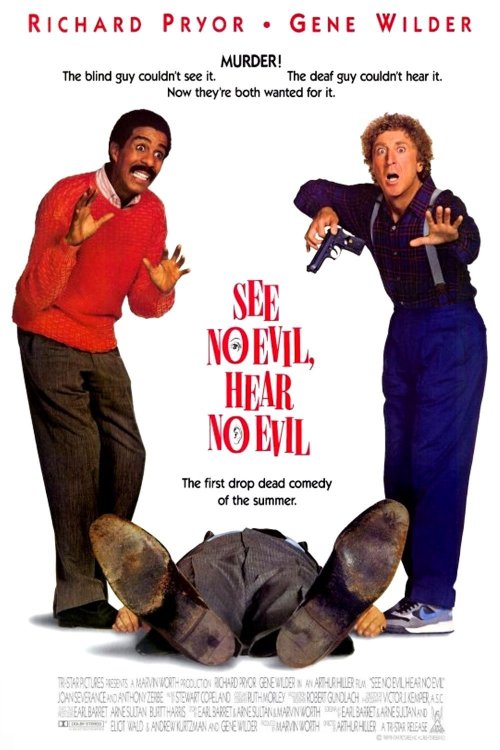
Wally (Ricard Pryor) is blind while Dave (Gene Wilder) is deaf. The two initially don’t get along, but find that they must work together after they witness a murder and the bad guys (Joan Severance, Kevin Spacey) come after them. The police are no help and threaten to jail Wally and Dave when they find them unreliable as witnesses so they figure out a way to escape and go on the run only to have their handicaps and personalities more of an obstacle than anything else.

This was the third teaming of Wilder and Pryor and it’s embarrassingly bad. The script is just a cheesy retooling of the mistaken identity scenarios of their first two films, Silver Streak and Stir Crazy with the handicap element thrown in to make it seem different, but it really isn’t. The laughs are definitely fleeting and in fact there are only two segments that even elicit a chuckle. One is an amusing barroom brawl while the other one features a gun showdown between the blind Pryor and the equally blind Anthony Zerbe.

Not only is the clichéd concept highly uninspired, but it depends on nonlogic to help propel it. For instance Wally, Dave and Wally’s sister Adele, played by Kirsten Childs, escape from the men chasing them by hiding inside a hotel room’s vent, but I’ve never come upon a vent in any hotel room that I’ve stayed at big enough to hold one person let alone three. Also, most vent screens must be screwed in from the outside, so how were these three people able to get the screen back on and fastened once they were inside the vent?

The chemistry between the stars is missing and their banter nothing more than strained babbling. The only moment where it shows slight potential is when the two men explained to each other how they came to have the afflictions that they do and how they learned to adjust to them making me believe this could’ve been a far better movie had it chucked the corny murder storyline and instead focused on the two trying to run a business or learning to rely on each to help them through the struggles of daily life.

Pryor, for what it’s worth, easily upstages Wilder who reportedly never liked the script and worked to rewrite it to make it less mocking to those with handicaps. There’s also a scene shot at night with the two talking on a park bench where it appears that some black object is trying to slide its way out of Wilder’s left nostril. I think it was simply the shadowy lighting, but I found it quite distracting and wondered why the cinematographer didn’t catch this while they were filming it and had the scene reshot at a different angle.

Alan North is engaging as the exasperated police sergeant and I wished that instead of him being an adversary to the two men he would’ve reluctantly helped them along. The two female cast members are generic, but Kevin Spacey, who speaks in an accent and has a large unexplained protrusion on his left check, is excellent and the best thing in this otherwise forgettable film.

My Rating: 2 out of 10

Released: May 12, 1989

Runtime: 1Hour 42Minutes

Rated R

Director: Arthur Hiller

Studio: TriStar Pictures

Available: DVD, Blu-ray, Amazon Video, YouTube
Hanky Panky (1982)

hanky-panky-1

By Richard Winters

My Rating: 2 out of 10

4-Word Review: Caught up in espionage.

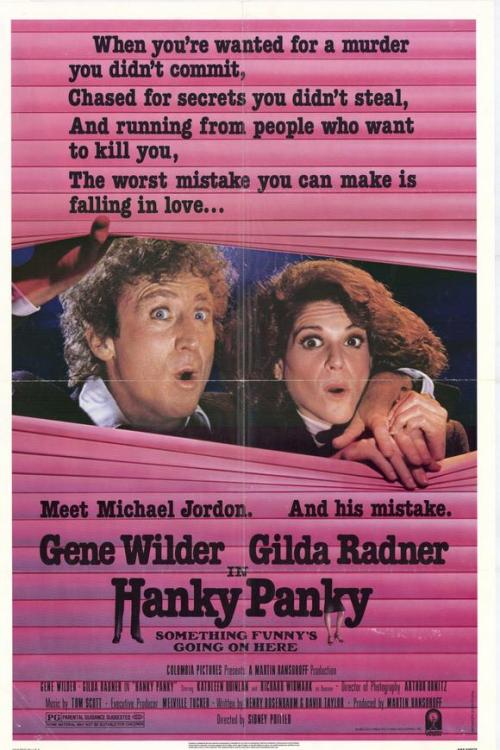
Gene Wilder plays a man by the name of Michael Jordon, yes Michael Jordon, who is from Chicago, but staying in New York. He shares a cab ride with Janet Dunn (Kathleen Quinlan) who seems to be on the run from someone and insists that she must mail a secret package, which Michael does for her. Later he tries to visit her in her hotel room, but it finds her dead and everyone thinks he’s the one who killed her. Now he is on the run himself from people he doesn’t even know and when he bumps into Kate (Gilda Radner) she agrees to help him, but for reasons that she does not initially divulge.

I was genuinely shocked and rather disappointed to find how very similar this storyline was to many of Wilder’s earlier efforts. In Silver Streak he played a man wrongly accused of murder, but there it was fresh and funny. A few years later he was in Stir Crazy with the same type of scenario, but it still worked. Yet by this time it’s old and clichéd with Wilder typecast in a role that no longer offers him anything new to add to it. You get the feeling like you’ve seen it all before right from the start and this tired formula should’ve been put-to-sleep long ago.

Radner’s presence is especially boring and she doesn’t have a single funny line in the whole thing. The reason for why her character decides to get involved in Wilder’s quandary is contrived and seems to be constantly changing. The two show no chemistry even though they fell in love with each other behind-the-scenes and later married. The role was originally intended for Richard Pryor who would’ve been better, but even pairing Wilder with Quinlan’s character could’ve been an improvement as the two had much better contrasting personalities.

The entire plot gets badly overblown and the nonstop chases soon become tiring and nonsensical. The humorous premise of a regular guy suddenly getting caught up in a spy game he knows nothing about loses its focus when he becomes too quick-on-his-feet in his responses to things and begins behaving more like a seasoned spy than an average-joe. The film’s only good moment is when the two are stuck in a small engine plane where the pilot dies and they’re forced to land it themselves, which gives Gene ample opportunity to go into one of his hyper rants as well as some great aerial views of the Grand Canyon, which are nice, but everything else in the film falls flat.

My Rating: 2 out of 10

Released: June 4, 1982

Runtime: 1Hour 47Minutes

Rated PG

Director: Sidney Poitier

Studio: Columbia Pictures

Available: DVD, Amazon Instant Video, YouTube

Pardon Mon Affaire (1976)

pardon mon affair1

By Richard Winters

My Rating: 7 out of 10

4-Word Review: Married man wants hottie.

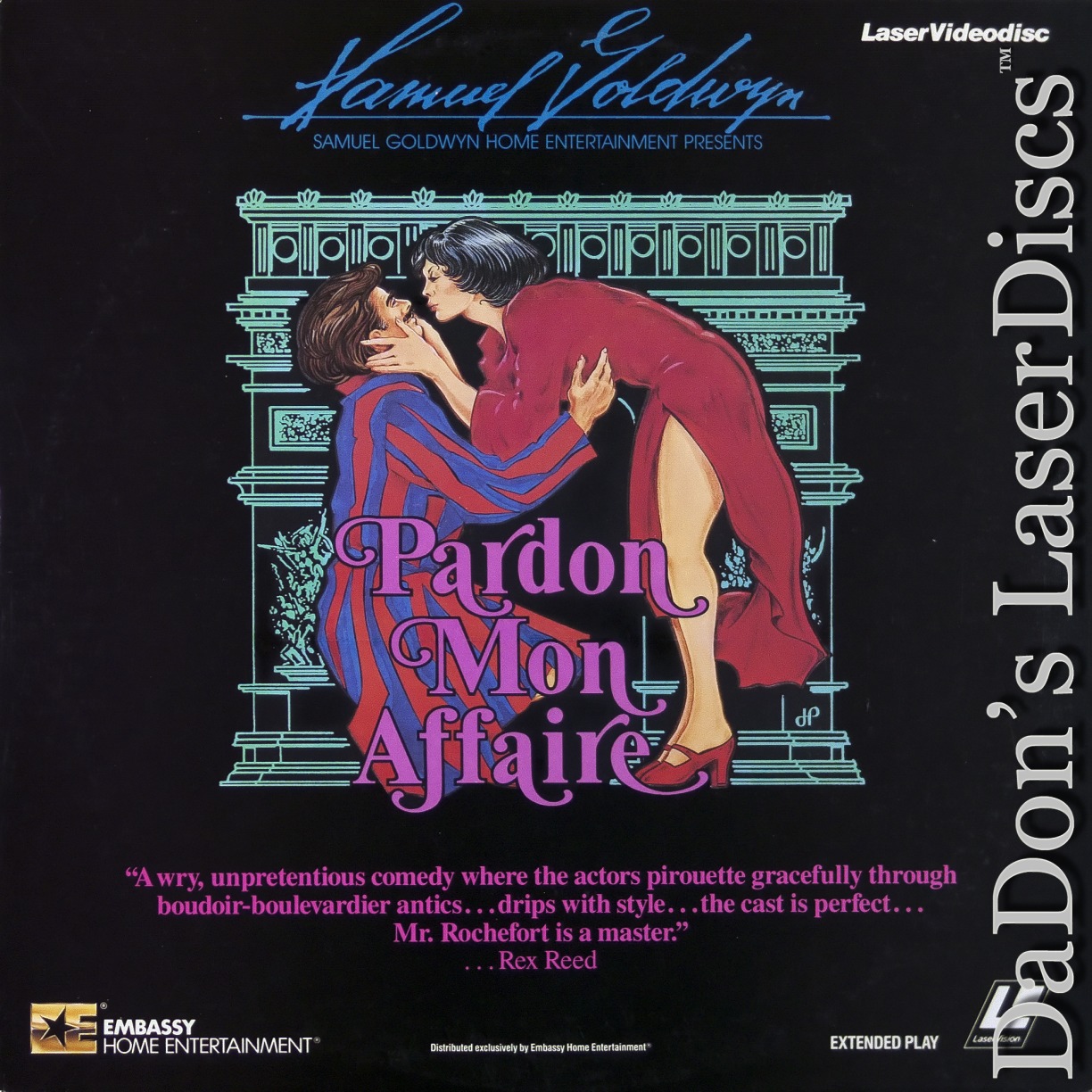
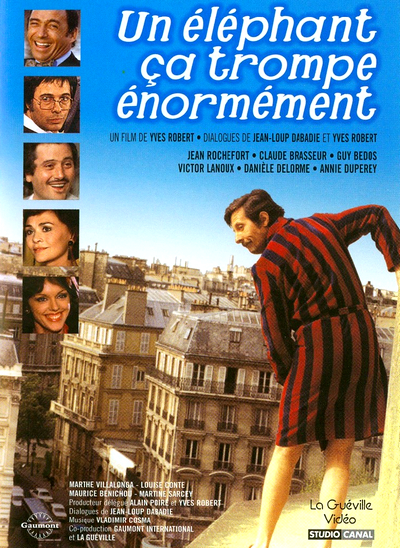
Etienne (Jean Rochefort) is a mild mannered, middle aged man who has lived a practical lifestyle both with his marriage and career and then one day goes absolutely gaga over a beautiful model named Charlotte (Anny Duperey) that he spots by chance in a parking garage. He goes to great, tireless lengths to meet her with no regard to how it is upsetting and even destroying his once quant and secure life.

This is the French version of what was later Americanized in The Woman in Red starring Gene Wilder. For the first five minutes the two films are almost identical as the opening scenario plays out in exact same fashion frame-for-frame, but then after that there are some distinct differences with this version being far superior to the remake. The disintegration of Etienne’s friend Bouly’s (Victor Lanoux) marriage is much funnier here as the philandering character gets upset when his wife leaves him we will realize its more because of his inflated, deluded ego thinking that somehow he is such a ‘great’ guy that his wife will tolerate his misgivings and when the harsh reality hits him that she won’t it’s a genuinely amusing meltdown to see. I also liked that the film cuts to a reaction shot of the main character as he observes his friend’s meltdown, which helps tie the scene more into the central plot and something that the Wilder version did not do.

I also liked how this film digs to a deeper level in regards to Etienne’s relationship with his male friends showing how competitive they are at times with each other, which is something that occurs even in the best of friendships, but when it counts they are still there to help their friend out of jam which came off as being very natural and real. The side story dealing with the homely female office worker which is played by Gilda Radner in the remake is also better handled. In the American version like with this one the character mistakenly thinks that Etienne is in love with her and not the model and when he doesn’t show up to their ‘dates’ like she expects she gets quite upset and trashes his car, but here Etienne attributes her outrage to the idea that she is aware that he wants to fool around with the model and thus does these things to defend his wife’s honor, so therefore he does not retaliate when she destroys his property for fear she will then go to his wife and tell her. In the remake this is never explained, which makes the main character’s reluctance to retaliate after his property is damaged seems strange and confusing.

This movie also has a side-story dealing with the daughter’s boyfriend hitting on Etienne’s wife something that only gets slightly touched upon in the remake. Here it gets played out more and the scenes watching this 17-year-old kid clumsily try to come on to this much older woman who has no interest in him are some of the most amusing moments in the movie.

The acting here is far better as well. The Charlotte character seems more like a real person instead of a one-dimensional sex object as LeBrock did. Rochefort is much funnier than Wilder and sports a brown mustache, which makes him seem very Inspector Clouseau-like. The American version, in an apparent attempt to make the protagonist more ‘marketable’ to a mass audience, conforms more to mainstream values by being portrayed as constantly guilt-ridden, but the character here is not shackled with such restraints and the way he recklessly chases after the woman even as it causes him more stress is what makes the movie so funny. It also has some very astute observations about marriage, middle-age, sex and the male animal while the remake is just vapid, silly escapism.

I presume the reason why the nuances of this one didn’t get transferred to the Hollywood version is because the producers felt that American audiences would not be ‘sophisticated’ enough to pick up on them, which is why I tell everyone who considers themselves to be a film lover to be sure to stay abreast of the foreign films that are out there. In most cases they are much more original, creative and observant to the human condition than anything that’s come out of Hollywood and the main reason for this is that they are treated more like an artistic endeavor with the director given full control while here the films are forced to work within a studio driven formula and treated more like a business byproduct made to give a profitable return on their investment and nothing more.

pardon mon affair2

My Rating: 7 out of 10

Released: September 22, 1976

Runtime: 1Hour 45Minutes

Rated PG

Director: Yves Robert

Studio: Gaumont

Available: VHS