Tag Archives: Entertainment

Fast Talking (1984)

By Richard Winters

My Rating: 5 out of 10

4-Word Review: Teen gets into trouble.

Steve (Rod Zuanic) is a teen who has a rocky relationship with his alcoholic father (Peter Hehir) and ditzy mother (Julie McGregor). To survive on his own he’s forced to deal marijuana and  steal newspapers, which he then resells to motorists in their cars while they wait at a red light. His shenanigan’s get him into constant trouble especially at school where he’s perpetually dodging capture with his amazing ability to escape out of just about any jam.

Writer/director Ken Cameron was inspired to do this film after working as a high school teacher as well as for his love of Francois Truffaut’s 400 Blows, which he saw while growing up. The realism is on-target and has a certain cinema vertite feel. I went to high school when this film was made and can attest that the behaviors of the students here resembled many that I knew then and it’s amazing that even though this was shot on a continent halfway around the world the adolescent experience in Australia isn’t all that much different than that in the U.S. In fact if it weren’t for the Aussie accents one might think that it had been filmed here.

The story though, which was based on short films that Cameron made before he did feature length productions, isn’t connected enough to be impactful. The script is more like a collection of vignettes than a plot and while there’s some interesting moments it’s too spotty to be fully effective. I enjoyed Steve’s budding friendship with a mechanic (Steve Bisley) who tries to teach him the trade, but the film cuts away from this only to briefly go back to it much later when it should’ve been more of the focus. This same thing occurs when Steve tries to save a greyhound, that he apparently had a deep emotional bond to, from being killed by his father, but this storyline gets introduced almost 60 minutes in and should’ve at least been alluded to earlier.

Zuanic was discovered after Cameron spent three months teaching drama classes in High Schools around Sydney and while he looks like a genuine teen and not a college-aged kid pretending to be one as in other teen flicks his physique is too scrawny. (The painted image of him seen in the film poster above makes him seem much bigger and mature than he really is.) He resembles more of a child at age 12 and nowhere near someone entering manhood. Maybe that was the point, but watching him smoke, swear, steal, and get involved at times in amorous activities gets unsettling to watch because of it. When he confronts those that are bigger than him, which happens a lot since he’s so painfully small, I kept wincing thinking he’s going to get his ass kick despite his cocksure attitude and with no real ability to defend himself. Having the part played by a 17 year-old with a stocky build would’ve been preferable.

Not much insight is given towards Steve’s relationship with his mother, who’s seen only briefly, even though this is the catalyst for his desperate behavior, so I felt it needed to be played-out far more. His constant ability at escaping capture by whatever authority figure is after him is amusing at first, but eventually becomes redundant and unrealistic as at some point he’s going to be forced to face the consequences of his actions, which needed to be shown, but never is. The wide-open ending, apparently done because Cameron thought this would be made into a sequel, but due to the poor box office returns never was, offers no definitive conclusion to our character’s ultimate destiny, which makes the film even more transparent than it already is.

My Rating: 5 out of 10

Released: August 23, 1984

Runtime: 1 Hour 35 Minutes

Not Rated

Director: Ken Cameron

Studio: Filmways

Available: DVD (Region 4), Amazon Video
Roar (1981)

By Richard Winters

My Rating: 5 out of 10

4-Word Review: Lions takeover a house.

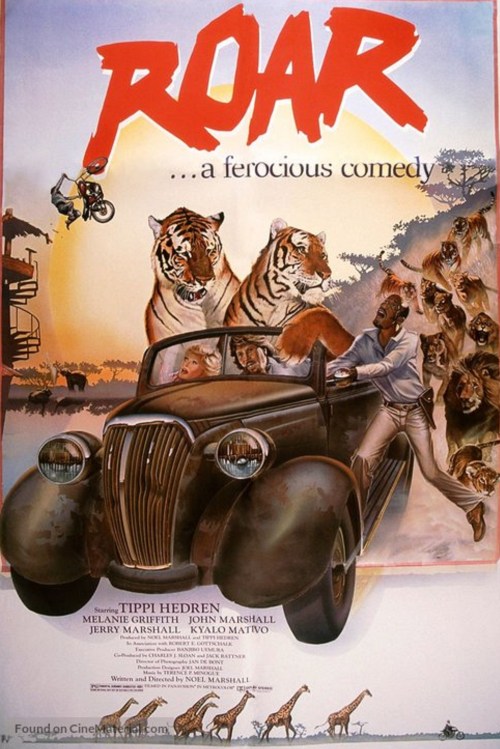
Hank (Noel Marshall) is a naturalist residing in east Africa where he studies the behaviors of lions and keeps several of them in his home. His wife Madeline (Tippi Hedren), daughter Melanie (Melanie Griffith) and two sons (John Marshall, Jerry Marshall) travel from Chicago to visit him. However, when they arrive there’s a mix-up causing Hank to miss picking them up at the airport. The four then travel to the home without him. When they get to the place it becomes overrun with the lions and the family is unable to handle them causing much havoc and destruction as they try to keep from getting attacked and bitten.

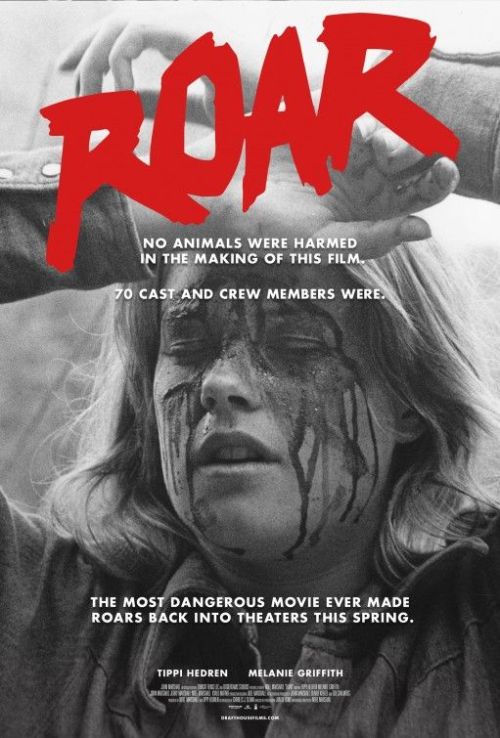
The idea for the film was inspired by Marshall and Hedren, who were married at the time, as they traveled through Mozambique in 1969. While going on a nature tour their guide pointed to a abandoned home that had become inhabited by lions and they thought this would make for a funny movie. It took them over 7 years to find the funds to be able to actually film it and then another 3 years before filming was complete. Over 150 lions were used at a cost of $4,000 a week to feed forcing the couple to sell their 3 homes just to be able to have enough money to cover the food and other expenses. Initially it was never released in the US and only abroad until in 2015 it got reissued to Alamo Drafthouse theaters were it got dubbed as being ‘the most dangerous movie ever made’ due to the many injuries inflicted on the cast and crew by the animals during the production.

To some degree the loose story works. I liked the scene where local official come to Hank’s home in their boats and become inexplicable attacked by the lions without warning even seeing actor Marshall’s hand bitten by one of the beasts, which all comes off as quite realistic and unstaged, something you rarely see in most Hollywood films. Unfortunately having to spend 90-minutes watching the family trying to get away from the lions becomes quite redundant. There’s constantly something going on and there’s a lot of chaos and running around, so visually it’s never boring, but the story goes nowhere. Ultimately it’s like gazing at a hamster inside their cage running inside a spinning wheel, which might be fun for while, but eventually pointless.

Savage Harvest, which I reviewed earlier in the week and came out around the same time, had a much more consistent tone. At least we knew that was intended to be a suspenseful thriller and for the most part it delivered, but here it gets increasingly confusing. While this budget is better and I enjoyed the opening sequence showing the beautiful topography of Kenya I still came away liking the other movie a bit better. The lion attacks are more graphic and in-you-face here, but without any sufficient tension it’s not captivating to sit through. It’s supposed to be a comedy and was marketed as such, but it gets too intense for that. Had the cast been made up of evil poachers that get harassed by the animals the prolonged scenario might’ve worked, but watching a bland family as the intended ‘victims’ isn’t enough to hold sustained interest.

I admire Hedren’s willingness, and the whole cast, for putting themselves in harm’s way and there are a few cute moments like when a lion plays with a skateboard, but it relies too heavily on the action, and the animals who are given onscreen credit along with the rest of the cast, but an actual plot was needed. With that said it’s still a one-of-a-kind movie that needs to be seen to be believed. I’m not sure if this one is included in the book ‘1001 Movies You Must See Before You Die’, as I have not always in agreement with some of the other ones that got listed in it, but this one definitely should be.

My Rating: 5 out of 10

Released: October 30, 1981

Runtime: 1 Hour 38 Minutes

Rated PG

Director: Noel Marshall

Studio: American Filmworks

Available: DVD

Savage Harvest (1980)

By Richard Winters

My Rating: 6 out of 10

4-Word Review: Hungry lions attack family.

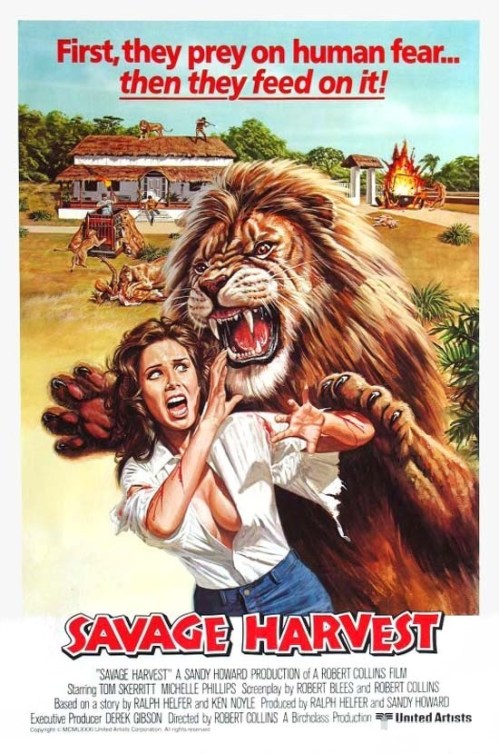
Similar to Roar, which will be reviewed later this week and was released the same year, the plot centers on a family headed by Maggie (Michelle Phillips) who live in Kenya. Due the drought and famine in the area the lions have begun to attack the people. When a pride surrounds their home it’s up to them and Casey (Tom Skerrit), a friend of the family, to fight off the beasts and find a way out of the house and to safety.

Many fans of the film, particularly reviewers on IMDb, will tell you that it’s the footage of the lion attacks that they found riveting and was so scary and realistic looking that it would keep them up at night as kids. Initially though I found some of these attacks not to be all that impressive. In the first one we don’t even see the lion at all just a close-up of one of the frightened villager’s eyes. In the second one, which occurs when actor Arthur Malet gets trapped inside his broken down van, has potential if it had gotten played-out more, but ends up feeling a bit like a cop-out when we again don’t see the lions actually attack him, but instead just a big dent on the roof of his van apparently caused by the lion when he jumps on it and then there’s a quick cutaway only to come back to the scene later after the victim is already dead.

There are other segments that don’t make much sense for instance having a lion somehow crawl through the chimney of the home and into the fireplace, but no explanation for how he was able to get on the roof of the house, nor how a chimney could be wide enough to fit his large body. Later there’s a lion who pops into the living room like it was magic and nothing shown for how he got in.

The film is for the most part a low budget cheapie focused solely on the lion storyline and nothing else. While I did enjoy the moment when the family sings Beatles songs as the lions hungrily try to break into the home I felt the characterizations were too thin. A sub plot might’ve given it a little more depth, but none ever comes and when the lions aren’t on the screen it’s quite sterile.

However, it does get effectively tense if you’re patient and wade through some of the footage of victims looking, even with the quick editing, like mannequins filled with raw meat. The climactic sequence though had me on edge especially as they manage to create a caged contraption out of various household items and then make an attempt to escape while inside it. It’s a truly hold-your-breath moment that more than makes up for any of  the film’s other blemishes.

My Rating: 6 out of 10

May 1, 1981

Runtime: 1 Hour 27 Minutes

Rated PG

Director: Robert L. Collins

Studio: 20th Century Fox

Available: VHS

Nickel Queen (1971)

By Richard Winters

My Rating: 4 out of 10

4-Word Review: Bar owner gets rich.

Meg Blake (Googie Withers) is a widow who owns a pub in a small desert town that has only 10 people living in it. She finds it hard to make ends meet until she hears about a nickel discovery in the outback and decides to be the first one to stake her claim to the land. Little does she know that corrupt executive Ed Benson (Alfred Sandor) fabricated the rumor of a nickel discovery simply so he could sell shares to gullible investors and Meg’s stake of land is actually worth nothing, but because Ed wants other people to also buy shares he pretends that Meg has already gotten rich through her investment and gives her $100,000 up front and parades her around the media while calling her the Nickel Queen. Meg laps up the publicity and spends her newfound fortune lavishly only to ultimately learn, once all her money is gone, that it was a hoax, which causes her and the other angry investors to go after Ed for revenge.

The story was inspired by the real-life event known as the Poseidon Bubble, which occurred in Australia in 1969, where shares in mining soared upon the discovery of a nickel deposit in September of that year only to quickly crash by early 1970 once it was found that the nickel was of a lower quality than initially thought causing many investors to loose a lot of money. Had the film stuck more to the true life event it might’ve had potential, but the way it gets played-out here is rather tepid.

It starts off alright and Withers, acting in front of the camera for the first time in 13 years, creates an engaging character who doesn’t back down to anyone and never hesitates to speak-her-mind. Unfortunately her tenacious personality does not get played-up enough. Once she becomes a media darling her wisecracks no longer have any zing and she falls into Ed’s trap too easily.  During the second half her presence is rather minor as she becomes this naïve person who must depend on her old friend Harry (Ed Devereaux) to get her out of her jam and exposing the corrupt Ed instead of she being the one to do that on her own.

The supporting cast is equally wasted. Initially the hippie guru character of Claude (played by John Laws who was and still is a famous Australian radio personality) seemed interesting as his values and outlook on things, particularly his refusal to work, contrasted greatly with Meg’s making it seem like the two would be sharing some wildly over-the-top confrontations. Instead Claude takes an extreme pivot midway through by showing up as a clean-shaven man willing to sell-out for money and even ends up becoming Meg’s lover, but what’s the point of him starting out one way if he’s just going to end up being the polar opposite? The transition is not revealing or introspective and shows how the filmmakers, who were all over 50, had no understanding of the counter-culture movement at all.

Doreen Warburton, who plays Ed’s gluttonous wife, is equally problematic.  The running joke of seeing her constantly stuffing her face with food gets pretty old, pretty fast to the point that it starts to get kind of disgusting to look at. Not having her utter a single word of dialogue is weird too making it seem like she’s not even human, but simply an unfunny and highly stereotyped caricature.

I liked how the first half was shot in an actual ghost town known as Broad Arrow and having the action take place in some of the town’s abandoned buildings gave the film an added visual flair, but this gets completely lost during the second-half when everything moves to the big city of Perth. The music is yet another issue as it sounds like something from the 40’s or 50’s and completely out-of-touch with the times. A lot of the cast is made up of hippies, so the soundtrack should’ve reflected more of their tastes.

Ultimately the film suffers from being too much of a family project. Writer/director John McCallum was star Googie’s husband and there’s even a part for their daughter Joanna McCallum, who plays Meg’s hippie daughter. While this may have been a fun project to work on from their perspective it offers little in the way that is satisfying to the viewer. The plot is poorly constructed and the wrap-up too tidy making it seem like material better suited for a TV-sitcom than the big screen.

My Rating: 4 out of 10

Released: April 1, 1971

Runtime: 1 Hour 27 Minutes

Director: John McCallum

Studio: British Empire Films Australia

Available: None

The FJ Holden (1977)

By Richard Winters

My Rating: 3 out of 10

4-Word Review: A youth’s aimless life.

Kevin (Paul Couzens) is a teen over 18 still living at home with his parents (Roy Corbett, Beryl Marshall). Most of his time is spent being idle while driving around in his refurbished FJ Holden and getting drunk with his best friend Bob (Carl Stever). One day while hanging out at a mall Kevin spots Anne (Eva Dickinson) and gives her a ride in his car and eventually the two start going out. Everything goes well for awhile until Kevin makes love to Anne with the bedroom door still open, so that Bob can watch. When Anne realizes what’s going on she kicks Kevin out of the house and breaks off their relationship, but Kevin refuses to let it go and tries to rekindle things with her later at a party, which causes tensions with the other partygoers and the home owner.

I’ve stated many times that I wished Hollywood movies wouldn’t feel so compelled to rush through a story as they do and allow scenes more time to be strung-out and not edit things so quickly. Allowing things to unfold at a more leisurely pace gives the viewer a chance to soak in the setting and characters better without having to be told what to think or feel, but this film goes to the other extreme. The pace meanders so much you become bored and lose focus. There’s just not enough going on to keep you interested or intrigued.

That’s not to say it’s a bad movie as I liked the technical approach, which puts the actors in public settings, but with regular people in the back drop as opposed to film extras. You get more of a realistic atmosphere this way particularly the scenes at the mall, which before the advent of social media, skype, and texting was a social hotspot for most teens to meet other people and hang-out. The story though, which was based on loosely constructed comic poems, is not structured enough to remain engaging. The dialogue is too generic and the situations they go through, whether it’s making love in the backseat of a car, or drag racing, have all been done in many other teen flicks, so watching it here just makes it seem all the more redundant and pointless.

There manages to be a a few interesting bits here and there, but overall it’s a sluggish experience. Only at the very end when Kevin confronts Anne at the party is there are any real potential for dramatic sparks, but it doesn’t get played-out enough. I was hoping for a full-out brawl to make-up for all the boredom that had come before it, but director Michael Thornhill, who has found critical acclaim with some of his later films, just wasn’t confident enough apparently to push this thing full-throttle, which ultimately makes it bland and forgettable.

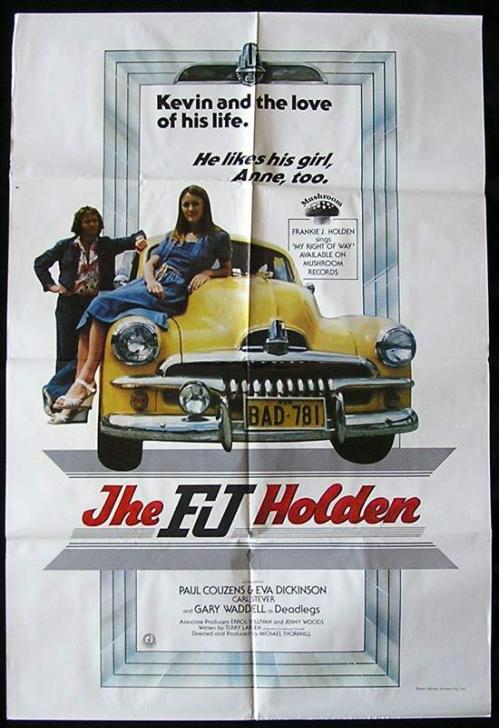
The car itself doesn’t play as much into the plot as you’d expect and in a lot of ways I didn’t find it all that impressive. It’s a model of car that was built in Australia between the years of 1953 to 1956 and through the decades over 20 car clubs have been formed in Australia committed to preserving the vehicle, and every other year thousands of car enthusiasts gather to celebrate the old-style car, but to me it came off looking old and clunky like something your grandfather would drive and did not have the sleek sports car design that most young men like to be seen in. The car eventually, during the film’s second half, gets painted bright yellow, which makes it look like a taxi cab, but during the first part it’s not painted at all and looks rusty like it had been pulled from the junkyard and what most people would be embarrassed to be seen with and not something to invite a girl for a ride in to impress her even though that’s what happens here.

My Rating: 3 out of 10

Released: April 29, 1977

Runtime: 1 Hour 41 Minutes

Rated M (Originally rated R)

Director: Michael Thornhill

Studio: FJ Films

Available: DVD

Maid to Order (1987)

By Richard Winters

My Rating: 3 out of 10

4-Word Review: Rich girl becomes servant.

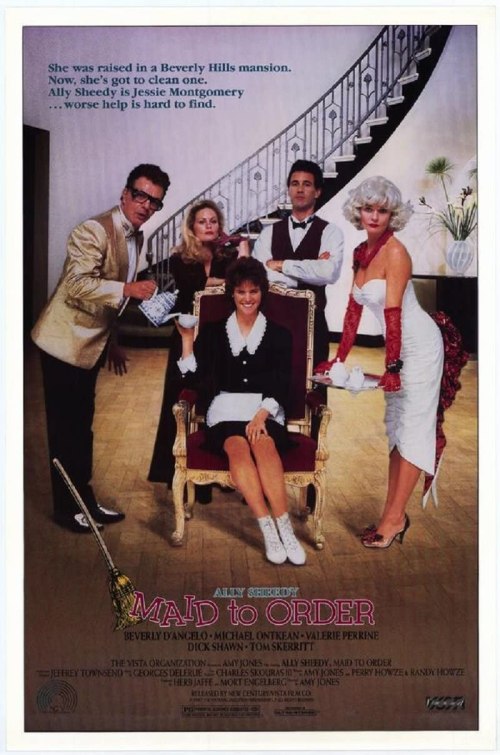
Jessie (Ally Sheedy) is a spoiled rich girl still living at home with her philanthropist father (Tom Skerrit). Even though she’s in her mid-20’s she has never worked a job due to her father’s fortunes and she takes everything for granted seemingly unaware of her privileged lifestyle and how it affects others. Her father becomes frustrated with her cavalier attitude and one day speaks out loud that he wished he never had a daughter, which summons a fairy godmother named Stella (Beverly D’Angelo) to come to earth and erase all memory of Jessie from him. Now Jessie must learn to survive on her own, but without any job skills. She finds work from a rich Malibu couple (Dick Shawn, Valerie Perrine) who are practicing ‘reverse affirmative action’ by hiring white woman in the role of the household maid instead of a Hispanic or Black one. Jessie, now desperate for money, readily accepts the offer, but her inability to do even basic household chores causes her employment to be in almost constant jeopardy.

The main character is what really hurts this one and it’s not so much that she’s unlikable either, which she isn’t,, but more because her personality is too watered down. This is the type of role that needed a real bitchy lady that exuded snobbery at every turn like Alison Arngrim who played Nellie Oleson the brat in the old TV-show ‘Little House on the Prairie’ or maybe even Shannen Doherty from ‘Beverly Hills, 90210’ fame. Sheedy is just plain unable to play-up the bitchiness enough coming-off more like someone who lacks self-awareness instead of an elitist snob, which then makes her transition to humbleness not as interesting, dramatic, or funny. I’ve liked Sheedy in some of her other films and I realize she was trying to broaden her acting resume her by playing against-type, but she lacks the necessary charisma to keep it engaging.

The limp plot doesn’t help things either. It’s way too obvious where it’s headed and the viewer can easily predict the plot points before they even happen. There needed to be more confrontation from the contrasting personalities and more comedy from the quirky situation instead of the annoying life lessons that makes it seem almost like some afterschool special. Everything is aimed too much at the pre-teen audience, which leaves very little for a discernable adult tp enjoy.

The fairy godmother concept is a bit batty too. Why does a fairy answer this father’s wish, but no one else’s? Many people make wishes all the time, but no fairy godmother ever gets summoned, so what makes this situation so special? The script should’ve implemented some sort of side-story involving the father, or maybe even Jessie, getting involved in mysticism, which could’ve helped explain why this otherwise unusual incident then occurs.

I did however, really enjoy Dick Shawn in a very funny portrayal of the nouveau riche and he along with Beverly D’Angelo as the wise-cracking fairy godmother needed far more screen time. I was especially perplexed how underwritten D’Angelo’s part was as she plays a role that is quite fundamental to the story, but not in it half as much as you’d expect though her snarky remarks give this otherwise vapid material some much needed energy for the few minutes that she has.

Valerie Perrine, as Shawn’s wife, isn’t as amusing though her variety of gaudy outfits, and hairstyles, does at least lend visual flair. Skeritt though is completely deadening and it’s amazing how this guy has been acting on the screen since 1962 and yet the vast majority of his work is highly forgettable despite some of the movies he’s been in being memorable in other ways. Same for Michael Ontkean as Jessie’s romantic interest, he’s got the perfect pretty-boy face and hunky body, but seemingly no actual personality.

My Rating: 3 out of 10

Released: July 31, 1987

Runtime: 1 Hour 33 Minutes

Rated PG

Director: Amy Holden Jones

Studio: New Century Vista Film Company

Available: DVD

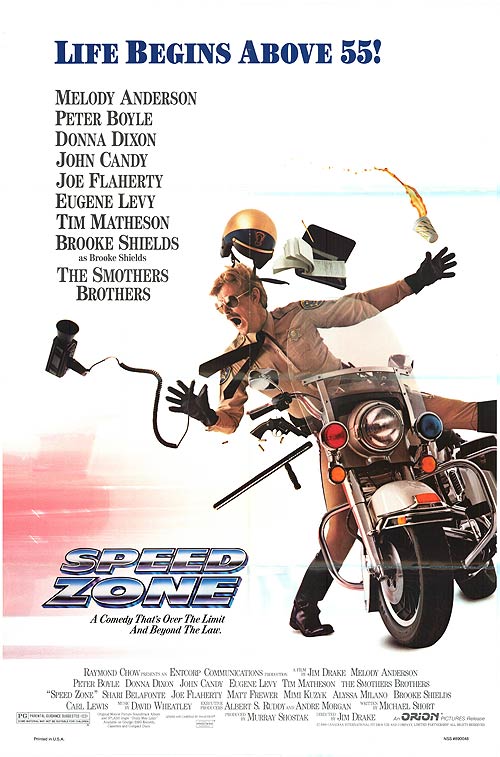
Speed Zone (1989)

By Richard Winters

My Rating: 2 out of 10

4-Word Review: Another cross-country race.

A collage of wacky characters convene to a countryside inn, which will be the starting point of another illegal cross-country race known as the Cannonball Run that will have people driving their cars from Washington D.C. to Santa Monica, California in record time with the winner receiving $1 million. Many attempts have been made in the past to stop it, but to no avail. However, this time Police Chief Spiro T. Edsel (Peter Boyle) makes a commitment to stymie the race any way he can, but as usual the participants are able to complete it without much hassle.

This is the fifth attempt at making a movie dealing with the real-life race called Cannonball Baker Sea-to-Shining Sea Memorial Trophy Dash that would start on the east coast in either New York or Connecticut and finish at the  Portofino Inn in Redondo, California. The race was run 5 times during the 70’s with the last one occurring on April 1, 1979. 4 other movies had already been made on this same subject and include: The Gumball RallyCannonball!, The Cannonball Runand Cannonball Run IIWhile those films featured some exciting stunt work the comedy elements and characters were usually quite lame and cartoonish and the box office receipts, particularly for Cannonball Run II, had slowed completely after an initially good first weekend making it seem that producers would realize that this theme had run its course, but Hollywood being Hollywood stubbornly decided to resurrect the idea and even offering Burt Reynolds a big sum of money to reprise his role, but he refused.

Initially I thought this one might be a bit of an improvement as it starts out right away with a Lamborghini, driven by John Schneider, being chased down the highway by a bunch of cops, which if you’re going to do a movie like this is the way it should be done. Keep the emphasis on the action and car stunts while minimizes the comedy and dialogue. Unfortunately this unravels pretty quickly by first having the Lamborghini skip across a lake, which was proven on the Myth Busters TV-show not to be possible, and then deviates to the cartoonish characters standing around interacting with one another, which is not funny and not what people who came to watch a car race movie want to see.

Outside of Jamie Farr, who reprises his role as an Arab sheik, but is fortunately only seen at the beginning, the rest of the cast is made up of new faces not seen in any of the previous ones, but having a new set of people playing the same campy roles doesn’t help. Boyle gets listed as having a lead role, but his character really doesn’t do much and is so ineffective at impending the race you wonder why they even bothered to write-him into the script. Tim Matheson too plays a character that isn’t funny and I can only imagine that he took the part, much like the Smothers Brothers who also appear here, simply for the money, but certainly this cannot be anything they’d want to highlight on their resumes.

I did like John Candy who unlike the rest actually seems more like a real person and not just a buffoonish nut. Unfortunately he gets paired with Donna Dixon as his driving partner who speaks in an affected Brooklyn accent, which I found quite annoying. They should’ve had his SCTV-alum partner Eugene Levy ride with him as the constant bickering the two shared along with their contrasting personalities would’ve been amusing.  Alyssa Milano has a good bit as a student driver being instructed to pass all cars that are foreign made. I really liked Brooke Shields appearance too where she plays herself working as a flight attendant so she doesn’t have to settle for ‘bit parts in movies’. In fact her part is so funny it’s the only reason I’m giving this otherwise stupid dreck 2-points.

My Rating: 2 out of 10

Released: April 21, 1989

Runtime: 1 Hour 34 Minutes

Rated PG

Director: Jim Drake

Studio: Orion Pictures

Available: VHS

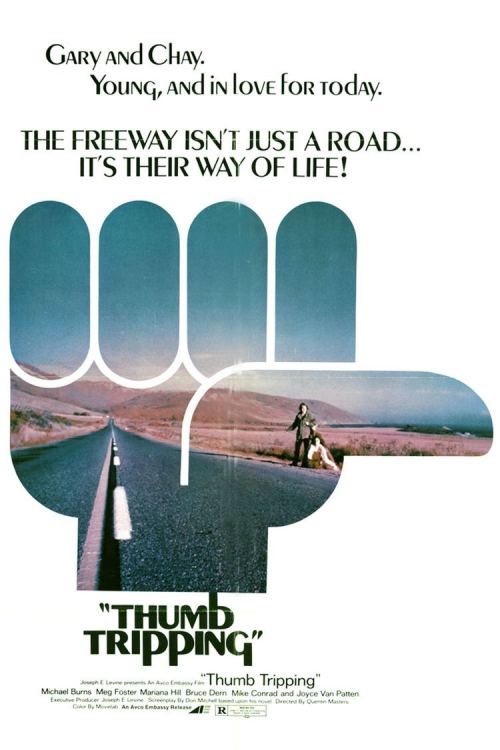
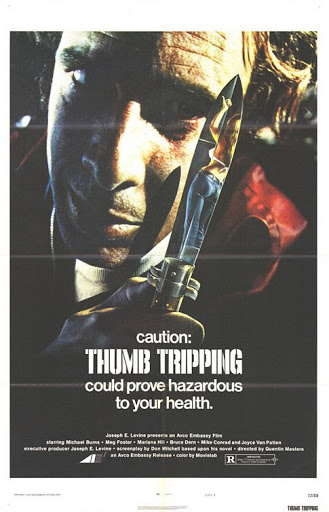
Thumb Tripping (1972)

By Richard Winters

My Rating: 5 out of 10

4-Word Review: Hitchhiking across the country.

Gary (Michael Burns) is a college kid from a good family who decides he’s not ready to settle down just yet and wants to ‘drop-out’ for awhile by taking part in the hitchhiking scene that was popular in the early 70’s with the counter-culture. While accepting rides he meets up with fellow hitchhiker Chay (Meg Foster) and the two immediately hit-if-off. They decide to accept every ride that comes along, which gets them into trouble when they get into a car driven by two violent men (Bruce Dern, Larry Hankin) and then later when they hop into a truck driven by Diesel (Michael Conrad) who seems kindly at first, but ultimately sets his sights on having sex with Chay, who willingly accepts his invitation, much to the consternation of Gary.

This film never really clicked with the public and much of the problem stemmed from the inability of knowing how to effectively market it, or even what genre it belonged in. Leonard Maltin, in his review, describes the film as being ‘amusing’ even though there is nothing in it that is funny or light-hearted. I remember in the 80’s going to my local video store where this film was put into the horror section and played-up like it was a thriller with Bruce Dern listed as the star even though his segment happens early on, is quickly forgotten, and only lasts for about 5 minutes.

If anything it works as a period piece at seeing how different and more free-spirited things were back then where accepting rides from strangers was considered fun and adventurous and not something to fear. It’s based loosely on the real-life experiences of Don Mitchell, a self-described hippie in the late 60’s who eventually moved to Vermont and became a sheep farmer. He wrote the story first as a novel before getting commissioned into turning it into a screenplay. For the most part it has an authentic feel particularly the segment showing the young people of the day hitch-hiking at various locations making it seem like it was an informal community all to its own.

What’s fascinating is seeing how the ‘responsible’ people that give the hitchhikers rides are usually just as unhappy with societal demands as the hippies, but with no idea or confidence on how to get out of their situations. The segment with Michael Conrad is the best as at first he’s the family man doing long over-the-road hauls to feed his wife and kids and yet his commitment to them takes an immediate backseat the second he becomes sexual aroused by Chay when he sees her dancing at a bar revealing that middle-aged men never become fully ‘domesticated’ no matter how hard they may try to play the part.

The two leads though are not fleshed-out enough. There’s a brief voice-over segment dealing with Burns’ conversation with his mother describing why he wants to drop-out and travel, which helps to give him some backstory, but we never get the same treatment with Foster. She’s this elusive enigma we want to know more about, but never understand. She’s far more compelling than Burns and should’ve been made the star and having her hitchhike alone would’ve  improved the movie.

Despite a few interesting moments it never comes together as a whole. The scenes are too loosely tied together and the story never feels like it’s progressing or has any momentum. The ending leaves everything wide-open particularly the fate of Chay who was the only intriguing element in it, which makes the viewer feel cheated when it’s over.

My Rating: 5 out of 10

Released: October 28, 1972

Runtime: 1 Hour 34 Minutes

Rated R

Director: Quentin Masters

Studio: AVCO Embassy Pictures

Available: VHS

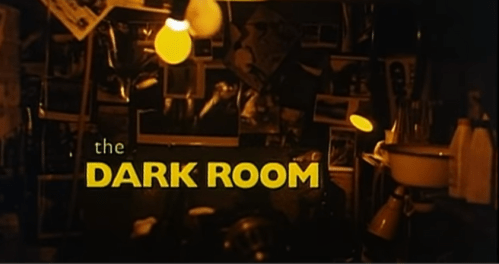
The Dark Room (1982)

By Richard Winters

My Rating: 5 out of 10

4-Word Review: A father/son rivalry.

Mike (Svet Kovich) works as a photographer who has a thing for his attractive co-worker Nicky (Anna Maria Monticelli). He quietly follows her around and takes pictures of her from afar only to learn that she’s been seeing his father Ray (Alan Cassell) who is still married to his mother (Diana Davidson). Mike becomes enraged by this and begins dating Nicky as well. This puts a damper on Ray who was planning on leaving his wife for Nicky, but who now seems to becoming more distant with him. Once Ray realizes his son is the other man the two share a fiery confrontation at an old cottage in the country with Nicky stuck in the middle.

To some degree this is a unique storyline that’s rarely been tackled before. Most films dealing with father/son relationships take a much different approach by focusing very much on the generational divide where the father is out-of-touch with the son’s interests and vice-versa. This film acts like the two men are pretty much the same, with one having been on this planet a little bit longer than the other, but overall still have common wants and needs and desires particularly when it comes to the attraction of younger women, which I believe secretly stays innate in men no matter how old or how married they become.

I also liked the casting of Svet Kovich, which to date this is the only movie he’s been in, as his hawkish face and beady eyes make him look menacing, which is what the part requires and in many ways he reminded me of character actor Anthony James who played quite a few psychos in his day as well. Unfortunately this hurts the story because in the film Nicky falls for Kovich and begins a relationship with him even though in realty I’d think most women would fear him due to his looks and odd introverted behavior and thus making the whole romantic angle between them come off as false and phony. It was never clear either why she’d want to have relationships with both men (she was not aware initially that the two were related) at the same time as she seemed happy seeing Ray, so why add another man into the mix? Most women tend to be either/or when it come to older men or younger ones, so it didn’t make sense her interest in both, or what she saw or didn’t see in one that made her desire the other.

The film’s biggest issue is that it doesn’t delve into the father/son relationship enough. We needed a backstory between the two and flashbacks, none are shown, of when they were younger and how the son related to his dad as a child. At the very end the son does bring up issues that he had with his father, but they tended to be cliched problems and something the viewer needed to see play-out instead of just being told about them verbally. Without that context nothing else that we see means anything. The film is on a technical level adequate, but it’s never gripping or fully compelling and this is because the characters are not fleshed out enough for us to understand them or care.

My Rating: 5 out of 10

Released: Never released to theaters.

Not Rated

Director: Paul Harmon

Studio: Filmco Limited

Available: None at this time.

The World’s Greatest Lover (1977)

By Richard Winters

My Rating: 7 out of 10

4-Word Review: Seeking silent film stardom.

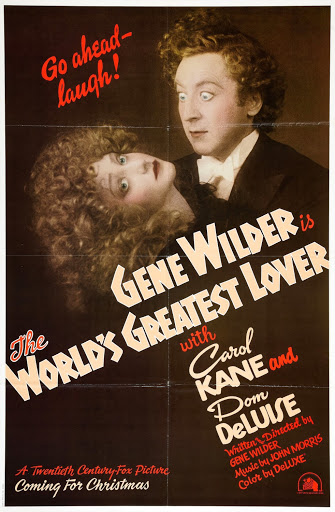
Adolph Zitz (Dom DeLuise) is upset that Rainbow Studios, which he heads, is not making as much of a profit as his rival and figures it’s because they don’t have silent film star Rudolph Valentino. He decides, after a meeting with his yes men who constantly surround him, to put out a national search for the world’s greatest lover who will come to Hollywood for a screen test to then become the next big star to rival that of Valentino. Rudy (Gene Wilder) is a hapless baker recently fired from his job who figures that entering this contest could be his ticket out of his penniless doldrums and travels to Hollywood for a screen test. However, once they get there his wife (Carol Kane) breaks away from him and sneaks off to the rival studio in order to try and have a chance encounter with her screen idol Rudolph Valentino (Matt Collins).

While the film did well at the box office bringing in a profit of $21 million off of a $4.8 million budget it flopped badly with the critics who ravaged both Wilder’s screenplay and direction. In a lot of ways they had valid points as the script veers off from the main theme quite a bit and seeming more like a collection of broad gags than a story. The comic bits take a long time to play out becoming almost like skits within a movie. The period atmosphere is poor and you never feel like you’re being transported back to a different era, or that there was even much thought or effort in this area to be authentic. Wilder’s character is problematic too. He can be great when he’s in an exasperated, frantic state and shouting at the top of his lungs, but he goes to this well too often making his character come-off as abrasive.

The one thing that saves it is that it’s surprisingly quite funny. I found myself laugh- out-out-loud at a lot of the bits no matter how meandering they became and really enjoyed the reaction shots from the supporting players. My favorite segment is when Wilder and Kane stay at a hotel with a sunken living room, which accidently gets filled up with water and then Wilder goes swimming in it and pretends it’s a pool when some family members of his come to visit. I also liked how it ultimately drains out onto some guests below who are ordering dinner. I even found the running joke dealing with DeLuise and his man servant barber (played by Michael Huddleston the son of character actor David Huddleston who also appears in the movie) and how he eventually learns to trust his business advice after always beating him up about it first.

The film manages to also make some interesting observations about people although this too borders a bit on getting botched particularly the scene where Kane goes into a tent to meet with what she thinks is Valentino, but really Wilder wearing a veil over the bottom of his face. However, it is clear to the audience just by looking at his eyes, which are very distinct, that it’s Wilder, so if it’s obvious to us it should be obvious to her since she’s been living with him for many years, but it isn’t. I did do like the point that the scene makes where she never enjoyed the sex with her hubby, but when she thought her hubby was somebody else suddenly the sex was ‘great’, which shows how much fantasy works into love making and a fundamental part of its enjoyment.

Wilder’s screen tests are quite amusing too and overall I found myself laughing consistently all the way through. If you’re looking for something light and comical that’s even a bit romantic then this should do the trick.

My Rating: 7 out of 10

Released: December 16, 1977

Runtime: 1 Hour 29 Minutes

Rated PG

Director: Gene Wilder

Studio: 20th Century Fox

Available: DVD