Tag Archives: Entertainment

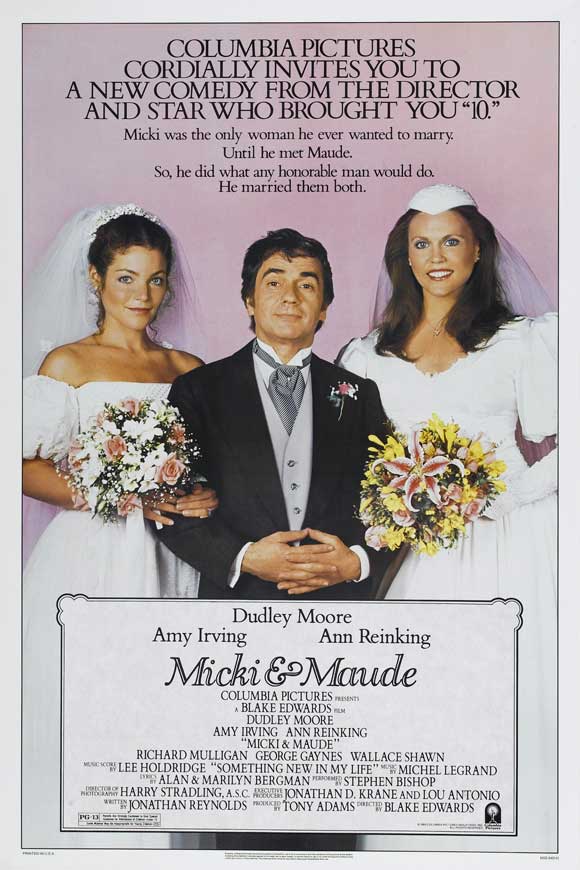
Micki & Maude (1984)

micki and maude

By Richard Winters

My Rating: 5 out of 10

4-Word Review: Two women get pregnant

Rob (Dudley Moore) is a man who becomes increasingly isolated from his wife Micki (Ann Reinking) after she gets too caught up in her career to have time for him. To compensate he begins an affair with an attractive younger woman named Maude (Amy Irving). He plans on divorcing his wife and marrying her, but then they both become pregnant at the same time.

The plot progresses much too slowly and it takes almost fifty minutes before there is any real comedy. It seems hard to believe that a man, by his own admission, could spend ten hours a day with one woman another ten with the other and still be able to hold down a full time job without it all unraveling on him a lot sooner than it does. Moore also doesn’t play the part in a realistic way he should be more stressed out and frantic and on the verge of a complete mental and physical breakdown, but instead he seems very cool and collected most of the time. The script also doesn’t capitalize enough on the many crazy complications that would most assuredly ensue in a situation like this one and the ones it does bring up are not real believable or funny. The climactic delivery room scene becomes way too overblown.

On the positive end Ann Reinking clearly comes off as the better actress than her counterpart, at least in this production. Her character has some amusing flaws while Irving is just too boringly normal. Her only good moment comes with an amusing line that she says during the delivery room scene. Richard Mulligan is good in support and some of his lines are real gems! There is also a completely unexpected and very funny scene between overweight actress Lu Leonard and Wallace Shawn that may very well be the best moment in the whole movie.

The concept is good and it should have been ripe for hilarity, but it doesn’t live up to its full potential. If there is one film that should be remade it is this one. There is a lot more comedy that could be squeezed out of a storyline like this one.

My Rating: 5 out of 10

Released: December 21, 1984

Runtime: 1Hour 58Minutes

Rated PG-13

Director: Blake Edwards

Studio: Columbia Pictures

Available: VHS, DVD, Amazon Instant Video

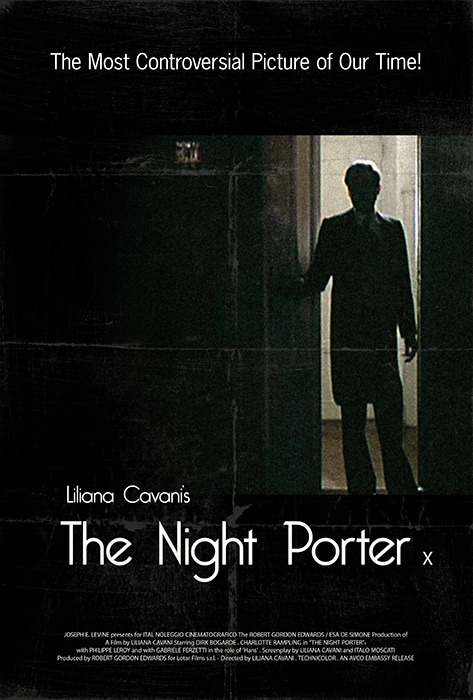
The Night Porter (1974)

the night porter 3

By Richard Winters

My Rating: 8 out of 10

4-Word Review: A strange sadomasochistic relationship.

As the title suggests this film deals with the darkness of the human mind, relationships, sex and society as a whole and has a Freaudian theme of exploring the weird sexual obsessions of those who on the outside may seem perfectly functional and ‘normal’.

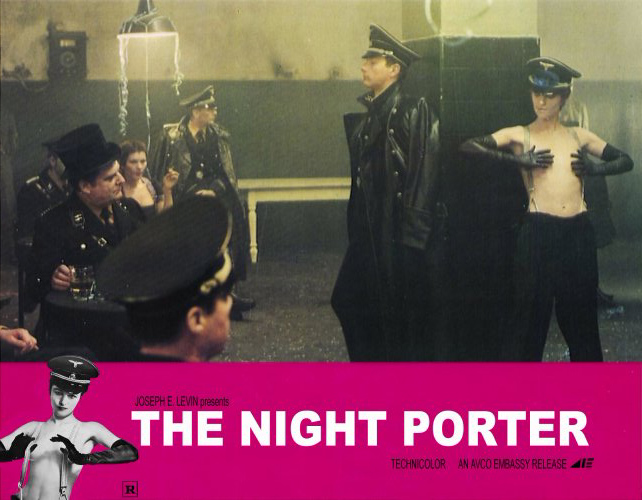
The story focuses on a concentration camp survivor Lucia (Charlotte Rampling) who twelve years later, by chance, meets her former captor Maximilian (Dirk Bogarde). She is now married while he is working as a night porter at the hotel she is staying at. The twist here is that she decides to go back to him and continue the bizarre sex rituals they once had.

The film’s most interesting aspect is focusing on the long term psychological ramifications of those surviving traumatic experiences. It looks both at the victims and the captors who now must learn to ‘rationalize’ their guilty conscious and it questions whether anyone can truly function normally after surviving such severe circumstances or whether society has any ability to make someone ‘adjust’.

This is definitely complex material and director Liliana Cavani has a good grasp on it. The shot compositions are full of stark shadows with a definite emphasis on the surreal, which comes to play the most during the sadomasochistic fantasy segments.

The problem with the film lies in the fact that it doesn’t have the intended strong impact. There’s no momentum or discernible tension. The characters are complex, but not that interesting and we really don’t care particularly what happens to them.

The films strongest point is actually in its final sequence, which brings the whole thing together. Like in any great movie there’s the one shot that says it all and here it’s the final one where visually, without saying anything, it shows just how isolated these outsiders truly are. It also exposes how their personal demons have imprisoned them and how dysfunctional society is at handling them.

the night porter 2

My Rating: 8 out of 10

Released: April 3, 1974

Runtime: 1Hour 58Minutes

Rated R

Director: Liliana Cavani

Studio: AVCO Embassy Pictures

Available: VHS, DVD, Blu-ray, Amazon Instant Video

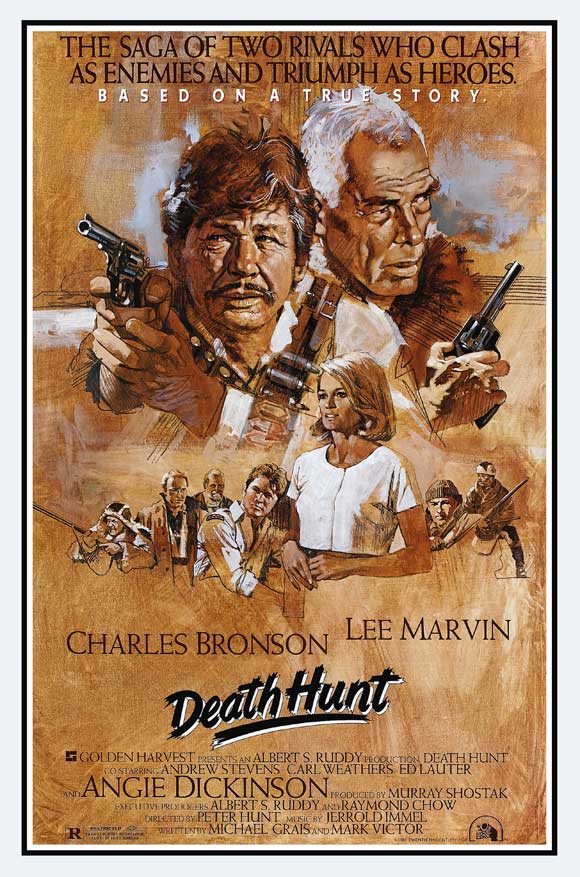
Death Hunt (1981)

death hunt 2

By Richard Winters

My Rating: 7 out of 10

4-Word Review: Running for his life.

Last year during January we reviewed films Charles Bronson did during the 70’s, so this year we will look at some of the ones he did in the 80’s. This one is based on the true story of Albert Johnson who was a fugitive that sparked one of the largest manhunts in Canadian history.

Bronson plays Johnson a loner who lives by himself in an isolated cabin situated in the corner regions of the Northwest Territories and Yukon. He comes upon a vicious dog fight that has been orchestrated by some of the local men. Feeling sorry for the bloodied animal he tells the dog’s owner Hazel (Ed Lauter) that he will buy the animal, but Hazel refuses and Johnson ends up giving him he money and taking the animal anyways. Outraged Hazel goes to the local sheriff Millen (Lee Marvin) telling him that Johnson ‘stole’ his animal, but Millen knowing that Hazel was part of an illegal dogfight does nothing about it, so Hazel gets some men together to form a posse. A shootout ensues at Johnson’s cabin and when one of the men gets killed a reluctant Millen is forced to go after Johnson who goes on the run in the frozen, snow covered rugged mountains.

The film is an exciting high-grade adventure from the very start. The tension mounts perfectly and Jerrold Immel’s pounding orchestral score keeps the pace going. Director Peter Hunt mounts some great action sequences including the shootout and standoff at the cabin and also a heart-stopping moment where Johnson jumps off a steep cliff and onto a tall pine tree. The character’s ragged personalities perfectly reflect the raw climate and the internal bickering that goes on amongst the men as the chase Johnson creates an interesting subtext.

The film was shot in Northern Alberta, which is good because it gives the viewer a taste of the cold climate. The aerial footage of the mountainous landscape shown over the opening credits is breathtaking. However, it was clearly not filmed in the dead-of-winter as the sun was too high in the sky and although there was snow it was obviously thawing thus making the moments were the men complain about the bitter cold not ring quite as true.

Marvin is excellent and pretty much takes over the film. He looks older and tired here, but it works with the character that seems to be coasting and uninterested in getting involved with anything. Having both the main characters likable and relatable makes the chase more captivating and psychological complex from both ends.

Bronson is good in a role that takes advantage of his stoic nature although he only gets shown intermittently and it is Marvin who gets the most screen time and the best lines. I liked the character’s relentless will to survive and ability to adapt to the circumstances, but I wanted some explanation for how he was able to survive inside his cabin when it gets exploded with dynamite, but unfortunately one never comes.

Angie Dickinson who was 50 at the time and looked to have had a facelift and some work around her eyes is wasted in a completely pointless and forgettable part. Andrew Stevens who has proved effective in bad-guy roles plays a very clean-cut, rule-oriented Mountie here and does okay. Durable character actor Henry Beckman has a great small role as a shifty trapper who sits-in-the-shadows only to come out and get involved at the most surprising moments.

The film takes a lot of liberties with the true-life incident and was highly criticized at the time for being too ‘Hollywoodnized’, but it succeeds at being entertaining although I thought it would have been appropriate to have some denouncement at the end.

My Rating: 7 out of 10

Released: May 22, 1981

Runtime: 1Hour 37Minutes

Rated R

Director: Peter Hunt

Studio: 20th Century Fox

Available: VHS, DVD, Blu-ray

Valley of the Dolls (1967)

valley of the dolls 2

By Richard Winters

My Rating: 5 out of 10

4-Word Review: The dolls are pills.

Usually when sites commemorate Sharon Tate it is on the anniversary of her murder, which is in August, but I decided to do things differently and talk about her in January when she was born. Had she lived she would have turned 71 this year and each Sunday this month I will review a 60’s film that she was in.

This one is probably her most well recognized part and it’s based on the bestselling novel by Jacqueline Susann who appears briefly as a reporter. Here Tate plays Jennifer North a woman with ‘no talent’ who must use her body and looks to get where she wants and she is constantly reminded of it by her mother who regularly calls to make sure she is doing her ‘breast exercises’. Eventually she stars in nudie films, which leads to a self-destructive downward slide. Patty Duke is Neely O’Hara a talented young singer who finds climbing to the top can be laced with drugs, alcohol and jealousy. Anne Welles (Barbara Parkins) makes up the third part of the trio as a small town girl who comes to the city looking for excitement, but finds more than she bargained for and eventually leaves.

If there is one thing that saves this otherwise trashy, standard script it is Mark Robson’s direction. Usually most directors come up with a color scheme based on the type of script that they have and mood they want to create, but Robson’s uses every color of the rainbow and more. The plush varied sets and interesting stop action photography that gets implemented from time-to-time keeps things moving at a brisk a visually interesting pace. John William’s score is excellent and Dionne Warwick’s song ‘The theme from Valley of the Dolls’, which charted at number 2 is like most of her work infinitely hummable.

valley of the dolls 1

Duke is lively as the caustic Neeley. She took on the role to get rid of her ‘goody-goody’ image and does so in grand style as her angry tirades and meltdowns are entertaining. While she is attractive Tate’s acting seems limited, but her character is by far the most likable. Parkins may be the least well known of the three, but her performance is solid as the film’s anchor.

Veteran actress Susan Hayward gives the best performance as the aging acerbic singer Helen Lawson who will allow no one to push her from the top. Her confrontation with Duke in the women’s bathroom where Duke pulls off Hayward’s wig and tries flushing it down the toilet and then Hayward’s response to it is by far the most memorable scene of the whole movie.

The story itself is predictable, clichéd and one-note. The characters are cardboard and the dialogue is stale. If it weren’t for Robson’s direction this would have been a ‘bomb’. However, it has attained a high cult following for its campiness, which if you view it from that perspective isn’t bad.

This same story was remade as a 1981 TV-movie starring James Coburn and Jean Simmons.  Also, a young Richard Dreyfuss can be spotted briefly as a stagehand.

valley of the dolls 3

My Rating: 5 out of 10

Released: December 15, 1967

Runtime: 2Hours 3Minutes

Not Rated

Director: Mark Robson

Studio: 20th Century Fox

Available: VHS, DVD, Amazon Instant Video, Netflix streaming

Billy Jack (1971)

billy jack 2

By Richard Winters

My Rating: 6 out of 10

4-Word Review: That’s one mean kick.

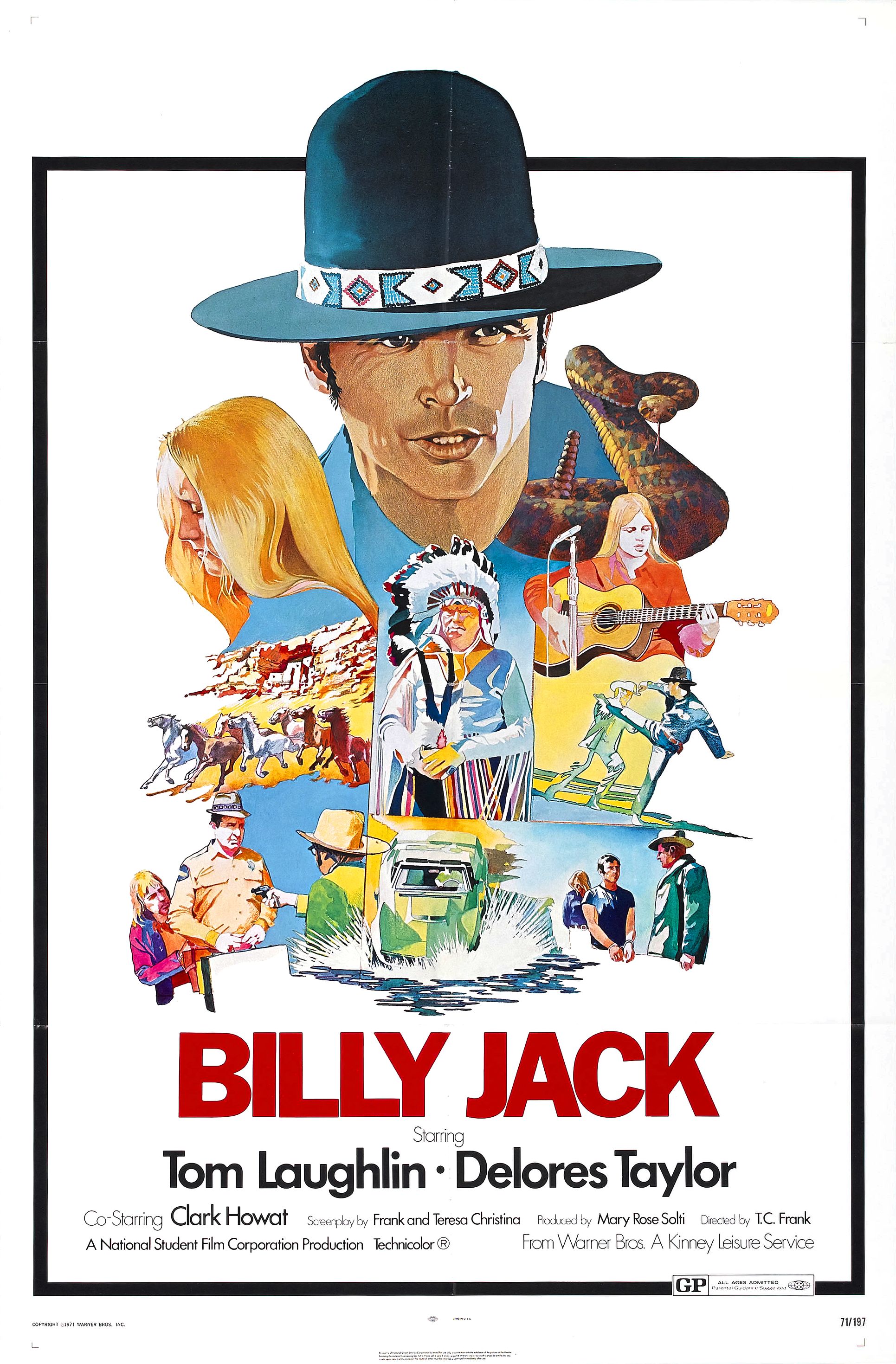
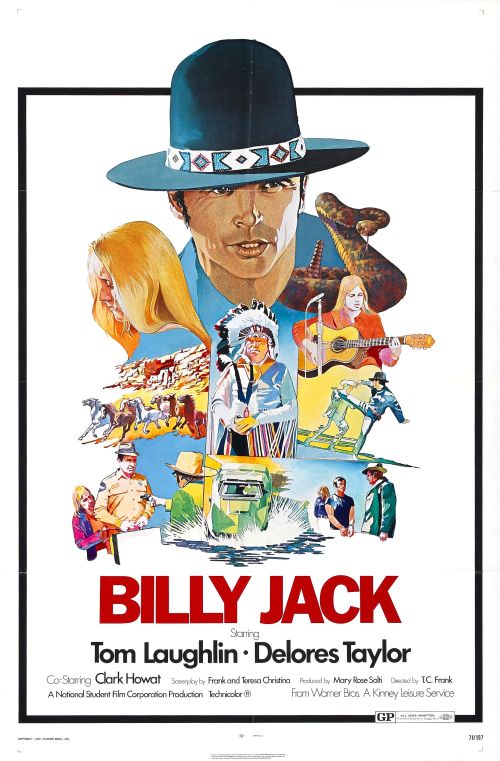
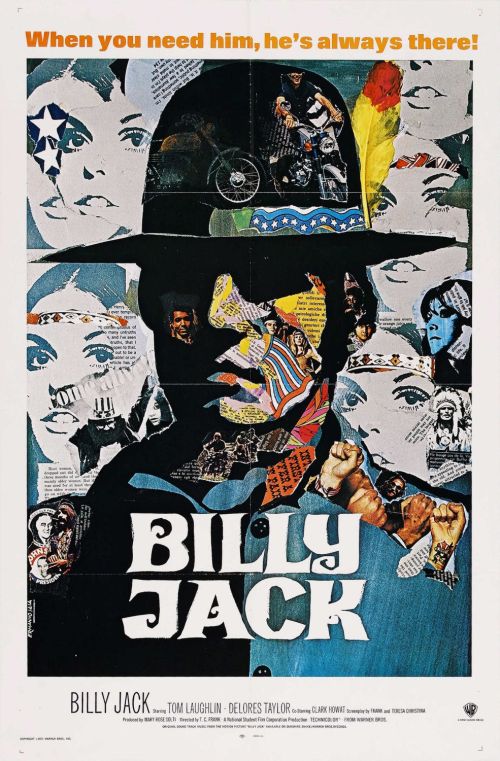
Barbara (Julie Webb) is the daughter of Mike (Kenneth Tobey) who is the deputy sheriff of the nearby town.  She comes home one day after having run away and advises him that she is now pregnant, but has no idea who the father is as she had taken part in a sex orgy at some hippie commune, which outrages her father so much he beats her severely. To escape she hides out at the nearby alternative Indian school run by Jean (Delores Taylor), but Mike tries to use his authority as an officer to force them to turn her over and it is up to half-breed Billy Jack (Tom Laughlin) to protect her and the rest of the school from the town’s vindictive force and prejudice.

Although this movie has justifiably been lambasted for years as being more political propaganda than an actual story it still has some surprisingly effective moments. One of the best is the fight scene that takes place in the middle of town where Billy fights off the bad guys by using a Hapkido fighting technique where he raises his leg and kicks his assailant in the face with his foot. Some of the skits done in the school by the students as well as other young performance artists are fun particularly the one where the parents and teens are forced to reverse roles and the majestic aerial photography of the rustic New Mexican landscape is breathtaking.

Writer/director Laughlin casts himself in the title role, which in some ways seems a little bit like a vanity project. The character is poorly defined and subsists too much on a mystique. Having him somehow survive being shot in the stomach is too extreme and Laughlin gives a very one-note performance and is able to show only one emotion, which is that of a brooding, constant anger.

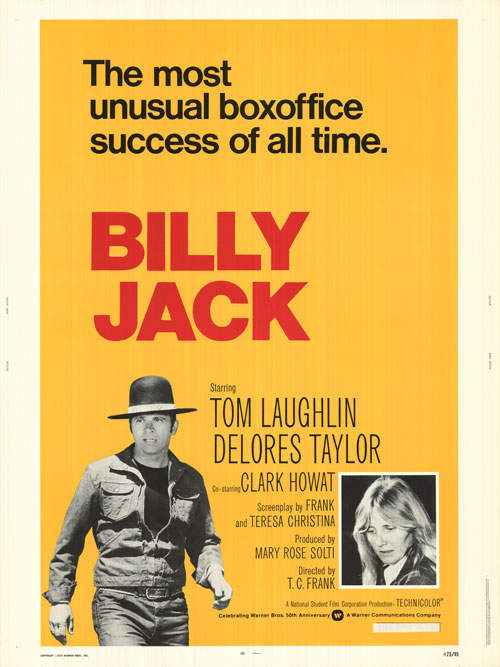
Taylor, who was Laughlin’s real-life wife, comes off better. Her face is weathered and she is no beauty by the conventional standard, but she seems to genuinely exude the values of her character and the scenes showing her after she is raped as well as the one where she begs Billy Jack to surrender during a shootout are emotionally charged and well down.
billy jack 3

The rest of the supporting cast is so-so with the adults coming off better. It’s a great chance to see young stars in the making including Howard Hesseman and Richard Stahl a comic actor whose deadpan delivery is second-to-none. Some of the young school girls are cute including Debbie Schock who at the time was Laughlin’s kid’s real-life babysitter. However, the teens acting is poor and they are given too much screen time without any ability to carry the film. The worst is Stan Rice who plays Martin and whose frozen facial expressions and monotone delivery makes him seem like he is a zombie.

David Roya as Bernard Posner the main antagonist in the film gives a decent performance, but the character’s motivations are confusing. He is aggressive with everyone and yet when Billy Jack appears he freezes up even though Billy is nothing more than a shrimp of a guy wearing a dorky looking hat. One scene in a café has Billy going on a long overly-dramatic rant and he turns his back to Bernard who remains frozen in terror even though he could’ve easily just whacked Billy in the back of his head and knocked him out. Another scene has Billy standing next to Bernard’s car who is in the driver’s seat and orders him to drive the vehicle into the lake, which he obediently does even though I thought he could’ve put the car into reverse and either run Billy over or forced him to jump into the lake instead.

The idea was to show that Bernard was a coward, but even a coward can act aggressively if given the upper-hand and by having him behave in such a strange way makes these scenes and the film as a whole seem very implausible and amateurish. Apparently actor Roya had these very same concerns and he argued with Laughling about them, which ended up creating a lifelong rift between the two.

The characterizations are broad, but on an emotional level it still works particularly the final scene where the students line-up and defiantly raise their fists into the air as Billy Jack is being driven away. The film’s pacifist stance while still delivering a high quota of violence has taken a beating by the critics through the years, but I saw it a little bit differently. I interpreted the message to be that pacifism is good in theory, but not always effective in execution.
billy jack 1

My Rating: 6 out of 10

Released: May 1, 1971

Runtime: 1Hour 54Minutes

Rated GP

Director: Tom Laughlin

Available: VHS, DVD, Blu-ray, Amazon Instant Video, Netflix streaming

Tough Guys (1986)

tough guys

By Richard Winters

My Rating: 3 out of 10

4-Word Review: Old guys go 80’s.

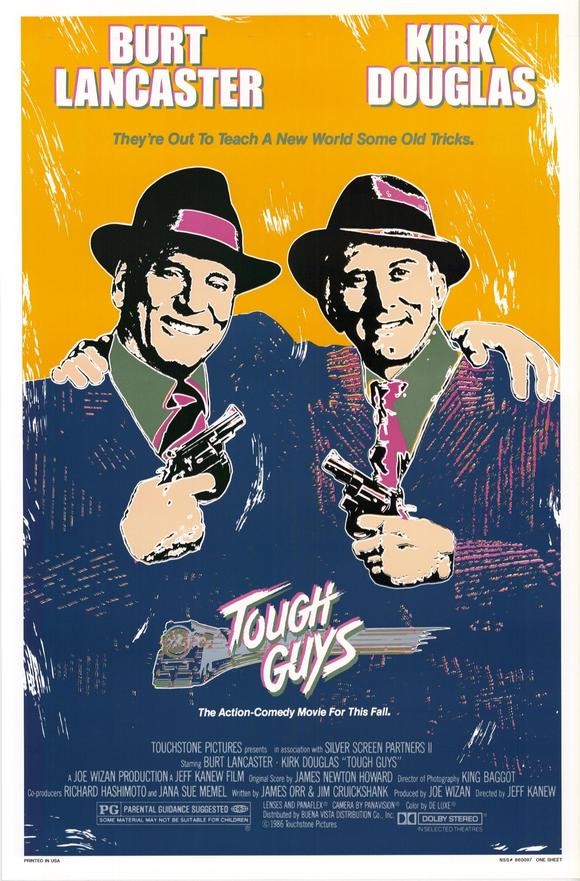
Harry Doyle (Burt Lancaster) and Archie Long (Kirk Douglas) are two old-time crooks, the last men to rob a train, who are released from prison and find life on the outside to be tough going.

The comedy and story are extremely predictable and too exaggerated to be entertaining or humorous. Having two elderly seventy-year-old guys beat up two young gun wielding punks or a street gang is unrealistic and the film loses any validity in the process. The film also plays-up 80’s fashions and attitudes until they are no longer funny. The musical soundtrack stinks and Kenny Rogers’s opening song isn’t much better.

Yes, it is fun to see Douglas and Lancaster together again, but it would have been better if they weren’t wearing those tacky, dated suits. Eli Wallach as a severely nearsighted hit-man is the best thing. His lines are amusing and he needed to have had more screen time. Charles Durning also does well in support.

This uninspired film should have been much better especially when considering the star quality. It does come to life a bit during the final train robbing sequence, but only marginally and I really could’ve done without having to see Douglas’s bare bottom.

My Rating: 3 out of 10

Released: October 3, 1986

Runtime: 1Hour 44Minutes

Rated PG

Director: Jeff Kanew

Studio: Touchstone Pictures

Available: VHS, DVD (Region 2), Amazon Instant Video

Alucarda (1977)

alucarda 2

By Richard Winters

My Rating: 2 out of 10

4-Word Review: Another Exorcist rip-off

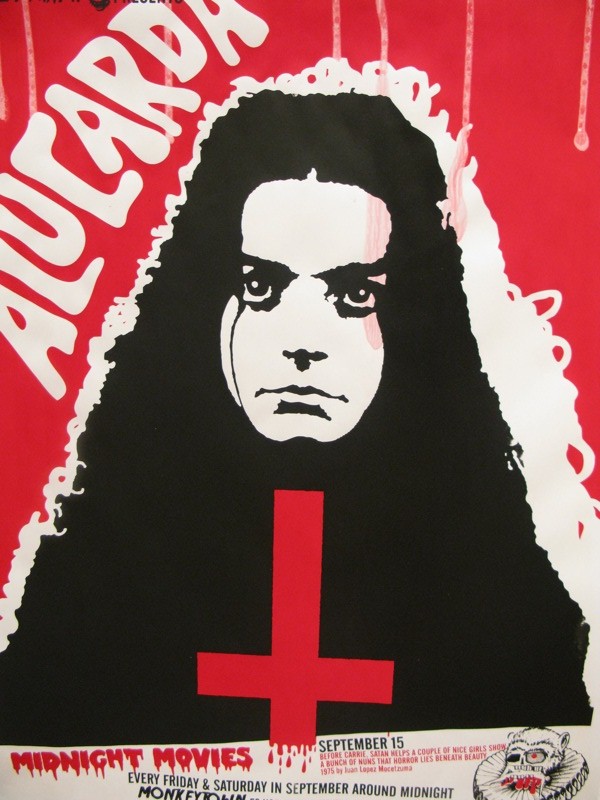
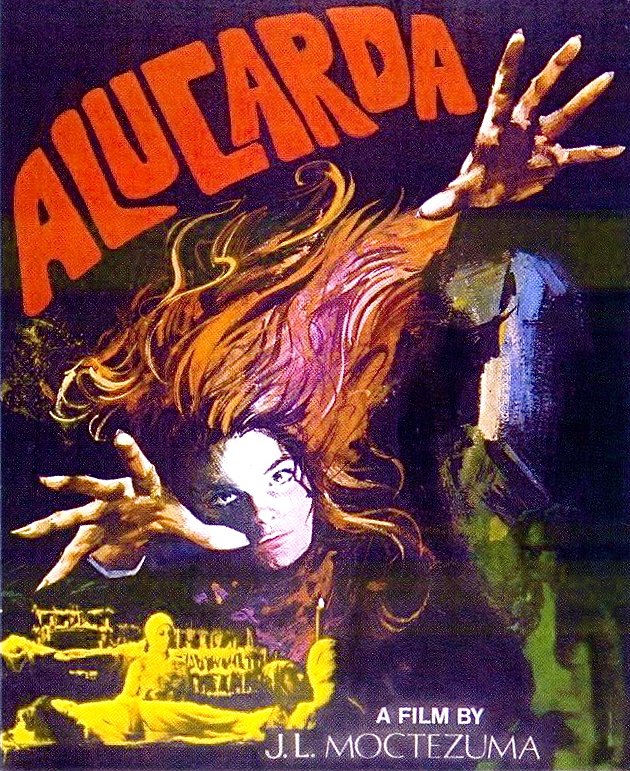
Justine (Susana Kamini) arrives at a convent after the death of her parents. She meets up with a strange young woman named Alucarda (Tina Romero) who almost immediately professes her true love for Justine and the two make a weird pact. Alucarda then seems to become possessed and it rubs off on Justine sending the nuns and priest at the convent into a panicked frenzy to rid both girls and the place from the evil presence.

This bizarre, cheap Mexican production comes off like someone’s drug induced acid trip. Yet it has still managed to acquire a small cult following and even has one reviewer at IMDB calling it ‘brilliant’ even though I found it to be anything but and only reconfirms that there is somebody out there that will like anything. Juan Lopez Moctezuma’s direction is unfocused and undisciplined. The story borders on being almost incoherent with wild twists and story arches that occur at a breakneck pace. The special effects are tacky and there isn’t a single scare in the whole thing.

This supposedly takes place in the 18th century, but the priest wears a wardrobe that looks like he is from China even though the setting is Mexico and the outfits worn by the nuns defy any era and appear to be made by a costume designer who was drunk. The pounding rock-like score has a resemblance to music from Tangerine Dream, but a much weaker version and doesn’t connect with the time period that the story is in. It has elements that will remind you of Suspira and Ken Russell’s The Devils, but both of those films are far superior to this one and only make you wish you were watching those instead.

The acting is amateurish and over-the-top, but star Romero has an interesting look in her eyes and reminded me a bit of a young Genevieve Bujold. There is an abundance of nudity and low-grade eroticism that may make it appealing to some. I did get a kick out of the way the nuns and priest overact and wilt at simply the mention of the devil and Satanism, which I found to be unintentionally funny.

This is just another attempt to cash in on the success of The Exorcist and like the rest of them fails miserably. This isn’t entertaining even on a camp level and I would suggest avoiding it completely.

alucarda 1

My Rating: 2 out of 10

Released: March 10, 1977

Runtime: 1Hour 14Minutes

Rated R

Director: Juan Lopez Moctezuma

Studio: Yuma Films

Available: DVD

The Survivors (1983)

survivors 1

By Richard Winters

My Rating: 6 out of 10

4-Word Review: Seeking refuge with vigilantes

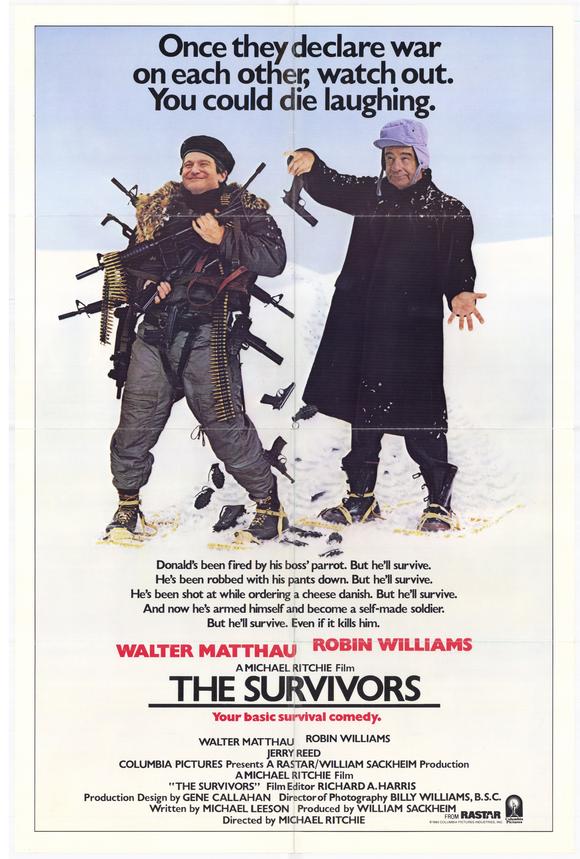
Sonny (Walter Matthau) and Donald (Robin Williams) are a mismatched pair who inadvertently become involved with bad guy Jack (Jerry Reed) after witnessing him holding up a restaurant. Donald seeks protection by joining a radical militia group while Sonny chases after him in an attempt to get him out of it.

The story certainly has the foundation for good potent satire. It hits on the serious issue of average citizen vigilantes who become more fanatical and dangerous than the criminals themselves. It peaks with a scene in a gun shop were a little old lady packs herself with some really big guns. Unfortunately it becomes soft and aimless after that and the result is a clumsy comedy with too much nonsense thrown in for cheap laughs.

There is also too many shifts in allegiances here, which makes it all implausible. First Donald is on the run from Jack and even tells him off in a funny moment over the telephone. Then before you know it they are working together and going against the fanatical militia group that at one time Donald was really into. The final denouncement involving the true allegiance of the militia group’s leader is also absurd.

There are some good laughs, but they are scattered haphazardly throughout. The best stuff comes from Williams. He seems a little out of place at first playing the part of the henpecked businessman, but he quickly comes into his own. His shootout with Reed is the real topper and Matthau is as always consistently amusing.

The female cast is also interesting. Kristen Vigard is a nice addition as Matthau’s teen daughter. She is pretty and smart, but still quite sweet. Her relaxed and casual responses to things are a nice contrast to the frantic behaving adults. Annie McEnroe as Williams’ wife is also good only because of her facial expressions which never allow you to know what she is really thinking or feeling.

The best line comes from hit-man Reed: “I was raised a strict Southern Baptist and I place a high value on human life… at least $20,000.”

My Rating: 6 out of 10

Released: June 22, 1983

Runtime: 1Hour 43Minutes

Rated R

Director: Michael Ritchie

Studio: Columbia Pictures

Available: VHS, DVD, Amazon Instant Video

The Art of Love (1965)

art of love

By Richard Winters

My Rating: 3 out of 10

4-Word Review: Artist fakes his death.

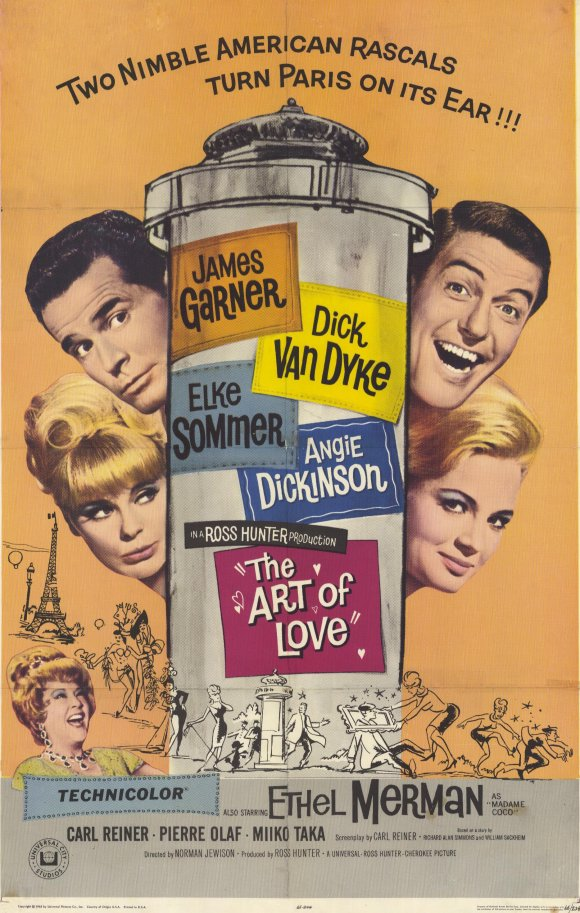
Paul (Dick Van Dyke) is a struggling painter living in Paris who has not been able to make any money with his paintings and feels ready to give up and move back to the states. Casey (James Garner) is his roommate and best friend who tries to convince him to stay by coming up with a scheme where Paul fakes his death by jumping off a bridge and committing suicide, which should bolster the value of his paintings based on the concept that an artist’s work becomes more sought after once they are dead. The plan works, but it forces Paul to go into hiding and allows Casey to make a play at Paul’s fiancée Laurie (Angie Dickinson). When Paul finds out about this he confronts Casey and then things get really zany.

Carl Reiner’s script is trite to the extreme and although it moves at a brisk pace it is not very funny, or even passably amusing. The concept of an artist having to die in order to get his work to sell is an interesting idea to explore, but unfortunately like everything else in the film it is handled in a superficial way and used mainly as a springboard to all sorts of other wild scenarios that become increasingly sillier as it goes along.  Norman Jewison’s direction is dull and unimaginative and despite the fact that it has a European setting it was actually filmed on a Universal studios back-lot, which doesn’t help give it any atmosphere or distinction.

Van Dyke’s character is unrealistically ‘goody-goody’ and clean-cut.  He comes into contact with Nikki (Elke Sommer) a beautiful blonde woman who shows a strong interest in Paul, but he immediately and rigidly rebuffs her like he has no sex drive at all. The comic schtick that he does here is the same stuff we’ve seen him do hundreds of times before and he basically becomes Rob Petrie again simply transplanted into a European setting.

Although he has less comic opportunity Garner is clearly the better actor and has much more of a screen presence. It is easy to see why he continued to get choice movie roles for decades to come while Van Dyke became permanently demoted back to television.

Sommer is wasted in a transparent role. Dickinson, who three years later co-starred with Van Dyke in Some Kind of a Nut is equally forgettable and her constant propensity at fainting becomes increasingly more unfunny the more it occurs.

Ethel Merman makes the most of her role despite its limitations, but every time she speaks she seems to be shouting. Reiner is probably the most amusing out of all the characters in a brief bit as Garner’s shyster lawyer.

I wish I could tell you that there was at least one truly funny moment here, but there really isn’t. The humor is flat and dated and no better than a poor TV-sitcom and in many ways even worse.

My Rating: 3 out of 10

Released: June 30, 1965

Runtime: 1Hour 39Minutes

Not Rated

Director: Norman Jewison

Studio: Universal

Available: None at this time.

Money Talks (1972)

money talks

By Richard Winters

My Rating: 6 out of 10

4-Word Review: It’s all about money.

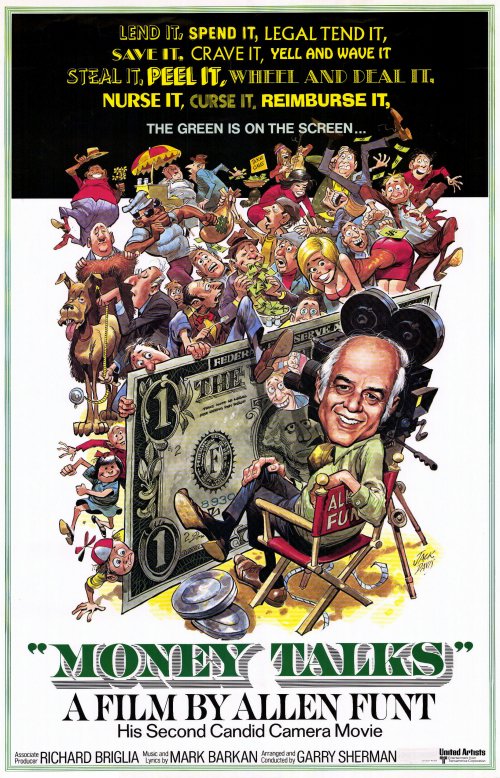
Allen Funt the creator of ‘Candid Camera’ returns with his second cinematic feature all centered around pranks and stunts done on unsuspecting regular people to see just how far they will go when presented with the allure of money. The film examines the deep seated psychological effect that money has in society and how it controls what people do and in some cases what they don’t do.

This feature is an improvement over Funt’s first. Fortunately he keeps the majority of it on a comic level and avoids trying to make unnecessary ‘profound’ social statements. The film is also faster paced and although the music is still annoying it isn’t as bad and has a bit more of a funky beat. Some of the stunts aren’t necessarily all that funny and few become rather redundant and predictable. However, the majority of them I liked and even found fascinating including the one where a woman walks down the street and intentionally allows dollar bills to fall out of a hole in her pocket and drop to the ground behind her and how surprisingly many people would pick them up and chase after her to give them back. The funniest one is where a mild mannered middle-aged woman gets a job answering phone calls for a man who she finds out is a professional hit man. Hearing her diligently taking down an order and answering questions over the price of a hit while trying to mask her shock and remain calm had me laughing-out-loud.

A few of them are definite artifacts of a bygone era including the many relentless attempts a woman goes through to try to retrieve a simple five dollar bill that is lodged beneath a car tire. Another segment has a bare foot hippie girl begging for money on a street sidewalk and her startlingly naïve willingness to go back to a strange man’s apartment who approaches her and says he has shoes for her, which she almost does until Funt and crew advise her not to.

A few of the pranks have celebrities in disguise. My favorite was the one with actress Marian Mercer pretending to be a waitress and asking beforehand how much of a tip the customer planned to give her, so she could plan out what type of service she would give him. The segment where comedian Henny Youngman has no money to pay a hot dog vendor, so instead he tells the irritated man a bunch of lame jokes as ‘payment’ is quite funny and I wished it had been extended longer. Muhammad Ali’s bit isn’t quite as good, but his personality is as engaging as ever.

The film also has some good interviews including an opening bit where a commercial jingle writer comes up with on-the-spot a ditty for the film’s theme, which is not bad. Dominic the knife sharpener becomes almost a show in itself with the flamboyant way that he tries to bargain with Funt over not only how much he should be paid to sharpen his knives, but also for his fee to appear in the film. The interviews with hippies who don’t have jobs and don’t want them could have been more interesting had we seen what happened to them twenty years later and if they were still adamantly in the non-work camp, which I doubt. Funt also interviews his own 6-year-old daughter who is surprisingly more perceptive than you might think.

My Rating: 6 out of 10

Released: August 30, 1972

Runtime: 1Hour 21Minutes

Rated PG

Director: Allen Funt

Studio: United Artists

Available: Amazon Instant Video, Netflix streaming