Tag Archives: Entertainment

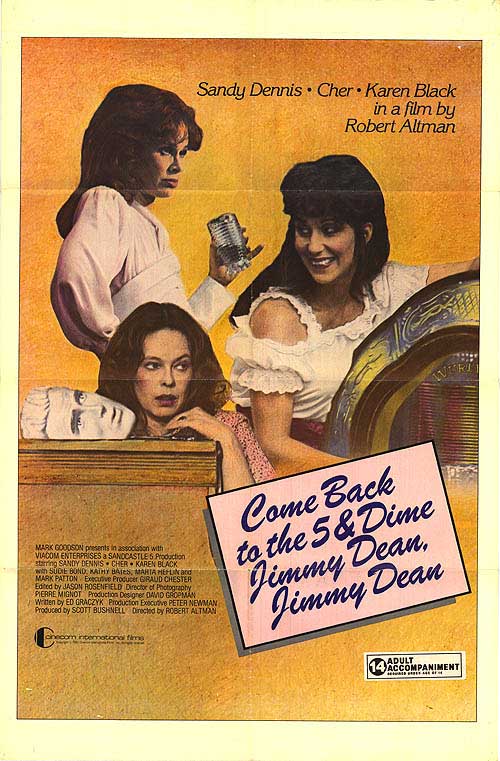
Come Back to the 5 & Dime Jimmy Dean, Jimmy Dean (1982)

COME BACK TO THE FIVE & DIME, JIMMY DEAN, JIMMY DEAN, Sandy Dennis, Cher, Karen Black, 1982, (c) Cinecom Pictures

COME BACK TO THE FIVE & DIME, JIMMY DEAN, JIMMY DEAN, Sandy Dennis, Cher, Karen Black, 1982, (c) Cinecom Pictures

By Richard Winters

My Rating: 3 out of 10

4-Word Review: Disciples of James Dean.

Twenty years after his untimely death five women (Cher, Sandy Dennis, Karen Black, Kathy Bates, Marta Heflin), who were big fans of James Dean and called themselves his disciples, decide to hold a reunion at a thrift shop in a small town not far from Marfa, Texas where the film Giant was made. However, the reunion is not a happy one as old wounds and secrets come to light that forces the women to analyze themselves and their lives in uncomfortable and unpleasant ways.

One of the things that really annoyed me about this movie and at times just downright confused me is that the characters show no signs of aging at all as it shifts between 1955 and the present day of 1975. Twenty years is a significant period of time and most everyone will show some signs of age, or at least changes to their hairstyle and outfits and yet with the exception of the Joe character there is no distinguishable differences between the others from one period to the next. The Cher character was particularly perplexing as her hair remains jet black for two decades and even the same exact style. One could argue that maybe she dyed it, okay, but she also manages to somehow retain her same girlish figure, which is even less likely.

I also found it hard to believe that she could afford to make a living by working at little thrift store for 20 years, or that she would even be needed as the place was small enough for one person to run and through the course of the entire movie never once does a single customer even enter the place. Her character was attractive enough to find a man, get married and run off to another town or place that had more potential. We learn through the course of the movie that she was married at one point, but then dumped, however I would think she would’ve been able to find someone else in a 20 year time span especially since she was still quite good looking.

Keeping all of the action inside the thrift store makes the film seem almost claustrophobic. I realize this was based on a stage play, but most plays that get transferred to film will have certain scenes, or cutaways added in to avoid this feeling. Even having some outdoor shots done over the opening credits would’ve given it a little more of a visual variety.

The performances are the best thing about the movie and probably the only reason to see it. All three leads recreate their parts from the stage version. Cher is sensational and in my opinion gives the best performance. Dennis is solid doing her patented fragile caricature and who displays some interesting emotional eruptions at completely unexpected times. Black is excellent as well. Usually she plays flaky types, but here is more reserved and steely. Bates is good as a loud and abrasive woman and Sudie Bond lends fine support as the shop’s overtly religious owner.

The script is passable, but the revelations that come out are stuff you’d find on a second-rate soap opera. I also found it hard to believe that these women would get together after 20 years and not have other things to talk about. Usually when people meet after not seeing each other for an extended period of time there’s always a lot of ‘catching up’ to do where they talk about all the things that have happened to them since, but here there’s none of that. Instead they come off like people frozen in time clinging to bygone issues that just about anyone else would’ve moved on from long ago.

The film ends with several shots of the store shown in an abandoned and rundown state, but with no explanation of what time period it was taken in. At first I thought this meant that maybe the reunion had never occurred. That maybe it had just been imagined, which is a concept that I liked and would also have filled in some of the gaping plot holes that I’ve described above, but then I saw the reunion banner still hanging in a tattered state from the ceiling. Others on IMDb have debated that it may represent the reunion that they had planned for 1995 that never came about, which is a good guess, but with business being as slow as it  was at that place I think it would’ve been abandoned long before 1975 let alone 1995.
come back 1

My Rating: 3 out of 10

Released: November 12, 1982

Runtime: 1Hour 50Minutes

Rated PG

Director: Robert Altman

Studio: Cinecom Pictures

Available: DVD

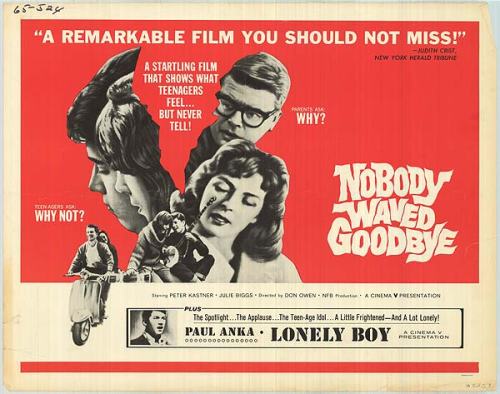
Nobody Waved Goodbye (1964)

nobody waved goodbye 1

By Richard Winters

My Rating: 8 out of 10

4-Word Review: Teen learns hard lesson.

Peter (Peter Kastner) is 18 and looking to spread-his-wings, but doesn’t like what he sees in the adult world. Everyone seems trapped by their dull jobs and mundane routines, which is something he doesn’t want to fall into. He has big dreams. He wants to run away with his girlfriend Julie (Julie Biggs) and live a life based completely on his own whims while never becoming a slave-to-the-system like everyone else. Then he gets in a fight with his parents and they kick him out and after struggling to find work without even a high school diploma his attitude quickly changes.

If you can get past the wretched opening song, which is sung by Kastner and played over the credits, then this film really hits-the-mark. I was impressed with the camera work especially during the dinner time conversations amongst the family members where director Don Owen shoots it with a hand-held camera and zooms in and out on the person’s face as they are speaking. This is something that is quite common today especially on TV-shows, but back then was rarely if ever used, which makes this well ahead-of-its-time and even groundbreaking. I also enjoyed the conversational quality of the dialogue and having two conversations going on at the same time, which again didn’t come into vogue until years later when Robert Altman did it in M*A*S*H.

The film also clearly allows for ad-libbing amongst its actors. There is a scene in which Peter and Julie go paddle boating and come upon a large sofa submerged in the water and then comment on it. Clearly the filmmakers didn’t put the sofa into the lake simply to film the short scene that has nothing to do with the rest of the story, but it still helps set the tone for keeping things fresh and real.

Kastner is great and it’s refreshing to have a protagonist in a film that you like at some points and feel like wringing-his-neck at other times. Too many movies today, especially Hollywood ones, create lead characters that are politically correct caricatures while this movie instead has real human beings that are not tailored made to conform to the likings of any particular demographic.

It’s a shame to say that a movie that came out over 50 years ago is still considered cutting-edge, but compared to the tired, formulaic glop coming out today it really is. The script is uncompromised and holds-no-punches while keeping things gritty and stark and making profound, universal points along the way. I also found it fun that the main character here, who was clearly a baby boomer, displays the same anti-establishment, anti-work attitude that now gets placed squarely onto the ‘dreaded millennials’ and yet it seems the boomers were just as reluctant to get into the rat race as all the generations that have followed them and therefore shouldn’t be waiving their finger at anyone.

nobody waved goodbye 2

My Rating: 8 out of 10

Released: August 13, 1964

Runtime: 1Hour 20Minutes

Not Rated

Director: Don Owen

Studio: National Film Board of Canada

Available: None at this time.

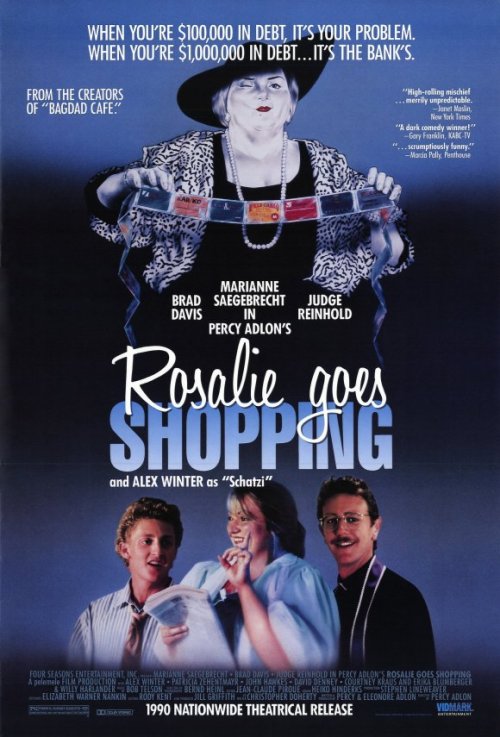
Rosalie Goes Shopping (1989)

rosalie goes shopping

By Richard Winters

My Rating: 4 out of 10

4-Word Review: Shopaholic turns to crime.

Rosalie (Marianne Sagebrecht) is a German immigrant who has married an American crop duster (Brad Davis) and moved onto a small ranch just outside of Stuttgart, Arkansas. There they raise a large family while also becoming obsessed with American consumerism by recording all the TV-shows on their VCR, but only so they can watch the commercials. Rosalie becomes a particularly obsessive shopper buying things that she really doesn’t need even when her money and credit become tapped out. She then figures out a way to hack into the accounts other people and companies via her home computer, which allows her to continue to pay for all her items by embezzling it from others.

This marks the fourth teaming of director Percy Adlon and star Sagebrecht and straight after their big success in the cult classic Bagdad Café. The film was made on-location in Arkansas, but financed by a German production company. I’m not sure what camera lens was used or the film stock, but the color contrast is quite unique and gives the whole thing an Avant-garde appearance. The storyline is original as well and veers off into unpredictable ways while making a great point, which is that unbridled capitalism can be just as dangerous and oppressive as any other form of government.

Sagebrecht is a delight and the moment where tears trickle down her checks as she becomes homesick for her native land while watching home movies taken in Germany is touching. Judge Reinhold is funny as the priest who becomes aware of Rosalie’s shenanigans through hearing them during confession, but completely exasperated about what to do about it. Brad Davis, a highly underrated actor who died too young, plays a rugged country man that’s completely against type from his more famous roles in the homoerotic films Midnight Express and Querelle.

Unfortunately the script, which was co-written by Adlon and his wife Eleonore veers too far into the whimsical and shows too much of a naiveté in regards to cyber technology. The idea that Rosalie could somehow ‘guess’ what everybody’s password was even those used by big companies and major banks is too farfetched and even if she did somehow figure them out all they’d have to do is change them once they realized their accounts had been hacked, which would’ve ended Rosalie’s cybercrimes right there.

The fact that she is able to cover up her crimes by doing even more outrageous ones and never, ever having to face the consequences of her actions is far too fanciful. It also makes light of a genuinely serious issue where the poor and lower middle-class do not have the same resources to get out of their financial predicaments as the rich do. They also do not have the convenience to magically cheat-the-system like the character here and those that do will almost always have it catch up with them where they will ultimately face harsh repercussions no matter how ‘justified’ they may have felt they were in doing it.

Some may argue that this was just a wish-fulfillment comedy, but even then there still needs to be some realm of possibility to it for it to be satisfying and this has none and it also makes the so-called clever twists lose their edge once you realize that none of it is plausible.

My Rating: 4 out of 10

Released: May 19, 1989

Runtime: 1Hour 34Minutes

Rated PG

Director: Percy Adlon

Studio: Pelemele Film

Available: VHS, DVD (Region 2), Amazon Instant Video

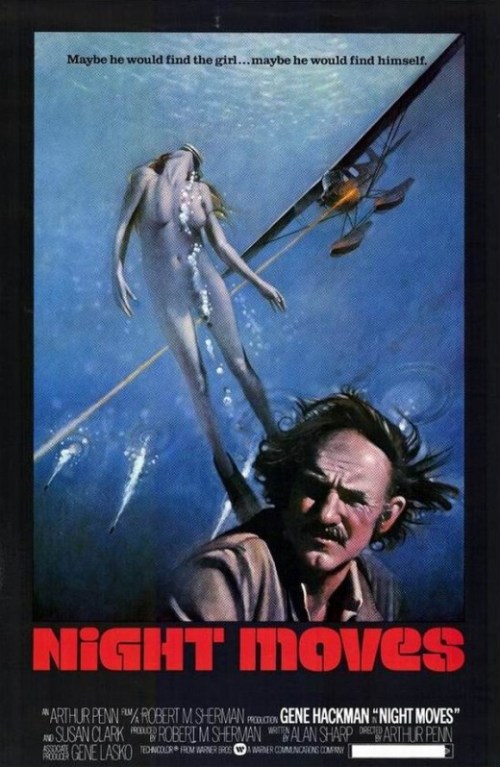
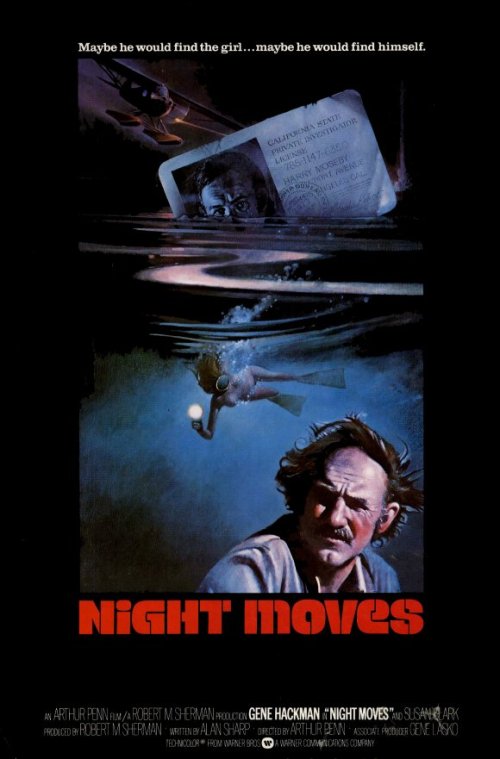
Night Moves (1975)

night moves 1

By Richard Winters

My Rating: 7 out of 10

4-Word Review: Searching for runaway teen.

Harry Moseby (Gene Hackman) is a down-on-his-luck former football player who is now working as a private detective. The cases are not interesting and when his wife (Susan Clark) begins having an affair he feels like his life has hit rock bottom. Then he gets what he thinks is just another routine case which is finding the missing runaway teenage daughter (Melanie Griffith) of an aging, alcoholic actress (Janet Ward). The case though harbors many dark and unexpected turns that eventually gets Harry wrapped up into a world of art smuggling and murder.

To me one of the lasting impressions of the film, which I have seen many times over the years, is the way it incorporates nighttime into the story. The majority of the action and dialogue take place very late and makes full use of the sound of the night bugs croaking and chirping. In fact this becomes ‘the music’ for the scenes and helps create a third character as it reveals the darkness harboring inside the characters.

Hackman gives another outstanding performance playing a protagonist struggling against loneliness and frustration while realizing that it may be an inevitable part of life and something that cannot be ‘defeated’. His best line comes when he describes where he was when the Kennedys were shot. When John F. was assassinated he was playing football and still full of dreams, but then 5 years later when Bobby was killed his life had already fallen into an apathetic rut.

Jennifer Warren is good in support and looks terrific during a topless lovemaking scene. Griffith, Edward Binns and James Woods do quite well in their respective roles and the lesser-known Janet Ward plays a pathetic, boozing old broad about as well as anyone could.

The majority of the story is talky, but still intriguing. The only action comes near the end when Harry gets attacked by a seaplane while he is out on a boat. This scene is especially good because it plays off of the famous airplane segment in North by Northwest and is almost as riveting including the memorable and unique way Harry is finally able to identify the mysterious pilot.

The script, by Alan Sharp is overall smart, but does suffer from a few moments where things don’t make complete sense. One of those is when Griffith finds out that Harry plans on taking her back to her mother which she insists will ‘never’ happen, but then in the next shot we see her getting into his car, which I would think she’d resist doing for fear that she would be placing herself into too much of a vulnerable position and he would use the opportunity to ‘kidnap’ her and take her back to where she didn’t want to go.

Another moment comes when Griffith leaves a message on his answering machine that alerts Harry about something she feels he should look into. He begins listening to it, but then shuts it off when his wife enters the room yet he never goes back to listen to the rest of it even after Griffith later turns up dead.

When a death occurs on a movie set Harry is the one who gets called in to analyze the film footage showing the mishap, which isn’t realistic as the police would’ve been the ones doing the investigation and they most likely would’ve confiscated the footage in order to be used later as possible evidence.

night moves 2

My Rating: 7 out of 10

Released: June 11, 1975

Runtime: 1Hour 39Minutes

Rated R

Director: Arthur Penn

Studio: Warner Brothers

Available: DVD, Amazon Instant Video, YouTube

Another Nice Mess (1972)

another nice mess 1

By Richard Winters

My Rating: 2 out of 10

4-Word Review: Spiro and Tricky Dick.

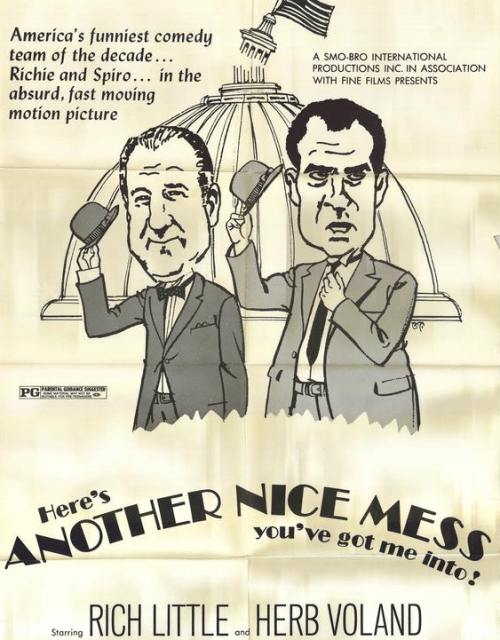
This film is an odd, misfired concoction from writer/director Bob Einstein (Albert Brooks’ older brother) who had just won an Emmy for his writing on ‘The Smothers Brothers Show’ and decided to try his creative muscle at filmmaking. The idea might’ve seemed clever at the time, but it has not aged well. The premise has President Richard Nixon (played by Rich Little) and Vice President Spiro Agnew (played by Herb Voland) behaving like Laurel and Hardy and spending the entire runtime going through some of that classic duo’s more famous routines.

If you were alive during Nixon’s administration than this may come off as being a bit funnier than to those who weren’t however, taking potshots at the President is no longer fresh and for the most part even a bit tiring to watch. The vaudeville-like routines are predictable and this thing had me bored two-minutes in and even with its brief running time still was a major drag to sit through.

Voland is much funnier than Little and seems to imitate the comic legend of Stan Laurel far better than Little does with Hardy, but the characters are played up to be completely moronic and having to watch them do and say one mind numbingly stupid thing after another becomes very one-dimensional.

The film Hail was a Nixon satire that came out around the same time, but that film fared much better and was even quite clever at times. The main reason was that they had a plot while this one is just a non-stop gag reel with a first-graders level of sophistication.

If there’s one redeeming quality for watching this it would be in seeing Steve Martin in his film debut playing a hippie. He doesn’t have his patented white hair here and instead it’s long, curly and brown. I probably wouldn’t have even recognized him if it weren’t for his voice and mannerisms.

My Rating: 2 out of 10

Released: September 22, 1972

Runtime: 1Hour 6Minutes

Rated PG

Director: Bob Einstein

Studio: Fine Films

Available: None at this time.

Young Einstein (1988)

young einstein

By Richard Winters

My Rating: 4 out of 10

4-Word Review: The first rock star.

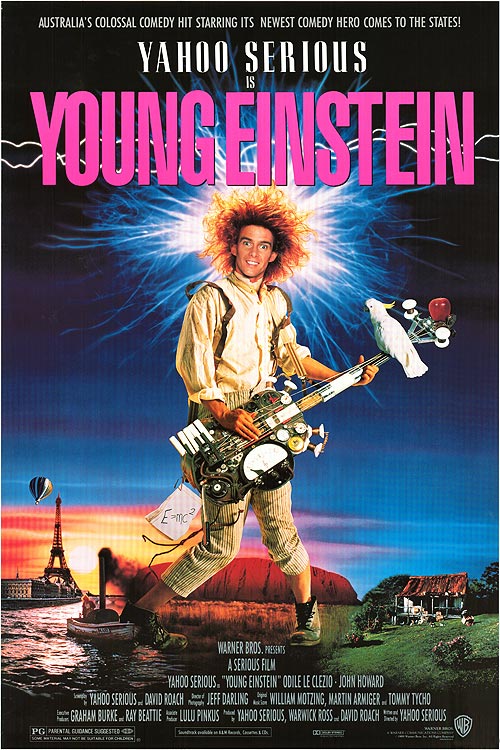
Forget all those things that you’ve read in the history books because they’re all wrong. Albert Einstein was never born in Germany instead he was the son of an apple farmer in Tasmania who grew up to not only invent the theory of relativity, but also rock ‘n’ roll, the electric guitar, bubbles in beer and even surfing. He also had a bad haircut that looked just like Carrot Top’s.

The term one-hit-wonder gets used a lot in the music business to describe a band or singer that comes out of nowhere, gets a chart topping hit and then proceeds back to obscurity. Normally it’s never used in movie jargon, but if it was this would be a perfect example. Writer/director/star/composer Yahoo Serious, whose birth name was Greg Pead until he had it legally changed in 1980, seemed to be the next creative prodigy when he concocted this thing after spending years making educational documentaries. It was a huge success in Australia, which was enough to get Warner Brothers to pick it up as they thought they had another Crocodile Dundee on their hands and spent $8 million promoting it only for it to fail dismally at the box office and in effect so did Serious’ career as he has not made a movie, or even been in one since 2000.

To some extent I was initially surprised at how well directed it was and how Serious showed an astute eye for detail. I loved how he captured the majestic Australian landscape and the music score is quite distinctive and cool. The humor is funny, but mostly when it involves a visual device that has nothing to do with the action. For instance there is a homeless man in one scene carrying a sign stating ‘The end is near’, but instead of spelling ‘near’ in the conventional way it gets spelled as ‘nigh’ to replicate his Aussie accent.

Unfortunately the comedy stays too much at an innocuous level, which is why I believe it didn’t catch on here, or become a cult hit despite its potential. Everything is geared exclusively to a preteen audience, who may love it, but for it to appeal to adults or a more discriminating viewer it needed to have a darker edge, or some attempts at satire instead of just complete, non-stop silliness.

Serious is only so-so as the lead. He certainly does have the chiseled, boyish good looks that could make the young teen girls swoon, but he had too much of a laid-back, mellow persona and seemingly unable to convey any other type of emotion. His radical, punk-like hairstyle starts to become a distraction to the point where you find yourself looking at it even when you don’t want to.

Originally the script was called ‘The Great Galute’ and was a story about some ordinary fella who invented the electric guitar and the Einstein angle was only added in after Serious took a boat ride down the Amazon and noticed a kid wearing an Albert Einstein T-shirt. In a lot ways the film would’ve been better had it stayed with its initial concept as it’s a bit disrespectful to the actual person and it’s never even remotely funny that this guy with a perpetual surfer dude mentality could’ve really been a super genius.

The ridiculous plot proceeds to get dumber as it goes along until it becomes just downright embarrassing by the end. The romantic side-story and the film’s villain (John Howard) are pointless, boring additions that add nothing and should’ve been scrapped. The film would’ve been more successful had it done away with a conventional narrative completely and instead taken the Jacques Tati approach where all emphasis was placed on visual non-sequiturs as this was the only time that I found the film to be even slightly engaging.

My Rating: 4 out of 10

Released: December 15, 1988

Runtime: 1Hour 31Minutes

Rated PG

Director: Yahoo Serious

Studio: Warner Brothers

Available: DVD, Amazon Instant Video, YouTube

Nicholas and Alexandra (1971)

nicholasandalexandra1

By Richard Winters

My Rating: 9 out of 10

4-Word Review: The last Russian Tsar.

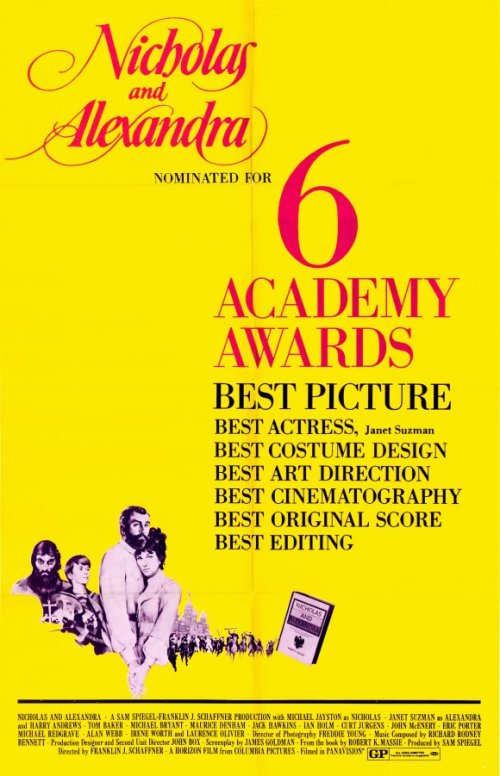
This film chronicles the life of Tsar Nicholas II (Michael Jayston) of Russia and his marriage to Alexandria (Janet Suzman). Based on the novel by Robert K. Massie it examines the height of his power and his apathy to the poverty of his people and his reluctance to listen to their needs, or consider a more democratic form of government. It also looks at his personal life including the birth of his son Alexei (Roderic Noble) who is diagnosed with hemophilia and his wife’s over-reliance on Grigori Rasputin (Tom Baker) a man pretending to have divine connections who ultimately uses his influence on Alexandra to take control over her political affairs when her husband is away. The film also portrays Russia’s involvement during WWI as well as the Tsar’s downfall and eventual exile in Siberia with his family.

The film is basically split up into three parts with the first hour looking at Nicholas’ family life while intercutting with scenes showing the discontent of the Russia people and the efforts of Vladimir Lenin (Michael Bryant) to create a revolutionary form of government. The second hour examines Russia’s war involvement and the many warnings that Nicholas is given not to get involved in it, but foolishly decides to anyways, which ultimately creates massive upheaval. The third hour looks at his abdication of power and the family’s exile and virtual imprisonment at the Ipatiev House in Yekaterinburg where they nervously await their fate.

Initially I thought the third hour would be the weakest as we all know they get shot and killed execution style, but to my surprise it is actually the strongest part of the film. To an extent tearing the characters away from their plush surroundings and forcing them to exist in bleak, squalor-like conditions actually humanizes them and allows the viewer to empathize with them particularly the four daughters who had nothing to do with their father’s harsh policies and just wanted a chance to grow up and live a normal life. The scene where the family is herded into the basement of the home in the early morning hours and forced to sit silently while awaiting their executioners is quite possibly one of the most intense moments ever captured on film.

The performances are uniformly strong particularly Suzman’s as well as Baker as the evil Rasputin who’s drawn out death scene may be one of the longest in movie history. Laurence Olivier in a small, but pivotal bit as the Prime Minister gets two commanding moments including his speech after the Bloody Sunday massacre and later his strong misgivings about the country’s war involvement.

The film is full of brilliant cinematography, direction, costumes and set pieces and is certainly something that must be watched on the big screen to be fully appreciated. I enjoyed the lavish interiors of the Winter Palace especially their walks down the elegant hallways that are lined with Royal guards, but found it equally interesting when Nicholas returns there after the war and forced to walk down these same hallways, which are now darkened and rundown. The many long distance shots of the flat and majestic landscape is also impressive particularly a view of a rolling sunflower field.

Although this film has never attained the well-known classic status of Doctor Zhivago, and in fact this was producer Sam Spiegal’s answer to that film when he was blocked from working on it, I still found it to be every bit as compelling and well directed.

My Rating: 9 out of 10

Released: December 13, 1971

Runtime: 3Hours 8Minutes

Rated GP

Director: Franklin J. Schaffner

Studio: Columbia Pictures

Available: DVD, Blu-ray, Amazon Instant Video


The Honkers (1972)

honkers 3

By Richard Winters

My Rating: 5 out of 10

4-Word Review: Rodeo star is selfish.

Lew Lathrop (James Coburn) is an aging rodeo star who returns to his hometown after an extended absence, which stirs up resentment and trouble wherever he goes. His wife Linda (Lois Nettleton) still has feelings for him despite her anger at him leaving her and never being able to stay faithful. It seems that the only true friend that he has and one that remains loyal to him even through his many shortcomings is rodeo clown Clete (Slim Pickens), but even this gets put to the test when Lew decides to jeopardize is family life once again when he decides to go after local hottie Deborah (Anne Archer) a young woman just past the age of consent who enjoys flirting with older men and shows no reluctance in having her way with them.

The film was directed by actor Steve Ihnat who never saw the final product put on the big screen as he died from a sudden heart attack at the young age of 37 five days before the film’s release. Much like with Junior Bonner and JW Coop, which came out at the same time, this has an authentic feel with the necessary level of grittiness and good rodeo footage,  but the scenes go on too long and the pace is too laid back. One shot has Coburn walking down the city sidewalk for a full several minutes with nothing else happening. Extended shots of a downtown parade and broncos bucking off cowboys in the rodeo ring are all nice, but fail to propel the plot, which seems pretty thin anyways and almost makes this come off like a documentary than a feature film.

Coburn is his usual engaging self, but seems genuinely uncomfortable getting on the broncos and even a bit out-of-place in the role. Pickens is outstanding in support it what may be the best film role of his career. Usually, especially with his country accent, he would get subjugated to hillbilly parts, but here he gets to show his dramatic side by playing a rodeo clown, which is what he did for many years in real-life before becoming an actor. Archer, in only her second film role is quite seductive and possibly at her most beautiful though the many shots showing her wearing headbands start to make her resemble Pocahontas.

Filmed entirely on-location in Carlsbad, New Mexico director Ihnat manages to take full advantage of the rustic western landscape and brilliant blue sky of the region, which is a major plus. The ending has a nice surreal quality and the story does manage to pick up a bit during the second half, but it still could’ve been better trimmed and more compact.

My Rating: 5 out of 10

Released: May 17, 1972

Runtime: 1Hour 42Minutes

Rated PG

Director: Steve Ihnat

Studio: United Artists

Available: None at this time.

Pretty in Pink (1986)

pretty in pink

By Richard Winters

My Rating: 5 out of 10

4-Word Review: Poor girl dates preppy.

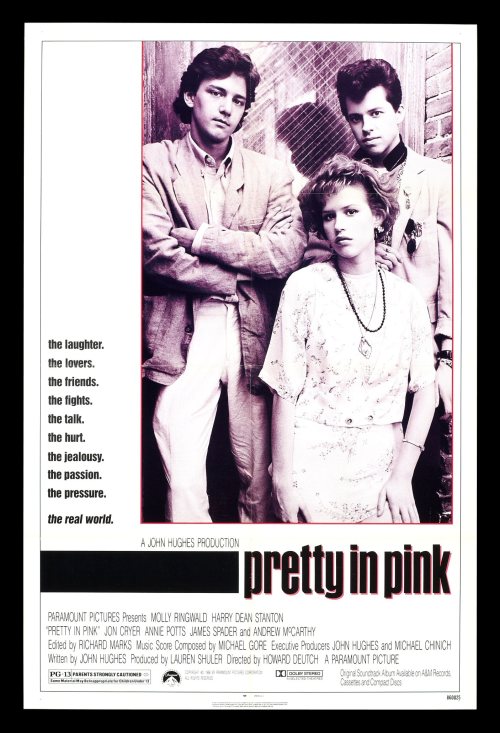
Andie (Molly Ringwald) is a teen girl from the poor side of town who one day while working at a record store meets Blaine (Andrew McCarthy) a rich, handsome, preppy kid that she immediately takes an interest in. A few days later he asks her out much to the dismay of her geeky friend Duckie (Jon Cryer) who has a secret crush on her. Blaine’s friend Steff (James Spader) is also angered about it because he had asked Andie out earlier and been rejected and these two factors cause a strain on their relationship and forces both of them to consider ending it.

One of the problems that I had right away with the film is the fact that with the exception of Ringwald, the majority of the cast who are playing these so-called teenagers were in reality way past adolescence and looking too mature. Kate Vernon, who plays a snotty girl named Benny, actually looks older than her female instructors. McCarthy and Cryer were also in their 20’s and manage to pull it off, but Spader who was 25 at the time doesn’t. He gives a great performance nonetheless, but I kept wondering with so many star struck teens out there dying to get into the business that the producers couldn’t have gotten performers that were more at the actual age of the characters.

Ringwald is fantastic in a vehicle tailored made for her and one that she really cruises with. I particularly liked her facial expressions while she attended a frat party and the moment where she decides to go to the prom despite not having a date simply to show them that they can’t ‘break her’ is fantastic. However, I wasn’t so crazy about the inferred idea that she was dating Blaine simply because he was from a rich family and could help her escape from her otherwise poor/ humble surroundings as it toys with the concept of ‘marrying-into-wealth’ which is too old fashioned. A young lady today should feel that she can work her way up the social/economic ladder on her own and not be dependent on some guy to do it for her.

I had equally mixed feelings involving Duckie. Cryer certainly gives an engaging performance, but the character’s excessive and constant need for attention-seeking humor gets overdone and I wished it had been toned down and the character made to be a little less geeky. The part where he has an instant meltdown when he finds out that Andie is dating someone else is also too extreme as it makes him seem dangerously possessive especially since he and Andie were just friends. Later when he is rude to Blaine at a nightclub only helps to make him look even more emotionally unstable.

I had this same issue with Steff who gets aggressively angry at Blaine for dating Andie and even threatens to end their friendship because of it, which to me was a complete overreaction. Sure he might be upset about it, but in real-life I think he would’ve expressed his displeasure in more subtle ways,or even just gotten over it since he was apparently sleeping with Benny who was a lot hotter looking than Ringwald anyways. In reality people generally want to hide their hurt feelings and not respond so overtly when things don’t go their way because they are usually smart enough to realize it will just make them look like a sore loser otherwise.

The Blaine character has problems too although different from the other two. The first issue is when he is at the record store and hands Andie an album cover showing Steve Lawrence, a famous crooner from the early ‘60s and frequent guest star on the old ‘Carol Burnet Show’ and asks Andie if he’s ‘hot’ or ‘trendy’. Now, I was teenager myself during the ‘80s and was in no way ever affiliated with the ‘hip crowd’, but even I and my nerdy friends where savvy enough to know that Steve Lawrence would never be considered an idol with ‘80s teens nor humiliate ourselves by asking anyone if he was. The fact that he does ask makes him seem almost mentally ill or someone who’d been living in a cave, which would be enough for most young women not to want to date him because they would think he was ‘weird’ or strangely disconnected.

The scene that takes place in the school’s library where he sends her a message via the school’s compute and even somehow manages to upload a picture of her is also dumb. Remember this was BEFORE the internet and sending emails and communications via a computer weren’t common or likely especially when they weren’t even their own, but public ones instead. In a later conversation this gets described as a ‘computer trick’ that he knows, which I guess suffices as being screenwriter John Hughes’ feeble attempt at ‘explaining it’.

In a lot ways this seems like just a basic reworking of the formula that was already used with much better success in Sixteen Candles with Cryer playing an off-shoot of Anthony Michael Hall’s character and Harry Dean Stanton as Ringwald’s sensitive father substituting for the one played by Paul Dooley in the first film. I was also disappointed that we never even briefly get to see Andi’s mother who was divorced from her father but gets discussed quite a bit and there’s even a picture of her sitting on Andie’s bedside table, which to me should’ve been enough to justify some sort of appearance by her at some point.

I liked the scene, at least on an emotional level, where Duckie physically attacks Steff after he makes a disparaging remark about Andie, but on the logical end it’s off-kilter. For one thing Andie wasn’t aware of the remark and for Duckie to take on some guy who was clearly much bigger than him it would’ve made more sense for her to have heard it and been hurt by it in order for him to come so aggressively to her defense. A later scene that takes place at the prom where a super-hot girl turns around and out-of-nowhere shows an immediate interest in Duckie who’s just standing there seemed too dream-like and fanciful.

I never saw this film when it first came out and only reviewed it now at the suggestion of some female friends in order to commemorate the 30th anniversary of its release and I have to be honest I was expecting something a lot better especially since it has attained such a strong cult following. Maybe it’s the nostalgic value that gives it its allure, but on a purely cinematic level it’s average at best with a screenplay that only touches the surface of the teenage experience while relying too heavily on age-old and very obvious dramatic devices to help propel it.

My Rating: 5 out of 10

Released: February 28, 1986

Runtime: 1Hour 36Minutes

Rated PG-13

Director: Howard Deutch

Studio: Paramount

Available: DVD, Amazon Instant Video, YouTube

“something big” (1971)

something big 1

By Richard Winters

My Rating: 4 out of 10

4-Word Review: Kidnapping the colonel’s wife.

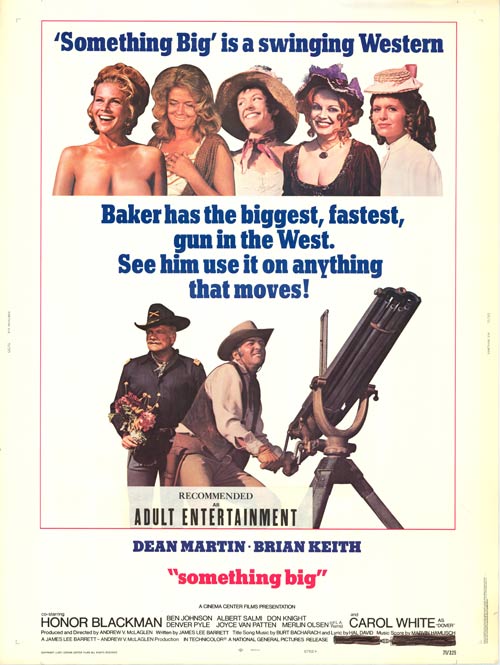
Joe Baker (Dean Martin) is an aging bandit looking to do “something big”. He becomes aware of a hoard of treasure being hidden inside a church that sits just across the border and safely guarded by a throne of Mexican bandits. Joe figures that to be able to overpower them he’ll need a Gatling gun and turns to black market dealer Jonny Cobb (Albert Salmi) who agrees to sell him one in exchange for a woman as he’s been without the company of one for “too long”. Joe then begins robbing stagecoaches in a mission to find a woman attractive enough for Jonny’s tastes. After several attempts he finds one who just happens to be the wife of the cavalry colonel (Brian Keith) who then goes on a mission to rescue her while attempting to put a kibosh on Joe’s plans.

This is another film that was given a ‘bomb’ rating by Leonard Maltin that I didn’t think was all that desrved. It’s certainly no classic but James Lee Barrett’s script if full of dry humor and offbeat touches that manages to keep things consistently amusing. Some of my favorite bits include Martin traveling around with a small pooch in his saddle pocket, or his horse having gold crown teeth. Don Knight as his Scottish travel companion Tommy who carries his bagpipes with him at all times and will even occasionally play them as they enter new frontier towns is funny too.

Keith is spot-on as the slightly stuffy colonel who is stuck with incompetent underlings and just wants to move on with his impending retirement in peace, but can’t. His facial expressions alone are terrific and he gives a far more nuanced performance than co-star Martin and should’ve been given top billing.

The attractive and sassy Honor Blackman is great as Keith’s wife and could easily be considered a ‘milf’ by today’s male audience. Joyce Van Patten and Judi Meredith as two women living on a lonely ranch willing to have sex with any man that comes along, including the uptight colonel, are quite funny as is Salmi with his garishly discolored, tobacco stained teeth.

The climax features some nifty gun action including seeing Martin use his Gatling gun to shoot down the bandits in domino-like fashion, but for the most part the script is too leisurely paced and in desperate need of more confrontation and elaborate scenarios. Marvin Hamlisch’s soft-rock score is out-of-place for the time period and the theme song sung by former Paul Revere and the Raiders front man Mark Lindsey doesn’t have any type of western feel to it. I also got tired of hearing the phrase “something big” mentioned over and over again. Initially it seemed cute and clever to repeat the film’s title in the dialogue, but it eventually goes overboard.

My Rating: 4 out of 10

Released: November 24, 1971

Runtime: 1Hour 48Minutes

Rated GP

Director: Andrew V. McLaglen

Studio: National General Pictures

Available: DVD