Tag Archives: Dustin Hoffman

Little Big Man (1970)

By Richard Winters

My Rating: 8 out of 10

4-Word Review: Raised as an Indian.

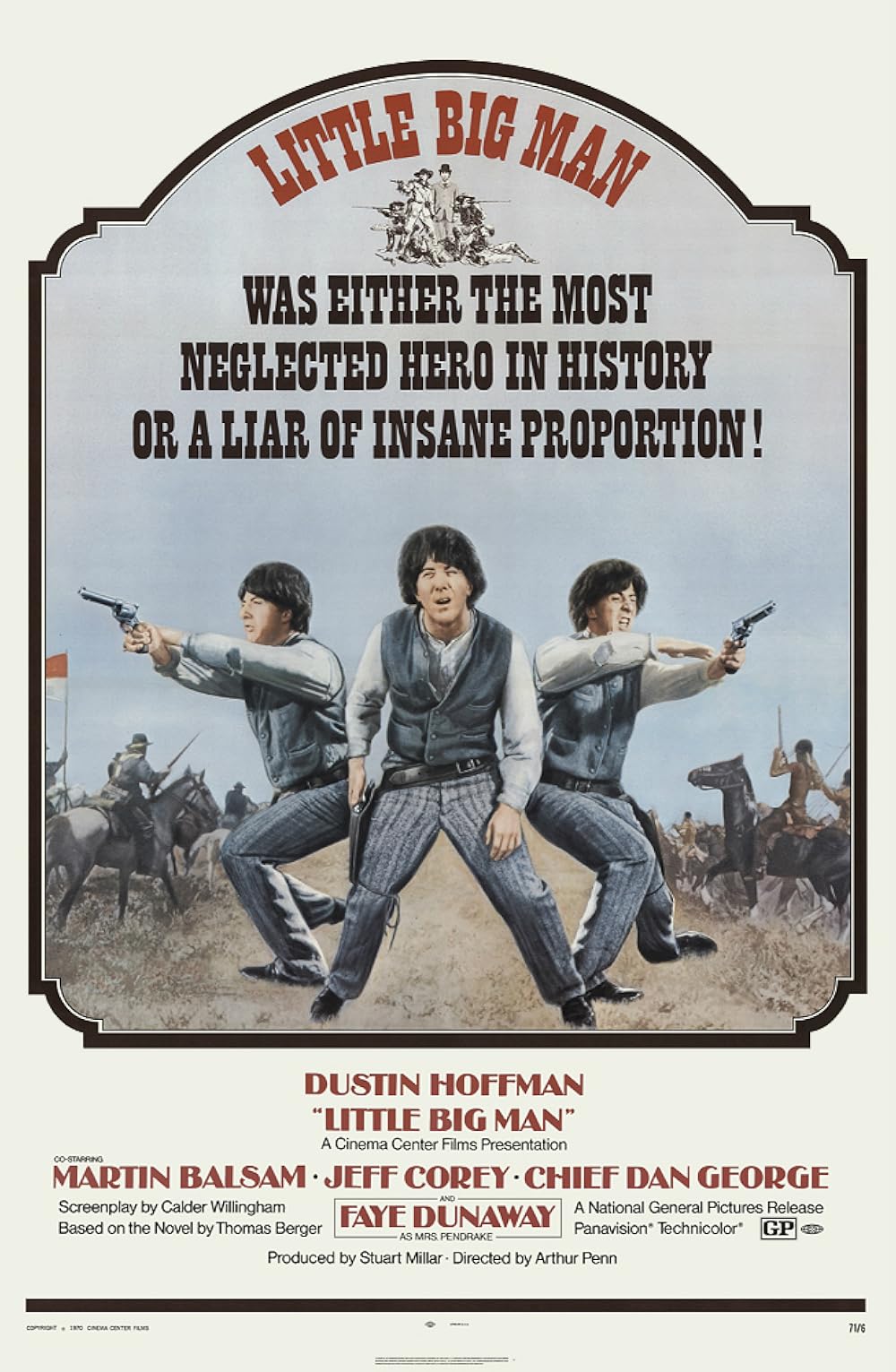
Jack Crabb (Dustin Hoffman) has reached the age of 121 and agrees to a taped interview with a reporter (William Hickey). He recounts his life events including being kidnapped by Cheyenne Indians in 1859 when he was 10 and befriending their tribal leader Old Lodge Skins (Chief Dan George) who gives him the nickname Little Big Man. He then goes on to elaborate other life events like being captured by the U.S. Calvary where he is placed in the home of a Reverend (Thayer David) and his beautiful wife (Faye Dunaway) who despite her professed Christianity is having an affair with a soda shop owner, which disillusions Jack from religion altogether. He also goes through his marriage to a Swedish immigrant named Olga (Kelly Jean Peters) and how she gets kidnapped by the Cheyenne during a stagecoach ride and Jack’s attempts to find her, which reunites him with Old Lodge Skins and leads him to meet General Custer (Richard Mulligan), who he initially admires, but eventually learns to despise.

The film is based on the 1964 novel by Thomas Berger of the same name and wonderfully mixes the whimsical style of that book into the movie and maintains overall an excellent balance between quirky moments, of which there’s many and jarring scenes dealing with Indian Massacres by the U.S. Calvary, which remains effectively disturbing and impactful despite all the humor that goes on in between. The impressive cinematography by Harry Stradling Jr. that manages to capture the Big Sky Country, filmed on-location in Montanna where many of these historical events actually occurred, in all of its glory and makes you feel like you’ve genuinely been physically transported back to that era.

The most amazing element though, which comes up right away, is the makeup effects on Hoffman where he’s made to look about as elderly as you can get and hats-off to makeup artist Dick Smith to achieve it in such an effective way. While aging of characters has been attempted in other films, I’ve never seen it so realistic as here and in fact it still holds claim even after all these years in the Guiness Book of World Records as ‘The Greatest Age Span Portrayed by a Movie Actor’. My only quibble is that his eyes as an old man appear to be blue even though for the rest of the movie Hoffman’s eyes are clearly brown.

The acting all around is superb starting of course with Hoffman and then moving onto Dunaway whose first attempt at comedy this was and she’s really funny if not a complete scene-stealer. Thayer David awesome too as her bombastic minister husband and I wished there had been more scenes with him. Chief Dan George is quite memorable as the Indian Chief, he became the first Native American ever nominated for an Oscar for his work here, in a part that was originally intended for Marlon Brando who thankfully turned it down as having a genuine Native American makes it so much more compelling. Great work too by the lesser-known Kelly Jean Peters whose frantic screams of terror, as she’s being kidnapped, I found to be both funny and frightening at the same time.

While it doesn’t affect one’s enjoyment of the movie, the film does have a few drawbacks, or moments that could’ve been done slightly better. Having Hoffman constantly come back into contact with people he had been with years earlier got a bit too cute for its own good. I was okay with some of it, like his reunion with the Indian Chief, but having him literally re-meet everyone he had known before got unrealistic and almost monotonous. I also couldn’t understand why the people he meets again don’t recognize him right away as is the case with Dunaway, as Hoffman has a very distinct face that really doesn’t change much even as he ages, so forcing him to have to remind her who he was should’ve been quite unnecessary. Same goes in reverse with the reunion with his sister, played by Carole Androsky, I immediately recognized her voice even before seeing her face, but for Hoffman it takes a long time to remember who she is, but if I the viewer could detect her voice right away why couldn’t he?

Another issue is when he meets his wife Olga many years later when she’s become a part of an Indian tribe. When he married her she had a very strong Swedish accent and due to the language barrier could only say a very few words, basically just ‘Yah’. Then, when he sees her again, she speaks fluent English, but how could she have learned that by being in an Indian tribe? Also, she had completely lost her accent, which I don’t believe would happen. I’ve known people who have lived in this country for 30 or 40 years, but where originally from somewhere else and no matter how long they’ve been here, or how ‘Americanized’ they may become they still retain their original accent, or at least sufficient hints of it.

Spoiler Alert!

There’s also issues with the General Custer character. Acting wise I felt Richard Mulligan nailed it as he integrates a great blend of comic self-importance to him, but on the satire end it goes a little too far. He gets portrayed as being a complete buffoon with a clownish logic and such a severe narcissistic ego he’s unable to realize when everyone else around him thinks he’s an idiot. There were many different issues that went into the Battle of Little Big Horn, or more commonly known as Custer’s Last Stand, and this movie answers it by saying the guy running it was a self-deluded moron, which I suppose comically and emotionally is satisfying, but doesn’t sufficiently tackle the others nuances that were also involved. There’s also the argument over the demise of Wild Bill Hickok though having him get killed by a little kid was historically inaccurate I felt it was so humorously ironic that I was willing to forgive it.

The ending, where in the book Old Lodge Skins dies, but in the movie he doesn’t, annoyed some fans as well. Director Arthur Penn admitted in interviews that the earlier script drafts had him dying, but then he felt that would be ‘too depressing’ so they had him live, but I felt with such a picturesque back drop that having him lay down for his final resting place was appropriate. He was really old anyways and had also become blind, so having him get up and be led away by Hoffman was just prolonging the inevitable anyways, so they might as well have him go down when it was his time as ‘cheating it’ like they do here doesn’t really add all that much.

My Rating: 8 out of 10

Released: December 23, 1970

Runtime: 2 Hours 27 Minutes (Uncut) 2 Hour 19 Minutes (Studio Version)

Rated GP

Director: Arthur Penn

Studio: National General Pictures

Available: DVD, Blu-ray, Amazon Video, PlutoTV, YouTube
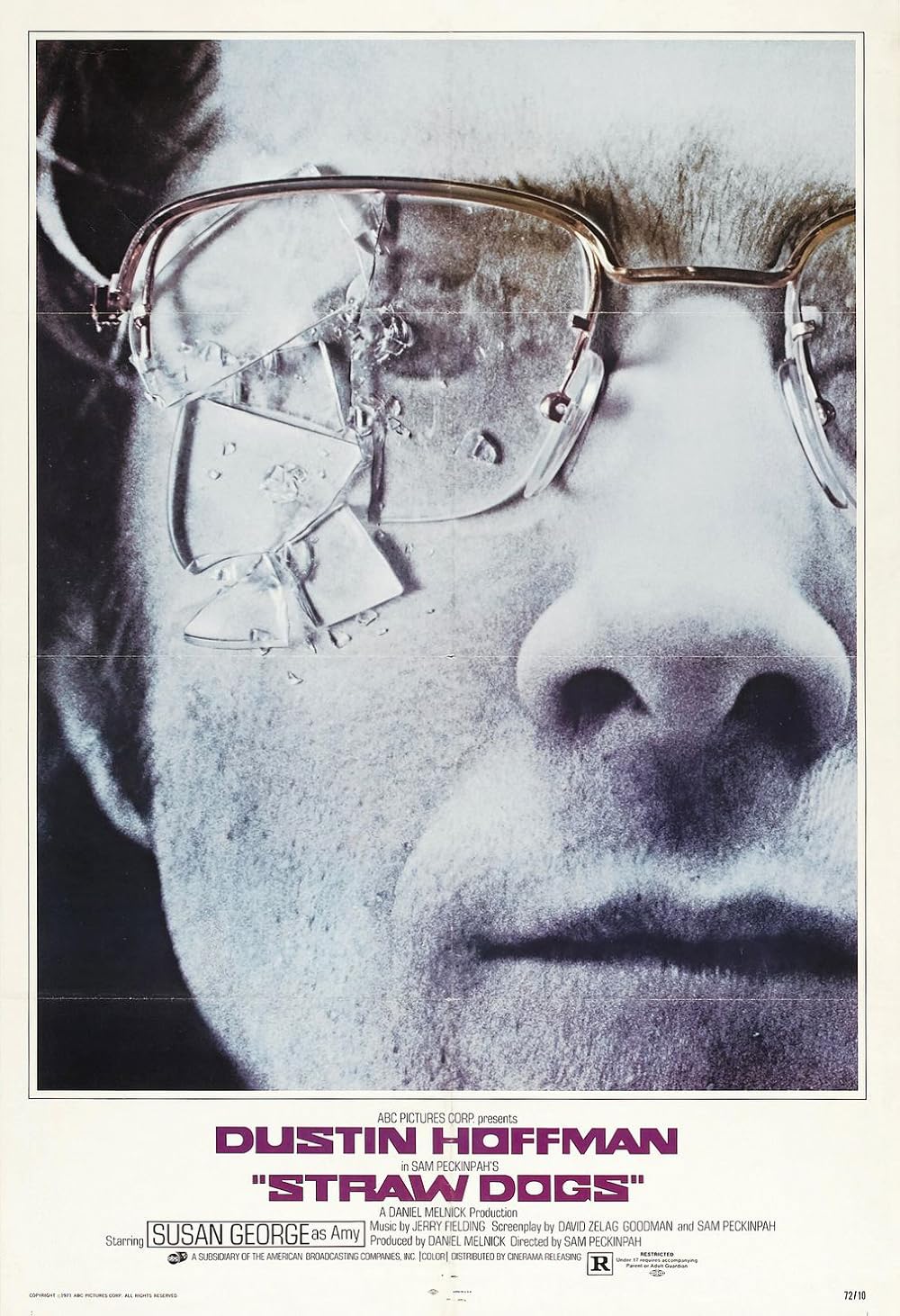
Straw Dogs (1971)

By Richard Winters

My Rating: 8 out of 10

4-Word Review: Man defends his home.

David (Dustin Hoffman), a nerdy mathematician, has been given a research grant and uses it to relocate to the rural countryside of England with his wife Amy (Susan George). They move into a farmhouse that was once owned by Amy’s father and they hire four men (Del Henney, Ken Hutchinson, Jim Norton, Donald Webster) to fix up the roof. The men though don’t work much and spend most of the time making fun of David and ogling Amy. After several bad encounters, including the grizzly death of their pet cat, David fires them and hopes that’ll be the last it, but things only get worse. When a teen girl named Janice (Sally Thomsett) disappears her violently drunken father Tom (Peter Vaughan) thinks it was caused by Henry (David Warner) a mentally handicapped man that Janice had shown an affinity for. Tom, along with the four other men, become a lynch mob determined to find Henry and bring him some ‘street justice’. David and Amy, while returning from a church service, hit Henry with their car as he’s running from the other men. David agrees to take the injured Henry into his home until a doctor can arrive, but the five men insist on getting inside to beat and kill Henry for his perceived crime. Since David had avoided having any confrontation with the men previously even when they had openly mocked him, they presume he’ll be a pushover this time as well, but David has finally decided to take a stand and will defend his home from the intruders in any way he can. 

While it was controversial at the time many now consider this the pinnacle of director Sam Peckinpah’s career and his directorial touches are supreme. The capturing of the brown empty vast landscape of nothingness, shot during the winter of 1971, brings out a surreal sense making it seem like the characters are living in a purgatory outer world where everything is dead and helps explain the deadness of the men’s souls that have been forced to endure their entire lives there. The climactic sequence where David’s home comes under siege is deftly handled. Normally in thrillers pounding music gets played during these segments to ramp up the tension, but here there’s only the sound of a distance foghorn, which makes it much more creepy, distinct, and helps accentuate the isolation. 

Some have been critical of the film’s violence especially at the time when there was activism going on that tried to stymie violent material on both TV and movies with the idea that violence was a ‘learned’ behavior and if people didn’t see it so much in entertainment, then they wouldn’t do it in real life. Peckinpah though saw it differently as he felt violence was an instinctual reaction that couldn’t just be ‘unlearned’ and that in certain situations it was necessary and not every conflict could be resolved peacefully, a message the film brings out quite well. 

While Susan George gives an excellent performance, as do the four villainous men, particularly Vaughan as their ringleader making them some of the creepiest bad guys in film history, I did find her character confusing. I didn’t understand why she’d marry a guy that she found by her own admission cowardly even bringing up that he was ‘running away’ from problems he was having at his university and his ‘hiding behind his studies’ in order to avoid it. She also shows no respect for his work and several times even vandalizes his chalk board that has his mathematical equations, so what attracted her to him in the first place? Would’ve made more sense had she initially idolized him for his academic status and then became painfully aware of his meekness as the film progressed, which would’ve made for a more interesting arch.

Spoiler Alert!

The film is based on the 1969 novel The Siege of Trencher’s Farm by Gordon Williams, but with many changes some of which worked while others didn’t. In the novel the couple had an 8-year-old girl, but in the film there is no child. To a degree it doesn’t make that much of a difference though when the bad guys attack the house it might’ve heightened the urgency more knowing that David was not only defending his ‘home’, but also the safety of his terrified daughter. The biggest change that the film does is that it creates a connection between Henry and Janice where Janice sneaks away with him during a church party where she invites him to be intimate with her, but in the process, he accidentally kills her, which seemed too similar to Of Mice and Men. It’s confusing too why this teen girl, who outside of her buck teeth seems reasonably attractive, would feel the need to throw herself at a mentally handicapped man, or get flirty with David, who is married. Why can’t she find guys her own age to fool around with? Knowing the hormones of most teen boys that shouldn’t be too hard, so without further explanation to her psyche, which doesn’t happen, her ‘inviting’ of Henry is quite unnatural and forced. 

In the book Henry is instead a child killer who’s being transported back to prison when the vehicle he’s in gets stuck in the snow, which allows him to escape. At the same time Janice, who’s mentally disabled, which isn’t made clear in the movie, runs away from a Christmas party where she ends up dying from the exposure to the cold, but otherwise it has nothing to do with the escape of Henry and is only presumed to have a connection by the five men, which makes more sense and the screenplay should’ve have kept it this way.

On the other hand, in the book none of the attacking men die and are only badly injured, but I think death gives it a more final resolution, so the movie scores there. I also liked how David is forced to resort to items he can find around the house, much like in the film Last House on the Left, which came out a year later, to fight off the bad guys versus the cliched machoism of having a big gun to blow them away and it also helps to show how intellectual wits can ultimately be used to overpower the otherwise physically stronger attackers. 

The rape scene in which the wife gets assaulted by not only one, but two men was another problematic moment as the book had no such segment. For one thing it makes it seem like she’s actually enjoying the attack, at least with the first one, and she recovers from it much too quickly and doesn’t even bother to tell David about it and able to go on relatively normally afterwards, which didn’t seem realistic and thus I think it should’ve been excised since it comes off as exploitive and doesn’t have that much to do with the main plot. 

My Rating: 8 out of 10

Released: December 22, 1971

Runtime: 1 Hour 57 Minutes

Rated R

Director: Sam Peckinpah

Studio: 20th Century Fox

Available: DVD, Blu-ray (Criterion Collection)

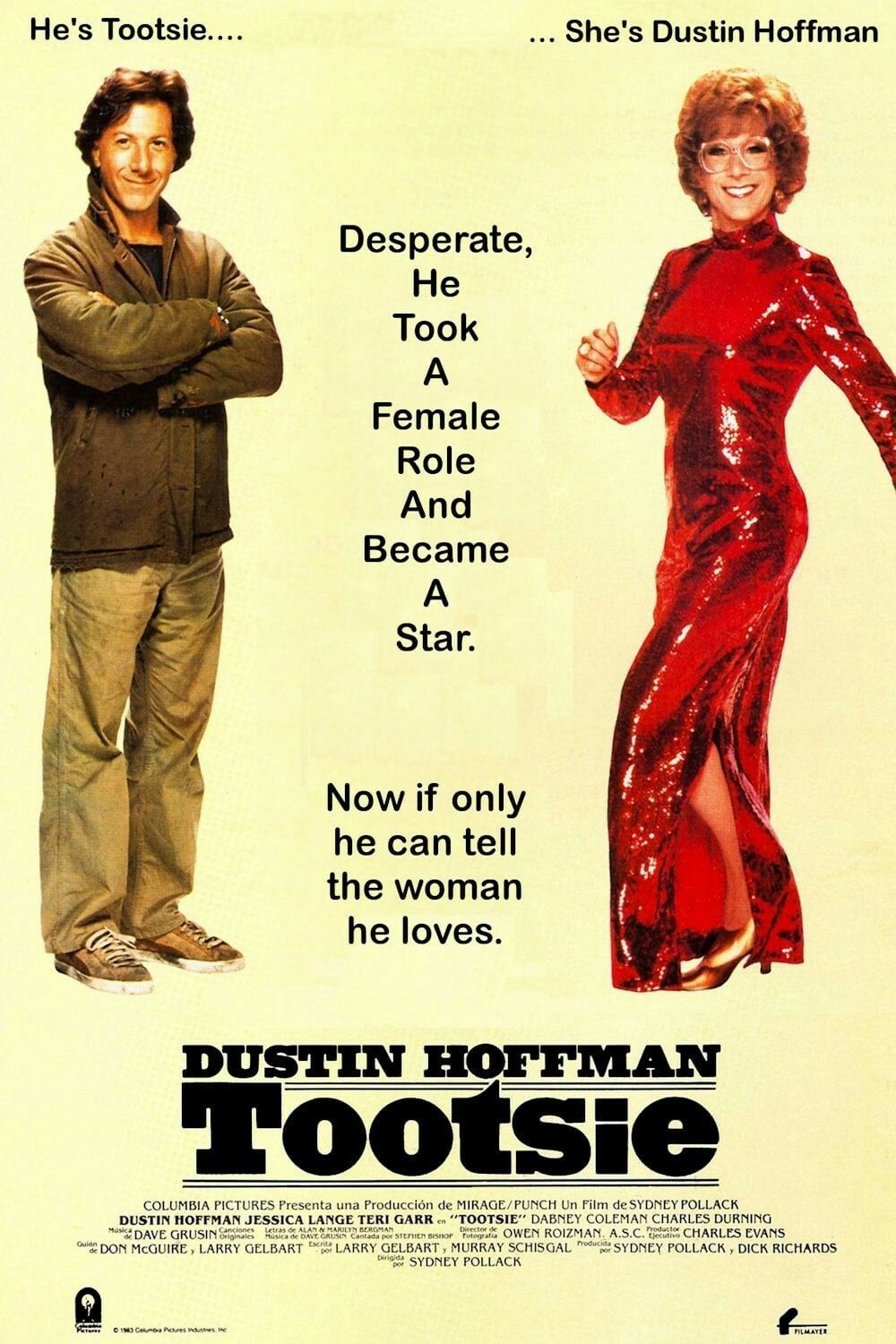
Tootsie (1982)

By Richard Winters

My Rating: 7 out of 10

4-Word Review: Pretending to be female.

Michael (Dustin Hoffman) is a talented actor but having difficulty finding employment due to his demanding nature and inability to get along with directors. His friend Sandy (Teri Garr) is auditioning for a part in a soap opera, and he helps her prepare for the role and even takes her to the audition only to learn that she was rejected before given any chance to do a screentest. It’s at this same time that he learns his agent George (Sydney Pollack) hasn’t gotten him a chance to audition for another role because in his words ‘no one will work with him’. Michael then decides to disguise himself as a woman named Dorothy Michaels in an effort to get the role that Sandy was turned down for so as to raise money to produce a play that will star Sandy. While he does get the part, he also becomes a big star with everyone believing that Dorothy really is a woman, which cause many complications in both his personal and professional life making him feel like he wants to end the charade and go back to his normal identity, but not quite sure how to do it. 

The genesis for the story began all the way back in 1970 and was based on an off-Broadway play by Don McGuire titled ‘Would I Lie to You?’ about an out of work stage actor who dresses as a woman to get a big part. Director Dick Richards adapted the plot into a screenplay, and it got shopped around for many years, but to no avail. Then in 1980 cross-dressing actor Christopher Morley played the role of a woman named Sally Armitage in the soap opera ‘General Hospital’. The part was played straight with the viewers under the impression that it really was a female, and Sally even gained the romantic interest from the character Luke, played by Anthony Geary, only to eventually reveal that she was really a man, which was a ratings hit and thus lead to renewed interest in this script. Eventually Dustin Hoffman got a hold of it and decided he wanted to take it on under the condition that was given full creative control and even hired his own people, Larry Gelbert and Murra Schisgal, to rewrite the story to his liking. 

Personally, my favorite parts of the film come at the beginning where we see Michael’s struggles as an actor as well as all of his thespian friends giving one a glimpse at just how hard the business is and how few people can make an actual living in it. Watching both him and his roommate Jeff, played by Bill Murray, working as waiters, but still talking about their acting ambitions while on that job was on-target. Garr gives a great performance as a struggling would-be actress who is full of insecurities and letdowns and a perfect composite of many young women who find the auditioning process grueling and thankless and for this reason, I felt she should’ve won the Oscar instead of Jessica Lange as her part as the love interest wasn’t as interesting, or honest. 

Murray is terrific as the roommate in an unusual part for him as his over-the-top clownish, snarky, frat boy persona is kept under wraps and instead he plays the part straight, but his sardonic responses to things are great. Director Pollack, who took on the role of Michael’s agent at the request of Hoffman and thus making it his first acting role in almost 20 years, is quite good too particularly with how his exasperated nature feeds off of Hoffman’s hyper one and their conversation inside his office is the movie’s highlight. Charles Durning has a few key moments as well playing Lange’s lovesick father who begins to fall for Dorothy though any man that would give a woman an engagement ring before they’d even been out on a single date has to be a bit loopy.

Hoffman falls into the woman role easily and it would be hard to recognize him had the viewer not known about the disguise beforehand though I felt the way Dorothy walked and moved her hands and arms made her seem like Mrs. Butterworth the animated character from the maple syrup commercials. It’s also hard to imagine he wouldn’t have been found out a lot sooner especially since he collected a weekly paycheck from the company, which would’ve required him to give them his social security number, which in-turn would’ve exposed who he really was. Being on magazine covers where he supposedly does interviews as Dorothy should’ve been equally problematic as the reporters would’ve asked him (her) about her past like what other stuff did she act in, where was she from, and where did she graduate. Stuff that’s very much standard questions in any interview and when he (she) couldn’t come up with anything or made-up stuff that could easily be background checked would’ve then raised red flags and brought the ruse to a very quick halt.

Spoiler Alert!

Soap operas were no longer broadcast as live and hadn’t been since 1963, so that story angle doesn’t fly either. Yes, I realize the idea was that it was taped and only had to done live as an emergency when one of the tapes got destroyed, but in reality, the taping would’ve been done so far ahead (usually by several weeks) that even if a video did somehow get corrupted there still should’ve been plenty of time to refilm it before reaching the actual air date. 

The ending it a bit disappointing as well. Sure, it’s nice seeing Lange putting her arm around him as they walk down the sidewalk showing that the two had made up after his secret identity was exposed, but it doesn’t answer what happened to his career. He did this whole thing to help finance a play for Sandy, so what became of that? Also, were casting agents so impressed with the way he fooled everybody that they now were willing to hire him, or was he still blacklisted? These were all major motivations for why he did the ruse, so there should’ve been clarity to what became of it. 

My Rating: 7 out of 10

Released: December 17, 1982

Runtime: 1 Hour 56 Minutes

Rated PG

Director: Sydney Pollack

Studio: Columbia Pictures

Available: DVD, Blu-ray, Amazon Video, YouTube

Agatha (1979)

By Richard Winters

My Rating: 4 out of 10

4-Word Review: Agatha Christie runs away.

Despondent over her husband’s affair famous British novelist Agatha Christie (Vanessa Redgrave) decides to go away for a while to collect her thoughts. She then gets into a car accident while on the road and having her car disabled she first takes a train and then a cab to the Old Swain Hotel where she registers there under an assumed name. The police find her disabled car and fear that Agatha may have drowned in a nearby lake, been kidnapped, murdered by her husband Archie (Timothy Dalton) or committed suicide. A nationwide search begins that encompasses thousands of volunteers that scour the nearby countryside for clues. Meanwhile American reporter Wally Stanton (Dustin Hoffman), working off of  a tip from Agatha’s secretary, decides to check into the same hotel and begins following Agatha around where he keeps notes on everything she does while also falling in love with her in the process.

The film is loosely based on Agatha Christie’s real-life 11-day disappearance that occurred in 1926. No explanation was ever given for the reason nor was it even mentioned in her autobiography. Had there been some actual research about what might’ve transpired during those 11-days then this would be worth a look, but, as the film plainly states at the beginning, it is simply an ‘imaginary solution to an authentic mystery’, so then what’s the point?

Most likely it was nothing more than a woman looking to escape to some quiet location for a short respite that unfortunately due to the press getting wind of it, spiraled quickly out-of-control. The film’s low point comes in the side-story dealing with Agatha’s attempts to kill herself through a jolt of electricity from sitting in a Bergonic chair, but is saved at the last second by Wally who grabs her from the chair just as she’s shocked. Yet as he lays her limp body on the floor he doesn’t perform CPR, but instead shouts at her to ‘breath’ several times and despite no scientific study proving that this ‘technique’ can actually work she still miraculously begins breathing again anyways.

I have never read a biography on Christie, so I have no idea what her real personality was like, but the film portrays her as being a complete wallflower lacking any type of confidence and so painfully shy it’s pathetic. The character is so transparent it’s almost like she’s not even there. Hoffman’s character was completely made-up and the way he chain smokes reminded me too much of the character that he had played in Midnight Cowboy. His growing ‘love’ for her and the way he later expresses it is extremely forced and corny. Also, why is Hoffman given top billing when the main subject is Agatha?

Johnny Mandel’s soothing score is the best thing. I also liked the shot of the thousands of volunteers searching for her along the vast countryside, but everything else about the movie gets either under cooked or overbaked. The scene where Agatha tries to do a triple bank shot while playing pool gets badly botched. We initially see it captured from above where the entire pool table is in view. The pool ball banks off the side and rolls towards the corner pocket, but then it slows up and it becomes clear that it won’t make it to the pocket, so director Michael Apted cheats by cutting to a close-up of the ball and having it magically regain speed, which easily makes it into the corner pocket. The attempt was to ‘trick’ the viewer into believing that this was a continuation of the same shot but any halfway savvy person will realize this close-up was shot later and edited in.

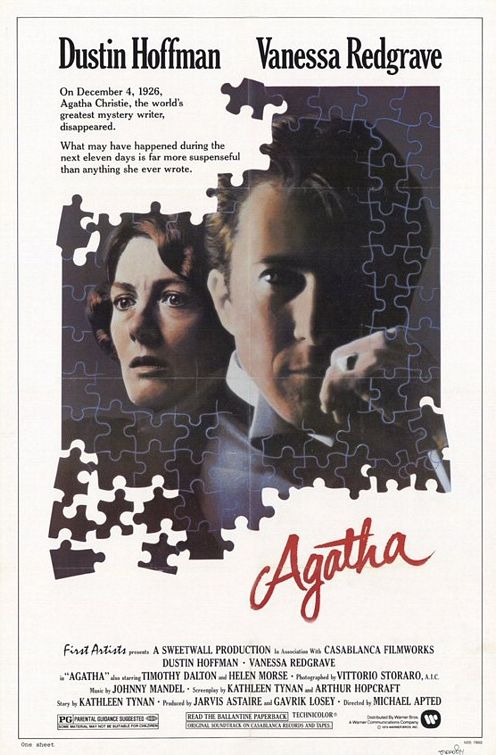
The film’s poster tells us that ‘What may have happened during the next 11 days is far more suspenseful than anything she ever wrote’, but it really isn’t and in fact it’s not even close. The original intent by screenwriter Kathleen Tynan was to make this into a documentary after researching the true facts of the case, which would’ve been far better than the flimsy fanciful thing we get here.

My Rating: 4 out of 10

Released: February 9, 1979

Runtime: 1Hour 38Minutes

Rated PG

Director: Michael Apted

Studio: Warner Brothers

Available: DVD-R (Warner Archive), Amazon Video, YouTube

All the President’s Men (1976)

all-the-presidents-men

By Richard Winters

My Rating: 6 out of 10

4-Word Review: They take down Nixon.

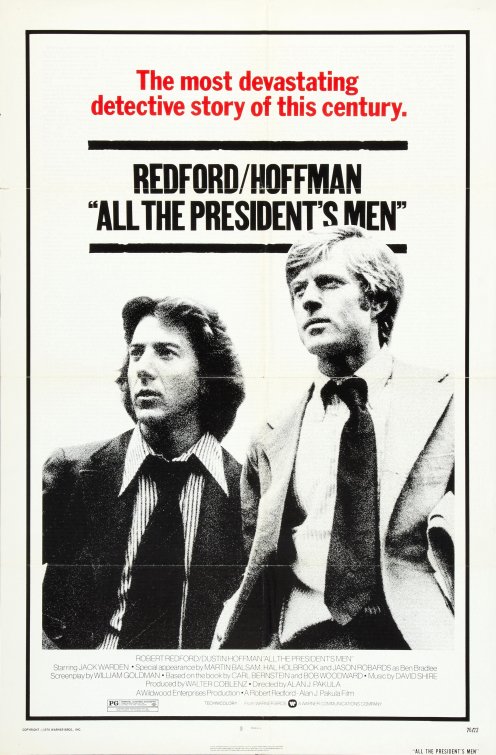
In the early morning hours of June 17, 1972 five men are found burglarizing the Democratic Headquarters at the Watergate Office complex in Washington D.C. The next day a young Washington Post reporter by the name of Bob Woodward (Robert Redford) is assigned to cover the case. Initially it was considered only a minor story, but as he digs further into the details he finds wider connections including links that lead directly to the White House. Together with Carl Bernstein (Dustin Hoffman),who is another reporter, the two men continue to research and end up battling one roadblock after another in their quest the uncover the truth.

If there is one area where this film really scores in it’s in the way that a journalist’s job gets portrayed. In fact many colleges show this film to their student who are majoring in the field in order to given them a realistic perspective of what the profession actually involves. For me I found it quite enlightening particularly the first hour. The many people and steps that a reporter has to go through just to get one solid lead is interesting as is the protocol system determining which story gets the front page and which don’t.

The layout of the newsroom was also fascinating as it all seemed very authentic and like they were working in an actual one. To my absolute shock I found out later that it had all been constructed on a film set, but so meticulously done that you couldn’t tell the difference. Initially several scenes were filmed in the real office using actual employees in the background, but the knowledge of being on camera made some behave in ways that they normally wouldn’t and this ultimately forced the filmmakers to decide to recreate it on a soundstage and use actors as the office crew.

The performances by the two leads are good, but neither of them resembles their real-life counterparts. Both Redford and Hoffman were already pushing 40 at the time and looking it while Woodward and Bernstein were still in their 20’s when this story occurred so the line that the Jack Warden’s character makes about these two being ‘young and hungry’ and looking for a good story to build their careers on doesn’t make as much sense.

The characters aren’t well fleshed out either. No time is spent on what these guys were like when not ardently following up leads, which is absolutely all we see them doing.  The original screenplay, which was written by Woodward and Bernstein, had a subplot involving the two trying to score with women, which would’ve helped add a comical touch and parts of that should’ve been kept in.

The second half lags as there are too many leads and names that get bantered about that don’t have faces connected to them making it seem like information overload that doesn’t help the viewer get as emotionally involved as they should. Having cutaways showing Nixon and/or is aides becoming increasingly more paranoid as the reporters closed in on them could’ve added that much needed extra dimension.

There is a stunning bird’s-eye shot of the inside of the Library of Congress, which is amazing and the fact that many of the scenes get filmed at the actual sites where the real-life instances occurred is both impressive and commendable. I also enjoyed the wide-array of recognizable faces that show up in bit parts including Valerie Curtain as a frightened source and Polly Holliday as an evasive secretary. They even cast Frank Wills the real-life security guard who broke the case wide open playing himself in the film’s opening scene, which is cool even though for me the film’s second half fails to be as entertaining as the first, which prevents it from being a classic.

My Rating: 6 out of 10

Released: April 4, 1976

Runtime: 2Hours 19Minutes

Rated PG

Director: Alan J. Pakula

Studio: Warner Brothers

Available: DVD, Blu-ray, Amazon Video, YouTube

Ishtar (1987)

ishtar

By Richard Winters

My Rating: 2 out of 10

4-Word Review: Songwriters travel to Morocco.

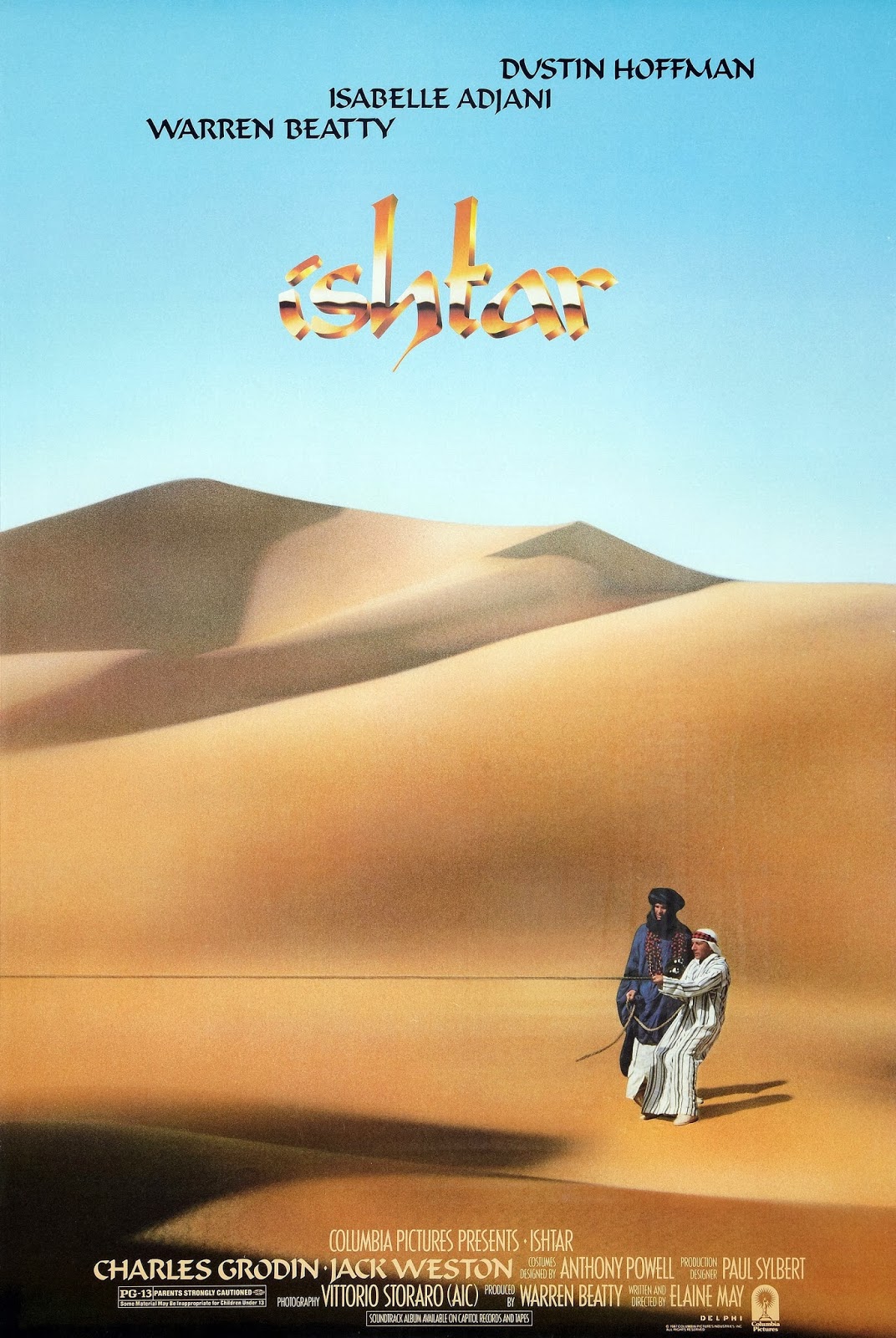
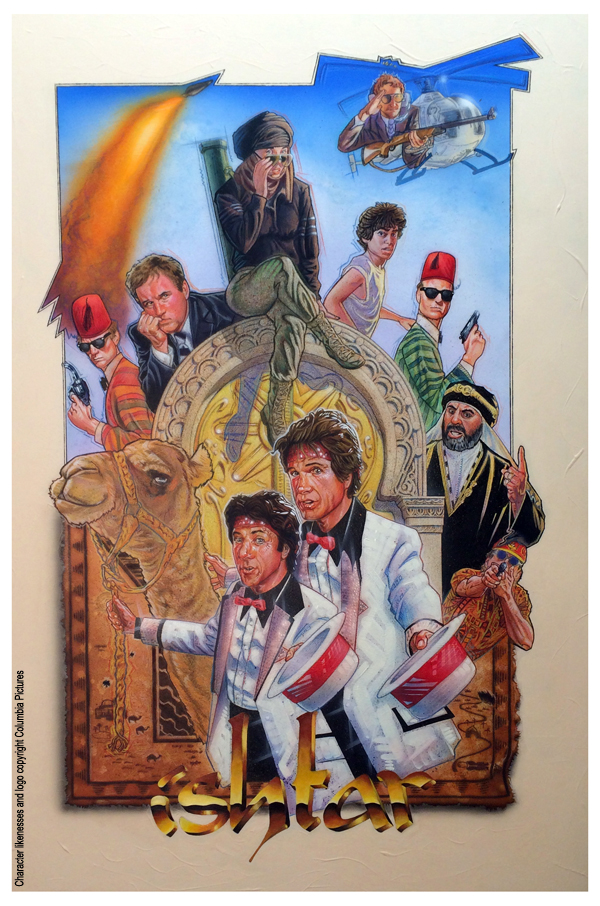
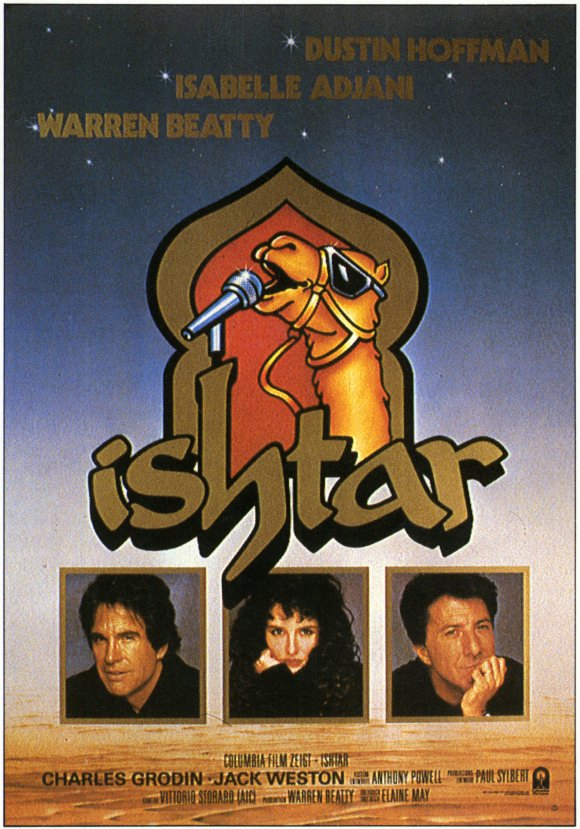
Clarke (Dustin Hoffman) and Lyle (Warren Beatty) are losers-at-life that now in their middle-age years are convinced that they have talent as songwriters even though this opinion is shared by no one else. They manage to get themselves a talent agent (Jack Weston) who tells them that the only place he can get their act booked is at a club in Morocco. The two, desperate for any attention they can get, decide to take him up on the offer, but once they arrive they become swept up in international intrigue with the Emir of Ishtar and the CIA.

This film was a notorious flop in its day not only with its cost overruns, production delays and box office receipts, but with its behind-the-scenes discord between star Beatty and writer/director Elaine May. It seemed that critics and film goers alike considered it a bomb, but I came into this thing with an open mind. May has written some great scripts in the past and is known for her impeccably dry humor. I was convinced that in this day-and-age of broad comedy and over-the-top farces American audiences were simply not geared to pick up on the subtleties of the humor.

Unfortunately five minutes in it becomes painfully clear this thing is every bit as bad as its reputation states. The humor relies too heavily on the two main characters spending what seems like hours on end sitting around trying to come up with bad lyrics for their already dumb sounding songs and then singing them in an off-key, tone deaf kind of way. This may elicit a mild grin for a minute or so, but after spending the first twenty minutes on it, it gets really annoying. Even at the end as the two crawl on the desert floor they continue to work on these same lyrics, which by that time has become as dried up as the desert itself.

The insane, almost incoherent plotline is another issue. It’s like two diametrically different stories clashed precariously into one with only the thinnest of threads holding it together. What starts out as a sardonically amusing look at two middle-aged men chasing an elusive dream suddenly becomes the second reel of Raiders of the Lost Ark without warning. The wild array of loosely structured coincidences that the two go through as they reluctantly find themselves more and more inadvertently involved with the intrigue around them is so flimsily plotted and poorly thought out that it’s not even worth the effort to describe other than to say it makes little sense, is unexciting and most of all not funny.

The main characters are a turn off as well and not comically engaging as intended. The idea that two men hitting 50 would suddenly decide to chuck their relationships and jobs to chase after a songwriter career despite not getting any positive feedback from anyone else to convince them that they even possessed the ability to do it and which usually doesn’t pay well anyways seems weird and bordering on mental illness. Having the characters in their early 20’s and just starting out and willing to take any remote venue they could in order to get their first ‘big break’ would’ve worked better, or portrayed these middle-aged men as once being famous and now desperate for a comeback, or even has-been CIA agents caught up in one last case of intrigue. Just about any other scenario would’ve made more sense than the one that ultimately gets used.

Hoffman is a great actor, but his efforts here are wasted on the weak material. Beatty does well playing a dimwit and the scene where he ‘beats up’ on Adjani who he thinks is a boy is probably the only funny moment in the film. Isabelle Adjani though, who was dating Beatty at the time, is miscast in a role that doesn’t convey her talents and seems almost degrading especially the scene where she lifts up her dress at a crowded terminal and exposes her breasts in effort to prove to Hoffman that she is really a female.

This movie is in some way so amazingly bad that I was almost convinced that it was intentional and if that was the case then at least in that area it can be considered a success.

ishtar 2

ishtar 3

My Rating: 2 out of 10

Released: May 15, 1987

Runtime: 1Hour 47Minutes

Rated PG-13

Director: Elaine May

Studio: Columbia Pictures

Available: DVD, Blu-ray, Amazon Instant Video

Who is Harry Kellerman and Why Is He Saying Those Terrible Things About Me? (1971)

who is harry kellerman 2

By Richard Winters

My Rating: 4 out of 10

4-Word Review: Paranoid songwriter self-destructs.

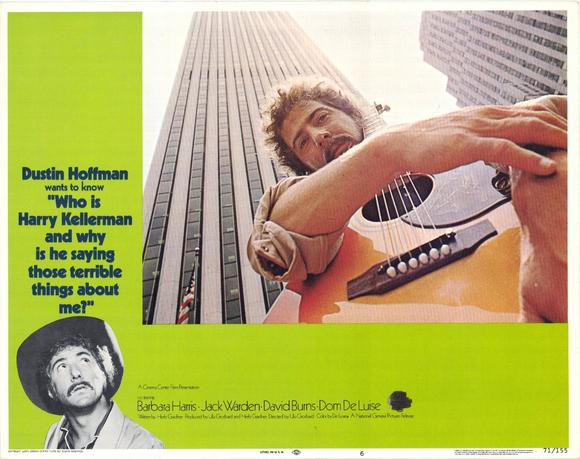
Georgie Soloway (Dustin Hoffman) is a successful songwriter who has written dozens of chart topping songs for different bands and yet feels alone and guilt ridden. He lives in his swanky Manhattan penthouse feeling paranoid after a man by the name of Harry Kellerman starts calling his friends and saying malicious things about him, which risks jeopardizing his career and reputation. He tells his problems to his psychiatrist (Jack Warden) while also searching for Kellerman, but makes no headway.

Story-wise the film is a misfire as Herb Gardner’s script has no discernable plot and a main character that doesn’t grow or evolve. Even if taken as a collection of vignettes it doesn’t work and it becomes more like a pointless one-man soliloquy instead. The final revelation of the mysterious Kellerman is not all that surprising or worth sitting through. Why the filmmakers thought viewers would be interested in watching a man essentially self-destruct for two hours is a mystery and it is as boring as it sounds. Besides it is hard for the average person to feel sorry for someone who seems to have it all and loaded with money and thus makes the character’s problems and issues seem quite minute and his perpetual whining overly monotonous.

The only thing that saves it is Ulu Grosbard’s creative direction. I enjoyed some of the surreal elements particularly those done during his sessions with his psychiatrist as well as a scene showing Georgie running through a long lighted tunnel that seems to have no end. The final segment done on a single-jet airplane is captivating especially as it flies through the clouds and watching two skiers’ glide through the snow from a bird’s-eye perspective has an equally mesmerizing effect. I also loved the way the film captures the New York skyline during a visual taken from the plane as it swoops over the city and a scene done in the early morning hours in downtown Manhattan without seemingly a single car driving on the street gives off a strangely unique feeling.

Barbara Harris, who doesn’t come on until the second half, is a scene stealer as an insecure actress who bombs at her audition, but then refuses to leave the stage. It was good enough to get her nominated for the Academy Award that year, but she lost out to Cloris Leachman and as much as I love Cloris Barb really should have won it as she is the one thing the enlivens this otherwise flat film and had her character been in it more this would have been a far better movie. David Burns, who died from a sudden heart attack while performing in a play three months before this film’s release, is touching as Georgie’s father.

Grosbard and Hoffman teamed up again seven years later for Straight Time, which is far superior and more worth your time to watch.

who is harry kellerman 3

My Rating: 4 out of 10

Released: June 15, 1971

Runtime: 1Hour 48Minutes

Rated R

Director: Ulu Grosbard

Studio: National General Pictures

Available: VHS, DVD