Tag Archives: Bruce Dern

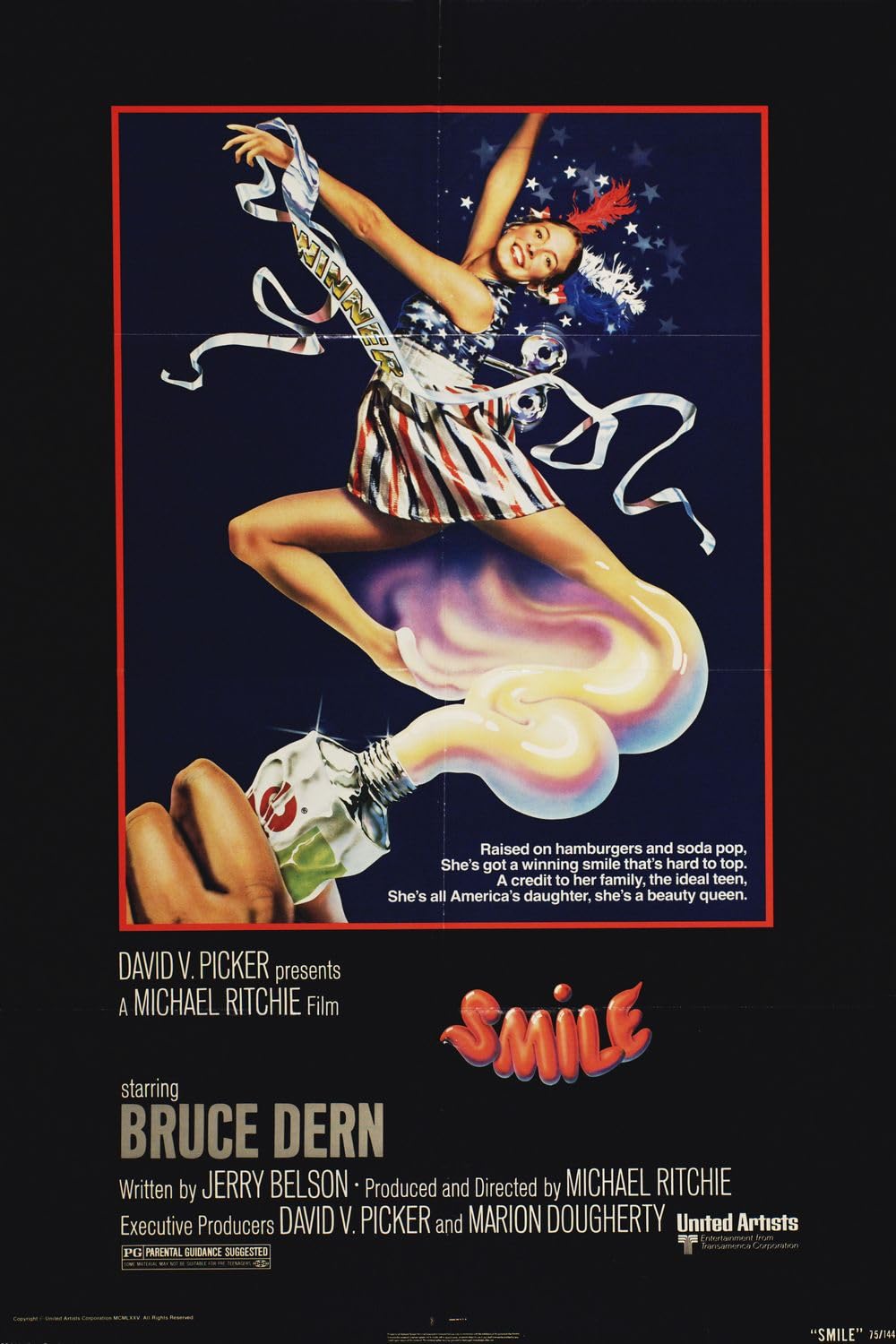
Smile (1975)

By Richard Winters

My Rating: 9 out of 10

4-Word Review: Producing a beauty pageant.

Santa Rosa, California is the site of this year’s Young American Miss Pageant. Each person that’s involved in the pageant approaches it differently. Bob (Bruce Dern), a middle-aged man who works as a car salesman, sees his position as a judge on the panel as a diversion from his otherwise mundane suburban life. Brenda, the pageant’s executive director, considers it a way to display her perfectionist qualities of control and leadership. Her husband Andy (Nicholas Pryor) views the proceedings in a much more cynical fashion and another added element to their already troubled marriage. Tommy (Micheal Kidd), the dance choreographer, approaches it as just another paycheck while Doria (Annette O’Toole), one of the contestants, considers it an opportunity to bolster her name and face even though Robin (Joan Prather), who’s competing against Doria, enjoys the whole thing just for the experience and isn’t concerned with who wins it, at least not initially.

The film marks the third entry in director Michael Ritchie’s American Dream trilogy and one of many he did dealing with competition and how this can change people in both good and bad ways with The Bad News Bears being the most famous of those. The gifted Jerry Belson wrote the script that was based on Ritchie’s own experiences as a pageant judge and many of the situations shown here were ones he went through. Unfortunately, despite the script being absolutely top notch to the extent of being one of the best satires ever written and equal to the more well-known Network that came out a couple years later the movie has not been seen by many, and the title has in recent years been eclipsed by the horror movie franchise. The is because the film’s studio, United Artists, had no confidence in the material and didn’t believe it would generate any profit and thus released it to only 4 theaters nationwide and thus few people ever saw it though in the following decades it has generated a small cult following and even a stage musical.

The finely etched, well-defined characters are what really sets it apart and each of them could be the centerpiece of their own movie if they wanted. Dern, who usually plays psycho roles, is excellent as a father who’s still clinging to his optimism even as everything around him deteriorates. Pryor equally good as his friend and counterpart who finds the suburban dream to be full of letdowns and lies and tries adamantly to break through Dern’s upbeat shield in order to get him to see the truth too. Feldon, best known as Agent 99 in ‘Get Smart’ TV-show, is terrific as well as a complete control freak and her defining moments coming during a scene in her living room, with all the furniture draped in protective plastic, and where she tries to literally goad her husband Andy into killing himself.

Even the minor characters display a unique angle and perspective on things including the janitor (Titos Vandis), who seemingly has a bottle of alcohol hidden everywhere, and makes keen observations on the others as well the music director (William Traylor) whose sarcasm and sexism knows no bounds. Geoffrey Lewis is memorable too as a marketing director who tries to promote the wholesome image of the contest only to in one really funny moment blurt his true cynical feelings about it. Prather and O’Toole though are the ones who drive it as it’s through them we see the inside mindset of those being judged and it’s interesting how at the start it’s O’Toole who’s the more jaded of the two while Prather is the wide-eyed one, but by the end after her experiences here Prather has more than been able to catch up with her.

Spoiler Alert!

The direction is done in a way that makes it seem like a docudrama where everything is captured through an unfiltered lens showing it as it happens with none of the scenes being set-up in a way that makes it feel staged, which is to its benefit. However, this gets ruined, in one of the movie’s few weak points, when Dern’s son Little Bob (Eric Shea) gets caught taking polaroids of the women in their undress. Instead of hearing the dialogue of the people when they catch him, as well as Dern’s when he finds out, which could’ve been quite revealing, music gets played over it, which is jarring as it reminds the viewer they’re watching a movie, even though it had spent the rest of the time trying to convince us we were seeing reality as it unfolded.

The ending is a bit of letdown too. Ritchie and Belson wanted the winner to be a complete surprise both to the cast and crew, which explains why the camera swerves around in a jerky style as even cinematographer Conrad Hall didn’t know who it was and thus had to try to find her when her name is announced. However, having it be a girl (Shawn Christianson) who has no lines of a dialogue, and only seen briefly in a few group shots, was a mistake. The attempt was to show how pointless these contests are and how not much thought or care goes into who’s picked, as evidenced by one of the judges seen flipping a coin before he makes his decision, but it still should’ve been someone we had seen and heard earlier. Maria O’Brien, who plays an obnoxious contestant who annoys the others so much they even sabotage her talent act, would’ve been a better choice and the film would’ve still made the same point and allowed a little more of a lasting emotional effect. With the way it gets done here the viewer leaves feeling miffed and confused.

My Rating: 9 out of 10

Released: March 20, 1975

Runtime: 1 Hour 57 Minutes

Rated PG

Director: Michael Ritchie

Studio: United Artists

Available: DVD, Blu-ray
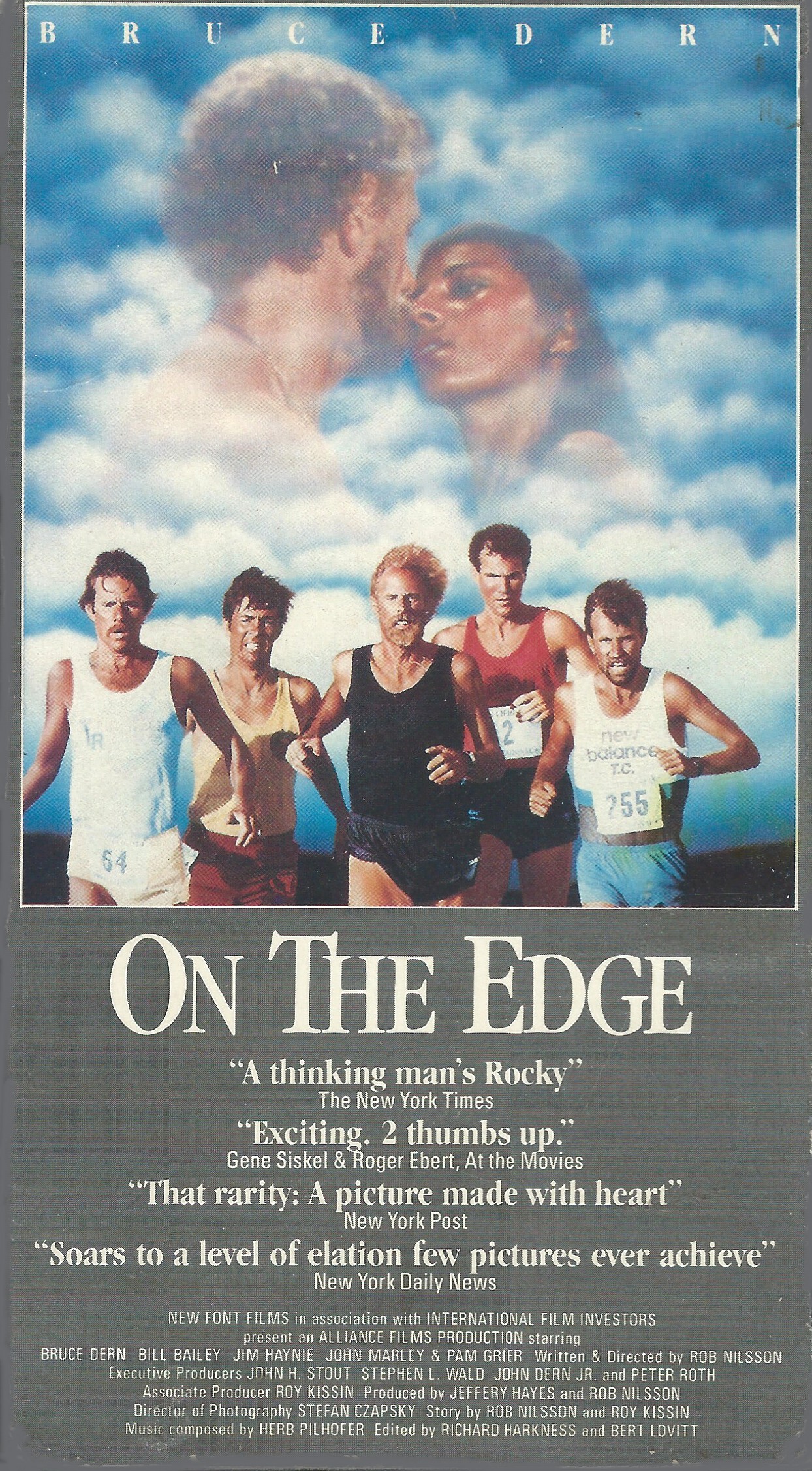
On the Edge (1986)

ontheedge

By Richard Winters

My Rating: 5 out of 10

4-Word Review: Disqualified runner enters race.

Wes (Bruce Dern) was at one-time a star, long distance runner who ended up in 1964 being banned from competition after calling out the secret practice of paying amateur athletes under-the-table. He’s now nearing 40 and wants to take one last stab at entering the grueling Cielo-Sea cross-country race and hires his old coach, Elmo (John Marley), to help him train for it. The runners are much younger than him by a couple of decades, but they’re aware of his history and look up to him. Unfortunately the race organizers still use what he did in the past against him and refuse to allow him to enter, but Wes decides to join the race anyways illegally, which forces the organizers to try and knock him out of it as the race is going on and being broadcast live.

Surprisingly for a movie that is so little known and hard-to-find the quality isn’t bad. Director/writer Rob Nilsson conveys some wonderful bird’s-eye shots of the climactic race including seeing the runners going along a winding route as it scales a high hill, which is dramatic and exciting. The character building and his personal mission is fairly well done and the strenuous preparation that he must go through to get ready for the race is handled in a way that makes it quite vivid for the viewer. After watching what he must go through you feel as mentally and physically drained as he does especially the shots showing the things from the runner’s point-of-view as they bound down the rugger trails with the camera tied directly to their bodies.

Dern, who was at one time a long distance runner himself and actually ran the race that gets depicted here, which in real-life it’s called the Dipsea race the oldest race run in America, back in 1974, does a fine job though his dialogue is limited and I missed-out on some of his patented, ad-libbed ‘Dernisms’. His character is marginally interesting though in a lot of ways not all that well defined. There’s no real explanation of what he’s been doing for the past 20 years that he’s been away from the sport and the film makes it almost seem like he’s been wandering around as a vagabond all that time. It would’ve been interesting had we seen him stuck in some boring office job and his secret longing to ‘break free’ and do something, no matter how high the odds, that he felt passionate about, which would’ve helped the viewer get more into his mission that is otherwise emotionally lacking.

It would’ve been intriguing too had he been married with a family and the wife was not in agreement to what he was doing, which would’ve added some extra dramatic conflict. Instead we get treated to his casual relationship with Pam Grier, who’s a marvelous actress in her own right, but here is mostly wasted. She pops in and out almost like a fantasy character who’s dialogue is limited, so we learn little about her as a person, and their semi-erotic love-making is cheesy. Their moments together was considered so inconsequential that the distributors cut-out her scenes entirely for the theatrical release only to restore them for the DVD version, but overall they really don’t add much.

The movie is only marginally captivating for the first third, but it does become more appetizing when it finally gets to the actual race.  I’ve never seen a race movie where the person we’re meant to be rooting for isn’t even supposed to be in the event in the first place. The attempts by the organizers to ‘take him down’ and literally drag him out via physically tackling him, or at least trying to, at various points in the race, are memorable particularly as they fail each time. My only gripe is that the other runners intervene to protect him, which I wasn’t sure was completely plausible. After all he wasn’t wearing a number, so it was obvious he shouldn’t be there, and he was competing with them for the title, so one less person would better their chances, so why not allow him to be taken out? Of course there is a scene earlier where Dern hitches a ride and everybody inside the van, made up of young runners who recognize him and even treat him as a sports hero, could explain that he was idolized by his competitors and therefore decided to stick-up for him, but in the moment where you’re only focus is winning you’d think some of them might not care what happens to him and more concerned about getting to the finish line and not doing anything that might slow them up.

Spoiler Alert!

The film ends with the seven runners all holding hands as they cross the finish line. While some could consider this novel, as most movies dealing with competitions will rarely celebrate a tie, it still seems hard to imagine that all seven of them would, in the spur-of-the-moment, agree to share the prize and there wouldn’t be at least one of them who would take advantage of it and run out in front at the last second in order to achieve all the glory and money, or at least lean his head out to get that ‘photo finish’. Maybe having one, or two hold hands and agree to finish it together might come-off as passable. It’s Dern who slows up to let the others catch-up to him, so they might be grateful that he let them share the spotlight, but let’s face it there’s always a black sheep in every bunch who for selfish reasons, these are athletes conditioned and trained to win after all, who would attempt to exploit the situation making the final image too romanticized for its own good.

My Rating: 5 out of 10

Released: May 2, 1986

Runtime: 1 Hour 35 Minutes

Rated PG-13

Director: Rob Nilsson

Studio: Skouras Pictures

Available: VHS, DVD (Out-of-Print)

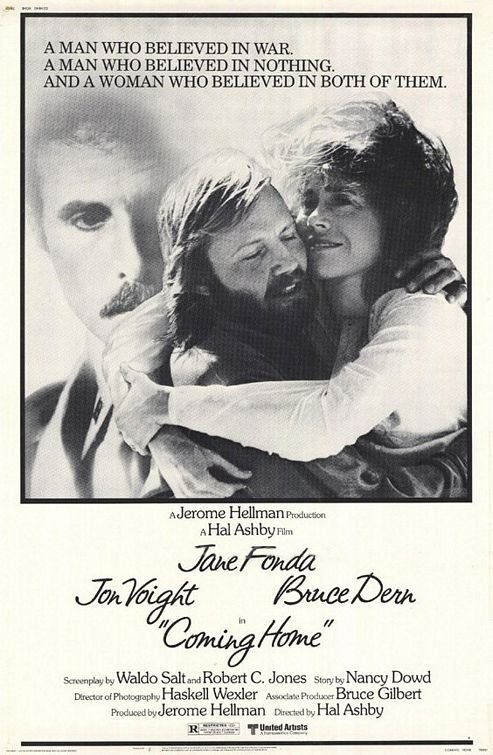
Coming Home (1978)

coming

By Richard Winters

My Rating: 10 out of 10

4-Word Review: Falling for injured vet.

Sally (Jane Fonda) is the military wife to Bob (Bruce Dern) who’s been deployed to Vietnam. Since she now has more free time she decides to volunteer at her local VA Hospital. It is there that she meets Luke (Jon Voight) a former classmate from high school who has now come back from the war a paraplegic. Luke is very embittered about his condition and he’s initially angry and confrontational with Sally. Eventually he softens and Sally invites him to her house for dinner. It’s there that their romance begins to bloom and eventually they become intimate. Bob though, having suffered a leg injury, returns to the states and while Sally and Luke agree to keep their affair a secret Bob soon finds out, which leads to an ugly confrontation between the three.

The idea for the film was inspired by Fonda’s meeting with Ron Kovic, an injured vet who had written his autobiography Born on the Fourth of July that later, in the 80’s, became a movie starring Tom Cruise. Fonda though wanted to make a film with a character that was similar to him and got together with screenwriter Nancy Dowd in 1972 to write a script, which initially focused completely on the hospital setting without the affair, or B-story dealing with the conservative military husband. After many rewrites and bringing in Oscar winner Waldo Scott to help bolster the story the script finally managed to gain interest amongst the studios though many were still cautious about producing a movie dealing with the after-effects of the war, which at that time had never been done before, up until then only films dealing with the war, or those coming back with psychological issues, but not actual physical impairments and thus making this a first in that category.

Since Fonda was instrumental in getting the project produced she was the only choice to play Sally. I think she’s a fine actress who deservedly won the Supporting Oscar for her work here, but since she was on the front lines of the war protest and in many ways even became the face of it, the transition of her character isn’t as profound. Having an actress whose name wasn’t so aligned with left politics and who could better fit-into the part of a conservative housewife would’ve then made the character’s arch more dramatic. I felt too that Sally is too understanding of Luke right-off, the history of them going to high school together should’ve been excised, and instead she should’ve feared Luke when she first encounters him as he does act out-of-control and the romance between them happens too quickly.

Also, once her character changes her hairstyle from the old-fashioned straight to curly it should’ve remained as this visually establishes her character’s changing perspective and not go back to the straight look when she visits Bob in Hong Kong. To remedy this she should’ve decided to keep the curly look even if she feared Bob might not approve, she was technically becoming more empowered with him away anyways, and this would’ve signaled to Bob that she wasn’t the same person he knew when he left, or had the hair change occur after the Hong Kong visit, but having the hair style flip-flop works against the arch, which should be linear and not zig-zagging.

Voight, who won the Best Actor Oscar, and who had to lobby hard for the role as the producers originally wanted Jack Nicholson, is outstanding and there’s not a flaw in his performance with his best moment coming at the very end when he gives a lecture to a room full of high school students about his war experiences. My only complaint, which has nothing to do with his acting and more with the script, is when he bluntly tells Sally, when he goes to her place for dinner, that he dreams of making love to her, which seemed too forward especially since they end up having an impromptu kiss later. Since movies are a visual medium it should’ve settled with the kiss exposing the underlying brewing romance without his character having to explicitly state it. I also found it interesting that the DVD features a commentary track with Voight, Dern, and cinematographer Haskell Wexler, but Fonda is conspicuously not present and I wondered if this may have been due to Voight becoming a hardened conservative as he’s aged and because of their political differences Fonda not wanting to be in the same room with him.

Dern, like the other two, is excellent. His improvisational Dernisms as I like to call them come into play particularly when he gets intense I even learned what the slang term Jody meant, which is what he calls Voight at one point. You also, at the end, get a full view of his bare ass. Now, on the celebrity male naked ass scale I still say it’s a distant third to Dabney Coleman’s in Modern Problems  and Tim Matheson’s in Impulsebut it’s not bad.

Accolades must also go to director Hal Ashby, who was not the first choice as the studio initially wanted John Schlesinger. While Schlesinger could’ve been great I felt Ashby’s use of all natural lighting is what really makes the difference and becomes the over-riding look of the film. He displays keen use of the music too at the end when the song ‘Time Has Come Today’ by the Chamber Brothers is played and the lyrics are used to expose the underlying ticking time bomb of the situation that the three characters are veering speedily into.

My Rating: 10 out of 10

Released: February 15, 1978

Runtime: 2 Hours 7 Minutes

Rated R

Director: Hal Ashby

Studio: United Artists

Available: DVD, Blu-ray
Thumb Tripping (1972)

By Richard Winters

My Rating: 5 out of 10

4-Word Review: Hitchhiking across the country.

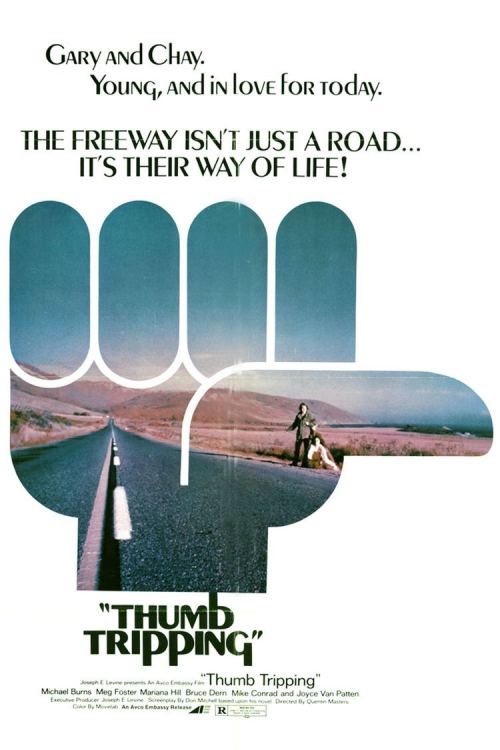
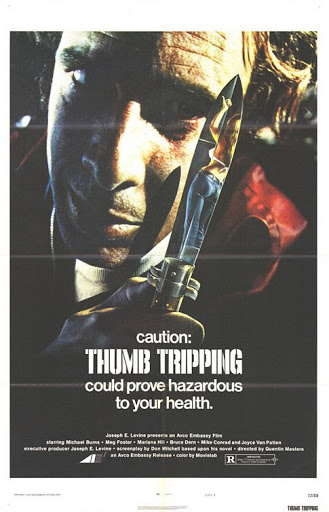
Gary (Michael Burns) is a college kid from a good family who decides he’s not ready to settle down just yet and wants to ‘drop-out’ for awhile by taking part in the hitchhiking scene that was popular in the early 70’s with the counter-culture. While accepting rides he meets up with fellow hitchhiker Chay (Meg Foster) and the two immediately hit-if-off. They decide to accept every ride that comes along, which gets them into trouble when they get into a car driven by two violent men (Bruce Dern, Larry Hankin) and then later when they hop into a truck driven by Diesel (Michael Conrad) who seems kindly at first, but ultimately sets his sights on having sex with Chay, who willingly accepts his invitation, much to the consternation of Gary.

This film never really clicked with the public and much of the problem stemmed from the inability of knowing how to effectively market it, or even what genre it belonged in. Leonard Maltin, in his review, describes the film as being ‘amusing’ even though there is nothing in it that is funny or light-hearted. I remember in the 80’s going to my local video store where this film was put into the horror section and played-up like it was a thriller with Bruce Dern listed as the star even though his segment happens early on, is quickly forgotten, and only lasts for about 5 minutes.

If anything it works as a period piece at seeing how different and more free-spirited things were back then where accepting rides from strangers was considered fun and adventurous and not something to fear. It’s based loosely on the real-life experiences of Don Mitchell, a self-described hippie in the late 60’s who eventually moved to Vermont and became a sheep farmer. He wrote the story first as a novel before getting commissioned into turning it into a screenplay. For the most part it has an authentic feel particularly the segment showing the young people of the day hitch-hiking at various locations making it seem like it was an informal community all to its own.

What’s fascinating is seeing how the ‘responsible’ people that give the hitchhikers rides are usually just as unhappy with societal demands as the hippies, but with no idea or confidence on how to get out of their situations. The segment with Michael Conrad is the best as at first he’s the family man doing long over-the-road hauls to feed his wife and kids and yet his commitment to them takes an immediate backseat the second he becomes sexual aroused by Chay when he sees her dancing at a bar revealing that middle-aged men never become fully ‘domesticated’ no matter how hard they may try to play the part.

The two leads though are not fleshed-out enough. There’s a brief voice-over segment dealing with Burns’ conversation with his mother describing why he wants to drop-out and travel, which helps to give him some backstory, but we never get the same treatment with Foster. She’s this elusive enigma we want to know more about, but never understand. She’s far more compelling than Burns and should’ve been made the star and having her hitchhike alone would’ve  improved the movie.

Despite a few interesting moments it never comes together as a whole. The scenes are too loosely tied together and the story never feels like it’s progressing or has any momentum. The ending leaves everything wide-open particularly the fate of Chay who was the only intriguing element in it, which makes the viewer feel cheated when it’s over.

My Rating: 5 out of 10

Released: October 28, 1972

Runtime: 1 Hour 34 Minutes

Rated R

Director: Quentin Masters

Studio: AVCO Embassy Pictures

Available: VHS

Won Ton Ton: The Dog Who Saved Hollywood (1976)

By Richard Winters

My Rating: 1 out of 10

4-Word Review: Dog becomes a star.

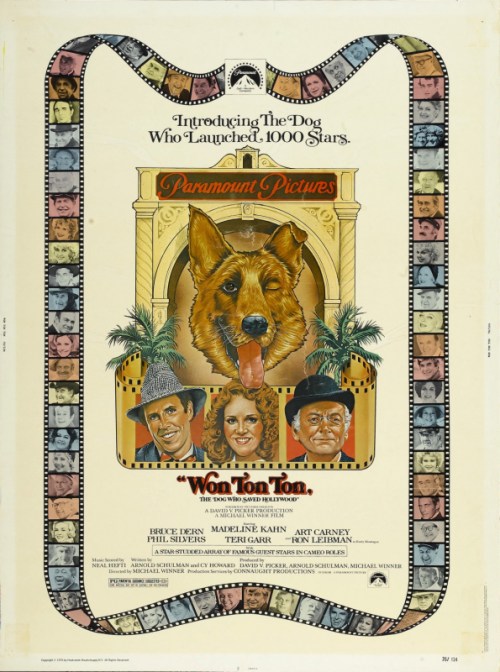
Estie Del Ruth (Madeline Kahn) is a struggling actress still waiting for her big break. While roaming the streets she comes upon a homeless dog (Augustus Von Schumacher) and befriends it. Grayson (Bruce Dern) is a hapless tour guide driving a bus filled with tourists past the homes of the famous Hollywood stars. He’d rather be directing movies and has some great ideas, but is constantly getting turned down. Then one day famous studio mogul J.J. Fromberg (Art Carney) witnesses the dog saving Estie from a lecherous producer (Aldo Ray) and is so impressed that he wants to cast the dog in its own movie. Grayson, seeing this as his chance to finally break into the movie business, pretends to be the dog’s owner and therefore allowed to be in charge of directing the dog’s film, but the dog will only take orders from from Estie forcing him to allow her to tag along, but only if he helps her get a movie contract.

The story was originally titled ‘A Bark was Born’ and written by Cy Howard in 1971 and was an account of the famous 1920’s real-life dog star known as Rin Tin Tin. He commissioned Arnold Schulman to write the script for him. Schulman, who was coming off a good run of films as screenwriter including penning the scripts for Goodbye Columbus and Funny Lady decided to add some satirical elements to the story before finally handing it off to studio head David Picker to produce. However, the owners of Rin Tin Tin sued Picker for producing a film about their dog without authorization causing Picker to remove the fictional elements from the script and turning it into a all-out farcical parody of old-time Hollywood instead.

The film’s biggest problem is that it doesn’t give the viewer a feeling that they’re being transported to a different era as the 1920’s are played-up as being too cartonish and silly to be believable. The characters are caricatures that have no emotional connection to the audience, so watching their ascent into Hollywood success is neither interesting nor compelling. The humor relies too much on throwaway bits that have no connection to the main plot and mostly fall flat while moments that do have comic potential, like the dog only taking orders from Kahn, do not get played-up enough.

Kahn is a poor choice for the lead and single-handily bogs the production down, which wasn’t too great to begin with. She is perfect as a supporting actress playing over-the-top, eccentric characters, but as a normal person trying to elicit sympathy she does poorly. Lily Tomlin was the original choice for the part, but she wanted the script rewritten in order for it to have a more serious edge, which wouldn’t have been a bad idea,  but director Michael Winner wanted to keep the thing silly and lightweight and didn’t agree.

Dern, who expressed in an interview decades later, that doing this film was his one true career regret, is actually quite good and its fun seeing him play in a more lighthearted role versus the darker ones that have made up so much of his onscreen presence. However, by the second half he pretty much gets written-out, which was a shame. Ron Leibman, as the cross-dressing silent film star Rudy Montague, has a few interesting moments, but he plays the part in too much of an intense manner making him seem more creepy than funny.

Art Carney is not funny at all as the big-time studio head and the part would’ve been better served had it been played by Phil Silvers, who gets stuck in a much smaller role that does not take advantage of his comic talents. The rest of the cast is made-up of walk-on bits by famous stars of the past. Most these cameos are not amusing or interesting making their presence much like the movie itself quite pointless.

My Rating: 1 out of 10

Released: May 29, 1976

Runtime: 1 Hour 32 Minutes

Rated PG

Director: Michael Winner

Studio: Paramount Pictures

Available: DVD, Blu-ray, Amazon Video, YouTube

Posse (1975)

By Richard Winters

My Rating: 7 out of 10

4-Word Review: Everyone has their price.

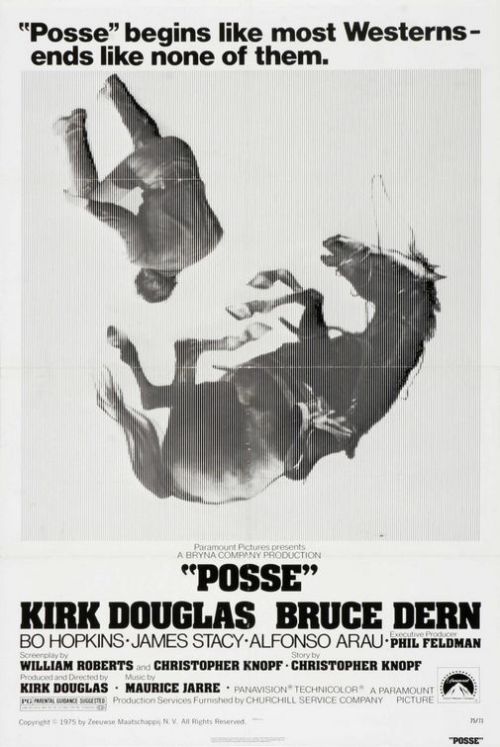
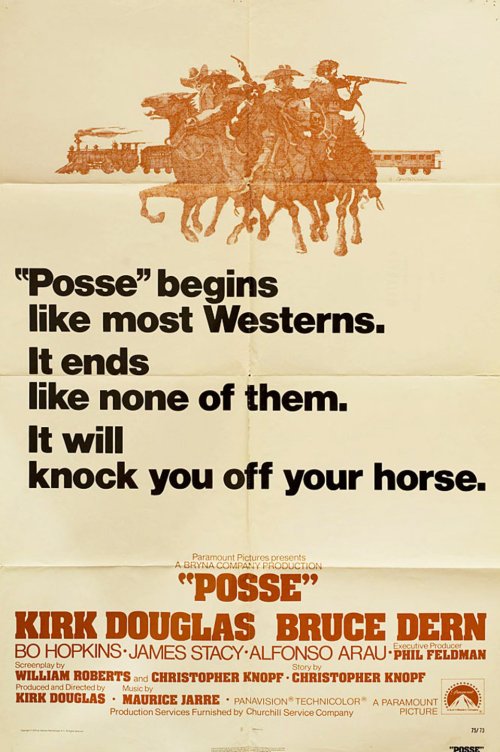
Howard Nightingale (Kirk Douglas) is an ambitious Marshall looking to run for U.S. Senate and realizes his best bet of winning the seat is by bringing in the notorious train robbing gang led by Jack Strawhorn (Bruce Dern). Howard manages to kill off the gang by having his posse set fire to the hideout that they were in, but Jack escapes only to be captured later and brought to jail. While on the train ride to Austin where he’ll be hanged Jack comes up with an elaborate escape and turns-the-tables by handcuffing Howard and returning him to the town where they came from and holding him prisoner inside the local hotel. When the posse returns to the town everyone is convinced they’ll free Howard, or will they?

In an era where revisionist westerns were all the rage it’s confusing, at least initially, not to understand why this one, which story-wise goes completely against-the-grain of the conventional western, isn’t propped up there with the best of them and a lot of the blame could possibly be put on the direction. There’s nothing really wrong with the way it’s presented and there are some exciting moments including a realistic shootout as well as a running train being set on fire while also exploding from dynamite, but the rest of it does have a certain static feel. There’s too much reliance on music and not enough on mood or atmosphere as well as actors looking more like modern day people in period costume.

The script though, which is based on a 1971 short story called ‘The Train’ by Larry Cohen is full of many offbeat twists that keeps the viewer intrigued. Of course in an attempt to stretch out the short story into feature length there are some slow spots, particularly in the middle and the emphasis is more on concept than character development, but Jack’s crafty way at escaping is quite entertaining and the surprise ending is one of the best not because it’s a gimmick, which it isn’t, but more because it’s quite believable and yet something that’s never been done in any other western.

Douglas gives his conniving character just the right amount of pompous camp to make him enjoyable and it’s great to see James Stacy in his first movie role after his tragic motorcycle accident where he lost both his left arm and leg. In any other film this handicap would have to become a major issue, but here it doesn’t even get mentioned. The character doesn’t use it to feel sorry for himself nor is he treated any differently than anyone else, which I found to be quite refreshing.

A minor drawback though it that it’s supposed to take place in Texas and my hometown of Austin even gets mentioned a few times, which is kind of cool, but it was actually filmed in the state of Arizona. To some this might not be a big deal, but Arizona’s landscape is much sandier and has more mountains. Their cacti is of the upright kind while in Texas the cactus is of the bushy variety known as the prickly pear. All of which helps to ruin the film’s authenticity. If they didn’t have the funding to film it in Texas then have the story’s setting take place in California or Arizona, but trying to compromise it and hoping that astute viewers won’t know the difference doesn’t work.

My Rating: 7 out of 10

Released: June 4, 1975

Runtime: 1 Hour 32 Minutes

Rated PG

Director: Kirk Douglas

Studio: Paramount Pictures

Available: DVD, Amazon Video, YouTube

The Incredible 2-Headed Transplant (1971)

By Richard Winters

My Rating: 3 out of 10

4-Word Review: One body two heads.

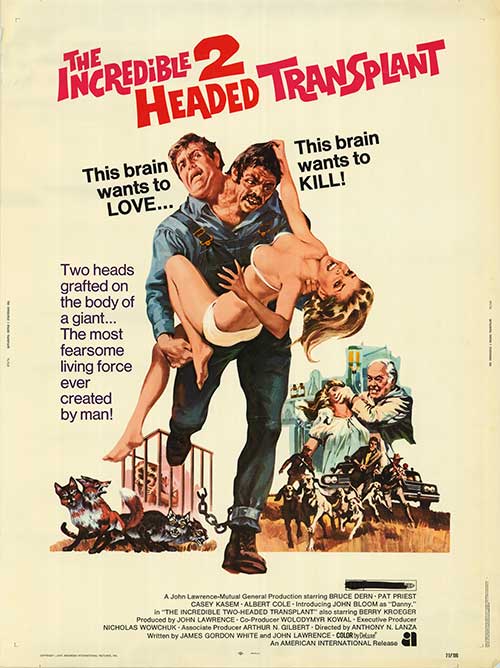
Roger Girard (Bruce Dern) is a crazed doctor who secretly experiments on planting two heads on animals and has a lab full of these creatures, which he keeps hidden from his beautiful wife Linda (Pat Priest). Only his faithful assistant Max (Berry Kroeger) knows about the research and he makes sure no one else finds out about it. One day Dr. Girard decides to test out the procedure on a human by planting the head of a homicidal maniac (Albert Cole) onto the body of a mentally challenged adult (John Bloom) whose super strength makes him hard to control and things quickly get out-of-hand when the patient escapes and goes on a murderous spree.

What inspired screenwriter James Gordon White to write this story is a mystery, but it’s rather idiotic with no specific reason why Dr. Girard feels planting another head on an animal, or human, is a good idea. The music by John Barber is the worst part as there’s too much of it and the tone changes drastically like fiddling through a radio dial with most of the melodies sounding better suited for cartoons.

The bright, sunny southern California scenery, which was shot in Santa Clarita, is nice, but I didn’t know why it was all done in the daytime. Most horror movies are shot at night in order to have the darkness elevate the fear. The nighttime scene here was clearly done in the daylight with a darkened lens put over the camera to make it appear darker than it really is. Most films do this when they have children in the cast since there are laws preventing minors from working in films past a certain time, but this had an all adult cast and therefore no reason for it not to have night scenes done when the sun has actually set.

Bruce Dern’s presence is a surprise since he was already an established actor by this time and didn’t have to accept offers to be in this dreck simply to make a living. He was apparently given a check for $1,700 as his compensation, but when he went to the bank to cash it, it bounced. Even more surprising is in a recent interview when was asked what movie he regretted doing the most he mentioned Won Ton Ton the Dog Who Saved Hollywood instead of this one.

Casey Kasem’s wild ‘70s outfits and hairstyle make his appearance almost worth it and Pat Priest, best known as the second Marilyn from ‘The Munsters’ is an attractive asset. Berry Kroeger with his goofy facial expressions makes things fun as Dern’s assistant.

The sight of the 2-headed creature is odd to say the least and there were certain shots where I wasn’t quite sure how they pulled it off, which I suppose allows for some minor intrigue. Their contrasting personalities tough should’ve been played up more and had a ‘battle’ over which side controlled the body. This element gets improved a year later when the same screenwriter came out with The Thing with Two Heads that had the head of a white racist is put onto a black man’s body. The review for that film will be posted in…TWO days.

My Rating: 3 out of 10

Released: April 28, 1971

Runtime: 1 Hour 28 Minutes

Rated R

Director: Anthony M. Lanza

Studio: American International Pictures

Available: DVD, Amazon Video

Family Plot (1976)

By Richard Winters

My Rating: 4 out of 10

4-Word Review: Alfred Hitchcock’s last movie.

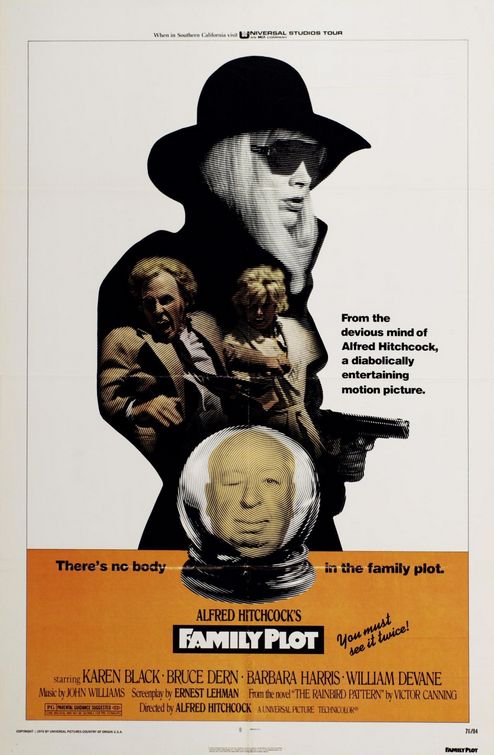
Blanche Tyler (Barbara Harris) is a phony psychic whose client, the rich heiress Julia Rainbird (Cathleen Nesbitt) offers her a reward of $10,000 if she can use her ‘psychic abilities’ to find Julia’s long-lost nephew who was given up for adoption years earlier. Blanche employs her boyfriend George (Bruce Dern) who works as a cabbie in-between acting gigs, to find the man. George ends up stumbling upon someone who he thinks may be him, Arthur Adamnson (William Devane), but ends up getting in-over-his-head when Arthur proves to have ulterior motives.

The film’s claim-to-fame is that it was the last one directed by Alfred Hitchcock, which is probably the only good thing to say about it. Technically it’s not bad, but it’s not terribly interesting either. Everything that gets done here has been done before in other films with more interesting results. This includes a sequence where Blanche and George’s car goes careening down a mountain highway with no breaks, which isn’t exciting at all and looks clearly shot in front of a green screen.

After completing the far edgier Frenzy I was expecting Hitch to try and push the envelope even more, but instead he draws back with a pedestrian story that’s full-of-holes.  It was based on the novel ‘The Rainbird Pattern’ written by Victor Canning, which had a darker tone. Screenwriter Ernest Lehman wanted to capture that same tone here, but Hitch pushed him instead for a lighter quality that borders on camp, but ultimately comes off as gimmicky. The ending is particularly limp and for someone once dubbed the ‘Master of Suspense’ there is very little of it here.

The only moment that stuck out for me is where Blanche and George sit down to eat hamburgers. Normally actors in films rarely eat the food that they’re served and will usually either take small nibbles, or simply leave it on the plate without taking a single bite, but here both Dern and Harris take big bites from their burgers while continuing to talk. At one point a piece of burger spits out of Dern’s mouth as he speaks and he instinctually holds up his hand in front of his mouth in an embarrassment, which was strangely left in. Most directors would’ve quickly stopped the scene and reshot it, but instead Hitch decided to let it continue, which adds an odd realism probably not seen anywhere else.

The casting is the only real bright spot especially Devane, who normally played good guys, but takes a turn as a villain here and does quite well. In fact it’s the best performance of his career. Unfortunately the two women (Harris and Karen Black who plays Devane’s girlfriend) are wasted and for the most part have very little to do. Black’s role could’ve been cut out completely in a film that especially when compared to the director’s earlier works is a huge disappointment.

My Rating: 4 out of 10

Released: April 9, 1976

Runtime: 2 Hours 1 Minute

Rated PG

Director: Alfred Hitchcock

Studio: Universal

Available: DVD, Blu-ray, Amazon Video, YouTube

Silent Running (1972)

By Richard Winters

My Rating: 5 out of 10

4-Word Review: He saves the forest.

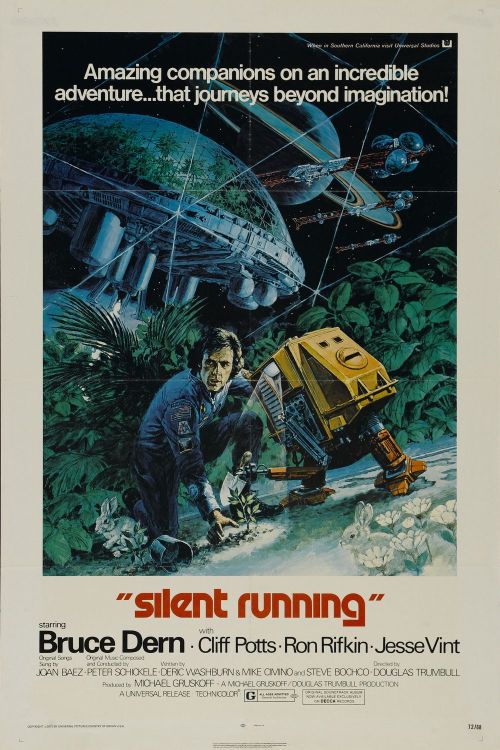
Freeman Lowell (Bruce Dern) is a member of a 4-man space crew residing on a shuttle called Valley Forge that house underneath giant glass domes plant and animal life that was made extinct back on earth. One day the crew is ordered to destroy these domes, but Freeman refuses and kills his fellow crew members when they attempt to. He then jettisons the craft further into space and uses robotic drones to help keep the forests alive, but is horrified to learn that the members of another space ship called the Berkshire have been able to locate him and now want to board his vessel where they’ll soon find out what he has done.

This film marks the directorial debut of special effects wiz Douglas Trumbull and much like with his ‘80s effort Brainstorm is strong on visual design, but lacking in story substance. The script never bothers to explain what caused the plant life on earth to die, or why they are suddenly forced to destroy the domes on the ship. It’s almost like the three screenwriters, which included Michael Cimino, were merely content to come up with a very basic concept with a lot of simplistic plot devices bundled together.

The way Freeman is able to trick his superiors on the other end of the radio relay into making himself look innocent is so pathetically easy that it is hardly entertaining to watch. I would’ve thought in such as technologically advanced age that there would be cameras installed on the ship, so others could monitor what happens and not simply rely on verbal feedback from the crew.

The story’s second and third acts are in desperate need of more conflict. Instead of wasting time showing cutesy, silly scenes of Freeman playing poker with the drones there should’ve been a bad guy nemesis on the ship trying to thwart Freeman’s attempts to save the forest. The way he is able to kill off the other crew members is too easy especially the Cliff Potts character as all Freeman has to do is lightly push down on Potts’ neck with the handle of a shovel and it’s enough to kill him even though I thought he had just been briefly knocked unconscious as Freeman never bothers to check the man’s pulse and this was the type of character who could’ve come back to life and hide out on the ship while creating trouble.

Attempts to add some intrigue by having the plants in the forest suddenly die off mysteriously is utterly lame. I immediately presumed that it was because of a lack of sunlight, but Freeman the so-called botanist takes several days and lots of research until he finally comes up with this same conclusion, which is pathetic.

The songs by Joan Baez are loud and shrill and having to listen to three of them simply to bulk up the runtime only proves how empty the script is. The numerous flashback sequences showing footage that the viewer has already seen earlier are equally unnecessary.

Dern is good and helps hold the thing together in a role that I felt was tailored made for his acting style and was surprised to learn that he was only given the part after 17 others had turned it down. I also liked the outer look of the space craft even though you could clearly tell that it was a miniature. Unfortunately there are not enough compelling elements in the story to keep it interesting and the long stretches where little happens will easily bore most viewers.

My Rating: 5 out of 10

Released: March 10, 1972

Runtime: 1 Hour 30 Minutes

Director: Douglas Trumbull

Rated G

Studio: Universal Pictures

Available: DVD, Blu-ray, Amazon Video, YouTube

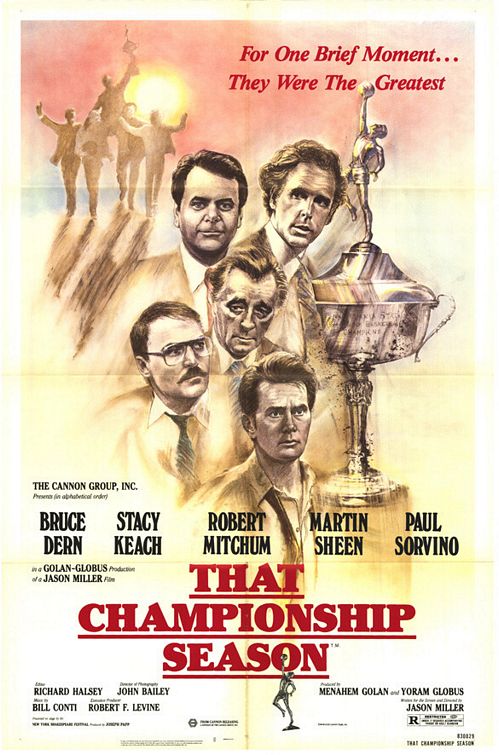
That Championship Season (1982)

By Richard Winters

My Rating: 2 out of 10

4-Word Review: Their reunion turns sour.

On the 25th anniversary of when they won the state high school basketball championship four members of the team get together with their coach (Robert Mitchum) to celebrate. George (Bruce Dern) who made the winning shot is now the town’s mayor and up for reelection. James (Stacy Keach) is a high school principal while his younger brother Tom (Martin Sheen) has become a vagabond alcoholic. Phil (Paul Sorvino) is the most successful of the group even though his business methods aren’t always ethical. It’s his revelation that he has had an affair with George’s wife that sends the gathering into a freefall where long dormant secrets from all the members slowly come to the surface.

The film was written and directed by Jason Miller, best known for playing Father Karras in The Exorcist, and the play version, which he also wrote won him the Pulitzer Prize. Despite the rave reviews of the play I was genuinely shocked how lifeless and boring the film is. It takes 35 minutes before any real conflict is introduced and once it does it’s all very contrived. The opening half-hour is nice as it was filmed on-location in Scranton, Pennsylvania, which was Miller’s hometown, but the second half is done completely inside one home, which makes it very stagey. Flashback sequences were done to help make it more cinematic, but unwisely cut by the film’s producer.

The plot thread dealing with Sorvino’s character having an affair with Dern’s wife seemed so utterly contrived that I literally had to roll my eyes when it gets brought up. It’s almost like they had to throw in something to keep it interesting so why not just make it the oldest, most clichéd soap opera-like thing they could think of. What’s worse is we never see this woman in question despite her being the catalyst for all the drama nor any explanation of where she is or what she is doing.

The acting is good for the most part, which is the only reason I’m giving this thing even 2 points, but at times the performers have trouble rising above the melodramatic material including the scene where Keach tries to put on a cry while describing his mistreatment by his father, which sounds very fake and unintentionally laughable.

Sorvino walks around with jet black hair except for a big white patch on the back of his head, which is distracting and gets shown a lot, but never mentioned by any of the other characters. I’ve never seen anyone with that condition, except for someone who intentionally highlighted it like that and even so I don’t think that was the case here. The producers should’ve had that spot dyed black like the rest of his hair to avoid the distraction, or had one of the other characters joke about it in passing, so the viewer didn’t have to keep wondering why they are the only ones seeing it and nobody else was.

The final scene where the men listen to a tape of when their team scored the winning shot, which brings tears to their eyes, is the only segment that rings true and hits home how high school for some people can be the highlights of their whole lives and everything afterwards is all downhill. The rest of the movie though is an exercise in boredom and filled with sterile characters dealing with generic issues.

My Rating: 2 out of 10

Released: December 9, 1982

Runtime: 1Hour 50 Minutes

Rated R

Director: Jason Miller

Studio: Cannon Film Distributors

Available: DVD