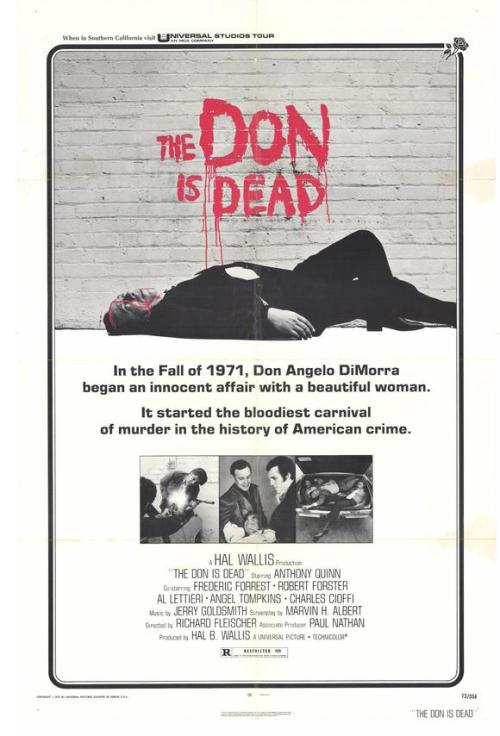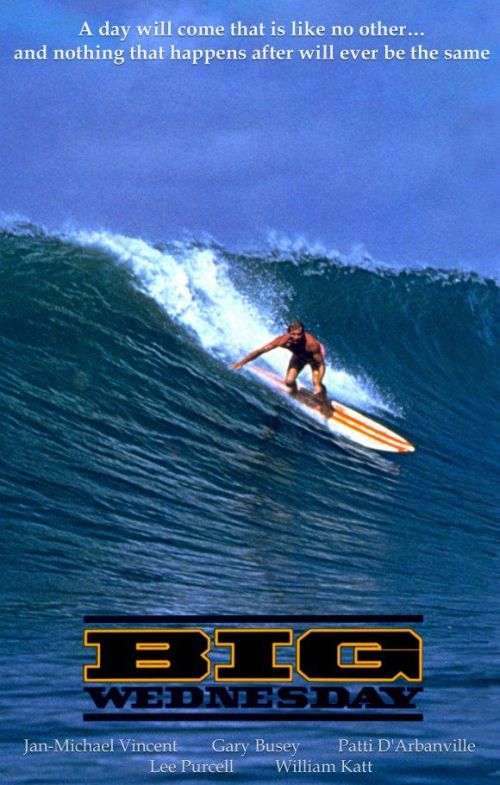
Big Wednesday (1978)

By Richard Winters

My Rating: 3 out of 10

4-Word Review: Catch the big wave.

Based on a short story that was published in 1974 and titled ‘No Pants Mance’ the plot deals with three life-long friends who share a passion for surfing. Jack (William Katt) is the sensible one who grows into being a responsible adult while Matt (Jan-Michael Vincent) and Leroy (Gary Busey) remain more reckless. The film follows their journey through life between the years of 1962 and 1974 and how their ongoing friendship ebbs-and-flows.

It was written and directed by John Milius whose own youthful surfing days helped him connect to the material and it manages to work when it’s in the water, but nowhere else. Much of the problem comes from an ill-advised attempt to broaden the storyline into a sprawling life saga that gets much too overwrought.

The film also spends too much time on meandering sequences that have nothing to do with the story including a fight scene that occurs during a house party in Katt’s home that is no different from the hundreds of similar house party brawls shown in other movies. This one though is slightly more amusing in that the homeowner (Barbara Hale) remains in her bedroom reading a book even as things get progressively out-of-control. However, it seemed unrealistic that she wouldn’t at some point check-up on what was going on especially as the commotion increased. The segment, as unnecessary as it is, had a good engaging set-up, but unfortunately lacked a satisfying finishing shot like her reaction the next day when she took in all the damage, which could’ve been a gem.

The draft dodging scene where they pretend to be blind, gay, crazy, or handicapped to get out of going to war is also contrived. Too many other movies had already tackled this including Alice’s Restaurant, which had a similar army recruiting sequence that was far funnier and made this one look second-rate by comparison.

It’s also off-putting to having Katt as the lead during the first-half only to switch to Vincent taking-the-reins during the second part. For one thing Vincent is not likable and he even causes a serious car crash earlier in the film that should’ve gotten him thrown into jail, but doesn’t. At the beginning he’s portrayed as being a drunken slacker that somehow manages to morph into a responsible husband and father later. The movie implies that when he unexpectedly finds out that he is a  father this ‘changes’ him, but with a lot of guys that’s not always the case, so I felt there needed to be more of a motivation than just that.

The surfing segments are excellent particularly the gigantic waves captured during the film’s climax. Had the story remained on a surfing plotline it would’ve worked, but unfortunately Milius tries too hard to give the material a ‘profound statement’ that turns it into nothing more than strained, hackneyed drama that is quite slow and boring.
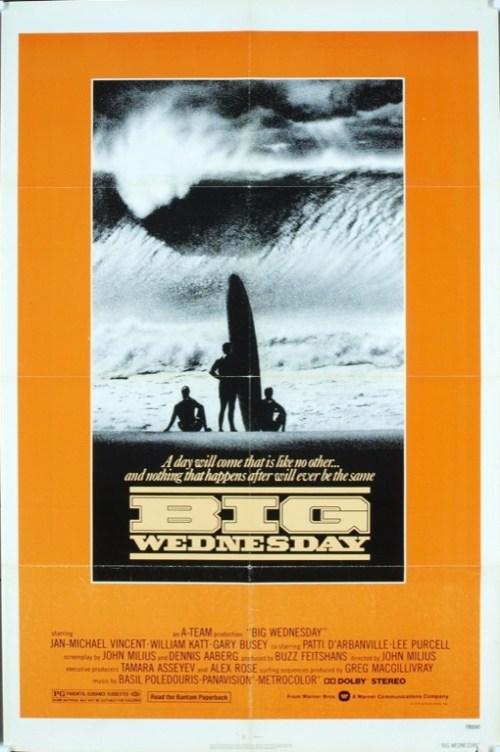
My Rating: 3 out of 10

Released: May 26, 1978

Runtime: 1 Hour 59 Minutes

Rated PG

Director: John Milius

Studio: Warner Brothers

Available: DVD, Amazon Video, YouTube
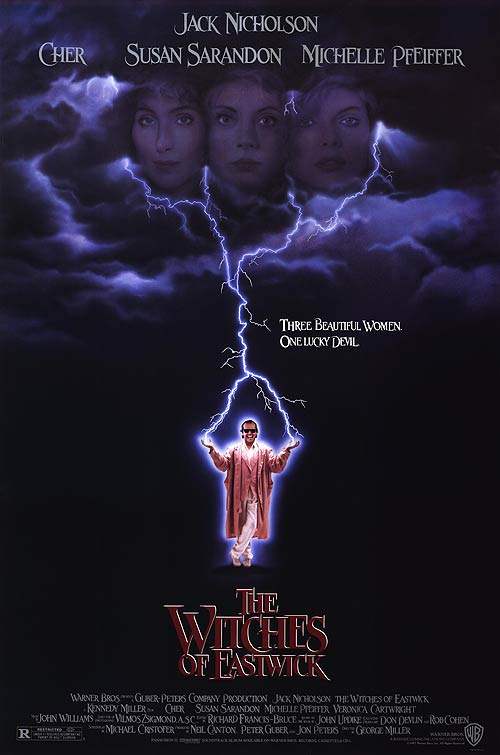
The Witches of Eastwick (1987)

By Richard Winters

My Rating: 7 out of 10

4-Word Review: Devil comes to town.

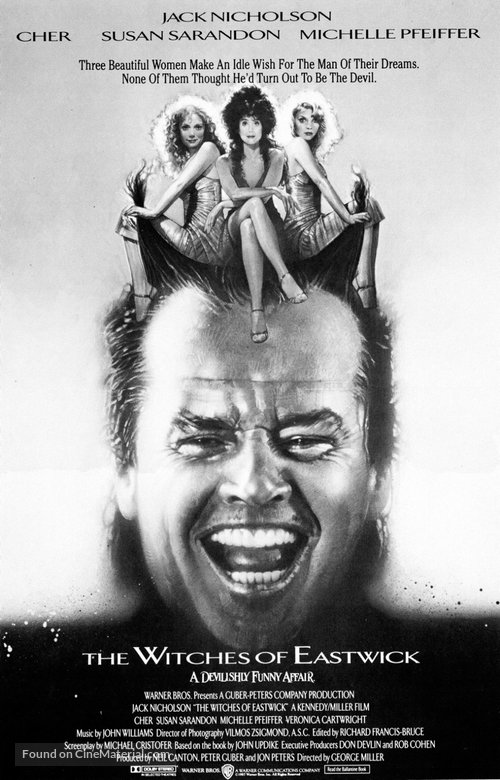
Based on the John Updike novel of the same name, the story centers on three single women (Cher, Susan Sarandon, Michelle Pfeiffer) living in the town of Eastwick, Rhode Island who are also witches, but don’t yet realize it. All three want to meet up with the man of their dreams, which ushers in Daryl Van Horne (Jack Nicholson). He is a rich playboy that buys the town’s landmark home the stately Lennox Mansion. The three women are initially seduced by his powers only to realize later that he is actually the devil incarnate and spend the rest of the time conjuring up a spell that will send him back to where he came from.

After achieving so much success with The Road Warrior franchise Australian director George Miller decided to take a stab at something completely different, but had to deal with studio politics during the production, which made the final product disjointed. However, despite an array of confusing plot points the offbeat elements are enough to hold your attention and keep things interesting.

The creative special effects add an imaginative flair, but tend to get overdone. I enjoyed the scene where Veronica Cartwright vomits out cherry seeds all over her house, which leaves an indelible impression, but then Nicholson does the same thing later inside a church where it becomes redundant and gross. Watching a floating tennis ball defying gravity is amusing, but not needed. This scene, where all four get together to play a game of tennis, should’ve instead focused on the underlying tensions between the characters, which would’ve given the movie some needed nuance.

I enjoyed Sarandon, who goes from being a repressed nerdette to sexual vamp, but overall the efforts of the game cast are wasted as there’s not enough distinction between the women’s personalities making them seem almost like the same person. The only female that is distinct and memorable is Cartwright who’s campy, over-the-top portrayal of a paranoid religious woman hits-the-mark and should’ve been enough to give her more screen time and at least one scene where she confronts Nicholson directly.

I would’ve preferred also that the women been aware right from the start that they were witches, which would’ve made them immediate adversaries to Nicholson instead of these dopey pawns that passively allow him to seduce them one-by-one in long drawn-out segments that become quite strained. In contrast Nicholson could’ve preyed on the other women in town while these same witches spent their time coming up with ways to stop him and thus creating more of a theatrical battle.

Nicholson is great, but his character like with the others is poorly etched. At the beginning he’s a conniving player who possesses the ability to manipulate these women almost seamlessly, but then during the second half this all changes, but with no clear explanation as to why. His speech though inside a church expounding on man’s ever daunting task to tap into the female’s psychic is priceless:

“Do you think God knew what he was doing when he created women, or do you think it was just another one of his minor mistakes like tidal waves?…If it was a mistake maybe we can do something about it; find a cure, then a vaccine, build-up our immune systems.”

The biggest issue though is that the film needed to be genre specific and played more like a horror movie with dark comical undertones instead of a serene/hybrid comedy. The New England setting is picturesque, but not right for this type of story. A better location would’ve been a town that was mostly cloudy and gloomy while containing buildings that were old and gothic, which would’ve helped to create an eerie atmosphere that is otherwise sorely lacking.

My Rating: 7 out of 10

Released: June 12, 1987

Runtime: 1Hour 58Minutes

Rated R

Director: George Miller

Studio: Warner Brothers

Available: DVD, Blu-ray, Amazon Video, YouTube

Bad Company (1972)

By Richard Winters

My Rating: 6 out of 10

4-Word Review: Two deserters go west.

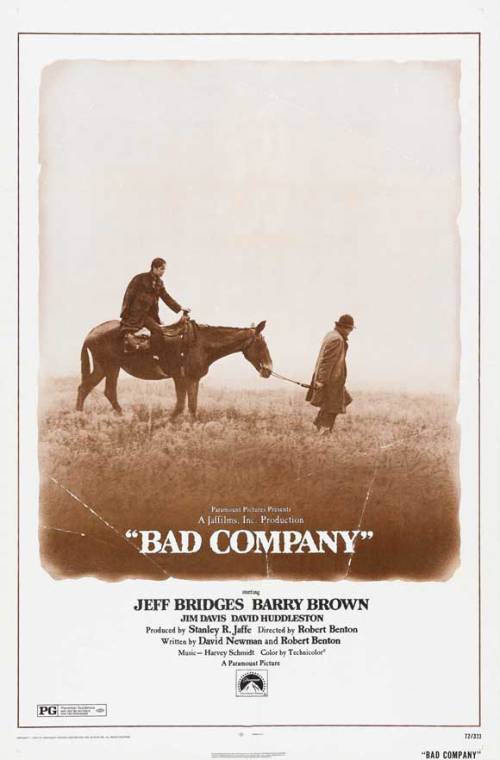
Drew (Barry Brown) is a young man living in the south during the civil war who manages to avoid going into the army by hiding from the soldiers when they come to his family home to retrieve him. After they’ve left his mother (Jean Allison) gives him $100 and tells him to go west. When he gets to St. Joseph, Missouri he meets up with Jake (Jeff Bridges) and the two form an uneasy alliance with Drew even getting invited into Jake’s young gang (Damon Cofer, John Savage, Jerry Houser, Joshua Hill Lewis) of youthful outlaws. The six ride off into the west hoping to find adventure and opportunity, but instead meet hardship and violence.

The film’s stark tone would’ve been more compelling had there not been so many other westerns coming out at the same time with a similar theme. Instead of being this refreshing change-of-pace from the old western serial it just ends up creating new clichés from the then budding revisionist  genre. At certain points it seems almost like a carbon copy of The Culpepper Cattle Company, or even The Great Northfield Minnesota Raid, which star Brown had been in just before doing this one.

The attempt to mix dry humor with harsh reality works fairly well and placing the setting amidst the sprawling wheat fields of Kansas gives it a distinctive look that is perfectly captured through the lens of cinematographer Gordon Willis although the piano score by Harvey Schmidt gets intrusive. This becomes particularly evident towards the end when the two boys get into a gun battle with a gang of outlaws and the action is choreographed to the beat of the music, which only helped to take me completely out of the story. What’s the use of spending so time creating a gritty realism if you’re just going to suddenly sell-out on it in a cheap attempt to be ‘humorous’ and ‘cute’?

The acrimonious friendship between the two leads is what I liked, but the film misses the mark by not focusing on this enough. The supporting cast wasn’t needed and the film should’ve focused solely on the two stars from the beginning making it like ‘the odd couple of the west’, which could’ve been memorable. Instead it meanders and only starts to gel by the third act, but by then it’s almost too late. I also wasn’t too crazy about the wide-open ending either, which offers no satisfying conclusion.

My Rating: 6 out of 10

Released: October 8, 1972

Runtime: 1Hour 33Minutes

Rated PG

Director: Robert Benton

Studio: Paramount

Available: DVD, Amazon Video, YouTube
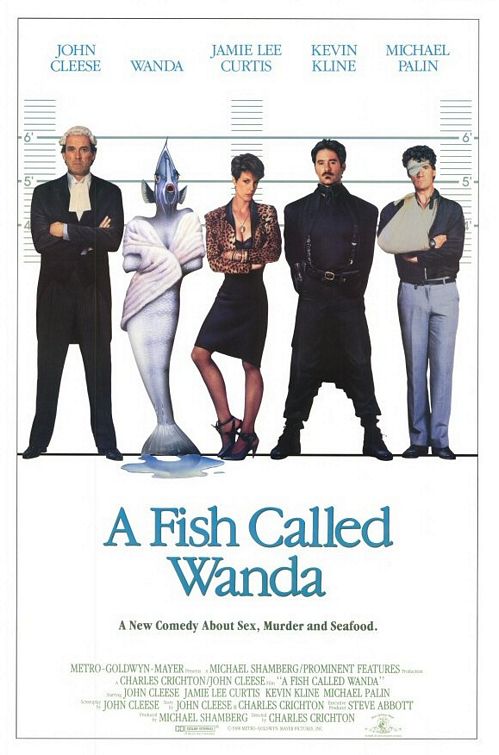
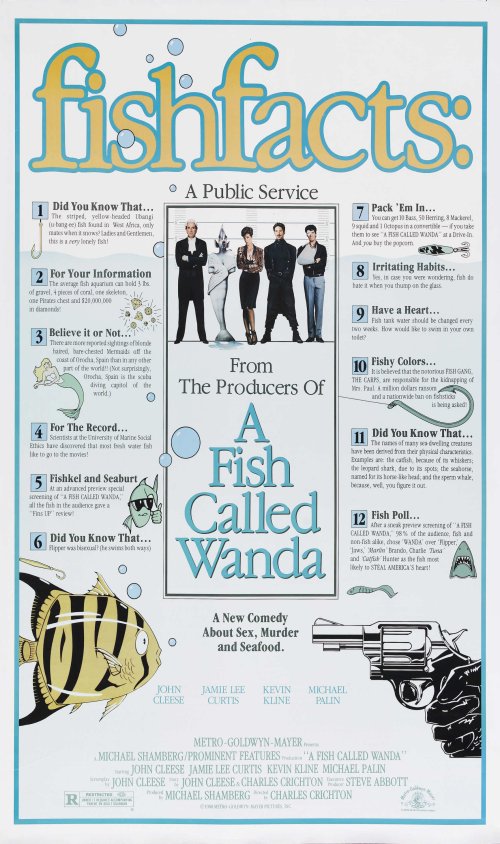
A Fish Called Wanda (1988)

By Richard Winters

My Rating: 6 out of 10

4-Word Review: These thieves double-cross.

Four colorful characters commit a London diamond heist orchestrated by George (Ton Georgeson). After the crime is committed Wanda (Jamie Lee Curtis) and her lover Otto (Kevin Kline) call the police and have George turned in as they plan to abscond with all of the diamonds themselves. However, George with the help of his stuttering henchman Ken (Michael Palin) had the diamonds removed from the secret safe that Wanda and Otto thought it was in, so when the couple comes back to retrieve them they find that they’re gone. With George now in jail Wanda decides to seduce George’s lawyer (John Cleese) with the idea that George most likely told him where the loot is stashed, but this causes jealousy with Otto who is highly insecure and doesn’t like to be called stupid.

The story could probably best be described as a comical variation of The Asphalt Jungle in which a crime is successfully committed only to have all the participants turn on each other afterwards. This concept works for the first 45 minutes, but then wears itself out making me feel more of a backstory and a longer set-up was needed. These people are also not very likable and it would’ve been nice to see at least one of them do something, even if it was just briefly, that wasn’t completely underhanded.

Curtis is miscast as she has a very strong and grounded personality in real-life, which always comes through in the parts that she plays, so having her portray such a superficial woman willing to do anything for money seems out-of-sync. Her character is portrayed as being calculating and crafty, but she’s really quite one-dimensional as all she does is use her body and sex appeal to get what she wants, which seems sexist to presume that sex is the only ‘weapon’ that a woman can use and never her mind instead. A truly clever lady would be able to come up with more imaginative ways to manipulate a man and not just immediately feeling the need to prostitute herself. It also made me wonder what she was going to do when she got older and her looks faded as she seemed to have no ‘plan-B’.

Kline gets the showy role and it was enough to net him the best supporting actor Oscar. The character initially comes off as being quite obnoxious, but if you accept the fact that he is extremely insecure then it works and is even somewhat funny particularly the way he spies on Wanda when she’s with Cleese, but by the second half his antics turn too dark making him psychotic and I no longer found him amusing or enjoyable at all.

Palin’s character suffers a similar fate. Initially he’s this dimwit that everyone else overlooks, so you feel like cheering for him. Yet his constant stuttering becomes an overplayed one-joke that seems to mock those in real-life who may suffer from the same affliction. His character loses his appeal when he becomes all too willing to kill off an old lady to silence her as a witness. His inept attempts at killing her becomes the film’s running gag and turns this initially witty movie into slapstick nonsense similar to a live-action version of a Wiley E. Coyote/Road Runner cartoon.

Cleese is enjoyable as the a proper British barrister stuck in a loveless marriage and the scene where the film cuts back and forth between Cleese and is wife getting ready for bed and the way Kline and Curtis also gets ready for it is the funniest, most inspired moment in the movie.  His character though starts to take over the film by the second half even though it worked better when it gets played as an ensemble comedy and the way he goes from being a nebbish to sexually liberated is not interesting. I felt his blossoming romance with Curtis was too forced and having Curtis fall in love with him simply because he could speak in different accents, which is enough to get her overtly aroused, is quite contrived and ridiculous.

I would’ve liked some situation, other than the initial crime itself, put in that would’ve forced these characters to get along and have shown a different side to their personalities instead of just their devious/desperate one, which gets too protracted. The constant double-crossings run-out-of-steam making they’re shenanigans increasingly more strained as it goes along until it becomes just a big cluttered comical mess that despite a few good chuckles doesn’t seem worth it.

My Rating: 6 out of 10

Released: August 5, 1988

Runtime: 1Hour 48Minutes

Rated R

Director: Charles Crichton

Studio: MGM

Available: DVD, Blu-ray, Amazon Video, YouTube

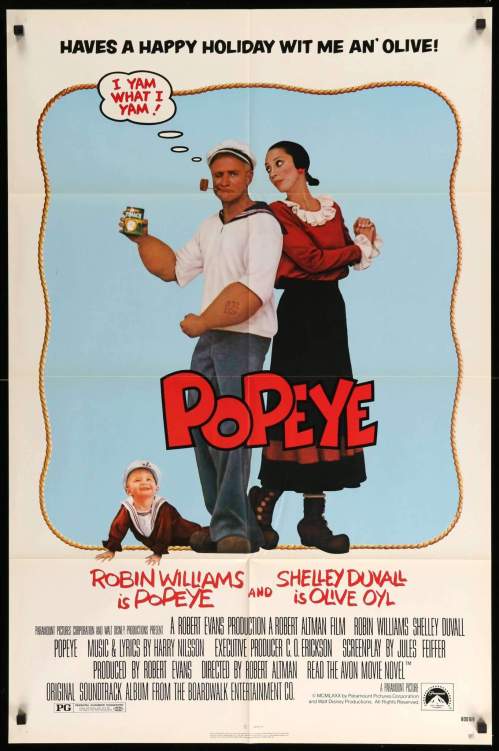
Popeye (1980)

By Richard Winters

My Rating: 3 out of 10

4-Word Review: He doesn’t like spinach.

Popeye (Robin Williams) is a sailor who travels to the seaside village of Sweet Haven in search of his long lost father (Ray Walston). It is there that he moves into the upstairs room of the Oyl residence and becomes attracted to their daughter Olive (Shelley Duvall). Olive though is engaged to the gruff Bluto (Paul L. Smith) whose bullying ways is giving Olive second thoughts. When she tries to leave town in order to avoid the impending marriage she meets Popeye and they get into a relationship while also coming upon an orphaned baby that they name Swee’pea (Wesley Ivan Hurt), but Bluto becomes determined to destroy their union by kidnapping the child.

I remember watching the Popeye cartoons growing up and while I was never much of a fan this film version fails to replicate the original storylines. In the cartoons the relationship between Olive and Popeye seemed in constant flux and many times Olive would be ‘stolen away’ by Bluto’s courting and Popeye would have to win her back. Here the confrontations between Bluto and Popeye are played down significantly and there’s only two fight sequences between them and they last for only a few minutes.

The biggest difference though is that here Popeye doesn’t like spinach even though in the cartoons his spinach consumption was the whole reason he got his strength. Apparently when Popeye was introduced in 1929 he got his strength from rubbing the hairs on a magical whiffle hen named Bernice, but modern day audiences equate Popeye with spinach and changing this concept makes it seem like the film is not staying true to form. Kids who enjoyed the cartoons come to the movie expecting the same theme not watching something that’s going to take what they love into a completely different direction. What’s worse is that here there’s no explanation for how Popeye gets his amazing strength, which makes the already loopy storyline even dumber.

Williams gives a great performance, but his presence gets drowned out by the introduction of too many other characters including Paul Dooley as Wimpy who almost seems to have more screen time. Watching Walston play an older version of Popeye as the father is not funny, but instead incredibly annoying and again only helps to overshadow Williams’ great work.

I originally thought the casting of Duvall was inspired as I don’t think there’s any other actress living or dead who shares the physical traits of the Olive Oyl character quite as well as Duvall and in fact she admitted in interviews that she was nicknamed Olive Oyl by the school kids growing up. However, she overplays Olive’s nervous mannerisms which become repetitive and irritating while her attempts at singing are beyond bad.

The town of Sweet Haven, which took seven months to construct and consisted of 19 buildings built off the cost of Malta that still stands today, are the film’s strongest element, but everything else from its unfocused script evaporates into a mass sea of boredom. Robert Altman, who can be a great director at times, was the wrong choice for this type of production. He excels at doing existential adult dramas not kiddie flicks and children watching this thing will most assuredly become bored and the adults will too.

My Rating: 3 out of 10

Released: December 12, 1980

Runtime: 1Hour 54Minutes

Rated PG

Director: Robert Altman

Studio: Paramount

Available: DVD, Amazon Video, YouTube
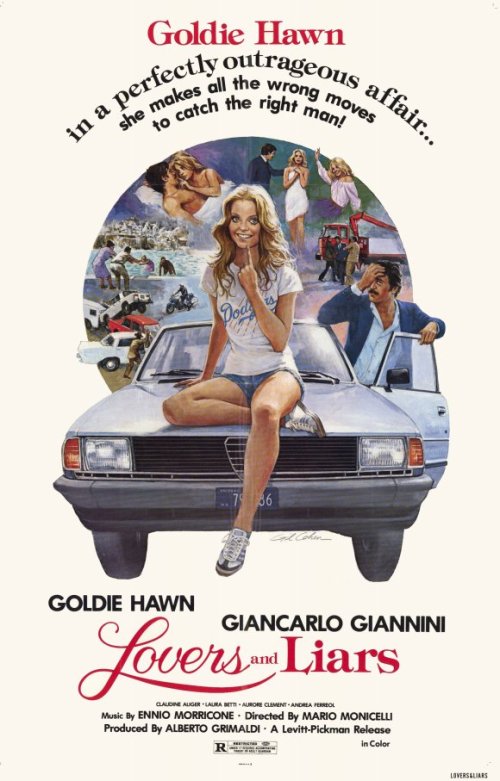
Lovers and Liars (1979)

By Richard Winters

My Rating: 1 out of 10

4-Word Review: Lovers on the road.

Anita (Goldie Hawn) is vacationing in Rome and rooming with her friend Jennifer (Lorraine De Selle) while she auditions for roles in commercials that are being shot there. One day Jennifer’s married lover Guido (Giancarlo Giannini) comes over. He wants to have sex with Jennifer before driving off to Pisa to visit his dying father. Jennifer throws him out, so he gives Anita a ride where he continuously tries to make a play for her despite her constant resistance.

The flimsy set-up is the one thing that kills the film before it even gets started. The idea that putting any two people of the opposite sex together on a long car ride will be enough to elicit a romance is ridiculous. There needed to be more to tie these two together. Having them get together because they’re running away from the same person or a natural disaster would’ve given it a little more meat, but trying to create something from nothing like it essentially does here is about as vapid as you can get.

I realize that European films have the reputation of being more leisurely paced, but this thing takes that concept too far as virtually nothing happens. Certain elements get thrown in to inject some excitement like a big car pile-up that gets abruptly forgotten just as quickly as it gets introduced, but none of it helps to move the story forward

There is also no clear reason why either of these two characters would be interested in the other. Guido was than willing to jump into the sack with Anita’s roommate just a day before, but now acts like he can’t live without Anita and she’s the complete center of his world despite having nothing particularly special occur between the two of them. He even physically removes her from a taxi, so she’ll remain with him, which should’ve been enough to end the relationship and not continue it.

Guido gets portrayed as being the consummate player, so why get fixated on Anita who he’s only known her for a little while? As for Anita why fall for a guy that gets forceful and controlling? She’s successfully traveled the world this long without a man, so why suddenly settle for this womanizing dud?

The script is a poorly fleshed-out concept lacking character development or structure. It barely has any energy when they’re together, but then when they’re separated, which occurs during the second half, it gives even worse. There’s even a couple of misguided scenes dealing with Giannini speaking to strangers in Italian even though for the viewer’s sake it’s still done in English yet Hawn, whose character speaks only English, will still turn around and ask him what he had just said forcing him to repeat himself even though the viewer has already heard it.

It’s nice seeing Hawn chuck the ditzy blonde act and instead portray a feisty, confident woman, but pairing these two big box office heavyweights is not enough. There still needed to be a story and this vacuous thing doesn’t have one. Even Hawn fans will want to stay clear from this despite the fact that her presence is the only salvageable thing about it.

My Rating: 1 out of 10

Released: April 25, 1979

Runtime: 1Hour 36Minutes (Original European cut ran 2Hours)

Rated R

Director: Mario Monicelli

Studio: PEA

Available: DVD

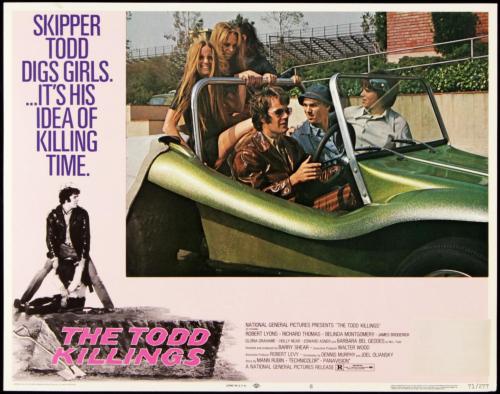
The Todd Killings (1971)

By Richard Winters

My Rating: 5 out of 10

4-Word Review: Pied Piper of Tucson.

Skipper Todd (Robert F. Lyons) is a 23-year-old man who hangs around his local high school and dates many of the teen girls who are mesmerized by his ‘rebel image’. He has no ambitions to work and instead sponges off of his mother (Barbara Bel Geddes) who runs a nursing home while he also dreams of one day becoming a rock star. For kicks he convinces some of his friends to get in with him on murdering a 15-year-old girl just so he can see ‘what it feels like to kill someone’ and they oblige, but then the fear that the others might turn on him causes him to murder even more people.

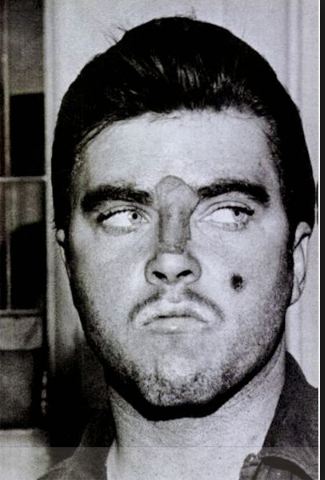
The plot is based on the true story of Charles Schmid, who like the character here hung around a local high school in Tucson, Arizona dating many of the teens there before murdering 15-year-old Aileen Rowe as a ‘thrill-kill’ on the night of May 31, 1964. However, the film does not touch on the extreme eccentricities of Schmid including the fact that he wore cowboy boots filled with flattened cans in an attempt to make him appear taller (and explained the resulting limp as simply a product of getting shot at by the mafia). He also wore make-up to make his nose seem larger, created a large mole on his face so he’d appear more intimidating and even stretched his lower lip with a clothes pin so he would resemble Elvis Presley.

The film though shows none of this and instead tones the character down to the point that he becomes boring. Not only does Lyons look nowhere near as scary as Schmid did, but he plays the part like he was just some lonely kid looking for attention giving the viewer no sense of the allure that he had over the teen girls who flocked around him. Instead of being bigger-than-life the central character becomes flat and forgettable, which is hardly the right ingredient for a riveting drama or thriller.

The murders are not shown, so the viewer doesn’t get a true sense of the horror that went on. The scene where he strangles his girlfriend by gently placing his hands around her neck, which lasts for less than 3 seconds before she falls softly down dead is a perfect example of how overly restrained the whole thing is. The real-life events were shocking, so why create a sanitized film about it when if anything it should’ve been played-up.

The film also begins with the first murder having already occurred, so we get no insight about how he was able to convince his friends to kill the girl. The way he was able to get these otherwise seemingly good kids to do nasty things for him is the most frightening aspect of the case and yet the film glosses over this like it’s no big deal.

Richard Thomas gives a strong supporting performance as Billy Roy who befriends Lyons initially only to eventually turn-on-him. Belinda Montgomery seems quite sincere as his Lyons’ frightened girlfriend and I enjoyed Bel Geddes and Gloria Grahame as the two mothers, but the film’s tepid approach creates a movie that leaves no lasting impression at all.

My Rating: 5 out of 10

Released: October 20, 1971

Runtime: 1Hour 33Minutes

Rated R

Director: Barry Shear

Studio: National General Pictures

Available: DVD-R (Warner Archive)

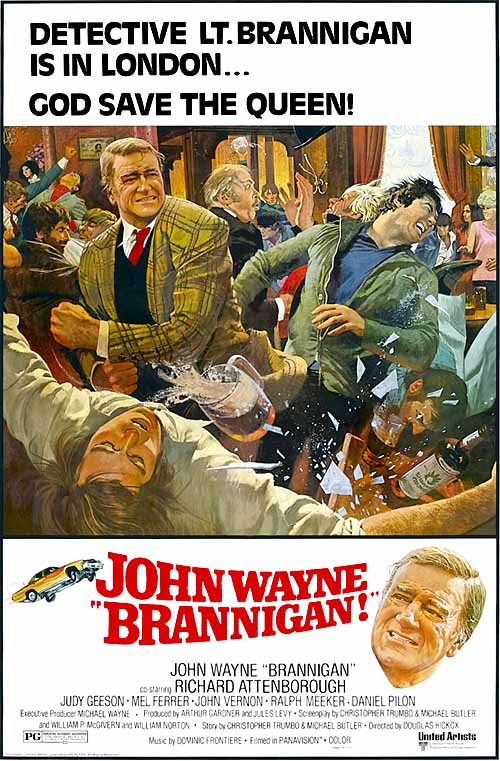
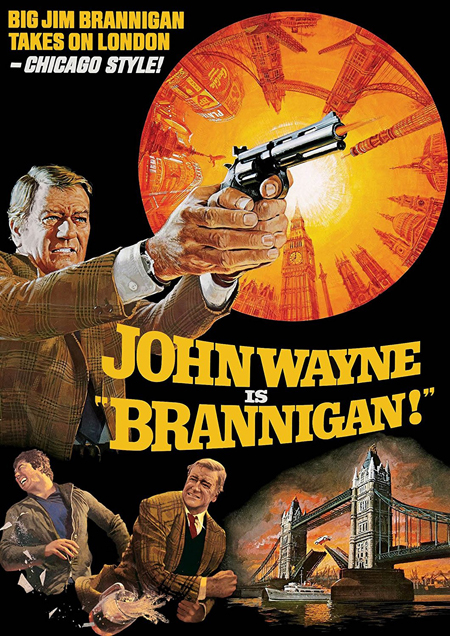
Brannigan (1975)

By Richard Winters

My Rating: 6 out of 10

4-Word Review: The Duke in London

Jim Brannigan (John Wayne) is a gruff Chicago cop hired to extradite mob boss Ben Larkin (John Vernon) from London back to the states, but Brannigan finds that England’s more restrained form of policing doesn’t conform to his and is at immediate odds with British police commander Charles Swann (Richard Attenborough) from the beginning. Things become even more problematic when Larkin gets kidnapped forcing the police to engage in a ransom drop in order to get him back. Brannigan must also avoid a very aggressive hit-man named Gorman (Daniel Pilon) who was hired by Larkin to kill him.

This was Wayne’s second attempt at playing a modern day tough guy policeman, which was mainly in response to being snubbed from the starring role in Dirty Harry. His first flick as a cop was McQ, which was quite derivative and made The Duke look like an old, sickly walking corpse ready to keel over at any second. Here though Wayne is strangely reinvigorated and seems much spryer on his feet. He also doesn’t take himself quite as seriously and spends most of the time eliciting humorous quips and comebacks, but by the end the London scenery and array of supporting characters start to overshadow the big guy until he becomes almost like a co-star in his own movie.

The story is a bit different from a typical Wayne vehicle in that the first half has virtually no action and consists mainly of the police surveillance of the kidnappers and trying to figure out what they’ll do next. One drawn out scene even deals with Wayne and lady cop friend Jennifer (Judy Geeson) following a mail truck around London in order to see where the ransom money, which they think is in the truck, will be taken.

While this subdued approach may annoy the more action addicted Wayne fans I found it to be a refreshing change of pace and I liked how the film analyzed the boring aspects of police work instead of just glamorizing the sexy shootouts. Unfortunately the second-half devolves back into the familiar formula, which includes not only an uninspired car chase, but a big barroom brawl as well. The brawl, which was filmed at the exclusive Garrick Club, is the most off-putting because it’s done in a comically slapstick way that drains all the grittiness and realism that the film tried so hard to create in the first-half right out of the movie altogether.

The sleek looking, dark glasses wearing hit-man, who drives a ritzy looking sports car seems like a character straight out of a James Bond movie. The segment done in slow motion as well as the running joke of having every hotel room that Brannigan stays in get destroyed by those who is after him only helps to cement this as being just another whimsical, uninspired cop outing that despite a first half that showed some promise has nothing edgy or original about it.

The idea of having Brannigan essentially trying to ‘save’ a mobster’s life just so he can bring him back here to go to trial isn’t a very riveting plot point to begin with. The Larkin character is completely unlikable, so the viewer could care less whether he can escape the clutches of his kidnappers or not and the story would’ve been far more compelling had Brannigan been out to save a kidnapped child instead, which along with the other misguided ideas described above probably explains why this thing ended up tanking badly at the box office.

My Rating: 6 out of 10

Released: March 26, 1975

Runtime: 1Hour 51Minutes

Rated PG

Director: Douglas Hickox

Studio: United Artists

Available: DVD, Blu-ray, Amazon Video, YouTube

Ruthless People (1986)

Ruthless People Movie Poster (1986)

By Richard Winters

My Rating: 4 out of 10

4-Word Review: His wife gets kidnapped.

Sam (Danny DeVito) wants to kill his shrewish wife Barbara (Bette Midler) so he can get her inheritance, but is unable to when she is kidnapped by a young couple (Judge Reinhold, Helen Slater) who demand ransom. Sam decides not to pay it, but mistakenly tells his lover (Anita Morris) about his plans and she with the help of her secret boyfriend Earl (Bill Pullman) scheme to use this information to extort him, but then a neighborhood psycho known as The Bedroom Killer (J.E. Freeman) throws everything into chaos by threatening to kill all of them.

The script was written by Dale Launer who at the time was a struggling salesman at a sound appliance store much like Judge Reinhold’s character in the movie, but like with many scripts written by first-timers there’s too many characters and a plot-heavy scenario that throws in one irony after another until it gets convoluted. Too much emphasis is placed on the concept and not enough on the characters with an end result that has no point to it other than just being very crass and over-the-top.

Everyone onscreen is simply a flimsy caricature used to propel the elaborate plot along and nothing more. The only one that is likable is Helen Slater whose nervous wide-eyed gaze makes her presence memorable. The film though would’ve worked better had it focused solely on the contrasting couples as well as having Reinhold and Slater shown working together more instead of Reinhold taking over and pushing Slater off to the side until she becomes almost forgotten.

DeVito is enjoyable, but Midler is annoying especially with her exaggerated facial expressions.  I also didn’t buy into the idea that this woman who is otherwise quite cynical and sarcastic would be naïve enough to believe that her husband still loved her and supposedly ‘worshipped the ground’ that she walked on even when he really didn’t. After living with somebody for 15 years, which is how long their marriage apparently was, you get a pretty clear view of your partner’s flaws no matter how hard they try to camouflage it. Even the most wide-eyed of people would’ve been at the very least suspicious that he might have ulterior motives as there’s always red flags and the fact that this lady was completely oblivious to them only proves how poorly fleshed-out the characters here are.

Spoiler Alert!

The story is overloaded with loopholes too. For instance Anita Morris and her lover Bill Pullman decide to play the tape of what they think is Sam murdering his wife on a VCR inside a TV-equipment store where all the other customers can see it, but why play something publicly that could potentially get them into a lot of trouble? If Pullman was able to afford a video camera, as he was the one who recorded the incident to begin with, then why couldn’t he also afford his own VCR?

It also takes too long for the police to suspect that Sam may have something to do with his wife’s disappearance even though in reality the spouse is always the prime suspect from the get-go. Having 8 police cars openly tailing Reinhold in hopes that he will lead them to his hideout is pretty stupid too. The idea is to not allow the suspect to be aware that you’re following him because otherwise he will just lead the police on a wild-goose-chase, which is exactly what he does here and any savvy veteran cop would’ve predicted that. I realize the filmmakers thought it would be ‘funny’ visually seeing all these police cars chasing the suspect, but it’s instead nonsensical. Every movie needs to have at least one person who is grounded and sensible even if everyone else is kooky. Having everyone behaving foolishly makes the story inane and unbelievable.

Reinhold’s ability to escape from his submerged vehicle after he drives it into a lake is equally questionable. Putting on a breathing apparatus underwater as he apparently does would be quite difficult if not impossible and how exactly was he able to make it seem like it was the Bedroom Killer (who was killed earlier in the film) as the driver of the getaway vehicle instead of himself? For that to happen the killer would’ve had to have been sitting in the driver’s seat where Reinhold was previously. Are we to believe that Reinhold had the dead killer’s body in the trunk of his car and while underwater somehow able to get the corpse from the trunk into the driver’s seat before the police got to it? The logistics of this is dubious, which is why having a scene done underwater showing him going through all of this should’ve been inserted in, but unfortunately isn’t.

End of Spoiler Alert!

Overall despite a few chuckles it’s a superficial mess and nowhere near the acerbic, dark satire that it likes to think it is. I disliked the gaudy Memphis style furniture used in DeVito’s home as well, which gives the production too much of a campy look.  Billy Joel’s ‘Modern Woman’, which gets played over the closing credits, seems to have nothing to do with the main theme and completely out of place. I also couldn’t stand the dresses that Helen Slater’s character designs. The movie acts like she has ‘talent’ and Midler really likes wearing them even though it looks like something you’d put on a clown and nothing I’d ever want to be seen in and I’d feel sorry for anyone who did wear them.

My Rating: 4 out of 10

Released: June 27, 1986

Runtime: 1Hour 33Minutes

Rated R

Directors: Jim Abrahams, David Zucker, Jerry Zucker

Studio: Touchstone Pictures

Available: DVD, Amazon Video, YouTube
The Don is Dead (1973)

By Richard Winters

My Rating: 3 out of 10

4-Word Review: Two Mafia leaders feud.

After the death of his mob boss father, Frank (Robert Forster) finds himself embroiled in the middle of a feud between two rival crime families. Don Angelo (Anthony Quinn) comes to Frank’s aid and agrees to take over the family business and then once he dies everything will go to Frank. Luigi (Charles Cioffi) and his greedy lover Marie (Jo Anne Meredith) are not happy with this arrangement and in an attempt to weaken the alliance they arrange for Don to meet up with Frank’s girlfriend Ruby (Angel Tompkins) while Frank is away in Rome on business. The two immediately hit-it-off and begin a hot-and-heavy affair. When Frank returns and finds out about this he flies into a rage by first beating his girlfriend and then swearing further vengeance onto Don. Don in turn puts out a hit on Frank, which escalates an endless bloody mob war.

During the early ‘70s with the success of The Godfather studios were churning out mob themed films about as fast as they could be produced. Many of them were vastly inferior to Francis Ford Coppola’s masterpiece, but this one may be the worst. The biggest problem is the nauseating violence that takes up the entire second-half. In The Godfather the killings had a lyrical quality that became a cinematic achievement and indelible on the viewer’s memory, but here the shootings are quite mechanical. Instead of being shocking they’re monotonous and impede the film from becoming anything more than just a cheap, uninspired Hollywood rip-off.

The film also lacks a likable character, which creates no emotional bond from the viewer to anyone onscreen nor any concern for who gets shot and who doesn’t. Tony (Frederic Forrest) is the only one with any type of arch as he wants out of the business at the start, but by the end is a hardened crime boss, which is too similar to Al Pacino’s quandary in The Godfather and only further cements this as being a poor man’s version of that one.

Forster is good despite displaying a rather affected accent. Quinn is also okay, but his character has little to do particularly by the second-half when he becomes almost comatose after suffering a stroke. What annoyed me most though was that there was never any final confrontation between the two. The whole thing revolved around a misunderstanding that they had, so a meeting at the end between them seemed almost mandatory, but it doesn’t occur making an already flawed film even more unsatisfying.

Marvin Albert, who was famous for writing the Tony Rome detective novels, penned this script, which is based off of his own novel, but the results are slight. The conflicts between the characters are not riveting and everyone comes off as being quite stupid for allowing themselves to be so easily mislead making the bloodshed that results from it even more grotesque. Maybe that’s the film’s point, but there have been so many better movies on this same subject that there really was no need for this one and whatever message it attempts to convey dies with the rest of the carnage on the screen.

My Rating: 3 out of 10

Released: November 14, 1973

Runtime: 1Hour 55Minutes

Rated R

Director: Richard Fleischer

Studio: Universal

Available: DVD, Blu-ray (Region B/2), Amazon Video, YouTube