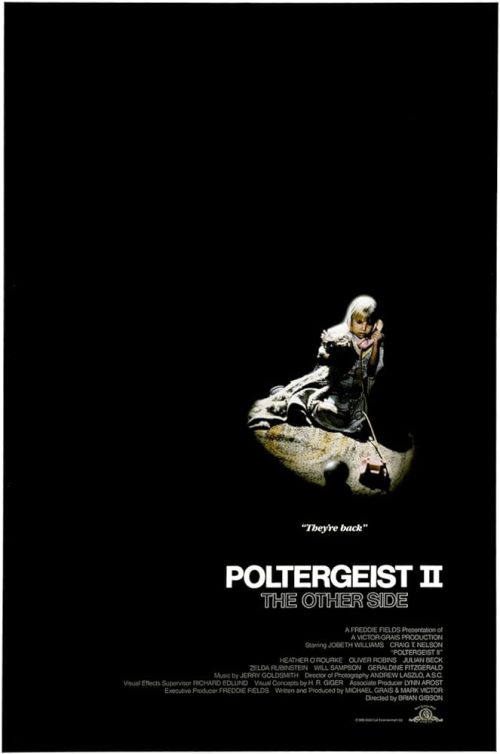
Poltergeist II: The Other Side (1986)

poltergeistII

By Richard Winters

My Rating: 6 out of 10

4-Word Review: Family gets terrorized again.

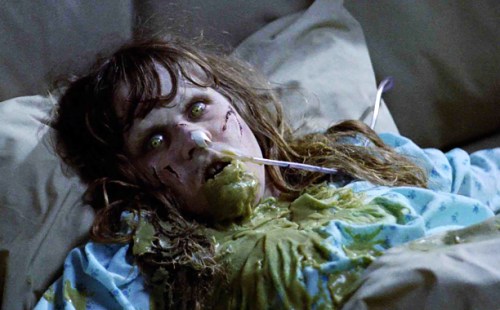
The Freeling family (Craig T. Nelson, Jobeth Williams, Heather O’Rourke, Oliver Robins) has abandoned their old neighborhood in Cuesta Vista where they were traumatized by ghosts and into the house of Diane’s elderly mother Jess (Geraldine Fitzgerald). They hope here their lives will return to normal, but at the site of where their old house once stood a ground crew digs up a cave filled with the skeletal remains of people that were lead by the Reverend Henry Kane (Julian Beck) an insane man who lead his followers to death many years prior because he proclaimed the world was going to end. His spirit though remains restless and he appears in human form to go after Carol Ann by calling her through her toy telephone. The Freeling parents realize they are no match for him, so Taylor (Will Sampson) an Indian shaman is brought in to protect their daughter as well as giving the father tips on how to fight-off the evil spirit.

As sequels go this one isn’t too bad. The script still has enough interesting twists to keep it intriguing and the special effects are greatly improved. I also liked here that we get to see the other world where the spirits live something that was woefully missing in the first. One of my favorite moments is when Steve swallows some Tequila that has a worm in it that is possessed by the spirit of the evil Kane. The worm then grows inside Steve’s body until he has to vomit it out where it continues to grow into large proportions, which is a genuinely freaky moment. Some other good scenes are when Diane gets swallowed up into the ground by skeletons reaching up from the dirt and pulling her in and watching Robbie, the son, get tied up by the metal of his braces is really cool too. It’s unlikely there would be enough metal from his braces to cover his whole body like it does here, but the segment still gets points for its creativity.

The characters though aren’t quite as interesting. The women had stood out in the first installment, but that all gets lost here. Jobeth Williams, who played this groovy, adult flower child who was open to new things and experimenting around, is much more of a subdued mom here behaving like a typical suburbanite mother would, which is boring. O’Rorke is still good and so is Rubenstein though her role is greatly diminished and I wasn’t sure why the Indian character needed to be brought in at all as I would’ve thought Zelda could’ve handled those duties. Sampson’s performance is good, but his role just seemed unnecessary. Domonique Dunne, who played the older daughter in the first one is nowhere to be seen due to her having died in real-life at the hands of her ex-boyfriend, but I still thought they should’ve mentioned something even if it was just in passing like she was away in college to help explain her absence.

On the male end Nelson’s part is much more colorful as in the first one he was rather transparent, but he gets some good lines and manages to completely take over the proceedings though I wished it had been a little more balanced between him and Williams. Julian Beck though who plays the evil preacher stands-out the most. He had been diagnosed with stomach cancer and ended up dying before the production had wrapped, but the illness did help give him a gaunt appearance, which helped accentuate his creepiness.

Logic wise there were a few holes. Having the insurance company completely unaware that Freelings house had essentially gotten eaten-up by the spirits didn’t make sense. I know the idea was that they didn’t want any publicity, but their other neighbors had witnessed the house disappearing too and there’s just no way that someone wouldn’t have leaked that to the press and it becoming a major news story as houses evaporating into thin air in front of many witnesses just doesn’t happen everyday.

Having the boy and girl continue to sleep in the same bedroom looked very off. In the first one they also shared a room, but they were much younger and here the boy already has braces making it look like he’s ready to enter adolescents and he for sure then should be in his own room. The death of the grandmother gets handled in an equally awkward way as the kid wakes up and has no idea what the parents are crying about, but the old woman died in the house he was sleeping in and therefore he should’ve been awakened by the ambulance that came to take her away. In fact we never see the body being removed making it seem that they might’ve just left her there in her bed for all we know and a scene showing the family mourning at her gravesite would’ve been a far more seamless way to have explained (shown) her passing.

Spoiler Alert!

The wrap-up is a bit too lighthearted as it shows Will Sampson driving off with the family’s beaten up car and Nelson chasing after him as they have no other way to get home. The segment though is too comedic and a good horror film should still leave the viewer with a certain bit of unsettling mystery. After all this family had gone through a lot and what’s to say that things were finally really over. The family acts too relaxed when in reality all of them should be going through some form of post traumatic stress. The fact that they act so at ease didn’t ring true as most anyone else would be in a perpetual paranoid state looking over their shoulders every second for fear that the ghosts might have remanifested. A more somber image of them quietly walking away from the sight formerly known as their home with the sound of a wind howling would’ve been more appropriate for this type of story.

My Rating: 6 out of 10

Released: May 23, 1986

Runtime: 1 Hour 31 Minutes

Rated PG-13

Director: Brian Gibson

Studio: MGM

Available: DVD, Blu-ray, Amazon Video, YouTube

Poltergeist (1982)

poltergeist2

By Richard Winters

My Rating: 7 out of 10

4-Word Review: Ghosts terrorize a family.

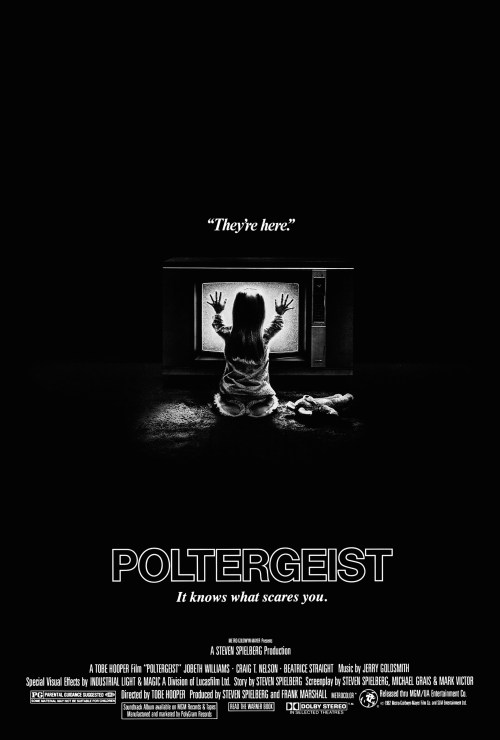
A suburbanite family of five find their idyllic existence suddenly turn frightening when odd, unexplained events begin occurring inside their house. First it’s voices that can be heard coming from their television that only their 6-year-old daughter Carol Ann (Heather O’Rourke) can seem to make out. Then it’s the movement of the kitchen chairs that can glide across the floor without any help. There’s even the shaking of their entire house that they initially attribute to being an earthquake. Things though grow more serious when Carol Ann goes missing after a violent thunderstorm where her voice can only be heard coming through the television. Parapsychologist Martha (Beatrice Straight) and her team of two men (Richard Lawson, Martin Casella) get called in, but they find the conditions too extreme even for them, so instead a short statured spiritual medium named Tangina (Zelda Rubenstein) is hired. She determines that the home is being haunted by spirits who are ‘not at rest’ and may have something to do with the place being built on top of what used to be a cemetery.

The film, which was based on an idea by Steven Spielberg, who also produced, is known more for its behind-the-scenes drama, including the violent and untimely deaths of some of the cast members, which has gotten the production labeled as ‘cursed’, and for supposedly the in-fighting that occurred between Spielberg and Tobe Hooper who was brought in to direct when Steven was contractually unable to due to also directing E.T. From my perspective I can see it going both ways. It certainly has the strong atmosphere of a Hooper flick, but also done in a way so that even children could watch it and still not be too traumatized. Spielberg, who did all the casting and also storyboarded each and every scene, was known to want to make movies that the whole family could see and always wanted to keep his films, even his thrillers, at a PG rated level.

For what it’s worth I found it gripping, despite the slow start, from beginning to end and refreshing that an old fashioned ghost story was being brought back into the mainstream as too many horror movies of that period were slasher flicks, which was hurting the genre. This film emphasizes story and uses both imaginative effects and plot twists to keep it fun and surprising throughout.

Intentional or not the female characters were some of the movie’s stronger elements. O’Rourke of course, who’s become the face of the franchise, is adorable and with her bright blue eyes and blonde hair a certain angelic quality amidst the dark undertones. Rubenstein is a delight as both her height, voice and glasses, which seem to envelope her entire face, makes her presence quite memorable. Straight though is effective too as an elderly woman who at times seems ready to take on the ghostly presence and at other moments quite shaken up by them. Jobeth Williams though I found surprisingly fun as the sort of hip wife/mother who smokes pot and initially finds the weird events that go on more fun than scary. Only the presence of Dominique Dunne seemed unnecessary as she’s not in it all that much and goes off to either her friend’s house, or boyfriend’s through most of it only to conveniently reappear right at the end. Her jet black hair clashes with O’Rourke’s bright blonde, which makes for an odd gene anomaly to have sisters with such contrasting looks though this later gets explained in the book version as Dunne being the father’s daughter from his first marriage.

The special effects are a letdown. The ghostly hand reaching out of the TV-set looked too much like animation as did the very fake looking tornado, which appeared almost like it had been drawn in via black magic marker directly onto the film negative. The flying toys in the children’s room had a bit of an animated quality and the scary tree that sat outside the boy’s window looked too odd and not like any typical tree I’ve ever seen. It’s also disappointing that we never see this other dimension that Carol Ann gets trapped in we observe objects going in and out of it, returning with some sort of weird red substance that resembled raspberry jello, but the viewer really should’ve experienced this unique other world with the characters that go through it.

The TV stations signing off for the night while playing the National Anthem is something today’s audiences won’t understand as everything is 24-hours, but in the old days stations only broadcast during the day, but even here it’s a bit questionable. I was around in the early 80’s where most stations, especially in the big cities, were already running programs 24 hours a day making the sign-off angle, which is very prominently featured, dated even for then. Also, when stations did sign-off as I remember it would be a black screen that you’d see and not just static like it gets portrayed here. There was also such thing as cable back then making the prospect of static even less likely and you’d think a family that could afford a nice house like that would also have enough for a cable box.

Spoiler Alert!

The ending is a bit problematic as it has the two young kids returning to sleep in the bedroom that was once haunted. This is because Tangia states that the home has been ‘cleaned’ of the ghosts, but turns out not to be true. In either event I can’t imagine an adult let alone a kid being able to relax, or even step one foot in a room that had so many freaky things happen in it. I’d think the parents would be too nervous to even let them go in, so seeing the kids back in there like what occurred before was ‘no big deal’ proves unrealistic to say the least.

My Rating: 7 out of 10

Released: June 4, 1982

Runtime: 1 Hour 54 Minutes

Rated PG

Director: Tobe Hooper

Studio: MGM

Available: DVD, Blu-ray, Amazon Video, YouTube

My Friends Need Killing (1976)

friends1

By Richard Winters

My Rating: 4 out of 10

4-Word Review: Vet. stalks war buddies.

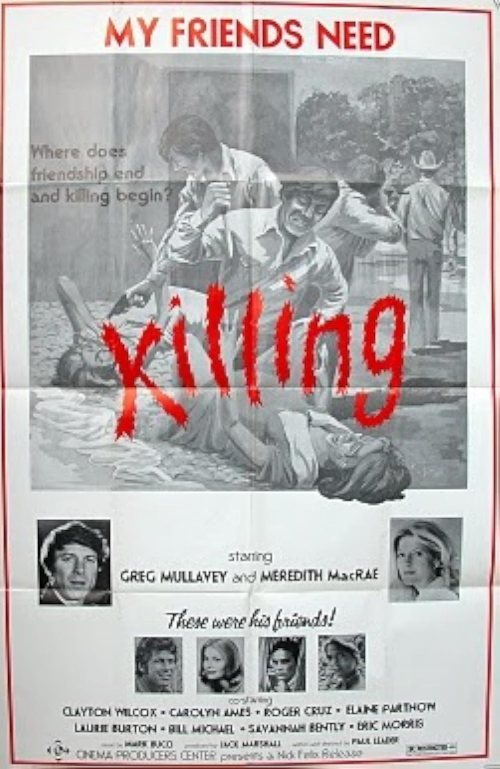
Gene (Greg Mullavey) is a Vietnam Vet. who’s come home after the war, but finding it hard to readjust to civilian life. He’s plagued by memories of not only the war, but some of the crimes that he and his comrades did while over there including the annihilation of a village and gang rape of a woman. He decides that the only answer is to seek out dark justice by visiting with his old buddies one-by-one in their homes and then using the opportunity to kill them when the time is right. Gene’s wife Laura (Meredith McRae) is aware of her husband’s tormented dreams, but not his homicidal plans. She works with Dr. MacLaine (Greg Morris), a psychiatrist, to track Gene down in order to stop his madness and get him the mental help that he needs.

In 1969, Paul Leder, whose attempt at an acting career had stalled, decided to take a stab at directing, which initially didn’t fare any better. His first feature, where he had Mullavey also star, was the absurdist comedy Marigold Man, about a guy named Harry who dreams of planting marigolds from coast to coast, which quickly fell into obscurity. He then hit on the idea of doing a horror film, which he felt, if done right, could do well under the low budget constraints. His first feature, which also had Mullavey in a supporting part, was I Dismember Mamathat fared a bit better than the comedy and enough to gain a cult following. Leder then reverted back to doing two comedies including the notorious Ape, an attempted parody of King Kong, that became a big embarrassment before eventually returning back to horror with this film.

On the surface it’s not bad given the limitations. It’s obviously inspired by Bob Clark’s Dead of Night, that had come out 5 years earlier and had a similar theme of a war vet. unable to get the horrors of what he went through out his mind. That one won some critical acclaim and a cult audience while this one fell through the cracks. For Paul Leder standards though it’s surprisingly watchable. Mullavey gives an effective performance where you sympathize with the man and his torment even as he goes through with his killings. The flashback sequences have a haunting quality and the film is, if anything, adequately gritty.

The killings though are where things get off-kilter. A few of them are disturbing like when he ties up one of his old buddies, while also shooting him in the arm, and then forces him to watch the rape of his wife before killing them both. Some of the others though fail to have the same dark punch. In one instance all he does his hand his old war friend a bottle of pills and tells him to swallow them, which isn’t exactly tense, while another moment has him helping to deliver a woman’s baby. There’s also a scene where Mullavey ties up his victim and then has the man’s arm poked with a syringe where he slowly bleeds to death, but horror movies work better when we see the action of him attacking the other man and just cutting away to him already tied-up misses the potential for excitement.

McRae, who at the time was Mullavey’s real-life wife, gives a poor performance particularly her anemic sounding crying. The use of music is bad too. During the killings it reflects the pounding score you’d expect in a horror flick, but in-between it has a melodic quality that you’d hear in a breezy comedy. The editing, which was also done by Leder, is choppy and too many slow parts in-between the violence. The film, which has a few interesting moments, fails to hold interest all the way through. It’s too talky with a lot of extraneous dialogue that could’ve been cut out. Having the only sound being the voices that Mullavey hears inside his head would’ve worked better.

My Rating: 4 out of 10

Released: December 10, 1976

Runtime: 1 Hour 13 Minutes

Rated R

Director: Paul Leder

Studio: Cinema Producers Center

Available: DVD-R (dvdlady.com)

Horrorween Part 12 (2023)

horror

By Richard Winters

My Rating: To Be Determined.

4-Word Review: Horror movies all month.

It’s that time of year where we here at Scopophilia dive into the horror movie vault and bring out all those creepy classics (and not so classic) gems (and non-gems) from the 70’s and 80’s. Each day we’ll strive to bring you a new horror flick for review some you may have heard of and others you most likely haven’t. This year we’ll get into the ones that spawned sequels and also a lot of European horror not only from England and Italy, but also an experimental oddity from Germany. We’ll even explore Asian horror looking at 2 from Japan including a vampire one. Yes you read that right a Japanese vampire flick. If that doesn’t pique everyone’s interests then nothing else will. The fun and chills begins tomorrow and runs all the way through to the 31st where we will then return to our regularly scheduled programming.

Haunted Honeymoon (1986)

haunted

By Richard Winters

My Rating: 1 out of 10

4-Word Review: Boyhood home is haunted.

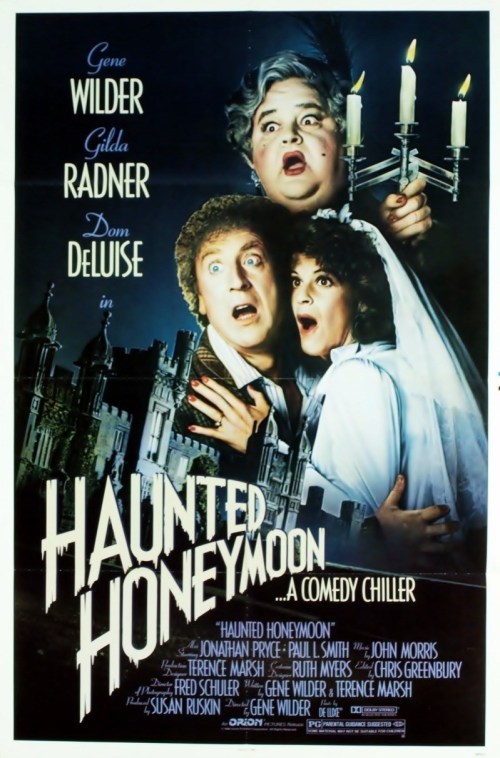
Larry (Gene Wilder) and Vickie (Gilda Radner) are performers on a popular radio show who are also engaged to be married. Ever since the wedding date has been set Larry has been going through a variety of odd behaviors including flubbing his lines and even making incoherent statements during the production that go over the air. Vickie thinks it’s just his nerves about getting married, but Dr. Paul Abbott (Paul L. Smith), who also happens to be Larry’s uncle, thinks it’s much more than that. He feels the only way to cure him will be shock therapy, or in this case to ‘scare him to death’. Since Larry plans on having his wedding at his boyhood home, which is an old rural castle, the doctor feels this will be the perfect spot to engage with the frights. Everyone on the premises is in on the plan, eventually even including Vickie, but as the make believe haunting commences it soon becomes obvious that there’s some real scares too that frightens everyone.

Gene grew up as a child reportedly scared of horror movies and tried to avoid them, but did enjoy what he called ‘comedy chillers’, which were movies that had some scares, but also balanced with laughs and sought out to create one of his own. He started writing the script while he was starring in Silver Streak, but then lost interest and put it away. While he was filming Hanky Pankyin which he met Radner whom he later married, he got interested in continuing with the script especially at her insistence as she felt it would make a great vehicle for the two.

The problem with it is that he created something completely out of touch with the times. Haunted houses, werewolves and other elements from 1930’s movies had all been parodied for decades to the point it had almost become a cliche in itself. This film adds nothing fresh to the mix and feeds off of gags and stunts that had been done hundreds of times making it lame right from the start. Had it been more updated to add in elements from modern day horror movies, or changed the setting so it wasn’t just the predictable rural castle complete with thunder and lightning outside, then maybe it might’ve had a chance, or at least piqued people’s interests, but as it is here the stuff is routine and lacking in originality.

The biggest shock is that you have Dom DeLuise in full drag and yet he isn’t funny at all. Wilder got the idea to use him for the part when he saw him impersonate Ethel Barrymore years earlier at a dinner theater he attended, but the mistake was that Gene wanted him to literally play it straight, but why put a guy in full female get-up if you’re not going to give it any type of payoff? It’s a shame too because I’ve found Dom to sometimes be quite hilarious and even be the scene stealer in some of his other films. Jonathan Pryce, who was also in the movie, stated how the entire cast and crew would sit around and let Dom entertain them between takes, but whatever he said and did off camera was missing onscreen and even the duet that he sings with Gilda fails to elicit even a chuckle.

The story creates this big set-up and then goes nowhere with it. Gene gives himself a few amusing bits and I suppose Bryan Pringle, who plays the aging butler named Pfister, and even Ann Way with her distinctive hawk-like facial features, have a couple of funny moments, but everything else falls flat including Radner who isn’t funny at all and overall given a very thankless part by no less than her own husband.

The film lost money at the box office and despite a month of promotions and ads it only managed to remain in theaters for week before it was pulled. It polled poorly amongst critics and audiences alike, which is probably the only real funny thing is what occurred behind-the-scense as the studio, Orion Pictures, refused to screen it for critics before giving it a general release. Usually when this happens it’s a sign that the studio heads know they have a stinker on their hands, but they denied this saying they were ‘very comfortable’ with the movie and ‘behind it 100 percent’ and only avoided the advance screening because there had been a ‘tendency lately by critics to be quite vicious about films’ in general and they didn’t want to ‘cater’ to that, but you’d think if they really knew they had a great movie their fear of ‘vicious reviews’ wouldn’t have been a factor.

My Rating: 1 out of 10

Released: July 25, 1986

Runtime: 1 Hour 22 Minutes

Rated PG

Director: Gene Wilder

Studio: Orion Pictures

Available: DVD, Blu-ray

‘Gator Bait (1973)

gator

By Richard Winters

My Rating: 3 out of 10

4-Word Review: Woman fights off rednecks.

Desiree (Claudia Jennings) is a peasant woman living in the swamplands of southern Louisiana. To help her bring in an income she takes part in poaching of snakes. Deputy Billy Boy (Clyde Ventura) and Ben (Ben Sebastian) are sitting in a boat in the swamp waters when they catch Desiree in the act of poaching and decide to chase her down and arrest her, or try to use it to their advantage by getting some sex out of her in return for not taking her in. Desiree though proves to be more cunning than they expected as she out races them in her boat and then when she is finally cornered she throws the bag of snakes that she has into their boat, which allows her time to escape. The deputy then must fight off the snakes by using his gun to shoot them, but in the process accidentally shoots and kills Ben. He later tells his father, Sheriff Joe Bob Thomas (Bill Thurman) that it was Desiree that shot Ben and not him. The Sheriff then goes to the boy’s father (Sam Gilman) and when given the news the father decides to chase Desiree down himself with the help of his two other sons (Douglas Dirkson, Don Baldwin) and exact a violent revenge.

This was the 7th film written and directed by Ferd Sebastian and the 4th that he did alongside his wife Beverly. It’s most likely their best known effort and came about through their friendship with Claudia Jennings. Jennings, a former Playboy model, acted in one of their other films, another B-exploitationer known as The Single Girls, and struck-up a friendship with the husband and wife filmmakers and asked them to come-up with a script in which she could star. Beverly then wrote this script seemingly overnight, I’m not sure if it was actually written in that short of time, but judging from its creativity, which is very low, it’s not that hard to believe. It was then shot in a matter of 10-days in March of 1973 at Caddo Lake, which is a state park and bayou that borders Texas and Louisiana.

The film does start out with a good speed boat chase and it captures the swamplands in vivid detail and with the exception of one scene that takes place in the town of Thibodaux, Louisiana, everything else gets done in the swamps making it seem like its own little universe. The Sebastains do wisely keep their son Tracy Sebastian, from uttering any lines of dialogue as he plays Desiree’s mute kid brother who had his tongue cut-out, which is good as he later starred-in On the Air Live with Captain Midnight and it’s just a shame he couldn’t have played a mute there as well as he gives what I consider one of the worst performances ever put on screen, but here since he can’t talk his marginal acting ability is not as apparent.

Despite the few good points the movie is otherwise a failure where the tension wanes instead of intensifying as it should. Part of the reason for this is that the story spells everything out right away and offers no surprises, or twists. The boat chases are diverting at first, but soon turn stale as they become too prevalent and almost like a loop reel where we’re just seeing the same thing done over and over again with nothing new getting thrown in. The characters, particularly the male ones, are written as being extreme southern caricatures who are too one-dimensional to being even remotely interesting and I genuinely felt sorry for actors Gilman and Thurman who had already been in the business for many decades at the time and had even been in some better financed studio films, so to have to come down to starring in this brainless dreck had to feel like a low point, but I guess a paycheck is a paycheck.

Jennings’ presence doesn’t add much as she’s seen only sporadically and most of the film time is given to the bickering male yokels. She doesn’t, despite her past of being a Playboy Playmate, appear nude as that gets left to Janit Baldwin, who plays her kid sister Julie, which will disappoint male viewers who will most likely come into this expecting the pretty Jennings to be the one who gets unclothed. When Claudia does speak it’s a trainwreck too as she sounds like someone from Europe instead of a rural southern chick. Her character is also poorly defined and doesn’t really grow, or fleshed out enough to make her seem like a real person, but instead remains more of an enigma.

Spoiler Alert!

Some on IMDb describe this as a early variation of I Spit on Your Grave, but that really isn’t accurate. In the Meir Zarchi flick the rape attack takes up the majority of the film time while here the attack isn’t even on the main character, but instead the younger sister, which is also quite brief. The female character doesn’t kill off the men one-by-one like in the other one as here the men end up killing each other for the most part, with the character’s younger brother taking care of one of them, and the final one is left to live.

Had this been more violent and explicit I might’ve forgiven the rest, but overall it’s quite tepid. It’s basically a tease of a movie that promises way more than it delivers and it’s so entrenched in stereotypes that it makes you feel like you’ve seen it, or something quite similar, a hundred times before. Sure there’s a ‘surprise twist/reveal’, but this one could see coming early on as the father of the boy who is killed and who goes after Desiree with a vengeance keeps commenting on how attractive he found her mother, which doesn’t take a genius to read into that and know most likely what he’s implying. In any case it’s not much of anything even on a B-movie level, but nonetheless got made into a sequel in 1988 though without star Jennings who died in a car accident in 1979.

My Rating: 3 out of 10

Released: October 12, 1973

Runtime: 1 Hour 28 Minutes

Rated R

Director: Ferd and Beverly Sebastian

Studio: Sebastian International Pictures

Available: DVD-R

Stardust Memories (1980)

stardust2

By Richard Winters

My Rating: 5 out of 10

4-Word Review: Director unhappy with career.

Sandy Bates (Woody Allen) is going through a lull in his career. While he’s had success in the past at making comedies he’d like to now move into more serious material that’s dramatic in nature though his many fans and studio heads insist he should stick with what made him famous and what the public wants. While attending a film retrospective of his movies at the Stardust Hotel he ponders about his life. He remembers a fling that he had with a beautiful actress named Dorrie (Charlotte Rampling) that didn’t work out due to her insecurities about herself and her career. He also meets up with a young woman named Daisy (Jessica Harper) whom he’s attracted to and openly flirts with even as his current lover Isobel (Marie-Christine Barrault) flies into town and announces that she’s left her husband and wishes to commence with a committed relationship with Sandy whom she expects will also help with raising her two children. As Sandy ponders what to do next he finds out that the studio has reshot a different ending to his latest movie, which further sours him on the business.

Many critics at the time gave this negative reviews feeling it was too self-indulgent and more like a personal diary than a movie. I did though like the black and white photography by Gordon Willis, which is so pristine that just watching the characters walking into an empty room with sunlight pouring through the windows looks dazzling. Allen’s comments on the film business are honest and relatable and it’s interesting to see that even when one becomes a proven commodity he can still be pressured by producers to change his films into something he’s not happy with simply for the sake of having more of a commercial appeal, which proves no matter how successful, or ‘big-name’ you get that’s one obstacle that seemingly will hamper everyone. Allen’s constant run-ins with his fans, which becomes the film’s running joke, and their odd requests as they pander to him in hopes of making it big in the business themselves are quite funny and true to form.

The story though is structured in such a fragmented way that it’s hard to get into. Sandy’s relationship with Dorrie is especially confusing. For one thing he comes onto her while she’s on a film set by telling her how beautiful she is, which seem to be the oldest and corniest come-on lines in the book and yet she’s fully taken aback with his compliments and this immediately turns into a relationship though in reality most women would likely give the guy the eye-roll and a quick rebuff. This though may be part of the joke by showing that because Sandy is a well-known director he’s able to get away with the corny lines that other guys wouldn’t, but even so these scenes are strained and annoying.

I felt Sandy’s conversations with Daisy was far more interesting and his budding relationship with her should’ve been explored much more, but isn’t, which wastes away a fabulous performance by Harper who plays the one character in the movie that I found relatable. Barrault is engaging as well particularly the scene where she does her facial exercises and having the story focus on his on-going relationship with her while also seeing Daisy on the side would’ve created the intriguing juxtaposition that was needed, but otherwise missing. Dorrie on the other hand comes-off like a caricature of just about every Hollywood starlet out there making her moments contrived and unnecessary.

While there are a few funny moments with the best one being Sandy’s close encounter with a group of space aliens it’s never enough to carry the picture. Having a more conventional storyline instead of the dream-like tone would’ve allowed the viewer to get more into what was going on emotionally versus sitting through what seems like an experimental movie that never quite catches its stride. Having Allen play somebody that wasn’t so much like himself would’ve helped too as it’s almost a joke to think he’s playing anyone else and should’ve just called himself Woody and made it more like a pseudo-documentary, which is what it ultimately is anyways.

I was though struck by the one part where Dorrie comes home furious with Woody for staring at her 13-year-old cousin the whole night they were at dinner and implying that he may have unhealthy feelings for her and thus essentially at least mentally ‘cheating on her’. Woody doesn’t really put up much of a defense, which I found even more amusing since 30 years later in real-life he got accused of improper behavior. Now, I wasn’t there and don’t know what happened and don’t want to make it sound like I’m trying to make conclusions, or taking sides. In the eyes of the law he’s innocent until proven guilty in a court of law, but I still couldn’t help seeing the irony. Maybe it was just a coincidence, or maybe he was subconsciously revealing through the Sandy character something he may harbor. Hard to say, but given the hindsight it’s difficult to walk away and not have that moment stand out.

My Rating: 5 out of 10

Released: September 26, 1980

Runtime: 1 Hour 28 Minutes

Rated PG

Director: Woody Allen

Studio: United Artists

Available: DVD, Blu-ray, Amazon Video

The Last Remake of Beau Geste (1979)

beaugeste

By Richard Winters

My Rating: 4 out of 10

4-Word Review: Brothers join the army.

Sir Hector Geste (Trevor Howard) decides to adopt a son to be his rightful heir and carry on the family name. He goes to an orphanage where he spots Beau (Michael York) a dashing young boy who shows immense prowess. Hector immediately decides he wants him, but it comes with the caveat that he must also take on Beau’s twin bother Digby (Marty Feldman) who’s not nearly as handsome, or brave. After bringing both boys home Hector then gets married to Flavia (Ann-Margret) a much younger woman who’s more in-love with the Blue Sapphire diamond that’s in Hector’s possession than Hector himself. In order to keep Flavia from absconding with it Beau decides to take it out of the family home and bringing it along with him to Africa where he joins the French Foreign Legion. Digby eventually joins and they go on to have many adventures, but Flavia catches up with them determined to get the diamond using any means necessary.

The film is based on the 1924 novel of the same name written by P.C. Wren that had already been made into a movie three other times: in 1926 starring Ronald Coleman, 1939 starring Gary Cooper, and finally in 1966 starring Guy Stockwell. In 1976 when Marty Feldman signed a 5-picture deal with Universal to write, direct, and star in any film project he choose he decided to do a parody on a film he had seen growing up. He mistakenly thought it was Beau Geste, but came to realize once he watched the movie that it was really The Four Feathers that had a similar storyline and came out around the same time. He eventually went with doing this version since he felt ‘The Last Remake of the Four Feathers’ didn’t sound right.

The production, which was filmed in both Ireland and Spain, was met with many obstacles, including having Feldman getting sick during the shoot and putting the production on-hold for many weeks. It eventually went over budget and over schedule and the studio was not happy with Feldman’s final cut and determined to re-edit it while giving Feldman a 2-week vacation under the guise of letting him rest and recuperate. When Feldman returned and found out what the studio had done he became irate, so the studio heads decided to make him a deal; they would show both versions to a test audiences and which ever one rated better would be the one that would be released. Feldman agreed to this and to the studios shock Marty’s cut got much higher ratings, but the studio then went back on their word and released their version instead, which did not fare well with either the critics, or public. To this day Marty’s version has never been seen, but by only a few people even though those that have viewed say it’s much funnier and efforts have been made to find it and give it a proper Blu-ray issue though this has never come to fruition as of yet.

As for this version it’s okay, but it starts out better than it ends. There’s some funny gags here and there, but the humor tends to be quite broad and many of the jokes fall flat especially after the midway point. The best moment comes when Feldman splices his character into the 1939 film version and we see his character speaking to Gary Cooper and they even share a scene together, which I found to be quite innovative for the time period. Everything else though is hit-or-miss and suffers from not enough people being familiar with the source novel and thus the in-jokes involving the story will most likely go over  most viewer’s heads it also makes many changes from the original plot with the biggest one being that in this movie there’s only 2-brothers, but in the book there was 3.

The array of famous faces making cameo appearances is fun for awhile though I felt Peter Ustinov camps it up too much as the evil General Markov and the part would’ve been better served had it been played by Roy Kinnear who instead gets wasted as Markov’s assistant. Howard is quite amusing as the elderly father and I wished he was in it more, but ultimately his character gets confined to his bed for the second and third act. Ann-Margret offers some sexiness, but really has nothing to say or do that’s funny until the very end when she tries to challenge a guy to a fist-fight, which should’ve been played-out more. Terry-Thomas gets some work before his Parkinson’s condition, which is very obvious here with his trembling left hand, became so severe that it forced him out of acting and into a retirement home not more than a year after this was filmed.

Feldman himself is quite good, but I felt he needed to be seen more, which is the biggest problem with the movie in that it’s neither character nor plot driven. Too much nuttiness and wackiness for its own good. If the comedy had been better disciplined and a smaller cast it would’ve worked better, but the barrage of constant craziness all in the name humor eventually gets overblown.

My Rating: 4 out of 10

Released: July 15, 1977

Runtime: 1 Hour 25 Minutes

Rated PG

Director: Marty Feldman

Studio: Universal

Available: DVD-R (Universal Vault Series), Blu-ray

Hollywood Vice Squad (1986)

hollywood2

By Richard Winters

My Rating: 0 out of 10

4-Word Review: Trying to stop prostitution.

Based supposedly on actual police cases the film consists of three different scenarios that get interwoven throughout. The main one deals with a distraught mother (Trish Van Devere) who comes from the Midwest to Hollywood in search of her teen daughter (Robin Wright) who’s run away. Police Captain Jensen (Ronny Cox) informs her that her child may have slipped into prostitution, which she refuses to believe. The other two stories deals with a small town racketeer (Julius Harris) who runs a shady hustle out of his home and finds himself being harassed by both the cops and the mob. The third segment focuses on two bickering cops (Evan C. Kim, Joey Travolta) who try to stop various prostitution situations from occurring by implementing stings, which mostly prove to be inept.

The project is a misguided attempt to take Vice Squadwhich was written by the same screenwriter that did this one, Kenneth Peters, and turn it into a comedy, or at least throw in humorous elements in between the action. While I was no fan of the first one, as I found the topic in general to be uninteresting, it at least gave off a gritty feel, but this thing can’t even do that. The humor is sporadic and while some of the car stunts are okay everything else is a bore and the film offers no new insight into what is otherwise a very tired and cliche subject.

Frank Gorshin was only one of two things that I liked. Gorshin of course is best known as an impressionist and for his Emmy Award winning performance as the Riddler on the ‘Batman’ TV-show from the 60’s, but he’s also done a lot of acting roles outside of that, which were quite compelling. This one required a lot of sliminess, which he’s more than able to provide with some of it ad-libbed that makes it all the better. He even during a couple of segments offers his trademark, spontaneous Riddler laugh, which is great. The only problem with his presence is that supposedly the police are unable to find him in order to bring him in for questioning in regards to the mother’s missing teen daughter, which didn’t make a whole lot of sense since he works and lives out of a giant, gaudy mansion that most anyone should’ve been able to easily spot.

I also really enjoyed Carrie Fisher who ended up satirizing her experiences filming this in her novel and screenplay Postcards from the Edge. She had just gotten out of drug rehab when she was offered the part, but studios were reluctant to give her work and director Penelope Spheeris really had to go to bat for her, but the effort was worth it. She plays the only character that’s likable and she should’ve been given the lead and had the whole thing revolve around her exclusively. With that said though the case that she’s on, trying to put a halt to a porn production that’s supposedly employing a minor, doesn’t totally work as the kid they’re trying to save has a boyish face, but a body that made it seemed he was most likely over 18 and I was fully expecting the cops, who raid the production without a search warrant, to learn this lesson the hard way, but we’re never shown any finality to it, so the viewer doesn’t know. Also the scene where she sneaks into the sleazy producer’s garage and gazes at adult magazine covers that he has stored in a box, which features no nudity and simply depicts models wearing generic leather bondage outfits and she grimaces like she’s looking at something ‘extreme’ seemed rather silly.

The storyline dealing with Van Devere’s quest for find her daughter are unintentionally laughable. What baffled me was the way she would walk through these really trashy areas filled with dangerous looking people and appear completely content and at ease. If she’s from a sheltered small town then seeing these seedy areas should make her quite shocked and frightened and these are the reactions we should be seeing on her face. Also, she’s a good-looking milf and I was surprised some of the creepy men didn’t attempt to accost her as she ambled by them. The casting of Robin Wright as her runaway daughter, in her film debut, is problematic too as she looks to be over 20 and for shock value you really need to cast someone who’s 16 or 17 and looking it in order to create that true loss of innocence image.

I’ve always been curious why people who get into the vice squad work feel it’s worth it. The characters in the film even admit that these hookers and pimps will be right back out on the streets the next day even if they manage to make a few arrests, so why keep on spending so much time and effort if it’s really not making a difference? Have one of the police agents ponder this would’ve given the story an extra dimension that it needed.

It seemed to be almost cruel that they would stop a goofy old man, amusingly played by Marvin Kaplan, from having sex with a streetwalker who was willing. Clearly this was the only way the old guy was going to find any action, so if he’s going to pay and the sex worker, who is of age of course, is willing to perform then why not consider it a basic capitalist business transaction and be done with it? Spending so much effort trying to stop things like this when so many worse things are going on in is what makes the whole thing come-off as petty and trivial.

If anything the storyline involving Fisher’s attempts at putting a halt to what appeared to be a child porn racket should’ve been the central plot. This is something most if not all viewers could get behind and it’s a shame that it gets watered down here and then lumped in with other stuff, which isn’t compelling at all.

hollywood1

My Rating: 0 out of 10

Released: February 28, 1986

Runtime: 1 Hour 41 Minutes

Rated R

Director: Penelope Spheeris

Studio: Cinema Group

Available: DVD, Tubi, Plex, Amazon Video

The Day of the Dolphin (1973)

dolphin2

By Richard Winters

My Rating: 3 out of 10

4-Word Review: Training dolphins to talk.

Jake Terrell (George C. Scott) along with his wife Maggie (Trish Van Devere) run a remote island research station where, along with a small team of researchers, try to teach dolphins to communicate with humans. They’re prime subject, which they’ve been working with for 4 years, is Alpha whom they’ve successfully trained to speak some English words, but when they team him up with another dolphin named Beta he goes back to his old ways of communicating and no longer speaks with Jake, or his team. Things become further hampered when Curtis (Paul Sorvino) arrives on the island supposedly under the guise of being a journalist, but in reality he’s a spy there to infiltrate what Jake has been doing with the dolphins and report back to a secret government organization who want to then use the dolphins for their own nefarious means.

With the early success of director Mike Nichols and screenwriter Buck Henry, especially The Graduate, it seemed like these two could do no wrong and they both became a much sought after Hollywood commodity and given many top project offers. This production though came crashing down horribly and stymied Nichols career, which had previously been skyrocketing, for the rest of the decade as he helmed only one other film after this during the 70’s before finally getting his reputation back in order with the critically acclaimed Silkwood.

This thing comes-off as a misfire almost immediately and the biggest problem are the dolphins. There’s just so much they can do, liking mainly jumping in and out of water, until it becomes really boring. The long dream-like segment of watching Jake swim around in the tank with the dolphin adds nothing and got so prolonged that it practically put me to sleep. The only part where the dolphins did hold my attention was when Jake decides to split the two up where Beta is put in a pool on one side and Alpha the other and a steel partition between them. This then causes the dolphins much stress as Alpha angrily smashes his tail repeatedly against the partition in anger, but to no avail. While I did find this moment to be rather intense it does backfire in a way in that it makes Jake and the other researchers seem cruel and you start to not like them, which I don’t think was the filmmaker’s intent.

Having them learn to talk was misguided and makes it seem like a silly flick for kids with no barring in reality. Initially I was okay with them learning a few words as it came-off like they were parrots repeating sounds that they had heard, so it was borderline plausible, but then having it graduate to the point that he and others can have ongoing conversations with them and even ask them questions is when it starts to get too absurd for its own good.  In fact the only moment in the film that’s truly fascinating to see is when a mother dolphin gives birth using actual footage, which made me believe this would’ve been better off had it been done as a documentary and the fictional story left out completely.

Sorvino does add some energy with his scenes and pretty much outclasses Scott, who with his $750,000 salary, which would equate to $5,484,886 in today’s dollars, is quite dull and he manages to get completely upstaged by even the dolphins themselves. All of the main characters are quite one-dimensional, especially Van Devere who seems to agree with Scott on everything and echoes whatever point-of-view he has making her presence completely unneccesary as she’s simply him in a female form.

Having one of the research crew members turn out to being a spy doesn’t work either as the viewer is given no forewarning about this. We’re just informed later that this individual had betrayed them, but a good movie should offer hints upfront that a traitor may be in their midst and thus allow the audience to become more of an active participant as they try and figure out which of them it is. The secret government organization thing gets equally botched. A better scenario would’ve had a former friend, or associate to Jake turn on him and seek revenge by trying to destroy the research facility and all of their findings. He would be constantly lurking about, which would’ve added more ongoing tension that is otherwise lacking and given the bad guy more of a personality versus the bland government agents that are too generic to be either frightening, or memorable.

My Rating: 3 out of 10

Released: December 19, 1973

Runtime: 1 Hour 44 Minutes

Rated PG

Director: Mike Nichols

Studio: AVCO Embassy Pictures

Available: DVD, Blu-ray