Wolf Lake (1978)

wolf lake 1

By Richard Winters

My Rating: 2 out of 10

4-Word Review: He doesn’t like deserters.

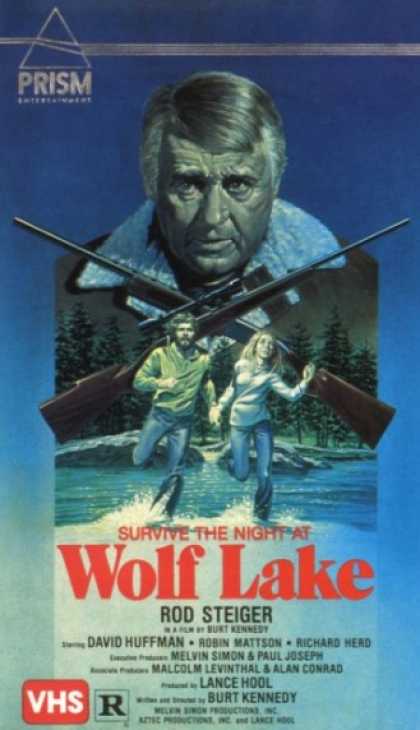
Charlie (Rod Steiger) is a hard-bitten conservative man who lost his 23-year-old son in the Vietnam War. He likes to vacation with a couple of his middle-aged buddies Wilbur (Jerry Hardin) and George (Richard Herd) at a remote Canadian hunting lodge. However, this time when they arrive they find that the regular lodge owner is not there and instead it is being run by a young man named David (David Huffman) and his pretty girlfriend Linda (Robin Mattson). Charlie and David almost immediately are at odds as they both share a wide variance in age and political leanings. What is worse is the fact that David is a war deserter and once Charlie finds out about this he flies into a rage of psychotic proportions, which culminates in a violent night of terror for both David and his girlfriend.

The film was written and directed by the normally reliable Burt Kennedy who is better known for doing westerns. After watching this I think he should have stayed in that genre as this film is too formulaic and one-dimensional. There seems to be too much emphasis to conform to the horror movie/slasher style formula of that era with a plot set-up that is too brief and character development that is almost non-existent. The story shows its cards too quickly and then proceeds to just plod on and on until it climaxes with a predictable and boring finish.

Charlie and David’s arguments and confrontations fail to elicit any type of tension. Their shouting matches are rhetorical and redundant and their points-of-view are handled at a superficial level that allows for no new insight, or intellectual debate. Charlie is so limited in his stubbornness that he becomes annoying instead of threatening, or scary.

The final 25 minutes when the two sides wage a proverbial war between their two cabins is the only time that there is any action. However, by then I was completely bored with the proceedings and so emotionally detached from the third rate material that it was a strain just getting through it. The film’s ultimate message is heavy-handed and done so much better in other films on the same subject that it renders this excursion as pointless.

Steiger is wasted. The character he plays is poorly defined and doesn’t allow him to take full advantage of his acting abilities. He gets stuck with another one of his many wigs this one looking like the same type of gray haired rug that actor Ray Milland used to wear in his later years. The producers should have just allowed him to appear bald as it would have fit this type of part better and even made him look creepier and more menacing.

Huffman is the best thing about this movie and it is a shame that his life and career were cut short when he was murdered in 1985 while trying to chase down a suspected purse snatcher. His performance here is nicely understated, which helps carry the picture as he is the only character that is multi-faceted.

Although the story takes place in Canada and the landscape certainly looks Canadian I was surprised to learn that it was actually filmed near the city of Creel in Chihuahua, Mexico, which due to its high elevation has a climate that is more similar to the North’s.

SPOILER ALERT

There are actually two different versions of this film. There is this one and another one entitled The Honor Guard. In that one there are no flashback scenes like there are here and in the end Charlie ends up killing David and his girlfriend while in this version Linda shoots Charlie before falling over dead herself. I actually liked the flashbacks that are used as it gives the film what little suspense it has and also shows a bit of cinematic flair. However, the scene where Linda miraculously comes up with a gun and killing Charlie before keeling over looked cheesy and clichéd and I might actually have voted for the alternate ending.

My Rating: 2 out of 10

Released: May 3, 1978

Runtime: 1Hour 25Minutes

Rated R

Director: Burt Kennedy

Studio: Melvin Simon Productions

Available: VHS

Welcome to Woop Woop (1997)

welcome to woop woop 2

By Richard Winters

My Rating: 6 out of 10

4-Word Review: Oh those crazy Aussies.

Teddy (Johnathon Schaech) is a rather clumsy con man from New York who tries to escape a murder rap by going to the most remote place possible, the Australian outback. However, after coming into close contact with the eccentric people and lifestyles, he decides what he really needs is an escape from there!

This is the type of offbeat comedy that should give all other offbeat comedies a bad name. It takes all the same ingredients from all those other films, meshes them together, and then spits them out in a mechanical fashion. Unlike director Stephan Elliot’s earlier feature Priscilla Queen of the Desert there is nothing deep here to help balance the quirkiness. The film is just made to be silly and at times goes overboard with it. The pace is also too fast. The viewer is never allowed to soak anything in or even take a breath.

Schaech is not good in the leading role. He gives too much of a breezy performance, acting as if the whole thing is a joke. He never once even for a second displays the angst, anxiety, and basic overall exhaustion that anyone else stuck in the same situation would feel.

The portrayal of the Australian people is terrible. They take all the stereotypes of the down under folks and then play it up to the extreme. Here they are not just slightly eccentric people of a rugged and hearty nature. Instead they are complete Neanderthals who live like animals and have no level of sophistication. Yes, it does try to be somewhat fair by showing that Americans may have some primitive defects as well. Specifically in an opening sequence in New York City where every pedestrian is seen shooting at some birds flying by. Still the Australian segments are needlessly overdone and a bit insulting.

The one pleasant surprise is the appearance of Rod Taylor. He plays completely against type here. He’s Daddy-O a self-imposed, self-styled dictator of the town. His performance is gruff, campy, energetic, over-the-top, and hilarious all at the same time. His appearance here may actually be his career pinnacle.
Overall the film is similar in tone to all those formulaic bid budgeted Hollywood actioners, except here it’s aimed at the offbeat crowd. Everything is perfectly packaged to its core audience and overblown all at the same. It’s so forced at points that it almost becomes ridiculous. Yet some of the humor is funny, it has a feel good attitude, and it is without question LIVELY.

Watch for a real fun cameo by Tina Louise at the beginning.

My Rating: 6 out of 10

Released: May 13, 1997

Runtime: 1Hour 37Minutes

Rated R

Director: Stephan Elliot

Studio: Goldwyn Entertainment Company

Available: VHS, DVD

Eyewitness (1981)

eyewitness

By Richard Winters

My Rating: 4 out of 10

4-Word Review: Janitor loves news reporter.

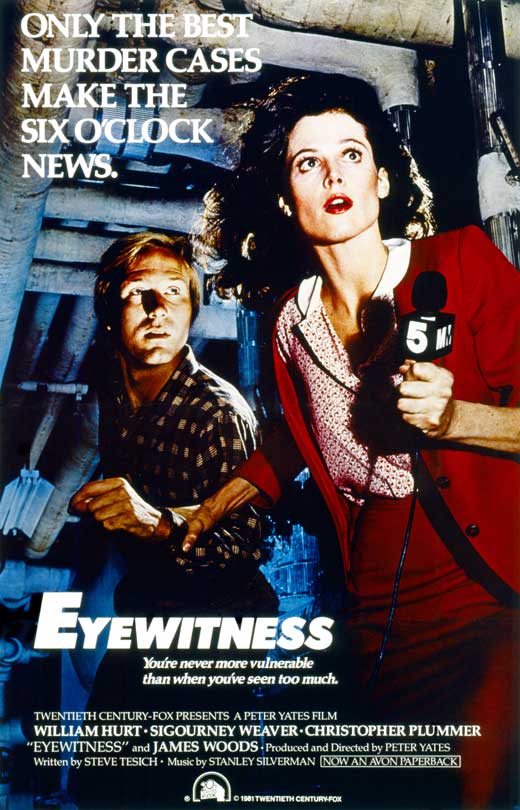
Daryl (William Hurt) is a nighttime janitor at a large Manhattan office building. He spends his otherwise lonely existence obsessing over a local news reporter Tony Sokolow (Sigourney Weaver) and records every news broadcast she is in and watches them each night when he gets home. Then a murder occurs in his office building and Tony covers it for her program. Daryl tries to use his inside knowledge to get closer to Tony, but is reluctant to tell her all the information he knows since he fears that it was his friend Aldo (James Woods) who committed the crime.

Hurt, who usually plays the intellectual type, does well here in the low-key role. Weaver is also excellent doing what she does best which is playing a tenacious no-nonsense woman who can take care of herself. My favorite part with her is when she is accosted by a couple of men with guns, but doesn’t scream, keeps her composure, and manages to get away.

The romantic angle is the film’s strong point. Tony’s on-camera interview with Daryl when she tries to get more information out of him, but he instead gushes about his undying love for her is funny. It is refreshing that when Daryl tells Tony about how he obsesses over her she doesn’t freak out and consider him a stalker, but instead is charmed by it. The two use each other for their own purposes, but the viewer is giving the impression that these are genuinely nice people who just have very contrasting personalities and approaches, which is what makes the budding relationship interesting. However, having them go to bed together and confirm their affections for each other seemed anti-climactic as it was more intriguing wondering if Tony really was starting to have feelings for Daryl, or just using him to get information and the film should have stayed at this level until the very end.

The mystery portion gets lost in the shuffle. The film is slow with very little tension. There are a few good action moments, but there needed to be more. The scene where Daryl almost gets crushed in a trash compactor had definite potential, but needed to be played-out longer. The part where he and Tony are attacked by a dog is very intense, but the climatic sequence where Daryl is chased by the killer through some horse stalls is certainly slick and well-shot, but it comes too late and I had already become bored and detached with it. The identity of the killer was a definite surprise, but it is also a bit preposterous and a little too convenient in the way it somehow manages to tie all the characters into it especially Tony.

Director Peter Yates does some excellent on-location shooting of New York City especially with the crowded streets and neighborhoods as well as Central Park, but the musical score is sparse and lacking. There is a pleasing jazzy score near the beginning that has a nice easy going beat to it, but then outside of a few tense moments there is nothing. This creates a film that is too quiet. Adding an urgent score could’ve helped make it more compelling, or at the very least given it more energy and personality.

There are a lot of familiar faces in supporting roles, but the majority of them are wasted. Morgan Freeman and Steven Hill as the police investigators who banter endlessly
with each other are dull and useless. Kenneth McMillan as Daryl’s handicapped father is dynamic, but pointless to the story as a whole. Christopher Plummer is always reliable, but he has done better. James Woods is good because he is a master at playing unhinged characters and I liked the casting of Irene Worth as Tony’s mother simply because she looked almost exactly like what Sigourney would end up looking when she reaches that age. This is also a great chance to see Pamela Reed in an early role as Daryl’s fiancée.

The film ends up biting off more than it can chew and the idea of mixing a cutesy romance with a murder mystery doesn’t gel and leaves a sterile effect in both areas.

My Rating: 4 out of 10

Released: February 13, 1981

Runtime: 1Hour 43Minutes

Rated R

Director: Peter Yates

Studio: 20th Century Fox

Available: VHS, DVD, Netflix streaming

The Happy Ending (1969)

happy ending

By Richard Winters

My Rating: 4 out of 10

4-Word Review: The problems of marriage.

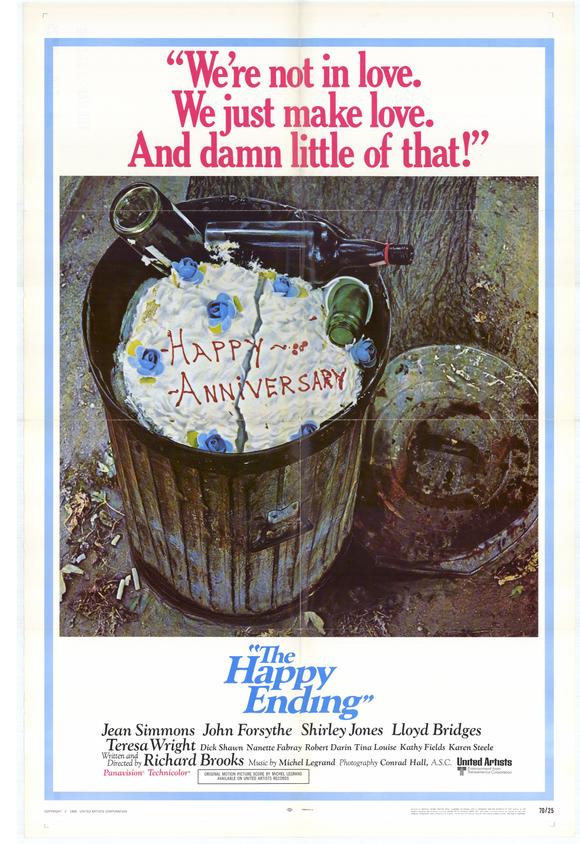
If there was ever a film with a misleading title it is this one. There is no happy ending here and in fact there is nothing in its entire 117 minutes that is happy as the film examines every negative and depressing thing it can think of about the institution of marriage and then rhythmically beats it into the viewer like a victim in a bar fight being pummeled by a brawler. The format works like a boring college professor lecturing endlessly about some tepid subject while tirelessly pinpointing every monotonous detail and not knowing when to stop.

The story is about Mary (Jean Simmons) who at one time was madly in-love with Fred (John Forsythe) and had extremely high ideals in regards to love and marriage when she married him. Now after fifteen years of living in a relationship that no longer has any passion she has turned into a depressed and disillusioned alcoholic looking for any way to escape the confines.

The film itself is intelligently done and well executed and makes some good hard-hitting points. The dialogue and conversations between the characters are realistic and well written and it is nice having adults acting and talking like real people. The only real issue is the question of why the filmmakers would think anyone would actually want to sit through something that is so endlessly downbeat. Sometimes these types of things work better in a satire format where they can still make the same points, but allow the viewer a few laughs as well. As it is the film is in desperate need of some levity and none is ever offered.

I also felt that film was too one-sided. I realize that there are a lot of unhappily married people out there, but there has got to be some couples that are happy with it. By never balancing it out and showing no other viewpoint makes the film come off like one long and unending rant.

Writer-director Richard Brooks infuses certain directorial touches that are novel to some extent, but heavy-handed as well. Showing clips of famous old romantic movies like It Happened One Night and Father of the Bride during Mary’s wedding is creative, but too obvious as is the segment when Mary is on a beach and a young couple asks her to take a picture of them and inside the camera’s viewfinder Brooks inserts an image of Mary and Fred when they were a young and in-love. There is also too much footage of Casablanca shown, which does nothing but make the viewer want to watch that over this dreary thing.

Simmons gives a strong performance and looks as beautiful as ever. She is also straddled with a few difficult scenes but does them well including a harrowing segment where she is rushed to an emergency room after swallowing some pills and has a hose stuffed down her throat in an attempt to vomit them out. Tina Louise is great in support as is Dick Shawn in a rare dramatic turn. Shirley Jones is also good as Mary’s jaded friend Flo and she is given some of the film’s best lines.

Forsythe is okay as the husband, but not too exciting though he never usually is. He should have had the big mole in the center of his forehead surgically removed as my eyes always seemed to fixate on it every time he was shown in a close-up. I got to admit I was amazed his character did not kill his wife on the spot when he found out that she had run up his credit card in one day on $11,421 worth of charges on clothes. This was 1969 dollars and I have no idea what astronomical figure that would be for today, but it would be beyond outrageous nonetheless. Of course he was caught fooling around, so I suppose this was her way of getting back at him and boy did she ever.

The film does have a few powerful scenes that I did like. The part where Fred defends Mary after she has run out on them and their daughter Marge (Kathy Fields) feels that her mother no longer loves her is really good as is the final conversation between Fred and Mary as well as Mary’s conversation with her mother (Teresa Wright) about the happiness of her mother’s own marriage. The moment when the very cynical Flo becomes all teary-eyed and excited when the married man that she has been fooling around with decides to divorce his wife and propose to her despite the fact that she has spent the rest of the movie considering the idea of marriage to be over-rated is savvy.

Like with the sappy and over-played Michael Legrand song ‘What Are You Doing the Rest of Your Life?’ the film goes on too long and there are just not enough good things about it to justify sitting through.

My Rating: 4 out of 10

Released: December 21, 1969

Runtime: 1Hour 57Minutes

Rated PG

Director: Richard Brooks

Studio: United Artists

Available: VHS, Amazon Instant Video, Netflix streaming

W. C. Fields and Me (1976)

W. C. Fields and me

By Richard Winters

My Rating: 6 out of 10

4-Word Review: Fields had a girlfriend.

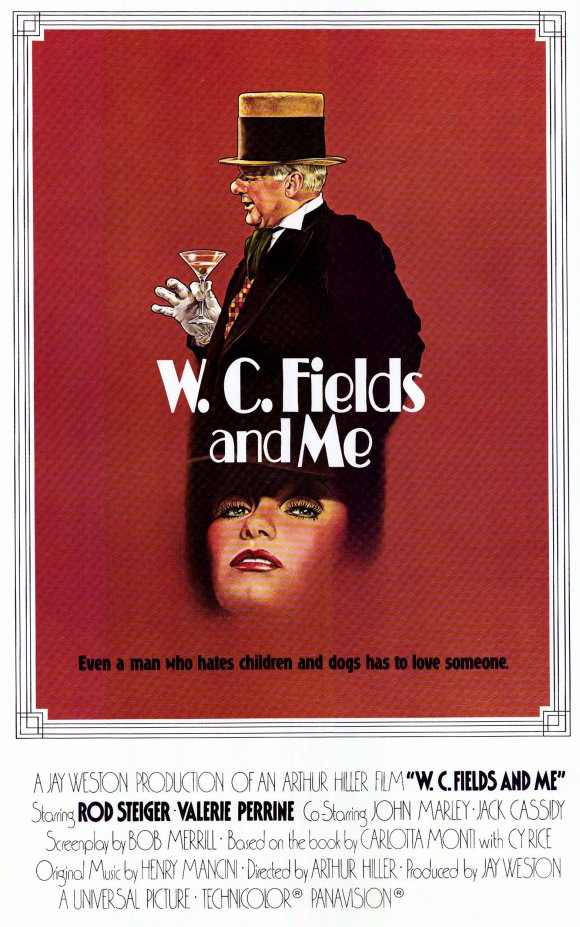
Based on the memoirs from Carlotta Monti who was W.C. Field’s (Rod Steiger) companion for 14 years this film looks at their relationship as well as W.C.’s alcoholism and difficult personality.

This biography is highly romanticized and very light on the details. Apparently only one scene from the book is actually used in the movie. If one watches this in hopes of learning more about Field’s the man they will be disappointed. The tone seems similar to Oliver Stone’s The Doors where the intent is more on perpetuating the myth of its subject instead of tearing it down and showing the complete person. Just about everyone is familiar with Field’s drinking and cantankerous behavior, so having the film dwell exclusively in this area for the entire time is not interesting, or captivating.

The story would have been better served if it had been a complete bio beginning with Fields life as a child and then going all the way through to his death. Apparently he was born to an alcoholic father who beat him forcing Fields to run away from home at the age of 11 and live in a hole in the ground where he became dependent on stolen food and clothing for survival. He was in many fights and in and out of jail for most of his youth. Showing this could have been quite revealing, but instead the film skips past all of it and starts instead with Fields already in vaudeville and recreating a lot of corny comedy routines before having him drive off to Hollywood where his ascent to stardom seems much too easy and superficial.

Things improve during the second act when he begins his love-hate relationship with Carlotta (Valerie Perrine). Part of the reason this works is because Perrine is excellent. Her down to earth sensibilities really help balance the flamboyant ego’s around her and fit the character well. She is the one, not Steiger, who carries the movie and it was worthy of an Oscar nomination.

Steiger thought for sure that he would nab his second Oscar for his portrayal here, but instead didn’t even get nominated. His mimicking of Fields voice comes off as too rehearsed and effected. At times it gets annoying and just makes one want to watch a movie with the real Fields instead. His dialogue is too cutesy using lines borrowed from many of W.C.’s famous jokes and punch-lines. As expected he does induce the character with his famous Steigerisms and manages to not make it a complete misfire that it otherwise is. The scene, near the end, where Fields meets his now grown son that he hadn’t seen since he was three is his best moment.

Jack Cassidy is great in support as actor John Barrymore. The scene where he dies and his friends prop his dead body up into a chair and have him holding a liquor glass is amusing. Dwarf actor Billy Barty is good as Ludwig one of Field’s long-time friends. Some of the scenes the two share together are actually quite touching.

The film does a commendable job of recreating the period atmosphere. The music has a nice soothing quality to it and on the charm level it scores a bullseye. Despite my reluctance I found myself entertained by it, but as a biography it is flimsy, fictional and irrelevant.

My Rating: 6 out of 10

Released: March 31, 1976

Runtime: 1Hour 51Minutes

Rated PG

Director: Arthur Hiller

Studio: Universal

Available: Amazon Instant Video

Deathwatch (1980)

deathwatch 2

By Richard Winters

My Rating: 8 out of 10

4-Word Review: Everyone watches her die.

Based on the David Compton novel this story deals with Katherine (Romy Schneider) who is living in a futuristic society where almost all diseases can be cured and death is very rare. When she is diagnosed with having a rare and incurable illness Vincent (Harry Dean Stanton) tries to get her to appear on his hit reality show ‘Deathwatch’ in which they film in documentary style a person’s slow and agonizing death, which is a huge TV hit. When Katherine tries to escape the publicity and hide from their cameras Vincent has a small camera surgically implanted into the brain of Roddy (Harvey Keitel) one of his cameramen, which then allows  Roddy to follow Katherine around and record her actions without her knowing it. The two then slowly form a relationship that culminates with tragic results.

Director Bertrand Tavernier is in top form. The movie is nicely paced and Tavernier shows a perfect grasp of the material. His use of music wonderfully accentuates the mood and tone. Filmed on-location in Scotland he captures the old buildings of the region with a stylish flair that gives the film an added personality and memorable image. Showing characters walking all alone in the seemingly abandoned streets hits home their loneliness and having the scenes done in decaying buildings and neighborhoods illustrates the decaying values and morals of the world these characters live in. The gray stormy skies brings out the pictures moodiness and the isolated shack in the middle of a vast empty field that the two hide out in captures visually the characters lost and hopeless desperation. The film becomes like an orchestral ensemble moved along by a talented conductor at the peak of his skill.

This is also a great example of using a hand-held camera sparingly and only to create a certain mood, or emotion. Too many films these days seem to have what I call ‘the shaking camera syndrome’ and it is annoying and loses the original intended effect. Here Tavernier employs it during a scene where Katherine is trying to elude the production crew and the viewer feels her frantic tension with each move that the camera makes as well as getting a great cultural feel by capturing the various street vendors along the way.

The story itself is fascinating and years ahead of its time. The issues it brings out about television, ratings, and the cutthroat ugly world of business of entertainment have never been more on-target. This film may even transcend the classic Network with its dire message and that is not easy to do. What I really liked though was the fact that the twists keep coming in layers and all of them are unexpected, but equally fascinating. The story is riveting and compelling from beginning to end.

Schneider is brilliant and beautiful as always giving another one of her impeccable performances. Her character is easily identifiable and the viewer immediately gains her sympathy. She shows an array of different emotions and traits making her a fascinating three-dimensional person. Her presence is the main ingredient that propels the film and without her none of it would have worked and her gorgeous natural smile is wonderful and manages to come on display briefly despite the ugly difficulties of her character.

Keitel is in fine form as well playing a character who finds that when one works for those who are more than willing to exploit others they themselves will eventually be exploited by them as well. Von Sydow appears near the very end and lends stature to the proceedings.

I hate to bring this up because I love the film’s visual design, but I did find it a bit odd that the story is about the hi-tech future and yet all we are shown are old buildings and other gadgets that look very much like they are from the 1980’s. The computer that Katherine works on is laughably archaic and I felt from that end they could have tried harder to create a little more of a futuristic impression. Also, the name of the network ‘NTV’ sounds a little too much like the cable network that used to show music videos.

The recent Blu-ray release from the Shout Factory is excellent and restores the film to its original runtime of 130 minutes. I highly recommend this to those who enjoy Sci-fi fare that is thought provoking and original.

My Rating: 8 out of 10

Released: January 23, 1980

Runtime: 2Hours 10Minutes

Rated PG

Director: Bertrand Tavernier

Studio: Gaumont International

Available: VHS (1Hour 57Minute Version), DVD, Blu-ray

Any Wednesday (1966)

any wednesday 2

By Richard Winters

My Rating: 6 out of 10

4-Word Review: Wednesday is hump day.

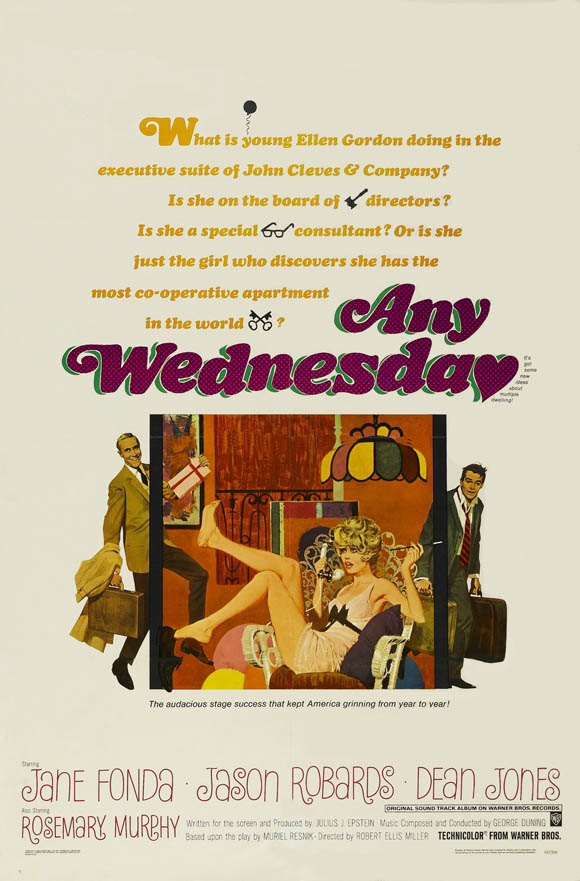
Ellen (Jane Fonda) is a single lady of thirty living in an apartment building in New York City that is about to be bought out. Ellen wants to remain there and the only way she can is if she allows the place to be purchased by millionaire John Cleves (Jason Robards) who will allow her to stay rent free just as long as Wednesdays remain available so he can use the place to bring in his lady friends for sexual trysts. John has been cheating on his wife Dorothy (Rosemary Murphy) for years and uses the excuse of ‘business trips’ to fool around with other women. John also has his eyes on Ellen and after he buys her place he succeeds in getting her where he wants her, but then young Cass Henderson (Dean Jones) drops in and much to John’s consternation starts to have an interest in Ellen and her to him. Things get really crazy when Dorothy also shows up and turns the thing into a madcap bed-hopping farce.

Although this is not one of her better known roles Jane is terrific. The character to me is believable. A young attractive woman living alone who is racked with insecurities and indecision is almost a given. In many ways she is like how the Cass character described her as a ’30-year old child’ and Fonda plays the part humorously with a very goofy whine and cry. Some may find the character offensive due to the fact that her only ambition is to get married and feels like she is ‘not a complete woman’ unless she does. She even asks Cass to marry her after only knowing him for a day, which may be extreme, but I felt in that era women were under that type of pressure and thinking process, which is why I bought into it.

The Cleves character borders on being highly obnoxious. He seems to feel that because he has a lot of money he can act arrogant and get anything he wants, which could easily rub most viewers the wrong way. Fortunately Robards manages to craftily infuse his charm into the performance, which therefore makes it tolerable.

Jones lends some nice stability and Murphy is surprisingly alluring. She was already 40 at the time, but is seen provocatively bathing in a tub, which was unusual since older women especially in that time period were never shown that way and she pulls it off in an interesting way.

Director Robert Ellis Miller tries to keep what was originally a stage play from getting too stagy yet the story really can’t hide its roots. I did like the bright vivid colors of the set and the way New York was captured in the spring time. However, the scene where Ellen and Cass go to a sunny park is initially nice, but I didn’t understand when they sat down on some swings that it had to cut away to them in front of a blue screen inside a studio. The blue screen technique, which is rarely done anymore, was always tacky looking. Here it was even worse because the actors were at a real park, so he should have just left them there.

The story itself is trite, but for the first half I found it enjoyable. An older man having an affair with a younger woman that at times acts like an adolescent was rather edgy for the period as was their open discussions about sex. The conflicts create some interesting tensions and character development, but falls apart in the second act.

Spoiler Alert!

The problem really comes when Dorothy finds out about the affair and instead of being upset by it treats Ellen like a friend and even lets her move into John’s mansion while Dorothy takes up residence in Ellen’s old apartment. However, nothing is ever shown in Dorothy’s personality to forewarn us that she would respond in such an unusual way and thus making this comic twist not as clever as intended. Yes, there is an amusing irony at having Ellen come back to her old place and feeling ‘betrayed’ at finding John and Dorothy in bed together, but having John rekindle his passion with his wife is forced and contrived ultimately making this as silly and forgettable as all the other fluffy romances from that period. Fonda’s terrific performance is the only thing that makes if slightly above average.

My Rating: 6 out of 10

Released: October 13, 1966

Runtime: 1Hour 49Minutes

Not Rated

Director: Robert Ellis Miller

Studio: Warner Brothers

Available: VHS, DVD (Warner Archive), Amazon Instant Video

Love and Bullets (1979)

love and bullets

By Richard Winters

My Rating: 5 out of 10

4-Word Review: Chuck falls for Jill.

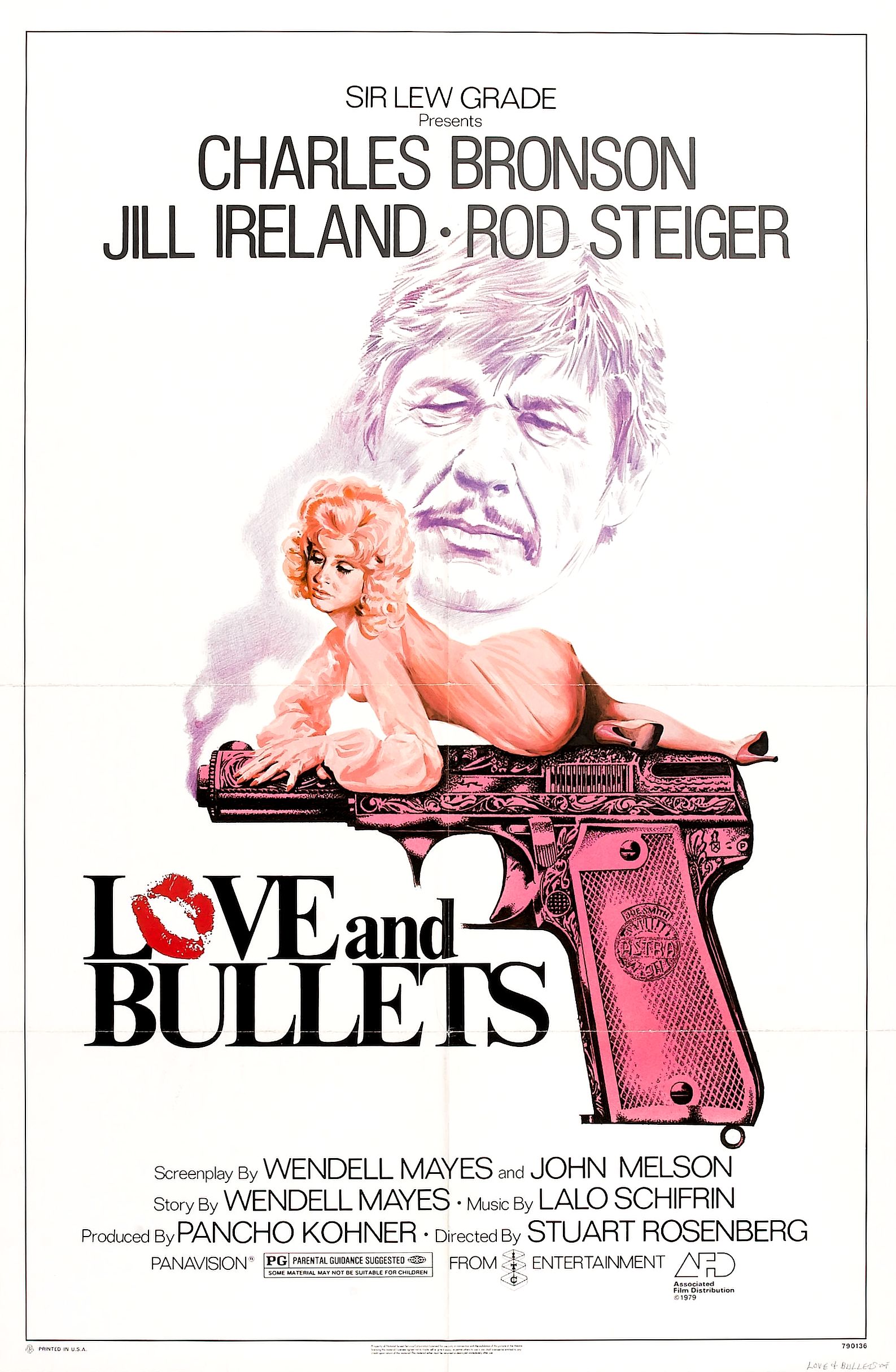
Jackie Pruit (Jill Ireland) the one-time girlfriend of mob boss Joe Bomposa (Rod Steiger) is being marked for death by him as she has the potential to turn states evidence. Undercover cop Charlie Congers (Charles Bronson) is hired to go to Switzerland and nab her before they do so that he can bring her back to the states and allow her to testify for the FBI, but along the way he ends up falling in love with her.

Ireland and Bronson where married in real-life, which is why this is just one of many movies that they did together during the 70’s. The strange thing is that they really don’t seem to have much chemistry. Bronson is much older and has more of a grounded, stoic personality while Ireland, at least here, comes off as ditzy and flighty making it seem more like a father and daughter relationship than two equal adults.  The ditzy behavior of Ireland’s character is not amusing or interesting and eventually becomes annoying making most men want to kill her instead of falling for her. Her character initially wears a wig and gaudy make-up, but Charlie insists that she take it off and when she does he states that she looks much better, but personally I thought she looked better with it on.

For whatever reason the Bronson character does not use a gun and is required to resort to unusual weapons for defense one of them being a standing lamp that he finds in a hotel room. He takes off the top and bottom of it and then uses the middle part as a pipe in which he blows nails through to kill off the bad guys. Initially this seemed like a neat idea, but I found it hard to believe that he would have such good aim and able to hit victims from several yards away. He also makes himself highly conspicuous walking around the busy streets of Zurich carrying a pipe.

Steiger gives another interesting performance. Although his character is the villain Steiger manages to give him depth and a humanistic quality. He speaks with a stutter and wears big glasses making him seem almost like a lovable galoot. The part where he stresses over ordering the hit on Jackie and at the end when he sits alone watching a classic romantic movie and insists that he not be interrupted for any reason are two of his best moments.

The supporting cast is full of familiar faces, but Bradford Dillman and Henry Silva are wasted and Michael V. Gazzo gets killed off too quickly. Paul Koslo has the perfect face for a cold-blooded hit man and it is neat seeing Strother Martin dive into the water because in his younger years before he got into acting he was a gifted diver and almost even made it onto the Olympic team. His death scene is good because it is done from his perspective as he is pushed under water giving the viewer a definite drowning feeling.

The action and story are standard and the scenic wintry landscape of Switzerland can help it only so much. The explosive finale gives it a few points, but the drama is weak and the action is only fair. Nothing real impressive and made for die-hard action fans only.

My Rating: 5 out of 10

Released: September 14, 1979

Runtime: 1Hour 43Minutes

Rated PG

Director: Stuart Rosenberg

Studio: AFD

Available: VHS, DVD (Region 2), Amazon Instant Video

Welcome to the Dollhouse (1995)

welcome to the dollhouse

By Richard Winters

My Rating: 7 out of 10

4-Word Review: She doesn’t fit in.

Another flick about the trials and tribulations of high school life. There is the shy, sensitive, and alienated girl, the bitchy cheerleaders, the bullies, the name calling, the not being able to find a seat at lunchtime, the stupid teachers, the too busy to listen parents, the bratty siblings, and yes even the spitballs. This is a very accurate and concise portrait of Junior High. It will make you soooooooo glad that you are past that age and will never have to go back to it.

It’s the pinpoint accuracy that makes this film stand out the most. Every scene and segment ring true. Even the little stuff from the way the little sister answers the phone to the way our protagonist Dawn Wiener (Heather Matarazzo) always seems to get blamed even when it really isn’t her fault.

Although the film displays many of the ugly elements of that age it doesn’t wallow or sensationalize them. In fact this film has a nicely balanced perspective. It shows scenes from both Dawn’s high school life and family life. It weaves a nice tapestry and observes how interconnected everything really is. The family life scenes are probably more interesting and in many ways just as difficult.

The film has a good ability at bringing out all the confusion that permeates that age. It is interesting how it shows that everyone is a bit alienated and lost. A big fish can simply get eaten up by an even bigger one. For example there is Steve a good looking kid with a nice singing voice. He is ‘cool’ and when in school everything goes his way. Yet when he drops out so as to ‘make it big’ in New York he suddenly realizes how stacked the odds are against him. There is also Brandon the class bully. He is a composite of all those other bullies. At first you really dislike him, but then you witness his very sad home life. You learn to understand not only why he acts the way he does, but also begin to feel sorry for him.

The film also scores by not letting the adults off the hook either. They are in many ways very much of the problem. They suffer from their own type of confusion and have their own type of code. They lack the ability to really communicate as much as the kids do. Junior high may be a mean, ugly, and crazy place, but that is only because it is a byproduct of very mean, ugly, and crazy world.

If the film has a weak point it is with the ending that fails to give any type of closure. Of course it doesn’t have to, but it would have given it more of an impact and made it come more full circle. Yet even if it doesn’t show it we still know that Dawn will make it. There are many scenes that show her to be very resourceful and strong willed when she needs to be. She is, like a lot of us, a survivor.

My Rating: 7 out of 10

Released: September 10, 1995

Runtime: 1Hour 28Minutes

Rated R

Director: Todd Solondz

Studio: Suburban Pictures

Available: VHS, DVD, Amazon Instant Video

Cattle Annie and Little Britches (1981)

cattle annie and little britches

By Richard Winters

My Rating: 6 out of 10

4-Word Review: She needs a spanking.

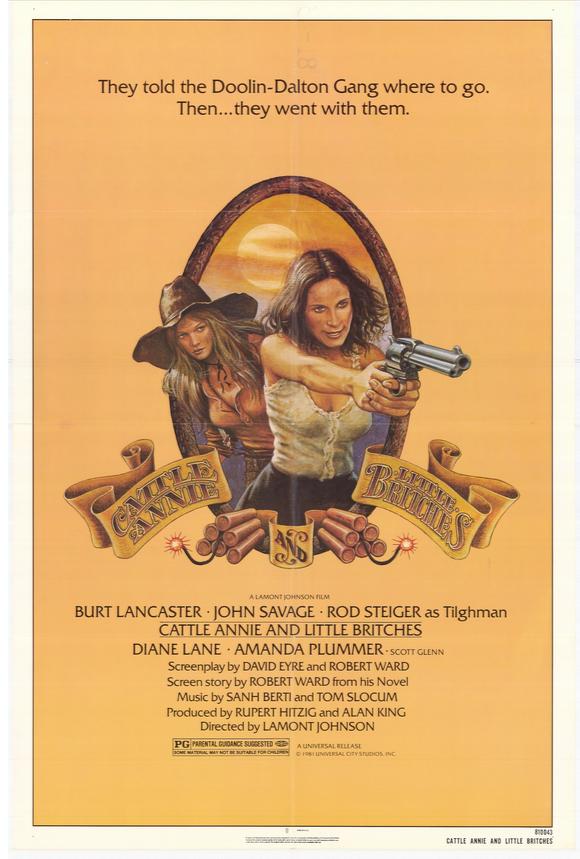
Based very loosely on actual events this film looks at Annie McDoulet (Amanda Plummer) and Jennie Stevens (Diane Lane) two adolescent girls traveling in the Oklahoma Territory of the late 19th century looking for excitement and adventure. Annie becomes transfixed with the stories that she reads about the western outlaws particularly the ones about Bill Doolin (Burt Lancaster), but when they finally do catch up with his gang they find the men to be old, haggard, and tired as well as just one-step ahead of the relentless pursuit of famed western lawmen Bill Tilghman (Rod Steiger).

Plummer, in her film debut, is nothing short of electrifying. She is the daughter of Christopher Plummer and actress Tammy Grimes and she makes her presence strongly felt here. Her vulgarity and tenaciousness are infectious and help propel the film and easily steal every scene that she is in. She has her mother’s distinctively reedy voice and although not beautiful in the conventional sense her facial features still have an alluring quality that she makes the most of.

Lane as her cohort is good as well although not as strong, or riveting. Her plus is the fact that she is simply beautiful with perfect and delicate features of a young lady blooming into adulthood. The fact that her character is more shy and unassuming plays off well against the abrasiveness of Plummer’s and the tussle that the two have near the end is fun.

Lancaster is badly miscast. For one thing the real Bill Doolin was much younger and in fact was shot dead at the young age of 38 and yet here Lancaster was already 66 when he did the part. I also felt that the character was a little bit too good to be true. It just seemed too hard to believe that a rugged western outlaw would be so kind, gentle, understanding and wise. I suppose his fans wouldn’t want it any other way and the part seems to be written to conform to his star status, but the effect hurts the film’s overall authenticity.

Steiger on the other hand is quite strong and director Lamont Johnson makes perfect use of Steiger’s legendarily intense manner. In fact I was disappointed that he wasn’t in more of the film as his presence helps create some much needed tension in a film that at times seems too slow and laid back. His finest moment, and the best part in whole film, comes when he tackles Annie and gives her a nice long hard spanking.

The score, like the film, seems unfocused and creates an unnecessary mish-mash of moods. The vocal ballads done with a minimum of instruments is good as they have a country twang and fit the period, but there are other points when a jazzed up score with modern rock elements is played, which takes the viewer completely out of the setting. There is also too much music played when the natural sound and ambience would have been better especially with a western.

Watching the girls interacting with the gang as well as surprising them with their unexpected toughness is what makes the film interesting. The climatic sequence in which the two decide to go by themselves to get Bill out of jail and the very brazen and clever way that they do it is special. Why Universal decided to abandoned what is otherwise a pleasing little western is baffling. This film is long overdue for a DVD/Blu-ray release and fans of the cast should let the people in charge know as well as taking the studio exec, if he is still around, who decided to put the kibosh on this movie and throw him into a lake.

My Rating: 6 out of 10

Released: April 24, 1981

Runtime: 1Hour 35Minutes

Rated PG

Director: Lamont Johnson

Studio: Universal

Available: None