Flirting with Disaster (1996)

flirting with disaster

By Richard Winters

My Rating: 5 out of 10

4-Word Review: Biological versus adoptive parents.

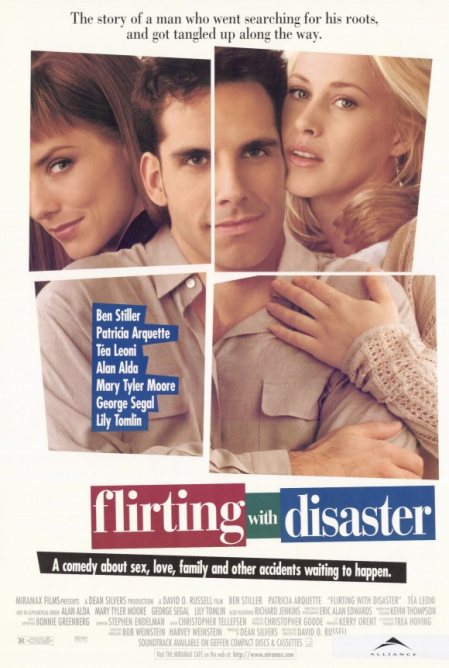
Mel Coplin (Ben Stiller) is a middle-aged man on a mission. He wants to find out who his biological parents are and is willing to travel the country to find them. His wife Nancy (Patricia Arquette) isn’t too happy about being dragged along and his adoptive parents Ed and Pearl (George Segal, Mary Tyler Moore) find his journey to be an insult to them. He uses the aid of part-time adoption agent Tina (Tea Leoni) to try and locate them, but her help only proves to lead him to a lot dead ends.

With the exception of Leoni the three female leads are good. Lily Tomlin has a funny moment as she tries to talk down the Richard Jenkins character from a LSD trip. Moore is fantastic playing a takeoff of her rigid mother role from Ordinary People. Every scene that she is in is hilarious and had she been in a few more she could have easily stolen the film. She wears a short reddish haircut and at times looks amazingly like Carol Burnett. Although she is not all that amusing Arquette is also quite good simply because she is the most believable of all the characters. Jenkins and James Brolin also have their moments as a bickering gay couple and Brolin’s arm pit fetish is great. It is also nice to see Stiller actually doing some acting instead of just playing a dull, average guy that simply reacts to all the zaniness around him, which is what he seems to pretty much do in most of his other films.

However, the movie seems more focused on being offbeat than it does in actually being funny. There is a great deal more misses than hits and the ones that do hit aren’t exactly uproarious. Leoni’s character adds little to the proceedings and her propensity at constantly leading Mel to the wrong people gets old pretty fast. There is also a glaring goof where Segal and Moore end up driving off with Tomlin and Alan Alda’s car since both couples drive the same make and model vehicle. Yet somehow they are able to use their OWN keys to start up the other car and even get into the other car’s trunk, which would not be possible.

This film could best be summed up as being the ‘sophomore jinx’ for writer/director David O. Russell since his first feature Spanking the Monkey was quite original as was his third one I (Heart) Huckabees. This film though tends to be over-the-top absurd without having any message or point to it.

My Rating: 5 out of 10

Released: March 22, 1996

Runtime: 1Hour 32Minutes

Rated R

Director: David O. Russell

Studio: Miramax

Available: VHS, DVD, Amazon Instant Video
A Little Sex (1982)

a little sex 1

By Richard Winters

My Rating: 2 out of 10

4-Word Review: He can’t stay faithful.

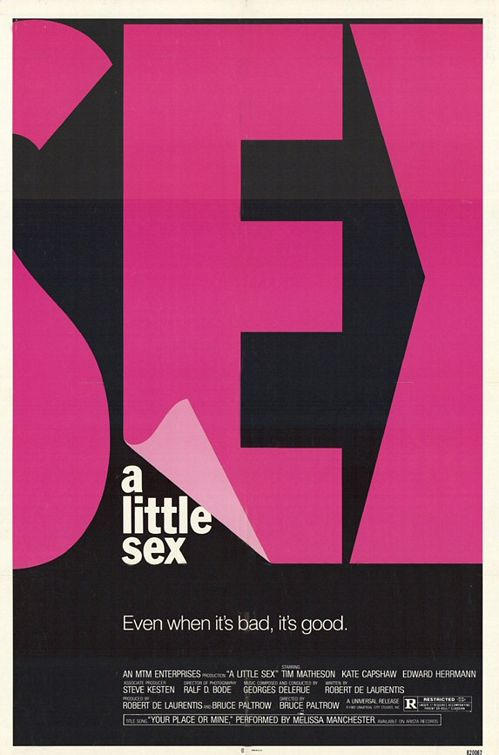
Michael (Tim Matheson) gets married to Katherine (Kate Capshaw) after living with her for a year. He had a habit of sleeping around and having a lot of one-night-stands, but makes a pledge to change. However, the temptations are too strong and he ends up cheating on her and getting caught and then spends the rest of the film trying desperately to win her back.

Bruce Paltrow, who was the father of Gwenyth and the husband of Blythe Danner directs this very minor production that is generic and predictable throughout. The story and production values seem better suited for television and this doesn’t even seem like an 80’s movie, but more a remnant from the touchy, feely 70’s. The plot is empty and fails to gain any momentum with dialogue that is stale and boring.

Although billed as a comedy there really isn’t much that is funny and few moments that become heavy-handed and melodramatic. One scene has the couple pretending to make love while under the covers of a bed that is in the middle of a storeroom with the other customers and a very nervous saleslady looking on that had potential, but doesn’t go on long enough. Another segment has some first grade school girls that Katherine teaches intently listening to a video tape of Michael telling them a story. I was amazed at how enraptured the children were because I found the tale to be dull and vapid, but then having all the girls become teary-eyed at the end of it goes overboard.

Capshaw, who has been married to Steven Spielberg for over twenty years and has five children with him, is vivacious in her film debut. She looks beautiful and far better looking than any of the other women that Michael fools around with. Matheson is liable enough, but his character is bland and no ability to carry the film.

The supporting cast comes off better although John Glover and Wallace Shawn are essentially wasted. Edward Herrmann is a delight as Michael’s friend Tommy and has the best lines in the whole movie. Joan Copland is amusing as Katherine’s mother especially when she compares marriage to death in one conversation and then later compares it to war. It is also great to see Wendie Malick playing a sultry clarinetist who is now starring in the ‘Hot in Cleveland’ TV-show and looks like she hasn’t aged a day since appearing in this.

I am a big fan of Melissa Manchester and she has done a lot of great songs, but her opening song here ‘Your Place or Mine’ has to be one of her worst although I did like the extreme close-up of a cigarette being lit and then watching it slowly burn, which is the film’s one and only interesting cinematic moment.

My Rating: 2 out of 10

Released: April 2, 1982

Runtime: 1Hour 35Minutes

Rated R

Director: Bruce Paltrow

Studio: Universal

Available: DVD, Amazon Instant Video, Netflix streaming

Medium Cool (1969)

medium cool 1

By Richard Winters

My Rating: 9 out of 10

4-Word Review: The 60’s up close.

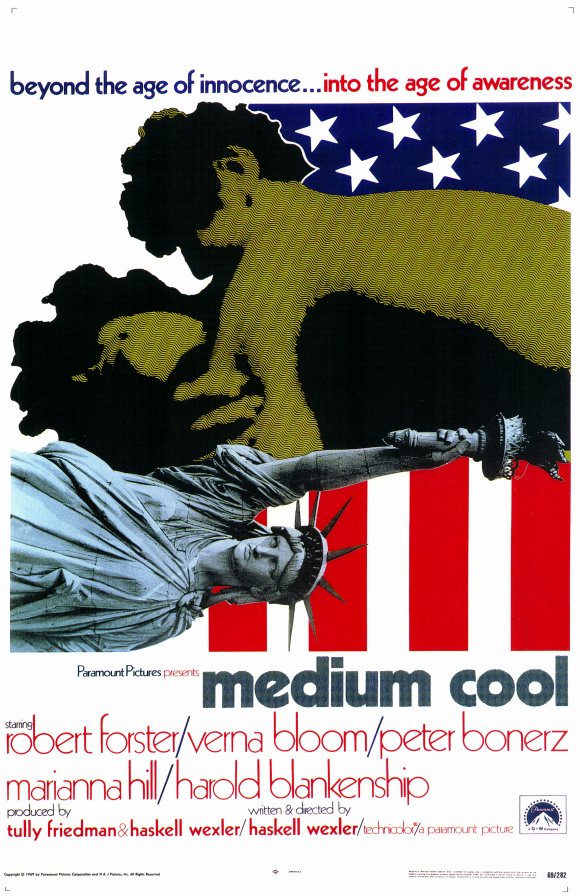
If you ever wanted to travel back in time and take part in the events of the tumultuous 60’s this film comes about as close to that as you can get. Watching this isn’t like viewing a movie, but more like an experience in itself. Acclaimed cinematographer Haskell Wexler who had previously worked in the documentary field heard that demonstrators were going to march at the 1968 Democratic convention in Chicago so he decided to hire a few actors and throw them into the fray while building a thin plot around it and creating a pseudo-reality effect. The story deals with news cameraman John Cassellis (Robert Forster) who meets and starts to date Eileen (Verna Bloom) who has just moved to Chicago from West Virginia with her 11-year-old son Harold (Harold Blankenship). As the convention and protests begin and John begins to cover it Harold runs away from home and Eileen goes into all the chaos to find him.

The scenes from the riots leave a major impact and even though I had already seen this film several times before I was amazed at how compelling it still was. Everything still seemed fresh with a clarity that makes you feel you are right there and a vividness that seems like it was filmed just yesterday. Watching the National Guard with their rifles raised marching down the streets of Chicago threatening crowds of people is incredible as is the sight of army tanks rolling down Michigan Avenue.  The people in the crowds are not actors and you see them getting clubbed by the police only a few feet from the camera. Watching them take the park benches in Grant Park and use them to build a shield from the police is exciting as are actual sound bites of reporters describing the action and at certain points being roughed up by the patrol as well. The look of fear and confusion on Bloom’s face at what she finds herself in the middle of it is authentic and helps build the tension.

Of course these scenes only make up the final fifteen minutes of the film, but the movie is filled with a variety of other unique moments that are all captured with the same vivid style and are equally memorable. The part where John and Eileen go to a roller derby and watch actual female players beat each other up with some even using their fists gets quite vicious. The scene showing hundreds of caged pigeons being set free and flying off in a giant flock that fills the sky is eloquent. There is even some effective erotica as a naked John chases his naked girlfriend Ruth (Marianna Hill) around his apartment before lifting her up by her legs and spinning her around in a circle.

The film also takes a great critical look at television news and the people who cover it. It shows how reporters and cameramen are very detached from the events and people that they are covering and how their need to capture that ‘great’ image or sound bite supersedes the human element.

Forster is perfect for the lead role. I loved his aggressive, blue collar, tough-guy attitude that perfectly reflects the Windy City. Peter Bonerz who plays Gus his sound man is great, but in the opposite way. His character is much more timid and wants to avoid confrontation at every turn and finds it difficult dealing with some black people who make him feel uncomfortable when he visits their apartment and even some young children when they start to climb on his car.

The only negative is that the song ‘Merry-Go-Round’ by Wild Man Fischer is not included in the most recent Criterion Collection DVD/Blu-ray release. The song was in the original release shown in theaters as well as the film’s first VHS version, which I saw. Unfortunately the song’s copyright holders sued Paramount stating that a VHS/DVD release is not the same as a theatrical/television broadcast, which they were under contract for to use and therefore could not include it in any later reissues, which is a real shame. The song has to be one of the strangest things you will ever hear and done by an eccentric one-of-a-kind artist. It has a weird alluring quality to it that gives personality and an extra edge to the film and in later versions gets replaced with ‘Sweet Georgia Brown’ better known as the theme for The Harlem Globetrotters, which is just not as effective.

My Rating: 9 out of 10

Released: August 27, 1969

Runtime: 1Hour 11Minutes

Rated R

Director: Haskell Wexler

Studio: Paramount

Available: VHS, DVD, Blu-ray (The Criterion Collection)

The Silent Partner (1978)

silent partner 2

By Richard Winters

My Rating: 8 out of 10

4-Word Review: Bank teller outsmarts robber.

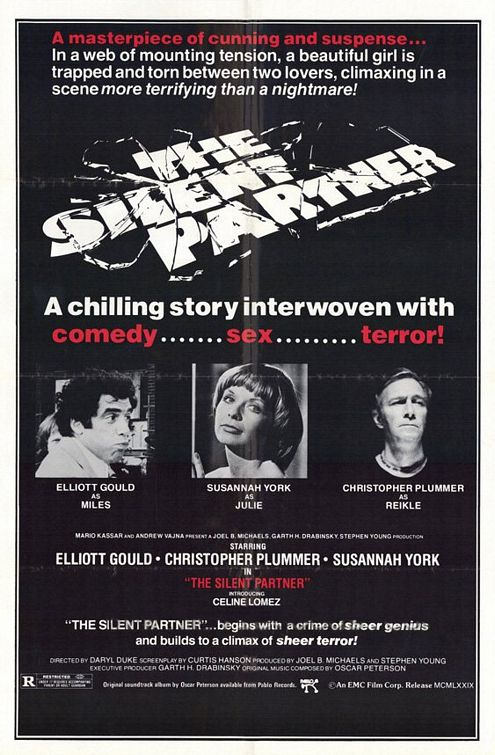
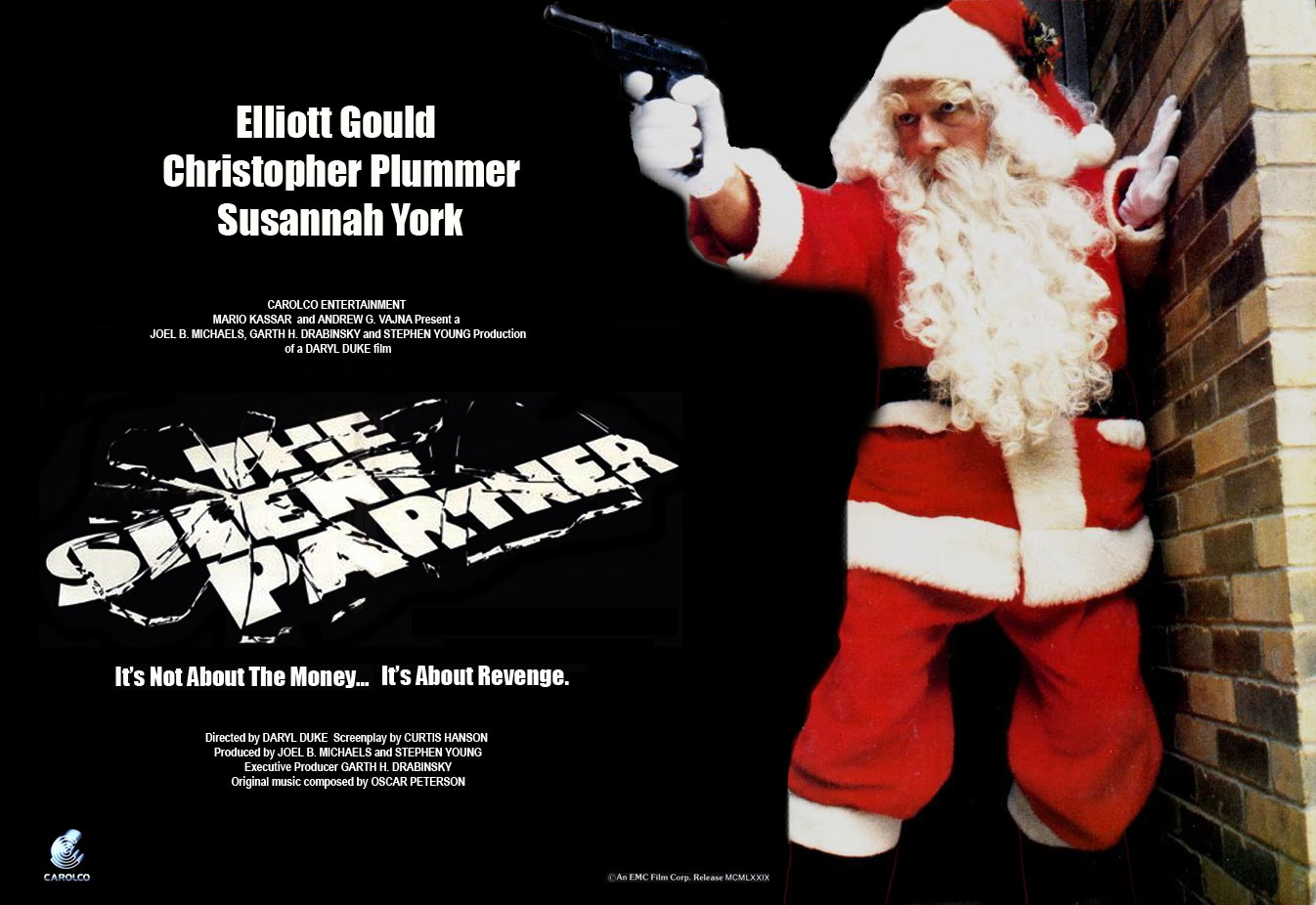
This is an ingenious, slick, and really fun caper movie that puts a whole new spin on the old bank robbery theme. Here Elliot Gould plays a bank teller named Miles who, by sheer accident, becomes aware that a man named Harry (Christopher Plummer) is planning on robbing his bank. Miles decides to take the money from his till and put it into his lunchbox. Then when Harry robs the bank it is actually Miles the teller that gets the money while Harry goes away with very little. Yet this is only the beginning as Harry and Miles continue to play a crafty game of cat- and-mouse, which leads from one interesting twist to another.

Gould plays against type here and he does quite well. Usually he tends to be loud, argumentative, and anti-authority, but here he is quiet and unassuming. It’s the type of character you think wouldn’t have the guts to pull off what he does, which makes him all the more intriguing. In fact he just keeps surprising you all the way along, stringing the very psychotic and dangerous Harry in ways you couldn’t imagine. It is only his final move that seems to be testing the odds too much.

Plummer makes a terrific adversary. He is dashing and handsome as ever, but with an intensely sinister edge and an icy cold gaze.

Susannah York as Miles’ love interest Julie is wasted. Her character seems thrown in for good measure and at no time seems interesting. There is no chemistry between them and the whole love angle is forced and unnecessary. Celine Lomez, as Elaine the other female character, is different. She is stunningly beautiful and much cagier. She plays between both Harry and Miles and you are never sure which side she is really on. Her acting isn’t spectacular, but she is sensual and has a nice French accent. Her gory and gruesome demise though is unwarranted and works as a drawback to the movie.

There are a few other negatives about the film. One is the drab setting that takes place in Toronto and yet we hardly see any of it. Having the bank itself set inside a boring shopping mall is not too visually exciting. The same goes for Miles’s bland apartment. The supporting characters, especially the other bank employees are incredibly dull. Their lines and basic presence all seem to have been written in simply as ‘filler’. A young John Candy plays one of these co-workers and his comic talents are wasted.

Still the story is creative and has enough unique twists that it overcomes the technical shortcomings and manages to be a highly entertaining flick.

silent partner 1

My Rating: 8 out of 10

Released: September 7, 1978

Runtime: 1Hour 46Minutes

Rated R

Director: Daryl Duke

Studio: EMC

Available: VHS, DVD, Amazon Instant Video
Joy of Sex (1984)

joy of sex 1

By Richard Winters

My Rating: 3 out of 10

4-Word Review: Teens can’t get laid.

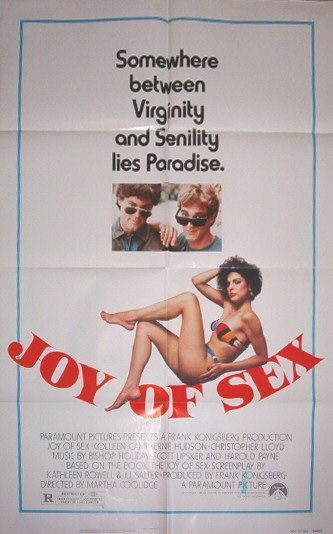
This film will kick off a month long theme where every Monday we’ll review an 80’s film that has the word sex in the title. The title to this one was purchased by Paramount from a sex manual written by Alex Comfort. The studio was so convinced that the title alone would create a box office buzz that they hired two writers to write a story around it only after the rights to the title had been secured. The plot deals with Leslie (Michelle Meyrink) a teen that reads an article about skin cancer and is convinced that the mole on her chest is a melanoma. Despite the fact that her Dr. says it isn’t she still believes that she is dying and goes on a crusade to lose her virginity before she does, but with little luck.

Although the movie has received almost unanimously negative reviews including a ‘bomb’ rating by Leonard Maltin I was surprised to find that the first 20 minutes or so is actually quite engaging. Some of the humor is kind of funny including the running joke of a ‘krazy glue bandit’ who terrorizes the administrators of the school by gluing all sorts of weird things on objects including coffee cups on the breasts of an outside statue, Mr. Potato heads to trophies inside a trophy case and a dildo inside the mouth of a fish that is the school mascot. There is also Farouk (Danton Stone) an early version of Borat who misunderstands American customs for instance when someone asks him to ‘give me five’ he hands him a five dollar bill and some of the thoughts that Leslie has while she makes out with a guy in a car are also pretty funny.

Where the film goes wrong is that it is just too damn innocuous. There is no tension, edge, or conflict. The majority of the movie deals more with Allen (Cameron Dye) and his inability to get laid instead of Leslie. The teen characters are one-dimensional and their adult counterparts come-off as staid, stiff, and out-of-touch. What is worse is that the film spends the entire time talking about sex, much of which is not very clever or interesting, but then never shows any of it. There isn’t even any nudity, which may be because the film was directed by a woman which may please the feminists, but as a guy if I’m expected to sit through something as vapid as this I would at least like a little T&A to help carry me through.

Meyrink is terrific and the one good thing about the movie. She is the only character that comes off as a real person and her nerdette caricature is a delight. Christopher Lloyd who plays her high school coach father over does it by delivering all of his lines in a drill sergeant-like manner that eventually becomes annoying. I also didn’t care for Colleen Camp who plays an undercover cop posing as a student. She was thirty at the time and looked it and I think the other students would have realistically thought the same thing. She also has a protruding mole on her right cheek that looks like a big pimple.

I did like Paul Tulley as Ted Vinson a crusading news reporter who expounds on all of society’s ills. Leslie meets with him because she thinks he can use his influence to get her friend Sharon (Cristen Kauffman) back in school after being kicked out for being pregnant, but instead finds that he simply is interested in having sex with her. This reminded me of former Chicago Tribune columnist Bob Greene who would write a lot of whiny, sappy, overwrought columns about society’s perceived moral decay only to end up being caught in a sex scandal himself.

My Rating: 3 out of 10

Released: August 3, 1984

Runtime: 1Hour 33Minutes

Rated R

Director: Martha Coolidge

Studio: Paramount

Available: VHS, Amazon Instant Video

The Running Man (1963)

the running man 1

By Richard Winters

My Rating: 7 out of 10

4-Word Review: Couple scams insurance company.

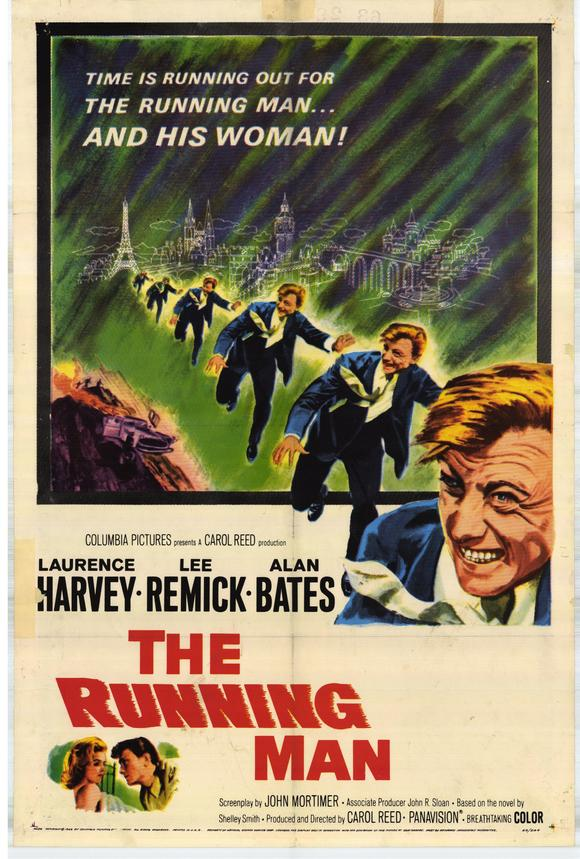
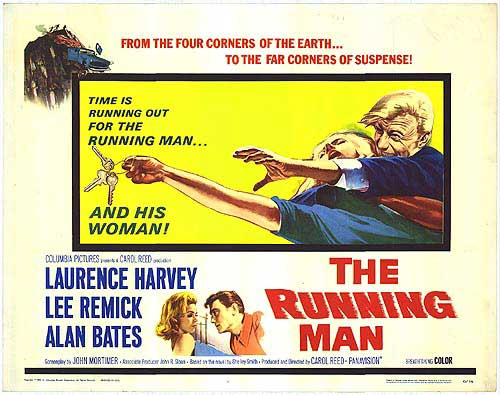
Rex (Laurence Harvey) is a victim of a plane crash when the airplane he is piloting crashes in a forest. He survives with minor injuries, but the plane is totaled and he expects a big payout from his insurance company. However, since he was two days late with his premium payment the policy was canceled and he gets nothing. Outraged he plans a scheme to get revenge with the help of his wife Stella (Lee Remick). He purchases a glider plane and has it insured with the same company. He then intentionally crashes it into the water and before help arrives he dives into the lake and by using an underwater apparatus swims ashore undetected. He hides out on a small island during the investigation and when it is finally confirmed that he was ‘lost-at-sea’ and the insurance pays a handsome sum to Stella the two then run off to Spain, but insurance investigator Stephan (Alan Bates) still has his suspicions and follows the two while continuing to hound them with questions forcing them into a shrewd game of cat-and-mouse.

Based on the novel by Shelley Smith this is a thriller in the most classic sense. The plot is completely believable and still very timely without any of the annoying loopholes. The action particularly during the final 30 minutes, which had me literally on the edge of my seat, is very exciting. The twists are interesting and unpredictable.

What I enjoyed most though was the way the characters evolve and change as the story progresses. Stella initially comes off as carefree and callous only to end up being beleaguered, worn out, and even feeling a bit guilty. Rex seems slick and conniving at the start, but eventually turns crass, vindictive and wholly unlikable. Stephan is nosy and intrusive when it begins, but before it is over he is the most sympathetic to the viewer. Having worked in the insurance industry now for 15 years I liked how the film shows things from both side not only the rigid business-like end, but also how those that try to cheat the system even when they feel somehow ‘justified’ in doing it only ends up making it worse for everybody else. The very ironic ending hits the bullseye.

Director Carol Reed is in top form. I liked how he captures the many different exotic locales of Spain not only with the outdoor scenery and villas, but also inside an old church cathedral as well as an empty bullfighting arena. The opening credit sequence showing Harvey’s shadowing figure running in front of a colored background is good as his the variety of camera angles used particularly during Rex’s final attempt to escape by airplane. The only part that I thought was unnecessary was in when Rex finds a passport left by an Australian that he was talking to inside a bar. Rex picks it up and it is clear to the viewer that he was thinking of using it for his own change of identity, but Reed still felt the need to superimpose Rex’s head shot over the Australian’s, which seemed heavy-handed as does the booming music that is played when Stephan meets Stella for the second time while in Spain.

Remick is excellent and the stresses and strains that her character conveys are easily felt by the viewer. Harvey seems to be having a grand old time particularly when he is in the disguise of the Australian. Although there is some debate over it at IMDB I actually felt that his Aussie accent was alright. He does however look much too scrawny in his bathing suit although Remick in her bikini is delectable.

Why this exciting and polished thriller has never been released onto DVD, or Blu-ray let alone VHS is a complete mystery especially when it stars two major actors from 60’s British cinema and directed by a legend. This movie is waiting to be discovered by new fans and can be enjoyed by just about everyone.

the running man 2

My Rating: 7 out of 10

Released: October 2, 1963

Runtime: 1Hour 43Minutes

Not Rated

Director: Carol Reed

Studio: Columbia Pictures

Not Available at this time.

Why Shoot the Teacher? (1977)

why shoot the teacher 2

By Richard Winters

My Rating: 8 out of 10

4-Word Review: Not a good job.

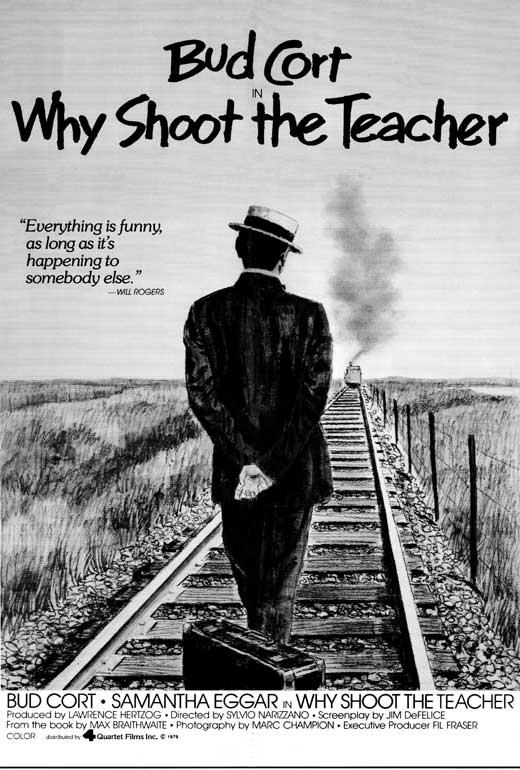
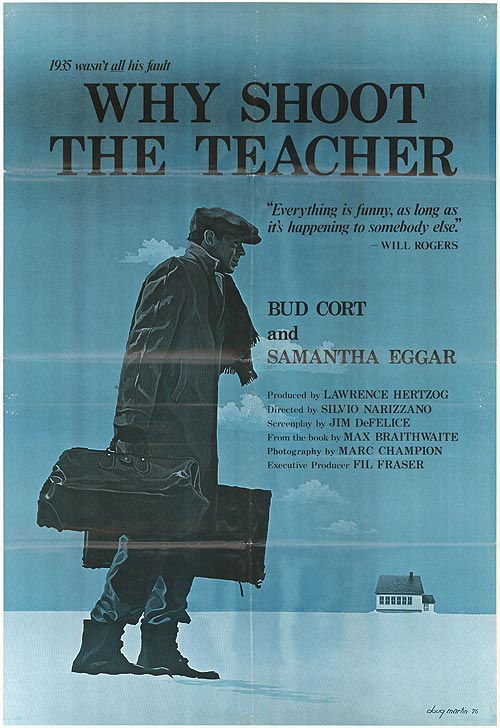
If you hate your job then watching the escapades of Max Brown (Bud Cort) dealing with his should make you feel a lot better about yours, or even lucky. The setting is 1935 and Max has traveled to an isolated farming community in Saskatchewan Canada in order to live out his dream of being a school teacher. The problem is that he must live in the dingy basement of the school that has no running water and an outhouse that gets regularly overturned by the rowdy school children, sometimes with Max in it, and he is only paid $20 dollars a month for his efforts, which even back then was a paltry amount. What is worse is that the district can’t even afford to pay him so instead gives him promissory notes and forces him to be dependent on the generosity of the townspeople for his food. Since he had to borrow money for his train ride up there he is unable to go back and forced to spend the harsh Canadian winter all alone while dealing with difficult students and indifferent parents and adults.

Cort really shines. The fact that through all his diversity he still remains civil and upbeat makes the character quite appealing even though he does evolve and at times compromises from his initial ideals. The best example of this is when he eventually, despite his initial reluctance, uses the strap on one of the older bigger students while the rest of the school children watch through the school windows. Although Cort is best known for his starring role in Harold and Maude I’d actually say this is his best all-around performance.

Samantha Eggar another under-appreciated and underused performer is terrific in support as Alice Field a woman transplanted from England who like with Max finds herself alienated and unconditioned to the harsh climate. She also has a really amusing line when she states “Canada is a nice country…sometimes…in the spring.”

Filmed on-location in the tiny town of Hanna, Alberta the sprawling wheat fields create a tremendous sense of isolation as well as a distinctive sense of natural beauty. The story is filmed during all three seasons, which makes the viewer feel like they are battling the rigorous Nordic climate right alongside Max. One of the funniest moments is when the word ‘Spring’ is flashed on the screen while a raging blizzard goes on behind it making Canada one of the few places that can make Minnesota, where I am originally from, seem like a mild climate.

The film is wonderfully vivid and creates a rich multi-textured tapestry of life on the prairie. By keeping everything on a realistic level it helps recreate what life must have been like for a lot of rural school teachers during the period, which is what makes it so fascinating. The film’s faded washed-out color and archaic low budget technical approach only helps to accentuate the look and feel of the period. There are shades of Wake in Fright here that also dealt with a man teaching school in an isolated school house while battling the elements and I found it interesting to note that Ted Kotcheff who was the director of that film was listed as a production consultant on this one.

My only complaint about the film was the misleading title. There is no shooting of any kind of the teacher, or even any talk of it. Why they came up with that title, which is based on the book with the same title is a mystery. Unfortunately it may give some people the idea that this is a violent film when nothing could be further from the truth and may turn-off potential viewers from enjoying this endearing slice-of-life comedy/drama.

why shoot the teacher 1

My Rating: 8 out of 10

Released: June 23, 1977

Runtime: 1Hour 39Minutes

Rated PG

Director: Silvio Narizzano

Studio: Lancer Productions Limited

Available: VHS, DVD, Amazon Instant Video, YouTube

Denise Calls Up (1995)

denise calls up 1

By Richard Winters

My Rating: 8 out of 10

4-Word Review: Friends over the phone.

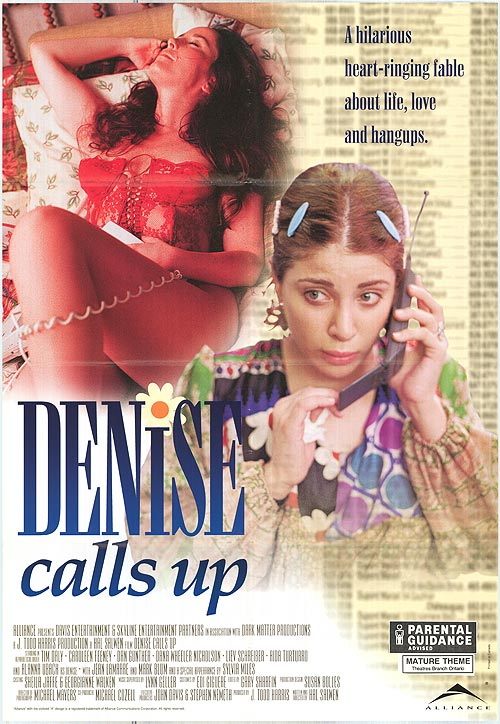
This is a highly original offbeat comedy dealing with a group of young urbanites living in New York who become friends over the phone, but never meet in person. There is Martin (Dan Gunther) who donates some of his sperm to a sperm bank and then gets a call from Denise (Alanna Ubach) who was impregnated with it and now calls to tell him he is the new father. Gail (Dana Wheeler-Nicholson) tries to play matchmaker with Jerry (Live Schreiber) and Barbara (Caroleen Feeney) with the help of her former boyfriend Frank (Tim Daly). Linda (Aida Turturro) and Sylvia Miles as Gail’s nutty Aunt round it out.

The best thing about the film is that all the characters are very real and it makes concise observations on the young upwardly mobile Generation X. All of them possess a myriad of contradictions, insecurities, and neuroses just like people you know in real-life. They are technology savvy, but seem to hide behind it like it is a security blanket. The more options that they are given to communicate with more people the more isolated they become not only from the world around them, but from themselves as well.

I especially got a kick out of the Barbara character because I dated women who were just like her. She is interested in meeting Jerry and seems to like him, but every time he tries to move the relationship forward she backs away and then when he pulls away she goes on the offensive again. She reminded me of what a marriage counselor friend once told me for how he had managed to stay married for so long, which was ‘let them always think they are in control and also let them think that they have won every argument.’

The film is filled with many uniquely humorous scenes as well as sharp dialogue that are quite funny. My favorite part is when all the characters get on a conference call in order to offer support and give advice to Denise during her delivery.

Director Hal Salwen does a great job of keeping things visually interesting. I loved the extremes close-ups of some of the characters mouths as they spoke as well as the back drop of Jerry’s cluttered cramped apartment and the variety of settings that Denise is in when she calls Martin. Salwen was considered an up-and-coming director at the time, but has only done two other features since, which were quite original as well, but he really needs to do more.

Although in my mind I still consider the 90’s to be relatively recent I was really amazed to see how much the technology has changed since this was made. The phones are big and bulky and still require the use of a little antenna for reception. There was no such thing as the internet and faxes were used to send grainy black and white pictures. In some ways this makes it kind of fun to see how things have evolved, but unfortunately it hurts the film a bit because it gives this otherwise hip story a sort of dated look and feel.

The film also allows for a great chance to see young talented stars at the start of their careers. Ubach with her very expressive face is a standout and looks almost exactly like Donna Pescow. Miles is predictably hammy especially with the way she delights in describing the morbid graphic detail of the death of one of the characters that dies when she talks on the phone while driving.

Spoiler Alert!

The only real complaint I had with the movie is the ending when Frank decides to hold a New Year’s Eve party and invites everyone over to his place so they can meet, but everyone finds an excuse at the last minute not to show up. When one of the characters does arrive and rings his doorbell he decides not to let them in. To me this proves to be a bit false especially for a film that was so otherwise on-target. I get the idea that their laptops and phones are their cocoon and they can only function halfway normally when they hide behind them, but still everyone has to get out sometimes and deal with people in person. In my opinion a better way to have ended it would have been to have them get together, but have it be awkward and uncomfortable for all of them. Then have it cut to 5 years later and show how all of them have remained close friends, but still just over the phone.

My Rating: 8 out of 10

Released: May 17, 1995

Runtime: 1Hour 20Minutes

Rated PG-13

Director: Hal Salwen

Studio: Dark Matter Productions

Available: VHS

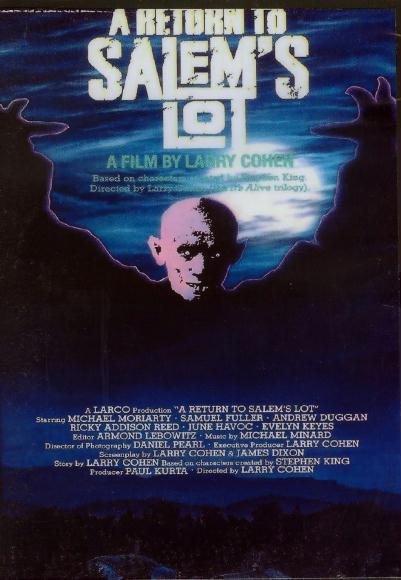
A Return to Salem’s Lot (1987)

return to salems lot

By Richard Winters

My Rating: 3 out of 10

4-Word Review: Town full of vampires

Joe Webber (Michael Moriarty) is a documentary filmmaker who is always looking to tackle the next shocking topic if it will help advance him and his film career. While vacationing in a small New England town of Jerusalem’s Lot with his teenage son Jeremy (Ricky Addison Reed) he becomes aware that the entire town is made up of a population of vampires led by elderly Judge Axel (Andrew Duggan). They are aware of Joe’s film career and give him an offer to film a documentary on them so as to give future generations a better understanding of the vampire lifestyle. Initially Joe is intrigued with the idea, but when he finds out that they want to turn his son into one of them he refuses and spends the rest of the time trying to escape and with the help of elderly but tenacious vampire hunter Van Meer (Samuel Fuller) save his son.

This flick is complete disaster from the beginning. It opens with Joe filming a documentary on a jungle cannibal tribe that looks like a real tacky rip-off of Cannibal Holocaust. The gore and special effects are abysmal and the story and characters have nothing to do with the Stephan King novel to which it is based nor the 1979 TV-Movie. Had the plot gone more with Joe filming a documentary on the populace it might have been interesting in an offbeat way, but the script brings up the idea and then never follows through with it.  There are shades of dry humor here and there and had it been more consistent with it the film could have been viewed and possibly enjoyed as a parody, but as it is it is nothing more than cheap straight-to-video fare.

The characters are poorly defined and at times even contradictory. Joe starts out as this callus man who puts his directing career first and has no concern for his son and hasn’t seen him for years, or even mentioned him to his friends. Then suddenly they get to this town and he will stop at nothing to save him. The son also does not like the father when he first sees him and yet magically and quickly bonds with him the minute they get to town. He is also described to be deeply troubled psychologically, but shows no sign of it during the course of the movie.

There is also the issue of Van Meer shooting Judge Axel in the head twice with a gun, but even as bullet holes spew out blood from his forehead he still goes on walking and talking like nothing happened. Supposedly this is to signify that the only way to kill a vampire is to stick a wooden stake through their heart and if you try to kill them any other way it won’t work, but this still doesn’t make sense. For instance if you break a vampires kneecap wouldn’t that effect the way they walk? If so then the same logic should hold true if you put two bullet holes into their brain. It would more than likely turn them into a complete vegetable a vegetable that may go on living forever until you drive a wooden stake through its heart, but a vegetable nonetheless.

Moriarty gives another great performance that completely exceeds the quality of the material. This one is even more impressive because he actually plays a normal person here and does so effectively, which is interesting given the nature of his sometimes offbeat behavior off-camera. The person though that really steals it is famed film director Fuller as the elderly vampire hunter. The guy shows an amazing amount of charisma and energy and plays up the character to an amazingly amusing degree and helps save what is otherwise a disaster.

Veteran actresses June Havoc and Evelyn Keyes appear as two of the elderly women vampires. Keyes really plays-it-up and the way she sucks the blood from one of the victims off her fingers looks down right erotic. The scene where Havoc, Keyes and writer/director Larry Cohen’s then real-life wife Janelle Webb chew on the dead body of Cohen’s real-life daughter Jill Gatsby gets a few points for audaciousness. This is also a great chance to see Tara Reid in her film debut as one of the vampire children.

The final thirty minutes is an improvement namely because of Fuller’s presence, but it does nothing to hide the film’s many other flaws, which is a perfect example of bad 80’s horror.

My Rating: 3 out of 10

Released: May 18, 1987

Runtime: 1Hour 41Minutes

Rated R

Director: Larry Cohen

Studio: Warner Brothers

Available: VHS, DVD (Warner Archive), Amazon Instant Video

The Fool Killer (1965)

fool killer

By Richard Winters

My Rating: 6 out of 10

4-Word Review: Kid roams the countryside.

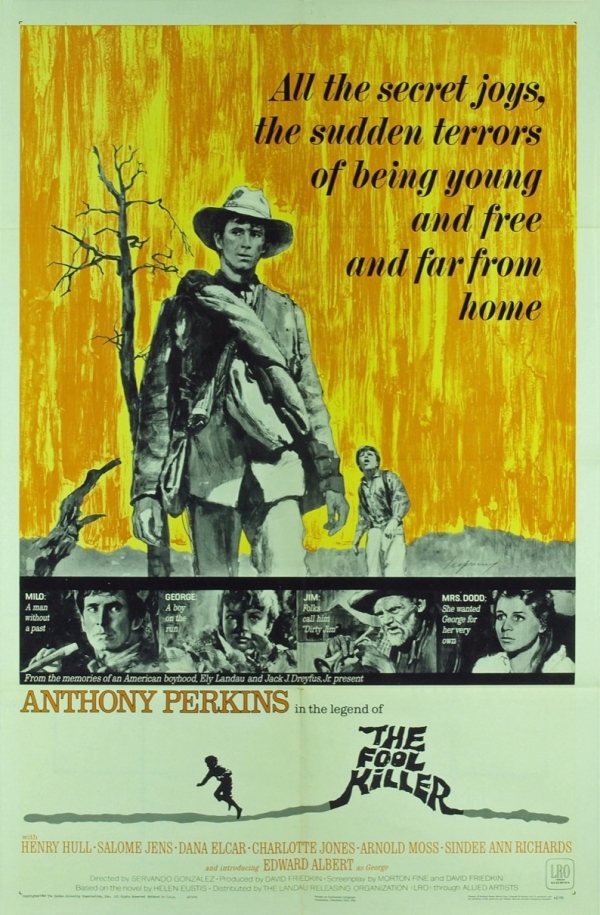
George Mellish (Edward Albert) is a 12-year-old boy who runs away from home after a particularly harsh beating at the hands of his foster parents. As he roams the Tennessee countryside he meets Dirty Jim (Henry Hull) an old man who takes him into his rundown home and fills his head with all sorts of stories about an eight foot ax-wielding man who kills people he deems to be foolish. After a bout of illness George runs away from Jim and late one night meets Milo (Anthony Perkins) a loner who carries an ax and acts strangely. Initially George thinks that he is ‘the fool killer’ Jim described, but the two soon become friends even though strange ax murders begin to occur everywhere they go.

Servando Gonzalez’s direction is excellent and the one thing that keeps this otherwise thin story intriguing. This was his only English language film and he uses a variety of different camera angles and editing styles to create a sort of hypnotic effect. The on-location shooting is vivid and their ability to recreate the look and feel of the late 1800’s is solid including having the characters occasionally speak with poor grammar, which helps with the authenticity.

The only thing about Gonzalez’s direction that I did not like is where they have a nighttime scene that was clearly filmed in the daytime, but done with a darkened lens to ‘fool’ the viewer into thinking it is night. This process has been done many times in the past, but it never works. Even with the dark lens the sky is too bright and you are unable to see any stars. I remember this done a few times on the old ‘Brady Bunch’ TV-show and I always found it disconcerting. The reason is usually because by law child performers are not allowed to work past a certain late hour, so if the script calls for a nighttime scene they try to compensate using this trick, but it always looks tacky. My solution would be to get the parent’s permission to allow the young performer to work late for one night or alter the script to have the scene done in the daytime.

Despite some good production values and an interesting narrative the story itself, based on a novel by Helen Eustis, is limp and doesn’t have enough action. The middle section, which features a lot of conversations between Milo and George, gets boring and the pace comes to a screeching halt. The George character also gets a bit annoying. I realize he is a young and the story takes place in a more innocent era, but the kid falls too easily for anything and everything he is told and seems to have no center, which eventually becomes off-putting.

For what it is worth Albert is good in the lead in what was his film debut and so is Perkins although with this he was risking getting typecast. I thought Henry Hull in one of his last roles was highly engaging and I also really liked Arnold Moss as a bombastic preacher giving a fiery sermon under a tent during a religious revival. Since the movie otherwise does not have much happening this scene tends to be pretty electrifying and vivid particularly the looks on the people’s faces as he preaches to them.

There is a sort-of surprise ending, but it is not that big of a deal and most viewers will probably see it coming long before it happens and they might also say to themselves ‘I sat through two hours of this just for that!’ as well. If the story had been a little richer with more twists or a subplot this might have been memorable, but as it is the final result is empty.

My Rating: 6 out of 10

Released: April 28, 1965

Runtime: 1Hour 39Minutes

Not Rated

Director: Servando Gonzalez

Studio: Allied Artists Pictures

Available: VHS