Nothing But the Best (1964)

nothing but the best 2

By Richard Winters

My Rating: 6 out of 10

4-Word Review: Maybe crime does pay.

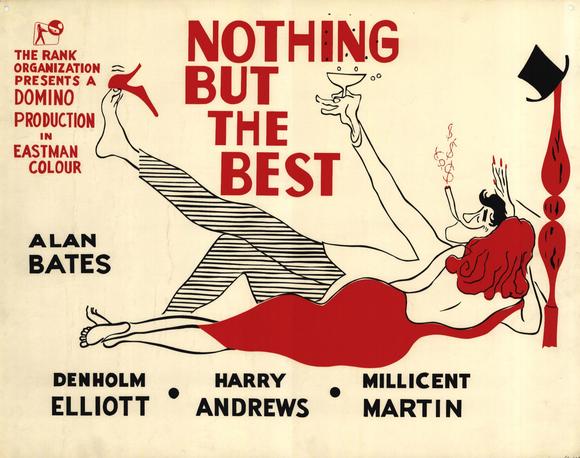
James Brewster (Alan Bates) is a young ambitious man who will do anything to not only climb the corporate ladder, but raise his social standing as well. He works at a large company and finds things tough. Everyone else is competing for the same thing and James finds himself being boxed out and unable to get the attention and recognition he feels he deserves. Then he meets Charles (Denholm Elliot) a master con-man and forger and he realizes the only way to move up is by doing it the criminal way. The two move in together where Charles teaches James all the tricks of the trade. James becomes so good at it that he realizes he no longer needs Charles so he murders him and stuffs his body inside a large trunk, which he has hidden. Then he becomes engaged to the beautiful Ann Horton (Milicent Martin), but her extended family has connections he is not aware of, which could put a kink to his otherwise lofty plans.

The screenplay was written by Frederic Raphael who has had a distinguished career in screenwriting including penning the script to Stanley Kubrick’s last film Eyes Wide Shut. Although there really isn’t any one particularly funny moment and some of the criminal activity is a bit complex and hard-to-follow the dialogue is still snappy and the less than honorable characters surprisingly engaging. Clive Donner’s direction gives the proceedings a breezy pace and the characterizations of the upper British crust are on-target and fun.

Elliot, who is one of the best character actors ever and had a long and distinguished career playing a wide variety of them, is terrific. Somehow this guy has always had an ability to make conniving, immoral people engaging, funny and even somewhat likable and his part here is no exception. His presence is a major plus and helps give the film its drive and it’s a shame he couldn’t have remained through the whole duration. I also enjoyed Pauline Delaney as James’s landlady Mrs. March who becomes aware of his illegal activity and extorts sex out of him in order to keep quiet.

There are a couple of twists at the end that are interesting, but not what you expect. James never really gets the comeuppance that you think he should, which to some degree is disappointing, but on the other hand kind of refreshing. We are so used to seeing films have a moral theme of some kind where bad guys are eventually punished and justice prevails that having one pretty much get away with it is intriguing simply for its novelty.

The color on the print I watched was horribly faded making it look almost like a cheap computer colorized attempt even though it really wasn’t. This film, which was widely hailed by critics and audiences alike, deserves a Criterion release and a thorough restoration and I am shocked that it hasn’t already.

My Rating: 6 out of 10

Released: March 10, 1964

Runtime: 1Hour 39Minutes

Not Rated

Director: Clive Donner

Studio: Royal Films International

Available: None at this time.
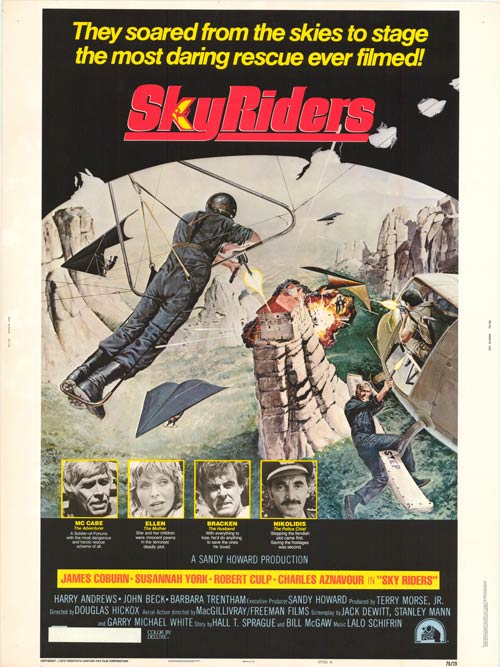
Sky Riders (1976)

sky riders

By Richard Winters

My Rating: 5 out of 10

4-Word Review: Rescued by hang gliders

Businessman Jonas Bracken (Robert Culp) living in Greece comes home one day to find his wife Ellen (Susannah York) and three children kidnapped by a terrorist group. The police can seem to make no headway so Ellen’s ex-husband Jim (James Coburn) gets involved. After analyzing the background of one of the photos of the victims taken by the kidnappers he realizes that they are being held hostage inside a mountaintop monastery and the only way to get to it is by air, so he hires a crew of hang gliders to fly into the locale and rescue the family.

The film is fast-paced it gets right into the story from the very beginning and never slows down. The kids are pretty cute especially the precious little girl, which helps the viewer emphasize with their predicament and urgency to get out. The Greek locations are exotic and help give the film an extra flair.

The biggest problem is the script. The Coburn character has never hang glided before and yet somehow manages to be trained well enough in only a couple of days to fly into the steep mountaintop location without a hitch, which seemed farfetched. It also seemed highly implausible that this group of hang gliders who work at the local circus would be willing to take on such a dangerous mission or even know what to do once they landed and had to take on the gun toting bad guys. I would have expected a lot more missteps and mistakes from this novice bunch and yet they handle everything like they were a group of seasoned commandoes.

Coburn’s performance is misguided as well. Normally I love his toothy grin and throaty chuckle, but here he does it while watching the hang gliders perform at the circus even though his ex-wife and son are being held hostage. I would have thought he should have been so nervous and tense that he wouldn’t have smiled at all and been instead in a perpetually serious manner.

The scene of when they fly into the locale is done with a darkened lens to simulate nighttime, which beside being annoying makes it hard to see and lessens the dramatic effect as well as the excitement.

On the whole it’s a very basic action flick and an empty-headed one at that. The terrorist group and their ‘cause’ are quite generic and the thin plot and cardboard characters barely camouflage the fact it’s just an excuse to show off some nifty hang gliding footage and nothing more.

My Rating: 5 out of 10

Released: March 26, 1976

Runtime: 1Hour 27Minutes

Rated PG

Director: Douglas Hickox

Studio: 20th Century Fox

Available: DVD (Regions 1 & 2)

Bull Durham (1988)

bull durham

By Richard Winters

My Rating: 7 out of 10

4-Word Review: Catcher mentors a rookie.

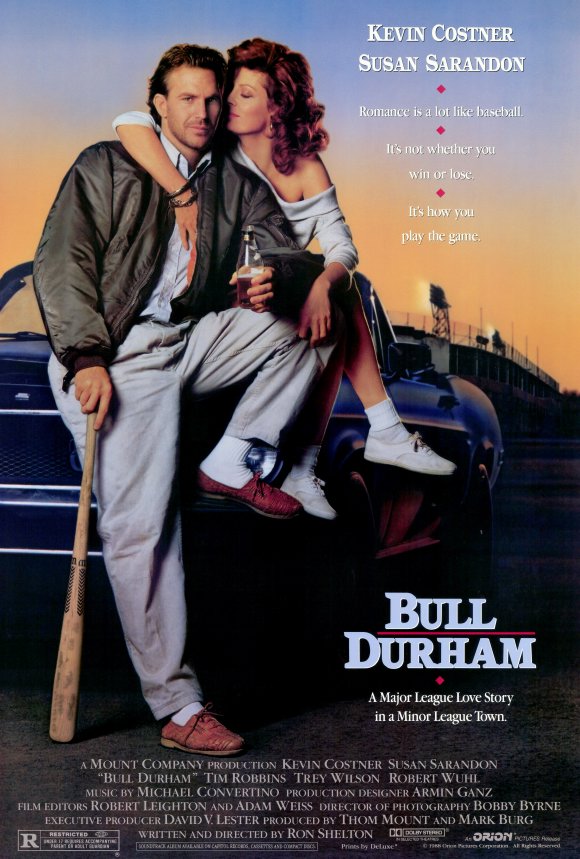
Crash Davis (Kevin Costner) is a veteran of the minor league baseball system and is brought in to the Durham Bulls to help mentor Ebby Calvin ‘Nuke’ LaLoosh (Tim Robbins) a rookie pitcher with a ‘million dollar arm, but a five-cent brain’. Crash teaches Nuke all about the finer points of the game as well as learning to show discipline and control both on and off the field. Annie (Susan Sarandon) is a local fan who each year does some ‘mentoring’ of her own with one of the players by taking them in and having a torrid sexual relationship with them. This year she chooses Nuke much to the consternation of Crash who would like her for his own.

The film is loosely based on the experiences writer/director Ron Shelton had while being a minor league player during the late 60’s.  Keeping the focus solely on the minor league level and never analyzing the majors was to me a big strength. Too many times Hollywood sports movies try to capture that ‘championship season’ or ‘miracle victory’ while forgetting that there are hundreds if not thousands of players who never get to that point, but still have interesting stories to share. The minor league theme puts the game back to its grass roots level where it should be while evoking a wonderful feeling of modern day Americana.

The film makes the viewer feel that they are right down on the field with the players and they gain special insights into the game that they would never have just watching it in the stands on or TV. The thoughts that go through a hitters head as he stands at the plate are interesting as are the interplay between catcher and pitcher. The meeting at the mound scene where the players get together during a game to discuss what wedding gift to get another player who is about to be married is hilarious as is the segment where Crash teaches Nuke all the sports clichés to give when being interviewed by the media.

Robbins is terrific in what I still consider one of the best performances of his career. The character could have been annoying if there weren’t so many young men out there like that. The composite of the young, brash, cocky hot shot who thinks he knows everything, but actually knows very little is so perfectly done that just about anybody will be able to identify with somebody they know or have known who is just like it.

Costner on the other hand is a bit too detached and his performance comes off very much like the restrained way he dances during the closing credits. The character also seems like a flaming alcoholic as he is seen drinking in just about every other scene, but his ongoing exchanges with Robbins are great and the main ingredient that holds the film together.

Throwing in a sex angle was to me a turnoff as personally I never like to mix the two. The Millie (Jenny Robertson) character that is shown and known to sleep with a lot of the players seemed to me to be idiotic especially since this takes place in the 80’s, which was at the height of the AIDS scare.

Sarandon is okay although the part was originally intended for Kay Lenz who I think I would have preferred. The line where her character states that she would never sleep with a player who hit under 250 unless he had a lot of RBI’s and was a great glove man up the middle is classic and the scene near the end where her and Crash make love in a bathtub while surrounded by a throng of lighted candles is on a visual level a highlight.

I loved the bluesy music score as well as the shrine to Thurmon Munson seen at the end. I wouldn’t say this is my favorite sports movie, but the characters are richly textured and the dialogue instantly quotable, which makes it a winner anyways.

My Rating: 7 out of 10

Released: June 15, 1988

Runtime: 1Hour 48Minutes

Rated R

Director: Ron Shelton

Studio: Orion Pictures

Available: VHS, DVD, Blu-ray, Amazon Instant Video

Mr. North (1988)

mr north 1

By Richard Winters

My Rating: 3 out of 10

4-Word Review: He has static electricity.

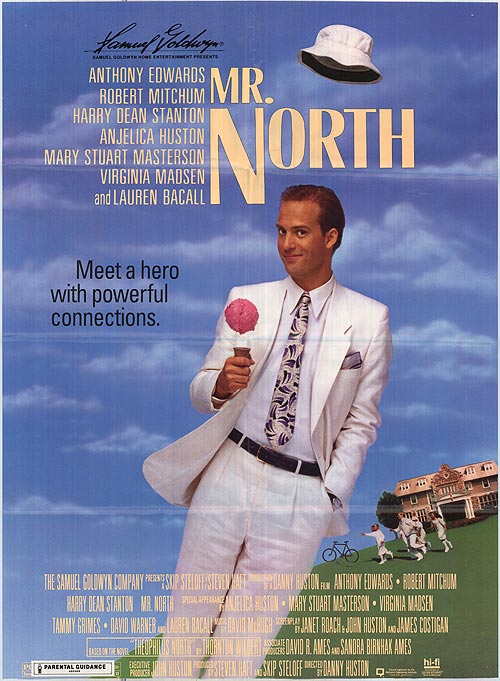
Theophilus North (Anthony Edwards) is a young man who arrives in the town of Newport Rhode Island in the 1920’s. He has little money or connections, but soon attracts attention with his ability to give off small electrical shocks to anyone he touches. Rumors abound that he can heal sick people with this power and everyone wants to meet him, but the town Dr. (David Warner) is not as impressed and accuses him of practicing medicine without a license and a court battle ensues.

The North character is quite likable. He is self-assured, but never obnoxious or overbearing and is sensitive to everyone he meets and always seems to have wise advice to give no matter what their ailment or problem. However, he starts to get to be a little ‘too good’ and it borders on being annoying. It would have been nice to have seen him with at least one flaw or transgression simply to prove that he was human. His electrical charge ability isn’t all that impressive and the way people become so in awe of it is overblown and dumb.

He also helps the Mr. Bosworth (Robert Mitchum) character who has a bladder control issue by giving him pills, which is nothing more than peppermint, but assures him it will ‘cure’ his ailment. Eventually it does suggesting that incontinence is a psychological problem, which is ridiculous as it is almost always a medical one and makes this an insult to anyone who suffers from it.

The tone is pleasing and the recreation of the period is satisfactory, but the pacing is off. Nothing at all happens during the first hour and only slightly gains traction during the end. The scene where North gets chased by a mob of people looking for him to cure them is amusing, but seems to shift this otherwise whimsical fable-like tale into an all-out farce.

The supporting cast is fun. Eccentric actress Tammy Grimes is good as Mitchum’s spoiled adult daughter who tries to make things as difficult for North as she can. Harry Dean Stanton puts on an very effective Limey accent and Lauren Bacall is interesting in a rare sympathetic role. David Warner is terrific as always as the heavy and it should have been played up even more.

The film is directed by Danny Huston who is the son of the legendary John Huston who also co-wrote the screenplay and his sister Angelica appears very briefly. Unfortunately the film is too predisposed at being one of those ‘feel-good’ movies and in the process becomes formulaic and one-dimensional. The final result is a slick, but slow moving production that is empty and forgettable.

mr north 2

My Rating: 3 out of 10

Released: July 22, 1988

Runtime: 1Hour 33Minutes

Rated PG

Director: Danny Huston

Studio: The Samuel Goldwym Company

Available: VHS, DVD, Amazon Instant Video

The Tiger Makes Out (1967)

tiger makes out 1

By Richard Winters

My Rating: 5 out of 10

4-Word Review: Mailman kidnaps suburban housewife.

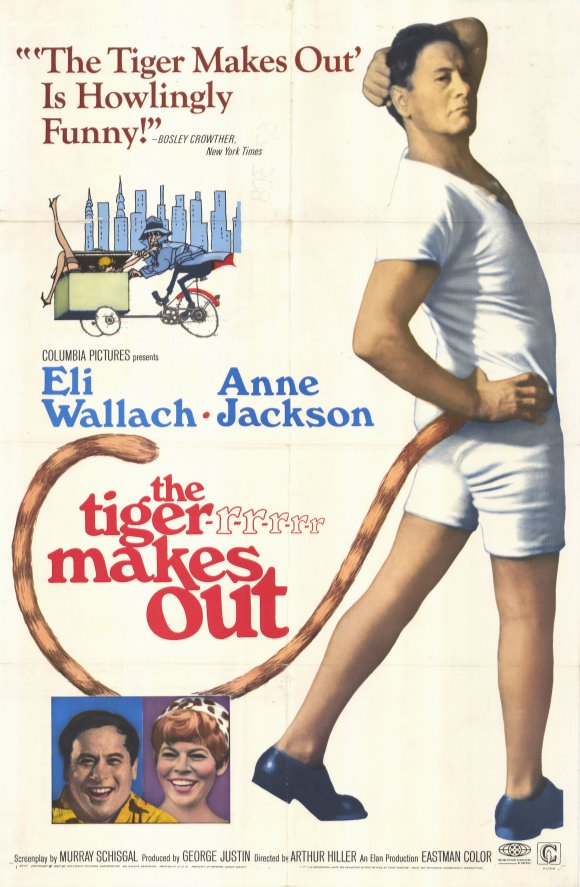
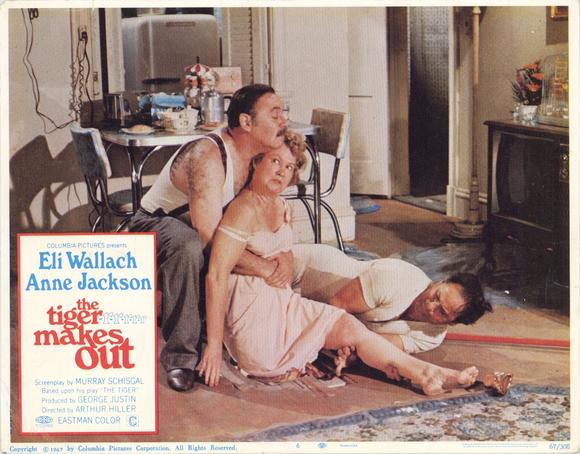
Ben Harris (Eli Wallach) is a middle-aged mailman living in a crummy, rundown basement apartment. He is bitter and angry at the world around him, which he feels is filled with a lot of vapid followers to a rigid and dehumanizing system. When his upstairs neighbor puts a hole in his roof and both his landlord and the housing authority refuse to do anything about it he decides to kidnap a young beautiful women as a form of insurrection. Instead he mistakenly nabs middle-aged housewife Gloria (Anne Jackson) who has similar issues and the two slowly form a budding friendship.

The screenplay is written by Murray Schisgal and is based on his one-act, two-character off-Broadway play ‘The Tiger’. The film is filled with a lot of diverting, offbeat humor some of which works and some of it doesn’t. I liked the part where Gloria’s neighbor Leo (John Harkins) gets his entire family on their knees to pull out crabgrass from their otherwise ‘perfect’ lawn and we eventually see them tear the entire lawn to bits from a bird’s-eye view and in fast-motion. Wallach’s confrontation with Sudie Bond inside the housing authority office is also amusing, but his attempts at kidnapping a woman come off too much like Wiley E. Coyote trying to get the roadrunner and turn the film into an ill-advised live action cartoon.

Director Arthur Hiller does a fabulous job of disguising the fact that this was originally a play. The editing is quick and the locales varied particularly at the beginning. The pace has a kinetic late 60’s feel, which gives it a certain time capsule quality. However the choice of music, which includes a studio group singing the film’s theme, is quite sterile.

Wallach gives a flawless performance and Jackson is also good. The two have been married since 1948 making them Hollywood’s longest lasting couple. Unfortunately the scenes of the two of them inside the apartment are rather stagnant and the one-time that the film gets boring.

There are also some great supporting performances including Rae Allen as a paranoid woman who thinks every man is a potential stalker and Charles Nelson Reilly as a goofy college registrar. The film also marks the film debuts of Dustin Hoffman and Mariclare Costello as his jilted girlfriend, Bob Dishy as an exasperated husband and John P. Ryan as an escort to a female impersonator. You can also spot a young Joe Santo inside the housing authority office and Frances Sternhagen as a passenger on a bus as well as Barbara Colby who in 1975 ended up getting murdered in mysterious and yet unsolved circumstances.

The one error that I noticed in the film is the gaping hole in Ben’s apartment ceiling somehow gets strangely taken care of and is nonexistent when he comes back to the place with his victim. I realize this movie borders on the bizarre and quirky to begin with, but I still felt there needed to be some explanation for that and none is given.

tiger makes out 2

My Rating: 5 out of 10

Released: August 18, 1967

Runtime: 1Hour 34Minutes

Not Rated

Director: Arthur Hiller

Studio: Columbia Pictures

Available: None at this time.
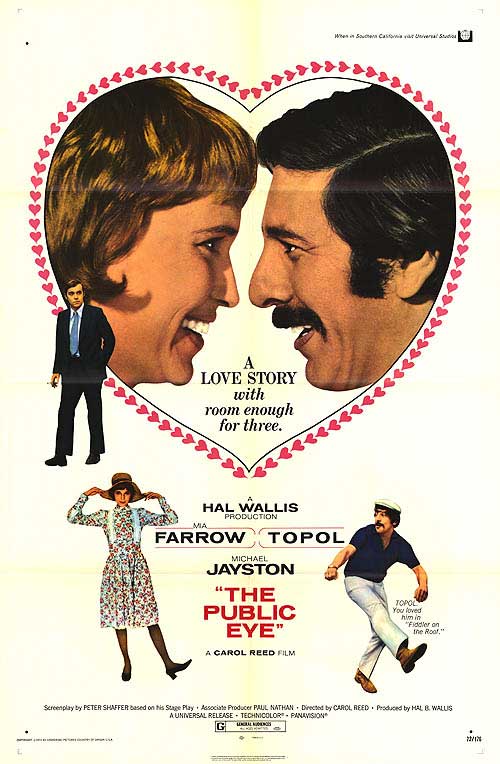
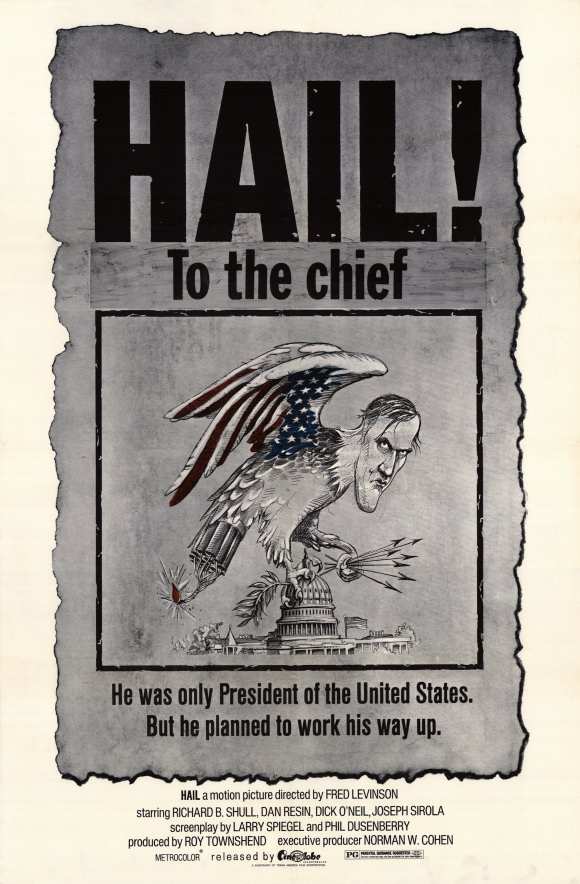
Hail (1973)

hail 2

By Richard Winters

My Rating: 6 out of 10

4-Word Review: The President goes nuts.

The President of the United States (Dan Resin) is going insane and it has become painfully obvious to all those around him. He wants to suspend congress and elections and has created concentration camps where hippies and other ‘liberal subversives’ are taken and he even drowns mice in buckets of water for relaxation. His staff decides it is up to them to take him out before he puts the country at risk. They hold a gumball lottery and whoever picks the gumball that has the number one on it will be chosen to carry out the assassination. The oldest member of the group who is 90 gets it, but when he chokes on the gumball while chewing it before putting in his dentures it is then up to the Secretary of Health (Richard B. Shull), but the President has spies that have infiltrated the group and is fully aware of what they are trying to do and has a secret plan of his own.

This film is satire the way it should be. It makes fun of both sides and manages to get more hits than misses. It was made in an age before political correctness and wasn’t afraid of who it might offend and thus throws it all out there in a creatively reckless and experimental fashion making it enjoyable all the way through. The pace is breezy and a terrific time capsule to a bygone era.

There are some unique scenes here that you won’t see anywhere else. Some of the highlights include a 4-man ‘hand band’ where a group of men get together to play ‘The Yellow Rose of Texas’ for an audience by cupping their hands together. The scene where the President’s army attacks and beats hippies at a commune that is done in slow motion and to the tune of ‘Amazing Grace’ by Judy Collins is effective and the twist ending involving a wooden leg isn’t bad either.

Director Fred Levinson shows great potential. The variety of camera angles, stylish editing and knowing humor are all first-rate and should have been the start of a great career. Unfortunately the rumor is that Richard Nixon didn’t like the film and considered it a personal insult and used his connections to put pressure on the studios not to distribute it, which eventually led to it falling into complete obscurity. The only other thing that Levinson did afterwards was directing the famous Hertz commercials that featured O.J. Simspson sprinting through an airport terminal, which is a real shame and waste.

Gary Sandy, who later became famous for playing Andy Travis in the classic TV-series ‘WKRP in Cincinnati’ is highly engaging as a radical hippie leader who disguises himself as an army general. Brandon Maggart is also amusing as a nervous National Guard Sergeant.

The only weak link is Resin as the President. He is probably best known for playing the Tidy Bowl man in some TV-commercials during the 70’s. Here his performance is sterile and one-note. Shull and Dick O’Neill come off as much more interesting simply because they are far better actors.

The film is dated, but in a fun way. It brings back to life the chaotic atmosphere of the era and makes you feel like you are being thrown into the middle of it. The film is extremely rare and hard-to-find, but worth a look if you can locate it.

My Rating: 6 out of 10

Alternate Title: Hail to the Chief

Released: July 27, 1973

Runtime: 1Hour 25Minutes

Rated PG

Director: Fred Levinson

Studio: Cine Globe

Available: None at this time.
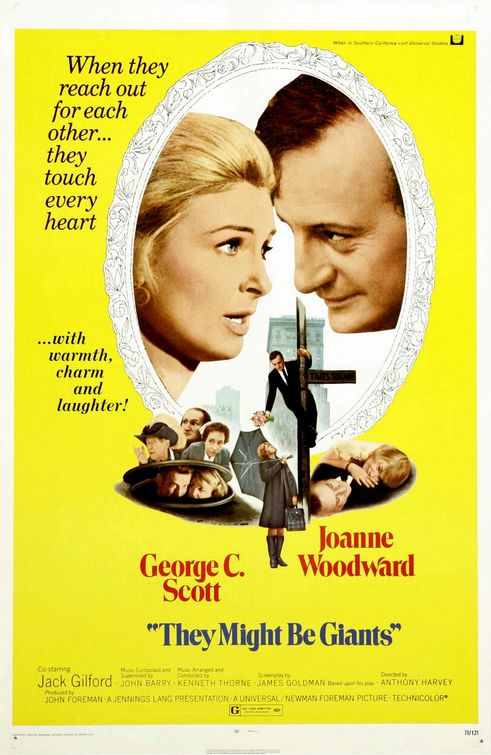
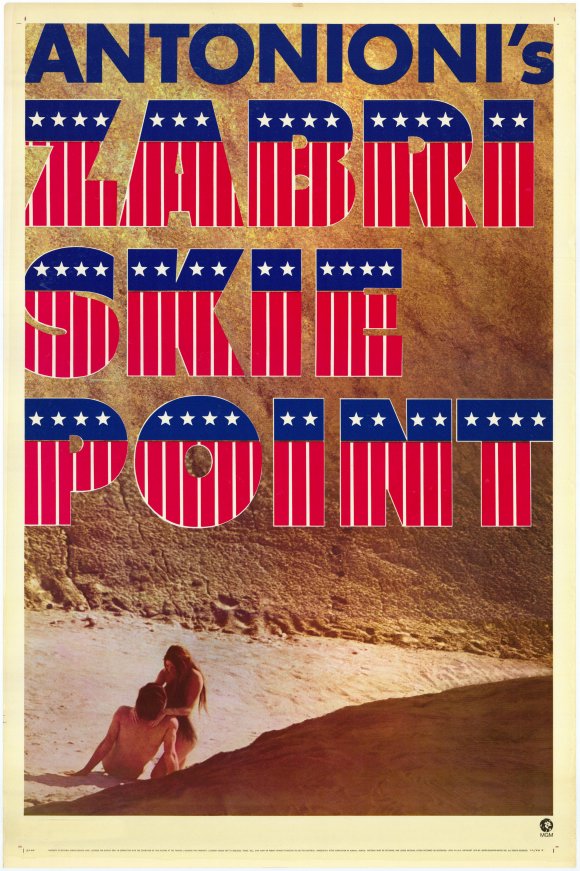
Zabriskie Point (1970)

zabriskie point 2

By Richard Winters

My Rating: 8 out of 10

4-Word Review: Blow up the house.

Two young adults, a product of the turbulent sixties and from opposite ends of the social spectrum, meet and fall-in-love. Daria (Daria Halpern) is an anthropology student while Mark (Mark Frechette) is a dropout who’s wanted by the police. Together they try to endure the hypocrisies and materialism of a capitalistic society.

Writer/Director Michelangelo Antonioni’s camerawork is one-of-a-kind and if you see this film for one reason then see it for this. Everything gets captured in intricate, focused detail and the shots of the desert landscape are breathtaking. The scenes where Mark flirts with Daria while piloting his airplane while she is still on the ground is genuinely cool.

The sprawling, modernistic mansion in the middle of the barren landscape is visually imaginative. Seeing it get blown up is a bit depressing, but when it gets done 10 different times from 10 different angles then it becomes a unique cinematic experience. The exploding refrigerator and flying food, which is done in slow motion, as well as the ten or so different couples who make love on the desert floor at the same time is equally arresting.

Having the two leads played by amateurs with little or no acting experience ends up working well. There is a very natural and honest quality to their delivery that most professional actors in their quest to put on a ‘performance’ wouldn’t be able to convey. Rod Taylor on the other hand is wasted in a small and uninteresting role as is character actor Paul Fix.

This film was unfairly overlooked and criticized upon its initial release, but now deserves a fresh look. Having a scathing take on American society done by a foreigner isn’t quite fair, but his comments on capitalism are good nonetheless. The story itself is quite thin, but when it is as visually intoxicating and emotionally kinetic as this then who cares.

My Rating: 8 out of 10

Released: February 9, 1970

Runtime: 1Hour 50Minutes

Rated R

Director: Michelangelo Antonioni

Studio: MGM

Available: VHS, DVD

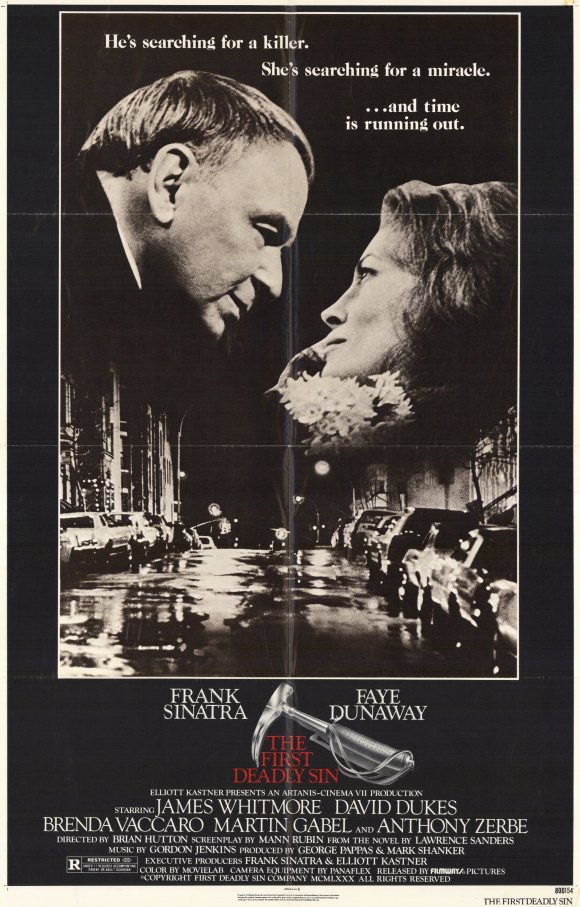
The First Deadly Sin (1980)

the first deadly sin

By Richard Winters

My Rating: 4 out of 10

4-Word Review: Aging cop tracks killer.

Based on the best-selling novel by Lawrence Sanders the story centers around Edward Delaney (Frank Sinatra) a cop only weeks away from retiring who becomes obsessed with tracking down a serial killer who hits people on the back of their heads with a sharp edge hammer as they are walking down the street. The problem is he has only a few clues to go on and his wife Barbara (Faye Dunaway) is in the hospital suffering from a mysterious illness that causes him additional stress and strain.

The film takes a refreshingly different approach to police work than what you will usually find in most Hollywood cop pictures. Instead of emphasizing exciting car chases and thrilling shoot-outs it instead analyzes the meticulous and often times tedious work that goes into following up every little lead while working inside a rigid system and under superiors that aren’t always supportive.  For the most part this is done quite well and at times it is even enlightening, but the whole first half is spent with Delaney trying to figure out what type of weapon was used in the killing even though we the viewer know what it is since we are shown the actual murder at the very beginning thus making the first hour seem quite derivative.

Having the film cut back and forth between scenes of Delaney and the killer doesn’t work. The psycho is played by David Dukes probably best known for playing the man who tries to rape Edith Bunker in a classic episode of ‘All in the Family’. He is a good actor, but scenes showing him alone are clichéd and at times even unintentionally funny. Director Brian G. Hutton should’ve cut them out completely as having the viewer come to realize who it is along with Delaney would have deepened the mystery angle and made it overall more intriguing.

The scenes with the sick wife don’t work either. For one thing we never find out what the mysterious illness is, which is highly frustrating and annoying. It also doesn’t make the plot or character any more interesting. Dunaway is a superior actress and she makes the most of the role’s limitations, but I felt an actress who was more Sinatra’s age would have made it more realistic instead of casting a woman who was 27 years younger.

I have always enjoyed Sinatra in his detective roles, but the character here isn’t as caustic as in some of his older films. For the most part he is pretty benign and even kind of boring. Joe Spinnell though makes the most of his bit part as an overzealous doorman who believes in rigidly following the rules and taking great pride in his doorman duties, but quickly willing to bend them the minute he is given some bribe money.

The final showdown between Delaney and the killer is quite unusual and much more low-key than you might expect. I enjoyed the twist that comes with it, but it lacks a strong impact and the film would have been better served had it had just a little more action.

This movie is also famous as being Bruce Willis’s film debut. He can be seen at the 1Hour 34Minute mark coming into a bar as Delaney walks out. He has a cap over his head and covering his eyes, but you can clearly see just by looking at his mouth that it is him.

My Rating: 4 out of 10

Released: October 3, 1980

Runtime: 1Hour 52Minutes

Rated R

Director: Brian G. Hutton

Studio: Filmways Production

Available: DVD, Amazon Instant Video

The Public Eye (1972)

the public eye 1

By Richard Winters

My Rating: 3 out of 10

4-Word Review: He follows her around.

This film, which is based on the Peter Schaffer play, deals with Charles (Michael Jayston) an uptight British accountant who thinks that his wife Belinda (Mia Farrow) is having an affair. He hires Julian (Topol) a goofy private detective to follow her around and see where she is going and what she is doing everyday while he is at work. Unfortunately for Charles Julian starts to fall in love with Belinda as he is following her and she in him, which only further complicates matters since she was initially not seeing anyone and all those trips that Charles thought were so suspicious were simply innocent excursions.

The biggest problem with this film is that it is too lightweight probably more so than even other lightweight films. Nothing really happens. Julian just follows Belinda around much to her amusement, but the two don’t share any dialogue nor ever consummate their pseudo-relationship. The film simply spends long drawn out sequences showing the two following each other throughout the streets of London and occasionally giggling at their ‘little game’ and that is about it. You keep waiting for that second act to kick in, but it never does, which after 95 minutes starts to make the whole thing almost pointless.

Topol is miscast in the lead and ends up being the film’s weakest link when he should have been the strongest. He was fresh off his award winning performance in Fiddler on the Roof and this movie was supposed to make him into a leading man, but the attempts at turning him into a variation of Inspector Clouseau fail badly. His bright white suit that he wears looks garish and ridiculous especially for an undercover spy. Watching him constantly stuffing his face with food starts to get obnoxious and his buffoonery becomes more annoying than engaging.

Farrow is appealing and her natural child-like fragility is perfect for the part. The scene where she states to the shock of an upper-crust crowd at a formal dinner party that rapists should be punished by having their ‘thing’ cut off publicly is amusingly edging and the film would have been better had it gone a little more in this route.

Jayston is the one that comes off best. He plays the proper British gentlemen with all his staid mannerisms perfectly. What I really like though about him is the fact that he does love Belinda, but just doesn’t know how to show it effectively.

This was an odd project for legendary director Sir Carol Reed whose final film this was. The story doesn’t allow for much visuals although the way Reed captures London both from aerial shots as well as the downtown streets that Belinda visits is excellent. The movie almost seems to work as a tour guide of London, which in some ways is the best thing that can be said about the film.

My Rating: 3 out of 10

Alternate Title: Follow Me

Released: July 18, 1972

Runtime: 1Hour 35Minutes

Rated G

Director: Carol Reed

Studio: Universal

Available: Netflix streaming

They Might Be Giants (1971)

they might be giants

By Richard Winters

My Rating: 4 out of 10

4-Word Review: He thinks he’s Holmes.

After the death of his wife Justin Playfair (George C. Scott) starts to think he is Sherlock Holmes and begins playing the part by smoking a pipe, wearing a deerstalker cap and playing a violin. His brother Blevins (Lester Rawlins) feels he needs to be institutionalized and hires a psychiatrist named Dr. Watson (Joanne Woodward) to analyze him. Watson finds Justin’s fantasy role-playing to be intriguing and reluctantly begins following him around on his fanciful jaunts to find clues from the evil Professor Moriarty and eventually the two begin a quirky romance.

The film, based on a play written by James Goldman, starts out with some potential. The musical score by John Barry has an interesting ominous quality to it. The idea of pitting the practical minded Dr. against the fanciful Playfair is initially engaging. Watching Woodward getting more and more exacerbated by Scott’s constant whims of fancy and refusal to ever to see reality is funny and lightly satirical. The film though drops off terribly when Watson loses all judgment and falls in love with the man despite the knowledge that he is clearly mentally ill. Watching the two frolic through New York City searching for meaningless clues to a mystery that doesn’t really exist makes the film pointless as well as losing all tension, momentum and plot. Having her fall in love with him at the very end might have worked, but having this otherwise sensible and intelligent woman get sucked into Playfair’s fantasy world so quickly is jarring and unbelievable. What is worse is that initially Playfair seems to be working on a real case and there is even a scene where he gets shot at, but then this side-story is frustratingly dropped without any explanation or conclusion.

Scott is in top form and this is an interesting follow-up to his Patton role that he did just before this. Woodward though steals it. She has never done much comedy in her career, but proves to be quite adept to it here. One of the funniest scenes has her trying feebly to cook a meal for Playfair in her cramped apartment despite having no skill at it.

Anthony Harvey’s direction is okay. I liked the way he captures the downtown streets of Manhattan during the rain. However, the film’s most interesting segment takes place in an all-night grocery store where over a loudspeaker are announcements of great sales and deals despite the fact that there are no customers. Eventually a police chase takes place inside there, which ends up being genuinely amusing on a silly level.

The vague wide-open ending cements this as being a complete waste of time and makes the whole thing a big build up to nothing. I realize that this is intended to be whimsical, but even then there needs to be some grounding and this film has none.

My Rating: 4 out of 10

Released: June 9, 1971

Runtime: 1Hour 38Minutes

Rated G

Director: Anthony Harvey

Studio: Universal

Available: VHS, DVD, Netflix streaming