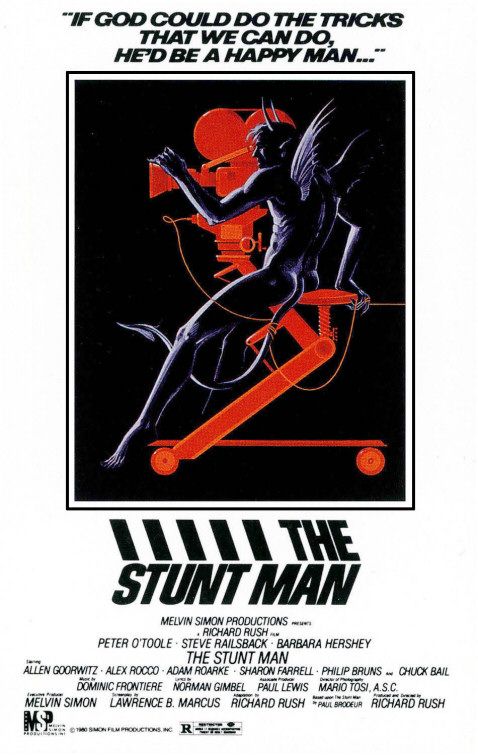
The Stunt Man (1980)

the stunt man

By Richard Winters

My Rating: 7 out of 10

4-Word Review: Convict becomes a stuntman.

Cameron (Steve Railsback) is on the run from the cops who unknowingly comes onto a movie set and inadvertently causes the death of one of the stuntmen. Eli Cross (Peter O’Toole) the film’s God-like director takes a liking to Cameron and decides to hire him on as the replacement stuntman. Cameron is initially reluctant as he has no experience, but decides it would make a good cover from the police who are still after him. He starts an affair with the film’s leading lady Nina (Barbara Hershey), but finds that it may be Cross that he should be the most afraid of and who may be planning to film Cameron’s death during a difficult underwater stunt in order to add realism.

This is another one of those film-within-a-film type movies with this one faring a bit better than the others. One of the best ingredients it has is showing the behind-the-scenes politics that go on during any film production as well as hitting-the-nail-on-the-head with its caricatures.

Railsback is fun in a rare leading role. The way he can get intense as well as convey the rugged, ragged personality of a war-weary veteran on the run and just trying to survive is completely on-target. His best moments are simply his frightened and confused facial expressions that he has while going through many of Eli’s elaborate stunt routines and not sure if he will be coming out of it alive or not.

O’Toole is in peak form and was nominated for the Academy Award playing an egotistical director, which he modeled after David Lean. Having a director make a film advocating the horrors of war and violence, but then beat-up or threaten numerous crew members any time they make a mistake is perfect irony. My favorite moment of his is when they are showing rushes of Nina’s scenes from that day to her parents and then to their shock he throws in a few scenes showing Nina naked and in bed with another man. Then the next day he informs Nina about it simply to upset her and get the needed reaction that he wanted for the scene.

Hershey is splendid as a Hollywood actress who at times is quite jaded while at other moments is very naïve, child-like and emotionally fragile. Allen Garfield as the film’s exasperated and beleaguered screenwriter is also quite good. I also liked Chuck Bail who essentially plays himself as a stunt coordinator who tries to teach Cameron the fundamentals of the business.

Dominic Frontiere’s booming orchestral score is quite distinctive and at times even stirring particularly during the chase sequence. There is an abundance of ironies and twists that keep things interesting throughout and at points a bit surreal, but it’s missing that one final delicious twist or payoff and has an ending that seems a bit like a copout.

My Rating: 7 out of 10

Released: June 27, 1980

Runtime: 2Hours 11Minutes

Rated R

Director: Richard Rush

Studio: 20th Century Fox

Available: VHS, DVD, Blu-ray, Amazon Instant Video
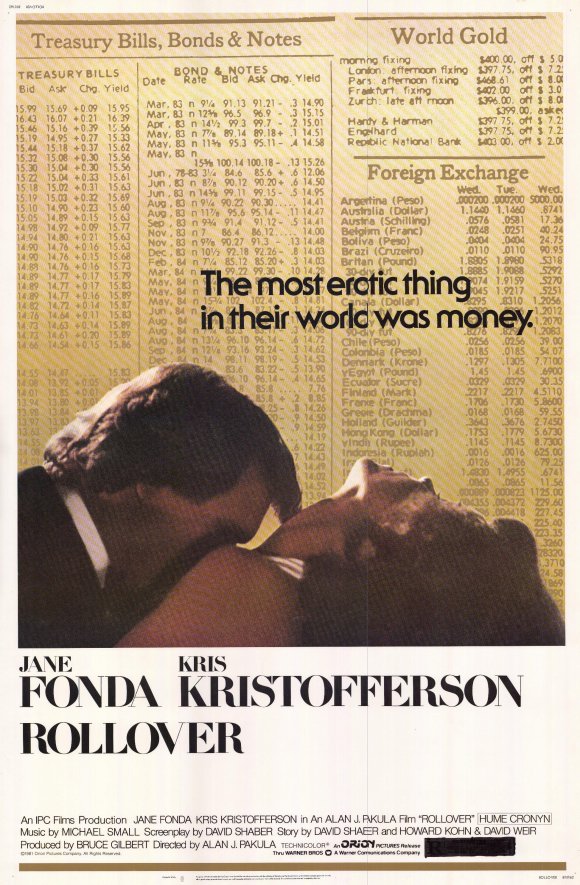
Rollover (1981)

rollover 1

By Richard Winters

My Rating: 3 out of 10

4-Word Review: What’s in account 21214?

Hubbell Smith (Kris Kristofferson) is the newly appointed president of Borough National a bank that is in desperate need of money. He meets Lee Winters (Jane Fonda) the recent widow of the former chairman of Winterchem Enterprises who is looking to obtain a loan in order to purchase a Spanish processing plant. Hubbell broker’s the $500 million deal with some Arab investors and uses the finder’s fee portion to keep his bank solvent, but suspicions are raised when the money goes into a secret account named 21214 that no one knows anything about and can’t access. When Hubbell does some investigating he finds troubling answers that could lead to economic world collapse.

Director Alan J. Pakula approaches this thing like it is another Klute using not only the same star as that one, but similar type of music. Some of the camera work is dazzling and artsy, but I wondered if this was done to help enhance the script, or simply camouflage all of its holes. The story itself is too talky with a heavy reliance of financial business dealings that could become confusing for the average viewer. The two main characters are rather generic and their passionate making-out is tedious instead of sexy. The action is minimal, which includes a scene where Fonda gets trapped in a limo that is driven by a bad guy that had the potential for being exciting, but unfortunately gets underplayed.

Kristofferson with his Texas drawl is an awfully odd casting choice for a hot shot Wall Street businessman. He grows on you as the movie progresses particularly with the way he remains cool and detached even as his business dealings go horribly awry, but I still felt there were a hundred other actors that would have been better suited for the role.

Fonda is excellent and in many ways badly outplays her costar. Her character though doesn’t make a lot of sense as she is supposedly this famous and highly respected actress, much like Fonda herself and yet wants to be chairwoman of this chemical company instead of just selling her share of the stock after the death of husband and go back to acting, which to me would seem a lot more fun.

In an effort to keep the plot moving the film takes a few liberties with the plausibility. One of the major ones is when Hubbell wants to find out about the secret account and does so by breaking into the office of his superior where he finds in his desk drawer a notebook that lists the computer passcode, which seemed too convenient. In reality I would think a programmer would have to be hired in order to hack the system, which would have taken longer to play out, but also if done right heighten the tension as well as the believability.

Spoiler Warning!!

The film’s biggest transgression is the ending itself, which has the Arabs pulling the money out of the secret fund, which causes mass worldwide economic turmoil and chaos. Not only does this seem to create a whole new movie, but it also minimizes the two main characters and everything that we watched them do for the past two hours. A much better ending would have had the characters come up with some way to avert the collapse instead of the gloomy pessimistic way that it does take, which seems overblown and hard to believe.

End of Spoiler Warning!

My Rating: 3 out of 10

Released: December 11, 1981

Runtime: 1Hour 56Minutes

Rated R

Director: Alan J. Pakula

Studio: Warner Brothers

Available: VHS, DVD, YouTube, Amazon Instant Video

Norman…Is That You? (1976)

norman is that you

By Richard Winters

My Rating: 4 out of 10

4-Word Review: Gay son comes out.

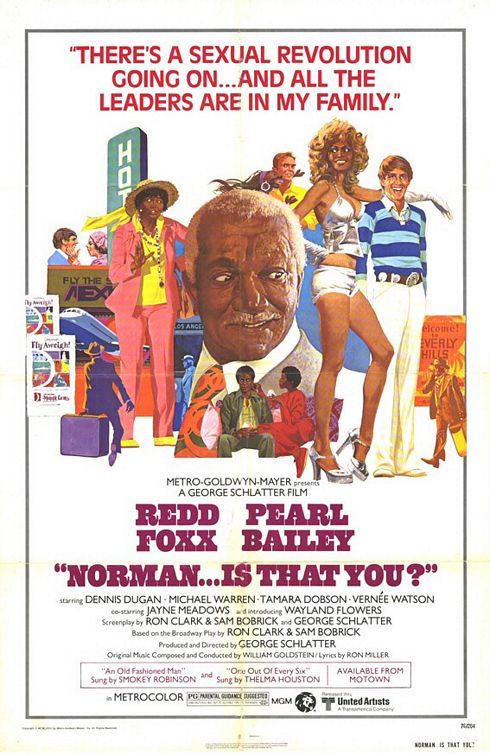
Ben (Redd Foxx) travels to L.A. to visit his son Norman (Michael Warren) after his wife Beatrice (Pearl Bailey) leaves him for his brother. However, unbeknownst to Ben Norman has come to terms with his closeted homosexuality and is now living with Garson (Denis Dugan). When Ben arrives unannounced Norman tries to keep his gay relationship a secret, but Ben eventually finds out about it and goes on a mission to have him ‘cured’.

The story was originally written as a play, but flopped and ran for only 12 performances in 1970. For whatever reason it was decided 6 years later to revamp the idea, but do it with a black cast instead. However, times have changed and most everything here seems quite dated. The Ben character could easily be considered homophobic by today’s standards and the gay jokes he makes seem out-of-line and even offensive.  The production, which was shot on video and then transferred to film, looks stagy and cheap with ‘the view’ of L.A.’s skyline that can be seen outside Norman’s patio door clearly being a painting. George Schlatter who is best known for producing the 60’s variety TV-show ‘Laugh-In’ makes his one-and-only cinematic directorial effort and is unable to overcome the script’s limitations.

Foxx is the only reason it is even slightly enjoyable. Just watching him walk around with his patented strut is amusing. However, the way he treats Garson simply for being gay is no longer considered funny and I felt the Garson character shouldn’t have put up with half as much as he does. Still, the part where Foxx dreams that he is a gay actor accepting the Academy Award is the film’s best moment.

Dugan plays up the flaming gay character relatively well, but Warren is a weak link as he says his lines like he is reading them off of a teleprompter and shows no emotion or variety of facial expressions. Having Bailey cast as Foxx’s wife seemed inspired, but the character gets wasted in trivial husband-and-wife arguments that knock this thing down to a TV-sitcom level. Jayne Meadows who appears as Garson’s mother is equally wasted and is in only one scene even though the character had great potential especially with the idea of setting her up on a date with Foxx.

There is enough comedic banter to save this from being a bomb, but just slightly. Although it is shown that the parents reluctantly come to terms with their son’s sexuality it still conveys the message that it is ‘okay’ to be openly prejudice towards the lifestyle, which likely could rub most of today’s viewers the wrong way.

My Rating: 4 out of 10

Released: September 29, 1976

Runtime: 1Hour 31Minutes

Rated PG

Director: George Schlatter

Studio: United Artists

Available: VHS, Amazon Instant Video, YouTube

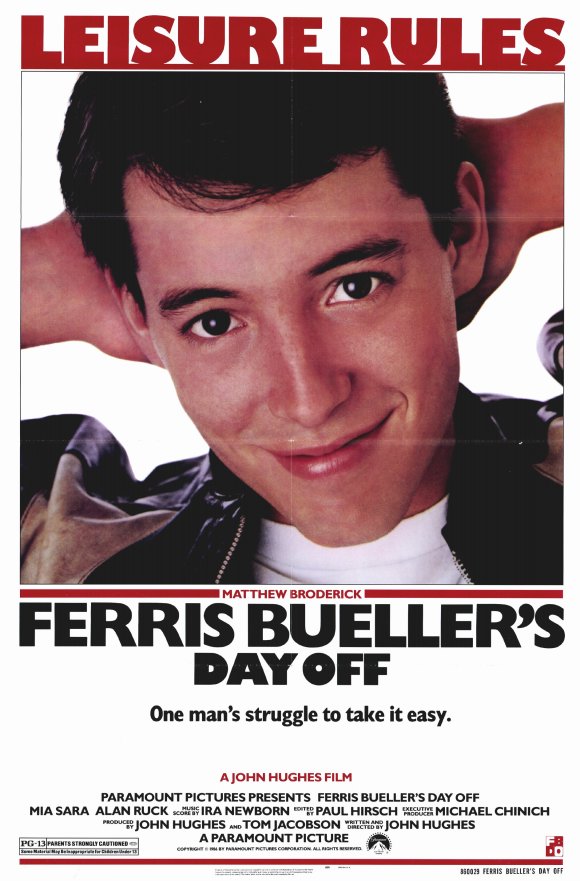
Ferris Bueller’s Day Off (1986)

ferris buellers day off

By Richard Winters

My Rating: 5 out of 10

4-Word Review: Playing hooky from school.

Ferris (Matthew Broderick) is a high school senior who wakes up one nice sunny day in Chicago and decides that he doesn’t want to go to school. He fakes an illness, which his incredibly naïve parents (Lyman Ward, Cindy Pickett) buy into without question even though his sister Jeanie (Jennifer Grey) doesn’t and then gets together with his girlfriend Sloane (Mia Sara) and friend Cameron (Alan Ruck) in Cameron’s Dad’s Ferrari and spends an exciting day in the Windy City where they visit everything from the Chicago Museum to a Cubs ballgame. However, Ed Rooney (Jeffrey Jones) the school’s principal is suspicious about all of Ferris’s chronic absences and is determined to track him down.

On a comic level the film has some hilarious and even ingenious bits and in a lot of ways this is John Hughes finest directorial effort simply for the variety of camera angles and humor that is used. My favorite is the scene showing the lost and confused looks of the students faces who are sitting in an economics’ class run by actor Ben Stein lecturing in his patented monotone voice.

On the negative end I thought the parents were portrayed as being too stupid and gullible to the point that it became extreme and took away from the humor and Ferris’s perceived cleverness since the average 3-year-old would be able to dupe these morons. The symptoms he complains about clearly sound dubious and if anything they should have made an appointment for him to see a Dr. that day. You would also think that these idiot’s would get a hint that he was faking it since this was already the 9TH time this semester he had called in. How much more of a wake-up call do they need? Weren’t they teenagers once as well and didn’t they try to fake illness too to get out of school and shouldn’t they in the back of their minds presume that their kids might try to do the same?

The Ferris character is a bit too cocky and in some ways I sided with his sister as well as Rooney in giving this smug kid of bit of a comeuppance. The character borders on being one of these entitled teens who thinks he will be able to cheat the system his whole life and then when he gets out into the world and has to work a real job and play within the rules he and others like him can’t handle it or worse end up getting fired or sent to jail because they expect to still be able to cut-corners and get away with it.

The humor, especially during the second-half gets rather implausible. One scene has the Dad reading a newspaper with an article about a community rallying around a sick teenager (Ferris), but Ferris had only called in sick that morning, which was well after the paper had gone to press and there were no evening newspapers in Chicago at that time.

The scene where Ferris and Cameron hide in the backseat of a car when their cab gets parked right next to his Dad’s and all his dad sees is Sloane who he doesn’t recognize didn’t make sense either. I suppose it was possible that the Dad had never met her, but Ferris seemed to have been seeing her for quite a while and was even proposing marriage to her, which made me feel that he had most likely brought her home already for his Mom and Dad to meet. Also, why can’t Jeanie recognize Mr. Rooney when she comes upon him inside her house and karate kicks him straight in his face?

The scene where they put the Ferrari on a jack and then a cement block on the accelerator and drive it in reverse in an effort to take off the miles, so Cameron’s Dad wouldn’t find out they had driven it, seems implausible as well. This is mainly because it gets done inside a glass garage. I realize that the garage door was open, but the back of the car was facing the enclosed glass wall, which would have trapped the exhaust fumes and made it impossible for them to stand there and have the long conversation that they do without choking and having their eyes get all watery and itchy.

The side story involving Cameron’s issue with his father who seems to love his car more than his own son doesn’t work mainly because it’s hard to go from zany comedy to drama especially in this case when it’s all rather pseudo-psychological. It’s also frustrating to spend as much time talking about it as they do, but never actually see the father nor the final meeting that he has with Cameron, which could have been revealing and insightful.

The film still has its moments and I loved it as a teen, but now it seems lodged in a more innocent era were adolescent hijinks was considered ‘good innocent fun’ without even slightly balancing it with the darker and serious consequences that can come about from teenagers who think that they can get away with anything. The filmmakers themselves prove my own point and what a thin line this type of plot walked because originally there was a scene were Ferris steals some bonds from a shoebox in his father’s closet and then cashes it in a bank and uses the money to fund his day on the town, but the scene was later deleted because it was felt it made him seem too much like a thief instead of a ‘lovable rogue’.

My Rating: 5 out of 10

Released: June 11, 1986

Runtime: 1Hour 43Minutes

Rated PG-13

Director: John Hughes

Studio: Paramount

Available: VHS, DVD, Blu-ray, Amazon Instant Video
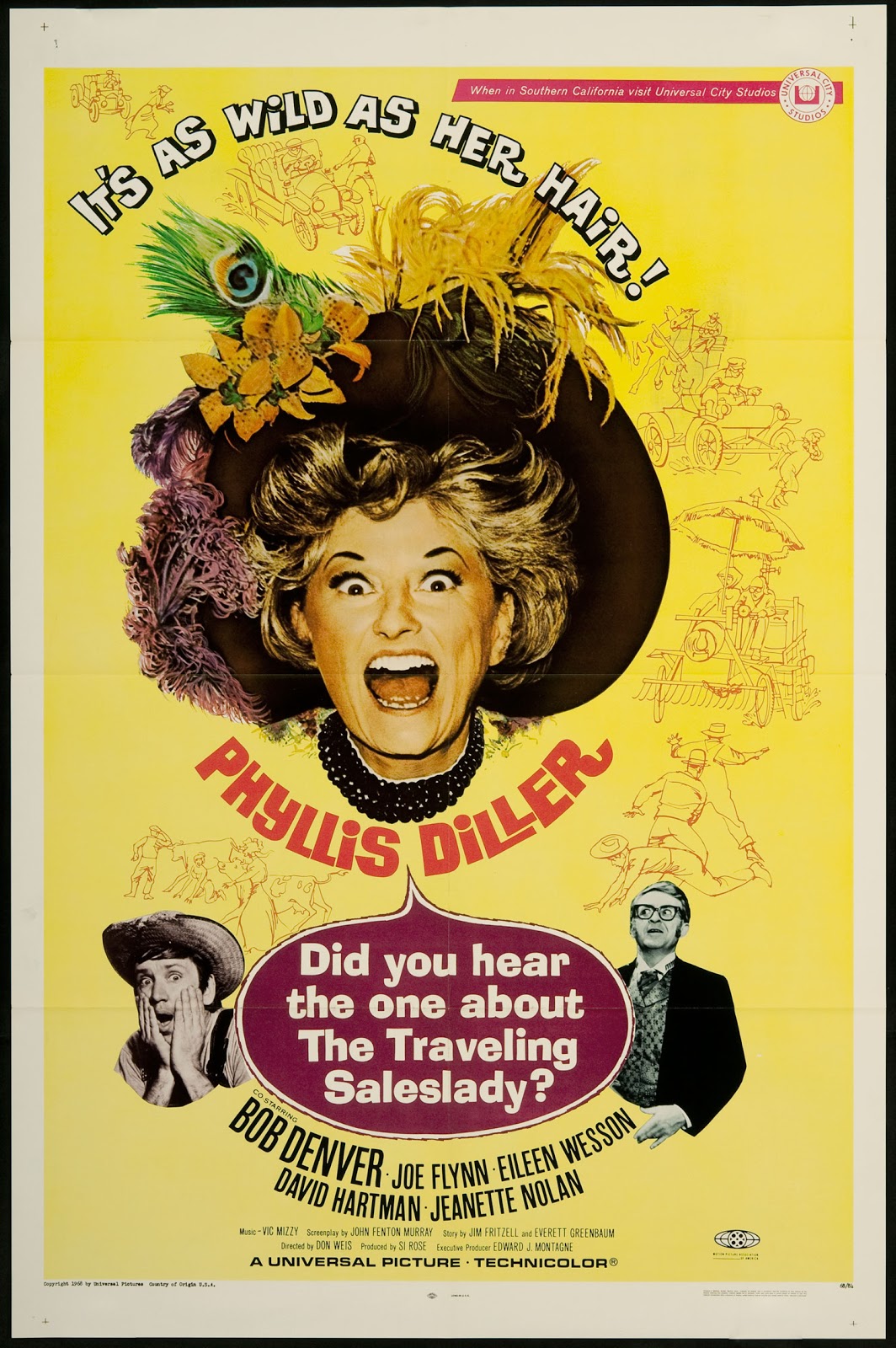
Did You Hear the One About the Traveling Saleslady? (1968)

did you hear the traveling saleslady

By Richard Winters

My Rating: 3 out of 10

4-Word Review: Saleslady saves family farm.

Agatha (Phyllis Diller) is a traveling saleswoman who arrives in a small Missouri town in the summer of 1910 trying to sell a piano that can play by itself. During a demonstration of it one of the townspeople, the kindly, but inept Bertram (Bob Denver) accidently destroys it. Agatha now finds herself stuck with a piano she can’t sell and nowhere to go. Bertram allows her to stay at his family farm, which is at risk of being foreclosed by the town’s greedy banker Hubert Shelton (Joe Flynn). Bertram and Agatha come up with a way to save the farm by winning an automobile race in a wild vehicle created by Bertram using parts from the destroyed piano.

It seems hard to believe in retrospect that eccentric comedian Diller was ever considered star making material, but she did 8 films during the 60’s with 4 of them centered on her flamboyant persona. All of them tanked both critically and at the box office with this one being the last of them. I imagine trying to come up with a scenario using Diller as the centerpiece would be no easy task, but this screenplay penned by John Fenton Murray is too broadly written to be even remotely interesting and seemed already badly dated even for its era. The humor is locked in a kiddie level with a plot that is excessively simplistic and won’t intrigue anyone over the age of 6.

Diller pretty much just plays herself, which would be alright if some her jokes and lines were actually funny, but none of them are. The reoccurring gags centered on her whacky outfits, ugly appearance and horses that go crazy the second she reveals any part of her legs gets old fast. Denver’s character is nothing more than an extension of Gilligan and Flynn is pretty much being the same character he was in ‘McHale’s Navy’.

The film is watchable if you come into it with extremely low expectations, but that is not saying much. None of the gags work and the town’s set was clearly filmed inside Universal’s studio lot, which looks phony and annoying. Denver’s milking machine invention, which can milk 6 cows at once, has potential, but when the cows escape and rampage the entire town it becomes forced humor at its worst, which goes likewise for the climatic and silly car race.

My Rating: 3 out of 10

Released: July 14, 1968

Runtime: 1Hour 34Minutes

Not Rated

Director: Don Weis

Studio: Universal

Available: None at this time.

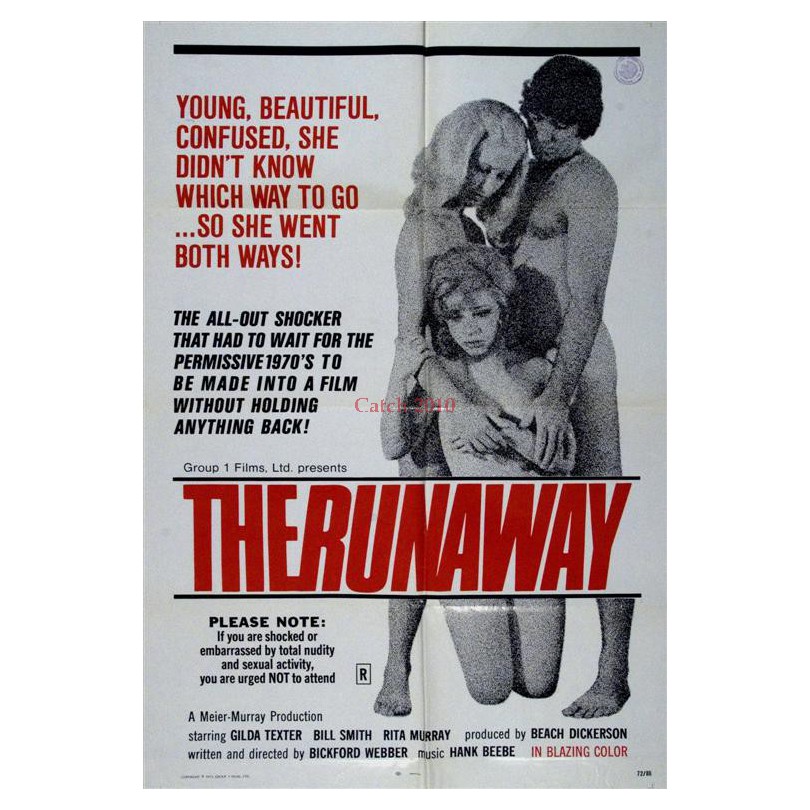
Runaway, Runaway (1971)

runaway runaway 1

By Richard Winters

My Rating: 4 out of 10

4-Word Review: Teen girl runs away.

Ricki (Gilda Texter) is a teen girl who has had enough of her unhappy home life and decides to run away and meet up with a guy in California who she has strong feelings for but knows little about. Along the way she takes a ride from Frank (William Smith) whose job is finding young runaways and returning them to their parents. He tries to help Ricki, but she rejects it even though they remain on friendly terms. She then meets up with Lorri (Rita Murray) who works as a prostitute, but is also a closet lesbian. She gives Ricki a place to stay and then makes sexual advances towards her. Although Ricki at first resists she eventually gives in, but remains conflicted about her feelings towards Lorri and unhappy with her situation that seems no better for her than the one she ran away from.

Texter rose to fame after playing the nude blonde riding on a motorcycle in the film Vanishing Point. Her scene lasted for only a couple of minutes, but most male viewers came away remembering her part more than anything else and producers were quick to pick up on it. She was soon given a starring role here, which was hoped to jettison her into a full-time acting career, which never happened and eventually she settled down into the role of costume designer for films, which she did through 2006.

gilda texter 2

Either way she does quite well and shows more flair and ability than most young beauties that get acting jobs with only limited experience or training. She speaks her lines with a nice inflection and has some good facial expressions especially during the scene where she is attacked.

Smith who has made a career playing bulky tough guys is quite good in the sympathetic role as an older father figure. However, in these more cynical times his over concern for her welfare could seem more like a dirty old man with deep seated sexual desires. The fact that they do end up going to bed together seemed quite creepy and unnatural and I didn’t care for it and felt she would have been better off had she stayed with Lorri and formed a more lasting relationship with her.

Hank Beebe’s music score is distinctive and bucked the trend of the time by not having a psychedelic or rock sound, but instead it’s more on the jazz side. The bouncing vibrant song done over the opening credits is especially good and I would love to credit the lady who sings it, but none is given.

The opening sequence features a scene where Ricki gets attacked by a man at an isolated location of an abandoned dessert building that is played by Ron Gans, who later went on to be a famous voice-over narrator for movie trailers, and it is exciting. Another part that I found interesting is when Ricki goes to a party and gets drugged, which makes good use of the fish-eye camera lens, but overall this thing gets too talky and eventually becomes quite boring.

The Ricki character seems a bit too naïve as well. Most runaways I would presume would be practical enough to have some money in their pocket, but she has absolutely none. She barely knows this guy that she has ‘fallen in-love’ with and has no idea where he lives or even his phone number, but somehow expects to magically meet up with him anyways. She also makes no attempt to find a job once she gets to her new location even though that is the first thing most people, even movie characters will do in order to help them get back on their feet and give them some independence.

The story is derivative and predictable and gives us no new insight or slant into the runaway issue. The ending offers no real conclusion and despite some good attempts at realism and well-written dialogue the film is overall sterile and forgettable.

My Rating: 4 out of 10

Released: June 13, 1971

Runtime: 1Hour 30Minutes

Rated R

Director: Bickford Otis Webber

Studio: Meier-Mayer Productions

Available: None at this time

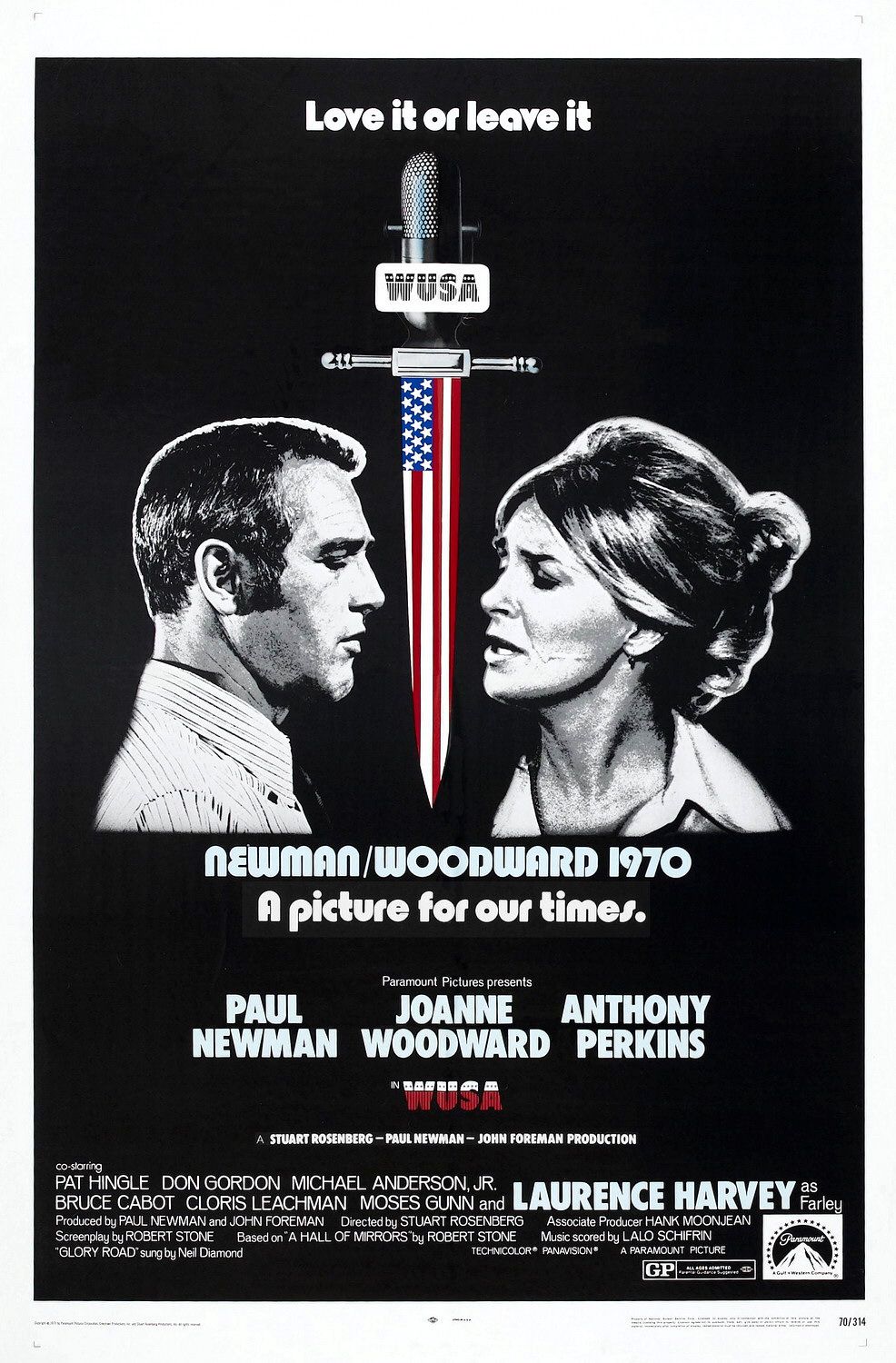
WUSA (1970)

wusa

By Richard Winters

My Rating: 1 out of 10

4-Word Review:  Liberal working for conservatives.

A drifter (Paul Newman) travels to Louisiana and gets a job as a DJ at an ultra-conservative radio station. Despite being a professed liberal he decides to go along with the right-wing rhetoric because he has grown apathetic with things and now just wants to ‘blend-in’.

The idea has a lot of potential, but it is never able to take off. Part of the problem is that instead of trying to play it like satire in the Network vein it instead approaches it with pinpoint seriousness and saturates the viewer with a gloom and doom message. The long and winding stream of social complexities makes the viewer, as with the main character, grow apathetic. The ‘powerful’ statements are redundant and too engulfed with the politics of its day to give anything that is broadly insightful.

It is easy to see why this is probably Newman’s most forgettable film. There is nothing unique or even slightly diverting about it and it meanders badly with no action whatsoever. The ‘exciting’ mob scene at the end looks staged and unconvincing.

The film has leanings as a character study, but even they are weak. Newman’s angry loner role is simply a less intense version of his Hud character. Joanne Woodward as the prostitute with a ‘heart of gold’ is clichéd and dull. Anthony Perkins is the only one that comes off as interesting, but it’s not enough to save it.

This is a truly limp and lifeless picture and I would be amazed if there was anyone out there who would like it.

My Rating: 1 out of 10

Released: August 19, 1970

Runtime: 1Hour 55Minutes

Rated PG

Director: Stuart Rosenberg

Studio: Paramount

Available: DVD, Blu-ray 

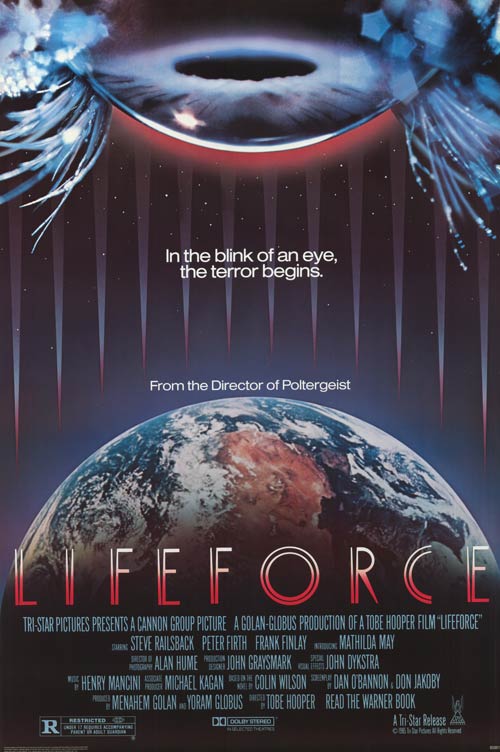
Lifeforce (1985)

lifeforce 1

By Richard Winters

My Rating: 1 out of 10

4-Word Review: Space vampires destroy London.

Col. Tom Carlsen (Steve Railsback) is the head of the space shuttle Churchill who along with a team of astronauts investigate a strange form that is attached to Halley’s Comet. There they find some humanoids in caskets and bring them back to the shuttle where the humanoids then destroy the entire crew with only Carlsen surviving. When a rescue mission arrives they bring the humanoids back to earth only to discover that the beautiful Space Girl (Mathilda May) is a vampire bent on destroying the entire city of London by inhabiting other people’s bodies. Carlsen then joins forces with Col. Colin Caine (Peter Firth) to stop this dangerous breed of vampires before it is too late.

The saying ‘too much of a good thing’ has never been truer than with this film. The screenplay, which was co-written by Dan O’Bannon and based on the Colin Wilson novel, takes on too much. Had this been a miniseries or an ongoing television ssow like ‘Lost’ it might have worked, but the dizzying pace and myriad of twists here become mind numbing. The elaborate story does not equal the characters that are generic and dialogue that is dull. The scenes in-between the action are boring. The film lacks atmosphere or a linear production design. A little bit of a set-up would have helped as well.

The special effects are okay, but some of the backgrounds particularly the ones seen when the team investigates where the vampires reside look like drawings with the actors matted over it. The sight of the dead, shriveled bodies are not scary because they reminded me too much of the host of the old TV-series ‘Tales from the Crypt’.

lifeforce 3

May certainly looks great naked and I admired her courage to do a nude scene while in a room full of clothed men. However, we don’t see enough of her. There are long segments where she is not seen as she inhabits other people’s bodies, which takes away from the film’s erotic potential. The side-story involving her romance with Carlsen is cheesy and dumb.

Railsback proves once again why he is good in a psycho role, but not as a protagonist. The dark circles under his eyes and his intense Texas drawl make him seem creepy even when he doesn’t want to be. I also thought it was a strange coincidence that the date this story begins is August 9th, which is the same date that Sharon Tate and her friends were murdered by Charles Manon’s cult who Railsback famously played in the TV-Movie ‘Helter Skelter’.

Firth proves okay and I liked this jaded, hardened police detective played by someone with a very boyish face. It is also great to see Patrick Stewart in a small role as the head of a sanitarium.

The film gets more ludicrous as it goes on and is unwisely played with a straight-face where adding some humor would have made it more engaging and tolerable. Edgar Wright and Simon Pegg from Shaun of the Dead and Hot Fuzz fame should remake this and I’m convinced would do it a lot better.

lifeforce 2

lifeforce 4

My Rating: 1 out of 10

Released: June 21, 1985

Runtime: 1Hour 56Minutes

Rated R

Director: Tobe Hooper

Studio: TriStar Pictures, The Cannon Group

Available: DVD, Blu-ray

Gambit (1966)

gambit 2

By Richard Winters

My Rating: 6 out of 10

4-Word Review: Foolproof plan has holes.

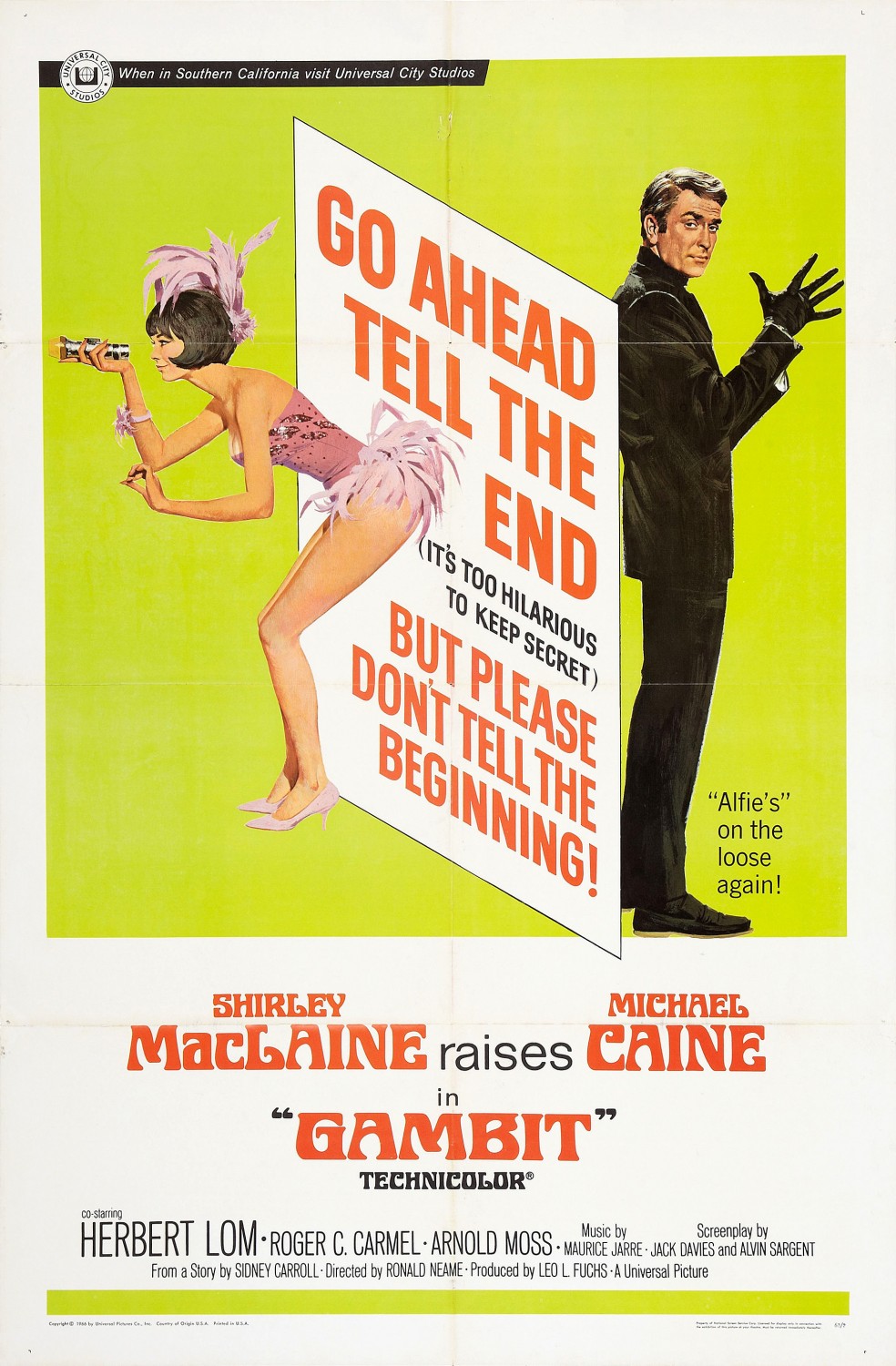
Harry (Michael Caine) is an international cat burglar looking to make his biggest steal yet. He recruits dance girl Nicole (Shirley Maclaine) to pose as his wife and with the help of some makeup and a different hairstyle made to resemble the late wife of reclusive millionaire Shabandar (Herbert Lom). The idea is to use this uncanny resemblance to get Shabandar’s attention who will then invite them up to his reclusive mansion. While Shabandar remains entranced with this woman Harry will use the time to steal an expensive statue that is in Shabandar’s home. Unfortunately Harry fails to factor in the human element, which sends his ‘foolproof’ plan into disarray.

This movie is fun most of the way and great escapism for a slow evening. The novel twist of showing how the plan should work, which takes up the first part and then showing what really happens is quite amusing. The movie works almost as a parody to all those slick heist movies and spy films that always have elaborate schemes, but usually overlook the human element in the process and if anything I wished they had played this up even more.

Maclaine is a delight and for the first 30 minutes doesn’t utter a single word. She has always been good as vulnerable characters and here is almost child-like. The contrasting personalities and verbal exchanges between her and Caine are amusing and something that I wished had also been played up a bit more.

The real problem is the blossoming romance between the two that doesn’t make any sense. The two know each other for only a couple of days and yet somehow ‘fall madly in love’ despite the fact that Harry is very rude and detached towards Nicole the whole time.  Harry also finds Nicole to be quite irritating and even explicitly tells her as much, so why he would suddenly fall for her is just as ridiculous. The idea, which is quite prevalent in 60’ movies, that two single people of the opposite sex must become a couple by the end of the movie is quite contrived and mechanical and in some ways diminishes the story by always forcing a happy ending even when it is not natural or needed.

There are a few other loopholes that hurts the story as well. One of them is while Harry is inside Shandabar’s home he opens up a statue and reaches in to take out the equipment needed to for the crime, but how was he able to do this? Did he sneak into Shandar’s home at some earlier point and put the statue there and if so how was it not detected by Shandabar? This is not explained, which seriously affects the credibility. There is another moment later on where Nicole sneaks back into Shandabar’s home while Harry is committing the robbery, but it is never explained how she was able to do that since there were guards everywhere, which required Harry earlier to go to elaborate means to do it himself.

Spoiler Warning!!!

The twist ending, which has Harry returning the original statue to Shandabar, but keeping the copy of it and using it to resell to the gullible public who thinks it’s the original is kind of cool. However, when Harry smashes the statue replica to pieces in an effort to show Nicole that he has ‘reformed’ from his criminal ways and retain her affections I knew immediately that there must have be even more statue copies hidden somewhere else, which there is, because there was no way his friend Emile would have taken something like that as lightly as he does otherwise.

End of Spoiler Warning!

gambit 1

My Rating: 6 out of 10

Released: December 21, 1966

Runtime: 1Hour 49Minutes

Not Rated

Director: Ronald Neame

Studio: Universal

Available: VHS, DVD (Region 1 & 2), Blu-ray (Region B), Amazon Instant Video

Your Three Minutes Are Up (1973)

your three minutes are up 2

By Richard Winters

My Rating: 6 out of 10

4-Word Review: Road trip goes bad.

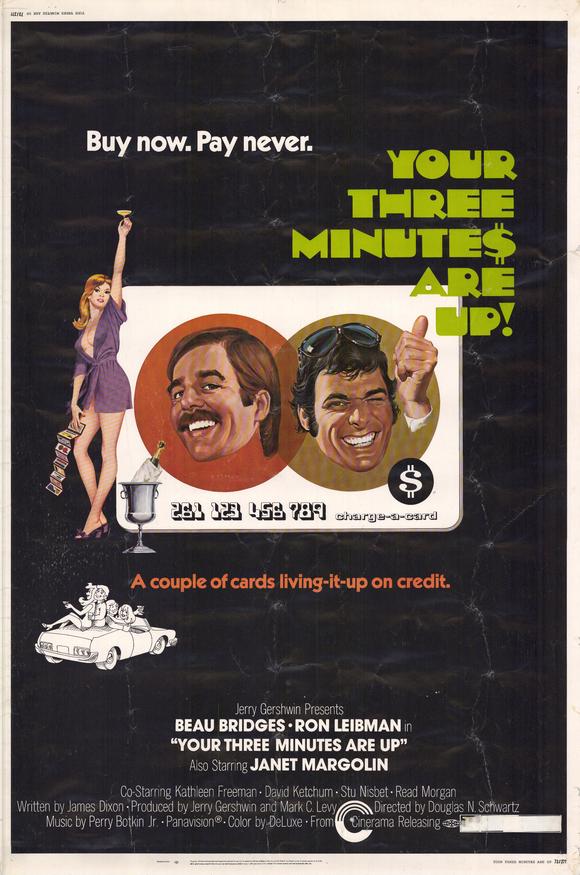
Charlie (Beau Bridges) is unhappy with his life. He is stuck in a dull job and engaged to Betty (Janet Margolin) who is constantly nagging him. He longs for a more carefree existence that is friend Mike (Ron Liebman) enjoys. Mike does not work a job and spends most of his time trying to cheat what he feels is a cold and impersonal system, but also has to deal with constant calls from bill collectors and the stress of trying to make ends meet with very little money. The two decide on a whim to take a little road trip, but during the course of their journey things begin to unravel as both men realize there are limits to everything and once you cross it you must pay the consequences.

The film like the characters spans the entire critical spectrum. The script, which was written by James Dixon who appears as the character Howard is incisive and taps into something every individual on the planet must deal with, which is learning how to balance individuals desires with societal demands. Other films have lightly touched on it, but few delve into it quite this deeply. I especially enjoyed the Charlie character who starts out as an obedient schmuck that gets ordered around by everyone, but also harbors a pent up anger that comes out slowly until it finally erupts into volcanic proportions that shocks even him.

Unfortunately the direction by Douglas Schwartz is dull and unimaginative. The budget was clearly low, which gives the movie a cheap TV-Movie look and feel. The framing and camera work is uninspired and could have used more close-ups, tighter editing and better lighting. The film also contains four generic sounding songs all sung by Mark Lindsey the former lead singer from Paul Revere and the Raiders that lack distinction and give the movie a dated quality.

I also didn’t care for the Margolin character. She is a beautiful woman physically, but the character is too much of a one-dimensional nag. Why she would continue to call Charlie and beg him to come back when he clearly lied to her while also openly telling her that she annoyed him didn’t make much sense. The scene where she walks in on him in bed with two naked women and instead of just ending the relationship immediately she stays and tries to ‘reason’ with him, which came off as pathetic and unrealistic.

This also marks the film debut of Nedra Volz a late bloomer into acting who at age 65 started a two decade career playing old lady roles in various TV-shows and movies. She can be briefly spotted at the 31-minute mark playing an old lady sitting on a bench at a bus stop and accepting a free newspaper only to become shocked and embarrassed at its provocative headline.

nedra volz

June Fairchild who appears as a woman who stuffs her face with food at a fancy restaurant thinking that she is being treated to dinner only to end up getting stiffed with the bill ironically had her real-life paralleling the lead character’s quandary in the movie. She was in a string of films during the 70’s, but when the offers dried up she became a homeless alcoholic living on skid row and the subject of a February, 2001 article in The Los Angeles Times. Friends came to her rescue and she managed to get back on her feet and now judging by some recent pics is looking happy and still quite attractive.

june fairchild 1

My Rating: 6 out of 10

Released: August 7, 1973

Runtime: 1Hour 27Minutes

Rated R

Director: Douglas N. Schwartz

Studio: Cinerama Releasing Corporation

Available: YouTube