Category Archives: Thrillers/Suspense

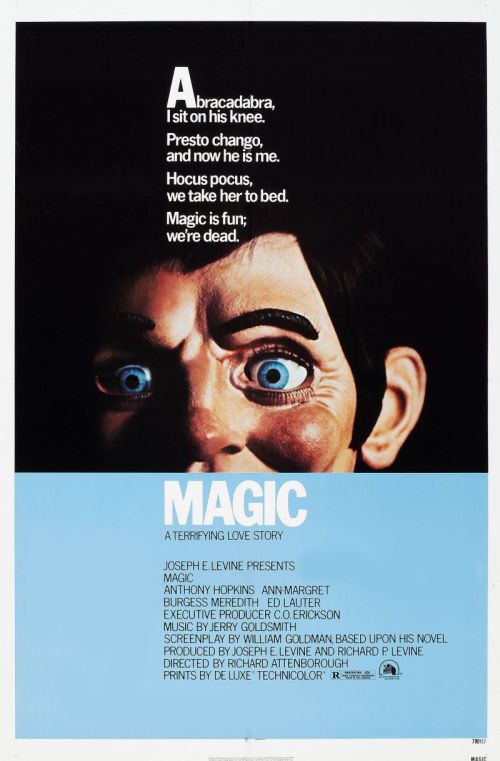
Magic (1978)

magic

By Richard Winters

My Rating: 7 out of 10

4-Word Review: Ventriloquist has split personality.

Corky (Anthony Hopkins) is an aspiring stand-up magician who’s finding it hard to play in front of live audiences. After a particularly disastrous effort he comes upon the idea of adding in a ventriloquist dummy named Fats into his act. The addition helps him become a top act and soon gets him the attention of well known agent Ben Green (Burgess Meredith). Ben wants to get Corky a TV contract, but first Corky must undergo a health physical, which Corky refuses to do. Ben insists that Corky has no other option, so Corky leaves the city and drives via a cab to the Catskills where he grew up and rents a lakeside cabin from his former high school sweetheart Peggy (Ann-Margaret). The romance between the two quickly renews, but then Ben finds out where Corky is staying and catches Corky alone in his cabin having an animated argument with his dummy convincing Ben that Corky has mental issues. Ben tells Corky that he’s going to get him psychiatric care, but Corky fears that if it gets out that he’s mentally ill he’ll never get another job offer and thus resorts to drastic action in order to keep Ben quiet.

The film is based on the novel of the same name by William Goldman who also wrote the screenplay. The novel was unique in that it was told through the voice and point-of-view of the dummy. While there had already been several stories and movies dealing with the ventriloquist/dummy persona including the film Dead of Night starring Michael Redgrave and a famous episode of ‘Twilight Zone’ where actor Cliff Robertson played a ventriloquist that gets tormented by his dummy. This film takes a slightly different approach where upfront the protagonist is clearly shown as having a major personality disorder and thus he’s the real threat while the dummy only symbolizes his inner turmoil between the ego and the id.

The film definitely has some creepy moments especially the dummy, whose spooky appearance is what makes it worth catching. It was modeled after Hopkins with oversized blue eyes, head, and mouth gives it an almost monstrous presence. Supposedly when it was completed and Hopkins first took it home to rehearse he got unnerved by it in the middle of the night and called Goldman to come over and pick-it-up or he was going to destroy it. The placid, gray setting of the isolated cabin, which was actually filmed in California despite it looking like northern New York, is perfect for this type of story and the serenity helps accentuate the suspense.

I really liked too the opening bit where a sweating Corky is seen bombing on stage in front of a apathetic crowd, which realistically hits home how nerve-wracking being up onstage for the first time can be though I wish we could’ve heard what Corky angrily shouted at the audience instead of having the sound of this blotted out by a voice over. It is though hard to believe that a man in his 40’s would get so addicted to his dummy, something he hadn’t used before then, that he couldn’t communicate without it and would have to take it everywhere he went. For a relationship to become this deep seated I’d think he’d have to have been doing a ventriloquist act from childhood on and thus the alter-ego of the dummy became meshed with his own as he grew older.

The acting is excellent by not only Hopkins, but also the supporting cast. Meredith is especially enjoyable playing the caricature of a Hollywood agent, which was modeled after the real-life one of Swifty Lazar, with his best moments coming whenever he takes out one of his expensive cigars, which are each separately incased inside a glass cannister. When he pulls the cigar out he then flings the cannister away, which can then be heard shattering onto the floor. Ann-Margaret known for her beauty and flair plays down her looks here as she wears no make-up and takes on a more earthy persona. Ed Lauter is also interesting playing her husband. Normally he’s a tough guy/bully and I thought this was going to come-out when he takes Corky out on a boat in the middle of a lake where he was going to threaten him to stay away from ‘his girl’, but instead he surprisingly displays a more vulnerable side and makes an emotional appeal to Corky to leave Peggy alone versus a strong-armed one.

Spoiler Alert!

The pacing is slow and the suspense builds very gradually though ultimately there are a few good spooky moments including a brief moment when Fats begins moving itself without the help of an operator and when Corky’s face suddenly begins to resemble the wooden dummy’s. Yet I felt it could’ve gone farther. The segment which has Corky crawling on the floor doing whatever the dummy tells him is certainly unnerving, but could’ve been accentuated more by showing it from Corky’s perspective where the dummy’s head would’ve grown to giant size as it looks down on the meek Corky as it gives him the orders.

The ending, at least when I first saw it, had me confused. The film climaxes with Corky returning to his cabin having stabbed himself and bleeding to death where he and Fats then slowly die together, but outside of the cabin Ann-Margaret appears telling Corky she has now changed her mind and wants to go away with him. Initially though it had been made to seem like Corky had killed her, so seeing her reappear as she does comes-off as almost dream-like. She also begins to speak in the dummy’s voice making it seem like his spirit had transferred to her.

Upon the second viewing many years later I came to the conclusion that this scene was meant to only be ironic. That if Corky had simply held-out longer Peggy would’ve agreed to go with him and thus him killing himself was a horrible waste, but in retrospect since he was suffering from such severe mental issues it was unlikely a long lasting relationship would’ve happened, so having her come back the way she does doesn’t really make much sense since she had been deeply offended by what he had said earlier, via the dummy. It would’ve been more horrifying had he chased her around the house and then killed her and the viewer seeing that get played-out.

My Rating: 7 out of 10

Released: November 8, 1978

Runtime: 1 Hour 47 Minutes

Rated R

Director: Richard Attenborough

Studio: 20th Century Fox

Available: DVD, Blu-ray, Amazon Video, YouTube

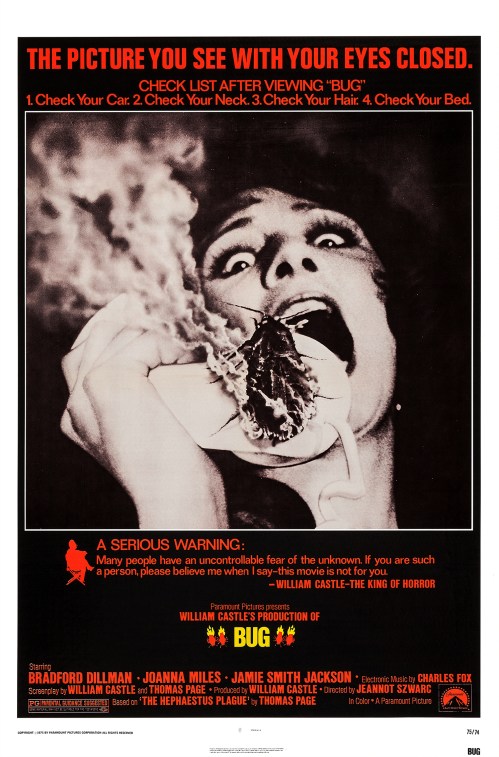
Bug (1975)

bug

By Richard Winters

My Rating: 3 out of 10

4-Word Review: Underground insects set fires.

A small, rural California community becomes besieged by a violent earthquake that opens up large cracks in the ground that allows a type of bug to come up through them that can start fires by rubbing its two legs together. Soon fires begin everywhere and there are many casualties. Professor James Parmiter (Bradford Dillman), a local scientist, is put in charge to research these new insects and see if there’s a way to control them. He eventually learns that their time is limited because they can’t handle the low pressure of our climate, but then one of the bugs kills his wife (Joanna Miles) and this creates an obsession in him to save the last of the species and breed it with a cockroach to create a new hybrid, which he successfully does, but with horrifying results.

The film’s greatest achievement, which was the last to be produced by famous horrormeister William Castle, is the photography of the bugs, which is sure to make anyone who is queasy about insects to be squirming in their seats. My favorite moment is when the professor stabs the bug’s underbelly and all of this white puss explodes out of its insides in slow motion. Some may also enjoy the weird electronic score by Charles Fox, but for me its the quiet moments that were far more effective with my favorite part coming right at the beginning during the opening credits where we hear nothing but the wind blowing off the open prairie while a white church can be seen in the background.

The fatal flaw is the fact that the characters are dull and one-dimensional with none of them standing-out, or having any discernable personalities. In order for the viewer to get emotionally wrapped-up in their fate they need to be interesting enough to save and these people clearly aren’t. What’s worse is that the protagonist, whom we are supposed to bond with and root for, begins behaving in stranger and stranger ways until he becomes as creepy as the bugs he’s fighting.

There’s just so many fires one can watch before it becomes redundant, so during the middle of the second act the film takes an awkward transition from being a disaster flick into a mad scientist one, but the way it gets done is confusing. Why would the professor want to keep the bug species alive as they’ve just killed his wife, so you’d think he’d be happy that they were dying off, but instead he saves one by putting it into a pressure chamber and then tries to mate it with another bug species. His motivations though needed to be better explained, but aren’t, which makes the whole second-half off-putting. Some fans of the film in their reviews on IMDb say it’s because the man goes ‘insane’, but why? Some may argue it’s because the death of his wife, which causes a breakdown, but there’s many people who survive the death of a spouse and it doesn’t turn them into a nutjob. If the man does have weak mental state that could collapse under a stressful event then this needs to be eluded to, or hinted at right at the beginning, so the viewer can be clued into the idea that the individual has mental issues, but it never is.

There are also those that say in the novel version, ‘The Hephaestus Plague’ by Thomas Page, which the film is based on, better explains the reason for the professor’s mental decline, which I don’t doubt, but the filmmakers cannot depend on the audience having read the book beforehand, nor should it be needed. The film needs to make the inner-workings of it’s lead character clearer on its own and in that respect the movie fails.

Spoiler Alert!

The way he’s able to create this new type of insect happens too quickly and seamlessly. Normally it should take many generations of breeding for a bug that doesn’t originally have any wings, and neither of the parents do, to finally begin to form them in their offspring and yet here this occurs literally overnight. The bugs are also capable of spelling out words with their bodies, but even a super smart species must learn the English language before they’re able to communicate it. No one has a language imprinted on their minds as they come out of the womb, or in this case the larvae, and yet here that’s exactly what we’re expected to believe.

Personally if I had directed it I would’ve done the storyline in reverse. Started with the professor already  in a secluded room in his house secretly trying to create a new species of bug because he has a God complex and wants to have an insect named after him. Then have the bugs escape from his lab and kill his wife and then go out into the town and start killing everyone else with their fires. I’m not saying this version would be perfect, but at least the narrative would be linear and the action better connected versus here where it comes-off like two different plotlines awkwardly spliced together.

My Rating: 3 out of 10

Released: June 17, 1975

Runtime: 1 Hour 40 Minutes

Rated PG

Director: Jeannot Szwarc

Studio: Paramount

Available: DVD, Blu-ray, Amazon Video, YouTube

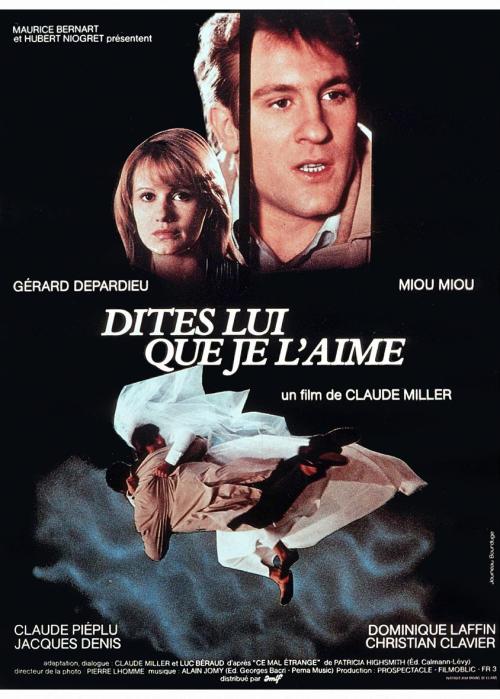
This Sweet Sickness (1977)

sweet2

By Richard Winters

My Rating: 7 out of 10

4-Word Review: Obsessed over childhood friend.

David (Gerard Depardieu) can’t seem to get over Lise (Dominique Laffin) who was a childhood friend of his. Now as adults Lise has married Gerard (Jacques Denis) and even had a child, but David keeps believing that she’s in-love with him and will eventually leave Gerard for him. On weekends he spends his time finishing up with a country house that he has bought, which he plans for he and Lise to live in. He repeatedly calls Lise and meets up with her in public in an effort to beg her to come back to him, but she resists while also advising him that he is mentally unwell and needs to see a psychiatrist. Meanwhile there’s also Juliette (Miou-Miou) who resides in David’s apartment building and has strong feelings for him. David is aware of her presence, but rebuffs her at every turn and yet Juliette persists. She secretly follows David to his country home and when she figures out what he’s doing the two have a confrontation.

While there’s been many movies involving stalkers and jilted ex-lovers that can’t seem to take ‘no’ for an answer this one was done when stalking was still considered an isolated phenomenon and thus there’s a lot of things that work against the modern-day formula, which is what makes it fascinating to watch. For one thing it’s not approached as a thriller, or even a horror, but instead a drama. David is not perceived as threatening, but mentally confused and needing help learning to move-on. Lise does not respond in a frightened way when he approaches, but more just annoyed.

The stalker is three-dimensional as well. One of the most intriguing moments is after Lise’s husband dies in a car accident and David convinces her to come to the country home to check-it-out. Initially she acts impressed with it and gives-off the perception that she might seriously consider moving-in, but David eyes her suspiciously, which is quite revealing. He’s spent the entire time convincing himself and others that she’s truly in-love with him, but now when she actually gives him what he wants he’s not sure he can believe her. This shows subconsciously that he’s aware she doesn’t have the feelings for him like he consciously wants to believe and he actually does know the reality of the situation, but the emotional side of him just doesn’t won’t accept it.

The addition of Miou-Miou  adds another fascinating element. It brings out how stalkers aren’t the way they are simply because they may be lonely and unable to find anyone else, which then supposedly forces them to become so fixated on one person since Miou-Miou is openly interested in him and just as attractive and yet David consistently rejects her. Her stalking on him becomes just as intrusive as David’s to Lise and in some ways just as creepy. The sex scene between her and Gerard, or at least an attempted sex moment, is quite interesting because just a few years earlier the two starred in another film called Going PlacesThere Gerard played the aggressor who rapes Miou-Miou here though she’s the aggressive while Gerard lays virtually frigid, which shows how brilliant these two actors are that they can play such opposite people so convincingly.

Spoiler Alert!

The story was based on a novel of the same name by Patricia Highsmith though there are a few key differences starting with the fact that the novel has the two in a previous, but brief relationship while in the movie they were just friends from childhood. In the book David works as a scientist and purchases the country home under an assumed identity. The Lise character is named Annabelle in the book and her husband Gerard dies after tracking David to the isolated home and getting into a fight with him where in the movie Gerard is killed when his car slides off an icy roadway. In the movie the house burns down when a drunken David knocks over a TV-set, but in the novel he simply sells it and buys a new one that’s closer to where Annabelle lives. The ending is a lot different too with the one in the movie, which takes place at a health spa, being far better and in fact it’s the most memorable moment as the scene is able to balance both an artistic and horrifying elements all at once.

Alternate Title: Tell Her That I Love Her

My Rating: 7 out of 10

Released: September 28, 1977

Runtime: 1 Hour 47 Minutes

Not Rated

Director: Claude Miller

Studio: Filmoblic

Available: DVD-R (dvdlady.com)

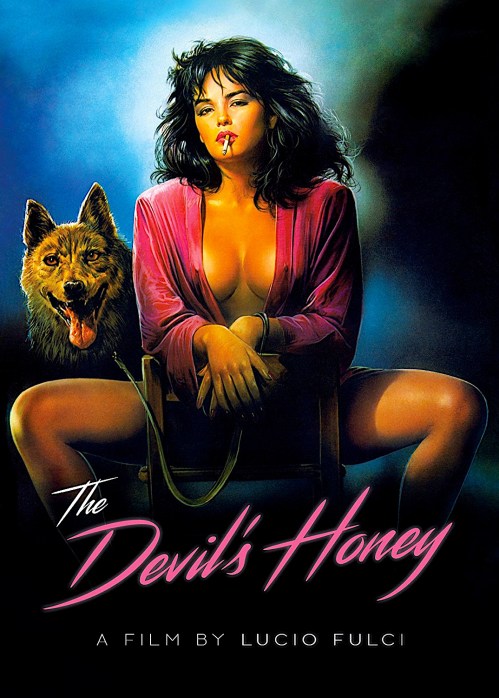
The Devil’s Honey (1986)

devilshoney

By Richard Winters

My Rating: 4 out of 10

4-Word Review: Revenge on a doctor.

Jessica (Blanca Marsillach) is madly in-love with Johnny (Stefano Madia) who’s a famous saxophonist. The two share many kinky moments and have sex in the wildest of places. Wendell (Brett Halsey) is a surgeon who no longer has sex with his wife Carol (Corinne Clery) and instead seeks out prostitutes though even here the arousal is brief as he can’t achieve an erection for any extended period of time. Carol finds out about his philandering and asks for a divorce, which sets Wendell into a panic as he still enjoys having his wife around as a support system even if it isn’t for intercourse. As this is happening Johnny falls unconscious during one of his recording sessions due to a bump he got on his head while falling off his motorcycle earlier. He gets rushed to the hospital where Wendell is on-call, but he’s unable to concentrate on the surgery due to the stress of his marriage and Johnny ends up passing away. Jessica is outraged by this and sets a vendetta on Wendell to punish him for killing her boyfriend. It begins by her calling him constantly, but eventually she kidnaps him by taking him to her place and tying him up. She tortures him sexually, which strangely both of them begins to enjoy.

This was cult director Lucio Fulci’s return to a sex themed film, which he had started his career out as and away from the gory giallos he had become most known for. The attempt is not without merit as the sex is explicit and almost like a porn film with brief interludes of dialogue before it goes right back to the sexual imagery. Unfortunately on the erotic end it’s not all that titillating. The scene where Johnny blows his saxophone up Jessica’s vagina looked more laughable than kinky. The segment where he tries to get her to fondle his penis while they’re riding on a motorcycle, which almost gets them into a bad accident, I found genuinely cringey and not sexy at all. The fact that she’d be so into a guy that’s rather controlling and degrading to her seemed a mystery though it might’ve been meant as a quirk to her personality, but never explained sufficiently.

Outside of the sex the drama is weak. The moment inside the studio where he complains about having a headache, but the producer tells him to keep on playing anyways, so he blows out a few weak notes before tumbling to the floor came-off as unintentionally funny and had me laughing. Jessica’s distraught reaction where she bangs on the glass that separates the control room from the studio was ridiculous as she should’ve run into the studio to try to physically come to his aid, which had a better chance of actually helping him than just pounding on a window. I also got sick of hearing Johnny play the same piece over and over until it became nauseating.

Things improve with the presence of Halsey an American actor who appeared in many B-pictures during the 60’s and 70’s, but eventually went abroad by the 80’s when the film offers here began to dry up. While his face is chiseled and good-looking the hollow look in his eyes perfectly fits the character and thus becomes  a memorable image. Watching Jessica harass the hell out of him is kind of fun though no explanation for what the substance was that she used to knock him out, nor where she managed to attain it.

Spoiler Alert!

The third act has some tension though it gets ruined by all the flashbacks. Wendell’s wife also disappears completely and no scenes showing her reaction to the news that her husband’s been kidnapped. She had figured prominently in the first two acts and therefore we should’ve seen some sort of response from her in the third. Whether she was happy to have him gone, or had a change-of-heart and became upset is something we should’ve seen. There’s also no answer to what ultimately becomes of the new couple who end up liking the abuse that they give to each other. Do they go on cohabitating and if so does Wendell go back to being a surgeon and if not how do they survive financially? There needed to be more of a conclusion and just leaving it all hanging is not satisfying.

My Rating: 4 out of 10

Released: August 21, 1986

Runtime: 1 Hour 23 Minutes

Rated R

Director: Lucio Fulci

Studio: Selvaggia Film

Available: DVD-R, Blu-ray

Rage (1972)

rage

By Richard Winters

My Rating: 6 out of 10

4-Word Review: Nerve gas kills son.

Living just outside of Rawlins, Wyoming is rancher Paul Logan (George C. Scott) and his 12-year-old son Chris (Nicholas Beauvy). Since the death of his mother a year earlier the two have shared a special bonding and routinely do many things together as Paul works to guide Chris from being a child to a man. One night they decide to go camping on the outer stretches of their property. While Paul sleeps in a tent his son stays outside in a sleeping bag, but by morning he’s unresponsive and bleeding from the nose. Paul takes his child to a nearby hospital where the doctors aren’t sure what’s caused the condition, but keep him under observation. Behind-the-scenes it’s revealed that Chris has become a unintended victim of a botched military operation from a nearby base where nerve gas was accidentally released to the public. Paul soon comes down with the effects of the exposure as well, but before he dies he intends to get to the bottom of what happened and bring street justice to all those who were behind it.

The film, which was the first theatrical feature that Scott directed, is a handled in an unusual way. Most movies that deal with government cover-ups/conspiracies usually keep it a mystery of who’s behind it. Both the victim and the viewer have no idea what’s going on behind-the-scenes and are left with trying to guess who may be responsible and only at the very end do things get revealed, but in some movies even then many questions remain left open. Here it gets shown right away who’s causing the crisis and why as there are many long, drawn-out meetings between the government agents who almost painstakingly detail of what went wrong and how they’re going to cover it up. In fact there’s more scenes, especially in the first half, with the military brass and their co-horts than with Scott making it almost seem like he’s just a side character.

Spelling everything out may seem like a bad idea as part of what creates the suspense in these types of stories is the unknown. Yet it still held moderate interest though the scenes are overly talky, at least the first two acts. It’s also not explained what happens to Dr. Caldwell (Richard Basehart). He initially goes along with the government agenda to keep things quiet, but eventually changes his mind and decides to tell Paul the truth, but then he’s confronted with the agents who bring him into a hospital room and close the door, but it’s never shown what they do with him. He’s reappears at the very end, but no explanation for where he was in-between, or how the government managed to make him ‘disappear’ for awhile. For a movie that seemed intent to explain everything I felt this was one area that needed to be better played out.

Spoiler Alert!

Where the film goes really off-the-beam is when Paul exacts his revenge, which has him killing many indiscriminate people. Some of it turns quite savage particularly when he blows up a police car and the cops jump out screaming in pain as the hot flames rise off their bodies. At one point he even shoots-up a cat who tries to come to the aid of its owner, which has to be some sort of cinematic first. Normally other movies with this type never have the hero kill anyone and will usually just hold people that they come upon, like cops or security guards, hostage by tying them up. Here though he blasts them away without pause. Some critics have said this was a mistake as the protagonist loses his likability factor with the viewer, but in some ways if you’re really going to try take on something as big as the government then ultimately things will get ugly especially if the person is willing to go ‘all-in’ making it in a nihilistic way quite realistic.

The ending though is what really hurts it as Paul dies while the government agents callously watch on and then flown away via helicopter to some undisclosed location. I know 70’s movies were notorious for their unhappy endings, but this one piles-on that notion a bit too much. Outside of blowing up the research center, which could easily get rebuilt, Paul’s actions made no difference. The viewer likes to see their hero have more of an effect on things and to end it like this makes it overly defeating. Had we gotten to know the Paul character better and there had been more of a backstory then maybe his final rage at the system would have had more of a dramatic effect, but as it gets presented here on an emotional scale it’s unsatisfying.

My Rating: 6 out of 10

Released: November 22, 1972

Runtime: 1 Hour 39 Minutes

Rated PG

Director: George C. Scott

Studio: Warner Brothers

Available: DVD-R (Warner Archive), Amazon Video, YouTube

‘Gator Bait (1973)

gator

By Richard Winters

My Rating: 3 out of 10

4-Word Review: Woman fights off rednecks.

Desiree (Claudia Jennings) is a peasant woman living in the swamplands of southern Louisiana. To help her bring in an income she takes part in poaching of snakes. Deputy Billy Boy (Clyde Ventura) and Ben (Ben Sebastian) are sitting in a boat in the swamp waters when they catch Desiree in the act of poaching and decide to chase her down and arrest her, or try to use it to their advantage by getting some sex out of her in return for not taking her in. Desiree though proves to be more cunning than they expected as she out races them in her boat and then when she is finally cornered she throws the bag of snakes that she has into their boat, which allows her time to escape. The deputy then must fight off the snakes by using his gun to shoot them, but in the process accidentally shoots and kills Ben. He later tells his father, Sheriff Joe Bob Thomas (Bill Thurman) that it was Desiree that shot Ben and not him. The Sheriff then goes to the boy’s father (Sam Gilman) and when given the news the father decides to chase Desiree down himself with the help of his two other sons (Douglas Dirkson, Don Baldwin) and exact a violent revenge.

This was the 7th film written and directed by Ferd Sebastian and the 4th that he did alongside his wife Beverly. It’s most likely their best known effort and came about through their friendship with Claudia Jennings. Jennings, a former Playboy model, acted in one of their other films, another B-exploitationer known as The Single Girls, and struck-up a friendship with the husband and wife filmmakers and asked them to come-up with a script in which she could star. Beverly then wrote this script seemingly overnight, I’m not sure if it was actually written in that short of time, but judging from its creativity, which is very low, it’s not that hard to believe. It was then shot in a matter of 10-days in March of 1973 at Caddo Lake, which is a state park and bayou that borders Texas and Louisiana.

The film does start out with a good speed boat chase and it captures the swamplands in vivid detail and with the exception of one scene that takes place in the town of Thibodaux, Louisiana, everything else gets done in the swamps making it seem like its own little universe. The Sebastains do wisely keep their son Tracy Sebastian, from uttering any lines of dialogue as he plays Desiree’s mute kid brother who had his tongue cut-out, which is good as he later starred-in On the Air Live with Captain Midnight and it’s just a shame he couldn’t have played a mute there as well as he gives what I consider one of the worst performances ever put on screen, but here since he can’t talk his marginal acting ability is not as apparent.

Despite the few good points the movie is otherwise a failure where the tension wanes instead of intensifying as it should. Part of the reason for this is that the story spells everything out right away and offers no surprises, or twists. The boat chases are diverting at first, but soon turn stale as they become too prevalent and almost like a loop reel where we’re just seeing the same thing done over and over again with nothing new getting thrown in. The characters, particularly the male ones, are written as being extreme southern caricatures who are too one-dimensional to being even remotely interesting and I genuinely felt sorry for actors Gilman and Thurman who had already been in the business for many decades at the time and had even been in some better financed studio films, so to have to come down to starring in this brainless dreck had to feel like a low point, but I guess a paycheck is a paycheck.

Jennings’ presence doesn’t add much as she’s seen only sporadically and most of the film time is given to the bickering male yokels. She doesn’t, despite her past of being a Playboy Playmate, appear nude as that gets left to Janit Baldwin, who plays her kid sister Julie, which will disappoint male viewers who will most likely come into this expecting the pretty Jennings to be the one who gets unclothed. When Claudia does speak it’s a trainwreck too as she sounds like someone from Europe instead of a rural southern chick. Her character is also poorly defined and doesn’t really grow, or fleshed out enough to make her seem like a real person, but instead remains more of an enigma.

Spoiler Alert!

Some on IMDb describe this as a early variation of I Spit on Your Grave, but that really isn’t accurate. In the Meir Zarchi flick the rape attack takes up the majority of the film time while here the attack isn’t even on the main character, but instead the younger sister, which is also quite brief. The female character doesn’t kill off the men one-by-one like in the other one as here the men end up killing each other for the most part, with the character’s younger brother taking care of one of them, and the final one is left to live.

Had this been more violent and explicit I might’ve forgiven the rest, but overall it’s quite tepid. It’s basically a tease of a movie that promises way more than it delivers and it’s so entrenched in stereotypes that it makes you feel like you’ve seen it, or something quite similar, a hundred times before. Sure there’s a ‘surprise twist/reveal’, but this one could see coming early on as the father of the boy who is killed and who goes after Desiree with a vengeance keeps commenting on how attractive he found her mother, which doesn’t take a genius to read into that and know most likely what he’s implying. In any case it’s not much of anything even on a B-movie level, but nonetheless got made into a sequel in 1988 though without star Jennings who died in a car accident in 1979.

My Rating: 3 out of 10

Released: October 12, 1973

Runtime: 1 Hour 28 Minutes

Rated R

Director: Ferd and Beverly Sebastian

Studio: Sebastian International Pictures

Available: DVD-R

Last Embrace (1979)

lastembrace

By Richard Winters

My Rating: 7 out of 10

4-Word Review: Someone wants him dead.

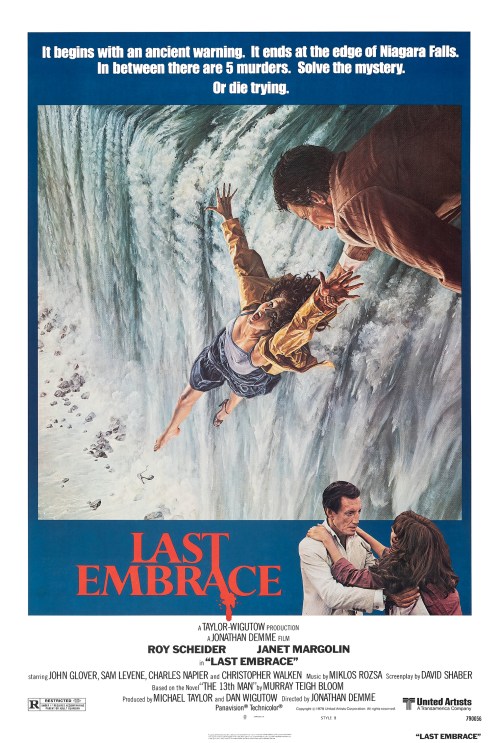
Loosely based on the novel ‘The 13th Man’ by Murray Teigh Bloom the story centers around Harry (Roy Scheider) a government agent who has a nervous breakdown after his wife gets killed during a shootout while he was on a secret mission. After spending time in a sanitarium he gets out to realize that his agency no longer has any assignments for him and he fears they may want him dead while trying to make it look like an accident. When he gets back to his apartment he finds that it’s been sublet to Ellie (Janet Margolin), a doctoral student at Princeton University. He tries to get her to move-out, but can’t and then starts to receive threatening notes in Hebrew and uses Ellie’s background in that language to help him decipher what they’re saying. Soon the two go on the run convinced that the same person after Harry may also now be targeting Ellie, but nothing is exactly as it seems.

Jonathan Demme, despite his immense talent and admirable film output, never received name recognition and for the greater part of his career failed to have a hit at the box office. In fact it wasn’t until the success of The Silence of the Lambs that he even became a sought after Hollywood commodity. Even then when most people think about that movie it’s Anthony Hopkins, or even Jodie Foster that comes to mind while Demme’s directorial efforts seem overlooked. In many of his interviews this was his biggest complaint and that no matter what he did he could never break-out of the bubble to have his name put over the title like with Spielberg, Scorssese, or Hitchcock. I could understand his frustration as his movies were step above your basic indie flick and while not perfect still had far more going for it than a usual B-picture and if anything this film should’ve been the one that got him noticed.

There’s been many Hitchcock imitations with a lot of them done by Brian Di Palma, but those seemed overdone while this one gets just the right balance. The on-location shooting is splendid with my favorite moments being at Princeton University bell tower and of course the climactic sequence at Niagara Falls. I’ve personally been to the falls, but found this movie made me feel closer and more immersed in it than in person especially with the sequences shot inside the Robert Moses Niagara Power Plant and another done in the Cave of the Winds, which is what really makes the film stand-out. The music score by Miklos Rozsa, has the perfect blend of what would’ve been used by Bernard Herrman, which was Hitch’s main composer, which helps to make this seem like a movie Hitch himself could of very well done himself.

Scheider’s acting is good as he’s constantly cranky and irritable, which anyone going through his situation would be, so it was realistic and relatable, but I really hated the white suits that he wore. For one thing the guy was out of work and no longer a professional agent, so why he felt the need to dress-up all the time when he really wasn’t on the job anymore didn’t make much sense. Why they were all white was even more head-scratching. Outside of Pat Boone I don’t know of anyone who wears a white suit and it made him stand-out in all the wrong ways. If this guy is afraid that he’s being targeted then he should be dressing down so he could then blend-in, which in this movie he definitely wasn’t.

Margolin, best known for her work in the landmark indie flick David and Lisa, is good too especially with her dual personalities where she plays a nerdy student and her alluring, sexy vamp alter ego at other points. She though was not the original choice for the part as Demme wanted Lynn Lowry, who had been in his previous film Fighting Mad, but Scheider, who was dating Margolin at the time, preferred her and studio backed him on it forcing Demme to drop Lowry, but out of guilt he still paid her and allowed her to collect residuals despite her never appearing in any of it.

Spoiler Alert!

The plot is fast-moving and well crafted and keeps you guessing while also introducing a wide array of new twists without ever getting too confusing. The final twist though, in which we find that Ellie is the one after Harry and has been murdering other men as well in a revenge plot for what Harry’s and the other men’s grandfathers did to her grandmother who was gang raped by them at age 15. The idea was to tie the Ellie character to the Biblical avenger of Goel, which sounds cool, but ultimately an overreach. Had Ellie been raped directly by these men then I could see her going out of her way to seek rough justice, but doing it all for a grandmother she barely knew just didn’t seem all that believable. Also, how does this then ‘right the wrong’ by taking vengeance out on the grandchildren of the men who committed the actual crime? The grand kids had no control over what their grandparents did and weren’t even around when it happened, so how is any of this fair, or even make sense?

A better way to have ended it was to have Ellie portrayed as being a crazy kook going after these men due to a belief in some conspiracy theory only for the viewer to finally realize that she was an actual rape victim and Scheider, who we thought was this good guy, was instead the villain. Since she was raped at 15 her features could’ve changed, which would thus explain why Scheider didn’t recognize her initially. With a movie so compelled to have one twist after the other, this would’ve been the ultimate jaw-dropper. It’s just a shame they hadn’t chosen this route as the film, as slick as it is most of the way, leaves the viewer with an empty feeling after it’s over.

My Rating: 7 out of 10

Released: May 4, 1979

Runtime: 1 Hour 42 Minutes

Rated PG

Director: Jonathan Demme

Studio: United Artists

Available: DVD, Blu-ray, Tubi

Flashpoint (1984)

flashpoint

By Richard Winters

My Rating: 4 out of 10

4-Word Review: Digging up hidden money.

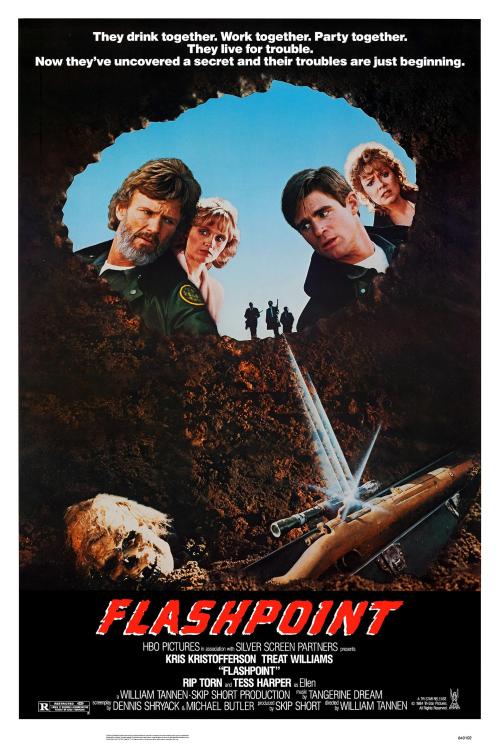
Bobby (Kris Kristofferson) and Ernie (Treat Williams) are border patrol agents who stumble upon a jeep buried in the sand. Once Bobby digs it up he finds a skeleton in the driver’s seat, a scoped rifle, and $800,000 inside a rusted toolbox. Both of them are unhappy in their jobs and Bobby thinks this would be the perfect time to skip town with the loot, but Ernie thinks it’s stolen money and needs to be investigated. Since the bills are all marked with the dates of 1962 and 1963 they presume this is around the time when the bank robbery, which is where they think the deceased driver got the money from, occurred, but upon an old newspaper research at their local library they can find no such robbery happening in the amount that they recovered. Soon they face more problems when a federal man named Carson (Kurtwood Smith) takes over the agency they work at and exerts extreme control over everything they do. Bobby feels Carson is somehow aware of the money they found and knows more about the driver’s identity than he lets on. While Bobby and Ernie hide the money they find Carson and his team of secret agents hot on their path as he sends them on dangerous missions in an attempt to kill them, so they won’t let on to anyone else about what they’ve found.

This is another example where an intriguing story idea, based on the novel of the same name by George LaFountaine, almost gets ruined by lackluster direction. The mystery is interesting enough to keep you invested but there are definite lulls and cheesy side stories that seem to be challenging the viewer to turn it off before it’s over. This was also another case where the setting is supposedly Texas, which gets mentioned quite a bit, and yet it was all filmed in and around Tucson, Arizona, which is a travesty especially since the deserts of Arizona and Texas have noticeably different characteristics. I also felt that if you’re going to have a story based in the desert you should then have the time period during the summer, instead of the winter like here, where the scorching heat could be used as an added element.

Kristofferson isn’t particularly well cast here in a part that was originally intended for Paul Newman. His laid-back style of acting isn’t riveting enough though I’ll give him props for the scene where he gets shot and must crawl several yards in the dirt with one arm that he can’t move due to it being paralyzed by the bullet, which looks quite arduous to do though he does it effectively and realistically. Williams is by far the superior actor and his distinct personality where he’s the idealist, plays-off well from Kristofferson’s more jaded mindset. You even get a full view of Treat’s bare ass, which comes near the beginning and while nobody necessarily asked for it and wasn’t needed to propel the plot some may enjoy it and as male asses go it’s not too shabby.

Rip Torn, whose hair is dyed gray, does well in support where his strong Texas drawl works nicely in the supposedly Texas setting. While he’s only seen sporadically during the first two acts, to the point where I started to wonder why he even bothered to take the role as it seemed miniscule and pointless, he does come on strong during the finale. Kurtwood Smith though is dull, which isn’t exactly his fault as the part is written too much like caricature, and every successful movie needs an interesting and memorable villain, which this one clearly isn’t.

While the action is fleeting it does have one good stunt, which features Treat trying to prevent a plane, which they think holds drugs, from taking-off by reaching in through the window of the cockpit and forcing the pilot to land it. It had me holding by breath, but it got ridiculous when the plane crashes and explodes, but Treat gets saved when he supposedly jumps off and into a lake, but you don’t see this occur and the other men all presume he went down with the plane only to have Treat jump out of the water intact, but if he had dived into the pool then the water would’ve had a ripple effect from where he went in instead of it being calm and placid like it is.

Spoiler Alert!

The twist at the end in where the money and driver of the jeep are connected to the assassination of John F. Kennedy is cool though it leaves more questions than answers. Of course that might’ve been the intention, but still I feel this is a good enough story idea that it should be revisited with a better director and hopefully one day someone talented will decide to remake it in a way that’s more intriguing than what we get here.

My Rating: 4 out of 10

Released: August 31, 1984

Runtime: 1 Hour 33 Minutes

Rated R

Director: William Tannen

Studio: TriStar Pictures

Available: DVD-R

Who’ll Stop the Rain (1978)

wholl

By Richard Winters

My Rating: 8 out of 10

4-Word Review: Drug deal gone bad.

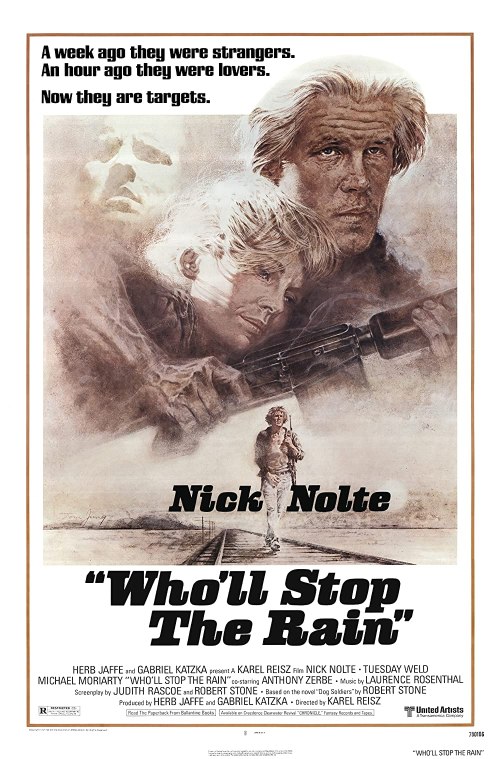
John Converse (Michael Moriarity), a war correspondent working in Saigon, approaches his friend Ray (Nick Nolte), a merchant marine, about smuggling a large bag of heroin out of the country and into the US. Ray has dealt marijuana before, but never the hard stuff and is reluctant at first, but due to his friendship with John he eventually agrees. He is told to go to San Francisco where he’ll drop-off of the drugs for payment with John’s wife Marge (Tuesday Weld). Once he gets there though he realizes he’s been followed forcing both he and Marge to go on a dangerous trip to not only elude the bad guys, but also get rid of the incriminating evidence.

The film is based on the 1974 novel ‘Dog Soldiers’ by Robert Stone, who also co-wrote the screenplay. The theme of the novel was to examine the loss of optimism and youthful ideals of the 60’s and the beginning of the age of cynicism that came during the 70’s, which for that purpose the time period should’ve been 1970 as keeping it in the present day, in this case 1978, makes it seem a bit dated and losses the context of the message. The story itself though is still quite engrossing with some of the most disturbing scenes being the ones dealing with a young, affluent suburban couple (James Granna, Timothy Blake) going to a drug party of sorts that had Ray, Marge and Ray’s friend Eddie (Charles Haid) who give them illicit substance for the first time and their immediate hallucinogenic reaction I found both frightening and impactful.

The performances are uniformly excellent especially Nolte, who was not yet an established movie star and the producers wanting instead Kris Kristofferson for the role only to finally give-in after the persistent lobbying of director Karel Reisz. Tuesday Weld is also dynamic falling into the role of a drab, middle-aged housewife with ease and completely losing the young, sexy starlet appeal that she had previously. My favorite though was Moriarty, whose glazed over eyes and emotionless demeanor perfectly reflects the apathy and soullessness of his character.

On the downside I found the character’s motivations to be confusing particularly the way Marge, who did not know Ray before this, agrees to go with him as he tries to outrun the baddies, but how would know she could trust him, or that he wasn’t in on the scheme? When she dropped her child off with some friends that’s where I felt she should’ve also gone and going back into Ray’s car, instead of calling the police, or advising her friend to do so, seemed reckless and too trusting that this stranger had her best interests at heart. In the book Ray’s intentions are not quite as noble as he decides to bring Marge along more for insurance as he think’s he’s been double-crossed by John, but presumes with Marge along he can use her as a decoy, while in the film it’s because he’s genuinely concerned for her safety. Marge too is betrayed differently as she’s not aware of the drug deal in the film, but in the book she was and I felt these nuances should’ve been brought up in the movie and the fact that they aren’t makes it less realistic and losses the whole point of the story.

John’s relationship with Danskin and Smitty (Richard Masur, Ray Sharkey), the two henchmen to corrupt FBI agent Antheil (Anthony Zerbe) gets botched too. For one thing the make-up effects are too slight as John is put through a wide array of physical tortures by the two in an attempt to get him to tell them where the heroin is and yet after it’s all over the only sign of the struggle is a slight cut on his forehead when instead his entire face should’ve been severely bruised, bloodied, and swelling. Afterwards he becomes too palsy with them even reading a book in their presence and joking around though you’d think he’d remain frightened after what they put him through and never letting down his guard in their presence because he’d know their violent side. I also didn’t like how the two start out as nasty criminals, but by the end become clueless comic foils, which hurts both the tension and grim realism.

The film though does recover especially in the final act when Ray takes Marge to an isolated cabin in New Mexico to hide-out in and then are followed by the villains culminating in a unique showdown. The isolation of the place, which sits amongst the beautiful mountains of the region is both picturesque and tranquil, and is based off of author’s Ken Kesey’s home in California where he wired the nearby trees with lights and sound effects to enhance their LSD experiences, and thus this creates an interesting battle between Ray and the thugs as he uses these same props to disorient them and it helps the movie stand-out with its memorable conclusion.

My Rating: 8 out of 10

Released: August 11, 1978

Runtime: 2 Hours 6 Minutes

Rated R

Director: Karel Reisz

Studio: United Artists

Available: DVD, Blu-ray

Night Game (1989)

nightgame1

By Richard Winters

My Rating: 4 out of 10

4-Word Review: Baseball score and murder.

Mike Seaver (Roy Scheider), a police detective, is put in charge of investigating a series of bizarre murders where women, some of them prostitutes, are murdered along the beaches of Galveston, Texas after each Houston Astros home game where pitcher Silvio Baretto achieves a victory. There are initially no suspects and it all seems to be a coincidence until Seaver ties the clues together and hones in on the killer while quarreling with Witty (Lane Smith) a state investigator brought in to help him with the case, but who has opposing ideas as to how to approach it.

The story is a strange mixture wanting to feed-off of the slasher films of the 80’s while also tying it to a sports themed flick, that was also popular during that decade, but manages to fail on both ends. The killings aren’t imaginative enough to attract a horror audience while the gore is much too graphic for those just looking for a slick thriller and thus both types of viewers will get put-off with this pretty quickly. Fans of sports movies won’t like it either as the baseballs scenes are brief and fleeting. While it’s kind of fun to see the Astros old color bar uniforms as well as watching actual game footage shot inside the old Astrodome, which at one time was coined ‘the 8th wonder of the world’ it hardly seems necessary especially since a TV-movie ‘Murder at the World Series’, which came out in 1977, had a very similar storyline that also included the Astros and Astrodome making this seem like a cheap, uninspired rip-off of that one.

The plot at least, while still dated especially on the technology end, takes a realistic approach to being a detective and how hard it is to find clues that can help piece the case together and lead to an actual suspect. Scheider, who was 57 at the time and looking it, manages to give it some energy and this was helped no less than by casting Richard Bradford as his nervous and pensive superior whose white hair and old school ways helps to offset Scheider’s wrinkles despite the fact that Scheider was in real-life 2 years older. The side stories though dealing with Smith coming in to butt heads with Roy doesn’t get played-up enough to be interesting and Scheider squabbling with his mother-in-law over a color TV that he got her drags the pacing down and hurts the tension of the mystery, which is where the sole focus of the script should’ve stayed.

Spoiler Alert!

What really ruins it though is the stupid ending. For one thing people in big cities, and Houston is the 4th largest one in the US, get murdered all the time, so having a cop able to somehow tie it to when a pitcher wins a game was too much of a stretch as technically there’s likely to be a murder happening somewhere whenever ANY pitcher wins a game and there needed to be more direct clues, like the killer sending cryptic notes to the police, or media, stating what his intentions were for it to realistically come together for the investigators.

The man playing the murderer, Rex Linn, who is supposedly a former pitcher who got cut from the team and then ultimately loses his hand in an accident and has it replaced with a hook, looks more like an disheveled, beer bellied truck driver who never played a sports game in his life. His motivations, to kill someone whenever the pitcher, who replaced him on the rotation, wins a game, in order to steal media attention away from the new pitcher’s success, is poorly thought out. It would’ve made more sense had the disgruntled man gone after the pitcher directly by either threatening his life, or those of his family, or maybe even attempting to kill the general manager, or owner, since they were the ones directly responsible for cutting him instead of no-name hookers who usually don’t get a lot of news attention anyways when they’re killed and thus making the whole premise pretty vapid.

My Rating: 4 out of 10

Released: September 15, 1989

Runtime: 1 Hour 35 Minutes

Rated R

Director: Peter Masterson

Studio: Epic Productions

Available: DVD, Blu-ray, Amazon Video, Tubi