Category Archives: Obscure Movies

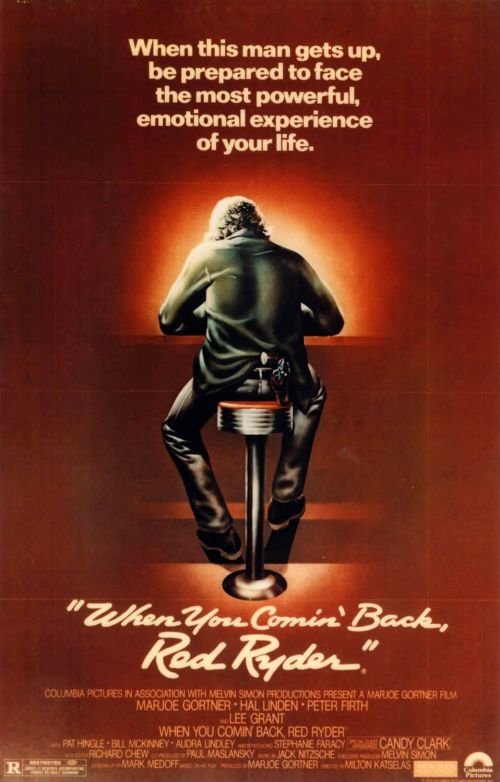
When You Comin’ Back, Red Ryder? (1979)

when you comin back red ryder 2

By Richard Winters

My Rating: 5 out of 10

4-Word Review: Terror at a diner.

The year is 1968 and the setting is a small, lonely diner nestled at the border of Texas and New Mexico. Richard (Hal Linden) and his violinist wife Clarissa (Lee Grant) arrive for a morning cup of coffee. There is also Angel (Stephanie Faracy) the diner’s lone waitress and Stephen (Peter Firth), who was nicknamed Red during his youth due to his red hair at the time, but besides them the place is empty and peaceful. Then Teddy (Marjoe Gortner), an unhinged Vietnam vet and his hippie girlfriend Chery (Candy Clark) enter. They are without money and stranded with a broken down van, which makes Teddy particularly volatile as he begins harassing the others with evasive questions before eventually terrorizing them all by trapping them inside the place and forcing them to do whatever weird, sick thing he asks.

The film is based on the 1973 Off Broadway play by Mark Medoff, who also wrote the screenplay. In many ways it’s similar to the 1967 black-and-white drama The Incident in which Tony Musante and a young Martin Sheen trap several subway riders inside a subway car and spend the rest of the night terrorizing them simply for their own personal amusement.  Both films are structured the same with the first part examining the characters before they arrive at the scene and revealing a bit of the personal dramas that each of them face and then spending the second half showing them trapped in a claustrophobic setting and forced to deal with their reluctance at confronting their fears.

The 1967 film though outshines this one as there were more characters, which gave it a better variety of personalities as well as bad guys that were menacing and believable. Gortner is too much of a ham making him more irritating than scary. The part was originally played by Kevin Conway during its Off Broadway run and his performance won many accolades, which should’ve been enough for them to have offered him the chance to reprise the role here. Gortner, who also produced seemed intent at trying to use this as a vehicle to promote himself as being a ‘serious’ actor, but he was too old for the role from the beginning since he was already in his mid-30’s at the time this was shot while vets coming back from the war during the ‘60s where only in their late teens or early 20’s.

The film only gets mildly interesting during the confrontation sequence inside the diner, which takes 45 minutes of the film’s 2-hour runtime just to get there. The way the characters respond to Gortner’s scare tactics and the supporting cast’s performances, who are all far better actors than Gortner, is the movie’s only compelling element, but even here there are issues. The biggest one being that the people seem too wimpy and today’s viewers will get frustrated at how overly compliant they are to Gortner’s demands and never once try to overpower him despite having ample opportunity.

The movie is also notorious for featuring some rather shocking moments of nudity. It starts out with a full body shot of Candy Clark in the buff, who was married to Gortner in real-life at the time this was made and that isn’t too bad, but then it proceeds to later show 48-year-old Linden in nothing but speedo shorts doing sit ups with his butt crack clearly exposed. Still later there is a scene where 52-year-old Lee Grant has her shirt hoisted all the way over her head with her breasts in full view and then paraded around the diner in mocking fashion. The film’s most over-the-top moment though comes when Gortner himself is stripped naked and bent over a table while having a proctoscope shoved up his rectum as he continues to have a conversation with the man who’s doing it.

Filmed on-location in Fabens, Texas, which was also the site of a famous scene in The Gateway, and Las Cruces, New Mexico the movie just doesn’t convey enough tension to make it compelling or worth catching. It would’ve worked better had it skipped the first half dealing with the backstories of the characters, which was never a part of the original play anyways and just gone straight into the diner sequence while also casting a leading actor that had some actual acting training.
when you comin back red ryder 1

My Rating: 5 out of 10

Released: February 9, 1979

Runtime: 1Hour 58Minutes

Rated R

Director: Milton Katselas

Studio: Columbia Pictures

Available: VHS
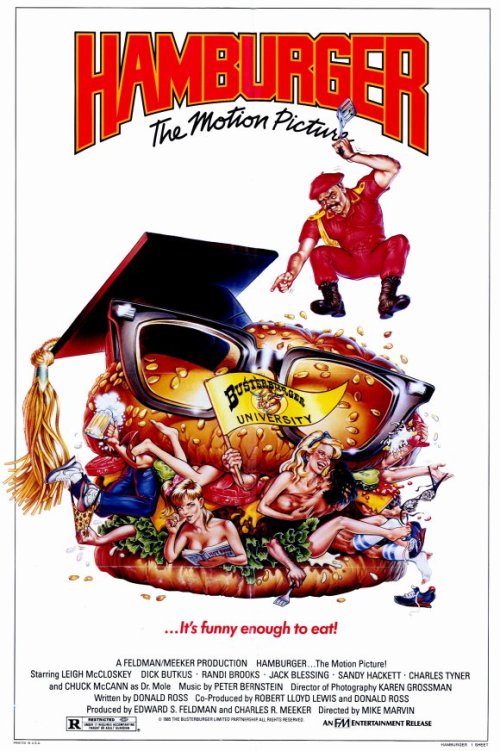
Hamburger: The Motion Picture (1986)

hamburger

By Richard Winters

My Rating: 1 out of 10

4-Word Review: Receiving a hamburger education.

Russell (Leigh McCloskey) has flunked out of several colleges and has no future plans while being deemed a failure by his parents (Robert Hogan, Lillian Garrett). Then he meets a franchise owner of Busterburger who tells him about how much money he can make as an owner of one of their restaurants, which convinces him to train to become a franchisee. The problem is that he must attend Burger U, which is run by the no-nonsense Drootin (Dick Butkus) who has strict rules and won’t even allow the students to leave the campus during the school semester. They are forced to sleep in beds that look like giant hamburgers and if they do get into trouble they are locked into cells made to resemble giant pickles and sprayed with hot sauce.

There are schools out there that train people on how to own their own fast food franchise and had this film toned down the silliness and keep it solely on a satirical level it might’ve worked. The opening 10 minutes has an over-the-top campy quality, which isn’t bad, but then it devolves into the crude, cartoonish mindset that drags the thing down until it becomes a forgettable waste of time.

The film was written by Donald Ross who penned many teleplays for TV-series from the ‘70s through the ‘90s. He is also the husband of Patti Deutsch a red haired, nasal voiced woman who was a quirky contestant on game shows during the ‘70s including ‘Match Game’, which is my favorite. They also appeared together as a couple on ‘Tattletales’ and in those instances he came off as a reasonably intelligent person, so I was expecting a little bit more from this than what I got.

Unfortunately there’s nothing funny about it and just proceeds to get dumber and dumber as it progresses. It’s also insulting to overweight people as it includes a highly offensive and gross scene where a busload of them come into a restaurant and eat everything in sight like they’re animals instead of humans and then proceed to all have a flatulence attack, which ultimately blows the whole place up.

Former Chicago Bears linebacker Butkus is alright and the one highpoint of both the film and his otherwise unimpressive acting career. Chuck McCann, who is almost unrecognizable as an eccentric professor, is okay too, but star McCloskey is dull and looks more like a man in his 30’s, which he was, than a college aged student while the rest of the cast of characters are too exaggerated to be either interesting or funny.

Clearly the producers were trying to tap into the Police Academy formula, but it doesn’t work and is a complete embarrassment to all those involved.

My Rating: 1 out of 10

Released: January 14, 1986

Runtime: 1Hour 29Minutes

Rated R

Director: Mike Marvin

Studio: Busterburger Limited Partnership

Available: VHS

Where Does It Hurt? (1972)

where does it hurt 1

By Richard Winters

My Rating: 4 out of 10

4-Word Review: Corruption at a hospital.

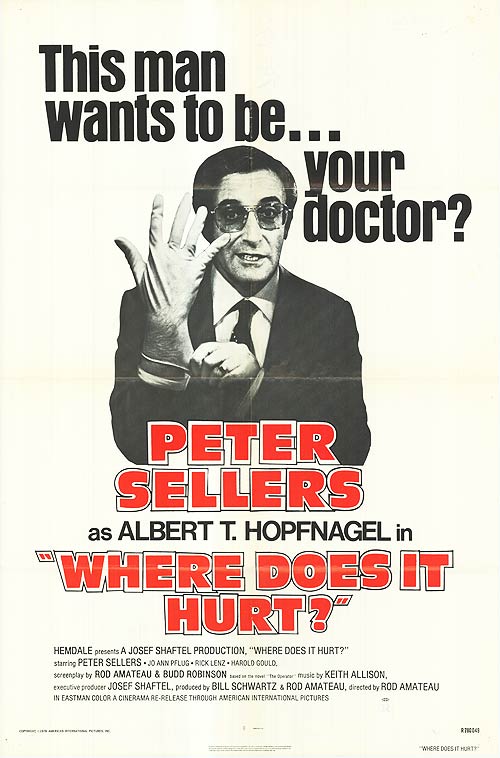
It’s funny how names like Ed Wood Jr. or Tommy Wiseau get mentioned in just about anyone’s list of bad movie director’s, but Rod Amateau’s never does, but should. Not only did he produce ‘My Mother the Car’ and ‘Supertrain’, which are considered two of the worst TV-series ever to be broadcast, but he also directed the notorious Garbage Pail Kids as well as Son of Hitler and The Statue, which featured a jealous David Niven going around the bathrooms and gay bathhouses of London looking for a man whose penis matches the one that his wife created for a life-sized statue that she says replicates her lovers.

While this film isn’t quite as bad as those it comes close. It stars Peter Sellers who was at a career nadir due to financial mismanagement and willing to take on any low budget job offer he was given. Here he plays the corrupt head of a hospital that uses an array of schemes to bilk patients and insurance companies out of thousands of dollars. Rick Lenz plays a patient who becomes aware of the shenanigans going on and tries to bring Sellers and his staff down, but finds that they seem to have a trick up their proverbial sleeves at every turn.

The film manages to have a few amusing moments, but comes off more like a gag reel than a story. The characters are exaggerated and unlikable. We are supposed to side with Lenz and his predicament, but he so stupidly allows the doctors to take advantage of him at the beginning that it becomes hard to. The whole thing gets sillier by the second until by the end it’s completely inane. It also makes light of some serious issues that were handled better in Paddy Chayefsky’s The Hospital, which came out just 8 months before this one.

To some degree it’s fun seeing Sellers, who was noted for his wide range of dialects, taking a stab at an American accent and he almost pulls it off except for a few moments including the one where he pronounces orifice as AW-ifice.

The supporting cast made up of lesser known talents proves to be game here. Pat Morita, still years away from his breakout role in The Karate Kid, is genuinely amusing as a lab tech with an inferiority complex and at one point even speaks in a British accent. Harold Gould is good as an incompetent Dr. and J. Edward McKinley, best known for his many appearances on ‘Bewitched’ as one of McMahon and Tate’s primary clients, is funny as the Hospital commissioner who relentlessly tries to nab Sellers and eventually after repeated missed opportunities is able to.

In better hands this might’ve had a chance, but the low budget, irritating country music soundtrack and cheap jokes pretty much sink this thing before it even has a chance to get started.

My Rating: 4 out of 10

Released: September 29, 1972

Runtime: 1Hour 28Minutes

Rated R

Director: Rod Amateau

Studio: Cinerama Releasing Corporation

Available: None at this time.

Way…Way Out (1966)

way way out

By Richard Winters

My Rating: 3 out of 10

4-Word Review: Living on the moon.

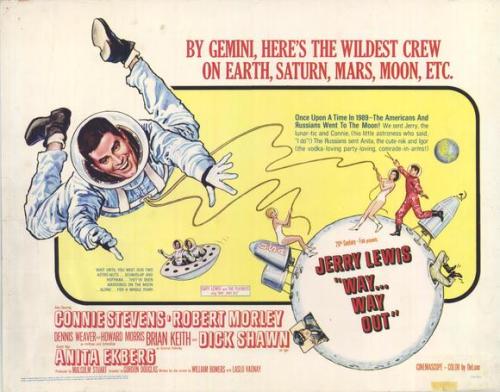
The year is 1989 and both the Russians and Americans have set-up bases on the moon. Each base has 2-people living in them. For the Russians things go smoothly mainly because they have a man and a woman (Dick Shawn, Anita Ekberg) cohabitating while the Americans have two men (Dennis Weaver, Howard Morris) who quickly go crazy because there are no women around for sex. NASA decides to replace the two men with a man and woman like the Russians have, but insist that unlike the Russians the American couple must be married. Pete (Jerry Lewis) who is a long time employee of the space agency is chosen and his female counterpart is fellow astronaut Eileen (Connie Stevens). The two had never met and are forced to accelerate their courtship and eventual marriage in a matter of 3 days before getting rocketed up into orbit.

To some degree this is an interesting idea and the first 15 minutes or so allows for some comic intrigue, but the filmmakers blow it by backing off of their novel approach and turning the whole thing into just another contrived romance. Stevens may be attractive, but her acting is limited and her presence adds no other added element to the proceedings besides being ‘eye candy’. The film would’ve been funnier had Pete been forced to go up with agency’s second choice, which was Esther (Bobo Lewis) who was a more aggressive, less attractive woman who could’ve added humorous conflicts. The spats between Pete and Eileen is banal and the second half devolves into one long drunken party between the American and Russian couple that isn’t funny and more like filler  put in when the writers ran out of ideas from their original concept.

From a sci-fi angle it is implausible. The rocket ship takes only a few minutes to get from earth to the moon and when they get there the lack of gravity is never addressed and they are able to walk around normally except for the few times when they get into fights, which sends one person flying off into the air when punched by the other. The earth that is shown in the sky has no clouds even though clouds can always be seen from just about every satellite shot taken of earth from space. The film also ruins the most intriguing element, which is seeing how they might’ve predicted things would look like in the ‘80’s from a ‘60’s perspective by having a narrator state right away that ‘little has changed’ in the past 23 years and therefore making no attempt to show anything from a futuristic viewpoint.

Lewis is amazingly restrained and doesn’t end up ruining things with his overacting, which instead gets done by Shawn. Weaver has a few good moments as the stressed out astronaut slowly going nutty as well as Brian Keith as a gruff American general, but Robert Morley is the funniest as the over-worked and over-burdened head of the space program.

Since one must set the bar very low from the beginning with any Lewis comedy this manages to be tolerable despite being more benign than it needed to be.

My Rating: 3 out of 10

Released: October 26, 1966

Runtime: 1Hour 41Minutes

Not Rated

Director: Gordon Douglas

Studio: 20th Century Fox

Available: DVD (Region 2), Amazon Instant Video

The Visitors (1972)

visitors 1

By Richard Winters

My Rating: 3 out of 10

4-Word Review: His past comes back.

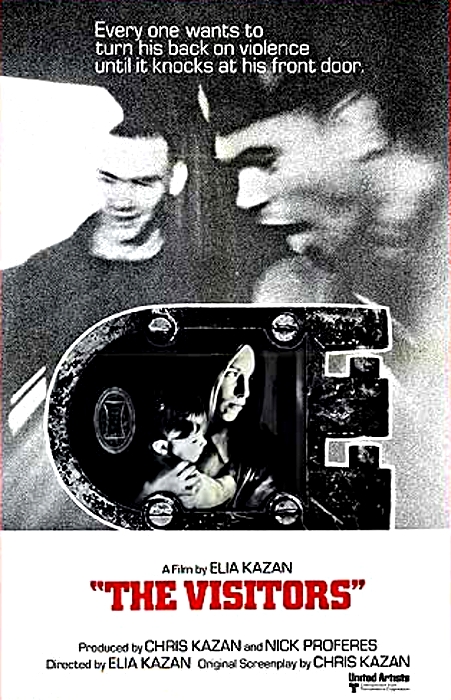
Vietnam veteran Bill (James Woods) has moved back into civilian life while enjoying the quietness of the country with his girlfriend Martha (Patricia Joyce) and her infant son. One day in the dead of winter while Bill is away shopping two of his former war buddies Tony and Mike (Chico Martinez, Steve Railsback) come by for an unexpected visit. When Bill returns he is not happy to see them and when Martha asks him why he tells her of how while in Vietnam he had witnessed the two raping a woman and later he decided to report it, which got the two men sent to prison. Now that they are out he is afraid they may be looking for revenge. Tony insists that he’s forgiven Bill for what he did, but Mike’s intentions are much more ominous especially with the way he eyes Martha. As the night wears on the tensions mount until festering over into anger and mayhem.

The story is loosely based on an actual crime that occurred in Vietnam on November 19, 1966 when five American soldiers kidnapped and gang raped a 21-year-old Vietnamese woman who they later killed. One of the soldiers, who did not take part in the crime, but did witness it, reported the incident to his superiors, which eventually got the other men convicted and imprisoned.

The incident was first made into a movie in 1970 in Michael Verhoeven’s o.k. and then 19 years later Brian De Palma did another version of it called Casualties of War, which starred Michael J. Fox. This version differs from the other two in that it only alludes to the crime, but never shows it. Instead it hypothesis on what might’ve happened had those who were convicted came back to revisit the one that had turned them in.

Story wise the film works to a degree as it reveals things in layers, which helps hold the mystery and filming the majority of it inside one lonely, isolated house gives it an effectively claustrophobic feeling, but the production values are extremely low and resembles more someone’s lost home movie than a feature film directed by a one-time Hollywood legend. The background sound is mainly made up of a howling wind noise, which helps heighten the creepiness, but then during the second half director Elia Kazan inserts music, which becomes a distraction.

The ending leaves open a wide array of unanswered questions along with a lot of murky character motivations that makes the whole thing seem pointless and ill-conceived. The only interesting element to get out of it is seeing Woods and Railsback in their respective film debuts. Railsback is especially good in a part he seems born to play and one he honed to even greater success years later in The Stunt Man.

My Rating: 3 out of 10

Released: February 2, 1972

Runtime: 1Hour 28Minutes

Rated R

Director: Elia Kazan

Studio: United Artists

Available: Amazon Instant Video

HealtH (1980)

health 4

By Richard Winters

My Rating: 3 out of 10

4-Word Review: Altman’s take on politics.

Normally I’m a big proponent of the European and independent filmmaking system that allows the director to have complete creative control over their projects, which in Hollywood doesn’t always occur and many times the studios will meddle with the film until it becomes nothing like what the director had originally envisioned. However, this film is a great example of what can happen on the opposite end when a director and his ego are allowed too much leeway until their movies become self-indulgent exercises that appeals to no one except themselves and a few of their most ardent followers.

During the ‘70s director Robert Altman had achieved such heightened celebrity that 20th Century Fox studio head Alan Ladd Jr. gave him the green light on virtually any project or idea he wished to pursue. Ladd was such a big fan of Altman’s stuff that he didn’t even care if the film made money or not, which they usually didn’t. It was during this period that Altman was able to achieve some of his most bizarre onscreen creations like Brewster McCloud, which was brilliantly quirky, while others like this one petered out before they even began.

Here Altman was clearly borrowing from his own well particularly with the way he captured running conversations going on at the same time between different people that 10 years earlier had come off as being fresh and inventive, but by this time was now derivative and distracting. The film’s parade of eccentric characters is not interesting or relatable and Altman’s stab at political satire is too soft and unfocused with no connection at all to the political scene of today.

health 3

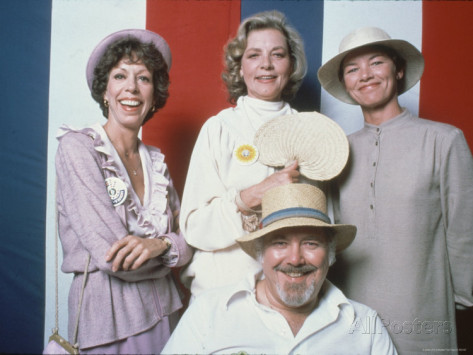
The threadbare plot, which deals with two political candidates played by Glenda Jackson and Lauren Bacall who compete for the presidency of a Florida health food convention, has too much dialogue and not enough action. It manages to be mildly amusing for the first 30 minutes, but then like with a tire suffering from a slow leak it starts to fizzle until it culminates with a dull and pointless conclusion.

It’s almost worth a look just to see Carol Burnett playing a more subdued type of character than she usually does although the part where she becomes ‘shocked’ at the rumor that her favorite candidate had a sex change operation now seems quite dated. Dick Cavett is also engaging playing himself and trying to corral all the nuttiness around him, but it’s Paul Dooley, who is also credited with co-writing the screenplay, that is the real scene stealer playing an independent candidate willing to do anything for attention.

I’m a big fan of Altman’s work, but I found this one to be slow going, uneventful and sloppy. The film’s concept could’ve used a lot more fleshing out as the whole thing plays like it was simply a lark done by a director that was coasting too much on his past successes while not throwing anything new into the mix.

health 1

My Rating: 3 out of 10

Released: September 12, 1980

Runtime: 1Hour 40Minutes

Rated PG

Director: Robert Altman

Studio: 20th Century Fox

Available: None at this time.

Psychopath (1973)

psychopath 3

By Richard Winters

My Rating: 0 out of 10

4-Word Review: TV host kills parents.

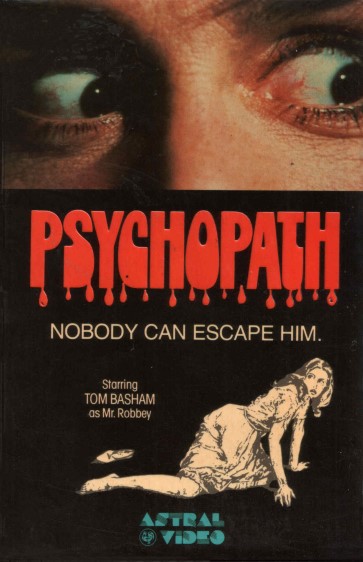
Mr. Rabbey (Tom Basham) is a puppeteer who hosts a popular children’s show on TV as well as working at the local hospital where he performs puppet shows for the sick children. It is there that he becomes aware of the abuse that children receive at the hands of their parents and decides to try and put a stop to it by stalking the parents he considers to be responsible and killing them.

This low budget ‘70s excursion fails at its own novel concept by creating unlikable victims that makes the viewer enjoy seeing them get offed and to a degree sympathize with their killer. The over-the-top way the parents berate their children, which is poorly acted to boot, gives the thing a Reefer Madness-like quality. It also doesn’t explain what happens to the children after the parents are killed or who takes care of them. Whether this was made as a social statement or simply using the idea to make an offbeat horror film is unclear, but it fails on both ends.

Basham, whose next film wasn’t until 35 years later when he starred in The Appearance of a Man, certainly has a creepy look and I liked his bowl haircut and beady eyes, which are put to full use with lots of close-ups, but the banal material doesn’t allow for any interesting characterizations. The movie also marks the film debut of John Ashton who appears as a police detective as well as an early role for Margaret Avery who plays a nurse.

There are some ‘70s horror films where you have to forgive the long periods of stodgy drama, derivative dialogue and wooden characters if it can at least have a few scary moments or gory special effects, but this film never gets there. Instead it’s mechanical and unimaginative with amateurish production values that supplies zero scares or shocks.

psychopath 2

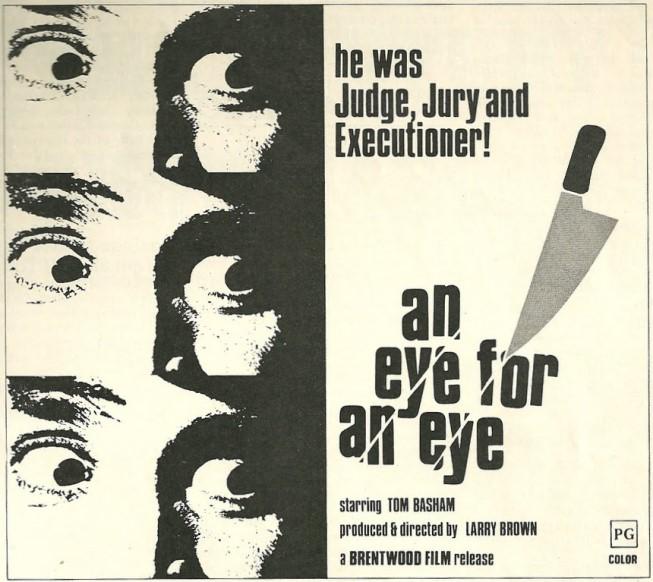
Alternate Title: An Eye for an Eye

My Rating: 0 out of 10

Released: September 28, 1973

Runtime: 1Hour 24Minutes

Rated PG

Director: Larry G. Brown

Studio: Intercontinental Releasing Corporation

Available: VHS

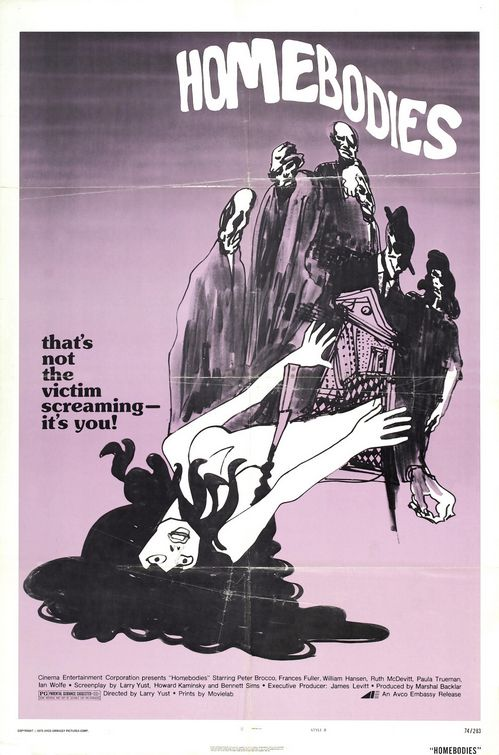
Homebodies (1974)

homebodies 2

By Richard Winters

My Rating: 5 out of 10

4-Word Review: Old people become killers.

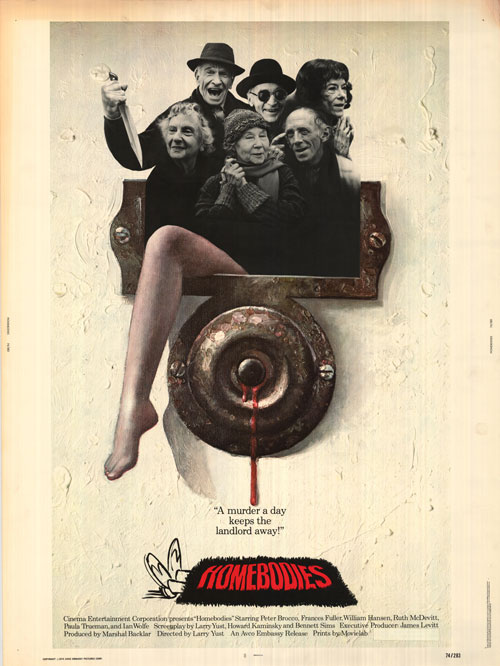
Senior citizens living in a rundown apartment building are shocked to learn that they will be evicted so that their place can be torn down and turned into an office complex. They resist the move and devise a scheme in which they will create ‘accidents’ at the construction site that will cause fatalities and hopefully impede the building process. They even do away with the project developer (Douglas Fowley) by drowning him in hardening cement, but then one of them, Mrs. Loomis, (Ruth McDevitt) begins to suffer from a guilty conscience. She considers going to the authorities, but the others try to stop her, which soon creates deceit and murder from within the group.

Shot on-location in Cincinnati the film has a neat offbeat concept, but it’s unable to execute it to its full potential. It tries too hard to mix in too many different story elements and shifts awkwardly between drama, dark comedy, horror and even social commentary. The result is a mixed bag that never gets off the ground. There are a few interesting moments, but the first half is slow and barely seems like a horror movie at all.

Part of the problem is that the deaths aren’t novel. Outside of the one where Fowley gets submerged in cement the rest are run-of-the-mill. We never see how the seniors are able to create the ‘accidents’ at the construction site and it seemed hard to believe that they would’ve been agile enough to get around inside a dark building, late at night to set up the booby traps to begin with. It would’ve been fun had the killings been caused by using items connected with old age like bashing the victims over the head with a cane, running them down with a walker, or forcing them to swallow a bottle of Geritol. The filmmakers work hard to create sympathy for the seniors, but portraying them as creepy, scary and threatening would’ve made it more edgy.

Paula Truman is good in the lead as well as Ruth McDevitt as the granny with mixed emotions. Fowley though is a bore as the heavy as his caricature of a brash, ego-driven developer is too one-dimensional and he looks just as elderly as the rest of the cast. Hiring a much younger actor to play the part would’ve created more of an interesting contrast.

Larry Yust’s direction is competent and helps keep the proceedings palatable, but as a whole it’s undercooked and undeserving of the cult classic status that they were clearly hoping for.

homebodies 4

My Rating: 5 out of 10

Released: September 29, 1974

Runtime: 1Hour 36Minutes

Rated PG

Director: Larry Yust

Studio: AVCO Embassy Pictures

Available: VHS

Lovin’ Molly (1974)

lovin molly

By Richard Winters

My Rating: 4 out of 10

4-Word Review: Two men one woman.

Molly (Blythe Danner) is a free-spirited woman living in a small Texas town during the 1920’s. Gid (Anthony Perkins) and Johnny (Beau Bridges) are best friends who also both like her. Molly likes them as well, but can’t seem to decide which of the two she loves better, so to solve things she gets married to Eddie (Conard Fowkes). This doesn’t go over well with the other two, but as time goes by she continues to see them and even has children from both of them, which causes a stir in her small community. Not only does she become the product of the local gossip, but virtually ostracized as well. However, Molly is undeterred about what everyone else thinks and sticks to her independent ways.

Based on the Larry McMurtry novel the film was directed by the legendary Sidney Lumet, but you would hardly know it. The production looks cheap and rushed and lacks atmosphere or period detail. The scenes are flatly shot with very little visual design or imagination. The whole thing comes off as something that did not get any major studio backing and was forced to look to private investors for funding, which unfortunately was just not enough.

Filming it on location in Bastrop, Texas which is also the setting of the story helps a little as the town has many historical buildings, which heightens to some extent the period atmosphere, but I would’ve liked to have seen more of it. The dry Texas landscape is also nicely captured and makes the viewer feel like they are living in the state themselves with each and every shot. The one thing though that really impressed me was how realistically the characters aged as the story, which spans 40 years, progresses. In most films the actors are forced to wear a ton of makeup, which gets overdone, but here very little of it was used and it looked far better.

Danner, who these days is best known as the mother of Gwyneth Paltrow, is excellent in a rare turn as a leading lady and even appears fully nude from the front and back. Perkins is solid in support and I enjoyed seeing Bridges with a bowl haircut. The star though that really steals it is Edward Binns as Perkins’ father whose caustic and to-the-point remarks are gems.

Fred Hellerman’s flavorful bluegrass score is pleasing, but the film itself fails to elicit much emotion. The only times that it does become mildly interesting is when the characters do a voice-over narration by reading off of passages lifted directly from its source material making me believe that this should never have been filmed in the first place and left simply in its novel format.

My Rating: 4 out of 10

Released: April 14, 1974

Runtime: 1Hour 38Minutes

Rated R

Director: Sidney Lumet

Studio: Columbia Pictures

Available: DVD (Region 2), Amazon Instant Video

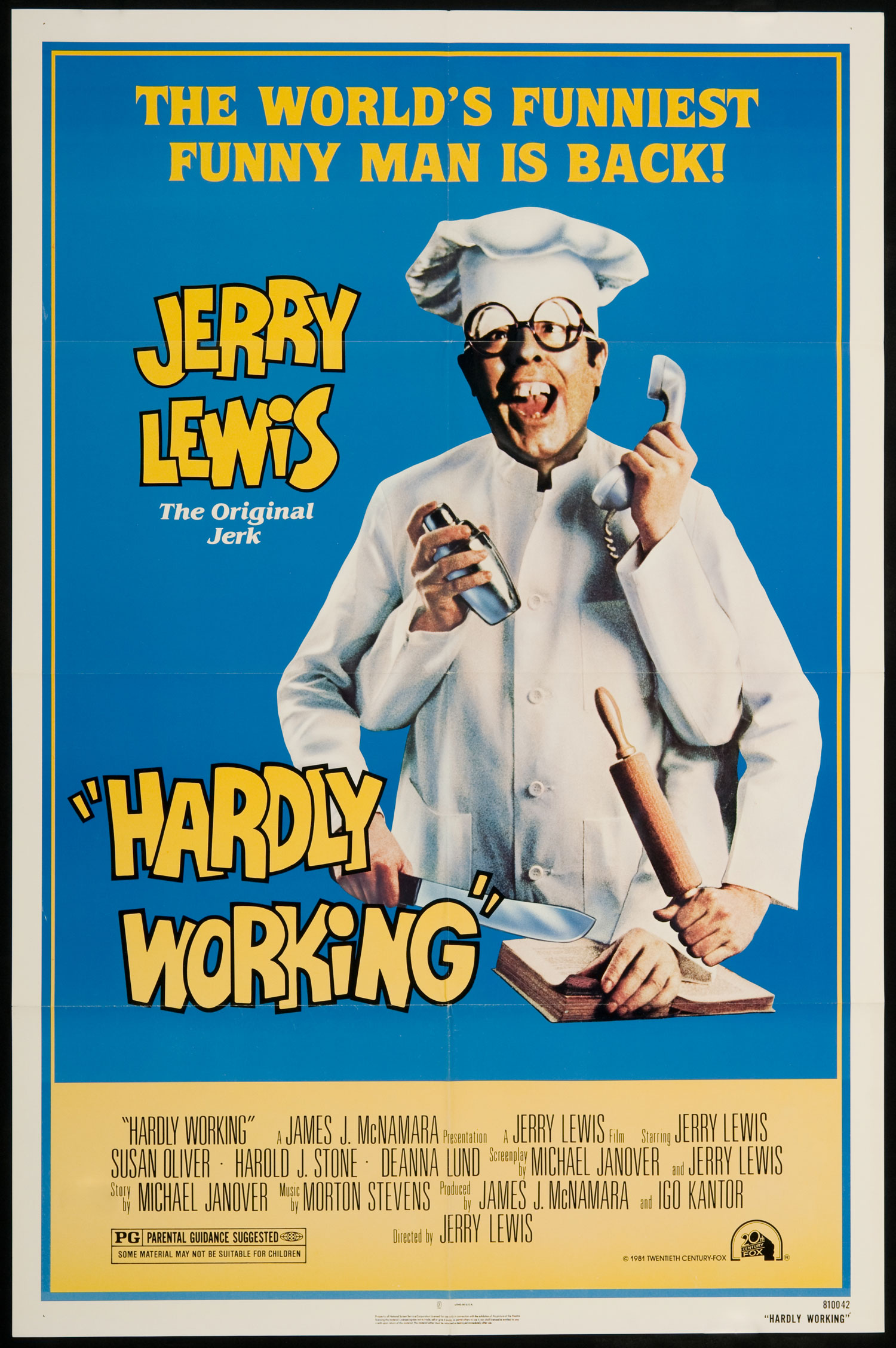
Hardly Working (1981)

hardly working

By Richard Winters

My Rating: 2 out of 10

4-Word Review: Klutz can’t find work.

Bo Hooper (Jerry Lewis) is a circus clown who finds himself out of a job. His sister Claire (Susan Oliver) and her belligerent husband Robert (Roger C. Carmel) agree to take him in and help him find a new source of income. Things aren’t easy as Bo proves to be a major klutz at everything and gets fired from most of his jobs on his very first day. He finally gets hired as a mailman that after a rough start begins to go semi-smoothly, but will his secret relationship with Millie (Deanna Lund) who is his boss’s daughter help ruin it?

I admit I’ve never been much of a Lewis fan. His routine seems too much like that of a 5-year-old desperate for attention and willing to do any inane thing for a cheap laugh. Peter Sellers and Don Knotts have played similar klutzy characters, but they at least came off as semi-believable adults albeit not very bright ones. Lewis though is this middle-aged man who for no warning or reason will suddenly revert to the behavior of a 6-year-old, which isn’t funny, but creepy, weird and pathetic instead. You start to wonder how this character was able to make it in the adult world as long as he had without being sent away somewhere instead of whether he will get a job or not.

His shtick amounts to nothing more than accidently knocking something over and spilling contents onto the floor, which is about as simplistic and basic as you can get. In many cases he doesn’t even offer to pick it up, which forces others to do it instead. In one instance he knocks over some materials that were lying on top of his boss’s file cabinet and then just lets them remain on the floor only to have the stuff three minutes later magically reappear on the top of the cabinet anyways.

The empty logic of this already threadbare concept is another issue. Why must this circus clown resort to doing jobs he has no experience in? Aren’t there other circuses out there that he could work for? And wouldn’t a man who has spent years working in that industry have built up a network of contacts that he could go to in time of need?

His foray working as a sushi chef where he pretends to be Japanese will be deemed offensive and racist by today’s standards, but the film’s worst scene is the one involving a blimp. He decides on a whim to pilot one despite being on-the-clock as a postman. Since the character is unable to flip even a light switch without causing a catastrophe one would expect his blimp drive to have dire consequences, but instead he pulls it off without a hitch and then somehow doesn’t lose his job or get arrested afterwards.

Filmed in 1979 the production was forced to go on hiatus for 6 months when it lost funding, which may be why Oliver and Carmel, who appear predominantly during the first half, disappear completely without explanation during the second part. In either event Lewis’ ‘big comeback’ after a 10-year absence from the big screen is a complete misfire. His material hasn’t evolved at all and he relies on the most infantile jokes and insipid scenarios imaginable that wouldn’t entertain a bored child let alone an adult.

My Rating: 2 out of 10

Released: April 3, 1981

Runtime: 1Hour 29Minutes

Rated PG

Director: Jerry Lewis

Studio: 20th Century Fox

Available: VHS