Category Archives: Obscure Movies

Bear Island (1979)

bear

By Richard Winters

My Rating: 4 out of 10

4-Word Review: Killer in the artic.

A group of scientists travel to a small island in the artic to study the effects of climate change. They’ve been instructed by Gerran (Richard Widmark), the leader of the expedition, who forbids anyone to go near the U-boat base, which are ships leftover from WWII, but Lansing (Donald Sutherland) whose father was a U-boat captain, decides to sneak off one day with his friend Judith (Barbara Parkins) to check it out. Along the way they get struck by an avalanche that kills Judith, and which Lansing is convinced was started by a mysterious man with a rifle. He goes to the location again the next day and is able to find the cave the ships are in via snorkeling. He comes upon evidence that someone else from the camp had already been there and soon more people from the group begin turning-up dead.

The film is based on the Allistair MacLean novel of the same name, which was published in 1971. Great care was put into the production to make it seem as authentic as possible. Producer Peter Snell wanted it filmed at a cold location because he desired a real looking the snowy landscape and stated that audiences “can tell styrofoam snow”, and since I’m originally from a northerly region I can attest to that myself and one of the things I really hate about movies that take place in cold places, but shot inside a film studio. However, they weren’t able to shoot it at the actual  Bear Island, which is off the Norwegian coast, because they wanted to take advantage of the tax write-off that they would get by filming it in Canada and this in fact became the most expensive movie ever made in Canada up to that time.

While the film didn’t do well with either the critics, or the box office, there are some really cool scenes. I loved the bird’s eye views, especially the opening one of a man skiing all by himself amidst the otherwise barren, white landscape. The sequence between two snow scooters known as ‘The Caterpillar’, which are driven by Sutherland and Vanessa Redgrave, and two hydrocopters, which are maned by the bad guys, makes for a very unique and exciting chase over the frozen tundra. The collapsing of a giant radio tower and Sutherland getting involved in a bare knuckle fist-fight are also quite memorable.

The acting is good especially by Widmark who speaks in a German accent. I also liked Christopher Lee’s performance though for him he gets more captivating after his character gets injured and he lays dying. Vanessa Redgrave though is wasted. She speaks with a Nordic accent, which makes it somewhat interesting, but her character doesn’t have much to do and is just lead around by Sutherland and the forced romance between them is both annoying and ridiculous. You’d think someone who had just won the Academy Award for Best Supporting Actress just a year before would’ve had a better quality of parts to choose from though her outspoken politics may have had something to do with a more limited selection of offers making her feel that she had to take this one simply to stay busy.

The film’s fatal flaw though is that it doesn’t stay faithful to the book and makes many plot changes including having the group be scientists instead of a film crew like it had been done in the novel. This was director Don Sharp’s idea as he felt you couldn’t ‘make films about film units’, which I whole heartedly disagree. People working on movies have a far more eclectic personalities, ‘artsy types’ than scientists who are more matter-of-fact about things and tend to respond in a reserved manner. The characters are quite dull and there’s very little to distinguish them from the others. The viewer has no emotional investment in any of them and thus who gets killed, or even the identity of the killer becomes pointless and outside of the snazzy stunts it has no impact.

Spoiler Alert!

Having the killer turn-out to be Lawrence Dane was another disappointment as he had played villains many times before and his lurking eyes makes him almost a shoe-in for a bad guy and the first person you’d expect.  Some creativity to the killer’s identity was desperately needed possibly even have it turn out to being Redgrave, or even Sutherland might’ve been a big enough surprise to make the rest of it seem worth it, but ultimately this is yet another example where too much attention was put into the effects and not enough in the character development.

My Rating: 4 out of 10

Released: November 1, 1979

Runtime: 1 Hour 58 Minutes

Rated PG

Director: Don Sharp

Studio: Columbia Pictures

Available: VHS, DVD (Region 0), DVD-R

On the Edge (1986)

ontheedge

By Richard Winters

My Rating: 5 out of 10

4-Word Review: Disqualified runner enters race.

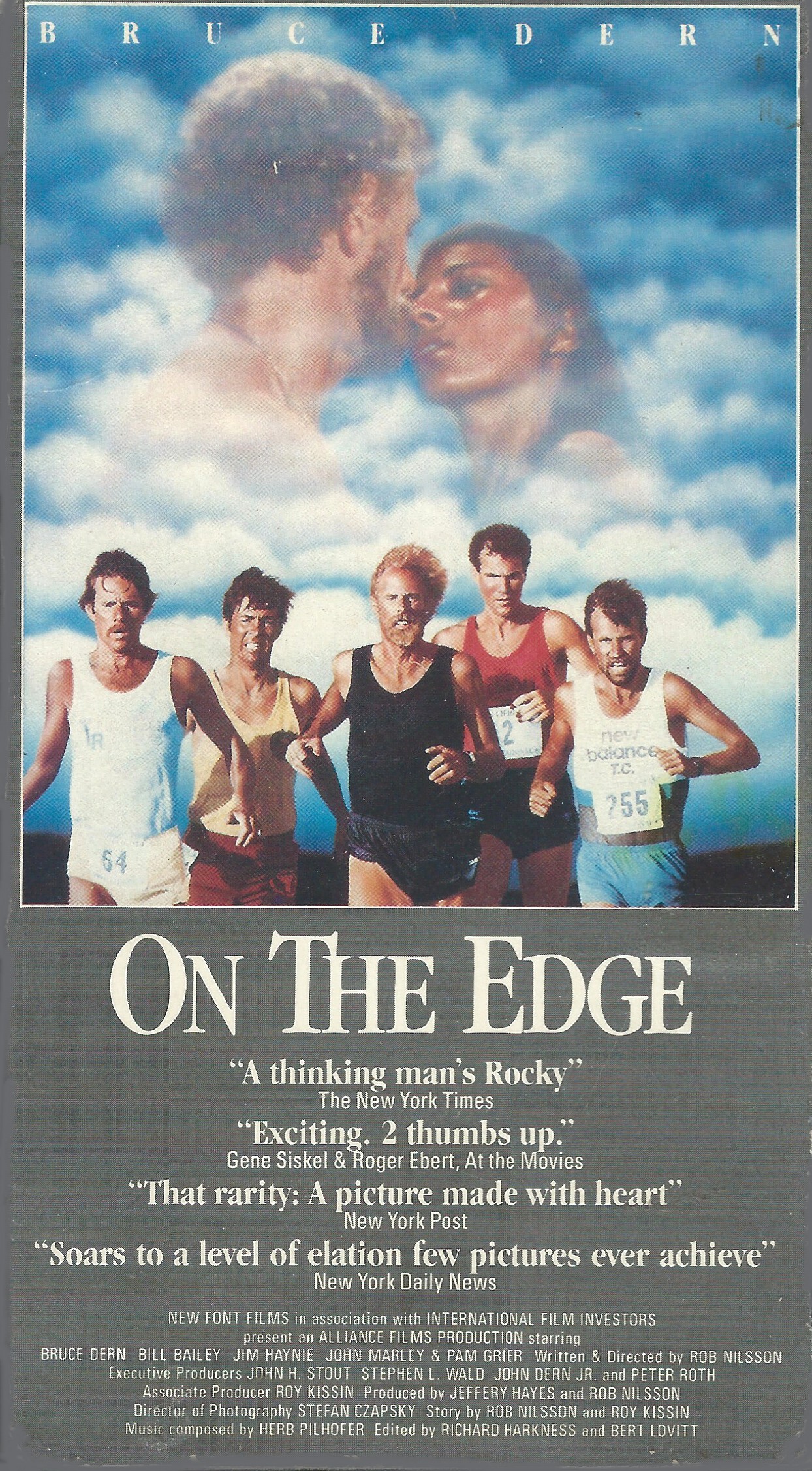
Wes (Bruce Dern) was at one-time a star, long distance runner who ended up in 1964 being banned from competition after calling out the secret practice of paying amateur athletes under-the-table. He’s now nearing 40 and wants to take one last stab at entering the grueling Cielo-Sea cross-country race and hires his old coach, Elmo (John Marley), to help him train for it. The runners are much younger than him by a couple of decades, but they’re aware of his history and look up to him. Unfortunately the race organizers still use what he did in the past against him and refuse to allow him to enter, but Wes decides to join the race anyways illegally, which forces the organizers to try and knock him out of it as the race is going on and being broadcast live.

Surprisingly for a movie that is so little known and hard-to-find the quality isn’t bad. Director/writer Rob Nilsson conveys some wonderful bird’s-eye shots of the climactic race including seeing the runners going along a winding route as it scales a high hill, which is dramatic and exciting. The character building and his personal mission is fairly well done and the strenuous preparation that he must go through to get ready for the race is handled in a way that makes it quite vivid for the viewer. After watching what he must go through you feel as mentally and physically drained as he does especially the shots showing the things from the runner’s point-of-view as they bound down the rugger trails with the camera tied directly to their bodies.

Dern, who was at one time a long distance runner himself and actually ran the race that gets depicted here, which in real-life it’s called the Dipsea race the oldest race run in America, back in 1974, does a fine job though his dialogue is limited and I missed-out on some of his patented, ad-libbed ‘Dernisms’. His character is marginally interesting though in a lot of ways not all that well defined. There’s no real explanation of what he’s been doing for the past 20 years that he’s been away from the sport and the film makes it almost seem like he’s been wandering around as a vagabond all that time. It would’ve been interesting had we seen him stuck in some boring office job and his secret longing to ‘break free’ and do something, no matter how high the odds, that he felt passionate about, which would’ve helped the viewer get more into his mission that is otherwise emotionally lacking.

It would’ve been intriguing too had he been married with a family and the wife was not in agreement to what he was doing, which would’ve added some extra dramatic conflict. Instead we get treated to his casual relationship with Pam Grier, who’s a marvelous actress in her own right, but here is mostly wasted. She pops in and out almost like a fantasy character who’s dialogue is limited, so we learn little about her as a person, and their semi-erotic love-making is cheesy. Their moments together was considered so inconsequential that the distributors cut-out her scenes entirely for the theatrical release only to restore them for the DVD version, but overall they really don’t add much.

The movie is only marginally captivating for the first third, but it does become more appetizing when it finally gets to the actual race.  I’ve never seen a race movie where the person we’re meant to be rooting for isn’t even supposed to be in the event in the first place. The attempts by the organizers to ‘take him down’ and literally drag him out via physically tackling him, or at least trying to, at various points in the race, are memorable particularly as they fail each time. My only gripe is that the other runners intervene to protect him, which I wasn’t sure was completely plausible. After all he wasn’t wearing a number, so it was obvious he shouldn’t be there, and he was competing with them for the title, so one less person would better their chances, so why not allow him to be taken out? Of course there is a scene earlier where Dern hitches a ride and everybody inside the van, made up of young runners who recognize him and even treat him as a sports hero, could explain that he was idolized by his competitors and therefore decided to stick-up for him, but in the moment where you’re only focus is winning you’d think some of them might not care what happens to him and more concerned about getting to the finish line and not doing anything that might slow them up.

Spoiler Alert!

The film ends with the seven runners all holding hands as they cross the finish line. While some could consider this novel, as most movies dealing with competitions will rarely celebrate a tie, it still seems hard to imagine that all seven of them would, in the spur-of-the-moment, agree to share the prize and there wouldn’t be at least one of them who would take advantage of it and run out in front at the last second in order to achieve all the glory and money, or at least lean his head out to get that ‘photo finish’. Maybe having one, or two hold hands and agree to finish it together might come-off as passable. It’s Dern who slows up to let the others catch-up to him, so they might be grateful that he let them share the spotlight, but let’s face it there’s always a black sheep in every bunch who for selfish reasons, these are athletes conditioned and trained to win after all, who would attempt to exploit the situation making the final image too romanticized for its own good.

My Rating: 5 out of 10

Released: May 2, 1986

Runtime: 1 Hour 35 Minutes

Rated PG-13

Director: Rob Nilsson

Studio: Skouras Pictures

Available: VHS, DVD (Out-of-Print)

Hold-Up (1985)

holdup

By Richard Winters

My Rating: 5 out of 10

4-Word Review: Robber disguised as clown.

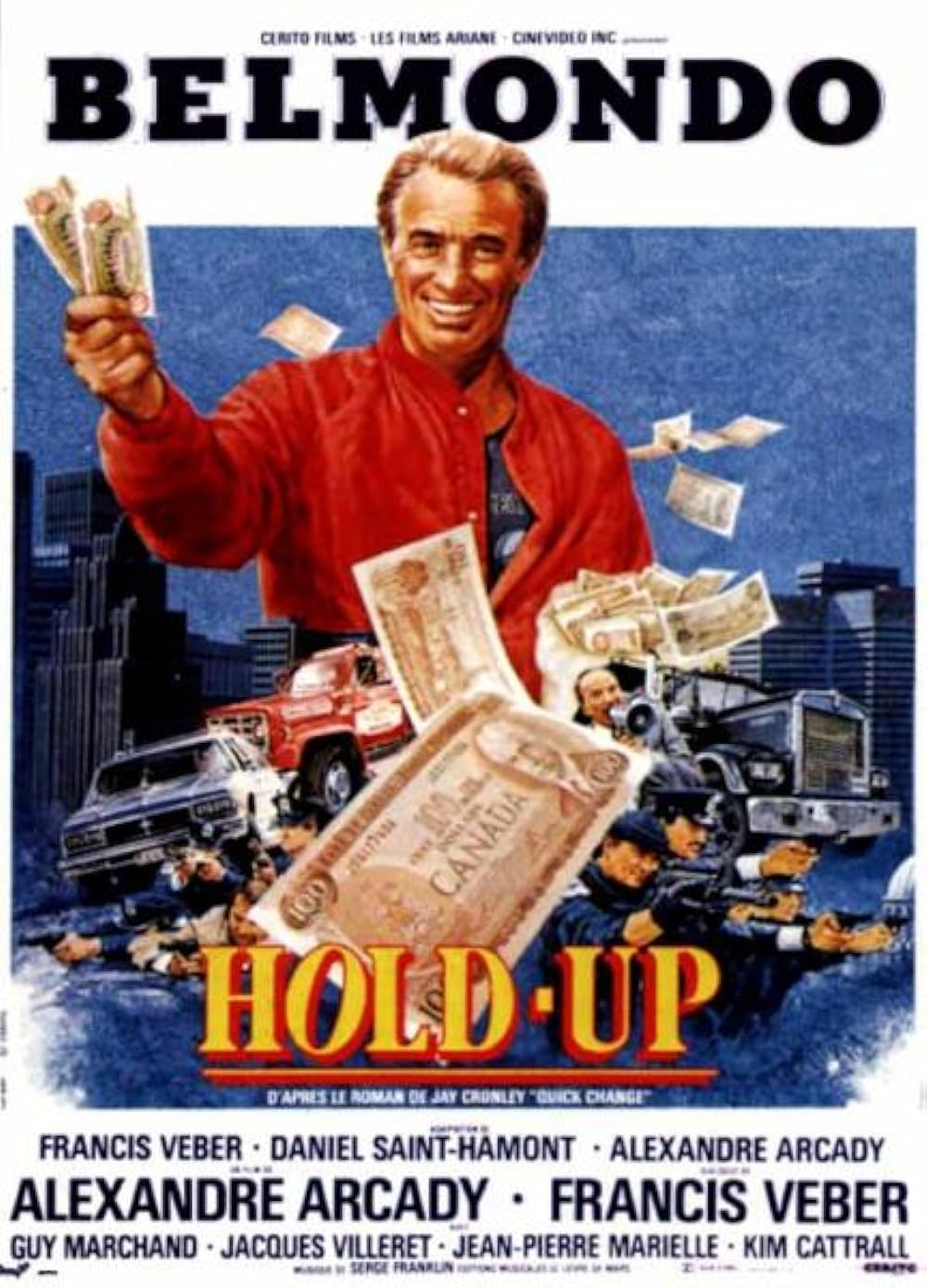
Grimm (Jean-Paul Belmondo) has come-up with what he considers to be an ingenious plan. He will rob a bank disguised as clown with two of his friends, Georges (Guy Marchand) and Lise (Kim Cattrall). While he’ll be a clown the other two will pretend to be bank customers and then when he agrees with the Police Commander Simon (Jean-Pierre Marielle), whom he is negotiating with via phone, to release some hostages he’ll let Georges and Lise ‘go’ and no one will know the difference. Meanwhile Grimm will take-off his clown disguise and put on a new one as an old man while pretending that the clown is still inside holding the rest of the bank employees and customers at gunpoint. By the time the police catch-on that there’s no longer any clown the three hope to have escaped on a plane and be far away. While the robbery works without a flaw the getting on the plane part becomes a major, if not impossible, challenge.

The story is based on the novel ‘Quick Change’ by Jay Cronley, which 5 years later was made into another, better known movie that starred Bill Murray. This was a French production that was filmed on-location in Montreal, Canada and one of the few movies that starred Belmondo that didn’t do well financially back in his home country and in-fact it was the first staring vehicle of his that didn’t crack the top 10 of highest grossing movies of that year, which was the first for him since 1976 when L’Alpagueur achieved only 19th place.

Belmondo is certainly a legendary actor whose long and storied career deserves to be admired, but I didn’t care for him here and felt his presence actually brought down the whole movie. He was apparently quite admired behind-the-scenes amongst the cast and crew and he did all of his own stunts including a scene where he climbs out of a moving car and manages to slither his way, while the vehicle is still going at high speeds, onto a tow truck and he did this while already being in his mid-50’s. However, his character is overly cocky and his glib conversational interplay between he and the police chief does not come-off as funny and more like you side with the chief and want to see this arrogant man caught. You’d think someone who had never pulled-off a robbery before would be much more nervous, or at least display some signs of anxiety, so his unbridled confidence seems completely out-of-place with the situation he’s in.

If anything I enjoyed Marchand and Cattrall far better as these two seemed much more human and displayed the insecurity you’d expect. They were like regular people full of foibles and someone you’d actually want to root for and thus I felt the movie would’ve been greatly improved had it just focused on the couple doing the robbing and cut-out Belmondo’s part completely. I also didn’t think the clown disguise worked as unlike in the American version his whole face isn’t covered with white paint and instead simply uses a red wig, a red clown nose, and some eyebrows, which I didn’t feel would be enough to hide his true identity and witnesses could’ve easily recognized who he was outside of the clown get-up and thus the whole disguise thing ends-up defeating its own purpose.

The first act works pretty well with shades of Dog Day Afternoon and some offbeat moments to the bank robbery theme by having one scene where the hostages are forced to get in a circle and sing a rendition of ‘London Bridges Falling Down’. The second and third acts though become protracted and seem to be the start of a whole different movie altogether. The bank segment has a crafty, sophisticated tone where the humor has a satirical bent and the main characters seem smart, savvy, and cool. In the second half the movie suddenly becomes like a live action cartoon with an abundance of car chases and the three leads, who had seemed so clever at the beginning, quickly become inept at seemingly every turn.

The biggest problem is the Lasky character played by Tex Konig. Konig is a big bearded guy that resembles Bluto from the old Popeye cartoons who’s also a tow truck driver who wants to get his hands on the stolen money and chases the three all around the city, which leads to many car stunts and crashes. Some may enjoy the smash-ups, but it comes across as unimaginative filler by filmmakers that didn’t know how to end the story cleverly, so they came-up with a lot of mindless action in order to keep it going.

The infighting between Cattrall and Marchand seems unnecessarily added in as well. This animosity needed to be introduced right at the start in order to make it consistent with the plot and not just thrown-in later to add some conflict for the sake of conflict. You’d think too that if she really resented the guy she would’ve refused to go ahead with the robbery unless someone else took his place.

Having the story then end with the three going to France and then Italy just furthers dilutes the plot, which no longer resembles a robbery flick at all, but more of a jet setting one. While not perfect the remake, which came-out in 1990, fares better in just about all phases.

My Rating: 5 out of 10

Released: October 23, 1985

Runtime: 1 Hour 54 Minutes

Not Rated

Director: Alexandre Arcady

Studio: Cinevideo

Available: DVD-R (dvdlady.com)

Butterfly (1982)

butterfly

By Richard Winters

My Rating: 0 out of 10

4-Word Review: Family has genetic birthmark.

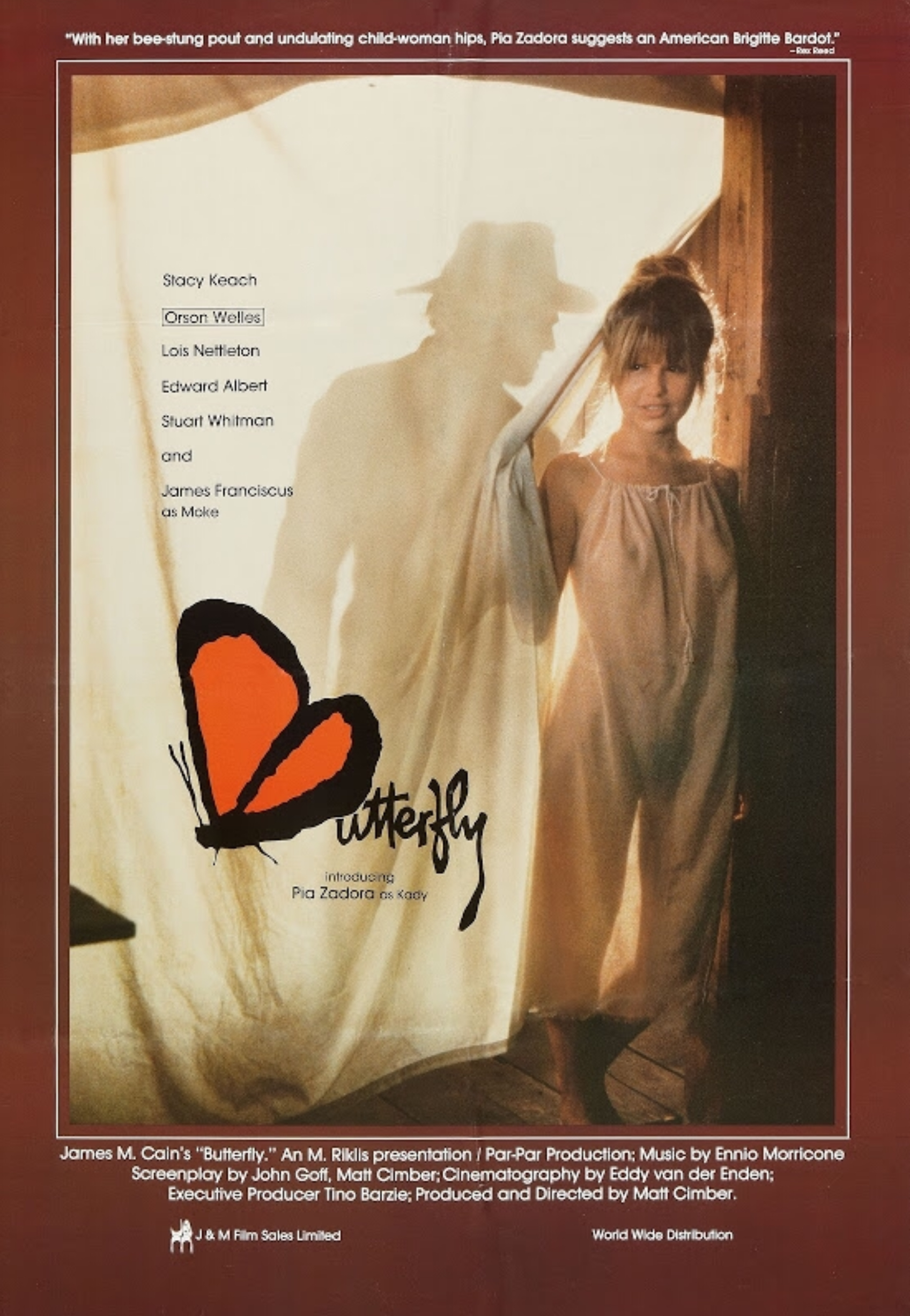
Jess (Stacy Keach) takes care of an unused mine outside of a small Arizona desert town. One day Kady (Pia Zadora) shows up at his doorstep. Jess doesn’t recognize her at first, but then realizes she’s his 17 year-old daughter the product of his marriage to Belle (Lois Nettleton) who abandoned him 10 years earlier for another man named Moke (James Franciscus). She is pregnant by a man who refuses to marry her, so she  wants to steal silver from the mine that Jess protects in order to help her financially with the child who’s on the way. At first Jess disapproves, but Kady uses her provocative body and looks to essentially seduce him and get him to relent. However, a local man named Ed (George Buck Flower) witnesses their stealing from the mine as well as their lovemaking later on, which gets them arrested for incest.

The story is based on the 1947 novel ‘The Butterfly’ by James M. Cain, who at the time was an immensely popular author, who had many of his books made into movies, but due to the controversial nature of this one it had to wait 35 years until it finally went to the big screen. He was inspired to write the story when years earlier, in 1922, he got a flat tire while driving through a mountainous area in California and a farm family that had moved there from West Virginia helped him fix it, but at the time he speculated that the young daughter they had with them was a product of incest.  The movie makes several deviations from the book. In the book Jess was the overseer of a coal mine and the plot took place in West Virginia while the Kady character was 19 instead of 17.

While the plot has some tantalizing elements, and on the production end it’s well financed, the whole thing comes crashing down due to the really bad performance of its lead actress. Zadora at the time had done only one other film before this one, Santa Claus Conquers the Martians, which was universally lambasted. It probably should’ve killed anyone’s career who had been in that, but she continued to struggle on in the business. Then in 1972 while performing in a small role in a traveling musical show, she caught the eye of a rich businessman named Meshulam Riklis, who was 29 years her senior. The two began dating and eventually married in 1977. Her new husband was determined to make her a star even if it meant buying her way in. He put up the entire $3.5 million budget for the film while demanding that she be placed as the star forcing director Matt Cimber to cast all the other parts around her. Riklis even put up big money to help get her promoted to winning the Golden Globes Newcommer of the Year Award, but all of this didn’t get past the critics, or audiences who rightly saw her as undeserving of all the attention and while she did a few other movies after this, which were equally panned, and even a few music videos and singing ventures, she is overall largely forgotten today and hasn’t been in a movie in 30 years.

To some extent her performance isn’t completely her fault as her character is poorly fleshed-out, which is my main gripe. I just couldn’t buy in that this chick on the verge of adulthood would be so extraordinarily naive that she’d come-on to her own father and not see anything wrong with it. First of all why is she sexually into her dad anyways as majority of girls tend to want to go for guys their own age and if not there has to be a reason for it, which this doesn’t give. In either case she should have some understanding that the rest of society doesn’t condone this behavior nor having her aggressively flirt with literally any guy she meets. The fact that she’s so blissfully ignorant to the effects of her behavior made her not only horribly one-dimensional, but downright mentally ill. Sure there’s people walking this planet that harbor some sick, perverse desires, but virtually all of them know they’re taboo and not dumb enough to be so open about, or if they do they learn real fast. Having her unable to understand this, or never able to pick-up on even the slightest of social cues is by far the most annoying/dumbest thing about it.

Keach, who gives a good performance and the only thing that holds this flimsy thing together, has the same issue with his character though not quite as bad. The fact that he doesn’t even recognize his daughter at first is a bit hard to believe. Sure he left the family 10 years earlier, but that would’ve made her 7 at the time and although she has clearly grown I think she’d still have the same face. He gives into his temptations too quickly as at one point he massages her breasts while she’s in the tub. Now if he weren’t religious then you could say he didn’t care about the taboos and had been living so long alone that he’d be happy to jump at any action he could irregardless if they were related, but the fact that he goes to church regularly should make him feel guilty and reluctant to follow through. In the book he’s portrayed as fighting these internal feelings by turning to alcohol, which is the way it should’ve been done here as well.

The eclectic supporting cast does make it more interesting than it should. Orson Welles caught my attention not so much for his role as a judge, but more because of his wacky combover. James Franciscus, who usually played sterile good guys is surprisingly snarly as the heavy and Stuart Whitman has a few good moments as a fiery preacher though even here there’s some logic loopholes that aren’t explained like how did he know Kady was Jess’ daughter, which he mentions while at the pulpit much to the surprise of Jess as he hadn’t introduced her to anybody.

My Rating: 0 out of 10

Released: February 5, 1982

Runtime: 1 Hour 48 Minutes

Rated R

Director: Matt Cimber

Studio: Analysis Film Releasing Corporation

Available: DVD-R

Second Thoughts (1983)

second thoughts

By Richard Winters

My Rating: 1 out of 10

4-Word Review: Lawyer considers an abortion.

Amy (Lucie Arnaz) is in a relationship with Will (Craig Wasson) a former political activist who found out trying to change the world was too difficult, so now he settles for just being a street musician, who at times gets in minor skirmishes with the law and needs Amy’s assistance as she’s also a lawyer. Amy then also gets ‘hired’ by her ex-husband John (Ken Howard) to represent him in his divorce from his second wife that’s really a ploy to try and get back together with her. Will and John know each other when Will applies for a loan from a bank that John manages though neither of them know about either of their relationships with Amy. Then Amy gets pregnant and considers an abortion. John is fine with her decision and even agrees to drive to the hospital while Will sneaks into the facility and kidnaps her in an attempt at preventing it from happening.

This was the second movie directed by famed producer Lawrence Turman whose first foray behind-the-camera was 12 years earlier with Marriage of a Young Stockbrokerwhich was panned by most critics though I found it interesting. This one got savaged as well and for the most part rightly so. The main issue is the disjointed tone that starts out as a drama with a TV-Movie of the week theme and then by the second act slides over into becoming an offbeat comedy. The unimaginative title and misleading movie poster, which makes it seem like two horny adults frolicking around, which it isn’t, was more than enough to confuse potential audiences and keep them away and thus lead it into being a financial disaster at the box office with a very limited release before falling off into complete obscurity.

To its benefit it does have some unique moments. The segment where Will puts a dead fish into the bank’s safety deposit box as revenge for them not giving him a loan and then stinking up the place to the point that they bring in a whole bunch of cats in order to sniff out where the odor was coming from is commendable. I also enjoyed Lucie’s attempt to escape from the isolated cabin that she’s in, where she’s handcuffed to a bed, by trying to drag the entire bed frame down the stairs, which could’ve been played-up more. I also got a kick out of the scene where John’s ex-wife, played by Ann Schedeen, threatens his beloved potted plants, even holding one ‘at gunpoint’ unless he agrees to pay for her cosmetic surgery.

Unfortunately Lucie Arnaz’s performance kills it. She had the option of either doing this one, or Poltergeistand decided on doing this because she felt it lent her greater dramatic work, but in the end she should’ve gone with the other one as that has obtained a cult following while this one is completely forgotten. Her character is too much of a composite of the modern career woman. There’s nothing unique, or interesting about her and thus you never get emotionally invested in her journey and if anything find the times she is on the screen to being the film’s most boring moments.

Wasson has been lambasted on this blog before with the other movies he’s been in and his appearance here proves no exception. He’s supposed to be playing an American Indian, but doesn’t look the part at all and somebody with an actual Native American ancestry should’ve been given the role. The songs that he sings, many of which have a ragtime quality, I found to be just as annoying as his acting and his character isn’t likable. The way he holds this woman against her will until she agrees to have ‘his baby’ I found genuinely creepy. Now of course if one is on the Pro-Life side of the fence maybe they’d consider what he does to be ‘heroic’, but while having a civil debate on the issue and him voicing his concerns on why he feels she shouldn’t terminate the pregnancy is fine, but then confining someone to a small room against their will is where I feel he takes things too far and is no longer just this benign guy with good intentions.

The film’s ultimate message becomes a murky as its tone. Initially I thought with the casual way that the abortion option gets discussed that this was a typical liberal minded film with a pro-choice sentiment, then by the third act this all seems to get reversed especially with the female doctor character played by Peggy McCay. She has performed abortions before, but now is reluctant to do it on Arnaz while using the excuse that she no longer ‘feels comfortable’ with it, which seemed to be the filmmaker’s attempt to insinuate that abortion doctors know what they’re doing is ‘wrong’ and ultimately start to feel guilty about it afterwards.

There’s another doctor played by Arthur Rosenberg, who has no qualms performing abortions, but is also portrayed as being incredible callous and obnoxious. At first I thought this was just done for misguided comedy, but eventually it seemed that this was the filmmaker’s way of trying to show how doctors that do this type of procedure without an regrets are ‘bad and crass’ people inside and his constantly rude demeanor was just a way of ‘exposing’ this.

In either case both sides will get alienated by it. A pro-lifer won’t want to sit around watching a movie that at the beginning seems to be taking a different viewpoint  just to wait until the very end when it then seems to finally come around to their position. Pro- choice people will dislike the movie for the exact opposite reason and therefore you have to wonder what type of viewer this movie was meant to attract as I can’t think of anyone that would like it.

My Rating: 1 out of 10

Released: February 6, 1983

Runtime: 1 Hour 38 Minutes

Rated PG

Director: Lawrence Turman

Studio: Associated Film Distribution

Available: DVD-R (dvdlady.com)

Wild Horse Hank (1979)

wildhorse

By Richard Winters

My Rating: 4 out of 10

4-Word Review: Teen girl saves horses.

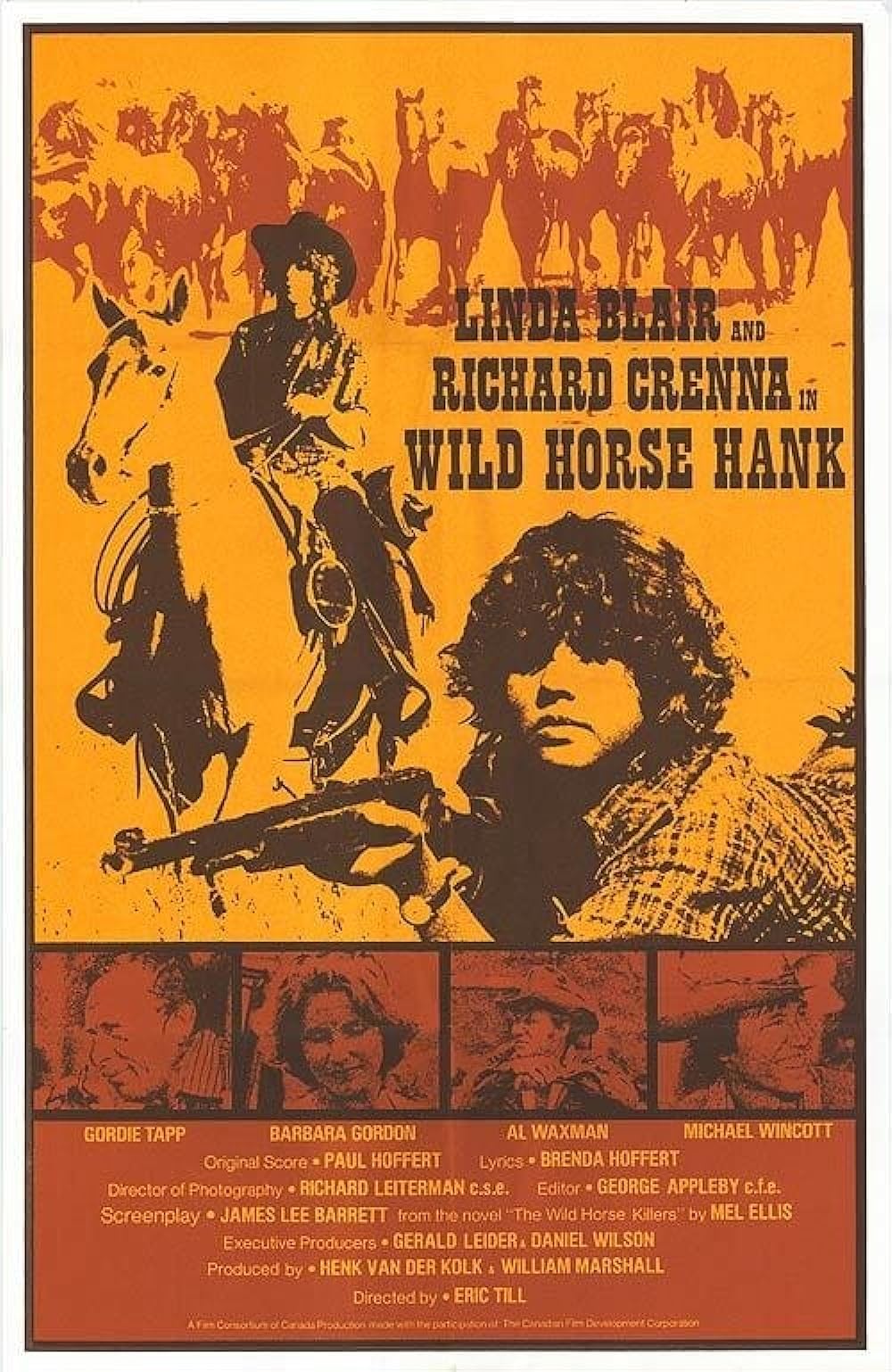
Based on the novel ‘The Wild Horse Killers’ by Mel Ellis the story centers around a teen girl named Hank (Linda Blair) who while tracking down her escaped stallion comes upon a group of men abusing some horses. She later learns that these men plan on destroying them in order to resell their meat for pet food. Hank becomes determined to herd them along treacherous terrain to the safety of a federal park where the horses will be free to roam without danger of being hunted. The problem is that it will be 150-mile trek and her father (Richard Crenna) doesn’t feel she’ll be up to the job, but Hank isn’t use to taking no for an answer and decides, with rifle in hand, to take on the challenge.

What stood out for me was the gorgeous western Canadian setting filmed on-location at both Dinosaur Provincial and Waterton Lakes National Park in the province of Alberta. The vast open view gives one a true sense of the outdoors and the rugged elements. The portrayal of the towns folk particularly the girlfriend of one of the bad guys, played by Barbara Gordon, who refers to her toddler son as her ‘popcorn fart’ and allows him to sip beer while complaining to everyone that he’s ‘a burden’ displays in raw fashion the economic hardship of country living and how fringe some in that region are and what levels they’d be willing to resort to in order to try and get out of it. It also gives a motivation for why the men are as savage as they are and it isn’t so much that they’re just ‘evil’, but more because other opportunities in such isolated areas are sadly few and far between.

The men are portrayed differently than in most other films where bad guys are given menacing looks and threatening presence. Here though they’re more like non-descript jobos you might find at the neighborhood bar, who on their own don’t pose much of a threat and like with the culprits in the classic film Straw Dogs don’t really become scary until they band together showing how otherwise benign people can become dangerous through peer pressure and financial insecurity, which in a way ends up making them even scarier.

Blair can certainly be a great actress if given the right material and knowing how much she loves animals I’m sure she took on this project because the theme was close to her heart, but the character doesn’t offer her much acting range. Normally the protagonist is supposed to grow and change in some way during the course of a movie, but here she’s one-dimensional. She’s super head-strong right from the start and remains that way to the end making her personal journey static. Had she been insecure at the beginning and then learned to overcome those feelings would’ve at least given the character a genuine arch.

I was surprised too that Crenna, who’s only adequate in his role and borders on being miscast, doesn’t go along with his daughter on her trek. He argues with her about how dangerous it is and yet ultimately waves her on her way and stays home. Had he tagged with her there could’ve been more opportunity for conversation and learned more about these people instead of long segments of silence, which makes the viewer more emotionally detached from what the character is going through instead of engaged.

I know I’ve complained about other adventure movies that throw in a hooky romance as a subplot, which I usually find annoying and yet this is a rare case where I wish it had been done. There’s a young good-looking guy named Charlie, played by Michael Wincott, who’s related to the poachers, but teeters the fence on whose side he’s on. He has some interactions with Blair during her trek and seemed like he was a potential love interest, but then he disappears only to come back later. He should’ve stayed all the way through as they made an interesting and cute couple with just enough animosity to keep it spicy.

Spoiler Alert!

There is a scene where Blair’s horse gets injured and she’s forced to shoot it, which I found powerful and the climactic sequence in which her father, who conveniently reappears again, gets all the truckers to create a roadblock, which stops the traffic, so the horses can cross the road. Overall though the film lacks subtext. The formula is too simple and straight forward. It may interest preteens especially those who love horses, but the main characters aren’t multi-dimensional.

My Rating: 4 out of 10

Released: May 15, 1979

Runtime: 1 Hour 35 Minutes

Not Rated

Director: Eric Till

Studio: Canadian Film Development Corporation

Available: DVD-R

Six Weeks (1982)

sixweeks

By Richard Winters

My Rating: 1 out of 10

4-Word Review: Young girl has leukemia.

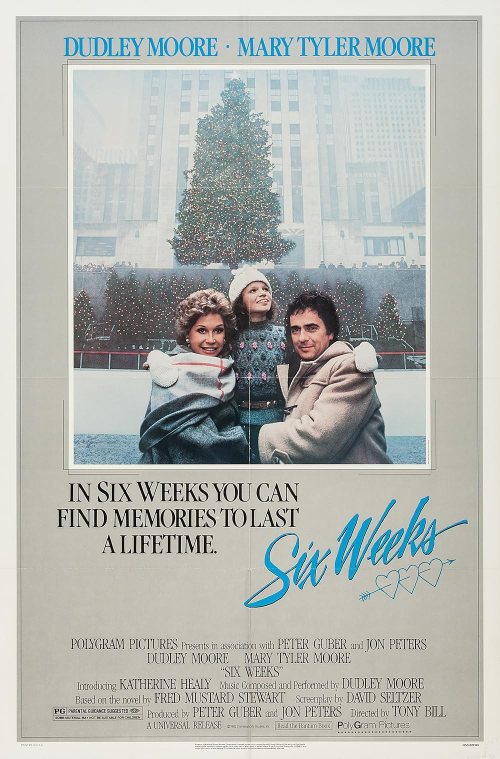
Patrick Dalton (Dudley Moore) is running for political office in the state of California when he becomes lost while trying to find his way to a political fundraiser where he is to be the keynote speaker. He stops to ask a young girl, Nicole (Katherine Healy), for directions and the two strike-up a conversation. He invites her to the fundraiser and finds that she’s the daughter of Charlotte (Mary Tyler Moore) who is the wealthy owner of a cosmetic company. Initially Charlotte is frosty towards Patrick convinced he’s just another opportunist politician. Nicole though grows very fond of Patrick and volunteers to work on his campaign. Charlotte, after seeing how much her daughter likes Patrick, even agrees to give him a generous donation, which he initially rejects until he learns that Nicole has been diagnosed with leukemia and has only a short while to live. This causes Patrick to become quite close to Charlotte and Nicole and he begins visiting them frequently much to the concern of his wife Peg (Shannon Wilcox) who thinks he’s having an affair.

Hard to find much to like about this shallow tear-jerker that was based on the novel of the same name by Fred Mustard Steward. I did though like seeing Dudley, who also composed the film’s score, in a rare dramatic turn. He’s best known for his comedy, but even when he was at his goofiness I still detected a serious side to him and this role here brings that out quite well. I did though have issues with the marriage angle as I felt the wife gave up too easily. She does show-up at a party that the three others are at in an attempt to make them uncomfortable, which it does, but I felt she should’ve created more of a scene. This was done in an era where putting up a veneer of civility was expected even when it was with people who shared intense feelings towards each other, but these days there’s jilted women out there that don’t take kindly to those that are out to ‘steal their man’ and could lead to some very public catfights, which could’ve given the film a lively energy as well as making the viewer more sympathetic to Dudley for leaving her as she would be better deemed as a ‘psycho’. Yet the way the film does it here you’re actually sympathetic to the wife and Dudley, as noble as his intentions are, comes off looking a bit like a cad for literally just abandoning her and getting with the other two essentially full-time.

I was confused too why this didn’t hurt him politically. If I’m his opponent and I catch-wind that he’s been seen regularly with another women that’s not his wife I use it to my advantage to crush him in the polls with it, or this is something his wife could’ve done by tipping off to the press that he was seeing someone else in order to ruin his bid and get back at him, yet none of this occurs. What’s the point of having him be in politics if it’s not going to be used to enter in some potentially delicious dramatic conflicts? Might as well have him being a bland accountant since him as a politician doesn’t really add much, or make that much of a difference to what happens.

Healy, who as of this date is the only theatrical film she’s been in and much better known for her ballet work, is fantastic and shows a lot of poise for someone who never acted in a movie before. I enjoyed her worldly-wise character who despite her age shows a keen awareness to many adult topics, which I appreciated. Kids can be far more observant about things than many adults would like to think, so I was glad she wasn’t played-up to being cute, but painfully naive. I did though feel her protruding, poorly spaced teeth should’ve been straightened with braces and was surprised that her mother, being as rich as she was, hadn’t had that done.

Her leukemia that she’s supposedly suffering from is problematic as she goes through the great majority of the film showing absolutely no symptoms of it. She states that she’s refused treatment, so I guess that could explain why her hair doesn’t fall-out, but I’ve known people who’ve suffered from the illness and it takes a toll on one’s energy to the point that they become bedridden as it progresses and yet here she shows nothing but boundless energy and even dances on stage without any signs of exhaustion near the end. It got to the point that I started to wonder if she was faking being sick and I wouldn’t blame anyone for thinking the same thing.

The casting of Mary Tyler Moore, who won the Razzy award for her work here, was a real mistake. Although she was only 45 she looked more like she was 55 and too old to have a daughter that wasn’t yet even in high school. She shows at times quite a cold demeanor making the way she melts away and falls for Dudley seem too quick and forced. Watching the two walk side-by-side where she’s clearly way taller than him makes it resemble a mother walking her son than a couple and thus has the romantic angle visually look even more odd and awkward than it already is.

I was confused too about who this girl’s father was. I have never read the book of which this is based, so maybe it gets talked about there, but here it’s never mentioned. I would think that even if she was a product of a painful divorce her father would still want to see her especially if he knew she was dying. Even if it was just a passing fling that the mother had year’s ago it would be presumed that Dudley would be curious about it and at least ask since he was essentially taking the father’s place with his presence.

Having the Dudley character ‘pull some strings’ in order to get Nicole to perform onstage in the New York Ballet at the last minute was too fanciful to be believed. The other cast members would resent that they would have to rehearse for weeks, even months and years, just to get the opportunity to be on the show and yet this kid gets whisked into the lead, at the sacrifice of someone else, all at the last minute. I admit I liked seeing the Nutrcracker production, but having Nicole already a part of the cast, but afraid due to the onset of the disease she might not be able to do it when it became time for the performance, and having some overly ambitious understudy ready to take over if she couldn’t, would’ve made more sense and been more interesting drama.

Spoiler Alert!

The death scene has got to be one of the lamest I’ve ever seen. Again, she spends virtually the entire movie showing no outward signs of any problem and then while on a subway car she starts feeling ‘weird’ and then a few seconds after that she promptly falls over dead, which was so corny it was almost like the movie makers were begging the viewers to make fun of it.

My Rating: 1 out of 10

Released: December 17, 1982

Runtime: 1 Hour 48 Minutes

Rated PG

Director: Tony Bill

Studio: Universal Pictures

Available: Amazon Video, Tubi, Freevee, YouTube, VHS

Remember My Name (1978)

remember

By Richard Winters

My Rating: 7 out of 10

4-Word Review: His ex-wife returns.

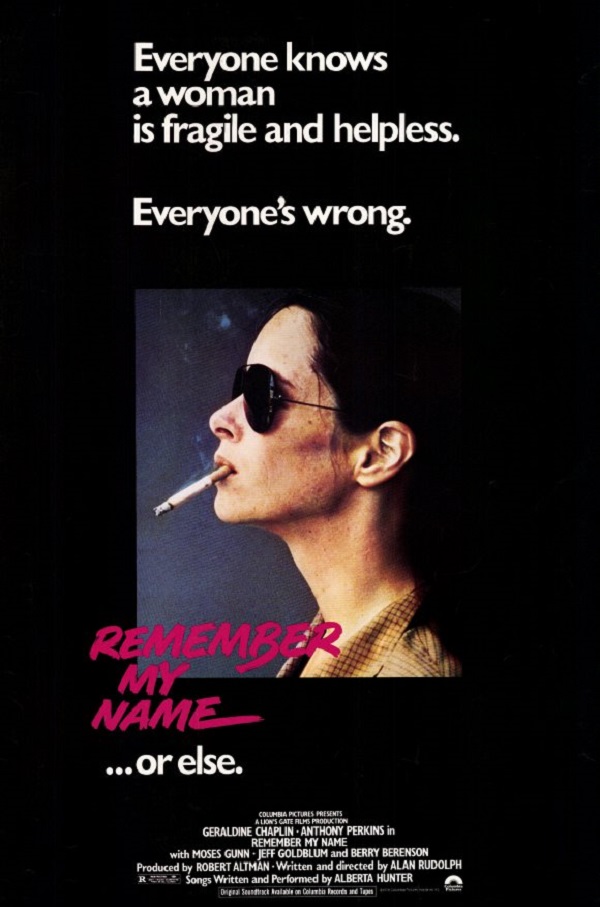
Neil (Anthony Perkins), who works as a local carpenter, is married to Barbara (Berry Berenson). While the two have their share of ups-and-downs they mostly find a way to work it out and get along. Then comes Emily (Geraldine Chaplin) whose been recently released from jail. She begins harassing the couple for no apparent reason. After she breaks the window of their home Barbara insists on pressing charges. Neil though resists while divulging that he had previously been in a relationship with her and because of certain things that occurred has a misplaced sense of guilt to cover-up for her actions. Barbara does not understand this and the two break-up while Neil decides to rekindle things, but while Emily initially seems receptive she may actually harbor ulterior motives.

Alan Rudolph does a marvelous job of directing this emphasizing the working-class existence with a pale color scheme and great use of on-location shooting, which gives the viewer a vivid and intimate portrait of the character’s lives and their environment. The use of showing that Emily had previously been in prison without actually saying it by simply using certain sounds and visuals as she sleeps is a genuinely inspired moment as is the use of the brief dialogue that reveals things slowly and deliberately using subtle hints that achieves a certain fragmented narrative.

Chaplin is brilliant and convincing in the lead and her unique colored eyes helps build a riveting psycho-like effect though with her extremely thin frame it’s hard to imagine she’d be able to take-on and even beat-up the Alfre Woodard character as she does though one could possibly justify it by saying she learned fighting skills while in jail. Perkins is also quite good, but the use of his real-life wife Berenson, who didn’t have a lot of acting training, hurts as her time on screen is rather blah including the otherwise tense confrontation that she has with Emily when Emily invades her home, which might’ve been a more interesting scene with a better qualified actress in the part.

While the first-half is quite slow I was thoroughly gripped and found the whole thing fascinating, but this tapered-off by the third act when Perkins and Chaplin rekindle things while at a restaurant. The scene gets done in amusing way as the couple keeps ordering alcoholic drinks one after the other, much to the consternation of the waiter, played by Terry Wills, but having Perkins go back immediately to Chaplin with almost no apprehension kills the intrigue. This is a woman that supposedly murdered someone before, so how does he know she can be trusted? Having him more defensive and cautious and even conflicted as he was technically still married would’ve helped continue the tension instead of deflating it.

Spoiler Alert!

The scene in which the Moses Gunn character, who was having a bit of a fling with Emily, goes back to her apartment apparently to murder Perkins who had been temporarily staying there, could’ve been done better. It’s only intimated that Gunn kills him as we see a nervous look on Perkins face as he hears somebody at the door and then it cuts away to the outside of the building with loud crashing music to display that there was violence, but I really felt it should’ve gotten played-out visually. Perhaps it could’ve been done Rear Window-style with it being captured through the windows, which would’ve stayed consistent with the film’s detached tone, but to leave the story’s most crucial moment up to speculation was a letdown.

The same can be said to Alfre Woodard’s character who promises revenge on Chaplin, but it never comes. A good physical confrontation between the two could’ve added some much needed action, which otherwise is sorely missing and makes the film seem incomplete. Having Chaplin terrorize the couple by messing up their flower garden is a bit too tame as any squirrel or raccoon could’ve done the same thing while putting a bloody animal on their doorstep, or nailing a graphic picture of the person she had killed before would’ve been far more frightening.

Overall I liked the style, but the attempt to keep things buttoned-down all the way through doesn’t work. At some point, just like with the ticking time bomb mentality of its main character, it needed to explode with violence that would’ve awakened the viewer with a shocking effect. The fact that this is only slyly hinted at is a letdown and doesn’t give the movie the strong pay-off that it should.

My Rating: 7 out of 10

Released: October 1, 1978

Runtime: 1 Hour 34 Minutes

Rated R

Director: Alan Rudolph

Studio: Columbia Pictures

Available: DVD-R, Tubi

If You Could See What I Hear (1982)

ifyou

By Richard Winters

My Rating: 2 out of 10

4-Word Review: Blind man finds love.

Tom (Marc Singer) is a young man attending college who also happens to be blind due to being a premature baby and put into an incubator that had too much oxygen. He meets up with Sly (R.H. Thompson) and the two become fast friends and eventual roommates. Both go on the prowl for women with Tom having the better luck as he soon gets into a relationship with a black woman named Heather (Shari Belafonte) though when he proposes marriage she bails. He then has flings with many other women that he meets at a bar where he works at, but when he meets Patti (Sarah Torgov) he begins to fall in-love despite their differences as she’s a staunch catholic while he’s an atheist.

The story is based on the early life of Tom Sullivan who became a famous songwriter and singer during the 70’s, he even sang the National Anthem at Superbowl X, as well as gust starring in several popular TV-shows of that era though today probably not that many people would know who he is. Marc Singer, best known for having starred in The Beastmaster as well as the 80’s TV-miniseries ‘V’, is also a casualty of that period and not real well known outside of those who lived through the decade. Why Singer was even cast I’m not sure as Sullivan clearly had acting experience and I would’ve thought he could’ve played himself and it might’ve been a better movie had he done it.

Story-wise it comes-off as comical vignettes spliced together and hardly seems believable, or at the very least highly exaggerated. Sullivan is given too much of a bigger-than-life vibe as where ever he goes everyone immediately gravitates to him and he becomes the life-of-the-party.  When he does seem to get into trouble he’s able to easily get out of it in circumstances that others wouldn’t. For instance he gets stopped by the police for driving a car without a license or vision, something that would get anyone else a ticket, fine, and arrest especially when his car does end up causing damage, but here the cops just shake their heads in a bemusement and walk away. He also jumps off a boat in the middle of a deep lake without a life jacket and unable to spot the life line that gets thrown to him and yet miraculously he gets out of this pickle just fine too. He’s even able to play golf against opponents with vision and beat them at their own game even catching them when they try to cheat. It’s like the guy can never lose.

The romantic/sex angle gets handled in an equally glossy way. He has a Fonzi-like quality with hot women clinging to him like he’s a magnet. Bimbo blondes and other babes prance in an out of his rented bedroom on an almost nightly basis to the point I was stunned when one of them refuses to go up to his room. This is only because she was ‘catholic’, but then after awhile she ends up doing it with him anyways with the brief delay being caused by her ‘morality’. It’s like his handicap is never a factor and in some ways almost an asset.  Some may argue this is a good thing as it shows a blind person can still live a normal life, but I don’t think there’s anything ‘normal’ here as even a good-looking sighted man isn’t able to score as frequently and consistently as this guy.

Spoiler Alert!

I have nothing against cute. Sometimes a cutesy moment or two in a movie is a good thing and can help bring in a lighthearted mood, but when it gets done constantly throughout it becomes like eating an entire carton of ice cream, which may be good for awhile, but will eventually make you puke. Even when it does finally get serious, which doesn’t occur until 90-minutes in, when he tries to save a young girl whose fallen into a backyard pool, it gets botched. Supposedly this is based on Sullivan’s true-life incident where he saved his own daughter from drowning, but I have a strong feeling the logistics were changed from the real one as here we see the girl floating lifelessly for several minutes making it look like her lungs were filled with water and beyond saving.

Of course there will always be those that may like it. There’s one commenter on IMDb who states she used to watch this over and over back in 1983 when it was on HBO and really loved it though if she went back to it now she might I suspect see it in a more critical way. Siskel and Ebert, who could never agree on anything, both voted it the worst movie of 1982.

My Rating: 2 out of 10

Released: April 23, 1982

Runtime: 1 Hour 43 Minutes

Rated PG

Director: Eric Till

Studio: Citadel Films

Available: DVD-R (dvdlady.com)

End of the Game (1975)

endofgame

By Richard Winters

My Rating: 7 out of 10

4-Word Review: Unable to prove crime.

Richard Gastman (Robert Shaw) makes a bet with his young friend Hans (Martin Ritt) that he can commit a crime in front of him, but Hans will be unable to prove who did it. Later Hans’ girlfriend (Rita Calderoni) plunges to her death from off of a bridge. Hans is convinced Gastman did it, but just like he predicted he cannot prove it. 30 years pass and Hans is now a police commissioner with only a few months to live due to suffering from stomach cancer. His Lieutenant Schmied (Donald Sutherland) is found shot to death inside his police vehicle. He’d been assigned by Hans to keep tabs on Gastman as Hans was still intent on making him pay for what he did to his girlfriend, but he again can’t prove that Gastman killed Schmied though he’s certain that he did. Walter (Jon Voight) gets assigned to the case, but Hans can’t be completely honest with him about the case, so instead he sets Walter up to witness firsthand the brutality of Gastman for himself.

The story is based on the 1950 novel ‘The Judge and the Hangman’ by Frederich Durrenmatt who also wrote the screenplay and has a very amusing cameo as a man who plays chess against himself and always loses. The novel was first adapted into a broadcast for German television in 1957 and then again in 1961 for British TV, and then it got adapted for a third time for Italian television and then a fourth as a TV-movie for French broadcast before finally making it’s way to the big screen with this version, which so far has been the last adaptation to date.

The film was directed by Academy Award winning actor Maximillian Schell who was unable to get along with either of his leading actors with Shaw accusing him of being a ‘clockwatcher’ and ‘pocket Hitler’ while Voight described him as being humorless and overly demanding. The film is well directed for the most part, but an unusual reliance on humor almost kills it. The story itself is certainly not meant to be funny, but Schell implements comedic moments particularly in the first half when they’re not needed and almost a distraction. This is particularly evident during Schmied’s funeral and earlier when Schmied’s body is found and another cop drives the corpse to the hospital with Donald Sutherland, in an unbilled bit, playing the dead man and his body twisting around in weird ways as the car goes down the curvy road, which is humorous, but unnecessary and doesn’t help propel the plot. Initially too the corpse is spotted by some pedestrians who stare at it through the car window and seem amused by it, which isn’t exactly a normal reaction people have when witnessing someone who has just died. Possibly this was meant to show the public’s distrust, or disdain for the police, but if that were the case it should’ve been explained and elaborated.

The casting is unusual as it features Ritt in the lead who’s better known as a director, but here ultimately shines and becomes the film’s only likable character though the way he behaves throughout still makes him seem sketchy like everyone else. Shaw, who complained that he never got paid the $50,000 that he was owed for doing this, is commanding as usual, but Voight who wears a shaggy bleached blonde look comes-off as creepy right away. Technically the viewer is expected to side with his character, at least upfront and consider him a ‘good guy’, but right away Voigt telegraphs it in a way that makes him seem ‘off’ and hence kind of ruins the stories eventual twists.

For those who like complex whodunits this might fit the bill. The plot certainly does constantly unravel in surprising ways and no one should be bored, but the characters are cold and unlikable. There’s no one to root for and therefore the viewer is not as keyed into the outcome as they would’ve had they been more emotionally invested. The editing is also quite choppy and there seems to be certain key elements that get left out, which most likely due to the fact that the original runtime was 106 minutes, but the DVD version, the only one publicly available at this time, runs a mere 92 minutes.

My Rating: 7 out of 10

Released: September 21, 1975

Runtime: 1 Hour 46 Minutes (Director’s Cut) 1 Hour 33 Minutes (DVD Version)

Rated R

Director: Maximillian Schell

Studio: 20th Century Fox

Available: DVD-R