Category Archives: Obscure Movies

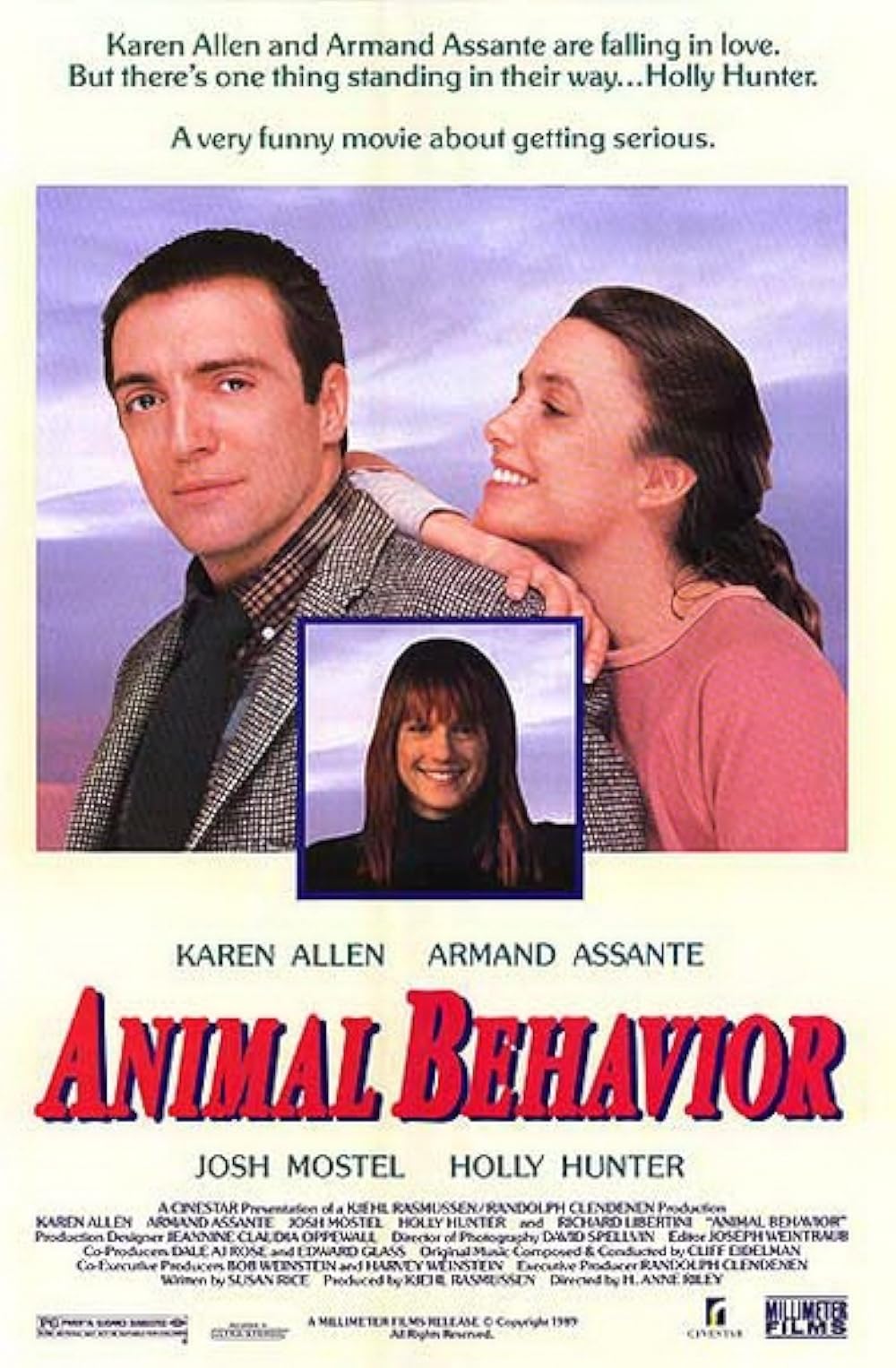
Animal Behavior (1989)

animal

By Richard Winters

My Rating: 4 out of 10

4-Word Review: Cellist falls for biologist.

Alex (Karen Allen) is a biologist employed at a university where she is researching on finding new ways to communicate with chimpanzees including the use of sign language but finding it challenging in getting any funding. Mark (Armand Assante) works at the same school as an orchestra instructor. He meets Alex by chance and while their first encounter is awkward, he immediately takes an interest in her and tries to pursue a relationship. Alex is so involved in her work that she doesn’t pick-up on Mark’s advances initially and then when she does, she comes under the mistaken impression that he’s married which causes her to avoid him and making Mark believe that she doesn’t like him when deep down she really does.

The film, which has never been released on either DVD or streaming and can only be obtained from a very rare VHS print, is more known for its behind-the-scenes troubles than anything that goes on in front of the camera. The main issue was the squabbling, or ‘creative differences’ between director Jenny Brown and the producer Kjehl Rasmussen causing her to leave the project, which began filming in 1984. The production then ran out of money forcing it to be shelved for many years in an unfinished state before Rasmussen was able to receive enough funding to complete it with him as the director. However, out of its initial $3.5 million budget it was only able, after its limited release, to recoup a paltry $41, 526 at the box office making it a huge financial loss. It also came-out 4 years after one of its stars, Alexa Kenin who plays a not very talented cello student, died mysteriously at the young age of 23 for causes that are still unknown to this day.

Despite all of its production problems I came away finding it not too bad and enjoyed the orchestral score and the giant animated musical notes that appear during the opening credits as well as the vast New Mexico landscape. Assante is an interesting casting choice as he plays the romantic lead not in a lovesick way but approaches it instead in more as a matter-of-fact type, which you’d expect a person working in Academia might do. I did though find his ability to handle chimps as relaxed and comfortable was a bit of a missed opportunity as having him afraid of them, which is what I think most people would be like, would’ve given their young relationship more of a challenge to work through and thus more intrigue to the story.

His inability to every criticize Sheila, played by Kenin, who is a very poor cello player, made him in-turn come-off as a failure of a teacher. Granted the film wanted the viewer to like the Assante character and if his criticism of her playing was too harsh it might make them turn-on him, but the guy is her teacher and not her friend. A friend is someone that doesn’t want to hurt the other person’s feelings, but a teacher is paid to get to the source of the problem. If he is just going to allow this student to leave in a delusion that she’s a competent then when is she ever going to get better, or be motivated to improve? A good teacher is obligated to call a student’s attention to their shortcomings and by avoiding doing this he comes-off as weak and ineffective.

While Allen’s performance is also good, I had some problems with why Assante would want to get into a relationship with her. It’s clear from the get-go that she’s so into her chimps that she’s out of touch with everything else around her. Why pursue someone romantically who’s always going to put her monkeys first and make him have to constantly compete with them for her attention?

A far better love interest would’ve been Coral that gets played by Holly Hunter who is an absolute scene-stealer and gives the movie some much needed spunk. This was before she won the Academy Award, so her role is limited, but she still makes the most of it playing a single mother with an autistic child, played by Crystal Buda. She is a neighbor to Assante and the two get into a quasi-style relationship though they don’t have any sex, but I didn’t know why she didn’t want to pursue further past the friendship level as they seemed quite compatible and it would’ve allowed in more drama forcing both her and Allen to compete for the same man, which could’ve lead to some juicy confrontations.

Josh Mostel, as Assante’s friend, is fun, not so much for anything he says, but more for his big white-guy afro. The climactic sequence, which takes place in a large scale maze made out of hay bails is diverting simply because it’s never been used before, or since. However, the characterizations of the University faculty, who are portrayed as being stiff, uptight, while also a bit ‘wacky’ is too broad to be either amusing or insightful.

My Rating: 4 out of 10

Released: October 27, 1989

Runtime: 1 Hour 28 Minutes

Rated PG

Director: Jenny Brown

Studio: CineStar Productions

Available: VHS, DVD-R (dvdlady.com)

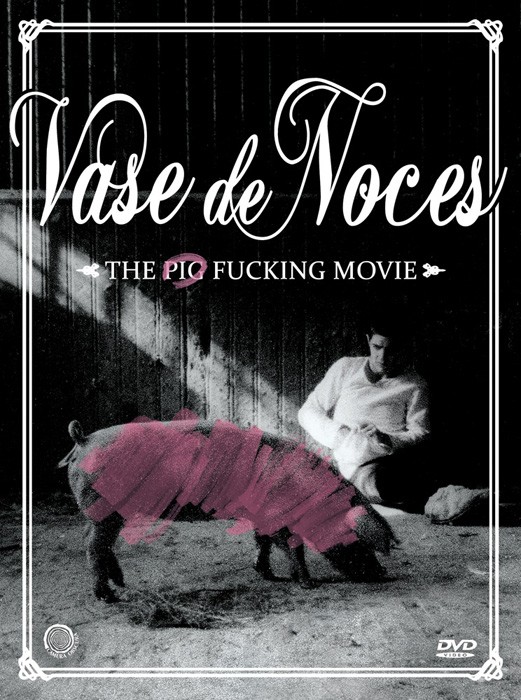
Wedding Trough (1975)

wedding

By Richard Winters

My Rating: 1 out of 10

4-Word Review: Man fucks his pig.

Bizarre, controversial film that was first shown at the Perth International Film Festival in Australia where it was immediately met with outrage and walkouts that quickly got it banned from being shown again by the government, a ban of which still stands today. Since then it’s turned-up sporadically a various film festivals throughout the decades, with the last one being in 2008 in Switzerland, but was never released theatrically and was considered an obscurity before finally getting a DVD issue in 2018. The film has no dialogue and shot in black-and-white at an abandoned farm in the outskirts of Belgium. It was directed by Thierry Zeno who had a noted fascination with all things morbid and followed this one up with a documentary on death and decay called Des Morts. This one deals with taboo subjects of zoophilia and coprophagia, which gets shown graphically. Many label this a horror movie for its grim and unrelenting subject matter, and some have even considered it a forerunner to Eraserhead

The plot description, which will contain SPOILERS, though in this case I feel is a good thing, so you know exactly what you’re getting into if you attempt to watch it, deals with a lonely farmer, played by Dominique Garny, who also co-wrote the screenplay, who begins to have amorous feelings towards his pet pig. One day he gets naked and has sex with it. Later on, the pig gives birth to three piglets. The man tries to bond with his brood by sleeping with them inside a giant basket, but the piglets prefer the comfort of their mother over him. Feeling that he’s now been ‘abandoned by his children’ it sends him into a rage causing him to kill the piglets by hanging them. This causes a great deal of stress for the mother pig who drowns herself in a nearby pond. The farmer now feels guilty about what he’s done, so he ‘punishes himself’ by concocting a drink made of his feces and urine and warms it inside a black pot before then forcing himself to swallow it.

While the sex scenes are simulated, though still graphic enough, the pooping and eating of it isn’t, which many will find gross enough. The hanging of the piglets though is quite unsettling. I’d like to feel that the ones that are hung were stillborn, since they do appear a bit smaller in size from the ones seen running around, but I’m not completely sure. However, the mother pig does become quite stressed in a very real way when she sees the dead piglets and runs around squealing in a high and frantic pitch, which is very disturbing.

Some have for decades sought this movie out as evidenced by the IMDb comments simply their love of shock cinema and this film’s notorious reputation for being at the top of the list. While it is unequivocally gross it’s also boring and disgusting with the abuse of the animals being the worst thing you’ll take from it. Not recommended.

Alternate Titles: Vase de Noces, The Pig Fucking Movie.

Released: April 11, 1975

Runtime: 1 Hour 19 Minutes

Not Rated

Director: Theirry Zeno

Studio: Zeno Films

Available: DVD-R

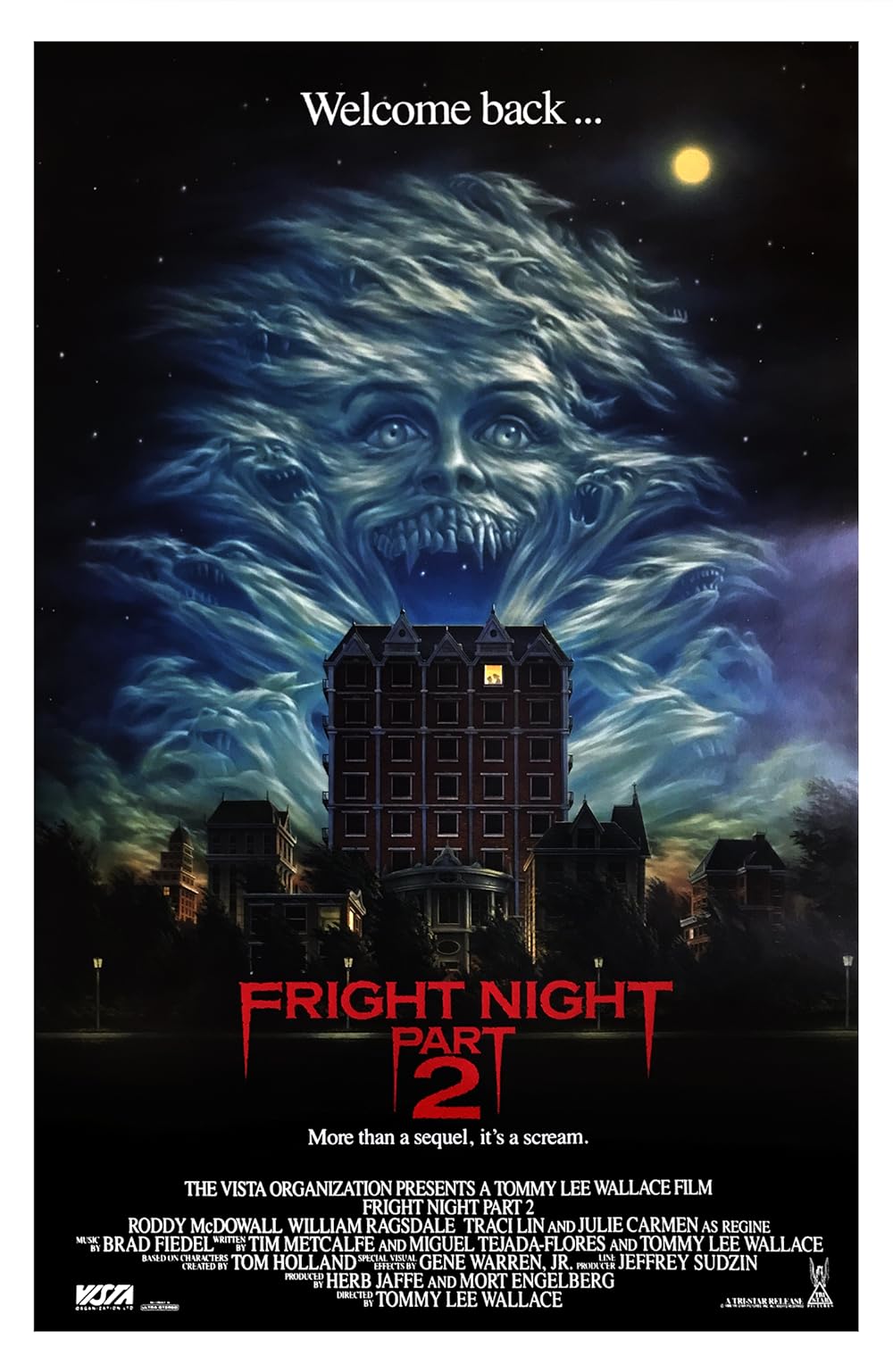
Fright Night Part 2 (1988)

fright2

By Richard Winters

My Rating: 6 out of 10

4-Word Review: Vampire’s sister stalks teen.

Charley (William Ragsdale) is now in college and having been convinced by his therapist (Ernie Sabella) that the ordeal he went through when he was in high school with his next-door neighbor Jerry Dandridge really wasn’t about a vampire, but instead the man had simply been a serial killer. In order to celebrate his successful ‘conversion’ he takes his new girlfriend Alex (Traci Lind) over to visit Peter (Roddy McDowall) who had been instrumental in helping Charley defeat Jerry. While there Charley looks out a window and sees movers hauling in three giant crates that look similar in size to coffins and he begins to fear the old ordeal is starting all over again. He begins dreaming that beautiful woman named Regine (Julie Carmen) visits him in his apartment one night and bites him on his neck and soon he begins showing odd traits like having to wear dark glasses because he no longer likes the sunlight. After going to a party with Peter where Regine is also in attendance, he becomes convinced that she’s really just a performance artist and no longer fears her until Peter takes out his trusty hand-held mirror and notices that he can’t see her reflection. Once Regine realizes that Peter’s on to her she admits that she really is a vampire and out for revenge over what he and Charley did to Jerry who happened to be her brother.

As sequels go this one isn’t bad though there’s quite a few things that are different from the first one, which is mainly a who slew of new faces. Amanda Bearse, who had figured so prominently as Charley’s original girlfriend is nowhere to be seen as she was working on the TV-show ‘Married With Children’ and not able to reprise her role while Stephen Geoffreys, who played Charley’s friend Ed was busy starring in 976-Evil and thus not available.  Director Tom Holland and Chris Sarandon, who had played Jerry Dandridge in the first, were involved in Child’s Play, and thus unable to commit though purportedly Sarandon did visit the shoot in order to offer emotional support.

Tommy Lee Wallace, who was best known for having directed Halloween III: Season of the Witcha film that was a critical and commercial failure when first released, but has through the years gained a cult following, got tabbed to direct this one and his background doing music videos can be clearly sensed here as it features a lot of quick edits and a moody vibe, which I really liked. Regine and her vampire clan that constantly surround her dress almost like a kitschy 80’s rock glam band, which is silly looking and campy, but also in a weird way creepy. Despite the low budget the special effects are still good particularly the monstrous transformations and the climactic sequence that takes place inside an elevator.

While Sarandon was highly impressive in the first version and there was simply no way that any other actor could’ve topped his performance Carmen is an adequate replacement. Too many times when producers can’t get a certain actor they then go out of their way to find someone similar, but here they wisely took the other route by finding someone who was quite the opposite. Instead of being verbally intimidating like with Jerry she does her stalking through being sexually alluring and the result is just as scary.

It’s also great seeing McDowall return as his presence in the first installment had been quite entertaining and his character here remains just as fun and I felt his hair looked better too. In the original the white in his hair appeared to have been sprayed on similar to how a white Christmas tree would look while in this one it’s a more natural looking gray with the white appearing on the edges, but the top part of his head still having a brownish color. I was though confused about how he was able to afford such a spacious pad in a ritzy apartment building that resembled a castle since in the first film he had been living in a cramped, dingy apartment that he was being evicted from and still working at the same job, so where he found the influx of cash to being able to move-up to a new swanky place is not explained.

The two things though that I didn’t care for was having Charley so easily convinced that what he had seen with his own eyes, Jerry being a vampire, was somehow not real, which made the character come-off as weak, easily influenced, and not reliable and like someone you really didn’t feel like rooting for if they could be brainwashed to that effective a degree. Also, having him slowly start to turn into a vampire wasn’t interesting in the least and having the bite mark continue to bleed even after it was bandaged didn’t make sense. Even if the puncture is created by a vampire the blood should still clot like it would with any other wound and not just turn the victim into a hemophiliac, which is what it kind of started to appear like.

The attempts at humor were misguided and genuinely got into the way of the scares and the whole thing would’ve been more effective had it been played straight. Overall though I felt was an effective follow-up and in certain ways even a bit better than the first. Finding a print of it though may be challenging as it’s never been released onto Blu-ray and the DVD issue, which came-out in 2003, is now out-of-print. It’s also not streamed anywhere. Even on its initial release it was only seen at select theaters for a brief time before falling off into obscurity. The main reason for this is that was produced by a production company run by Joseph Mendez, who while the movie was being filmed, was murdered along with his wife by their two teenage sons, which sent the company into bankruptcy and hampered the film from getting out. It also hurt the production of Part 3, which had already been in the planning stages. Infact both McDowall and Holland had a meeting with Mendez about moving forward with the third installment on the morning of his murder. That meeting though had proved to be a bit contentious, so when McDowall heard about the murder the next day he then immediately called Holland and said: “I didn’t do it, did you?”

My Rating: 6 out of 10

Released: December 8, 1988

Runtime: 1 Hour 43 Minutes

Rated R

Director: Tommy Lee Wallace

Studio: New Century/Vista

Available: DVD (out-of-print)

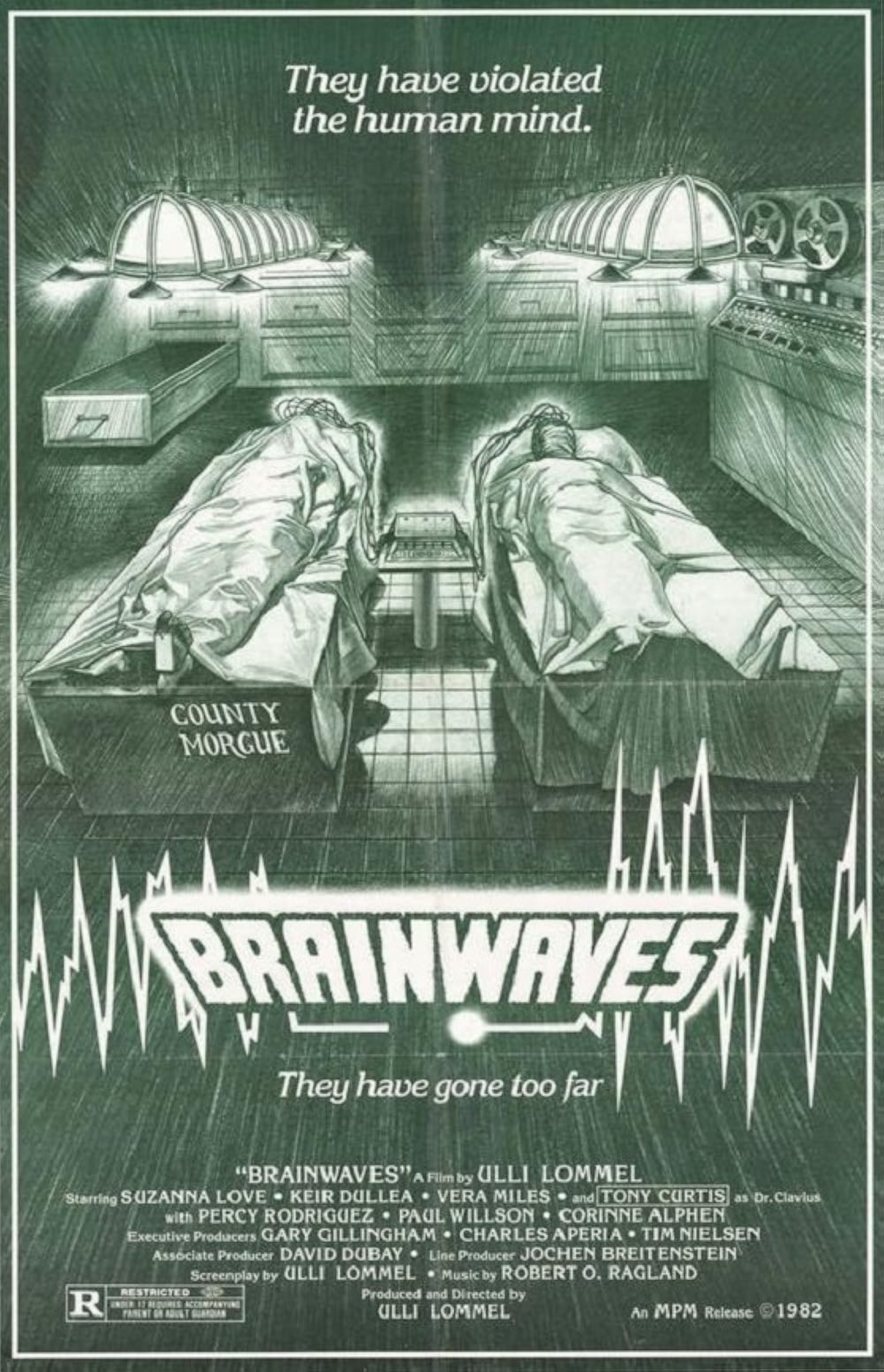
Brainwaves (1982)

brainwaves

By Richard Winters

My Rating: 3 out of 10

4-Word Review: Transferred brainwaves cause nightmares.

Kaylie (Suzanna Love) is a married mother of a young child living in San Francisco. One day while running out to the grocery store she gets the heel of her shoe caught in a trolley car track and this causes her to get hit by a car and suffer severe brain damage. Dr. Clavius (Tony Curtis) is heading experimental surgery that can transfer brainwaves from one victim to another. Kaylie’s husband Julian (Kier Dullea) agrees to the procedure in an effort to bring his wife back to her former state. Unbeknownst to him the other victim was a woman named Leila (Corinne Wahl) who was murdered in her bathtub by an unknown assailant. When Kaylie receives the brain transfer she begins having nightmares about the murderous incident. They then go on a search to try and unravel the mystery, but inadvertently get the attention of the killer who now begins stalking Kaylie in order to silence her before anymore oppressed memories come to light, which could identify him.

The film was directed by Ulli Lommel with a script that he had co-written with Love, who was also his real-life wife. The two had success a couple of years earlier with The Boogeyman and thus it inspired them to attempt another horror film. The concept is great and could’ve created an excellent plot, but the second-half labors too much in the recovery phase inside the hospital, which losses all the tension. The killer, whom we only see from the back, disappears from the story completely during the middle-half to the point you forget about him only to have him finally return by the third act, but by then it’s too late.

Dullea, as the concerned husband, is excellent even though acting here was a major comedown as he was getting leading man roles in major studio productions back in the 60’s, but now was relegated to low budget horror films though with that said he still makes the most of it. The same unfortunately can’t be stated for Tony Curtis, who only got the role because John Huston, who was the original choice, was too ill. Curtis had been a leading man in the 50’s and 60’s, so having to accept a part in such a minor production where he wasn’t even the star was certainly taxing on his ego and it shows as he appears grouchy and irritable throughout and seems like he wanted to be anywhere else, but in this movie.

Spoiler Alert!

The opening murder is okay though you know once she walks into the bathroom and turns on a portable radio that it’s most likely going to end up in an electrocution, so when it does finally occur it’s no surprise. The trolly car incident is nicely shot as well, but the ‘big reveal’ of who the killer is, which turns out to be non other than the victim’s boyfriend, which is the first person you would’ve suspected and thus is a complete letdown. The film should’ve had a wider array of suspects to choose from and played this part out more. The climactic sequence, done near the Golden Gate Bridge, gets shot in slow motion, which gives the proceedings a really tacky look.

The final twist features the dead body of the killer being wheeled into the doctor’s lab where it will apparently be used as a brain donor to another crash victim is cool, but the film then ends when it should’ve continued on with the psycho now chasing after Kaylie inside whatever body his brainwaves got transferred to. By having writer/director Lommel not take full advantage of the myriad plot twists as it could’ve is what really hurts it making it no wonder that it’s box office proceeds was a disastrous $3,111 out of a budget that had been $2.5 million.

My Rating: 3 out of 10

Released: November 19. 1982

Runtime: 1 Hour 20 Minutes

Rated R

Director: Ulli Lommel

Studio: Motion Picture Marketing

Available: VHS, DVD-R (out-of-print)

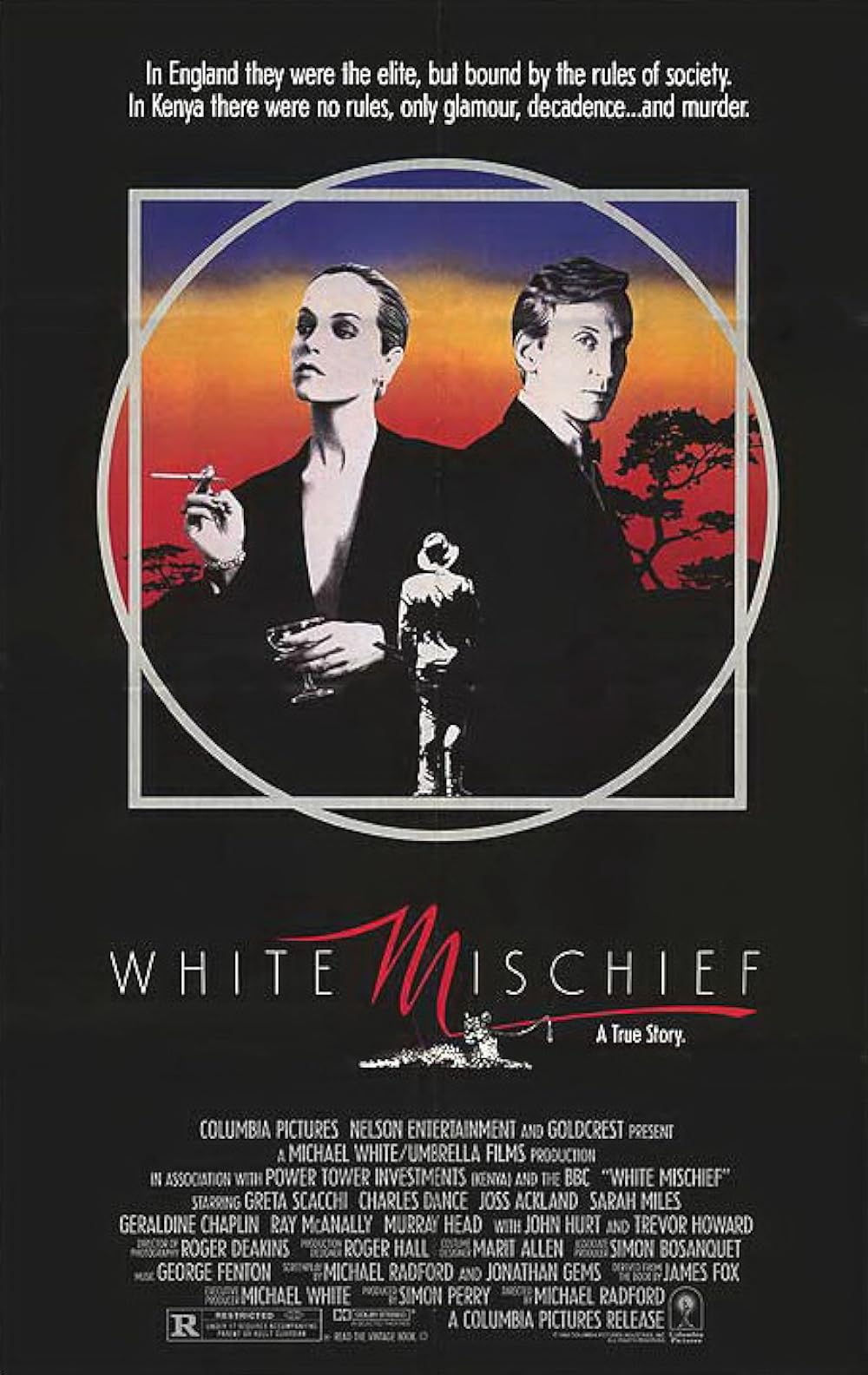
White Mischief (1987)

whitemischief

By Richard Winters

My Rating: 7 out of 10

My Rating: Unsolved murder in Kenya.

During the Second World War many British aristocrats with money escaped the tensions and horror in Europe by relocating at a settlement in Kenya that became known as Happy Valley. Here without the typical societal restraints of back-home they were able to indulge in all their provocative desires including rampant drug use and promiscuous sex. One such philanderer, possibly the most notorious of the bunch, was Josslyn Hay the Earl of Erroll (Charles Dance). He had already had various trysts with many of the women there including Alice (Sarah Miles) before dumping her due to her drug addiction. He then sets his sights on Diana (Greta Scacchi). She is married to Jock (Joss Ackland) who is older than her by several decades, and the two share a marriage of convenience with a pre-nuptial agreement that if either falls in love with someone else the other person will not impede it. Earl goes after Diana aggressively and despite some initial reluctance the two eventually become an open couple. Jock puts up a stoic front and allows her to go with him without any resistance, but internally he seethes with rage. Then one night Earl gets shot dead while driving his car in an isolate area. Did Jock pull the trigger?

The film is based on the book of the same name written by James Fox that was published in 1982 and in-turn based on the real-life incident that occurred on January 24, 1941 where the Earl of Erroll, like in the movie, is was found dead in his car and Jock, being the prime suspect, was put on trial, but then found not guilty due to a lack of evidence. For decades it sat as an unsolved case with no answers to what really happened until 1969 when Fox, along with fellow writer Cyril Connelly, became fascinated with the subject and began researching it vigorously. The book contains many interviews with people who lived through the ordeal and give first person accounts of the trial proceedings. Fox even traveled to the Kenya region to get a better understanding of the area and people and came to the conclusion that Jock had been the culprit with new evidence he unearthed, which makes up the book’s entire second-half though officially the case remains open.

The movie’s best quality is its visual element especially its ability to capture the expansive beauty of Africa as the film’s director Michael Radford proudly proclaimed before production even started that “films of Africa should be made by Africans” and you really get that sense here. The screenplay by noted playwright Jonathan Gems is also superb with it’s use of minimalistic dialogue where the conversations and characters never say too much, many times just brief sentences, and the emphasis is much more into what is implied.

On the negative end the attempts at eroticism are pathetic and overdone. The most absurd moment comes when the Sarah Miles character, during the open casket viewing portion of Earl’s funeral, reaches under her skirt and masturbates in full view of everyone before eventually putting her ‘love juices’ on the deceased, which came off as ridiculous and simply put in for a cheap laugh, or misguided ‘shock value’ and hard to imagine it occurred in reality. Both Scacchi’s and Dance’s characters are quite boring and their love scenes lack spark making the whole affair angle seem quite predictable.

The film’s saving grace though is with Ackland’s character where you really get inside his head and see things from his perspective. Normally in most films the jilted spouse is portrayed as someone to fear and a one-dimensional jealous machine who serves no purpose other than to get revenge. Here though we feel his quandary and sympathize with his internal struggle of trying to take the high road while also wracked with hurt and betrayal. Instead of being the culprit we ultimately see him as a sad victim even as his personality completely unravels by the end and because of this aspect I felt the movie works and is worth seeking out. Director Radford probably said it best when he stated that the film was about “people who have everything and yet have nothing. It’s about people who want to possess what they can’t possess” and with the excellently crafted Josh character you can really see that.

This is also a great chance to see acting legend Trevor Howard in one of his last performances. He was suffering severely at the time from his alcoholism and cirrhosis that he comes-off appearing like a wrinkled corpse put upright and there’s several scenes where he’s seen just standing there, but says nothing due to the filmmakers fear that he wouldn’t remember his lines, or if he did wouldn’t be able to articulate them. However, he does come through during a pivotal moment inside the prison when he visits Ackland and what he says and does there is great. John Hurt’s performance is the same way as initially he’s seen little and says no more than a couple of one word responses to the point I thought he was wasted, but then at the end he reappears and comes-on strong in an unique way.

My Rating: 7 out of 10

Released: November 10, 1987

Runtime: 1 Hour 47 Minutes

Rated R

Director: Michael Radford

Studio: Columbia Pictures

Available: VHS, DVD (Import Reg. 2), Amazon Video, Roku 

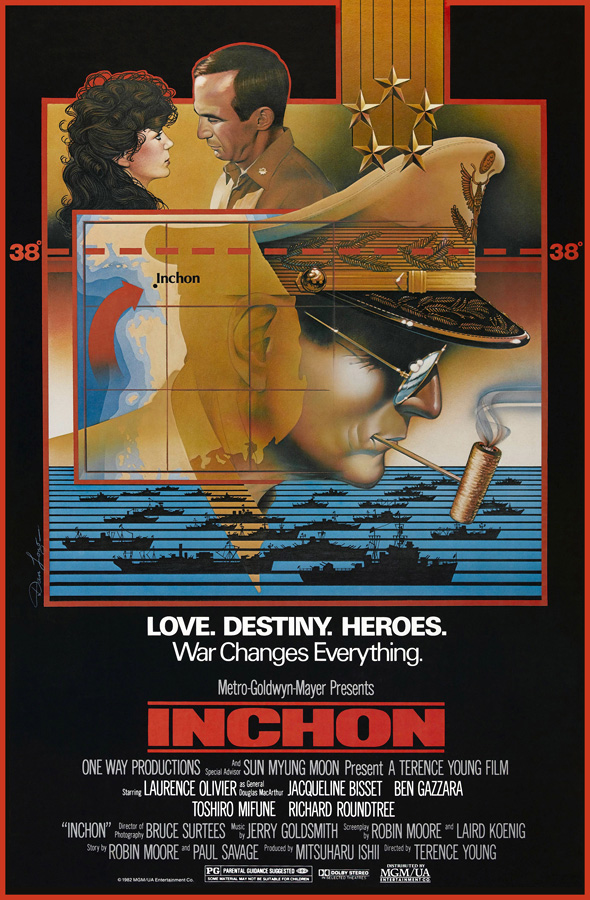
Inchon! (1981)

inchon1

By Richard Winters

My Rating: 3 out of 10

4-Word Review: Turning point in war.

Inspired by actual battles during the Korean War the film centers on the Battle of Inchon, which many consider the pivotal turning point that allowed American forces to achieve victory and was lead by General Douglas MacArthur (Laurence Olivier). While he exudes great outwardly confidence to others he does confide to his wife Jean (Dorothy James) that his age is creeping up on him and he fears he may no longer have the energy or mental acuity to take on the same types of challenges like he had done in the past. The film also has several side stories including that of Barbara (Jacqueline Bisset) whose husband Frank (Ben Gazzara), a Major in the U.S. army, is openly having an affair with a Korean woman (Karen Kahn). When the war fighting breaks-out near her she quickly tries to hitch a cab ride to get out, but soon finds herself straddled with some young Korean children who want to use her car to escape from the war with her.

The film is notorious for having been financed in large part by Reverend Sun Myung Moon who was head of the ‘Moonie’ cult that hit it’s peak during the 70’s and 80’s and gets credited with being the film’s ‘Special Advisor’ during the opening credits. He even used the help of psychic Jeanne Dixon who said she spoke with General MacArthur’s spirit and this spirit reiterated that he approved of the production, which was enough to get Moon put down a whooping $46 million to get it produced, but the film failed badly when it was released and was savaged by the critics. It was shelved for a year and then rereleased in a much shorter 105 minute version, which did not improve things and audiences stayed away causing them to only recoup of meager $5.2 million and turning it into a huge financial loss.

Overall the original 140-minute cut is the better version, if you can find it, and the movie wasn’t quite as bad as I had feared going in. The scenario dealing with Bisset and the kids is the best and I found the children to be genuinely appealing. I liked how well behaved they were and respectfully bow their heads when coming into contact with adults and won’t eat their dinner, despite being really hungry, until Bisset is sitting at the table with them. While this storyline does have a lot of similarity to The Inn of the Sixth Happiness, and in fact the hotel they stay at is named this, I still felt it was engaging enough to keep me semi-involved and had the film centered solely on this it would’ve done better though it’s still filled with some incongruities like having Bisset shoot and kill a man right in front of them where she’s not concerned about the psychological effects this may cause them, but then later when they come to a battlefield with dead soldiers laying about she warns the kids to ‘shield their eyes’, but if they’ve already witnessed one dead body and gotten through that what’s the harm of seeing a few more?

The drama dealing with her husband Gazzara and his affair is a bore and her conversations with him about it goes nowhere and slows the pace up badly as it offers up no spark and I found Gazzara’s constant smirking no matter what situation he was in to be annoying and wished someone else had been cast in the part. Olivier’s moments as MacArthur are equally cringey and should’ve been a source of complete embarrassment. However, he was at least honest about it and admitted in interviews he was only doing it for the money, so that his family would have something to keep them comfortable after he died, which he felt was coming soon and thus ‘nothing was beneath him’ as long as the ‘price was right’, which in this case was a payout of $1.5 million and included a $250,000 signing bonus.

Much of the problem with his part is with the ghoulish looking make-up that was put on and took 2 and a half hours each day to apply, but makes him look like some wax figure, his hair literally shines off his head every time it comes into any light. The effect makes him look like a walking dead person, or a strange alien from another planet and his moments come-off as either creepy, or laughable. His attempts at replicating MacArthur’s accent, which he had been informed sounded like W.C. Fields, is ineffective especially when you hear the real MacArthur speak during archival footage that appears near the end.

David Janssen as a crotchety and cynical news reporter, whose scenes were entirely cut in the abbreviated prints, is terrific and gives the movie a much needed sense of brashness and I wished his character was in it more though due to his death during filming he’s not in it as much. Everything else though unfortunately falls flat including the battle scenes that become quite redundant and surprisingly uninteresting to watch. The finale that deals with the illumination of a lighthouse and MacArthur’s reliance of banking on the ‘spirit of God’ to get it lighted was fabricated making it corny and forgettable.

My Rating: 3 out of 10

Released: May 4, 1981

Runtime: 2 Hours 20 Minutes (Original Cut) 1 Hour 45 Minutes (Reissue)

Rated PG

Director: Terence Young

Studio: MGM/UA

Available: DVD-R

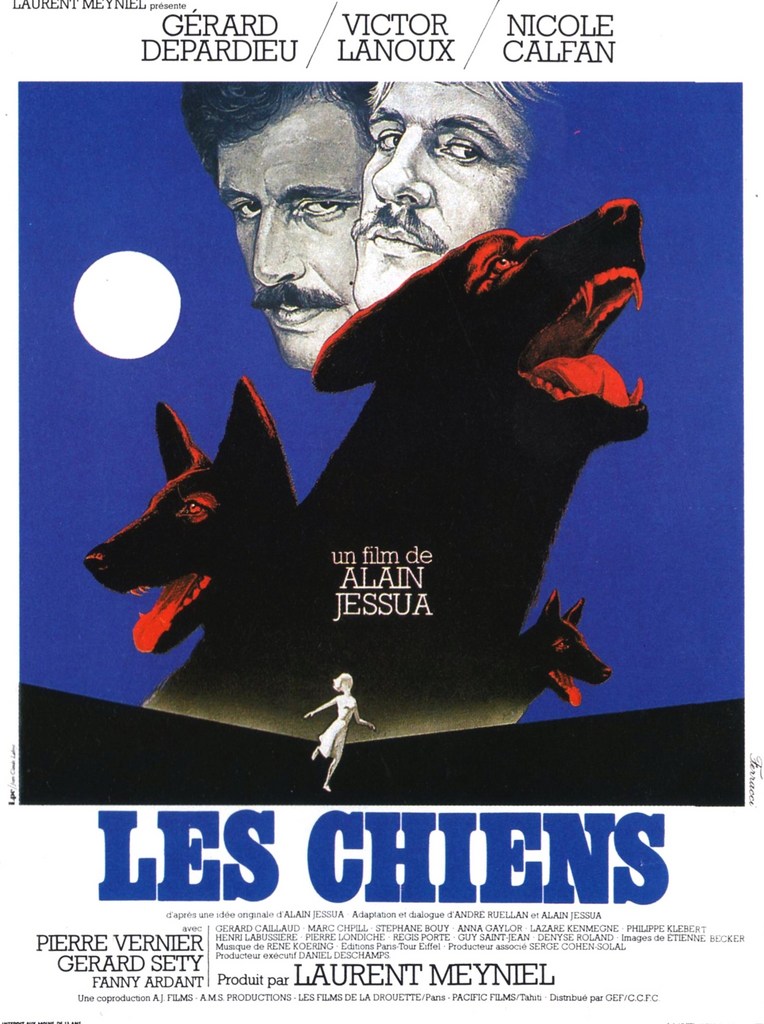
The Dogs (1979)

dogs

By Richard Winters

My Rating: 4 out of 10

4-Word Review: Canines on the attack!

Henri (Victor Lanoux) is a doctor who opens up a clinic in a planned community. He finds to his surprise that many of his patients are coming in complaining about dog bites. He then becomes aware of Morel (Gerard Depardieu) who runs a club were participants learn how to train their dogs to protect them from attacks. However, these same dogs have now become more of a menace that’s putting other citizens in the town in danger including the mayor who becomes a victim. Henri is soon at odds with his girlfriend Elisabeth (Nicole Calfan) who gets a guard dog after she is raped and she is more attached to the dog than him.

The story certainly has some interesting ingredients including the fact that the dogs themselves  aren’t really the threat, but more their owners who train them to be aggressive, which is a nice change of pace from other films from that era that would show animals attacking for seemingly no reason, or that they had become possessed by something evil. Here the set-up is more realistic and plausible and the residents are wealthy living in plush homes helps convey the idea that even ‘nice’ neighborhoods can have evil dwelling underneath and no place is ever completely ‘safe’.

Depardieu goes against type playing the villain and he approaches the part in a fascinating way where he’s not outwardly creepy at the start, but more just an awkward individual who genuinely believes, which is a mindset that he continues to have to the very end, that he’s the ‘good guy’ who’s simply helping vulnerable people find ways to adequately protect themselves. He also has a profound love for his dogs whom he likes more than people, that comes to prominence during a graphic birthing seen where the mother dog isn’t able to come through it. His performance is even more impressive when you factor in that he suffered a dog attack of his own in real-life just a few months before being offered the role and he took the part hoping it would alleviate his pent-up fears and he certainly goes all out here including allowing the dogs to attack and bite him while wearing protective clothing during the training exercises that he conducts.

On the other end, as his adversary, I didn’t find Lanoux to be half as impressive. For one thing he never comes-off seeming like much of a doctor nor ever seen wearing a white physician jacket and works inside a place that resembles a rented out business office than a legitimate clinic. He looks and behaves more like a detached business man walking through his role and never being as emotionally charged as the part demanded.

Calfan, as the girlfriend isn’t convincing either. She leaves her job late at night all alone even though she’s well aware of the crime in the area, which makes it seem like she’s foolishly walking into trouble and the subsequent rape attack gets played-out in a cliched and mechanical way. He recovery is too quick as she’s back to be her normal self again almost instantaneously without showing any of the post traumatic effects that victims of the crime typically do. Her character’s arch offers some intrigue as she at one moment ‘jokingly’ tells her dog to attack Lanoux and then at the last second calls him off, which understandably frightens Lanoux and made me believe she was mentally moving into a dark mindset and she would become the source of danger, but this doesn’t lead to anything. By the end she ‘snaps out of this phase’ and goes back to being her normal self even to the extent turning into the hero, which I didn’t find interesting at all and it would’ve been far more memorable had she slowly became the threat.

The film is too leisurely paced. We know upfront that these dogs, and the people who own them, are something to be feared, but the actual attacks take too long to get going and when they do they’re too quick and ultimately start to play-out in a redundant fashion. The chills and thrills are limited and there’s not enough surprises or twists. There are also some disturbing segments including a dog getting kidnapped and then bound with a muzzle while dangling in the air by a rope as it whimpers, which many viewers including animal lovers will most likely find highly unsettling.

Alternate Title: Les Chiens

My Rating: 4 out of 10

Released: March 7, 1979

Runtime: 1 Hour 40 Minutes

Not Rated

Director: Alain Jessua

Studio: A.J. Films

Available: DVD (French), DVD-R (dvdlady.com)

Same Time, Next Year (1978)

sametime

By Richard Winters

My Rating: 6 out of 10

4-Word Review: Affair lasts 26 years.

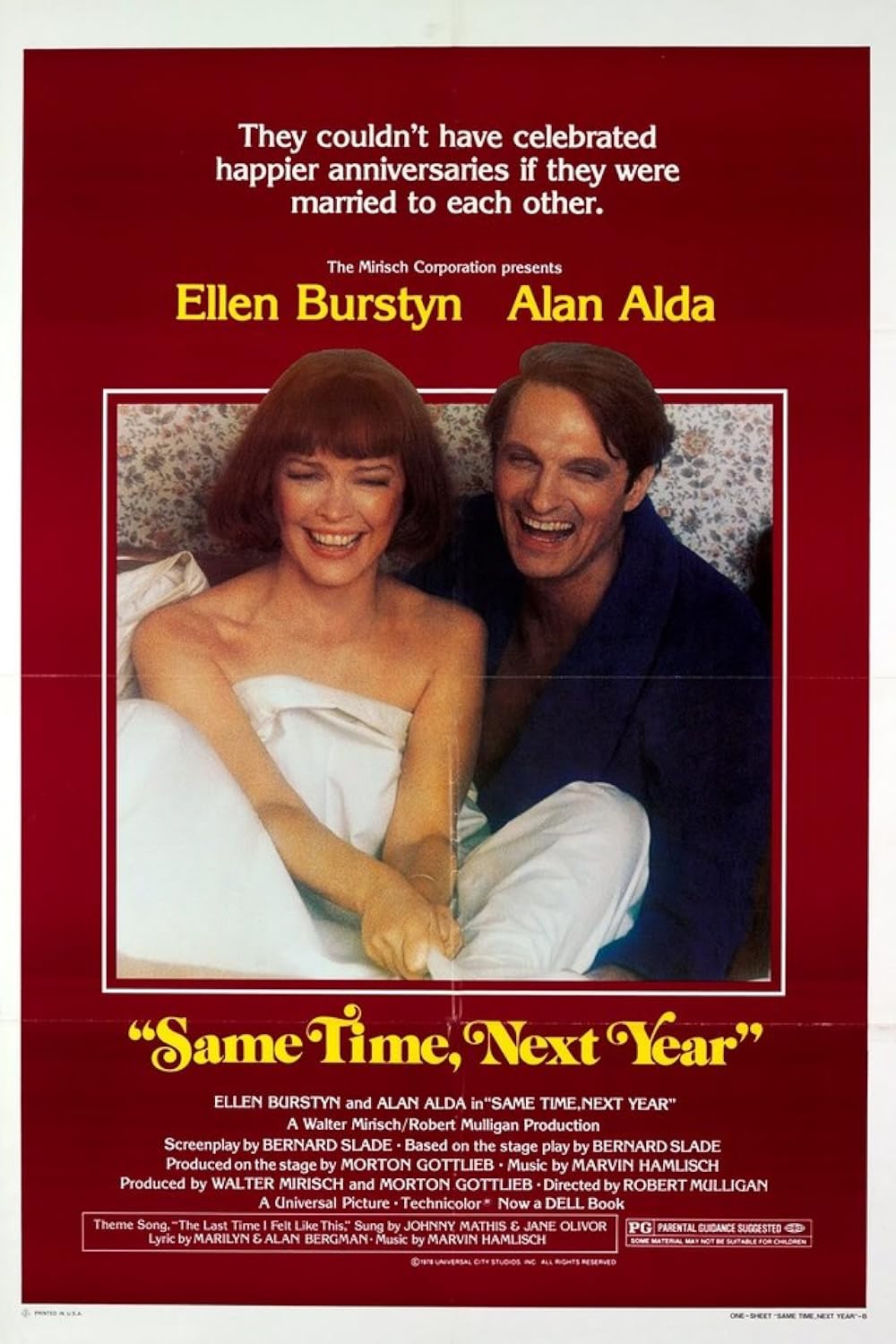
George (Alan Alda) meets Doris while staying at an inn in California in 1951. Both George and Doris are married with kids, but that doesn’t stop them from having a tryst while they’re there since neither of their spouses are with them. They decide to continue to meet each year at the same time and inside the same oceanside cabin. This reoccurring rendezvous lasts all the way up to 1977 and they go through many changes both in their personal lives and personalities, but remain in-love with the other despite never divorcing from their spouses.

While there’s a definite Neil Simon quality to the dialogue and situational comedy it was actually written by Bernard Slade who at that time was best known for creating the sitcoms ‘The Flying Nun’ and ‘The Partridge Family’. Originally it opened as a play on March 14, 1975 and starred Ellen Burstyn and Charles Grodin and ran for 1,453 performances. Slade also wrote the screenplay to which he was nominated for an Oscar.

While the interiors were filmed on a soundstage the outer portion of the cottage was built specifically for the film and when shooting was completed it was decided to move this foundation to a location in Little River, California with the interiors fitted with the furnishings that had been used on the soundstage during filming and then allowing couples to rent it out. This became so popular that the cabin was split into two with one called ‘Same Time’ and the other ‘Next Year’ and can still be rented out for a romantic getaway to this very day.

While the film stays faithful to the stage version I felt there should’ve been added context revolving around how they meet. We see them first making contact as they enter the inn to check-in and then they have dinner at separate tables before Alda invites himself over to eat at Burstyn’s, but we never hear their dialogue and instead get treated to sappy music, which could’ve easily been chucked and not missed. It also fails to answer one of the plot’s more crucial questions: why would a married woman with kids be traveling the countryside all by herself? For Alda it could make some sense as it was socially acceptable for a man to be traveling single for business reasons, but woman at that time were pretty much stuck in the home doing the majority of the child rearing, so what would her reason be for being out on the road all alone? Maybe she was visiting relatives, but you’d think if that were the case they’d let her stay at their place, or she’d bring her kids along, but either way there needed to be an explanation and there isn’t any.

The fact that they’re able to continue to do this for literally two and a half decades without the spouses finding out for the most part begs a lot of questions. What excuses were they giving their families, so that they could continue to keep meeting at the exact same time of year? Having an angry spouse secretly follow them and then unexpectedly show-up could’ve added some extra spice and if this situation had occurred in real-life most likely that would’ve ultimately happened.

While this may sound like nit-picking I had issues with the cabin setting too. Don’t get me wrong it’s scenic and I loved the outdoor moments where you get a great view of the shore and pine trees, but the interior of the place should’ve changed, or been updated with the times instead of the furniture and the placement of it looking virtually the same for 26 years. Make-up work could’ve been done on Ivan Bonar who plays the Inn’s owner and while the two stars age in interesting ways he remains ancient looking right from the start and never changes.

On the plus side I found both Burstyn and Alda to be fabulous and I enjoyed their comic, and sometimes dramatic, interplay even though their transitions in personalities proves a bit problematic. Normally as people age their attitudes and perspectives can shift, but it’s more linear and not herky-jerky like here. For instance during the 60’s Burstyn gets into the flower child movement only to, by the 70’s, become a business owner and a part of the establishment. Alda too goes from hardcore conservative during the 60’s, even admitting to voting for Barry Goldwater, to necklace wearing lib by the 70’s, which seemed like these characters were just conforming to the trends and attitudes of the day like caricatures instead of real people.

Spoiler Alert!

All of the quibbles listed above I could’ve forgiven, but the ending I found annoying. I actually liked the idea that George’s wife dies and he meets someone else and she won’t allow him to keep seeing Burstyn, so he then puts pressure on Burstyn to divorce her husband and marry him, which she refuses, so he then walks-out. This I found to be very realistic as most affairs don’t last this long anyways, so the memories and good times they had would be treat in itself and should be left at that. For Alda then to walk back-in and say it had all been a lie and they could continue to get together ‘forever’ was too far-fetched for a concept that had been pushing the plausibility to begin with. Everything needs to end at some point as even ‘perfect marriages’ will stop when one partner dies. The audience saw the first meeting, so they should’ve been treated to the last one too. Even if it meant having them elderly and entering with their walkers it should’ve been shown and the story given, one way or another, a finality of some sort.

My Rating: 6 out of 10

Released: November 22, 1978

Runtime: 1 Hour 59 Minutes

Rated PG

Director: Robert Mulligan

Studio: Universal

Available: DVD-R

I Am the Cheese (1983)

iam

By Richard Winters

My Rating: 6 out of 10

4-Word Review: Dealing with past memories.

Adam (Robert MacNaughton) is an adolescent boy taking a bike trip through Vermont in order to deliver a present to his father (Don Murray). During his ride memories from the past that had been stuck in his subconscious come to the surface including his on-and-off relationship with Amy (Cynthia Nixon) as well as the sometimes odd behavior of his father. Helping sort through these things including him finding in his father’s desk drawer two different birth certificates with his name on it, is Dr. Brint (Robert Wagner) a therapist at a mental hospital that Adam is currently residing in.

The film is based on the book of the same name written by Robert Cormier, who appears briefly as Amy’s father, who wrote many young adult novels with his best known one being The Chocolate War. The screenplay was written by David Lange, who was also the producer, and the brother of Hope Lange who gets cast as Adam’s mother and is a reunion of sorts for her with Don Murray, who plays Adam’s father, and whom she’d been married two from 1956-62. She had also co-starred with Robert Wagner in The Young Lions in 1957 though here they don’t share any scenes together.

The film, which was the one and only directorial foray of Robert Jiras who worked as a Hollywood make-up artist for many years, is decidedly low budget though since most of the action takes place with Adam on his bike it really doesn’t hurt the effect of the story and the lush summertime New England scenery becomes an added benefit. MacNaughton, who’s better known for playing the older brother in E.T. before leaving the acting business after the 80’s and becoming a mail sorter, is quite good as he effectively channels his character’s inner anxiety and confusion. Nixon is also a stand-out playing against the cliche of a typical teenage girl, who are usually portrayed as being giggly, insecure, and into the latest fads, but instead she is cultured, poised, confident, and smart and she adds a wonderful addition to the movie and it’s just a shame she wasn’t in it more.

The plot follows the book pretty closely including the constant shifting between the present and the past and also the therapy sessions. While I usually like non-linear narratives I initially found this structure off-putting. The publishers in fact felt, when the they read the initial manuscript, that it would too confusing for young readers and pressured Cormier to simplify the structure, which he refused. Despite this it does become genuinely riveting by the second act.

Spoiler Alert!

The twists are good and makes sitting through it worth it though the moment when the bad guys catch-up with Adam and his parents should’ve been played-out more since it’s such a traumatic moment. It’s possible that because this was aimed at teen viewers the producers felt this violent element required being toned down, but crucial scenes like these have to stand-out and the way it gets done here it just doesn’t.

In the film, like in the book, the psychiatric sessions are ultimately revealed to be a sham where Robert Wagner’s character isn’t a doctor at all, but instead part of the government conspiracy to make sure Adam doesn’t know more than he should about his parent’s past as otherwise he would be deemed a ‘risk’ and ‘terminated’. However, in the movie they have Adam escaping from the place and riding off on his bike like he’s now ‘free’, but he really isn’t. He has no job skills, no family, no money, and no place to live. He’s be better off just staying at the clinic even if it was a fake one, as he at least had a roof over his head and food to eat. Being on his own at 16 was unlikely to end well and such a sophisticated government operation such as this one was at some point going to track him down, dead or alive, so the tacked-on ‘happy ending’ doesn’t jive.

My Rating: 6 out of 10

Released: November 11, 1983

Runtime: 1 Hour 36 Minutes

Rated PG

Director: Robert Jiras

Studio: Almi Pictures

Available: VHS, DVD-R

When the Legends Die (1972)

whenlegends

By Richard Winters

My Rating: 8 out of 10

4-Word Review: Indian becomes rodeo rider.

Tom Black Bull (Tillman Box) is a young Ute Indian orphan living in the wild with his pet bear. One day Blue Elk (John War Eagle) an Indian elder comes upon the child and decides it’s time to get him acclimated into society by having him enroll into a school where Tom does not get along with the other students and forcing him to begrudgingly release his bear. Over the years Tom grows to being a young adult (now played by Frederic Forrest), but is bitter with the racism that he must endure. By chance he gets spotted by Red (Richard Widmark) who’s impressed by the way Tom can ride and control a difficult horse and decides he’d like to train him into becoming a rodeo rider. Tom sees this as an opportunity to get out of the slums that he’s in, but soon realizes that Red, who suffers from alcoholism, is exploiting him just like the other white men by forcing him to intentionally lose contests in order to trick people into betting against him.

During the early 70’s there were many modern-day westerns that focused on the rodeo circuit including Junior Bonner, J.W. Coop, The Honkers and Riding TallWhile all of those were good in their own right I’ve found this one to be at the top. The others were more a character study with the rodeo atmosphere a side-story while this one examines the training and technique that it takes to be a successful bronco rider with a meticulous detail making it more revealing and informative. The others didn’t always do a adequate job of making it seem like the lead character was actually riding the kicking horse and many times looked like a shot of the guy on top of one of those bull machines you see inside western barrooms, but here it’s captured in an authentic style including a disturbing moment where Tom refuses to get off the horse as it continues to buck, which ultimately exhausts the animal and requires it to be shot.

The story is based on the 1962 novel of the same name by Hal Borland who was a journalist who specialized in writing novels with an outdoor setting. The book though was aimed more for young adults and split up into four different sections while the film just analyzes the third portion. It also updates the time period to the modern day versus the turn-of-the century like in the book. It’s expertly directed by Stuart Miller, better known as a producer, with a well-written script by Robert Dozier that has crisp dialogue that manages to intimate a lot while saying little and never overstating anything.

Forrest plays his role with a sullen expression that remains constant throughout and some might complain it makes it one-dimensional, but I felt this helped illustrate the character’s inner anger and it’s fascinating seeing the juxtaposition of someone who’s very rugged and savvy when it comes to nature and animals, but quite virginal, literally, when it has anything to do with societal elements like women, alcohol, and other vices.

Widmark is brilliant as usual and one of the few people who can play a miserable, brash, and genuinely unpleasant old guy and still keep it on a humanistic level. Watching him go from gruff and demanding as he’s clearly the more worldy-wise at the start to more of a vulnerable and even dependent one at the end is a fascinating journey to watch. In many ways his relationship with Tom is like a father and son where the older one starts out as the stern teacher only to have it flip with the younger one, now fully accustomed to the world, taking the reins and caring, albeit begrudgingly, to someone who can no longer do it themselves.

My only complaint with the film that is otherwise close to flawless is that I would’ve liked to have seen one moment where Widmark shows some actual kindness to Tom as all the way through he’s quite grouchy and condescending even when Tom offers him some much needed support. I realize his character was a victim of the hard world he lived in and thus it wasn’t natural for him to show any tender side, which he most likely possessed very little of anyways, but one even fleeting moment of gratitude, even if it just was putting his arm around the young man and showing him a slight gesturing hug, could’ve gone a long way to giving it a bit more emotional balance and the touching image that every hard-edge drama ultimately should have and needs.

My Rating: 8 out of 10

Released: October 19, 1972

Runtime: 1 Hour 47 Minutes

Rated PG

Director: Stuart Miller

Studio: 20th Century Fox

Available: DVD-R