Category Archives: Obscure Movies

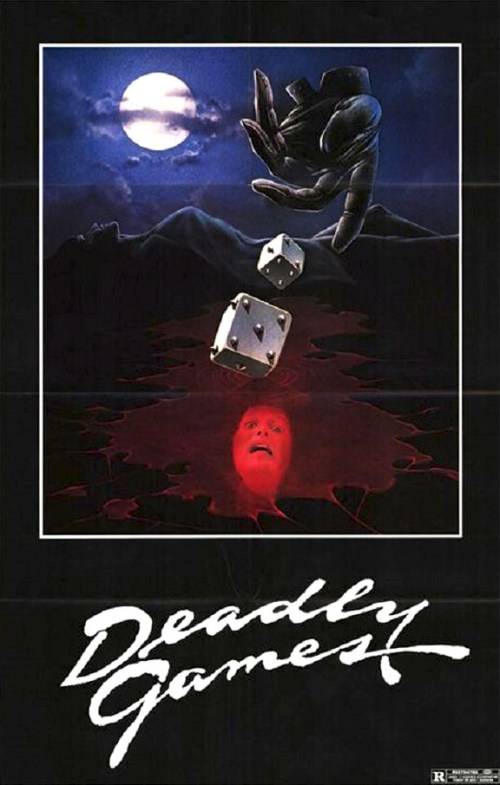
Deadly Games (1982)

deadly games2

By Richard Winters

My Rating: 2 out of 10

4-Word Review: Who killed her sister?

Clarissa (Jo Ann Harris) travels to where her younger sister Linda (Alexandra Lawrence) lived before she was inexplicably murdered inside her home by a masked intruder. Clarissa hopes to help with the investigation, but finds herself initially at odds with the lead investigator Roger (Sam Groom) though the two eventually become romantic partners. Clarissa begins to suspect that Billy (Steve Railsback), an eccentric loner who manages the nearby theater, may be the culprit. Billy and Roger are longtime friends from their Vietnam days and regularly hang-out in the basement of the theater to play a board game. Clarissa tries to devise a way find out if Billy really is the killer, or if it might actually be Roger.

The most shocking thing about this would-be slasher obscurity is just how lame and uneventful it really is. The film starts out right away with a killing, which is poorly lit and the viewer can’t really see what’s going-on, and then proceeds for the next hour and a half to have a bunch of lightly dramatic moments that aren’t scary, or intense at all. Clarissa seems to be not upset about her sister’s passing and spends most of the time worrying more about getting together with old friends, or her dating life. She lives in her sister’s old house while openly stating that she’s not afraid to be there, which lessens the tension. If the protagonist has no concerns about if there’s a bad guy lurking about then why should the viewer?

There’s way too many scenes, like watching the group of friends take part in a backyard football game, or having Clarissa, Roger, and Billy watching an old movie together, that doesn’t propel the plot along in any way nor have much to do with the main story. There’s even a sappy song that gets played during the middle part that has absolutely no place in a horror movie, or any other film for that matter.

I also didn’t get where all of the ‘in-jokes’ were, which Leonard Maltin states in his review comes at you ‘fast and furious’. I came away feeling that this was yet another example where he, or whoever wrote the review for him, was seeing a completely different film altogether. In fact the only thing that is truly deadly here isn’t the ‘games’, but just the movie itself.

Spoiler Alert!

The twist ending is a big letdown as the killer turns out to be Roger, but since he acts so strangely all the way through even entering young women’s apartments and homes unannounced that makes him seem like a genuine creeper, this revelation comes as no ultimate surprise.

Maltin states that the final plot explanation is ‘really stupid’ and reviewers at IMDb say essentially the same thing. It ends with Clarissa killing Roger, who she thinks is Billy until she takes the mask off of him. She then goes back into the theater where Billy shouts our from somewhere that Roger was his best friend and he was now going to avenge his death. He then seems to fly out of nowhere towards Clarissa. I took it that he was hanging onto some sort of prop rope, which they do have in theaters, but it also looked like he was intended to be some sort of ghost that was literally floating towards her and this is what viewers felt was stupid. I don’t know as it’s not clear either way. What I did find frustrating is that the film freezes with Billy coming towards Clarissa and then cuts to the credits, so we never see what happens. Did he kill Clarissa, or did she fight him off? Either way this is the type of thing that needs to be shown, so for it to cut away when it finally gets exciting is ridiculous and if this is what they meant as being ‘stupid’ then I wholeheartedly agree.

End of Spoiler Alert!

The movie really deserves 0 points, but the one thing I did like was the music score. So many other slasher films from that era tried to replicate the score in Halloweenor Friday the 13thbut this one doesn’t sound like either of those. It’s has an acoustic quality that is quiet and subtle yet still effectively creepy. It’s the coolest thing about the movie especially as it gets played over the closing credits, but this production is otherwise so inept that you justifiably might not make it that far.

My Rating: 2 out of 10

Released: March 5, 1982

Runtime: 1 Hour 28 Minutes

Rated R

Director: Scott Mansfield

Studio: Great Plains Films

Available: VHS
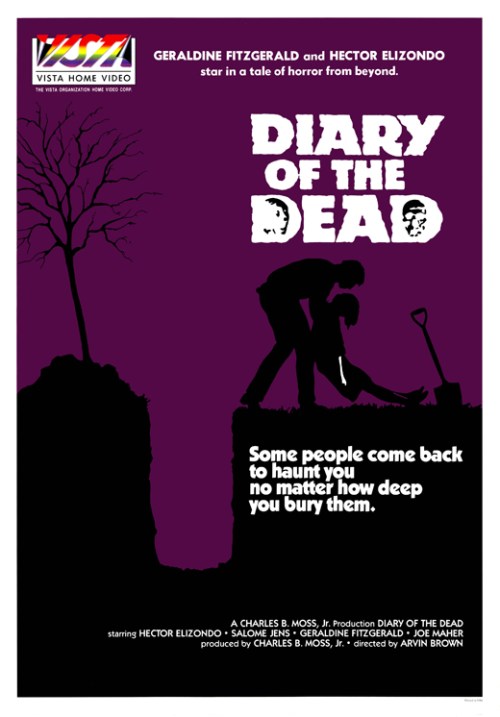
Diary of the Dead (1976)

diary2

By Richard Winters

My Rating: 5 out of 10

4-Word Review: Two dead old ladies.

Stan (Hector Elizondo) is married to Vera (Salome Jens) while living in a house that’s owned by Vera’s mother Maud (Geraldine Fitzgerald). Maud and Stan do not get along and she uses the fact that Stan can’t find regular employment as a means to belittle him.  She also tries to convince Vera to leave him. Stan is aware of this, but can’t seem to do much about it. Then one day Maud’s friend Ethel (Kate Wilkinson) comes for a visit. She arrives while Maud is upstairs taking a nap, and is greeted by Stan, but since she had to walk all the way from the bus station to the house and suffers from high blood pressure, she promptly collapses once she gets inside. Stand decides to use this as an opportunity to get rid of Maud by claiming to the attending physician (Austin Pendleton) that the dead body is his mother-in-law, so when Ethel is taken away for cremation everyone thinks it’s Maud instead. Stan then buries Maud’s body, who he has killed on his own, in his backyard, but this catches the eye of his nosy neighbor Walter (Joseph Maher) who had always gotten along well with Maud and feels Stan’s explanation of what happened doesn’t add-up.

The story is based on the 1971 novel ‘One Across, Two Down’ by Ruth Rendell and while the plot has a sufficient amount of twists the direction, by first timer Arvin Brown, is lacking. It’s not liked it’s bad direction, but it has no finesse and seems meant of TV.  It’s no surprise that Brown ended up doing projects exclusively for TV after this one as nothing here is cinematic and approached in such a sterile way visually that it actually detracts from the proceedings.

Elizondo gives a feisty performance that perfectly captures a bitter man going through life with a chip-on-his-shoulder. His arguments and confrontations with Maud lend for some colorful dialogue, but a meddling, cantankerous mother-in-law is nothing new and if anything seems cliched making the material come-off as second-rate and formulaic.

The crime itself isn’t elaborate. In the ‘Columbo’ TV mysteries we’d see the bad-guy pull-off the murder in a way that was carefully thought-out, so the viewer becomes intrigued trying to figure out what flaw the killer overlooked that Columbo will jump on, but here it works in reverse. The crime is spur-of-the moment with a bunch of things that could easily go wrong that will instantly get Stan caught, which isn’t as interesting. Stan is also not a pleasant person, so the viewer is not emotionally invested in him escaping the clutches of the authorities,  If anything you remain ambivalent to what happens, which are ingredients that don’t make the movie interesting.

The film does feature a twist ending, but it’s not something one couldn’t have seen coming as it goes overboard telegraphing it. As an episode of ‘Alfred Hitchcock Presents’ it would’ve worked better, but it gets stretched too thin for feature length. The should also not be confused with the George A. Romero film of the same name that came out 30 yeas later.

My Rating: 5 out of 10

Released: July 20, 1976

Runtime: 1 Hour 33 Minutes

Rated PG

Director: Arvin Brown

Studio: B.S. Moss Enterprises

Available: None

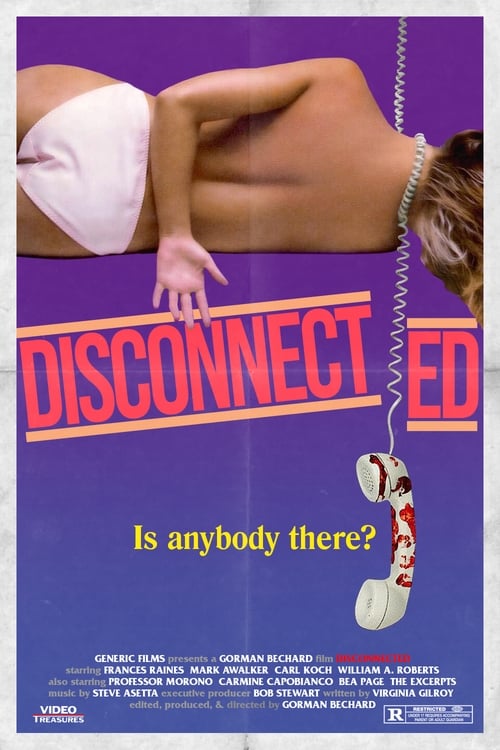
Disconnected (1984)

disconnected2

By Richard Winters

My Rating: 4 out of 10

4-Word Review: Receiving harassing phone calls.

Alicia (Frances Rains) is a young adult woman who brings an elderly man (William A. Roberts) up to her apartment one day so that he can use her phone to make a call. However, once he leaves she begins receiving odd calls at all times of the day and night where loud unexplained sounds emit from the receiver. She also gets a call where she overhears a conversation between her boyfriend Mike (Carl Koch) and twin sister Barbara-Ann, who are apparently are seeing each other behind-her-back. She then breaks up with Mike and begins dating Franklin (Mark Walker) whom she met while working at a video store. Franklin seems nice at first, but she’s unaware that he’s also the notorious serial killer who has been murdering young women in her area.

This horror oddity is the product of Gorman Bechard, who while still a film student decided to make a movie on his own with the low, low budget of only $40,000 and filming it almost entirely inside his tiny one-bedroom apartment. While it’s not a complete success it’s offbeat enough to hold your attention and guaranteed to keep you guessing to the very end.

The scenes inside the video store I enjoyed the most particularly Franklin’s complaints at how it didn’t have enough foreign films, or older movies, which was always the criticism I had of my local video stores too. The dark humor of Franklin hanging a crucifix over his bed where he commits the murders and the little prayer he does before he offs his victims I found amusing. Bechard’s odd camera shots including one segment done with black-and-white, freeze-frames is another asset that keeps it inventive.

The performance by Raines, who is beautiful, is excellent and I felt she would’ve had a long career ahead of her had she not giving up acting in order to raise a family. I was not as enamored though with the two guys playing the cops who lend a cartoonish flair that was not needed. I didn’t like too that one of them gets interviewed by someone sitting behind a camera that we don’t see and asking a bunch of questions almost like it’s a documentary, which begs the question as to who this person was and why does he just interview the cops, but no one else?

Spoiler Alert!

The film’s biggest problem though is that it gets rid of the Franklin too quickly without playing up that scenario as much as it could’ve. It also cuts away without ever showing how the cops are able to subdue him, or how Alicia is able to get away, which seems like a standard scene that a horror movie fan would want to see and not just have discussed later.

The weird calls ultimately become boring. It also takes Alicia too long to figure out that maybe a good way to stop them would be to unplug the phone from the wall, which she finally does at the very end, but most other people would’ve done it a hell of a lot sooner.

The twist ending where the old man that was seen at the start, but then disappears only to return and be shown walking out of her apartment makes no sense. Some viewers have speculated that maybe he was a ghost of some kind, but that’s not made clear. My personal feeling is that there was no meaning to it and it’s intentionally left vague, so the individual viewers can read into it whatever they want, but it’s not a satisfying way to end almost 90-minutes of viewing and in many ways, despite the interesting bits, makes it quite annoying. A better, more focused conclusion would’ve certainly helped.

My Rating: 4 out of 10

Released: July 17, 1984

Runtime: 1 Hour 24 Minutes

Rated R

Director: Gorman Bechard

Available: VHS, Tubi, Blu-ray (Limited Edition only 2,000 copies printed) 

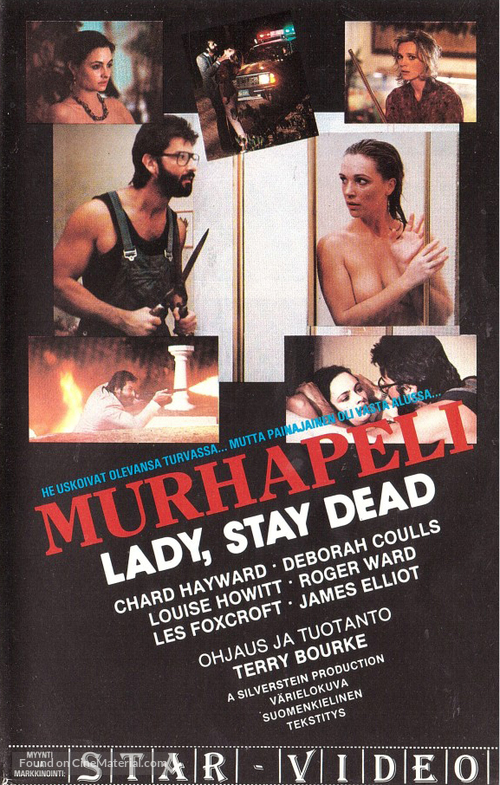
Lady, Stay Dead (1981)

lady1

By Richard Winters

My Rating: 3 out of 10

4-Word Review: Handyman obsesses over singer.

Gordon (Chard Hayward) works as a handyman and is treated poorly by his boss Marie (Deborah Coulls), a famous singer/actress, who routinely berates him as if he were a second-class citizen. Secretly Gordon fantasizes about having sex with her and one day breaks into her home and rapes her. Afterwards he drowns her by shoving her head into a fish tank. When her elderly neighbor Bill (Les Foxcroft) spots Gordon trying to discard her body he then kills him too and his dog, but Gordon fails to realize that Jenny (Louise Howitt), who is Marie’s older sister, is coming for a visit. When she arrives she quickly catches-on to what’s happening and proves to be a formidable challenge to Gordon, who wants to do to her exactly what he did to her sister.

The film was written and directed by Terry Bourke, who was credited with doing the very first horror movie in Australia, Night of Fear, which many consider a precursor to The Texas Chain Saw Massacreand this made him a horror guru in the Down Under and eventually lead to him making this one. This movie is unique in that it’s the first slasher film released in Australia and received okay reviews simply for its production values, which was a step above most other slasher pics.

Initially I was intrigued with the concept as it captures Gordon’s point-of-view and even sympathizes with him over his mistreatment by the callous Marie. It almost seemed to be playing-off the same idea of another Australian cult-hit The Plumberwhere a working-class male takes his animosity out on a female who he believes looks down on him. Had the movie stuck with this idea it could’ve been interesting and I was fascinated to see how both character’s behaviors and insights into each other would evolve as the scenario progressed, but this gets ruined by having Marie killed-off too soon.

Having her sister Jenny, who in no way looks anything like Marie even though they’re supposed to be related, become the main victim is not compelling and the story devolves from being a potentially compelling psychological flick into that of your standard cardboard thriller. Had Jenny, not knowing that Gordon was her sister’s killer initially, fallen in-love with him, could’ve lent a unique twist and might’ve saved it, but it doesn’t go in this direction either. Ultimately I was unsure why the opening bit involving Marie was even needed as it could’ve just started with Jenny as the target of the obsessed handyman and gotten played-out in exactly the same way.

The script also suffers from plot-points being too loosely connected. There’s no cyclical structure like with most stories where what see in the first act connects with what happens later. Instead characters and events get thrown in haphazardly with only the loosest of threads holding it together. The random policemen, played by Roger Ward, jumping in and becoming a major part of the action in the third-act, is a good example of this. Why not have this part played by Billy, the helpful elderly neighbor, who like with Marie gets offed too soon until you wonder why he and Marie were even in it at all.

Spoiler Alert!

The double-ending where you think the policeman has killed Gordon, but really hasn’t was no surprise at all. It’s also impossible to believe that Gordon would’ve been able to drive a squad car around while hunched beneath the dashboard and unable to look a window to see where he was going. Also, the title itself makes no sense as Marie never comes-back to life, so what the meaning of ‘stay dead’ is I don’t know.

Overall the script is too unfocused making what starts out original end-up being quite formulaic and forgettable although the segment where Gordon uses a chainsaw to cut a hole in the front door is genuinely creepy particularly the sound it makes as he does it, which is the only scary moment.

My Rating: 3 out of 10

Released: September 10, 1981

Runtime: 1 Hour 35 Minutes

Director: Terry Bourke

Studio: Ryntare Productions

Available: DVD

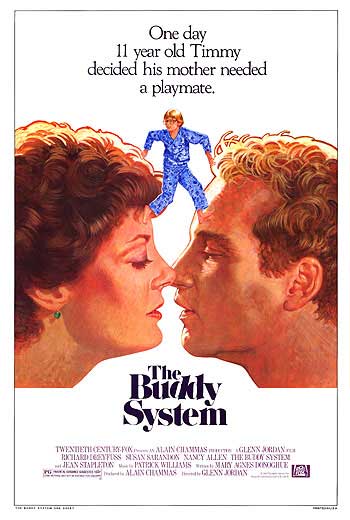
The Buddy System (1984)

buddy2

By Richard Winters

My Rating: 7 out of 10

4-Word Review: A kid plays matchmaker.

Timmy (Wil Wheaton) is the 10-year-old son of Emily (Susan Sarandon) who’s a single mother still living with her mother (Jean Stapleton) because she can’t afford a place of her own due to always freezing up every time she tries to take the test to become a court reporter. In an effort to get Timmy into a better school they lie about where they live, which eventually gets found-out by security guard Joe (Richard Dreyfuss). Timmy though immediately takes a liking to him and thinks he’d make a good new boyfriend for his mother. He starts spending a lot of time at Joe’s and becomes fascinated by all the new inventions that he makes during his spare time. Emily though doesn’t like him at first, but slowly warms-up to him, but Joe is still smitten with vapid beauty Carrie (Nancy Allen) making any chance of relationship between Emily and Joe challenging.

This was the last film Dreyfuss did before his career got put on hold after he was caught blacking out while driving and arrested when cocaine was detected in his system. While he was able to kick the addiction he stayed out of the business for 2 years and when he returned he was all gray making this the last movie with his hair still brown.

I’m not quite sure why he thought this was a good role to take as it seems too much like the one he did in The Goodbye GirlIn that film his abrasive personality worked and made it interesting because it went against the grain of what we expect a male to behave in a romantic movie, but here he goes to the well too often. His abrasiveness is obnoxious particularly when he openly insults Emily in public during their first meeting, which should’ve made any attempt at a relationship after that completely impossible.

I felt that his character had too many hobbies as not only does he work a full-time job, but he also spends his free-time busily writing novels, which he can never get published, and also creating all sorts of inventions that litter his home. I realize people do have hobbies, which is great, but there’s only so much time in a day, so it would have to be one of the other and not both, as you start to wonder if he ever sleeps, or just sits back with a brew and watches TV.

His relationship with Carrie is a weak point. This is a smart guy, so what did he see in a clearly dim-witted woman like her that he would ‘fall in love’ with? She’s certainly attractive, so if he wants to get together with her for some sex from-time-to-time, which is all she seemed interested in anyways, then great, but I didn’t see what else she offered him especially intellectually that would make him want to be with her for anything more than an occasional tryst. If anything he’d should’ve found her boring, as the viewer certainly does, and it shouldn’t have taken him moving in with her to finally figure this out.

Sarandon is excellent, but I didn’t like the way her character literally jumps into bed with Joe the minute she mellowed on him. Having her frosty towards him made for an intriguing dynamic, and in a lot ways he deserved it, and the film should’ve played this up a bit longer. The sexual aspect, where they go to bed only for it not to go well, so they decided just to remain friends, doesn’t work. Usually people remain friends because one or both aren’t interested in it getting sexual, but rarely does it happen in reverse, so the film should’ve kept it realistic and not even bothered to throw in the sex angle at all.

As for Wheaton I enjoyed seeing a kid portrayed in a believable way where they aren’t just put into the story to say adorable, cutesy things, but instead shown, despite his young age, to be quite perceptive and aware of what’s going on. I did though have a hard time understanding why he got so enamored with Joe so quickly as he meets him for a half-minute and then immediately bonds with him and having him already familiar with Joe would’ve made more sense.

Overall, despite the blemishes, I did enjoy it on a non-think level. A lot of the credit goes to screenwriter Mary Agnes Donoghue, as she shows a good ability for understanding people living a working-class lifestyle and the inner struggles and insecurities that they face, which is the one thing that helps this movie stand-out.

My Rating: 7 out of 10

Released: January 20 1984

Runtime: 1 Hour 50 Minutes

Rated PG

Director: Glenn Jordan

Studio: 20th Century Fox

Available: VHS

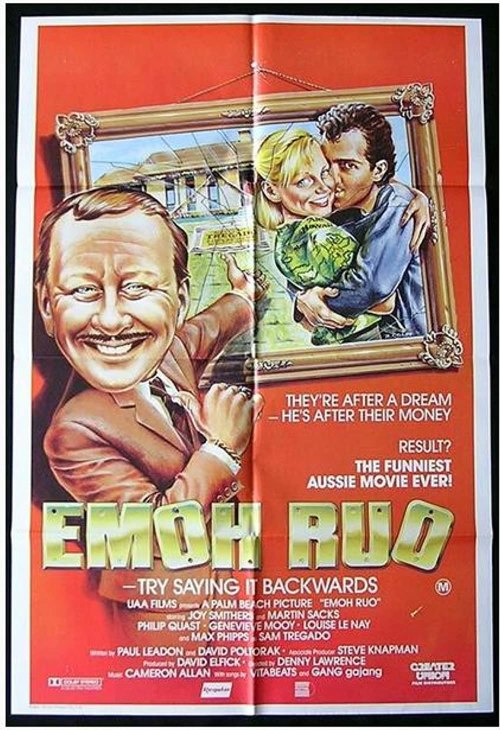
Emoh Ruo (1985)

emoh1

By Richard Winters

My Rating: 4 out of 10

4-Word Review: New house falls apart.

Terri (Joy Smithers) is tired of living in a trailer and begs her husband Des (Martin Sacks) to finally buy a house, so they can live in the burbs and be a part of the middle-class dream. After saving up enough money they put a down payment on a brand new home, but the home begins to have a lot of problems. Both Terri and Des are forced to work longer hours at their jobs in order to keep up with the bills. What seemed like a dream at first soon turns into a nightmare making living in a trailer, which they initially hated, now seem like a good idea.

This film has a lot of similarities to Steven Spielberg’s The Money Pit, which came out a year later, but this one is more amusing, at least at the beginning. Spielberg’s film, which was directed by Richard Benjamin, was too cartoonish and silly and failed to make any broader statement other than wild comical antics. This one takes more of a satirical approach and shows how suburban life may not be as great as advertised and in some ways just plain not worth it. One of the funnier moments is when Terri gets home from her overnight job and the second she walks through the door immediately falls to the floor in exhaustion while her tired husband, who’s getting ready to go to his second job, steps over her while going out the door without so much as giving her a greeting.

I did like too that this movie doesn’t immediately go over-the-top with the problems of the home repairs. The Money Pit, in my opinion, ruined things by having everything go wonky right from the start, which didn’t allow for any buildup while this one keeps the tension by showing things not working as they should and making you interested in seeing if it’s going to get worse. The nightmarish elements aren’t just isolated to the home either as their son Jack (Jack Ellis) must put up with bullies at his new school and the couple also deals with nosy, meddling neighbors.

I was surprised by the abundance of nudity, at least during the first act, which is something you’d never see in a Hollywood movie, where nudity is usually only shown in film’s aimed at adults, or with adult themes, instead of a movie like this that would otherwise be perfect for the general public. I’m not sure exactly why director Denny Lawrence decided to put it in as it doesn’t have anything to do with the plot and could’ve easily been left out, but I can only presume that because Australia is a more secular country they’re less uptight about showing skin and therefore don’t worry, or fear, that putting it into a movie, even one as otherwise innocuous as this, will be a problem, or get backlash.

What I didn’t like though was Joy Smithers as the mother. While she certainly looks beautiful, both with her clothes on and off, she was, at age 22, too young to be portraying a suburban mother of a 10-year-old child. Her acting was problematic too especially her scenes where she’s supposed to be upset that doesn’t convey the subtle comic element that a better actress could’ve brought out.

Spoiler Alert!

The third act, outside of seeing an outrageous looking BBQ pit built by the husband, fails to have much of a payoff. Many of the problems with the house never get properly addressed. For instance the shower knobs blow off the wall and spew streams of water everywhere, but the film cuts away without showing how they managed to get it under control. Having the entire house ultimately collapse isn’t impressive either as it looks too much like a prop house made of cardboard instead of brick and mortar.

I was disappointed too that the dark comical edge gets lost with a sitcom-styled wrap-up that seemed to lose complete sight of the main point, which ultimately makes the film as a whole quite transparent and forgettable.

My Rating: 4 out of 10

Released: September 12, 1985

Runtime: 1 Hour 33 Minutes

Not Rated

Director: Denny Lawrence

Studio: Palm Beach Pictures

Available: DVD (Region 4 Import)

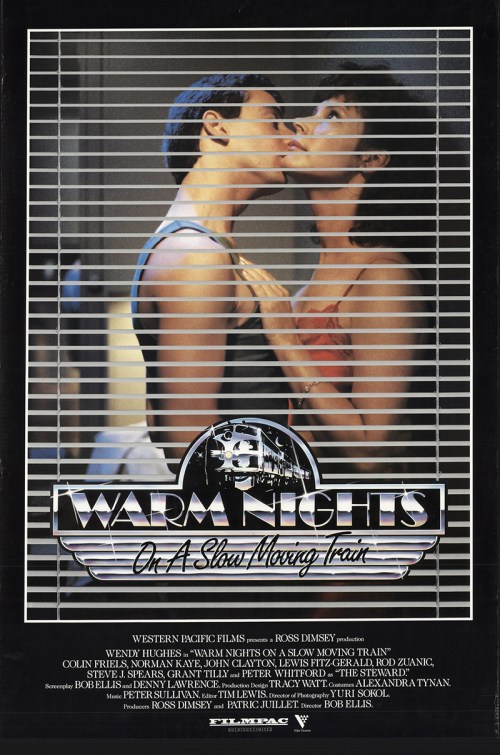
Warm Nights on a Slow Moving Train (1987)

warmnights

By Richard Winters

My Rating: 4 out of 10

4-Word Review: Prostitute on the weekend.

Jenny (Wendy Hughes) is an elementary catholic school teacher during the week, but on weekends she’s a prostitute riding a train that travels across the Australian countryside. She picks up lonely men that she meets at the train’s bar and takes them to her cabin for sex, but makes sure they’ve left by 3 AM. While she’s friendly and conversational with them during the night by the next day she virtually ignores them. She does this to help pay for her handicapped brother’s needs and for many years she’s able to juggle these dual lifestyles without much of a hitch. Then she meets a suave businessman (Colin Fields) who gets her involved in an assassination plot that not only disrupts her routine, but sends her precariously close to losing her freedoms.

Director Bob Ellis said the idea for the film was inspired by a long train ride that he took with actor Denny Lawrence and the two wrote the script during the duration of their trip. In order to get the needed funding it was contingent that Wendy Hughes be cast in the lead, which Ellis felt was wrong for the part, but eventually agreed to simply to get the film made. Ultimately though he and the film’s producer, Ross Dimsey, had a different vision for the story and Dimsey greatly trimmed the final cut turning what Ellis felt was one of the best scripts he had ever written into something he would later disown. The full director’s cut had been stored at his residence and he was hoping to eventually release it to the public, but it got destroyed during a house fire.

The version definitely has issues with the biggest one being the slow, plodding pace. I was also disappointed that it starts with Jenny already a seasoned hooker as I would’ve been more interested in seeing how she came up with the idea and seen the awkward moments she most assuredly would’ve gone through when she first jumped in and did it. The fact that she had no ‘Plan-B’ for the potential times when a male client might get aggressive, or not promptly leave at the agreed to time, was a weak point for me. There’s one scene where one of her johns follows her out of the train and won’t leave her alone, but she calls out to a nearby security officer to get him away from her, but if she’s a seasoned sex worker she should have another line of self-defense to use, like a gun or something, to take out if things got out-of-control and no one else was around to help her and the fact that she doesn’t have this makes it seem like she’s not as streetwise as we’re supposed to believe.

Having Jenny suddenly let down her guard and fall for one of her johns (Colin Friels) didn’t make much sense either. After years of being defensive around her clients why now get all emotional about this one who comes-off just as sleazy and aggressive and just as potentially dangerous? The assassination subplot doesn’t get introduced until 60-minutes in and the way she’s able to off the target by simply scratching the guy lightly on his back with a fingernail dipped in poison seemed much too easy.

I did like the juxtaposition of a catholic school teacher being a prostitute, but the film doesn’t explore this contradiction enough. You’d think after having done this for a long time her superiors might catch-on, or have it filter back to them, which could’ve created more conflict and added tension to a story that for the most part is too leisurely paced to hold one’s sustained attention.

My Rating: 4 out of 10

Released: May 10, 1987

Runtime: 1 Hour 31 Minutes

Rated R

Director: Bob Ellis

Studio: Filmpac Distribution

Available: dvdlady.com

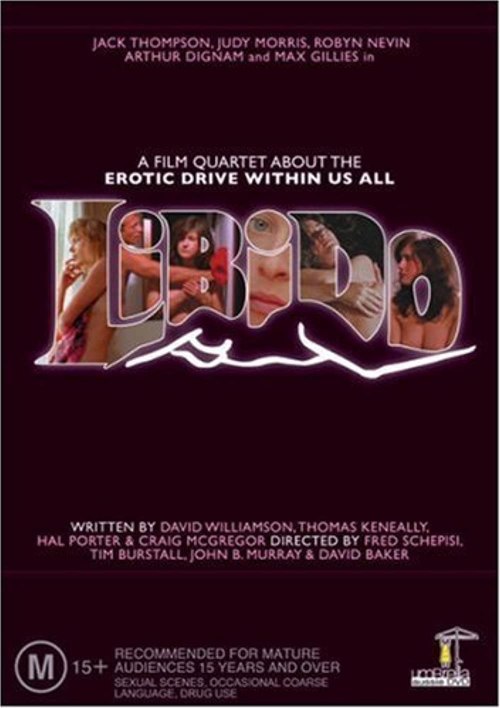
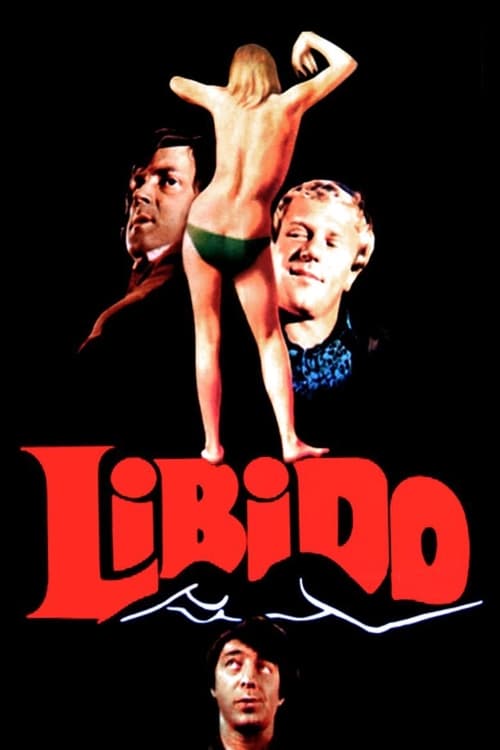
Libido (1973)

libido1

By Richard Winters

My Rating: 5 out of 10

4-Word Review: Four stories about sex.

The genesis for this movie came about during a series of workshops held in southern Australia that was sponsored by directors and producers as a way to help writers craft a good story and create believable characters. The challenge was for each writer to come up with a different story built around a same theme, in this case sex, or the sex drive. Four of the best stories picked were then produced by the Australian Council for the Arts and put into the film. A sequel was planned called ‘The Bed’, which would’ve had 4 stories dealing around the idea of a bed in someway, but ultimately the funding was never able to be attained.

The first segment is called ‘The Husband’ and was written by Craig McGregor and directed by John B. Murray and is the weakest. It details the plight of a husband named Jonathan (Bryon Williams) who becomes jealous when his wife Penelope (Elke Neidhardt) starts to openly fool around with Harold (Mark Albiston) who had been the best-man at their wedding. The segment does have a provocative dream-like moment where Penelope has sex with four different men, but outside of that it’s rather flat. The dynamics of the marriage are confusing and both the characters and relationship needed to be fleshed-out better for the situation to make sense and it relies too heavily on explicit moments thrown in to make it seem more interesting than it really is.

‘The Child’ is the title of the second segment and was written by Hal Porter and directed by Tim Burstall. The setting is the early 19th century and deals with a young boy named Martin (John Williams) whose father dies on the Titanic. His mother (Jill Foster) then begins a relationship with a suitor named David (Bruce Barry), which causes Martin to feel alone and neglected. This though changes when a governess named Sybil (Judy Morris) is brought in to take care of him while the mother is away. Martin grows a special fondness for Sybil and even begins to fall-in-love with her despite their age difference, but he then becomes shocked and upset when he finds her having sex with David in the backyard greenhouse, which ultimately leads to tragedy.

This story has a lot of potential and for awhile had me intrigued. It’s also interesting seeing Morris, who is probably best known as the uptight college professor in The Plumberplaying a polar opposite here as someone who is sexually promiscuous. Unfortunately the story leaves open too many loose ends, which I found frustrating.

The third story, which had to be cut from the Spain release as it was feared it would offend too many people, is called ‘The Priest’. The plot involves Father Burn (Arthur Dignam) who falls for Sister Caroline (Robyn Nevin). Father Burn wants them to both leave the church and get married, but she resists, which causes him to have a nervous breakdown and be sent to an insane asylum. This segment, which was written by Thomas Keneally and directed by Fred Shepisi, has a few insightful moments, but gets bogged down with endless dialogue and an ending that doesn’t offer any type of satisfactory conclusion.

The best segment is the last one, which was written by David Williamson and directed by David Baker. It deals with the story of a womanizer named Ken (Jack Thompson) who chases after women for cheap one-night stands even as his own wife lies in the hospital giving birth to his child. His pal Gerry (Max Gillies), who does not have as much luck with women, looks up to Ken and is impressed with his prowess. Ken decides to show Gerry ‘how it’s done’ by taking him out to a bar where they meet up with two women (Debbie Nankervis, Suzanne Brady) that they eventually take home to Ken’s oceanfront home. Things though start to take a dark turn when the women show more fondness to Gerry than Ken, which causes Ken to lash-out in a jealous rage, which forces Gerry to see an ugly side to his friend that he didn’t know existed.

This segment gets unexpectedly tense, but is played-out in a realistic manner. It’s great too seeing Thompson portray the playboy type, which he seems born to play and honed to an even finer level a year later in the movie Petersen. This story also features a surprise ending, which isn’t bad.

libido2

My Rating: 5 out of 10

Released: April 6, 1973

Runtime: 1 Hour 57 Minutes

Not Rated

Studio: British Empire Films Australia

Available: dvdlady.com

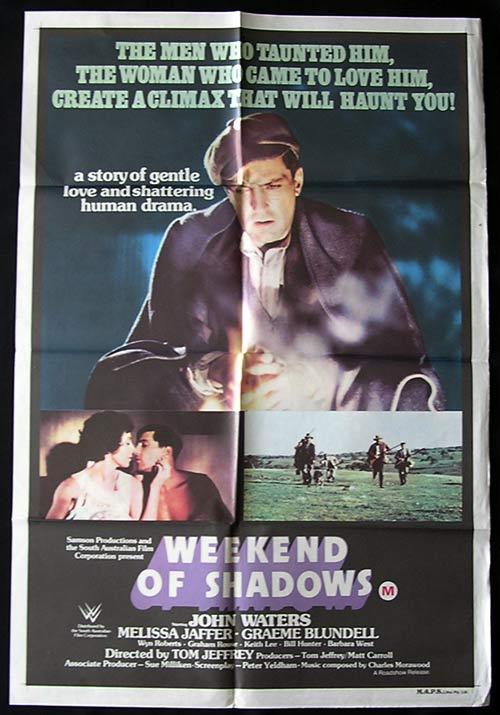
Weekend of Shadows (1978)

weekend1

By Richard Winters

My Rating: 6 out of 10

4-Word Review: Manhunt for murder suspect.

In rural Australia during the 1930’s a farmer’s wife is found murdered inside her home. Suspicions immediately fall on a Polish laborer who had always been deemed ‘peculiar’ by the locals and while there’s no other evidence pointing to his guilt it’s enough to get the men in the community together to form a posse. Sergeant Caxton (Wyn Roberts) hopes that if he can capture the suspect it will help mend his reputation, which had been tarnished while working in Sydney and got him demoted to the small town that both he and his wife (Barbara West) don’t like. Vi (Melissa Jaffer) feels this will be a perfect opportunity for her shy husband, Rabbit (John Waters) to bond with the other men by going along on the hunt, but he resists thinking that the whole thing is just a knee-jerk, mob reaction and wants nothing to do with it, but at the behest of his constantly prodding wife he eventually joins, but learns to regret it.

Out of all of the manhunt movies that are out there this one may be the most unusual in that it doesn’t focus on the suspect at all, in fact you barely ever see him, but instead on the various men in the group. Surprisingly though this manages to be quite effective and I found myself wrapped-up in the various personalities of the participants and how all of them clash with each other at various times. The budget though is quite low, screenwriter Peter Yeldham and director Tom Jeffrey were forced to make many concessions on the script just to get the necessary funding, and while the stark production values will initially be a turn-off, the overall drama, which is based on the novel ‘The Reckoning’ by Hugh Atkinson, will eventually compensate.

I didn’t though like the flashbacks showing Vi and Rabbit’s courtship, which I felt wasn’t necessary and bogged down the tension. The relationship between them is intriguing on a certain level as it shows how wives can have a strong influence over their husbands and get them to do things they wouldn’t otherwise, this same scenario also gets played-out between the constable and his wife, but the scenes showing their dating period offers no further insights and no effort is made to make the actors appear younger even though the courtship had been many years prior.

Spoiler Alert!

While the film was a hit with the critics it sank at the box office recouping only $61,000 of the $495,000 that had been put into it, which soured Jeffrey from directing movies and he helmed only one other, The Last of the Knucklemenafter this one. Ironically Hugh Atkinson was quite impressed with the finished product, which was odd since most of the time author’s of the book which the movie is based are usually not happy with the director’s interpretation of their work, but Atkinon felt Jeffrey ‘got it’ particularly with the ending, which he stated represented the crucifixion. Personally I didn’t see this connection, and neither did Jeffrey, who felt like I did that the story was more about how group dynamics can get out of hand, but Atkinson insisted the crucifixion element was the centerpiece. The ending will be a surprise to many and leaves open many questions, but what you ultimately make of it will be up to your own personal perspective.

My Rating: 6 out of 10

Released: April 12, 1978

Runtime: 1 Hour 25 Minutes

Not Rated

Director: Tom Jeffrey

Studio: The South Australian Film Commission

Available: VHS

Shirley Thompson Versus the Aliens (1972)

shirley4

By Richard Winters

My Rating: 6 out of 10

4-Word Review: Lonely girl meets spaceship.

Shirley Thompson (Jane Harders) is an alienated young adult living in 1956 Australia who one day makes contact with a group of aliens. It happens while her and her biker gang sneak into Luna Park after dark, which is a amusement place for children and when they go into after it’s closed they can go on the rides for free. It’s while doing this that Shirley sees a spaceship and starts communicating with it while the rest of the gang gets scared and leaves. The aliens within the ship tell her that they plan on invading earth and it’s up to her to warn the others of their intent, but if she does it right they’ll reward her with ‘power’, which is what she’s always wanted as she’s felt insignificant otherwise. The aliens then produce a massive rain storm that creates much damage and then the next day they interrupt a radio broadcast to proclaim what they’ve done, but no one believes them especially Shirley’s parents (Marion Jones, John Llewellyn) who thinks it’s a joke. Everyone else responds to Shirley’s alien warnings like she’s a kook, which ends up getting her committed to the mental institution where she then recounts her tale to a cynical staff.

This is the first feature length movie directed by Jim Sharman better known to American audiences for having helmed Rocky Horror Picture Show and to Australians for his work in experimental theater of which he is highly regarded. This film works in line with many of his other Avant Garde efforts where the emphasis is more on the imagery than the story. For mainstream audiences though it may be considered inaccessible as it bucks all areas of conventional storytelling including having it alternate between black and white and color with each scene. There’s also very little dialogue with the focus more on mood. The film does have its share of interesting moments, but how much one appreciates it is completely up to one’s own temperament.

I was struck by how similar the theme was to Sharman’s later film The Night, The Prowler with both movies dealing with an alienated young adult woman still living at home with her parents who feels that no one can understand her and has inner anger/disdain at the world around her. It also has shades of Liquid Skywhich came out 11 years later and dealt with a young woman who befriends some aliens, but instead of being scared of them like everyone else she has a special connection to them and feels as much like a stranger on this planet as they do.

If you’re looking for a typical sci-fi flick then you’ll be sorely disappointed as you won’t even end up seeing any aliens or spaceships. I’m not sure if this was due to budgetary restraints, but in any event the camera stays fully locked on Shirley and becomes more of a satire on life in the burbs and in that regard it succeeds. While not a perfect movie it does have its share of memorable moments especially the ending where Shirley gets strapped to a spinning hospital bed while laughing maniacally.  Why I found this part to be so cool I don’t know, but that’s how the movie works. You either go with the flow or you don’t, but those who are game may find it a fun ride. It’s certainly different than anything you’ll find released today and could only have been made in the early 70’s.

My Rating: 6 out of 10

Released: June 6, 1972

Runtime: 1 Hour 11 Minutes

Not Rated

Director: Jim Sharman

Studio: Kolossal Piktures

Available: None