Category Archives: Mystery

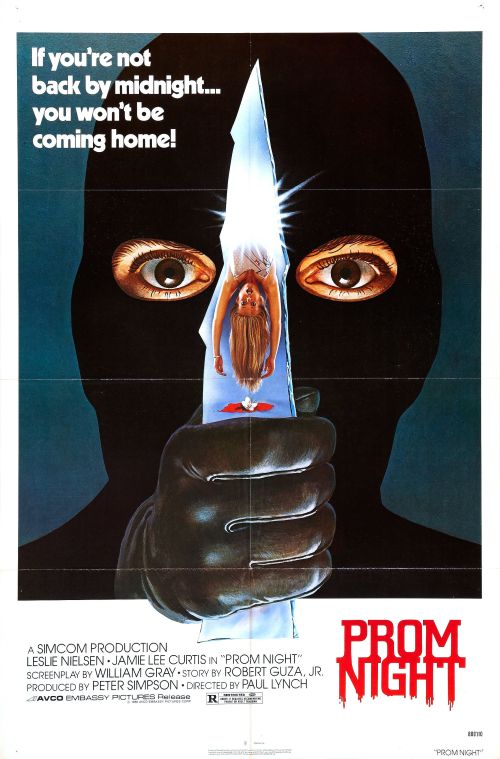
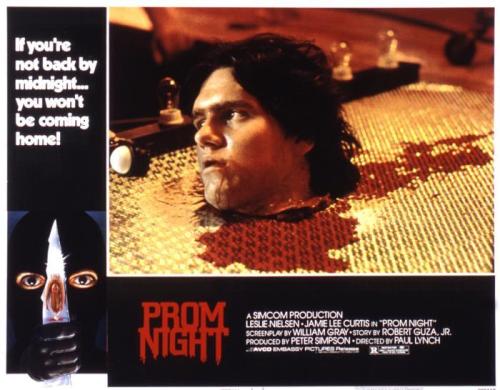
Prom Night (1980)

By Richard Winters

My Rating: 2 out of 10

4-Word Review: Accidental death spawns revenge.

In 1974 five children go playing inside an abandoned building, but when one of them falls tragically to her death the other kids agree not to tell in order to avoid getting into trouble. Six years later these same four children are now teenagers and ready to attend the prom, but become terrified by strange phone calls from someone insisting he saw what happened and threatening to kill them to avenge the accidental death of the other one.

As modern day horror movies go this one starts out well especially the abandoned building footage with the rundown interiors helping to give the film a creepy look. The lighting and camerawork are more polished than the typical slasher production and it doesn’t reek of low budget, amateurish values that pervaded just about every other horror flick from that era.

Unfortunately after a decent beginning the pacing then slows to a crawl and except for a few creepy phone calls hardly anything goes on for the whole first hour. At one point it becomes like a sequel to Saturday Night Fever with a prolonged dance segment between Jamie Lee Curtis and her partner that does not propel either the plot or tension and was out-of-place.

The side-story dealing with the police searching for an escaped killer who they mistakenly believe killed the child is pointless and apparently added in at the last minute. I would think a coroner’s autopsy would’ve shown that the child died from the trauma of the fall and not by someone’s knife, which makes the crazy-killer-on-the-loose angle ridiculous and an obvious red-herring put in to ‘fool’ the viewer, which most seasoned horror movie fans would never be dumb enough to fall for anyways, so why insult their intelligence by even trying?

The actual killings don’t get going until 1Hour and 2Minutes in and by then it’s almost too late. The killer also conveys seemingly boundless energy as he busily wrestles a driver for control of a van, which he eventually forces off a cliff while miraculously jumping out of it just before it goes over and then manages just a short time later to chase another victim all around the school where no matter which hallway the young lady chooses to run down the killer always magically is at the end of it ready to jump out at her. The decapitation scene depicting a victim’s head rolling down the stage runway at the high school prom has to be one of the unintentionally funniest moments put on film and had me laughing uproariously.

PROM NIGHT, David Mucci, 1980, (c)AVCO Embassy Pictures

Spoiler Alert!

Normally guessing the killer’s identity is the one fun thing to do while watching these types of flicks, but here that gets ruined by implementing a character at the scene, which was Alex (Michael Tough) the younger brother of the victim who died, even though the viewer didn’t even know he was present when it happened. It’s also hard to believe that any young child could keep a secret for that long as most can’t. I understand why the other 4 kids didn’t tell, but why the younger brother who had nothing to do with the accident and only witnessed what happened? Why would he not immediately run back home to his parents, as most would and tell them about it so they could call the police?

In retrospect having the flashback at the beginning was a mistake as there would’ve been more intrigue had we not known why these four were being targeted. Only revealing the flashback at the very end would’ve then heightened the mystery, which is pretty flimsy otherwise.

My Rating: 2 out of 10

Released: July 18, 1980

Runtime: 1Hour 32Minutes

Rated R

Director: Paul Lynch

Studio: AVCO Embassy Pictures

Available: DVD, Amazon Video

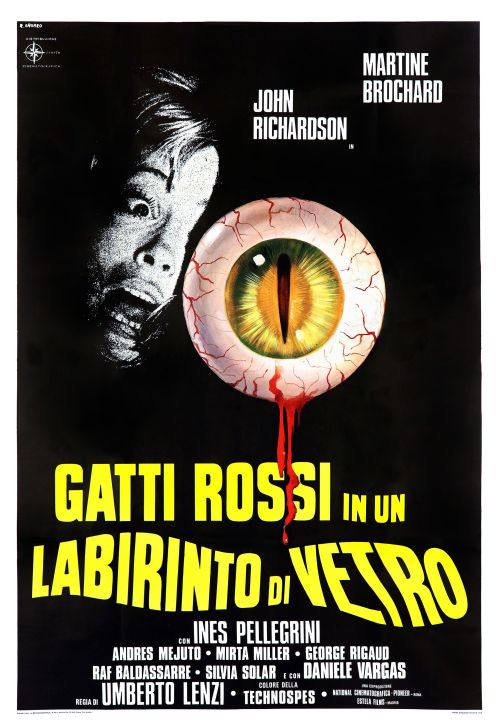
Eyeball (1975)

By Richard Winters

My Rating: 6 out of 10

4-Word Review: Killer targets tour group.

A group of visiting Americans (at least they’re supposed to be American even though they sure don’t seem like it) traveling around Spain on a tour bus find themselves targeted by a killer in a red cape that gouges out the eyes of each of his victims. Suspicion soon centers on the culprit being one of the members of the tour group, but who could it be? Maybe it’s businessman Mark Burton (John Richardson) whose wife (Marta May) was suspected of a similar crime back home, or maybe it’s the elderly reverend (George Rigaud) who’s always spotted at the wrong place whenever the crimes are committed. Inspector Tudela (Andres Mejuto) has his hands full as the list of suspects keeps mounting almost as fast as the body count.

This film is a variation of If it’s Tuesday This must be Belgium, which involved a tour group from America going around Europe, but there it was played for laughs with no killings or mystery while here it tries for horror even though it would’ve worked better had some comedy been thrown as the dialogue gets very soap opera-like. The characters are a problem too as their reactions to the murders gets underplayed, which becomes unintentionally funny, and the way they blissfully continue on with the tour after each killing and acting like it’s no big deal makes them seem cold and inhuman.

The gore is cheesy particularly the fake looking gouged out eye sockets of the victims. In reality eyeballs are more oval shaped, but here they resemble ping-pong balls and the scene where the inspector takes out a small case in his office where he has collected each eyeball from each of the victims to show it to one of the witnesses comes off as being truly twisted.

On the positive end Bruno Nicolai’s bouncy musical score is distinctive and the sunny scenery, which was shot on-location in Barcelona, Spain, is scenic and helps add a visual appeal. The mystery at least on a minor level has intrigue and is full of all sorts of clues, which allows the viewer to play along and try to figure out who did it before the authorities do.

Usually I’m able to guess the identity of a killer long before anyone else does, but in this case I was honestly shocked, so in that regard it was fun even though the motivation for why the individual does it was over-the-top. If you’re looking for 90-minutes of a whodunit, which is ultimately all this thing really is, with just enough tacky gore thrown in for cheap laughs, then it might be worth considering.

My Rating: 6 out of 10

Released: January 24, 1975

Runtime: 1Hou 31Minutes

Rated R

Director: Umberto Lenzi

Studio: Estrela Films

Available: DVD-R (as The Secret Killer)

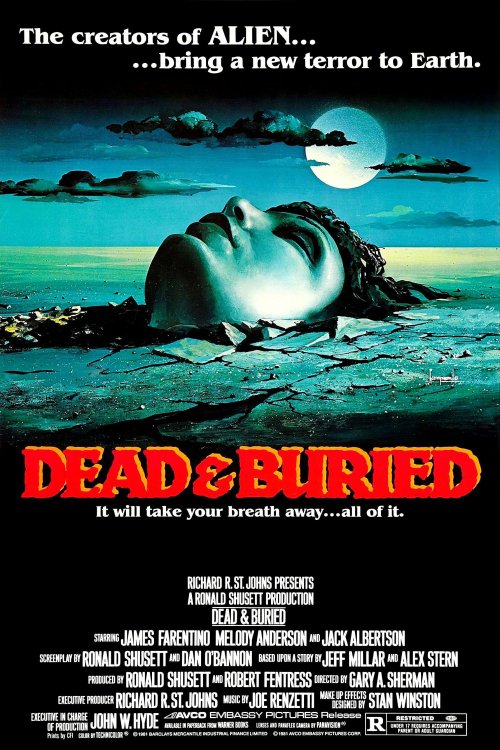
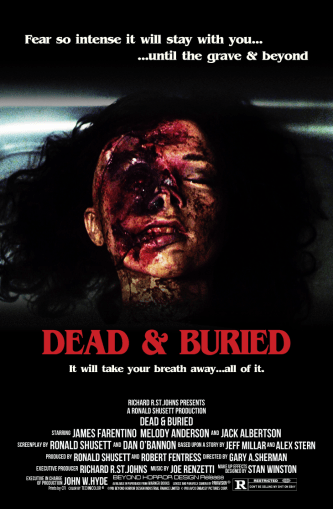
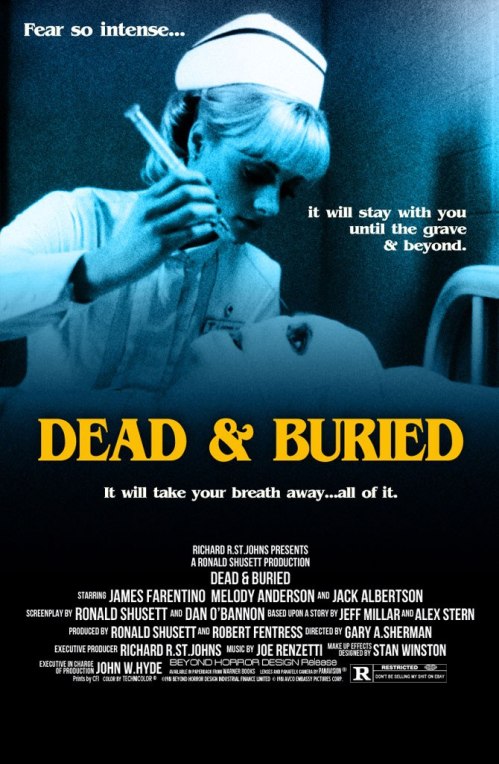
Dead & Buried (1981)


By Richard Winters

My Rating: 5 out of 10

4-Word Review: Dead people terrorize town.

Dan (James Farentino) is the sheriff of a sleepy New England town called Potter’s Bluff. Normally his days are routine but suddenly he finds himself investigating a bizarre case where a group of people murder a visiting photographer by burning him at a stake for no apparent reason. Soon other strange murders begin occurring and his peaceful little town as well as his own life gets turned upside down as neither he nor the town’s coroner (Jack Albertson) can come up with any answers especially as the dead victims start to come back to life.

The film, which was directed by Gary Sherman, starts off well as the big band era music and picturesque small town scenery makes it seem like something straight out of a Norman Rockwell painting. Sherman went to great lengths to keep every scene consistent with a gray color tone including having a giant flag hung over a cliff in order to block out the sunlight during outdoor scenes and keeping everything looking like it was under a continual foggy haze.

The story though can’t match the atmosphere and the interest level wanes pretty quickly. The dead coming back to life angle has been used too often and is no longer novel to the point that it’s now almost boring. There’s no consistent protagonist either. The sheriff eventually becomes one, but there are long breaks where the film follows other characters including a young family, who come into contact with the killers, but they’re not that interesting and it becomes difficult for the viewer to connect emotionally with anyone on the screen.

For years Dan O’Bannon was credited with creating the story and many movie posters advertised this due to his success with Alien, but O’Bannon later stated in a 1983 interview that he actually had nothing to do with the script and disown the film. Ronald Shusett apparently wrote the entire thing, but in order to get it sold he felt a big name writer needed to be attached to it, so he promised O’Bannon that they would implement some of the ideas that he had into the final revision in order to allow them to use his name on the credits, but when the film eventually came out none of O’Bannon’s suggestions had been used.

The film’s tone is yet another issue. Sherman had wanted to approach it as a dark comedy, but one of the film’s investors PSO International pushed for the gore to be emphasized more. The result is jarring as half the time it’s this quant atmospheric chiller while at other points it becomes without warning graphically gory.

Farentino is good, but Melody Patterson, who was 17 years younger than him in real-life, is miscast as his wife. Jack Albertson is the best thing in the movie. Initially I feared that his part was too small, but he comes on strong at the end, which is great and I was also happy to read that despite the fact that he was dying of cancer while the movie was being made he still remained alive long enough to attend its premiere although he had to do it while being in a wheelchair and connected to an oxygen tank.

If you’re looking for a horror movie that emphasizes atmosphere and an offbeat touch then this may hit-the-spot, but the plot needed to encompass a broader time frame as it didn’t seem believable that so much of the town’s people could be in on this secret without the sheriff becoming suspicion of things much sooner than he does. The twist ending is weak too as it’s full of loopholes and creates way more questions than it answers.

My Rating: 5 out of 10

Released: May 29, 1981

Runtime: 1Hour 34Minutes

Rated R

Director: Gary Sherman

Studio: AVCO Embassy Pictures

Available: DVD, Blu-ray (Region B/2), Amazon Video, YouTube

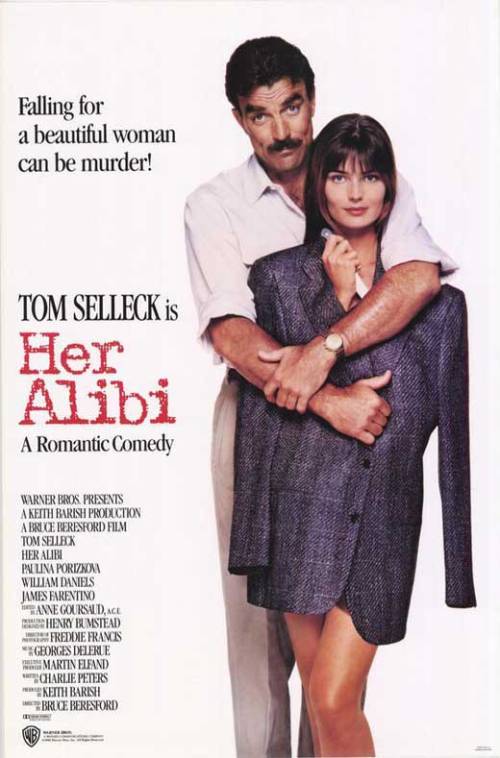
Her Alibi (1989)

By Richard Winters

My Rating: 2 out of 10

4-Word Review: Novelist falls for suspect.

Phil Blackwood (Tom Selleck) is the author of a successful series of mystery novels, but now finds himself dealing with writer’s block and unable come up with a plot for his next book. Then he meets the beautiful Nina (Paulina Porizkova) a Romanian woman charged with murder. With the help of his publisher Sam (William Daniels) they concoct an alibi that allows her to be released from jail on bond. She then moves in with him in his large home where Phil feeds off her presence to come up with his next story idea while also keeping an eye on her to make sure she won’t try to kill him when he is not looking.

Although Paulina got nominated for a Golden Razzie award for worst actress of 1989 (eventually losing out to Heather Locklear) I still came away feeling she was the best thing about this otherwise threadbare film. The former swimsuit model’s face is of course appealing and her accent is sexy, but what I liked even better is that she does not behave like most American beauties and instead is quite feisty, self-sufficient and opinionated. In many ways she upstages her more famous co-star by a mile and easily the one thing that helps propel this limp movie along.

Selleck has his charm, but he is not convincing at all as an author who should be nerdier and resemble a book worm.  The character appears to have had a very successful writing career already as evidenced by all the book covers of his novels that gets shown during the film’s opening credits, which is the coolest part of the movie. His large home makes it seem that he could retire in luxury and thus the storyline involving his writer’s block adds no urgency.

The film’s lighthearted tone makes it clear that Paulina is not a dangerous killer and that she’ll somehow be found innocent in the end making the scenes showing Selleck’s paranoia about her seem silly and adds no true tension or multi-dimension.

The romantic angle is equally botched as there is too much of an age difference between the two (20 years) making Selleck seem almost like a father figure. It’s also hard to understand why this beautiful young woman would fall for such a clueless idiot who comes off as a benign bumbling dope that she can easily manipulate. What’s worse is that she throws herself at him an hour into the runtime, so there’s no longer any question of romantic intent making the final 30 minutes virtually pointless.

Lots of slapstick scenes get thrown in that has nothing to do with the main story and simply there to pad the runtime. The dumbest of these occurs near the end where Selleck and friends think that they’ve eaten a dinner that was poisoned. In a misguided attempt to flush the poison out, Patrick Wayne, who plays Selleck’s brother, drinks Drano which is quite obviously dangerous. He spits it out, but that wouldn’t stop his mouth from burning, blisters from forming, or flesh from peeling away from his mouth, which doesn’t occur, but normally would’ve. Film characters drinking Drano had already been done before in the movie Magnum Force and it inspired real-life criminals to force their victims to drink it in the infamous Hi-Fi murders that happened in Ogden, Utah in 1974, so for that reason alone it should never be shown in another movie again and for such a superficial production like this to just randomly putting it in and acting like it’s ‘funny’ is utterly irresponsible.

The film starts out engagingly enough, but loses the air in its tire long before it’s over. Even the normally reliable William Daniels gets wasted. He is quite adept at playing pompous authority types, like in the TV-show ‘St. Elsewhere’, but not as a passive schmuck like here.

My Rating: 2 out of 10

Released: February 3, 1989

Runtime: 1Hour 34Minutes

Rated PG

Director: Bruce Beresford

Studio: Warner Brothers

Available: DVD (Warner Archive), Amazon Video, YouTube

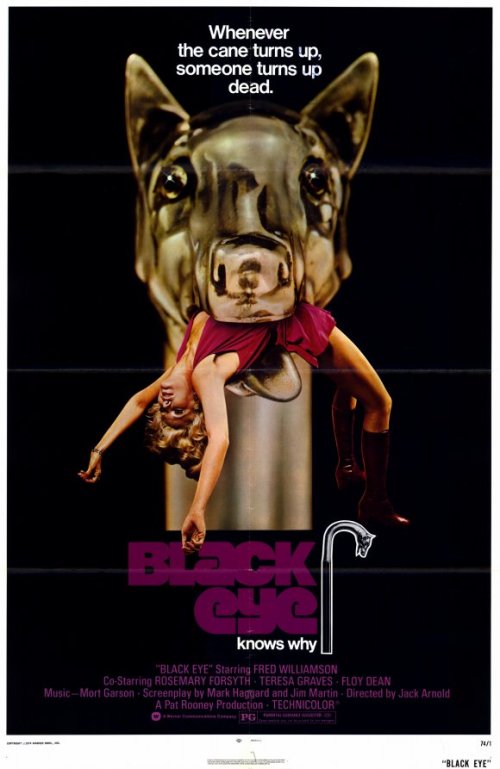
Black Eye (1974)

By Richard Winters

My Rating: 5 out of 10

4-Word Review: Find the walking cane.

An old walking cane with a distinctive silver handle that had been used as a prop in many old Hollywood movies is stolen by a prostitute named Vera (Nancy Fisher) after it is laid on top of a casket of deceased actor at his funeral. Later Vera is murdered inside her apartment by a man named Chess (Frank Ashmore) who retrieves the cane, but not before coming into a violent confrontation with Shep (Fred Williamson) a black private eye who lives across the hall from her. Chess manages to escape, but Shep decides to track him down in an effort to find out why everyone is after the cane and what secret it might hold.

The film is an okay blend of action and mystery that tends to show its cards to soon. The revelation for why the cane is so much in demand is quite predictable and makes the viewer feel like they wasted an hour and a half of their time watching a pedestrian plot that leads nowhere. Director Jack Arnold dresses the story up by inserting offbeat scenes and eccentric characters that only adds a mild diversion to the proceedings, but still culminates with a flat finish.

Former pro football player Fred Williamson who played for the Kansas City Chiefs during the ‘60s is the best thing about the movie. Other athletes who turned to film acting after their sports careers were over were not as adept in front of the camera. Jim Brown for instance was great on the gridiron, but lacked an ability to play anything more than a hardened tough guy whose facial expression never changed. Williamson has more of an appeal because he doesn’t take himself or his role too seriously while also showing an ability to play either comedy or drama.

His female co-stars though are wasted and really didn’t need to be in it at all. Theresa Graves looks beautiful, but her character has no integral link to the story the lesbian angle dealing with the relationship that she has with her white girlfriend (played by Rosemary Forsyth) seems to be thrown in simply to give the film a certain perceived ‘kinky’ edge. Forsyth for her part has her voice dubbed and for what reason I don’t know, but it’s distracting and unnecessary.

88 year-old Cyril Delevanti, in his final film appearance, is quite amusing as an elderly man who’ll stop at nothing to get his cane back, but character actor Richard Anderson is a detriment. He plays a father who hires Shep to find his missing runaway daughter (Susan Arnold). At the end Williamson and Anderson get into a fistfight with Anderson doing his own stunts, which looks fake. A shot capturing him lowering his foot towards the camera in a dramatic attempt to show him stomping on Williamson (with the camera working as being Williamson’s P.O.V.) doesn’t work because it is clear that he is restraining his foot so it doesn’t actually hit the camera and break it. If you’re going to do a shot from this angel then have the foot actually pounce onto the camera even if it means damaging it because that would make it appear more authentic, or otherwise don’t do it at all.

For those that enjoy blaxploitation flicks from the ‘70s you may give this one, which is based on the novel ‘Murder on the Wild Side’ by Jeff Jacks, a slightly higher rating than I did. Some of the action is good especially a scene where Williamson escapes out of a immobile elevator and shimmies his way down the elevator shaft, but overall there’s nothing else about it that is distinctive to raise it above all the other black action films that are out there.

My Rating: 5 out of 10

Released: May 17, 1974

Runtime: 1Hour 37Minutes

Rated PG

Director: Jack Arnold

Studio: Warner Brothers

Available: DVD-R (Warner Archive), Amazon Video

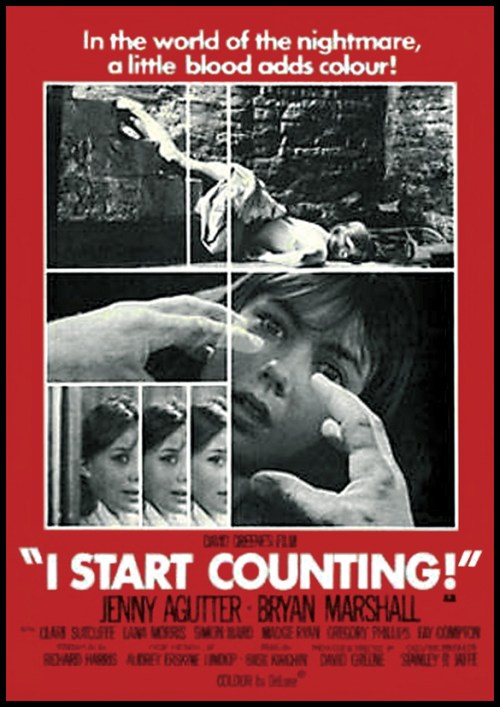
I Start Counting (1970)

By Richard Winters

My Rating: 3 out of 10

4-Word Review: She suspects her brother.

Wynne (Jenny Agutter) is an adopted 14-year-old teen who begins to have romantic feelings for her 32-year-old stepbrother George (Bryan Marshall). However, she finds some troubling signs, like scratches on his back and blood on a shirt she gave him, which makes her believe that he may be the killer that has murdered several teen girls in the area.

This is one of the earlier films directed by the gifted David Greene who went on to helm some amazing films including the TV-movies Roots and Fatal Vision, but here he still seems to be searching for his rhythm. The story, which is based on the novel of the same name by Audrey Erskine Lindop, has some potential, but the pacing drags and there’s too much emphasis on a panning camera that seems to want to pan to different points on the screen in literally every shot. The soft, melodic music is more liable to put the viewer to sleep than create any tension.

Not enough emphasis is put on the murders or the investigation. We see the face of one dead body underneath the water and then that’s it. The killings become almost like an afterthought that gets briefly mentioned here and there, but fails to build up any fear in the viewer and at times becomes almost forgotten. The story instead focuses on the inner thoughts and feelings of Wynne and meanders between her fearing her brother to being in-love with him until she seems weirder than he is.

Agutter gives a great performance and helps hold the thing together, which would’ve become a limp, unfocused bore otherwise. Simon Ward, especially with his facial features makes for a good creepy bus conductor, but Marshall’s flat performance as the brother does not help to the point where the viewer doesn’t particularly care if he is the killer or not.

The only time that there is any true tension is at the end when the killer’s true identity gets exposed and he tries to kill Wynne in a dark, isolated building, but even here things get botched as the film makes it too obvious who the killer is too soon, which then lessens the film’s final twist. Certain other aspects like a flashback sequences dealing with Wynne’s troubled childhood doesn’t add up to much. In fact the only thing that I found even mildly diverting was Wynne’s relationship with her competitive best friend Corinne (Claire Sutcliffe), which brought to mind the old adage: with friends like these who needs enemies.

My Rating: 3 out of 10

Released: November 27, 1970

Runtime: 1Hour 45Minutes

Not Rated

Director: David Greene

Studio: United Artists

Available: None at this time.

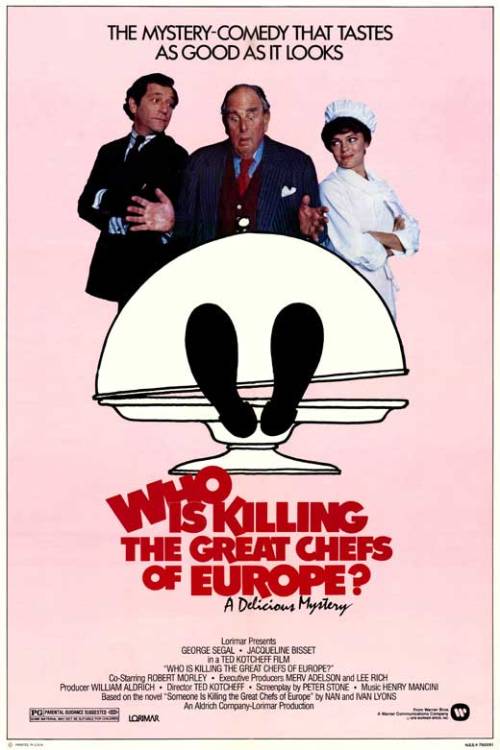
Who is Killing the Great Chefs of Europe? (1978)

By Richard Winters

My Rating: 7 out of 10

4-Word Review: He eats too much.

Max (Robert Morley) is a famous food critic who writes an article for the food magazine The Epicurist titled ‘The World’s Most Fabulous Meal’, which described four dishes cooked by four of the world’s top chefs. The problem is those chefs are now turning up dead. Natasha (Jacqueline Bisset) was the chef famous for creating the dessert called the bombe, which was also written about in that same article. Since the other chefs have already been murdered Natasha fears she may be next, so she works with the police to find the killer while also being a suspect since she was with each victim just before they died.

The film is based on the novel ‘Someone is Killing the Great Chefs of Europe’ by husband and wife writers Nan and Ivan Lyons, which came out two years earlier and had more erotic overtones while also detailing the specific recipes of each gourmet dish described in the story. Ted Kotchef’s excellent direction focuses strongly on the food element and each exotic meal is nicely captured and crafted by an actual cuisine chef named Paul Bocuse. Not only do you see the cast eating the stuff, especially Morley’s character, but preparing it as well including a detailed, drawn out segment showing Natasha creating her world famous desert.

The on-location shooting, done in three different European countries, is vivid and the dialogue is quite amusing. The denouncement is interesting because you think for sure it’s one person only to genuinely get surprised when it turns out to be someone completely unexpected. The plot though is too leisurely paced and the side-story dealing with Natasha’s ex-husband (George Segal) trying to rekindle their relationship is unnecessary and could’ve been cut, which would’ve helped shorten the runtime, which is overlong for such otherwise trite material.

Morley is a scene-stealer with everything he utters being hilarious. Bisset is great too and should’ve received top-billing as she’s seen the most while Segal’s presence comes off as downright intrusive. It was nice having a beautiful woman in a lead that was not sexualized and it would’ve made the film a bit ahead-of-its-time had she carried it alone, which she easily could’ve without Segal as a sort of male sidekick.

For light entertainment it’s enjoyable, but I was surprised at seeing how things have changed as there are several throwaway bits that at the time I’m sure were considered innocuous but would be deemed quite controversial by today’s standards. One scene has Bisset speaking with an Italian chef (Stefano Satta Flores) who openly pinches her twice on the rear without her permission. She protests it the first time, but he boldly does it again later and she lets it go, continues to casually talk to him and even agrees to meet him later for dinner. The film seems to play the whole thing off as a ‘boy-will-be-boys’ scenario coupled with the Italian male stereotype that this is simply ‘a part of their nature’.

In another part she refers to a French chef (Jean-Pierre Cassel) as a ‘fag’ and she visits a processing plant where thousands of chickens are housed in tight little cages and barely able to even move which doesn’t seem to bother her at all. I’m sure these scenes back in 1978 went completely over-the-heads of the viewers and most likely were quickly forgotten even though now these same moments would most likely elicit outrage, protest and headlines.

My Rating: 7 out of 10

Released: October 5, 1978

Runtime: 1 Hour 52 Minutes

Rated PG

Director: Ted Kotcheff

Studio: Warner Brothers

Available: DVD (Warner Archive)

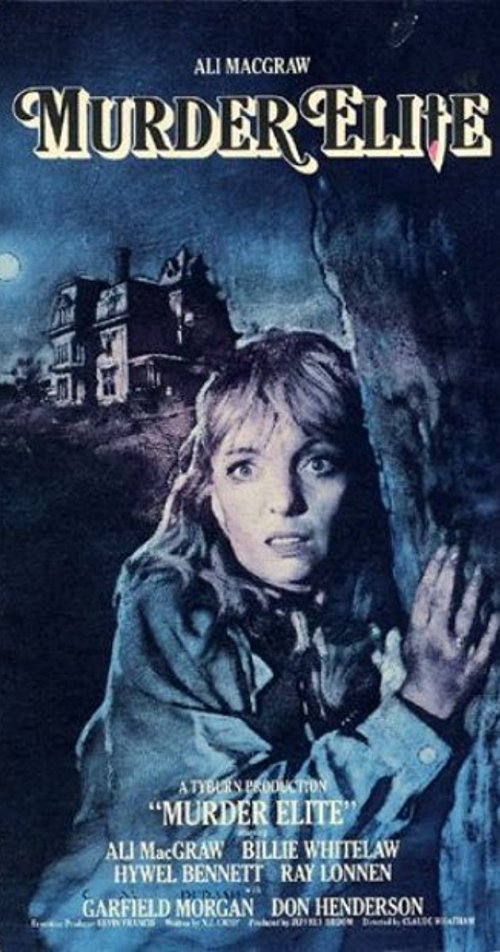
Murder Elite (1985)

By Richard Winters

My Rating: 4 out of 10

4-Word Review: Sisters feud over estate.

The story centers on Diane (Ali MacGraw) who moves in with her sister Margaret (Billie Whitelaw) at the family’s estate in England. Diane has frittered away her inheritance while living in America and now comes to Margaret in a near penniless state. Margaret expects Diane to ‘earn-her-keep’, but Diane resists doing any farm work and instead schemes at how to take control of the family’s fortune while having a fling with one of the farmhands named Ron (Ray Lonnen). She realizes that if Margaret dies then the estate will go to her, so she convinces Ron to kill Margaret when she goes out for one of her late night walks and then blame the death on a mysterious lady killer who has been terrorizing the countryside. However, things don’t go as planned as Diane and Ron soon find themselves being the ones in danger.

The film works as a weird hybrid between a slasher flick and an old-fashioned Agatha Christie-like mystery. The only interesting element is MacGraw’s presence who seems completely out-of-place in the English setting. This could easily be described as her career swan song as she never starred in another theatrical film after this one. In fact she only did four more movies, two of them being TV ones, and no film appearances at all since 1997. Usually when someone’s acting career has nosedived they turn to overseas projects, which is exactly what this was as she hadn’t had a hit movie in 13 years and was well over 40, so in many ways she had no choice, but to take it.

It might’ve worked had she had genuine acting talent, but it becomes painfully clear in her scenes with Whitelaw that she’s being seriously upstaged by a far more superior actress. Casting MacGraw as antagonist doesn’t gel as she’s unable to convey the necessary evilness. As sisters the two look nothing alike and Whitelaw is supposed to be ‘way older’ than MacGraw, but in reality they look practically the same age. During the early ‘70s Ali had long hair that came down to her waist and it looked great, by the later part of the decade she had cut it real short and it was okay, but her she wears it shoulder-length, which isn’t sexy at all.

The plot is only mildly intriguing and all the action takes place on the drab estate, which quickly becomes dull visually. There are a few twists to keep it watchable, but the one that comes at the end, which reveals who the true killer is, is full of loopholes making this little known mystery excursion come-off as flat and pointless.

My Rating: 4 out of 10

Released: May 13, 1985

Runtime: 1 Hour 38 Minutes

Not Rated

Director: Claude Whatham

Studio: Tyburn Entertainment

Available: VHS 

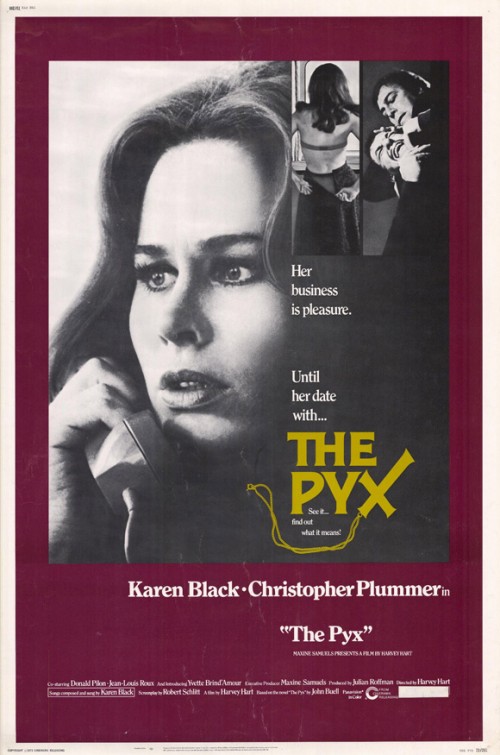
The Pyx (1973)

By Richard Winters

My Rating: 5 out of 10

4-Word Review: Religious cult wants prostitute.

A woman is seen falling from a high-rise tenant building to her death and Police Sergeant Jim Henderson (Christopher Plummer) is assigned to the case. When he inspects the body he finds that in her right hand she is holding a crucifix and in her left one is a small metal container known as a pyx. The victim is later identified as being Elizabeth Lucy (Karen Black) a heroin addict who works as a prostitute. The film then cuts back and forth between showing Elizabeth when she was still alive and the circumstances that lead to her death as well as Jim’s dogged search to find her killer, which may be connected to an underground religious cult.

The film, which is based on the novel of the same title by John Buell and shot entirely on-location in Montreal, has a nice eerie atmosphere.  The cutting back and forth between the two linear stories is interesting and this is the type of mystery that is complex, but not too much. There are just enough clues given to keep it intriguing without so much thrown in that it becomes convoluted. The slow pacing is okay because it keeps things on a realistic level and everything remains plausible and gritty.

Unfortunately the story has no payoff. The slow reveal of the religious cult offers nothing new or exciting and seems to be borrowing elements from other horror flicks that have dealt with the same theme. Except for a few brief moments the film is devoid of any action and the shootout on a yacht is edited in such a quick way that it’s hard to follow what happened. The overuse of nighttime shots gives the film a grainy appearance that looks more like it was a victim of a low budget and poor lighting.

The two leads give good performances and Plummer looks almost unrecognizable with a bowl haircut and appearing almost 20 years younger than he already was. The music was composed by Harry Freedman and star Black does the vocals, which is distinctive and gets the viewer into a spiritual mood, but there aren’t any frights and it’s hard to put this thing into any type of category as it’s really not a horror film at all.

Even as a standard mystery it’s only average and just enough to hold your interest. Ultimately it goes down a familiar path that we’ve seen too many times before and is devoid of any true shock or surprises.

My Rating: 5 out of 10

Released: September 13, 1973

Runtime: 1 Hour 47 Minutes

Rated R

Director: Harvey Hart

Studio: Cinerama Releasing Corporation

Available: DVD-R, Amazon Video

Midnight Lace (1960)

By Richard Winters

My Rating: 6 out of 10

4-Word Review: Somebody is stalking her.

Kit Preston (Doris Day) is an American who has just recently married Anthony (Rex Harrison) and moved with him to London. Shortly after her move she begins receiving phone calls from a man who speaks in a strange sounding voice and who threatens her bodily harm. When she goes to the police about it they’re not helpful and soon both her husband and friends begin to question her sanity and whether she is simply making the whole thing up.

The film is based on the stage play ‘Mathilda Shouted Fire’ by Janet Green and for the most part is well-done. I enjoyed the glossiness of it particularly the sumptuous interior design of the large home they lived in. So many times movies with this type of theme are given the low budget treatment, so it’s nice to have one done more on the highbrow level.

The pace is slow and there’s way more talking than action, but I still found myself intrigued. The voice of the stalker though could’ve been done better. I guess it’s nice not having it conform to the stereotype of a madman by having his voice deep and menacing, but this guy sounds like a cartoon character and it’s unintentionally funny. The set-up could’ve also been improved as it starts out right away with her being threatened by him in a park that seems a bit surreal and confusing since we know nothing about this character and a previous backstory would’ve helped.

The villain’s ultimate identity may surprise some, but the film tries so hard to throw in these red herrings to make you think it’s all these other people that a truly savvy viewer will start to consider the one that seems to be the least likely. The plot logistics aren’t particularly well thought out either, but this is clearly not something you’re expected to think about too hard anyways.

The film’s main selling point is Day who’s tremendous. This was a big stretch for her, but she comes away in impressive fashion. She vowed afterwards that she would never do another thriller because it was too emotionally draining and I felt emotional drained just watching her. What I liked is that instead of screaming when she panics she breaks out into a teary-eyed wail that makes her seem quite helpless, but still endearing. She stated that during the filming of these scenes she would think back to the real-life abuse that she suffered from her first husband, which makes her emotions genuine and raw and manages to strongly connect with the audience.

My only quibble and this was probably more the fault of the screenwriter than hers, is when her husband is struggling to fight off the bad guy and all she does is stand there and whimper. This was most likely a product of the era where women were expected to be more ‘dainty’ and not get involved in physical altercations, but when a guy is trying all he can to save his life and hers he might appreciate her offering him some assistance.

There’s another scene where she gets stuck in an elevator that is a bit botched too because in her attempt to sound like a hysterical women she comes off more like a gal having a weird orgasm, but overall she’s great. It might even be her best performance as she far outshines Harrison who looks too old to be her husband and wasn’t a good fit at all.

My Rating: 6 out of 10

Released: October 13, 1960

Runtime: 1 Hour 48 Minutes

Not Rated

Director: David Miller

Studio: Universal Pictures

Available: DVD