Category Archives: Mystery

Unman, Wittering, and Zigo (1971)

By Richard Winters

My Rating: 7 out of 10

4-Word Review: These students are killers.

John Ebony (David Hemmings) leaves his job in advertising to follow his dream of becoming a school teacher. He gets a job at an all-boys private school in rural England replacing a teacher who died accidently by falling off a cliff. His pupils soon tell him that they were the ones who killed the teacher and they will do the same to him if he doesn’t do as they say. John can’t find anyone who believes him even his own wife Sylvia (Caroline Seymour) laughs it off. Soon John finds himself a virtual prisoner of his own students and forced to follow their dictates while he tries to figure out who the ringleader is and bring them to justice.

Director John Mackenzie does a terrific job of building the tension slowly. The film works at a deliberate pace allowing the viewer to see things from John’s point-view-of. The slower pace keeps things realistic and therefore more effective. Geoffrey Unswoth’s cinematography is vivid. I loved the way the steep cliffs are captured at the beginning and a camera is thrown off the cliff making the viewer feel like the victim as they see the landscape swirling on screen before completely submerging in water. A nightmare sequence where John dreams of being accosted by the boys in much the same way as his predecessor is visually exciting. The on-location shooting at an actual private boy’s school in Wales only helps to add to the authenticity.

The students themselves are quite effective and much better than their counterparts in the similar Child’s Play where they came off as too robotic. Here they have more diverse personalities. Their snarky behavior and the taunting both to their weaker peers and to John was so on-target that it made me feel like I was right back in high school. Their polite and formal facades are a thin veil to their sinister side that becomes increasingly more apparent as the film goes on. The pinnacle comes when they lock Sylvia in a darkened gymnasium and threaten to gang rape her. The lighting, done exclusively with flashlights and the frenzied action make this a memorably creepy moment.

John makes for a solid protagonist. The viewer can feel and understand his unique quandary and the character is believable enough to help make the movie engrossing from beginning to end. My only quibble would be near the end when the boys ask him to come with them to look for one of the students that have disappeared and he agrees. I thought this was a little hard to believe as it was right after they had tried to attack his wife and the search was being done near the cliffs, which would put John at a vulnerable risk.

The twist at the end is a bit of a surprise and is overall satisfying. Despite what is stated in the review in Leonard Maltin’s ‘Movie and Video Guide’ there is no revelation of any kind after the closing credits. I have seen this film now twice from two different sources and both times the only thing that comes after the credits is the Paramount logo.

My Rating: 7 out of 10

Released: June 13, 1971

Runtime: 1Hour 42Minutes

Rated PG

Director: John Mackenzie

Studio: Paramount

Available: Amazon Instant Video

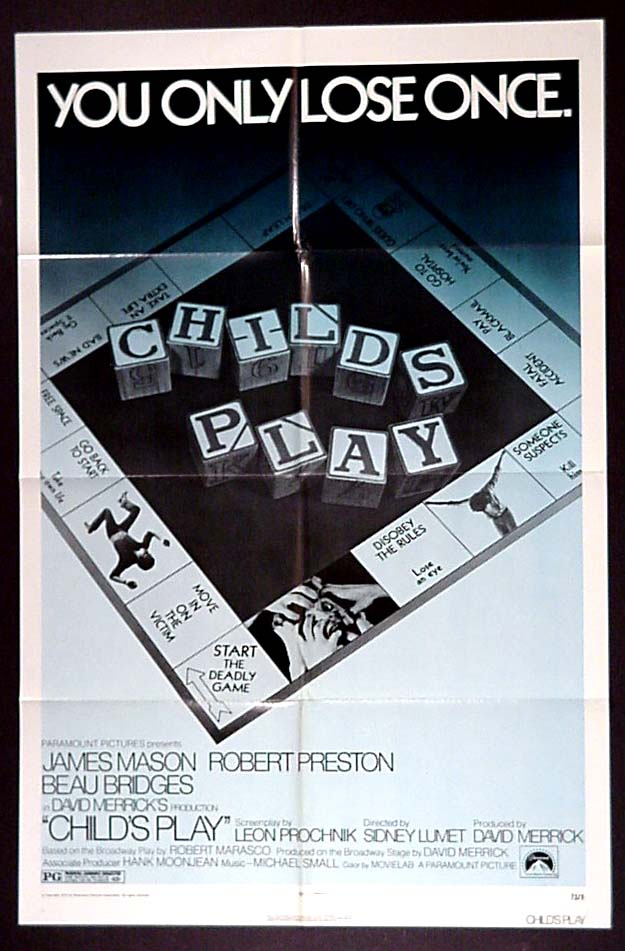
Child’s Play (1972)

By Richard Winters

My Rating: 5 out of 10

4-Word Review: Private school is murder.

If you are looking for a review about the Chucky doll then you will have to wait as that will come at a later time. This is the first film to use that title and it is based on the Broadway play by Robert Marasco who in turn based it loosely on an early Ingmar Bergman movie called Torment. The story deals with an exclusive all-boys school where bizarre unexplained random acts of violence begin to occur between groups of students. New teacher Paul Reis (Beau Bridges) becomes determined to unravel the mystery and begins to suspect that it may have something to do with a long running feud between two of the school’s older instructors Joseph Dobbs (Robert Preston) and Jerome Malley (James Mason)

The film opens right away with a nice creepy tone and a foreboding score that immediately got me wrapped up into it. The dark, shadowy lighting of the interiors helped accentuate the sinister feel. It is also great to have the film shot in an actual boy’s school instead of building sets to recreate the look. Just hearing the floorboards creak underneath the feet of the actors as they walk around helps to create an already strong atmosphere.

Mason is terrific. I think it is impossible for the man to ever give a weak performance even if the script itself is poor. He is captivating every time he is on the screen and his ability to display wide ranging emotions without flaw never ceases to amaze me. Everything always seems to come so naturally with this man in all of his performances that you never see the acting, or technique behind it. It is a shame this movie is so obscure because watching his performance alone makes the film worth seeing and the desperate, lonely character that he plays is interesting in its own right.

Preston doesn’t seem as strong. He is a good actor at times, but not for this type of part and having him wearing a moustache doesn’t help. Supposedly the part was originally intended for Marlon Brando, who would have been more interesting, but he ended up backing out.

Bridges is okay as the protagonist, but he has played the role of a wide-eyed idealist coming into an ugly situation while oblivious to all of the dark aspects a little too often making it an annoying caricature.

The movie fails in the fact that it cannot hold the tension and there are too many talky scenes with little action in-between. The students come off as robotic like and the scenes involving them attacking another student inside a gymnasium looks staged and rehearsed. Director Sidney Lumet would have done better had he used a hand-held camera and gotten right in the middle of the fray making it seem more spontaneous and vivid.

I also had a hard time believing that so many students could get effectively brain washed and sworn to secrecy. I could buy maybe a few, but having so many seemed implausible and ruined the film for me. However, the explanation for the cause to the violence is an original one that I wouldn’t have thought up myself. Also, the surprise twist at the very end is kind of cool.

A similar film to this one entitled Unman, Wittering, and Zigo that also came out in the 70’s and dealt with murder at an all-boys private school will be reviewed next Friday and fares a bit better.

My Rating: 5 out of 10

Released: December 12, 1972

Runtime: 1Hour 40Minutes

Rated PG

Director: Sidney Lumet

Studio: Paramount

Available: Amazon Instant Video

The Car (1977)

By Richard Winters

My Rating: 3 out of 10

4-Word Review: No driver no problem.

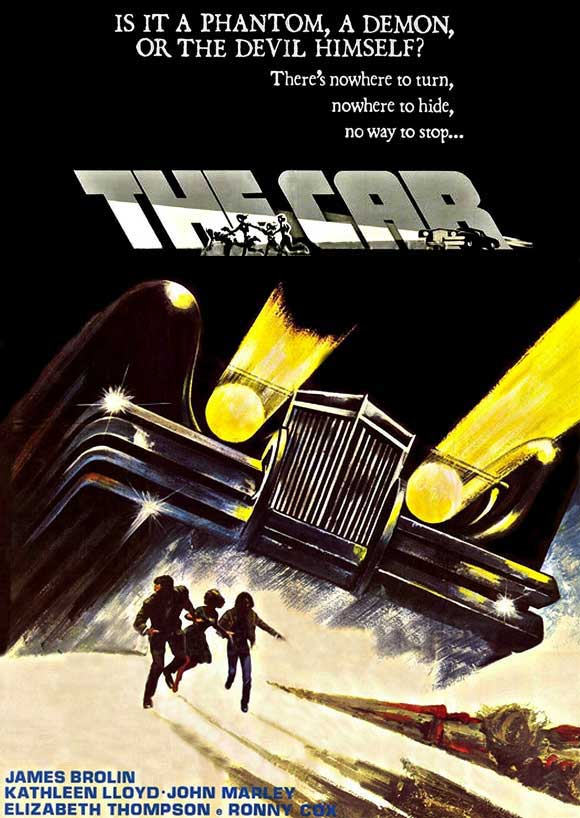
This is an expectedly dumb horror film about a driverless car that comes out of the desert and begins to terrorize a small town in Utah.

The film fails to be scary or suspenseful in even the slightest way. It is basically a Jaws rip-off put on wheels, but has no basis in reality and not half as compelling. It takes a weird idea and then submerges it with a conventional narrative. The car attacks are separated by drawn out soap opera style drama making you look forward to the attacks because at least they inject some excitement. The attacks though are pretty sanitized and at times even hokey. The ending is too pat and offers no explanation as to why any of this even occurred. The consistently sunny and picturesque small town scenes are not good at creating a horror atmosphere. The one brief moment where actor James Brolin confronts the car on a lonely desert highway is the only part that offers anything in the way of interesting surrealism.

The car itself really doesn’t look that frightening and resembles a toy car and moves around like it is being run by remote control. Its horn sounds like a cross between one used for a train or a boat and comes off as being more distracting than scary. It behaves more like a thinking animal than a demonic object. It drives away from the police and seems to have a strategy for what it does. The scenes where actress Kathleen Lloyd tries to ‘talk’ to it and its responses to her talking is downright laughable.

For what it’s worth R.G. Armstrong gets one of his better grimy character roles, but Lloyd is completely wasted as usual and Brolin seems as sterile as ever. Ronny Cox must be given credit simply for his wonderfully distressed facial expressions. John Rubenstein is engaging, but then gets killed off too quickly.

Director Elliot Silverstein adds a few nice directorial touches, but it can’t overcome the basic weaknesses of the script. The closing credits features the car seemingly driving around the streets of Los Angeles in apparent attempt to ‘scare’ everyone into believing that it might still be ‘out there’. Of course judging by all the bad drivers L.A. already has this car wouldn’t make much of a difference.

My Rating: 3 out of 10

Released: May 13, 1977

Runtime: 1Hour 36Minutes

Rated PG

Director: Elliot Silverstein

Studio: Universal

Available: VHS, DVD

The Nesting (1981)

By Richard Winters

My Rating: 3 out of 10

4-Word Review: House haunted by hookers.

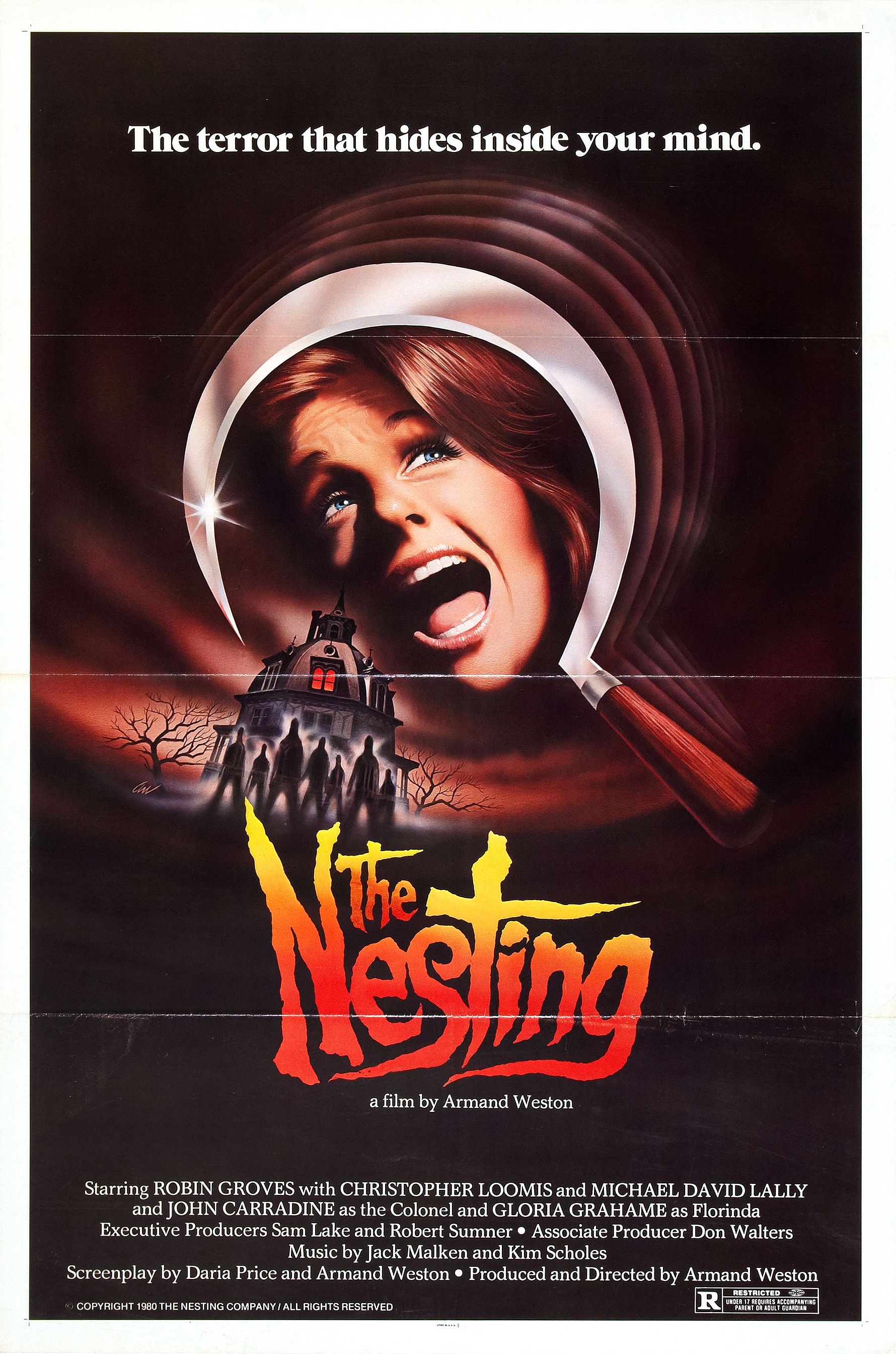
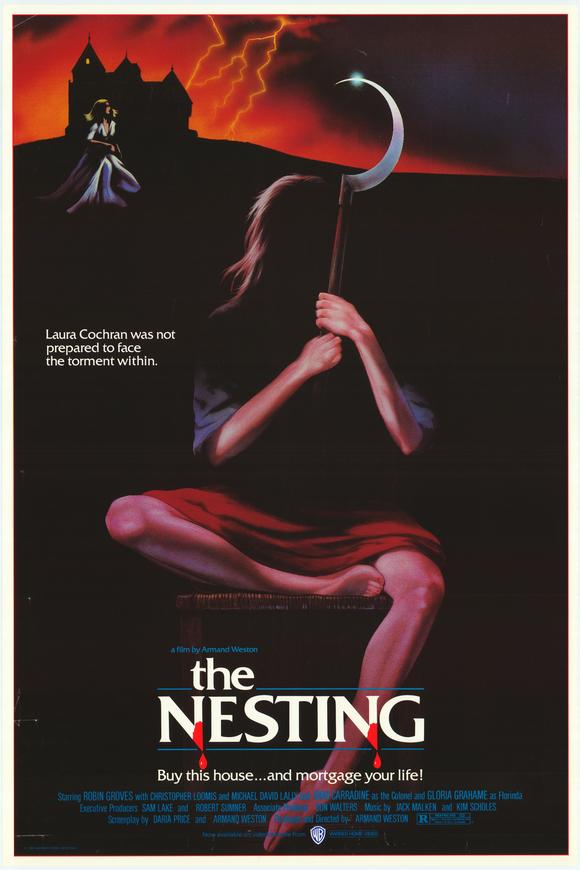
This review will start off a month long theme where in celebration of Halloween every 70’s, 80’s, and 90’s movie reviewed will be a horror one. This film sat in pretty much obscurity until being released by Blue Underground onto DVD and Blu-ray on June 28th. The story deals with Lauren (Robin Groves) a writer who rents an old house that looks strangely similar to the one depicted on the cover of her last novel. Eerie events start to happen and she learns that the building used to be a house of ill-repute and the prostitutes who were murdered there in cold blood are now coming back in ghostly form to seek revenge.

The film was directed by Armand Weston best known for directing porn movies during the 70’s including a couple of edgy, envelope pushing rape and revenge sagas The Taking of Christina and The Defiance of Good.  The directing here is competent enough that it is watchable, but the scares and horror is at a minimum. There are a few moments of creepiness and atmosphere, but it is not sustained and the film is unable to build any momentum, or suspense. The result is rather disjointed and unfocused. The premise borders on being campy and a 104 minute run time is way too long for a plot that offers a meager payoff.

Groves is an unusual choice for the lead. Usually films in this genre cast young college age girls in these roles with high sex appeal and skimpy outfits so that way they will be able to hold the viewer’s (males) attention during the slow parts of which there are many. Groves on the other hand is middle-aged, has an oversized mouth, and a hyper personality that seems better suited for comedy. She does end up having a nude scene, which isn’t bad, but I still felt she wasn’t the right fit.

I did like the idea that the character is given some unusual traits including suffering from agoraphobia (the extreme fear of the outside world) and a kooky creative personality that initially embraces the scares that she receives in the home because she feels it will help stimulate her artistic process. However, the film does not pursue these ideas enough and by the end seemed to have completely forgotten about them.

I was disappointed that Gloria Grahame an Academy Award winning actress was given such little screen time and actually doesn’t even utter a line of dialogue until the final 15 minutes of the movie. This woman was a leading lady during the 40’s and 50’s, but had the misfortune of marrying director Nicholas Ray and then having an affair with Ray’s 17 year old son from a different marriage. She eventually married the son and even had two kids with him, but the resulting scandal ruined her career and demoted her to B-movies afterwards. Still I thought she looked terrific and was better looking than Groves even though she was in real-life twenty-five years older than her. Her best moment is when she crosses a street and then gets hit in rather graphic fashion and run over by a speeding car that gets repeated several times.

Veteran actor John Carradine also appears, but I wished they hadn’t even bothered with him. He appears frail and elderly and speaks his lines in a mumbling fashion.

I did like that the movie was filmed on-location at the Armour-Stiner house in Irvington, New York. This is a unique domed octagonal residence built in 1860 and one of the few left standing. There is even an outdoor scene filmed on the home’s roof where Lauren’s analyst (Patrick Farrelly) falls from a ledge and gets impaled by a weather vane, which proves to be the film’s best gory moment.

The wrap-up and explanation for why Lauren was so strangely attracted to the home is actually kind of neat. I also liked the scene recreating the murderous events where everybody ends up getting shot one-by-one in slow motion. However, the script was in bad need of trimming and revision. There also should have been more special effects sprinkled throughout the production instead of just cramming them all in during the film’s fiery finale.

nesting

My Rating: 3 out of 10

Released: May 3, 1981

Runtime: 1Hour 44Minutes

Rated R

Director: Armand Weston

Studio: William Mishkin Motion Pictures

Available: VHS, DVD, Blu-ray, Amazon Instant Video

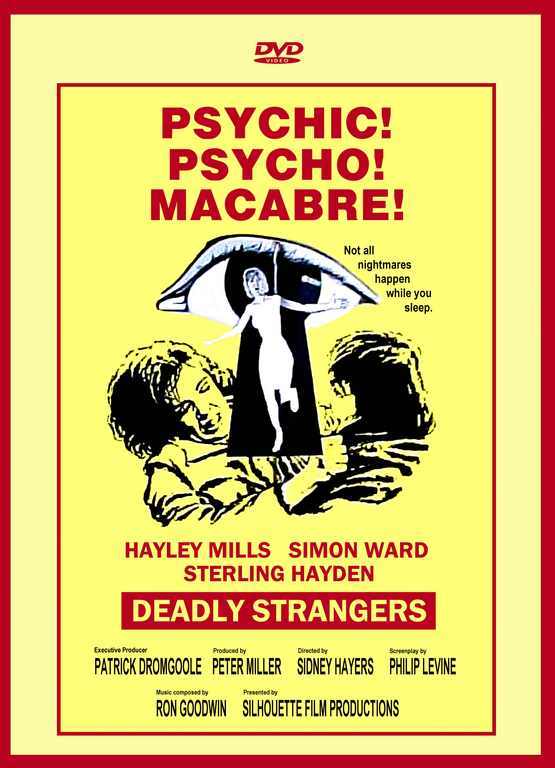
Deadly Strangers (1974)

By Richard Winters

My Rating: 5 out of 10

4-Word Review: Psycho on the loose.

A dangerous mental patient has escaped from a nearby asylum. Belle Adams (Hayley Mills) is the beautiful women whose car has just broken down and she accepts a ride from Stephan Slade (Simon Ward) who just may be that patient.

This seems very similar to See No Evil which also took place in the English countryside and also hid the killer’s identity until the very end. There though it was a big letdown finding out who he was while here it is actually what makes the movie interesting. However, some of the techniques used to conceal the killer’s identity come off as contrived. The opening escape sequence inside the institution, where you see everything from the patient’s point of view is very tacky.

The suspense is minimal and things never really get too intense until the climatic sequence. There are twists and turns throughout, but some of them seem to be put in just to keep the story moving. The overall production values are cheap and the film stock is grainy and faded.

It is nice to see a British movie that doesn’t take place in London. The brown, barren landscape, which looks to have been filmed in the autumn, gives the picture an added visual. The car they drive is another sight as it looks as flimsy as a Yugo.

Mills makes a daring film choice here and it does her well. She no longer has that mousy, awkward look. She is a pretty full grown woman with a nice short haircut. She acts more mature and streetwise without that wide eyed persona that she had in all those Disney movies. Her nude scenes aren’t bad and are even a bit gratuitous.

Ward has never seemed to be that great of an actor. He has always had a tired look on his face and plods through his parts in much the same way. Sterling Hayden is fun playing an aging womanizer and sporting a wild beard and hairstyle. He talks in a goofy Scottish accent and amusingly tries to court Hayley, but unfortunately he is on for only a short time.

The final twist is pretty good, but a real sharp viewer will figure it out before it happens because I did! The film is a nice alternative for Mills despite a tendency to be gimmicky and flat. It is also the only time I have ever seen a policeman pull over a car and when the driver is unable to find his license is simply allowed to drive away.

My Rating: 5 out of 10

Released: February 16, 1974

Runtime: 1Hour 28Minutes

Rated R

Director: Sidney Hayers

Studio: Fox-Rank

Available: VHS

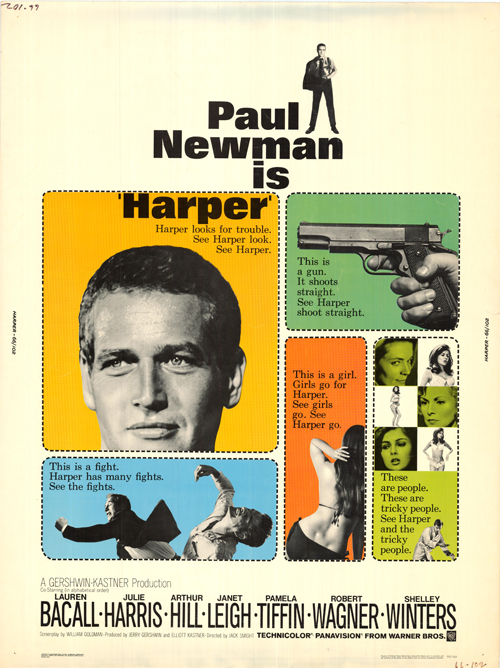
Harper (1966)

By Richard Winters

My Rating: 9 out of 10

4-Word Review: New-age private eye.

            Detective Lew Harper (Paul Newman) is hired by Mrs. Sampson (Lauren Bacall) a rich woman whose husband has gone missing. She wants a private eye to find him instead of the police due to the fact that her husband was involved in certain illegal business activities, which she doesn’t want to come to light. Harper finds himself immersed in a complex web of intrigue dealing with an array of shady characters, twists, and danger.

Newman is terrific and the Harper character is the perfect private eye for modern audiences. Watching him get out of bed in his dingy, cluttered apartment at the beginning and get ready for the day is excellent and builds characterization in a visual, subtle, and believable way. His cool, laid-back, and detached demeanor is a great contrast to the hyper, jaded, high-strung L.A. types that make up the assortment of suspects. His cynical style attaches the viewer to him right from the start and the banter that he has with everyone is marvelous.

The supporting characters are superb as well and very well-defined. Bacall gets one of her better later career roles as the bitchy eccentric wife. She gets quite a few quotable zingers particularly between her and her step daughter Miranda (Pamela Tiffin) that are close to classic. I also got a kick out of Shelley Winters playing a parody of herself as a way past her prime Hollywood star who is now overweight and an alcoholic. Harper’s attempts to get information out of her by pretending to be a hick who is totally mesmerized by her is quite amusing.

Director Jack Smight is at his directorial peak here. The on-location shooting is splendid. I particularly enjoyed the modernistic building that fronts as a church, but is really used as a cover for criminal activity. It sits out on a sandy hilltop and leaves a strong visual impression as does Harper and Miranda’s car ride along a very winding desert highway to get there. I also liked his ability to capture an abandoned airplane hangar making it almost as evocative to the eye as the foot chase that happens in it. The whole production is consistently slick with color schemes, set design and editing that are all top notch.

William Goldman’s script, which is based on the novel by Ross Macdonald is sensational and one of his best in his already legendary career. The dialogue is sharp one can view it for the lines alone and might need to re-watch it again simply to pick-up on all of them as there are so many your liable to miss some. The mystery is also intriguing and nicely layered to the point that it will keep you guessing and impossible to figure out and fortunately there is a minimum of loopholes. I saw this before and knew the outcome, but still found it an enjoyable and involving ride.

My complaints are few and fortunately do not taint the quality of the picture, which is otherwise high. I didn’t like that Harper had an ex-wife Susan (Janet Leigh) who he is constantly trying to win back. The woman seemed a bit cold and snippy and not the type I would think Harper would fall for, or want to put up with. Having him act so needy to win back her affections hurt the ruggedness of the character who is appealing because of his independent and self-assured nature. There is another scene where a man is shot dead and Harper goes through his coat pockets in order to get some clues to his identity. He finds a matchbook listing a nightclub, which Harper goes to in order to ask questions from the patrons, but I kept thinking it would have been much easier had he just went through the victim’s pants pocket and taking out his wallet and looked at his driver’s license.

If you are looking for a nifty mystery done in the best crime noir tradition then they don’t come much better than this.

My Rating: 9 out of 10

Released: February 23, 1966

Runtime: 2Hours 1Minute

Rated NR (Not Rated)

Director: Jack Smight

Studio: Warner Brothers

Available:  DVD, Amazon Instant Video

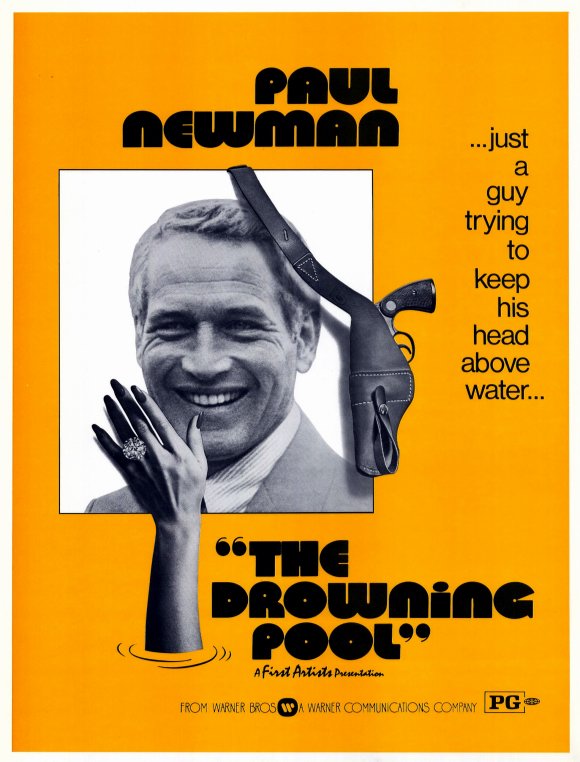
The Drowning Pool (1975)

By Richard Winters

My Rating: 7 out of 10

4-Word Review: Way too much water.

            Detective Lew Harper (Paul Newman) travels to New Orleans in order to help Iris (Joanne Woodward) an old love of his who has now married and living in a large southern mansion that is controlled by her husband’s domineering mother Olivia (Coral Browne). Iris asks Harper to track down a former servant who she has fired and is now sending notes to her husband threatening to describe one of her elicit affairs. Initially Harper thinks it will be a simple straightforward case, but finds many twists and turns including the presence of an oil company looking to buy the land the mansion sits on for drilling. There is also Iris’s over-sexed teen daughter Schuyler (Melanie Griffith) who is always present when there is any trouble as well as the town’s sheriff Broussard (Tony Franciosa) who takes an unusual interest in the well fare of Iris and her daughter.

By itself this is an okay mystery although it takes a while getting there and there are too many characters popping in out of nowhere threatening harm to Harper to point that almost becomes formulaic. Compared to the first Harper this film pales in comparison. It lacks the snappy dialogue that made the first one so fun. The supporting characters are not as well defined, or as interesting and the overall production values are not as slick. I was amazed that with a script written by Tracy Keenan Wynn, Walter Hill, and Lorenzo Semple Jr. that it could be so overall ordinary, but it is. That doesn’t mean it is not passable, or entertaining, but it lacks the zing from the first.

I also didn’t like the change of location. Harper with his very detached approach worked better with the jaded Hollywood types. Here he just seems out-of-place. The mansion setting is boring and predictable. However, the scene where Harper is taken by boat along a swamp and to a pit bull farm where the animals are trained for dog fighting is special.

As for the supporting characters Richard Jaeckel, who has appeared with Newman before in several good scenes including the drowning one in Sometimes a Great Notion, is good as ‘bullet head’ a corrupt policeman who is constantly harassing Harper. Harper later turns the tables playing a game of Russian roulette with him that is great. Murray Hamilton is also quite good as the evil oil baron Kilbourne and the all red jumpsuit that he appears in is something else.

On the female end you have to love Melanie Griffith as the devious, nympho teen. She plays that type of part so well that I don’t think there is any other actress that could ever do it better. I did not like Gail Strickland as Mavis who is Kilbourne’s wife.  When we first see her she is a conniving, cocky, flirtatious woman, but then in a later scene turns into a whimpering, whiny mess begging Harper for help when she barely knows him. This extreme contrast didn’t work with me and I thought that a woman who marries a rich, but shady businessman and has been involved in some underhanded maneuverings herself should have a little better ‘plan B’ in place and not sink to such a pathetic helpless level the minute things unravel. Woodward is wasted in a boring role that allows for very little range. I wished she had played Strickland’s part as I think she would’ve made it more interesting.

The one scene that really stands out and makes this movie special is the part where Harper and Mavis are trapped in a hypo-therapy room in an old, abandoned asylum. Newman does most of his stunts here including being sprayed by a fire hose while locked in a strait jacket. The sequence where they plug up all the drains and then turn on all the showers in an attempt to float up the pool of water and escape out the skylight is amazing as is the moment where the gallons of water comes rushing through the door toppling furniture and people. This scene is incredible on many levels and should make it into the top twenty of best movie moments ever.

My Rating: 7 out of 10

Released: June 25, 1975

Runtime: 1Hour 48Minutes

Rated PG

Director: Stuart Rosenberg

Studio: Warner Brothers

Available: VHS, DVD, Amazon Instant Video

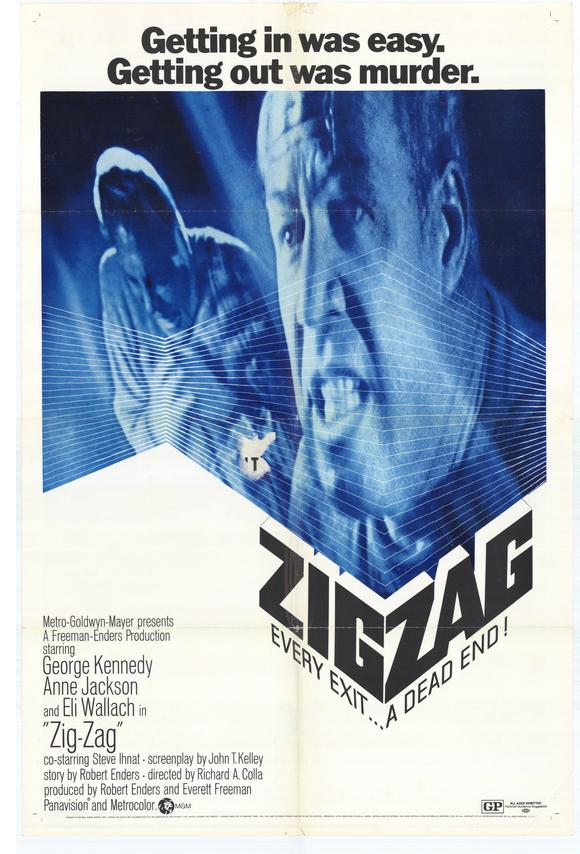
Zig Zag (1970)

By Richard Winters

My Rating: 5 out of 10

4-Word Review: Framing yourself isn’t good.

            Paul Cameron (George Kennedy) is an insurance agent and family man who learns that he is dying from a brain tumor and has only a few months to live. In order to provide money for his wife and children he sets himself up as the kidnapper of a wealthy businessman in an unsolved case that offered a $225,000 reward for anyone leading to the conviction of the culprit. After he is found guilty at his trial he faints and the doctors there decide to do experimental laser surgery to remove the tumor. The operation proves to be a success forcing Paul to go on a battle to prove his innocence, or risk spending the rest of his life in jail for a crime he did not commit.

Although he has done well in supporting roles Kennedy proves to be quite weak as a leading man as he shows almost no emotion in any of his scenes. When he is told of his tumor he takes it in a very matter-of-fact way without getting upset at all, which seemed unrealistic. His performance is dull and the few times that he does get upset it comes off as forced. His presence hurts the film and a more engaging, eccentric actor could’ve made it more interesting.

Eli Wallach as Paul’s attorney is terrific and the one thing that injects some energy. He is dynamic throughout and is fun to watch even during the slow parts. It was nice to see him doing a scene with his real-life wife Anne Jackson. As of this writing the two have now been married for 64 years, which has to be one of the longest marriages in Hollywood history.

The supporting cast features a long list of familiar character actors making it like spot-the-star. They include: Dana Elcar, Douglas Henderson, Steve Ihnat, William Marshall, Joan Tompkins, Robert Sampson, Leonard Stone, and Walter Brooke in an interesting duplicitous part.

Richard A. Colla’s direction is impressive. The film opens with a diverting cinema verite-style scene showing Paul going through the examination process before entering the prison, which seems unusually elaborate touch for what is otherwise just a gimmicky script. Another innovative part is when Paul is shown planting evidence at the scene of the crime and only the sounds and ambiance of the locale is heard without any music, which is more effective.  Unfortunately the direction and story become much more conventional towards the middle and it is not as interesting. The film tries to be too many things and does not come together as a seamless whole. The courtroom scenes were too extended for my tastes as we know Paul is innocent, but wants to be convicted anyways, so his many prolonged conversations with his exasperated lawyer who does not know of his scheme seem rather pointless. However, when Paul is cured and then goes on a mission to find the real killer it becomes exciting as the mystery itself proves to be complex and intriguing.

The twist ending did not go over well with audiences at the time of the film’s initial release. It’s a downer for sure, but after seeing so many tacky happy Hollywood endings in my lifetime I can’t say I totally hated it. As a budding screenwriter I enjoy irony and the ending here certainly has that. It’s slickly handled and although I saw it coming others may be genuinely surprised by it. My only complaint is that it’s a bit abrupt and could’ve and should’ve been extended in some way, or given a more effective closure.

If you like a movie with a lot of twists then this film may be worth seeking out. The legendary Roy Orbison sings the title tune during a party scene and it sounds like some of his best stuff. I am surprised it didn’t chart and I wished they had allowed the viewer to hear the complete son before cutting away.

My Rating: 5 out of 10

Released: September 11, 1970

Runtime: 1Hour 45Minutes

Rated PG

Director: Richard A. Colla

Studio: MGM

Available: VHS (as False Witness), DVD (Warner Archive) 

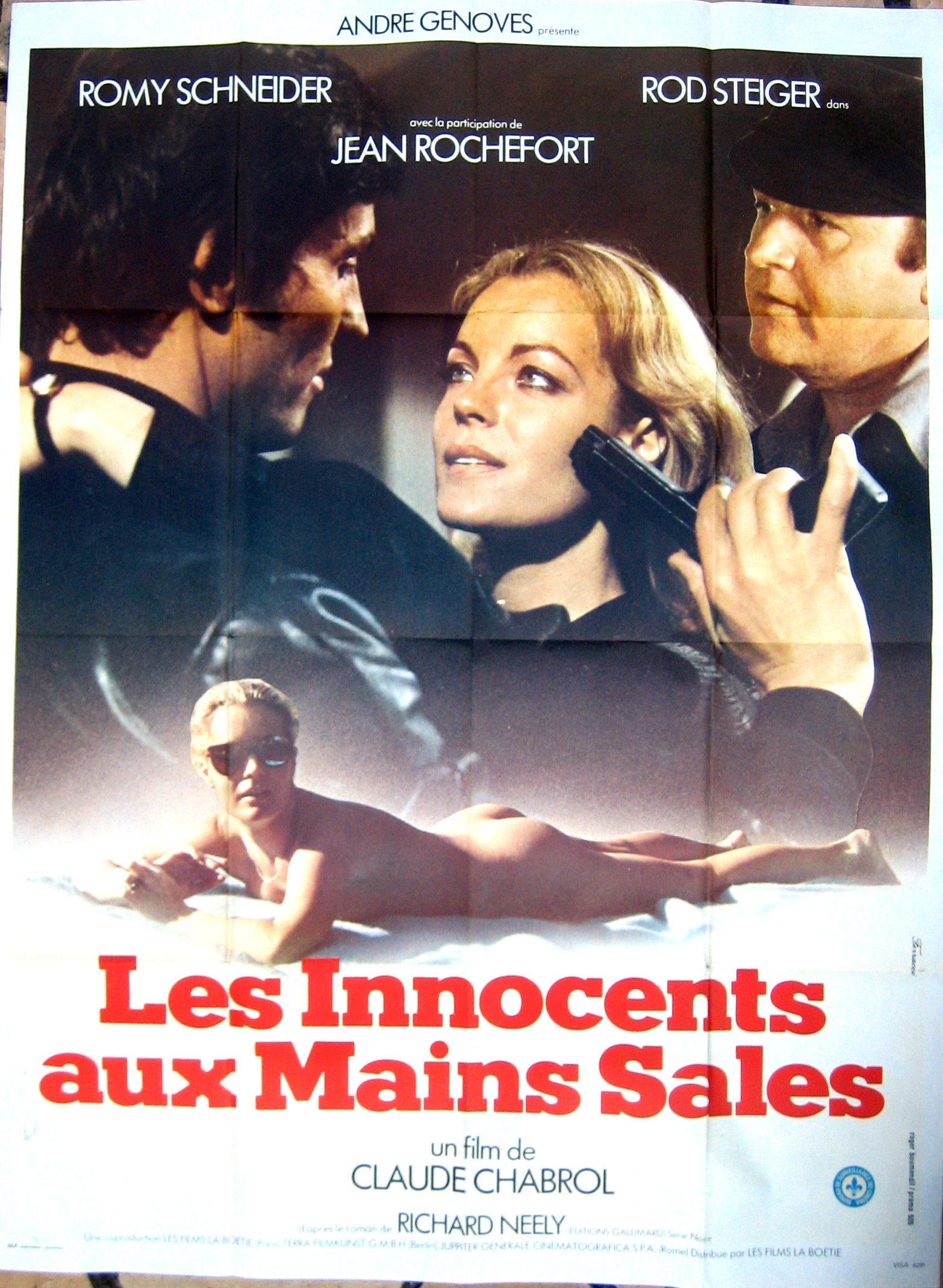
Dirty Hands (1975)

By Richard Winters

My Rating: 7 out of 10

4-Word Review: Their plans go awry.

Julie Wormser (Romy Schneider) is married to Louis (Rod Steiger) who is rich, but also 18 years older and suffering from impotency. A young, virile man by the name of Jeff Marle (Paolo Giusti) comes into her life and the two become lovers. They conspire to murder her husband and run off. However, their elaborate plan quickly unravels leading to many unexpected twists and turns.

Story-wise this is one of the better Hitchcock imitations. There are a lot of twists that are interesting and surprising. They are also well-explained and make sense. Nothing is thrown in that is implausible or creates loopholes.  The script is like traveling on a curving, winding road in a fast car and I found myself delightfully surprised, intrigued, and entertained with each new revelation. The film takes its time in explaining each detail and plot point. I liked how the investigators are given almost as much screen time as the culprits and writer/director Claude Chabrol has everything well-thought out and even manages to get you to care for these people at the end.

Schneider is stunning. I loved her blonde tinted hair and chic outfits. She has a sultry nude scene at the very beginning, but it is only from the backside. This was pretty much her vehicle. Her character goes through a wide-range of emotions and she does a great job of conveying each one. Her facial expressions especially as the case unravels and she is being interrogated by the Judge and questioned by her lawyer are captivating to watch and perfectly realized.

Steiger is always fun. His ability to display raw intense emotion is second to none. The character was a bit cardboard as written, but Steiger manages to make him human and I had genuine sympathy for him towards the end. He does tend to border on over-acting at times, but he injects life into the scenes that otherwise could have gotten boring and slow.

Although Chabrol clearly put a lot of care into the script the visual element is lacking. The camera work is conventional and unimaginative. Certain scenes are too dark and shadowy while others look bright and splotchy. The majority takes place in an exquisite looking French Chateau, but Chabrol fails to take advantage of this. The lack of visual style makes the thing look almost amateurish and the grainy, faded DVD transfer does not help. I also felt the dialogue between the two investigators seemed stale and derivative. There was also a part were Julie complains to the investigators that they have dropped into her house for a visit at much too late an hour and then, only a minute later, she is seen walking out of her house and it is broad daylight. Also, when she hits her husband over the head and supposedly kills him in his sleep he is still seen breathing.

If one is looking for a sharp mystery done in the Columbo style then this pick could be a fun, escapist evening. Schneider’s beauty and acting will carry the rest, but just be prepared for production values that are on a TV-movie level.

My Rating: 7 out of 10

Released: March 26, 1975

Runtime: 2Hours 1Minute

Rated PG

Director: Claude Chabrol

Studio: New Line Cinema

Available: DVD

Bullitt (1968)

By Richard Winters

My Rating: 8 out of 10

4-Word Review: A great car chase.

    A police detective by the name of Bullitt (Steve McQueen) is hired to protect a state witness who is set to testify against the mob. Problems ensue when the witness is killed and Bullitt makes it his personal mission to find the killers even if it means bending the rules.

    A renegade cop going against the system may seem like an old formula now, but here it is fresh and convincing. McQueen is gritty and authentic in his role and you find yourself caught up in his mission. The mystery is intriguing and even a bit complex. The car chase is incredible and still holds up today against any other car chase out there. You are made to feel like you are in the car with him and as it goes down the steep San Francisco hills you start to think you are on a roller coaster. The camera work and cinematography is excellent and the entire production is slick from beginning to end.

    Robert Vaughan who plays Chalmers is one of the prissiest characters you will ever see and expounds a vocabulary that you won’t likely ever hear in real life. The character is incredibly pretentious and you look forward to his comeuppance, which he eventually receives although I wished it had been a little bit more.

     Jacqueline Bisset as Bullitt’s girlfriend Cathy is unnecessary and almost like an intrusion. Her little ‘speech’ that she gives along a roadway after witnessing a crime scene does nothing but bog the movie down. Supposedly she was put in to ‘humanize’ the Bullitt character and show his softer side, but he’s an outstanding character without it.

      As mentioned the slick camera work is very good, but it does start to resemble another great McQueen picture that came out around the same time The Thomas Crown Affair. The film also loses its momentum after the car chase and the climatic foot chase along an airport runway is not as exciting.

     This is still a terrific cop thriller that set the standard for all others. McQueen is always great and here he really delivers. The car chase alone is worth watching and shouldn’t be missed by any self- respecting action fan.

My Rating: 8 out of 10

Released: October 17, 1968

Runtime: 1Hour 54Minutes

Rated PG

Director: Peter Yates

Studio: VHS, DVD, Blu-ray, Amazon Instant Video