Category Archives: Mystery

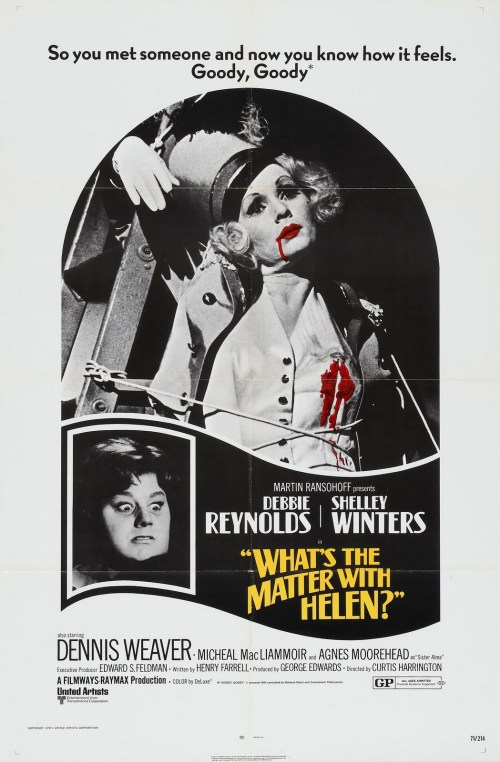
What’s the Matter with Helen? (1971)

whats-the-matter-1

By Richard Winters

My Rating: 6 out of 10

4-Word Review: Religious lady goes crazy.

Adelle (Debbie Reynolds) and Helen (Shelley Winters) are two mothers whose sons commit a gruesome murder. Once the two men are convicted the women decide to move across the country, change their names and open up a dance studio. Adelle meets a handsome bachelor (Dennis Weaver) who is full of money, but Helen’s fortunes don’t improve. Instead she wallows in depression while receiving threatening phone calls, which gets her paranoid that someone is out to get them. She tries to seek solace through her religion, but eventually the stress becomes too much and her psychic begins to crack.

The screenplay was written by Henry Farrell famous for penning the novel What Ever Happened to Baby Jane?, which later became a big screen success. Unlike that one this was written directly for the screen and misses the textured richness of a backstory specifically how the two women first met or how their friendship blossomed.

On the visual level it starts out well and I enjoyed the use of old news reel footage to help introduce the story, but after that it goes into a lull with long, talky takes that fail to generate much excitement. The recreation of the 1930’s setting looks cheap and stagy and the film lacks a cinematic flair to help compliment it’s campy storyline. Originally director Curtis Harrington had implemented visual effects to be used in the transitions between the scenes, which would’ve helped immensely, but the producer hated them and forced them to be taken out.

On the acting end I felt Reynolds was rather boring and stuck playing a character that isn’t very interesting, which made me surprised that she put up $800,000 of her own money just to get it produced. The showy role is clearly Helen’s and Winters plays the part quite well and becomes the film’s main attraction. Usually she would take-on flamboyant-type characters, but this one required her to be more subdued and repressed and she is able to do it magnificently, which only proves what a gifted and versatile performer she was.

There are a few edgy but brief bits including the shot of a dead body that has been run over by a farm plow, which has some pretty good bloody effects. However, the shot showing a close-up of the women’s body who was the victim of the two sons isn’t effective because it supposedly gets posted in a newspaper as a lead in to the article about the crime, but no mainstream publication either then or now would print such a gruesome picture of a victim.

There were also several provocative scenes that got excised in an effort to the attain the GP rating, which included a shot of Winters kissing Reynolds on the lips as well as a murder scene that was originally intended to be much more drawn out than what it ends up being. The film’s final shot though is still well done and probably the only thing that makes sitting through this worth it.

My Rating: 6 out of 10

Released: June 30, 1971

Runtime: 1Hour 41Minutes

Rated GP

Director: Curtis Harrington

Studio: MGM

Available: DVD

Peeper (1976)

peeper-4

By Richard Winters

My Rating: 6 out of 10

4-Word Review: Searching for client’s daughter.

Leslie C. Tucker (Michael Caine) is a British private eye working in L.A. who gets hired on by an eccentric client named Anglich (Michael Constantine) to find his long lost daughter that was born 24 years ago and now resides he believes somewhere in Hollywood. Tucker tries following the skimpy clues and this leads him to a beautiful woman named Ellen (Natalie Wood) who he believes just may be that daughter and not even know it, but the closer he gets to some answers the more questions he has to tackle as well as being chased by a pair of hoods (Timothy Carey, Don Calfa) who are out to stop him.

This film is based on a novel by Keith Laumer with a screenplay written by W.D. Richter and directed by Peter Hyams. With such talented people involved you’d think this would’ve been a winner, but it bombed at the box office and I’m not completely sure why. The ingredients are there, but the oversaturation of private eye parodies during the ‘70s could’ve gotten this one lost in the shuffle.

The film though is filled with snappy dialogue and some highly amusing voice-over narration by the Tucker character. There are also unique scenes including a car chase that takes place amidst a major traffic jam and a cool foot chase sequence down a long, winding spiral staircase. I also loved the scene where Tucker is trapped in a car with an angry dog outside only for him to miraculously turn-the-tables on the animal where he gets outside while the dog ends up stuck in the vehicle. The best moment though is at the beginning when actor Guy Marks does his impersonation of Humphrey Bogart while standing in a dark alley and reciting the opening credits instead of having them shown on screen.

As much as I love Michael Caine I found him to be wrong for this role. If you’re going to do a light parody of old school private eye films then you have to cast someone in the lead that would reflect to some degree Bogart. It certainly doesn’t have to be an impersonator, but someone that is from Brooklyn and has a New York mentality as opposed to a transplanted Englishman with a British accent.

Wood is equally miscast. This was her first theatrical feature in 7 years and she turned down a role in The Towering Inferno to do this one and I’m not sure why. The part is rather small and offers little range in either acting or character development and with everything else that goes on in the story she ends up getting forgotten though it does have a foreboding quality in that the final segment involves her on a boat and near water.

The mystery itself ends up being the worst thing. It’s too intricate and filled with so many rapidly paced twists that it becomes almost impossible to follow. The action is enough to keep it interesting, but as a compelling plot it fails. I also wasn’t too crazy about the title. The working title was ‘Fat Chance’, which I didn’t like either, but peeper is slang for a private eye who takes a lot of photographs, which this detective doesn’t do at all.

My Rating: 6 out of 10

Released: January 6, 1976

Runtime: 1Hour 27Minutes

Rated PG

Director: Peter Hyams

Studio: 20th Century Fox

Available: DVD, Amazon Instant Video

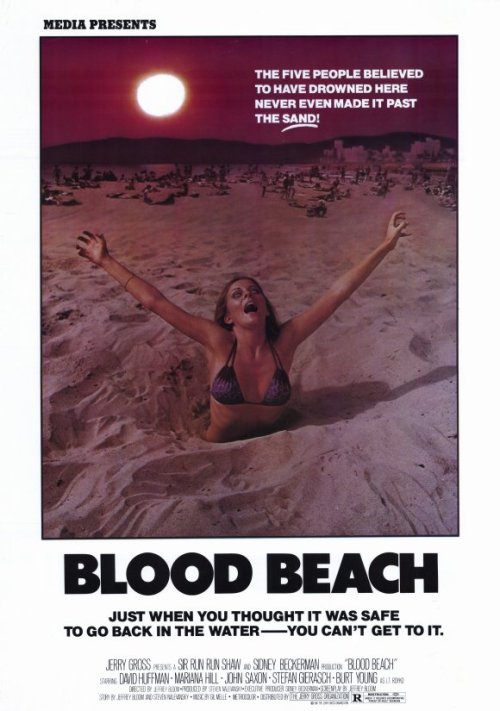
Blood Beach (1981)

blood-beach-1

By Richard Winters

My Rating: 3 out of 10

4-Word Review: Beachgoers get sucked away.

Something is lurking beneath a Southern California beach and it’s not human. People and even animals are being sucked underneath the sand and disappearing, never to be found again. Lifeguard Harry (David Huffman) tries to do some investigating while starting up a relationship with the daughter (Marianna Hill) of one of the victims, but his efforts prove futile, so the police are called in, but do no better.

One of the nice things about this movie is that unlike most other horror films from that era it actually has a pretty decent budget and distinctive music score. The beach location, which was filmed at Santa Monica, makes for a pleasant diversion from the usual horror settings and the one thing I came away liking most about the movie.

Huffman, who ended up becoming a homicide victim himself in real-life only a few years after this was filmed, is bland to the point of being completely forgettable. However, the much more talented supporting cast gives the film some life. John Saxon is great as a brash and gruff police captain. Burt Young and Otis Young are amusing as police detectives with completely contrasting styles with Otis playing an amusing extension to the character that he did in The Last Detail where he tries earnestly to reel in his more undisciplined partner.

The film’s weak point is the second act that stalls without enough new twists being brought in. Seeing people constantly being swallowed up by the sand becomes monotonous and it takes way too long before we finally get an understanding to what is causing it. The film also has some quick cutaways showing what happens to the people once they are underneath the sand, which looks like it was spliced in from a cheaper film stock with tacky special effects that may simply be a product of the ‘Complete and Uncut’ version that I saw, but should’ve been avoided.

The attempt at doing a Jaws formula storyline on land instead of the water doesn’t work and only helps make the original seem all that much better. Had this been done as a parody might’ve helped it.

Spoiler Alert!

The biggest letdown is the ending that never fully explains what this creature is and only gives the viewer a brief glimpse of it during the film’s last few minutes, which is disappointing. The story then goes full circle by showing the sand ready to swallow up more unsuspecting beachgoers while making the viewer feel like they’ve wasted 90 minutes of their time watching a film that doesn’t progress anywhere.

End of Spoiler Alert!

My Rating: 3 out of 10

Released: January 28, 1981

Runtime: 1Hour 25Minutes (‘Complete’ cut)

Rated R

Director: Jeffrey Bloom

Studio: Compass International Pictures

Available: DVD

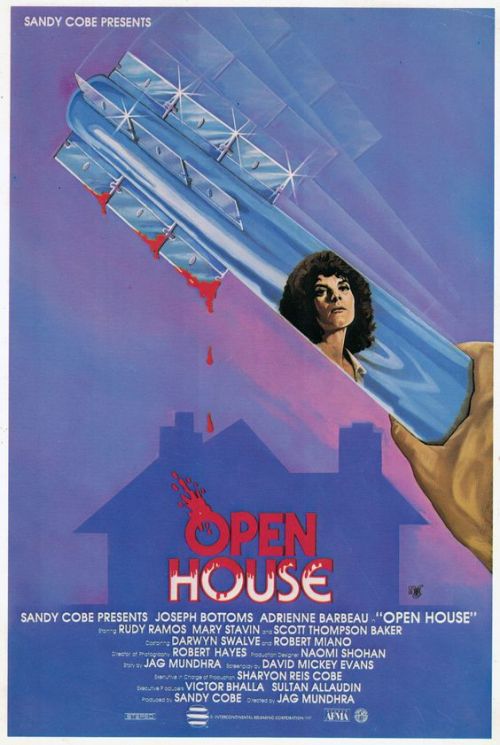
Open House (1987)

open-house-1

By Richard Winters

My Rating: 0 out of 10

4-Word Review: Selling homes is murder.

Real Estate agents throughout southern California are turning up dead and no one has a clue as to who’s doing it. Then late night radio talk show host Dr. David Kelley (Joseph Bottoms) starts getting calls from a man who identifies himself as being the killer. David and the police try to track the man’s calls before David’s girlfriend Lisa (Adrienne Barbeau), who just so happens to be a real estate agent herself, becomes the killer’s next victim.

By the late ‘80s slasher films were starting to become more like dark comedies with some of them even being outright parodies, which is what I initially thought this one was going to be. There are some comical touches at the beginning before it completely devolves into the tired old slasher film cliché. No scares or tension and a storyline that plods along at a snail’s pace. The identity of the killer and his backstory is lame and the film’s generic synthesized sounding music score is not a good fit for a horror movie.

Barbeau, who is the former wife of horror director John Carpenter and has done alright starring in films from this genre before, gets stuck with some really bland material here and has little to work with. Apparently she only took the part to help pay for her son’s tuition. Bottoms, whose career never blossomed like his older brother’s, was clearly on the down slide when he took this one and his presence adds nothing.

There’s one good murder involving the killer hacking off the fingers of one of his victim’s with a shot showing the fingers wiggling on the floor before the killer, for whatever reason, puts them into his pocket. The camera also stays locked on the victim’s dead bodies longer than what is usual including having it focus on a dead woman’s corpse hanging by its neck from a rope for what seems like several minutes. I might even give it a point for being the first horror film that has a killer who wears dentures and at one point he even takes them out, but overall this thing lacks imagination or inspiration. It was directed by Jag Mundhra who went on to do a lot of Bollywood films and I don’t think he had a true passion or interest in horror movies as his direction is quite mechanical and the overall production falls agonizingly flat.

open-house-2

My Rating: 0 out of 10

Released: October 1, 1987

Runtime: 1Hour 35Mintues

Rated R

Director: Jag Mundhra

Studio: Intercontinental Releasing Corporation

Available: VHS

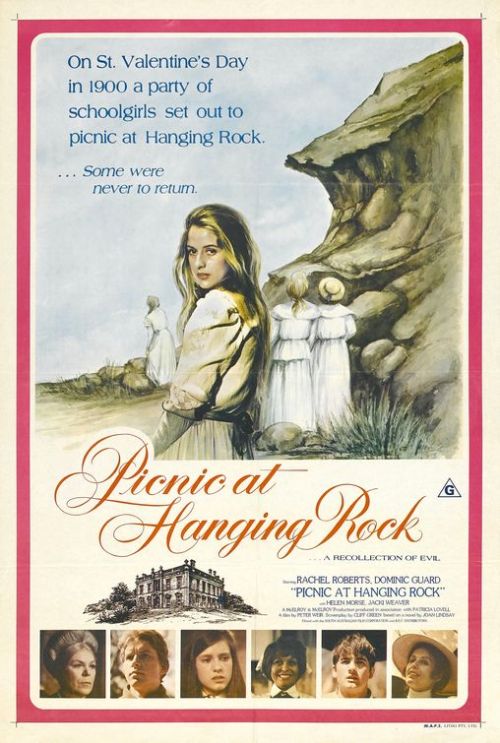
Picnic at Hanging Rock (1975)

picnic-at-hanging-rock-1

By Richard Winters

My Rating: 6 out of 10

4-Word Review: Where are the schoolgirls?

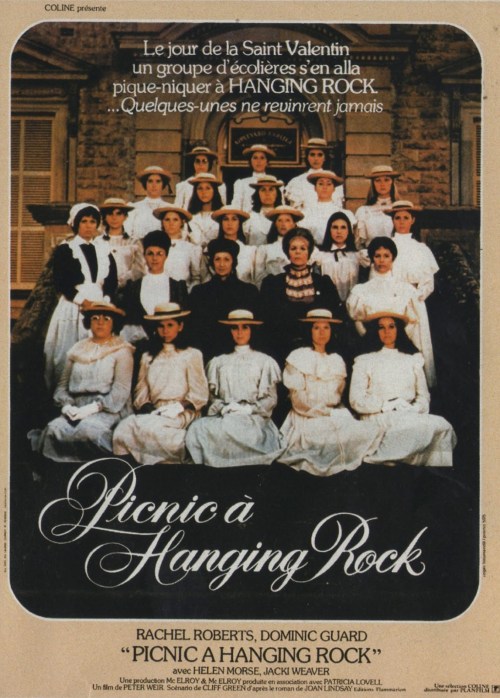
On Valentine’s Day in the year 1900 a group of Australian schoolgirls and two teachers (Vivean Gray, Helen Morse) set out to a rock formation known as Hanging Rock for a picnic. While there one of the girls named Miranda (Anne-Louise Lambert) decides to go exploring and three of the other girls follow. They proceed to climb the rocks, which frightens one of the girls (Christine Schuler) who runs back. By that evening the other three haven’t been located and a search party goes out by the local police to find them, which only leads to more questions than answers.

If one is in to mood pieces then this thing will be the perfect fit. The music and director Peter Weir’s ability to capture the rock formations in a way that makes them seem creepy and menacing is very well done. I found myself being strangely captivated most of the way while also impressed that the whole thing gets captured through a camera lens with a piece of bridal veil hung over it.

The story is based on the 1967 best-selling novel of the same name by Joan Lindsay. Despite many rumors to the effect and a follow-up novel called ‘The Murders at Hanging Rock’ this was not in any way based on a true story. Originally Lindsay wrote a resolution to the mystery that had the girls entering into some sort of time warp, but at the last minute that chapter was excised at the suggestion of her publisher, but then later published in 1987 as ‘The Secret of Hanging Rock’.

picnic-at-hanging-rock-2

The film on the other hand offers no resolution of any kind. Instead like in the book the main emphasis is on how the disappearance affects the people at the school and in the town. Rachel Roberts is a standout in this area playing the strict headmistress Mrs. Appleyard who initially comes off as quite composed and in control, but as the toll of the mystery continues her character unravels in increasingly more shocking ways, which is the film’s highlight.

Despite its cult following and the fact that it is included in the book ‘1001 Movies You Must See Before You Die’ I still came away frustrated and feeling like not enough happened to justify having to sit through two hours of viewing. On the technical end it is excellent and watching the different ways people cope and respond to the mystery is interesting, but this could’ve been played up a lot more.

Sometimes movies with vague endings are good as life doesn’t always give us nice and tidy wrap-ups, but this is one instance where it would’ve been better had there been more of a conclusion even if it had just thrown out some clues and then allowed the viewer to come to their own deductions. To some extent it does this as supernatural elements are introduced as well as the idea that it might’ve been a sexual crime, but even this is off-putting because it’s not connected to anything concrete or tangible and thus makes it all the more evasive.

Had this been based on an actual mystery, which for years is what a lot of people thought, then it would’ve been more acceptable and even fascinating, but the fact that it’s all made up hurts it and tears away the mystique that for a long time it relished under.

picnic-at-hanging-rock-3

picnic-at-hanging-rock-4

My Rating: 6 out of 10

Released: August 8, 1975

Runtime: 1Hour 47Minutes (Director’s Cut)

Rated PG

Director: Peter Weir

Studio: The Australian Film Commission

Available: DVD (Criterion Collection), Blu-ray (Region B/2), Amazon Instant Video, YouTube

picnic-5

This is a 2014 pic of Anne-Louise Lambert, who played Miranda in the film, sitting at the location of where the movie was filmed.

Fletch Lives (1989)

fletch lives

By Richard Winters

My Rating: 6 out of 10

4-Word Review: Reporter inherits a mansion.

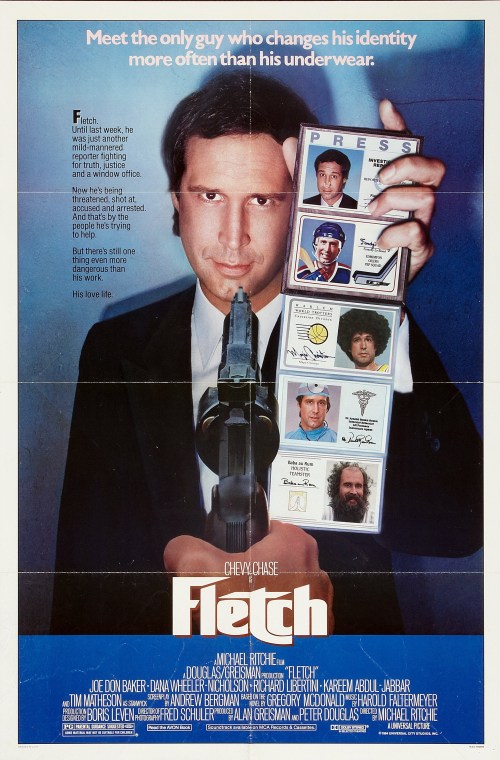
Fletch (Chevy Chase) who writes for a Los Angeles newspaper under the byline of Jane Doe, receives to his surprise an inheritance of an old southern mansion. He immediately travels to the place while quitting his job in the process. The building is in bad shape, but he finds that he is receiving a generous offer to sell it, which makes him curious. Instead of taking the offer he does some research and finds that the property is a dumping ground for dangerous chemicals and that people are more than happy to murder him and others in order to keep them quiet about it.

The first film was based on a novel by George Macdonald, but this story was written directly for the big screen and the mystery is uninspired and obvious. Chase’s detached persona and acerbic wit gets put to a real test here. One scene has him discovering that the woman who he has just spent the night with is now dead, but he shows no shocked reaction at all making him seem almost inhuman. He then decides to smart-off to the police when they arrive to investigate even though any sane/half-way intelligent person would realize that would just get them into even more trouble, which it justifiably does here.

The character also has an unrealistically massive-sized ego especially in regards to his job and the arrogant way that he deals with his boss (Richard Libertini) acting almost like he is above the rules and can come and go whenever he pleases without having to answer to anyone. Now this behavior to some extent could be more justified if he was writing under his own name and had a large fan following, but to the readers he is just ‘Jane Doe’ and for all they know he is a woman instead of a man. In either case he could easily be replaced by another reporter writing under the same byline and no one would notice or care, which makes his entitled attitude completely out-of-line and one that should have gotten him fired long ago.

There is also no explanation to what happened to the Gail character, which was played by Dana Wheeler-Nicholson. The first film ended with the two of them supposedly falling-in-love, but in this film she has completely disappeared. Now the first installment came out 4 years earlier and a lot of relationships don’t last that long, so it’s possible that they simply broke-up and moved-on, which is fine. However, in this movie her character gets replaced by one who looks just like her (Julianne Phillips) and she falls-in-love with Fletch in much the same way making the plotline seem highly formulaic and like they are simply replacing one blue-eyed, blonde bimbo with another.

The humor is generic and juvenile although I’m ashamed to say I did find myself chuckling at some of it. The best moment is a take-off on The Song of the South that comes complete with animation and by far the film’s one and only inspired moment.

The action sequences are flat. In the first film there was an exciting car chase, which was passable, but here we get treated to a motorcycle chase that goes completely off the believability meter by having Fletch do stunts that no one with limited driving experience would try nor survive.

The supporting cast is wasted especially Hal Holbrook in a part that is completely beneath his talents. However, I did get a kick out of R. Lee Ermey. He gained a major cult following from his performance as a tough sergeant in Full Metal Jacket and gets cast here as a TV-evangelist, which I found interesting.

My Rating: 6 out of 10

Released: March 17, 1989

Runtime: 1Hour 35Minutes

Rated PG

Director: Michael Ritchie

Studio: Universal

Available: DVD, Amazon Instant Video, YouTube

Fletch (1985)

fletch 1

By Richard Winters

My Rating: 5 out of 10

4-Word Review: Reporter has many disguises.

Irwin ‘Fletch’ Fletcher (Chevy Chase) works as a newspaper reporter writing articles under the byline of Jane Doe. While working on a story involving drug dealing at a nearby California beach he gets approached by Alan Stanwyck (Tim Matheson) who offers him a large sum of money to kill him. It seems that Mr. Stanwyck has been diagnosed with cancer and has only a short time to live. He wants Fletch to ‘put him out of his misery’ by entering his home at a certain day and time and offing him while making it look like it was just a random robbery gone bad. Initially Fletch agrees to do it, but then begins to do some research on Mr. Stanwyck and finds things just don’t add up.

Out of all the characters that Chase has played this one best suits his talents and personality. His deadpan delivery has always been his major selling point and this part takes full advantage of it while accentuating his smart-ass persona and minimizes the silly pratfalls, which were never funny anyways. The first half clicks nicely and it’s great to have a main character whose personal life is a realistic struggle as he lives alone in a depleted looking apartment complex and bitterly avoiding a divorce lawyer (George Wyner) representing his wife who cheated on him.

The plot is genuinely intriguing and had me hooked. Unfortunately the story takes on too much as it also continues to incorporate elements of the drug dealing at the beach story, which makes things too convoluted especially since the murder-for-hire scheme gets complex enough. The overblown idea to somehow tie both story threads together at the end is a misfire and an overreach. The ultimate explanation for why Stanwyck wanted Fletch to kill him is really lame and a big letdown.

The film is also too long and the humor loses its edge as it progresses. The idea that this reporter would so cleverly be able to infiltrate hospitals and businesses in order to get the information that he wanted is hard to believe and it would have come off better had his profession been a private investigator instead. Chases’s insubordinate behavior towards his boss (Richard Libertini) including at one point even giving him the one-finger-salute is pretty outrageous and would most assuredly get anyone else in the same circumstance fired and deservedly so. I was also unhappy with the portrayal of the cops as they are all shown to be corrupt, abusive and vulgar. Yes I realize there are bad cops out there, but there are also a lot of good ones too and this film makes no attempt to balance that.

Chase gets featured in every scene, so if you are not exactly a fan of his your tolerance will certainly be tested. The film does feature a plethora of familiar faces in minor roles many of whom are wasted although I did enjoy Geena Davis as Fletch’s faithful assistant.

My Rating: 5 out of 10

Released: May 31, 1985

Runtime: 1Hour 38Minutes

Rated PG

Director: Michael Ritchie

Studio: Universal

Available: DVD, Blu-ray, Amazon Instant Video, YouTube

The Last Wave (1977)

last wave 2

By Richard Winters

My Rating: 6 out of 10

4-Word Review: Suffering from strange premonitions.

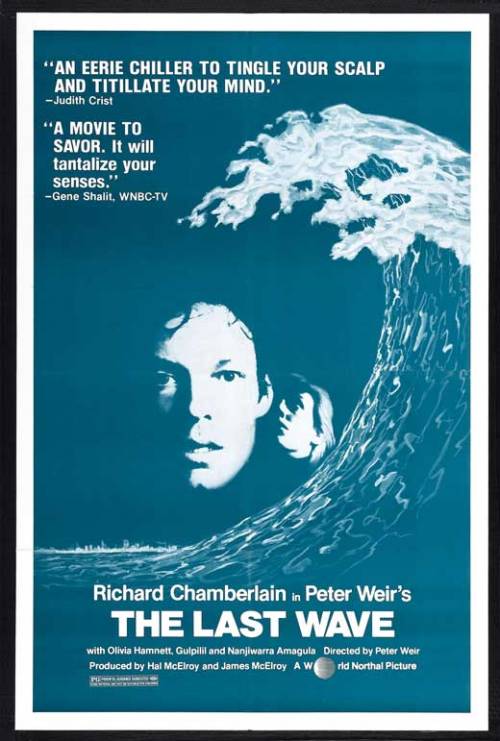
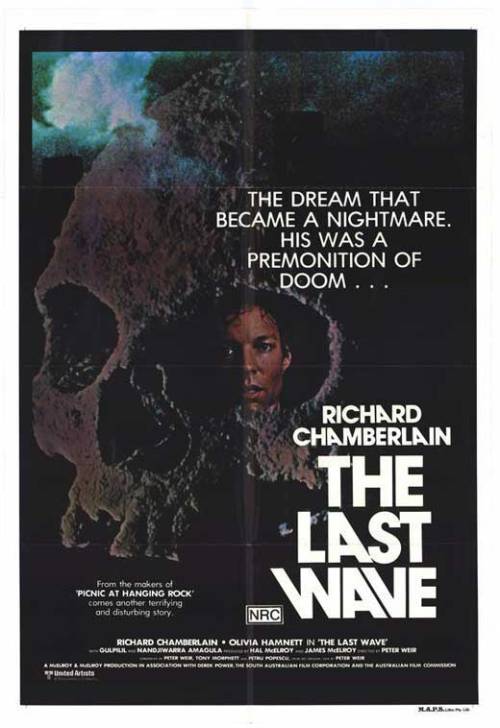
David Burton (Richard Chamberlain) is a lawyer working in Sydney, Australia who is hired to defend some aborigines that have been accused of murder. David’s specialty is taxation law and he feels overwhelmed in this new role, but still takes it on with an earnest dedication, but in the process begins to experience strange dreams and even sees one of his clients, Chris (David Gulpilil), in them. This coincides with weird weather events that begin occurring all over the continent including the phenomena of black rain. David can’t help but feel that somehow this is all connected and after doing extensive research finds that tribal aborigines have a belief system involving what they call dreamtime in which spirits from another world communicate with us through our dreams and David has been the chosen recipient due to his lifelong ability to dream of events in his sleep that eventually occur later in real-life.

The film, which is directed by the gifted Peter Weir, has terrific imagery that almost makes-up for its other shortcomings. There have been a lot of movies that have tried to create creepy nightmare segments, but the ones here work much better than most and gave this viewer an effectively spooking feeling. The silhouette of the aborigines in the pouring rain, the shots of a large seismic wave and use of tribal music all get used to ultimate effect. Even the rain storms become fascinating to watch. None of them were actual ones, but instead large firehoses were employed along with giant fans to create a sort-of surreal stormy effect that actually looked better than the real thing.

The story though borders on being convoluted and would’ve worked better had the movie been given a longer runtime. The first hour is spent with the viewer seeing a lot of strange events that make no sense and are given no explanation. It is only after about an hour in that some expert, who’s given no formal distinction to what their line of study is or degree, explains to David the importance that dreams have to the aborigine culture, which helps tie things together, but this should’ve occurred earlier as some viewers will probably find it too confusing and off-putting otherwise.

Chamberlain is his usual bland self, but okay in this type of role as it doesn’t demand anyone who is colorful. The character though is supposed to be this very pragmatic individual, but he seemed to buy into the mystical qualities of the aborigine belief system much too quickly. A person with a practical approach to life would most likely be quite cynical to the events as they first occurred and even reluctant to base any value on his own nightmares, at least initially.

The ending is a major letdown. For one thing we have the main character inside an ancient sacred site beneath a sewer system where he suddenly has to start ‘thinking out loud’ by explaining what he is seeing on the drawings along the wall even though the viewer could’ve figured this out for themselves without the ‘narration’. The ambiguous conclusion is frustrating and makes sitting through the rest of it feel like a big waste of time.

last wave 1

My Rating: 6 out of 10

Released: November 13, 1977

Runtime: 1Hour 45Minutes

Rated PG

Director: Peter Weir

Studio: Cinema International Corporation

Available: DVD (Criterion), Blu-ray (Reg. B), Amazon Instant Video

The Jogger (1988)

Capture 81

By Richard Winters

My Rating: 5 out of 10

4-Word Review: Jogging can be deadly.

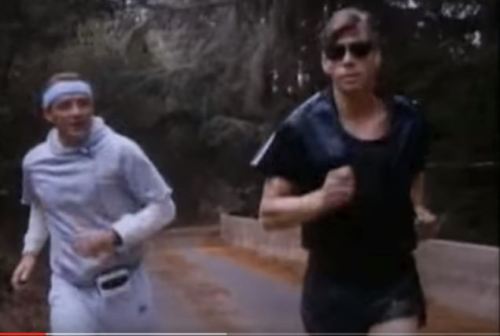
Jerry (Terry O’Quinn) is a high-strung businessman with a type A personality who has been told by his doctor to take up jogging to help relieve is stress and improve his health. Like with everything else he goes overboard with it. Jogging excessively until it becomes like a second job. One day while out on another one of his morning runs he comes upon another jogger (Tom Morga). Jerry decides to challenge the man to a race and he ends up winning it making him feel quite vindicated, but the other jogger does not take kindly to losing. He begins to chase Jerry around the park while attempting to stab and kill him. When Jerry is finally able to make it back to his house he realizes that the jogger has followed him and he continues with his assault. In fact wherever Jerry goes the jogger follows making him believe that he will not be able to get rid of him unless he fights back.

For a low budget short film this isn’t too bad. The editing and camerawork is crisp and professional. We get a good idea of Jerry’s character in a short amount of time and it’s great seeing O’Quinn in an early role. The action is exciting and there is enough tension to keep it interesting. There are even a few genuine unexpected jolts and a surprise ending.

The story initially seems original, but as it progresses you realize that it is just another retelling of the classic ‘The Twilight Zone’ episode entitled ‘The Hitch-Hiker’ in which the Inger Stevens character is constantly hounded by a mysterious hitch-hiker who turns up wherever she goes. The surreal elements that get thrown into this thing don’t help and I would’ve liked something that had stayed more realistic and been more subtle. Yet it’s still enjoyable enough for its short running time and some may find the scenario to be more creative than I did.

My Rating: 5 out of 10

Released: 1988

Runtime: 25Minutes

Director: Robert Resnikoff

Available: None at this time.

Who Killed Mary Whats’ername? (1971)

who killed mary 2

By Richard Winters

My Rating: 3 out of 10

4-Word Review: Who killed the prostitute?

Mickey (Red Buttons) is a retired diabetic boxer who is appalled to learn that a prostitute was killed in her apartment and no one seems to care. He decides to do the investigation himself and even moves in to her old place. He inquiries about her amongst the locals and begins to get a few leads including that of a young filmmaker named Alex (Sam Waterson) who may have inadvertently filmed her leaving with her eventual killer. Soon Mickey’s grown daughter Della (Alice Playten) and Val (Conrad Bain), a man he meets at a bar, are helping him in his quest, but the things they learn only reinforce how unpleasant and dangerous a hooker’s life can be.

I commend the attempt at taking a gritty look at a seedy lifestyle and its open-minded approach to the women who are in it, but the film’s poor execution makes the whole thing come off as quite amateurish and even laughable. Why a man in his 50’s would become so obsessed with finding the killer of a woman he has never known and only reads about in a newspaper is quite hard to fathom. There are probably hundreds of prostitutes that share similarly sad fates, so why get so revved up about this one? The fact that he is able to get his grown daughter and another man he meets randomly at a bar to help him investigate seems equally unbelievable and the way they are conveniently able to find clues and connect-the-dots before solving the case comes off as too easy.

The action sequences, especially the opening one in which we see the prostitute getting killed, are poorly staged and filled with chopping editing that makes it hard-to-follow and phony looking. When the 50-year-old Buttons takes on a gang of young bikers, which are led by Earl Hindman who later became famous for playing the neighbor on ‘Home Improvement’ whose face was always obscured by a fence, it becomes downright silly. Sure the Buttons character has a background in boxing, but that still doesn’t mean he can take on four guys who are twice his size and the sound effects used for the punches are overdone and cartoon-like.

A similar issue occurs when Buttons saves a prostitute from an abusive pimp while Alex films it. The first time this occurs it is mildly diverting, but then when he saves another one, who is being beaten up by some of the old ladies in the neighborhood, it becomes redundant and corny.

The resolution, in which the killer turns out to be someone no one suspected, is flat and forgettable. It is also poorly thought out as he admits to the Buttons character that he killed the two women because he didn’t want any potential witnesses, but then doesn’t bother to kill Buttons or at least make sure he is dead even after he divulges his secret to him. The killer then just casually walks away without ever allowing the viewer to know if he was caught and charged with the crimes.

My Rating: 3 out of 10

Released: November 12, 1971

Runtime: 1Hour 30Minutes

Rated GP

Director: Ernest Pintoff

Studio: Cannon Film Distributors

Available: None at this time.