Category Archives: Movies with Nudity

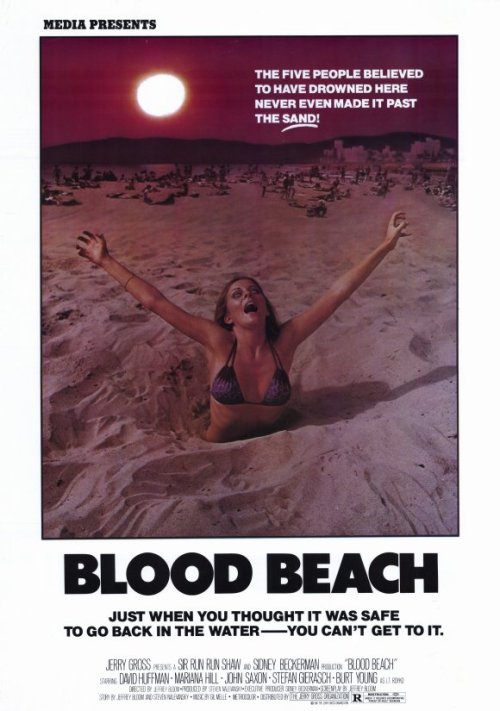
Blood Beach (1981)

blood-beach-1

By Richard Winters

My Rating: 3 out of 10

4-Word Review: Beachgoers get sucked away.

Something is lurking beneath a Southern California beach and it’s not human. People and even animals are being sucked underneath the sand and disappearing, never to be found again. Lifeguard Harry (David Huffman) tries to do some investigating while starting up a relationship with the daughter (Marianna Hill) of one of the victims, but his efforts prove futile, so the police are called in, but do no better.

One of the nice things about this movie is that unlike most other horror films from that era it actually has a pretty decent budget and distinctive music score. The beach location, which was filmed at Santa Monica, makes for a pleasant diversion from the usual horror settings and the one thing I came away liking most about the movie.

Huffman, who ended up becoming a homicide victim himself in real-life only a few years after this was filmed, is bland to the point of being completely forgettable. However, the much more talented supporting cast gives the film some life. John Saxon is great as a brash and gruff police captain. Burt Young and Otis Young are amusing as police detectives with completely contrasting styles with Otis playing an amusing extension to the character that he did in The Last Detail where he tries earnestly to reel in his more undisciplined partner.

The film’s weak point is the second act that stalls without enough new twists being brought in. Seeing people constantly being swallowed up by the sand becomes monotonous and it takes way too long before we finally get an understanding to what is causing it. The film also has some quick cutaways showing what happens to the people once they are underneath the sand, which looks like it was spliced in from a cheaper film stock with tacky special effects that may simply be a product of the ‘Complete and Uncut’ version that I saw, but should’ve been avoided.

The attempt at doing a Jaws formula storyline on land instead of the water doesn’t work and only helps make the original seem all that much better. Had this been done as a parody might’ve helped it.

Spoiler Alert!

The biggest letdown is the ending that never fully explains what this creature is and only gives the viewer a brief glimpse of it during the film’s last few minutes, which is disappointing. The story then goes full circle by showing the sand ready to swallow up more unsuspecting beachgoers while making the viewer feel like they’ve wasted 90 minutes of their time watching a film that doesn’t progress anywhere.

End of Spoiler Alert!

My Rating: 3 out of 10

Released: January 28, 1981

Runtime: 1Hour 25Minutes (‘Complete’ cut)

Rated R

Director: Jeffrey Bloom

Studio: Compass International Pictures

Available: DVD
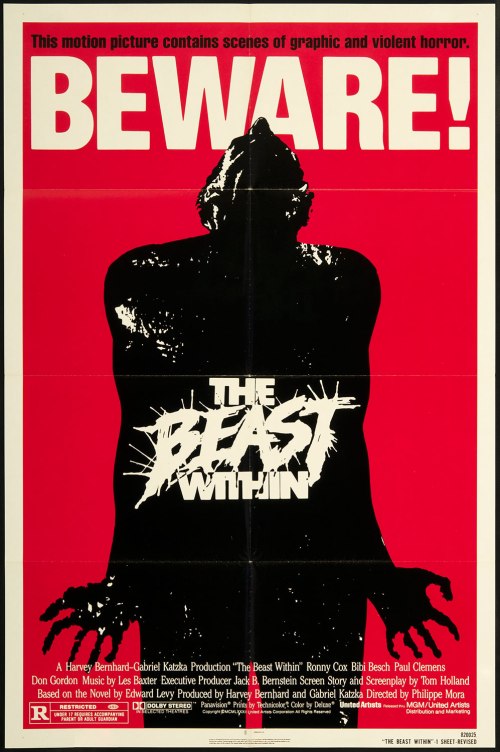
The Beast Within (1982)

beast-within

By Richard Winters

My Rating: 3 out of 10

4-Word Review: Teen turns into monster.

On the night of their honeymoon Eli and Caroline (Ronny Cox, Bibi Besch) become stranded on the side of a road. Eli goes for help while Caroline remains in the car only to end up getting raped by a mysterious beast that escapes from a nearby farmhouse. 17 years later Michael (Paul Clemens), who became the product of that ugly incident, begins to show signs of erratic behavior that doctors are unable to find the cause to. Eli and Caroline decide to go back to Nioba, Mississippi where the assault took place in order to find out who it was that raped her and see if he or his family may have any genetic abnormalities that Michael may have inherited. However, before they can do anything Michael’s condition worsens and he changes into a monstrous, homicidal maniac that resembles the spirit of an abused child that had long ago been buried away by the townspeople.

One of the pluses to this film is its supporting cast that is filled with B-movie regulars who do their best to liven up the proceedings with their eccentric characterizations. Logan Ramsey is a lot fun as the town’s newspaper editor and in some ways proves even more entertaining as a corpse. R.G. Armstrong is good as the town’s physician and I especially liked his squeeze toy. Luke Askew has a few choice moments as an embalmer and Don Gordon, who wears a wig, has a solid bit near the end as a corrupt judge.  John Dennis Johnston as an overprotective father and L.Q. Jones as the sheriff help round it out.

Unfortunately the three leads are boring although I was amused at how much Besch resembles actress Eleanor Parker who was star Clemen’s mother in real-life. Clemens though as an actor is weak and looks too creepy from the beginning especially his eyes which make his transformation into a monster less dramatic and would’ve worked better had he had more of a clean-cut blonde, blue-eyed look.

Tom Holland’s script tries to cover every type of horror niche by treating the viewer to elements of southern gothic, ghost stories, possession, monsters, slashers and gore, which may sound interesting, but eventually becomes overplayed. There are also some loopholes to it that doesn’t quite make sense and the rape segment shouldn’t have been shown right away, but instead used as a flashback later on. Also, Michael is described by his father as being ‘normal kid’ who never showed any signs of odd behavior, but it would’ve been more vivid had we seen him as a regular teen instead of it starting out with him already acting strangely.

The transformation scene in which Michael turns into a grotesque looking creature might actually make you sick to your stomach, but it’s impressive. This was the first film to use air bladders, which were made up of condoms that were connected to air hoses that were put underneath the actor’s face casting and then inflated to give the appearance of the skin ‘bubbling’, which is pretty cool and worth checking out for this scene alone, which is by far the best moment in the movie.

My Rating: 3 out of 10

Released: February 12, 1982

Runtime: 1Hour 38Minutes

Rated R

Director: Phillippe Mora

Studio: United Artists

Available: DVD, Blu-ray, Amazon Instant Video, YouTube

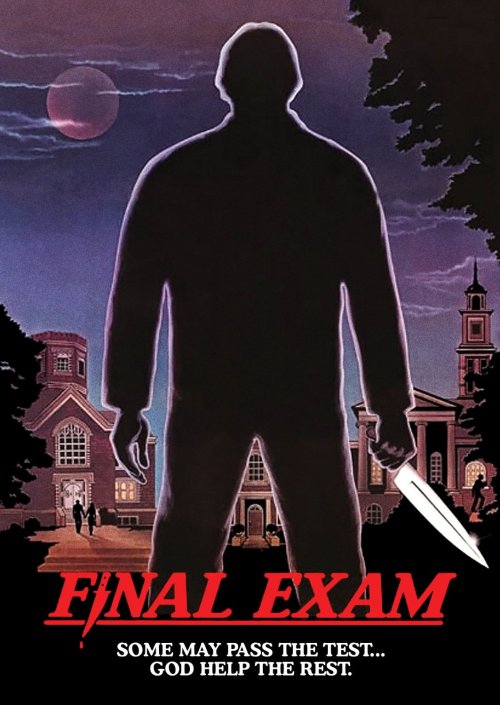
Final Exam (1981)

final-exam-2

By Richard Winters

My Rating: 1 out of 10

4-Word Review: Killer stalks college campus.

A killer (Timothy L. Raynor) is on the loose and stalking a North Carolina college campus. No one knows why he is doing it or who he is, but the body count keeps rising. It’s up to Courtney (Cecile Bagdadi) and her friend Radish (Joel S. Rice) to try and stop him before it’s too late.

I’ll start off with a few of the things that I liked about the movie, which helped set it apart from other slasher films and if it weren’t for the stupid ending I would’ve given it more points. The fact that it takes place on an actual college campus and we are able to see all aspects of it including the dorms, the classrooms and even its cafeteria is a big plus. Too many slasher films have a supposed campus setting, but it never looks like one while this film managed to give me a nostalgic feeling about my own college days and the cast are at the right age group to play the students.

The dialogue between the characters is more amped up here than in the usual ‘80s horror film. This was intentional as writer/director Jimmy Huston wanted more emphasis placed on the characterizations than the gore. Although much of what is conversed about is extraneous and does not help progress the plot it still made the characters seem more human and less like a cardboard caricature.

I was also surprised with a scene involving a group of students pretending to be masked gunmen carrying out a mass shooting on the campus. It later turns out to be a fraternity stunt, but it made the film seem ahead-of-its-time and even prophetic especially with the way the Radish character talks about Charles Whitman and others like him who indiscriminately kills large groups of people for no reason. It was also interesting to see how the characters responded once they found out it was only a joke. Many of the students laugh it off while these days most would be traumatized and when the police respond to the call of a shooting only one officer arrives while today it would’ve been an entire SWAT team.

Spoiler Warning!

The scenes involving the killer are where the film falls apart. For one thing he seems to have superhuman strength even though he doesn’t look to have gargantuan sized muscles. The opening segment has him standing on a car hood as the vehicle is moving and somehow lifting another male body out of the driver’s seat and through the roof with only one hand, which I don’t think would be possible. Also, when he lifts the driver out of the car it stops, which should’ve been enough for the killer, who is still standing on the car hood, to lose his balance and fall down, but he doesn’t.

My biggest gripe though is that we are never given any explanation for why he kills or even any clue to his identity, which makes sitting through this generic thing seem all the more pointless. Granted sometimes the backstories to the killer’s motives can be hooky and fans of this film consider it ‘refreshing’ that this one didn’t have one, but in reality everyone that lives on this planet has a backstory and the characters in movies are supposed to represent real people, so an explanation of some kind is still necessary. If it was just a random killing by a stranger with no connection to the school at the very least give the killer a name, which could’ve been done by the police in the denouncement when they came to survey the crime scene.

It’s quite possible that the filmmakers intended this to be a random killing spree due to the earlier scenes involving the fake mass shootings, which could be considered foreshadowing and Radish’s continual conversations involving the topic of shooters killing people for no reason, which is fine. However, this idea doesn’t completely hold up because there is a segment where Radish finds some dead bodies in a locker room and then runs back to his friend Courtney’s dorm room for help, but the killer is already there waiting for him, which means he would’ve had to have known that these two were friends and which specific dorm room Radish would go back to and thus negating the idea that the killer was just a random stranger.

End of Spoiler Alert!

My Rating: 1 out of 10

Released: June 5, 1981

Runtime: 1Hour 29Minutes

Rated R

Director: Jimmy Huston

Studio: Motion Picture Marketing

Available: DVD, Blu-ray

Pieces (1982)

pieces-1

By Richard Winters

My Rating: 0 out of 10

4-Word Review: Cutting up the coeds.

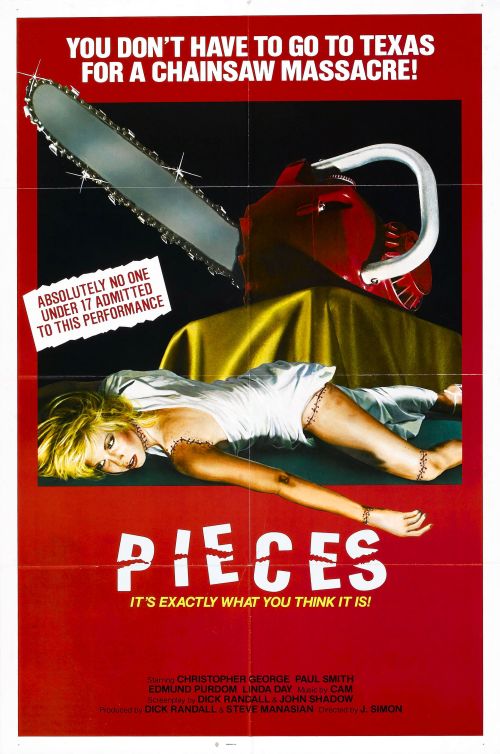
This review will be the first of many in which we celebrate October by reviewing all horror movies for the entire month. The film we look at today has managed to gain a strong cult following and deals with a Boston area college that is under attack by an elusive killer who slashes coeds to bits and then uses their body parts to create his personal human-sized jigsaw puzzle.

Horror director Eli Roth describes this film as being one of the top “horror films of all-time” and “the ultimate slasher film” with “the greatest ending in horror history”. Unfortunately I thoroughly disagree with him and was genuinely beginning to wonder if we had even seen the same movie, or if he was just joking. To me it was just another cheaply made horror flick made by a producers looking to cash in on the ‘80s slasher craze by churning out something that is completely formulaic and offers nothing new or imaginative to the genre. The plot is dull and predictable and the scares nonexistent. Even the killer is boring by appearing as this shadowy figure that has no features or distinction. Also, the film’s setting is Boston, but no one speaks with a New England accent and instead just about everyone has a European one.

The opening bit, which supposedly takes place in 1942, is full of anachronistic errors and the other killings, with the exception of the one that takes place on a water bed, fall equally flat. The one that I found particularly ridiculous features a coed, which is played by actress Cristina Cottrelli, who gets killed while swimming in an indoor pool. The killer stands on the edge of the pool and uses a long handled net to ‘catch’ her as she swims and then drags her back towards him. However, the net would be too flimsy for this and if she had given it any resistance at all it would’ve been enough to make the killer to lose his balance and fall into the pool. She also could’ve easily escaped from it by diving beneath the water. The fact that this same net also manages to knock her out is even more absurd although she does manage to regain consciousness only to see the killer coming at her with a chainsaw, but instead of just rolling back into the water for an easy escape, which is literally just inches from her, she instead passively lies there and screams while he hacks her up.

pieces-4

I might’ve given it a few points had the gore been better, but I really wasn’t impressed. There’s lots of quick cutaways before anything much is shown and the body parts were clearly just stuff taken from mannequins and then doused in red paint.

The film got some notoriety at the time for its violence and then was disown by its two stars Christopher George and his wife Lynda Day George who insisted they were unaware that this was going to be a horror film when they agreed to sign on. The truth is they were already doing a lot of horror films before this as their careers were in severe decline and it was the only thing they were being offered. Chances of them thinking this was going to be anything different was slim and they probably were simply reacting to the critical backlash and trying to save what was left of their reputations by ‘disowning’ it even though it made very little difference as George ended up dying from a sudden heart attack just 2 months after its US release.

Edmund Purdom, who was at one time a top European star during the ‘50s should’ve been equally embarrassed and apparently was equally desperate to have signed on. The only other recognizable face is Paul L. Smith who gets stuck with an insignificant role as the maintenance man and uses some over-the-top facial expressions that I found more annoying than funny.

That ‘greatest ending in horror history’ that Roth describes is also really stupid and in fact may be the dumbest part in the film. If you don’t want to read a ‘spoiler’ then look away now although it really doesn’t have anything to do with the rest of the plot anyways, which is the reason why I’m choosing not to give this paragraph my usual ‘spoiler Warning’ alert. Anyways the scene deals with a hand of a dead body suddenly reaching up and grabbing the crotch of the protagonist (Ian Sera), but the corpse was facing away from the character meaning that if it had somehow extended its arm then only the back of the hand would’ve touched the character and no grabbing would’ve occurred. Also, there were no supernatural elements ever introduced into the film, so how then does this body suddenly manage to move anyways?  ‘Surprise endings’ can be fun, but if they make no sense and have nothing to do with what’s occurred before then they become pointless and shouldn’t be added.

Some fans seem to enjoy this for its cheesiness, but for me it was a real chore to sit through and not amusing even on a bad movie level. Even if one makes a party of it by showing it with a group of friends and some beer I don’t see it getting much better.

pieces-5

My Rating: 0 out of 10

Released: August 23, 1982

Runtime: 1Hour 29Minutes

Not Rated

Director: Juan Piquer Simon

Studio: Artists Releasing Corporation

Available: DVD, Amazon Instant Video

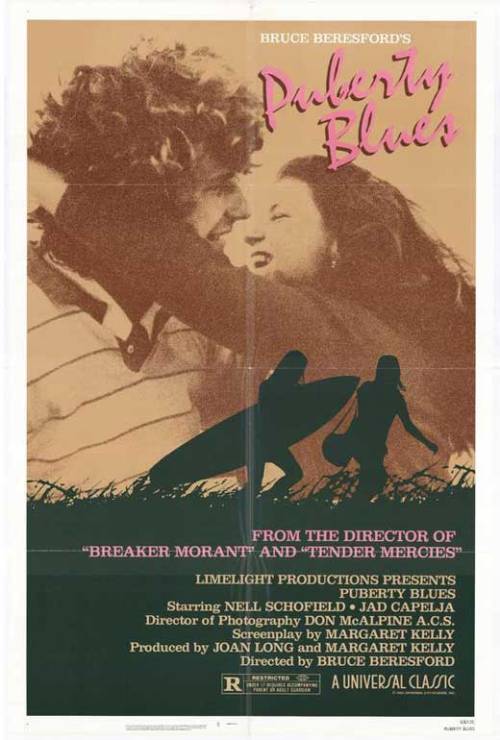
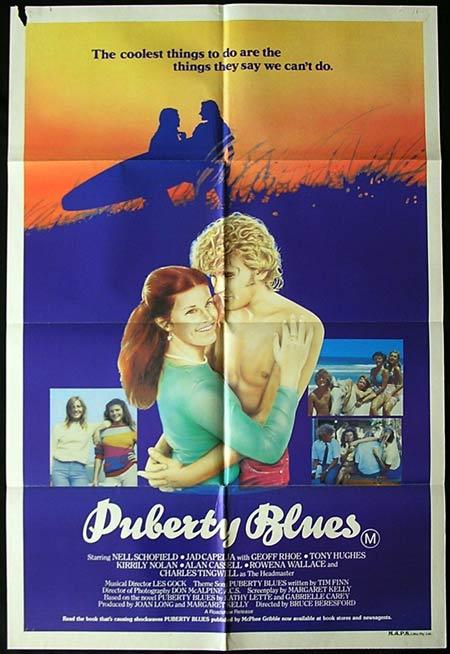
Puberty Blues (1981)

puberty-blues-2

By Richard Winters

My Rating: 6 out of 10

4-Word Review: Girls can surf too!

Debbie and Sue (Nell Schofield, Jad Capelja) are best friends attending high school in the south suburbs of Sydney. They desperately want to fit-in with the surfer group, but find that this means being pressured into having sex and experimenting with drugs and alcohol that starts to take its toll on both their grades and family life. When Debbie thinks she’s gotten pregnant by Gary (Geoff Rhoe) and he responds with indifference she realizes that the surfers aren’t as cool as she thought and pledges to become more independent by trying to do some surfing of her own, which she is told ‘girls can’t do’.

The film is based on the novel by Gabrielle Carey and Kathy Lette who became best friends at age 12 and at 16 began writing stories based on their high school experiences. While attending a writer’s workshop they met Margaret Kelly who worked as a writer in television and was impressed with the girl’s output. She got their stories optioned into a screenplay while the girls went on to write a weekly newspaper column under the byline of The Salami Sisters and their stories were eventually published into a novel. The big change between the movie and the novel is that in the book the girls were only 13 while in the movie it gets upped to 16 since that was Australia’s age of consent.

Director Bruce Beresford ends up tearing away the mystique from teen life in much the same way that he did to suburbia in Don’s Party, which leaves the viewer with a far more caustic take on the high school experience than the Hollywood version, which tends to play up the teen scene like it’s just one big raucous party. Here the cool kids are vapid, crass creatures who are unable to hold any type of interesting conversation. Their parties are lifeless affairs where they aimlessly sit around and get drunk because they have nothing better to do while the sex is shown to be an unpleasant experience for the girls who get pressured into doing it before they’re ready and leave feeling used afterwards.

This was more the way I remembered high school being and I was impressed with the film’s honesty, but the pace is too leisurely and not enough happens. There is some drama when Debbie thinks she is pregnant, but it takes an entire hour just to get there and a comical segment dealing with a goofy fight amongst the surfers, which was not in the book, is completely unnecessary.

The film though does have some funny bits including a scene where Debra brings her boyfriend Bruce (Jay Hackett) over to meet her parents (Kirrilly Nolan, Alan Cassell) as well as the shots showing the interior and exterior of Bruce’s van. This though gets coupled with an uncomfortable moment dealing with a homely girl (Tina Robinson Hansen) who gets tricked into getting into the guy’s van where she is forced into a gang bang before being coldly thrown onto the curb afterwards.

The best part is the ending where the girls grow in confidence and become unafraid at challenging the status quo. Seeing the shocked expressions  of the cool kids as they watch the girls get on surf boards for the first time and succeed at something they were told only guys could do is a treat and makes the rest of the film worth sitting through.

Many years later this movie spawned a TV-series as well as a special that aired in 2012 on Australian TV where Nell Schofield traveled back to the locations where the film was made. Unfortunately her costar Jad Capelja was not present as she had already killed herself in 2010 after spending years battling drug addiction and mental illness.

puberty-blues-1

My Rating: 6 out of 10

Released: December 10, 1981

Runtime: 1Hour 27Minutes

Rated R

Director: Bruce Beresford

Studio: Roadshow Film Distributors

Available: VHS, DVD (Pal Region 0), Blu-ray (Region B/2)

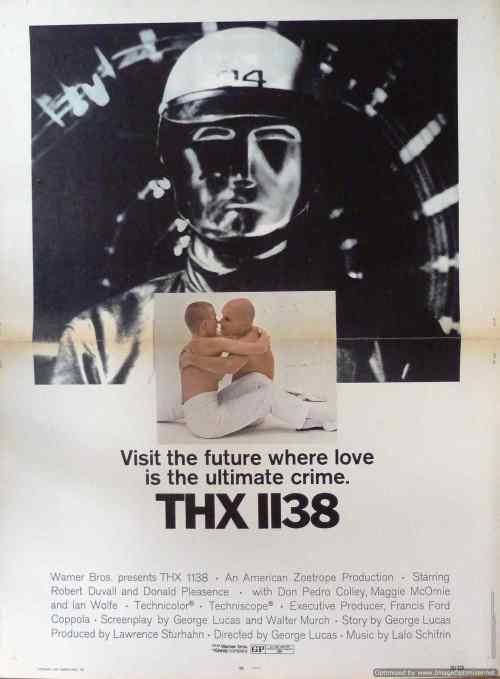
THX 1138 (1971)

thx-1138

By Richard Winters

My Rating: 9 out of 10

4-Word Review: Sex is not allowed.

THX 1138 (Robert Duvall) is member of a futuristic, work camp-like society where everyone has shaved heads, forced to take drugs to control their emotions and avoid having sex, which is forbidden. His days are spent on the production line where he helps build police androids and at night he goes home to an apartment where he rooms with LUH 3417 (Maggie McOmie). She is unhappy with her situation and stops taking the required drugs while replacing THX’s with placebos. The two begin a sexual affair and are promptly arrested. THX is thrown into a modernistic prison that has no walls or bars and he eventually decides to attempt a daring escape with the help of SEN 5241 (Donald Pleasence) and a hologram known as SRT 9 (Don Pedro Colley).

This story is an extension to the student film that director George Lucas made while attending the University of California film school. That film was a 15 minute short entitled Electronic Labyrinth: THX 1138 4EB, which dealt with a man trying to escape from a futuristic world while being chased and monitored by government run computers. It won first place in the 1968 National Student Film Festival and was good enough to gain the attention of Francis Ford Coppola who offered to produce a feature film dealing with the same basic premise, but having more of a background to the character and his reason for escaping.

Reportedly Lucas considers this to be his favorite project and despite the fact that it did not do well at the box office I consider it to be his best stuff as well. The visuals are imaginative and striking and make you feel like you are entering a whole new world unlike any that had ever been created before. I especially liked the prison scenes where the characters are surrounded by nothing but an unending white as well as THX’s medical examination done exclusively by robotic arms. Having the characters framed towards the side of the screen instead of the center while action occurs just out of view helps accentuate the off-kilter vibe and was year’s ahead-of-its-time.

Even though there is very little dialogue or music the sound becomes an integral part of the film by relying on comments made by the androids who tell the people in a HAL-like tone to ‘stay calm’ as well as the state sanctioned god known as OHM who routinely advises his followers ‘to be happy’. The best part though comes when two techs have a casual a conversation while viewing through monitors the torture of THX.

The film is visually groundbreaking and one of the greatest directorial debuts of any director living or dead, but it still comes with a few caveats. One is the fact that the plot relies too heavily on the stereotypical Orwellian view of the future where everything is worse than it is today and people no longer have any individual rights. Yet technology has proven to make life increasingly easier for people and with more freedoms and options, so why would everything suddenly revert the other way? Maybe they were survivors of a nuclear holocaust and this society was humankind’s way of ‘starting over’, but that’s never made clear and it would’ve been nice to at least get a glimpse of the person, or people who were behind-the-scenes with the ultimate authority as well as some sort of backstory.

There is also the fact that everyone in this society needs to be working, but jobs today are increasingly being lost to automation every year and that trend will continue. Certain nations like Finland are already experimenting with paying their citizens a basic salary because there are more people than jobs available.  Citizens of future societies are predicted to have more free time than ever before, so why doesn’t the world in this film follow suit? If this society can build android cops why can’t they also build robots to do the all the other jobs too, which would then allow the humans to have more of an idyllic existence than a workaholic one?

I also wasn’t too crazy about the 2004 digital restoration, which added new special effects and footage. I last saw this film in 2001 and could tell right away that this version had been tampered with. I realize that Lucas has been known to do this with his Star Wars films, but to me it’s as bad as colorization. Why mess with something that is already good? The added computer effects does not ‘enhance’ anything, but instead desecrates the original vision and treats it like it were a video game than a movie.

My Rating: 9 out of 10

Released: March 11, 1971

Runtime: 1Hour 28Minutes

Rated R

Director: George Lucas

Studio:  Warner Brothers

Available: DVD, Blu-ray, Amazon Instant Video, YouTube

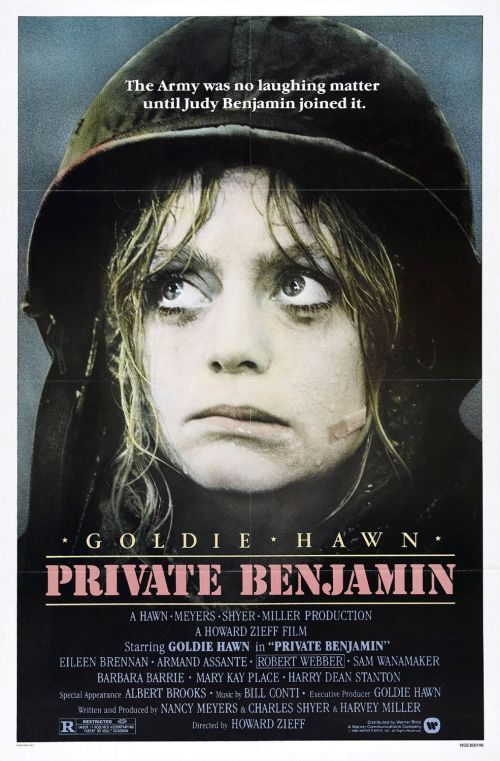
Private Benjamin (1980)

private-benjamin

By Richard Winters

My Rating: 7 out of 10

4-Word Review: She joins the army.

Judy Benjamin (Goldie Hawn) is having a tough time. She is only 28, but has already been married twice. The first time was for 6 years while the second time was for only 6 hours as husband number 2 (Albert Brooks) ended up dying of a heart attack while they made love on their wedding night. Heartbroken she calls into a radio show for advice and gets hooked into joining the army by an unscrupulous recruiter (Harry Dean Stanton) who makes it sound like it would be far more pleasant than it really is. At first Judy has a hard time adjusting to the rigors of a demanding Captain (Eileen Brennan), but eventually she finds new found self-esteem and coping skills that she never would’ve attained in the civilian world.

The film starts out awkwardly and a better scenario about how she joins the army could’ve been thought-up, but once it moves into the training camp segment it gets funny. In fact I would’ve extended these scenes more as it’s the best laugh-out-loud moments in the movie. Kudos also goes out to the editing by Sheldon Kahn who creates sharp transitions that accentuates the humor.

Hawn, who was pregnant with Kate Hudson when she was offered the role and had to go through 6-weeks of basic training to prepare for the part, is excellent in a film that helped bring her career out of the doldrums. In fact I would say this is one of her best roles and I enjoyed how the character becomes more confident and independent as it goes along.

Brennan is terrific as the nemesis and I wished her conflicts with Hawn had been played-up more. The character disappears too soon and manages to return briefly, but isn’t as effective. Her brief romantic encounter with the Craig T. Nelson character should’ve been cut as I saw this woman as being frigid, or even a closet lesbian who was married to the army because that is all she had, which made the scene where Hawn puts blue dye into Brennan’s showerhead seem cruel to me. Yes, she had been mean to Hawn earlier, but that was only because she felt her army career, which again was essentially her whole life, was being threatened and the other women should’ve been more sympathetic to that.

Hal Williams is good in support as the Sargent as is Sam Wanamaker as Judy’s overly protective father. Albert Brooks though is horribly wasted as the second husband and his heart attack is much too quick and mild to be realistic. Stanton is also shamefully underused playing an army recruiter that should’ve been investigated and out of a job for the outlandish misrepresentations that he gave.

The film does go on a bit too long and includes Judy’s romance with the Armand Assante character that seems like a whole different movie, but overall it still works although this has to be the tamest R-rated movie ever. I realize this was before the PG-13 era, but it still should’ve gotten a PG as the only ‘objectionable’ elements consist of the word ‘shit’, which is said once, a simulated sex scene that is brief and done with the characters under the covers and a segment involving the girls sitting around a campfire smoking pot. In fact 9 to 5, which came out that same year and was given a PG rating, had a similar pot scene that was much more extended.

My Rating: 7 out of 10

Released: October 7, 1980

Runtime: 1Hour 49Minutes

Rated R

Director: Howard Zieff

Studio: Warner Brothers

Available: DVD, Amazon Instant Video, YouTube

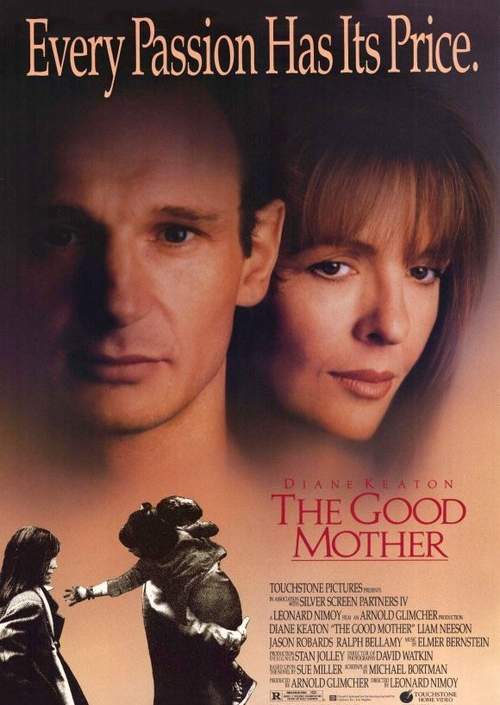
The Good Mother (1988)

good-mother

By Richard Winters

My Rating: 4 out of 10

4-Word Review: She losses her daughter.

Anna (Diane Keaton) is a frigid woman who divorces her husband Brian (James Naughton) of many years and gets joint custody of their 6-year-old daughter Molly (Asia Vieira). After spending some time being single she meets up with an artist named Leo (Liam Neeson) who opens her up to a whole new sexual awakening. Her new liberated lifestyle affects her daughter as well. When Molly catches Leo getting out of the shower naked she inquires if she can touch his penis, which he allows and then later she crawls into bed with the couple as they make love. When Brian hears about this he demands full custody, which pits Anna against Leo as she fights the system to keep her daughter.

Keaton’s performance is the best thing as she plays the mother role for the third time in a decade and the exact reverse predicament of the character that she portrayed just before doing this one where she got stuck with a child that she didn’t want while here she loses one. I enjoyed Neeson’s Irish accent and Vieira is cute while it’s great seeing old-timers Ralph Bellamy and Teresa Wright in supporting roles.

Leonard Nimoy’s direction is solid for the most part. He was just coming off tremendous success with his earlier hit 3 Men and a Baby, so it was nice to see him take a creative challenge by tackling a different genre.  The story’s sensitive subject matter  is handled well including most importantly the scene showing the girl in bed with the two adults although the various other moments showing Anna’s and Leo’s intimacy is a little uncomfortable, but still captured tastefully without ever feeling that it is being overtly erotic.

The film’s biggest failing is the story itself. Although based on the best-selling novel by Sue Miller it doesn’t have enough twists to be compelling or enough of a visual quality to be cinematic. Too much time is spent at the beginning dealing with Anna’s childhood experiences with her cousin Babe (Tracy Griffith) that only has a thin connection to the rest of the plot and could’ve easily been cut and simply alluded to instead. The courtroom scenes lack impact and offer no new interesting revelations. The film also doesn’t bother to show two of the story’s most dramatic moments, which is when Molly tells her father about her experiences with Leo, or when Anna confronts Leo about it later, which to me should’ve been a must.

The ending leaves little impact making me wonder what point the filmmakers where trying to convey, or why a viewer should sit through it especially since it’s not based on a true story and meanders too long just for it to come to a very vague resolution.

My Rating: 4 out of 10

Released: November 4, 1988

Runtime: 1Hour 43Minutes

Rated R

Director: Leonard Nimoy

Studio: Touchstone Pictures

Available: DVD, Amazon Instant Video, YouTube

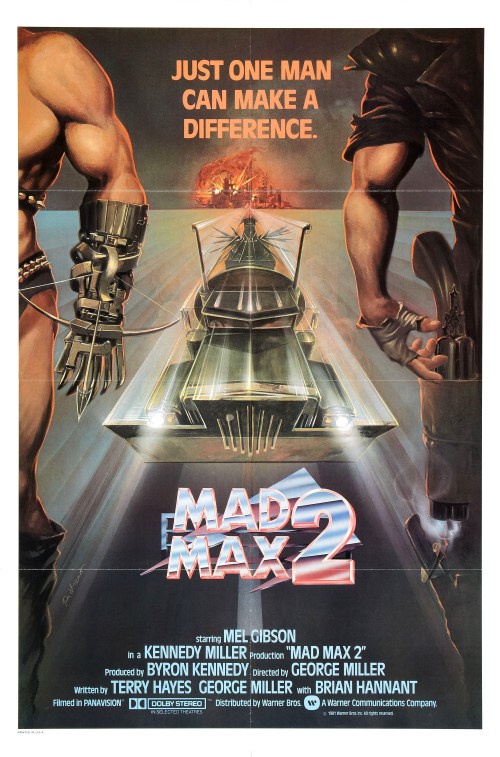
Mad Max 2 (1981)

mad max road warrior 1

By Richard Winters

My Rating: 10 out of 10

4-Word Review: A battle for gas.

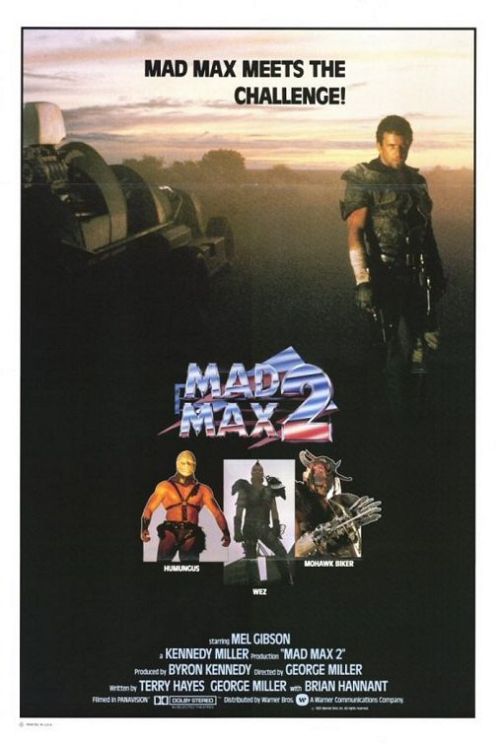
Years after a nuclear holocaust has depleted the planet former rogue cop Max (Mel Gibson) travels the scorched countryside looking for food and fuel. He meets up with a pilot (Bruce Spence) who guides him to an oil refinery that is under attack by a gang of marauders led by Lord Humungus (Kjell Nilsson). Max agrees to help out those trapped inside by driving a tanker truck carrying the fuel out of the refinery and through the makeshift gauntlet, but even he wasn’t prepared for the relentless and violent attack that awaits him.

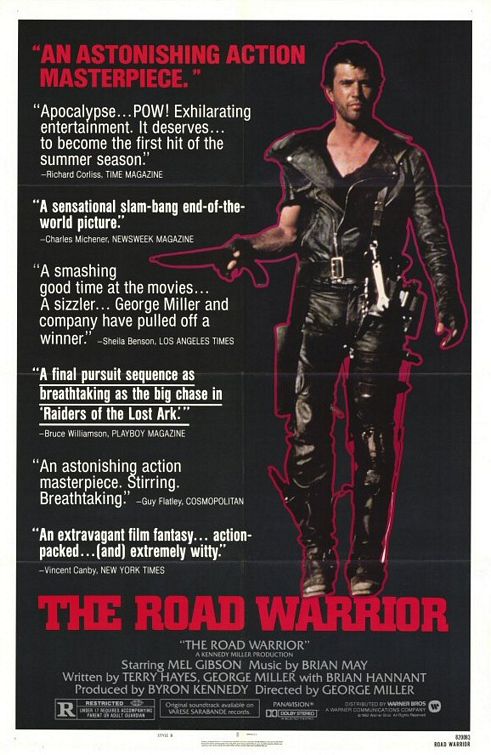
The film is such a massive improvement over the first installment that viewers could just skip that one and go straight to this as it is far more polished and comes off like an epic while the first seemed more like a rough draft done by amateurs looking to get their feet wet. All the problems that I had with the first one get smoothed out here including a good intro that helps explain how the characters got to where they are. Dean Semler’s widescreen photography of the vast, flat desert landscape is outstanding and the violence is far more graphic, although significant portions of it were trimmed to achieve the R-rating, but it still realistically replicates the savage nature of the desperate characters living in a lawless land and willing to do whatever it takes to get what they want.

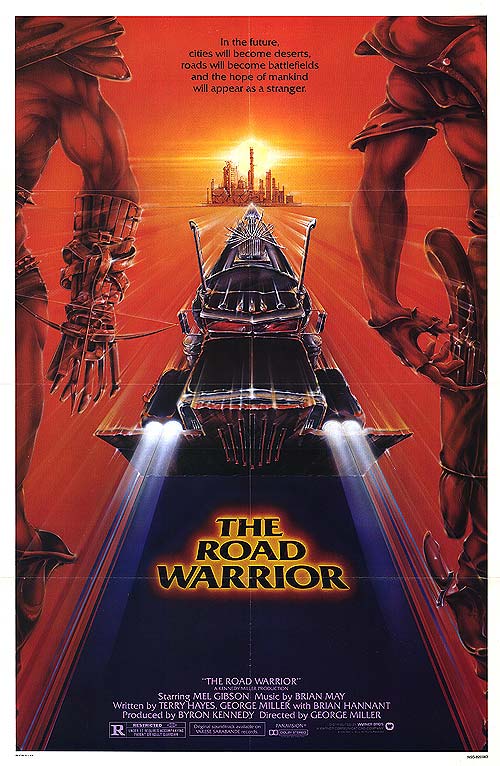
The vehicle chase at the end is one of the best ever filmed. The editing is quick with no ill-advised slow motion sequences or annoying cutaway or close-ups. The action happens just like it would in real-life where everything is split-second. The good guys don’t miraculously avoid injury or death either and in fact there’s enough bloodshed from both sides that you begin to wonder if anyone will make it, which creates far more authentic tension than most action pics. Yet what I really liked was that there were no irritating computerized effects. The vehicles used are all real with expert stunt driving and incredible stunt work that rates as some of the most dangerous ever to be tried on film.

mad max road warrior 2

The only minor letdown is the fact that Gibson’s character no longer has that clean-cut, choirboy image and is now more of the moody, clichéd loner dressed in a getup that doesn’t look much different than the bad guys. The first film had more of an interesting contrast, but here he at least gets partnered with a dog, which the producers managed to save from being euthanized, and a feral boy (Emil Minty) who has a nice ability to throw a mean metal boomerang.

Many critics at the time considered this to be the best action flick to have come out of the ‘80s, but I’d consider this to be quite possibly the best action movie ever made! Absolutely everything clicks from the first shot to the last and remains intense, exciting and gripping even after repeated viewings. However, watching it on the small screen will not do it justice and only broadcasting it in the cinema or a very large screen HD TV will do.

mad max road warrior 3

mad max road warrior 4

My Rating: 10 out of 10

Alternate Title: The Road Warrior

Released: December 24, 1981

Runtime: 1Hour 35Minutes

Rated R

Director: George Miller

Studio: Warner Brothers

Available: DVD, Blu-ray, Amazon Instant Video, YouTube

The Ballad of Cable Hogue (1970)

ballad of cable hogue

By Richard Winters

My Rating: 6 out of 10

4-Word Review: Desperate man finds water.

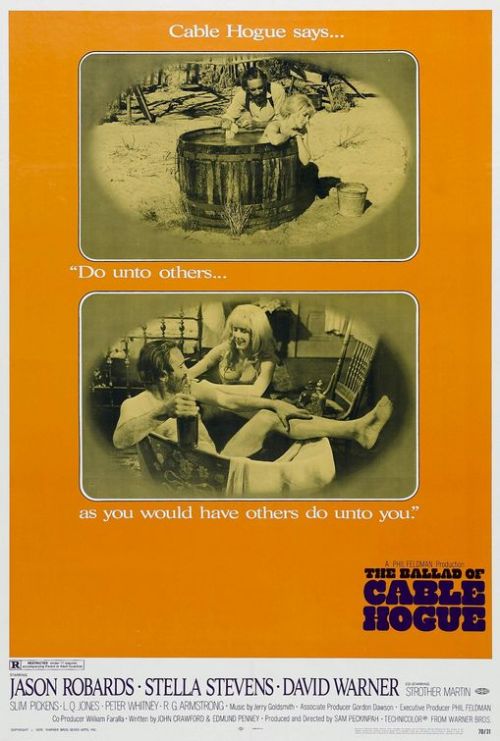
After he is betrayed by his two friends (L.Q. Jones, Strother Martin) and forced to survive in the middle of the desert without the benefit of food, water, a gun or even a horse Cable Hogue (Jason Robards) goes on a mad search for an oasis. After four days in the heat he collapses and just as he is ready to die he suddenly finds water in the most unlikely place. He uses this untapped spring to create a way station for the stagecoaches that travel through the area and becomes quite rich, but deep down he harbors the dark desire to get revenge on the two who wronged him and one day he finally gets his chance.

Theoretically a person can survive up to 4 ½ days, or 100 hours, without water if they are in a climate with a temperature of 72, but in much hotter conditions such as the one shown here it would be far less, so having the character survive like he does seems to be a an extreme stretch, but if you can get past that then the film is quite enjoyable at least at the beginning. The script was written by John Crawford and Edmund Penney who spent the majority of their careers working as character actors in B-movies and this was their one and only foray as writers. The story’s biggest asset is the main character that is expertly portrayed by the gifted Robards. His determination to beat long odds and find success even as he starts from rock bottom should resonate with most viewers and the character’s grit meshes well with director Sam Peckinpah’s perennial theme of rugged individualism.

The addition of David Warner as a dubious minister who helps Cable build his station is excellent and the film could’ve been an engaging buddy movie had it remained at this level. Unfortunately it felt the need to add in a love interest in the form of Stella Stevens, sans make-up, who portrays a whore that takes a liking to Cable. Stevens is not as strong of an actor as Warner and doesn’t know how to carry a scene like he does, so her time in front of the camera is boring and does nothing but bog down the pace while pushing Warner’s character out, which severely hurts the film’s rugged but whimsical chemistry.

Spoiler Alert!

Strother Martin’s character becomes yet another issue. He again gets straddled with the creepy, cowardly bad guy role of which is plays to perfection, but eventually made it seem almost like typecasting. To some extent I was happy to see him become humanized as it went along, but I didn’t like how Cable decides to leave his way station to him instead of the Warner character as he was the one who helped build it. Maybe Cable realized that with the invention of the automobile his station would no longer be prosperous and he would then be sticking Martin with a stinker instead of the goldmine that he thought, which is okay, but then he saves Martin’s life just a few minutes after he was ready to kill him, which became too much of a contradiction.

End of Spoiler Alert!

The film has some funny moments, but I didn’t like the fast motion running as it made it seem too cartoon-like. The numerous potshots at religion and those that expound on it are hilarious and I enjoyed how Peckinpah looks at capitalism from both sides where it is shown to greatly benefit an individual who is able to take advantage of a market demand, but also how it can coldly abandoned that same person the second that demand goes away.  The first 40 minutes are great, but then the story loses steam with comical moments that become too drawn out and have little to do with the main story as well as a protracted ending that really fizzles.

My Rating: 6 out of 10

Released: March 8, 1970

Runtime: 2Hours 1Minute

Rated R

Director: Sam Peckinpah

Studio: Warner Brothers

Available: DVD, Amazon Instant Video, YouTube