Category Archives: Movies with Nudity

Stork (1971)

By Richard Winters

My Rating: 6 out of 10

4-Word Review: Outcast falls in love.

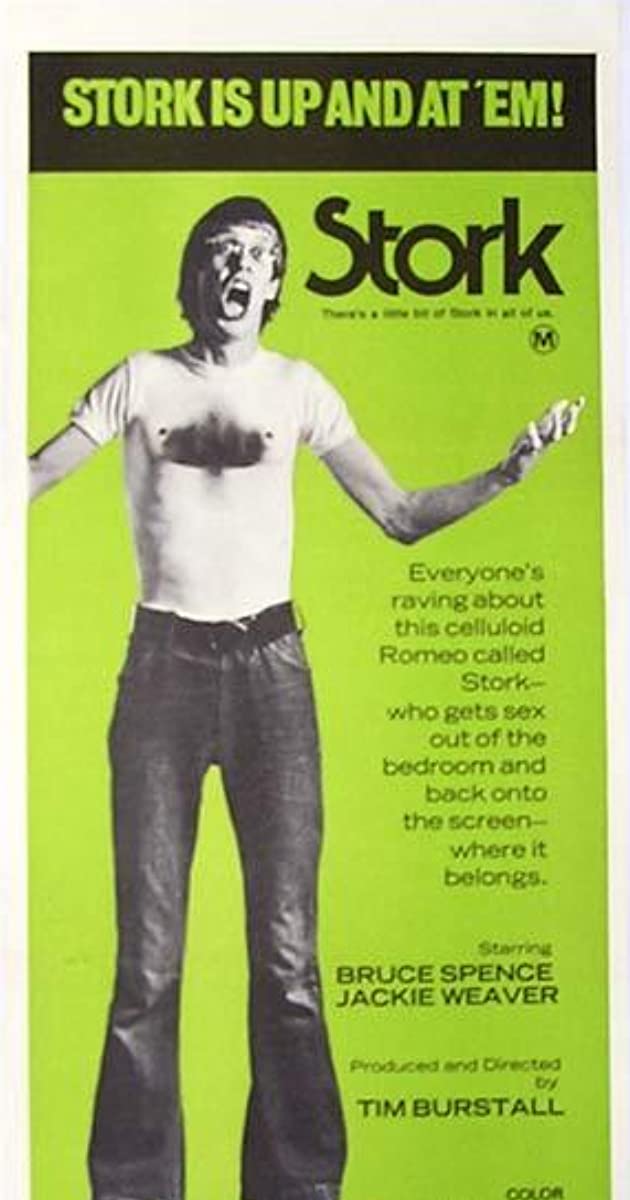
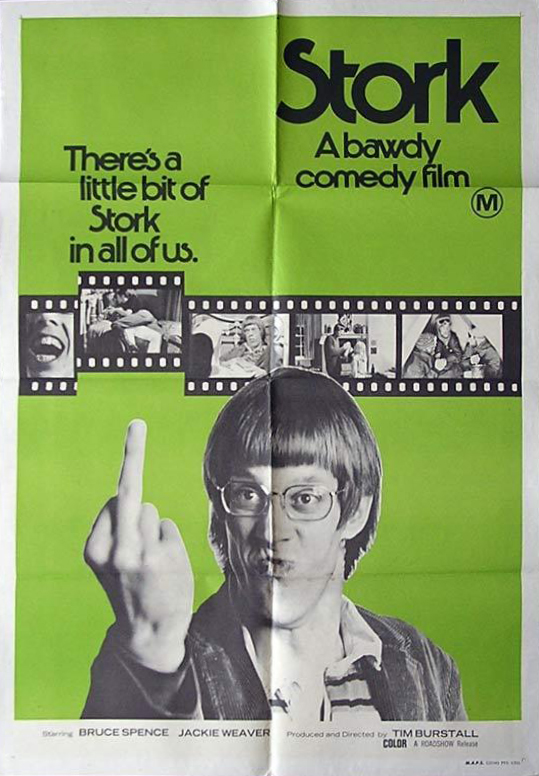
Graham (Bruce Spence), who goes by the nickname Stork, is a rebellious left-wing radical who finds working to be an impediment to his time and freedom and therefore is routinely fired. After losing his most recent job by doing a striptease in the office he’s allowed to move-in to his friend Westy’s (Graeme Blundell) apartment, which he also shares with Clyde (Helmut Bakaitis), Tony (Sean Myers) and Anna (Jacki Weaver). Anna is promiscuous and sleeps interchangeably with both Clyde and Tony, and on rare occasion, even Westy. Stork wants in on the action, but Anna is more concerned with finding him a job instead eventually though they have sex only to have Anna inform everyone that she is pregnant, but nobody knows whose baby it is.

The film was a landmark in Australian cinema in that it became the first box office success in Aussie history and cemented the idea that domestic films made in Australia could find an audience. Before that most Australian theaters only showed movie from Britain and Hollywood, so this film and its success helped usher in what became known as Australia’s New Wave. This was also the first film written by the prolific David Williamson, which he states was an autobiographical account of his own life and based on the hit play ‘The Coming of Stork’, which also starred Spence.

The funniest aspect of the film is simply Spence himself, whose tall, gangling body and freakish looking face gives the movie its necessary edge. He initially wanted to quit during the production as he felt he wasn’t right for the part nor ready to take on the pressures of movie acting, but director Tim Burstall convinced him to stay, which is good as the movie wouldn’t have worked without him. Weaver is also quite enjoyable playing a more subdued personality, which is in complete contrast to Stork’s, which is what makes their relationship intriguing.

I enjoyed the dream-like segments where Stork imagines himself working at different alternative jobs with the best one being the one he does in Antarctica, but the film is unable to maintain the fast pace style that was needed for the quirky material to work. Too many long, drawn-out segments in-between the fantasy moments that does nothing, but drag the whole thing down. The story is unfocused with too much time spent on Stork looking for a job while the relationship angle get pushed to the side until the third act.

The characters are not well defined either. Stork is certainly a rebel, but what made him become this way? It would’ve helped had we learned more about his relationship with his family and is upbringing, but that never comes. Anna’s sleeping around is quite unconventional particularly doing it with men who live together, but we’re never given much insight to what makes her tick, nor how the men accept this behavior as most, especially during that era, would be possessive and not keen with ‘sharing’ a girl with their friends, but why they’re so opened-minded is never made clear.

Spoiler Alert!

The ending, which has Anna getting married to Clyde, but letting Stork tag along creating another threesome scenario, leaves open too many unanswered questions. It would’ve been nice had more been shown of this new arrangement and whether it was able to work-out, but since it doesn’t it becomes an unsatisfying character study.

My Rating: 6 out of 10

Released: December 27, 1971

Runtime: 1 Hour 25 Minutes

Not Rated

Director: Tim Burstall

Studio: Roadshow Films

Available: DVD (Region 4 Import, Out-of-Print)

Killer’s Delight (1978)

By Richard Winters

My Rating: 2 out of 10

4-Word Review: Detective tracks down killer.

Inspired by the Ted Bundy case the film centers around Danny (John Karlen) a middle-aged man with mommy issues who wears different disguises in order to entice young women into his rundown old van where he then promptly assaults and kills them. Vince (James Luisi) is the police detective who, despite having an affair with Carol (Susan Sullivan), is also a dedicated family man with a teen daughter himself and who spends his waking hours trying to track down this killer that the rest of the cops in his department seem almost ambivalent about.

The film tries to take a different approach from the exploitive nature of other 70’s thrillers by emphasizing more the police work than the actual killings although there’s still moments of nudity and violence. The main problem is that the detective work that gets shown and the clues that he finds isn’t all that interesting and comes along a little too easily. At one point Vince breaks into the suspect’s house without a warrant, but any good defense attorney would have any evidence seized during an illegal search thrown out and a competent cop would know this. I also found it hard to believe that Vince would be the only policeman pursuing the case as I’m sure with the media pressure there’d be a whole department working on it much like in the real Bundy case that even included a network of police departments in several states.

The killings are very routine and ultimately comes-off like the same scene get replayed over-and-over again with each new victim that comes along. It seemed hard to believe that any rational person would want to get into such a junky van driven by such a creepy-looking guy anyways. Bundy at least was handsome and in many cases feigned a disability like pretending he had sprained his arm and wearing a sling, which would then make his intended victims feel more at ease, but the guy here doesn’t do any of that. The ultimate explanation for what motivates him to do what he does is straight out of the Norman Bates book of psychology and is cliched as hell. With the real Bundy it was much more complicated and to some extent no convenient explanation at all other than he may have simply been ‘wired wrong’ from birth.

The film’s only bright spot is Susan Sullivan, who looks quite beautiful here, but even she ended up getting on my nerves when her character stupidly forgets to lock her front door allowing the killer to easily walk right into her apartment. What kind of idiot, knowing that she is a mark for the killer and fully aware that he knows where she lives, would forget to do this?

Overall this is just a sleazy excuse for entertainment that is no better than the myriad of other grade-B schlock out there and in some ways is even worse because it pretends to take a more elevated approach to the potentially exploitive material, but it really doesn’t and it’s also painfully predictable at every turn.

Alternate Titles: The Dark Ride, The Sports Killer

My Rating: 2 out of 10

Released: August 7, 1978

Runtime: 1 Hour 25 Minutes

Rated R

Director: Jeremy Hoenack

Studio: Intercontinental Releasing Corporation

Available: DVD

Fair Game (1986)

By Richard Winters

My Rating: 7 out of 10

4-Word Review: Woman harassed by poachers.

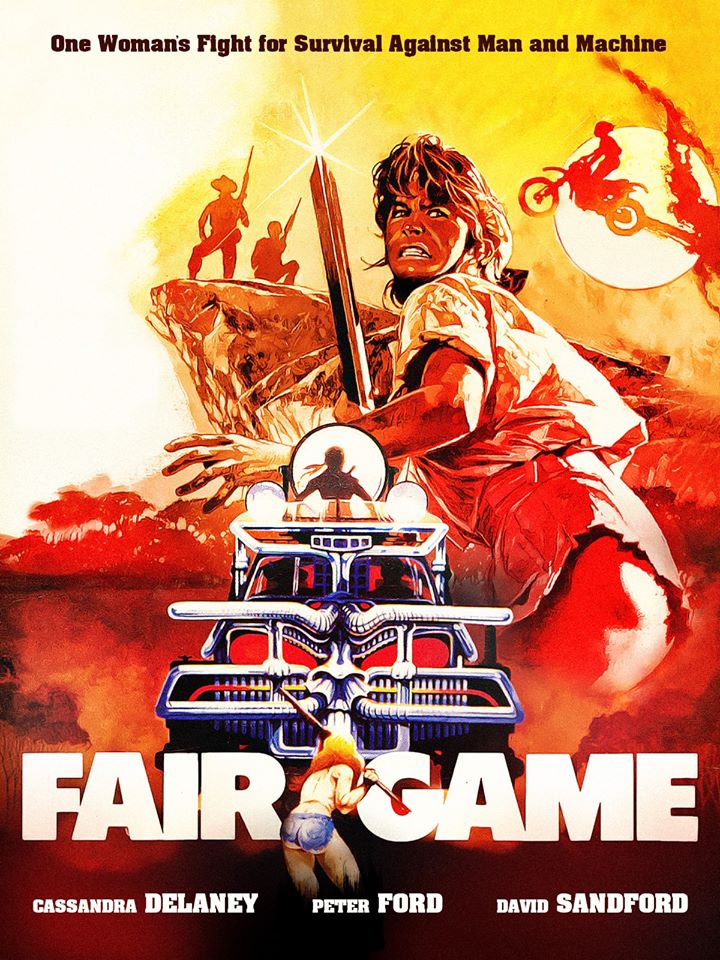
Jessica (Cassandra Delaney) runs an animal sanctuary deep in the heart of the Outback. Sunny (Peter Ford), Ringo (David Sandford), and Sparks (Gary Who) are three big-game hunters, who grow bored shooting at kangaroos and set their sights at taking on some of the animal’s inside her property. They decide that Jessica herself may fun to ‘toy’ with too and begin a campaign of harassment that starts with them trying to run her car off the road with their big truck and just proceeds to get more violent and confrontational. Jessica though is determined to turn-the-tables on them even as the stakes against her survival grow continually more dim.

This is the type of film that right from the start goes against the rules of conventional storytelling as there’s very little character development or backstory. The viewer is immediately thrust into the battle while barely even knowing who these people are. Normally, I’d say it should’ve slowed up a bit and let us get some grounding before getting smacked with the action, but honestly in this instance it really wasn’t needed. You get enough of the general idea to know who to root for and the more violence that happens the more enthralled you get with it.

This is how many real crime happen where the perpetrators attack their victim out of nowhere and without warning giving the person very little time to think and forcing them to immediately respond to the danger without being able to ponder their options and in that regard this film, which was intended to be, by admission of the director, nothing more than a ‘comic book’ adventure actually does quite well. Usually I’d like a chance to catch my breath, but here any minor slow-up makes you feel off-kilter as it’s the action that propels it and the whole thing becomes more like an ‘experience’ than a movie.

Many have labeled this as Australia’s version of I Spit On Your Grave, but this is actually better. The different ways that the men terrorize our protagonist is far more interesting than the gratuitous rape that took up so much of the other one. While the men are at times a bit stupid I did like their relentless quality. They don’t get killed off as easily as in a Hollywood film. There were many times when I thought they should’ve been doomed, but they manage to survive it, which made me start to believe they might actually win the battle and thus allowed the tension to grow even higher.

Cassandra, who gained fame by being a co-singer with her mother Lorraine in a rock ‘n’ roll band called The 50’s and then later ended-up marring singer/actor John Denver, is quite good though I initially felt there needed to be more of an arc to her character. Perhaps having her be more timid at the start only to eventually bring out her warrior nature at the end as she’s a little too self-assured right from the beginning, but overall I came to believe it wasn’t necessary. I did think though it was unrealistic that she ran this sanctuary in the middle of nowhere, but didn’t own a gun, but ultimately having her tote a big rifle might’ve looked cliched and it also forces her to come up with creative ways to get rid of the bad guys, which is ultimately more intriguing.

The Outback gets used perfectly as the viewer gets both charmed by it’s beauty and terrified by some of the creatures that live in it including the weird lizard-like things that congregate on Jessica’s front porch and that she’s forced to shoo-away each morning when she walks out. The desolate landscape is also a good metaphor to the men’s soulless nature and also helps heighten the odds to just how alone and desperate Jessica’s situation truly is.

My Rating: 7 out of 10

Released: July 24, 1986

Runtime: 1 Hour 26 Minutes

Rated R

Director: Mario Andreacchio

Studio: CEL Film Distribution

Available: DVD, Blu-ray (Region A/B/C)

The Emerald Forest (1985)

By Richard Winters

My Rating: 6 out of 10

4-Word Review: Amazon tribe kidnaps boy.

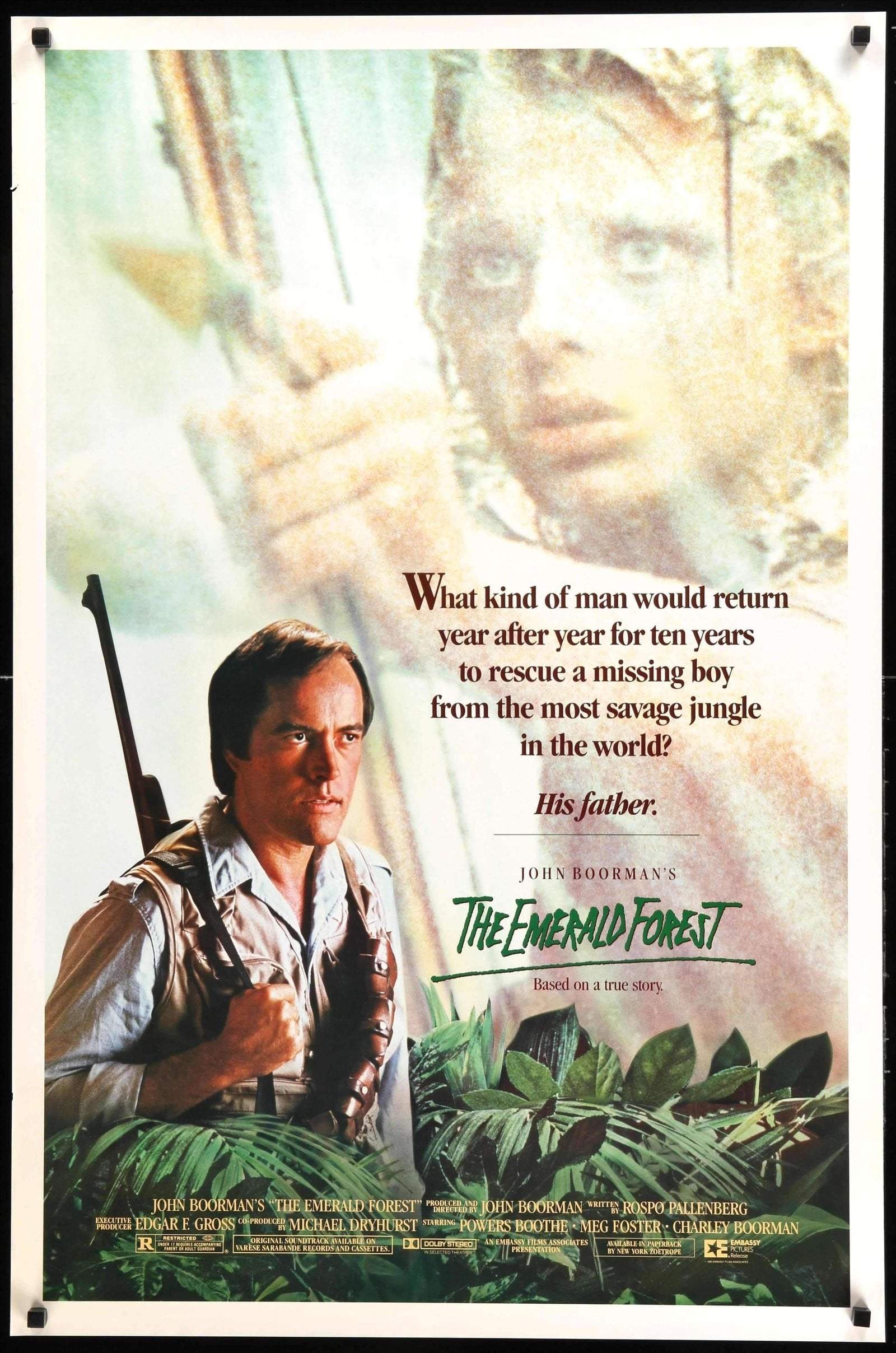
Bill (Powers Booth) is a hydro-electric engineer who’s designed a dam that’s being built deep in the jungle of the Amazon. One day while he’s having a picnic outside with his wife Jean (Meg Foster) and daughter Heather (Yara Vaneau) he notices his son Tommy (William Rodriguez) wandering off. He tries to catch up with him, but not before the child gets snatched away by an Indian tribe known as the Invisible People. Bill spends the next 10 years searching for him, but to no avail. Meanwhile Tommy (now played by the director’s son Charley Boorman) has grown into a man and become a full-fledged member of the tribe, but before he can marry the beautiful Kachiri (Dira Paes) he must retrieve some sacred stones in a remote spot of the jungle. It is there that he comes into contact with his father, who is still searching for him. The two bond once again and work together to escape the clutches of The Fierce People another native tribe that is violent and cannibalistic.

The film is loosely based on two true stories. The first one is an article printed in October, 1972 in the Los Angeles Times, which was read by the film’s scriptwriter Rospo Pallenberg, having to do with a Peruvian boy who had been kidnapped by an Indian tribe and when found 16 years later he didn’t want to leave as he, by that time, had become fully assimilated in it. The second one deals with the autobiographical novel from 1971 in which the author, Manuel Cordova-Rios, details his account of being kidnapped by an Amazon tribe in the early 1900’s as a boy and how he eventually grew to become a member of that tribe.

On a technical level director John Boorman achieves the same type of success that he had with Deliverance where the vivid on-location shooting makes the viewer feel fully immersed in the setting to the extent that you think you’ve physically traveled to another part of the planet. The chase sequence in which the protagonists must battle their way through a dense underbrush to escape an enemy that hides behind the foliage and that they can’t see is also quite similar to the one in Deliverance, but in many ways more exciting. The film also has a very strong masculine theme where the women are seen very little and in the case of Meg Foster get completely wasted.

My main issue is that the kidnapping segment happens too quickly and the boy’s transition into the tribe is too unrealistically seamless. I would think a kid at that age, he seemed to be around 10, would’ve been horrified about being taken away from his parents, the only family he had ever known, and yet the film glosses completely over the adjustment angle and makes it seem like it was no big deal.  The parents devastation at losing a son gets handled in the same shallow way where after the kidnapping occurs the story immediately jumps to 10 years later without every showing any of the grieving process that the family most assuredly would’ve had and in some ways unintentionally makes it seem like they were able to move-on with their lives without much problem.

The story does have its share of riveting moments, if you’re patient, with the best parts coming when the two tribes go to battle with each other, but the film unwisely straddles the fence between reality and fantasy. I don’t mind a fantasy if it’s that way all the way through, but this one tries to sneak it in at ill-advised times. The scene that got me is when Tomme goes searching for his father in the big city and even though he doesn’t know where his father lives he’s able to connect with some sort of Indian spirit that shows him a vision of his father’s condo and he uses that to find it, but that vision never gives him a specific address, so I’d think he’d remained just as lost and confused.

Spoiler Warning!

I didn’t care for the double ending either. Having the film finish after the father helps Tommy fight off the Fierce People and save the tribal women from a life of prostitution was good enough, but then tacking on Tomme again praying to his Indian spirits to create massive rain storm that damages the damn was too much. It also becomes a bit preachy with its denouncement about environmentalism making it seem more like a political propaganda piece and less like a feature film. Casting Boorman’s son Charley in the lead was a mistake too as his constant wide-eyed, deer-in-headlights expression becomes monotonous. The part was originally intended for C. Thomas Howell and while he may not be the greatest of all actors he still would’ve been a better pick here.

My Rating: 6 out of 10

Released: July 3, 1985

Runtime: 1 Hour 54 Minutes

Rated R

Director: John Boorman

Studio: Embassy Pictures

Available: DVD

Deadly Hero (1975)

By Richard Winters

My Rating: 6 out of 10

4-Word Review: Bad cop stalks witness.

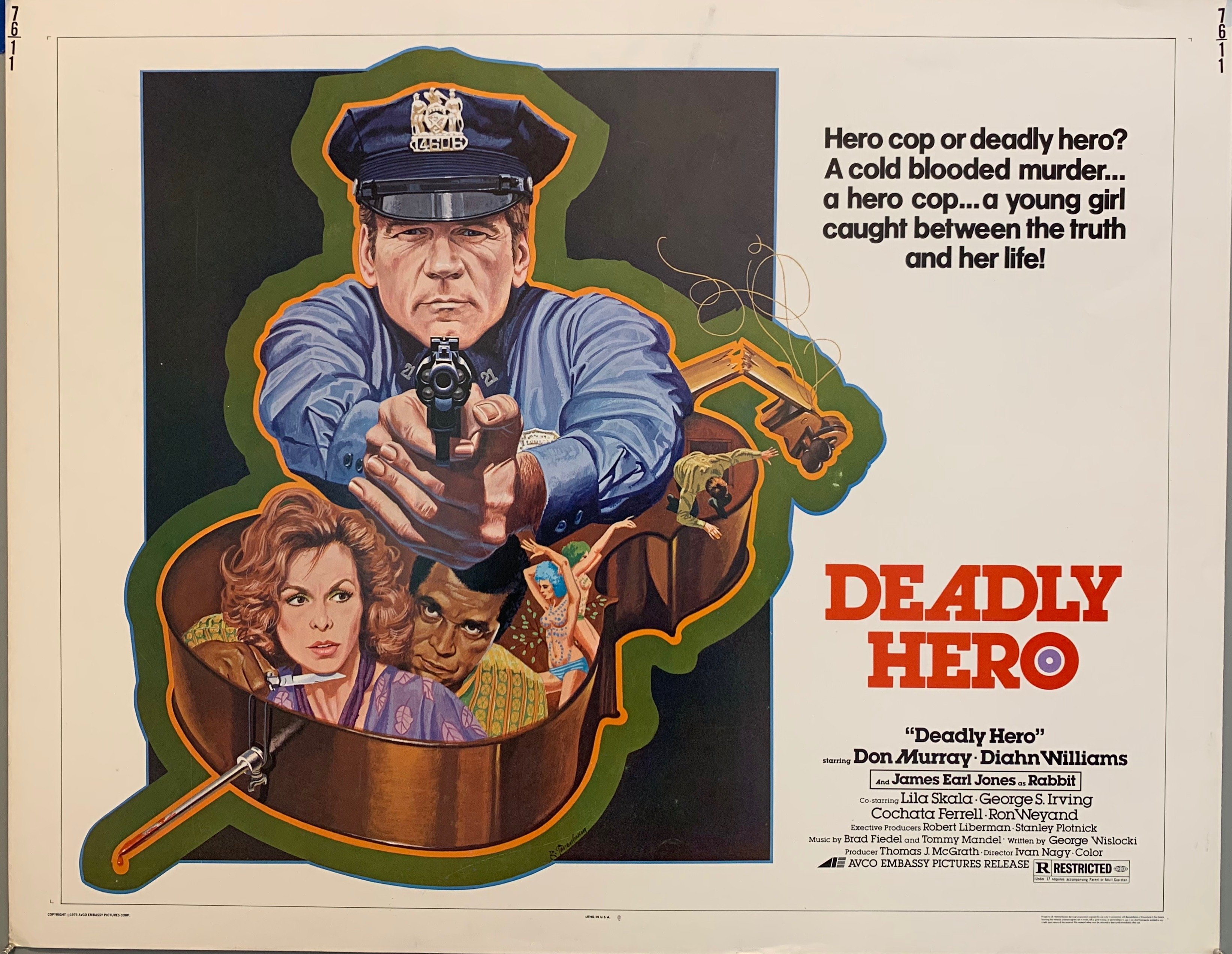
Sally (Diahn Williams) is a beautiful cellist living alone in a New York apartment. One day while returning home she gets abducted by an assailant named Rabbit (James Earl Jones) who forces his way at knifepoint into her apartment. Mrs. Broderick (Lilia Skala), a concerned neighbor, calls the police  and soon officers Lacy (Don Murray) and Billings (Treat Williams) arrive at the scene. When Rabbit tries to leave with Sally Officer Lacy stops him at gunpoint. Rabbit holds a knife to Sally’s throat threatening to kill her, but Lacy persuades him drop it. When he does Lacy then shoots him in cold blood. During the subsequent investigation Lacy insists that Rabbit was coming after him with a knife and had no choice but to shoot. Sally though knows the truth and while she’s reluctant to come forward at first she eventually does causing Lacy to begin stalking her and threatening her life unless she agrees to recant.

The film, which was directed by Hungarian native Ivan Nagy, has a wonderful New York City vibe that brings out the ambience of its neighborhoods and street culture better than most other films that were directed by Americans. The Seamus Murphy Dance Troupe, which makes up the artists who perform the dance numbers in the play that Sally plays her cello in, helps add an eclectic moody vibe that I liked.

The acting isn’t too bad either. Murray comes-off as a bad cop caricature, but he does it so well it can almost be forgiven though I didn’t like the segment intercut into the first act showing him speaking at a campaign rally for a local politician (George S. Irving) as he had not met this man until after the shooting when he gets deemed a ‘hero’ and therefore this scene should not have been interjected into the film before the story actually got there.

Williams is alright as the victim in what should’ve capitulated her into more film work, but during filming she found herself at constant odds with director Nagy prompting her to leave the acting profession and pursue a law career instead where she’s known as Diahn McGrath. There’s an interesting supporting cast here too including Jones who gives a colorful performance as the thug and brief glimpses of Danny DeVito and Debbie Harry in bit parts.

The main issue with the film is that the characters are not fleshed-out enough for us to understand what motivates them, or why they do what they do. Why is Lacy so angry and why does he decide to shoot an unarmed man? We’re told that he’s  had violent tendencies in the past, but we’re never shown it, nor any explanation for a possible cause. He’s also seems to be in a happy marriage with a younger woman, but you’d think such a psychotic person would be unable to hide his ugly side from his wife and yet the film portrays the spouse as being completely clueless to his dark nature.

Sally’s need to come forward with the truth even when faced with strong pressure not to adds more questions than answers. Why does she feel so compelled to put Lacy away even if so doing could risk her career and life? Many people would get intimidated and back-off on their pursuit for justice when given all the drawbacks, so what is it about her character that decides to forge on when others wouldn’t? This needed insight unfortunately never comes.

Spoiler Alert!

The ending devolves into a standard psycho-on-the-loose formula in which Lacy tracks down Sally and takes her to a remote farm in Upstate New York where he plans to kill her, but his reasoning doesn’t make sense. If she disappears he’d become the prime suspect and it’s very unlikely, whether she testified or not, that his job would ever get reinstated, so why then even bother?

The film’s first two acts examined the inner politics of a city police department and did it in a vivid, realistic manner, which is where the focus should’ve stayed. A far creepier ending would’ve had the corrupt police brass refuse to believe Sally’s allegations, which would allow Lacy to remain on the force despite his many transgressions, so she’d not only have Lacy as her threat, but all of his police friends as well.

My Rating: 6 out of 10

Released: December 14, 1975

Runtime: 1 Hour 41 Minutes

Rated R

Director: Ivan Nagy

Studio: AVCO Embassy Pictures

Available: DVD, Amazon Video

High Rolling in a Hot Corvette (1977)

By Richard Winters

My Rating: 6 out of 10

4-Word Review: Two guys drop out.

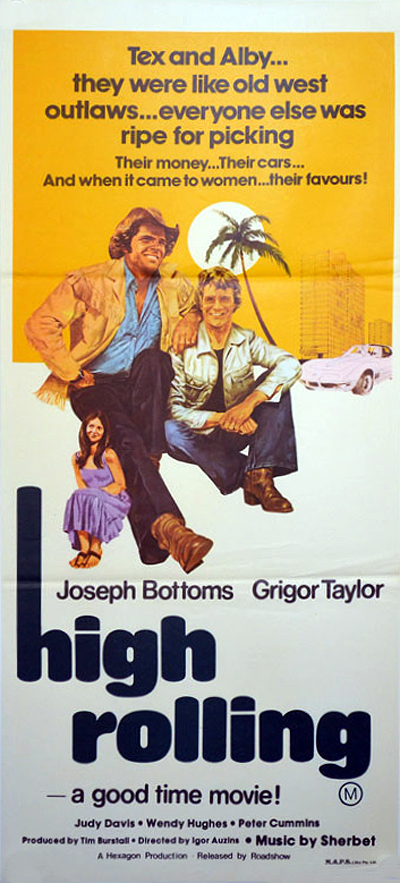
Tex (Joseph Bottoms) and Alby (Grigor Taylor) are two friends working at a carnival who decide, after Tex gets fired when he’s caught having sex with a female customer, to breakaway from the grind by heading out to the Gold Coast and Surfer’s Paradise. They hitch a ride with Arnold (John Clayton) who drives a snazzy green Corvette. After he takes the two to a hotel for the night he comes-on to Alby, who beats Arnold up that puts him into an unconscious state. When Tex finds out what happened they decide to make a run for it by driving away in Arnold’s green corvette, which to their shock is loaded with bags of marijuana. They use Arnold’s money from his wallet to help them get into ritzy nightclubs where they meet up with attractive singers Susie and Barbie (Sandra McGregor, Wendy Hughes), but once the money is spent they’re forced to rob a tour bus full of passengers, but just as they’re ready to escape with the loot Arnold returns with his muscular friends and an ugly confrontation ensues.

This is another Australian flick where it could’ve easily been filmed here and you’d never know the difference. Whether it’s intentional or not the American influence is quite strong including having them eat at such restaurants as Kentucky Friend Chicken and McDonald’s. The Outback is the one area that can help Australia stand out, but the two never go there and stick to the lushly green coastal region, which again looks no different than many of the landscapes in the U.S.

They even hire an American actor for the lead, which I felt was a mistake. Apparently they thought it would be easier to sell to distributors abroad if not all the actors spoke with an Aussie accent, but Bottoms, who is the younger brother of the more famous Timothy Bottoms, isn’t a good enough actor to make anything that he does onscreen either interesting or memorable. His reckless wild boy behavior comes-off as affected and forced and the way he aggressively comes-on to women would be considered misogynist and sexual harassment by today’s standards. Plus, there’s never any explanation for why this Texan would be working the carnival scene in Australia to begin with.

The tone of the film when compared to its trailer, which can be seen on YouTube, is far more grim and dramatic. The trailer gives you the impression it’s a comical, freewheeling adventure that will bring you back to your youthful days of rebellion, when really it’s more about them desperately living on the edge, getting beat-up and seeking shelter in an abandoned church when it rains. If anything it makes the creature comforts of suburbia, even with some of the compromises that come with it, seem not so bad by comparison.

These guys aren’t too smart either and it becomes harder and harder to keep siding with them with each jam they stupidly get themselves into. Driving off with the Corvette was just asking for trouble since they didn’t bother to change the license plate, so any cop could scan the number and realize that the vehicle was stolen. When they rob the bus, which is the best moment in the movie, they don’t wear any masks, so they’ll be easily identifiable. It also makes you wonder why if these bums needed money so bad they couldn’t just find a job like the rest of us instead of robbing innocent people, which is not a nice thing to do and makes the viewer not want to like these guys who are, at least in theory, supposed to be the protagonists.

The filmed is helped by the appearances of two young Australian actresses at the start of their careers. Hughes is beautiful as the showgirl that they meet but her part is ultimately too small. I was afraid Judy Davis, who plays a hitchhiker that they pick-up, would have the same fate, but she returns later on to give the cops a wild car chase driving the Corvette that makes it worth it.

The film though lacks any discernable point or message. The characters show no  arc and behave the same way at the end that they did at the beginning. Nothing conclusive is giving to their ultimate fate. Will they be able to live on the road and on-the-edge all of their lives? This hardly seems possible, but the movie makes no effort to answer this question causing it to be vapid and undistinguished from the plethora of other road movies out there.

My Rating: 6 out of 10

Released: August 4, 1977

Runtime: 1 Hour 21 Minutes

Rated PG

Director: Igor Auzins

Studio: Hexagon Productions

Available: DVD-R

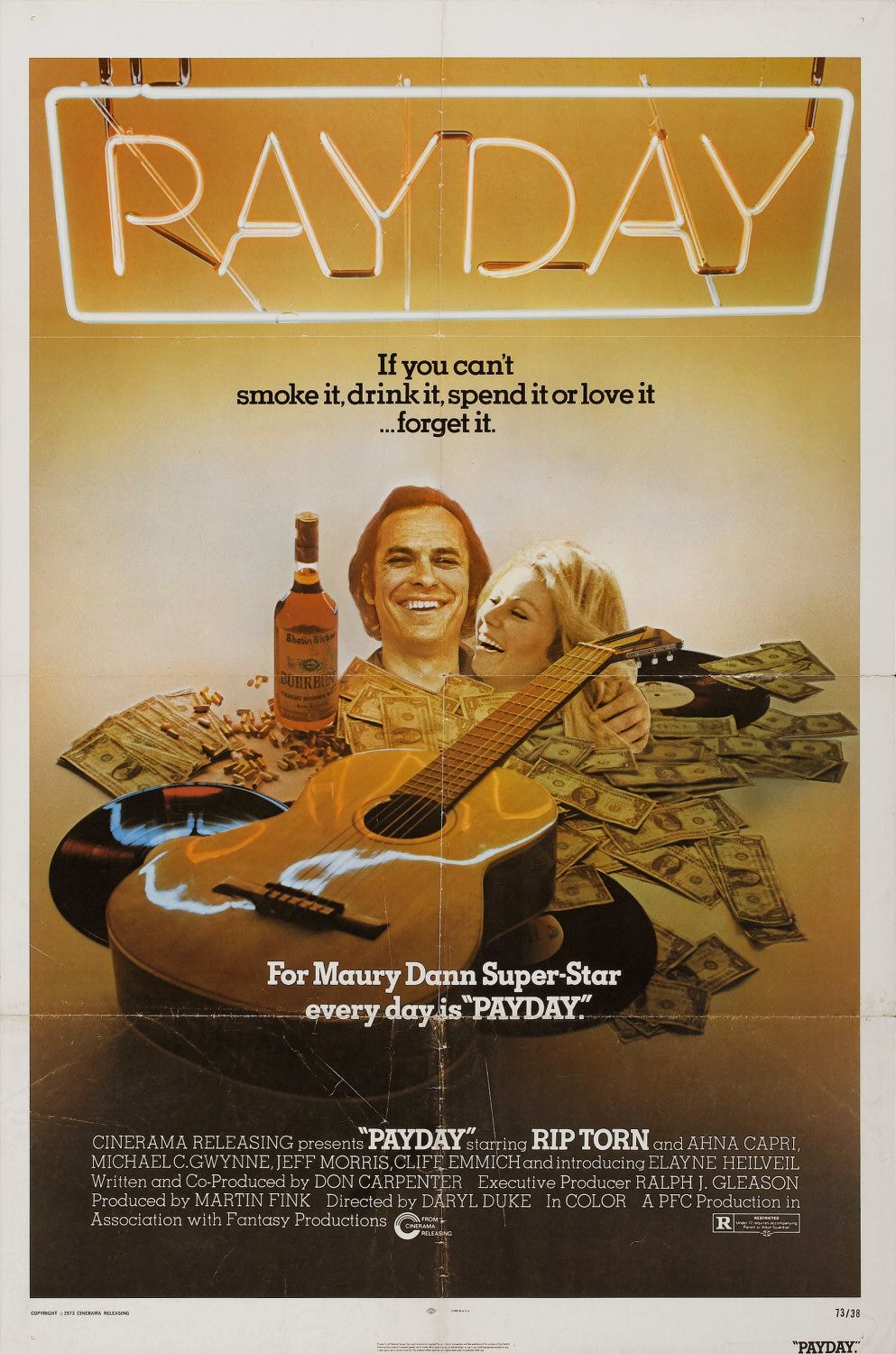
Payday (1973)

By Richard Winters

My Rating: 8 out of 10

4-Word Review: A self-destructive singer.

Maury Dann (Rip Torn) is a popular country singer who performs at many clubs throughout the southeast. While he is loved by his many fans he routinely takes advantage of those around him including sleeping with married women while openly seducing the others even when it’s right in front of his current girlfriend Mayleen (Ahna Capri). When Maury is confronted by the father (Walter Bamberg) of one of the young women he’s seduced they get into an ugly fight and Maury accidently ends up killing him, but since he’s so used to exploiting others he asks his loyal limo driver Chicago (Cliff Emmich) to take the blame for him.

The film, which was directed by Daryl Duke, is a masterpiece in penetrating drama to the point that I’m surprised that Duke, who had only directed TV-shows before this, didn’t go on to have a long career in making Hollywood movies instead of going right back to doing episodic TV-work after this. The script though, which was written by Don Carpenter, is completely on-target as it paints a very trenchant, no-holds-barred portrait of the seamier side of show business life and most importantly the people who work in it.

The atmosphere of the smoke-filled bars/nightclubs is vividly captured and the dialogue has a nice conversational quality that makes its point, but never in too much of an obvious way. The characterizations though are the most revealing and include Maury’s loyal manager Clarence (Michael C. Gwynne) who secretly despises Maury and is well aware of his many faults, but does whatever he can to cover them up to the adoring public.  Cliff Emmich as the faithful limo driver, who secretly aspires to be a gourmet chief, is terrific too. He doesn’t say much, but when he does it’s always quite interesting and his facial reactions are great.

My favorite characters though were Maury’s two girlfriends particularly the young, wide-eyed Rosamond (Elayne Heilveil in her film debut) who excitedly jumps into bed with Maury as his new star crush groupie only to become more apprehensive about things, which get revealed through her wonderfully strained facial expressions, the ugliness that goes on around her. Since her character has the most obvious arc I thought she should’ve been the story’s centerpiece.

Capri is quite enjoyable as well playing on the opposite end of the spectrum as a jaded woman who’s been in the groupie scene too long, but desperate enough to stay in it. The film’s most memorable moment is when Maury kicks her out of his limo, without any money, in the middle of a cornfield. She’s able to find another ride quickly, but I would’ve liked seeing a scene later on showing where she ultimately ended-up, or having her return to the story near the end where she could’ve had a climactic final confrontation with Maury, which is what her character deserved.

The only thing that I didn’t like was Maury himself. Torn plays the part in a masterful way, although his singing over the opening credits, which he insisted on doing himself, isn’t so spectacular, but his acting is. The only problem is that his character is just too much of a jerk. Supposedly it’s loosely based on Hank Williams and I’m sure there’s a lot of truth to it, but it would’ve been nice had there been at least one fleeting moment when he did something redeeming as his constant jerkiness becomes almost an overload for the viewer making it border on being too obnoxious to watch, but it’s so well crafted in every other aspect it’s still a worthwhile view.

My Rating: 8 out of 10

Released: February 22, 1973

Runtime: 1 Hour 43 Minutes

Rated R

Director: Daryl Duke

Studio: Cinerama Releasing

Available: DVD

The FJ Holden (1977)

By Richard Winters

My Rating: 3 out of 10

4-Word Review: A youth’s aimless life.

Kevin (Paul Couzens) is a teen over 18 still living at home with his parents (Roy Corbett, Beryl Marshall). Most of his time is spent being idle while driving around in his refurbished FJ Holden and getting drunk with his best friend Bob (Carl Stever). One day while hanging out at a mall Kevin spots Anne (Eva Dickinson) and gives her a ride in his car and eventually the two start going out. Everything goes well for awhile until Kevin makes love to Anne with the bedroom door still open, so that Bob can watch. When Anne realizes what’s going on she kicks Kevin out of the house and breaks off their relationship, but Kevin refuses to let it go and tries to rekindle things with her later at a party, which causes tensions with the other partygoers and the home owner.

I’ve stated many times that I wished Hollywood movies wouldn’t feel so compelled to rush through a story as they do and allow scenes more time to be strung-out and not edit things so quickly. Allowing things to unfold at a more leisurely pace gives the viewer a chance to soak in the setting and characters better without having to be told what to think or feel, but this film goes to the other extreme. The pace meanders so much you become bored and lose focus. There’s just not enough going on to keep you interested or intrigued.

That’s not to say it’s a bad movie as I liked the technical approach, which puts the actors in public settings, but with regular people in the back drop as opposed to film extras. You get more of a realistic atmosphere this way particularly the scenes at the mall, which before the advent of social media, skype, and texting was a social hotspot for most teens to meet other people and hang-out. The story though, which was based on loosely constructed comic poems, is not structured enough to remain engaging. The dialogue is too generic and the situations they go through, whether it’s making love in the backseat of a car, or drag racing, have all been done in many other teen flicks, so watching it here just makes it seem all the more redundant and pointless.

There manages to be a a few interesting bits here and there, but overall it’s a sluggish experience. Only at the very end when Kevin confronts Anne at the party is there are any real potential for dramatic sparks, but it doesn’t get played-out enough. I was hoping for a full-out brawl to make-up for all the boredom that had come before it, but director Michael Thornhill, who has found critical acclaim with some of his later films, just wasn’t confident enough apparently to push this thing full-throttle, which ultimately makes it bland and forgettable.

The car itself doesn’t play as much into the plot as you’d expect and in a lot of ways I didn’t find it all that impressive. It’s a model of car that was built in Australia between the years of 1953 to 1956 and through the decades over 20 car clubs have been formed in Australia committed to preserving the vehicle, and every other year thousands of car enthusiasts gather to celebrate the old-style car, but to me it came off looking old and clunky like something your grandfather would drive and did not have the sleek sports car design that most young men like to be seen in. The car eventually, during the film’s second half, gets painted bright yellow, which makes it look like a taxi cab, but during the first part it’s not painted at all and looks rusty like it had been pulled from the junkyard and what most people would be embarrassed to be seen with and not something to invite a girl for a ride in to impress her even though that’s what happens here.

My Rating: 3 out of 10

Released: April 29, 1977

Runtime: 1 Hour 41 Minutes

Rated M (Originally rated R)

Director: Michael Thornhill

Studio: FJ Films

Available: DVD

Maid to Order (1987)

By Richard Winters

My Rating: 3 out of 10

4-Word Review: Rich girl becomes servant.

Jessie (Ally Sheedy) is a spoiled rich girl still living at home with her philanthropist father (Tom Skerrit). Even though she’s in her mid-20’s she has never worked a job due to her father’s fortunes and she takes everything for granted seemingly unaware of her privileged lifestyle and how it affects others. Her father becomes frustrated with her cavalier attitude and one day speaks out loud that he wished he never had a daughter, which summons a fairy godmother named Stella (Beverly D’Angelo) to come to earth and erase all memory of Jessie from him. Now Jessie must learn to survive on her own, but without any job skills. She finds work from a rich Malibu couple (Dick Shawn, Valerie Perrine) who are practicing ‘reverse affirmative action’ by hiring white woman in the role of the household maid instead of a Hispanic or Black one. Jessie, now desperate for money, readily accepts the offer, but her inability to do even basic household chores causes her employment to be in almost constant jeopardy.

The main character is what really hurts this one and it’s not so much that she’s unlikable either, which she isn’t,, but more because her personality is too watered down. This is the type of role that needed a real bitchy lady that exuded snobbery at every turn like Alison Arngrim who played Nellie Oleson the brat in the old TV-show ‘Little House on the Prairie’ or maybe even Shannen Doherty from ‘Beverly Hills, 90210’ fame. Sheedy is just plain unable to play-up the bitchiness enough coming-off more like someone who lacks self-awareness instead of an elitist snob, which then makes her transition to humbleness not as interesting, dramatic, or funny. I’ve liked Sheedy in some of her other films and I realize she was trying to broaden her acting resume her by playing against-type, but she lacks the necessary charisma to keep it engaging.

The limp plot doesn’t help things either. It’s way too obvious where it’s headed and the viewer can easily predict the plot points before they even happen. There needed to be more confrontation from the contrasting personalities and more comedy from the quirky situation instead of the annoying life lessons that makes it seem almost like some afterschool special. Everything is aimed too much at the pre-teen audience, which leaves very little for a discernable adult tp enjoy.

The fairy godmother concept is a bit batty too. Why does a fairy answer this father’s wish, but no one else’s? Many people make wishes all the time, but no fairy godmother ever gets summoned, so what makes this situation so special? The script should’ve implemented some sort of side-story involving the father, or maybe even Jessie, getting involved in mysticism, which could’ve helped explain why this otherwise unusual incident then occurs.

I did however, really enjoy Dick Shawn in a very funny portrayal of the nouveau riche and he along with Beverly D’Angelo as the wise-cracking fairy godmother needed far more screen time. I was especially perplexed how underwritten D’Angelo’s part was as she plays a role that is quite fundamental to the story, but not in it half as much as you’d expect though her snarky remarks give this otherwise vapid material some much needed energy for the few minutes that she has.

Valerie Perrine, as Shawn’s wife, isn’t as amusing though her variety of gaudy outfits, and hairstyles, does at least lend visual flair. Skeritt though is completely deadening and it’s amazing how this guy has been acting on the screen since 1962 and yet the vast majority of his work is highly forgettable despite some of the movies he’s been in being memorable in other ways. Same for Michael Ontkean as Jessie’s romantic interest, he’s got the perfect pretty-boy face and hunky body, but seemingly no actual personality.

My Rating: 3 out of 10

Released: July 31, 1987

Runtime: 1 Hour 33 Minutes

Rated PG

Director: Amy Holden Jones

Studio: New Century Vista Film Company

Available: DVD

The Dark Room (1982)

By Richard Winters

My Rating: 5 out of 10

4-Word Review: A father/son rivalry.

Mike (Svet Kovich) works as a photographer who has a thing for his attractive co-worker Nicky (Anna Maria Monticelli). He quietly follows her around and takes pictures of her from afar only to learn that she’s been seeing his father Ray (Alan Cassell) who is still married to his mother (Diana Davidson). Mike becomes enraged by this and begins dating Nicky as well. This puts a damper on Ray who was planning on leaving his wife for Nicky, but who now seems to becoming more distant with him. Once Ray realizes his son is the other man the two share a fiery confrontation at an old cottage in the country with Nicky stuck in the middle.

To some degree this is a unique storyline that’s rarely been tackled before. Most films dealing with father/son relationships take a much different approach by focusing very much on the generational divide where the father is out-of-touch with the son’s interests and vice-versa. This film acts like the two men are pretty much the same, with one having been on this planet a little bit longer than the other, but overall still have common wants and needs and desires particularly when it comes to the attraction of younger women, which I believe secretly stays innate in men no matter how old or how married they become.

I also liked the casting of Svet Kovich, which to date this is the only movie he’s been in, as his hawkish face and beady eyes make him look menacing, which is what the part requires and in many ways he reminded me of character actor Anthony James who played quite a few psychos in his day as well. Unfortunately this hurts the story because in the film Nicky falls for Kovich and begins a relationship with him even though in realty I’d think most women would fear him due to his looks and odd introverted behavior and thus making the whole romantic angle between them come off as false and phony. It was never clear either why she’d want to have relationships with both men (she was not aware initially that the two were related) at the same time as she seemed happy seeing Ray, so why add another man into the mix? Most women tend to be either/or when it come to older men or younger ones, so it didn’t make sense her interest in both, or what she saw or didn’t see in one that made her desire the other.

The film’s biggest issue is that it doesn’t delve into the father/son relationship enough. We needed a backstory between the two and flashbacks, none are shown, of when they were younger and how the son related to his dad as a child. At the very end the son does bring up issues that he had with his father, but they tended to be cliched problems and something the viewer needed to see play-out instead of just being told about them verbally. Without that context nothing else that we see means anything. The film is on a technical level adequate, but it’s never gripping or fully compelling and this is because the characters are not fleshed out enough for us to understand them or care.

My Rating: 5 out of 10

Released: Never released to theaters.

Not Rated

Director: Paul Harmon

Studio: Filmco Limited

Available: None at this time.