Category Archives: Movies with Nudity

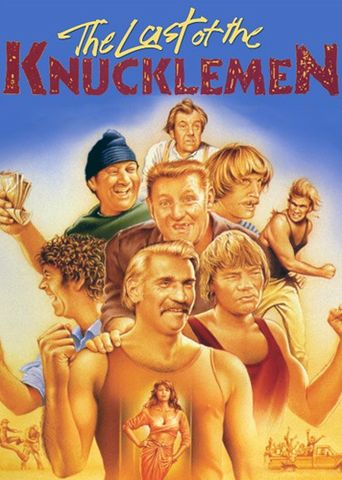
The Last of the Knucklemen (1979)

lastknuckle1

By Richard Winters

My Rating: 7 out of 10

4-Word Review: Isolated miners living together.

A group of miners, some of them with criminal records and no other means of employment, survive together in the remotest area of the Outback as they make a living working for Tarzan (Gerard Kennedy) who leads the team and gives them their paychecks. At night they sleep via bunkbeds in a small tin shack where they also play card games, drink, and occasionally brawl. Pansy (Michael Preston) is the de facto leader, who uses his quick temper and husky build to intimidate anyone who challenges his authority. The only one he doesn’t fight is Tarzan, but only because he’s the employer. Then a new man arrives named Tom (Peter Hehir) with a mysterious past. He has karate skills that allow him to take-on Pansy’s fist-fitting ability, but Pansy has a secret weapon of his own when he brings in Carl (Steve Rackman) from a nearby town who’s a huge guy with very few teeth, who he feels can beat Tom in a fight and everyone else in the camp takes bets on who they think can win.

The film is based on the stage play of the same name written by John Powers who himself had never worked in a mining camp, but had always been intrigued with the ruggedness, wildness, and overall isolation of them after growing up hearing bawdy tales from his Uncle Harry who had been employed at one of them. 20 years after hearing his uncle’s stories he then decided to turn those rustic tales into a play while also incorporating it with the adventures of Ronald Biggs who was a train robber who managed to evade the authorities for many years. Pitting a known criminal trying to just hide-out at a remote camp with the gruff nature of the men who worked there he felt would make for an interesting dynamic and the play, which opened in 1973 in Australia and 10 years later in the U.S. where it starred Dennis Quaid, was met with rave reviews.

Director Tim Burstall was looking to do a male bonding pic and had a choice between doing this one or The Odd Angry Shotwhich was reviewed last week, and came to the determination that this was the better fit. He particularly liked the outback setting and became focused on finding the most remote town to film it in and eventually chose the itty-bitty one of Andamooka, which at the time had only 316 people living there and today has even less. While the town certainly met the rustic quality it had no police and the inhabitants, much like the characters in the story, had previous criminal records forcing the producer to sleep with a gun at his side and the production’s payroll under his pillow. It also at times caused interruptions with the filming when one day one of the locals threatened to blow up the set with a stick of dynamite, which sent the cast and crew running, until the special effects man realized the stick had no detonator.

The interior scenes were done on a soundstage in Melbourne, though it’s so impressively camouflaged you’d never know it. My only complaint with the outdoor shots is that filming took place during September and October, which is Springtime in Australia where temps aren’t as hot, and in fact they were quite chilly, so that intense hot Outback feel, which is the whole basis of the story, never really comes through.

As for the story, it’s surprisingly engaging despite the fact that there’s really not much of a plot and everything hinders on the interactions of the characters. Fortunately the characters are so well defined that you enjoy and are even intrigued at how they all relate to each other and the love-hate relationship that they share. One of the most gripping moments has nothing to do with the climactic fight, but instead on an intense poker game between Pansy and the elderly Methusela (Michael Duffield), where each tries to bluff the other while also raising the money stakes to drastic heights.

The fight itself, which you wait through the whole movie to see, wasn’t as exciting, or captured in as intense of a way, as I was expecting. The animosity between Tom and Pansy wasn’t played-up enough either and only comes to a head during the third act while I felt it should’ve been brewing from the very start. Tom as a character is quite dull and is seen a lot less than Methusela who’s the scene-stealer. The sequence between Tom and Carl’s battle is surprisingly quick while the big showdown between Tarzan and Pansy gets captured from a distance and shown over the closing credits, which I found quite disappointing. There’s no answer to who ultimately wins the fight either, which despite the film’s other good qualities, is a big letdown.

My Rating: 7 out of 10

Released: July 11, 1979

Runtime: 1 Hour 29 Minutes

Not Rated

Director: Tim Burstall

Studio: Hexagon Productions

Available: DVD (Import Region 0)

The Seduction (1982)

seduction1

By Richard Winters

My Rating: 2 out of 10

4-Word Review: Anchorwoman stalked by photographer.

Jamie Douglas (Morgan Fairchild) is a successful Los Angeles news anchor in a long-term relationship with her boyfriend Brandon (Michael Sarrazin). Living close-by is Derek (Andrew Stevens) a photographer who has become obsessed with her after viewing her from afar through his binoculars. He begins giving her unwanted phone calls that soon turn into menacing fan letters. He follows her where ever she goes and even breaks into her home, but nothing seems to scare him away and the police are unable to do anything about it. When his behavior becomes even more threatening Brandon buys Jamie a rifle and advises her to use it, but Jamie is initially not thrilled with the idea.

This is writer/director David Schmoeller’s second feature film after doing the highly overrated Tourist Trapwith this thing, despite a much bigger budget, being not much better than that one. Casting Fairchild in the lead is one of the bigger problems as she has too much of a cold, bitchy persona about her, even when she’s not trying to, that just doesn’t make her the type of person a viewer can warm-up to, or want to root for.

Derek, as the psycho, is a poorly fleshed-out character where it’s never clear why he’s propelled to stalk Jamie in the first place. Why is this good-looking guy, who seems to be making good money, and owns a nice house, so obsessed with a blonde news lady when there’s already a good-looking blonde named Julie (Wendy Smith Howard) whose shown an interest in him? Some may argue, as it gets alluded to near the end, that Derek is impotent, but if he can’t get it up for other women then why would he be able to do it with Jamie? If the answer is that he can only achieve erection through violence and control then there needs to be an explanation for what traumatic experiences in his life, or personality quirk, have brought him to become that way.

It’s also really annoying how Derek is able to constantly break-in to Jamie’s house and into her place of work without ever being impeded, or caught. You’d think with the amount of harassment he’s given her she’d make sure to bolt every door and lock every window and yet he’s able to somehow continually pop-in all the time without any hassle. It’s like he’s Barbra Eden from ‘I Dream of Jeannie’ and can just blink his way in as that’s pretty much what it comes-off looking like.

Schmoeller’s inept direction ruins any suspense. Case-in-point is when Jamie is inside her home reading a letter and the camera zooms into a broken trinket sitting on her beauty stand that had been clearly placed there by Derek earlier. Instead of allowing the tension to simmer, by leaving the viewer in the dark as to whether Derek was still in the house or not, Schmoeller instead cuts right away to show Derek hiding in the closet, so when he does finally jump out and frighten Jamie the viewer is not startled at all because we’re already expecting it. Same thing happens when Jamie is live on-the-air and reads a creepy message written by Derek on her teleprompter. It would’ve been far more of a shock to the viewer had we not seen Derek sneak in to write the message earlier and instead shared Jamie’s point-of-view and seeing it for the first time as she reads it.

Spoiler Alert!

The ending is where it jump-the-shark when Derek somehow stabs Brandon, who is in a hot tub, in the back with a kitchen knife used to cut apples. Hard to believe that type of knife would be sharp enough to stab someone with and even harder to imagine that Derek was able to do it by standing on the edge of the tub and throwing it through the air towards Brandon with such perfect aim and impact that it penetrated his back and kills him instantly.

He then allows Jamie to get out of the tub, she was in it when Brandon got knifed, and get dressed while Derek goes off to bury Brandon’s body, but why does he feel the need to bury the body and why isn’t he afraid that while he’s away she’ll use this time to either call the police, or escape to a neighbor’s house? Having Jamie finally use the rifle and attempt to shoot Derek with it leaves open a few plot holes as well as she made clear earlier that she didn’t like the idea of the gun making it seem that she had never used one, so when she finally does you’d think she’d be unable to correctly work-it.

The original ending had the police chief, played by Vince Edwards, coming in at the last second and blowing Derek away, but the studio didn’t like this version so it got changed to where Julie kills Derek instead, but I didn’t like this either. Derek is Jamie’s problem, so it’s up to her to finish him off. My version would’ve had Jamie immediately run into the house and grab the rifle after Derek kills Brandon and then while still nude chase Derek, with rifle in hand, back to his house where she would finally riddle him with bullets. The final shot would’ve had her sitting nude on Derek’s sofa smoking a cigarette while Derek’s dead body lay at her feet. A voice-over of her reading the news story as an anchorwoman of what had occurred would then be heard.

My Rating: 2 out of 10

Released: January 22, 1982

Runtime: 1 Hour 44 Minutes

Rated R

Director: David Schmoeller

Studio: AVCO Embassy Pictures

Available: DVD, Blu-ray, Amazon Video, YouTube

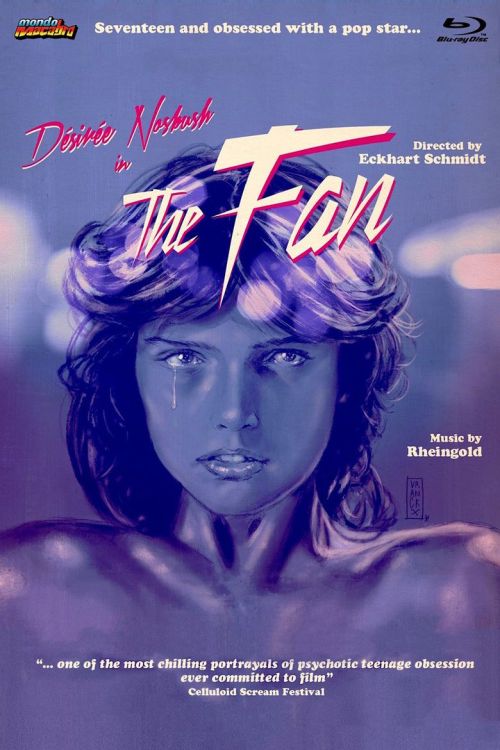
Der Fan (1982)

derfan4

By Richard Winters

My Rating: 8 out of 10

4-Word Review: Rock idol infatuates teen.

Simone (Desiree Nosbusch) is a beautiful teen who harbors an unhealthy infatuation for a rock singer known only as ‘R’ (Bodo Steiger). Even though the two have never met Simone is convinced that they share a deep bond and she writes him fan letters all the time, but never receives a response. She travels to a TV-station where he’s expected to film a music video in hopes of meeting him and starting a romance. During an autograph session R spots Simone and immediately becomes riveted to her beauty and later takes her to an excluded country home, so that he can make love to her. Once the sex is over he proceeds to leave to visit with other friends, which enrages Simone and leads to a psychotic outburst.

The film, to a certain extent, is a refreshing change-of-pace to the usual stalker formula in that the beautiful woman is not the victim here, but instead the perpetrator. The part gets wonderfully portrayed by Nosbusch whose icy cold gaze, which she exudes the whole time, burns right through the screen making her creepy from start to finish. While it’s nice not having her fit into the mold of someone who is fat, lonely, and homely like the Kathy Bates’ character in Misery statistics have shown female stalkers of celebrities predominantly reflect the characteristics Bates has more than Simone’s, which is why they’re having romantic delusions over celebrities to begin with because they’re unable to attain these types of relationships in real-life.

This then brings out the film’s fatal flaw, which is that there’s no explanation for why Simone is this way. If she had an abusive home-life you could reason she turned to a fantasy world in order to cope with her harsh surroundings, but there’s no sign that this was the case. It’s not like she can’t find any boyfriends either as there are people around her who make attempts to be friendly, but she coldly rebuffs them. So, why is she so crazy? What is there about this particular rock singer that gets her so infatuated with him and what is missing in her life that she flies so far off the deep-end? None of these questions get answered. It’s almost like writer/director Eckhart Schmidt didn’t bother to think any of this through, or even care to. He simply came up with a bland prototype of a teen psycho to help propel the plot along without ever bothering to fill-in any of the necessary details.

Spoiler Alert!

While the film is quite weak in that area, saved only by Nosbusch’s excellent performance, it does make-up for it with its incredible, over-the-top ending, which had even me, a seasoned cinephile who’s essentially seen it all by now, in shock. It’s not that it’s particularly gory, even as she cuts the guy up into pieces and then proceeds to eat him limb for limb before grinding up his bones, but more for its sheer audaciousness. If anything the gore could actually have been played-up more as the blood is lacking, you only see a couple streaks of it on the floor while it should’ve been sprayed all over the place. Seeing the room drenched in it would’ve made the horror all the more shocking though her licking the bloody blade does lend a twisted erotic touch.

What I admired though was how it clearly wasn’t concerned if it achieved mainstream acceptance, or not. There is simply no way a film like this could’ve been made in Hollywood whether it was 1982 or today, as the studios wouldn’t touch it. Too many producers would fear potential backlash, which in turn would hurt profits, but for me this is what true movie making should be all about. Challenging mainstream viewers out of their comfort zone and taking them to a place they thought they’d never go and doing it in such a fluid way that they don’t know what’s coming until it’s too late, which is what really makes this one memorable.

My Rating: 8 out of 10

Released: June 4, 1982

Runtime: 1 Hour 32 Minutes

Not Rated

Director: Eckhart Schmidt

Studio: Scotia International

Available: DVD, Blu-ray

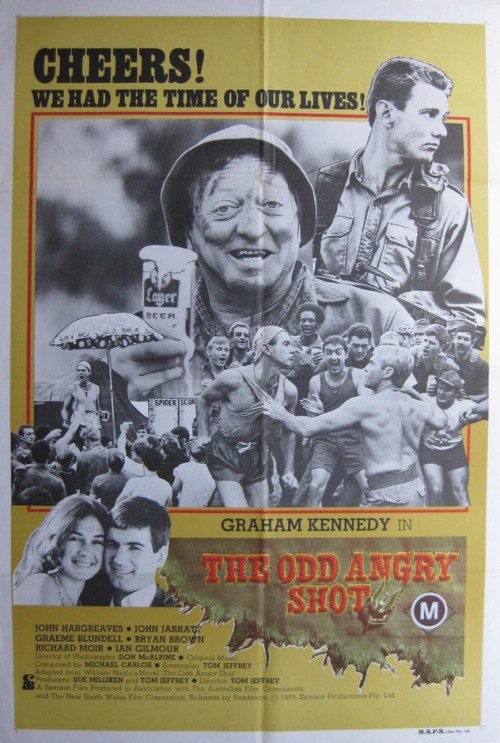
The Odd Angry Shot (1979)

odd3

By Richard Winters

My Rating: 5 out of 10

4-Word Review: Aussie soldiers in Vietnam.

Based on the novel of the same name by William Nagle, who wrote about his actual experiences fighting in Vietnam as part of the Australian army, the story centers on a small group of Aussie men who go to a war that they feel they have no business being in. The story centers on Harry (Graham Kennedy) a bitter middle-aged man who believes his country doesn’t care whether he lives or dies, Bill (John Jarrat) who faces army life for the first time, and Rogers (Bryan Brown) who must deal with crippling injuries when he steps on a landmine as well as Bung (John Hargreaves) who goes through tremendous grief after receiving heartbreaking news in a letter from back home.

To some extent the film features a fresh take as most other movies dealing with the Vietnam War were done from the U.S. perspective and many people may not even realize that Australia had involvement in the conflict and at one point over 7,000 troops stationed there. However, the tone is confusing as it wants to be irreverent like M*A*S*H at certain intervals while at other times more like Apocalypse Now. Some of the amusing moments do work particularly the scene where the U.S. soldiers challenge the Aussies to a contest to see if a deadly spider can kill a scorpion and then having the spider take on the scorpion inside a dish pan that you get to see close-up, which is pretty cool. There’s even some weird imagery involving a dream that Bill has, which is visually arresting. While these scenes are passively entertaining they also make the story come-off as meandering and pointless. The concept may have been to show how boring the war experience can be, but this still needed to be done in a way that kept things gripping, which ultimately the film isn’t.

Having the story center around one main character would’ve prevented this. Initially it starts off like Bill is that person by showing his going-away-party with his friends and family, but then once the setting changes to Vietnam he isn’t seen much and if anything Harry becomes the main star. Observing how Bill’s perspective and personality evolved and become more hardened as the war progressed could’ve been intriguing, but the film fails to deliver. With the exception of Harry there’s not much distinction between the other men in the group, which impedes the viewer from ever becoming emotionally invested in any of them and thus less impactful overall.

The way the violence gets portrayed is interesting as it occurs at random periods without warning. The group can be having a lighthearted time one minute only to be doused with enemy fire the next, which helps recreate the reality of battle where death and destruction can be sudden and unexpected. This put me as a viewer quite on edge, but the characters never reflected that same unease, or by seeing their comrades dying, or injured changed them in any way even though I felt it should’ve.

On the technical end it effectively looks like it was shot on-location even though it really wasn’t. Dramatically though it suffers from not have a centralized character and a vague point-of-view.

My Rating: 5 out of 10

Released: March 1, 1979

Runtime: 1 Hour 32 Minutes

Not Rated

Director: Tom Jeffrey

Studio: Roadshow Films

Available: DVD, Blu-ray

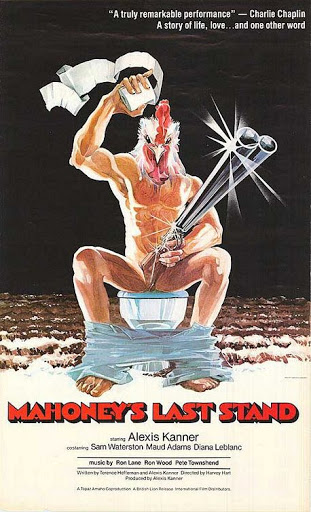
Mahoney’s Last Stand (1972)

By Richard Winters

My Rating: 7 out of 10

4-Word Review: Trying to find solitude.

Leroy Mahoney (Alexis Kanner) wants to be away from the rat race and out in the Canadian wilderness where he feels he can live in peaceful harmony with nature. He finds a rundown home in a vacant area and begins the process of renovating it only to meet a woman named Miriam (Maud Adams) who lives nearby and routinely comes over to visit. Felix (Sam Waterston) is his old friend from the city who hitches a ride to the country and moves-in. Later, so does Felix’s girlfriend Joy (Diana Leblanc) making Mahoney feel like he’ll never find the solitude he craves and will always be surrounded by people who annoy him.

The film was the inspiration of Kanner, who not only starred in it, but wrote the script, co-directed, and even produced. The quirky tone is what helps it stand out as it’s a mixture of the man-in-the-wilderness theme meets the counter culture and to a great degree it works. Some of my favorite moments are things that might seem off-putting, or even boring when put in any other film, but here it helps add to the offbeat quality like the scene featuring Mahoney sitting on his porch endlessly twiddling with his garden hoe, or the segment where he remains trapped in his outhouse as he’s too afraid to come out and meet with Miriam when she arrives unannounced.

The Mahoney character, if you can get past his odd accent and crusty exterior, is quite engaging. Initially he comes off as this rugged individualist only to end up getting scared late at night over the least little noise that hears outside. The scene where he tries to pretend he’s a seasoned horseback rider in an attempt to impress Miriam and his love-hate friendship with Felix and Joy are all amusing as well, but what I really liked is that he remains a true introvert all the way through. Most other films make the broad presumption that everyone secretly craves companionship and can only be truly happy with other around, but here Mahoney only finds his ultimate utopia when he’s finally all alone.

The film’s rustic landscape, which was shot in and around King City, Ontario, helps add to the ambiance. It was filmed between October and December of 1971 with the idea that filming would wrap before the snow and cold moved in as there was no heating in the cabin, but fortunately an early season snow hit the production in late November and gets incorporated into the story. Although it only blanketed the area with an inch or two it still at least gave a preview to what living in Canada year round would be like and if you’re going to do a pic about the rugged adventures of dealing with the northern climate then there better be some snow and cold in the mix or it’s just not fully authentic otherwise.

Spoiler Alert!

The film’s ending really stands out as it recreates the feeling of solitude in a way I’ve never seen done before and will stick with you long after it’s over. It features Mahoney wondering around his property naked with only the faint sound of a water drip in the background, which gives the viewer a total sense of peace and freedom and has a soothing meditation-like quality.

Alternate Title: Mahoney’s Estate

My Rating: 7 out of 10

Released: Unreleased theatrically until 1976.

Runtime: 1 Hour 49 Minutes

Not Rated

Director: Harvey Hart, Alexis Kanner

Studio: Topaz Productions

Available: None

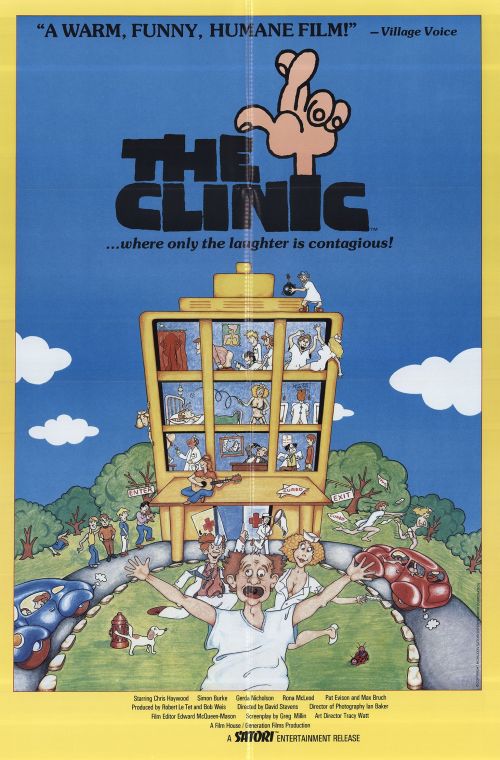
The Clinic (1982)

By Richard Winters

My Rating: 7 out of 10

4-Word Review: Helping those with V.D.

A day in the life of a clinic in Melbourne, Australia that specializes in treating people with venereal disease.  Both the doctors and the patients have many issues to deal with, but not all of them have anything to do with sexually transmitted diseases including Dr. Eric Linden (Chris Haywood) who after spending the day treating patients is more worried about meeting the mother of his gay partner for the first time. There’s also Dr. Hassad annoyed with the lamp on his office desk that he can’t get to work right no matter how many times he tries to fix it and three men visiting from China who think they’re at a health clinic, not a VD one, but nobody can translate to them that they’re in the wrong place.

For the most part this is a funny engaging ensemble comedy similar to Britannia Hospital, a satirical comedy done in the U.K., or The Hospital done here in the US and starring George C. Scott.  There’s also distant shades to the 80’s TV-show ‘St. Elsewhere’ that toed the line between being surreal and serious.  The editing is fast paced as it cuts back and forth between various scenarios happening at the same time throughout the different offices in the building.

There are also many characters and it’s hard to keep track of all them. They’re introduced at such a dizzying pace that the viewer isn’t allowed to get attached to any of them as you see them for only a couple of minutes and then it cuts away to someone else and never going back to the previous one until much later when you’ve almost forgotten about them, or their dilemma. Some may consider this the hallmark of bad filmmaking as in Hollywood the idea is to have, even in an assemble comedy such as this, one central character for the audience to connect with and then colorful people surrounding them, but here no one takes center stage. Director David Stevens admitted in interviews that he was pressured by producers to go more the conventional route, but he resisted and in many ways it succeeds better because it gives you a true day-in-the-life feel of the inter-workings of a clinic and the constant hustle-and-bustle of patients coming in and out that a story more focused on one person might not be able to convey as effectively.

The lack of music is another thing that is unusual. During the opening sequence all that is heard is traffic noise while the credits roll and it’s not until 1 hour 5 minutes that any type of soundtrack is heard in a rare moment that does not take place at the Hospital, but instead on a beach. There is a bouncy tune sung by Alistair Jones over the closing credits, but other than that there’s nothing, which again I found okay as it uses the ambience of the people walking around and talking as the film’s soundtrack, which helps heighten the realism. The nudity is different here too as it’s solely close-ups of male genitals, but none from females, which bothered some viewers, but I found alright. What I did question though was the males so obediently disrobing in front of a female Dr. as I felt some of them would be uncomfortable and even hesitant to do this.

The conversations and throwaway lines are quite funny, which is the film’s centerpiece as are the quirkiness of the characters who say one thing, but end up doing the complete opposite much like people in real-life. There’s also a few serious moments that brings up the stigma that people with V.D. had to deal with including one who loses his job, but these don’t come to satisfying conclusions and should’ve been explored more.

Overall it’s an enjoyable 90-minutes although by the final 15 it starts to exhaust itself. Had it been done with a smaller cast might’ve helped although technically it’s still quite fluid throughout though some may point to its poor box office showing where it managed to only recoup $414,000 profit from its $1 million budget as a sign that the unconventional narrative was a failure. This though is more likely because of distributors at the time being reluctant to show the film fearing public backlash at what was still considered a taboo subject.

My Rating: 7 out of 10

Released: September 17, 1982

Runtime: 1 Hour 28 Minutes

Not Rated

Director: David Stevens

Studio: Roadshow Films

Available: None at this time.

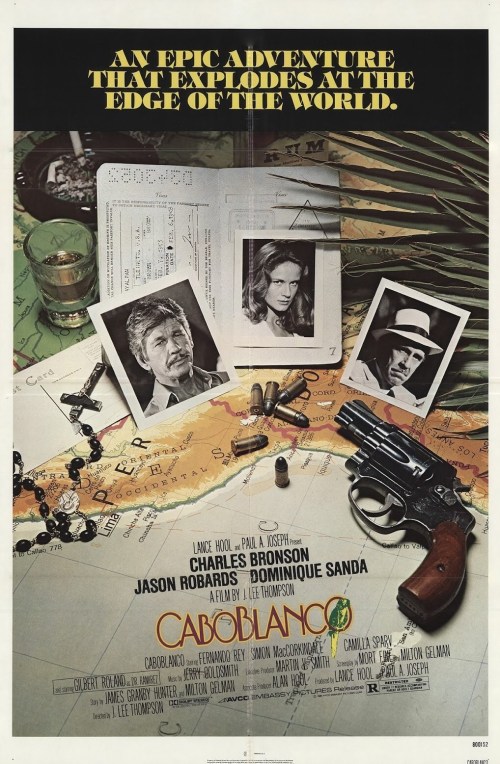
Cabo Blanco (1980)

By Richard Winters

My Rating: 4 out of 10

4-Word Review: Search for sunken treasure.

Giff (Charles Bronson) is an American living in the small fishing village of Cabo Blanco, Peru where he runs a cafe/bar just after the end of WW II. It is here that he becomes inadvertently embroiled for the search of sunken treasure somewhere off the coast where one searcher dies mysteriously while looking for it. Captain Terredo (Fernando Rey) the local police chief insists that the death was an accident, but Giff disagrees and becomes even more suspicious with the arrival of Marie (Dominique Sanda). Terredo almost immediately begins insisting she must leave the village at once convincing Giff that she must hold the secret.

For a film starring Charles Bronson this thing is incredibly tame and non-violent. His name became so synonymous with action movies during the 70’s that you’re expecting that there be at least some of it here, but outside of a half-minute where Chuck clobbers a would-be assassin there is very little of it. I was also presuming that since the storyline did have something to do with sunken treasure that the cast would be on or in the water for most of the runtime, but after the first 5 minutes it becomes completely land-locked.

Initially I thought putting Bronson inside an ensemble cast with performers like Jason Robards, who had a completely different acting style, would prove interesting, but the two don’t share a lot of screen time together and when they do are mostly adversarial. Chuck otherwise is his same old self, playing the one-dimensional character that he did all through the 70’s only here he stands out like a sore thumb as the supporting players give a more nuanced performance that he’s unable to do. He was also nearing 60 and having Sanda play the object of his desires looks like a grandfather coming onto his granddaughter. The youthful Simon MacCorkindale shows more energy and more up to physical demands, which should’ve made him the star.

Sanda’s presence helps especially with her beauty and a face that makes her appear like she was just 18 and for whatever reason looking younger here than she did in The Conformistwhich had been filmed 10 years earlier. I also enjoyed Denny Miller, best known for playing Tarzan as well as Tongo, the ape man on an episode of ‘Gilligan’s Island’. Here he’s one of Robard’s henchman complete with German accent and neo-nazi bowl haircut.

The film doesn’t start to get interesting until the very end when Bronson is forced to speak to a parrot in order to get a secret password that the bird was apparently trained to say. I also like the bit involving a jukebox that goes on the fritz, but otherwise there’s nothing inspiring or original and looks like it was written simply to cash-in on the big name stars. It’s almost worth checking out though simply for the location. While it wasn’t filmed in the real Cabo Blanco, but instead in Barra de Navidad, Mexico, it still has a very sunny, exotic look that gives off a soothing, relaxing feel, so forget the story and just take in the sights.

My Rating: 4 out of 10

Released: January 23, 1980

Runtime: 1 Hour 27 Minutes

Rated R

Director: J. Lee Thompson

Studio: AVCO Embassy Pictures

Available: DVD, Blu-ray

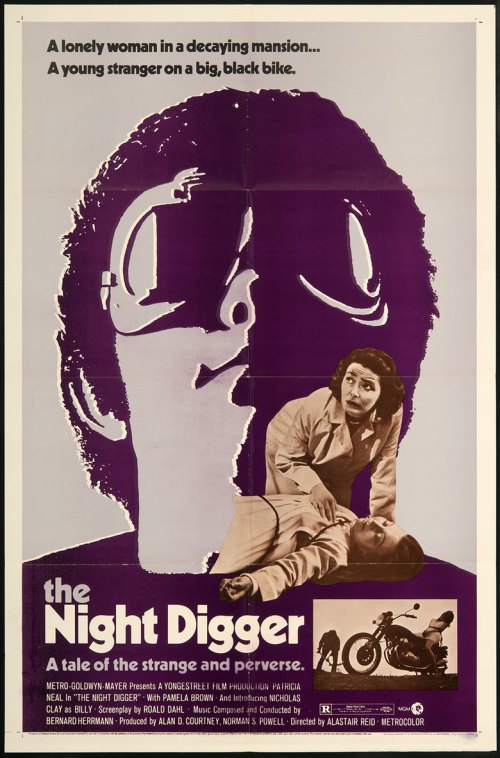
The Night Digger (1971)

By Richard Winters

My Rating: 6 out of 10

4-Word Review: Handyman holds dark secret.

Maura (Patricia Neal) is the repressed daughter of Edith (Pamela Brown) who both reside in a large gothic mansion. Maura has never married and completely controlled by her overbearing mother, but feels she has no way of getting out of it. One day Billy (Nicholas Clay) rides in on his motorcycle looking for work. He wants to be the resident handyman. Maura declines to hire him, but is overridden by her mother. Soon Billy is living at the mansion with the other two and helping out by fixing things when he can, but Billy is tormented by his tortuous past, which leads to a twisted conclusion.

The film is based on the novel ‘Nest in a Fallen Tree’ by Joy Crowley that was adapted into a screenplay by Roald Dahl who at the time was married to Neal. I’ve never read the novel, but feel it must assuredly have more context particularly with Billy, than what you get here. The plot certainly has some intriguing elements, but it all gets lost with the poorly defined characters. For instance there’s several flashbacks shot in black-and-white showing Billy being tormented by a group of women, but no explanation for who these women were or why they were doing it, or why Billy was got caught up in that situation to begin with. Without more of a backstory the plot and people in it don’t mean as much and the film becomes transparent.

I did though like the directing by Alastair Reid, which is the one thing that holds it together. He makes great use of shadows and darkness and the brief scenes of Billy’s attack on women have a chilly visual effect. I also loved the setting shot at Oakley Court, which is a large stately mansion built in 1859 and now used as a hotel. The scene where Maura goes searching for Billy in his room and opens up what you think is a closet door, but instead is just a gateway that leads to three other rooms shows just how immense the place was, which though does prove to be a bit problematic if you think about it. Why would these two lonely women live in such a large place and if they aren’t rich, which Edith states in the scene where Maura serves them steak dinner, which  she states they ‘can’t afford’ then where did they find the money to own such a large place and maintain it?

The acting by Brown and Clay is good and some interesting bits by Graham Crowden in a supporting role, but Neal seems miscast. I realize she got the part because she was married to the screenwriter, but she looks almost as old as Brown, who plays her adoptive mother, but in reality there was only a 9 year age difference. Her character, like with Billy’s, is not fleshed-out enough making her actions more confusing than revealing like when she despises Billy’s presence at one point only to suddenly throw herself at him the next.

The ending is disappointing. I sat through this wondering what the twist was going to be, but there really isn’t any and it just leaves more questions than answers. Apparently Bernard Herrmann, who was hired to do the music, disliked the ending immensely and this was the first thing out of his mouth when he sat in to screen the film. He even threatened not do the soundtrack unless it was changed, but after arguing with Dahl he eventually caved, but personally I wished he had gotten his way.

Alternate Title: The Road Builder

My Rating: 6 out of 10

Released: February 25, 1971

Runtime: 1 Hour 37 Minutes

Rated R

Director: Alistair Reid

Studio: MGM-EMI

Available: DVD-R (Warner Archive), Amazon Video, YouTube

Stone (1974)

stone1

By Richard Winters

My Rating: 7 out of 10

4-Word Review: Somebody’s killing the bikers.

Toad (Hugh Keays-Byrne) is a member of the Grave Diggers biker gang who stops off one sunny day to hear a politician giving a speech at a park. He has just taken some acid and feeling the effects of it and so goes straying from the rest when he sees a shooter hiding inside a nearby building and when the gun goes off and kills the politician the bikers gets blamed for it. Soon members of their group start getting knocked-off in bizarre ways convincing them that somebody is after them for what they witnessed. Stone (Ken Shorter) is the long-haired police detective who infiltrates the group in order to find out who the killer is, but the bikers are initially unhappy with a ‘pig’ being a part of their organization, but eventually they form a friendship and work together to nab the bad guy before he kills more.

The story was originally meant as an episode for an Australian TV-show, but when that series got canceled before this episode could air, it was then reworked into a feature film. Real Australian bikers were used as supporting players with many of them being paid with free beer for their efforts. The film eventually did quite well at the box office and has garnered a cult status worldwide although the 99 minute length, which is what is widely available, was not the original cut, which was much longer at 130 minutes, but director Sandy Harbutt did not like this version, so this became a rare occasion where the director’s cut leaves out many scenes that was originally shown in the theaters.

As a film it’s not too bad and I particularly liked it’s moody opening that has a lot of weird camera angles and freeze-frames. The funeral procession showing hundreds of bikers careening down the highway leaves a memorable impression as well. The killings are cool too, including a dangerous stunt that required a driver to ride his bike off an 80-foor cliff and into the ocean.

On the drama ends there’s some interesting moments including Stone’s initiation, but when he’s off by himself it gets boring quick especially since Shorter’s mop-top hairstyle makes him look more like a lost singer to a ’70’s Glam band than a cop. The film only works when the bikers are in it and becomes nothing more than a tepid, pedestrian drama without them. The wrap-up isn’t as interesting as the opening and I kind of wondered if the mystery angle even needed to be put in as there are long segments where the investigation isn’t even talked about to the point that it almost seems forgotten.

The much ballyhooed violence isn’t all that impressive either with the fist-fights looking like poorly staged stunt work by amateurs. They’re also quite brief and don’t take up as much of the runtime as you’d expect. However, as a character study it has an appeal as I found the bikers themselves to be a fascinating bunch and wanted to get to know them better and the plot should’ve focused on them solely.

My Rating: 7 out of 10

Released: June 28, 1974

Runtime: 1 Hour 39 Minutes (Director’s Cut) 2 Hours 10 Minutes (Original Studio Version)

Not Rated

Director: Sandy Harbutt

Studio: British Empire Films Australia

Available: DVD


Stir (1980)

By Richard Winters

My Rating: 8 out of 10

4-Word Review: Prisoners stage an uprising.

China Jackson (Bryan Brown) was a part of an earlier prisoner revolt and when he was released he became a media advocate informing the public about the rotten conditions of the South Australian prison system and the abusive tactics of those running it. When China returns to prison after committing another crime while on parole the guards make sure that life for him on the inside is made as miserable as possible to get back at him for what he said. Yet as stirrings inside the jailhouse begin to grow and fears of a violent uprising manifest, the guards begin working with China in an attempt to quell it, but even his efforts to calm things backfire leading to a massive revolt.

The screenplay was written by Bob Jewson, which as the epilogue states, was a prisoner inside the Bathurst Jailhouse in February, 1974 where rioting lead to the place being almost entirely destroyed. The story here touches on many of the elements that Jewson faced while incarcerated and several of the supporting cast members in this film were actual prisoners during that riot.

The film has an impressively gritty feel that far exceeds most other prison flicks. Similar to Fortune and Men’s Eyes the camera gets situated inside the cell instead of being placed outside of it and then looking in. The result gives the viewer the feeling of being locked into the cramped, dingy cell alongside the  prisoners leading to a claustrophobic and uneasy feeling, which lasts for the entire duration of the movie. When the guards burst into it for no apparent reason and begin riffling through the prisoners things and pushing them up against the wall you sense their tension and can relate to the ongoing stress that they must live with.

I also loved how when the riots break out the camera takes a point-of-view perspective by running along with the prisoners has they tear the place apart making you think that you’re one of them. Later, when the guards reclaim control, the camera again takes the point-of-view perspective this time making you feel like you’re being marched through the gauntlet as they take turns beating each prisoner with their rubber batons, which literally made me wince as I could imagine the same type of pain that they were going through.

The casting of Bryan Brown I initially didn’t like. He’s a good actor, but too well known of a face, even for back then, so it was hard for me to detach who he was from some of the other parts he has played though his increasingly intense performance does help. I did like that one of his front teeth appears decayed here and they left it that way for filming, which enhances the gritty quality versus doing the Hollywood treatment and having it capped. I did though have a problem with him getting shot in the back of his shoulder, but he continues to be able to move his arm easily without any apparent pain, which I surmised would’ve been doubtful.

Spoiler Alert!

While the film does have its slow, talky moments I did appreciate how we see things from both the prisoner’s and guard’s perspectives. Most other prison flicks like to paint the guards as being all bad, but here we’re made to understand their fear and how not all of them were on the same-page and at times even openly at odds with each other. The third act is where the violence explodes and it’s effective, but what I found most disturbing was the aftermath where the prisoners get rounded up and put into pens that were even smaller than the cells the they came from looking almost like animals herded into a cage and making their protest and anger, some of which was quite justified, seem futile and pointless as things just went right back to the way they were before.

My Rating: 8 out of 10

Released: August 31, 1980

Runtime: 1 Hour 36 Minutes

Director: Stephen Wallace

Studio: New South Wales Film Corporation

Available: None at this time.