Category Archives: Movies with a rural setting

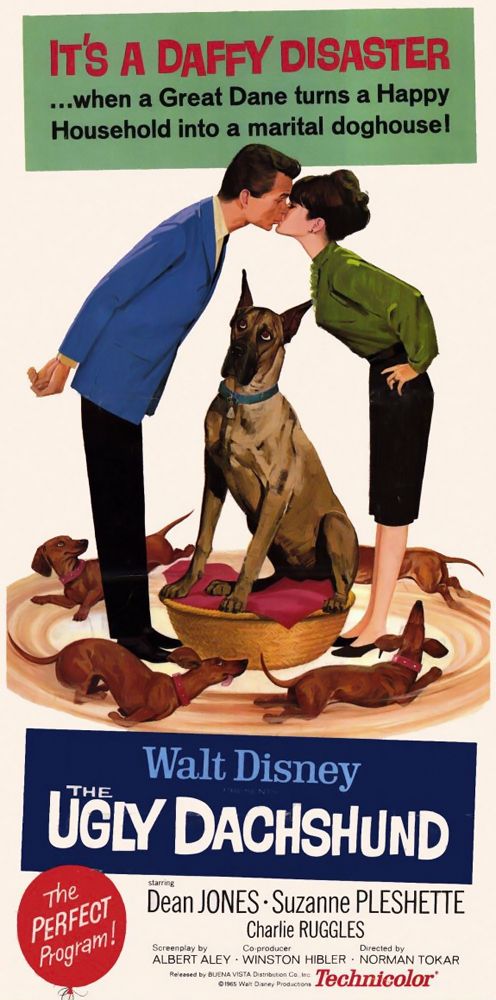
The Ugly Dachshund (1966)

By Richard Winters

My Rating: 7 out of 10

4-Word Review: Dog has identity crisis.

Fran (Suzanne Pleshette) and Mark (Dean Jones) are a married couple who are proud owners of a dachshund named Danke. When they take her to the pet hospital to give birth to her liter the veterinarian (Charlie Ruggles) mentions to Mark that he has a Great Dane on hand that has also given birth, but pushed away one of  her puppies due to having a lack of milk for him. Mark decides to take the pup home and pretend that he’s one of the liter, but it soon becomes apparent to Fran that he isn’t. The dog, who Mark names Brutus, starts to think that he’s a dachshund like the others and even tries to walk like them, but his large size causes many problems for the homeowners as he inadvertently destroys much of the home, which is usually at the instigation of the other dogs who never get blamed. Fran pressures Mark to get rid of the dog, but he continually refuses, which eventually puts a strain on their marriage.

For a Disney movie this one, which is based on the 1938 novel of the same name by Gladys Bronwyn Brown, isn’t too bad and has much better character development than many of the others that the studio produced. The distinction between their personalities is clear as is the dynamics of the marriage where each learns, like in any real union, to begrudgingly give-and-take in order to make the other partner happy. The film though comes off as quite dated in the fact that they sleep in separate beds, I guess seeing them in the same bed would’ve been considered by some in that era as ‘racy’, but what’s the use of getting married if you still end up having to sleep alone?

The comedy starts out a bit slow and young children may get bored with it at the beginning, but it does redeem itself once the dogs proceed to destroy everything in sight. It’s refreshing change to see animals causing the chaos instead of goofy people like in the other Disney flicks and they’re a lot funnier at it too, but the adult side of me had to cringe a bit knowing all the money it was costing the homeowners seeing their place and everything in it turned to shreds. It also hurts the humor that Brutus is always constantly getting blamed for the mess when it’s really the bratty dachshund’s that cause it, but are never adequately punished. Certain modern viewers may also be uncomfortable with the Japanese themed party that the couple hold at their home, which also gets destroyed by the dogs, as it features a lot of cultural appropriation, which in this era has become a big no-no.

The three acts serve as three distinctly different stories. The first one deals with the couple feuding over the dog, the second one has a cat burglar on the prowl, and the third centers on Mark training Brutus for a dog show. While the cat burglar thread does feature a funny scene where Brutus forces a policeman, played by Kelly Thordsen, up a tree and traps him there the entire night, we never get to see the actual burglar. The story would’ve been stronger had the dog caught the real bad guy instead of just scaring an innocent man due to mistaken identity. The third story is weak too as Brutus had very little training before he enters the contest, which seemed rushed and unrealistic.

The only real complaint that I had with the movie, which I overall found to be kind of cute,  was that the two main characters should’ve been children instead of adults. This is a kids movie and kids relate better to protagonists who are their same age. Having a sister into her dachshunds and a brother in love with a Great Dane would’ve entered in some interesting variables though Jones and Pleshette play their parts well and they reteamed 10 years later as another married couple in the The Shaggy D.A. 

My Rating: 7 out of 10

Released: February 4, 1966

Runtime: 1 Hour 33 Minutes

Not Rated

Director: Norman Tokar

Studio: Buena Vista

Available: DVD, Amazon Video, YouTube
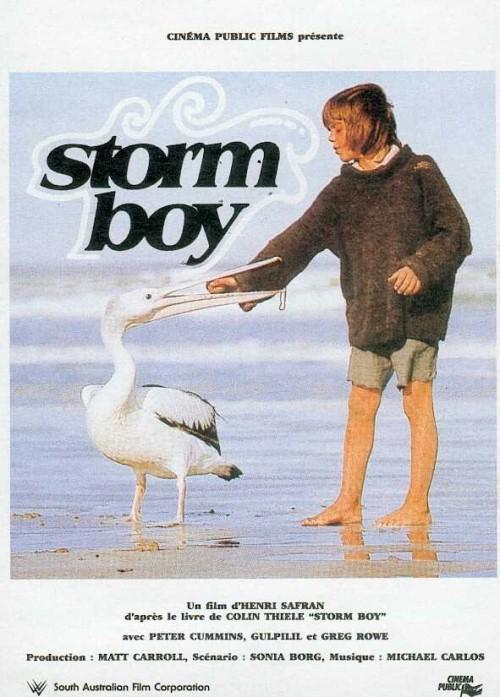
Storm Boy (1976)

By Richard Winters

My Rating: 6 out of 10

4-Word Review: A boy raises pelicans.

Mike (Greg Rowe) is a 10-year-old boy living in a ramshackle home near the ocean on Australia’s southern coast. He lives with his reclusive father Tom (Peter Cummins) who wants no connection with the outside world and won’t even allow his son to have a radio. One day Mike meets Fingerbone (David Gulpilil) an aborigine living alone on the beach due to a falling out with his tribe. Together they come upon a group of hunters shooting at birds. Fingerbone is able to scare them away, but not before they’re able to shoot and kill a mother pelican leaving her young to die of starvation. Mike decides to take the baby birds home with him and despite his father’s initial objections he’s allowed to keep them. The bird’s require a lot of food, but Mike is able to keep them fed and once they’ve grown he and his father set them free, but one of the bird’s, whose name is Mr. Perceval, comes back and Mike grows a strong bond with him.

The film is based on the children’s book of the same name written by Colin Theile, which won many awards. The film has acquired many legions of fans as well, but filming it proved to be quite complicated. Training the birds took 12-months and many times they’d fly off during the filming including one of them flying into a nearby private party that scared many of the party goers there. They also had the challenge of trying to get the Rowe to interact with the bird as he was initially quite scared of them.

Personally I’ve never found pelicans to be all that cute or lovable and their large beaks are an odd sight second only to that of the toucan’s. I did though enjoy seeing the baby pelicans who don’t even have any feathers on them and was hoping more time would be spent on to their feeding and caring, but the movie glosses over this part pretty quickly.

The bird storyline is in fact only one part of the movie as the script also focuses on several other threads including a local teacher (Judy Dick) trying to get the father to allow Mike to attend school with the rest of the children. There’s also a segment where a bunch of young men in dune buggies come out of nowhere late one night and proceed to tear up, with their vehicles, the home that Mike and his father live in. I suppose the reason this is put in is to show how the bird warns Mike of the impending danger, which gets him out of the house, but otherwise it has no connection to the rest of the plot and it’s left a mystery to what motivated these young men to do it nor are they ever seen or heard of again.

The performances are quite good, which is the one thing that holds it all together. Cummins as the father impressed me the most because he is so different here than any of the other parts he’s played. Gulpilil is entertaining too and has some of the most lines, which is the exact opposite from Walkabout where he had none. Rowe is excellent as well despite the fact that he wears the same clothes the whole way through. Only at the very end is he seen wearing something other than his drab green sweater, but I felt for the sake of body odor he should’ve had a variety of outfits to wear all the way through. I realize they were poor, but even poor people don’t usually wear the same clothes everyday for months on end.

Spoiler Alert!

The ending, in which the bird gets shot by a group of hunters, most likely the same ones that killed the bird’s mother, is very predictable, which is the film’s biggest drawback. No real surprises and the life lesson’s are pretty routine and something seen in a lot of children’s stories, so if you take the pelican out of it it’s not all that special. The constant gray, overcast sky gets a bit depressing to look at too, but the film has found a loyal following and was remade to a degree in 2019, where Geoffrey Rush plays a now grown Mike and relating back to his kids about his adventures when he was young. It also stars Gulpilil as the father of Fingerbone Bill.

My Rating: 6 out of 10

Released: November 18, 1976

Runtime: 1 Hour 25 Minutes

Not Rated

Director: Henri Safran

Studio: Roadshow Films

Available: DVD-R (Region Free), Blu-ray (Region 0)

Fortress (1985)

By Richard Winters

My Rating: 7 out of 10

4-Word Review: Australian schoolchildren get kidnapped.

Sally (Rachel Ward) is a school teacher working in rural Australia where she teaches in an old-fashioned one-room school house. The ten students are made up of different ages and an even mix of boys and girls. One morning while class is beginning a group of four masked men invade the building and take the children hostage. They throw them into an underground cave and then put a large boulder over the cave opening to lock them in. Sally and the students go searching through the underground caverns and manage to find another way out, but every time they think they’ve reached freedom the kidnappers always seem to be one-step ahead of them.

The film’s main selling point are the children, which at first I didn’t think would be a good idea. It can be hard to get kids, for many of them this was their first movie project, to show the necessary emotions in an effective way and while they don’t always respond to things quite the way I think a real kid would I still found their resiliency to be uplifting. I also enjoyed seeing how the older boys grew into men during the experience and watching Sally precariously balance her obligation of the being the mature, brave one while still hiding her inner emotions of fear and panic.

The location shooting takes advantage of many different Australian locales including the Buchan Caves where the action in the first act takes place. Later on we’re given exciting view of a them running through the forest late at night in an attempted escape as well as them returning to yet another cave for the climactic finish. The story manages to be reasonably tense throughout though the killers always managing to catch-up with their victims no matter where or how far they go does ultimately test the plausibility. The film’s tone is a bit off-kilter as well. Most of the time it seems to want to be a story of victim empowerment and resourcefulness, but then intermittently throws in some jarring violence, which wasn’t necessary.

Spoiler Alert!

While it’s great seeing these kids remain stoic it also seems hard to believe. After being put in the cave they find a way out where they then spot a farmhouse, which was several miles away only to ultimately realize that the kidnappers have been there waiting for them. They then great treated to a man getting gunned down before their very eyes, but manage to escape from their to yet another cave that is many miles away and again the kidnappers find them and continue their assault of terror. Normally after all this most people, especially young children, would feel overwhelmed and defeated and eventually fall into a traumatized state instead of the warrior mentality that they do. While the good guy fighting back approach may be more of an audience pleaser I wasn’t sure if this was a realistic response when given the daunting circumstances. Also, why would the bad guys not invade the cave the kids are in right away instead of staying back and giving the group ample time to create the makeshift weapons’, stuff that would take hours if not days to make,  in order to be ultimately used against the kidnappers like they are?

The Lord of the Flies – themed twist ending comes out of nowhere and seems too forced to be effective. Watching the group surround the last of the bad guys and viscously stabbing him with their weapons’ in slow motion made enough of a statement and that’s where it should’ve ended. Adding in the denouncement where the kids are back in school and have the heart of the killer placed inside a glass jar in the middle of the room was just too heavy-handed. With what they’ve been through most kids would never want to step foot in that school again and where are the parents during all of this as they’re never shown?  Having a human heart in a jar is pretty nasty and you’d think  one of the kids would’ve talked about it to others and word would ultimately get around.

End of Spoiler Alert!

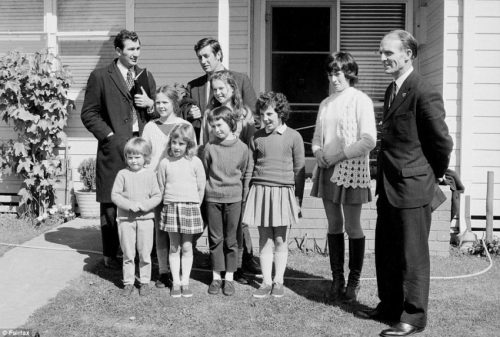
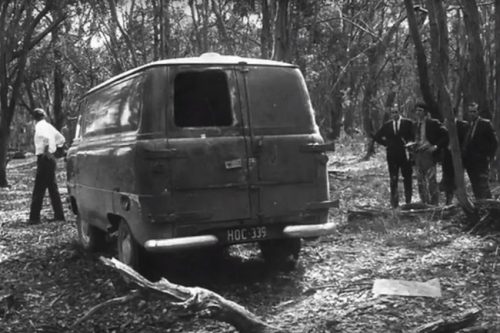
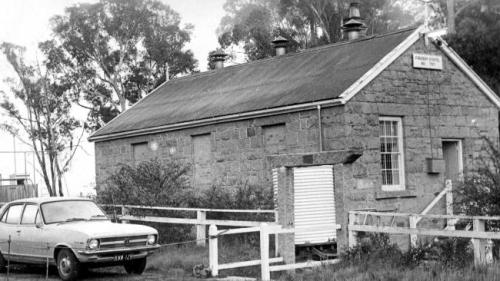
The plot is loosely based on an actual event that occurred in the small town of  Faraday, Australia on October 6, 1972 when Edwin Eastwood and Robert Boland kidnapped a young teacher and her students from a remote one-room school house similar to the one depicted in the movie. However, there are many differences between the real event and what happens in the film. For one there were only 6 students and all of them were girls. They were never taken to a cave either, but instead held in the back of a van. When the kidnappers left the next morning to retrieve the ransom money the teacher, whose name was Mary Gibbs, managed to kick out the back door panel with her leather boots and escape with the children and eventually the two men were later caught.

The irony though is that’s not where the story ends as Eastwood was able to escape from jail in 1977 where he then kidnapped another group of children and their teacher, but was again caught. He then served a 16 year sentence, but was eventually paroled in 1993 and has been a free man working as a truck driver since.

Teacher Mary Gibbs and the six students who were kidnapped during the real-life incident.

The van in which Gibbs and the students were held captive.

The school house in which Mary Gibbs and her six students were taken hostage on October 6, 1972.

My Rating: 7 out of 10

Released: November 24, 1985 (HBO Broadcast)

Runtime: 1 Hour 28 Minutes

Rated: TV-MA

Director: Arch Nicholson

Studio: HBO Premiere Films

Available: DVD

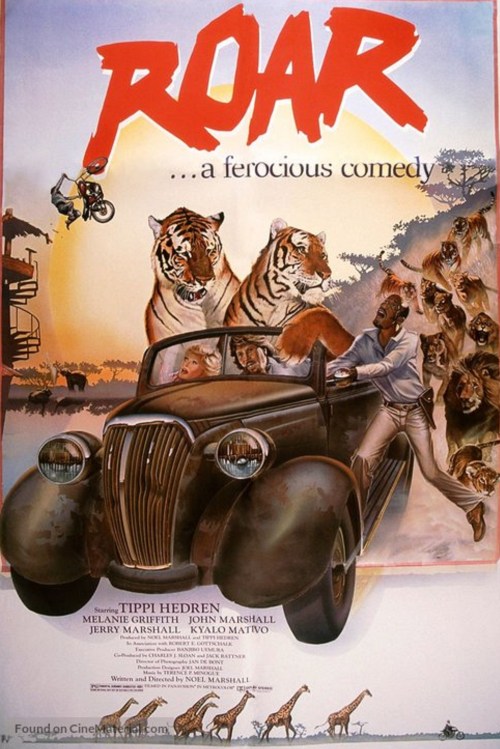
Roar (1981)

By Richard Winters

My Rating: 5 out of 10

4-Word Review: Lions takeover a house.

Hank (Noel Marshall) is a naturalist residing in east Africa where he studies the behaviors of lions and keeps several of them in his home. His wife Madeline (Tippi Hedren), daughter Melanie (Melanie Griffith) and two sons (John Marshall, Jerry Marshall) travel from Chicago to visit him. However, when they arrive there’s a mix-up causing Hank to miss picking them up at the airport. The four then travel to the home without him. When they get to the place it becomes overrun with the lions and the family is unable to handle them causing much havoc and destruction as they try to keep from getting attacked and bitten.

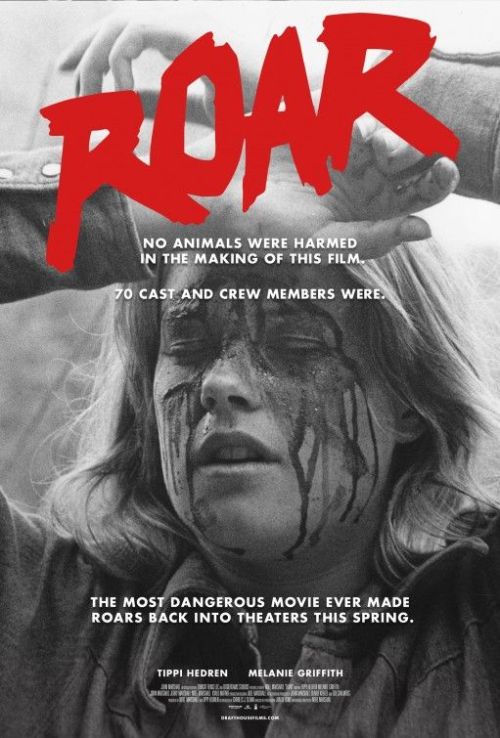
The idea for the film was inspired by Marshall and Hedren, who were married at the time, as they traveled through Mozambique in 1969. While going on a nature tour their guide pointed to a abandoned home that had become inhabited by lions and they thought this would make for a funny movie. It took them over 7 years to find the funds to be able to actually film it and then another 3 years before filming was complete. Over 150 lions were used at a cost of $4,000 a week to feed forcing the couple to sell their 3 homes just to be able to have enough money to cover the food and other expenses. Initially it was never released in the US and only abroad until in 2015 it got reissued to Alamo Drafthouse theaters were it got dubbed as being ‘the most dangerous movie ever made’ due to the many injuries inflicted on the cast and crew by the animals during the production.

To some degree the loose story works. I liked the scene where local official come to Hank’s home in their boats and become inexplicable attacked by the lions without warning even seeing actor Marshall’s hand bitten by one of the beasts, which all comes off as quite realistic and unstaged, something you rarely see in most Hollywood films. Unfortunately having to spend 90-minutes watching the family trying to get away from the lions becomes quite redundant. There’s constantly something going on and there’s a lot of chaos and running around, so visually it’s never boring, but the story goes nowhere. Ultimately it’s like gazing at a hamster inside their cage running inside a spinning wheel, which might be fun for while, but eventually pointless.

Savage Harvest, which I reviewed earlier in the week and came out around the same time, had a much more consistent tone. At least we knew that was intended to be a suspenseful thriller and for the most part it delivered, but here it gets increasingly confusing. While this budget is better and I enjoyed the opening sequence showing the beautiful topography of Kenya I still came away liking the other movie a bit better. The lion attacks are more graphic and in-you-face here, but without any sufficient tension it’s not captivating to sit through. It’s supposed to be a comedy and was marketed as such, but it gets too intense for that. Had the cast been made up of evil poachers that get harassed by the animals the prolonged scenario might’ve worked, but watching a bland family as the intended ‘victims’ isn’t enough to hold sustained interest.

I admire Hedren’s willingness, and the whole cast, for putting themselves in harm’s way and there are a few cute moments like when a lion plays with a skateboard, but it relies too heavily on the action, and the animals who are given onscreen credit along with the rest of the cast, but an actual plot was needed. With that said it’s still a one-of-a-kind movie that needs to be seen to be believed. I’m not sure if this one is included in the book ‘1001 Movies You Must See Before You Die’, as I have not always in agreement with some of the other ones that got listed in it, but this one definitely should be.

My Rating: 5 out of 10

Released: October 30, 1981

Runtime: 1 Hour 38 Minutes

Rated PG

Director: Noel Marshall

Studio: American Filmworks

Available: DVD

Savage Harvest (1980)

By Richard Winters

My Rating: 6 out of 10

4-Word Review: Hungry lions attack family.

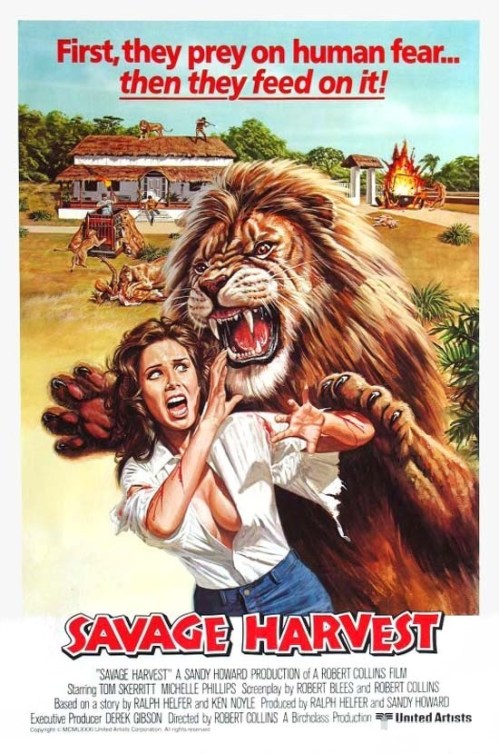
Similar to Roar, which will be reviewed later this week and was released the same year, the plot centers on a family headed by Maggie (Michelle Phillips) who live in Kenya. Due the drought and famine in the area the lions have begun to attack the people. When a pride surrounds their home it’s up to them and Casey (Tom Skerrit), a friend of the family, to fight off the beasts and find a way out of the house and to safety.

Many fans of the film, particularly reviewers on IMDb, will tell you that it’s the footage of the lion attacks that they found riveting and was so scary and realistic looking that it would keep them up at night as kids. Initially though I found some of these attacks not to be all that impressive. In the first one we don’t even see the lion at all just a close-up of one of the frightened villager’s eyes. In the second one, which occurs when actor Arthur Malet gets trapped inside his broken down van, has potential if it had gotten played-out more, but ends up feeling a bit like a cop-out when we again don’t see the lions actually attack him, but instead just a big dent on the roof of his van apparently caused by the lion when he jumps on it and then there’s a quick cutaway only to come back to the scene later after the victim is already dead.

There are other segments that don’t make much sense for instance having a lion somehow crawl through the chimney of the home and into the fireplace, but no explanation for how he was able to get on the roof of the house, nor how a chimney could be wide enough to fit his large body. Later there’s a lion who pops into the living room like it was magic and nothing shown for how he got in.

The film is for the most part a low budget cheapie focused solely on the lion storyline and nothing else. While I did enjoy the moment when the family sings Beatles songs as the lions hungrily try to break into the home I felt the characterizations were too thin. A sub plot might’ve given it a little more depth, but none ever comes and when the lions aren’t on the screen it’s quite sterile.

However, it does get effectively tense if you’re patient and wade through some of the footage of victims looking, even with the quick editing, like mannequins filled with raw meat. The climactic sequence though had me on edge especially as they manage to create a caged contraption out of various household items and then make an attempt to escape while inside it. It’s a truly hold-your-breath moment that more than makes up for any of  the film’s other blemishes.

My Rating: 6 out of 10

May 1, 1981

Runtime: 1 Hour 27 Minutes

Rated PG

Director: Robert L. Collins

Studio: 20th Century Fox

Available: VHS

Tourist Trap (1979)

By Richard Winters

My Rating: 2 out of 10

4-Word Review: Mannequins come to life.

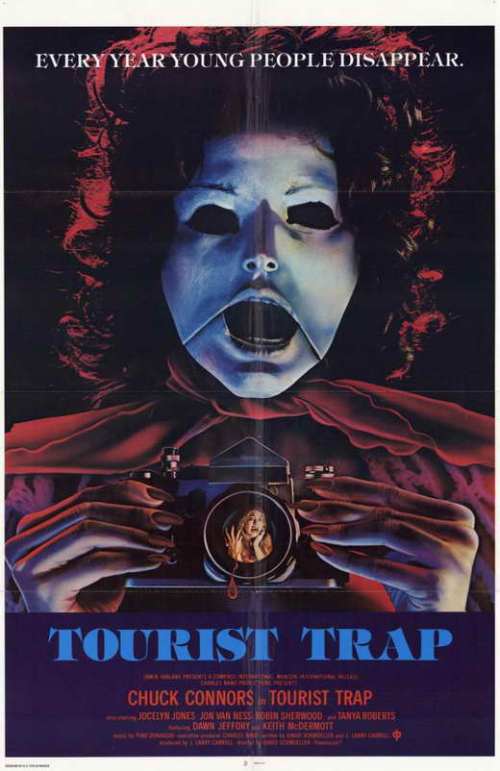
A group of college kids go driving through the countryside in two separate vehicles. When one of the vehicles breaks down, Woody (Keith McDermott), the driver, decides to go off looking for a replacement to his flat tire. He finds an abandoned gas station and when he enters the backroom gets attacked by mannequins and flying objects. Later the young adults in the other car also have their vehicle break down near an old museum that features wax dummies and an eccentric owner named Mr. Slausen (Chuck Connors). Soon the same fate that befell Woody starts to occur to them one-by-one.

With the critical success of director David Schmoeller’s first film, the movie short The Spider will Kill You, which will be reviewed tomorrow, he managed to find enough funding to expand the idea into a feature film. The film though did not do well when first released and sat in virtual obscurity until Stephen King lauded it in his book ‘Danse Macabre’, which brought new attention to it and eventually garnered it a strong cult following. Now, I know everyone has their own unique ideas of what’s scary, but honestly I can’t see what King found about this that was so great.

To me it comes off as just another cheesy low budget slasher flick with very little that is original or interesting. Having the bad guy able to use telekinetic powers I thought was dumb. Why would this backwoods hillbilly be able to harness special powers that 99.9% of the rest of the world’s population doesn’t have? The original version of the script did not have the telekinetic powers present, but the filmmakers were forced to incorporate it at the behest of producer Charles Band, who refused to give the money for the project unless they did.

Chuck Connors, best known for his starring role in the TV-show ‘The Rifleman’, is a bit annoying and was the third choice for the role as the part had been offered to Jack Palance and then Gig Young first, both of whom would’ve been much better, but they turned it down. It’s not like Connors is necessarily bad, but he’s too campy and comes-off like just another tired rehashing of Ed Gein. The ultimate reveal of who the masked killer is offers no surprise at all and most if not all viewers will easily predict who it is long before you finally find out.

The cast of victims are boring too and I didn’t like the sexist undertones where the women, with the exception of the very end, never really fight back at all and almost seem to surrender to their fate and it’s only the men who show any gumption to escape and be aggressive. It would’ve been nice too had their been some nudity, as the females, particularly Tanya Roberts sporting a brunette hairstyle instead of her usual blonde one, look great. Most of these types of films would usually show some skin to help keep things interesting during the slow parts and when they all decided to go skinny dipping I was fully expecting this to happen, but instead you get nothing. Apparently Schmoeller, being a first time director, was too shy to ask them to remove their clothes, but it would’ve helped the film get the coveted R-rating as Schmoeller felt the PG-rating is what ultimately hurt it at the box office.

The only time things gets even slightly creepy is when the mannequins come to life, but that doesn’t happen enough. In retrospect the Mr. Slausen character should’ve been scrapped completely and instead featured a surreal storyline where the college kids find themselves trapped inside a warehouse filled with animated mannequins and forced to single-handedly battle them one-by-one in order to escape.

My Rating: 2 out of 10

Released: March 16, 1979

Runtime: 1 Hour 30 Minutes

Rated PG

Director: David Schmoeller

Studio: Compass International Pictures

Available: DVD, Blu-ray, Amazon Video

Eaten Alive (1976)

By Richard Winters

My Rating: 6 out of 10

4-Word Review: Feeding a hungry crocodile.

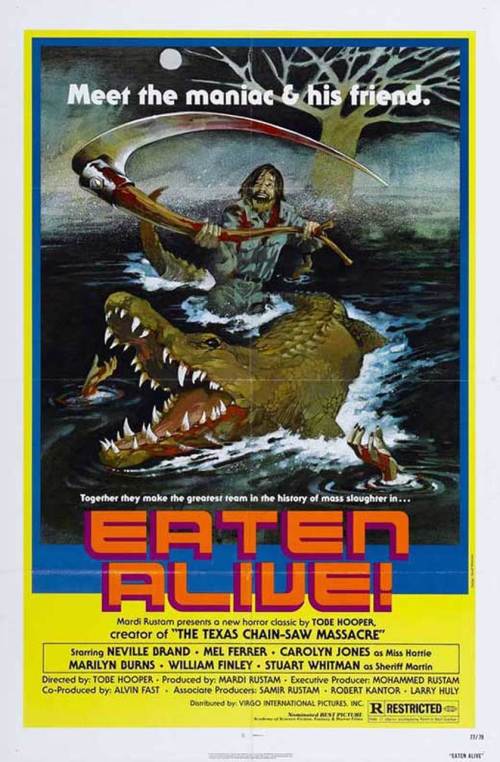
Loosely based on the exploits of serial killer Joe Ball, who owned a bar in the 1930’s in Texas that had a alligator sideshow connected to it and it was rumored that he fed some of his victims to the beast though it was never proven.  The story here centers around Judd (Neville Brand) a backwoods redneck who owns a rundown hotel in the swamp lands where he brings in unsuspecting guests that he feeds to his Nile Crocodile that he has swimming in a pond behind the building.

This film was director Tobe Hooper’s third full-length feature and the first to be financially backed by a studio after the success of The Texas Chain saw Massacre although the bigger budget doesn’t help. I didn’t like that everything gets filmed inside an indoor studio, in this case The Raleigh Studios in Los Angeles as the outdoor scenes look artificial, and the strong red glow, which I couldn’t figure out if it was supposed to be from the sun or a neon sign, gives it too much of a surreal look. Hooper stated that this is the effect he wanted, but it causes the viewer to feel that this is something that is happening in some other planet and for something to be scary one should feel that what there seeing could happen here and to them instead of in a bizarre world far removed from this one.

I had issues with the rundown Starlight Hotel too. It certainly looks spooky, but in a cliched way and that’s the problem. Nobody in their right mind would ever stay overnight there. It looks like a place that might not even have indoor plumbing or electricity. This coupled with Judd the owner, who looks creepy and acts weird, would immediately scare anyone away and the fact that the characters here aren’t bothered by any of this makes them seem too stupid to be believed.

The acting helps especially Brand. He burst onto the film scene in 1949 with many good performances including an acclaimed one in the landmark drama Riot in Cellblock 11, but his rugged appearance made it hard for him to find leading man roles relegating him to supporting parts. By the mid-70’s he admitted in interviews that  he had spent most of the money he had made and was suffering from alcoholism, which forced him to take any role that was offered including some really bad ones. This film though was an exception and a good example of how to make a killer more interesting by not having him behave in a one-dimensional threatening way, but instead show at various times some unexpected traits like fear, confusion, and even sadness.

The supporting cast is great too especially Carolyn Jones as a brothel owner. She looks light years removed from her most famous role as Morticia in ‘The Addams Family’ TV-Show as she walks around with a noticeable hunch and has make-up on her face, which gives her a very wrinkled appearance. William Finley and Marilyn Burns, who famously starred in Hooper’s earlier hit film, are intriguing too as this freaky couple who check into the place, but it’s never sufficiently explained why her character is initially seen wearing a wig, or why Finley talks about losing one of his eyeballs when he clearly hasn’t.

My favorite part though was that of Kyle Richards who plays this 6-year-old girl who manages to escape from the killer and hide underneath the property in a crawlspace. Watching her being chased through the crawlspace by Judd is intense and if the film had focused solely on her it could’ve been a winner.

Unfortunately the other characters aren’t likable and elicit no emotion from the viewer. The plot is thin and offers no unexpected twists or surprises. Hooper seems to be going too much to the same well as his chain saw flick including a foot chase sequence that gets choregraphed in the exact same way as the one between Leatherface and Marilyn Burns. Too much emphasis on atmosphere and grisly violence while an interesting plot-driven story gets forgotten, which is the reason why this production only halfway succeeds.

Alternate Titles: Death Trap, Starlight Slaughter, Legend of the Bayou, Horror Hotel

My Rating: 6 out of 10

Released: October 26, 1976

Runtime: 1 Hour 31 Minutes

Rated R

Director: Tobe Hooper

Studio: Virgo International Pictures

Available: DVD, Blu-ray, Amazon Video

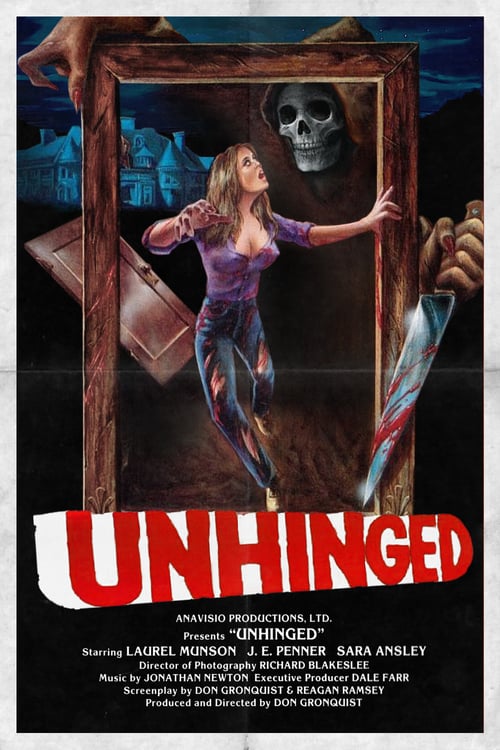
Unhinged (1982)

By Richard Winters

My Rating: 4 out of 10

4-Word Review: Girls trapped in mansion.

Terry, Nancy, and Gloria (Laurel Munson, Sara Ansley, Barbara Lusch) take a trip to rural Washington in order to attend a musical festival. Along the way they run into a freak rain storm, which causes their car to crash into a ravine. They are rescued by Norman (John Morrison) who works as a groundskeeper for the Penroses who live in an isolated mansion. He takes them to the mansion where the girls meet Marion (Janet Penner) who lives there with her elderly mother (Virginia Settle). However, the girls start to sense that there’s someone else on the grounds that also lives there that the daughter and mother aren’t telling them about. Terry hears the heavy-breathing of this person late at night and sees him going into a nearby shed. She tries to investigate only to unearth the family’s deep dark secret the puts all three girls in terrible danger.

The film’s main claim to fame, something it even advertises on its DVD cover, is that it was on one of the 72 films to appear on the U.K.’s video nasties list during the early 80’s. However, if you’ve watched some of the other movies that appeared on that list you’ll realize most are rather tame, especially by today’s standards, so getting put on that list isn’t as notorious as it used to be. The film is also known for having been filmed at the Pittock Mansion, an impressive 46-room estate that sits in Portland, Oregon.

Unfortunately the majority of the movie gets plagued by a low budget/amateur feel and look. The scenes are transitioned by cutting to black and then staying that way for several seconds until you start to worry that picture has gone out, or you’ve gotten stuck with a bad DVD. The dialogue is also too descriptive, or as some critics would say too ‘on-the-nose’. The characters speak in long, full sentences when in reality people don’t talk that way. Instead of having a conversational quality it comes off more as explanatory and in many cases too much so. There also isn’t any need for five minutes of footage showing the girls car driving along a road for us to get the idea that they’re on a trip.

The logic is quite loopy. The girls wake-up to find themselves inside this big home, but are told there are no phones even though these people own this gigantic place that is filled with expensive wines and just about every other luxury. One of the girls is forced to hike through the forest to find help making it seem like this big, beautiful place is not connected to any type of road even though the most rural of homes will still have at the very least a dirt road that will lead to the residence and then be connected at some point to a main road.

I found it odd too that Terry goes to investigate the strange sounds that she is hearing in the attic, but does not bring anything with her for protection. Grabbing a small lamp, or some other heavy, sharp object that she could find, that she could whack over the head of someone should they jump out to attack her would seem to be a no-brainer for anyone else in a similar situation. Yet she chooses to walk into this dark, strange place and go snooping around virtually defenseless.

During the first 75 minutes there are only 2 killings and they’re spread way apart and in between you get stuck with a lot of stilted drama. The only other chills come from seeing a close-up of a guy’s eyeball as he observes the girl’s through a hole in the wall. There’s also a couple of moments where the old lady sits at the dinner table and looks at two glass cups in front of her in a sort-of spooky way that I guess is supposed to be scary, but I could never quite figure out why she was doing that, or what it was supposed to mean.

Fans of this film will tell you that the ending makes sitting through the rest of it worth it. The finale is quite grisly and violent and even has an unexpected surprise, so for some that may be enough. It does have a certain tinge to the more popular Sleepaway Camp even though this one came out a full year before that one.

My Rating: 4 out of 10

Released: October 15, 1982

Runtime: 1 Hour 19 Minutes

Not Rated

Director: Don Gronquist

Studio: Megastar Films

Available: DVD

Mountaintop Motel Massacre (1983)

By Richard Winters

My Rating: 4 out of 10

4-Word Review: Crazy lady kills guests.

Evelyn (Anna Chappell) has just been released from a mental institution and gone back to running a rural motel. One day she finds her daughter Lori (Jill King) practicing witchcraft in their basement. Evelyn becomes so enraged by this that she ends up killing her daughter with a garden sickle. The police believe her story that it was simply an accident that happened outside in their garden and do not arrest her, but the voices inside Evelyn’s head convince her that everyone else is out to get her. This madness sends her on a killing spree at her hotel in which she is able to enter each person’s room through a trap door in their bathrooms that is connected to an underground tunnel.

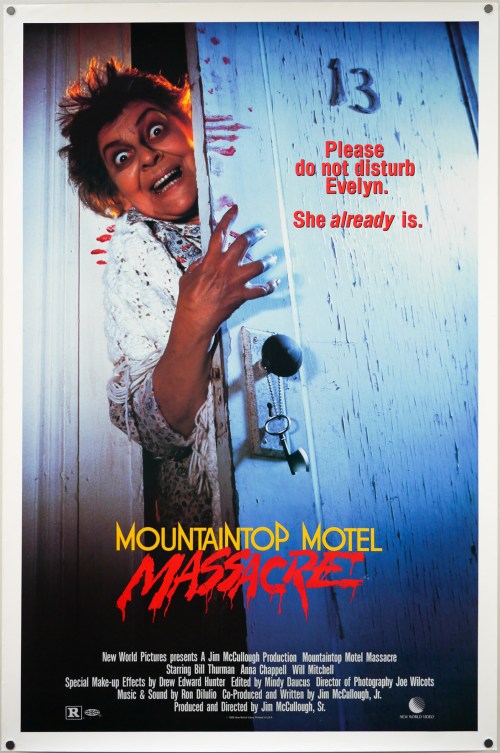
The film did only moderately well when it was released to regional theaters and then ultimately nationally in 1986 and a lot of the problem could reside around its promotional poster seen above, which seems to imply that this is a campy horror comedy, which it is not. It also features a completely different woman posing as Evelyn that is not the same one who plays her in the film.

As for the film itself it starts out okay. I liked how it comes up with this very offbeat premise about an old lady killer, but then approaches in a realistic way. Nothing gets jazzed-up for the sake of horror and everything gets handled with a slow deliberate pace including a drawn out scene showing an ambulance crew trying to resuscitate her daughter. The on-location shooting, which was filmed in an around Oil City, Louisiana in March of 1983 gives the viewer an authentic view of the winter landscape in the south and the hotel itself, which was shot at an abandoned fishing camp that sat on Cross Lake in Shreveport, helps add a rustic flair.

The cast of victims are much more diverse than in most slasher movies and fortunately doesn’t just feature teenagers or college kids. I was especially impressed with Major Brock, who plays Crenshaw, who had worked for 31 years as a baggage handler at Delta Airlines, but was convinced by the film’s director to take on the role despite having no acting experience, but he does really well, he even sleeps convincingly, and I enjoyed the character’s no-nonsense attitude and wished he had remained in it the whole way.  I was actually disappointed to see any of them die and instead wanted to see how they could get past their contrasting personalities to work as a team to overcome the crazy lady, but that doesn’t happen.

The killings though are quite boring and the idea that a sickle would be able to kill people so easily with just one swipe after spending most likely years being used in the garden, which would’ve dulled its blade, is just not believable. The victims are also too passive and just stand there when the lady attacks them instead of fighting back. The killer is after all an elderly woman, so you’d think these younger people could’ve overpowered her by even just kicking at her, which would’ve slowed her advance.

The climactic battle inside the underground tunnel offers some tension, but it seemed weird that when the people would open up the trap door that lead to the tunnel there would be this bright ray of light that would spew out making it seem like the tunnel was well lit, but then when they’d get down there the only source of light would be their lanterns, so if that’s the case were was the initial ray of light coming from?

The film would’ve worked better had it not given it all away right at the start. The identity of the killer should’ve been kept a secret until the very end and Evelyn should’ve initially been portrayed as this sweet old lady who you’d never suspect. The tunnel should not have been made known until later either and thus made it more intriguing for the viewer in trying to figure out how the dead bodies of the victims were disappearing out of their rooms.

My Rating: 4 out of 10

Released: July 15, 1983

Runtime: 1 Hour 35 Minutes

Rated R

Director: Jim McCullough Sr.

Studio: New World Pictures

Available: DVD, Amazon Video, YouTube
The Last House on the Beach (1978)

By Richard Winters

My Rating: 7 out of 10

4-Word Review: Robbers hold nun hostage.

Aldo (Ray Lovelock) leads a gang of three robbers who stage a bank robbery in broad daylight, but things go wrong and lives get lost. During the getaway their car breaks down and they’re forced to hideout in a nearby home that sits next to a beach. Inside the home is Sister Christina (Florinda Bolkan) a nun who takes in wayward teen girls and helps them find their way. She was in the middle of rehearsing a play with them when the men break-in. The thugs soon takeover, raping two of them while terrorizing the rest. At first the women are compliant, feeling they have no other choice, but eventually they decide they’ve had enough and turn-the-tables on their captors.

While this film will initially come-off as just another Last House on the Left rip-off the production values are much better than most American low budget cheapies and the location quite scenic. The place didn’t look like any type of religious school to me and more like an ocean front pad for a rich person, it was more than likely the home of one of the film’s producers who decided to use it in place of a real school to save money, but the setting ultimately still works. Too many other horror movies feel the need to go for the cliché, like having things take place at night in some abandoned building, or rundown home, so having it work against this is a refreshing change. In some ways it makes it even scarier because it shows that bad things can happen even in the affluent suburbs and that nobody is truly immune from crime and violence.

I liked the way the bad guys were all good-looking too especially Aldo whose face could be on the cover of  teen heartthrob magazine. Again, other horror films feel the need to make the killer look menacing, disfigured, or creepy in some way, but working against this stereotype makes it more unsettling by showing that anyone can harbor evil. The women are all good-looking too with great figures, but in this regard it doesn’t work as it didn’t seem realistic that only women who looked like models would join this school and there needed to be at least one plain-looking, overweight one to give it balance.

The set-up happens a bit too quickly. It would’ve been more frightening if things had been shown at the start from the women’s perspective, rehearsing for the play, and then having these robbers burst in unannounced versus showing the robbery, which ends up getting reshown through flashback later on anyways, and everything from the men’s perspective. Horror works when there’s a surprise and in that regard this film misses a prime opportunity early on.

However, once it kicks in I was surprised how compelling it was. There isn’t a lot of violence, but when there is it’s bloody and pretty graphic, even the injury that one of them receives (Stefano Cedrati) looks quite realistic, and shown close-up, and I liked how this becomes and on-going part of the plot and doesn’t just magically heal and get forgotten.

The film also features two prolonged rape segments with the first one done in slow motion. Some may say this is exploiting the situation, but ultimately it ends up making it even more unsettling. The second rape  is equally disturbing as it features a woman (Sherry Buchanan) being violated by a wooden cane and done from her point-of-view.

Spoiler Alert!

The ending for me was the best part. Rape and revenge flicks have been done a lot and there’s also been films like Straw Dogs where a wimpy guy ultimately turns violent through necessity, but this film does it better than those. Seeing the angry looks on the once tranquil women’s faces as they take turns beating the man to death was actually pretty shocking as you’re not quite expecting it. It successfully hits-home the fact that anyone can be provoked into violence even those that deny they have that ability and gets the viewer to realize they harbor that tendency too since these guys were so vile you actually end-up enjoying seeing their comeuppance.

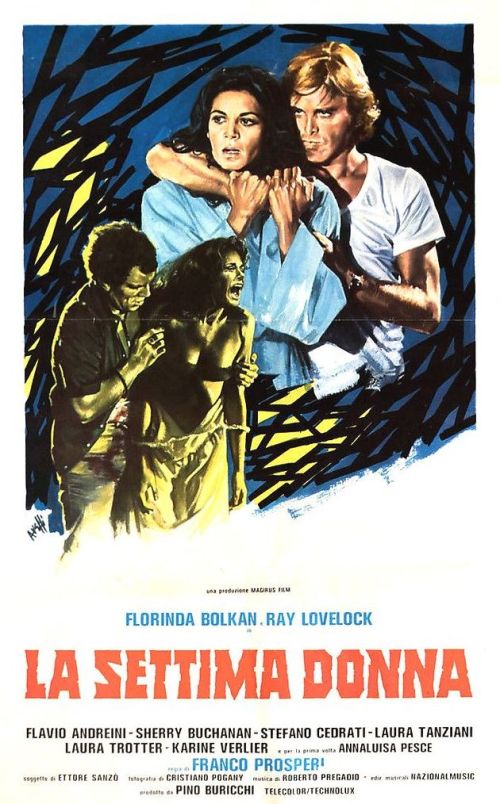
Alternate Title: La Settima Donna

My Rating: 7 out of 10

Released: April 20, 1978

Runtime: 1 Hour 26 Minutes

Not Rated

Director: Francesco Prosperi

Studio: Magirus Film

Available: DVD, Amazon Video