Category Archives: Movies with a rural setting

Summerfield (1977)

summerfield4

By Richard Winters

My Rating: 7 out of 10

4-Word Review: Island holds dark secret.

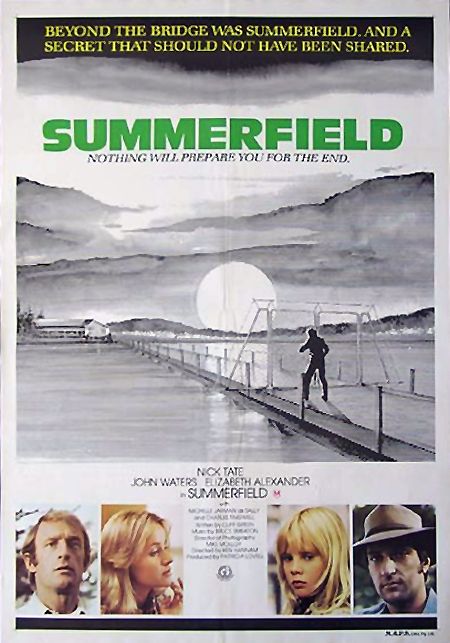
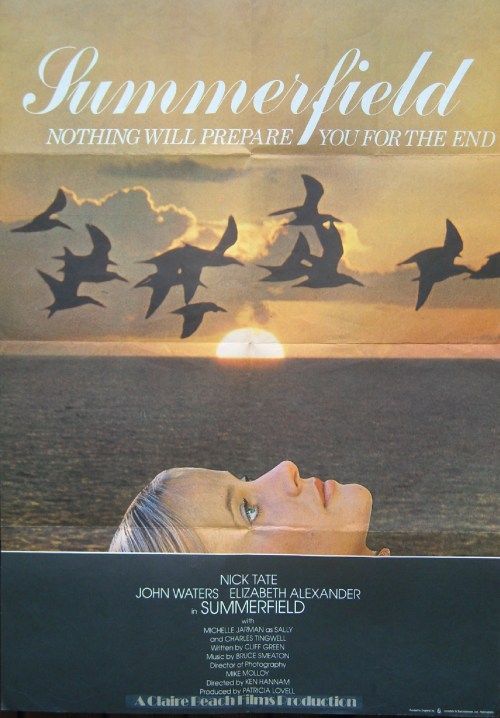
Simon (Nick Tate) is the new teacher at an elementary school in a seaside community. He soon makes the acquaintance of Sally (Michelle Jarman) who’s one of his pupils and she invites him out to the island of Summerfield where she lives with her mother Jenny (Elizabeth Alexander) and Jenny’s brother David (John Waters). While visiting he accidently hits Sally with his car causing her a broken leg and forcing Simon to visit the residence twice a week to give her personal tutoring. He soon starts up a relationship with Jenny and realizes to his surprise that his predecessor had also dated her, but has now disappeared without a trace. This along with finding out that Sally has a rare blood disorder causes him to do some investigating of his own, but the answers that he finds are both shocking and perplexing.

The story here, at least the main plot point where a new teacher comes in to replace an old one who’s disappeared, is quite similar to Unman, Wittering and Zigowhich was a British thriller that came out in the early 70’s however, this film approaches it in a much different way and has a far more unusual outcome. The pace though is slow and borders on being almost too slow with clues that trickled in too leisurely. The whole blood disorder thing doesn’t even get mentioned until well into the third act and yet for some reason I still found it quite intriguing and was never really bored. Much of the credit goes to the cinematography and the way it captures the picturesque beauty of the landscape, which was shot on-location at both Phillips and Churchill Island, which sit off the coast of Southern Australia.

While the film is for the most part atmospheric I did have a few issues with some of it although not enough to hurt my enjoyment. One problematic element has to do with Simon accidentally running over Sally, who can’t be much more than 10, with his car, but instead of her screaming out in pain and crying, she remains quite calm, which to me was unrealistic. I was also surprised how she continues to like Simon even after the incident and trusts that he didn’t intentionally do it on purpose even though she really hadn’t known him for that long and therefore should’ve been more suspicious and defensive with him than she is. Don’t get me wrong, Sally is one of the best things about the movie and I loved the way she gets played by the young actress Jarman, but I felt there could’ve been a better way that she gets injured, like having her running to meet Simon and accidently stepping into a hole that breaks her ankle/leg, which then would’ve avoided the other issues listed above.

The Simon character is a bit too transparent as he’s middle-aged, but single and with no children. Not that this has to be a problem, but for the viewer to become emotionally connected to him a backstory is generally useful, but here there isn’t any. Having the plumpy lady (Geraldine Turner), who works at the boarding house that he stays at suddenly one morning sneak into his room, disrobe, and then hop into bed with him as he sleeps is a bit weird as the two had never dated, or shown any overt interest in the other and yet Simon and her have instantaneous sex instead of him waking up shocked and disoriented, which is the reaction just about anyone else in that situation would’ve had.

Spoiler Alert!

The ending in which Simon finds that Jenny and David, who despite being brother and sister, are having sex together I didn’t find all that surprising as I’d pretty much had been expecting it almost from the beginning. What did surprise me is the way David has an immediate meltdown and kills not only Jenny and Sally, but also himself the minute he realizes they’ve been caught, which to me was too quick of a surrender. They’ve supposedly been doing this for years, so why cave so suddenly? Why not simply move away to another place where their secret isn’t known, or try to blackmail Simon in some way not to tell, or even just deny what Simon tells everyone as it would simply be his word against theirs. I thought David was going to make an attempt to run Simon over with his jeep in order to quiet him. There’s a tracking shot earlier in the film where see things from the vehicle’s perspective, which is driven by David, go into a parking lot where Simon is walking and it gets close to hitting him at that point, so I felt that was a foreshadowing, which is something many directors will do, to what was going to happen at the end. There’s a brief set-up, which makes it seem like David is going to hunt Simon down, which could’ve been exciting, but ultimately it fizzles out.

I was also confused why the former teacher suddenly reappears out of nowhere at the very end. I had presumed, like most viewers probably will, that he had been killed when he found out about Jenny’s and David’s relationship, but apparently that wasn’t the case. Yet having him suddenly get throw-in seemed to serve no real purpose.
summerfield1

My Rating: 7 out of 10

Released: September 30, 1977

Runtime: 1 Hour 32 Minutes

Not Rated

Director: Ken Hannam

Studio: Spectrum Films

Available: DVD (Region 0 Import)

Lolly-Madonna XXX (1973)

lolly3

By Richard Winters

My Rating: 3 out of 10

4-Word Review: Two rural families feud.

Rod Steiger is the patriarch of the Feather family while Robert Ryan heads the Gutshall household. Both families live next to each other in poor ramshackle shacks in rural Tennessee. Neither side gets along and both will occasionally play tricks on the other in order to try and get the upper-hand. One day the Gutshall boys send a letter to the Feathers signed by a Lolly Madonna even though that woman doesn’t really exist and was created to get the Feathers away from their whiskey still so the Gutshalls could destroy it. However, two of the Feather boys, Thrush and Hawk (Scott Wilson, Ed Lauter) spot Ronnie (Season Hubley) sitting at a bus stop in town and think that she’s the mysterious Lolly, so they kidnap her and bring her back to their farm where they hold her hostage. The Gutshalls see them bring in this new girl, but have no idea who she is, so the Gutshall’s daughter Sister E (Joan Goodfellow) sneaks over to the Feather residence to spy on them, but gets accosted and raped by Thrush and Hawk in the process. Now the Gutshalls feel the Feathers need to pay a price and both factions go to war, which causes several casualties.

The screenplay was written by Sue Grafton, better known for her later mystery novels, and based on her book ‘The Lolly-Madonna War’, which was published in the United Kingdom, but never in the U.S. Supposedly the story is a metaphor for the Vietnam War and the horrible destruction of violence, but trying to make a profound statement through the follies of a bunch of stereotyped hillbillies doesn’t work. For one thing they live in homes that look like they were abandoned 30 years ago and drive in rusted pick-ups that seem taken straight out of the junkyard. I realize poor people can’t all live in nice homes or drive fancy cars, but most can at least maintain them a bit better. Also, neither family owns a telephone, but they do have electricity, a refrigerator and even a TV, so if they can have all of those things then why not a telephone too?

Hubley’s character has no real purpose in the story as the Gutshall’s daughter could’ve been raped for a variety of reasons without any stranger needing to be present. She doesn’t do much when she’s there anyways except sit quietly in the background and observe the feuding. Having her fall madly in love with one of the boys, played by Jeff Bridges, and grieve openly when Hawk, the same man who violently kidnapped her just a day earlier, gets injured seems too rushed and out-of-whack to be believable. I’m well aware of the Stockholm Syndrome where victims can over a great deal of time fall for their captors, but this takes that concept to a ridiculous new level.

Despite being top-billed Steiger is seen very little, especially during the first hour and he’s not allowed to chew-up the scenery like he usually does though watching him make a ham sandwich where he applies a massive amount of ketchup is fun. Bridges pretty much takes over things by the end, but for the most part no one actor, despite the plethora of well-known faces, headlines here and if anything they’re all wasted by being locked into roles that are caricatures and indistinguishable from the others.

The pace is slow with an inordinate amount of talking that over explains things that the viewer could’ve picked up on visually. When the action does occur, like the death of Bridges’ first wife, played by Kathy Watts, it comes off as corny. The animal lovers will not like the scene where Steiger shoots a horse looped together from several different angles and in slow-motion, nor the segment where pigs get tied to a post and scream in panic as a ring of fire gets set around them. The final shootout though is the biggest letdown as the film fades-out before it’s over, so we really never know who survives it and who doesn’t.

Fred Myrow’s haunting score is the only thing that I liked, but everything else falls flat. If you’re looking for a movie with a anti-war/anti-violence message there are hundreds of others to choose from that do it way better.

My Rating: 3 out of 10

Released: February 21, 1973

Runtime: 1 Hour 45 Minutes

Rated PG

Director: Richard C. Sarafian

Studio: MGM

Available: DVD-R (Warner Archive), Amazon Video, YouTube

The Last of the Knucklemen (1979)

lastknuckle1

By Richard Winters

My Rating: 7 out of 10

4-Word Review: Isolated miners living together.

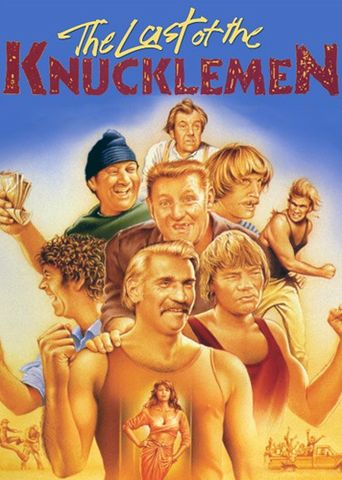
A group of miners, some of them with criminal records and no other means of employment, survive together in the remotest area of the Outback as they make a living working for Tarzan (Gerard Kennedy) who leads the team and gives them their paychecks. At night they sleep via bunkbeds in a small tin shack where they also play card games, drink, and occasionally brawl. Pansy (Michael Preston) is the de facto leader, who uses his quick temper and husky build to intimidate anyone who challenges his authority. The only one he doesn’t fight is Tarzan, but only because he’s the employer. Then a new man arrives named Tom (Peter Hehir) with a mysterious past. He has karate skills that allow him to take-on Pansy’s fist-fitting ability, but Pansy has a secret weapon of his own when he brings in Carl (Steve Rackman) from a nearby town who’s a huge guy with very few teeth, who he feels can beat Tom in a fight and everyone else in the camp takes bets on who they think can win.

The film is based on the stage play of the same name written by John Powers who himself had never worked in a mining camp, but had always been intrigued with the ruggedness, wildness, and overall isolation of them after growing up hearing bawdy tales from his Uncle Harry who had been employed at one of them. 20 years after hearing his uncle’s stories he then decided to turn those rustic tales into a play while also incorporating it with the adventures of Ronald Biggs who was a train robber who managed to evade the authorities for many years. Pitting a known criminal trying to just hide-out at a remote camp with the gruff nature of the men who worked there he felt would make for an interesting dynamic and the play, which opened in 1973 in Australia and 10 years later in the U.S. where it starred Dennis Quaid, was met with rave reviews.

Director Tim Burstall was looking to do a male bonding pic and had a choice between doing this one or The Odd Angry Shotwhich was reviewed last week, and came to the determination that this was the better fit. He particularly liked the outback setting and became focused on finding the most remote town to film it in and eventually chose the itty-bitty one of Andamooka, which at the time had only 316 people living there and today has even less. While the town certainly met the rustic quality it had no police and the inhabitants, much like the characters in the story, had previous criminal records forcing the producer to sleep with a gun at his side and the production’s payroll under his pillow. It also at times caused interruptions with the filming when one day one of the locals threatened to blow up the set with a stick of dynamite, which sent the cast and crew running, until the special effects man realized the stick had no detonator.

The interior scenes were done on a soundstage in Melbourne, though it’s so impressively camouflaged you’d never know it. My only complaint with the outdoor shots is that filming took place during September and October, which is Springtime in Australia where temps aren’t as hot, and in fact they were quite chilly, so that intense hot Outback feel, which is the whole basis of the story, never really comes through.

As for the story, it’s surprisingly engaging despite the fact that there’s really not much of a plot and everything hinders on the interactions of the characters. Fortunately the characters are so well defined that you enjoy and are even intrigued at how they all relate to each other and the love-hate relationship that they share. One of the most gripping moments has nothing to do with the climactic fight, but instead on an intense poker game between Pansy and the elderly Methusela (Michael Duffield), where each tries to bluff the other while also raising the money stakes to drastic heights.

The fight itself, which you wait through the whole movie to see, wasn’t as exciting, or captured in as intense of a way, as I was expecting. The animosity between Tom and Pansy wasn’t played-up enough either and only comes to a head during the third act while I felt it should’ve been brewing from the very start. Tom as a character is quite dull and is seen a lot less than Methusela who’s the scene-stealer. The sequence between Tom and Carl’s battle is surprisingly quick while the big showdown between Tarzan and Pansy gets captured from a distance and shown over the closing credits, which I found quite disappointing. There’s no answer to who ultimately wins the fight either, which despite the film’s other good qualities, is a big letdown.

My Rating: 7 out of 10

Released: July 11, 1979

Runtime: 1 Hour 29 Minutes

Not Rated

Director: Tim Burstall

Studio: Hexagon Productions

Available: DVD (Import Region 0)

Bananas (1971)

bananas2

By Richard Winters

My Rating: 8 out of 10

4-Word Review: From nebbish to dictator

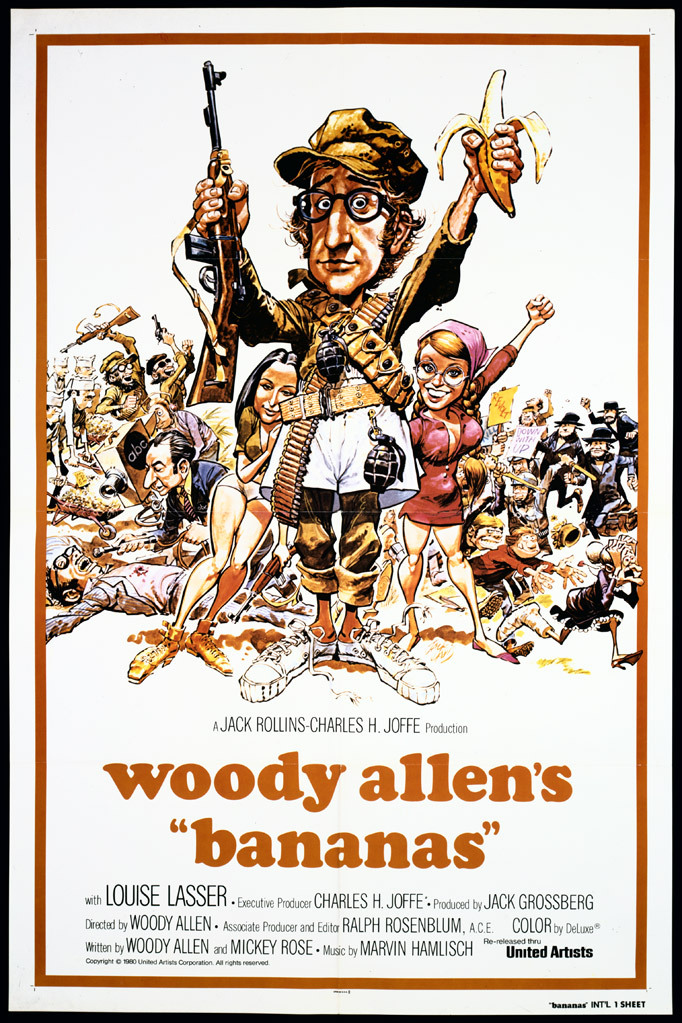
Fielding Mellish (Woody Allen) is a shy, meek individual who works as a product tester, but comes to realize that his job has too many pitfalls and wants to pursue another line of work. One night while in his apartment he receives a knock at his door and meets Nancy (Louise Lasser) who is a social activist. Fielding doesn’t have much interest in politics, but finds Nancy attractive, so he pretends to be into her social causes. Their relationship though does not survive, but Fielding decides to travel to the Latin country of San Marcos anyways, which is where the couple was planning to go to before the breakup. The country is suffering through a revolution and Fielding inadvertently gets caught up in it to the extent that he becomes their acting leader and travels back to the US to ask for foreign aid, but once home Nancy recognizes Fielding for who he really is and this soon has him put on trial.

This was done during the period when Woody was just trying to be funny and without all the pretension and nostalgia that make up so much of his later work, which I don’t care for as much. While there are draggy spots, particularly during the second act, the beginning and end are so strong that it more than makes up for it especially the climactic court sequence, which is laden with a lot of non-sequitur sight gags that didn’t come into vogue in movies until 10 years later when it was introduced to mainstream audiences with great success in the movie Airplane. 

What I really liked though is that Woody actually seems to playing a character here and not just himself. No endless whining about his hypochondriac conditions, or New York being vastly superior to L.A., or how Ingmar Bergman is the greatest film director. This stuff seems to work into many of his later scripts and characters, but here he just plays an average blue collar guy whose only ambition is to get laid, which is wonderful and I really enjoyed pairing him with Lasser. The two had already divorced  by the time this was filmed, but she agreed to remain on as his co-star, which is great as I’ve always said she’s the female version of Woody and in many ways can easily upstage him in just about every scene they share. People like Diane Keaton and Mia Farrow, who became his co-stars in his later movies, were too normal and didn’t compliment Allen’s quirky style like Lasser does and it’s just a shame she disappears during the second act as her presence would’ve prevented it from getting as draggy as it does. 

While most of the gags are quite funny and even inventive I did have a problem with a few of them. The opening bit, which features a televised assassination of the country’s leader, manages to make even Howard Cosell, an obnoxious, egotistical sportscaster that I never cared for, enjoyable especially as he fights his way through the crowd to get an interview with the dying dictator. However, if you’re going to show a guy getting shot then some blood is needed. Allen said he wanted to avoid this because he feared it would hurt the film’s ‘light comic tone’, but its been proven in movies like Shaun of the Dead that gore and comedy can still work together and having Cosell ask the leader ‘how does it feel’ as he lies there bloodied would’ve been dark comedy gold.

The segment where Woody walks into an operating room to tell his parents (Stanley Ackerman, Charlotte Rae), who are both surgeons performing an operation, that he’s traveling to another country, is for the most part an aspiring bit except that in the scene the patient (Hy Anzell) is awake and talking. There is simply no way that anyone being cut open wouldn’t be put under anesthesia, so having him speak is not only unrealistic, but not necessary as the humor from the segment comes from Woody’s interactions with his folks and not from anything that the patient says. 

Overall though this still comes as highly recommended especially for Woody cinephiles looking to take in his wide body of work. His more serious directorial efforts are good too, but in a different way. Yet its his irreverent style that tests the movie making formula, which he does here, that I enjoy the most and while he has done many comedies after this they cease to have the same rapid-fire zaniness as this one. I also have to mention the cigarette commercial that takes place during a Catholic mass, which is the best ad-spoof I’ve ever seen. It did end up being condemned by the National Catholic Office of Motion Pictures, but it was worth it.

 My Rating: 8 out of 10

Released: April 28, 1971

Runtime: 1 Hour 22 Minutes

Rated PG

Director: Woody Allen

Studio: United Artists

Available: DVD, Blu-ray (Region B/2), Amazon Video, YouTube

Mahoney’s Last Stand (1972)

By Richard Winters

My Rating: 7 out of 10

4-Word Review: Trying to find solitude.

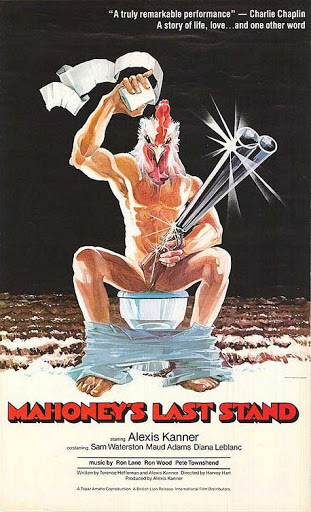
Leroy Mahoney (Alexis Kanner) wants to be away from the rat race and out in the Canadian wilderness where he feels he can live in peaceful harmony with nature. He finds a rundown home in a vacant area and begins the process of renovating it only to meet a woman named Miriam (Maud Adams) who lives nearby and routinely comes over to visit. Felix (Sam Waterston) is his old friend from the city who hitches a ride to the country and moves-in. Later, so does Felix’s girlfriend Joy (Diana Leblanc) making Mahoney feel like he’ll never find the solitude he craves and will always be surrounded by people who annoy him.

The film was the inspiration of Kanner, who not only starred in it, but wrote the script, co-directed, and even produced. The quirky tone is what helps it stand out as it’s a mixture of the man-in-the-wilderness theme meets the counter culture and to a great degree it works. Some of my favorite moments are things that might seem off-putting, or even boring when put in any other film, but here it helps add to the offbeat quality like the scene featuring Mahoney sitting on his porch endlessly twiddling with his garden hoe, or the segment where he remains trapped in his outhouse as he’s too afraid to come out and meet with Miriam when she arrives unannounced.

The Mahoney character, if you can get past his odd accent and crusty exterior, is quite engaging. Initially he comes off as this rugged individualist only to end up getting scared late at night over the least little noise that hears outside. The scene where he tries to pretend he’s a seasoned horseback rider in an attempt to impress Miriam and his love-hate friendship with Felix and Joy are all amusing as well, but what I really liked is that he remains a true introvert all the way through. Most other films make the broad presumption that everyone secretly craves companionship and can only be truly happy with other around, but here Mahoney only finds his ultimate utopia when he’s finally all alone.

The film’s rustic landscape, which was shot in and around King City, Ontario, helps add to the ambiance. It was filmed between October and December of 1971 with the idea that filming would wrap before the snow and cold moved in as there was no heating in the cabin, but fortunately an early season snow hit the production in late November and gets incorporated into the story. Although it only blanketed the area with an inch or two it still at least gave a preview to what living in Canada year round would be like and if you’re going to do a pic about the rugged adventures of dealing with the northern climate then there better be some snow and cold in the mix or it’s just not fully authentic otherwise.

Spoiler Alert!

The film’s ending really stands out as it recreates the feeling of solitude in a way I’ve never seen done before and will stick with you long after it’s over. It features Mahoney wondering around his property naked with only the faint sound of a water drip in the background, which gives the viewer a total sense of peace and freedom and has a soothing meditation-like quality.

Alternate Title: Mahoney’s Estate

My Rating: 7 out of 10

Released: Unreleased theatrically until 1976.

Runtime: 1 Hour 49 Minutes

Not Rated

Director: Harvey Hart, Alexis Kanner

Studio: Topaz Productions

Available: None

Cabo Blanco (1980)

By Richard Winters

My Rating: 4 out of 10

4-Word Review: Search for sunken treasure.

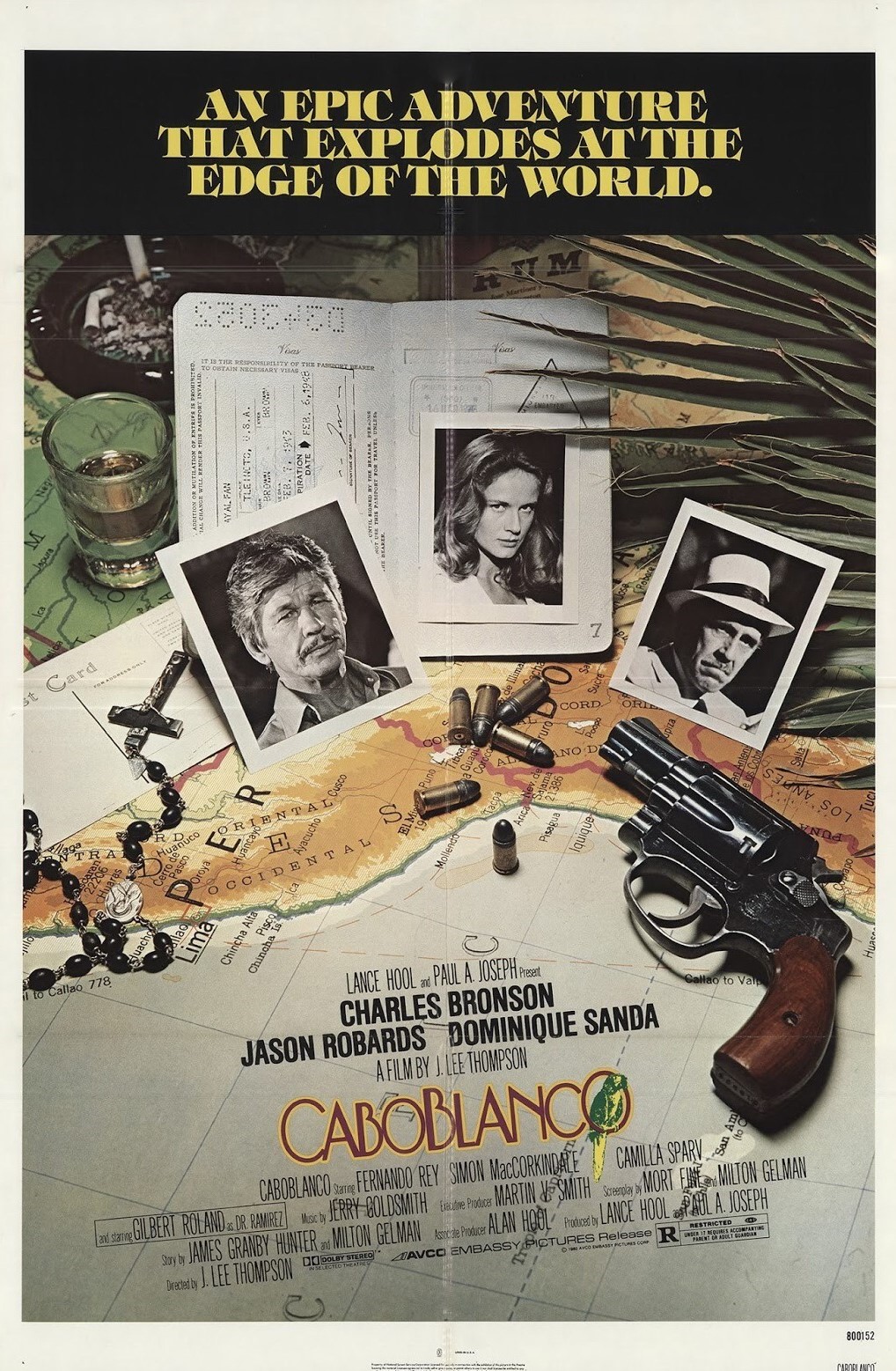
Giff (Charles Bronson) is an American living in the small fishing village of Cabo Blanco, Peru where he runs a cafe/bar just after the end of WW II. It is here that he becomes inadvertently embroiled for the search of sunken treasure somewhere off the coast where one searcher dies mysteriously while looking for it. Captain Terredo (Fernando Rey) the local police chief insists that the death was an accident, but Giff disagrees and becomes even more suspicious with the arrival of Marie (Dominique Sanda). Terredo almost immediately begins insisting she must leave the village at once convincing Giff that she must hold the secret.

For a film starring Charles Bronson this thing is incredibly tame and non-violent. His name became so synonymous with action movies during the 70’s that you’re expecting that there be at least some of it here, but outside of a half-minute where Chuck clobbers a would-be assassin there is very little of it. I was also presuming that since the storyline did have something to do with sunken treasure that the cast would be on or in the water for most of the runtime, but after the first 5 minutes it becomes completely land-locked.

Initially I thought putting Bronson inside an ensemble cast with performers like Jason Robards, who had a completely different acting style, would prove interesting, but the two don’t share a lot of screen time together and when they do are mostly adversarial. Chuck otherwise is his same old self, playing the one-dimensional character that he did all through the 70’s only here he stands out like a sore thumb as the supporting players give a more nuanced performance that he’s unable to do. He was also nearing 60 and having Sanda play the object of his desires looks like a grandfather coming onto his granddaughter. The youthful Simon MacCorkindale shows more energy and more up to physical demands, which should’ve made him the star.

Sanda’s presence helps especially with her beauty and a face that makes her appear like she was just 18 and for whatever reason looking younger here than she did in The Conformistwhich had been filmed 10 years earlier. I also enjoyed Denny Miller, best known for playing Tarzan as well as Tongo, the ape man on an episode of ‘Gilligan’s Island’. Here he’s one of Robard’s henchman complete with German accent and neo-nazi bowl haircut.

The film doesn’t start to get interesting until the very end when Bronson is forced to speak to a parrot in order to get a secret password that the bird was apparently trained to say. I also like the bit involving a jukebox that goes on the fritz, but otherwise there’s nothing inspiring or original and looks like it was written simply to cash-in on the big name stars. It’s almost worth checking out though simply for the location. While it wasn’t filmed in the real Cabo Blanco, but instead in Barra de Navidad, Mexico, it still has a very sunny, exotic look that gives off a soothing, relaxing feel, so forget the story and just take in the sights.

My Rating: 4 out of 10

Released: January 23, 1980

Runtime: 1 Hour 27 Minutes

Rated R

Director: J. Lee Thompson

Studio: AVCO Embassy Pictures

Available: DVD, Blu-ray

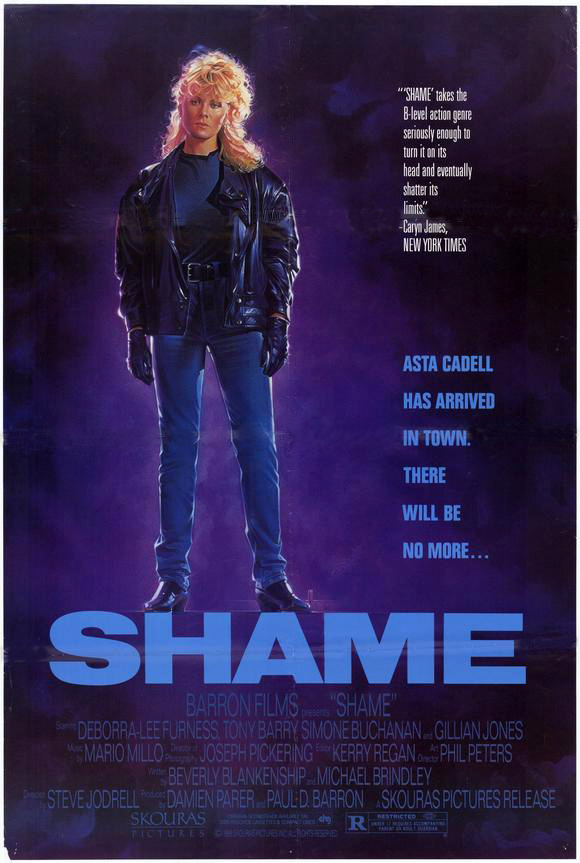
Shame (1988)

By Richard Winters

My Rating: 5 out of 10

4-Word Review: Lawyer uncovers town’s secret.

Asta (Deborra-Lee Furness) is enjoying her vacation holiday from work as a lawyer by traveling through the Western Australian countryside on her motorbike only to get into an unexpected accident late one night when she inadvertently drives into a flock of sheep in the road that due to the darkness she didn’t see. With her bike now damaged she brings it into a repair shop run by Tim (Tony Barry). Since the parts for the bike need to be shipped in Asta agrees to stay at Tim’s residence in a spare room. It is there that she overhears a conversation involving Tim’s daughter Lizzie (Simone Buchanan) and her sexual assault by a group of young men at the town’s bar. No one seems to want to press any charges and everyone in the town places the blame on Lizzie by openly implying that she’s a ‘slut’, but Asta gives her the confidence to go to the police and press charges only to find that those same men are now after her and consider her to be their next ‘conquest’.

The film is loosely based on a true story, that also inspired The Accused, which starred Jodie Foster.  However, here the approach is different where the rape victim isn’t the main protagonist, but instead someone who wasn’t even involved in the actual incident and mainly just stands on the sidelines as an observer, which isn’t as compelling. The Asta character almost becomes like a transparent ghost who’s always in the middle of the action, but overall doesn’t really do much to help propel the story along. The producers had wanted Asta to be more violent and vigilante-like, but the director nixed this idea even though I felt it would’ve helped.

While I liked the segments dealing with the parents of the boys who committed the rape and their denial of what happened and at one point even agreeing to pay-off the victim’s family not to press charges, as it’s interesting to see things from the family of accused, which most rape movies don’t do, but overall I found the story structure to be lackadaisical. I was a bit confused during the first act about what had occurred as everything is handled in a subtle and conversational fashion. We never see the actual crime happen it’s just spoken about in passing, but I felt at some point there should’ve been a flashback to the build-up of it and I was fully expecting it to come along at some point, but it never does.

The characterizations of the males is too extreme and stereotyped. I’m okay with some of the men being bad apples, as this can occur anywhere, but in this movie they’re all portrayed as being leering savage animals with no conscience or self-control. The fact that they’ve apparently raped other women in the town the same way just made it all the more over-the-top. I’ve never heard of small towns dealing with marauding, serial rape gangs and wondered what made this one so special. Was it something in the water?

There is a certain Mad Max vibe to it, which was apparently what the filmmakers were aiming for, but the results are only so-so. At least in Mad Max it had a surreal, futuristic setting, but this thing has extreme behavior happening amongst the men in an average place in the modern-day, which didn’t make much sense.

My Rating: 5 out of 10

Released: February 26, 1988

Runtime: 1 Hour 31 Minutes

Rated R

Director: Steve Jodrell

Studio: Barron Films

Available: DVD, Amazon Video

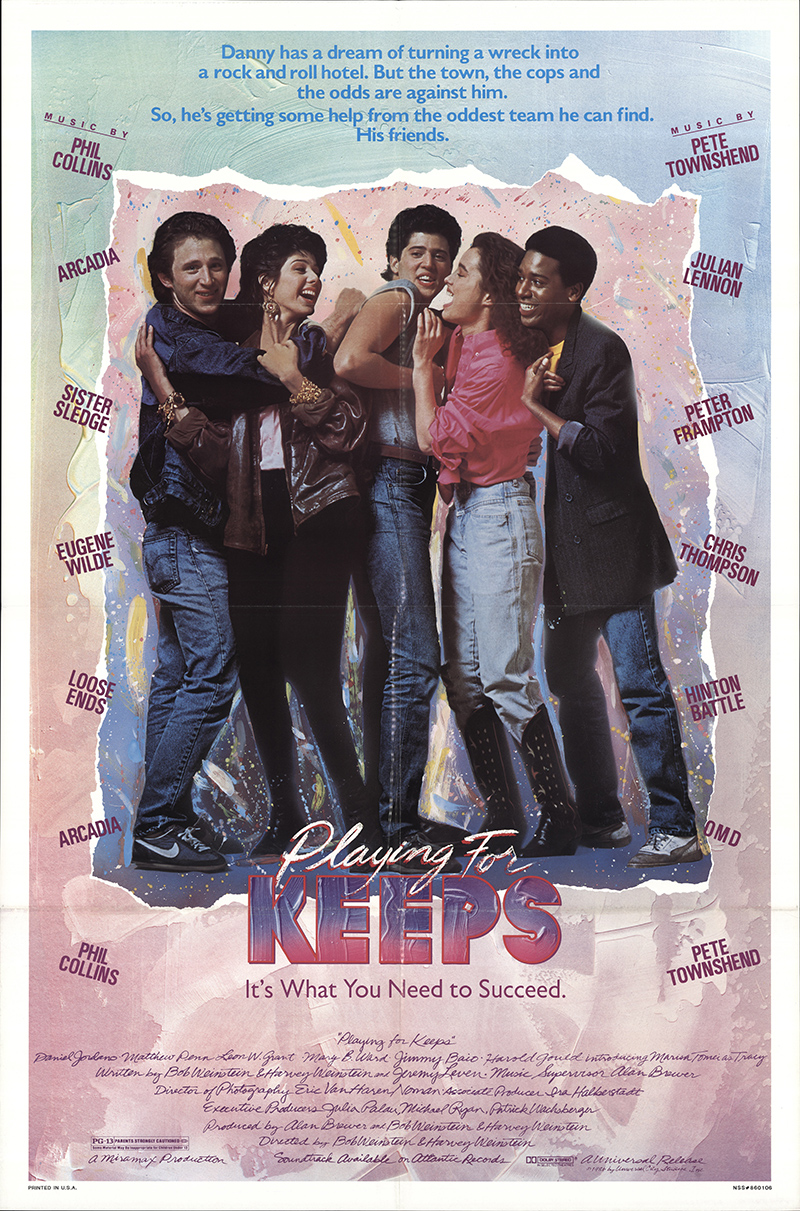
Playing for Keeps (1986)

By Richard Winters

My Rating: 3 out of 10

4-Word Review: Teens refurbish rundown hotel.

Danny (Daniel Jordano) has just recently graduated from high school and has big entrepreneurial dreams.  He becomes aware that his family has inherited a place called Hotel Majestic in Bethany, Pennsylvania and decides he wants to turn it into a nightclub for teens, but first he must first pay off the $8,000 due in back taxes. Together with his two friends: Spike (Mathew Penn) and Silk (Leon W. Grant) they devise a way to earn the money by pretending to be Boy Scouts and selling cookies to office workers. When they finally payoff the debt they find an even bigger challenge, which is fixing up the decrepit place while also fighting off a man named Harry Cromwell (Robert Milli) who runs a Chemical Company and wants to turn the hotel property into a waste dump.

This was Harvey Weinstein’s first directorial effort, which he did alongside his brother Bob and released under the then new Miramax studio, which was named after their parents Miriam and Max. This also marks Harvey’s first known case of sexual harassment when he invited an attractive 20-year-old waitress named Tomi-Ann Roberts, who was waiting tables in the town where they were shooting in, up to his hotel room to audition for a role he felt she’d be ‘perfect’ for and when she arrived she found him naked in a tub and requesting that she should disrobe as well to make sure she’d be ‘right for the part’ even though there’s no nudity in the movie.

If Weinstein’s name wasn’t so famous and you didn’t know who the director was you’d be convinced it was done by some talentless hack whose first and last film venture this was. While it does remain at least lively everything else about it is stupid including the corny, cliché-ridden comedy that permeates every scene. I found the three leads, who seem to be cast to meet some sort-of politically correct quota as they’re different races, to be quite bland particularly lead star Jordano who shows no varied emotions or facial expressions other than the same glossy smile all the way through no matter what other emotional situation he may be in.

The townspeople are boring caricatures too with their café jukebox having no other selections of music to play than Kate Smith, and the people behaving like they’d never heard of Billy Idol or Michael Jackson, which is ridiculous as I grew up in a small Midwestern town during the 80’s and our radio stations and juke boxes had a wide selection of the latest hits just like the big city. Having the only other open-minded person in the town being the farmer’s super hot daughter (Mary B. Ward) who magically falls for Danny was just a little too convenient.

The process of renovating the place, which takes up almost the entire runtime, gets so drawn-out that it becomes boring. I also couldn’t believe that all of Danny’s high school friends, which he recruits as ‘stockholders’, would be willing to stick through the arduous challenge of the fixing up the hotel like they do and most would’ve walked away pretty quickly. When they are finally able to complete the project the place gets filled with such tacky 80’s deco art that I found it better looking when it was rundown.

Marisa Tomei, who makes her film debut here, is quite engaging and I enjoyed her better in this role than her more famous Academy Award winning one from My Cousin VinnyI also liked Kim Hauser, who plays Danny’s kid sister, and has an appealing Karen Black-like cross-eyed look. Had these two been made the stars instead of the three transparent guys it would’ve been better.

It seems like, based off of the imdb reviews that I read, that the only reason people like this movie is because of its 80’s cheesiness and if that’s what you’re into you’ll be more than satisfied as this thing sure has a hell of a lot of it. Others though will find it shallow and mindless.

My Rating: 3 out of 10

Released: October 3, 1986

Runtime: 1 Hour 42 Minutes

Rated PG-13

Directors: Bob and Harvey Weinstein

Studio: Miramax

Available: DVD

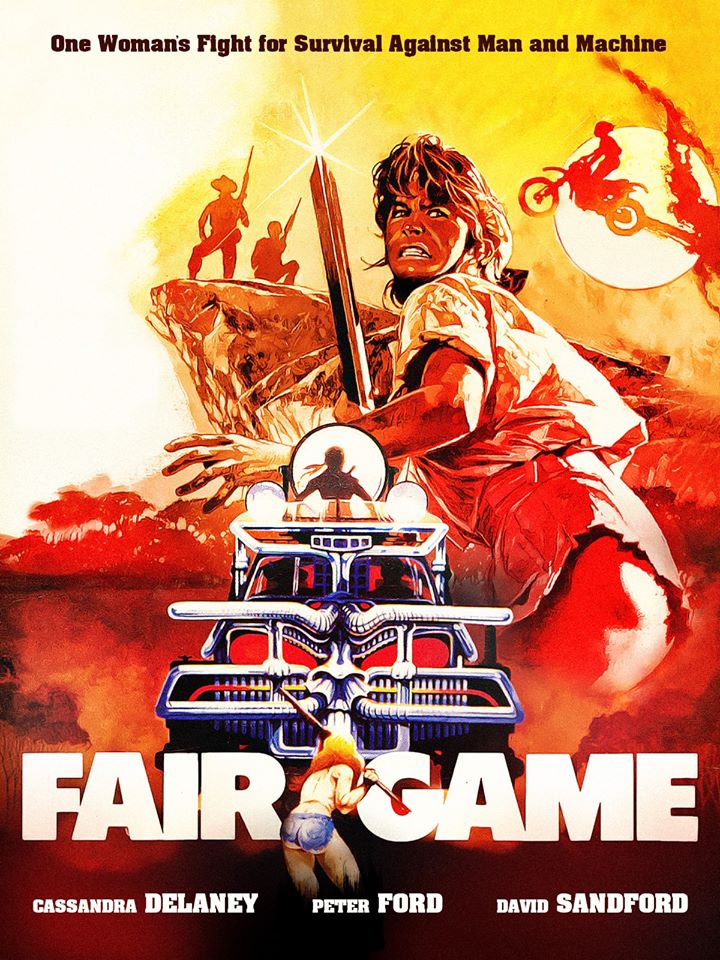
Fair Game (1986)

By Richard Winters

My Rating: 7 out of 10

4-Word Review: Woman harassed by poachers.

Jessica (Cassandra Delaney) runs an animal sanctuary deep in the heart of the Outback. Sunny (Peter Ford), Ringo (David Sandford), and Sparks (Gary Who) are three big-game hunters, who grow bored shooting at kangaroos and set their sights at taking on some of the animal’s inside her property. They decide that Jessica herself may fun to ‘toy’ with too and begin a campaign of harassment that starts with them trying to run her car off the road with their big truck and just proceeds to get more violent and confrontational. Jessica though is determined to turn-the-tables on them even as the stakes against her survival grow continually more dim.

This is the type of film that right from the start goes against the rules of conventional storytelling as there’s very little character development or backstory. The viewer is immediately thrust into the battle while barely even knowing who these people are. Normally, I’d say it should’ve slowed up a bit and let us get some grounding before getting smacked with the action, but honestly in this instance it really wasn’t needed. You get enough of the general idea to know who to root for and the more violence that happens the more enthralled you get with it.

This is how many real crime happen where the perpetrators attack their victim out of nowhere and without warning giving the person very little time to think and forcing them to immediately respond to the danger without being able to ponder their options and in that regard this film, which was intended to be, by admission of the director, nothing more than a ‘comic book’ adventure actually does quite well. Usually I’d like a chance to catch my breath, but here any minor slow-up makes you feel off-kilter as it’s the action that propels it and the whole thing becomes more like an ‘experience’ than a movie.

Many have labeled this as Australia’s version of I Spit On Your Grave, but this is actually better. The different ways that the men terrorize our protagonist is far more interesting than the gratuitous rape that took up so much of the other one. While the men are at times a bit stupid I did like their relentless quality. They don’t get killed off as easily as in a Hollywood film. There were many times when I thought they should’ve been doomed, but they manage to survive it, which made me start to believe they might actually win the battle and thus allowed the tension to grow even higher.

Cassandra, who gained fame by being a co-singer with her mother Lorraine in a rock ‘n’ roll band called The 50’s and then later ended-up marring singer/actor John Denver, is quite good though I initially felt there needed to be more of an arc to her character. Perhaps having her be more timid at the start only to eventually bring out her warrior nature at the end as she’s a little too self-assured right from the beginning, but overall I came to believe it wasn’t necessary. I did think though it was unrealistic that she ran this sanctuary in the middle of nowhere, but didn’t own a gun, but ultimately having her tote a big rifle might’ve looked cliched and it also forces her to come up with creative ways to get rid of the bad guys, which is ultimately more intriguing.

The Outback gets used perfectly as the viewer gets both charmed by it’s beauty and terrified by some of the creatures that live in it including the weird lizard-like things that congregate on Jessica’s front porch and that she’s forced to shoo-away each morning when she walks out. The desolate landscape is also a good metaphor to the men’s soulless nature and also helps heighten the odds to just how alone and desperate Jessica’s situation truly is.

My Rating: 7 out of 10

Released: July 24, 1986

Runtime: 1 Hour 26 Minutes

Rated R

Director: Mario Andreacchio

Studio: CEL Film Distribution

Available: DVD, Blu-ray (Region A/B/C)

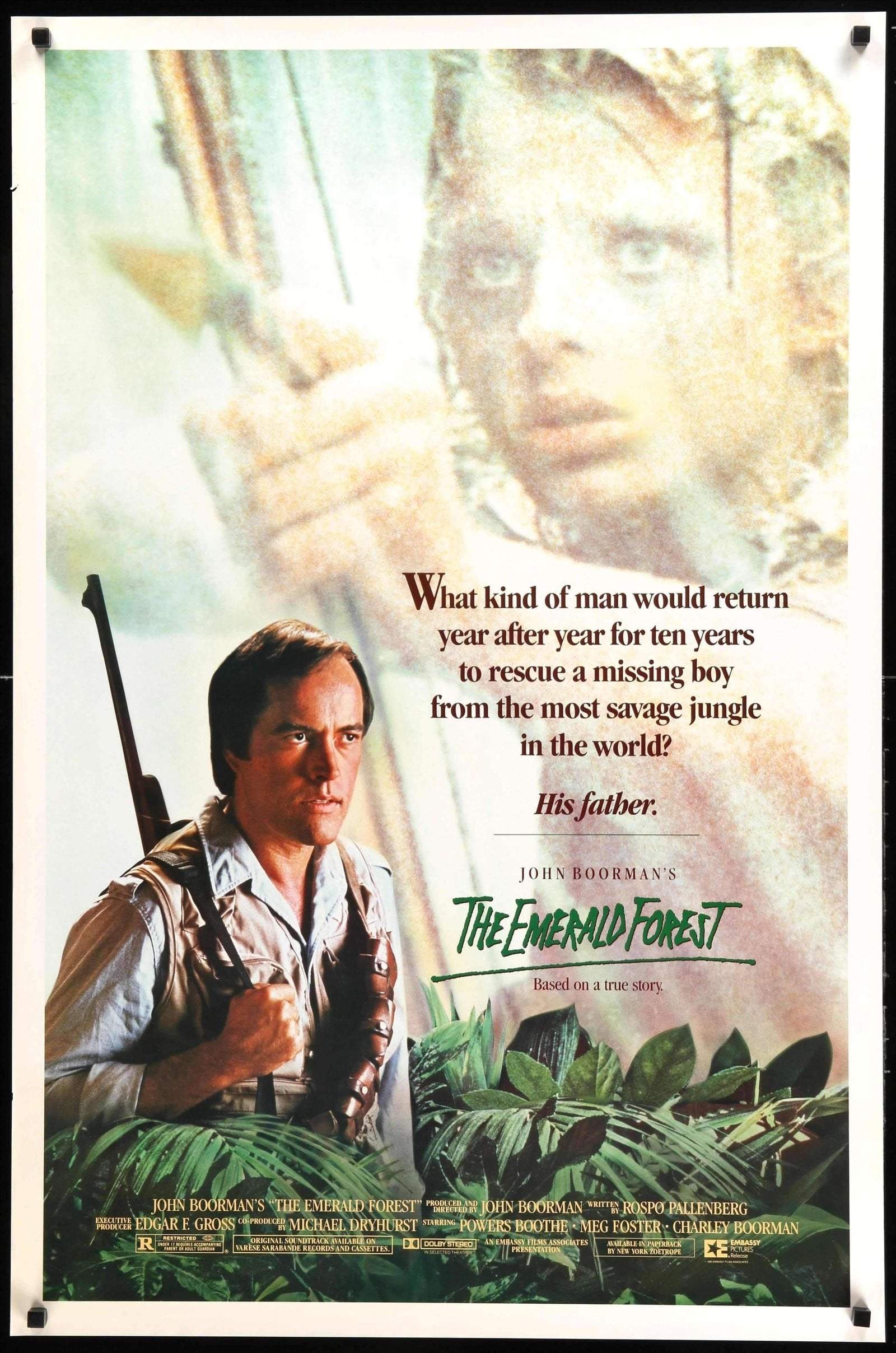
The Emerald Forest (1985)

By Richard Winters

My Rating: 6 out of 10

4-Word Review: Amazon tribe kidnaps boy.

Bill (Powers Booth) is a hydro-electric engineer who’s designed a dam that’s being built deep in the jungle of the Amazon. One day while he’s having a picnic outside with his wife Jean (Meg Foster) and daughter Heather (Yara Vaneau) he notices his son Tommy (William Rodriguez) wandering off. He tries to catch up with him, but not before the child gets snatched away by an Indian tribe known as the Invisible People. Bill spends the next 10 years searching for him, but to no avail. Meanwhile Tommy (now played by the director’s son Charley Boorman) has grown into a man and become a full-fledged member of the tribe, but before he can marry the beautiful Kachiri (Dira Paes) he must retrieve some sacred stones in a remote spot of the jungle. It is there that he comes into contact with his father, who is still searching for him. The two bond once again and work together to escape the clutches of The Fierce People another native tribe that is violent and cannibalistic.

The film is loosely based on two true stories. The first one is an article printed in October, 1972 in the Los Angeles Times, which was read by the film’s scriptwriter Rospo Pallenberg, having to do with a Peruvian boy who had been kidnapped by an Indian tribe and when found 16 years later he didn’t want to leave as he, by that time, had become fully assimilated in it. The second one deals with the autobiographical novel from 1971 in which the author, Manuel Cordova-Rios, details his account of being kidnapped by an Amazon tribe in the early 1900’s as a boy and how he eventually grew to become a member of that tribe.

On a technical level director John Boorman achieves the same type of success that he had with Deliverance where the vivid on-location shooting makes the viewer feel fully immersed in the setting to the extent that you think you’ve physically traveled to another part of the planet. The chase sequence in which the protagonists must battle their way through a dense underbrush to escape an enemy that hides behind the foliage and that they can’t see is also quite similar to the one in Deliverance, but in many ways more exciting. The film also has a very strong masculine theme where the women are seen very little and in the case of Meg Foster get completely wasted.

My main issue is that the kidnapping segment happens too quickly and the boy’s transition into the tribe is too unrealistically seamless. I would think a kid at that age, he seemed to be around 10, would’ve been horrified about being taken away from his parents, the only family he had ever known, and yet the film glosses completely over the adjustment angle and makes it seem like it was no big deal.  The parents devastation at losing a son gets handled in the same shallow way where after the kidnapping occurs the story immediately jumps to 10 years later without every showing any of the grieving process that the family most assuredly would’ve had and in some ways unintentionally makes it seem like they were able to move-on with their lives without much problem.

The story does have its share of riveting moments, if you’re patient, with the best parts coming when the two tribes go to battle with each other, but the film unwisely straddles the fence between reality and fantasy. I don’t mind a fantasy if it’s that way all the way through, but this one tries to sneak it in at ill-advised times. The scene that got me is when Tomme goes searching for his father in the big city and even though he doesn’t know where his father lives he’s able to connect with some sort of Indian spirit that shows him a vision of his father’s condo and he uses that to find it, but that vision never gives him a specific address, so I’d think he’d remained just as lost and confused.

Spoiler Warning!

I didn’t care for the double ending either. Having the film finish after the father helps Tommy fight off the Fierce People and save the tribal women from a life of prostitution was good enough, but then tacking on Tomme again praying to his Indian spirits to create massive rain storm that damages the damn was too much. It also becomes a bit preachy with its denouncement about environmentalism making it seem more like a political propaganda piece and less like a feature film. Casting Boorman’s son Charley in the lead was a mistake too as his constant wide-eyed, deer-in-headlights expression becomes monotonous. The part was originally intended for C. Thomas Howell and while he may not be the greatest of all actors he still would’ve been a better pick here.

My Rating: 6 out of 10

Released: July 3, 1985

Runtime: 1 Hour 54 Minutes

Rated R

Director: John Boorman

Studio: Embassy Pictures

Available: DVD