Category Archives: Movies with a rural setting

Gentle Savage (1973)

gentle savage 2

By Richard Winters

My Rating: 3 out of 10

4-Word Review: Indian accused of rape.

Camper John (William Smith) is an Indian living in a small town who gets accused of raping a white girl (Betty Ann Carr) by Ken (Kevin Hagen) her stepfather even though it was actually Ken who did it. The hidden prejudices of the predominantly white folks come to light against the nearby Indian community. Both sides take up arms and become intent on crushing the other causing hysteria and violent outbreaks while Camper John tries hiding out until it blows over.

If there is anything distinctive about this otherwise formulaic and predictable low budget drama is the fact that it paints vigilantism as more of a problem than a solution even if the one side feels completely justified, which I found to be a refreshing and more realistic take on the issue especially as the Indian group becomes as vindictive, violent and hateful as the people they are trying to fight. However, it would’ve been nice had there been at least one white person who wasn’t portrayed as being completely narrow-minded and bigoted, which in a lot of ways comes off as reverse racism by the filmmakers.

The music is loud and overly dramatic, which gives the proceedings a very heavy-handed feel. In a lot of ways it comes off as a poor man’s Billy Jack, which was already pretty amateurish and one-dimensional to begin with although still far better than this thing. The 75 minute version that I viewed had an abrupt ending that seemed incomplete and failed to tie up many loose ends, but I wasn’t complaining as even with the abbreviated runtime it was still highly protracted, overblown and tedious with the scene of a water tower tank exploding and dousing everyone on the street with tons of water being the only slightly diverting moment.

Smith is intense in the lead, but he should’ve been given more dialogue especially at the beginning as the viewer barely gets to know or understand him before being jettisoned into his quandary. Character actor R. G. Armstrong who normally plays menacing characters is quite wimpish here as a bartender who gets held down and forced to swallow drink after drink when he tries closing down the bar before the patrons were ready. Hagen is competent as the bad guy, but casting Gene Evans and Joe Flynn as a bumbling sheriff and deputy in an attempt at misguided ‘comic relief’ in the Last House on the Left-type vein was a big mistake. One scene even has them handcuffed together wearing nothing but their underpants while forced to walk across the desert, but it all adds little and takes away from the tension, which is the only time that this flat film ever becomes mildly diverting.

My Rating: 3 out of 10

Alternate Title: Camper John

Released: March 7, 1973

Runtime: 1Hour 25Minutes (Full Version)

Rated R

Director: Sean MacGregor

Studio: Cinemation Industries

Available: None at this time.
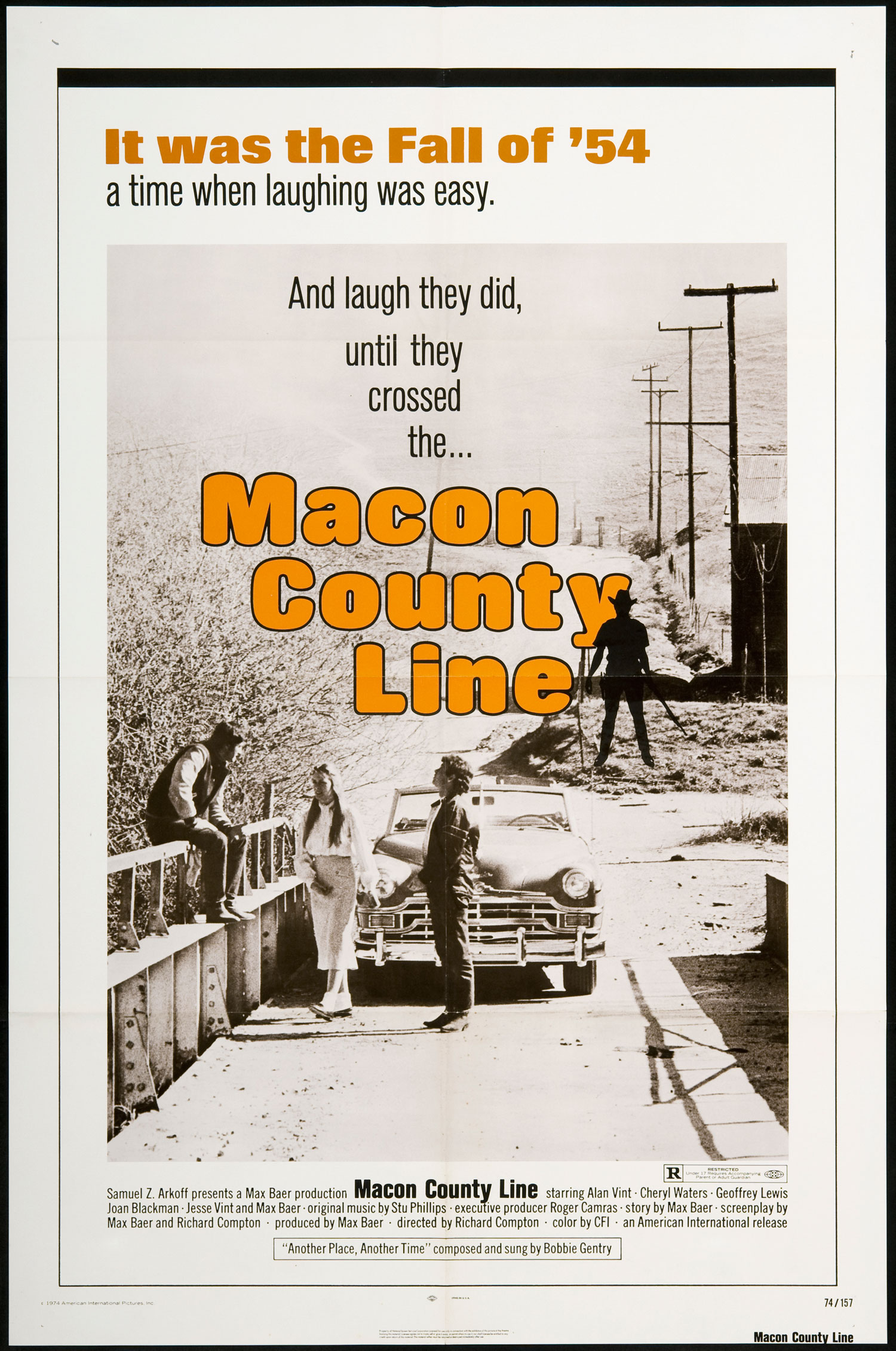
Macon County Line (1974)

macon county line 3

By Richard Winters

My Rating: 6 out of 10

4-Word Review: Sheriff attacks innocent trio.

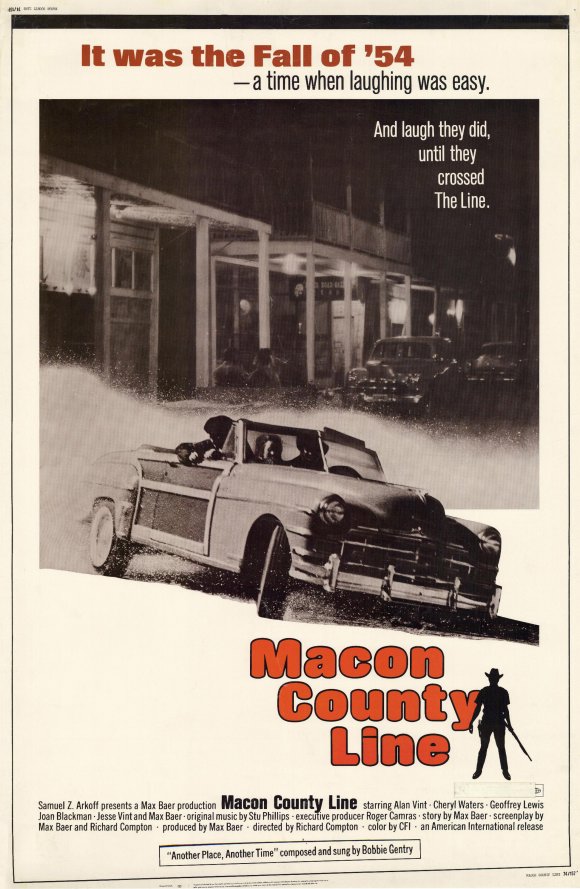
The year is 1954 and Chris and Wayne Dixon (played by real-life brothers Alan and Jesse Vint) are two brothers traveling through the Deep South for one last hurrah before joining boot camp. Along the way they pick up attractive hitch-hiker Jenny (Cheryl Waters) and the three appear ready to party it up when their car suddenly breaks down in front of an isolated country home. Unbeknownst to them the home’s inhabitant (Joan Blackman) has been murdered and when her husband, who just so happens to be the county sheriff, (Max Baer Jr.) arrives to find the carnage he immediately suspects it’s the kids sleeping in the nearby car. Thus begins a wild night chase through the country backwoods as the three try desperately to outrun a man with an unrelenting rage while pleading with him that they are innocent.

The film is a definite step above the average drive-in fare of that era with characters that manage to avoid the usual stereotypes and clichés. The 1950’s are painted in a little more of an edgier way and populated by people that are much more crass than what you will find in an old episode of ‘Leave it to Beaver’ or some sanitized recreation of that period, which I found to be refreshing. The music, particularly La Vern Baker’s gospel tinged opening song and Bobbie Gentry’s closing one is great and really helps to create a definitive mood. There are also two really good flashback sequences including a dimly lighted, moody one dealing with police brutality of a criminal and an ‘interrogation’ scene done at a police station that isn’t bad either.

Unfortunately the story is thin and hinges solely on the frantic chase that takes up the movie’s final 20 minutes, which is well edited and even features a twist ending, but up to then it is rather uneventful with too much time spent on the trio’s visit with a dimwitted auto mechanic (played by Geoffrey Lewis) that adds unnecessary comic relief.  There is also an ill-advised, dream-like segment where Jenny and Chris decide to take off their clothes and make love in some stagnant water found inside an old, rusted circular drinking trough in an abandoned barn that not only takes away from the film’s grittiness, but also seemed extremely unhygienic as well. I was also expecting more car chases especially with all he nicely refurbished vintage cars that appear, but the only one that they do have gets shot at night and the camera focuses more on the driver’s nervous faces in a cheesy melodramatic style than on the automobiles.

The film was produced and co-written by Max Baer Jr. who is better known as Jethro from the hit 60’s TV-series ‘The Beverly Hillbillies’ and in fact he wrote the story for this movie on the back of some Hillbilly scripts during breaks in filming. Although this was filmed in Sacramento the location is supposed to be the south and could’ve been either Georgia, Tennessee, or Alabama as all three of those states have a Macon County, but the real irony is that the two brother are from Chicago and we even see a close-up of their Illinois plate, which also has a Macon County although it’s likely the story wasn’t set in that one.

macon county line 4

My Rating: 6 out of 10

Released: August 8, 1974

Runtime: 1Hour 28Minutes

Rated R

Director: Richard Compton

Studio: American International Pictures

Available: DVD

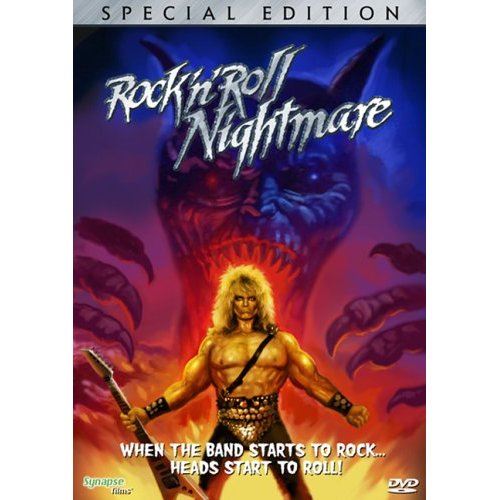
Rock ‘n’ Roll Nightmare (1987)

rock n roll nightmare 1

By Richard Winters

My Rating: 1 out of 10

4-Word Review: Rock band gets slaughtered.

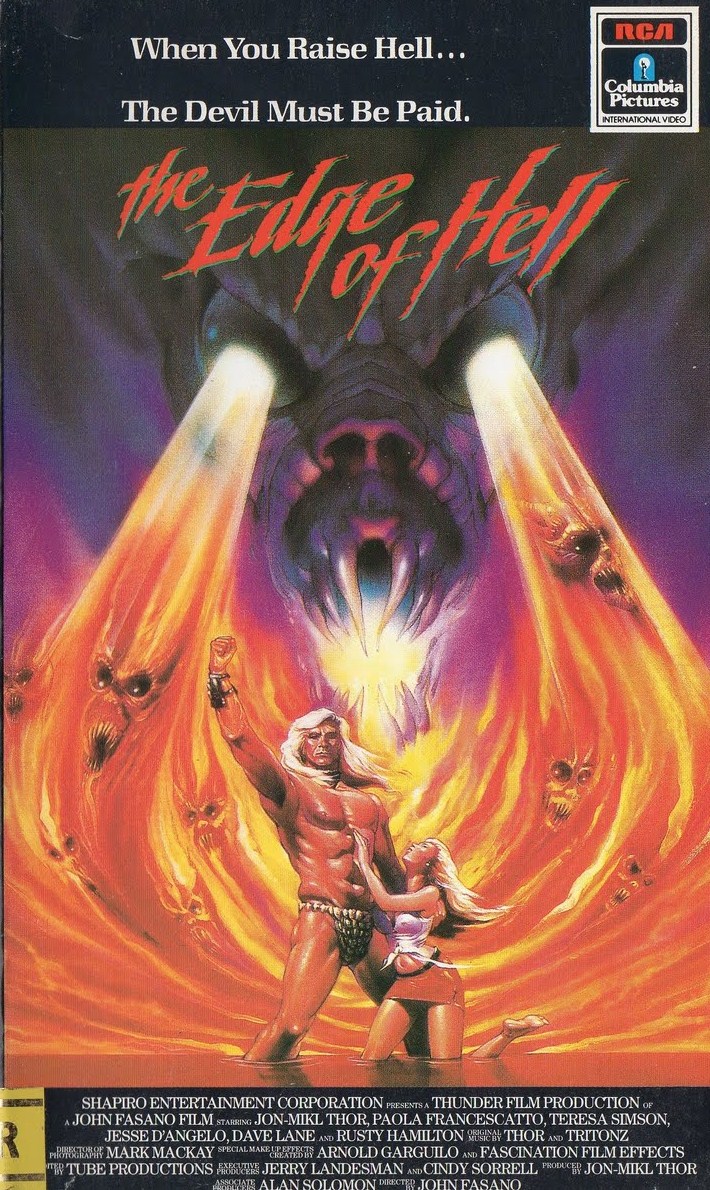
In a remote Canadian farmhouse a family is killed by some evil spirits from hell. Now, years later a rock band called The Tritons uses the place as a recording studio, but soon both they and their girlfriends start getting killed off one-by-one by the same spirits. Eventually only lead singer John (Jon Mikl Thor) remains and with his big muscular physique and fashionably long hair decides to take them on singlehandedly.

This low budget cheapie was shot at an isolated farmhouse near Markham, Ontario in a mere seven days and suffers from an excessive amount of footage on stuff that doesn’t matter like spending the first five minutes watching the group’s van driving down the highway. The dialogue and characters are predictably cardboard and the special effects unimpressive except for the moment where a monster’s hand pops out of a guy’s stomach, which wasn’t bad.

The film, which ends up being nothing more than a vanity project of its star who also wrote and produced it, has a million and one holes. For one thing it is never explained why these spirits attack this farmhouse or why a big sound studio was built in a place that had a family slaughtered in it or even why the people that constructed the studio weren’t killed just like the family and band members were.

If you are going to watch it then do like I did with a few beers at hand and a group of people who make jokes at it much of which are  far more entertaining than anything on the screen.

rock n roll nightmare 2

My Rating: 1 out of 10

Alternate Title: The Edge of Hell

Released: July, 1987

Runtime: 1Hour 23Minutes

Rated R

Director: John Fasano

Studio: Shapiro Entertainment

Available: DVD

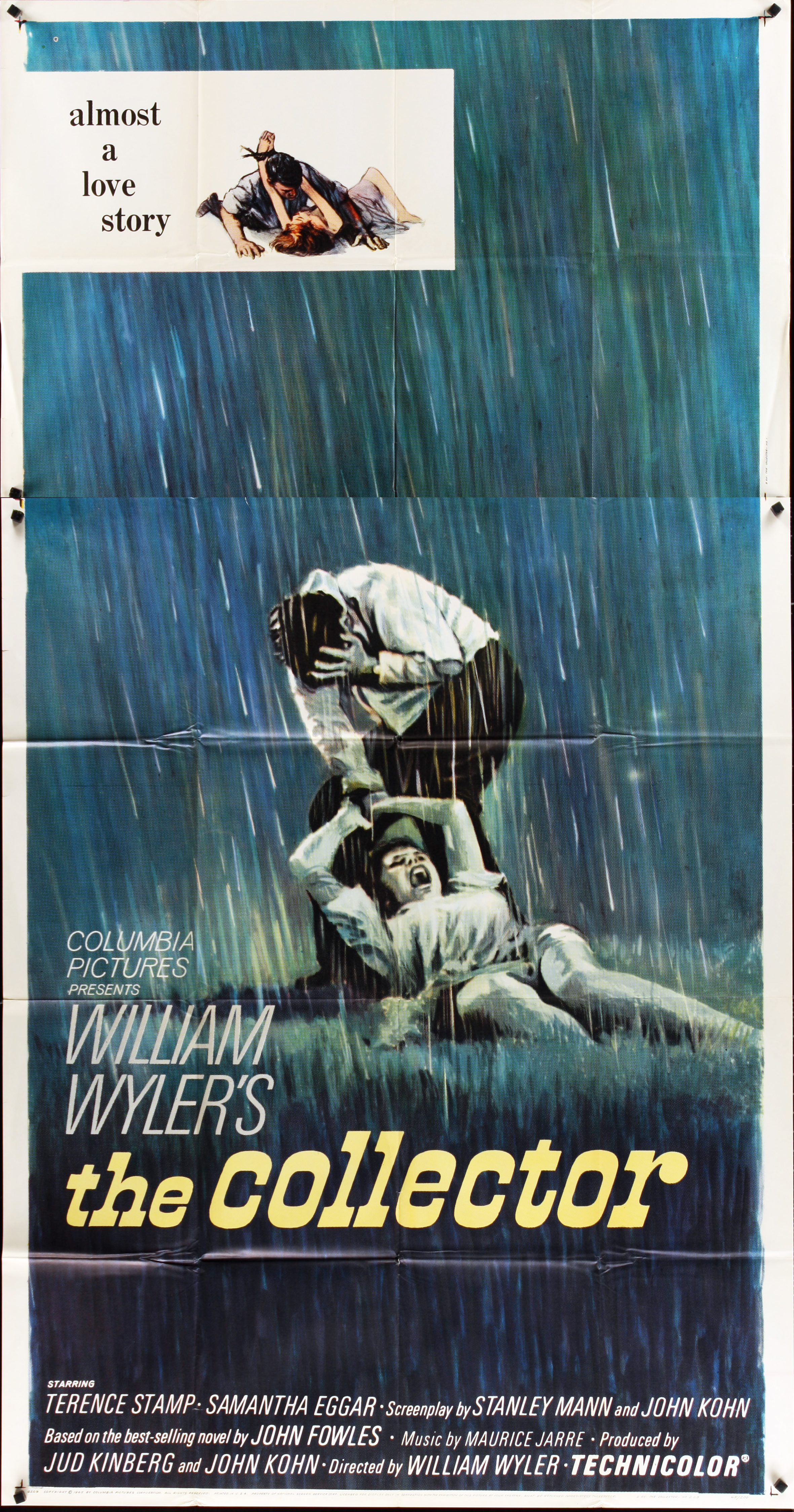
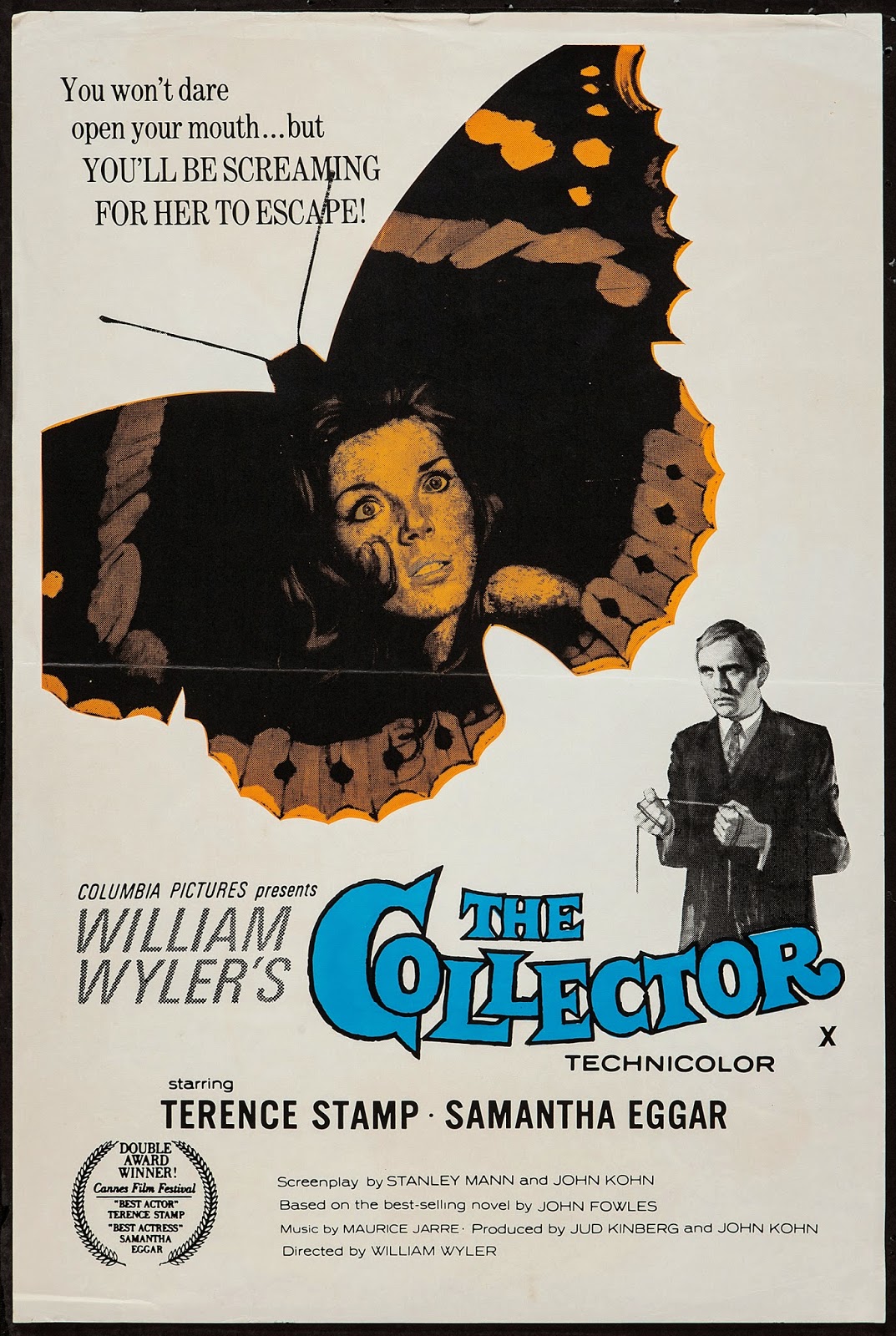
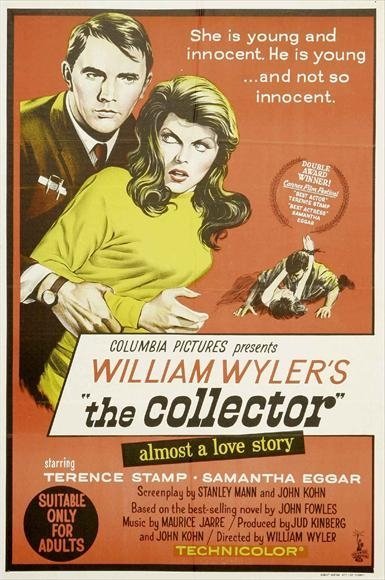
The Collector (1965)

the collector 2

By Richard Winters

My Rating: 8 out of 10

4-Word Review: Collecting women like butterflies.

Freddie (Terence Stamp) is a withdrawn loner who collects butterflies for a hobby. One day he manages to win a lot of money in a football pool and uses it buy an old, isolated house in the English countryside. The place has a very large cellar, which gives him the idea that it can be used as a prison. It is then that he decides to kidnap beautiful art student Miranda (Samantha Eggar). He keeps her in the cellar, but fixes it up making it seem almost like an apartment. He treats her with the upmost respect and even knocks before entering her room. He buys her art supplies so she can continue her work and makes an agreement with her that he will let her go after 4-weeks, but hopes in between then that she will fall in love with him.

The film puts an interesting spin on the old ‘psycho kidnapping a beautiful woman’ theme and for the most part succeeds. The viewer ends up feeling almost as sorry for Freddie as they do his victim as it becomes clear that through his social awkwardness he is in even more of a prison than she. The way the two try to communicate and connect, which only ends up driving the them further apart is fascinating and their contrasting views about the book ‘Catcher in the Rye’ as well as the paintings of Picasso are equally revealing.

Stamp gives one of his greatest performances in his already illustrious career playing a character who weaves from being menacing to vulnerable and childlike. Eggar makes for an appealing victim and apparently turned Stamp down years earlier when he had asked for her date while the two were students in acting school.

the collector 4

William Wyler’s direction is perfect as he wisely decides to pull back without adding any unnecessary Hitchcock touches and thus allowing the interactions between the two characters to propel the film. His superimposed, colorful shots of butterflies seen over the closing credits are a nice added touch. My only minor grievance is the Maurice Jarre score, which seemed too melodic without enough of the dark foreboding undertones that music for a thriller should have.

If you’re looking for the conventional thriller you may be disappointed as the emphasis is more on the psychological than the suspenseful. There are a few good tense moments including Miranda’s final attempt to escape during a nighttime rain storm, but for the most part the compelling element comes from the way these two multi-layered people deal with each other and ultimately reveal things about themselves that they didn’t know existed. The story also makes an excellent point of how everyone to a certain degree is trapped in a prison and the challenging if not impossible effort it can sometimes be to bond with others especially when reaching across different social-economic lines. The only thing that does get ruined is the ending, which no longer has the novelty or shock value that it once did.

the collector 3

My Rating: 8 out of 10

Released: June 17, 1965

Runtime: 1Hour 59Minutes

Not Rated

Director: William Wyler

Studio: Columbia Pictures

Available: VHS, DVD, Blu-ray, Amazon Instant Video

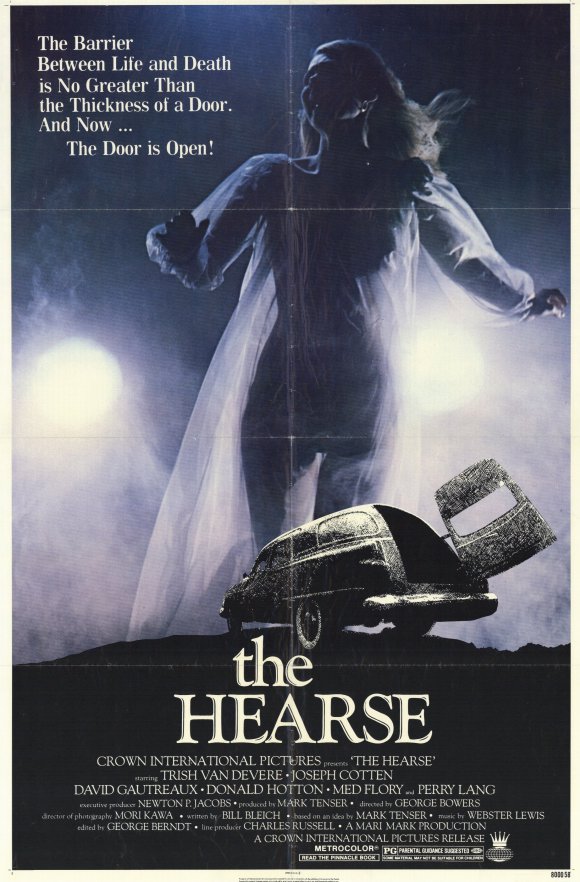
The Hearse (1980)

the hearse 2

By Richard Winters

My Rating: 2 out of 10

4-Word Review: Haunted by a hearse.

Jane (Trish Van Devere) is recuperating from a nervous breakdown and decides to move away from the bustle of big city life into a home left to her from her recently deceased aunt, which is situated in a small town. Unfortunately things do not go smoothly. The townspeople are reticent to Jane’s presence and weird things begin to occur including a mysterious big, black hearse that appears late at night and seemingly intent on running Jane over.

I remember I first heard of this film when it was shown on Showtime during the early 80’s as part of their ‘After Hours’ films, which typically amounted to soft core sex flicks and gory horror. However, this film was only rate PG, which always made me wonder how ‘adult’ or scary could it really be.

To some degree this fares slightly better than the usual low budget horror flick at least at the beginning. There are some nice on-location shots of the San Francisco bay area and the main character is likable enough. The production values are decent and the story, as thin as it is, has a certain intriguing quality to it.

Van Devere makes for a strong female protagonist as she is quite practical and doesn’t allow herself to scare easily and seeing a female character that is confident and poised and not used simply as a sex object especially in these types of films is a refreshing change. After a while though I started to think that the character became a little too stubborn as there were so many bad things that started to occur that I think I would have left and not come back and the fact that she stays past when most other people wouldn’t makes her seem a bit irrational.

The atmosphere is minimal and the scares are almost non-existent and depend almost completely on a few doors slamming and windows bursting open for no reason. Moments of intruders breaking into the home and shots of their feet silently creeping up the stairs starts to become redundant and dull. A dream-like funeral sequence can’t save what is otherwise a slow moving plot. The ‘secret’ behind the hearse’s presence isn’t very imaginative and the film borrows too many elements from other cheesy haunted house films without adding anything unique or distinctive in the process.

My Rating: 2 out of 10

Released: June 5, 1980

Runtime: 1Hour 39Minutes

Rated PG

Director: George Bowers

Studio: Crown International Pictures

Available: DVD (Drive-In Cult Classics Vol. 2)

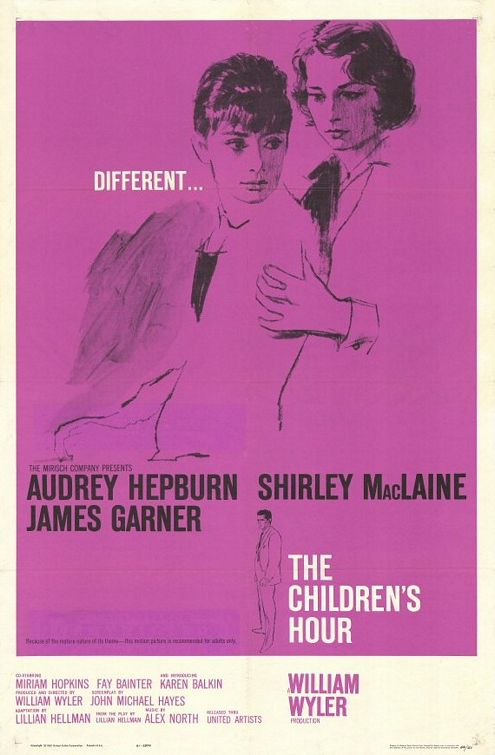
The Children’s Hour (1961)

childrens hour

By Richard Winters

My Rating: 4 out of 10

4-Word Review: Ruined by a lie.

Martha and Karen (Shirley Maclaine, Audrey Hepburn) are two single young women running an all-girl’s school. They have the respect of the community and the parents, but that suddenly changes when one of the students named Mary (Karen Balkin) decides to spread a rumor that Martha and Karen are lovers. This sends everything into an uproar. All the students are moved out and the two women find themselves fighting desperately for their reputations and livelihoods. Karen’s boyfriend Joe (James Garner) remains their staunch supporter, but eventually even he begins to have his suspicions.

The film is based on the landmark play written by Lillian Hellman which ran for 691 performances in 1934 and was based on a true incident that happened in Scotland in 1810. The original film version of the play was made in 1936 and entitled These Three that was also directed by William Wyler and starred Miriam Hopkins as Martha who in this film plays Martha’s Aunt Lily. That film was heavily watered down with the lesbian element completely taken out and instead has the rumor revolve around the two teachers being in love with the same man.

This second film version was supposed to be more like the play, but hardly seems worth the effort. Although Wyler makes some attempts to make it seem more cinematic it still comes off very much like a filmed stage play and a static one at that. Lots and lots of talk with a narrative that is quite plodding and predictable. Having the story work more in a fragmented style might have helped, but either way it is never very engrossing or compelling. It also completely skips over the libel trial, which I thought could’ve given some added drama and it never completely explains why the Aunt Lily character avoided testifying. She comes up with the lame excuse that she was touring with her show, but I felt it was more because she secretly knew Martha was a closet lesbian and didn’t want to have to confront that and the film should’ve made this more clear.

It is also unintentionally funny at times especially the part where actress Fay Bainter’s eyes get bigger and bigger as Mary whispers her ‘shocking’ secret into her ear. Balkin also overdoes the facial expressions, which was probably due to too much coaching on the part of Wyler, but with that said her presence in the film is fun and gives the proceedings a liveliness that is otherwise stagnant.

The film really isn’t all that groundbreaking either and handles the delicate issue in too much of a timid way. For instance there is a scene where Martha admits to her homosexual feelings and states that she feels ‘ashamed’ for having them and Karen counsels her by stating that ‘you did nothing wrong’ because ‘nothing happened’, but what if it had then would it have been wrong? I tend to lean towards the latter making the production seem as stale and prejudicial as the public at the time. I was also confused as to how the two women could remain living at the school when all the students had moved out and they no longer had any income, or how they were still able to have groceries delivered to them.

My Rating: 4 out of 10

Released: December 19, 1961

Runtime: 1Hour 47Minutes

Not Rated

Director: William Wyler

Studio: United Artists

Available: DVD, Blu-ray, Amazon Instant Video

The Pack (1977)

the pack 1

By Richard Winters

My Rating: 5 out of 10

4-Word Review: Dogs on the prowl.

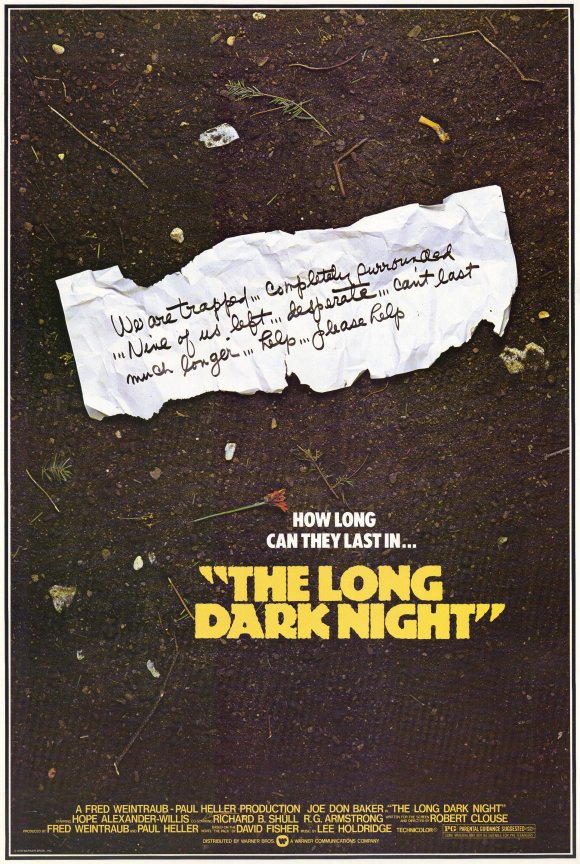
Jerry (Joe Don Baker) moves to idyllic Seal Island with his new wife Millie (Hope Alexander-Willis) and their two sons. They meet vacationers Jim and Marge (Richard O’Brien, Bibi Besch) and their grown son Tommy (Paul Wilson) as well as island locals Hardiman (Richard B. Shull) and Cobb (R. G. Armstrong). As the days progress Jerry becomes aware of wild dogs roaming the island that are led by a particularly vicious mongrel. These dogs become more aggressive as they have already attacked other humans and have now acquired a taste for them. The eclectic bunch becomes trapped in a home surrounded by 15 hungry dogs while forced to use their cunning and wits to outsmart the animals and make it to freedom.

The film has an interesting even novel idea of turning man’s best friend into a villain and is quite similar to Dogs, which came out at the same time and will be reviewed next week. Unfortunately the structure runs along the predictable mechanical formula of a conventional horror film using the same type of scares and shocks that are not all that imaginative.  Although shot on-location in Bodega Bay, California it looks more like a cheap studio back lot that lacks any type of visual flair. In a lot of ways it comes off like a TV-Movie and whenever there is any gore it will cut away and not show it giving it very tame, trite and dated feeling.

The characters are dull and generic and a few more interesting personalities or dramatic side-stories could have helped. The film also takes a very old fashioned viewpoint on women as they are portrayed as being helpless and incapable of handling things on their own and in desperate need of the big, burly man to come in, take control and save the day.

I thought it was amusing that Baker was cast in the lead as his face has always reminded me of a bulldog. I don’t consider him to be all that bad of an actor, but there are other male leads that could have worked better. The female cast members are completely wasted and seem put in only to sit around with a frightened looks while the men do all the action.

The dogs themselves aren’t too bad. The pack leader is made to look like he is demonic, which is a little overdone, but still effective.  A fight scene between two of the dogs is well done and intense. I also liked the climatic finish in which Baker goes face-to-face with the lead animal with only some box springs between them. However, the basic concept seems dubious and these were all pets apparently abandoned by their owners only a few weeks earlier and it seemed hard to believe that they would have turned this wild and aggressive so quickly. Most stray dogs that have been previously socialized by humans can usually be taken back into captivity relatively easily while feral dogs remain frightened of humans, but in either case rarely go on the organized attack like they do here especially when they don’t have rabies and are mostly non-aggressive breeds.

My Rating: 5 out of 10

Alternate Title: The Long Dark Night

Released: November 20, 1977

Runtime: 1Hour 35Minutes

Rated PG

Director: Robert Clouse

Studio: Warner Brothers

Available: VHS, DVD (Warner Archive)

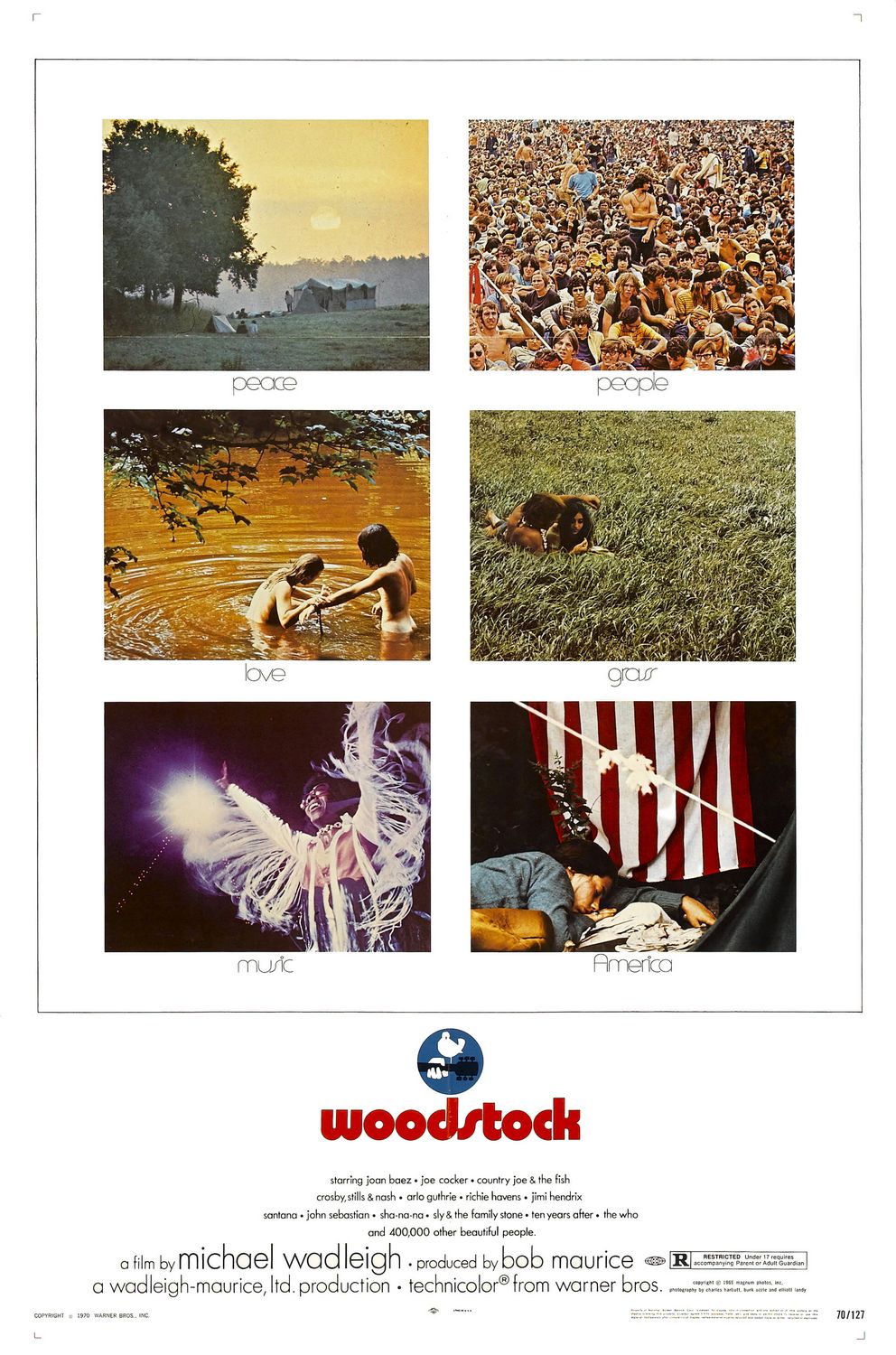
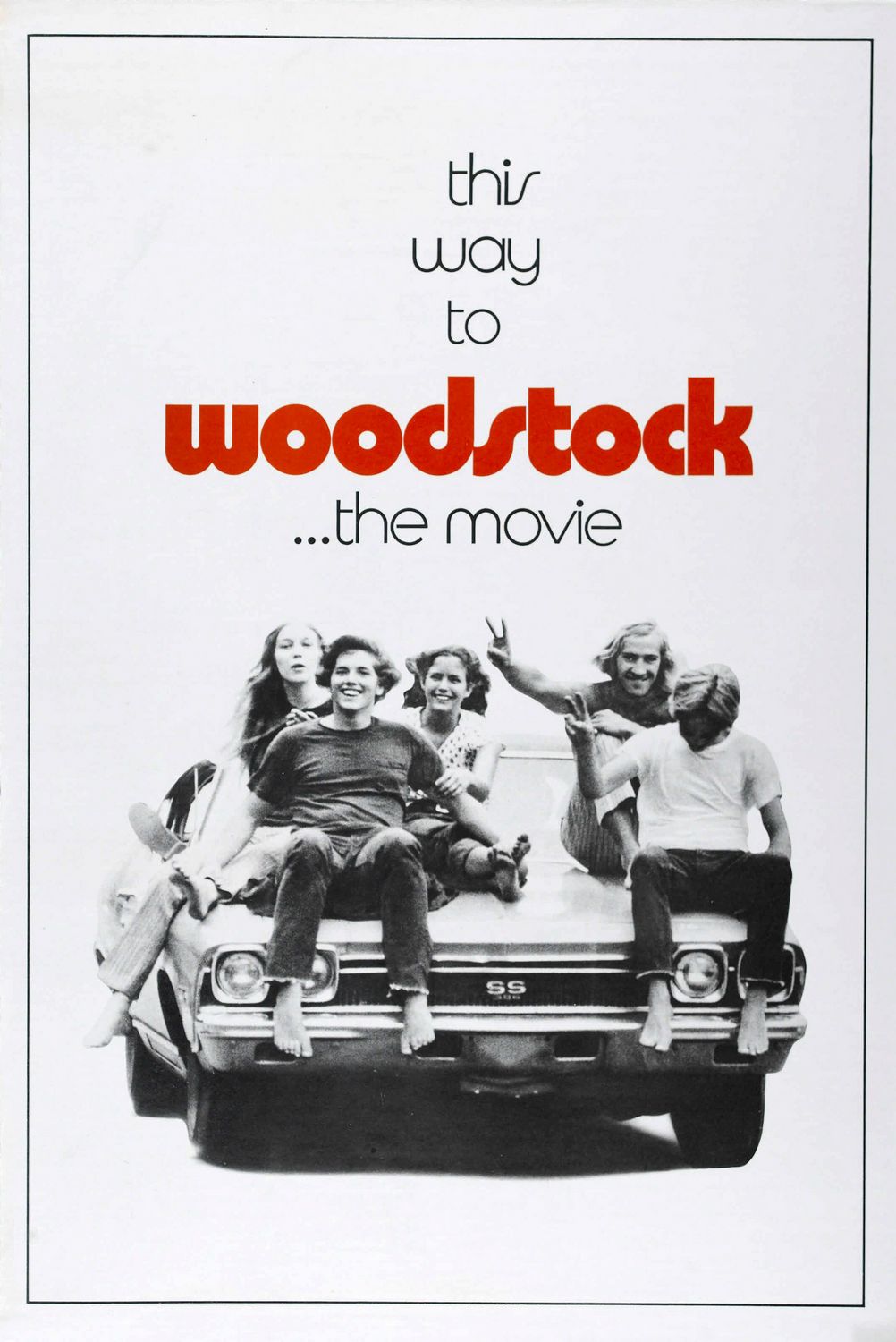
Woodstock (1970)

woodstock 2

By Richard Winters

My Rating: 7 out of 10

4-Word Review: Love, peace and music.

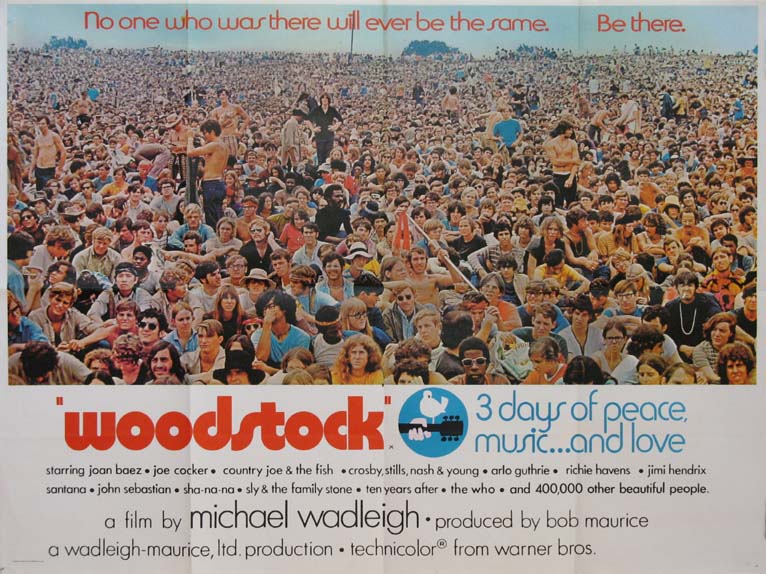
During August 15 – 18, 1969 Max Yasgur loaned out his 600 acre farm, which was near the town of Bethal, New York to some concert promoters for an epic 32-act rock extravaganza that has become the cornerstone for the counterculture movement and a major moment in Rock’N’Roll history. Although originally expected to attract only 50, 000 it ended up being more than 400,000 and this movie captures the mood, festivities, and music right up close.

Unlike most documentaries this film doesn’t just turn on the camera and then proceed to let things happen at a sometimes slow and boring pace. Instead it relies on a great use of editing done at the time by an unknown Martin Scorsese, which helps give the film a very polished and dramatic narrative. The dual screen setting allows the viewer to see two things at once and you are given a full view of the occasion as you watch not only the beginning as they construct the stage, but also the massive clean-up of all the debris left afterwards.

The music acts are captured perfectly as director Michael Wadleigh’s use of the camera nicely compliments the energy on stage with a variety of angles and quick cuts. In some ways you feel more connected with the music by watching it here than having been there in person as you are made to feel like you are right next to the performer as they are playing. One of the best moments is Richie Haven’s opening act where you see the broken strings on his guitar, the sweet glistening off his nose and saturating his back as well as a close-up of his mouth where he appears to have no teeth on his upper jaw. Janis Joplin who was known to have an incredible onstage energy is also memorable and is part of the added 45-minutes of the director’s cut. Country Joe Mcdonald is also memorable with his now famous ‘fuck cheer’ and ‘I-Feel-Like-I’m-Fixin’-to-Die Rag’, which comes complete with lyrics on the screen and a little bouncing ball.

woodstock 1

The film also features different elements than what you would find in most other concert movies including one segment that looks at the cleaning of the many port-o-potties as well as a long drawn out rain storm in which many of the concert goers’ end up sliding through the mud. There is another segment looking at the skinny dippers as well as all the naked children in attendance.

There are some good interviews spliced in although I wished there had been a few more. Some of the more interesting ones include those with the townspeople who despite reports to the contrary where actually excited about the event and supported ‘the kids’at least the ones seen here. I also liked hearing from the attendees as they lined up to take turns at calling their parents on pay phones. The only interview that I didn’t care for was of a young man who used the phrase ‘you know’ so numerously that it really got on my nerves.

The movie is quite long with the director’s cut being almost 4 hours in length and not all of the music acts shown including some of the better ones. However, the film is still quite electrifying and doesn’t end up seeming as long as it is. It is also so amazingly vivid that it gives you the feeling like you were there and something that only happened yesterday instead of forty-five years ago.

woodstock 4

My Rating: 7 out of 10

Released: March 26, 1970

Runtime: 3Hours 45Minutes (Director’s Cut)

Rated R

Studio: Warner Brothers

Director: Michael Wadleigh

Available: VHS, DVD, Blu-ray, Amazon Instant Video

Did You Hear the One About the Traveling Saleslady? (1968)

did you hear the traveling saleslady

By Richard Winters

My Rating: 3 out of 10

4-Word Review: Saleslady saves family farm.

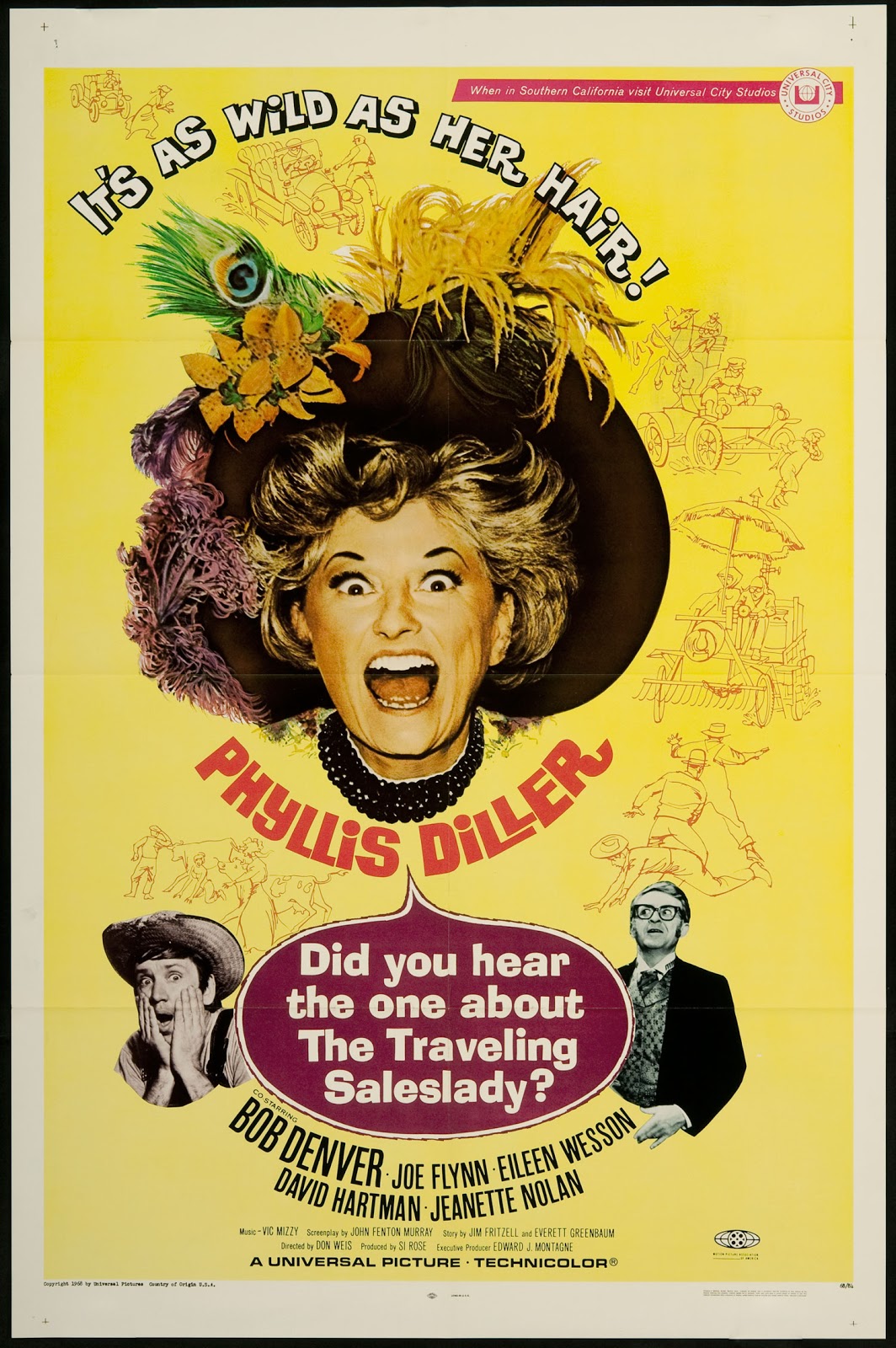
Agatha (Phyllis Diller) is a traveling saleswoman who arrives in a small Missouri town in the summer of 1910 trying to sell a piano that can play by itself. During a demonstration of it one of the townspeople, the kindly, but inept Bertram (Bob Denver) accidently destroys it. Agatha now finds herself stuck with a piano she can’t sell and nowhere to go. Bertram allows her to stay at his family farm, which is at risk of being foreclosed by the town’s greedy banker Hubert Shelton (Joe Flynn). Bertram and Agatha come up with a way to save the farm by winning an automobile race in a wild vehicle created by Bertram using parts from the destroyed piano.

It seems hard to believe in retrospect that eccentric comedian Diller was ever considered star making material, but she did 8 films during the 60’s with 4 of them centered on her flamboyant persona. All of them tanked both critically and at the box office with this one being the last of them. I imagine trying to come up with a scenario using Diller as the centerpiece would be no easy task, but this screenplay penned by John Fenton Murray is too broadly written to be even remotely interesting and seemed already badly dated even for its era. The humor is locked in a kiddie level with a plot that is excessively simplistic and won’t intrigue anyone over the age of 6.

Diller pretty much just plays herself, which would be alright if some her jokes and lines were actually funny, but none of them are. The reoccurring gags centered on her whacky outfits, ugly appearance and horses that go crazy the second she reveals any part of her legs gets old fast. Denver’s character is nothing more than an extension of Gilligan and Flynn is pretty much being the same character he was in ‘McHale’s Navy’.

The film is watchable if you come into it with extremely low expectations, but that is not saying much. None of the gags work and the town’s set was clearly filmed inside Universal’s studio lot, which looks phony and annoying. Denver’s milking machine invention, which can milk 6 cows at once, has potential, but when the cows escape and rampage the entire town it becomes forced humor at its worst, which goes likewise for the climatic and silly car race.

My Rating: 3 out of 10

Released: July 14, 1968

Runtime: 1Hour 34Minutes

Not Rated

Director: Don Weis

Studio: Universal

Available: None at this time.
Little Darlings (1980)

little darlings

By Richard Winters

My Rating: 5 out of 10

4-Word Review: Competing to lose virginity.

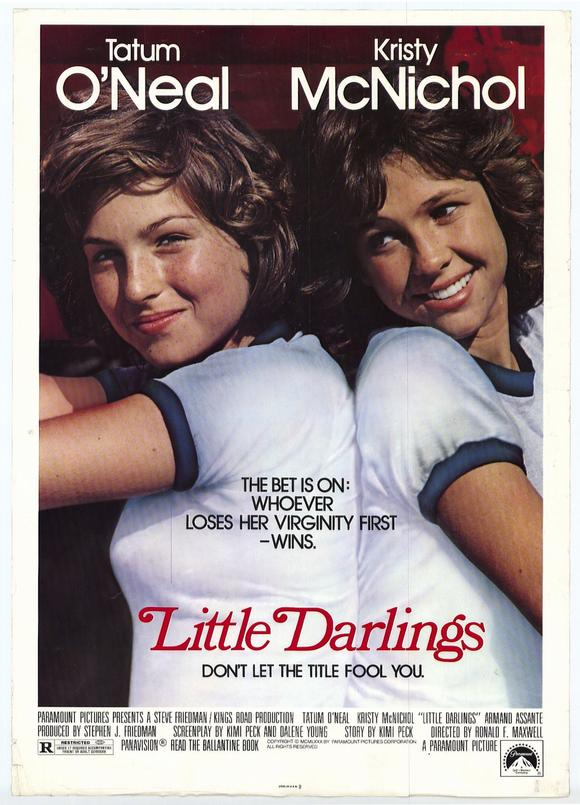
Ferris (Tatum O’Neal) is a prissy girl from a rich family who attends summer camp along with Angel (Kristy McNichol) who’s more brash and streetwise. The two get into a competition to see who can lose their virginity first. The rest of the girls in the camp take sides and place bets.  Angel sets her sights on Randy (Matt Dillon) a cute boy from a neighboring boy’s camp while Ferris goes after Gary (Armand Assante) who is one of the adult camp counselors.

The film is for the most part okay and amounts to nothing more than a slice-of-life glimpse at adolescent girls and the snotty and sometimes peculiar ways that they perceive things. Most movies that portray this age group go too much to one extreme either by showing them as being overly bitchy or too innocent, but this film manages to find just the right balance making their conversations and overall scenarios believable and amusing.

I especially liked Krista Errickson as the spoiled and snobby drama queen Cinder. Normally these types of characters can be quite annoying and overplayed, but Errickson makes it fun and a major plus to the movie.

The film also has a few funny scenes including the one where the girls steal an entire condom dispensing machine from a men’s bathroom and then take it back to camp where they have to smash it with crowbars in order to finally open it. The massive food fight in the cafeteria is a hoot as well.

McNichol is excellent particularly with the way she can become teary-eyed seemingly on cue. I also enjoyed Alexa Kenin an engaging actress that died under mysterious circumstances at the young age of 23 who plays Dana here and helps ‘coach’ the two on what it is like to have sex. This also marks the film debut of Cynthia Nixon playing the hippie girl Sunshine.

The dramatic moments between Angel and Randy help give the film a little more depth and dimension, but also completely ruins the comic momentum. I also felt the film could have been funnier and didn’t take enough advantage of its setting or plot.

The Armand Assante character is another issue. Although he does not have sex with Ferris she does let it get around the camp that he did, which these days would have him fired and thrown into jail before he would even had a chance to defend himself. Although the girls do finally go and tell the truth later on I felt seeing him still working at the camp at the end while acting unblemished from it seemed to be a bit of a stretch.

I was also stunned that this film was given an R-rating. I realize the storyline is a bit titillating, but there is not nudity or sex shown as well as no violence or foul language. The sexual conversations that do occur are never explicit or crude and overall the film has an innocent quality to it.  13 and 14-year-olds do talk and think about sex as they certainly did when I was growing up and that shouldn’t make this an ‘adult movie’.  In fact I think young teens would be the ones to find this movie the most appealing as adults are likely going to consider it rather banal. The R-rating unfairly prevented the target audience from viewing it and showed just how misguided, useless and confusing the rating system can be.

This film has attained quite a cult following namely for the fact that it has never been released onto DVD and most likely never will. Part of the reason for it is because of its musical soundtrack and the licensing agreements that come with. There are some good tunes here including Ian Matthew’s ‘Shake It’ that opens the film as well as Blondie’s ‘One Way or Another’. Unfortunately other classic rock songs that were on the theatrical version failed to make it onto VHS, which is the only format this film can currently be seen on.

My Rating: 5 out of 10

Released: March 21, 1980

Runtime: 1Hour 36Minutes

Rated R

Director: Ronald F. Maxwell

Studio: Paramount

Available: VHS