Category Archives: Movies that take place in the South

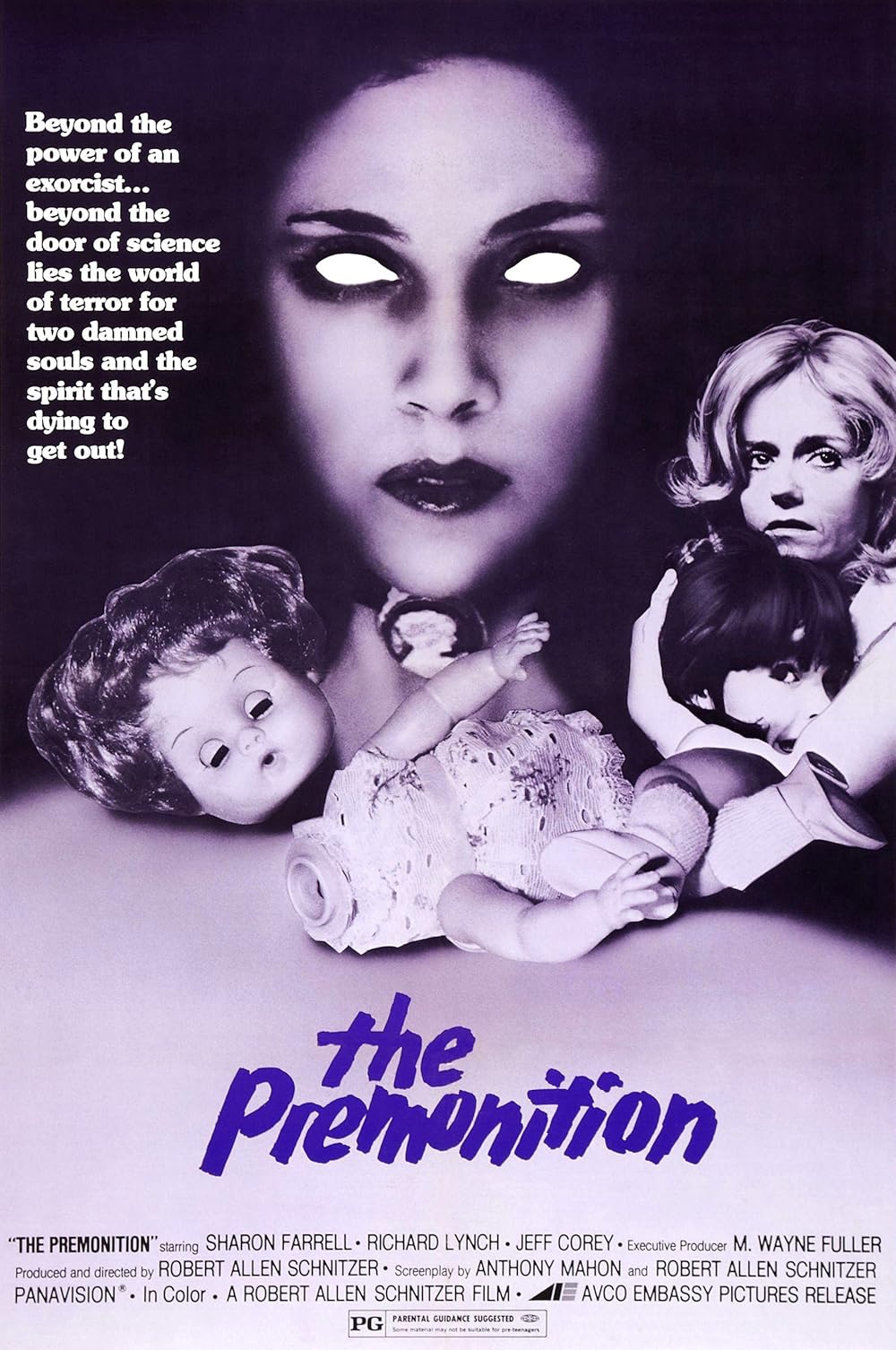
The Premonition (1976)

By Richard Winters

My Rating: 3 out of 10

4-Word Review: Wanting her child back.

Andrea (Ellen Barber) is a woman who was institutionalized and lost custody of her child Janie (Danielle Brisbois). Janie was then adopted by Sheri (Sharon Farrell) and Miles (Edward Bell) who became her foster parents. Andrea though gets released from the hospital and manages, along on with her boyfriend Jude (Richard Lynch), who works as a circus clown, to track down where Janie is currently living. Andrea wants Janie back and the two conspire to kidnap her, but their initial attempt backfires. Jude becomes irritated at Andrea’s inept abilities to retrieve the child, along with her obsession over a doll that she treats as being a real baby, which sends him into a rage that ultimately kills her. Now, Sheri begins having weird visions of Andrea tormenting her from beyond the grave, but when she complains to her husband about it he refuses to believe her insisting that it’s simply hallucinations from all the stress.

Odd film that seems to be a hybrid between sci-fi and thriller, with just a drop of dramatic character study, that doesn’t fully work despite some moments of potential. The on-location shooting, done in Jackson, Mississippi, allows for some visual flavor, but the story isn’t fleshed out enough to be impactful. There are some shades of an early version of Nightmare on Elm Street, but the film doesn’t go far enough with it. In fact, on a creepy level, it’s very low. The one and only slightly scary moment comes when an eviscerated, ghostly Andrea appears in Janie’s bedroom and tries to scare Sheri, but the scene is too brief and doesn’t go anywhere. The only other ‘spooky’ parts entails when Sheri watches her bathroom mirror fog up as well as the windshield of her car, but that’s literally it. No other scares or shocks to speak of making it confusing trying to figure out what type of audience the producers were going for.

Story-wise it’s muddled. No explanation given for how Andrea and Jude where able to track down where the kid was currently living and Andrea’s ability to get inside the house, where she simply turns the knob of the front door and is able to sneak right in, was too easy. Most people lock their doors at night, and this couple especially should’ve since Andrea had already been spotted by Sheri harassing Janie earlier at the school playground, so having them forget to do this makes them seem dumber than dumb it also hurts the tension. Forcing Andrea to come up with creative ways to get in the home, like maybe trying to slide through the basement, or attic window, would’ve given this segment more intrigue.

There’s also no suitable reason for how Sheri is able to receive the premonitions that she does, or how Andrea is able to give them off. Did Andrea at some point dabble in the occult? Or has Sheri always showed signs of ESP all her life and therefore making her susceptible to Andrea’s ‘messages’? None of this gets even remotely addressed, which ultimately makes the movie poorly thought out. 

Spoiler Alert!

The ending is particularly goofy as it features Sheri performing a musical piece written by Andrea in an attempt to appease Andrea’s angry spirit and get Janie back. However, this all gets done late at night while on the steps of the Mississippi state capitol where a small piano has been placed that Sheri plays while in front of a crowd of curious onlookers. The police then stand-by waiting for any ‘suspicious’ people to arrive, so they can be arrested, but the chances that the authorities would allow such an insane ‘show’ to take place on government property, or believe in evil spirits and visions to begin, with is highly unlikely.

End of Spoiler Alert!

I did though enjoy the acting. Farrell is quite good as the distraught mother and Brisebois, who’s probably best known for playing Stephanie on the ‘Archie Bunker’s Place’ TV-show, is cute and looks to be no more than 3 or 4. Lynch is fantastic playing against type as his character has moments where he seems genuinely concerned and I loved the scene where he dresses in mime make-up and does a silent routine while taking someone’s picture. The best though is Barber who’s unnerving as the unhinged woman, and I wished her role had been bigger.

Unfortunately, there isn’t a payoff. Too many questions get left open and the story doesn’t explore enough angles to make anything that occurs here either memorable or riveting. Some may say this was a precursor of better, more well-known thrillers/horror/sci-fi films to come, and they may have a loose point, but it doesn’t do enough with the material to deserve any recognition. 

My Rating: 3 out of 10

Released: May 5, 1976

Runtime: 1 Hour 34 Minutes

Rated PG

Director: Robert Schnitzer

Studio: AVCO Embassy Pictures

Available: DVD, Blu-ray, Amazon Video, Tubi

Steel (1979)

steel

By Richard Winters

My Rating: 4 out of 10

4-Word Review: They build a skyscraper.

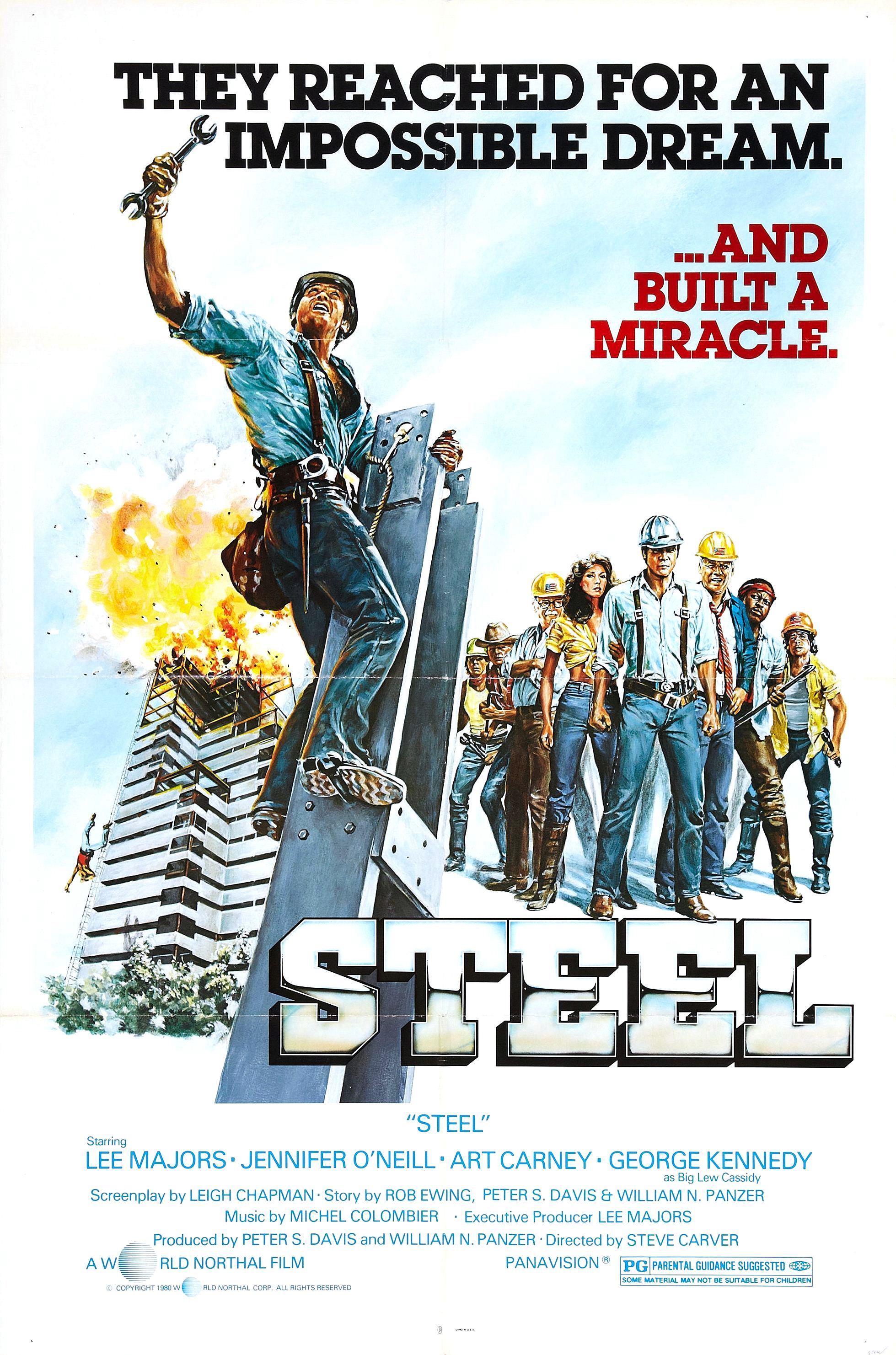
Big Lew (George Kennedy) runs a construction company that builds skyscrapers and is under pressure to get his most recent project, which will be one of the tallest he’s ever been put in charge of making, completed under budget. While climbing onto a metal high beam, one of the other workers with him freezes and refuses to come down. Lew attempts to relax him, but in the process, he loses his balance and falls to his death. Cass (Jennifer O’Neill) is put in temporary charge, but she’s overwhelmed with the demands and thus goes to Mike (Lee Majors) to help take over the project and make sure it gets done in time. Mike used to be a part of the hard-hat team, but an accident caused him to become afraid of heights and forced him to take a job as a truck driver, but when the daughter of an old friend comes calling, he can’t refuse. He assembles a motley crew of misfits who all have eccentric personalities but also know how to build tall buildings and do it right even when put under grueling circumstances. Not all of them know about Mike’s fear and he tries to hide it from them due his concern that they might not respect him anymore if they found it, but while he struggles to keep everyone working at a near impossible pace he must also fight-off the likes of Eddie (Harris Yulin) who’s been tapped by a criminal conglomerate to do whatever he can to hijack the efforts of Mike’s crew and make sure the building is never finished.

The film is for the most part just a TV-movie if not for one brief moment when a prostitute gets into the truck that Lee Majors is driving and takes-off her shirt. It would’ve been best had it been made for that medium because as a theatrical release it didn’t do well and has been largely forgotten without any DVD, Blu-ray, or even a steaming venue to its name. Infact the only thing that stands it out is what occurred behind-the-scenes as stuntman A.J. Bakunas died when attempting the world record by diving off a construction site at 315 feet from the 22nd story where he reached speeds of 115 mph. The jumped looked perfect, but upon landing the air bag split and he died from the injuries the next day.

While his death was certainly regrettable, his father was a part of the 1.000 onlookers who witnessed it, it was not shot in a way that makes it work in the film. While the footage was kept and edited into the movie you only end up seeing a few seconds of it making it seem like it wasn’t even worth attempting if that’s all that was going to be seen. It was also used to kill-off George Kennedy, it was his character’s fall that the jump was created for, but Kennedy’s hard-ass persona is the one thing that gives the story any color and it’s a shame that he hadn’t stayed in all the way through.

The supporting cast if full of familiar B-movie faces and some of them are quite good, but they’re not in it enough. The movie might’ve been more entertaining had the workers themselves carried it, but instead we get introduced to their quirky temperaments, while Majors busily makes the rounds to beg them to come aboard as his crew, but then after that they’re largely forgotten and instead the focus gets put on Majors who is by far the dullest of the bunch and it would’ve worked better had he not been in it at all. O’Neil had great potential, seeing a woman trying her best to head an all-male crew, most of whom weren’t exactly gentile, could’ve made for some high drama and been considered even groundbreaking and the film clearly misses-the-mark by not having taken that avenue.

The building that was used for the film was the Kinkaid Towers in Lexington, Kentucky, which when compared to major skyscrapers in large cities is quite puny and unimpressive. The opening shot capturing it from the ground-up as its half-built doesn’t help to dispel this feeling and if anything seems rather laughable especially when there’s no other tall building around it, so there’s no cosmopolitan vibe at all to it.  However, the shots showing the men walking on the high beams several stories up with seemingly nothing holding them down is nerve-wracking to watch especially for those who fear heights, so in that vein it succeeds, but with everything else it’s rather flat.

My Rating: 4 out of 10

Released: July 25, 1979

Runtime: 1 Hour 42 Minutes

Rated PG

Director: Steve Carver

Studio: Fawcett-Majors Productions

Available: DVD-R

Mandingo (1975)

mandingo1

By Richard Winters

My Rating: 7 out of 10

4-Word Review: Slave turned into fighter.

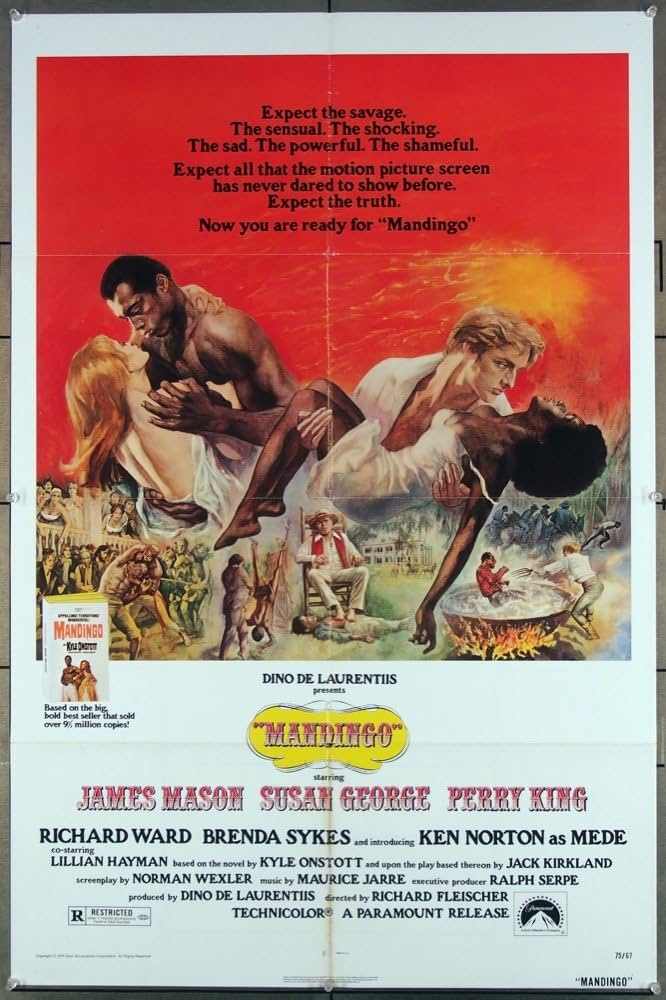
Hammond (Perry King) is the son of aging plantation owner Warren (James Mason) who purchases a Mandingo slave named Mede (Ken Norton). Mede proves himself as having superior fighting skills, so Hammond turns him into a prize fighter and makes money off of him. Meanwhile Hammond is also having an ongoing sexual affair with a slave named Ellen (Brenda Sykes), but his father orders him to find a white woman in order to supply him with an offspring, so Hammond marries his cousin Blanche (Susan George), but on their wedding night he rejects her when he realizes she is not a virgin. Blanche becomes jealous of Ellen, whom is secretly carrying Hammond’s child, and causes her to miscarry. She then forces Mede to have sex with her, so she’ll become impregnated with a black baby and bring humiliation to Hammond. After the birth, when Hammond realizes what has happened, he then goes on a violent revenge not only against Blanche, but also Mede whom he once considered his prize possession, but will Mede just accept his punishment, or use his strength to finally turn on his master?

The story is based on the 1957 novel of the same name written by Kyle Onstott. Onstott had written a book about dog breeding with his adopted son, but that didn’t do too well, so at the age of 65 he became motivated to write a book that he hoped would be a bestseller and make him a lot of money. He decided a sensationalistic material was the way to get attention and thus choose to write a story based on many ‘bizarre legends’ he had heard growing up. It was printed by a small publisher and it soon got him the national attention that he craved and sold 5 million copies that not only lead to a series of books on the same theme, but also a 1961 stage play that starred Dennis Hopper. The film rights was purchased by noted producer Dino De Laurentiis and became a very rare exploitation film that was given a big budget and a major studio release.

Critics at the time gave it almost unanimously negative reviews including both Roger Ebert and Leonard Maltin, but today it’s seen in a slightly more favorable light. Personally, if you’re going to do a movie on slavery, a notoriously dark moment in human history, and you’re want to do it honestly, then a graphic portrayal of it such as this should be in store. It may make the viewers cringe throughout, but that’s kind of the purpose. On a purely shock value scale this thing delivers in an almost mechanical sense. It’s just one scene after another that should leave even the most seasoned audiences with their mouths agape. While it’s hard to pick just one moment that’s the most shocking as there are an incredible amount of them I felt the fight sequence where both men literally bite the flesh off the other until blood spurts out of the one’s neck is for the me the infamously top moment though having Mason using a black child as his own personal foot stool, or hanging a 60-year-old black man, played by Richard Ward, naked and upside down to be paddled not only by Hammond, but also by Charles (Ben Masters) who stops by to visit and immediately takes part while another black child looks on amused by it, comes in as a close second.

On the technical end I liked the way it was shot by cinematographer Richard H. Kline. Initially I found the decrepit look of the mansion, which was filmed at the Ashland-Belle Helene Plantation in Geismer, Louisiana, to be problematic as everything looked old and rundown, but you’d think if it had really been done in the time period it was lived-in then it should look new and just built. The overgrown lawn was an added issue as it made it seem like it was an abandoned place, but back then maybe they didn’t all use manually powered lawn cutters, or care to, so I was willing to overlook that portion. I did though love the use of natural lighting, electricity wasn’t a thing, so sunlight coming in from the windows was about it and the use of shadows nicely illustrated the dark personalities of the characters.

The acting is excellent and I was especially impressed with Mason who can seem to go from playing nice guys to villain with an amazing ease as most actors are usually just good at doing one or the other. Some complained about his attempt at a southern accent, but for a guy born and raised in Britain I thought he disguised it pretty well. Susan George, most noted for playing frightened damsel-in-distress types, does a terrific turn as an evil bitch who’ll stop at nothing to get her revenge. King is also impressive as he shows at times to have a certain conscious and appalled at what he sees, but ultimately is unable to get over the hump and becomes just as evil as the rest despite convincing himself and his slave girlfriend that he’s somehow ‘more reformed’.

My Rating: 7 out of 10

Released: July 25, 1975

Runtime: 2 Hours 7 Minutes

Rated R

Director: Richard Fleischer

Studio: Paramount

Available: DVD, Blu-ray, Amazon Video, YouTube

Cockfighter (1974)

cockfighter

By Richard Winters

My Rating: 6 out of 10

4-Word Review: He refuses to talk.

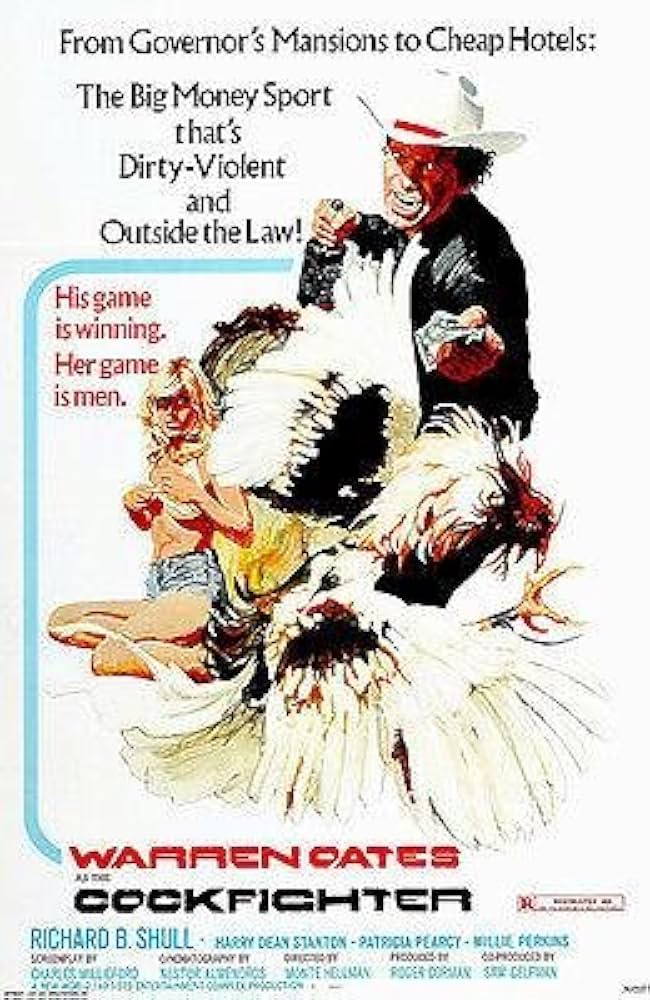
Frank (Warren Oates) has a passion for cockfighting. While he’s had other endeavors in his life he’s always come back to this because of the unpredictability. He can predict the way the chicken is built how it will fare in a fight, but it’s actual fighting spirit is unknown until it’s put to the test and because of that factor it keeps him intrigued with the sport. However, his bragging gets him into trouble when one of his chickens losses a battle during a makeshift fight inside a hotel room with a chicken from fellow cocker Jack (Harry Dean Stanton). After he’s forced to pay up the bet Jack tells him that he ‘talks too much’ convincing Frank to take a vow of silence and become effectively mute until he’s able to win a cockfighting championship.

The story is definitely a relic of a bygone era as cockfighting is no longer legal in the U.S. with Louisiana being the last state to ban it in 2008. Today only a few countries in the world allow it as the sport is considered by many to be animal abuse. The film pulls-no-punches and will be deemed brutal for certain viewers who’ll probably turn it off by the halfway mark if not sooner. The fights between the chickens are actual and up close. You see the beaks of one cock jamming into the eyes of another and their dead carcasses of which there ends up being many thrown into a heap onto others into a trash bin, or in one segment where the fights take place in a hotel room, into a bathtub with what seems like hundreds them. There’s even a scene where Oates hacks-off a live chicken’s head with an ax and another moment where he lays a chicken onto the pavement and then steps on its head and yanks it off from the rest of its body by sheer force, so if any of these details upset you then it’s best to stay away from the movie altogether.

For those who are game the story ends up having a darkly humorous tone. The armed robbery that takes place inside a hotel room and Richard B. Shull’s character hiding his earnings amidst the pile of dead chickens where he presumes no one would dare think to even check is amusing. The best moment though comes when Ed Begley Jr. becomes incensed when Oates’ chicken kills his during a fight and being so distraught at losing his prized possession comes after Oates with an ax.

The acting is marvelous particularly by the legendary Oates though he doesn’t say much until the very end, but he makes up for it by being the film’s voice-over narrator. What impressed me most though was his comfort level in handling the chicken’s and at one point casually dealing with one that tried attacking him, which made me believe that this must go back to upbringing in rural Kentucky where he lived amongst them as a kid so he was used to their behavior and not scared away as I’d think another actor without that type of background wouldn’t be able to pull-it-off.

The script was written by Charles Williford, who appears in the movie as a judge/ref during the cockfights and based off his novel of the same name. While the film does move along at a brisk pace and is never boring I did feel it lacked a certain context. It works more like a preview than a full story. You get a general feeling about the people and atmosphere, but not a deep understanding. My main curiosity was with the folks who come to see these fights and what motivated them to want to watch such a bloody sport. Analyzing this mentality would’ve been interesting, but never happens making the film feel incomplete and like it’s only barely tapping into the surface of the subject.

My Rating: 6 out of 10

Released: July 30, 1974

Runtime: 1 Hour 23 Minutes

Rated R

Director: Monte Hellmen

Studio: New World Pictures

Available: DVD, Blu-ray, Amazon Video, Fandor, Pluto, Tubi, Plex, Shout TV

Thieves Like Us (1974)

thieves

By Richard Winters

My Rating: 6 out of 10

4-Word Review: Convicts escape from jail.

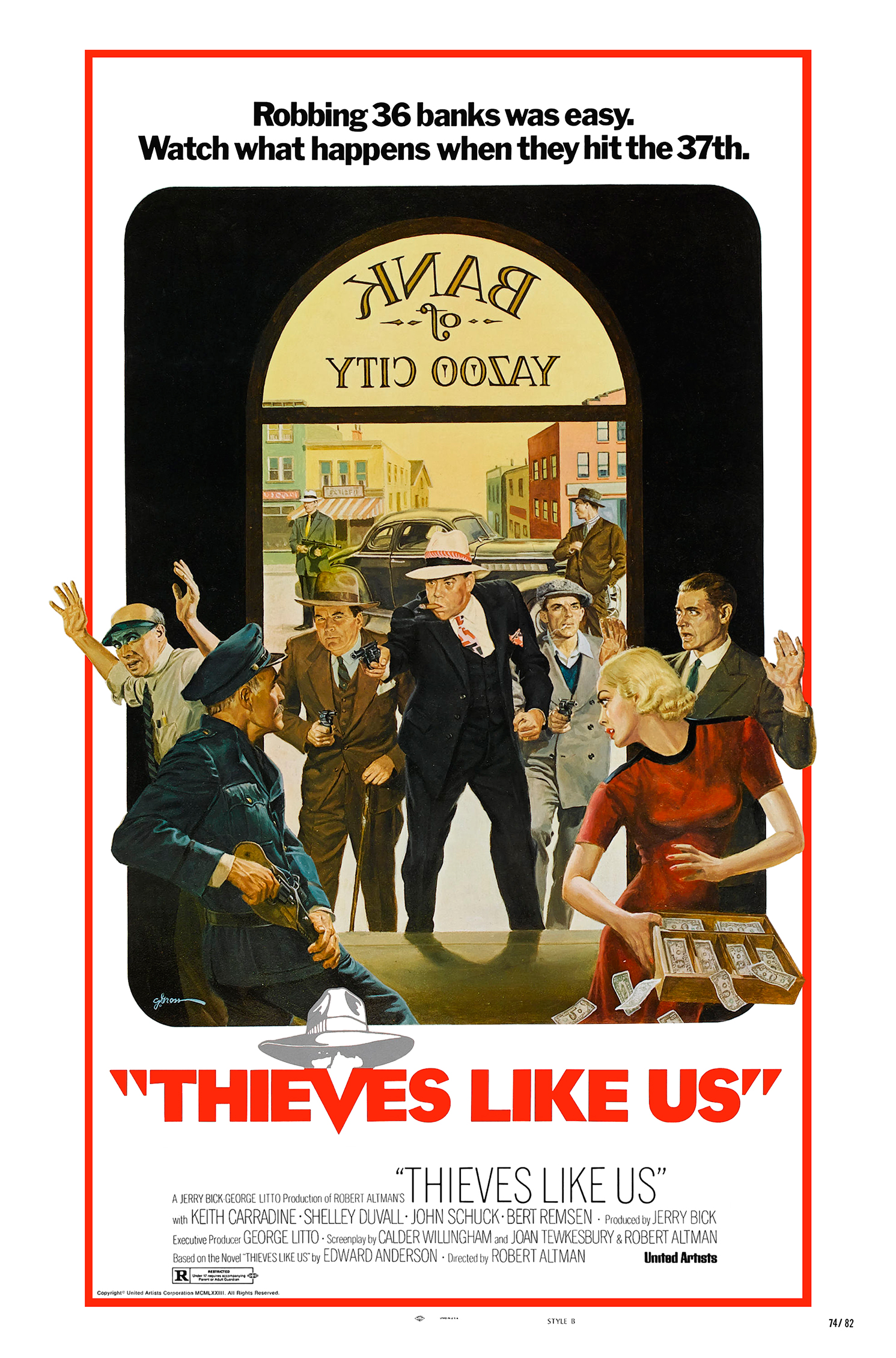
Bowie (Keith Carradine) is a young man stuck in jail due to a murder conviction from when he was a teenager. He teams up with Chicamaw (John Schuck) a middle-aged man to escape from prison and meet-up with T-Dub (Bert Remsen) an older man who has them hide-out at a local auto garage where Bowie meets the owner’s daughter Keechie (Shelley Duvall) and the two start-up a relationship. The three men return to their criminal ways by robbing banks, which goes well for awhile until the quick-triggered Chicamaw shoots and kills a bank clerk, which gets him recaptured and returned to prison. Bowie, who has now gotten Keechie pregnant, feels a loyalty to help get Chicamaw out, but Keechie wants him to settle down and get a conventional job while learning to become a family man. Bowie though resists the urge and after leaving Keechie at a motel cabin owned by Mattie (Louise Fletcher) sets out to help Chicamaw break-out for a second time, but this ultimately leads to tragedy.

The film was based on the novel of the same name written by Edward Anderson and published in 1937. The book had been adapted before in 1949 as They Live By Night, which Robert Altman was not aware of before taking on the project. Joan Tewksbury, his longtime screenwriter, adapted the book in a matter of 4-days, but getting it financied proved challenging and it was only after Altman and two of his other producers offered to mortgage their homes to help bring in needed capital that it eventually got green-lit. Unfortunately once it was completed the studio didn’t know how to promote it and ultimately released it without any advertising budget or fanfare. After a brief 3-week stay in the theaters it fell into obscurity before being resurrected by critical acclaim, which made it do well on cable television and has since gained a small cult following.

The atmosphere is probably the best thing as Altman achieves an authentic 1930’s setting. Other films that try to recreate the era always come-off a bit affected and cliched, but because Altman actually grew up during the period he’s able to give it the needed grittiness and I felt right from the start I was being transported to a different time versus feeling like I’m looking back at a bygone era through a modern day lens. The film has two very memorable moments. One of them is when Bowie goes to the prison to help Chicamaw breakout and meets up with the prison warden who’s residing in this country-style house and feasting on a large dinner. The contrast of this home cooked meal prepared by his wife like they were peacefully living out on a rural farm versus stationed right in the middle of a prison with dangerous criminals is something I really loved. The bank robbery game that the three men play with Mattie’s children where they turn their living room into a make believe bank with the children playing bank clerks and then the men proceed to ‘rob it’ is quite cute as well.

The acting is excellent by Carradine who starts to come into his own during his moments with Duvall, who is also good and does her very first fully nude scene. Lousie Fletcher, who’s first movie this was after she took a 10-year hiatus to help raise her kids, is supreme and helps give the proceedings a very definite, no-nonsense attitude and it’s just a shame she wasn’t in it more though the segments she does have she makes the most of. Tom Skeritt turns out to be a delightful surprise here. Normally I’ve found his work to be rather forgettable and under the radar, but here he stands-out as an alcoholic father who’s a pathetic character with darkly amusing lines.

The film though does suffer from Schmuck’s and Remsen’s characters seeming too much alike and I found the rapport between them to be quite unenlightening. Altman also takes a page out of Hitchcock’s directing book where like with what Hitch did in Frenzy he has the camera pull back away from the action going on inside the building and focusing instead on what’s going on outside. He especially does this during the robberies, which is initially kind of interesting, but he does it too much and then when he finally does show a robbery in progress he does solely from a bird’s-eye view with the camera nailed to the ceiling, which causes the viewer to feel too emotionally detached from what’s happening. He also completely skips over the part where T-Dub gets shot and killed and Chicamaw recaptured, the viewer only learns of this by hearing it reported on the radio, but these are pivotal moments to the story and the film is slow enough the way it is, so this is the type of action that should’ve been played-out.

Spoiler Alert!

The climactic sequence where the cabin that Bowie is in gets surrounded by Rangers and shot-up doesn’t work at all. This is mainly because it’s too reminiscent of the same type of shoot-up done in Bonnie and Clyde that was more famous and riveting. Here it comes-off like a second-rate imitation of that one and does nothing but make you want to go back and see that one while completely forgetting about this one in the process.

My Rating: 6 out of 10

Released: February 11, 1974

Runtime: 2 Hours 3 Minutes

Rated R

Director: Robert Altman

Studio: United Artists

Available: DVD, Blu-ray

The Double McGuffin (1979)

double

By Richard Winters

My Rating: 4 out of 10

4-Word Review: Briefcase full of money.

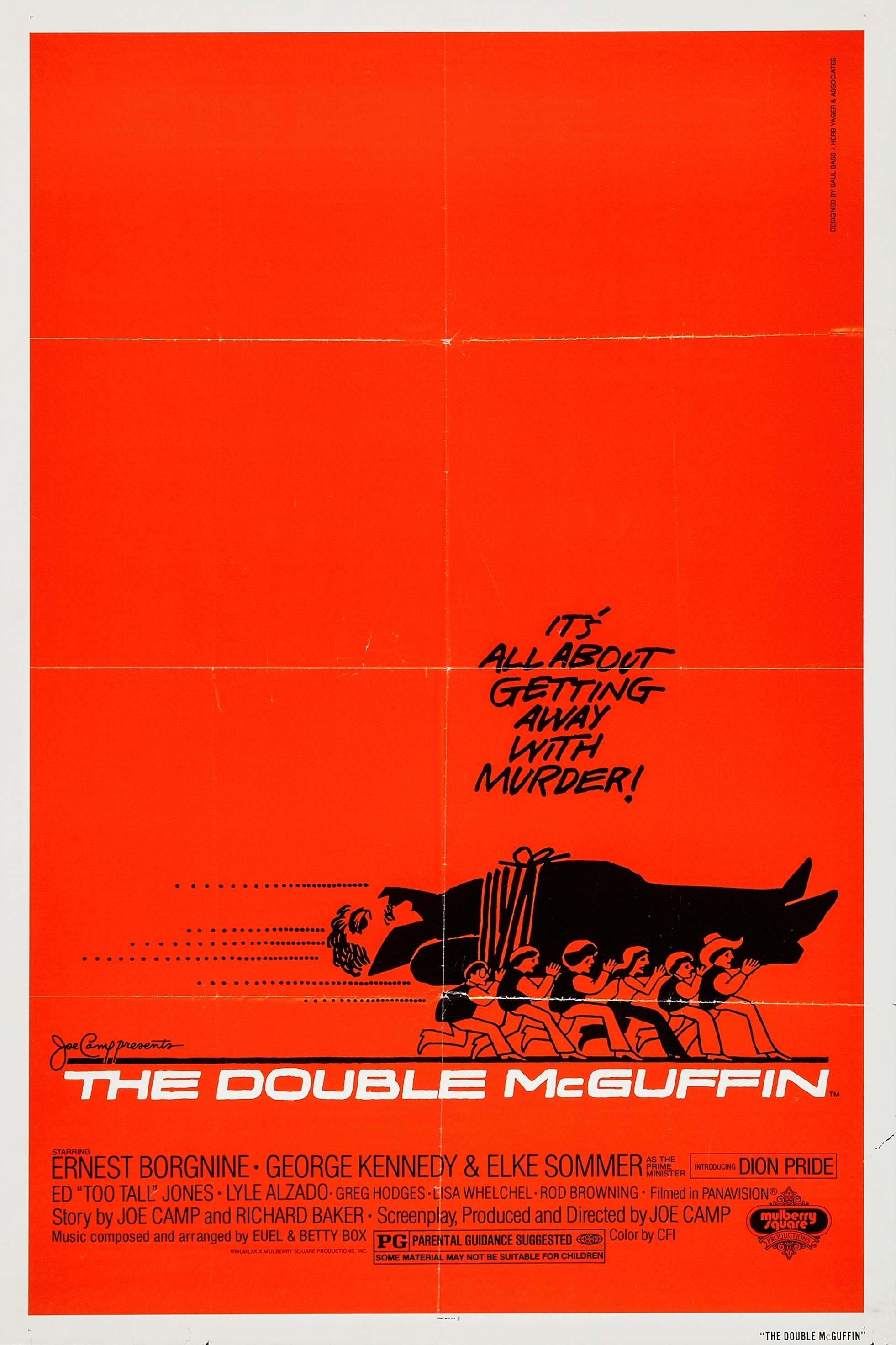
Homer (Greg Hodges) is walking outside one day behind the boarding school that he attends where he comes upon a briefcase that’s full of a lot of money. He then runs to tell his friends, Specks (Dion Pride), Billy Ray (Jeff Nicholson), and Foster (Vincent Spano) about it, but when they return to the spot where Homer hide it it’s gone. They then see a man named Sharif Firat (Ernest Borgnine) walking about town carrying it. They track him to a nearby hotel where he’s staying and bug his room to find out that he has hired three gunmen (Lyle Alzado, Ed ‘Too Tall’ Jones, Rod Browning) to carry-out an assassination. The boys though don’t tell the local sheriff (George Kennedy) because they’ve played some practical jokes on him in the past and fear now he won’t believe them, so they go about investigating the case on their own with the help of Jody (Lisa Whelchel) who is a student journalist and good at taking pictures with a camera as well as Arthur (Michael Gerard) who’s an uptight nerdy kid, but a whiz with computers.

After the success of Benji, a film that Joe Camp not only directed, but also wrote, produced and distributed, made over $30 million from a paltry initial budget of $450,000 he became motivated to further direct more movies for a family audience. This one though is definitely intended for adolescences and may even shock some viewers with a few of the scenes as it’s not exactly as family-friendly as Camp’s other films. One of the biggest jaw-droppers is that it features nudity, or in this case a glimpse of Elke Sommar’s breasts that occurs right at the beginning. There’s also some shots of the boys bare behinds when they go skinny dipping as well as scenes inside their dorm rooms where they are seen reading Playboy and drinking, or at least harboring, Coors Beer despite being underaged. They also swear though nothing worse than ‘hell’, which are all things that kids at that age would most likely do, or partake in, but some parents may still not be pleased and fear that it might be a ‘bad influence’ for the real young kids to see.

The four leads, which consists of country singer Charley Pride’s son, are an odd looking bunch mainly because three of them look like they’re senior high school age hanging around with this small kid named Homer who could easily pass-off as being a fourth grader. Seemed hard to believe that he’d be housed in the same room as these older guys and worse yet be playing on the same football team as he’d most likely be injured badly and better suited for the Pee-Wee division. His acting though is more dynamic than the rest, including Spano who may have become the most famous of the bunch, but here doesn’t really have much to do, so that may have been the reason he got cast despite his puny size. I also really enjoyed Whelchel, who later became famous for playing the snotty Blair on the TV-show ‘The Facts of Life’. who is engaging and looking quite young, like about 13 though at the time of filming she was actually hitting 15. Gerard as the pensive and androgynist Arthur has a few fun moments too.

The twists are entertaining for awhile though having the briefcase constantly appearing and disappearing gets tiring. Initially it’s kind of creepy and intriguing, but the segment where the boys open it to find a severed hand and they run a few feet away in fright and then go back to have it no longer there makes it seem like it’s almost magical and not realistic. Homer’s ability to unlock anything simply by using a pocket knife gadget gets played-up too much. It’s okay when he uses it to open the briefcase though you’d think something used to hold a lot of money would have a much more sophisticated lock in place, but when he’s able to continue to pick any lock in virtually any door he wants is a bit much to the point you start to wonder why does anyone even bother putting locks on doors if any kid with a small knife can easily pick-it.

Spoiler Alert!

The film’s biggest downfall though is that not enough happens. The lack of action, especially for a film aimed at the younger set, is appalling. There’s only one chase, done on foot when Borgnine tries to catch-up with two of the boys, who you’d think could easily outrun him since he was 60 at the time and out-of-shape and also in broad daylight with plenty of pedestrians on the street who could’ve easily called-out for help, which makes this moment not very tense at all. The climactic sequence really fizzles as the shooters are apprehended inside their hotel room before the assassination even is attempted, which should’ve gotten played-out more. The concept had plenty of potential, but with so little that actually happens it’s quickly forgettable and hardly worth the effort to seek-out.

My Rating: 4 out of 10

Released: June 8, 1979

Runtime: 1 Hour 40 Minutes

Rated PG

Director: Joe Camp

Studio: Mulberry Square Productions

Available: DVD

Smokey and the Bandit Part 3 (1983)

smokey1

By Richard Winters

My Rating: 0 out of 10

4-Word Review: Where is the Bandit?

Buford T. Justice (Jackie Gleason) announces his retirement as sheriff after more than 30 years of service. He decides to spend his time in Florida where he expects to get some rest and relaxation. However, once he becomes a part of the senior community he doesn’t enjoy it and feels the need to get back to what he liked doing most, which was chasing after the elusive Bandit. Big Enos (Pat McCormick) and Little Enos (Paul Williams) offer him a deal to get back into the swing of things. They bet that he can’t drive his police car from Miami, Florida to Austin, Texas, a total of 1,400 miles, in two days with a stuffed fish tied to the top of the car. If he’s able to succeed at the challenge he’ll make $250,000, which Buford readily accepts. To keep him from getting there the two Enos brothers set-up traps along the way in order to stymie his progress, but Buford and his dim-witted son Junior (Mike Henry) manage to get out of each predicament that gets thrown at them, so the Enos brothers decide to call-in Snowman (Jerry Reed) to help them. Snowman is a trucker, but in this instance he gets to pretend he’s the Bandit and even dress in his get-up and drive Bandit’s fancy black and gold Pontiac Trans Am. The new Bandit, who picks-up Dusty (Colleen Camp), a disgruntled used car sales woman along the way, soon catches up with Buford and son and steals their stuffed fish, which turns-the-tables and forces Buford to go after them.

By 1982 both Hal Needham, who had directed the first two installments, and Burt Reynolds, who had played the Bandit in the first two go-arounds, were no longer interested in getting involved in the project for another time as both were already busy working together on Stroker Ace. The studio though didn’t want to give up on the idea of a third installment since the first two had made a lot of money, so they signed-on Gleason to reprise his role as Buford with the promise that he’d have full script approval, which proved difficult as he didn’t like any of the scripts that were handed to him and at one point made the glib remark “with scripts like these who needs writers?’. After going through 11 rejections the writers finally hit on the idea of letting Gleason play dual roles of both the Bandit and the sheriff. Initially Gleason didn’t like this either, but the prospect of hamming up two different characters, which he had already done in Part 2 where he played Buford’s two cousins Gaylord and Reginald, got the better of his ego, so it received the green light.

In October of 1982 the script with Gleason in both roles was shot, but with no explanation for why he was playing the Bandit and everyone else in the story playing it straight like they didn’t see the difference. Eventually upon completion it was sent to a test audience in Pittsburgh where they gave the film unanimously negative feedback convincing the studio that the experimental novelty wasn’t going to work. They then hired Jerry Reed, who wasn’t even in the project before then, and asked him to reprise his role as Snowman who would then disguise himself as the Bandit. Then every scene that originally had Gleason in the role as Bandit was reshot with Reed now doing the part, but all the rest of the scenes that had already been filmed without the Bandit remained intact. The reshot Bandit segments were filmed in April of 1983 and the film eventually got its release in August of that year where the response of audiences and critics alike remained just as negative.

For years this was considered by many to be an urban myth as no footage with Gleason as the bandit was ever seen, but then in 2010 a promo of Gleason playing Buford, but talking about becoming the Bandit, or ‘his own worst enemy’ appeared on YouTube with the title of Smokey IS the Bandit Part 3 and Jerry Reed’s name not appearing anywhere on the cast list. Then in 2016 the actual shooting script that was shot in October of 1982 was downloaded to IMDb’s message board (back when they still had them), which plainly detailed Gleason as the Bandit, but had no written dialogue for those scenes since Gleason was routinely allowed to ad-lib his lines. The lost footage of Gleason in the Bandit scenes is purportedly in the control of the Gleason estate where it’s kept under wraps never to be shown to anyone again by apparently Gleason himself who felt humiliated by the test audiences negative reaction.

As it is the movie is not funny at all and unsurprisingly did not do well at the box office. Nothing much makes sense and the humor is highly strained including a drawn-out segment featuring the Klu Klux Klan, which I found downright offensive. Having a Blu-ray release of the lost footage of Gleason in dual roles would most likely be a big money maker as through the years it’s built up a lot of curiosity. It might be confusing and weird just like the original test audiences said it was, but it couldn’t be any worse than what we ultimately get here, which is as bottom-of-the-barrel as they come.

smokey2

My Rating: 0 out of 10

Released: August 12, 1983

Runtime: 1 Hour 25 Minutes

Rated PG

Director: Dick Lowry

Studio: Universal

Available: DVD, Blu-ray

Cat’s Eye (1985)

cats

By Richard Winters

My Rating: 4 out of 10

4-Word Review: Three stories involving feline.

With a screenplay written by Stephen King the film is made up of three of his short stories with two of them taken from his 1978 novel ‘Night Shift’ while the third one was penned directly for the screen. The only connecting thread is a stray cat and actress Drew Barrymore who appear in all three tales though only have major parts in the third one.

The first segment is called ‘Quitters, Inc.’ and involves James Wood playing the part of a man named Dick Morrison who is trying to quit smoking and enters an agency that boasts a high success rate of getting their clients to stop. It’s run by Vinny (Alan King) who tells Dick that if he doesn’t stop smoking instantly that they’ll kidnap his wife (Mary D’Arcy) and put her into a room where she’ll receive electrical shocks. To prove his point he puts the cat in the cage and then through a glass partition Dick witnesses the feline getting shocked, which is enough to scare him into quitting on the spot. Yet as the days progress Dick finds himself constantly getting the urge to light-up, but Vinny warns him that he has people who’ll be watching him and if he does dare to backtrack they’ll immediately grab his wife and bring her into the cage. Eventually though the compulsion to have a cigarette gets to be too much and he sneaks a puff only to then face the dire consequences.

This segment tries for black comedy, but doesn’t go far enough with it. While Woods, who usually excels as the twisted types, is quite good as the straight man, I couldn’t understand why he didn’t go the police when his wife gets taken, or why any of the other clients didn’t either, which should’ve gotten the business quickly shut down and the owners prosecuted for running an unethical operation. Famously brash comedian Alan King isn’t given enough leeway to allow his cantankerous persona to go full throttle though watching him wearing a white leisure suit and lip synch the words to the song ‘Every Breath You Take’ makes it almost worth it. It’s interesting seeing James Rebhorn in a bit part as a drunken business man at a party as he later had a prominent role in the movie The Game, which had a very similar storyline to this one involving a business that overtakes their client’s lives and is constantly watching them.

The second segment called ‘The Ledge’ involves a man named Johnny (Robert Hays) who must walk across a thin, outdoor ledge along a penthouse wall many feet above a busy street. If he succeeds then the penthouse owner, Cressner (Kenneth McMillan), will grant his wife a divorce and allow her to marry Johnny whom she’s been dating.

This story is the best one mainly because it has McMillan who is one of the finest character actors of all time and supplies his role with an amazing amount of energy and dark campiness. The scenes of watching Hays trying to maneuver his way on the ledge while being simultaneously attacked by a pigeon and at times McMillan who throws things at him out his window, is really terrifying. You feel like you’re on the ledge with him and I cringed all the way through this one, but in a good way as I really got swept up in it though the twist ending is a letdown.

The third and final segment called ‘The General’ involves a young girl living in North Carolina, named Amanda (Drew Barrymore) who takes in a stray cat much to her nagging mother’s (Candy  Clark) chagrin as she feels the animal may attack Amanda’s pet bird named Polly whom she keeps in a cage in her room. Amanda though likes the cat, whom she’s named General, because he scares away the evil troll, who’s the size of a rat and sneaks into her bedroom at night through a small opening in the wall to steal away her breath while also attacking Polly.

This segment has some interesting special effects, but it’s hard to tell if this is intended to be scary, or comical. It’s probably supposed to be a mixture of both, but I wished it went more for the scares since the movie, which gets billed as being a ‘horror’ doesn’t really have much of them otherwise. This segment also doesn’t really have any twist to it other than the parents finally believing that a troll really does exist in their daughter’s bedroom, but then telling her not to tell anyone about it, but why? It seems like if there’s one of them there could be others and the whole home should be inspected and fumigated and if I were the homeowner I wouldn’t want to spend another minute in there until it was, so having this family just forget about it and go back to normal didn’t seem like a normal response. The troll is also too reminiscent of the devil doll in Trilogy of Terror, which was far more frightening.

My Rating: 4 out of 10

Released: April 12, 1985

Runtime: 1 Hour 34 Minutes

Rated PG-13

Director: Lewis Teague

Studio: MGM/UA

Available: DVD, Blu-ray, Amazon Video, YouTube

Sleepaway Camp III: Teenage Wasteland (1989)

sleepaway3

By Richard Winters

My Rating: 3 out of 10

4-Word Review: Angela commits more murders.

When Maria (Kashina Kessler), who has the words ‘milk’ and ‘shake’ tattooed to her breasts, goes off to camp, she is impeded by a truck driven by Angela (Pamela Springsteen) that runs her over and allows Angela to take on her identity. Angela then returns to the same campsite where she committed her atrocities from the last film, but which is now run by husband and wife Herman (Michael J. Pollard) and Lilly (Sandra Dorsey), who have turned it into a place to help reform teens with a criminal record and renamed Camp New Horizons. It doesn’t take long though for Angela to revert to her old ways and soon both campers and counselors begin disappearing with a frightening regularity.

While Part II was filming producer Jerry Silva was so impressed with what he was seeing that he immediately authorized another sequel with a script for this one being written while that one was still being shot and then only one weekend for pre-production. This also pushed the filming date back into October where not only were the leaves already changing, but in one segment you can see the breaths of the actors when they speak, which certainly does not give the viewer a summery feel.

The second installment had an okay balance between the black comedy and horror, but this one goes overboard into silly season. The initial killing is especially problematic as it has the victim chased down by a big truck in broad daylight. Yes, she eventually gets run over when she runs into a back alley, but the semi starts barreling down on her when she’s walking on an busy road with other cars, so other people would’ve witnessed what was happening and reported it making the odds of Angela getting away with it quite slim. Also, where does a woman, who was 13 when she got locked up into a mental hospital and been there most of the time until her recent release, find the time and money to learn how to drive a big rig and how was she able to steal one?

While Springsteen’s performance was slightly tolerable in the second installment I felt it got plain annoying here. She isn’t scary and even though this is meant as a dark comedy the villain should still have some frightening presence and she has none making for no suspense at all. She also has her hair dyed blonde, in order to resemble Maria, which has her looking even less like Felissa Rose who played the character in the first one and further way from the original concept making this seem like its own little movie with name-only connections to the other two.

The murders though are an improvement and the only thing that saves it. Part II put no creativity or imagination into the killings, but here we get a couple of memorable ones including Angela roasting marshmallows on a fire that’s burning two of her victims. Killing one of the campers via tying them up to a flagpole and then allowing them to drop many feet to the hard cement below was my favorite though the death by lawnmower, which apparently made some of the women members on the MPAA board, who were hired to give the movie its rating, physically sick, deserves honorable mention. Even here though there’s problems like when Angela stands over the body of a man and swings an ax on him, but then returns to the campsite wearing the same clothes she had, which would’ve been highly doubtful as they would’ve most assuredly been covered with blood splatter.

The only element I found interesting was the appearance of Michael J. Pollard who was at one time starring in Hollywood classics like Bonnie and Clyde and was even given a couple of leading man roles in  studio produced films, but here relegated to low budget direct-to-video fare. He isn’t even in it all that much as his character is one of the first to be killed though he does at least get to make-out with a hot young chick (Stacie Lambert), which may have made it worth it.

My Rating: 3 out of 10

Released: August 4, 1989

Runtime: 1 Hour 20 Minutes

Rated R

Director: Michael A. Simpson

Studio: Double Helix Films

Available: DVD, Blu-ray, Freevee, Pluto TV, Tubi, Amazon Video

Sleepaway Camp II: Unhappy Campers (1988)

sleepaway2

By Richard Winters

My Rating: 3 out of 10

4-Word Review: Angela returns to camp.

Angela (Pamela Springsteen), the teen killer in the first film, has now been ‘reformed’ after going through years of shock therapy and sexual reassignment surgery. She gets a job as a counselor at a camp named Rolling Hills, which is 60 miles away from Camp Arawak, the site where she had previously killed all those people. The campers and other counselors have no idea about her past and have a hard time getting along with her and she’s quite strict with no tolerance for anyone who breaks the rules. If someone does draw her ire she quickly dispenses with them by reverting to her old habits and after they’re offed she goes and tells the camp leader, Uncle John (Walter Gotell), that she ‘sent them home’, but when she starts doing this to too many kids everyone’s suspicions begin to rise.

While on the technical end the production is decent the storyline is ridiculous even when taken into context of a black comedy, which is what the filmmakers were hoping for, it doesn’t work. The idea that Angela would be let out of a mental hospital in such a short period of time, just 5 years, after killing so many people is absolutely absurd and would create a national, media uproar. Since the murders were all deliberate and plotted out she most likely would be considered sane and stood trial and sent to a regular prison anyways. Why would any campsite hire her? Don’t these people do background checks? A way to have resolved this would’ve been to shown her at the beginning escaping from the mental hospital, and possibly killing a few orderlies along the way, which would’ve helped the story make more sense and also been an excuse to show blood and guts, which is what audiences for these types of films pretty just want anyways.

While Pamela Springsteen, who’s the younger sister of Bruce Springsteen, may be a quality actress in her other films she does not play the role here in a convincing way. What made Angela so memorable in the first was her penetrating stare, which we don’t see any of. Angela’s inner angst came from her gender issue and not that she was some old-fashioned prude, like in this one, that kills people who don’t live up to her high moral standard. It’s like a completely different person who’s connection to the other one is in name only. Apparently Felissa Rose, who played the role in the original, auditioned for the part, but because she couldn’t convey the one-liners in a humorous way that they wanted they decided to go with Pamela. Personally I feel they shouldn’t have even bothered to make it if Felissa couldn’t have recreated the role, which I felt she had earned the right to.

The killings are not as creative either and in fact look downright pathetic. I’ll give some credit to the death in the outhouse where a victim is shoved into the hole were people relieve themselves and then she struggles several times to come up, with more and more waste appearing on her as she does, but otherwise it’s tacky fare especially the end where they come into an abandoned home featuring all the dead victims that looks too obvious as being mannequins with red paint.  I also didn’t care for the nightmare segment, apparently done to help pad the runtime, that rehashes the killing scenes we’ve already seen and is highly redundant.

Fans of the film say it’s the humor that sells it. Yes, some of it is kind of funny like when the male counselor (Brian Patrick Clarke) smells underneath his arm pits after Angela walks away thinking that the reason she was so cold to him wasn’t because she’s a psycho, but more because of his possibly bad body odor. My favorite though is when Ally (Valerie Hartman) has sex with a man and then only after it’s over does she bother to ask him if he has ‘AIDS’. Yet outside of this it’s a letdown. As sequels go it’s not the worst of its kind, but I would’ve preferred more of a straight horror approach that tried to stay faithful to the first one, both in tone and with the cast.

My Rating: 3 out of 10

Released: February 28, 1988

Runtime: 1 Hour 20 Minutes

Rated R

Director: Michael A. Simpson

Studio: Double Helix Films

Available: DVD, Blu-ray, Amazon Video, Pluto, Tubi, YouTube