Category Archives: Movies that take place in the Big Apple

Gloria (1980)

gloria

By Richard Winters

My Rating: 8 out of 10

4-Word Review: Protecting a young boy.

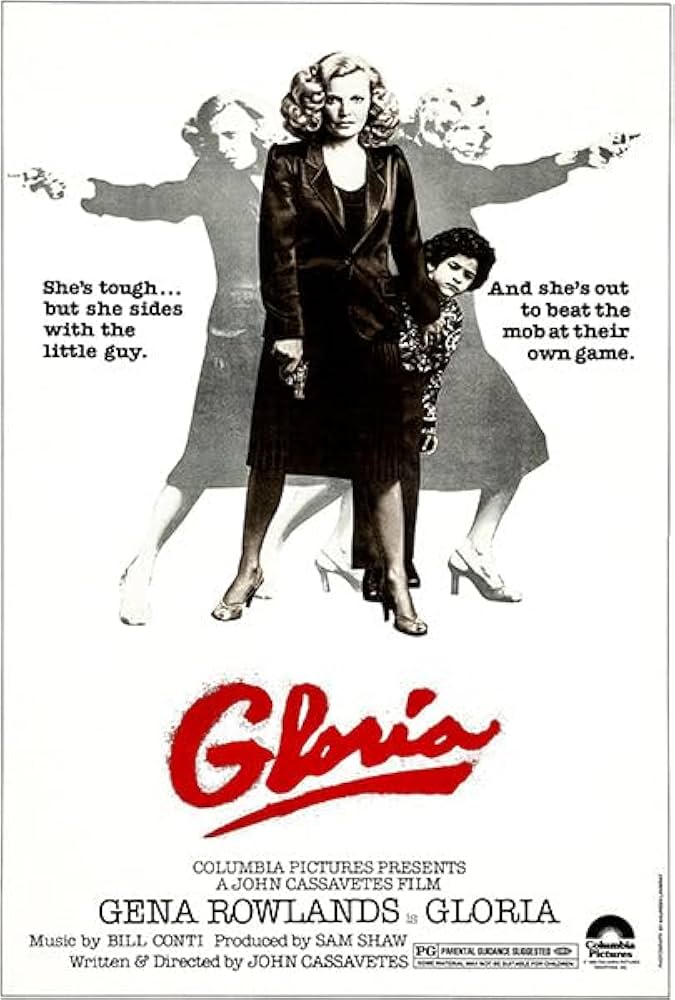
Phil (John Adams) is a young boy whose father (Buck Henry) works as an accountant for the mob and has become an informant for the F.B.I. causing him and his family to become marked for retaliation by the criminal underground. In desperation Phil’s mother (Julie Carmen) pawns the child off on Gloria (Gena Rowlands) who’s their neighbor from across the hall. Gloria initially refuses to take the child as she’s adverse to kids, but eventually agrees as she takes the boy away and into her apartment just as the mob moves in on the hit. Phil was also handed by his father the ledger listing in detail the mob’s incriminating financial corruption and when they’re unable to find it after annihilating his family they then go after the pair. Gloria, who has mob connections from her past including having been in relationship with a mob kingpin, feels she can’t go to the police and must defend the child on her own using only her street savvy and gun, but where ever they go in the city the hit men remain right behind them.

John Cassavetes, who has described this as “a thoughtless piece about gangsters and I don’t even know gangsters” was never intending to direct it and though it’s become his most popular work among mainstream audiences it was one of his least favorites and something he felt embarrassed about doing. He wrote the script simply to sell it and make enough money from it to help him finance his other projects. He completed it in early 1979 and was meant as a vehicle for Ricky Schroeder who was just coming-off doing The Champ and MGM studio was looking for other projects for him to do. Cassavetes intentionally gave it a very commercial feel, much more than any of his other scripts, because he felt it would give it a better chance to sell, but when Schroeder and Barbara Streisand, who was the original choice for Gloria, both turned it down Cassavetes then shopped it around to Columbia Pictures who agreed to take it on, but only if Rowlands played the lead and since she was his wife he then reluctantly took on the directing duties.

The film doesn’t seem like the usual Cassavetes material as I was quite impressed with the location shooting, which takes the viewer to all sorts of New York City locales and makes you feel like you’re right there with Gloria and the boy as they try to maneuver their way around the unpredictable and very dangerous urban jungle. The opening bird’s-eye shot that tracks from the city’s skyline to Yankees Stadium is downright breathtaking and the grimy, rundown interiors of the family’s inner city apartment building effectively illustrates on a purely visual level the fear, stress, and tension of living in the inner city is truly like. Leonard Maltin, in his review, labeled this as being possibly done ‘for laughs’, but I didn’t find anything funny about it except for one amusing comment Gloria makes when she gets stuck in a slow elevator, but otherwise it’s a nail-bitter all the way through.

Rowlands gives her usual stellar performance, but I was hoping for more of an arch with her character. She states right up front to Phil’s mother that she hates kids and yet is pretty much warm and friendly to the child the second she takes him back to her apartment and it would’ve been more interesting to see her cold and indifferent to him initially only to slowly warm-up to him as their shared adventure went on. Buck Henry is also surprisingly good in an unusual casting choice as he’s typically known for his deadpan humor and had very little dramatic acting in his background. It was strange though why such a small, squirmy guy who was hitting 50 would be married to such a hot young Latino woman who looked to be only 24 and I felt this needed to be explained, but isn’t. I also felt the shooting of the family should’ve been shown, it gets implied, but that wasn’t enough. Seeing them shot in graphic style would’ve really hit home how dangerous and serious these people were and would’ve made the tension even stronger.

Critics at the time of the film’s release didn’t like the kid nor his acting and in fact Adams got nominated for the first razzie award for worst actor, which traumatized him so much he decided never to pursue anymore roles and to date this has been his only film appearance. I for one happened to like the kid and yes his character isn’t exactly ‘cute and cuddly’, but real children rarely ever are. They can be as rude, indifferent, and crabby as any adult and since he was brought-up in a troubled neighborhood having him be a bit ‘rough-around-the-edges’ made sense and was realistic. The only acting that I really didn’t care for was from Basilio Franchina who plays a crime boss that Gloria used to date and while he may have looked the part his performance is stiff like he’s just regurgitating lines he’s memorized and there’s no sign of a chemistry between them and their conversation is stilted and unconvincing.

Spoiler Alert!

The mob’s ability to be constantly on the pair’s tale no matter where they went seemed a bit implausible especially being in such a big, congested city, but I was willing to forgive it since the rest of it is so good. The ending was a little problematic too as it has Gloria reappearing disguised as an old lady after it was presumed she was dead. She then reunites with the kid in the middle of a cemetery, but it leaves more questions than answers like how did the two evolve? Did they become like mother and adopted son and where did they ultimately move to since New York for them was no longer safe? This might’ve gotten answered in the sequel that Cassavetes had written, but unfortunately never got green-lit. Remade in 1999 with Sharon Stone in the lead.

My Rating: 8 out of 10

Released: October 1, 1980

Runtime: 2 Hours 2 Minutes

Rated PG

Director: John Cassavetes

Studio: Columbia Pictures

Available: DVD, Blu-ray, Amazon Video, Tubi, YouTube

Quick Change (1990)

quick1

By Richard Winters

My Rating: 7 out of 10

4-Word Review: Clown robs a bank.

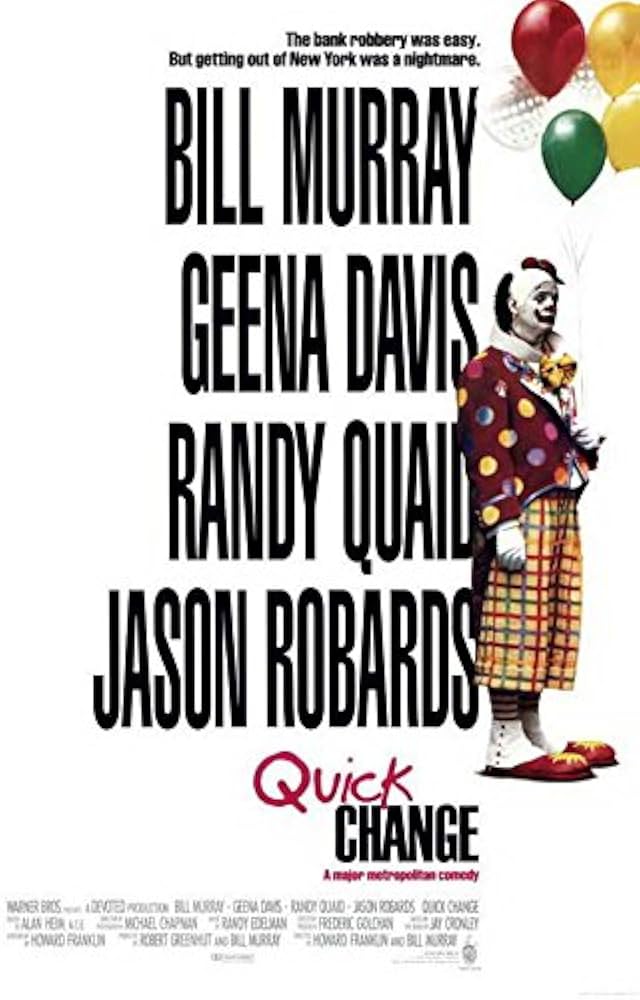
Grimm (Bill Murray) has had it with New York City. He wants to get out of there and move somewhere tropical as soon as possible and conspires to rob a bank in order to get the money to do it. He dresses as a clown and then has his girlfriend Phyllis (Geena Davis) and friend Loomis (Randy Quaid) pretend to be customers at the bank, so that when he releases the ‘hostages’ they can be two of them. The robbery goes smoothly as they’re able to get $1 million out of the bank, but trying to get out of the city itself proves trying as they get lost on their way to the airport and then their getaway car gets demolished. Police Chief Walt Rotzinger (Jason Robards) is hot-on-their-tale and relentless in his quest to haul them in as he proves to be just one slight step behind them where ever they go and moving in closer with every waking second.

This is the second version of the story that was adapted from a 1981 novel of the same name written by Jay Cronley, a humorist who resided in Tulsa, Oklahoma, who two other novels, Funny Farm and Let It Ride that were also made into movies as well as Hold-Up that was a French film shot in Canada that was the first rendition of this plot. This adaptation proves to be the better one as it takes place, like in the novel, in New York City and takes full advantage of the city’s ambience making it feel almost like it’s a third character.

This is the perfect role for Murray and some critics felt this was his best acting performance of his career he also doubles not only as the producer, but also the co-director as he took over the reins in order to save the project when the originally directing choice Jonathan Demme decided to bow-out at the last minute. The snarky, glib personality of the character is played to the hilt by Bill who has the magical ability to be the world’s biggest smart ass and still have a unique charm about it. Great supporting work by Davis, though the two apparently didn’t get along behind-the-scenes and years later she accused him of sexually harassing her during the production. Good work too by Robards who doesn’t fall into the cliche of a stupid egotistical cop and instead proves to be pretty savvy, which helps accentuate the tension as he’s constantly on their heels and only a beat behind them no matter where they go.

The three acts are better tied together by placing the main nemesis as the city itself and creating a surreal After Hours vibe. Some of the potshots are subtle like watching all the hot dog vendors race over to where the robbery is taking place so that they can take advantage of the situation by selling food to all the onlookers. It also illuminates the ethnic, cultural mix of the Big Apple by featuring a jousting match between two Latinos on bicycles as well as the headaches of trying to find your way around the city and the confusing road signs and constant construction though some of this humor may not resonate with today’s viewers since with the advent of GPS many of these ‘asking for directions’ situations have now become a thing of the past.  The music score by Randy Edelman with its pounding, hard edge quality perfectly matches the city’s gritty, urban attitude.

While the robbery is slick I did find a few loopholes. The first is where does Murray get his other clothes when he changes out of his clown costume and disguises himself as one of the hostages to get away? He is not seen carrying a bag of any kind nor is Davis or Quaid, so not sure where the other suit came from. Some may argue that he was wearing it underneath his clown costume, but this doesn’t work since it was a shirt that came up to his neck that he’s seen coming out of the bank with and when he’s the clown he’s shown with a V-neck T-shirt that exposes the top of his chest. It also doesn’t explain where he gets the glasses, other wig, and shoes that he also has on when he walks out as the fake hostage.

The characterizations are a bit off too as both Davis and Quaid become easily rattled during the second half when they’re trying to get to the airport and become increasingly shaken that they’re going to be caught, but if they have a propensity to being that worried you wonder what gave them the nerve to go through with the robbery in the first place? During that segment they’re very cool and calm and even a bit ballsy, so why the sudden shift to overly panic the moment they get out? A way to have solved this would’ve had the Davis character with a penchant for risks, or enjoy living on the edge and taking chances, so every time they would get into a jam during their escape she’d see it as a certain thrill and not allow it to overtly alarm her.

Spoiler Alert!

The biggest beef though is with the ending in which Robards suddenly realizes, as he’s standing on the ground watching the jet fly overhead that has the three robbers onboard. The film acts like it’s now ‘too late’ and there’s nothing he can do about it, but there really is. All he has to do is go back to the airport and ask where the destination is of the plane that just took off, as I remember it was Paris, France. Since both the U.S. and France are members of Interpol he could easily contact the authorities there asking them to detain the three once the plane had landed. They could then be brought in for interrogation where a simply body search would expose all the money that they had taped to their bodies underneath their clothes, and in Quaid’s case in his duffel bag. This would be more than enough evidence to prove that they were the robbers and thus extradited back to the U.S. for prosecution.

My Rating: 7 out of 10

Released: July 13, 1990

Runtime: 1 Hour 29 Minutes

Rated R

Director: Howard Franklin, Bill Murray

Studio: Warner Brothers

Available: DVD, Blu-ray, Amazon Video, Tubi

Rich Kids (1979)

richkids

By Richard Winters

My Rating: 5 out of 10

4-Word Review: Dealing with divorcing parents.

Franny (Trini Alvarado) is a 12-year-old who’s learning that her two parents (Jon Lithgow, Kathryn Walker) are getting a divorce. She is unhappy about this and thus turns to her friend Jamie (Jeremy Levy) whose parents also went through a divorce a couple of years earlier. He gives her guidance and tips on how to deal with it. She turns to him as a confidant and begins spending time with him at his place even overnights. Her parents are under the impression that Jamie’s father (Terry Kiser) is keeping a watchful eye on them, but in reality he’s over at his new girlfriend’s pad and not paying the least bit of attention to what the kids are doing who then get into all sorts of mischief including alcohol. Once Franny’s parents do catch-on and head over there along with Jamie’s mother and her new husband (Roberta Maxwell, Paul Dooley) they fear it may be too late especially after Franny’s mother finds the book ‘The Joy of Sex’ that her daughter had hidden away and been reading.

On the surface this film, which was produced by Robert Altman, should’ve been a winner and on the technical end it does everything right.  The color schemes and docu-drama approach gives it a vivid day-in-the-life vibe and captures growing up on the Upper West Side neighborhood quite well to the extent that you feel like you’ve visited the area yourself once the film is over. The acting, particularly Alvarado in her film debut, is terrific though kudos must also go to Lithgow and Walker whose portrayal of fraught parents trying to shield their child from life’s ugly realities while also still attempting to be upfront and honest with her is well done. Director Robert M. Young shows a good eye for detail and keeps things visually interesting particularly when they go to Jamie’s dad’s place and interact with the exotic pets he has and make goofy faces with his bedroom full of wall mirrors on every side, which I felt was the movie’s highlight.

Story-wise there are a few profound moments and everything that occurs rings true, but in the process it’s not particularly riveting either. I sat through the whole thing expecting at some point to be grabbed in and it just never occurred. Part of the issue is that it takes too much of a minimalistic approach. So much effort is put in to keeping it realistic that nothing every stands-out. It’s like one of those 70’s after school specials that gets stretched out to 2-hours length, but could’ve easily said what it wanted to in only half that time. It’s all pleasantly done, but ultimately rather meh.

I didn’t like the sex difference of the two kids as it made me cringe all the way through fearing that even at age 12 things might start to get a little kinky like they’d play a game of ‘doctor’, or get drunk, which they kind of do, and dare each other to take their clothes off. It seemed at that age children still like playing with members of their own sex and are quite clicky about it and don’t really begin to reach out to the other side until maybe 14 or 15, so it would’ve been more believable if Jaimie had been a girl instead of a boy.

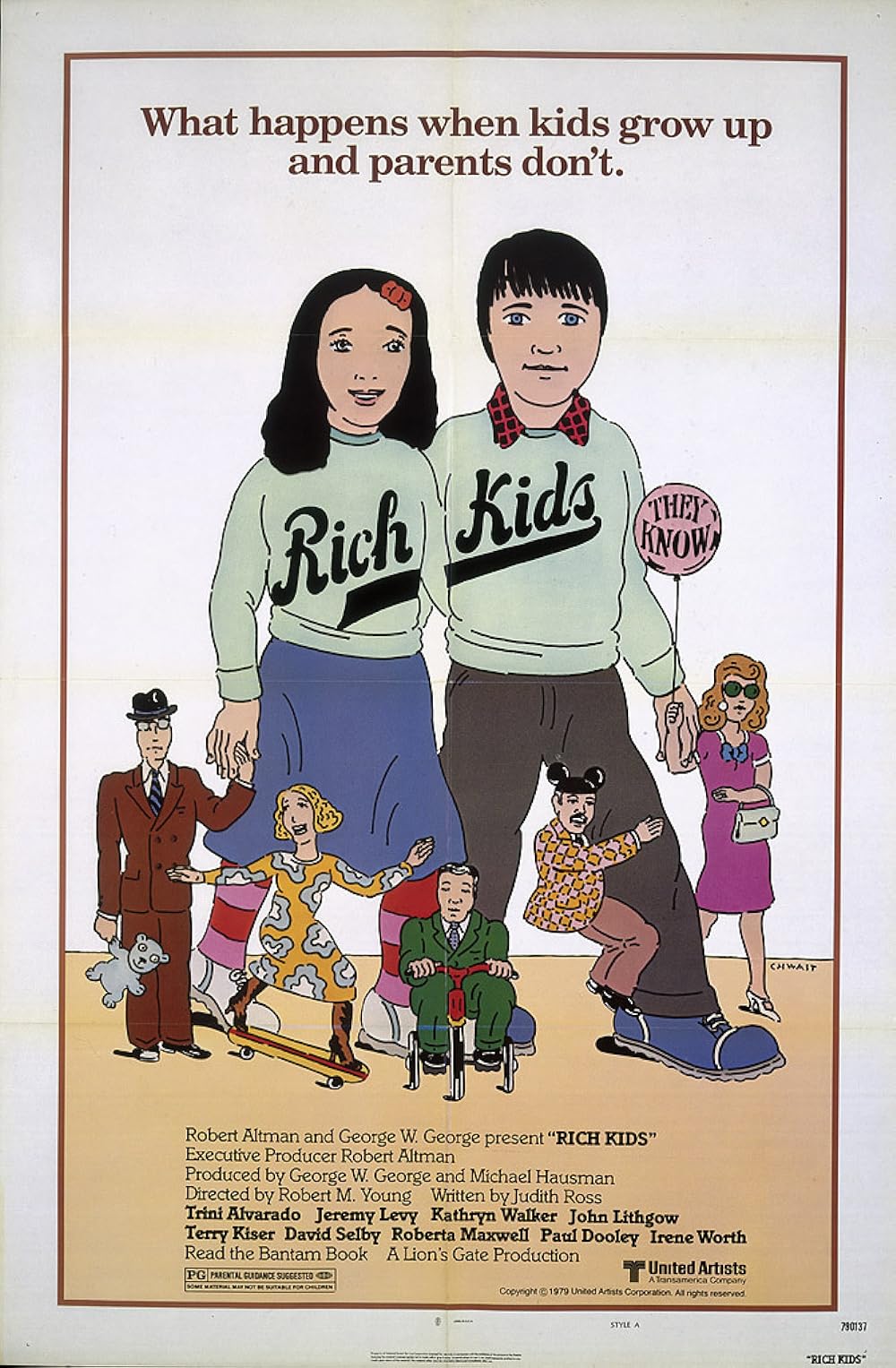
The title is a bit confusing as these really aren’t wealthy families sure they aren’t poor, but there’s nothing about their lifestyles or home life that isn’t of the middle-class variety making it misleading to have the word ‘rich’ in there. The promotional poster is awful too as the drawings don’t look anything like the real stars and depicts the two leads like they’re dorky looking, which they really aren’t. It also gives one the impression this might be an animated feature, which it certainly isn’t. Actual picks of the two stars would’ve been better especially since Alvarado has such expressive blue eyes, photogenic face, and wonderfully natural smile that one shouldn’t pass-up the opportunity to have her sweat face plastered on the promotional materials whenever possible.

My Rating: 5 out of 10

Released: August 17, 1979

Runtime: 1 Hour 41 Minutes

Rated PG

Director: Robert M. Young

Studio: United Artists

Available: DVD

Paradise Alley (1978)

paradise

By Richard Winters

My Rating: 5 out of 10

4-Word Review: Promoting brother as wrestler.

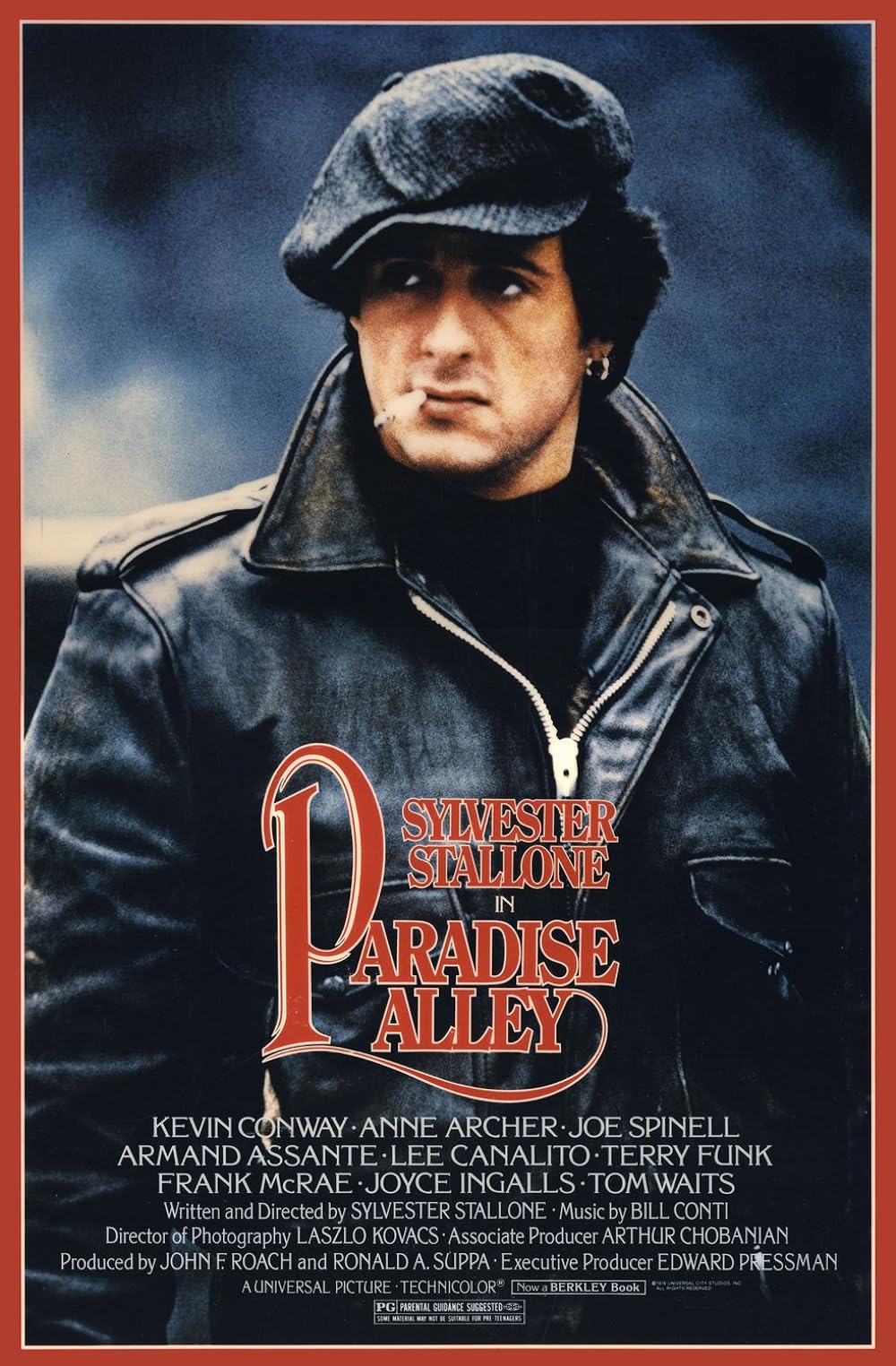
Cosmo (Sylvester Stallone) is a local street hustler in Hell’s Kitchen who will attempt just about anything to make a buck even pretending to be a homeless person begging for money. Eventually he gets the idea of turning his younger brother Victor (Lee Canalito) into a wrestler and then promoting his bouts inside the ring with others. Victor, who’s strong and well built, initially resists, but he eventually grows tired of his job hauling ice blocks and decides to give in. Cosmo’s other brother Lenny (Armand Assante), a war veteran who walks with a limp, is not keen to the idea either, but through prodding comes onboard as Victor’s manager. Things start out well, but the despite winning the contests Victor’s body takes quite a toll and Cosmo ultimately believes it’s time to give up on it, but Lenny, who begins to enjoy the money he’s making as manager, refuses to let up and pushes Victor into more and more dangerous matchups, which Cosmo’s worries may be putting Victor at too much risk.

The script was written by Stallone that was initially started as a novel. He wrote this before Rocky, but couldn’t get anyone interested in financing it though he was at least able to get it optioned. He then had an acting audition with two producers, Irwin Winkler and Robert Chartoff, while he didn’t get the part he did mention, as he was walking out, about this script. The two men were interested in looking it over, but the other producer who Stallone had optioned it to refused to give it up, so Sly instead wrote Rocky, which he then handed over to Chartoff and Winkler, which was green-lit. Then when that became a runaway success the producers agreed to finance this one even allowing Stallone to not only star, but also direct.

Unfortunately the result here is a mish-mash with things being off-kilter right from the start. The absurd race that Stallone has with another man, done over the opening credits, where the two jump from one tall city building to another seemed hard to believe. At some point one or both are going to miss hitting the other side and fall most likely to their death, which does happen eventually, but the guy is lucky enough to conveniently hang onto an outdoor clothes line though with no explanation for how he got down from that and Stallone, supposedly his friend, just laughs at him dangling there and struts away. Stallone also sings the opening song, which is dreadful.

Things really don’t improve much from there. There are a few nice camera angles and provocative close-ups here and there, but the scenes meander to the point there doesn’t seem to be any momentum, or story. The tone shifts precariously from gritty realism to romanticized idealism. The characters aren’t consistent either. Stallone is the one that initially involved in pushing his reluctant brother into the ring while Assante is very cautious and then for some inexplicable reason this gets reversed with Stallone warning of the danger while Assante becomes overly driven. However, for it to make sense there needs to be an explanation for this big change between the two and none is given making their mutual character archs poorly fleshed-out.

Stallone is certainly engaging though his likability gets tested especially with the segment where he ties up a live monkey, even puts a gag in its mouth, and then dangles it from the ceiling. Anne Archer is fun and virtually almost unrecognizable sporting a red hairdo while playing a sassy Italian love interest. Kevin Conway is highly amusing as the heavy who talks tough when surrounded by his henchmen, but proves wimpy when all alone and his climatic pants pulldown is a hoot. Noted real-life wrestler Terry Funk is quite memorable as the muscled bully and the arm wrestling match-up between he and Victor where the mounting sweat glistens off his body as he struggles to keep his arm from hitting the table is one of the movie’s highlights.

The climactic wrestling match done inside a building with a very leaky roof where the action is done in slow-motion with water splashing all over does have its moments though it eventually becomes redundant. While there’s flashes of occasional brilliance it never fully comes together. A tighter script and more consistent tone were sorely needed and Victor, who’s the only likable guy of the bunch, required more of a multi-dimensional context. The fact that he could beat-up anyone and do it in such a humble way while never having to pay the ultimate price either physically or mentally just isn’t believable.

My Rating: 5 out of 10

Released: September 22, 1978

Runtime: 1 Hour 47 Minutes

Rated PG

Director: Sylvester Stallone

Studio: Universal

Available: DVD, Blu-ray, Amazon Video, YouTube

Six Weeks (1982)

sixweeks

By Richard Winters

My Rating: 1 out of 10

4-Word Review: Young girl has leukemia.

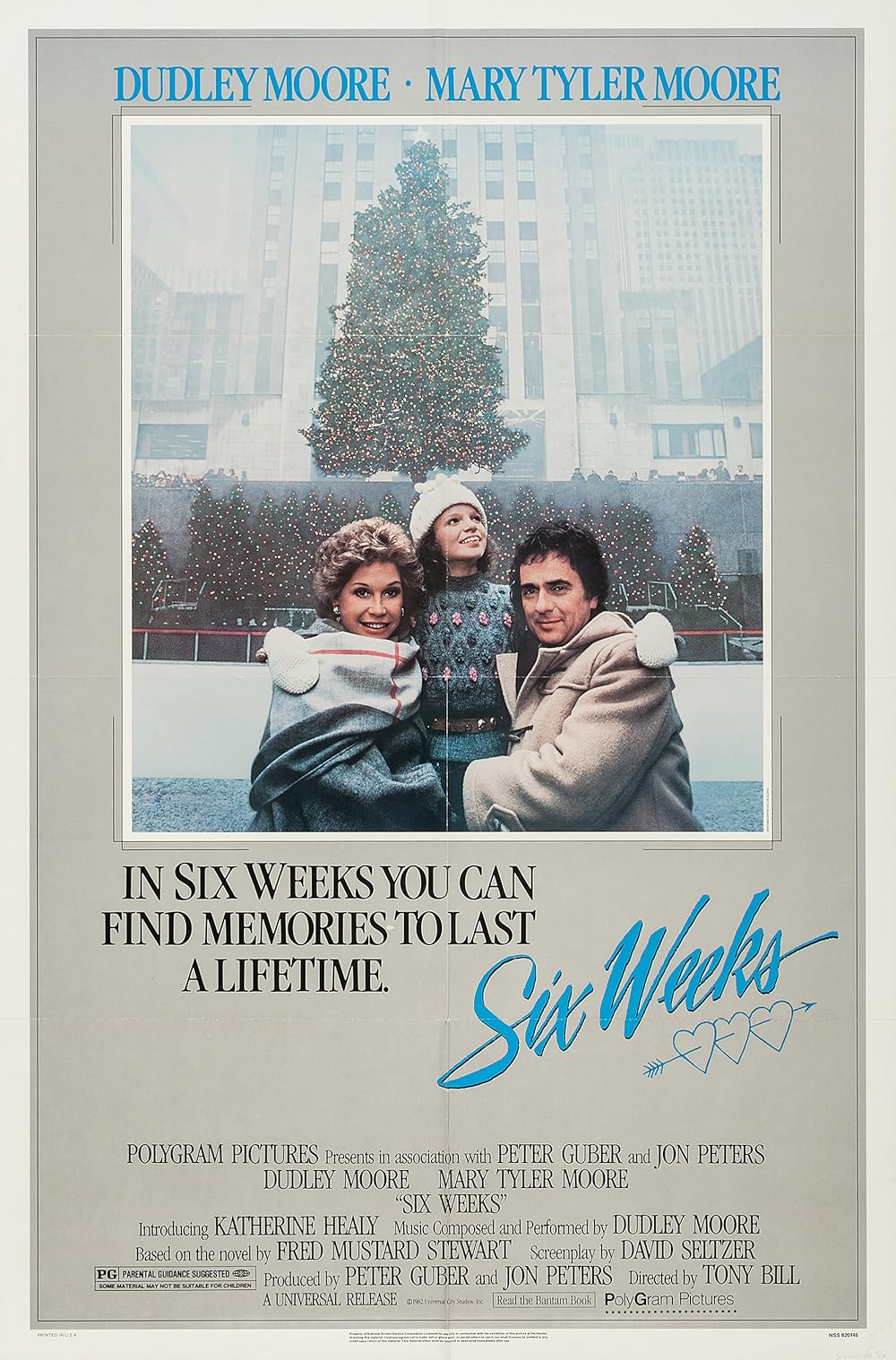
Patrick Dalton (Dudley Moore) is running for political office in the state of California when he becomes lost while trying to find his way to a political fundraiser where he is to be the keynote speaker. He stops to ask a young girl, Nicole (Katherine Healy), for directions and the two strike-up a conversation. He invites her to the fundraiser and finds that she’s the daughter of Charlotte (Mary Tyler Moore) who is the wealthy owner of a cosmetic company. Initially Charlotte is frosty towards Patrick convinced he’s just another opportunist politician. Nicole though grows very fond of Patrick and volunteers to work on his campaign. Charlotte, after seeing how much her daughter likes Patrick, even agrees to give him a generous donation, which he initially rejects until he learns that Nicole has been diagnosed with leukemia and has only a short while to live. This causes Patrick to become quite close to Charlotte and Nicole and he begins visiting them frequently much to the concern of his wife Peg (Shannon Wilcox) who thinks he’s having an affair.

Hard to find much to like about this shallow tear-jerker that was based on the novel of the same name by Fred Mustard Steward. I did though like seeing Dudley, who also composed the film’s score, in a rare dramatic turn. He’s best known for his comedy, but even when he was at his goofiness I still detected a serious side to him and this role here brings that out quite well. I did though have issues with the marriage angle as I felt the wife gave up too easily. She does show-up at a party that the three others are at in an attempt to make them uncomfortable, which it does, but I felt she should’ve created more of a scene. This was done in an era where putting up a veneer of civility was expected even when it was with people who shared intense feelings towards each other, but these days there’s jilted women out there that don’t take kindly to those that are out to ‘steal their man’ and could lead to some very public catfights, which could’ve given the film a lively energy as well as making the viewer more sympathetic to Dudley for leaving her as she would be better deemed as a ‘psycho’. Yet the way the film does it here you’re actually sympathetic to the wife and Dudley, as noble as his intentions are, comes off looking a bit like a cad for literally just abandoning her and getting with the other two essentially full-time.

I was confused too why this didn’t hurt him politically. If I’m his opponent and I catch-wind that he’s been seen regularly with another women that’s not his wife I use it to my advantage to crush him in the polls with it, or this is something his wife could’ve done by tipping off to the press that he was seeing someone else in order to ruin his bid and get back at him, yet none of this occurs. What’s the point of having him be in politics if it’s not going to be used to enter in some potentially delicious dramatic conflicts? Might as well have him being a bland accountant since him as a politician doesn’t really add much, or make that much of a difference to what happens.

Healy, who as of this date is the only theatrical film she’s been in and much better known for her ballet work, is fantastic and shows a lot of poise for someone who never acted in a movie before. I enjoyed her worldly-wise character who despite her age shows a keen awareness to many adult topics, which I appreciated. Kids can be far more observant about things than many adults would like to think, so I was glad she wasn’t played-up to being cute, but painfully naive. I did though feel her protruding, poorly spaced teeth should’ve been straightened with braces and was surprised that her mother, being as rich as she was, hadn’t had that done.

Her leukemia that she’s supposedly suffering from is problematic as she goes through the great majority of the film showing absolutely no symptoms of it. She states that she’s refused treatment, so I guess that could explain why her hair doesn’t fall-out, but I’ve known people who’ve suffered from the illness and it takes a toll on one’s energy to the point that they become bedridden as it progresses and yet here she shows nothing but boundless energy and even dances on stage without any signs of exhaustion near the end. It got to the point that I started to wonder if she was faking being sick and I wouldn’t blame anyone for thinking the same thing.

The casting of Mary Tyler Moore, who won the Razzy award for her work here, was a real mistake. Although she was only 45 she looked more like she was 55 and too old to have a daughter that wasn’t yet even in high school. She shows at times quite a cold demeanor making the way she melts away and falls for Dudley seem too quick and forced. Watching the two walk side-by-side where she’s clearly way taller than him makes it resemble a mother walking her son than a couple and thus has the romantic angle visually look even more odd and awkward than it already is.

I was confused too about who this girl’s father was. I have never read the book of which this is based, so maybe it gets talked about there, but here it’s never mentioned. I would think that even if she was a product of a painful divorce her father would still want to see her especially if he knew she was dying. Even if it was just a passing fling that the mother had year’s ago it would be presumed that Dudley would be curious about it and at least ask since he was essentially taking the father’s place with his presence.

Having the Dudley character ‘pull some strings’ in order to get Nicole to perform onstage in the New York Ballet at the last minute was too fanciful to be believed. The other cast members would resent that they would have to rehearse for weeks, even months and years, just to get the opportunity to be on the show and yet this kid gets whisked into the lead, at the sacrifice of someone else, all at the last minute. I admit I liked seeing the Nutrcracker production, but having Nicole already a part of the cast, but afraid due to the onset of the disease she might not be able to do it when it became time for the performance, and having some overly ambitious understudy ready to take over if she couldn’t, would’ve made more sense and been more interesting drama.

Spoiler Alert!

The death scene has got to be one of the lamest I’ve ever seen. Again, she spends virtually the entire movie showing no outward signs of any problem and then while on a subway car she starts feeling ‘weird’ and then a few seconds after that she promptly falls over dead, which was so corny it was almost like the movie makers were begging the viewers to make fun of it.

My Rating: 1 out of 10

Released: December 17, 1982

Runtime: 1 Hour 48 Minutes

Rated PG

Director: Tony Bill

Studio: Universal Pictures

Available: Amazon Video, Tubi, Freevee, YouTube, VHS

Magic (1978)

magic

By Richard Winters

My Rating: 7 out of 10

4-Word Review: Ventriloquist has split personality.

Corky (Anthony Hopkins) is an aspiring stand-up magician who’s finding it hard to play in front of live audiences. After a particularly disastrous effort he comes upon the idea of adding in a ventriloquist dummy named Fats into his act. The addition helps him become a top act and soon gets him the attention of well known agent Ben Green (Burgess Meredith). Ben wants to get Corky a TV contract, but first Corky must undergo a health physical, which Corky refuses to do. Ben insists that Corky has no other option, so Corky leaves the city and drives via a cab to the Catskills where he grew up and rents a lakeside cabin from his former high school sweetheart Peggy (Ann-Margaret). The romance between the two quickly renews, but then Ben finds out where Corky is staying and catches Corky alone in his cabin having an animated argument with his dummy convincing Ben that Corky has mental issues. Ben tells Corky that he’s going to get him psychiatric care, but Corky fears that if it gets out that he’s mentally ill he’ll never get another job offer and thus resorts to drastic action in order to keep Ben quiet.

The film is based on the novel of the same name by William Goldman who also wrote the screenplay. The novel was unique in that it was told through the voice and point-of-view of the dummy. While there had already been several stories and movies dealing with the ventriloquist/dummy persona including the film Dead of Night starring Michael Redgrave and a famous episode of ‘Twilight Zone’ where actor Cliff Robertson played a ventriloquist that gets tormented by his dummy. This film takes a slightly different approach where upfront the protagonist is clearly shown as having a major personality disorder and thus he’s the real threat while the dummy only symbolizes his inner turmoil between the ego and the id.

The film definitely has some creepy moments especially the dummy, whose spooky appearance is what makes it worth catching. It was modeled after Hopkins with oversized blue eyes, head, and mouth gives it an almost monstrous presence. Supposedly when it was completed and Hopkins first took it home to rehearse he got unnerved by it in the middle of the night and called Goldman to come over and pick-it-up or he was going to destroy it. The placid, gray setting of the isolated cabin, which was actually filmed in California despite it looking like northern New York, is perfect for this type of story and the serenity helps accentuate the suspense.

I really liked too the opening bit where a sweating Corky is seen bombing on stage in front of a apathetic crowd, which realistically hits home how nerve-wracking being up onstage for the first time can be though I wish we could’ve heard what Corky angrily shouted at the audience instead of having the sound of this blotted out by a voice over. It is though hard to believe that a man in his 40’s would get so addicted to his dummy, something he hadn’t used before then, that he couldn’t communicate without it and would have to take it everywhere he went. For a relationship to become this deep seated I’d think he’d have to have been doing a ventriloquist act from childhood on and thus the alter-ego of the dummy became meshed with his own as he grew older.

The acting is excellent by not only Hopkins, but also the supporting cast. Meredith is especially enjoyable playing the caricature of a Hollywood agent, which was modeled after the real-life one of Swifty Lazar, with his best moments coming whenever he takes out one of his expensive cigars, which are each separately incased inside a glass cannister. When he pulls the cigar out he then flings the cannister away, which can then be heard shattering onto the floor. Ann-Margaret known for her beauty and flair plays down her looks here as she wears no make-up and takes on a more earthy persona. Ed Lauter is also interesting playing her husband. Normally he’s a tough guy/bully and I thought this was going to come-out when he takes Corky out on a boat in the middle of a lake where he was going to threaten him to stay away from ‘his girl’, but instead he surprisingly displays a more vulnerable side and makes an emotional appeal to Corky to leave Peggy alone versus a strong-armed one.

Spoiler Alert!

The pacing is slow and the suspense builds very gradually though ultimately there are a few good spooky moments including a brief moment when Fats begins moving itself without the help of an operator and when Corky’s face suddenly begins to resemble the wooden dummy’s. Yet I felt it could’ve gone farther. The segment which has Corky crawling on the floor doing whatever the dummy tells him is certainly unnerving, but could’ve been accentuated more by showing it from Corky’s perspective where the dummy’s head would’ve grown to giant size as it looks down on the meek Corky as it gives him the orders.

The ending, at least when I first saw it, had me confused. The film climaxes with Corky returning to his cabin having stabbed himself and bleeding to death where he and Fats then slowly die together, but outside of the cabin Ann-Margaret appears telling Corky she has now changed her mind and wants to go away with him. Initially though it had been made to seem like Corky had killed her, so seeing her reappear as she does comes-off as almost dream-like. She also begins to speak in the dummy’s voice making it seem like his spirit had transferred to her.

Upon the second viewing many years later I came to the conclusion that this scene was meant to only be ironic. That if Corky had simply held-out longer Peggy would’ve agreed to go with him and thus him killing himself was a horrible waste, but in retrospect since he was suffering from such severe mental issues it was unlikely a long lasting relationship would’ve happened, so having her come back the way she does doesn’t really make much sense since she had been deeply offended by what he had said earlier, via the dummy. It would’ve been more horrifying had he chased her around the house and then killed her and the viewer seeing that get played-out.

My Rating: 7 out of 10

Released: November 8, 1978

Runtime: 1 Hour 47 Minutes

Rated R

Director: Richard Attenborough

Studio: 20th Century Fox

Available: DVD, Blu-ray, Amazon Video, YouTube

Rich and Famous (1981)

rich2

By Richard Winters

My Rating: 0 out of 10

4-Word Review: College friends become writers.

Liz (Jacqueline Bisset) and Merry (Candice Bergen) meet while attending college and become best friends. After graduation Liz achieves accolades for writing a novel and Merry, despite being married and living in posh Malibu, becomes jealous. She strives to write her own novel based on real-life experiences of her rich southern California acquaintances where only the names are changed. One night while Liz is visiting  Merry digs the first draft of her book out and reads it to her. Liz does not care for it, but promises the pleading Merry she’ll run it by her publisher (Steven Hill) convinced he won’t like it and nothing with come of it. To her surprise it does get published  and becomes a best seller. Now she’s the one seething in jealousy since her writing career has crested from writer’s block. While this is going on Merry’s husband Doug (David Selby) begins to come-on to Liz behind-the-scenes and openly wanting to have an affair with her, which Liz finds tempting since the two had a fling during college.

This is a remake of Old Acquaintances, which came out in 1942 and starred Bette Davis and Miriam Hopkins. Bisset spent 2 years working on the script and getting it funded as she was determined to play a ‘real person’ for once and not just the proverbial beauty. However, the movie, which was the last to be directed by legendary filmmaker George Cukor, bombed badly at the box office and it’s easy to see why. The storyline is out of touch with the decade that it’s in. What gets used as fashionable status symbol like having Merry stay at the Waldorf Astoria hotel might’ve been considered glitzy back in the 40’s, but for the 80’s generation would be looked upon as passe. Nothing is hip or trendy. The characters and their conflicts are of a soap opera variety, which is where this tepid storyline should’ve stayed.

My biggest beef was the whole friendship thing, which didn’t make a lot of sense. The two characters are about as different as you could get with Merry coming-off, particularly with her annoying southern twang, as dim-witted particularly when compared with Liz who’s clearly more sophisticated and articulate. Why these two opposites would bond is a complete mystery. There’s no backstory given, only a brief scene during their college days is shown, but nothing displaying what lead to the friendship blossoming, or what they had in common that they’d enjoy each other’s company. For the relationship to work it needs to be believable and organic, and the viewer able to buy into it, but instead it’s quite shallow and forced. Merry is incredibly annoying painfully insecure, emotionally needy, and grossly self centered. She’s the type of person most people would want to quickly dump as a friend and you wonder why Liz, who could easily find new friends more her intellectual equal, doesn’t do just that.

Merry’s marriage to Doug has the same issue. Why would he marry someone that had such a contrasting personality to his? The film fleetingly intimates that it was Liz he was truly after, he went to their same college, and only married Merry as an attempt to stay close to Liz, though the film relies on the viewer reading into this and should’ve instead fully confirmed it.

Merry’s ascent into the writing world is equally ridiculous. From the opening three paragraphs that she reads out loud to Liz gave more than enough reason that it was poorly written and should never see the light-of-day and yet somehow it becomes an immediate best-seller. In a better movie this might get used as satire showing how bad the American Public’s taste in literature is, but the film here has the audacity to show her winning awards for her writing, which just makes it all the more absurd and laughable. It also makes it seem like writing a book is easy and simply requires someone to sit down and throw some words on a page and walah it gets published when it reality it takes many drafts and polishing before it’s even potentially considered publish ready, but the movie glosses over this part completely.

I enjoyed Bisset who’s clearly the stronger actress, but Bergen makes an utter fool of herself particularly her attempt at a southern accent. Normally she’s good at playing the snarky type, which best reflects her personality. Trying to portray a simpleton isn’t her best suit and the film digresses every time she’s in it to the point her sporadic appearances start to seem almost like unintentional comic relief.

Had the film ended with some bitter, knockout cat fight I might’ve forgiven it and even gave it a few points. Not everyone is meant to get along and in real life these two would be a bad match. It’s one of those friendships that ultimately fizzles because the two just don’t have enough in common to keep it going and in a lot of ways ingrate on each other’s nerves. A nasty bitch session would’ve been just what the doctor ordered, and they do have a little bit of one, but then immediately make-up, which just cements the film’s profound shallowness.

My Rating: 0 out of 10

Released: September 23, 1981

Runtime: 1 Hour 57 Minutes

Rated R

Director: George Cukor

Studio: United Artists

Available: DVD, Amazon Video, YouTube

Daniel (1983)

daniel

By Richard Winters

My Rating: 7 out of 10

4-Word Review: Researching his parent’s execution.

Based on the 1971 novel ‘The Book of Daniel’ by E.L. Doctorow, who also wrote the screenplay, which was inspired by the true story of Ethel and Joseph Rosenberg, who were convicted and executed in 1953 for being spies to the Soviet Union. The story here centers on Daniel (Timothy Hutton), the now grown son of Paul (Mandy Patinkin) and Rochelle (Lindsay Crouse), who many decades after his parent’s execution now decides to research their case to see if his parents really were spies, or not.

Despite being well produced the film failed at both the box office and with the critics, which is a shame as I felt director Sidney Lumet does some marvelous work here and creates a few powerful scenes. One is when the the FBI agents raid Daniel’s house, who is played at this stage by Ilan Mitchell-Smith, and the look of horror in his eyes as the home gets torn up from top to bottom and his father violently removed in handcuffs. Another great moment are the execution scenes filmed in the actual death chamber at the Sing Sing Prison. These moments are quite chilling as Lumet’s focuses in on the close-up shots of the two being strapped in and the leather flaps of their hoods pulled down over their frightened eyes and then seeing their bodies shake violently while a group of men sit quietly observing it is effectively disturbing and one of the more impactful execution segments put on film.

There are though some things that could’ve been done better. The jumping back and forth between time periods proves distracting and takes the viewer out of the story instead of wrapping them in. The book of which it’s based had a very fluid structure as well, but here the scenes involving Daniel and his sister as children prove far more impactful while segments involving Hutton all grown-up are weak by comparison. The film would’ve been more effective had it taken a linear structure.

Watching Hutton walk along the sidewalk while voice overs are heard from his sister, played by Amanda Plummer, chastising him for not caring more about what happened his parents, was unnecessary and heavy-handed as we had heard her saying all this earlier to him at the dinner table and could see by the shocked reaction on his face that it really got to him, so we didn’t need the same lines getting repeated again. The music particularly the singing, is way too intrusive and having almost no music and just relying on the action and visuals would’ve been far better.

I was also confused who Linda was, played by Tovah Feldshuh, whom Daniel comes upon at a dental office years later and acts like he knows her from childhood. I didn’t remember seeing a young Linda, though one is listed in the closing credits, and then it dawned on me that there was a quick moment when a snotty girl tells Daniel and his sister, when they’re kids, that they ‘smell’ while they’re riding in a car, but because this character does end up returning and playing a pivotal role to the plot I felt the confrontations between them as kids should’ve been more pronounced and extended instead of so fleeting that you completely forget about it.

Hutton, who turned down the starring role in Risky Business to be in this at the protest of his agent, gets wasted. He gives a strong performance, but is over shadowed by Ilan Mitchell-Smith. His character also had too wide of an arch as he seems to have a complete personality change after the argument with his sister even though I thought he should’ve been shown harboring the same feelings and questions about his parent’s death for a long time and decided to explore the case out of his own curiosity and anger. I also felt that both he and his sister should’ve done the investigation together instead of discarding her off to a mental institution and barely seen. I know the book had her going to a mental hospital as well, but we see them go through the trauma together as children and therefore it seemed only right that they should work as a team as adults to find the answers.

The film offers no conclusions. The parents are portrayed in a highly sympathetic way like they didn’t really do anything and it does play with the idea that there might’ve been another phantom couple ‘who were the real culprits’ though it doesn’t pinpoint to anyone specifically. I felt it would’ve been a stronger movie had it based itself on the real children of the Rosenbergs, Michael and Robert, and detailed things from their true-life experiences. Maybe they didn’t want the limelight, which is okay, but fictionalizing a real historical event with a lot of made-up people and situations doesn’t have the same profound effect.

My Rating: 7 out of 10

Released: August 26, 1983

Runtime: 2 Hours 10 Minutes

Rated R

Director: Sidney Lumet

Studio: Paramount

Available: DVD, Amazon Video, Paramount +

Believe in Me (1971)

believe

By Richard Winters

My Rating: 6 out of 10

4-Word Review: Couple addicted to drugs.

Remy (Michael Sarrazin) is a medical student at a New York hospital, who finds himself increasingly addicted to speed and other drugs available to him through his job. Pamela (Jacqueline Bisset) is the beautiful new girlfriend he meets through his friend and fellow intern Alan (Jon Cypher) who’s also Pamela’s brother. The two hit-it-off and soon move into together, but the romance doesn’t last when Pamela becomes aware of Remy’s addiction. He convinces her that he can handle it and even gets her to try some of it despite her reluctance. This then leads to her becoming hooked as well and their lives quickly spiral out-of-control as they both lose their jobs, their money, and ultimately their dignity.

The early 70’s was  a peak era for drug culture movies with most getting a bad rap from the critics, which included this one. Certainly it does start out cringey with a sappy love song sung by Low Rawls that not only gets played over the opening credits, but also about 30-minutes in, which practically kills the whole thing with its heavy-handed melody and lyrics. The title is not so great either as it seems to imply a totally different type of movie like have someone sticking with another person through thick-and-thin, which really doesn’t happen here and in fact its the complete opposite.  ‘Speed is of the Essence’, which was the working title as well as the title of the New York Magazine article by Gail Sheehy of which the film was based was far more apt and should’ve been kept.

However, what I did like are that the characters aren’t teen agers, or a part of the counter-culture movement, which is where all the other drug movies from that period had. The blame in those films was always the same too: peer pressure and bad influences, but here that all gets reversed. Remy and Pamela are well educated and with Remy’s background is well aware of the dangers of drugs and essentially ‘knows better’ and yet becomes a victim to them anyway. Because he’s at such a high standing initially and not just played-off as being some naive kid, makes his downfall and that of his equally smart girlfriend all the more stark and gripping.

The performances are good too. Sarrazin and Bisset met while filming The Sweet Ride, that started a 6 year relationship and this was the one project that they did together. Sarrazin has been blamed as being too transparent an actor who’s instantly forgettable and melts into the backdrop. While I’ve usually found his acting credible he does have a tendency to be passive and lacking an imposing presence, but here he’s genuinely cranky and snarly. Even has some moments of anger, which is why the movie mostly works because the character is believable. There’s good support by Alan Garfield as his dealer who gets the final brutal revenge on Remy when he can’t pay up as well a Cypher whose advice to his sister when she’s down-and-out and asking for money is shockingly harsh.

Spoiler Alert!

The film has a few strong moments particularly when it focuses on the couple’s teenage friend Matthew (Kurt Dodenhoff) who also becomes hooked and goes through a scary mental and physical decline, but the ending lacks punch. It has Remy sitting outside his apartment saying he’s ‘lost his key’ (not sure if this was meant as a code word for them being evicted, but probably should’ve been). Pamela then leaves him there while she walks to a clinic in order to get sober, which for me was too wide-open. For one thing there’s no guarantee that Pamela would’ve been able to cleanly kick-the-habit as many people enter into drug recovery suffer many relapses. Leaving Remy alone doesn’t offer any finality. Either he dies from his addiction, or finds a way out, but we needed an answer one way, or another like seeing his lifeless body lying in the gutter, which would’ve given the film the brutal final image that it needed. The movie does give an honest assessment of the situation most of the way, so why cop-out at the end and become vague? The viewer had invested enough time with this that they should’ve been given a more complete and concrete character arch.

My Rating: 6 out of 10

Released: December 8, 1971

Runtime: 1 Hour 26 Minutes

Rated R

Director: Stuart Hagmann

Studio: MGM

DVD-R (dvdlady.com)

Without a Trace (1983)

without

By Richard Winters

My Rating: 7 out of 10

4-Word Review: Her child goes missing.

Susan (Kate Nelligan) works as a college professor while also raising her 6-year-old son Alex (Danny Corkill) as a single parent. Alex normally walks 2-blocks to his school every morning in their Brooklyn neighborhood, so Susan thinks nothing of it when she waves goodbye to him as he turns the corner towards his school while she goes the other way to her job. However, when she returns home and finds that he’s not there she begins to worry. She calls her friend Jocelyn (Stockard Channing), who has a daughter the same age as Alex, only to learn that Alex never showed up to school that day. She then immediately calls the police and Detective Al Manetti (Judd Hirsh) becomes the lead investigator in the case to find the child.

The story is loosely based on the real-life case of Etan Patz who disappeared one day while walking to school on May 25, 1979. Not only did he become the first child to appear on a milk cartoon for missing children, but it also inspired Beth Gutcheon to write a novel, which was a fictionalized account of the his case that was later purchased by producer Stanley R. Jaffe in the amount of $350,000 to turn it into a film, of which Gutcheon was hired to write the screenplay.

While the film has a riveting quality that keeps you watching it does also have a certain ‘genteel atmosphere’ that critic Leonard Maltin complained about in his review, that keeps it a bit sterile for its own good. The film acts like child abduction is almost a novelty that’s rare to happen and shocking when it does though kids can go missing each and every day in this country. The detective states that children can be sexually molested by adults though if children came forward about it they’d ‘never be believed’ or ‘taken seriously’, which is something that I think has certainly flipped the other way in this day and age. He also brings up the subject of child porn, which gets called ‘chicken porn’ here, and parents respond in a naive way to this concept, which again is something I think most adults in this era would’ve been familiar with its existence and not act like they’re being told about something completely new they had never heard about.  The police also ‘set-up-shop’ in the women’s apartment turning it into a virtual police station and remain there day-and-night for 6-weeks, which I couldn’t see happening now.

The sequence with a psychic, played by Kathleen Widdeos, I found unintentionally laughable. Her ‘visions’ are quite vague and when she gets pressed to give something specific, like the license plate number of the car, or identity of the kidnapper, she can’t. Yet the mother acts relieved when the psychic says the child is still alive, but since her ‘information’ is so nebulous she could be a con artist making it all up and no one would know the difference.

David Dukes, who plays the ex-husband and father of the child, who at this time was best known for playing the man who tried to rape Edith Bunker, in a memorable episode of the classic TV-show ‘All in the Family’ of which he received several death threats, plays the only character that shows any emotion and thus the only one who stands-out. The movie also examines the detective’s home-life, which I didn’t feel was needed. Normally I say it’s good when we learn more about a cop’s private side, but since he wasn’t the film’s protagonist I didn’t find it necessary and only helps to lengthen the film’s runtime, which was too long anyways and could’ve neatly been told in only a 90-minute time frame instead of 110 minutes.

I did come away liking Nelligan’s performance, some critics at the time labeled her as coming-off as ‘cold’, but I felt she did alright, but was kind of disappointed that Stockard Channing didn’t get the lead instead. At the time Nelligan was considered the up-and-coming star while Channing had been mostly relegated to comedy including two failed sitcoms, but in retrospect Channing has become the better known actress and proven to be highly versatile, so seeing her in the part of mother would’ve been quite interesting and she might’ve even been able to do it better.

Spoiler Alert!

My biggest beef though is with the ending, which is much different than in the actual incident. In the Patz case his body was never found and it turned into a cold case for many years before a man named Pedro Hernandez came forward in 2012 and confessed to the crime. Here though the boy gets found alive having been kidnapped to help take care of a man’s disabled adult sister, but it’s very hard to fathom how much help a 6-year-old could be expected to give an adult woman nor has there ever been in the annals of crime where a kidnapping has been done for this reason. Having the kid immediately answer the door of the home he is supposedly being ‘confined in’ hurts the tension and would’ve been more suspenseful had the police had to search the place before finally finding him hidden somewhere. Also, if the kid is able to open the front door then what’s stopping him from running out at some point and finding help?

The fact that a neighbor woman named Malvina Robbins (Louise Stubbs), who lives next door to the kidnappers and keeps calling the police about it, but they ignore her, really hurts the credibility of the Manetti character who we’re supposed to like and he’s portrayed as being ‘super dedicated’. If that’s the case then he should’ve followed-up on every single lead he could’ve even if he thought some of them might be ‘cranks’ it shouldn’t matter because you just never know. The fact that he doesn’t do this even after she calls the police hundreds of times makes it seem like a dereliction of duty who should be investigated for not  following up and certainly not some ‘hero’.

I realize most audiences want some sort of resolution and making a movie like this that doesn’t have one might prove frustrating, but in real-life a lot of cases like these don’t get resolved, or if they do the findings are a grim one. To have a movie stay realistic the whole way only to tack-on a feel-good ending does a disservice to the many parents whose missing children never come home and thus hurts it from being as insightful and compelling as it could’ve been.

My Rating: 7 out of 10

Released: February 4, 1983

Runtime: 1 Hour 50 Minutes

Rated PG

Director: Stanley R. Jaffe

Studio: 20th Century Fox

Available: DVD-R, VHS