Category Archives: Movies that take place in the Big Apple

Legal Eagles (1986)

legal eagles

By Richard Winters

My Rating: 5 out of 10

4-Word Review: Searching for stolen paintings.

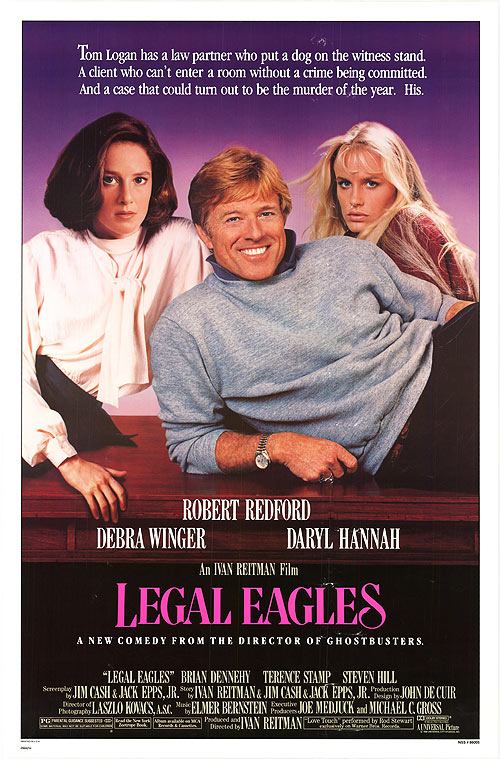
Successful district attorney Tom Logan (Robert Redford) suddenly finds himself in a big mess when defense lawyer Laura Kelly (Debra Winger) approaches him in regards to her quirky client Chelsea Deardon (Daryl Hannah). She feels that Chelsea is innocent of the charges against her and hopes to have them dropped before it goes to court. When Tom looks into the case he finds that there’s much more to it than initially assumed, which leads the three into danger, stolen paintings, murder and even a weird love triangle.

If you are expecting anything having to do with a legal drama then you’ll be highly disappointed as there is very little time spent in the actual courtroom. Instead you get what amounts to an ‘80s action flick with explosions, car chases and even shootouts as these two lawyers go through things that no other lawyer in the history of the universe has ever went through either before or after.

The main selling point, and the only thing that actually works, is the casting. Redford with his laid back style is terrific in this type of comedy and I enjoyed the way he tries to remain cool-under-pressure despite being exasperated with two very kooky females, who both have an interest in him, coming at him from both sides. Winger is fun too as a well-meaning young attorney who tries hard, but still seems a bit ‘rough-around-the-edges’. Hannah is also perfectly cast in a role that works well with her slightly flaky, free-spirited persona and she even has a scene where she performs a fire-laden performance art piece that she wrote herself.

The first hour has a nice balance between the interpersonal relationships of the three as well as an intriguing mystery, but the second half leans too much into the action and gets overblown. The supposedly ‘exciting’ finale only helped to get me bored and annoyed. It’s the chemistry of the three stars and the romantic entanglements that ensued between them that had me interested and are what made the plot unique. The film should’ve emphasized this area more and even played it up. Having things end up working out so conveniently between the three despite the fact that both women were for a time seemingly competing for Redford’s affections misses out on a lot of potential fireworks and amusingly comical scenarios.

Familiar faces pop up in minor roles including a young Christine Baranski as a fledgling member of Tom’s legal team as well as Terence Stamp in a role that ends up being so small and insignificant I was surprised he agreed to take it. The film also features Rod Stewart’s hit song ‘Love Touch’ that climbed to number 6 on the pop charts, but isn’t heard until the very end when it gets played over the closing credits.

My Rating: 5 out of 10

Released: June 20, 1986

Runtime: 1Hour 56Minutes

Rated PG

Director: Ivan Reitman

Studio: Universal

Available: VHS, DVD, Amazon Instant Video
Dear Heart (1964)

dear heart 3

By Richard Winters

My Rating: 7 out of 10

4-Word Review: Love at a convention.

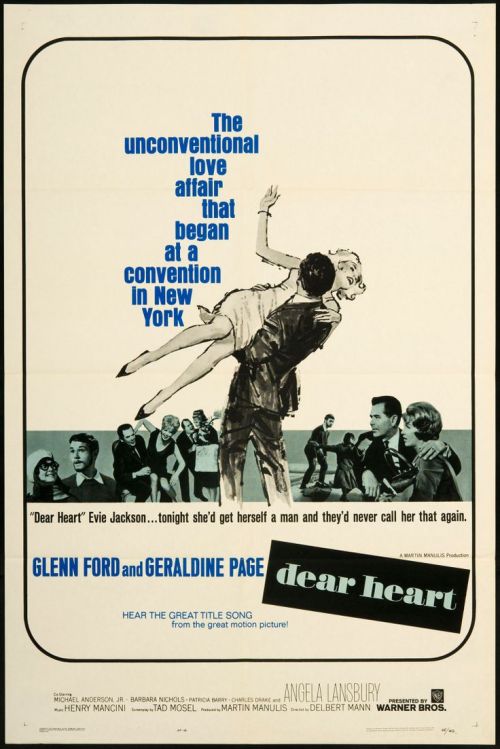
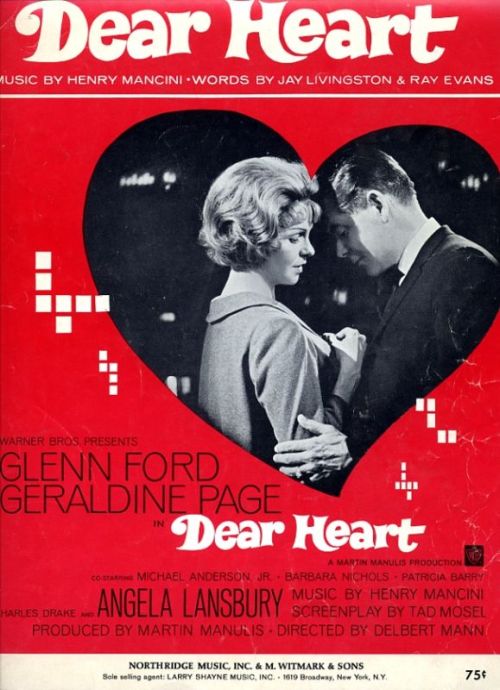
Harry Mork (Glenn Ford) is a greeting card salesman traveling through New York on business when he bumps into the quirky and very lonely Elvie (Geraldine Page) who’s attending a convention there and eyes Harry as a potential catch. Harry though is already engaged to Phyllis (Angela Lansbury) a woman he has only known through correspondence, but is starting to have second thoughts about when he meets her grown son (Michael Anderson Jr.). Elvie tries putting on some moves, but Harry keeps backing away unsure at age 48 if he even wants to settle down at all as he has at times still feels the itch for the occasional fling.

One of this film’s crowning achievements and something that becomes like a third character are the crowd scenes. This may sound inconsequential, but many films have a hard time getting background extras to behave like people amidst large groups of strangers do, but here for whatever reason it gets it right and seeing the dizzying stream of people going back and forth leaves a strong impression and helps accentuate the loneliness and isolation of the main characters particularly Elvie.

I also liked the way the characters hemmed and hawed with each other during the beginning stages. At times Elvie seems more into Harry than he is with her and then other times it gets reversed. Both characters at different points put up an array of defenses and it takes a while for either of them to trust the other and come out of their shells and move into an actual relationship, which is far more realistic than most movies that usually jumps ahead too quickly and never shows the awkward phase that most anyone else goes when testing the waters with someone that they’ve just met.

Page is excellent as always playing the eccentric type of character that she’s proven to be quite adept at, however her myriad of strange quirks got a bit ridiculous and overdone.

Ford is equally good especially with this type of comedy where he plays nervous characters unsure of how to deal with some of the offbeat people around him. I was disappointed though that there was a long drawn out sequence where he tries to get a clerk at the gift card shop (Barbara Nichols) up to his hotel room for a fling, but the film then cuts away and never follows through with what occurred once they got up to the room even though it is later intimated that things didn’t go too well.

The supporting cast of familiar faces lends great comic support, but the most memorable thing about the film is that it features both actresses who went on to play the Mrs. Kravitz character in the ‘Bewitched’ TV-Show. There’s Alice Pearce, who played Mrs. Kravitz for the first two seasons before she died of cancer and then Sandra Gould who replaced her and there’s even a surreal moment where the two have a bit of a confrontation, which I found to be pretty cool.

dear heart 2

My Rating: 7 out of 10

Released: December 2, 1964

Runtime: 1Hour 54Minutes

Not Rated

Director: Delbert Mann

Studio: Warner Brothers

Available: VHS, DVD (Warner Archive), Amazon Instant Video

Serpico (1973)

serpico

By Richard Winters

My Rating: 8 out of 10

4-Word Review: A cop fights corruption.

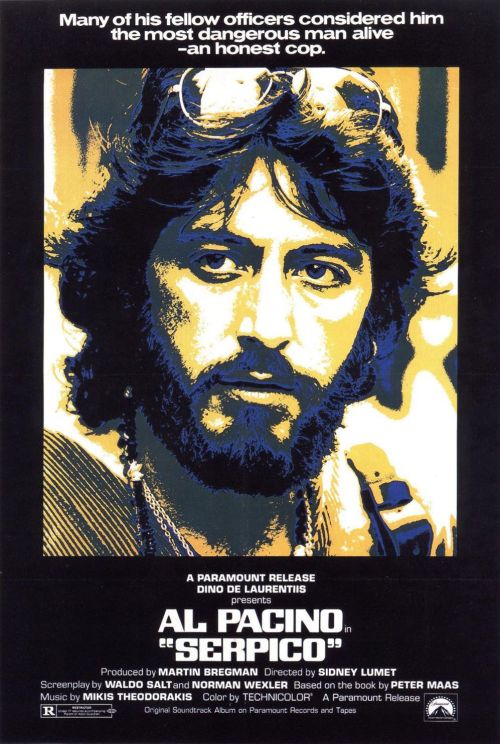
One of the followers of this blog has requested that I review this movie, so today we take a look at Frank Serpico (Al Pacino) a policeman who fought against corruption that plagued New York’s police department during the ‘60s. Even though many of his partners on the force would accept under-the-table payouts from criminal elements in exchange for ‘looking-the-other-way’ he wouldn’t and when he would tell his superiors about it nothing would get done. Instead they would transfer him to other precincts only for him to find the same problems there. It was only when he decided to report the issue to the New York Times that people started to take action, but in the process he also made himself a mark and vulnerable to having his unhappy comrades set him up to be shot while on-duty.

The film is based on the Peter Maas novel, which in turn recounts the life of the actual Frank Serpico and the events he went through while working on the force between the years of 1959 to 1972. Not only does he remain alive today, but according to recent reports is even considering, at the ripe old age of 79, a run at political office. Equally interesting is that he and Pacino roomed together during the summer that this was filmed and became close friends.

It’s been years since I’ve read the novel, but I felt this film sticks closely to what actually happened and the always reliable Sidney Lumet manages to keep things exciting and insightful. The dialogue is sharp and the on-location shooting, which was done in every borough of New York except Staten Island, gives the viewer an authentic feel of the city as well as the police environment.

The film also does a successful job at showing the drawbacks of accepting bribes without ever getting preachy or heavy-handed. One might think, like many of Serpico’s partners do, that taking some kickbacks isn’t that big of a deal, but then the film shows in one brief moment a policeman shoving another man’s head into a toilet when he doesn’t ‘pay up’, which hits home how the police become no better than organized crime who would notoriously demand ‘protection money’ from business owners.

The only thing I didn’t like was the music, which was too loud and jarring. Fortunately it’s put in only sparingly, but its melodic quality takes away from the grittiness and the film works far better by simply relying on the ambient sounds of the locations that the scenes are in. In fact this is one movie that could’ve done fine without any music at all.

Pacino is fantastic and I loved how the character starts out as this clean shaven, boyish looking fellow only to grow into a bearded, long haired guy as the story progresses, which symbolically connects with the way he becomes savvier to the system. The character also sports earrings long before it became vogue for males to wear them.

Tony Roberts does well as one of the few cops that sides with Serpico and tries to help him in his fight and F. Murray Abraham can be spotted near the end as a member of a vice squad who tries setting Serpico up to be killed. This movie also marks the film debuts of character actors Alan Rich and Kenneth McMillan. In my mind this is also the debut of Judd Hirsh. Some sources state that his first onscreen appearance is in Jump, which came out two years earlier, but I watched that film and couldn’t spot him anywhere, but her I was able to spot him right away.

My Rating: 8 out of 10

Released: December 5, 1973

Runtime: 2Hours 10Minutes

Rated R

Director: Sidney Lumet

Studio: Paramount

Available: VHS, DVD, Blu-ray, Amazon Instant Video, YouTube

The King of Comedy (1983)

king of comedy 1

By Richard Winters

My Rating: 9 out of 10

4-Word Review: Struggling comic craves fame.

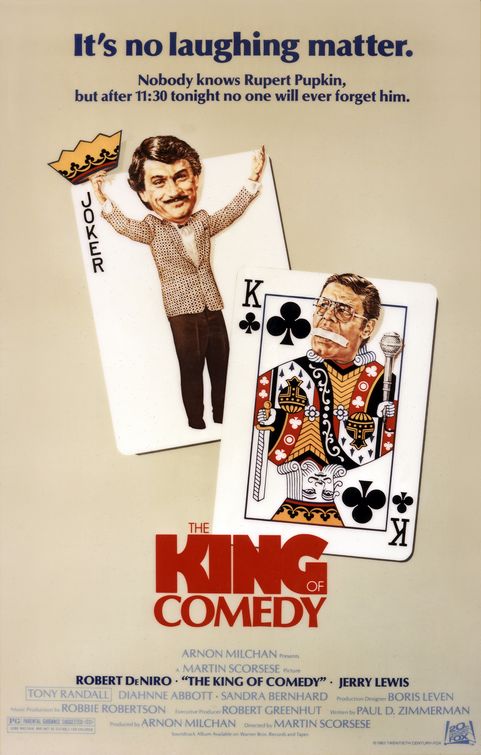
Rupert Pupkin (Robert De Niro) is a lonely 34-year-old still living in the basement of his mother’s home while fantasizing about one day appearing on the top-rated Jerry Langford show as a stand-up comedian. When he tries to contact Langford (Jerry Lewis) he’s given the blow off, so he decides to plot an elaborate plan with an equally obsessed fan named Masha (Sandra Bernhard). Together they kidnap Jerry at gunpoint and take him back to her apartment where they tie him up with duct tape. They then call the show’s producers and demand that Rupert appear that night as a guest comedian on the show or Jerry’s life will be ended.

Paul D. Zimmerman’s script, which was originally written in the late ‘60s and intended as a vehicle for talk show host Dick Cavett, is nothing short of brilliant and the main reason for its success is that it takes an outrageous idea and adapts it to realities of modern day life while pinpointing with amazing clarity all the absurdities of today’s celebrity worship culture. The story is told by people who’ve worked in the entertainment business, which makes the viewer feel like they’ve experienced life from inside after watching it.

There are so many ingeniously funny moments that it is hard to pick only one in fact you have to watch the movie several times in order to appreciate all of its subtly and satirical nuances. I loved the scene where Rupert talks to cardboard cutouts of Liza Minnelli and Langford as he pretends to be on their show or when he imagines doing his routine in front of an audience while speaking to a blown-up picture of a crowd of people. The segment in which Rupert arrives at Langford’s home unannounced is equally good and was entirely ad-libbed by the cast. The scene involving Langford’s kidnapping and subsequent ‘ransom’ note, which he must read from cue cards is also hilarious and Rupert’s wedding that he imagines being done live on the Langford show is a terrific send-up of the real-life wedding between Tiny Tim and Miss Vicki that occurred on ‘The Tonight Show’ on December 17, 1969.

Director Scorsese does a masterful job of jumping from the real to surreal as well as allowing the viewer to get inside Rupert’s head and appreciating the warped logic that many obsessed fans like him have. I also enjoyed the inspired casting including having Scorsese’s own mother playing the voice of Rupert’s mom and De Niro’s real-life wife at the time playing Rupert’s would-be girlfriend. Frederick De Cordova who was the producer of ‘ The Tonight Show’ during its run with Johnny Carson essentially plays himself as Langford’s producer and even Scorsese can be spotted during a brief bit with actor Tony Randall.

Lewis is interesting in his first serious role and it’s fun seeing a picture of him when he was only 12-years-old. Comedian Sandra Bernhard is surprisingly good and I enjoyed the fact that even though her character was nutty she still came off as being quite sensible when compared to Pupkin. De Niro though steals it by making psychotic character seem strangely likable.

The few drawbacks include why at 34 would Rupert suddenly decided to break into the entertainment business and what was he doing before this. The Bernhard character also needed more of a backstory especially when we find that she’s living in a luxurious apartment and apparently loaded with money, which goes against the grain of most celebrity stalkers who are almost always on society’s fringe.

The humor may not resonate with everyone, but if one is a fan of dark comedy then it doesn’t get much darker than this. The twist ending, which blew me away when I first saw this years ago, now doesn’t seem quite as believable, but the rest of it is on-target in what is clearly a top comedy to of the ‘80s.

My Rating: 9 out of 10

Released: February 18, 1983

Runtime: 1Hour 49Minutes

Rated PG

Director: Martin Scorsese

Studio: 20th Century Fox

Available: VHS, DVD, Blu-ray, Amazon Instant Video

The Secret of My Success (1987)

secret of my success

By Richard Winters

My Rating: 3 out of 10

4-Word Review: He has lofty ambitions.

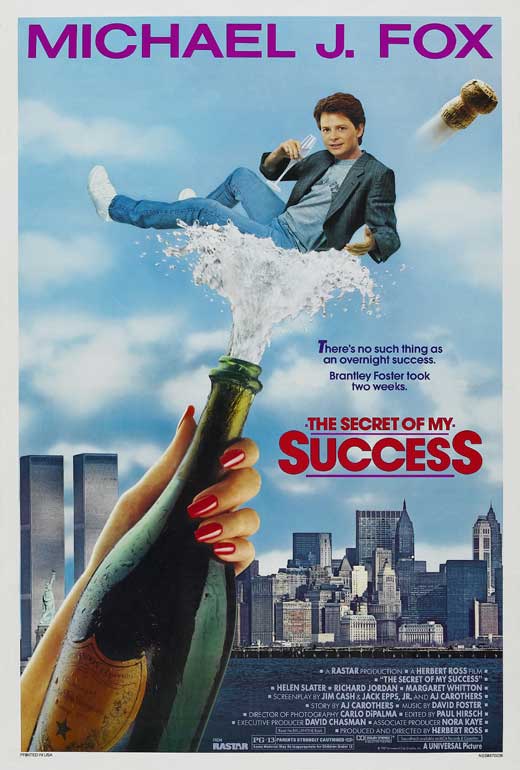
Brantley Foster (Michael J. Fox) has just graduated from high school and wants to take a stab at the big city. He has a nice job lined up, but when he gets there he finds that they’ve become victims of a hostile corporate takeover and his position is no longer available. His mother (Elizabeth Franz) tells him about his rich Uncle Howard Prescott (Richard Jordan) who is a CEO of a major firm. Brantley meets with him and manages to get a job in the mailroom, but then comes up with a scheme where he masquerades as a company executive while romancing an attractive boss (Helen Slater) and even his uncle’s wife (Margaret Whitton).

Fox is terrific in the lead and his engaging and likable presence makes up to some degree for the film’s other numerous shortcomings. There are a few funny scenes including the one where Brantley pretends to be an orchestra conductor by using the sound of a couple making love in the next apartment as his ‘music’. The bird’s eye shot of a group of executives jogging around a track that is situated on a roof of a Manhattan skyscraper is fantastic and my favorite moment of the whole film. Brantley’s scheme though is ridiculously over-the-top with no chance of ever successfully occurring in the real world, which makes the story less entertaining since the believability factor gets thrown out to the point that it becomes a completely inane farce by the end.

The humor is also too broad and would’ve worked better had it tried instead to be more subtle. A good example of this is where Brantley gives a limo ride to Howard’s wife Vera. Initially Vera is quite cold and bitchy towards him, but then he throws her a line of how he’d feel like ‘the luckiest man in the world if he awoke each morning with a beautiful woman like her lying next to him’, which is enough to ‘melt’ her cold exterior and have her invite him back to her place where she shamelessly comes onto him and even goes skinny dipping with him in her backyard pool. Yet I’d imagine an attractive, rich woman such as herself would get lines like that thrown at her all the time by other men and how would she know that Brantley, whom she had just met, wasn’t any different than the rest of them and simply looking for a way to get her between the sheets or at her money. There is no way a woman of that age and social pedigree would foolishly let down her guard that quickly and easily especially for a line that is rather unimaginative and corny.

I realize this is supposed to be a wish-fulfillment fantasy, but it goes overboard and too much of a good thing is never good. The so-called ‘American Dream’ is all about persevering and overcoming hardships and obstacles not like it is here where we have some wet-behind-the-ears kid who magically has all the answers while essentially cheating his way to the top in record time without even breaking a sweat and making everyone else who actually works for a living look like complete fools in the process.

A little grit and realism would’ve helped and at least given it some much needed balance, but instead it’s completely lacking, which ultimately makes it shallow, superficial and silly and not worth the time.

My Rating: 3 out of 10

Released: April 10, 1987

Runtime: 1Hour 51Minutes

Rated PG

Director: Herbert Ross

Studio: Universal

Available: VHS, DVD, Blu-ray (Region B/2), Amazon Instant Video

Promise Her Anything (1966)

promise her anything

By Richard Winters

My Rating: 6 out of 10

4-Word Review: Bachelor becomes a babysitter.

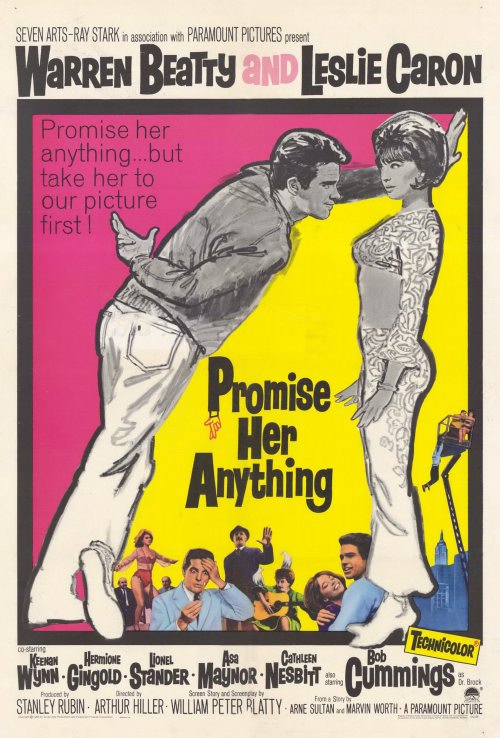
Harley (Warren Beatty) is a struggling filmmaker living alone in a rundown Greenwich Village apartment where he makes low-grade blue movies to pay the rent. Michele (Leslie Caron) moves into the apartment next door. She is a recently widowed mother who has Harley babysit her 2-year-old (Michael Bradley) while she romances the child psychologist (Robert Cummings) that she works for whom she feels will also make for a good father. The problem is that Harley falls for Michele and soon makes a play for her affections as well.

After recently reviewing other bachelor themed films from the ‘60s I felt this was a definite upgrade. Instead of portraying young single men living in plush pads and having cushy jobs this one shows a more realistic side with a character that struggles to make ends meet while also harboring a beatnik philosophy that young men of that time were starting to embrace. Arthur Hiller’s direction has shades of the offbeat and irreverent while Tom Jones’ singing gives it hipness.

I also enjoyed Beatty’s presence and felt this was one of his better comedies as the scenario takes full advantage of his detached, glib manner while also tapping into his notorious lady’s man image. The scenes where he talks about enjoying  the benefits of marriage, but without being married or expounding on the virtues of socialized medicine made the character seem downright ahead-of-his-time.

Cummings, in one of his last film appearances, is also fun and his stuffy, uptight ways makes for a great contrast to Beatty. Why someone who hates kids would ever decide to become a child psychologist makes little sense, but it’s still funny as is his banter with his more modern thinking mother (Cathleen Nesbitt).

Caron seemed miscast as she was already in her mid-30s at the time and an actress who was in her 20s and more Beatty’s age would’ve been a better fit. I also didn’t care for the character’s dated, old-school ways of thinking including the idea of marrying a man simply for the security that he could offer even if she didn’t love him or that children must have a father figure in their life or they will turn out ‘psychologically abnormal’ if raised only by a single parent. Her attempts at hiding the fact that she had a child until after the Cummings character had proposed to her and she’d securely ‘snared’ him is equally offensive.

The plot is paper thin and I’ll admit I watched this on my Amazon fire tablet and halfway in I accidently kicked the table it was sitting on and in my attempt to catch the tablet before it dropped to the ground I inadvertently jumped the film ahead by 20 minutes, but had no idea I had done so until it had ended. When I went back to review what I had missed I realized it hadn’t been much.

The undernourished script by William Peter Blatty has a few amusing bits, but nothing that’s laugh-out-loud funny. The climactic sequence in which Beatty tries to heroically save the child who’s trapped on a moving crane might’ve been more exciting had it not been so obviously done in front of blue screen.

My Rating: 6 out of 10

Released: February 22, 1966

Runtime: 1Hour 38Minutes

Not Rated

Director: Arthur Hiller

Studio: Paramount

Available: VHS, Amazon Instant Video, YouTube

Splash (1984)

splash 2

By Richard Winters

My Rating: 5 out of 10

4-Word Review: Man falls for mermaid.

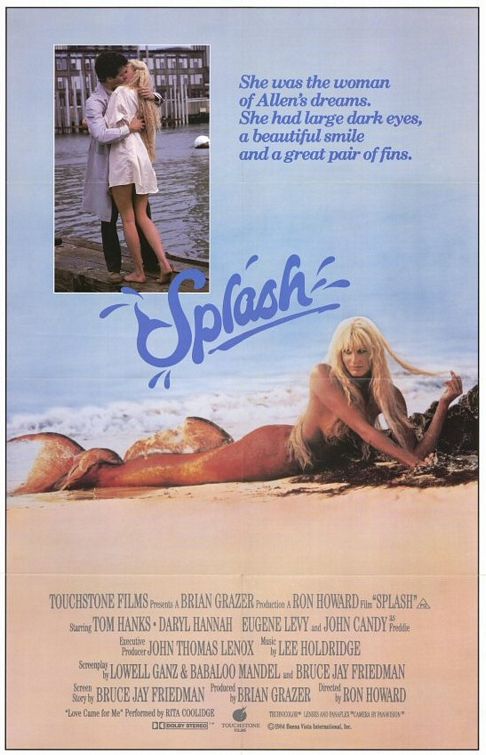
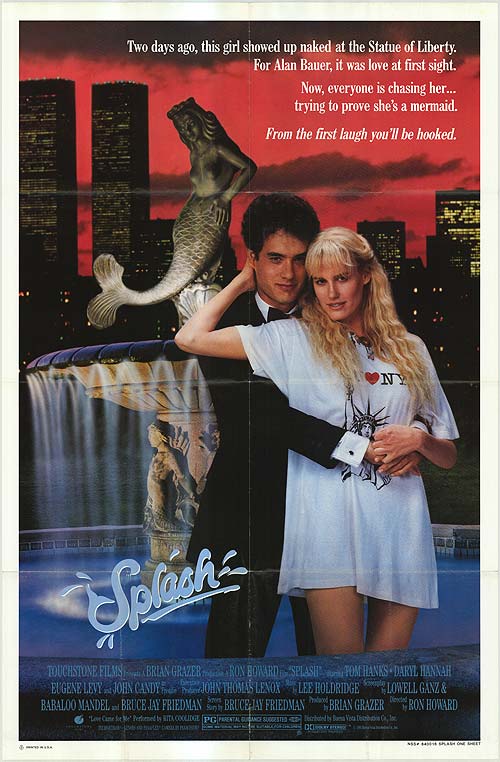
Allen (Tom Hanks) is stuck in a hapless job and a string of loveless relationships. After his last live-in girlfriend leaves him he becomes convinced that he will never find true love. Then on a whim he takes a trip to Cape Cod and goes out into the harbor in a small boat despite not being able to swim. When the engine conks out and he attempts to restart it he gets knocked into the water and his saved by a mysterious mermaid (Daryl Hannah). He returns to his New York home and mundane life only to find that the mermaid has sprouted legs and followed him. Allen doesn’t recognize the woman as the one who saved him, but he’s immediately smitten by her beauty nonetheless. They start up an awkward relationship, but when Allen proposes marriage she tells him she can’t as she has a dark secret, which is the fact that when she gets wet her legs turn into fins.

This was Ron Howard’s third foray behind the camera on a theatrical film and for the most part it’s a success. I enjoyed the mix of fantasy and surrealism and a love story that is cute, but not too cute. I loved the big city ambience including a scene involving classical street musicians and a visit to an outdoor ice skating rink. The climatic car chase through the downtown is funny especially when a group of soldiers manually overturn a taxi cab that is in their way.

Unfortunately the script, which is credited to four different writers, is full of major loopholes that to me ended up getting in the way of my enjoyment. I realize as a budding/struggling screenwriter that it is difficult to write a plot that is completely logical in every way and every story even the really good ones will usually have a few minor implausibility’s that one can overlook and forgive, but this one goes way beyond that.

For one thing I thought it was absurd that this mermaid who knew nothing of the English language when she came could somehow learn the language in one day simply by watching television. Yes, she may be able to pick up on some words, but to be able to learn their meanings and context is another story that just wouldn’t be possible for anyone to realistically grasp in such a short period of time. Besides I thought it was more interesting when she didn’t speak and it could’ve worked on that level alone. And while we’re at it who ended up paying for all those televisions in the department store that she destroys while in front of the sales staff when she states her name in such a high pitch that it explodes all of the screens?

I was also confused how the Eugene Levy character was able to track down the Hannah character and able to stalk her in his attempt to get her wet and expose her as a mermaid. He initially spots her under the ocean, but then later reads about her in a newspaper, but the article did not mention her name or whereabouts because at the time she hadn’t reconnected with Allen, so how would he know where to find her especially in the big, congested metropolis of New York?

I also had trouble with the scene where John Candy, who plays Allen’s brother, helps the Levy and Allen sneak the mermaid out of a science lab, but then ends up staying to take the blame while the others leave. The Candy character had no invested interest in the mermaid and came along only to help out, so why should he be the fall guy, or even agree to it?

Spoiler Alert!

There is also a scene where the mermaid buys Allen a giant water fountain and has it placed in his bedroom, which makes no sense because the doorway was clearly not big enough to get any of it through it. My biggest beef though is with the ending where the viewer learns that as long as Allen is with the mermaid he will be able to breathe underwater without any apparatus, which defies all laws of physics and seems thrown in to appease the hopelessly romantic masses who will buy into any contrived ‘happy ending’ no matter how utterly illogical. In some ways the idea that he couldn’t go with her and she would come back to visit him on occasion would’ve worked better because then they wouldn’t have to be with each other 24/7, which usually ends up being the cause of most break-ups anyways.

End of Spoiler Alert!

There is also the issue of how the mermaid manages to sprout human legs. Apparently there is a scene in the special edition DVD showing an old sea hag casting a spell on the mermaid, which allows her to have legs, but only for a short time. This scene was cut from the original release, which was a mistake as it was necessary to help explain the rest of the plot.

The movie does have its share of good points especially the casting of Hannah who seems born to play this role, but the truly great films do not require the viewer to overlook so many logic loopholes and unanswered questions in order to enjoy it.

splash 1

My Rating: 5 out of 10

Released: March 9, 1984

Runtime: 1Hour 51Minutes

Rated PG

Director: Ron Howard

Studio: Buena Vista

Available: VHS, DVD, Blu-ray, Amazon Instant Video, YouTube

Hello Again (1987)

hello again 4

By Richard Winters

My Rating: 3 out of 10

4-Word Review: Her life after death.

Lucy (Shelley Long) is married to Jason (Corbin Bernsen) a well-off plastic surgeon, but finds that she doesn’t fit in with his snobby clientele and feels out-of-place whenever she tries to hang out with them at dinner parties. She turns to her wacky friend Zelda (Judith Ivey) who dabbles in the occult, but her spells and magic do little until Lucy chokes on a chicken ball and Zelda is able to magically bring her back to life one year later. Now Lucy finds a new lease on things. Jason has gotten remarried to her former friend Kim (Sela Ward) and she uses this news to find a new love of her own and she’ll have to do it quickly because if she doesn’t find true love by the next full moon she’ll go right back to being dead again.

This is the second collaboration between director Frank Perry and writer Susan Isaacs and while their first effort Compromising Positions was just barely passable this one doesn’t even make it to that level. The script is unable to settle on any type of genre as it dabbles in drama, romance, comedy, social satire and fantasy, but ends up being only shallow nonsense in the end. A few of the tangents that it takes has potential to be interesting, but then it doesn’t go far enough with it. The comedy is light and inconsistent with the funniest moment being the one that was shown in its trailer where Lucy comes back to life and finds her shocked husband and friend in bed together and after that there’s very little else that’s even mildly amusing.

The fantasy elements are poorly thought out and leave a lot of unanswered questions. The climactic showdown between Lucy and Kim is flat and the caricatures of the rich and snobby crowd are clichéd to the extreme. I also didn’t find the scene where she chokes on a chicken ball to be a laughing matter as according to government statistics over 3,000 people in this country choke to death each year and if they really wanted to create some sort of goofy death it should’ve been something much more over-the-top.

Long isn’t leading lady material. Her image is so ingrained with the uppity and prim Diane Chambers persona from ‘Cheers’ that having her portray someone who is kind and humble comes off as insincere and phony and her attempts at being a comical klutz is annoying and completely unfunny.

This was Perry’s final directorial effort. He burst onto the film scene in the ‘60s and showed flashes of brilliance and new age vision, but his career declined markedly once he divorced from his screenwriter wife Eleanor and the stuff he did afterwards was barely even worth a look. He eventually was diagnosed with cancer and spent the last years of his life battling the disease and in 1995 even made a documentary about his fight called On the Bridge, which was far more compelling than this tripe.

My Rating: 3 out of 10

Released: November 6, 1987

Runtime: 1Hour 36Minutes

Rated PG

Director: Frank Perry

Studio: Buena Vista Pictures

Available: VHS, DVD, Amazon Instant Video, YouTube

Come Blow Your Horn (1963)

come blow your horn

By Richard Winters

My Rating: 5 out of 10

4-Word Review: Kid brother moves in.

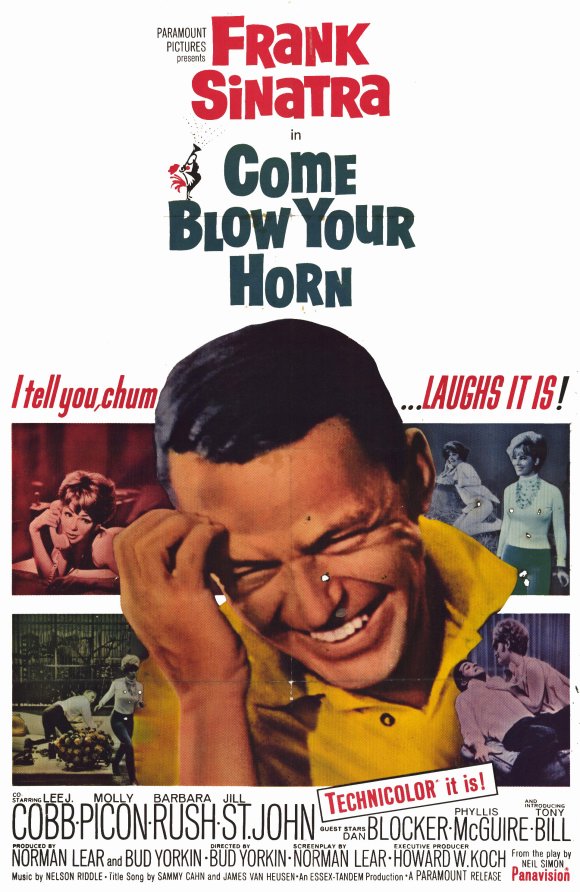
Buddy Baker (Tony Bill) has just turned 21 and is looking to get out into the world by moving in with his older brother Alan. Alan (Frank Sinatra) is living the bachelor’s dream by residing in a luxurious apartment in the heart of Manhattan while entertaining wild parties and a wide array of lovely ladies. Their parents (Lee J. Cobb, Molly Picon) do not feel that Alan and his lifestyle will be a good influence on Buddy and forbid him from doing it, but he does it anyways, which drives the father to disown his sons and cut out all communications with them.

This was the first Neil Simon play to be turned into a movie and it was loosely based on Neil’s relationship with his older brother Danny. For the most part it is talky and stagy while lacking Simon’s patented one-liners and humorous exchanges. It also has for some bizarre reason a musical number that comes out of nowhere at the 40-minute mark where Sinatra sings the film’s title tune and then just as quickly it goes back to being a straight comedy, which came off as jarring, out-of-place and misguided.

I did enjoy the film’s set design, which got nominated for an Academy Award, especially the interiors of Alan’s swanky apartment. However, I was confused why Buddy had to sleep in the same room as Alan as I would think such a large and fancy place would have more than just one bedroom. The movie also strongly implies that Alan is having sexual trysts with his lady friends, which would then imply that he must have a king sized bed somewhere, so why are only twin beds shown? He also has five telephones in the living room, which seemed beyond absurd and made me feel that if he had purchased a few less phones then he might’ve been able to afford a double bed.

Sinatra’s presence is the film’s weakest link as this type of comedy doesn’t mesh well with his otherwise caustic personality. He was too old for the part as he was not only pushing 50, but also only 4 years younger than Cobb who plays his father. I didn’t like Jill St. John’s ditzy character either as she was too dumb to be believable, which was not only painfully unfunny, but stereotypical and insulting to women.

I did like Tony Bill in his film debut and his nicely understated performance helps keep the film balanced. Dan Blocker is also great as a jealous husband and Molly Picon is a scene stealer as the mother. You can even spot Dean Martin as a wino in an uncredited cameo.

The fact that Alan doesn’t want to give up his swinging lifestyle despite the pressures from his girlfriend Connie (Barbara Rush) is the story’s one and only redeeming quality. I could never understand why a single man, who’s enjoying the bachelorhood at its most ideal, such as it is portrayed here, would want to suddenly throw it all for the married life. Most of the of films from that era with a similar theme would portray it as simply being the ‘magic of love’, but here the character is much, much more resistant to the idea and doesn’t change his ways until having a life altering event where he sees things from a different perspective, which made more sense.

Sinatra fans may want to check this out, but it is far from his best stuff and although the material is agreeable it is only slightly engaging and barely worth the time.

My Rating: 5 out of 10

Released: June 5, 1963

Runtime: 1Hour 52Minutes

Not Rated

Director: Bud Yorkin

Studio: Paramount

Available: VHS, DVD, Blu-ray, Amazon Instant Video

The Pursuit of Happiness (1971)


pursuit of happiness 2

By Richard Winters

My Rating: 5 out of 10

4-Word Review: Justice isn’t always fair.

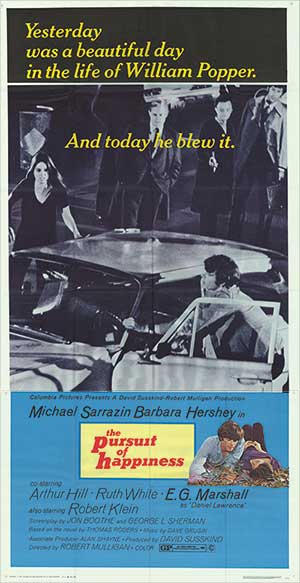
Everything seems to be going William Popper’s (Michael Sarrazin) way. He is a young college student with a great looking girlfriend (Barbara Hershey) and from a rich family. One night he takes a trip to the grocery store. It is raining and he accidently hits and kills a woman who walks out onto the street between two parked cars. Since William has several unpaid traffic tickets, is part of the anti-establishment movement and seems to have a generally belligerent manner he gets arrested for her death. His rich father (Arthur Hill) hires a successful lawyer (E.G. Marshall), but William is a major idealist who doesn’t want to compromise on anything and the more he fights for his ideals the deeper it gets him into trouble.

The film, which is based on a novel by Thomas Rogers, certainly makes some great points about our modern day American justice system where everything seems more based on the image that the defendant tries to present than the actual facts. Unfortunately most viewers today are already quite jaded by this and the message comes off as old and redundant.

The biggest problem is with Sarrazin. He has always had a bit of a transparent quality and I’ve defended him in some of his other roles, but here he helps to bring the whole thing down. He conveys no anger or emotion of any kind even though it’s supposedly his passion for the truth that causes him to behave the way he does. His comes off as limp and lifeless making me wonder how such a bland guy could attract a girlfriend at all let alone a really beautiful one. His character is also a bit too stubborn and strangely naïve to the point that the viewer isn’t completely empathetic with his cause as it becomes painfully obvious that he is only hurting himself by refusing to back down at all while most rational people would’ve likely buckled under just enough to get themselves out of the jam.

The script unfortunately is more intent on making a statement than telling a story as we are given no conclusion to the character’s plight. He escapes from jail and takes a flight to Mexico, but then it just ends leaving open a wide array of unanswered questions and making the viewer feel like they’ve seen only half a movie.

Ruth White, in her last film appearance, gives a strong performance as Walter’s Archie Bunker-like grandmother. It’s also great to see Marshall playing a more hard-lined version of the defense attorney role that he was famous for from ‘The Defenders’ TV-show. Robert Klein is engaging as Walter ‘60s radical college friend and David Doyle is good as Walter’s cellmate. Charles Durning, Ralph Waite and Rue McClanahan can be seen in small roles and this also marks William Devane’s film debut.

pursuit of happiness 3

My Rating: 5 out of 10

Released: February 23, 1971

Runtime: 1Hour 33Minutes

Rated GP

Director: Robert Mulligan

Studio: Columbia Pictures

Available: DVD, Amazon Instant Video