Category Archives: Movies Based on Short Stories

Perfect (1985)

perfect3

By Richard Winters

My Rating: 2 out of 10

4-Word Review: Reporter investigates aerobics craze.

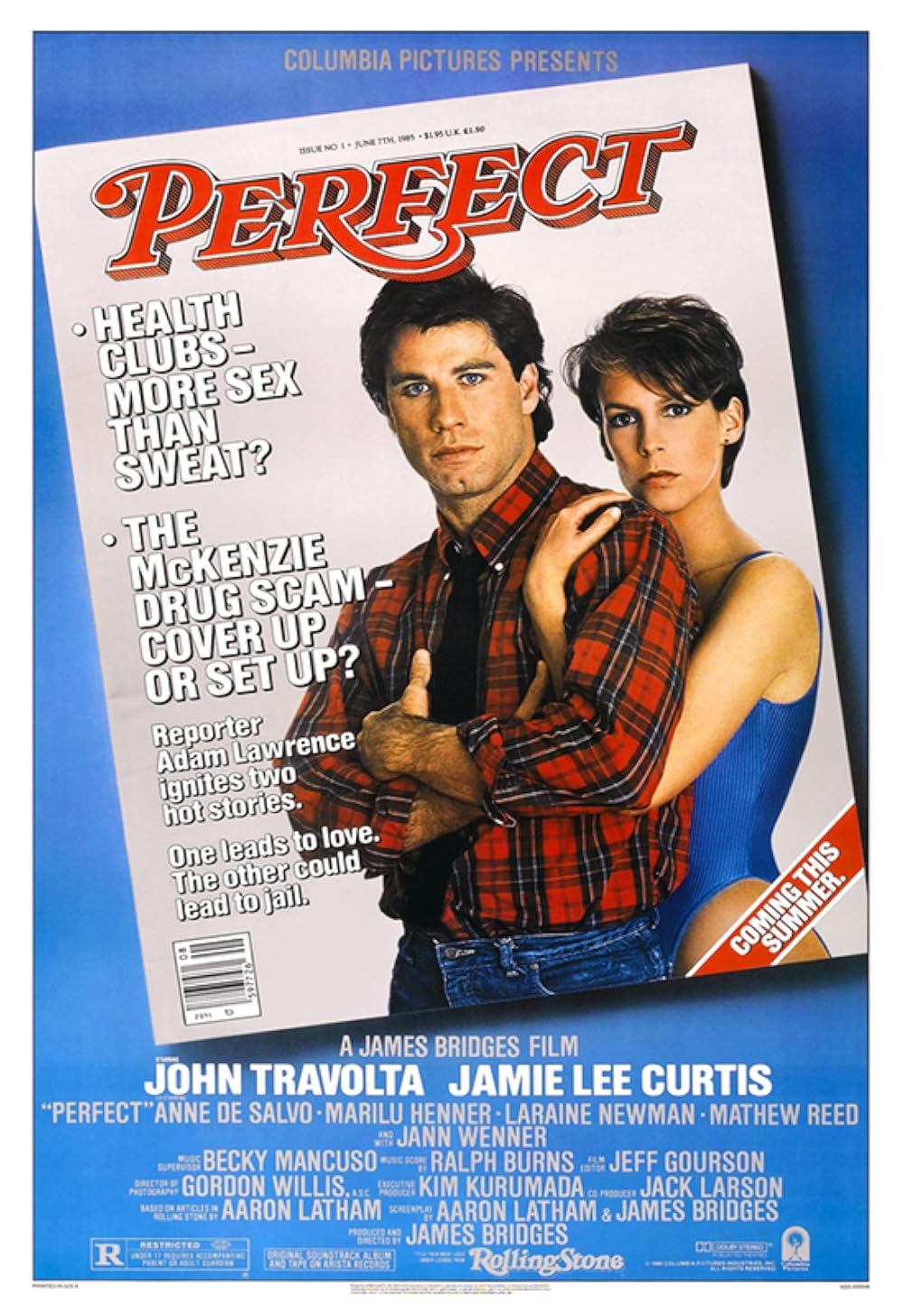
Adam (John Travolta) is a reporter working for Rolling Stone magazine who gets sent on assignment to Los Angeles. While there he becomes intrigued with the health fitness craze and believes the workout clubs are becoming like the singles bars of the 80’s. He asks his editor Mark (Jann Wenner) permission to write a secondary story focusing on this new phenomenon and he agrees. Once he begins attending the club he becomes infatuated with Jessie (Jamie Lee Curtis), one of the instructors. He asks her for an interview, but she refuses based on a past experience she had with another journalist, but Adam continues to pressure her. Eventually the two begin dating only for Jessie’s initial fears to ultimately get exposed when she reads the story he’s written about the club, before it gets sent to the press, and realizes it’s a negative take on the people in it, many of whom are her friends, which leads to a serious strain on their relationship. 

The film is loosely based on the real-life experiences of Aaron Latham who worked as a reporter for Rolling Stone during the late 70’s. He had already written the screenplay for Urban Cowboywhich also starred Travolta and was also directed by James Bridges, so this reteaming was expected to be a huge hit, but instead it lost over $8 million at the box office despite initially doing well on its opening weekend. A lot of the problem is that journalists aren’t considered likable people and most of the American public by and large despise them. The fact that this one behaves exactly the way you’d expect, being more than willing to exploit their subject, particularly with the way he treats the Marilu Henner and Laraine Newman characters, in order to get a juicy spin on a story, just makes him all the more despicable. 

His character is quite blah as well. We never learn why he wanted to get into journalism and if some backstory had been given, and not just starting out with him working in the obituary section and trying to move his way up, then he might’ve had more depth. It’s confusing too why such a good-looking, jet-setting guy, wouldn’t have a girlfriend. Maybe if he’d been through a rough break-up and thus wanted to avoid it that might’ve been understandable but should’ve been explained. Even just having some casual dates would’ve made sense but having him just all alone with no reason only adds to make the character even more transparent. 

Curtis as an actress is excellent and the movie is worth sitting through solely because of her and she’s looking really hot here too. However, her character’s responses to things seemed a bit off. She makes it quite clear upfront that she’s not interested in an interview, but Adam doesn’t take no for answer and proceeds to continue to hound her, which should make her hate him even more, but for some reason it doesn’t. Yes, he does help get her car started when her battery dies, so as a thank you she might’ve been willing to do a simple interview, but instead her repayment is to go to bed with him while still refusing to do any interview, even though I felt realistically it should’ve worked the other way. 

The concept itself isn’t intriguing. I lived through the 80’s and really didn’t care why people got into the aerobics thing. Revealing that some of those that did was because they were lonely and looking to meet someone to hook-up, isn’t exactly groundbreaking. The entire supporting cast is incredibly dull including Jann Wenner, the original co-found of Rolling Stone magazine, who essentially plays himself as Adam’s boss, but his performance is lackluster, and a professional actor should’ve been given the role. 

Spoiler Alert!

My biggest gripe came at the end where Curtis keeps going back to Travolta even as he does all the things that irritates her about reporters like secretly recording their conversations while in a car. That alone should’ve gotten her to dump him, which she does for a while, but then she returns. One forgiveness is okay, everybody deserves a second chance, but then he does it again with the negative story. Granted having the article revealing that she had an affair with her coach years ago wasn’t his fault as his editors put that into the story later on, but she had no way of knowing that. From her perspective he betrayed her trust and therefore the relationship should’ve been permanently over. She didn’t care for reporters right from the beginning and all he did was affirm her confirmation bias. It would’ve been more believable had she instead liked journalists and maybe wanted to be one herself and therefore kept given him the benefit of the doubt, but the way it gets done her makes little sense. 

My Rating: 2 out of 10

Released: June 7, 1985

Runtime: 2 Hours

Rated R

Director: James Bridges

Studio: Columbia Pictures

Available: DVD, Amazon Video, YouTube
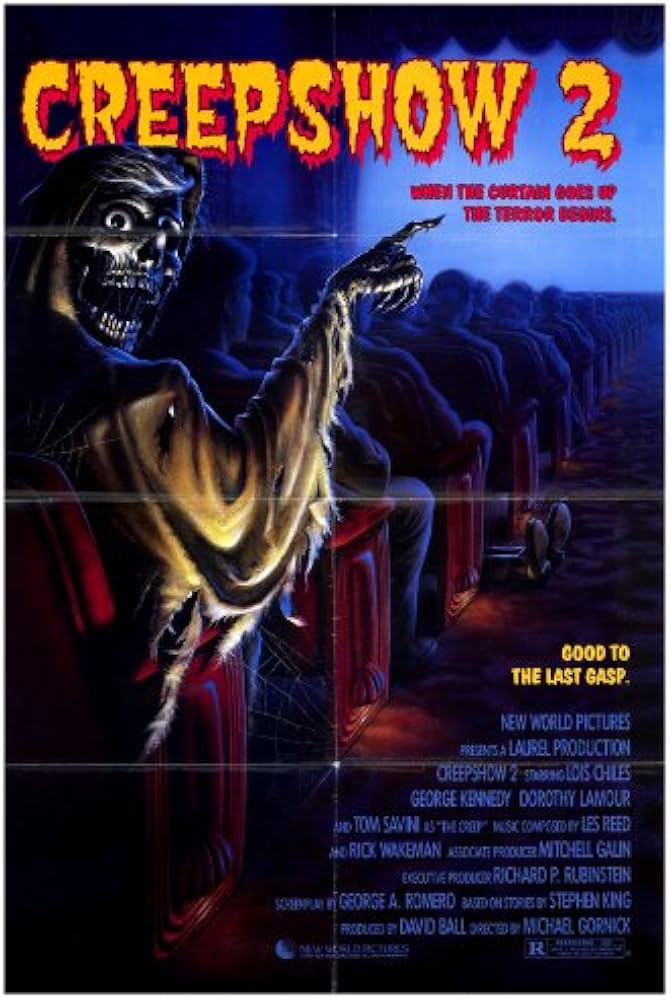
Creepshow 2 (1987)

creepshow2

By Richard Winters

My Rating: 6 out of 10

4-Word Review: Three stories of terror.

Due to the success of the 1982 installment Stephen King and George Romero got together to write a second script based on three of King’s short stories and directing duties were turned over to Michael Gornick who had been the cinematographer on the first one. The budget was much lower than the first, which hampered the special effects and critical reception though it still made $14 million at the box office and has garnered a cult following amongst contemporary audiences.

The first, which is the weakest, stars George Kennedy and Dorothy Lamour, in her last film appearance, as owners of a small-town general store that’s no longer making any profit. An Indian tribe elder (Frank Selsado) gives the couple a bag filled with jewelry as repayment for a debt and then later that night three hooligans lead by the long-haired Sam (Holt McCallany) rob the store and kill the couple. The three think they’ve gotten off scot-free, but then the cigar store Indian that stood in front of the store comes to life and avenges the couple’s deaths by murdering the three boys one-by-one.

This segment takes a while to get going and really doesn’t get interesting until the robbery happens, which should’ve occurred sooner. While the effects of showing the wooden Indian moving around is impressive as it really looks like he’s made of wood and not just somebody in a costume it would’ve been more intriguing had it not given away who the killer was. Simply shown the three being hacked by some mysterious, shadowy figure and then only at the very, very end alluded to it being the Indian.

The second story is better and deals with four college friends (Paul Satterfield, Jeremy Green, Daniel Beer, Page Hannah) going for a swim on a remote lake. They leave their car running and then all dive into the water and swim out onto a wooden raft, but then notice a black, gooey substance that surrounds them. The four feel trapped and when one of the young ladies puts her hand into the water the blob sucks her in and drowns her. The blob then seeps its way through the cracks of the raft and kills another one leaving only two left.

This one is genuinely creepy and I liked how it’s shot under a bright sunny sky making the area appear inviting and no need for anyone to be guarded until it’s too late. The constant shots of the running car sitting on the beach not far from where the swimmers are on the raft, but still unable to get to it, heightens the tension as well as the fact that there’s never any answer to just what this substance is, which in this case accentuates the intrigue. The only thing that I didn’t like is that after being stuck on the raft for an entire day the guy holding the sleeping girl lays her down onto the raft floor, but then uses the opportunity to undress her and admire her breasts, but I’d think with the situation they were in he’d be too exhausted and frightened to think about sex. The ‘twist’ at the end, which shows a No Swimming sign posted in a grove of trees, which the young adults hadn’t spotted, doesn’t totally work because if there’s no swimming in that lake then why would there be a wooden raft in the middle of it and who put it there?

The third story is the best and features a middle-aged woman, played by Lois Chiles, who goes on a drive late one night and accidentally kills a hitchhiker (Tom Wright) when her car goes spinning out-of-control. Instead of offering aid to the man she just drives-off, but then becomes plagued by visions of him constantly reappearing during the rest of her trip making her panic as she attempts to ‘re-kill’ the man, so she can be rid of him once and for all.

Initially this one seemed like a redo of the classic ‘Twilight Zone’ episode that featured actress Inger Stevens who went on a car trip and kept seeing the same hitch-hiker at various intervals on her drive, but this one takes it a step further by having Chiles use her car to literally smash the guy again and again, which gives it a gruesome over-the-top quality that deftly mixes in gore and black humor perfectly.

The film was set to have two other stories, ‘Cat from Hell’ and ‘Pinfall’, but due to budgetary limitations it was decided not to proceed with those and they were never filmed. In the ‘Cat from Hell’ one a hitman gets paid $100,000 to kill a cat that’s supposedly killed three other people. The ‘Pinfall’ one deals with competing bowling teams where the one team kills the other one, by tinkering with the van they ride in, and then the dead team coming back to life as zombies and killing the other team in unique ways by using things only available in a bowling alley, which sounded really cool and it’s a shame this segment wasn’t made as it would’ve been the best of the bunch.

My Rating: 6 out of 10

Released: May 1, 1987

Runtime: 1 Hour 30 Minutes

Rated R

Director: Michael Gornick

Studio: New World Pictures

Available: DVD, Blu-ray, Amazon Video, Plex, Pluto TV, Tubi, Roku, YouTube

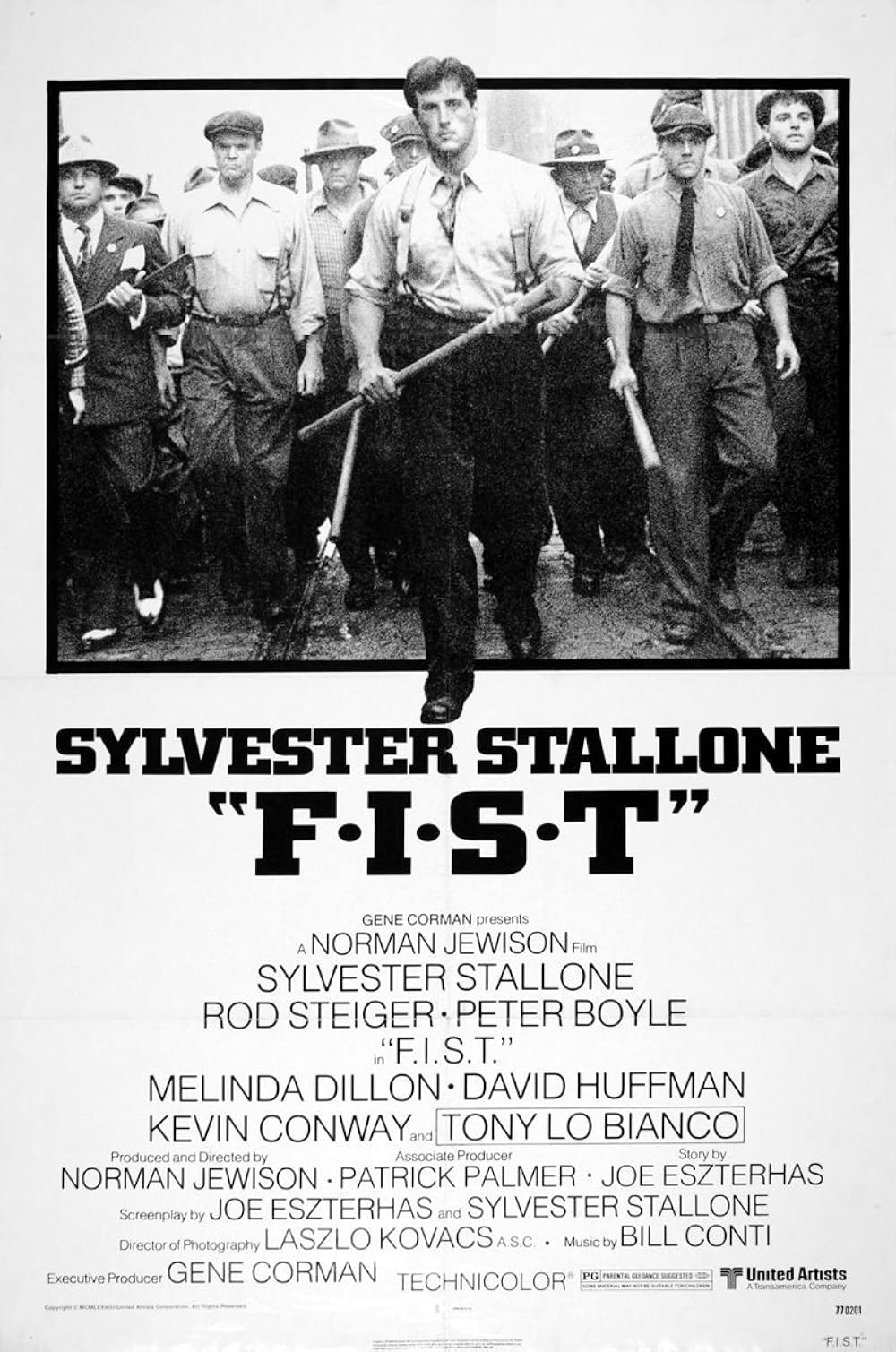
F.I.S.T. (1978)

fist

By Richard Winters

My Rating: 7 out of 10

4-Word Review: Laborer becomes union leader.

Set in the 1930’s in Cleveland the story centers on dock worker Johnny Kovac (Sylvester Stallone) who becomes so upset at the poor treatment of the employees that he leads a revolt that soon gets squashed by a management when Kovac goes to the office of Mr. Andrews (James Karen) who promises to bring his demands to ownership only for the next day to have Kovac and his friend Belkin (David Huffman) fired from their jobs. Impressed though by their tenacity truck driver Mike (Richard Herd) recruits them into his union telling them they would have a job of going out and recruiter others. Kovac initially refuses the offer until he finds out that a free car would come along with it. Kovac eventually rises up the union ladder until he becomes their national leader, but with the power and prestige also comes corruption and enemies.

This was Stallone’s first film after doing Rocky, which was a bit of a gamble by director Norman Jewison. He had wanted to cast Jack Nicholson in the role, Nicholson would later star in a similar film Hoffa, which came out 14 years later, but was so impressed at Stallone’s performance in the boxing film that he offered the role to him before he was even a household name. Jewison felt Sly was a star in the making just from what he saw in the preview of the film not knowing whether that movie was ultimately going to be a runaway success, or not. Had it not it might’ve put him in an awkward position as the studio wasn’t likely to finance a project that didn’t have guaranteed star power. As it was it became a blockbuster making the tables-turned a bit because Stallone could’ve easily backed out of the deal since it had only been a verbal agreement and he had since then been offered higher paying roles, but he kept to his word and took on this project, which surprised Jewison as many big names in Hollywood don’t always stick to their promises, but then later when the film didn’t do as well as expected Jewison’s blamed Stallone’s casting as part of the problem.

From my perspective I thought Stallone was terrific. His delivery does come-off as a bit monotone, but I felt that’s what added to the authenticity as this was a character with a limited education, so he probably wouldn’t sound real smart to begin with. Seeing Sly fight the system correlated with his real-life struggles as an actor trying to make it big in a competitive business, which helped to make it seem all the more genuine like this was a guy who had really lived the same type of life as the man he was playing.

In support I was highly impressed with David Huffman. This was an actor, whose career and life were sadly cut short in 1985 when he got stabbed to death, who I had always found quite bland. He had an attractive looking face, which I figured is what got him his foot-in-the-door, but his acting always came off as blah, but here he puts a lot of emotion into his role and it’s interesting to see the way his character grows and morphs throughout. James Karen and Tony Lo Bianco both have small parts, but there sinister facial expressions and ability to mug to the camera without it seeming obvious is what helps them stand-out. I was surprised though with Rod Steiger who gets second billing, but doesn’t appear until 1 Hour and 33 minutes in. His part, as a powerful senator, does ultimately become integral to the proceedings, but the fact that he underplays instead of his usual over-acting is what got me.

I thought the way Jewison captured the setting was great. It was actually shot in Dubuque, Iowa because by that time Cleveland no longer looked the way it once did, but the flavor and vibes from that period come-out strong and you feel right from the start that you’re being swept away to a bygone time. Stallone’s ascension into the ranks of union head prove riveting, but his corruption and downfall get glossed over and seemed rushed. I did though appreciated the way it examines worker’s unions from all angles both the good and bad making it seem less like a propaganda movie than Norma Rae, which came-out at around the same time, but only focused on the positive aspects of unions.

Spoiler Alert!

The ending, in which Kovac gets shot and killed while in his home came-off like a cop-out. It was intended to reflect at the time the recent disappearance of union head Jimmy Hoffa, but seeing the main character get assassinated without telling who was behind it proves unsatisfying. Sure we could probably surmise who the culprits were, but having to sit through a long movie only to be left with more questions than answers makes the viewer feel like watching it had been a big waste of time.

My Rating: 7 out of 10

Released: April 13, 1978

Runtime: 2 Hours 25 Minutes

Rated PG

Director: Norman Jewison

Studio: United Artists

Available: DVD, Blu-ray

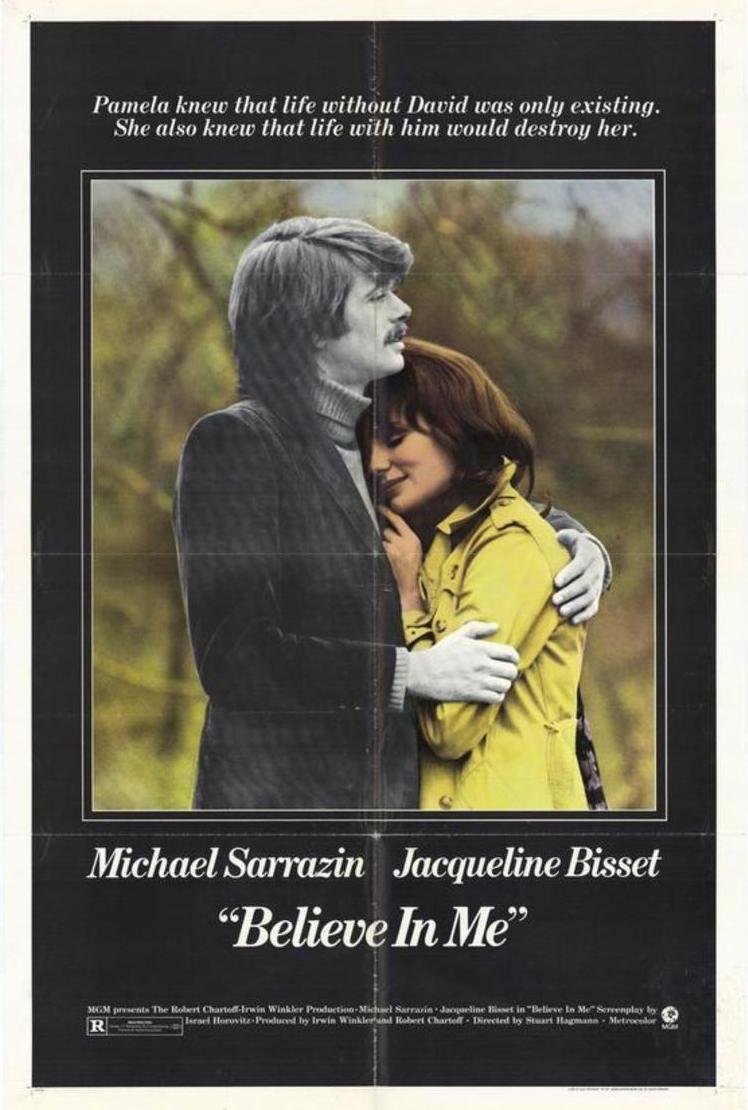
Believe in Me (1971)

believe

By Richard Winters

My Rating: 6 out of 10

4-Word Review: Couple addicted to drugs.

Remy (Michael Sarrazin) is a medical student at a New York hospital, who finds himself increasingly addicted to speed and other drugs available to him through his job. Pamela (Jacqueline Bisset) is the beautiful new girlfriend he meets through his friend and fellow intern Alan (Jon Cypher) who’s also Pamela’s brother. The two hit-it-off and soon move into together, but the romance doesn’t last when Pamela becomes aware of Remy’s addiction. He convinces her that he can handle it and even gets her to try some of it despite her reluctance. This then leads to her becoming hooked as well and their lives quickly spiral out-of-control as they both lose their jobs, their money, and ultimately their dignity.

The early 70’s was  a peak era for drug culture movies with most getting a bad rap from the critics, which included this one. Certainly it does start out cringey with a sappy love song sung by Low Rawls that not only gets played over the opening credits, but also about 30-minutes in, which practically kills the whole thing with its heavy-handed melody and lyrics. The title is not so great either as it seems to imply a totally different type of movie like have someone sticking with another person through thick-and-thin, which really doesn’t happen here and in fact its the complete opposite.  ‘Speed is of the Essence’, which was the working title as well as the title of the New York Magazine article by Gail Sheehy of which the film was based was far more apt and should’ve been kept.

However, what I did like are that the characters aren’t teen agers, or a part of the counter-culture movement, which is where all the other drug movies from that period had. The blame in those films was always the same too: peer pressure and bad influences, but here that all gets reversed. Remy and Pamela are well educated and with Remy’s background is well aware of the dangers of drugs and essentially ‘knows better’ and yet becomes a victim to them anyway. Because he’s at such a high standing initially and not just played-off as being some naive kid, makes his downfall and that of his equally smart girlfriend all the more stark and gripping.

The performances are good too. Sarrazin and Bisset met while filming The Sweet Ride, that started a 6 year relationship and this was the one project that they did together. Sarrazin has been blamed as being too transparent an actor who’s instantly forgettable and melts into the backdrop. While I’ve usually found his acting credible he does have a tendency to be passive and lacking an imposing presence, but here he’s genuinely cranky and snarly. Even has some moments of anger, which is why the movie mostly works because the character is believable. There’s good support by Alan Garfield as his dealer who gets the final brutal revenge on Remy when he can’t pay up as well a Cypher whose advice to his sister when she’s down-and-out and asking for money is shockingly harsh.

Spoiler Alert!

The film has a few strong moments particularly when it focuses on the couple’s teenage friend Matthew (Kurt Dodenhoff) who also becomes hooked and goes through a scary mental and physical decline, but the ending lacks punch. It has Remy sitting outside his apartment saying he’s ‘lost his key’ (not sure if this was meant as a code word for them being evicted, but probably should’ve been). Pamela then leaves him there while she walks to a clinic in order to get sober, which for me was too wide-open. For one thing there’s no guarantee that Pamela would’ve been able to cleanly kick-the-habit as many people enter into drug recovery suffer many relapses. Leaving Remy alone doesn’t offer any finality. Either he dies from his addiction, or finds a way out, but we needed an answer one way, or another like seeing his lifeless body lying in the gutter, which would’ve given the film the brutal final image that it needed. The movie does give an honest assessment of the situation most of the way, so why cop-out at the end and become vague? The viewer had invested enough time with this that they should’ve been given a more complete and concrete character arch.

My Rating: 6 out of 10

Released: December 8, 1971

Runtime: 1 Hour 26 Minutes

Rated R

Director: Stuart Hagmann

Studio: MGM

DVD-R (dvdlady.com)

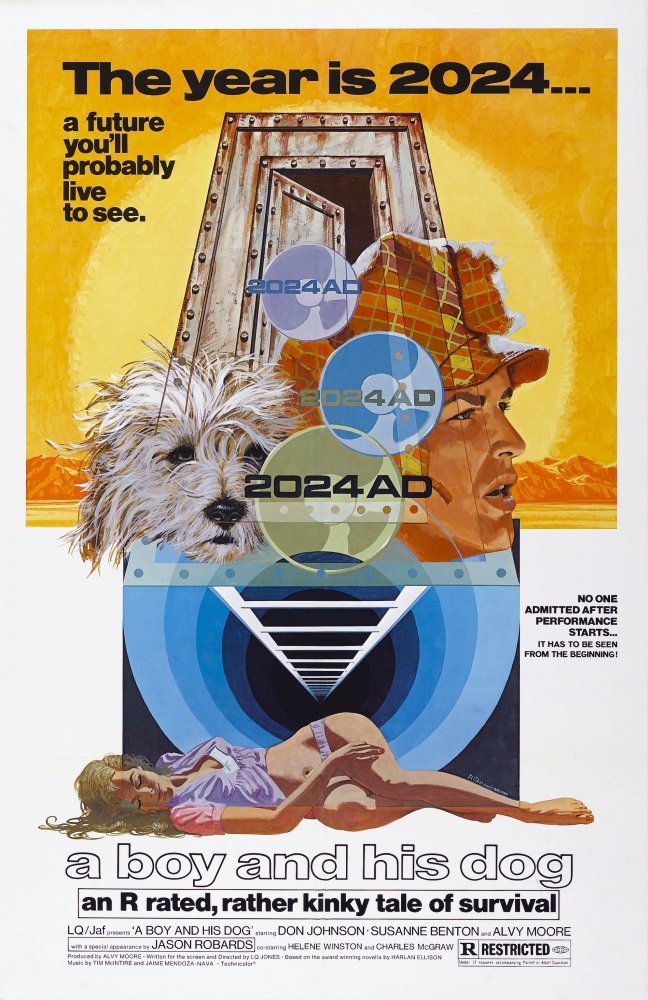
A Boy and His Dog (1975)

Version 1.0.0

Version 1.0.0

By Richard Winters

My Rating: 7 out of 10

4-Word Review: Surviving after nuclear holocaust.

The year is 2024 and the landscape of the U.S. has been turned into a wasteland due the after effects of a nuclear war that occurred in 2007. Vic (Don Johnson) is an 18-year-old that wanders around with his telepathic dog named Blood (voice of Tim McIntire). Blood helps Vic find women to rape while Vic scavenges for food for their survival. One night while watching an X-rated movie at a makeshift theater Blood is able to gain the scent of a woman nearby named Quilla (Susanne Benton). Quilla and Vic eventually have sex, but then she disappears to the underground society that survives inside a biosphere. Vic decides to follow her there while Blood remains above ground waiting for Vic’s return. Once Vic arrives he finds everyone there to be in whiteface and dressed like people living on the farm during the turn-of-the-century. He meets Lou (Jason Robards) along with Dr. Moore (Alvy Moore) and Mez (Helene Winstone) who all three run things. They convince Vic to stay there as he has a ‘purpose’ of becoming a stud and impregnating the young women since the men there can no longer do so. At first Vic is excited about his newfound ‘job’ as he is always quite horny, but after he finds out the details of what he must do he relinquishes his duty, but realizes it may be too late.

The story is based on the novella of the same name by Harlan Ellison who wrote the original screenplay that was later finished by director L.Q. Jones who used his own money to help get the film financed. While the movie does have some intriguing and memorable visuals, logic-wise there are some holes. One of the biggest ones is that, at least hypothetically, there would most likely have been a nuclear winter, which is what would be created after a nuclear war due to so much soot being blown into the atmosphere that it would block out most of the sunlight for several decades and create a night time effect and for this reason the outdoor scenes should’ve been filmed at night in order to replicate the ongoing darkness.

Vic’s conversations with his dog, which all gets done telepathically, is odd too and never sufficiently explained. How does this dog attain this ‘gift’ and why is it only him and not other mutts that can do it too? It would’ve been better had it been explained that some modern invention had been created that would allow communication between owners and their pets, but even this fails to explain how the dog manages to be so incredibly smart. Don’t get me wrong the voice-over work by McIntire is delightful, but how did the animal get so well-read that he even knows the Latin origin of words? Is there a dog college that teaches them this?

Vic’s extreme urges to have sex all the time seemed out-of-place too. Granted he’s a young guy with raging hormones, but psychologically when a person is in a desperate situation, in this case simply trying to survive in a hostile environment with very little food, then a person’s most basic needs come first and it’s all they’ll think about. Finding something to eat, they’re forced to go out each day and hunt for something, and acquiring shelter for sleep, would be their pressing needs and what would occupy their minds most day-in and day-out while the sex need would become secondary and only have his focus once the other needs were met, but in this story the sex urges seem to take precedent, which doesn’t make sense from a human behavioral perspective, nor where he’d get the energy to do it since he’s pretty malnourished to begin with.

The X-rated movie that they watch at a ‘theater’ is goofy too as it amounts to nothing more than a grainy black-and-white stag film from the 50’s even though technically by 2007, which is when the bombs dropped, there was porn on the internet and explicit DVD’s some of which would’ve probably survived the blast and thus they’d be watching those instead of something found in grandpa’s ancient collection. Though this is what makes the movie entertaining not so much for what it gets accurate in their predictions, which isn’t much, but more what it gets wrong.

The one thing though that really stands-out, at least for me, and makes the movie memorable, though this apparently wasn’t the case with the film’s initial test audience who called these scenes ‘slow’ and ‘boring’, are the moments that take place in the underground society. The look of everyone walking around like robots and resembling farmers from a bygone era has a kitschy flair like something out of a Federico Fellini movie. Hal Baylor, as one of the main menacing robots that can’t seem to ever go down even when being directly shot at, steals every scene he is in and helps create some definite tension. I also got a kick out of everyone wearing white face, which I thought was to explain their pale complexions due to not be out in the sun, but it seems to be instead obviously painted on, so I’m not sure what that was meant to represent.

The twist ending is terrific and the film’s final line, which Ellison detested and tried having taken out, is a keeper. While its attained a cult following there are still the detractors who feel its ‘misogynistic’ though I don’t really see it.  Sure Vic sees women as sex objects and ‘conquests’, but there’s guys out there that are like that. Quilla is conniving and duplicitous, but some women are like that too. The movie isn’t saying that all men and women are like this, but in environments that are as desperate as this one it will tend to bring out the worst in human nature, which was all the film was trying to convey from my standpoint.

My Rating: 7 out of 10

Released: May 15, 1975

Runtime: 1 Hour 31 Minutes

Rated R

Director: L.Q. Jones

Studio: LQ/Jaf Productions

Available: DVD, Blu-ray, Amazon Video, Pluto, Roku, Tubi, YouTube

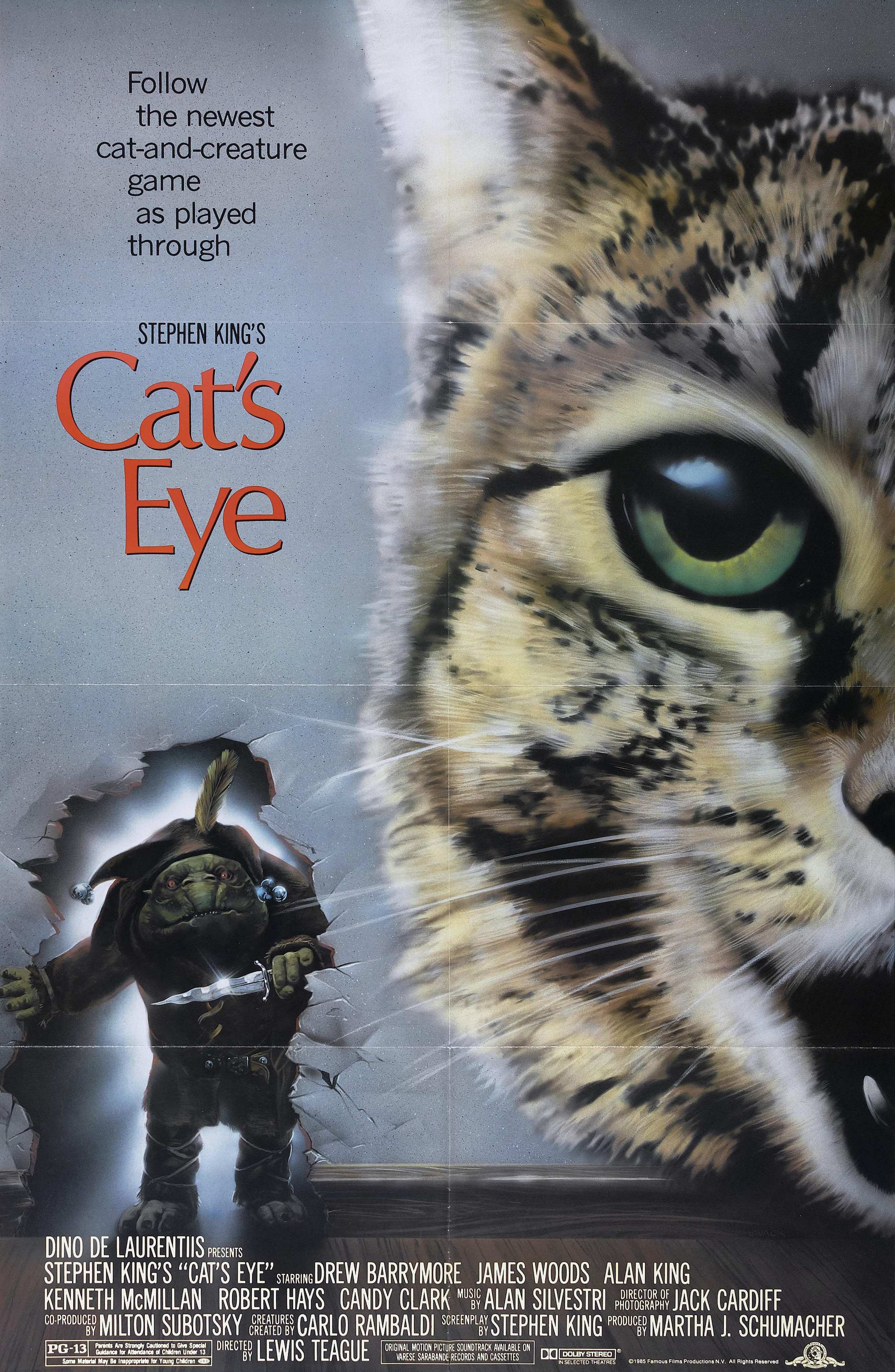
Cat’s Eye (1985)

cats

By Richard Winters

My Rating: 4 out of 10

4-Word Review: Three stories involving feline.

With a screenplay written by Stephen King the film is made up of three of his short stories with two of them taken from his 1978 novel ‘Night Shift’ while the third one was penned directly for the screen. The only connecting thread is a stray cat and actress Drew Barrymore who appear in all three tales though only have major parts in the third one.

The first segment is called ‘Quitters, Inc.’ and involves James Wood playing the part of a man named Dick Morrison who is trying to quit smoking and enters an agency that boasts a high success rate of getting their clients to stop. It’s run by Vinny (Alan King) who tells Dick that if he doesn’t stop smoking instantly that they’ll kidnap his wife (Mary D’Arcy) and put her into a room where she’ll receive electrical shocks. To prove his point he puts the cat in the cage and then through a glass partition Dick witnesses the feline getting shocked, which is enough to scare him into quitting on the spot. Yet as the days progress Dick finds himself constantly getting the urge to light-up, but Vinny warns him that he has people who’ll be watching him and if he does dare to backtrack they’ll immediately grab his wife and bring her into the cage. Eventually though the compulsion to have a cigarette gets to be too much and he sneaks a puff only to then face the dire consequences.

This segment tries for black comedy, but doesn’t go far enough with it. While Woods, who usually excels as the twisted types, is quite good as the straight man, I couldn’t understand why he didn’t go the police when his wife gets taken, or why any of the other clients didn’t either, which should’ve gotten the business quickly shut down and the owners prosecuted for running an unethical operation. Famously brash comedian Alan King isn’t given enough leeway to allow his cantankerous persona to go full throttle though watching him wearing a white leisure suit and lip synch the words to the song ‘Every Breath You Take’ makes it almost worth it. It’s interesting seeing James Rebhorn in a bit part as a drunken business man at a party as he later had a prominent role in the movie The Game, which had a very similar storyline to this one involving a business that overtakes their client’s lives and is constantly watching them.

The second segment called ‘The Ledge’ involves a man named Johnny (Robert Hays) who must walk across a thin, outdoor ledge along a penthouse wall many feet above a busy street. If he succeeds then the penthouse owner, Cressner (Kenneth McMillan), will grant his wife a divorce and allow her to marry Johnny whom she’s been dating.

This story is the best one mainly because it has McMillan who is one of the finest character actors of all time and supplies his role with an amazing amount of energy and dark campiness. The scenes of watching Hays trying to maneuver his way on the ledge while being simultaneously attacked by a pigeon and at times McMillan who throws things at him out his window, is really terrifying. You feel like you’re on the ledge with him and I cringed all the way through this one, but in a good way as I really got swept up in it though the twist ending is a letdown.

The third and final segment called ‘The General’ involves a young girl living in North Carolina, named Amanda (Drew Barrymore) who takes in a stray cat much to her nagging mother’s (Candy  Clark) chagrin as she feels the animal may attack Amanda’s pet bird named Polly whom she keeps in a cage in her room. Amanda though likes the cat, whom she’s named General, because he scares away the evil troll, who’s the size of a rat and sneaks into her bedroom at night through a small opening in the wall to steal away her breath while also attacking Polly.

This segment has some interesting special effects, but it’s hard to tell if this is intended to be scary, or comical. It’s probably supposed to be a mixture of both, but I wished it went more for the scares since the movie, which gets billed as being a ‘horror’ doesn’t really have much of them otherwise. This segment also doesn’t really have any twist to it other than the parents finally believing that a troll really does exist in their daughter’s bedroom, but then telling her not to tell anyone about it, but why? It seems like if there’s one of them there could be others and the whole home should be inspected and fumigated and if I were the homeowner I wouldn’t want to spend another minute in there until it was, so having this family just forget about it and go back to normal didn’t seem like a normal response. The troll is also too reminiscent of the devil doll in Trilogy of Terror, which was far more frightening.

My Rating: 4 out of 10

Released: April 12, 1985

Runtime: 1 Hour 34 Minutes

Rated PG-13

Director: Lewis Teague

Studio: MGM/UA

Available: DVD, Blu-ray, Amazon Video, YouTube

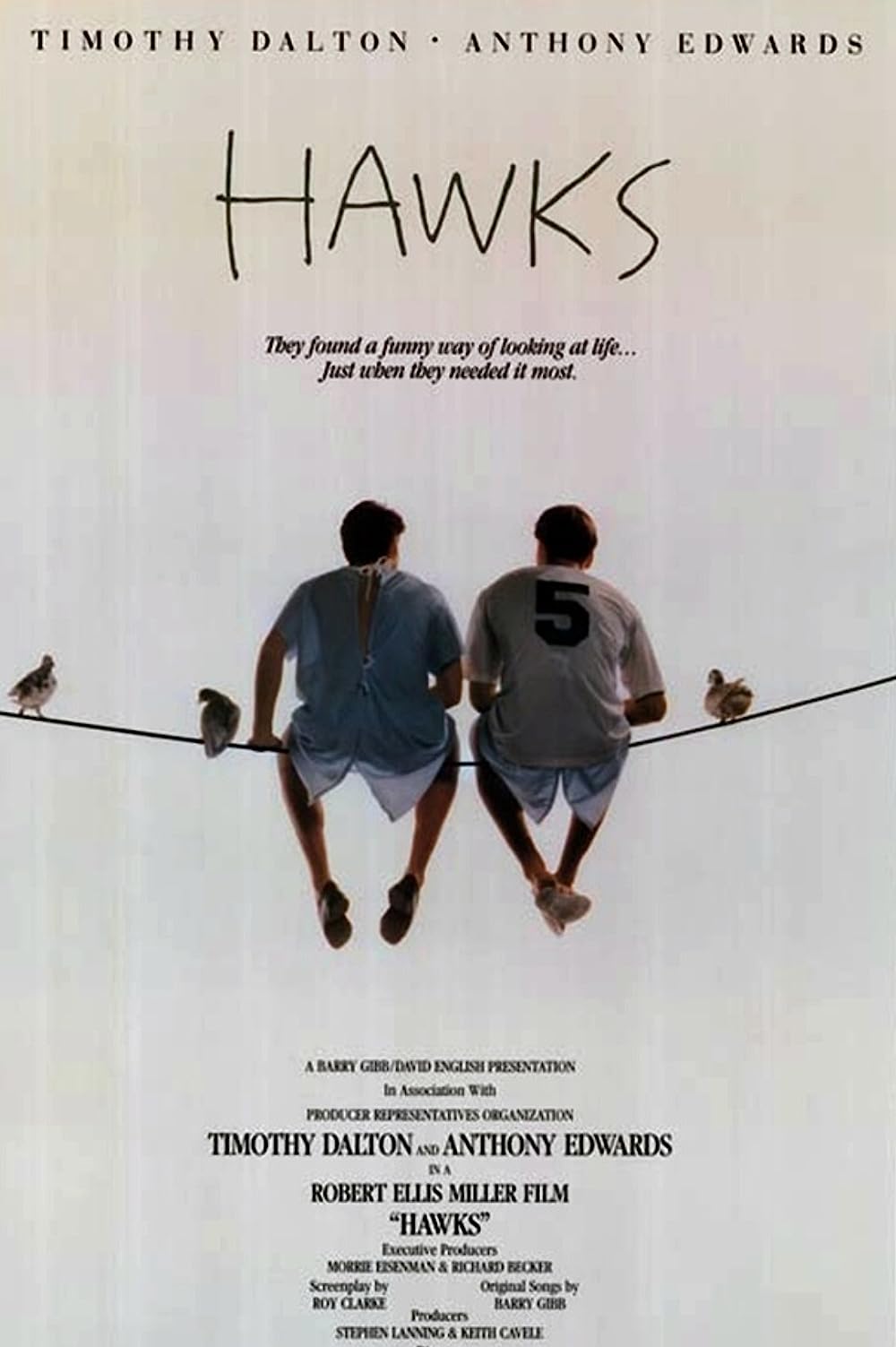
Hawks (1988)

hawks1

By Richard Winters

My Rating: 6 out of 10

4-Word Review: Patients hit the road.

Decker (Anthony Edwards) is a former football player stricken with terminal cancer. He’s put in the hospital where his roommate is Bancroft (Timothy Dalton), who’s dying from the same disease. Bancroft though still wants to have some fun and convinces Decker to sneak out of the facility and go on a road trip to Denmark, so they can have one last fling with the prostitutes in the Red Light District. Decker is nervous at first, as he’d rather commit suicide to put himself out of his misery, but eventually decides to go along where they end up meeting two lonely ladies, Maureen (Camille Coduri) and Hazel (Janet McTeer) who’s also harboring a painful secret.

Based on a short story written by Barry Gibb of The Bee Gees the plot has, despite it’s grim theme, a playful quality and comes-off more like a quirky road movie. The scenery is nice especially when they get into Holland and have an extended scene amidst the picturesque windmills, which you can hear slowly rotating in the wind as they speak. There’s also a few funny moments with the best one coming right at the start where Decker takes a frightened SAAB car salesman (Geoffrey Palmer) on a test drive at reckless speeds and right to the edge of a cliff.

The acting is great with Dalton, who did this between his two stints as Bond and used his notoriety to get it made, which he felt wouldn’t have gotten financed otherwise, being standout and putting to great use his piercing blue eyes, which become even more prominent when he’s wearing his stocking cap. Edwards is also good though he looked wimpy to have ever played football. Some may try to argue that the sickness ate away his weight, but in reality this is the body type he’s always had and the producers should’ve, for the sake of authenticity, had him bulk-up before filming began.

What I didn’t like were the unexplained caveats, like where did these two terminally ill patients manage to get the money to pay for fancy hotels and chic restaurants? It seemed like they could buy anything they wanted, so if that were the case then why couldn’t they get themselves clothes so they didn’t have to run around everywhere wearing nothing but their bathrobes? The sex angle was ridiculous too especially for Decker, who’s so weak he had to be carted around in the wheelchair. If he could barely stand then how the hell is he going to get the energy for sex?

Initially I found Hazel and her clumsiness as annoying as Bancroft did, but like with him she eventually grew on me, but I didn’t think she needed to be introduced already in the first act before she even met the two men. She has a scene on a bridge all alone and I didn’t understand what she had to do with the story, only later during the second act when she appeared again did it make sense, but again her personal troubles could’ve waited to be explained when Bancroft and Decker heard about it. I actually enjoyed more Sheila Hancock, who plays Regina, an aging 50-something hooker they meet, who shows a good propensity at fixing things like TV’s and I wished she’d been the one they had befriended long term and the two younger ladies cut out altogether.

Spoiler Alert!

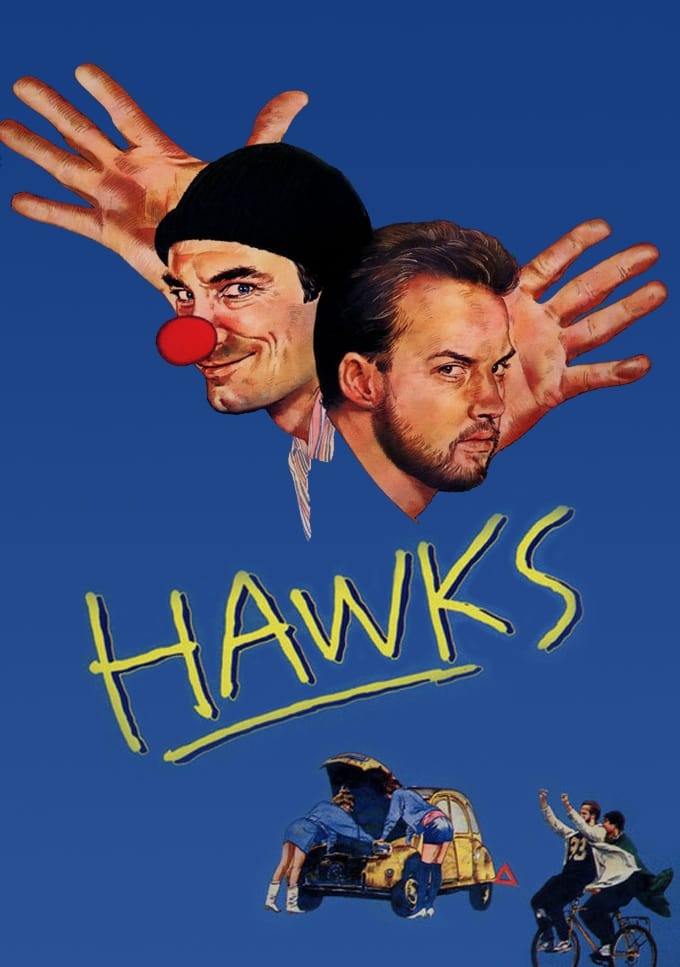
The ending is touching particularly the way the plastic red clown nose comes into play. The wedding in which Bancroft marries Hazel, who’s secretly pregnant by a man who disowns the child, is cute too though I didn’t understand how Bancroft, who had been losing his hair throughout, suddenly seemed to grow it all back as he walked down the aisle. If anything he should’ve been completely bald by that time and it would’ve been more realistic had he been shown that way.

hawks2

My Rating: 6 out of 10

Released: August 5, 1988

Runtime: 1 Hour 47 Minutes

Rated R

Director: Robert Ellis Miller

Studio: Skouras Pictures

Available: VHS, DVD-R (dvdlady.com)

Tomorrow (1972)


tomorrow1

By Richard Winters

My Rating: 5 out of 10

4-Word Review: Aiding a pregnant woman.

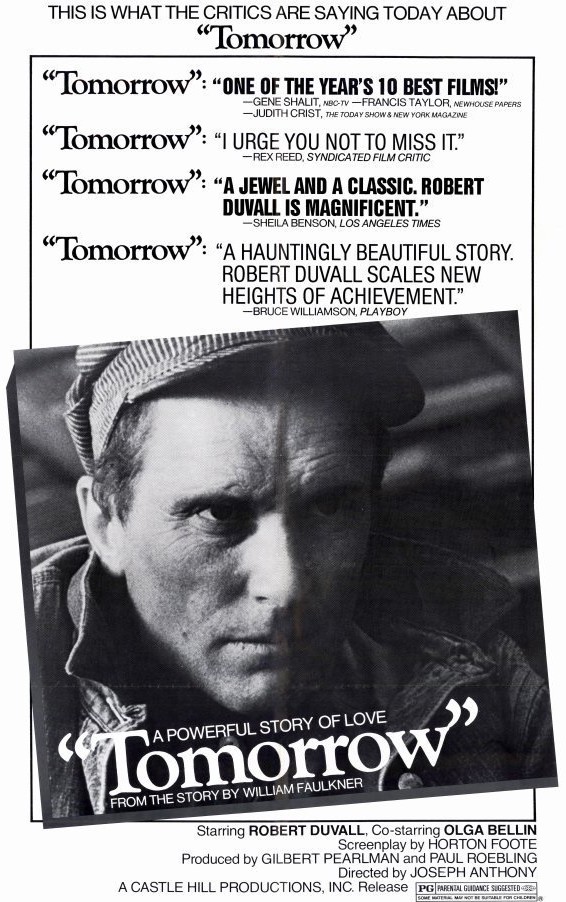
Jackson Fentry (Robert Duvall) is a lonely farm-hand who has never married and lives in a tiny shack on the grounds of the farm that he’s been hired to maintain. One day he comes across a pregnant woman named Sarah Eubancks (Olga Bellin) near the property who’s been abandoned by both her husband and his family. He brings her back to his modest shed to warm her up and since she has nowhere to go he eventually agrees, with the help of a local midwife (Sudie Bond), to assist through the birth of her child. Sarah though dies soon after the baby is born, but not before Jackson agrees that he’ll raise the child. For several years Jackson is able to do just that until the brother’s of the boy’s father arrive and take the child away. Then many years later Jackson is called-in for jury duty on a trial that, known only to him, has a connection to the boy he lost contact with. 

There’s been many movies that have tried to recreate the rural 1800’s, but many for the sake of drama, or to make it more relatable to modern audiences, tend to cheat things. They may make it authentic in some areas, possibly even painstakingly so, but then compromise in others due to the entertainment factor. This though is one film that could genuinely be described as being about as minimalistic as any director could possibly make it. Filmed on a farm in rural Mississippi that was owned by the grandfather of Tammy Wynette the movie gives one an authentic taste of life back then with little to no music and no sense of any staging. The bare-bones shack that Jackson must reside in gives the viewer a stark sense of the grim, no frills existence that many dealt with back then. The slow pacing aptly reflects the slower ways of life and having the camera virtually trapped in the shed, or at most the nearby property, symbolized how people of that era had to learn to endure and expect little.

While those qualities hit-the-mark I felt that black-and-white photography detracted from it. By the 70’s most films were shot in color and only a few like The Last Picture Show, Young Frankenstein, and Eraserhead just to name some, were not, but this was more for mood, or style. Here though with everything already at an intentionally drab level the color could’ve at least brought out the beauty of the outdoor scenery of a southern winter and offered some brief striking visuals and a cinematic presence that was still needed, but missing and kind of hurts the movie. 

Surprisingly I had issues with the acting. One might say with Robert Duvall present that couldn’t be the case, but his overly affected accent, he got it from a man he met once in the foothills of the Ozarks, was from my perspective overdone and even borderline annoying. Bellin is alright though behind-the-scenes she created problems by refusing to take any advice from director Joseph Anthony. She had done mostly stage work up until then and was used to having leverage about how she approached her character once she was onstage and considered that once the camera was shooting meant the same thing. It was okay, like with a play production, for the director to give advice during rehearsals, but when the actual filming started she should have free rein over her craft and having Anthony repeatedly reshoot scenes, like in typical film production, or suggest she do things differently as the filming was going on, was all new to her and not to her liking, which caused numerous arguments not only with Anthony, but Duvall as well making them both later admit that they regretted casting her and she never performed in another movie again. Out of the entire cast it was Sudie Bond as the lady who helps with the birthing that I found to be the most memorable. 

While the story has many commendable moments it gets stretched pretty thin especially since it was based on a short story by William Faulkner and then adapted first as a play and then to the big screen by Horton Foote (the first of two collaborations that he did with Duvall with the second one being Tender Mercies 10 years later). Almost the entire third of the film gets spent on Jackson’s conversations with the woman while his relationship with the son takes-up less than 10 giving the pacing and flow a disjointed feel. It’s also a shame that, like with The Owl and the Pussycat, which came out 2 years earlier, the producers compromised on the elements of the original piece as in Faulkner’s story the pregnant woman was black, but here she gets changed to being Caucasian. Had the character remained black then what Jackson does for her would’ve been more profound as he would’ve been taking great personal risk in helping her in an era and region of the country where racism was high and by no longer being a colored woman it lessens the drama and is not as impactful as it could’ve been.

My Rating: 5 out of 10

Released: March 19, 1972

Runtime: 1 Hour 43 Minutes

Rated PG

Director: Joseph Anthony

Studio: Filmgroup Productions

Available: DVD, Blu-ray, Plex, Tubi, Amazon Video


The Orphan (1979)

orphan

By Richard Winters

My Rating: 6 out of 10

4-Word Review: Oppressive aunt dominates kid.

David (Dan Owens) is a child of around 10 growing-up in the 1920’s who witnesses his mother (Joanna Miles) die a violent death and then later has to deal with his father’s untimely death as well.  His Aunt Martha (Peggy Fleury), who was the sister of David’s mother and who also had a secret affair with his father (Donn Whyte) years before, moves into the home and takes over as his adoptive parent. Since she had no children of her own she doesn’t know how to communicate with kids and instead lays down a lot of rules that David doesn’t like and pushes him into a make-believe world. He spends most of his time in an old backyard chicken coop where he talks to a stuffed monkey that he believes holds power and can make changes in his life for the better particularly when it comes to his aunt.

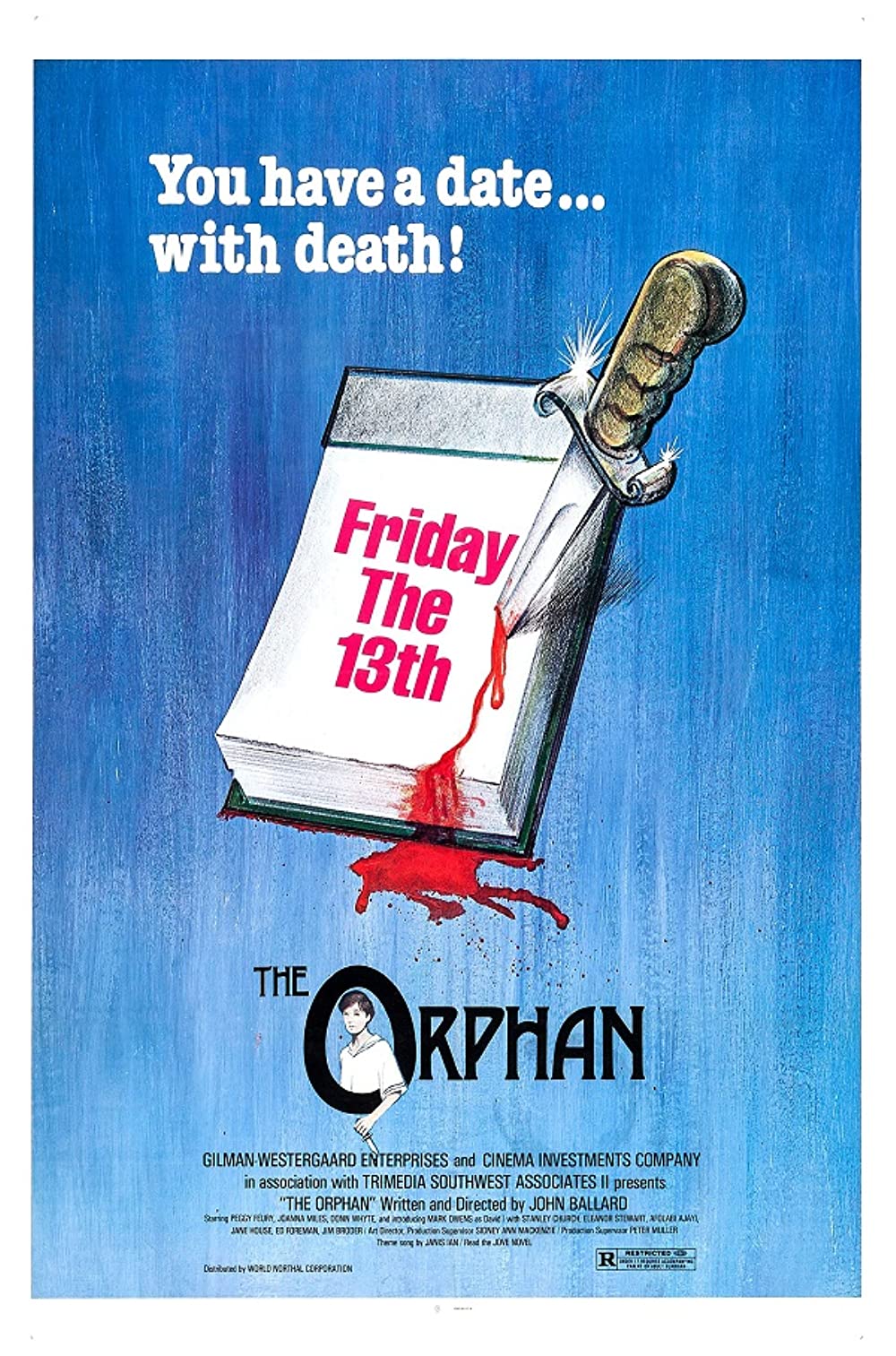
This film’s biggest claim-to-fame was its original title which was Friday the 13th: The Orphan and the producers of the Friday the 13th movie, which was filming around the same time that this one was released, feared it would get confused with theirs and thus went into negotiations to get the title changed. It was anticipated at that time that this one would do better as it took more of an old-fashioned approach to horror by working-off of atmosphere, imagery, and mood while the other one was an all-out slasher, which was still considered to be a fringe genre that would only attract small, select audience. Instead that one became a huge hit while this one fell into virtual obscurity.

For the most part I though it was an interesting and while not completely successful does have its moments. The pacing is indeed off especially during the first act where nothing much happens and there’s few if any frights, which made me start to wonder if it was even a horror movie at all, but it gets handled well on the technical end and I remained intrigued enough to keep watching. Things did improve by the second act and there’s a few creepy nightmare segments including David’s vision, captured with a fish-eye camera lens, of entering an orphanage, which is visually unnerving and I wondered if possibly writer/director John Ballard was going back to his own childhood experiences and the dark memories that he harbored as these scenes start to seem quite personal.

The acting by the kid is phenomenal. Usually child actors, even if they’re good, aren’t quite up to carrying a movie, but Owens does and I was surprised to find that he’s never appeared in any others as I felt he was talented enough to have a memorable career. He has, with his overbite, a creepy look about him and very much resembles, Ike Eisenmann, another famous child actor from the 70’s. However, I wasn’t sure if finding a kid that gave-off a scary vibe right away was necessarily the right move as the horror might’ve been more effective had he seemed cute and precocious initially, and someone the viewer could like, only to have, as a surprise twist, the dark elements come out later versus telegraphing it from the beginning.

Spoiler Alert!

There are a couple of good murders, but you’re going to have to wait until literally almost the very end to see them. The plot is also heavy-handed as it’s obvious that there’s going to be an ultimate clash between the kid and the aunt and endlessly dragging-it-out to where the viewer knows  where it’s headed, but takes its sweet time to get there, gets a bit frustrating. I also didn’t understand why the story had to take place in the 1920’s as I didn’t think it added anything and could’ve easily been set in the modern day and the attempts to make it seem like a period piece, especially on a low budget, doesn’t completely work.

Also, the plot synopsis in IMDb for this movie is inaccurate. It describes the kid as having ‘horrific headaches’, which he believes ‘make him commit murders’, but in the print I saw, which as supposedly the uncut, extended version there was no talk about headaches, or even observing him having one.

My Rating: 6 out of 10

Released: November 10, 1979

Runtime: 1 Hour 32 Minutes (Extended Cut)

Rated R

Director: John Ballard

Studio: Cinema Investments Company

Available: DVD-R (j4hi.com, dvdlady.com)

Disconnected (1984)

disconnected2

By Richard Winters

My Rating: 4 out of 10

4-Word Review: Receiving harassing phone calls.

Alicia (Frances Rains) is a young adult woman who brings an elderly man (William A. Roberts) up to her apartment one day so that he can use her phone to make a call. However, once he leaves she begins receiving odd calls at all times of the day and night where loud unexplained sounds emit from the receiver. She also gets a call where she overhears a conversation between her boyfriend Mike (Carl Koch) and twin sister Barbara-Ann, who are apparently are seeing each other behind-her-back. She then breaks up with Mike and begins dating Franklin (Mark Walker) whom she met while working at a video store. Franklin seems nice at first, but she’s unaware that he’s also the notorious serial killer who has been murdering young women in her area.

This horror oddity is the product of Gorman Bechard, who while still a film student decided to make a movie on his own with the low, low budget of only $40,000 and filming it almost entirely inside his tiny one-bedroom apartment. While it’s not a complete success it’s offbeat enough to hold your attention and guaranteed to keep you guessing to the very end.

The scenes inside the video store I enjoyed the most particularly Franklin’s complaints at how it didn’t have enough foreign films, or older movies, which was always the criticism I had of my local video stores too. The dark humor of Franklin hanging a crucifix over his bed where he commits the murders and the little prayer he does before he offs his victims I found amusing. Bechard’s odd camera shots including one segment done with black-and-white, freeze-frames is another asset that keeps it inventive.

The performance by Raines, who is beautiful, is excellent and I felt she would’ve had a long career ahead of her had she not giving up acting in order to raise a family. I was not as enamored though with the two guys playing the cops who lend a cartoonish flair that was not needed. I didn’t like too that one of them gets interviewed by someone sitting behind a camera that we don’t see and asking a bunch of questions almost like it’s a documentary, which begs the question as to who this person was and why does he just interview the cops, but no one else?

Spoiler Alert!

The film’s biggest problem though is that it gets rid of the Franklin too quickly without playing up that scenario as much as it could’ve. It also cuts away without ever showing how the cops are able to subdue him, or how Alicia is able to get away, which seems like a standard scene that a horror movie fan would want to see and not just have discussed later.

The weird calls ultimately become boring. It also takes Alicia too long to figure out that maybe a good way to stop them would be to unplug the phone from the wall, which she finally does at the very end, but most other people would’ve done it a hell of a lot sooner.

The twist ending where the old man that was seen at the start, but then disappears only to return and be shown walking out of her apartment makes no sense. Some viewers have speculated that maybe he was a ghost of some kind, but that’s not made clear. My personal feeling is that there was no meaning to it and it’s intentionally left vague, so the individual viewers can read into it whatever they want, but it’s not a satisfying way to end almost 90-minutes of viewing and in many ways, despite the interesting bits, makes it quite annoying. A better, more focused conclusion would’ve certainly helped.

My Rating: 4 out of 10

Released: July 17, 1984

Runtime: 1 Hour 24 Minutes

Rated R

Director: Gorman Bechard

Available: VHS, Tubi, Blu-ray (Limited Edition only 2,000 copies printed)