Category Archives: Movies Based on Novels

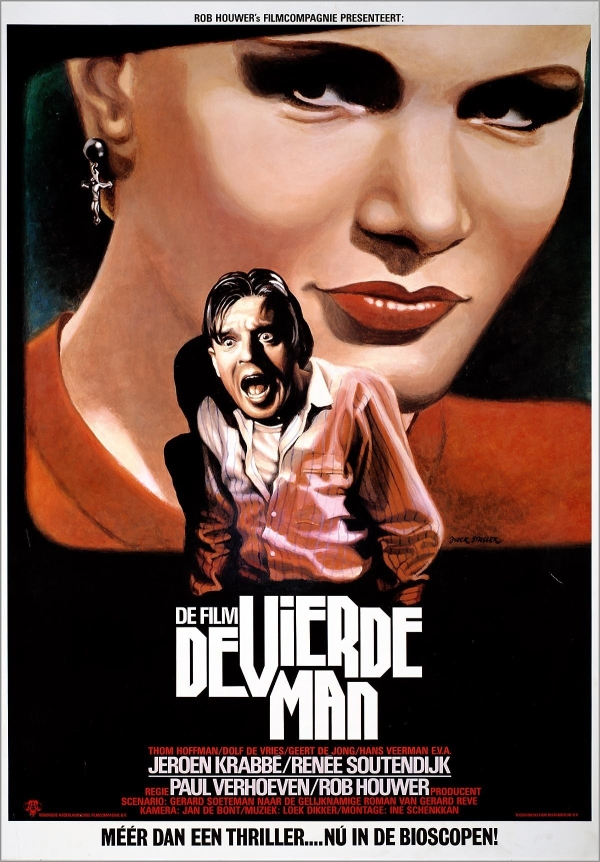
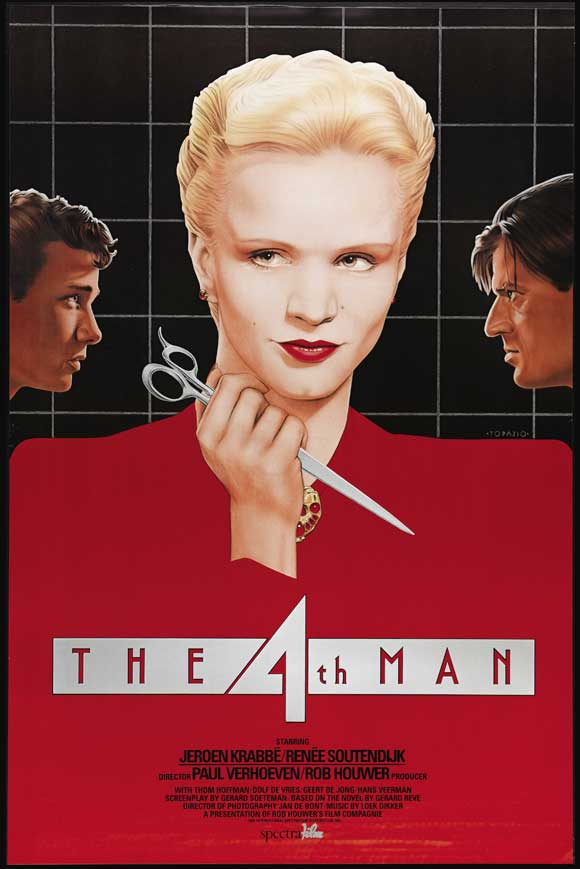
The Fourth Man (1983)

the fourth man 2

By Richard Winters

My Rating: 7 out of 10

4-Word Review: She kills her husbands.

This movie is just about the ultimate in the femme fatale genre as it deals with a temptress (Renee Soutendijk) who marries men who all end up dying in freak accidents. Now she has seduced a fourth one, will he be next?

It is rare to say that you know it is going to be a good movie from the very moment it starts, but that is the case here. The film’s opening could very well be one of the most impressive of all-time as it begins with a startling view of a close-up of an actual spider trapping a fly on its web and then devouring it to the sound of a pounding electronic score that becomes the best part of the whole movie.

The rest of the film works pretty much on the same level with scenes that are provocatively lit and designed as well as a running sensuality that at times is both erotic and perverse. The flowing narrative jumps between reality and dreamy imagery that eventually blend into one and has an underlying subversive nature that keeps you riveted.

The characters are interesting because they work against their gender stereotypes and have a certain ongoing duel with each other. The woman has short hair and a square face and almost comes off looking like a man. She knows how to use her seductive powers and is always in complete control without ever showing any vulnerability. The man is weak and helpless while trying to mask it with an arrogant intellectual veneer.

The ending is the film’s only big letdown as it is too low-key and doesn’t match the energy of the rest of the film while also wrapping things up a little too nicely. A big showdown between the two main characters would have been much more satisfying.

The special effects are weak and help to expose the film’s low budget, but the film is still fun with a snazzy art house flair that became a breakout picture for director Paul Verhoeven.

The movie also contains a shocking scene involving a life-sized crucifix that some may consider blasphemous even though in the end the film’s message is actually spiritually affirming.
the fourth man

My Rating: 7 out of 10

Released: March 24, 1983

Runtime: 1Hour 42Minutes

Rated NC-17

Director: Paul Verhoeven

Studio: International Spectrafilms

Available: VHS, DVD
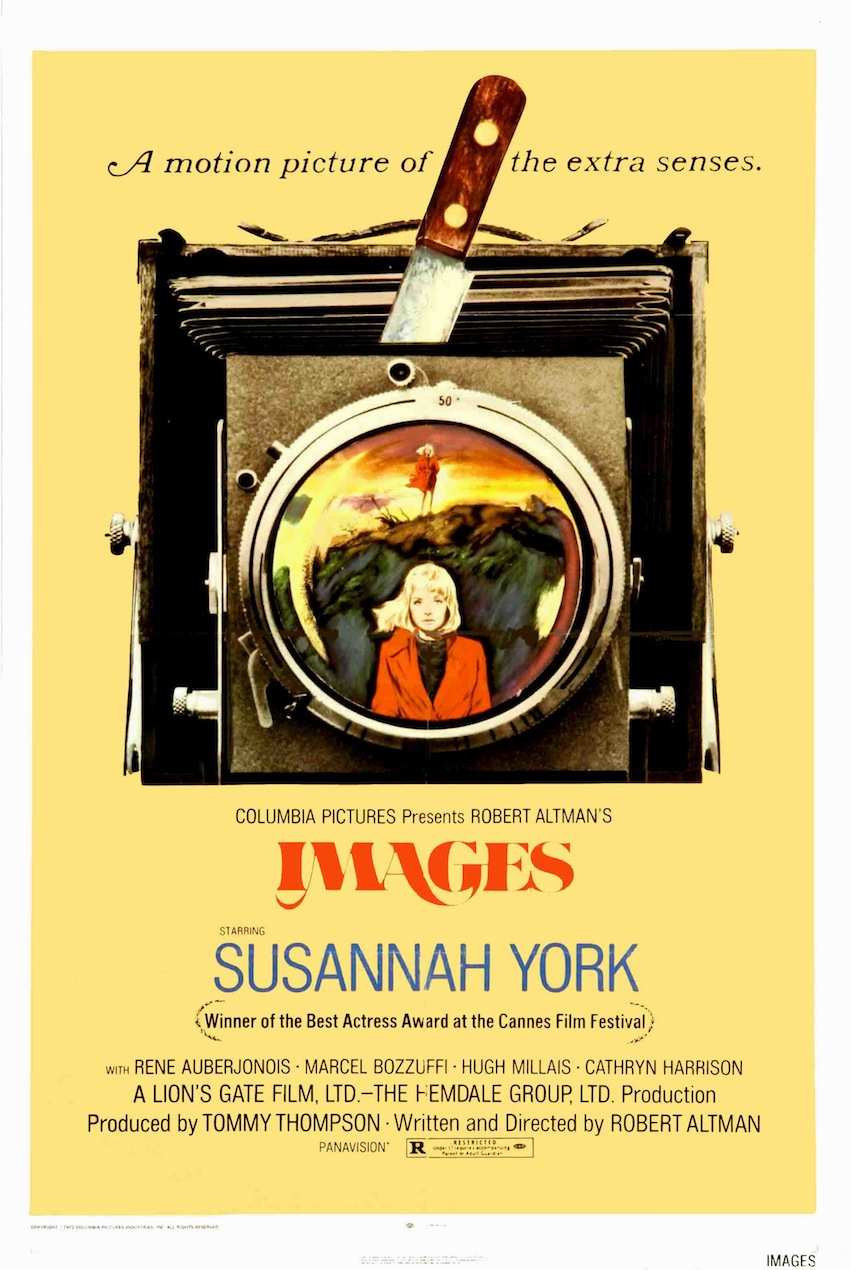
Images (1972)

images

By Richard Winters

My Rating: 8 out of 10

4-Word Review: Demons of the mind.

This is the missing link for any Robert Altman fan or detractor as this is different from any of his other films and completely original from beginning to end. Not only was it way ahead of its time, but proves that he is deftly skilled at handling any directorial task or material.

The story involves a tormented and emotionally fragile woman named Cathryn (Susannah York) who starts to see strange visions. These visions seem so real that she can no longer tell if they are all just inside her head and decides the only way to get rid of them is to mentally ‘kill’ them, but this in turn only leads to further complications.

What really makes this a unique film is that you get inside this woman’s head and actually start to understand her logic and experience her torment. The film also makes terrific use of silence and uses it to accentuate the isolation that the character feels. The setting has a sort of surreal quality and the location of the house is impressively remote.

York has a knack for playing victimized and vulnerable women. In many ways her role here seems like an extension of her character from The Killing of Sister George. Although she makes you sympathetic to her predicament her screams are too screechy and fail to attain the shrillness that would create the startling effect that the filmmakers desired.

The real star may actually be Vilmos Zsigmond and his cinematography. His framing and composition is not only flawless, but breathtaking. He makes the wintertime Irish countryside look like a whole different world and the stillness of the lake that is shown seems almost unreal.

There are a few too many obvious and clichéd shots of mirrors and puzzles and it could also gone much further with its unusual premise. Still this is a unique and entertaining movie that should keep you guessing all the way to the end. The pace is slow, but deliberate with a payoff that is worth it.

My Rating: 8 out of 10

Released: December 18, 1972

Runtime: 1Hour 41Minutes

Rated R

Director: Robert Altman

Studio: Columbia Pictures

Available: DVD

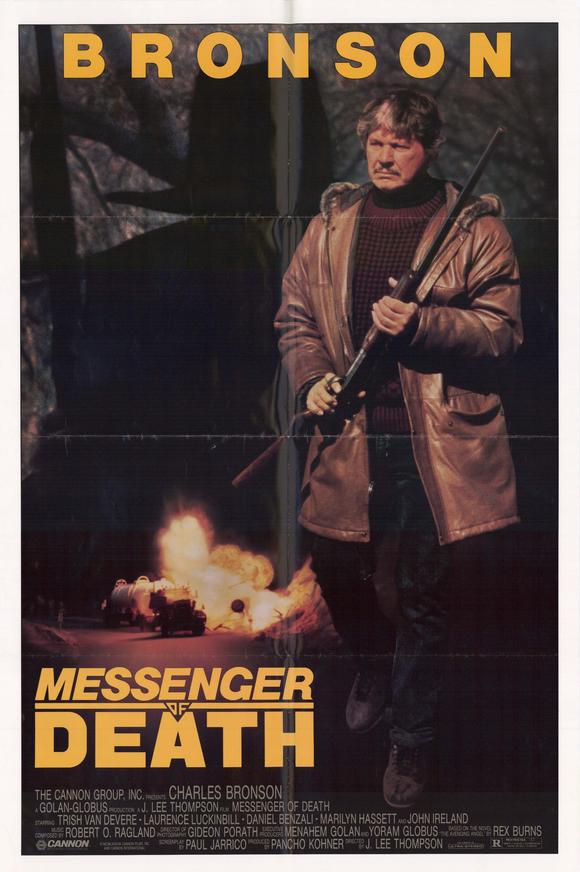
Messenger of Death (1988)

messenger of death 2

By Richard Winters

My Rating: 4 out of 10

4-Word Review: Chuck visits Mormon country.

Three young mothers and their children are shot to death in their home. The police suspect it may have something to do with their religious affiliation, but Denver journalist Garret Smith (Charles Bronson) thinks it’s the water company that is behind it, but as the investigation continues and with the help of fellow journalist Jastra (Trish Van Devere) the identity of who it really is surprises everyone.

The movie is unsettling from the beginning as we witness the brutal murders, which sets things at a downbeat tone. However, it also gets the viewer emotional jarred enough to want to see the killer brought to justice. The mystery is intricate for the most part and keeps you intrigued although by the end I had pretty much figured it out.

For a Bronson flick the action is minimal. There is one big shootout, but it doesn’t last long. The film’s best and most exciting sequence is when two big semi-trucks get on either side of the jeep that Garret and Jastra (Trish Van Devere) are riding in and try crushing it as it moves down the road. The scene is vivid, but suffers from the issue where neither occupant is wearing seatbelts and the vehicle does not have airbags and turns over on itself three times, which would most assuredly kill or permanently injure anyone inside and yet the two are able to miraculously get out without even a scratch.

Bronson does not carry a gun here and he has always had one in so many of his other movies that seeing without one makes him look almost naked. For an ordinary 60-something journalist his fighting skills seem too impressive. I was willing to buy into his ability to fight off a much younger professional hitman one time by using some quick thinking, but then to be able to do it again to the same person later on and give him a severe beating in the process seemed too farfetched.

Veteran character actor Jeff Corey as a fiery preacher is good in support as well as John Ireland who plays his brother. During the mid-80’s Ireland once put a full page add in Variety begging for work, so it’s good to see that those efforts paid off with his appearance here.

To-date this marks Van Devere’s last theatrical project and neither her character nor her performance adds much, but it was still nice to see a man and woman work together and not have it automatically turn sexual or into a relationship. Marilyn Hassett plays Bronson’s wife, but she was 26 years younger than him, which makes seeing them together look a bit weird.

Gene Davis who gave a terrible performance as a serial killer in an earlier Bronson flick portrays one of the hit-men. Fortunately his screen-time is contained, so his limited acting skills don’t ruin the whole picture. The way he dies made me chuckle a little as he gets stabbed while standing at a urinal and yet when he turns around his you-know-what isn’t hanging out even though I thought it probably should’ve been.

The climactic moment where the person behind the murders gets ‘unmasked’ is a little too ‘Hollywood’ and doesn’t pack the punch that a film like this needed and thus gives this already average action flick a slightly below average rating.

My Rating: 4 out of 10

Released: September 16, 1988

Runtime: 1Hour 31Minutes

Rated R

Director: J. Lee Thompson

Studio: The Cannon Group

Available: VHS, DVD, Amazon Instant Video

12 + 1 (1969)

twelve plus one 2

By Richard Winters

My Rating: 2 out of 10

4-Word Review: Money in the chair.

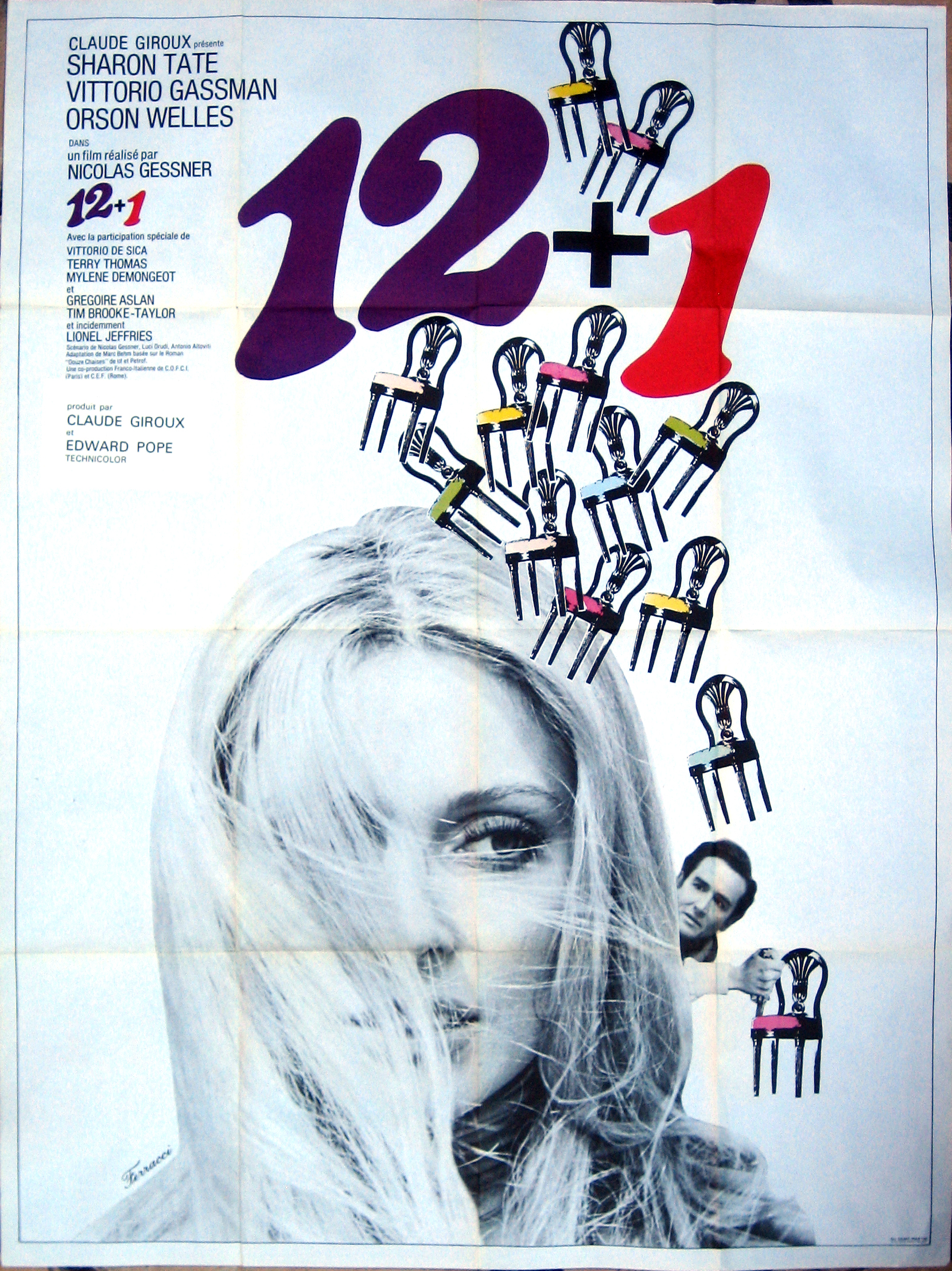
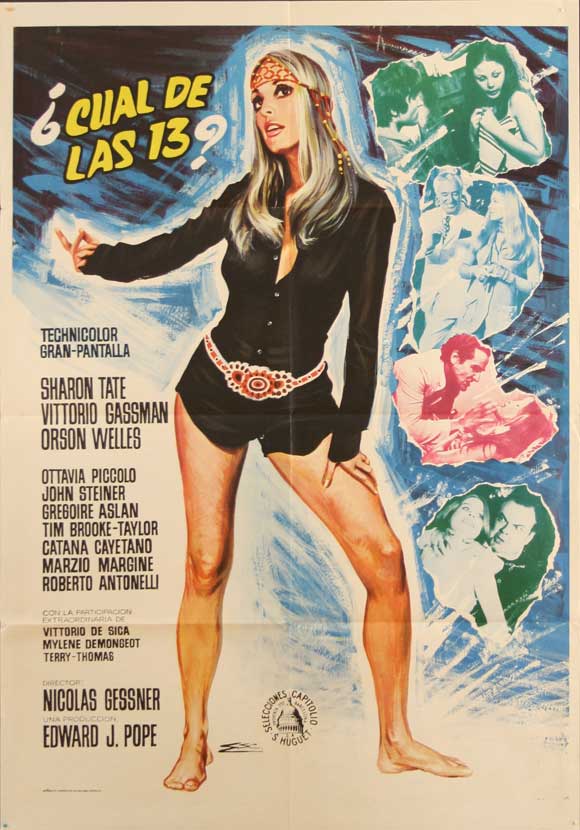
Mario (Vittorio Gassman) is a struggling barber who gets word that his rich aunt has left him a large inheritance. When he gets to her estate he finds the place nearly empty except for some old chairs piled up into a corner. Angered he decides to sell the chairs to a local antique dealer so he can at least make some money off of them. After he sells them he finds a note from his deceased aunt stating that there was a large amount of money sewn up inside one of them. In a panic he goes running back to the shop, but finds that they have already been sold off to various customers, so he along with Pat (Sharon Tate) who worked at the shop and wants to help him as long as she gets a part of the take go on a mad dash to seek out the chairs and retrieve them one-by-one until they can find the money.

The film is based on the classic 1928 Russian novel that has been made into several film versions including one by Mel Brooks that came out a couple of years after this one. I’ve never read the novel, but this film clearly does not do it any justice. The humor is lame and cartoonish and barely able to equal a weak Tom and Jerry cartoon or uninspired Disney flick. The budget is low and the scenes all have a perpetually cheesy, schlocky feel. The Herb Alpert-like music sounds like it was edited in off of an audio cassette recording. The whole thing is quite derivative and dull despite the wide variety of characters and locales.

The film’s biggest claim to fame is being Tate’s only starring vehicle and this didn’t get released until well after her death. She is very beautiful and surprisingly engaging and comical and her presence is the best thing about the movie. She even does a nude scene along with the equally tantalizing Ottavia Piccolo when they both go topless and then get into bed on either side of Gassman, which is the film’s one and only provocative moment.

The supporting cast is full of some old pros that get badly wasted. Terry-Thomas is one of the funniest character actors of all-time, but here he is shockingly boring and forgettable. Orson Welles hams it up in make-up as a pretentious stage actor whose play he is performing in becomes a catastrophe in the film’s only slightly amusing moment.

The color is faded and shot with no imagination or flair. Although there is some nudity the filmmaker’s would have been better served had they cut it out and aimed it solely for the kids as the humor is so broad and silly that only a three-year-old could possibly find it entertaining and even that is no guarantee.

twelve plus one 1

My Rating: 2 out of 10

Released: October 7, 1969

Runtime: 1Hour 34Minutes

Rated R

Director: Nicholas Gessmer

Studio: AVCO Embassy Pictures

Available: VHS

Serial (1980)

serial

By Richard Winters

My Rating: 4 out of 10

4-Word Review: He doesn’t like fads.

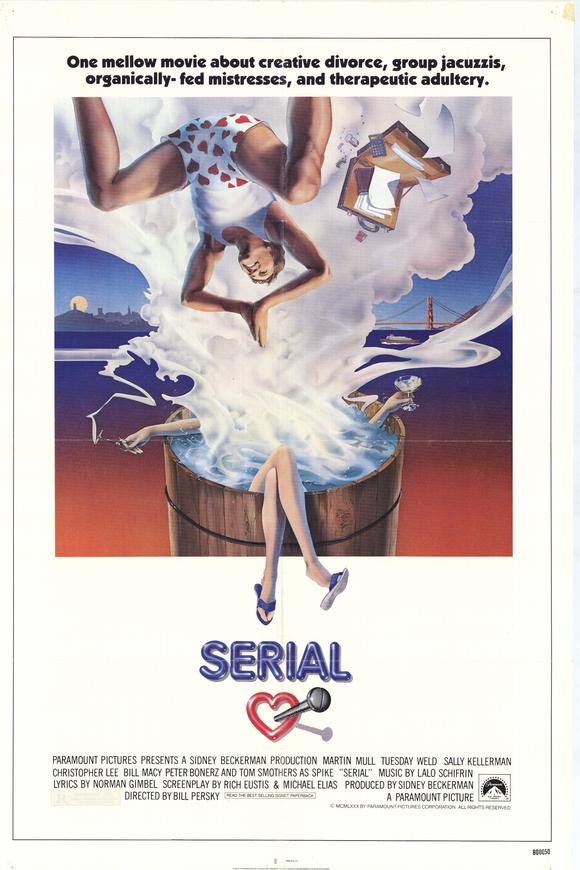
The world has turned into one giant fad and everyone and everything is a part of it. Martin Mull is the one remnant of sanity as he tries to survive in it while still keeping his balance.

There is hardly anything cinematic about this picture. Take out some of the ‘dirty’ references and you have a TV-movie. In many ways it’s barely a movie at all, but more of a compilation of skits running along the same theme.

Mull is definitely a good anchor as his glib, sardonic comments help keep this thing churning. The rest of the characters though don’t resemble real people in any way and many of the fads shown weren’t really followed by that many to begin with. It’s pretty restrained and soft and fails to attain the acidic wit of the Cyra McFadden novel of which it is based.

Attacking trendy people isn’t too difficult and this film fails to supply any new perspective on the subject. This is probably the most annoying thing about it, which is that it is as vapid and superficial as the people and lifestyles it tries to mock.

The film does manage to be fast paced and there are a few slightly amusing bits, which could prove entertaining to those on a really, really slow night. Of the good stuff there is a dog groomer who shouts to his barking dogs to “Shut up you sons of bitches.” There is also Mull going to an orgy and having to step through a whole mass of naked bodies before he can find his girlfriend. Kudos also must go out to the climatic finale that features a gay biker gang lead by Christopher Lee who rampage (on their motorbikes!) the home of a religious cult. The running gag of having Tuesday Weld constantly referring to the Pamela Bellwood character as a ‘cunt’ isn’t bad either.

Also, Ed Begley Jr. can be heard on the radio as a DJ in the opening sequence.

serial 2

My Rating: 4 out of 10

Released: March 28, 1980

Runtime: 1Hour 26Minutes

Rated R

Director: Bill Persky

Studio: Paramount

Available: DVD

Don’t Make Waves (1967)

dont make waves 1

By Richard Winters

My Rating: 5 out of 10

4-Word Review: House slides down cliff.

Carlo (Tony Curtis) is a single 40-something man traveling through coastal California when he decides to pull his Volkswagen beetle over to the side of the road and get out to enjoy the gorgeous view. Problem is that Laura (Claudia Cardinale) is pulling out and her car’s bumper hooks onto his and his car goes speeding down the hill and crashes. All of his money was in the car, so Laura agrees to allow him to stay at her place for a while, but then her boyfriend Rod (Robert Webber) shows up who throws Carlo out onto the beach where he becomes acclimated with the beach bums including beautiful Malibu (Sharon Tate). He wants to date her, but she has a muscular boyfriend named Harry (David Draper). Carlo though has a plan to steal her away as well as getting a cushy job as a pool salesman and a beachfront home that ultimately goes crashing down the cliff just like his car did.

Curtis is engaging in the lead and shows great flair for frantic comedy, but his character has no backstory, which makes him generic and undistinguished. His constant conniving including tricking Harry into no longer having sex with Malibu so he can get his hands on her isn’t all that appealing since Harry is a rather nice guy and I was hoping he would give Curtis a much deserving punch in the face in the end, which unfortunately doesn’t happen.

Cardinale is sexy. Her tan, sleek figure, Italian accent and feisty temper make every scene that she is fun and sensuous. The fact that the character is at times quite oblivious to her surroundings and at other points very observant makes her interesting and quite human.

Tate’s performance is weak and her amount of speaking lines quite limited. The part was originally intended for Julie Newmar who might have been a bit better. However, the scene showing her bouncing up and down on a trampoline while wearing a bikini that even gets shown in slow-motion and freeze frame will be more than enough to satisfy most males.

The film features some impressive stunt work. The opening bit where Curtis tries to catch up with his rolling car and even gets his pants leg caught on fire isn’t bad. The part where Curtis falls from a plane and goes free falling into the air without a parachute is quite vivid even though stuntman Bob Buquor ended up getting killed during the sequence. The best part though is at the end when Curtis’s ritzy home and pool go sliding down a steep cliff during a rainstorm and subsequent mudslide. The special effects are outstanding even by today’s standards. The mud flowing through the place and the shots showing five occupants forced to survive in the home in a Poseidon-like scenario when it gets turned upside down before finally sliding down onto the cusp of the ocean is entertaining enough to make sitting through the rest of it almost worth it.

Unfortunately outside of this and the breathtaking scenery the film is quite vapid. The story is too unfocused and doesn’t seem to know what kind of message it wants to make. The scenarios and situations are trite and offer no momentum or plot progression. The theme of a middle-aged man trying to get in with the young mod generation of the time was handled much more effectively in I Love You Alice B. Toklas, which starred Peter Sellers and came out around the same time.

My Rating: 5 out of 10

Released: June 20, 1967

Runtime: 1Hour 37Minutes

Not Rated

Director: Alexander Mackendrick

Studio: MGM

Available: DVD (Warner Archive), Amazon Instant Video

Eye of the Devil (1966)

eye of the devil 2

By Richard Winters

My Rating: 7 out of 10

4-Word Review: Husband is a pagan.

Vineyard owner Philippe (David Niven) is called back to the castle of Bellenac when it is found that they are suffering from another dry season. Philippe’s wife Catherine (Deborah Kerr) and his two young children follow him there a few days later despite his insistence that they not come. Once there Catherine finds everyone’s behavior to be quite odd including a menacing brother and sister (David Hemmings, Sharon Tate) who make Catherine uneasy, but nothing prepares her for the real reason that her husband is there nor its shocking outcome.

Although several directors worked on this project including Michael Anderson the credit is ultimately given to J. Lee Thompson, who is probably best known for his frequent collaborations with Charles Bronson. Despite the different directors the film is very fluid and well produced. In fact it is the directing that makes this film high enjoyable. The lighting, editing, imagery and evocative camera work make this a near brilliant work from a visual level. Turning down the sound and appreciating it for its aesthetic style alone is more than enough and the on-location shooting done at the Chateau de Hautefort is excellent.

Tate is stunningly beautiful and the photography makes the most of it watching her sit out and get drenched by the rain is actually kind of sexy. She had bit parts in two films previous to this, but this is still credited as her official film debut.  Although her voice was dubbed she still is effective with a character that straddles the line between being sensual and creepy. The part where the Niven character viciously whips her while she wriggles around on the floor and then in the end turns around and smiles like she enjoyed it was year’s ahead-of-its-time and definitely pushing-the-envelope for that period.

Kerr came in to replace Kim Novak who was injured during filming and unable to complete the picture. Normally she always gives a superior performance, but her she seemed miscast. The only facial expression she seems able to show here is that of shock and fright and the character and scenario seems to be too much of an extension to the one that she did in The Innocents just a few years earlier. Both she and Niven seemed too old to be parents of such young children. He was already in his mid-fifties and she in her mid-forties and the film would have been better served had a young attractive couple in their 20’s been cast in the part.

Niven has always done so well being cast in likable roles that having him play someone with a dark personality doesn’t quite work and he looks uncomfortable in the part. Both Donald Pleasance and David Hemmings are underused and not given enough lines or screen-time.

The story itself is rather one-dimensional. The final sequence features some great shots and editing of Kerr running through some underground tunnels of the castle, but the outcome is quite predictable. The script lacks that added perspective or twist to make it truly memorable and is the weakest element in this otherwise visually arresting production.

eye of the devil 4

My Rating: 7 out of 10

Released: July 8, 1966

Runtime: 1Hour 32Minutes

Not Rated

Director: J. Lee Thompson

Studio: MGM

Available: DVD (Warner Archive), Amazon Instant Video

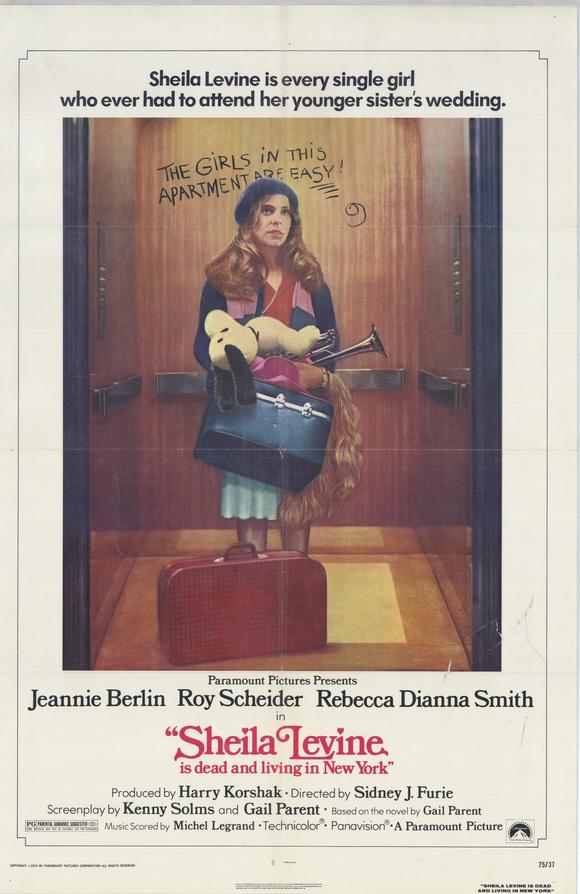
Sheila Levine is Dead and Living in New York (1975)

sheila levine is dead and living in new york city

By Richard Winters

My Rating: 3 out of 10

4-Word Review: Heartbreak in the city.

Sheila Levine (Jeannie Berlin) is a recent college grad who moves to New York City in search of a more exciting and glamorous lifestyle, but finds a long line of heartbreak and empty opportunities instead. When her younger sister gets married before she does she becomes jealous, but refuses to give up and continues to strive to make her mark no matter how small it might be.

Based on the Gail Parent novel the film manages to hit a few marks. Her nagging mother and the exchange that she has with a job placement coordinator at an employment agency is good. However, the idea that a woman’s sole purpose in life is to get married and then not have to work afterwards is seriously dated and will not connect with today’s viewers.

The main character isn’t exactly likable either. She is bossy and intrusive with her roommate and seems to think that because she is a college grad that should entitle her to only ‘creative’ and interesting jobs that doesn’t involve typing. She is also strangely naïve as she gets picked up by a middle-aged man (Roy Scheider) at a bar, goes back to his place for sex and then somehow thinks that means he is in love with her and is genuinely shocked when he bluntly tells her that he was simply appeasing his ‘animalistic instincts’. We are supposed to feel sorry for her, but instead it’s more fun seeing her get slapped down.

Berlin is the daughter of Elaine May who was the queen of sardonic humor and I came into this thing with high hopes, but her performance is only so-so. She does indeed look very Jewish and the perfect composite of the Rhoda Morgenstern TV character and a young Joan Rivers. However, her incessant whiny and nasally voice may be too much for some.

Scheider manages to be pretty solid. I was never impressed with his acting range, but here he gives quite possibly his best performance in what is most likely his least known role.Sidney J. Furie’s lifeless direction though makes the production come off like a filmed stage play with scenes that seem to go on forever.

Michel Legrand’s melodic orchestral score is out-of-place and better suited for a romance. There is also a song with a funky 70’s sound that gets played at regular intervals and becomes increasingly annoying.

I was expecting this to be a quirky, dry humored comedy, but found it to be more of a stilted drama that relied too much on the obvious and at times became almost painful to watch. The romantic angle between Scheider and Berlin is unbelievable and ultimately quite corny, which impedes the film from achieving any type of true potential.

My Rating: 3 out of 10

Released: May 16, 1975

Runtime: 1Hour 52Minutes

Rated PG

Director: Sidney J. Furie

Studio: Paramount

Available: YouTube

Valley of the Dolls (1967)

valley of the dolls 2

By Richard Winters

My Rating: 5 out of 10

4-Word Review: The dolls are pills.

Usually when sites commemorate Sharon Tate it is on the anniversary of her murder, which is in August, but I decided to do things differently and talk about her in January when she was born. Had she lived she would have turned 71 this year and each Sunday this month I will review a 60’s film that she was in.

This one is probably her most well recognized part and it’s based on the bestselling novel by Jacqueline Susann who appears briefly as a reporter. Here Tate plays Jennifer North a woman with ‘no talent’ who must use her body and looks to get where she wants and she is constantly reminded of it by her mother who regularly calls to make sure she is doing her ‘breast exercises’. Eventually she stars in nudie films, which leads to a self-destructive downward slide. Patty Duke is Neely O’Hara a talented young singer who finds climbing to the top can be laced with drugs, alcohol and jealousy. Anne Welles (Barbara Parkins) makes up the third part of the trio as a small town girl who comes to the city looking for excitement, but finds more than she bargained for and eventually leaves.

If there is one thing that saves this otherwise trashy, standard script it is Mark Robson’s direction. Usually most directors come up with a color scheme based on the type of script that they have and mood they want to create, but Robson’s uses every color of the rainbow and more. The plush varied sets and interesting stop action photography that gets implemented from time-to-time keeps things moving at a brisk a visually interesting pace. John William’s score is excellent and Dionne Warwick’s song ‘The theme from Valley of the Dolls’, which charted at number 2 is like most of her work infinitely hummable.

valley of the dolls 1

Duke is lively as the caustic Neeley. She took on the role to get rid of her ‘goody-goody’ image and does so in grand style as her angry tirades and meltdowns are entertaining. While she is attractive Tate’s acting seems limited, but her character is by far the most likable. Parkins may be the least well known of the three, but her performance is solid as the film’s anchor.

Veteran actress Susan Hayward gives the best performance as the aging acerbic singer Helen Lawson who will allow no one to push her from the top. Her confrontation with Duke in the women’s bathroom where Duke pulls off Hayward’s wig and tries flushing it down the toilet and then Hayward’s response to it is by far the most memorable scene of the whole movie.

The story itself is predictable, clichéd and one-note. The characters are cardboard and the dialogue is stale. If it weren’t for Robson’s direction this would have been a ‘bomb’. However, it has attained a high cult following for its campiness, which if you view it from that perspective isn’t bad.

This same story was remade as a 1981 TV-movie starring James Coburn and Jean Simmons.  Also, a young Richard Dreyfuss can be spotted briefly as a stagehand.

valley of the dolls 3

My Rating: 5 out of 10

Released: December 15, 1967

Runtime: 2Hours 3Minutes

Not Rated

Director: Mark Robson

Studio: 20th Century Fox

Available: VHS, DVD, Amazon Instant Video, Netflix streaming

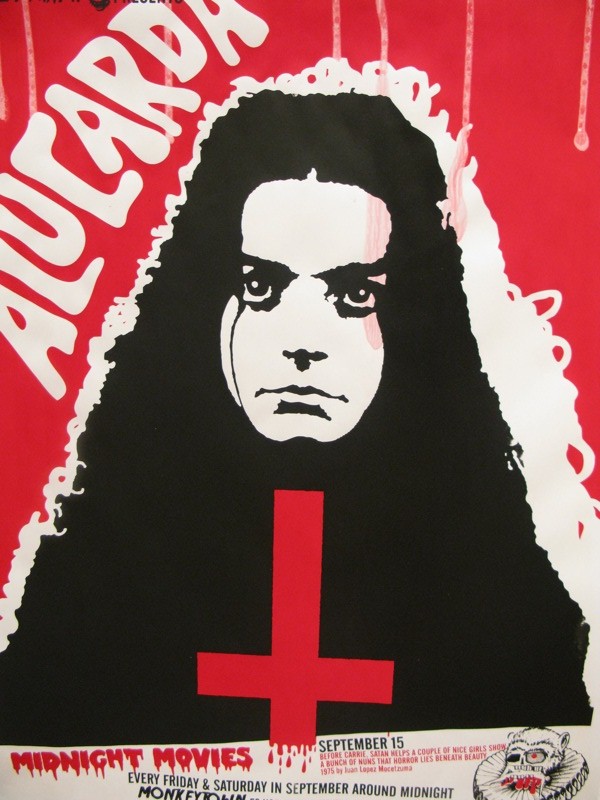
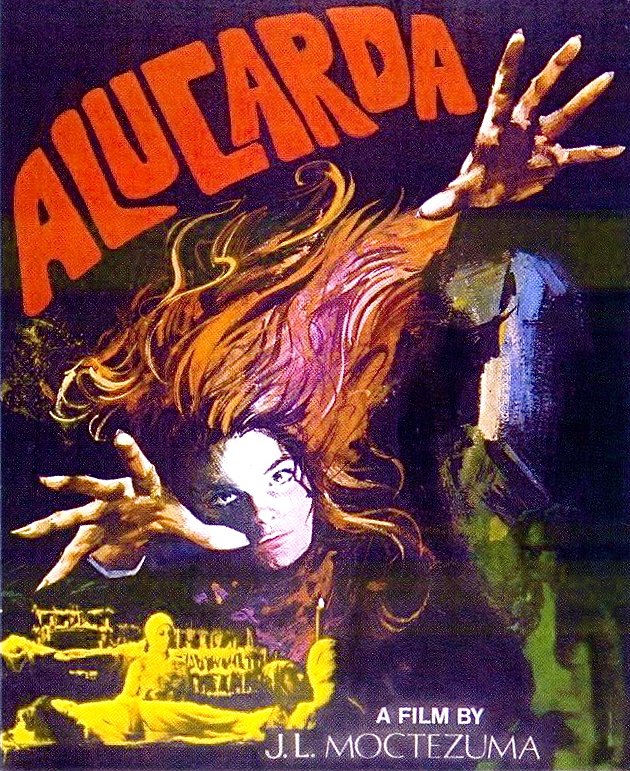
Alucarda (1977)

alucarda 2

By Richard Winters

My Rating: 2 out of 10

4-Word Review: Another Exorcist rip-off

Justine (Susana Kamini) arrives at a convent after the death of her parents. She meets up with a strange young woman named Alucarda (Tina Romero) who almost immediately professes her true love for Justine and the two make a weird pact. Alucarda then seems to become possessed and it rubs off on Justine sending the nuns and priest at the convent into a panicked frenzy to rid both girls and the place from the evil presence.

This bizarre, cheap Mexican production comes off like someone’s drug induced acid trip. Yet it has still managed to acquire a small cult following and even has one reviewer at IMDB calling it ‘brilliant’ even though I found it to be anything but and only reconfirms that there is somebody out there that will like anything. Juan Lopez Moctezuma’s direction is unfocused and undisciplined. The story borders on being almost incoherent with wild twists and story arches that occur at a breakneck pace. The special effects are tacky and there isn’t a single scare in the whole thing.

This supposedly takes place in the 18th century, but the priest wears a wardrobe that looks like he is from China even though the setting is Mexico and the outfits worn by the nuns defy any era and appear to be made by a costume designer who was drunk. The pounding rock-like score has a resemblance to music from Tangerine Dream, but a much weaker version and doesn’t connect with the time period that the story is in. It has elements that will remind you of Suspira and Ken Russell’s The Devils, but both of those films are far superior to this one and only make you wish you were watching those instead.

The acting is amateurish and over-the-top, but star Romero has an interesting look in her eyes and reminded me a bit of a young Genevieve Bujold. There is an abundance of nudity and low-grade eroticism that may make it appealing to some. I did get a kick out of the way the nuns and priest overact and wilt at simply the mention of the devil and Satanism, which I found to be unintentionally funny.

This is just another attempt to cash in on the success of The Exorcist and like the rest of them fails miserably. This isn’t entertaining even on a camp level and I would suggest avoiding it completely.

alucarda 1

My Rating: 2 out of 10

Released: March 10, 1977

Runtime: 1Hour 14Minutes

Rated R

Director: Juan Lopez Moctezuma

Studio: Yuma Films

Available: DVD