Category Archives: Movies Based on Novels

Finders Keepers (1984)

By Richard Winters

My Rating: 2 out of 10

4-Word Review: Stolen loot inside coffin.

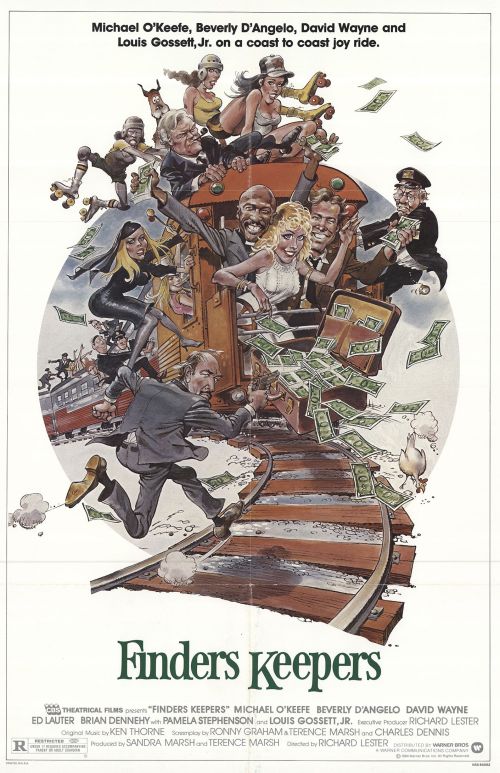
Based on the 1974 novel ‘The Next-to-Last Train Ride’ by Charles Dennis, the story centers on Michael Rangeloff (Micheal O’Keefe) who is a con-man on the run from a women’s roller derby team by hiding out as a U.S. Army General. He boards a train that has a coffin on it with millions of stolen dollars hidden inside. Once he becomes aware of this he tries to hatch a plan with a kooky actress (Beverly D’Angelo) that he meets along the way in helping him to get the money out of the coffin and off the train without being detected.

This is the type of film that gives comical farces a bad name. I’m all for comedies with a hyper-frantic pace and mistaken identities, but it still needs to have some grounding in what’s possible. This thing relies way too heavily on coincidences and random events to hold it together. The whole scenario that leads Michael getting onto the train is too much of an overreach. A more sane and less dizzying premise would’ve had Michael working on the train as a conductor from the start and then coming onto the money by chance, which would’ve been far less protracted.

His relationship with D’Angelo is dumb too. The women immediately comes-off as a babbling nutcase, even admits to suffering from mental health issues, and the type of person who usually gets thrown off of trains and planes for their disruptive behavior. Most people would be glad to be away from her the first chance they had and yet here the two end up going to bed together and profess their undying love for each other within 24-hours of first meeting.

The original concept was to use this as a vehicle for Dudley Moore, but that idea got nixed when the studio decided they wanted to make it an ensemble comedy instead, which was a big mistake. O’Keefe plays the role admirable, but he doesn’t have enough finesse that a comic star would. The supporting cast doesn’t help either. David Wayne’s portrayal of the world’s oldest conductor relies too heavily on the stereotype that every person who gets elderly must also be senile and it’ hard to imagine how anyone could hold done a job being as forgetful and out-of-touch as his character is. Ed Lauter, who wears a wig here, does not have the needed comic flair to make his bad-guy role either interesting or amusing. Oh, and Jim Carrey appears briefly too, but it’s a small bit that isn’t anything special.

Richard Lester directed many good comedies in his career, but the stylish quality that made up so much of his films from the 60’s is completely missing here. Everything gets captured in a flat, uninspired way and I didn’t like the Canadian province of Alberta being substituted for Nebraska as its flat wheat fields look nothing like the rolling prairie of the Midwest and the bleak late autumn topography complete with leafless trees gives off a chilly, depressing feel.

The scene where D’Angelo and Lauter find themselves inside a house while it is being trucked down a highway is kind of cool and outside of the low budget 80’s flick Mind Trapthe only time I’ve seen this done on film. Watching the house then end up losing its roof, after it goes under a low hanging overhead sign, and going down the road with skeletal frame exposed is fun too, but everything else is a bore that tries too hard to be frantic when it wasn’t necessary.

I was also confused why the setting of the story had to be in the year 1973 as it doesn’t play-up the 70’s era enough to make it worth it. My only guess was that with the Vietnam War still raging that it fit into the storyline of having dead soldiers returning home in coffins. However, since the US continually gets involved in foreign conflicts all the time this same scenario could easily work in any time period and sadly wasn’t unique just to that decade.

My Rating: 2 out of 10

Released: May 18, 1984

Runtime: 1 Hour 36 Minutes

Rated R

Director: Richard Lester

Studio: Warner Brothers

Available: VHS

The Super Cops (1974)

By Richard Winters

My Rating: 6 out of 10

4-Word Review: Arresting the drug dealers.

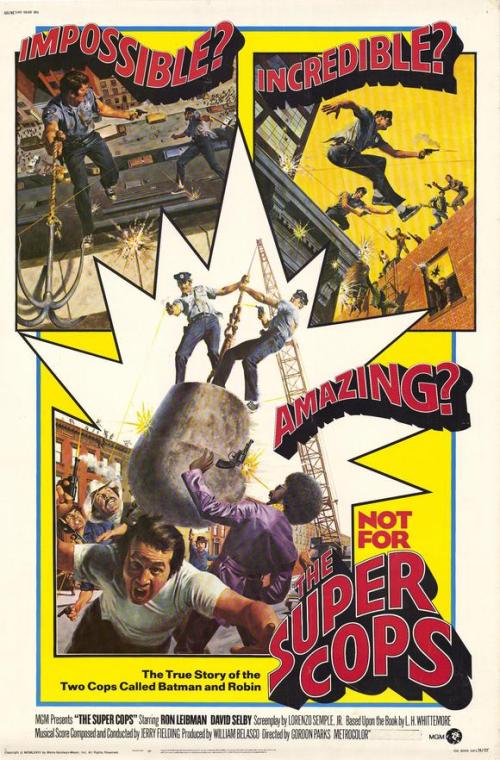
David Greenberg (Ron Leibman) and Robert Hantz (David Selby) join the police force hoping to be active in cleaning up the streets from drug dealers. Unfortunately for them once they go through the basic police training and graduate they’re assigned low level jobs like directing traffic, which they find boring. They decide to start using their off-duty hours to make arrests on their own, which gets them into trouble with their department, but their continuing efforts impresses the residents and soon makes them media heroes known as ‘Batman and Robin’.

The film, which was directed by Gordon Parks who also did Shaft, has plenty of engaging moments and I liked how it starts with the two going through the police training, which allows the viewer to see a full transition of the characters from average citizens to street cops. There’s also a lot of quirky comedy that really works including having the two hiding out inside a trash dumpster and ready to make an arrest only to have a large amount of garbage dumped on them just as they do. The bit at the end where two dueling factions of the police department try to arrest each other, even though neither side is sure which side has committed the worst crime, is quite amusing too.

The characters and situations are based loosely on real life events and it’s interesting how the actual Greenberg and Hantz are shown right at the start being interviewed about all of their arrests and then they appear later in the story playing two corrupt cops that get into a big fistfight with their film counterparts. Initially I thought Leibman looked too scrawny and outside of his bushy mustache didn’t resemble Greenberg all that much, but he makes up for it with a highly spirited performance. Selby is good too and I liked how there’s a contrast in personalities between the two although in real-life they had been best friends since childhood while the film makes it seem like they meet and become friends while in training.

The main problem with the film is that we never learn what makes these guys tick. Why are these two so motivated to arrest drug dealers even more so than a regular cop? Did they have a friend or family member die of a drug overdose in the past? And what about their private lives? Are these guys married, single, or gay? None of this gets shown or addressed, which ends up creating a placid effect. While the viewer may admire the relentlessness of the protagonists we’re also never emotionally tied-in to anything that goes on.

Showing the politics that occurs behind-the-scenes inside a police force and how this protocol system can sometimes stymie innovation or individuals that may want to work outside of it is commendable, but also ends up having a defeating quality to it. Every time these guys make any progress they end up falling back into the hands of the same administrators that want to make life miserable for them, and this gets repeated all the way until the bitter end making the viewer feel frustrated when it’s over instead of inspired.

It’s also interesting to note that Greenberg and Hantz weren’t exactly virtuous in their real-lives and ended up getting caught doing the same things that they arrested other people for doing here including Hantz who was forced to resign from the police force in 1975 after getting caught in possession of marijuana. Greenberg also spent two stints in jail once in 1978 for nine months for mail fraud and then again in 1990 for 4 years for insurance fraud.

My Rating: 6 out of 10

Released: March 20, 1974

Runtime: 1 Hour 30 Minutes

Rated R

Directer: Gordon Parks

Studio: MGM

Available: DVD-R (Warner Archive), Amazon Video

Prick Up Your Ears (1987)

By Richard Winters

My Rating: 7 out of 10

4-Word Review: Bio of Joe Orton.

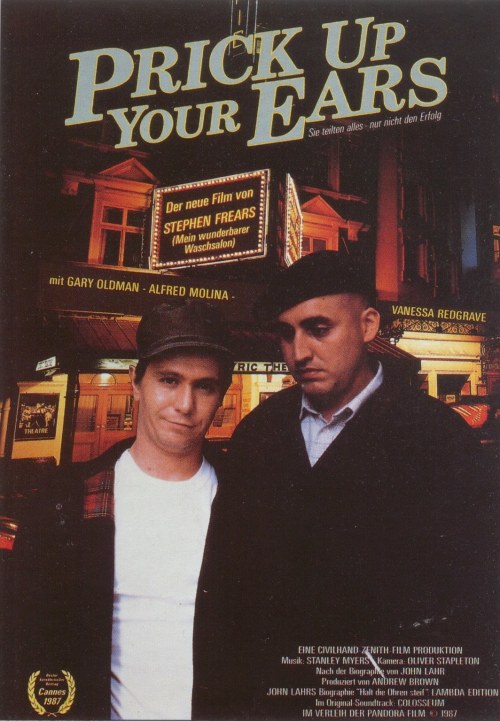
This film, which is based on the biography of playwright Joe Orton that was written by John Lahr, has two diametrically different story lines going on at the same time. One part has John Lahr, played in the movie by Wallace Shawn, going around interviewing people that knew Orton when he was alive, which includes Orton’s theatrical agent Peggy Ramsey (Vanessa Redgrave). The other part delves into Orton’s (Gary Oldman) relationship with his Kenneth Halliwell (Alfred Molina) showing how it began and then eventually ending in tragedy.

The film, which was directed by the usually reliable Stephen Frears, starts out right away with the murder scene showing Halliwell covered with blood as he stands over Orton’s body that he has just killed, which to me was a mistake. Sometimes using flashbacks in films can help accentuate the story, but here it gives too much away way too soon. What’s the point of continuing to watch the movie if the viewer knows exactly how it will end? Even if one such as myself was aware of Orton’s demise, which occurred on August 9, 1967 in Islington, England, it still should’ve approached the material in a linear way having the murder occur at the very end after we had gotten to understand and feel for the characters and therefore making the act all that more impactful.

The story should’ve started with the scene, which doesn’t occur until 30 minutes in, where Halliwell and Orton are attending a acting improv class, which is where the two first meet and the funniest moment in the movie. In the scene the students are instructed to pass around a make-believe cat and when this invisible cat gets handed to Halliwell, and to the shock of the other students, but to the amusement of Orton, he kills it and then hands it back to the instructor.  This moment also perfectly reflects the black humor that became so apparent in Orton’s plays as well as conveying the weird dynamic that the two had.

When the film focuses solely on the two lead characters and their love-hate relationship it is quite interesting. Molina gives a powerhouse performance and dominates every scene that he is in. His mental deterioration is both vivid and horrorifying and  leaves a lasting impression. Yet there are also other moments where you feel sorry the guy and it helps to make sense of what lead to the tragedy as you see how Orton, who is much younger and better looking, openly have trysts with other men that he randomly meets while Halliwell, fully aware of what is going on, gets pushed into the background and unable to do anything about it.

The film is also filled with some memorable imagery. The scenes where Orton and sometimes Halliwell would pick up strangers for indiscriminate sex, like in dingy public restrooms with the lights turned off and even at times inside the bathroom stalls themselves while constantly in fear of getting caught and arrested, is well captured. The tiny room that the two lived in for years, with pictures that cover every inch of the walls, gets recreated to a perfect tee. Based on images of the actual room found on Google it looks exactly like the one in the movie and its claustrophobic dimensions hits home making it seem amazing that such significant long lasting stage plays, that were later made into movies, could’ve been written in such an insignificant space that seemed no bigger than someone’s walk-in closet.

The opening bit that focused on Orton’s agent and having her reminisce about her experiences dealing with him is boring and should’ve been taken out of the final cut. Viewers come into this wanting to learn more about Orton and his relationship with Halliwell and that’s where the film should’ve started and stayed. I admit Redgrave gives a very good performance as the agent, so having brief scenes with her in them that intercut between the ones dealing with the lovers might have been interesting, but too much time gets spent on the side characters that almost dismantles the entire rest of the film.

Spoiler Alert!

I didn’t like how loud crashing music gets abruptly played during the murder sequence either. The soundtrack had been quite subtle up until then, so having it suddenly get loud is jarring and goes against the tone of the rest of the film. It also puts too much of a theatrical quality to the murder that was not needed. The  visuals are all that is needed to show the shocking and gruesome nature of the act without music needing to be any part of it.

My Rating: 7 out of 10

Released: April 17, 1987

Runtime: 1 Hour 45 Minutes

Rated R

Director: Stephen Frears

Studio: The Samuel Goldwyn Company

Available: DVD

All of Me (1984)

By Richard Winters

My Rating: 3 out of 10

4-Word Review: Two people, one body.

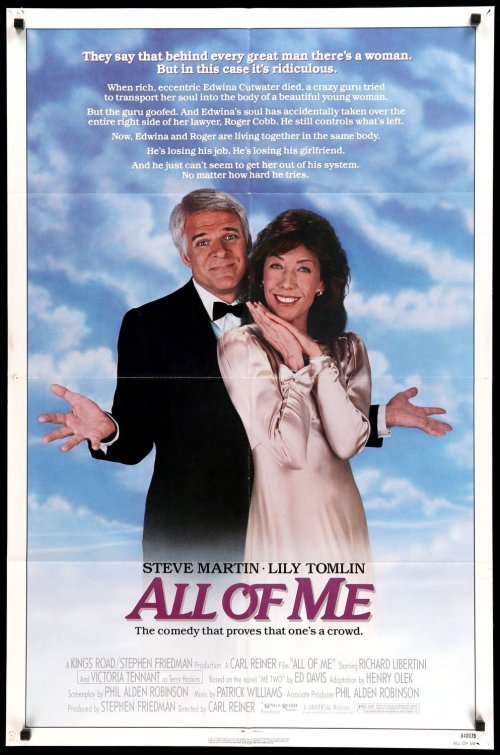
Roger (Steve Martin) is a lawyer who finds his job unfulfilling while Edwina (Lily Tomlin) is a millionaires suffering from a terminal illness and about to die. She has employed the services of a mystic named Prahka Lasa (Richard Libertini) who has mastered the ability to transfer human souls. She wants her soul placed into the body of a young woman named Terry (Victoria Tennant). Roger is then hired to change Edwina’s will, so all of her money will go to Terry, but a mishap occurs transferring Edwina’s soul to Roger’s body instead. Roger controls the left side and Edwina controls the right. While the two can’t get along they’re required to work together to find the guru and get the mistake corrected.

The film, which is based on an unpublished novel called ‘Me Two’ by Edwin Davis, has its share of funny moments, but they mainly come during the first half. Martin’s physical comedy that he does on a busy sidewalk as he’s required to learn to walk in tandem with the other soul is a laugh-out-loud moment though it would’ve heightened the humor had more passerby’s looked at him as if he were a nut. The scene at a urinal were Martin must cooperate with Tomlin in order for him to take a pee is quite good too and the best moment in the movie.

The script though cheats the scenario by entering in too many illogical points. The concept of a soul ‘sleeping’, had me baffled. Now, I admit I haven’t kept up on the latest in soul science, but it seems to me that a soul should have no need or require sleep. Only the body that a soul is housed in needs to sleep from time to time when it runs out of energy, so through that logic Martin and Tomlin’s souls should have to go to sleep at the same time since they are both housed inside a body that is tired instead of having one remain awake while the other isn’t. The courtroom scene in which Martin sleeps while Tomlin busily moves the body around seemed quite ridiculous too as it’s hard to imagine anyone could sleep while their body talks and walks and in front of other people that speak directly to it.

The scene in the church in which Martin wakes up and doesn’t hear Tomlin’s voice, so he immediately presumes that she’s asleep, is flawed too. Nobody had given him information that souls can sleep, so why does he jump to this conclusion? Why not consider other possibilities instead like maybe her soul had left his body, or that what occurred previously had just been an hallucination or dream?

While both Martin and Tomlin give good performances the supporting cast, or at least the cardboard characters that they’re forced to play, help to bog the whole thing down. Madolyn Smith, as Martin’s jilted fiancee, is too much of a broad caricature while Tennant, who Martin later married in real-life, makes for an incredibly dull villainess.

Libertini is annoying too particularly with his inability to differentiate between a telephone and a toilet bowl. Every time the phone rings he thinks it’s coming from the toilet and never picks up the receiver. It’s an attempted parody to show that he comes from a culture that is technologically deprived, but even the dumbest most isolated person with a modicum of common sense will eventually realize that the ringing sound is coming from the little box in the living room making this lame bit, which gets repeated multiple times, quite dumb.

The biggest downfall though is that the two get too chummy too quickly. Having them remain adversarial and constantly fighting for control of the body would’ve invited far more comically dynamic scenarios than what we are actually given. The plot twists in the third act aren’t interesting either and I found myself getting less engaged the more it went on and left with a flat feeling when it was over.

My Rating: 3 out of 10

Released: September 21, 1984

Runtime: 1 Hour 33 Minutes

Rated PG

Director: Carl Reiner

Studio: Universal

Available: DVD, Amazon Video, YouTube

The New Centurions (1972)

By Richard Winters

My Rating: 7 out of 10

4-Word Review: Rookies on the force.

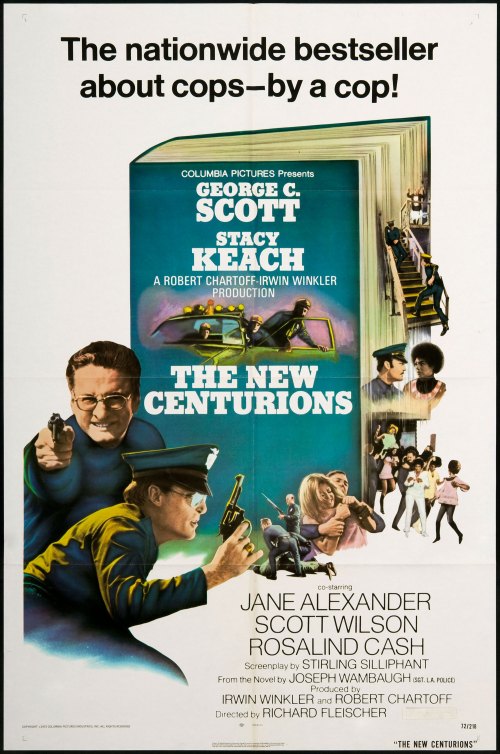
Roy Fehler (Stacy Keach) is a young law student who decides to join the LAPD until he can complete his degree. After graduating from training he gets partnered with Andy Kilvinski (George C. Scott) a veteran with almost a quarter of a century of police work under his belt. Roy likes Kilvinski’s unique approach to cop duty and enjoys his police work more and more to the point that he puts his law studies on hold, much to the consternation of his wife (Jane Alexander). Then one night Roy gets shot while on-duty forcing him to go through a painful recovery, but his determination to return to the force puts a major strain on his marriage and when his wife leaves him he turns to liquor for solace.

The film is based on Joseph Wambaugh’s debut novel, which he wrote in 1970 and based loosely on his own experiences and observations while working as a cop. The novel though differs greatly from the film in that there were three main characters in the book while the film focuses mainly on Keach while leaving the other two, which are played by Eric Estrada and Scott Wilson, as only secondary players that are seen only sporadically. The novel also delved into the Watts Riots at the end, which the movie completely ignores.

The film though does succeed at humanizing those that work on the force as we see them as regular people who just so happen to wear a badge as opposed to authority figures. The story thankfully avoids police cliches and seeing how Keach’s job affects both his home life and personality is quite interesting and something I wished had been explored even more.

The best moments come during the first act as the viewer gets thrust onto the street scene along with Fehler and Kilvinski where in almost cinema vertite style we see what an average night patrolling a poor African American neighborhood in Los Angeles is really like. Some of the time their experiences are quite lighthearted like when they pick up a group of black prostitutes, one of which is played by Isabel Sanford, who later went on to star in the TV-Show ‘The Jeffersons’, who get put into a paddy wagon where they drink hard liquor and tell bawdy stories. Other moments though become tense and serious particularly when they have to wrestle a crying infant away from his abusive mother.

Keach plays his part quite well and one of the reasons that the film is successful, but his character isn’t well defined. We have no understanding why he enjoys patrolling the streets so much and ignores his family life the way he does. Without any insight to what drives him it makes his obsession to return to the force after his shooting injury seem bizarre and confusing. In the novel he was portrayed as being quite arrogant and thinking he was smarter than everyone else, which gets toned down considerably here.

Spoiler Alert!

Scott’s character is another confusing mess. For most of the film he’s shown as being rather laid-back only to suddenly shoot and kill himself without warning after he retires. Yet the character is not fleshed-out enough making what he does senseless. The film seems to imply that he was bored in retirement, which is what lead him to do it, but do other policemen who retire also kill themselves at a high rate? I haven’t heard of that many who do so it seemed to me there needed to be a better reason than just that and without one being sufficiently supplied it makes the scene come-off as unnecessarily jarring that creates confusion instead of clarity.

The segment where Fehler joins the vice squad are quite funny and manage to be both outrageous and believable at the same time. However, his sudden descent into alcoholism gets too rushed and the film would’ve worked better had it reflected the same structure as its source novel where the character’s lives are examined every August of each succeeding year after graduating instead of keeping the time period undefined, which makes everything that occurs look like broad composites instead of a fluid situation.

The scene where Scott Wilson’s character shoots and kills an innocent black man gets poorly presented too as we never get to see the aftermath of his actions as the subsequent investigation is never addressed at all. We simply see him back on the force in later scenes like it never happened. The moment is startling, so not answering the question of what penalty he may or may not have faced is frustrating.

My Rating: 7 out of 10

Released: August 3, 1972

Runtime: 1 Hour 43 Minutes

Rated R

Director: Richard Fleischer

Studio: Columbia Pictures

Available: DVD

The Ninth Configuration (1980)

By Richard Winters

My Rating: 6 out of 10

4-Word Review: Insane man runs asylum.

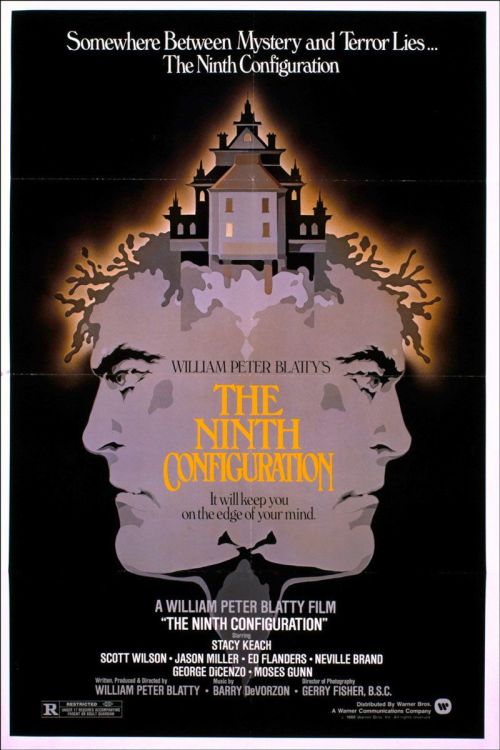
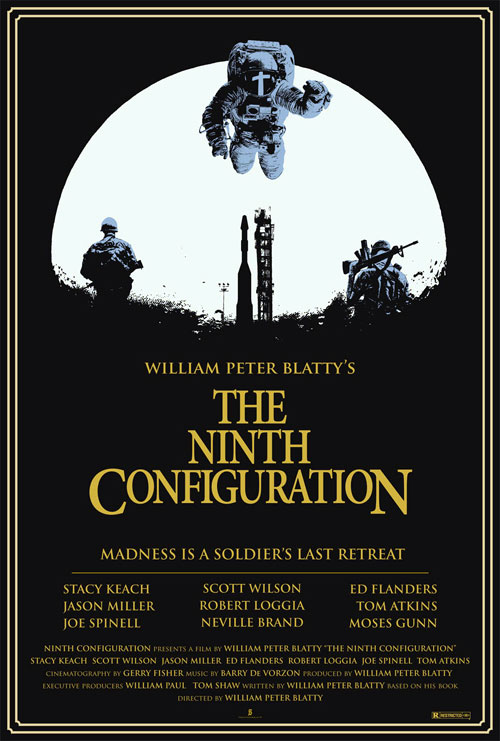
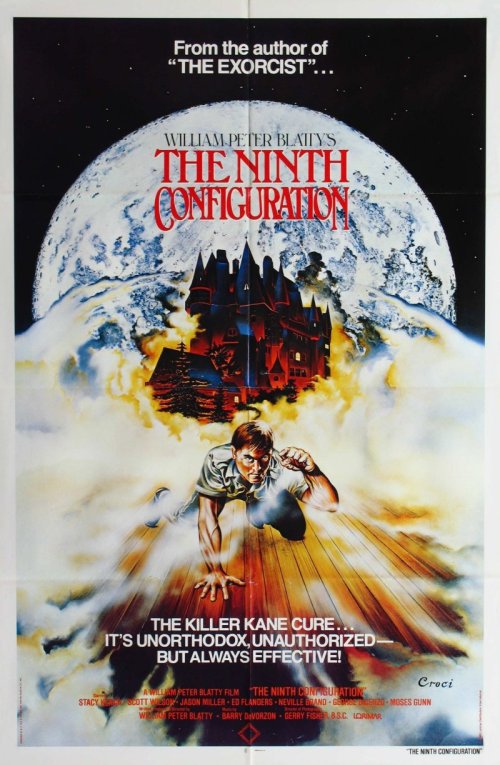
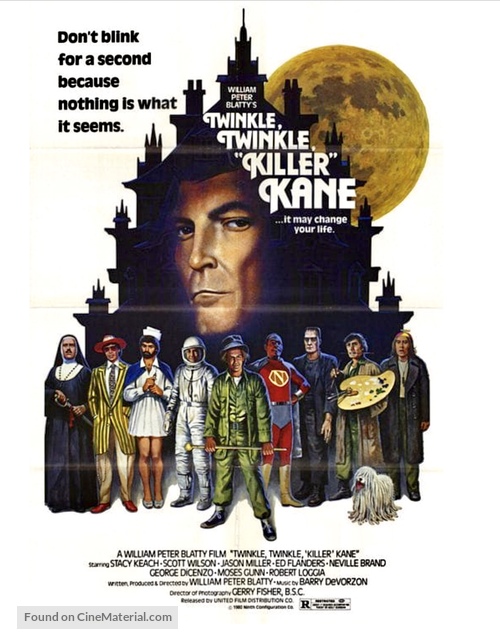
Col. Vincent Kane (Stacy Keach), a former marine who is suffering from demons of his own, is selected to head a psychiatric institution built inside a converted castle that specializes in military personal who fought in the Vietnam war and now feign insanity. The challenge is to find if these men are truly mentally ill, or just faking it and Kane’s technique, which allows the patients to openly act out their darkest fantasies, is considered unorthodox. He begins to have an unusual friendship with one of them, Billy Cutshaw (Scott Wilson) a former astronaut who bailed out of an important mission with a nervous breakdown just before lift-off. The two begin to debate the existence of God and the correlation between faith and sacrifice.

The film has a rocky tone in which part of it delves into campy humor while the other half is more serious. The reason for this is that when William Peter Blatty first wrote the novel of which this movie is based in 1966 it was called ‘Twinkle, Twinkle “Killer” Kane!’ and told in a darkly humorous vein. In 1978 he rewrote the story with a more serious tone and that version was published with the same title as this film.

For me I found the humor off-putting and not funny at all. The whole first hour becomes a complete waste with comical bits that rely too much on mental hospital stereotypes and overall campiness from the performers. There’s also long drawn-out segments dealing with the patients barging into Kane’s office and going on long circular rants that are quite boring.

The second half improves when the tone becomes dramatic, which is what I wished it had been all the way through. It also features a wild barroom fight, which is a bit over-the-top with the way the biker gang dress and behave, but also features some great choreographed violence and a creepy performance by muscleman Steve Sandor as the head of the gang that torments both Keach and Wilson. The second act also features a few surreal, dreamlike sequences, which are the best moments of the film.

The eclectic cast is interesting, but many of them, including Robert Loggia and Moses Gunn, gets wasted in small roles and little screen time. Wilson and Jason Miller are good as two of the patients, but Neville Brand is the best as a drill sergeant that at times seems to be channeling R. Lee Emery and at other moments a confused, overwhelmed man with a deer-in-headlights expression. Blatty, who casts himself as one of the patients is good too, not so much for anything that he says or does, but for his unique facial features, especially his eyes making him look like a guy possessed and the fact that he wrote The Exorcist is even more ironic.

Keach is also excellent, in  a role that was originally meant for Nicol Williamson, but who got fired from the production early-on. Keach manages to be both creepy and hypnotic at the same time. A guy you fear one minute and feel sympathetic for by the end and he does it here without his usual mustache allowing the cleft lip that he was born with to be on full display.

The setting, which was filmed at Castle Eltz in Germany and done there because Pepsi financed the film under the condition that it had to be shot in Europe, is an impressive site. Yet it’s hard to believe that such a Gothic styled fortress, which began being built before 1157, could ever exist inside the USA, which is were the setting is supposed to take place.

The discussions that Keach and Wilson have in regards to the existence of a supernatural being are fascinating and help push the film forward, but the ending, which features a mystical twist, was not needed. The tone, even with the humor, was quite dark, so having it suddenly finish with an ‘uplifting’ moment doesn’t click with everything else that came before it and comes off like it’s selling out on itself.

Alternate Title: Twinkle, Twinkle, “Killer” Kane

My Rating: 6 out of 10

Released: February 29, 1980

Runtime: 1 Hour 58 Minutes

Rated R

Director: William Peter Blatty

Studio: Warner Brothers

Available: DVD, Blu-ray, Amazon Video

Sometimes a Great Notion (1971)

By Richard Winters

My Rating: 6 out of 10

4-Word Review: Never give a inch.

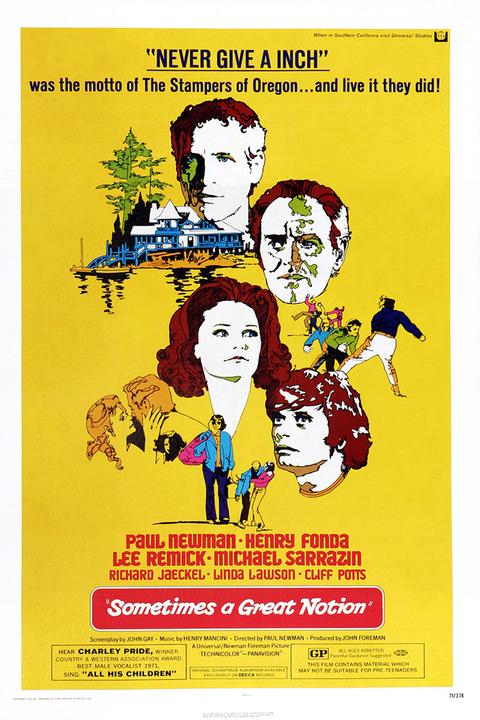
The Stampers are a proud logging family who’ve run their business out of the small Oregon town of Wakonda for years, but now find that may be in jeopardy when the local union strikes against a large lumber conglomerate. The Stampers, headed by their stubborn, bull-headed father (Henry Fonda) refuse to go along with the other loggers and continue to run their business. The rest of the townspeople consider them to be traitors and get their revenge by burning their equipment and doing whatever they can to make their business fail, but despite all the obstacles and setbacks the Stampers prove to be a resilient bunch.

The story is based on the Ken Kesey novel and while the book spawned many accolades the movie pretty much fizzled and today is only remembered as being the first film ever shown on HBO when it began broadcasting on November 8, 1972. However, that doesn’t mean it doesn’t have its share of good points as I really did enjoy the vivid way it captures the logging business showing first-hand what it takes to cut down the large trees and move the timber. Everything is captured with an in-your-face style that makes you feel like you’re right there working alongside the others and all the stages of tree cutting are explored including the many potentially dangerous accidents that can occur within the blink-of-an-eye.

The film also features a few memorable scenes including a bird’s-eye view of a large barge of logs being tugged down the river, which is an impressive sight. There’s also the infamous drowning scene unique because I’m not quite sure how they were able to pull it off without the actor drowning.

The characters though are quite boring, don’t display any type of arc and instead convey a very one-dimensional cantankerous attitude all the way through, which isn’t fun. Lee Remick is the only one who shows a softer, more introspective side, but she’s not in it enough. The scene involving her in bed with Michael Sarrazin, who plays the younger brother to Paul Newman, could’ve given things a much needed spark and should not have been left on the cutting room floor.

Fonda though is an exception. I’m always amazed at how in his later years he had to take small roles in films that weren’t always A-list material, but would still steal the film away from the leading actors anyways and his answer as to why the family continues to work while clearly causing tension with the rest of the town is a gem.

The plot though gets presented in a sporadic way. So much attention gets put into the aesthetics that the story becomes largely forgotten and only trickles through at certain intervals. The perspective is a bit odd for a Hollywood film too especially for that time period where the idea was always a David vs. Goliath formula that would take it to the establishment and yet here instead of punching up it punches down. As a viewer I felt sympathy for the townspeople and their need to create a strong union to make life better for themselves, so watching this family arrogantly ignore their needs and forge on with their business seemed to be me selfish and not something that was noble or interesting.

Spoiler Alert!

The film’s final shot, which features Newman tying his dead father’s severed arm on top of his tugboat, with the hand of the arm giving the finger to the town’s people on shore, is quite ghoulish. There’s no explanation for how he obtained the arm, but I’d imagine it would’ve required him digging up his father’s grave and cutting the limb off, which is pretty sick and twisted and thus loses the humorous quality that was intended and becomes just plain repulsive instead.

Alternate Title: Never Give A Inch

My Rating: 6 out of 10

Released: December 17, 1971

Runtime: 1 Hour 54 Minutes

Rated PG

Director: Paul Newman (Replaced Richard A. Colla)

Studio: Universal

Available: DVD (Universal Vault Series)

Snowball Express (1972)

By Richard Winters

My Rating: 4 out of 10

4-Word Review: Family rehabilitates rundown hotel.

Johnny (Dean Jones) works as an accountant in New York, but is bored with his job and looking for a way out. He finds his escape with an inheritance that he receives naming him the beneficiary of the Grand Imperial Hotel in Colorado that he’s promised can bring in $14,000 a month. He immediately quits his job and moves his reluctant family to the snowy Rockies where they find the hotel to be in bad shape, but Johnny is determined to still make a go of it and turns the place into a ski resort. At first they have some success with it, but calamity strikes, which destroys the place and forces Johnny to enter into a snow mobile race where he hopes to be the winner and use the earnings from the prize to rebuild the place.

There were aspects to the film that I liked. For one I felt Jones was quite engaging here. Usually his performances in some of his other Disney films were flat and one-dimensional, but here his resiliency had an emotional appeal. I also liked how even though the film is aimed for kids it still dealt with real-world adult issues like going to a bank to get a loan and then how to allocate that money to build equity. Even though children may be too young to grasp all of it, it’s still good to condition them into working world scenarios and what it takes to create a business from the ground up.

The story though lacks the physical comedy that is so prevalent in other Disney comedies. It does have a scene where Jones skis down a hill backwards while knocking over everyone else that is in his way, which is funny, but then the film repeats this same scenario two more times until it’s no longer funny and instead just boring. The scene where Harry Morgan’s character accidentally crashes his logging engine through the hotel is more depressing than funny since the family had spent so much time rebuilding it it was frustrating seeing it get destroyed for such a silly reason.

The climactic snowmobile race is okay and I liked seeing some of the wipeouts, which I wished there had been more of. However, having this really old guy played by Keenan Wynn beating out everyone else year after year as the snowmobile champion seemed weird. Granted he was actually only in his 50’s at the time it was filmed, but with his gray beard and hair he looked to be more in his 70’s, so it seemed a bit goofy why such an elderly guy, who was nothing more than a bank manager during the day, would have such an ability to always beat out everybody else.  Why the race required two men on each snowmobile didn’t make much sense either. I was born and raised in Minnesota and say a few snowmobile races in my time and they had only one person on each vehicle, so I couldn’t understand why it was necessary to have a second person behind the driver since they did nothing but  act like a spectator while holding for dear life as the driver cruised through the snow.

The film needed a more aggressive bad guy. Disney films from the 70’s were fun because the villains were usually so colorful, but here Keenan Wynn just sits behind his desk for most of the film and does nothing more than deny Jones a loan. It would’ve been better had Wynn instead sneaked around behind the scenes doing things that hurt Jones’ business, which would’ve created more of an antagonistic feeling from the viewer and thus made the final confrontation between the two, which gets underplayed anyways, more interesting.

My Rating: 4 out of 10

Released: December 22, 1972

Runtime: 1 Hour 33 Minutes

Rated G

Director: Norman Tokar

Studio: Buena Vista

Available: DVD, Amazon Video, YouTube

I Walk the Line (1970)

By Richard Winters

My Rating: 8 out of 10

4-Word Review: Sheriff covers for moonshiners.

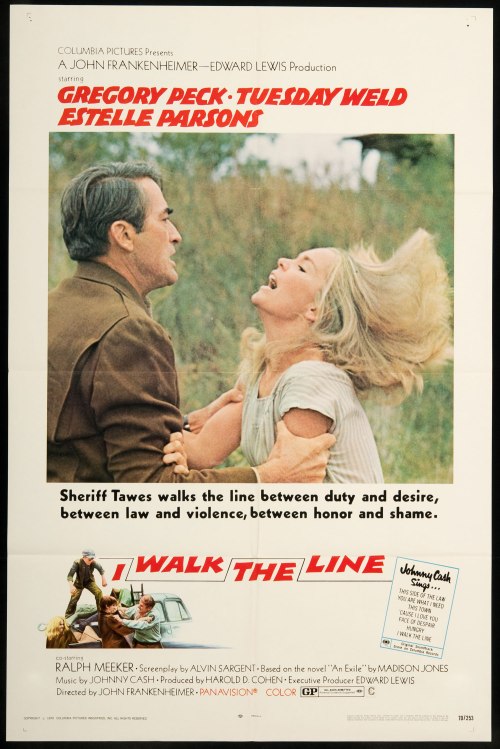
Aging Sheriff Henry Tawes (Gregory Peck) has always been a strong pillar of his community, but recently has found himself bored with his domestic life and looking for diversion. He becomes smitten with Alma (Tuesday Weld) a young woman half his age, who lives on the poor side of town with her father (Ralph Meeker) who runs an illegal distillery. Despite the risks Henry begins an open affair with her with her family’s blessing as long as Henry agrees not to report their distillery, but then a federal agent (Lonny Chapman) arrives in town threatening to shut down every moonshiner he finds. Henry’s deputy Hunnicutt (Charles Durning) also becomes suspicious of Henry’s shady actions, which forces Henry to take some calculated risks, which all backfire on him in shocking ways.

This film is a perfect testament to something that I’ve mentioned before on this blog, which is how shooting a film on-location in an actual small town versus one being built on a studio backlot can make all the difference on whether it succeeds at the box office, or not. This one was done in the tiny hamlet of Gainesboro, Tennessee, which has just over a 1,000 people and in fact its downtown, which includes the prominent courthouse, barely looks any different now then it did when principle photography took place in October of 1969. Director John Frankenheimer makes good use of the townsfolk focusing in on their old, weathered faces at the beginning and glum expressions, which helps accentuate Henry’s bored and static life as well as the abandoned, decrepit house the lovers meet-in, which illustrates their empty, vanquished souls.

The script by Alvin Sargent, which is based on the novel ‘An Exile’ by Madison Jones, allows the visuals and action to do most of the talking while keeping the dialogue subtle and concise. I even enjoyed the music interludes by Johnny Cash. Some critics at the time complained that there was no need for this as Johnny’s words that he sings seem to be simply explaining what the viewer is already seeing onscreen, but the music still conveys a raw southern flavor and Cash’s singing style makes it seem more like he’s talking to the viewer and like he’s another character in the film.

Peck’s performance is good here despite the fact that Frankenheimer wanted Gene Hackman for the role, but was forced to settle with Peck because he was already under contract with the studio. Normally Hackman would’ve been the better choice, but here Peck’s usual stiffness and detached delivery brings out convey his character’s inner turmoil. Durning is outstanding as his nefarious deputy and with his energetic and impulsive presence because an interesting contrast to Peck’s more reserved one.

Spoiler Alert!

Weld is great too even though the part she plays seems very similar to the one that she did in Pretty Poison although here at least the character isn’t portrayed as being completely evil, but instead somewhat naive and sheltered, which helps make her more multi-dimensional. Her motivations though are confusing and the film’s one major drawback. I could not understand, and the film never bothers to make clear, why she’d want to stay stuck with her family and their dismal, impoverished situation. Granted she didn’t really love Henry, which is obvious, but she had already manipulated him quite a bit,  and even had sex with him,so why not run off with him like he wanted and use his money to live a better life while also siphoning some of it back to her family to help them too?

Even if one would argue that she had a close-knit bond to her family it still doesn’t make sense. Many young woman have close ties to their family, but at some point they still leave the nest especially when vanquished to abject poverty otherwise. With her good looks a lot of doors could be opened, so why not see what else is out there? It comes out later that she’s married to another man who’s in jail, but the film glosses over this like she’s not any more in love with him than Henry and still doesn’t help to explain much. It also would’ve worked better had the viewer been left in the dark until the end as to whether she was really in-love with Henry or not instead of making it obvious that she was playing him, which lessens the shock effect for what occurs at the end.

My Rating: 8 out of 10

Released: October 12, 1970

Runtime: 1 Hour 37 Minutes

Rated GP

Director: John Frankenheimer

Studio: Columbia Pictures

Available: DVD, Amazon Video, YouTube

Harry & Son (1984)

By Richard Winters

My Rating: 7 out of 10

4-Word Review: Looking for a job.

Harry (Paul Newman) is a construction worker who starts to have seizures involving headaches and blackouts that causes him to lose his job. He asks his son Howard (Robby Benson), who lives with him, to help out by finding a full-time job of his own, but Howard, who has graduated from college, seems content with his part-time car washing gig and no aspirations for anything other than one day becoming a famous writer. Harry feels Howard is not being practical and prods him to take working life more seriously or risk getting thrown out of the house.

Although this wasn’t a critical darling when it was released it still has a nice slice-of-life feel to it dealing with believable people going through some very real everyday problems, which keeps it compelling. Newman does well as a director and co-scripwriter, but his performance is one-dimensional. Normally he’s a terrific actor, and one of my favorites, but Harry remains too grouchy and bitter, almost like he’s channeling his character from Hud, and only near the end shows a different side to him, which is too late.

Benson’s scenes prove to be more interesting although as an actor he’s just as one-dimensional in the other way as he continually shows a deer-in-headlights expression all the way through like that’s the only type of emotion he can convey and it’s no wonder that his career in movies eventually faded. There is one moment though where he shows intense anger and gets in his father’s face to the point that I thought a fist-fight would break out, which would’ve been cool, but ultimately it doesn’t happen.

What I did like about his scenes was when he goes to work at a ‘real job’, which features a wonderful performance by Morgan Freeman as his supervisor, and he’s unable to keep up with the demands of  it, which perfectly illustrates how kids getting out of college can be highly educated but woefully underskilled to everyday work demands. His scenes with Ossie Davis, where he tries to steal his car as a re-possessor, are quite memorable as well.

What I didn’t like about his character was that he gets back into a relationship with a girl, played by Ellen Barkin, who had cheated on him previously by sleeping around with a lot of different guys. If a person is prone to cheat on you once they’re apt to do it again, so why put yourself through heartache a second time? She’s also carrying a baby, which is not is, in fact she isn’t sure whose it is, so why agree to take on all the bills, responsibility, and stress of a kid if you don’t actually have to?

The female roles here are not needed and tend to just make the movie longer than it needs to be. The title of the film promises to examine the relationship between a father and son, but it does not delve into it as much as it should. Having Harry’s daughter, played by Katharine Borowitz, enter into the story does nothing but add needless drama that goes nowhere. Judith Ivey’s character is not necessary either as she plays a nympho who sleeps with both father and son at different times and the two men then talk and joke about it afterwards even though in real-life I’d think most fathers and sons would feel very awkward talking about their mutual sexual conquests making this scene insincere.

Spoiler Alert!

The film’s ending goes against the entire grain of the flick by having Howard receive $1,500 check after he sends out a story submission to a publisher, but most publishers like to work through an agent and I don’t think they’d blindly send out money to an unproven writer without first coming up with some sort of contract. Since the film starts with a blue collar theme that’s where it should’ve ended by having Howard adjust to jobs requiring manual labor instead of inserting the Hollywood pipe dream.

Howard’s reaction to Harry’s death is odd too. He runs into his dad’s bedroom only to find his father lying on the floor motionless and then proceeds to just sit there and cry  even though the more normal thing would be to call 9-1-1 or attempt to resuscitate him. It’s also annoying that we never find out exactly what Harry’s ailment was making it like one of those cliched, generic mystery illness that befalls movie characters for no other reason than to keep the drama going.

My Rating: 7 out of 10

Released: March 2, 1984

Runtime: 1 Hour 57 Minutes

Rated PG

Director: Paul Newman

Studio: Orion Pictures

Available: DVD, Blu-ray, Amazon Video