Category Archives: Movies Based on Actual Events

The Great Escape (1963)

the great escape 3

By Richard Winters

My Rating: 8 out of 10

4-Word Review: Tom, Dick and Harry

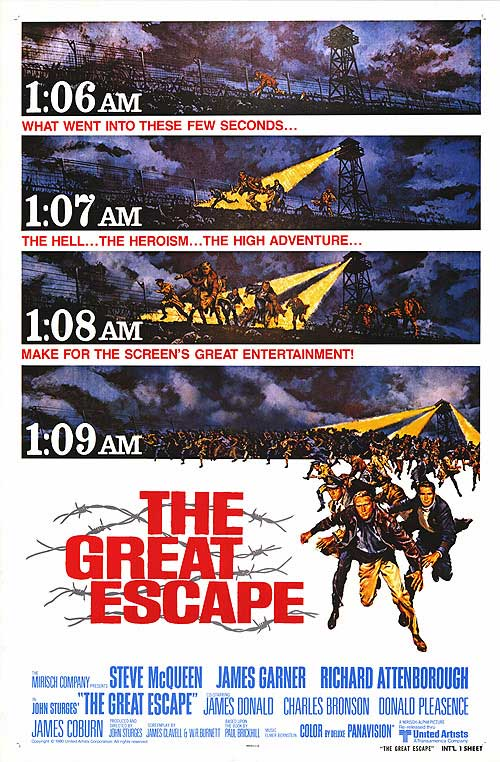
Based on a true story involving POW’s in an ‘escape proof’ German Prison camp who devise a way to get out by digging three tunnels, which will go under the barbed wire fence and allow them to get out under the cover of a nearby forest. They decide to build three tunnels and call them Tom, Dick and Harry, so if the German guards discover one of the tunnels they can simply continue to work on the other two.

The producers built a complete replica of Stalag Luft III were the actual events took place and used Wally Floody who was a prisoner of the camp and took part in the escape as an advisor. The movie moves at a polished pace grabbing in you immediately and keeping you involved all the way through. The characters share a great camaraderie and it’s a terrific testament to teamwork and how by everybody playing a little role can help make great things happen. Their resolve and ‘can-do’ spirit is infectious and one of the major reasons the film is so compelling. The bouncy, upbeat patriotic music is good although it gets played a lot and most viewers will most likely hear it playing in their head long after it is over.

I did feel that the depiction of the camp seemed a bit too cozy. The men are allowed to freely walk around and congregate in large meetings where they make their plans and it seemed to me that a heavily fortified prison camp wouldn’t allow for that, or at least be more on top of things. I wouldn’t say the German’s are portrayed on a ‘Hogan’s Heroes’ dumb level, but at times it gets close. For instance when the James Garner character lifts the wallet out of the pocket of one of the guards he does not become aware that it is missing for what seems like several days and then when he does he doesn’t suspect the Garner character and instead goes back to him and naively asks for his help in finding it. When the Germans find one of the tunnels there are no reprisals even though I and some of the others in my movie group who watched it with me felt that there should have been. Also, when the Steve McQueen character attacks one of the German guards when they shoot his friend who is trying to escape he is not sent to the cooler even though he had previously been sent there for far less infractions.

On the acting side it is all top-notch. McQueen is as cool as ever. I love his detached manner and rugged willing to take risks personality. His escape by motorcycle, which was added into the story by his request, is exciting and one of the most memorable moments in the film. Charles Bronson is good as one of the characters who are most instrumental at digging the tunnels however I felt that it seemed a bit far-fetched and like tacky Hollywood melodrama that he had spent so much time working inside the tunnels only to suddenly get claustrophobic about them just as they are trying to escape. David McCallum has very few words, but gets gunned down in exciting style at a train station. I normally love James Coburn and his character is appealing, but his attempt at an Australian accent is atrocious.

Spoiler Alert!

Despite its title the film really doesn’t seem like all that great of an escape. For one thing out of the predicted 250 that were supposed to escape through the tunnel only 76 made it out before the Germans caught onto it and closed it off. Of those 76 there are 50 who get caught, rounded up and shot at point blank range. 12 get returned to the camp and only 3 actually make it to safety. When the Steve McQueen character gets sent back to the cooler in the film’s final scene I felt a bit frustrated and depressed and that the big ballyhooed escape had really lead nowhere.

My Rating: 8 out of 10

Released: July 4, 1963

Runtime: 2Hours 52Minutes

Not Rated

Director: John Sturges

Studio: United Artists

Available: VHS, DVD, Blu-ray, Amazon Instant Video
I Can Make You Love Me (1993)

stalking laura 2

By Richard Winters

My Rating: 7 out of 10

4-Word Review: Stalking is his passion.

To any true film fan TV-Movies have always been considered vastly inferior to the theatrical kind and I would be the first to agree.  However, there is one area where they can shine and that is in their depictions of true-life crimes. Mainly this is because they give it more time as they are usually shown in two parts over consecutive nights.  Also, their lower budgets worked better in recreating the docu-drama style.

Over the years there have been some classics in this area that have helped bring substance to the headlines as well as a better understanding of the victims, the perpetrators and the investigation. Some of the best that I would suggest would be Helter Skelter (1976) starring the Emmy-award winning Steve Railsback as Charles Manson.  The Deliberate Stranger (1986) with Mark Harmon as serial killer Ted Bundy.  There is also Deadly Intentions (1985), A Death in California (1984) with Cheryl Ladd as a woman who falls in love with her rapist, and my personal favorite Fatal Vision (1984) about the infamous Dr. Jeffrey Macdonald.

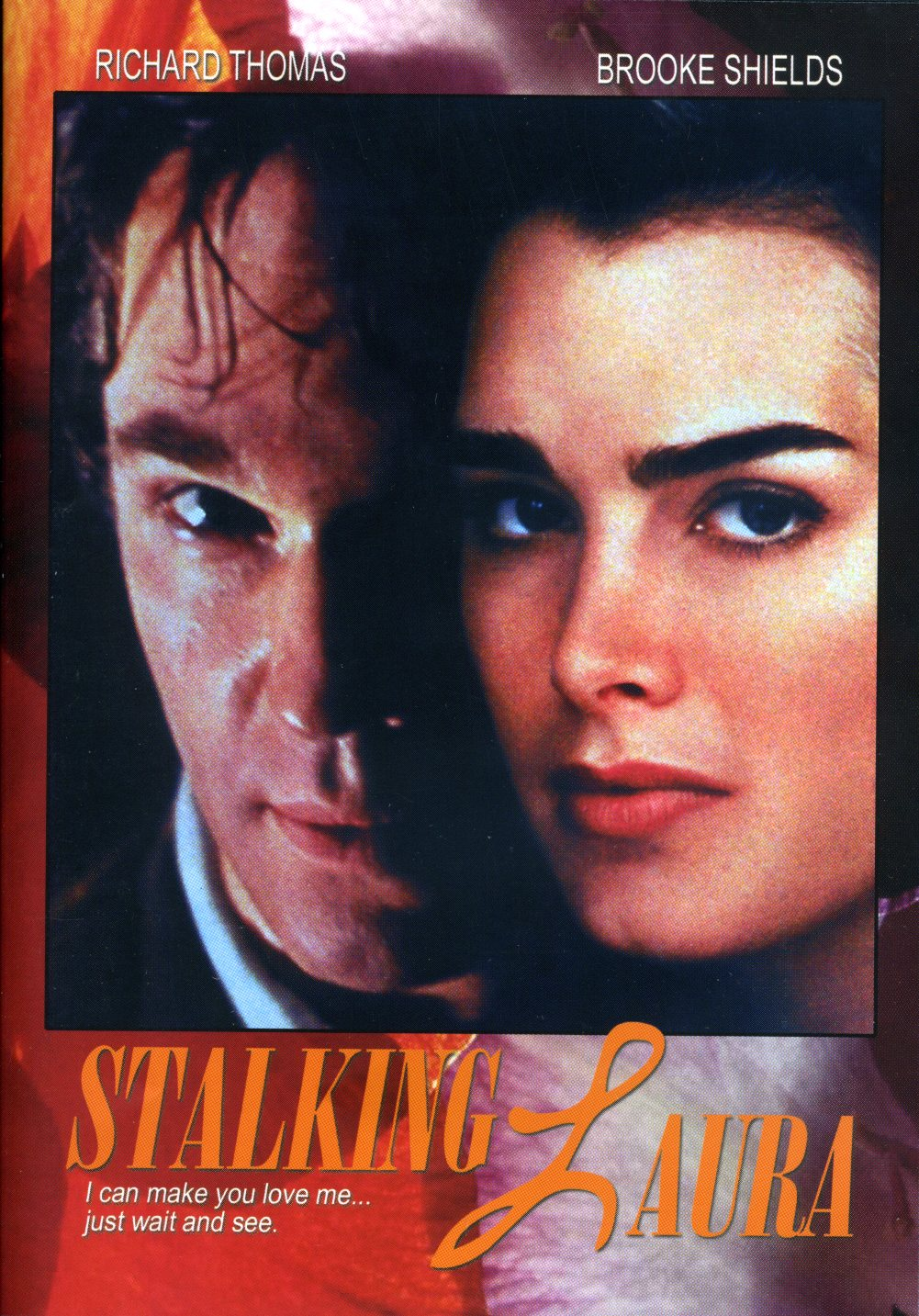
This film deals with the case of Richard Farley (Richard Thomas) that helped develop California’s first anti-stalking laws. Farley was a pudgy, middle-aged man who worked as a computer programmer at a company named ESL in Sunnyvale, California in 1984.  He had been there for 9 years and had no criminal record, but became unhinged when he met an attractive 23- year- old new employee named Laura Black (Brooke Shields).  He began to follow her around constantly as well as sending her gifts and love letters on a daily basis.  When she refused his advances he became even more persistent.  This continued for 4 years until, through his obsession, he ended up losing his job, his house, and his entire life savings, but his stalking continued. Black finally filed a restraining order against him, which sent him into a rage.  He armed himself with an array of guns, stormed the company and shot seven employees including Black, who managed to survive.

Unlike some of the previous movies that I mentioned above, this film did not get the two-part treatment.  Everything that happened gets crammed into 95 minutes, which makes a lot of it seem rushed.  Although the events took place over a four year period, the movie gives you the impression that it was just a few quick months. For the sake of time the film seems to leave certain interesting facts out, which is a shame.  For instance, in real-life Farley actually stood in front of Black’s house for hours going through every conceivable combination on her garage door opener until he was finally able to crack it.  There are also certain things that Farley expressed to Black through his letters that he ends up telling verbally to her here, which causes some of the dialogue to seem awkward.

The film was also not given much of a budget.  It was filmed on a grainy, videotape type of film stock that looks like it was done on somebody’s camcorder.  The story took place in California and yet for whatever reason it ended up being filmed in Topeka, Kansas and the differences in the landscapes are obvious and even a bit disconcerting.

Where the film really seems to come together is during the final 30 minutes where it recreates the office shooting. This sequence is well choreographed and makes you feel like you are right there.  The conversations that Farley has with the negotiator during these scenes are revealing.  I was confused after reading the accounts of the incident as to why Farley would have only shot Black once (in the shoulder) and then allowed her to escape.  Apparently, through his conversations with the negotiator, this was his intention.  He only wanted to injure her and then force her to survive so she would have to live with the ‘guilt’ of having ‘caused’ this by refusing to go out with him.

Another big selling point is the performances of the two leads. Richard Thomas as Farley is astounding.  He does not resemble the actual Farley, but makes up for it with a convincing portrayal that leaves a lasting impression. Shields is excellent as well. Normally I never gave her much credit in the past, but found a new appreciation for her acting ability here.  She does an especially good job during the scenes where she is shot and trying to escape.  It seemed like she was genuinely stressed and in real pain.

Another thing I liked here is that the character of Laura Black is portrayed as being very determined, resourceful, and strong.  She had to struggle with the company about this matter as initially they sided with Farley and was convinced that she must have ‘lead him on’. I felt it was a testament to her strength that she continued to keep working at the company and was still working there five years later when this film was made.

If you find true-life crimes to be intriguing and enjoy seeing them recreated to help your understanding of them, then TV-movies are you best source for this type of genre.  I felt that this case, with its myriad of psychological implications, was no different.

My Rating: 7 out of 10

Released: February 9, 1993

Runtime: 1Hour 32Minutes

Alternate Title: Stalking Laura

Not Rated

Director: Michael Switzer

Studio: Leonard Hill Films

Available: DVD

Anne of the Thousand Days (1969)

anne of a thousand days 2

By Richard Winters

My Rating: 7 out of 10

4-Word Review: Off with her head

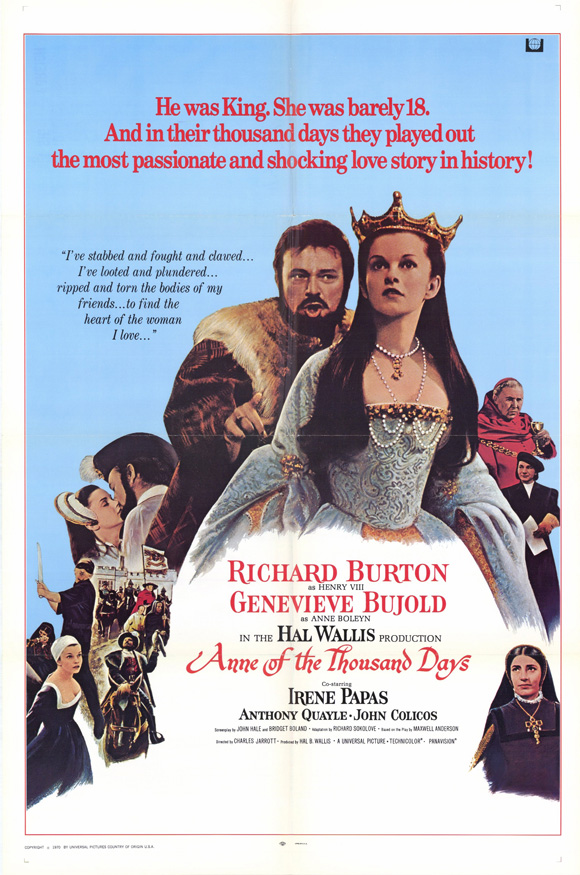
Based on historical fact the setting is 1527 King Henry VIII (Richard Burton) is bored with his current wife Catherine of Aragon (Irene Pappas) and becomes intoxicated by the beauty of 18-year-old Anne Boleyn (Genevieve Bujold). Initially she resists the advances of the King and finds him unappealing, but once she gets a whiff of all the power that being a Queen can give she falls in-love with him. The King wants her to bore him a son, but their first child turns out to be a girl, which causes their marriage to sour. Their acrimony is furthered when their second child turns out to be a stillborn son. Eventually the King grows tired of Anne and hires Thomas Cromwell (John Colicos) to find a way to get rid of her. Cromwell tortures some servants into saying they had sexual liaisons with Anne which gets her placed under arrest and awaiting trial and execution.

Bujold gives a powerful and mesmerizing performance and I am surprised that she didn’t win the Oscar. However, Burton, who is an actor that I admire, seems uncomfortable in his role and just walking through his part.

The story itself is compelling and because it is based on fact makes it all the more amazing. It moves along at a good pace and the viewer can’t help but get absorbed in it. This is no stuffy costume drama and it is probably tawdrier than any soap opera out there. However, Charles Jarrot’s direction is a bit stale. The sets and costumes are great, but the atmosphere and cinematic style is missing and the whole thing seems too much like a filmed stage play.

My biggest quibble with the film is that it doesn’t stay completely accurate. Historians insist that the King does not offer Anne any type of reprieve nor does he visit her after she is imprisoned like he does here. While this scene is nice because it does humanize him who in every other way is despicable it doesn’t help the viewer better understand the story or the people in it by inserting something that really didn’t happen.

My Rating: 7 out of 10

Released: December 18, 1969

Runtime: 2Hours 25Minutes

Rated M

Director: Charles Jarrott

Studio: Universal

Available: VHS, DVD, Amazon Instant Video, Hulu

Pretty Baby (1978)

pretty baby

By Richard Winters

My Rating: 8 out of 10

4-Word Review: He’s robbing the cradle.

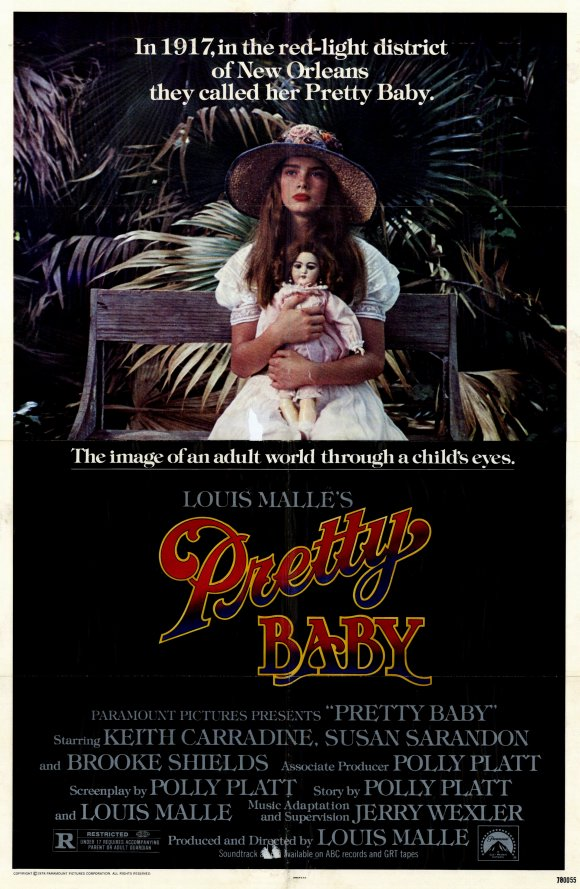
Based on actual accounts of prostitutes living and working in the Storyville area of New Orleans in 1917 the film details the life of Violet (Brooke Shields) the 12 year-old daughter of Hattie (Susan Sarandon) who works as a prostitute and eventually breaks her daughter into the business. Bellocq (Keith Carradine) is a photographer who comes to the brothel to take portraits of the women. He falls in love with the young Violet and the two eventually marry.

Louis Malle’s American film debut is fabulous. He takes a daring subject matter and makes it real and vivid. Sven Nykvist’s cinematography is so detailed that you almost think that you are looking at painted portraits of the era. Malle employs a leisurely European pace to the proceedings, which nicely reflects the slower era. The emphasis is on nuance and in that regard it is brilliant making the viewer feel that they are right there with characters and observing the daily realities around them. The story is certainly shocking, but somehow a strong human element remains making it fascinating and revealing.

The strongest moment comes when a group of middle-aged men bid on Violet to see who will get the honors to take her virginity. Having the camera pan the men’s eager faces, some of whom look to be nearing 50 and even 60 is visually potent as is Violet’s ambivalent expression as she stands on a chair in front of them. The fact that it is approached in a non-sensationalistic matter and instead more like as a slice-of-life makes it all the more disturbing and compelling.

Shields is fabulous. Her facial expressions as she observes the decadence around her is what really makes the movie. She shows a great awareness and creates an intriguing character that cannot read and write and yet acts like having sex with a middle-aged man is ‘no big deal’ and working as a prostitute is completely ‘normal’ way of life. Watching her shift between being very child-like to very jaded is fascinating. I really think this is an actress that is much more talented than she is given credit for and although many other actresses auditioned for the part including Tatum O’Neal, Meg Tilly, Geena Davis, and Diane Lane I really felt the movie wouldn’t have been as effective with them in the role. Shields is really exceptional and should have netted the Oscar, or at least have been nominated.

Sarandon is terrific as her hardened mother and unfortunately is not seen enough, but manages to light up every scene that she is in nonetheless. Singer Frances Faye is also quite good as the head of the brothel. Her old, tired face brings out the difficult, cold lifestyle. Her best moment comes when she is seen staring in a catatonic state into space while everyone else has left the place and all the belongings are being carried out.

Carradine is okay in a restrained performance as a character that is more educated and refined than the rest, which makes for some interesting interactions. The fact that this man ends up getting emotionally stung by such a young girl despite being so much more sophisticated and mature ends up being one of the film’s most definitive moments.

My Rating: 8 out of 10

Released: April 5, 1978

Runtime: 1Hour 50Minutes

Rated R

Director: Louis Malle

Studio: Paramount

Available: VHS, DVD, Amazon Instant Video

All the Way Home (1963)

all the way home 2

By Richard Winters

My Rating: 8 out of 10

4-Word Review: Life must go on.

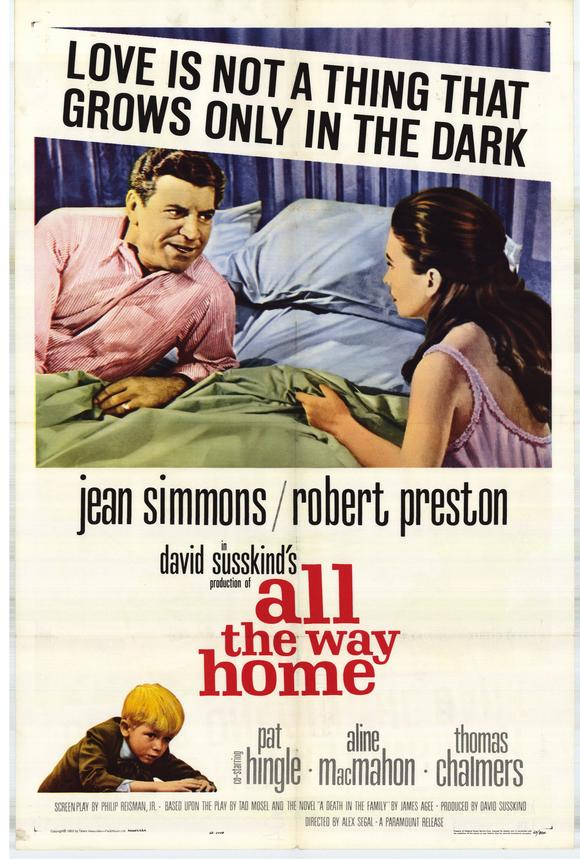
Based loosely on the childhood experiences of writer James Agee who is best known for penning the screenplay to the classic film Night of the Hunter.  The story here looks at how a southern family copes and in particular the young boy Rufus (Michael Kearney) after their father (Robert Preston) is tragically killed in a car accident.

Based on Agee’s unfinished novel ‘A Death in the Family’, which was also made into a stageplay the film makes loving tribute to the era. The sets and even the Model T car driven by the father are all authentic. In fact it was filmed near the exact neighborhood in Knoxville where Agee grew up. The mannerisms and dialogue are true to the period without any compromising for a more modern audience. The revisionism which has become so trendy in today’s period piece films is thankfully missing here. The slower and gentler pace seemed reflective of the era and I found it refreshing.

Preston gives one of his best roles second only to his signature one in The Music Man. He doesn’t get killed until the second half of the film, so the viewer gets to know and like the character and thus feels the pain of the loss along with the family members. We never see the actual accident nor given any explanation for what happened, which is just as well. Too many times filmmakers seemed compelled to have to give a reason for everything even though in life that is not always possible, so it is nice that here they did not fall into that trap. This emphasis instead is on how the family members cope and the emotional impact of the loss, which is something everyone must go through at some point and it ends up being quite compelling.

Kearney gives a terrific performance and one of the best from a child actor that I have seen. He is cute without ever being precocious. Watching him observe everyone else around him are some of the best moments in the film. It also brings up the great point that sometimes children are better at adapting to tragic events than their adult counterparts.

Durable character actor Pat Hingle gives one of his most interesting performances as Preston’s nervous and hyper brother. Preston has a great line in describing him when he says: “Talking to him is like putting socks on an octopus.”

Aline MacMahon is good as the kind, but stern aunt. I particularly liked the moment where Rufus falls to the ground in an emotional tantrum, but she restrains the others from helping him and insists that it is important that he learns to get himself up on his own. Jean Simmons as the mother and wife is also splendid, but seems to get better as the movie progresses particularly in her conversation with Rufus at the end, which is touching.

My Rating: 8 out of 10

Released: October 17, 1963

Runtime: 1Hour 37Minutes

Not Rated

Director: Alex Segal

Studio: Paramount

Available: Amazon Instant Video

Alice’s Restaurant (1969)

alices resturaunt 2

By Richard Winters

My Rating: 7 out of 10

4-Word Review: Nobody likes the draft.

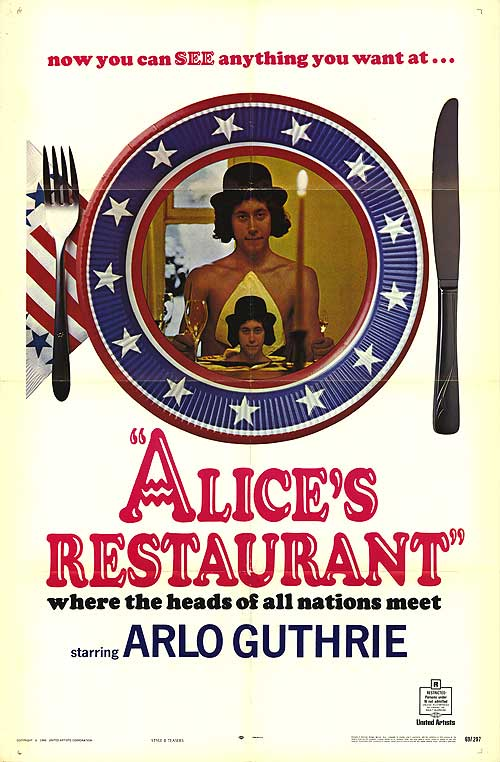
Attempt at making a movie out of Arlo Guthrie’s famous 18-minute song, which in itself was based on actual events succeeds for the most part although it seems to be biting off little more than it can chew. Pat Quinn plays Alice a middle-aged woman who along with her husband Ray (James Broderick) buys a church and turns it into a hippie retreat as well as a restaurant. Arlo plays himself and a friend of the couple who helps them in their endeavor. Things go well for a while, but then infighting, the draft, the death of some of the members, and basic overall disorganization do it all in.

Although Guthrie’s song has a bouncy, upbeat, and humorous quality to it the movie works in an opposite fashion. There are a lot of long dramatic takes with a tone that is overall downbeat and depressing. To some extent it succeeds at giving the viewer a vivid look at the late 60’s experience, but compared to the song it seems to be a bit of a letdown. However, there are still some great moments that will connect with you on a purely emotional level. One of them is seeing legendary folk singer Pete Seeger and Arlo playing a song for Arlo’s bedridden father Woody (Joseph Boley) and another includes the sights and sounds of an outdoor wintry funeral for one of their troubled friends.

There are some good comedic moments, but they all come pretty much in the second half making the film seem a bit disjointed and almost like two films rolled into one. The best moments in this area include Arlo’s attempts at dumping out garbage, which features a lot of good quick edits as well as the actual Officer William Obanhein mentioned in the song. Arlo’s army physical is also quite funny especially his experiences in the ‘Group W’ room, which also has an early appearance by character actor M. Emmet Walsh who talks so fast that he becomes incoherent.

The idea of casting Arlo in the lead works to some extent. Obviously the presence in his own story makes it more authentic, but he also seems too detached and shows little if any emotional range. He also looks incredibly young almost like he is only 14.

It is Broderick who comes off best and this is easily his best performance of his otherwise sporadic career. He seems light years away from the more conservative, fatherly figure that he played in the 70’s TV-show ‘Family’ and the fact that the character here is a middle-aged man trying to submerge himself with the youth movement while displaying obvious frailties in the process makes him fascinating to watch and help give the film an added layer.

When I first saw this film years ago I came away feeling that it was too downbeat and disjointed, but upon second viewing I have a greater appreciation for it. It seems now more prophetic and forewarning to the beginning of the end of the hippie movement and how their carefree youthful ideals simply weren’t going to survive amidst the harsh, practical realities of the world that it was in. The long, continuous shot of Alice’s sad, forlorn expression seen at the very end seems to be conveying this and thus makes this movie less of a relic and more perceptive than most people may realize.

My Rating: 7 out of 10

Released: August 20, 1969

Runtime: 1Hour 51Minutes

Rated R

Director: Arthur Penn

Studio: United Artists

Available: VHS, DVD, Amazon Instant Video

The Valachi Papers (1972)

the valachi papers 1

By Richard Winters

My Rating: 7 out of 10

4-Word Review: Testifying against the mob.

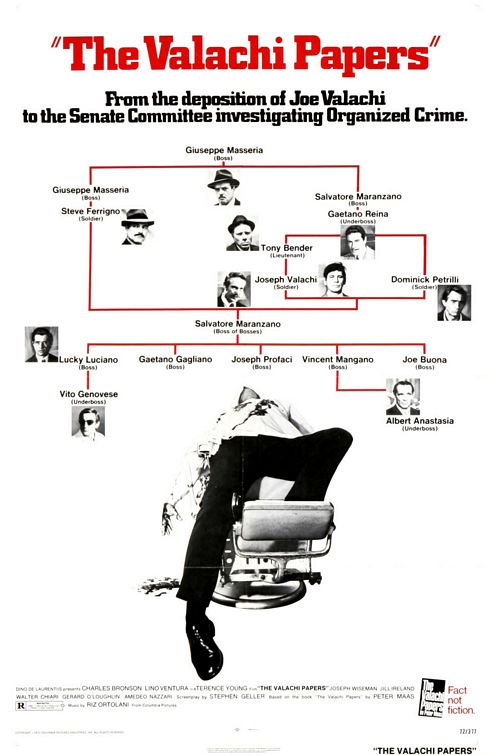
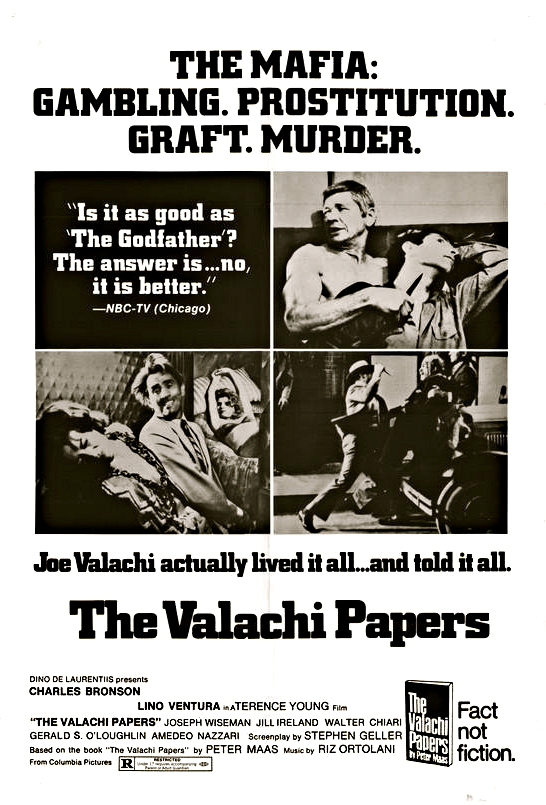
Based on the bestselling novel by Peter Maas this film chronicles the life of Joseph Valachi (Charles Bronson) who became the very first informant for the Mafia in their history. The story chronicles his life from a young man getting involved in the mafia culture to his eventual imprisonment and testifying in front of congress.

At the time of release this was compared closely to The Godfather with some critics outrageously saying it was better, but clearly it doesn’t come close. This film lacks the in-depth characterizations, lyrical quality, and an overall slick design. This film is also rather sloppily produced including one scene involving an exciting car chase taking place in the 1930’s. When the two cars go crashing through the wall of a warehouse and into the East river one can clearly see the Twin Towers of the World Trade Center, which weren’t built until 1970. There is also the Lucky Luciano character played by actor Angelo Infanti who wears a type of glasses that did not come into style until well into the 1970’s. However, as a whole the film is still amazingly compelling flick that ends up being both entertaining and somewhat informative. The music score has a terrific ominous tone to it and the prison scenes have a nice starkness.

The film was known at the time for its violence, which by today’s standards may not seem quite as startling or as excessive although the blood and bullets do come at regular intervals. My favorite was the shooting of an old crime boss inside a barbershop although the castration of a victim on top of a table inside a restaurant is pretty wild. However, for all of its violence the film does manage to have a sense of humor as well including a very amusing scene where one of Joe’s mob bosses sits in the living room of the mother of Joe’s girlfriend and asks the mother for her permission to allow Joe to marry her daughter while Joe sits nervously behind and tries to look proper.

Lino Ventura has the perfect face of a mob boss and was ideally cast. The scene of him inside the prison where he has stays in a well-furnished cell and even seems to have his own barber is funny. Joseph Wiseman displays great zest as the opposing crime boss Salvatore Maranzano and his agonizing yells of pain as he lies dying are effective.

Bronson seems perfectly cast as an uneducated simple man who is a follower and has his own quiky code of morality, which makes him strangely endearing. His wife Jill Ireland does not fare as well. She ports a brunette wig and her Italian accent borders on being horrendous to non-existent. Fortunately she is not given very many speaking lines as her British accent is constantly seeping through.

In many ways this film could best be described as an ugly cousin to Goodfellas. While this film lacks that film’s fluid directorial flair it still manages to be an engrossing true-life gangster soap opera like that one.

the valachi papers 2

My Rating: 7 out of 10

Runtime: 2Hours 5Minutes

Released: November 3, 1972

Rated R

Director: Terence Young

Studio: Columbia Pictures

Available: VHS, DVD

Breakout (1975)

breakout

By Richard Winters

My Rating: 7 out of 10

4-Word Review: Escape from Mexican jail.

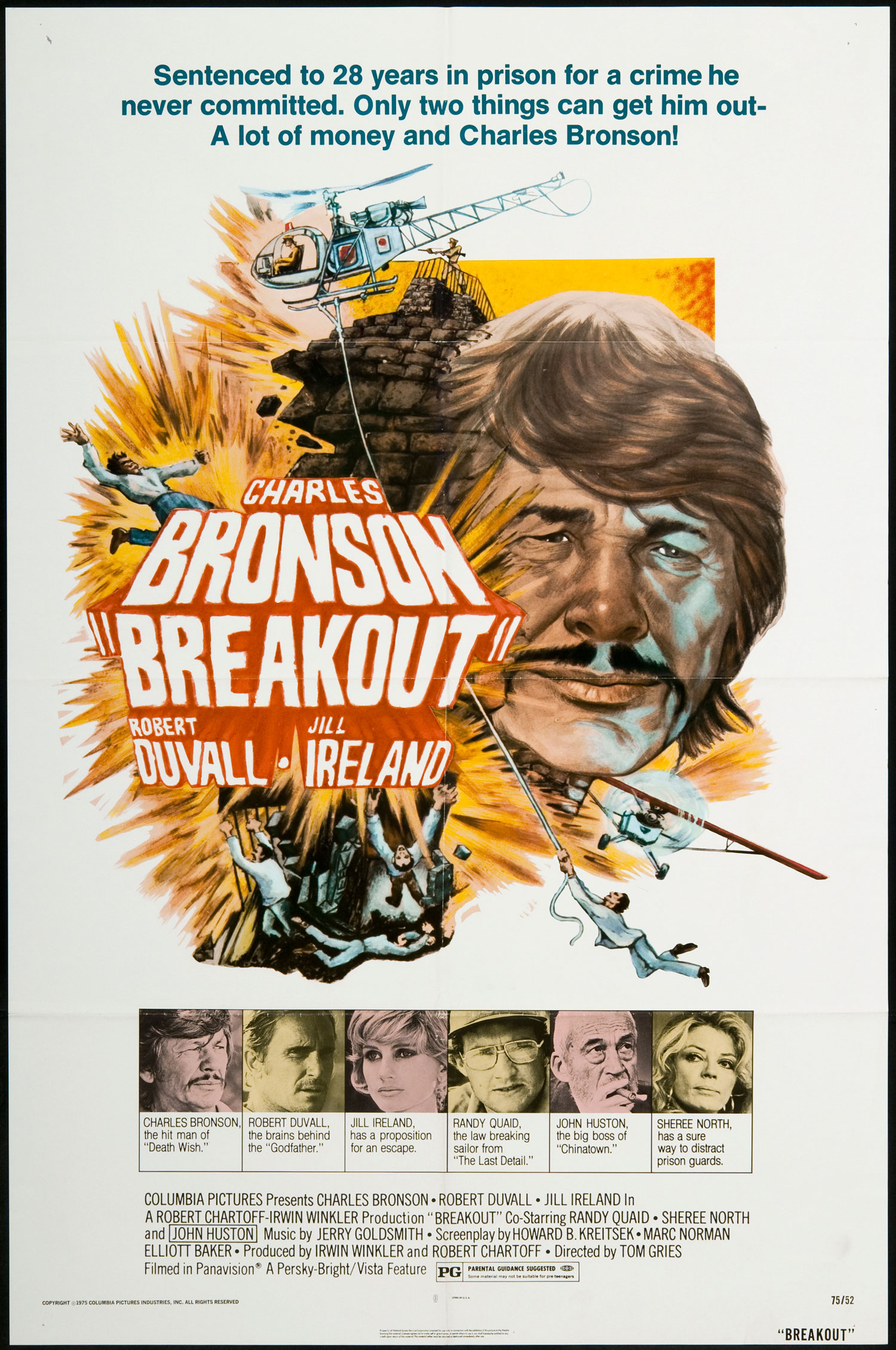
Loosely based on the actual 1971 incident involving Joel David Kaplan, who after being framed for murder and stuck inside a Mexican prison for 9 years, was able to escape when his sister hired a pilot to fly a helicopter into the prison yard and allow Kaplan to jump into it and flee. In this movie Jay Wagner (Robert Duvall) is the Kaplan character and Nick Colton (Charles Bronson) is the goofy, but lovable pilot.

Veteran director Tom Gries delivers a compact action pic that has a good mix of humor and excitement. The comedy is not forced and genuinely engaging, but once the action gets going it is entertaining as well. When the helicopter starts flying into the prison with 30 minutes left in the movie I found myself completely riveted. Gries photographs the action in a way that makes the viewer feel like they are inside the helicopter alongside Bronson. The stunts are authentic and done on-location, which is a big plus. One scene involving a man getting sliced up by an airplane propeller is surprisingly explicit and should make anyone wince when they see it.

My only quibble in the direction department is the opening where a man is shown being shot to death while Gries freezes the frame every few seconds as the victim falls down, which came off as being disjointed and distracting. There is also a shot of the dead body lying on the ground with blood stains on his white shirt. However, there are no bullet holes in his shirt and you really can’t have blood coming out of someone’s body unless you have bullet holes and if you have them piercing the skin you most likely would have them piercing the shirt, but none were found in the shot I saw.

Bronson is highly engaging and steals every scene that he is in. I was surprised how comfortable he was in a comedic role and it made me wish he had taken more stabs at comedy in his career. My favorite moment with him is his nervous, anxiety-ridden expression on his face when he tries to pilot a helicopter and finds that it is much more complicated than he realized. The running gag of him trying to pass off a bad check is also good.

Jill Ireland who plays the wife of the Duvall character and is the one who hires Nick for the job is also enjoyable. She is almost as amusing as Bronson especially with the way she becomes increasingly exasperated by the situation. The two seem to work better when they are adversarial and you could never tell that in real life they were husband and wife.

Sheree North is also great in a small supporting role. Although she was already in her 40’s when she did the part she still looks sexy in a full body shot of her in some really, really short shorts. Her very politically incorrect rape conversation that she has with Nick is good.

Duvall is wasted in a part that doesn’t allow for much range and limited screen time. I’m actually surprised that he even took the part. However, his hair style, and I’m not sure if it was a wig, or just a really good comb-over, but it completely covers up his normally bald head and makes him look twenty years younger.

Randy Quaid seems equally underused, but having the chance at seeing him in drag may make his appearance here worth it to some.

I didn’t like the part where Duvall gets buried alive while inside a coffin in his attempt to escape as it is too reminiscent of a classic Alfred Hitchcock episode entitled ‘Final Escape’, which is better and shouldn’t be touched. However, as a whole, this is a good 95 minutes of enjoyable non-think entertainment.

My Rating: 7 out of 10

Released: May 22, 1975

Runtime: 1Hour 35Minutes

Rated PG

Director: Tom Gries

Studio: Columbia Pictures

Available: DVD, Amazon Instant Video

The Straight Story (1999)

straight story

By Richard Winters

My Rating: 9 out of 10

4-Word Review: Old man on lawnmower.

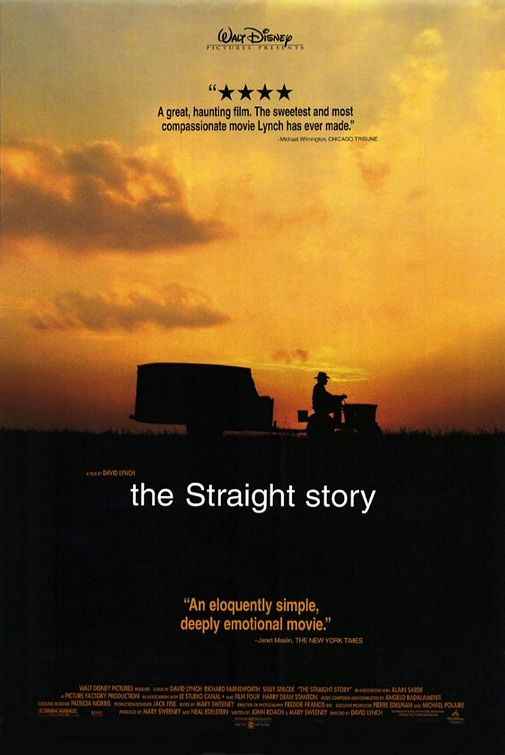
Richard Farnsworth plays Alvin Straight, an older man with health problems who decides to travel from Iowa to Wisconsin on a rider mower to visit his sick brother.

This film is a true achievement. For every flamboyantly bizarre film David Lynch has done he equals it here with his restraint. He truly proves himself a complete director and a sensitive one at that. He shows a deep respect for his subject and the area. Nothing is overplayed or exaggerated. It is the type of film no one thought Hollywood could do. Based on a true story they go along the same route the real Alvin took. The drama is not compromised and everything is handled in a dignified way. It propels itself on the quite eloquence of his journey and the people he meets. The soft pace is stunning especially when you realize that it is still quite captivating.

Farnsworth is perfect for the role. In many ways you feel he is Alvin Straight. He exudes so much of the same qualities of the character that you are convinced that they share some spiritual connection. His lines and little stories are both touching and powerful. Yet it is his deep expressive blue eyes that you remember the most. At any given time they can convey both his personal strength and sensitivity. Sissy Spacek is also terrific. Her portrayal of his mentally handicapped daughter is so convincing that you really can’t see the acting.

This is an emotional film and one that makes the viewer feel good without being manipulative or using any of the old conventions. The simplicity is refreshing. The only minor drawback is the meeting with his brother. Talented actor Harry Dean Stanton plays his brother yet he is only given a few lines. You wish he had more and we were able to see a more complete relationship. Even so this is still a wonderful movie.

My Rating: 9 out of 10

Released: September 3, 1999

Runtime: 1Hour 52Minutes

Rated G

Director: David Lynch

Studio: Buena Vista Pictures

Available: VHS, DVD

The Subject Was Roses (1968)

subject was roses

By Richard Winters

My Rating: 7 out of 10

4-Word Review: This homecoming isn’t happy.

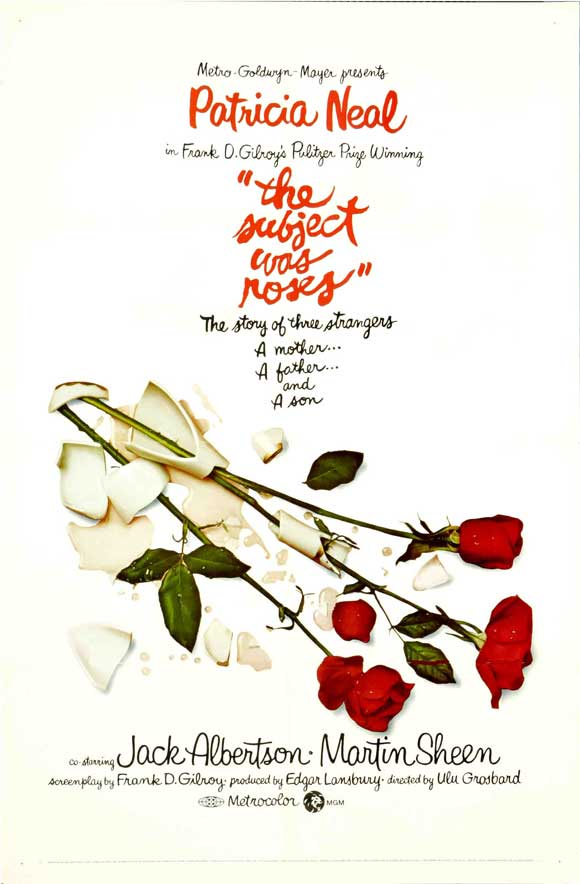
Tim (Martin Sheen) arrives home from the war to find that things aren’t going well with his parents John and Nettie (Jack Albertson, Patricia Neal). Their aloofness towards each other slowly becomes more apparent and seems to come to a head when Tim decides to buy his mother a bouquet of roses and his dad pretends it was his idea. When Nettie realizes it wasn’t John who bought them she leaves the house and doesn’t return, which causes John to panic and try to find her.

This movie has a compelling quality to it and is the old-fashioned type of drama that they don’t seem to make anymore. The characters are real and believable and will probably remind one of their own parents, or even themselves and their marriages. The dialogue has a great conversational style and the viewer feels like they are eavesdropping onto an actual household. The action happens slowly, but deliberately and is devoid of any neat and tidy wrap-ups.

However, the film is also a bit frustrating. We are never explicitly shown what it is that is troubling Nettie so terribly. We are given some definite hints of things bubbling just underneath the surface, but there is nothing that completely comes out into the open. The viewer becomes primed for some great revelation, but when it doesn’t come and the characters end up remaining in the same situation as when it began it makes the whole thing seem pointless.

Neal is outstanding and the main catalyst for why this works. This was her first film after she had suffered several near fatal strokes in 1965. Although she does very well one can still see some subtle effects of it like the way she walks and her speech being just a little bit slower, but in context with the role it makes her seem older than she really is and therefore better for her role. I was surprised at how physically demanding the part was including having her dance rigorously around the living room with Sheen as well as having to aggressively fight off Albertson’s unwanted advances. Her sad and pained facial expressions leave the most lasting impressions.

Although it was Neal who I felt should’ve won the Oscar it was actually Albertson who did. His performance, which he recreated from the Broadway play that also netted him the Tony, is solid especially for doing a character that at times is off-putting. He does get the film’s best line “The humping that I am getting isn’t worth the humping that I am getting.”

The story takes place in the 1940’s and is basically a loose autobiographical story of Frank D. Gilroy who wrote both the award winning play and screen version. For the most part it succeeds with its retro look, but the music by Judy Collins doesn’t fit. Personally, I love Collins as a vocalist, but her raw, moody folk music sound seems out of place for a 40’s setting and takes the viewer out of the story in the process.

Transferring a story done for the stage to the big screen is never easy, but director Ulu Grosbard manages to make it cinematic. None of it was done on a soundstage, but instead the apartment was built inside a warehouse in the same Bronx neighborhood where Gilroy grew up and painstaking detail was done to give it an authentic lived-in look. The scenes done at their lakeside cabin is also effective as it captures the blossoming spring time landscape and gives a nice soothing feeling. You also get to witness Sheen skipping stones across the lake several times something that I could never get the hang of myself.

My Rating: 7 out of 10

Released: October 13, 1968

Runtime: 1Hour 47Minutes

Not Rated

Director: Ulu Grosbard

Studio: MGM

Available: VHS, DVD (Warner Archive)