Category Archives: Movies Based on Actual Events

10 Rillington Place (1971)

10 rillington place 2

By Richard Winters

My Rating: 7 out of 10

4-Word Review: He enjoys strangling women.

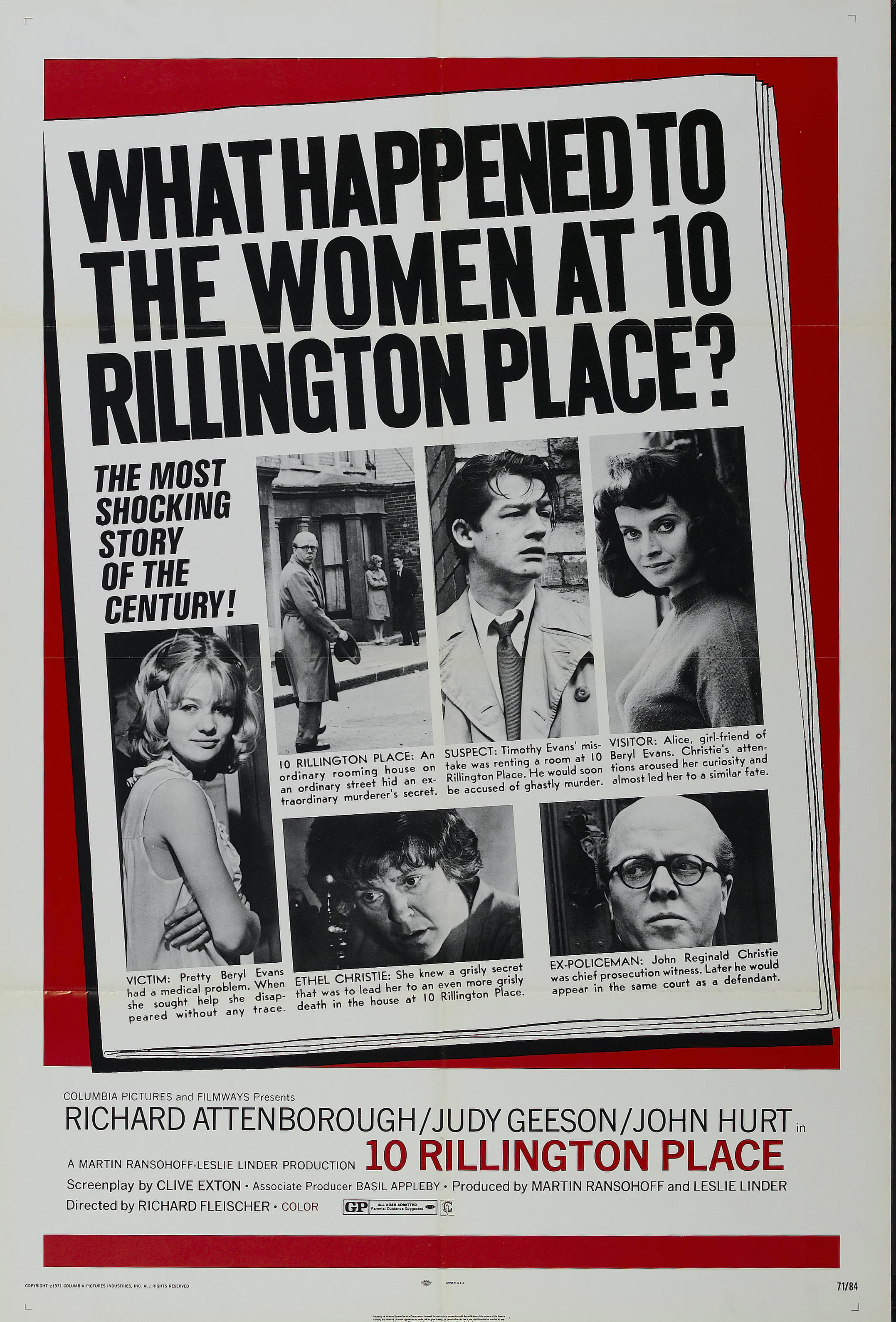
This film depicts the true life account of John Christie, played here by Sir Richard Attenborough, who strangled eight women, had sex with their corpses and then hide their bodies in his London flat at 10 Rillington Place. The story begins with Christie having already murdered several women when Timothy and his wife Beryl (John Hurt, Judy Geeson) arrive looking for a place to stay and decide to rent a room from Christie who immediately takes a fancy to Beryl. When she confides in him that she is pregnant and looking for an abortion he uses it to his advantage by pretending to be a former Dr. who can secretly perform the procedure. He then strangles her after giving her some anesthesia and tells Timothy that it occurred during the abortion and threatens him not to go to the police since it was an illegal operation at the time and Timothy was aware that she wanted it done, which would have made him an accessory. However, after moving out his suspicions continue to nag him and he eventually goes to the police, which culminate in a dramatic trial with both men accusing the other of being a liar.

The film comes off as being quite authentic to the actual events with the dialogue taken straight off of the court transcripts. The exteriors were filmed at the actual flat were the murders occurred while the interiors scenes where shot at an apartment house that was just three doors down from Christie’s real life one. Richard Fleischer’s direction is low-key with emphasis put on keeping things real almost like a documentary instead of trying to sensationalize it. The music is used sparingly and has a certain quite tone of loneliness and detachment to it almost like it is representing the feelings and mood from Christie himself.

Attenborough and Hurt give strong performances and the diametrically divergent personalities of the two characters are what drive the film. Attenborough accepted the role without even having read the script. He wore a skin-like skull cap for the part, which gives him a very pronounced bald head and a creepy alien-like quality. I also really liked the scene where he looks at himself in the mirror just before he commits the murder with his eyes conveying a frightened and ashamed look like even he himself is horrified at the murderous out-of-control obsession that drives him. Geeson does well as the sympathetic victim and Pat Heywood is memorable in an understated role as Christie’s wife Ethel who initially believes her husband to be innocent, but then slowly becomes aware of what a monster he really is.

The film would have been stronger and a more multi-faceted had it shown even in brief flashback more of Christie’s background including the fact that he was dominated by his mother and older sisters and raised by a father who showed no emotion for him as well his lifelong struggles with impotence, which all could’ve helped explain why he became the way he did. It also might have allowed for more tension had the story started with the court case and leaving it a mystery to the viewer at the beginning as to which of the men was telling the truth instead of having the narrative done in a very matter-of-fact, by-the-numbers way. In either case the film is still quite strong and great example of how a true-life crime story should be done.

My Rating: 7 out of 10

Released: February 10, 1971

Runtime: 1Hour 51Minutes

Rated GP

Director: Richard Fleischer

Studio: Columbia Pictures

Available: DVD-R, Amazon Instant Video

Soldier Blue (1970)

soldier blue 1

By Richard Winters

My Rating: 5 out of 10

4-Word Review: They massacre the Indians.

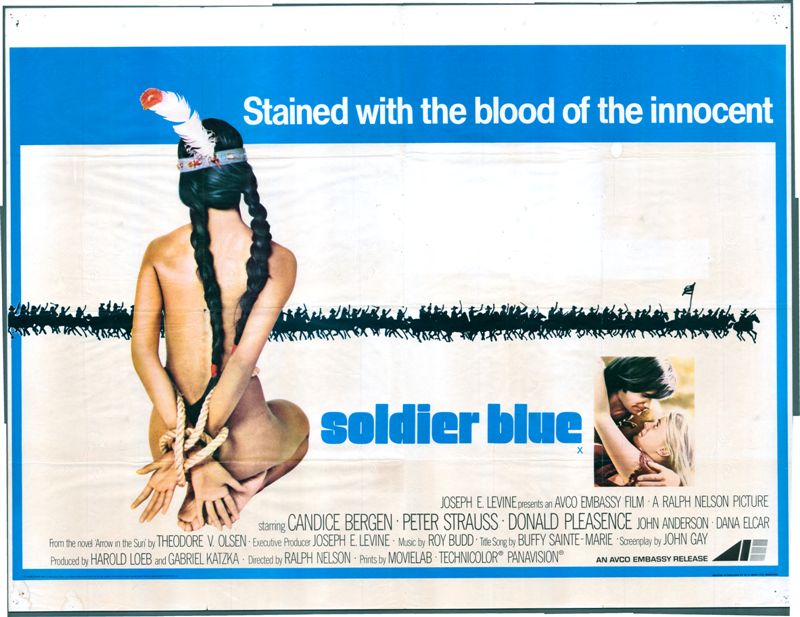
Two survivors of a Cheyenne Indian attack, the young and beautiful Cresta (Candice Bergen) and Honus (Peter Strauss) a private from the Calvary must travel through treacherous western terrain avoiding other attacks while also finding the Calvary’s base camp. Along the way the two start a romance despite wide differences in their temperaments and perspectives. Honus supports the position of his country and government without question while Cresta is more sympathetic to the Indians, but this all comes to a crashing halt when they witness an assault by the U.S. army on a peaceful Indian camp, which shocks Honus and changes his perspective on things forever.

The film is mainly known for its notoriously violent ending, which at the time was unprecedented for its use of explicitly savage imagery and remains controversial to this day, but before we get to that I’d like to go over what I did liked about the movie, which for the most part is still watchable.

Filmed in Mexico in October of 1969 the stunning views of the wide open terrain  is sumptuously captured by cinematographer Robert B. Hauser, which is enough to keep one enthralled with it despite its otherwise flimsy plot. I also enjoyed Buffy Sainte Marie’s rousing opening title tune, but the rest of the music score by Roy Budd seems misplaced. During the attack that starts out the film it is booming and orchestral almost like it wants to replicate the sound and mood of a conventional western even though this is supposedly a revisionist one. At other times it takes away from the potential grittiness by being played when it was not needed and sounding too modern for the time period.

Strauss in only his second film is marvelous and makes his naïve and rigid character believable and likable, but I was perplexed how someone lost in the wild for days and weeks and sometimes without food or even a gun could still remain clean shaven. Bergen as his female counterpart is great as well and beautiful. The fact that she is foul mouthed and very self-sufficient while Honas is more timid makes for a nice reversal of the sexual stereotypes, which helps propel the film during the first half. However, it eventually gets overplayed as Bergen’s character starts to display too many attitudes and behaviors from someone that was ahead-of-her-time until it seemed like she was really a late ‘60’s student radical that somehow got pulled into a western setting instead of a person that had actually lived during that era.

Donald Pleasence, a highly talented character actor who played many varied roles during his career, gets one of his best ones here while wearing false teeth that make him almost unrecognizable. His chase of the two when they destroy his wagon lends some much needed tension in what is otherwise a dull romance.

The Indian massacre that climaxes the film is based on the Sand Creek Massacre that occurred on November 29, 1864. Although the film incorrectly states during its denouncement that is was led by Nelson A. Mills it was actually U.S. Army Colonel John Chivington who ordered a band of 700 men to attack a peaceful Indian village where between 150 and 200 Indians were killed most of whom were women and children.

The film portrays Bergen’s character as being the only white person outraged at the slaughter, which isn’t true as many people from the era where appalled by the news when it was found out and the attack was condemned by the army after it was investigated.  Chivington was then forced to resign where he lived out the rest of his life in almost total ostracism by every community he moved to. There were also two officers in the Calvary who refused Chivington’s orders to attack and told the men under their command to hold their fire, which doesn’t get shown at all.

Although the movie does leave some effective haunting images it would’ve worked better had it been a documentary, or a reenactment that concentrated fully on the attack while also showing its aftermath and what lead up to it. It should’ve also been better researched, accurate and balanced instead of feeling the need to pander to the political fervor of its day with stagy over-the-top dramatics and a clumsily attempt to tie it into the My Lai Massacre that has forever stigmatized this as being nothing more than dated emotionally manipulative propaganda.

soldier blue 2

My Rating: 5 out of 10

Released: August 12, 1970

Runtime: 1Hour 55Minutes

Rated R

Director: Ralph Nelson

Studio: AVCO Embassy Pictures

Available: VHS, DVD, Blu-ray (Region 2), Amazon Instant Video, YouTube

Road House (1989)

roadhouse

By Richard Winters

My Rating: 3 out of 10

4-Word Review: Bouncer cleans up bar.

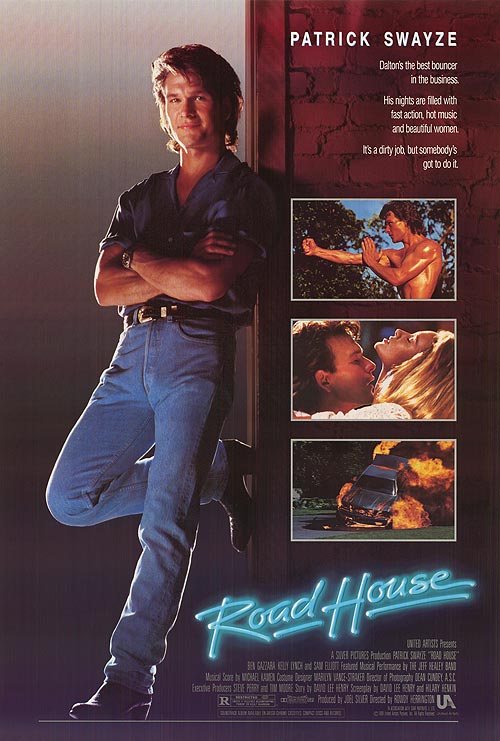
After opening up a bar in a small town outside of Kansas City Tilghman (Kevin Tighe) looks to find a bouncer strong enough to handle the tough clientele and yet smart enough to run the staff and stay out of harm. He turns to Dalton (Patrick Swayze) whose reputation meets his standards. Dalton wastes no time in cleaning up the bar and making it profitable, but when the town bully who is a rich and unscrupulous businessman name Brad Wesley (Ben Gazzara) wants in on the action things become quite ugly quite quickly.

Had this film been done as a parody of all those macho 80’s action flicks this thing could’ve been brilliant as the over-the-top ingredients are already there, but instead it takes itself seriously and ends up being unintentionally funny. Everything gets played up to the extreme. The characterizations are broad while the story elements are predictable and formulaic. Even the fight sequences are stale and tiring although the scene where Wesley has a monster truck crash through a car dealership and crush all the vehicles isn’t bad.

The dopey script is filled with one implausible plot point or cliché after another. I found it hard to believe why Dalton, who makes $500 dollars a night and demands $5,000 upfront, would have to settle for an upper loft of a horse barn for his living quarters, which is too conveniently located across the pond from Wesley’s mansion. Strippers at a small town bar isn’t realistic nor is having a hot babe clientele who are provocatively dressed and looking more in tune for a posh nightclub in some hip cosmopolitan city.

Swayze is dull in the lead and his stoic ‘manliness’ comes off as boring. Sam Elliot who shows up later as one of Dalton’s pals from the past would’ve made the movie much more interesting had he been the star and about 20 years younger. He has a few great lines including the one that he says as he enjoys the derriere of Dalton’s girlfriend as she walks away “That girl has way too many brains to have an ass like that.”

Red West who made a career working as a stunt double makes for an affable everyman playing a shop owner who Dalton befriends. Kelly Lynch is gorgeous as Dalton’s girlfriend and I found her sex scenes with him and brief nudity amusing since she later went on to play the upset mother of a teen porn addict in the infamous Lifetime movie ‘Cyber Seduction’.

Spoiler Alert!

My favorite part was the ending when several of the townspeople get together and take turns shooting at Wesely before ultimately killing him, which is clearly inspired by the real life event that like in the movie occurred in a small town outside of Kansas City. The town was Skidmore, Missouri and on the afternoon of July 10, 1981 the townspeople upset with decades of violence from the town bully named Ken McElroy got together in the main street of town and shot and killed him as he sat in the cab of his pickup and then just like in the movie covered up for each other, so nobody was arrested. The town, which sits in the far reaches of Nodaway county as had a few more strange occurrences since then including a bizarre 2001 disappearance of an 20-year-old who literally vanished into thin air when he went outside to put some jumper cables into a shed and the 2004 killing of a pregnant woman who had her fetus cut out of her womb. I traveled to the place in 2007, but fortunately was able to get through it without incident.

End of Spoiler Warning!

Main street Skidmore, Missouri where the shooting took place on July 10, 1981. Where the white car is parked is roughly where Ken McElroy's pickup was when he was shot. Photo taken by me in 2007.

Main street Skidmore, Missouri where the shooting took place on July 10, 1981. Where the white car is parked is roughly where Ken McElroy’s pickup was when he was shot. Photo taken by me in 2007.

My Rating: 3 out of 10

Released: May 19, 1989

Runtime: 1Hour 54Minutes

Rated R

Director: Rowdy Herrington

Studio: United Artists

Available: VHS, DVD, Blu-ray, Amazon Instant Video
Tropic of Cancer (1970)

tropic of cancer

By Richard Winters

My Rating: 4 out of 10

4-Word Review: Writer living in Paris.

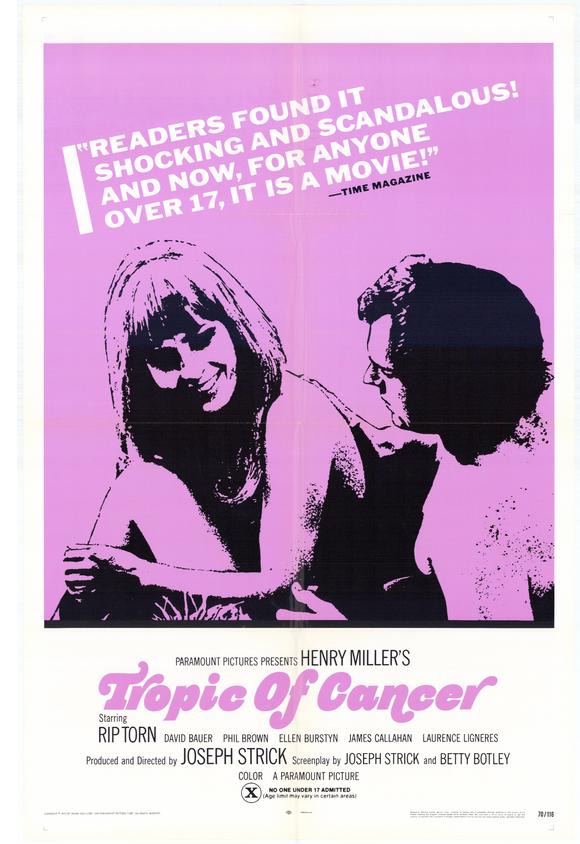
Rip Torn plays author Henry Miller living in Paris during the 1930’s and struggling to find work, shelter and money. He spends his time shoplifting items from food stands while also having sexual conquests with prostitutes and even the wives of his friends.

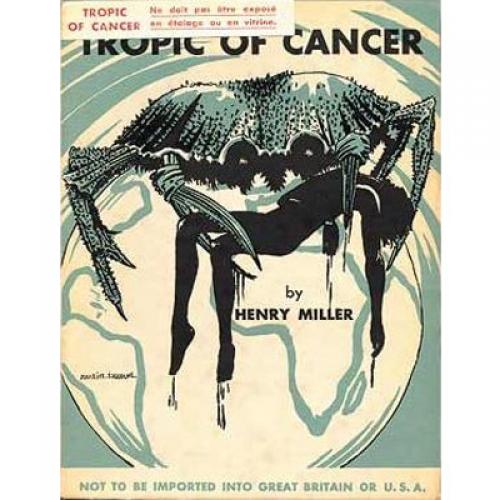
The film is based on Miller’s landmark novel that was published in France in 1934, but banned in the US until 1961 and even then went through several obscenity  lawsuits, which were finally all dropped in 1964 when the US Supreme Court deemed the book to have artistic merit. The novel, which is considered highly influential and won wide critical acclaim, has an odd mixture of stream-of-consciousness elements as well as autobiographical ones that works well in book form due to Miller’s first person narrative, but fails on the big screen. It was never meant to be made into a movie and director Joseph Strick’s ambitious attempt to make it into one, who just three years earlier tried to do the same thing with James Joyce’s equally unfilmable novel Ulysses seems futile and ridiculous.

The production looks cheap and lacks any type of atmosphere or visual flair. The setting is supposed to be the late 20’s, but it hardly seems like it. The acting is weak particularly by the supporting actresses playing the prostitutes who almost come off like people pulled off the street with no acting training of any kind.

The film’s most notorious claim to fame like with the book was its explicit sexual content that by today’s standards seems quite tepid. There are some nude scenes here and there including seeing actress Ellen Burstyn fully naked from the front, but it adds little. The best stuff is Torn’s voice over-narration describing his character’s sexual fantasies much of which was lifted directly from the novel. This was the first film to ever use the word ‘cunt’ and it gets said frequently. In fact it’s the character’s sexual conversations and the caustic way women get described in them that are the most amusing thing about the movie.

A few other funny moments include Miller having sex with a prostitute while she is also taking care of her sick mother and who would sometimes leave the bed to look in on her and although Miller initially pays the woman for her ‘services’ he eventually steals it back when she is away during one of her trips to her mother’s room. Miller’s roommate Carl (David Baur) has a great scene where he writes love letters to a woman he wants to have sex with and the two finally meet only to have the actual encounter not live up to the fantasy.

This was filmed at the same time as Quiet Days in Clichy, which was also based on the same novel. Both films were made in Paris and Henry Miller would routinely sit-in on the productions, which were done not far from the other. However, despite an admiral attempt the movie comes off as flat and boring and the viewer would be far better off skipping this and reading the source material instead as the only time it ever gels is when it uses text taken directly from the book.

tropic of cancer 2

My Rating: 4 out of 10

Released: February 27, 1970

Runtime: 1Hour 27Minutes

Rated X (Reissued as NC-17)

Director: Joseph Strick

Studio: Paramount

Available: DVD, Amazon Instant Video, YouTube

The Deadly Tower (1975)

deadly tower

By Richard Winters

My Rating: 7 out of 10

4-Word Review: Sniper in the tower.

This made-for-TV movie chronicles the events of August 1, 1966 when 25-year-old ex-Marine Charles Whitman (Kurt Russell) climbed to the top of the University of Texas campus tower and shot and killed 16 people while wounding a total of 32. The story intercuts between scenes showing Whitman preparing for the shooting while also looking at the private life of Officer Ramiro Martinez (Richard Yniguez) who eventually climbed up the tower to stop Whitman’s slaughter.

For the most part the film is taut and methodical and well above average for a TV film although Gilbert Roland’s voice over narration was unnecessary and a bit cheesy. The only time there is any music is during the scenes showing Whitman killing his mother and wife with a knife, which gets a bit too overly dramatic, but otherwise it comes off almost like a documentary making the viewer feel that they are right there as it is happening. It was filmed at the Louisiana State Capitol, which looks a bit different than the actual clock tower, but still similar enough that it works.

Russell who had just come off starring in a long line of Disney films is perfect in the role and even closely resembles the real Whitman. The fact that he has very few lines of dialogue is an asset and helps to make the character more foreboding and threatening. The rest of the all-star cast does pretty well although Forsythe’s character seems added simply to promote the gun control issue. Clifton James appearance as one of the police sergeants was misguided because he had already done a comic caricature of a redneck sheriff in the James Bond film Live and Let Die, so it was hard to take him seriously here and it took me out of the movie a bit because it kept reminding me of that one as well as his goofy policeman role in Bank Shot.

The film also takes liberties with the actual events in strange ways that makes no sense. For instance in the film when Whitman comes upon the tower receptionist he simply guides her to the elevator and tells her to leave, but in real-life he knocked her to the ground and split her head open before later shooting her. Also, in the film the first victim that he hits from the tower is a male, but in the actual incident it was an 18-year-old female who was eight months pregnant. The story also erroneously credits Martinez with the one who killed Whitman when the later autopsy found that all four shots that Martinez fired at Whitman missed him and it was actually the two shots fired by Officer Houston McCoy who stepped in after Martinez had emptied his rounds that proved to be the lethal hit. In fact Officer McCoy’s name gets changed here and is listed as C.J. Foss and is played by actor Paul Carr as a minor throwaway part that is barely seen at all.

Both McCoy and Martinez sued the producers for the inaccuracies. Martinez was upset because his wife was portrayed as being pregnant and Hispanic when in reality she had been German-American. The sidelight drama of some marital discord between the two was also apparently untrue and should’ve been left out completely as it adds nothing and bogs the thing down as a needless Hollywood-like soap opera.

My Rating: 7 out of 10

Released: October 18, 1975

Runtime: 1Hour 40Minutes

Director: Jerry Jameson

Studio: MGM

Available: DVD (Warner Archive)

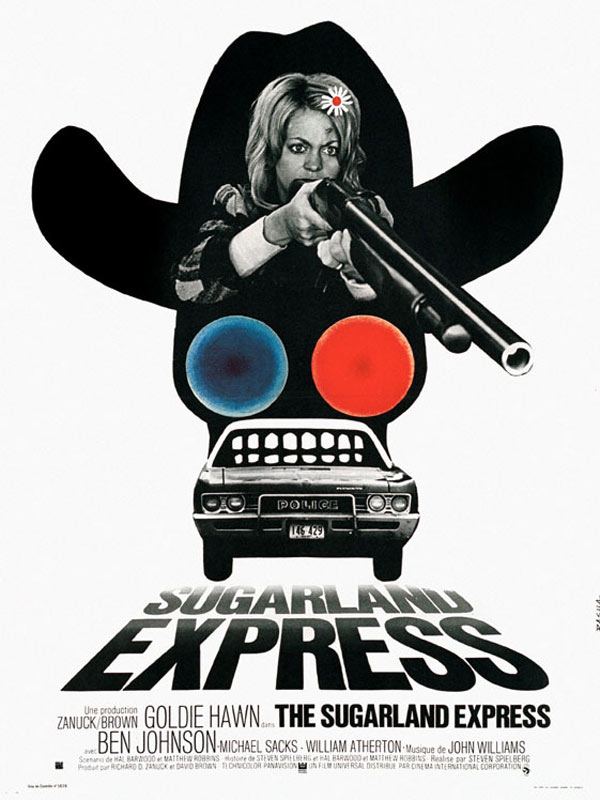
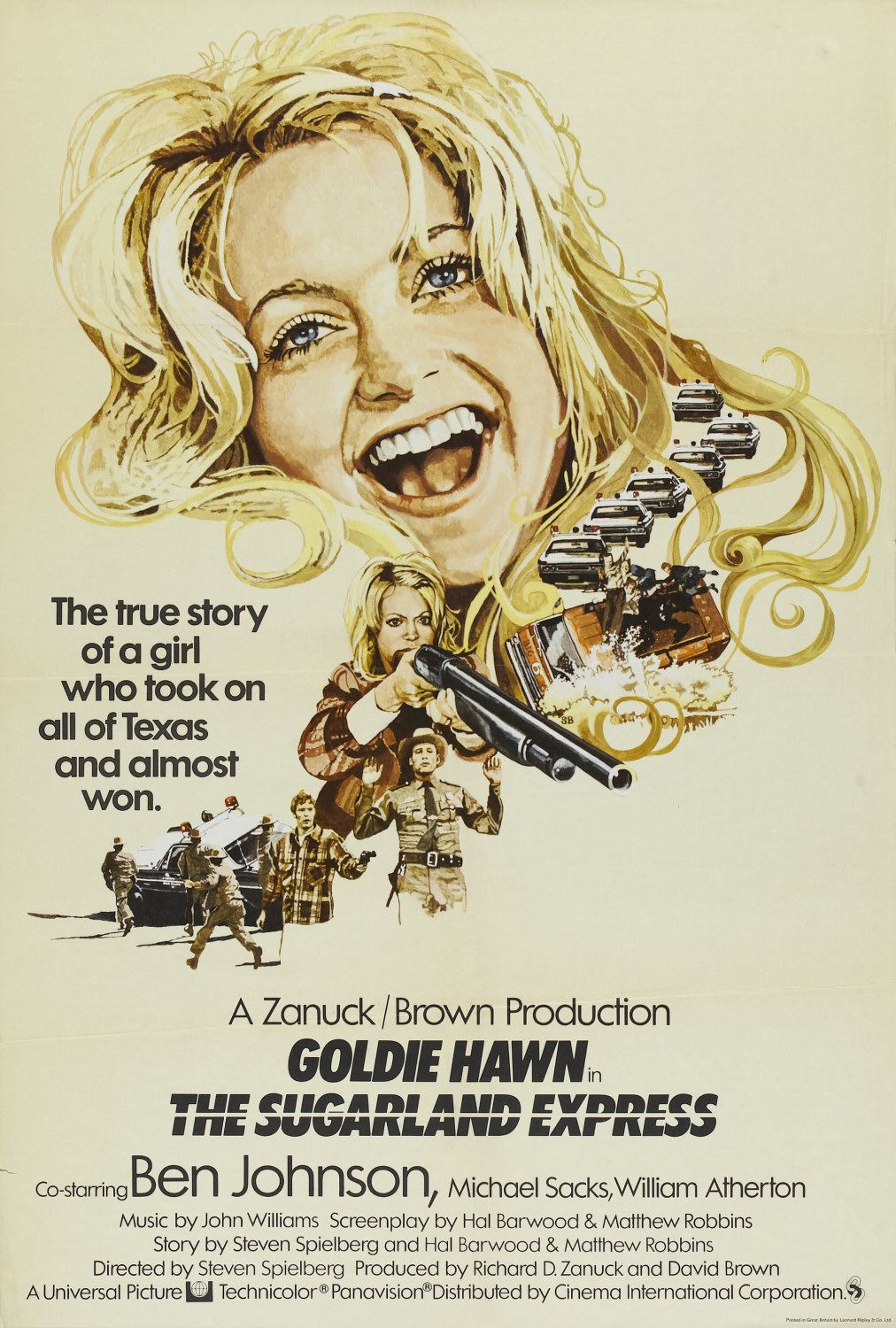
The Sugarland Express (1974)

sugarland express 4

By Richard Winters

My Rating: 7 out of 10

4-Word Review: She wants her baby!

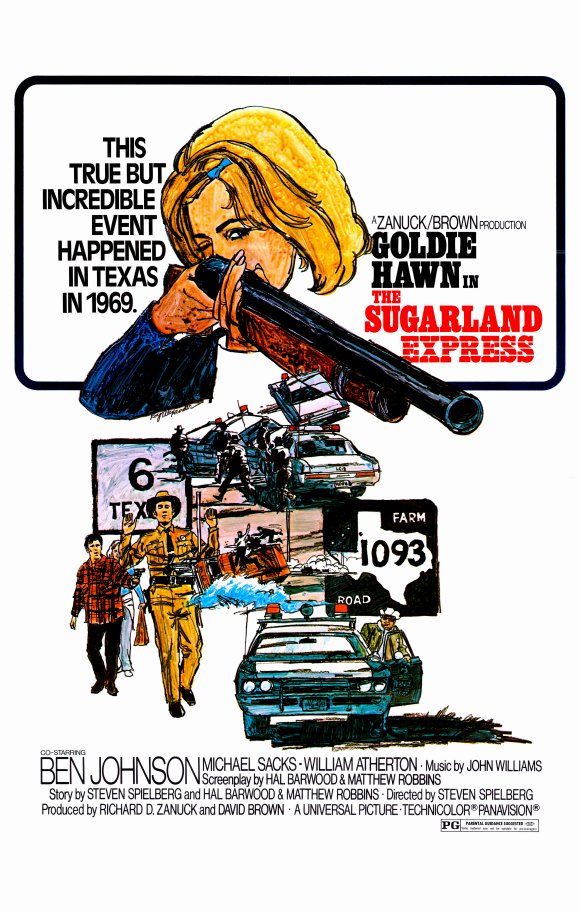
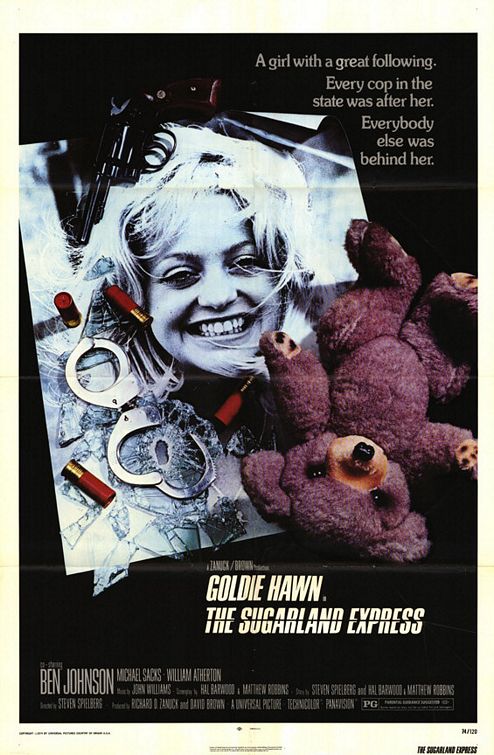
When her baby is put into a home with foster parents Lou Jean (Goldie Hawn) will have nothing of it and helps her husband Clovis (William Atherton) break out of pre-release prison in an attempt to steal the child back. The two hitch a ride with an older couple (A.L. Camp, Jessie Lee Fulton), but when the car gets pulled over by Officer Maxwell Slide (Michael Sacks) they panic and drive off. The officer is able to track them down when their car crashes, but when he goes to investigate the accident Clovis pulls the officer’s own gun on him and uses it to take him hostage. They speed off in his patrol car, which soon gets the entire Texas Highway Patrol after them as well as creating a media frenzy in a slow moving car chase that spans 2-days and 300 miles.

This film marks director Steven Spielberg’s full-length theatrical feature film debut and the result is highly entertaining. He takes an odd moment in history and helps infuse a playful quirkiness to the proceedings while also gently nudging the Texas stereotype. The music by John Williams and especially the harmonica solos by Toots Theilemans help cement the mood and tone. This is also the first film to use a panaflex camera and the first ever to feature a tracking shot from inside a car.

There are enough original and humorous scenes to make this well worth catching. The scene in which the police bring in a Porto potty so Lou Jean can stop and take a pee is hilarious as is the moment where their car runs out of gas and Captain Harlan Tanner (Ben Johnson) who is technically ‘chasing’ them must push their car with his to the nearest gas station. The impromptu TV interview done during the chase is great as is the first CB conversation that Tanner has with the three inside the patrol car. The best moment though is when they go through a small town where the main street is lined with onlookers and well-wishers who hand the three all sorts of gifts and encouragement through the car windows as they slowly drive through.

sugarland express 2

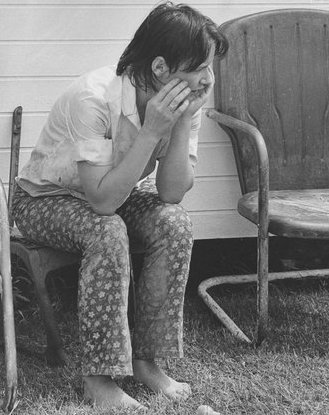
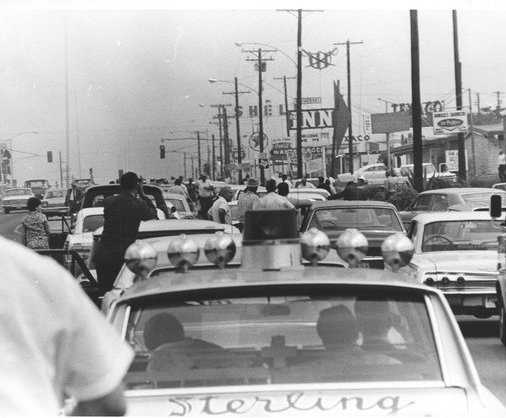
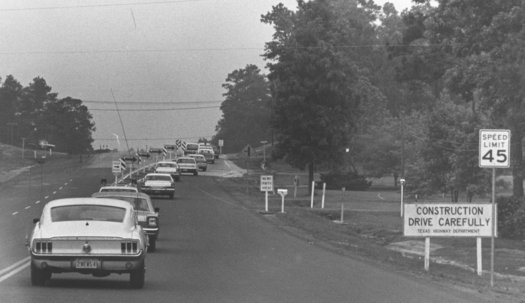
Of course as with any true story the movie takes many liberties and I researched the incident by reading actual newspapers reports from that era and found this to be the jest of what actually happened. It all started in the early morning hours of May 3, 1969 when Ila Faye Dent (1947-1992) and her husband Robert where chased by the Port Arthur police for speeding. The couple managed to evade them by abandoning their vehicle and fleeing on foot into a heavily wooded area. They eventually came upon a ranch whose owner called the police to say that he had been attacked by two hitch-hikers. Patrolman Kenneth Crone, whose character is played by Michael Sacks and who also appears briefly in the film as a sheriff’s deputy, answered the call. When he arrived on the scene Robert pulled a gun on him and forced him back into his patrol car where the three then took off in the vehicle that started the massive 200 mile slow speed chase that attracted hundreds of police cars as well as onlookers and media outlets. Their destination was Wheelock, Texas where Ila Faye wanted to visit her two children from her previous marriage that where now staying with her parents. They had no intention of kidnapping them like it is portrayed in the film only to visit them for 15 minutes, which Captain Jerry Millter (portrayed by Ben Johnson) initially agreed to allow, but then later reneged.

sugarland1


Ila Faye Dent portrayed by Gold Hawn in the film

sugarland2

The actual car chase as it occurred on May 3, 1969.

sugarland3

The changes that Spielberg and his team of two writers made to the story doesn’t help and I wish they had been more accurate with it. The biggest issue is the fact that the actual chase lasted for only about 5 hours while in the film it gets extended for 2 days, which doesn’t work because the part where they sleep overnight inside a car lot kills the momentum and makes for a draggy middle. The use of foreshadowing becomes too obvious and heavy-handed. The child-like enthusiasm by the two main characters is initially fun, but their notion that they can somehow take the police on a wild car chase and snatch back their child without having any consequences seems too unrealistically naïve even for a pair of country bumpkins as they are portrayed.

Spoiler Alert!

The film’s biggest downfall though and the main reason it didn’t do well in the box office is with its downbeat ending. From a directorial stand point I liked it as Spielberg infuses all sorts of interesting elements into it including making the house in which the child supposedly is staying look very foreboding and ominous as well as a brief shot of a teddy bear being thrown out a car window and laying the road while the cars speed all around it. However, seeing Clovis get shot is jarring and takes away from the film’s otherwise lighthearted tone. In the real life incident the husband did indeed get shot and killed although it happened differently than the way it gets played out here, so I don’t really have anything against showing it, but film should’ve added in a brief moment showing Lou Jean being reunited with her child after her stint in prison, which also really happened. I realize the denouncement mentions this in text over the credits, but visually showing it would’ve made more of an impact and helped the audience leave the theater with an upbeat feeling.

End of Spoiler Alert!!

sugarland express 3


sugarland express 1

My Rating: 7 out of 10

Released: April 5, 1974

Runtime: 1Hour 52Minutes

Rated PG

Director: Steven Spielberg

Studio: Universal

Available: VHS, DVD, Blu-ray, Amazon Instant Video, YouTube

Cruising (1980)

cruising2

By Richard Winters

My Rating: 4 out of 10

4-Word Review: Cop infiltrates gay underground.

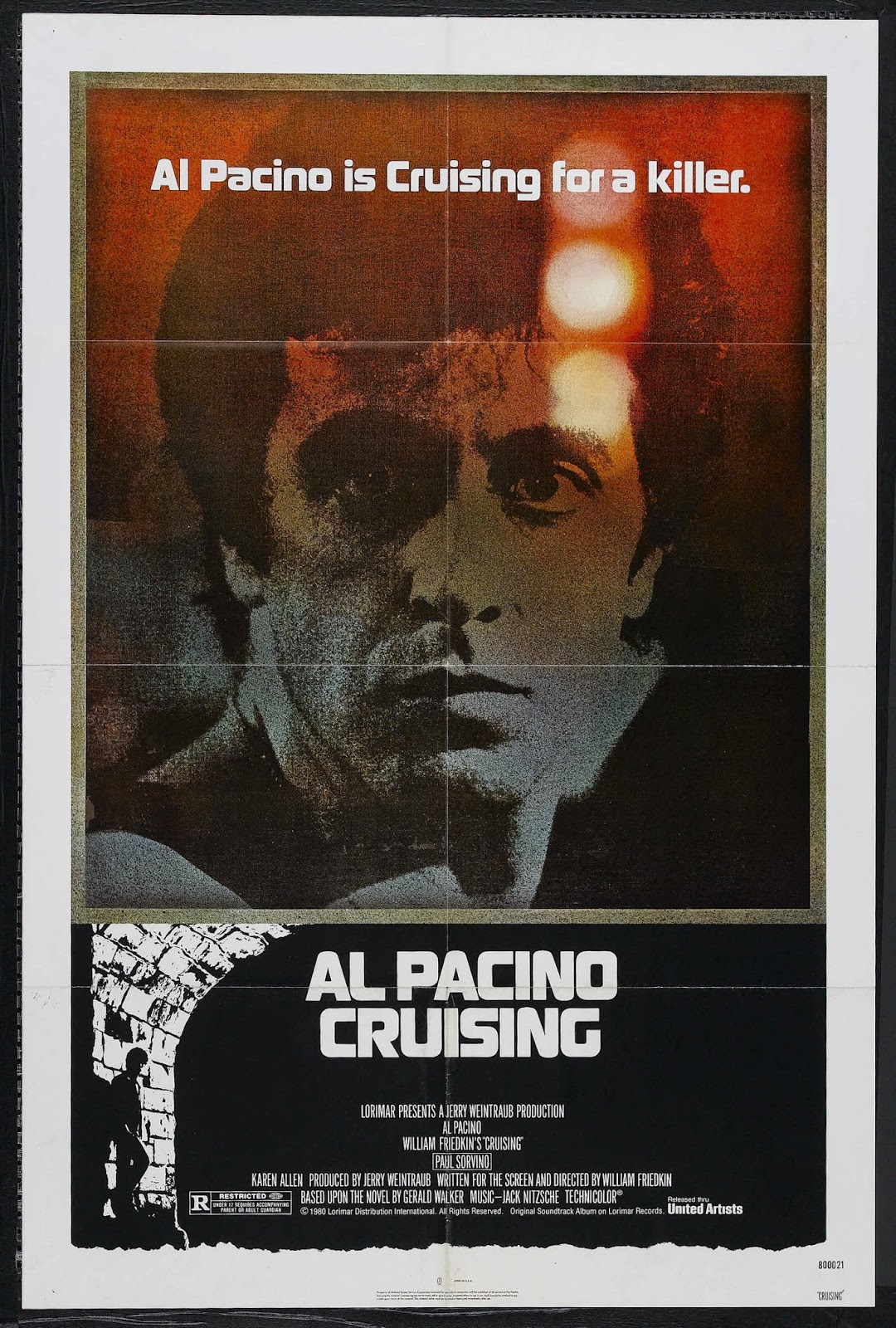
A serial killer is attacking gay men who frequent New York’s S&M bars and young cop Steve Burns (Al Pacino) is chosen to go undercover as a gay and infiltrate these ‘leather clubs’ in order to bring out the killer. However, the job requirements demand that he must be completely isolated from the rest of the force and not carry a gun, which eventually causes a strain on his personal life particularly in his relationship with his girlfriend Nancy (Karen Allen).

The film, which is loosely based on actual events that occurred during the late 70’s and captured in Gerald Walker’s novel of the same name, was considered quite controversial at the time of its production. Protestors who felt the film accentuated the gay stereotype tried to create loud noises during filming and even shine reflective lights on the actors in an attempt to mess up the scenes. In retrospect it is hard to imagine that director William Friedkin is in anyway homophobic as just ten years earlier he did the brilliant adaptation of The Boys in the Band, which remains to this day one of the better films dealing with gay issues. The story certainly does wallow in ugly elements, but also makes the point to describe this as an extreme subculture and  not reflective of the gay lifestyle as a whole, which in my opinion made the film seem more enlightening to New York’s gay underground of a bygone era and less propaganda as its critics ascertained.

To some degree I liked the explicit uncompromising approach, but after a while it became one-dimensional and predictable. The scenes of the killings are unnecessarily prolonged and some of the segments showing large groups of men having sex at a bar come off as overly-stylized and looking reminiscent of a homoerotic scene from a Fassbinder film.

Friedkin does manage to add a few unique touches including having a well-built black man wearing nothing but a jock strap enter the room during police interrogations and violently slap suspects who he felt weren’t telling the truth, which according to one of the film’s advisors was an actual technique used by police at the time.  The way the movie captures the monotony and frustrations of investigating a complex case such as this and leaving open that there may have been more than one killer is also well done and helps elevate this a bit from the usual formulaic cop thriller.

Pacino gives a gutsy performance including one scene showing him tied up in bed naked during some kinky S&M play, but the character’s motivations are confusing particularly the way he so quickly accepts this difficult assignment that most others would be very reluctant to do. The fact that his experiences ends up affecting him psychologically isn’t compelling since that becomes a foregone conclusion right from the start.

Paul Sorvino is perfect as the police captain. His gray hair dye was a little overdone, but his limp was great. Allen has a good moment at the end when she tries on Pacino’s leather hat and coat that he brought home with him and Joe Spinell makes the most of his small role as a corrupt cop who harasses gays only to end up patronizing gay bars on his off hours. You can also spot Powers Boothe in an early role as a hankie salesman and Ed O’Neil as a police detective.

The idea of exposing the dark side of police life is no longer original or interesting and the film’s shock value has lessened through the years and thus failing to leave any type of lasting impression or message.

My Rating: 4 out of 10

Released: February 15, 1980

Runtime: 1Hour 42Minutes

Rated R

Director: William Friedkin

Studio: United Artists

Available: VHS, DVD, Amazon Instant Video
The Children’s Hour (1961)

childrens hour

By Richard Winters

My Rating: 4 out of 10

4-Word Review: Ruined by a lie.

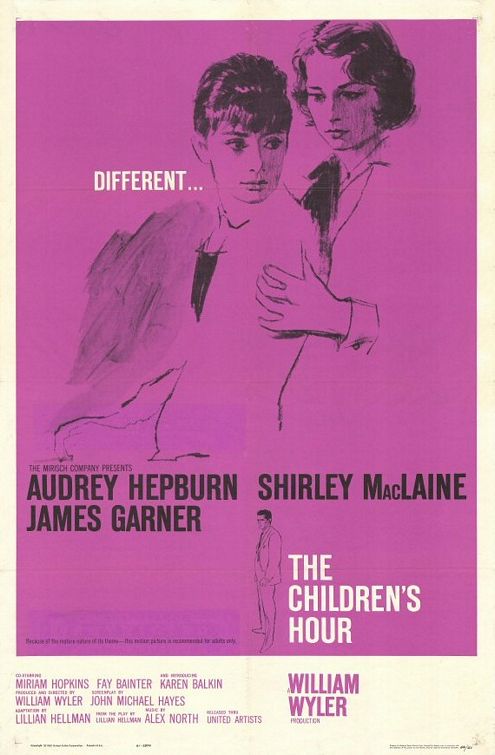
Martha and Karen (Shirley Maclaine, Audrey Hepburn) are two single young women running an all-girl’s school. They have the respect of the community and the parents, but that suddenly changes when one of the students named Mary (Karen Balkin) decides to spread a rumor that Martha and Karen are lovers. This sends everything into an uproar. All the students are moved out and the two women find themselves fighting desperately for their reputations and livelihoods. Karen’s boyfriend Joe (James Garner) remains their staunch supporter, but eventually even he begins to have his suspicions.

The film is based on the landmark play written by Lillian Hellman which ran for 691 performances in 1934 and was based on a true incident that happened in Scotland in 1810. The original film version of the play was made in 1936 and entitled These Three that was also directed by William Wyler and starred Miriam Hopkins as Martha who in this film plays Martha’s Aunt Lily. That film was heavily watered down with the lesbian element completely taken out and instead has the rumor revolve around the two teachers being in love with the same man.

This second film version was supposed to be more like the play, but hardly seems worth the effort. Although Wyler makes some attempts to make it seem more cinematic it still comes off very much like a filmed stage play and a static one at that. Lots and lots of talk with a narrative that is quite plodding and predictable. Having the story work more in a fragmented style might have helped, but either way it is never very engrossing or compelling. It also completely skips over the libel trial, which I thought could’ve given some added drama and it never completely explains why the Aunt Lily character avoided testifying. She comes up with the lame excuse that she was touring with her show, but I felt it was more because she secretly knew Martha was a closet lesbian and didn’t want to have to confront that and the film should’ve made this more clear.

It is also unintentionally funny at times especially the part where actress Fay Bainter’s eyes get bigger and bigger as Mary whispers her ‘shocking’ secret into her ear. Balkin also overdoes the facial expressions, which was probably due to too much coaching on the part of Wyler, but with that said her presence in the film is fun and gives the proceedings a liveliness that is otherwise stagnant.

The film really isn’t all that groundbreaking either and handles the delicate issue in too much of a timid way. For instance there is a scene where Martha admits to her homosexual feelings and states that she feels ‘ashamed’ for having them and Karen counsels her by stating that ‘you did nothing wrong’ because ‘nothing happened’, but what if it had then would it have been wrong? I tend to lean towards the latter making the production seem as stale and prejudicial as the public at the time. I was also confused as to how the two women could remain living at the school when all the students had moved out and they no longer had any income, or how they were still able to have groceries delivered to them.

My Rating: 4 out of 10

Released: December 19, 1961

Runtime: 1Hour 47Minutes

Not Rated

Director: William Wyler

Studio: United Artists

Available: DVD, Blu-ray, Amazon Instant Video
Woodstock (1970)

woodstock 2

By Richard Winters

My Rating: 7 out of 10

4-Word Review: Love, peace and music.

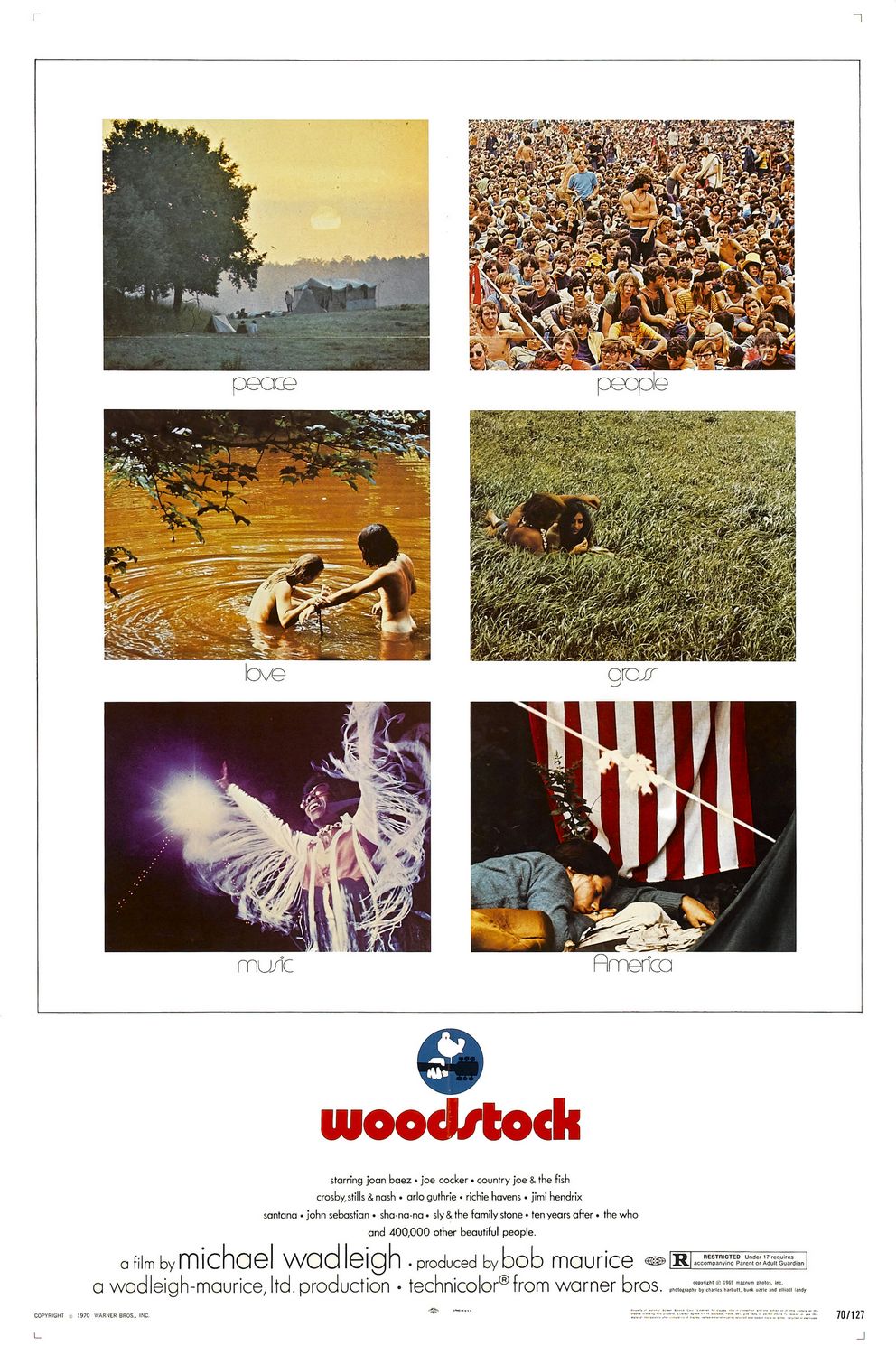
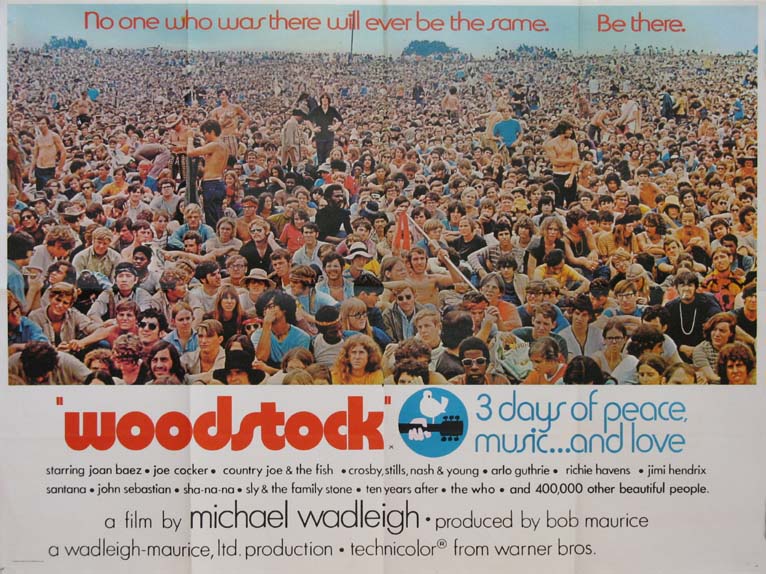
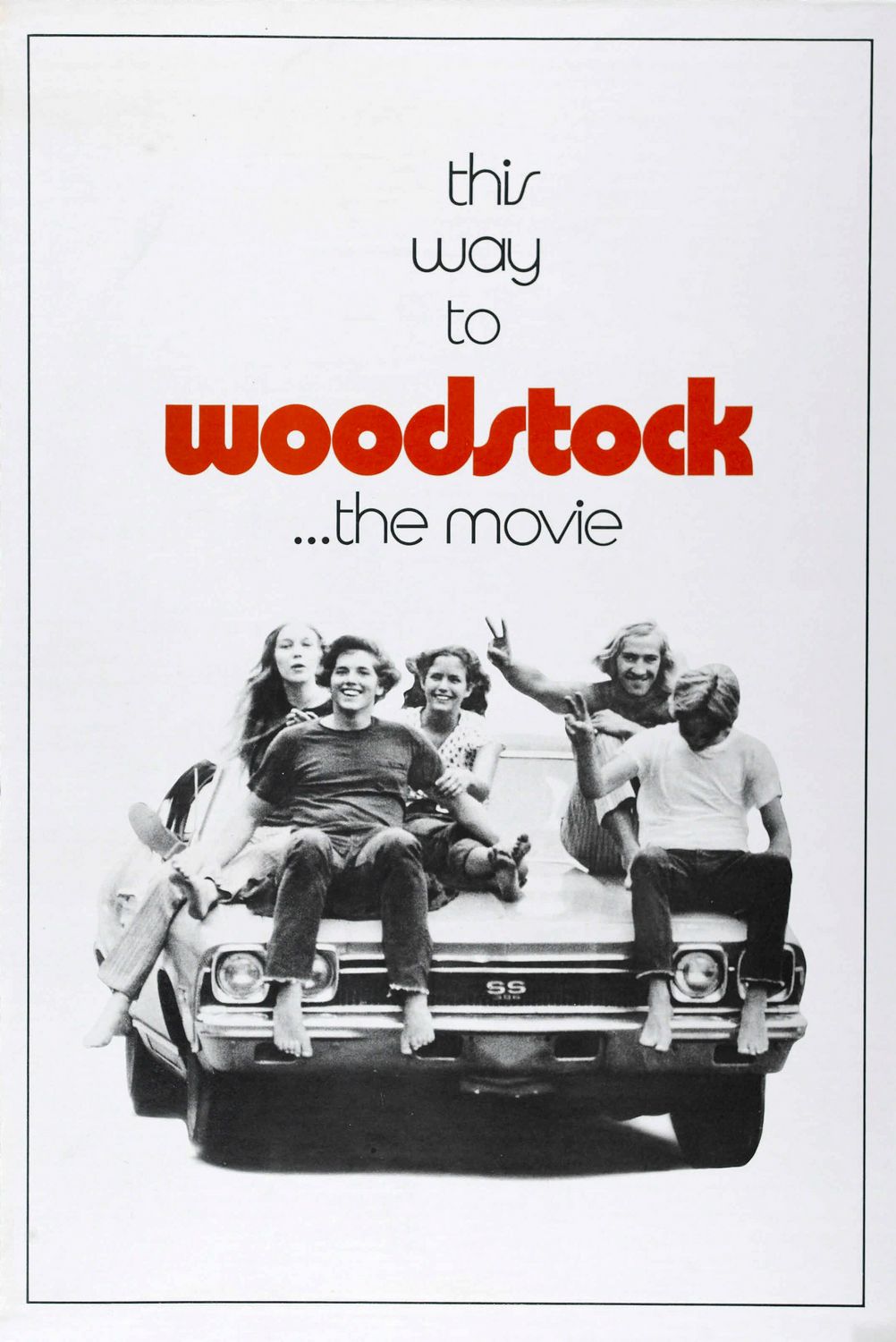
During August 15 – 18, 1969 Max Yasgur loaned out his 600 acre farm, which was near the town of Bethal, New York to some concert promoters for an epic 32-act rock extravaganza that has become the cornerstone for the counterculture movement and a major moment in Rock’N’Roll history. Although originally expected to attract only 50, 000 it ended up being more than 400,000 and this movie captures the mood, festivities, and music right up close.

Unlike most documentaries this film doesn’t just turn on the camera and then proceed to let things happen at a sometimes slow and boring pace. Instead it relies on a great use of editing done at the time by an unknown Martin Scorsese, which helps give the film a very polished and dramatic narrative. The dual screen setting allows the viewer to see two things at once and you are given a full view of the occasion as you watch not only the beginning as they construct the stage, but also the massive clean-up of all the debris left afterwards.

The music acts are captured perfectly as director Michael Wadleigh’s use of the camera nicely compliments the energy on stage with a variety of angles and quick cuts. In some ways you feel more connected with the music by watching it here than having been there in person as you are made to feel like you are right next to the performer as they are playing. One of the best moments is Richie Haven’s opening act where you see the broken strings on his guitar, the sweet glistening off his nose and saturating his back as well as a close-up of his mouth where he appears to have no teeth on his upper jaw. Janis Joplin who was known to have an incredible onstage energy is also memorable and is part of the added 45-minutes of the director’s cut. Country Joe Mcdonald is also memorable with his now famous ‘fuck cheer’ and ‘I-Feel-Like-I’m-Fixin’-to-Die Rag’, which comes complete with lyrics on the screen and a little bouncing ball.

woodstock 1

The film also features different elements than what you would find in most other concert movies including one segment that looks at the cleaning of the many port-o-potties as well as a long drawn out rain storm in which many of the concert goers’ end up sliding through the mud. There is another segment looking at the skinny dippers as well as all the naked children in attendance.

There are some good interviews spliced in although I wished there had been a few more. Some of the more interesting ones include those with the townspeople who despite reports to the contrary where actually excited about the event and supported ‘the kids’at least the ones seen here. I also liked hearing from the attendees as they lined up to take turns at calling their parents on pay phones. The only interview that I didn’t care for was of a young man who used the phrase ‘you know’ so numerously that it really got on my nerves.

The movie is quite long with the director’s cut being almost 4 hours in length and not all of the music acts shown including some of the better ones. However, the film is still quite electrifying and doesn’t end up seeming as long as it is. It is also so amazingly vivid that it gives you the feeling like you were there and something that only happened yesterday instead of forty-five years ago.

woodstock 4

My Rating: 7 out of 10

Released: March 26, 1970

Runtime: 3Hours 45Minutes (Director’s Cut)

Rated R

Studio: Warner Brothers

Director: Michael Wadleigh

Available: VHS, DVD, Blu-ray, Amazon Instant Video

The Runner Stumbles (1979)

the runner stumbles 1

By Richard Winters

My Rating: 2 out of 10

4-Word Review: Priest accused of murder.

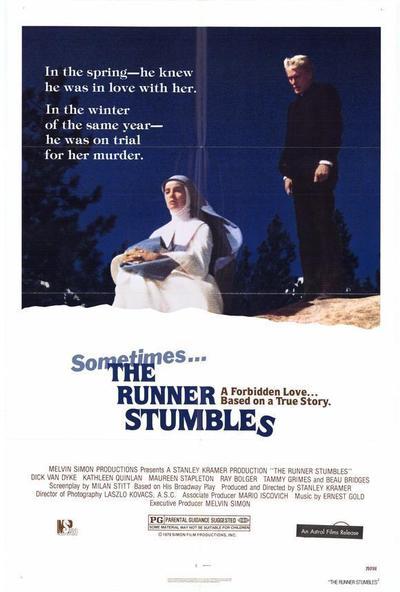
Based on actual events the setting is 1911 in a northern Michigan town where Father Brian Rivard (Dick Van Dyke) presides over a small Catholic parish. He feels frustrated at being stuck in such a depressed town where many of the residents are out of work. In comes Sister Rita (Kathleen Quinlan) to help run the school and the Father immediately takes a liking to her youthful enthusiasm and fresh ideas, but gossip and rumors soon abound when it is found that they are spending too much time together and possibly becoming intimate. When the Sister is found murdered it is the Father who is accused and must fight for his life while straddled with an attorney (Beau Bridges) who seems glib and detached.

One of the biggest problems with the film is the miscasting of Van Dyke in the lead. His performance is stiff, wooden and affected. The chemistry between the two stars is non-existent making the romantic angle seem completely unbelievable. The film would have been better served had a younger man that was more Quinlan’s age and trained in method acting been cast in the part.

Quinlan is excellent in her role, but her efforts become lost as they bounce off Van Dyke’s almost corpse-like presence. Maureen Stapleton adds some excellent support and it’s great to see Ray Bolger in his final film role as the intrusive Monsignor. Bridges is also great as the lawyer and the one thing that livens the film up a little. Had his court scenes been more extended it would have helped the picture immensely.

Director Stanley Kramer, whose last film this was, seems to have lost touch with the modern movie goer. The presentation is stagy and the overly melodic soundtrack does not fit the mood and gets overplayed almost like a radio going on in the background that somebody forgot to turn off. The conversations revolving around the predictably stifling atmosphere of the era add little interest and go on too long as do the debates between giving in to human desires versus religious commitments. The surprise ending hardly makes up for a film that is slow and boring and ultimately making it as stale and stagnant as the small town it tries to portray.

My Rating: 2 out of 10

Released: November 16, 1979

Runtime: 1Hour 49Minutes

Rated PG

Director: Stanley Kramer

Studio: 20th Century Fox

Available: VHS