Category Archives: Moody/Stylish

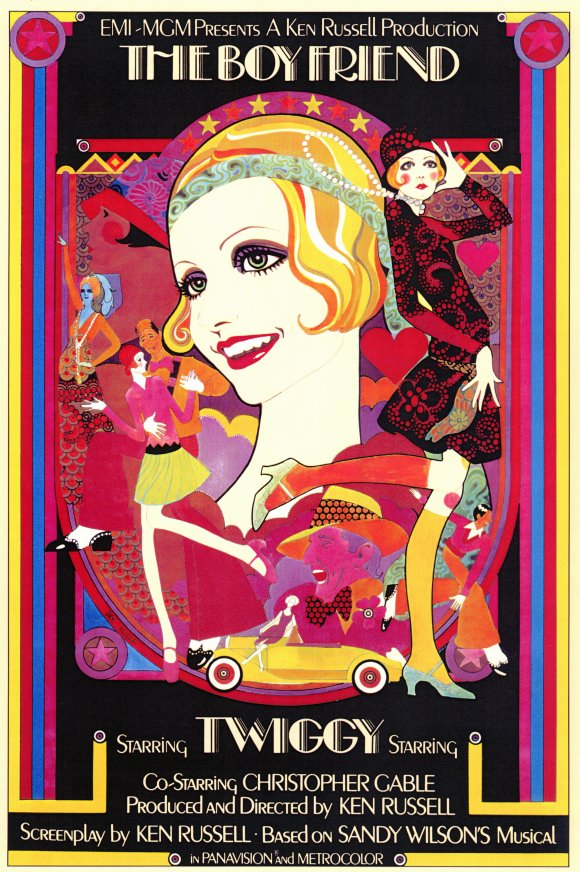
The Boy Friend (1971)

Boy Friend, The

By Richard Winters

My Rating: 9 out of 10

4-Word Review: An eye popping musical.

I would not call myself a big musical fan, but I found this one to be excellent and the gold standard for all others. The whole thing is visually stunning from beginning to end with a wide variety of backdrops and settings used. You get everything from conventional dance numbers to a fairy tale recreation where the performers dress like ladybugs and live in giant mushrooms. There is even a fun take-off on Greek mythology done in a scenic forest setting.

The best segment has the dancers on not one but two giant record players shown side-by-side and from overhead. The performers dance on top of the huge turntables while as a group make unique symmetrical designs with their bodies. Another part has them on a gigantic playing card, which reminded me of an old Busby Berkley number and who has always been considered the godfather of splashy dance numbers and yet here it seems to outdo even him.

The film carries itself on the visual level alone with a story that can be best described as a standard musical plot. It involves a group of underpaid actors who put on a tacky musical for a small group of people. The film than interweaves between the low budget numbers, which are all still really good, and their fantasies of what things would look like if they had more money. Twiggy plays the shy awkward crew hand that comes on as the star when the leading lady breaks her leg.

Sure it is at times predictable, corny, and lightweight but it makes up for it with a really good sense of humor. The songs all sound great and the dance routines are certainly extravagant. Twiggy may never score as a great actress, but she hits the mark here. She has a cute bob haircut and a constantly perplexed expression that is really amusing. All the other characters have funny idiosyncrasies as well including Glenda Jackson as the injured leading lady who comes back and is none too happy to see how successful her replacement is.

Ken Russell has immense talent and is sadly one of the most unheralded directors around. Some of his films have been considered excessive and nonsensical, but that is not the case here as his visual flair and indulgence work to enhance the production including his use of primary colors in every shot.

This is a highly recommended visual delight that is impressive even by today’s standards and fun to watch for every member of the household.

My Rating: 9 out of 10

Released: December 16, 1971

Runtime: 2Hours 17Minutes

Rated G

Director: Ken Russell

Studio: MGM

Available: VHS, DVD, Amazon Instant Video
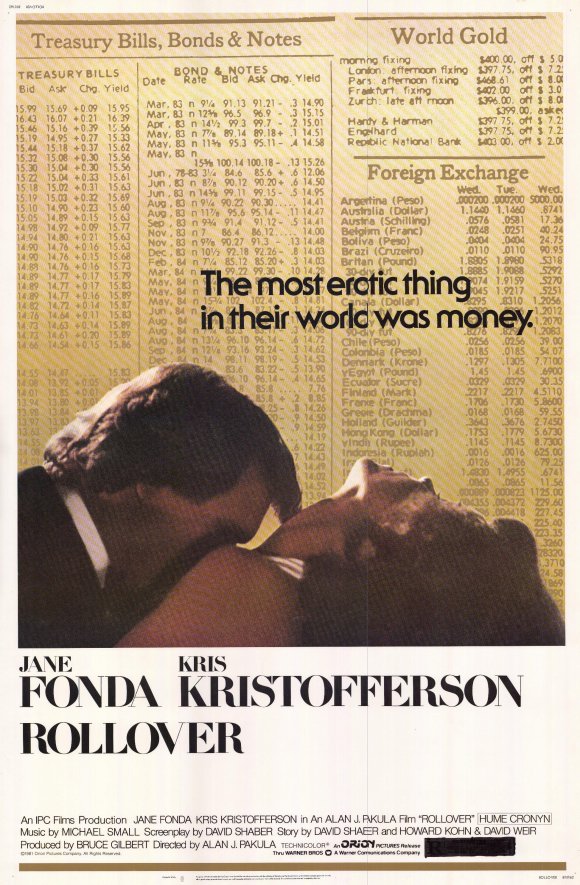
Rollover (1981)

rollover 1

By Richard Winters

My Rating: 3 out of 10

4-Word Review: What’s in account 21214?

Hubbell Smith (Kris Kristofferson) is the newly appointed president of Borough National a bank that is in desperate need of money. He meets Lee Winters (Jane Fonda) the recent widow of the former chairman of Winterchem Enterprises who is looking to obtain a loan in order to purchase a Spanish processing plant. Hubbell broker’s the $500 million deal with some Arab investors and uses the finder’s fee portion to keep his bank solvent, but suspicions are raised when the money goes into a secret account named 21214 that no one knows anything about and can’t access. When Hubbell does some investigating he finds troubling answers that could lead to economic world collapse.

Director Alan J. Pakula approaches this thing like it is another Klute using not only the same star as that one, but similar type of music. Some of the camera work is dazzling and artsy, but I wondered if this was done to help enhance the script, or simply camouflage all of its holes. The story itself is too talky with a heavy reliance of financial business dealings that could become confusing for the average viewer. The two main characters are rather generic and their passionate making-out is tedious instead of sexy. The action is minimal, which includes a scene where Fonda gets trapped in a limo that is driven by a bad guy that had the potential for being exciting, but unfortunately gets underplayed.

Kristofferson with his Texas drawl is an awfully odd casting choice for a hot shot Wall Street businessman. He grows on you as the movie progresses particularly with the way he remains cool and detached even as his business dealings go horribly awry, but I still felt there were a hundred other actors that would have been better suited for the role.

Fonda is excellent and in many ways badly outplays her costar. Her character though doesn’t make a lot of sense as she is supposedly this famous and highly respected actress, much like Fonda herself and yet wants to be chairwoman of this chemical company instead of just selling her share of the stock after the death of husband and go back to acting, which to me would seem a lot more fun.

In an effort to keep the plot moving the film takes a few liberties with the plausibility. One of the major ones is when Hubbell wants to find out about the secret account and does so by breaking into the office of his superior where he finds in his desk drawer a notebook that lists the computer passcode, which seemed too convenient. In reality I would think a programmer would have to be hired in order to hack the system, which would have taken longer to play out, but also if done right heighten the tension as well as the believability.

Spoiler Warning!!

The film’s biggest transgression is the ending itself, which has the Arabs pulling the money out of the secret fund, which causes mass worldwide economic turmoil and chaos. Not only does this seem to create a whole new movie, but it also minimizes the two main characters and everything that we watched them do for the past two hours. A much better ending would have had the characters come up with some way to avert the collapse instead of the gloomy pessimistic way that it does take, which seems overblown and hard to believe.

End of Spoiler Warning!

My Rating: 3 out of 10

Released: December 11, 1981

Runtime: 1Hour 56Minutes

Rated R

Director: Alan J. Pakula

Studio: Warner Brothers

Available: VHS, DVD, YouTube, Amazon Instant Video

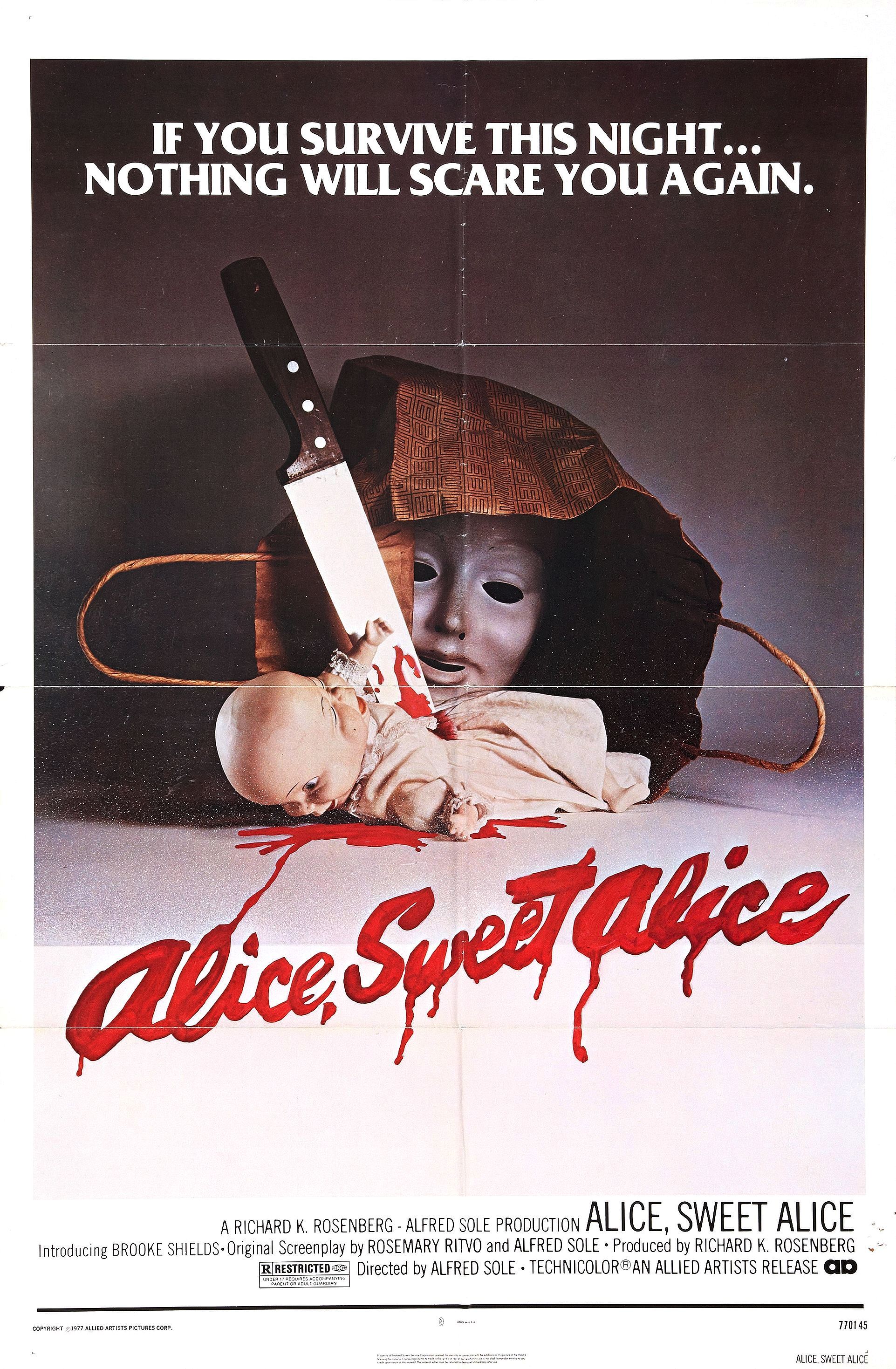
Alice Sweet Alice (1976)

alice sweet alice

By Richard Winters

My Rating: 6 out of 10

4-Word Review: Murder in the church.

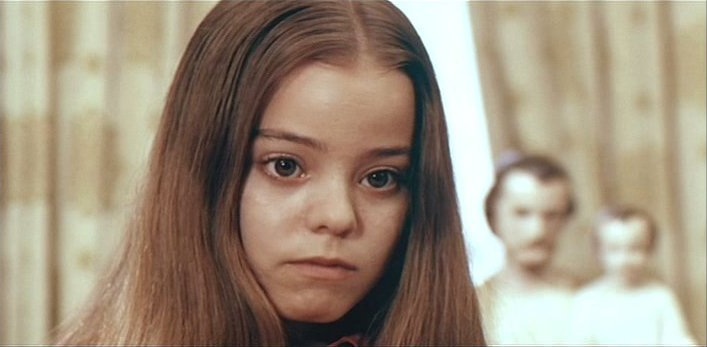
Surprisingly elaborate thriller detailing murders that happen in and around a Catholic church. It focuses specifically on a family whose one daughter Karen (Brooke Shields) is a victim and the other daughter Alice (Paula E. Sheppard) may have been the killer.

This is a well-crafted thriller and much more than just a chance to see a young Brooke Shields. The set design is meticulous with a unique look and sound that is different from just about any other horror film. There are even a few moments of truly creepy imagery. The twisting plot and suspense should be enough to get you caught up in it and keep you guessing.

This is also a multilayered film with a twisted look at the family unit, the 50’s era, and most importantly the Catholic Church. It paints a rather sinister portrait of the church and some of those who attend it while emphasizing the evilness that can unravel behind even the most pristine of pictures. It is harsh, but also revealing and at times even funny.

Sheppard is chilling as the evil sister and makes Patty McCormack from The Bad Seed look like a powder-puff-girl. Her unique eyes grab your attention and help accentuate her character and are able to convey both beauty and mischief at the same time. She falls into her difficult role effortlessly and it’s easy to see why she has gained such a wide cult following even though, to date, she has only done one other movie.

paula 2

Brooke of course was re-billed as the star when her fame shot up afterwards. Yet she doesn’t last past the first half-hour and her presence is really not all that significant.

The film’s first third is gripping, intriguing, and even surprising. The final thirty minutes though is a letdown and pretty much ruins the film as a whole. It gives away its final twist too early and then drags along until it culminates with a rather far-fetched climax. It also leaves open a few loopholes and no real closure.

My Rating: 6 out of 10

Alternate Title: Communion

Released: November 13, 1976

Runtime: 1Hour 38Minutes

Rated R

Director: Alfred Sole

Studio: Allied Artists Pictures

Available: VHS, DVD, Amazon Instant Video
Liquid Sky (1983)

liquid sky

By Richard Winters

My Rating: 8 out of 10

4-Word Review: Aliens invade punk hangout.

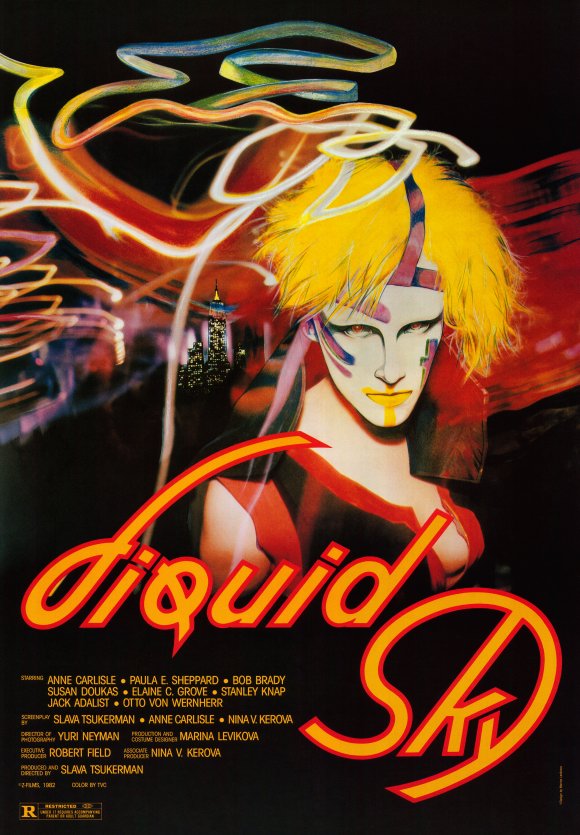
No matter how many years go by this film remains cutting edge. It’s one of the few movies made in the 80’s that makes fun of its own era and those that considered themselves hip and sophisticated.

The plot has to do with a young punk girl named Margaret (Anne Carlisle) living with her lesbian roommate Adrian (Paula E. Sheppard) in a New York City penthouse. The place is frequented by the usual weirdos, vagabonds and druggiess. The two make a living by dealing drugs and offering indiscriminate sex. One day a spaceship the size of a dinner plate and filled with aliens that have no shape or form lands on their penthouse roof and zaps away anyone who has an orgasm. Margaret is unable to achieve climax so she is left remaining while everyone else is gone, which convinces her that someone or something has finally ‘recognized’ her and that she is ‘special’.

Literally every camera shot, scene and line of dialogue is unique. This film not only has an offbeat point-of -view, but reinforces it by constantly looking, feeling, thinking, and sounding different, which includes its funky musical soundtrack. There is no compromising here. The filmmakers believe in their material and keep it true to form throughout forcing the viewer to adjust to its bizarre sensibilities. Yet if you do you will not be disappointed. It’s pace and sense of humor has a fresh free-form flow not seen since the European new wave films of the 60’s.

Despite the radical style it still touches on many universals including the human need for acceptance, understanding, fulfillment, and communication. It also takes jabs at many of modern society’s fringe groups who many times can end up embodying the same hypocrisy as the mainstream.

Star Carlisle also wrote the screenplay and the novel version of this film and based it on her own experiences while involved in the punk scene during the late 70’s. She hasn’t been in a film since 1990 and today lives in southern Florida and is involved in both psychotherapy and teaching. Here is a recent pic of her:

anne carlisle

Her co-star Paula E. Sheppard, who if recent reports are correct has now changed her name and working as a nurse in the Seattle area, gives another great performance. This turned out to be her last film and one of only two that she was in her other film Alice Sweet Alice will be reviewed on Wednesday.

My Rating: 8 out of 10

Released: April 15, 1983

Runtime: 1Hour 51Minutes

Rated R

Director: Slava Tsukerman

Studio: Cinevista

Available: VHS, DVD (out-of-print) 

Lord of the Flies (1963)

LOTF

By Richard Winters

My Rating: 8 out of 10

4-Word Review: Kids turn into savages.

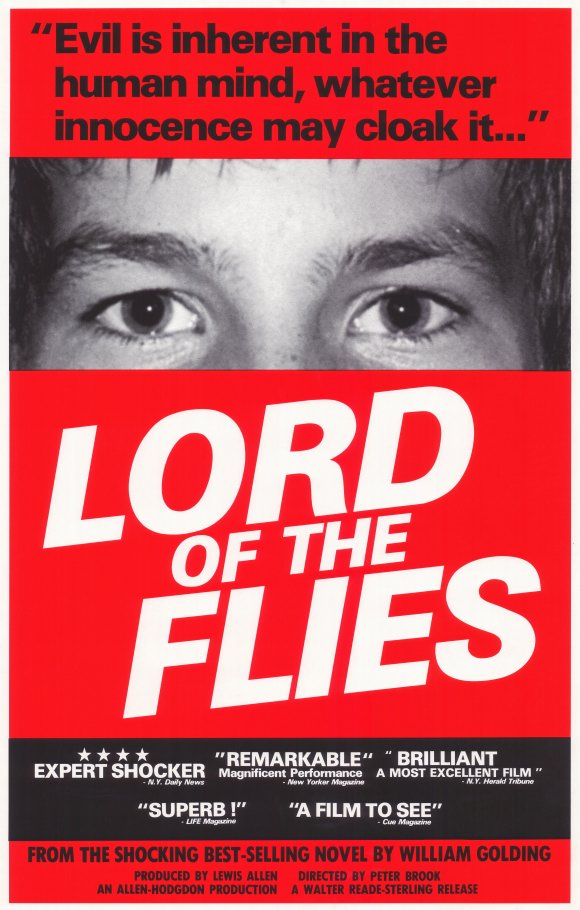
Based on the William Golding novel that has been required reading for most high school students. The story centers on a group of British schoolboys who survive a plane crash on an uninhabited tropical island. The boys are of varying ages, but none older than 14. Ralph (James Aubrey) is chosen as their leader, but finds almost immediate friction from Jack (Tom Chapin) who is an aggressive type that likes to hunt and doesn’t tolerate being told what to do. As things progress Jack breaks off from the main group and eventually starts his own following that comes to odds with Ralph’s. More and more of the boys join Jack and start to display savage behavior that leads to two deaths and puts the frightened Ralph on the run and into hiding.

It has been three decades since I’ve read the book, so I can’t really compare it with the film. The criticisms that I have are aimed solely at the film although as I remember the book had some of the same issues. One of the biggest ones is just the fact that there are so many survivors from a plane crash and all of them are conveniently the kids while all the adults perishing, which seems to play too much against the odds. There are also no scratches, bruises or injuries, which you usually come about with a crash even amongst those that survive it. Director Peter Brook does a clever job of intimating a plane disaster at the beginning over the opening credits through use of photographs, which I found to be creative, but showing an actual destroyed plane with kids getting out of it would have given it a little better foundation.

There is also another segment where the kids are convinced some sort of strange beast is on the island and as they go searching for it, it is found to a pilot in a helmet who was killed while trying to parachute to safety. Yet the kids don’t seem to realize this and remain frightened of it. I realize the setting is the 1940’s around the time of the war, but I would still think the kids of that time would have been sophisticated enough to recognize a dead man in a fighter helmet and the fact that they don’t seems pretty odd and even farfetched.

Overall though I really enjoyed the film and feel reluctant to watch the 1990 remake as I am afraid it would ruin the experience of this one.  It was filmed on-location off the island of Vieques in Puerto Rico during late August of 1961. The entire cast was made up of amateur actors who had not read the book. There was no actual script and the boys were allowed to ad-lib their lines, which helps give it an extra air of realism.

lord of the flies 1

I will admit there are shots where some of the boys look bored and detached from things, but then again I suppose boys that age can be that way anyways no matter what situation they are, so in some ways it doesn’t really hurt things. Hugh Edwards who plays Piggy is a real standout and apparently got the role simply by writing a letter to director Brook and informing him that he was fat and wore spectacles.

The black and white photography helps heighten the dark undertones. The shot showing a close-up of the pig’s head on top of a stake with flies’ going in and out of its mouth and nostrils is quite impressive and a brilliant realized moment from the book. The climatic sequence where Ralph must run through the burning foliage to escape the other boys is quite intense. The shot showing a dead boy’s body floating in the water under the moonlight has an evocative flair, but fake looking to the extent that the child was stabbed to death and yet has no visible wounds or blood coming out.

On the DVD commentary Brook states that he likes to believe something like this couldn’t happen. That we have somehow evolved enough as a human race where this savagery would be impossible, but I respectively this disagree. I think this could very well happen in this day and age which is what makes this an infinitely fascinating look at human nature and ultimately a great movie.

lord of the flies 3

My Rating: 8 out of 10

Released: August 13, 1963

Runtime: 1Hour 32Minutes

Not Rated

Director: Peter Brook

Studio: Continental Distributing

Available: VHS, DVD (Criterion Collection), Amazon Instant Video

Ladyhawke (1985)

ladyhawke 1

By Richard Winters

My Rating: 5 out of 10

4-Word Review: Trying to reunite lovers.

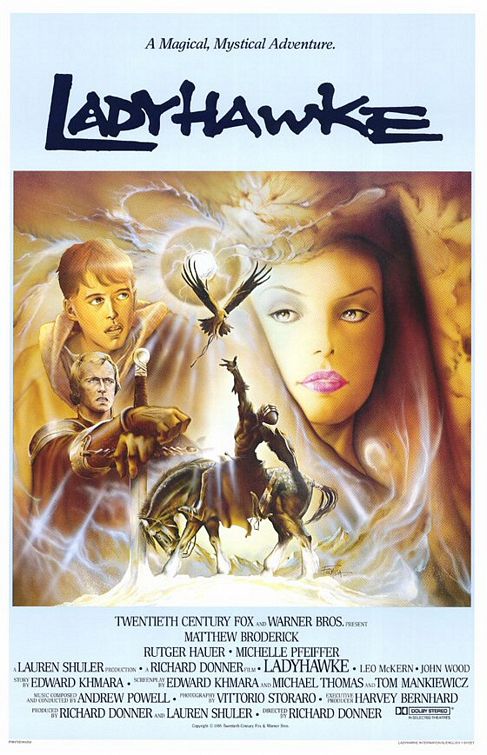
Philipe (Matthew Broderick) is a thief who manages to escape the confines of the dungeon in Aquila by squeezing through a prison drain and then swimming through the underground sewer. When he finally reaches safety he meets up with Navarre (Rutger Hauer) who is also on the run and straddle with a very strange curse placed on him by the Bishop (John Wood). It seems that the Bishop had a thing for Lady Isabeau (Michelle Pfeiffer) and became enraged when he found that she loved Navarre and not him. As part of his revenge he made it so Navarre and Isabeau will never be able to meet in human form by having Navarre turn into a werewolf by night while Isabeau becomes a hawk by day. Now Navarre wants to use the reluctant Philipe’s knowledge of the city to help him find the Bishop and kill him, which he hopes will then end the curse.

I have to admit that medieval fantasy is my least favorite of all movie genres. The archaic living conditions always comes off as gloomy and depressing and the fact that the action is limited to only swordplay seems to make it less exciting. However, the film has some impressive cinematography and Broderick’s humorous character kept me engaged most of the way.

I also liked the pounding Philharmonic musical score. I realize that it doesn’t fit the sound of the 13th century setting and some fans of the film hate it for just that reason, but it still gives the film distinctiveness and helps boost the energy. I was actually disappointed it wasn’t used more as it seems to taper off too much after booming out strong at the beginning.

I am so used to seeing Hauer playing dark characters that I was initially thrown having him play a good guy, but pleasantly surprised at how well he did it. Leo McKern is a standout as the elderly Imperius.  His castle residence is marvelously captured and I loved all the booby traps he has in store for the invading soldiers. Pfeiffer on the other hand is a bit miscast mainly due to her model-like face that seems too glossy for the time period.

The exciting jousting sequence that takes place during the finale between Hauer and actor Alfred Molina’s character is outstanding, but it takes too damn long to get there. The simple plot could have been wrapped up in a much briefer runtime. The second hour is filled with a lot side dialogue and scenarios that add nothing to the story or characters and should’ve been cut completely. The romance angle is also handled too much from the perspective of a 14-year-old schoolgirl and the scene where the lovers reunite could be deemed as corny by some.

There is also the issue of Navarre looking directly at an eclipse that conveniently occurs through a broken stain glass window in a church. Normally a person would have to shield their eyes with their hand, squint or at the very least turn away from it after only a few seconds. Yet this character stares at it for an extended period without even blinking, which at the very least would’ve burned dark spots into his field of vision and yet strangely that doesn’t occur.

My Rating: 5 out of 10

Released: April 12, 1985

Runtime: 2Hours 4Minutes

Rated PG-13

Director: Richard Donner

Studio: Warner Brothers

Available: VHS, DVD, Blu-ray, Amazon Instant Video


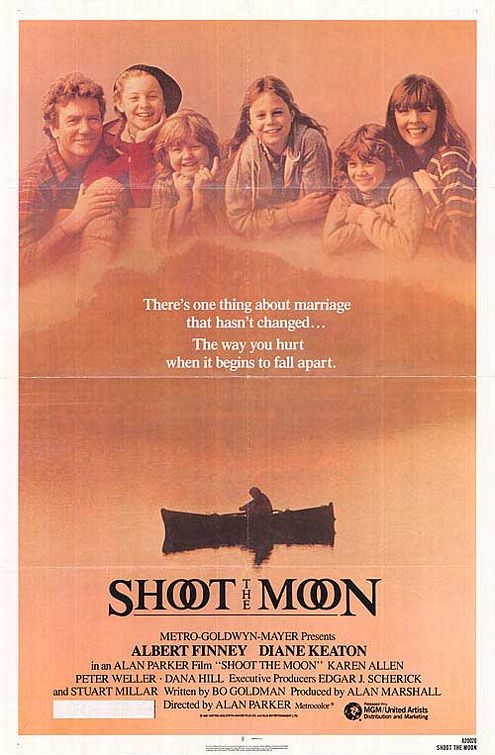
Shoot the Moon (1982)


By Richard Winters

My Rating: 7 out of 10

4-Word Review: A look at divorce.

After fifteen years the marriage between George and Faith Dunlap (Albert Finney, Diane Keaton) finally dissolves. He has been carrying on an affair with another woman (Karen Allen) and so he is forced to move out of their house and away from their four daughters. Sherry (Dana Hill) the oldest is angry at him and refuses to speak or even spend time with him when he has custody of the children, which starts to create major friction. Faith begins a relationship with Frank (Peter Heller) a handyman who has come over to build a tennis court in their backyard and when George finds out about this his simmering temper eventually boils over in an uncontrolled and frightening way.

If there is one thing you take away from this film it is in the luscious photography of the San Francisco bay area. The large, isolated two-story house looks almost like a dream location and was specifically built for the picture and filmed in Nicasio, California. The scenes showing George writing at his typewriter next to a window exposing crashing waves of the ocean and well as his pondering things in a small rowboat all alone in a still lake have the same dream-like quality and an ambience that allows for a rush to the senses.

The film also has an interesting music score because there is no composer credited for it even though it has pieces of simple piano interludes played throughout, which effectively reflects the mood of the film and characters and proves once again that less truly is more.

The family life scenes are on-target with everything from the perpetually chaotic atmosphere of four kids running around with endless energy to the always cluttered rooms and the mother seen picking up their discarded toys and clothes. The children are portrayed as being realistically perceptive and ask some pointed questions and not as naïve as most adults may like to believe. Hill is a real standout and her final meeting with her father late at night on a dock beside a lake is touching. Although she was 18 at the time because of her severe diabetes that stunted her growth she looks very much like the 13-year-old that she was portraying.

There are some memorable scenes including the amusing moments inside and outside a courtroom as well as Faith and George having a shouting match inside a fancy restaurant that ends up involving another couple sitting next to them. George’s angry tirade at the end in which he destroys the brand new tennis court with his car is exhilarating.

The only liability is with Finney himself. Normally he is a superior actor, but he is miscast here. For one thing there was too much of an age difference between him and Keaton and at times he almost looks more like her father. Weller who plays her boyfriend seems much more like her type and he would have been a better choice as the husband. Finney’s character borders on being unlikable and comes off at times as being a prick of the highest order. His blowups at Faith for seeing another man and at Sherry for not talking to him seem unreasonable especially since he started it all by having an affair. I did like the part though were he helps Timmy the young son of his new girlfriend late at night when he gets sick and the comment that his new girlfriend makes to him when he comes back to bed with her is a gem.

The film gives a great overall look at the emotional side of divorce, but it fails to dig any deeper.  We gain no real insight to these characters or what caused the marriage to go bad in the first place, which ultimately makes this otherwise slick production rather shallow and placid.

My Rating: 7 out of 10

Released: January 22, 1982

Runtime: 2Hour 4Minutes

Rated R

Director: Alan Parker

Studio: MGM

Available: VHS, DVD, YouTube 

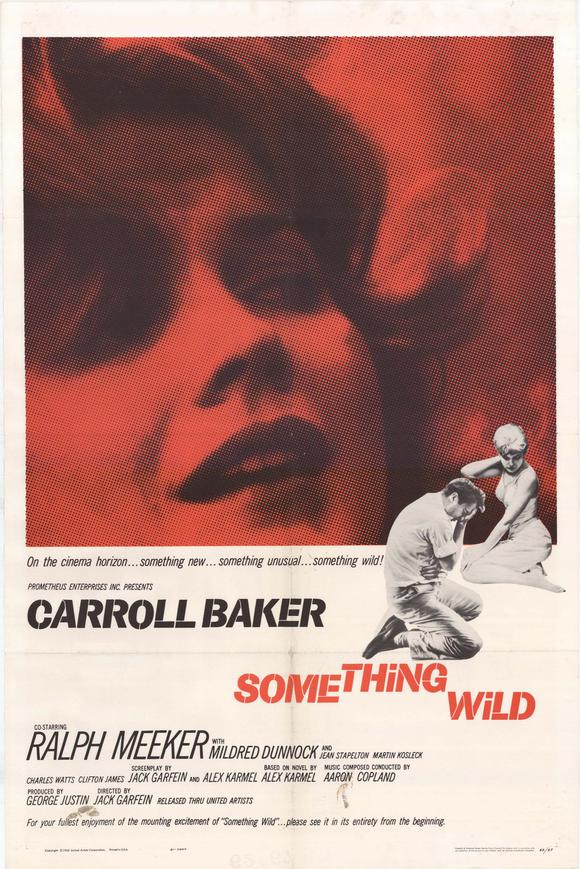
Something Wild (1961)

something wild 1

By Richard Winters

My Rating: 5 out of 10

4-Word Review: Rape and its aftermath.

Mary Ann (Carroll Baker) is raped one night while she is walking home from school. For whatever reason she decides not to go to the police and instead keeps the whole incident to herself, but living with her domineering mother (Mildred Dunnock becomes too much and she decides to run away. She finds herself a cheap apartment in a seedy part of the city and a job at a five and dime store. However, the emotional effects of the rape begin to gnaw at her psychologically. She no longer wants to get close to anyone, which alienates her from those around her. She considers suicide, but at the last minute is saved by Mike (Ralph Meeker) who takes her back to his modest basement apartment. There he imprisons her and refuses to let her leave until she falls in love with him.

In some ways this film was ahead-of-its-time. The dazzling opening credit sequence by Saul Bass is eye popping. Director Jack Garfein who at the time was married to Baker and just off of his success of The Strange One continues his push of exploring ideas with dark psychological undertones. The rape scene for its time is surprisingly graphic and the film doesn’t have a single line of dialogue uttered for the first fifteen minutes. New York gets captured in a cinema vertite style reminding me of the influential ‘Naked City’ TV-series that was out at the same time. The black and white photography helps accentuate the story’s grittiness and the surreal dream sequence that Mary Ann has towards the middle of the film is visually creepy and impressive.

Although not the strongest of actresses Baker still manages to give a compelling performance and although she was already pushing 30 she still looked very much like she was 18 or even younger. Meeker an outstanding actor who unfortunately isn’t very well known is solid. The film also offers a great chance to see young stars in the making including Diane Ladd in her film debut as well as Jean Stapelton as Mary Ann’s nosy neighbor and Doris Roberts as a petulant co-worker. There is even Clifton James with a full head of hair.

Unfortunately the film ultimately misses-the-mark and part of the problem is Mary Ann’s decision of not going to the police after she is attacked, which is never explained. This could have been because of the stigma placed on rape victims at the time, but it still comes off as frustrating and even off-putting to the viewer. Mike’s apartment is just a little too bare-bones looking almost like a prison cell instead. Maybe this was the director’s attempt at symbolizing how ‘imprisoned’ Mike and Mary Ann were, but if that was the case it was much too obvious. Realistically someone usually enlivens and personalizes the place where they live by at least putting up a few pictures on the walls. Also, Mary Ann’s doesn’t seem to put up much of an attempt at escaping. Mike locks the door from the inside and then passes out drunk and she could have just gone through his pockets to get the key. She is also left alone for several hours a day while he goes to work, which would have been enough time to cut through the bars on the windows, broken through the door, or even yelled for help out the open window.

Cinematically it has its moments particularly during the first hour, but the story itself seems dated and the character’s motivations confusing and unclear ultimately making it an experimental misfire.

My Rating: 5 out of 10

Released: December 23, 1961

Runtime: 1Hour 52Minutes

Not Rated

Director: Jack Garfein

Studio: United Artists

Available: DVD, Amazon Instant Video

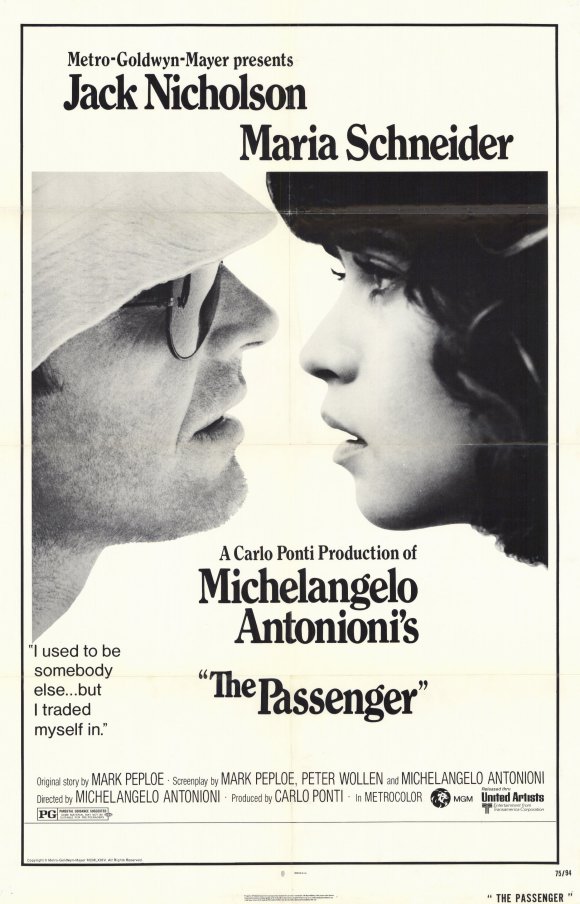
The Passenger (1975)

the passenger

By Richard Winters

My Rating: 5 out of 10

4-Word Review: He steals someone’s identity.

This is a low key drama detailing a world-weary reporter named David (Jack Nicholson) who comes upon a dead man in a hotel room. David is unhappy with his existence and since they closely resemble one another he decides to switch identities with the dead man. He believes that this man lives a jet setting lifestyle, but soon finds that may not be true and that everyone is trying to escape from something.

This film has the artsy flair that is typical of all Michelangelo Antonioni’s films. It tends to be quite evasive as it brings up certain points and then seems to muddle them. It’s made to make you ponder, but has a decidedly downbeat tone. There is no music until the very end, which was a mistake as it gets too quiet at points and one’s mind will eventually wander especially with the lack of strong dramatic interaction. Having some music blended in would certainly have helped the momentum and avoided the rather flat feeling you get when it is all over.

The film is not without its good points and can best be described as a kind of Easy Rider, but more from a world perspective. Like with that film it describes characters trying to escape from a world that will not let them go. I loved the wide variety of exotic locales, which in any other film would symbolize excitement and adventure yet here they become part of the imprisonment. The film though does not take full advantage of its outlets and the sense of detachment that it has eventually rubs off on the viewer.

Nicholson gives a surprisingly non-dynamic performance. Maybe he was just trying to get into his transparent character, but either way it is not riveting. Maria Schneider is interesting only because she has the face of a young girl but the sensibilities of a much older woman.

There are some interesting shots. One features the camera looking out of a barred window from inside a room. Then without taking a single cut the camera moves through the bars, makes a complete turn, and then looks back through the window from the outside. There is also footage of an actual execution of a political prisoner. This certainly will interest the morbid, but it also seems to be a bit sick and disrespectful especially when the camera stays locked onto limp, bullet-riddled body.

My Rating: 5 out of 10

Released: April 9, 1975

Runtime: 2Hours 6Minutes

Rated PG

Director: Michelangelo Antonioni

Studio: MGM

Available: VHS, DVD

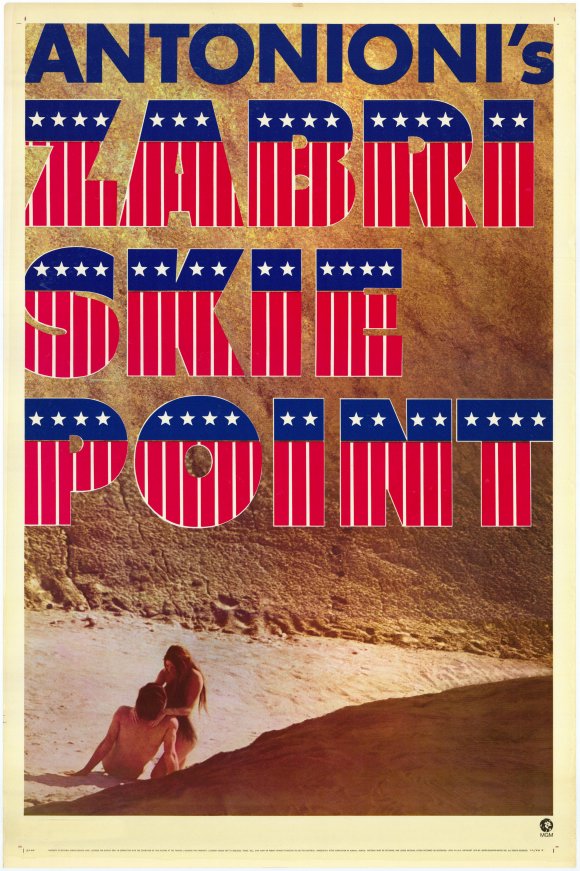
Zabriskie Point (1970)

zabriskie point 2

By Richard Winters

My Rating: 8 out of 10

4-Word Review: Blow up the house.

Two young adults, a product of the turbulent sixties and from opposite ends of the social spectrum, meet and fall-in-love. Daria (Daria Halpern) is an anthropology student while Mark (Mark Frechette) is a dropout who’s wanted by the police. Together they try to endure the hypocrisies and materialism of a capitalistic society.

Writer/Director Michelangelo Antonioni’s camerawork is one-of-a-kind and if you see this film for one reason then see it for this. Everything gets captured in intricate, focused detail and the shots of the desert landscape are breathtaking. The scenes where Mark flirts with Daria while piloting his airplane while she is still on the ground is genuinely cool.

The sprawling, modernistic mansion in the middle of the barren landscape is visually imaginative. Seeing it get blown up is a bit depressing, but when it gets done 10 different times from 10 different angles then it becomes a unique cinematic experience. The exploding refrigerator and flying food, which is done in slow motion, as well as the ten or so different couples who make love on the desert floor at the same time is equally arresting.

Having the two leads played by amateurs with little or no acting experience ends up working well. There is a very natural and honest quality to their delivery that most professional actors in their quest to put on a ‘performance’ wouldn’t be able to convey. Rod Taylor on the other hand is wasted in a small and uninteresting role as is character actor Paul Fix.

This film was unfairly overlooked and criticized upon its initial release, but now deserves a fresh look. Having a scathing take on American society done by a foreigner isn’t quite fair, but his comments on capitalism are good nonetheless. The story itself is quite thin, but when it is as visually intoxicating and emotionally kinetic as this then who cares.

My Rating: 8 out of 10

Released: February 9, 1970

Runtime: 1Hour 50Minutes

Rated R

Director: Michelangelo Antonioni

Studio: MGM

Available: VHS, DVD