Category Archives: Moody/Stylish

All the Colors of the Dark (1972)

By Richard Winters

My Rating: 6 out of 10

4-Word Review: Haunted by her nightmares.

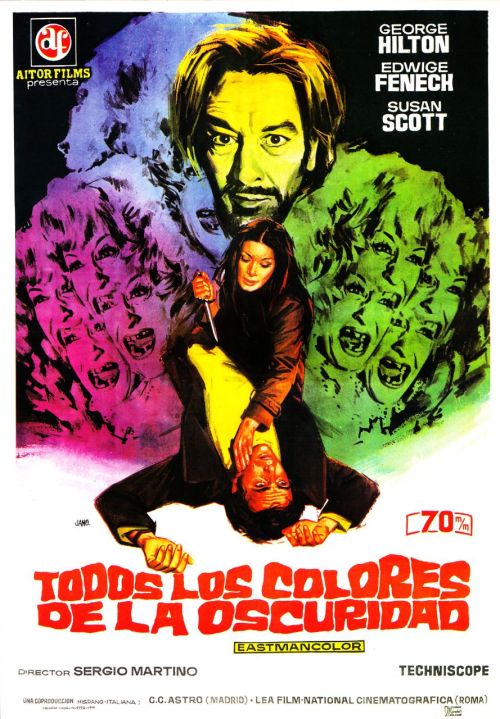
Jane (Edwige Fenech) is plagued by nightmares dealing with a blue-eyed man (Ivan Rassimov) chasing after her. She feels that the memories of the recent death of her child as well as the loss of her mother when she was younger may have something to do with it. Her sister Barbara (Susan Scott) has her see a psychiatrist (George Riguad) while her friend Mary (Marina Malfatti) suggests she attend a black mass, but neither helps and just makes things worse until she can no longer differentiate between her dreams and reality.

The film is a strong tie-in to Rosemary’s Baby and in many ways seems to be playing out the same essential plot, but doing it in a more vivid, graphic way. Instead of implying the horror like that one did this one goes straight to the stuff that was never shown or just briefly touched-on. For the most part I liked this approach as I always felt the Roman Polanski classic was too restrained and talky and could’ve gone farther cinematically with its intriguing premise than it did.

The visuals here are almost in-your-face particularly the surreal opening bit, which is the best moment in the movie. Director Sergio Martino keeps the viewer off-balance by constantly going back and forth between the present day and then to Jane’s nightmares until it becomes increasingly harder to tell the difference between them, which makes the viewer feel locked into Jane’s frightening dilemma right along with her.

Unfortunately rhe plot itself isn’t as creative and there were many times when I foresaw the twists long before they happened and could even predict when they’d come. The protagonist walks into too many traps that anyone else could’ve guessed was coming making her seem a bit dense while the cult-like mass segment had too many clichés making it campy while eroding from the rest of the film’s provocative style.

Fenech doesn’t look like the average housewife either, but more a magazine model and in fact all the women here have too much of that same appearance, which takes away from the authentic feel. Part of the reason why Rosemary’s Baby worked was because Mia Farrow came-off as fragile and vulnerable while Fenech has a detached look in her eyes that doesn’t allow her to emotionally connect with the viewer even though as the film progressed I softened on her more.

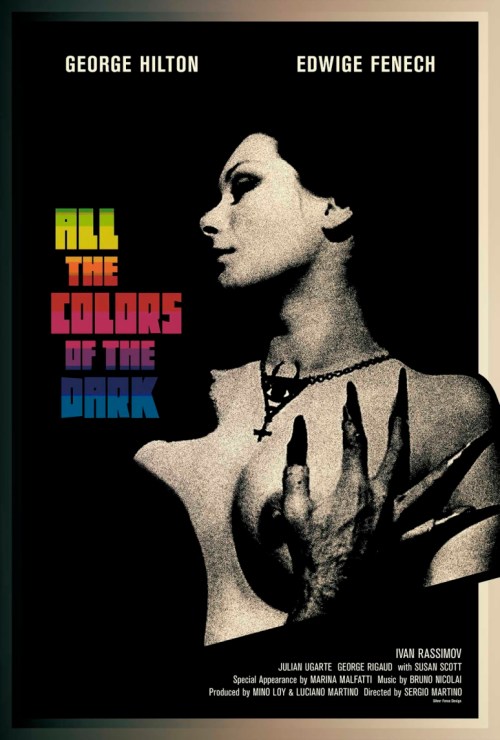
The on-going twisting of the dreams and reality eventually overstays their welcome becoming more annoying than intriguing particularly near the finish where too many false endings get played-out. Even though it never matches its first 10 minutes and isn’t as erotic as the film’s promotional poster suggests I was still glued to what was happening and it’s one of the more memorable Italian giallos of all-time.
My Rating: 6 out of 10

Released: February 28, 1972

Runtime: 1Hour 35Minutes

Rated R

Director: Sergio Martino

Studio: Interfilm

Available: DVD
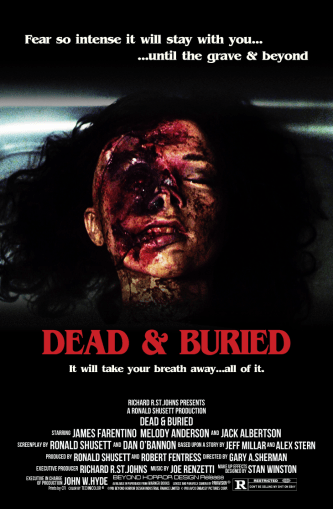
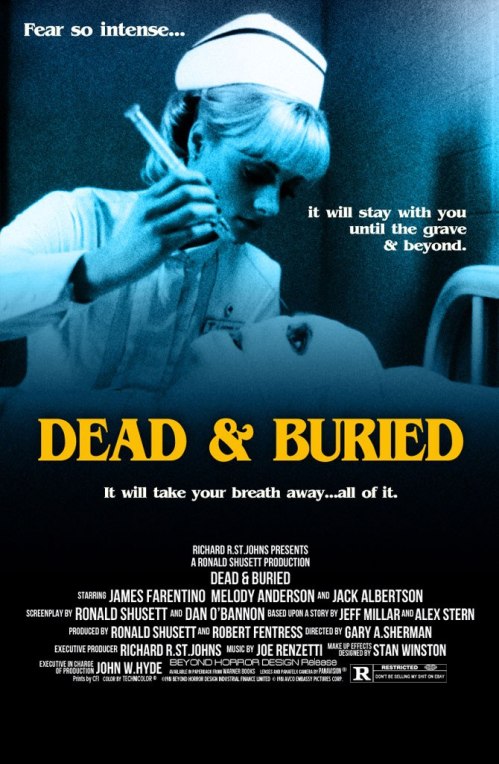
Dead & Buried (1981)


By Richard Winters

My Rating: 5 out of 10

4-Word Review: Dead people terrorize town.

Dan (James Farentino) is the sheriff of a sleepy New England town called Potter’s Bluff. Normally his days are routine but suddenly he finds himself investigating a bizarre case where a group of people murder a visiting photographer by burning him at a stake for no apparent reason. Soon other strange murders begin occurring and his peaceful little town as well as his own life gets turned upside down as neither he nor the town’s coroner (Jack Albertson) can come up with any answers especially as the dead victims start to come back to life.

The film, which was directed by Gary Sherman, starts off well as the big band era music and picturesque small town scenery makes it seem like something straight out of a Norman Rockwell painting. Sherman went to great lengths to keep every scene consistent with a gray color tone including having a giant flag hung over a cliff in order to block out the sunlight during outdoor scenes and keeping everything looking like it was under a continual foggy haze.

The story though can’t match the atmosphere and the interest level wanes pretty quickly. The dead coming back to life angle has been used too often and is no longer novel to the point that it’s now almost boring. There’s no consistent protagonist either. The sheriff eventually becomes one, but there are long breaks where the film follows other characters including a young family, who come into contact with the killers, but they’re not that interesting and it becomes difficult for the viewer to connect emotionally with anyone on the screen.

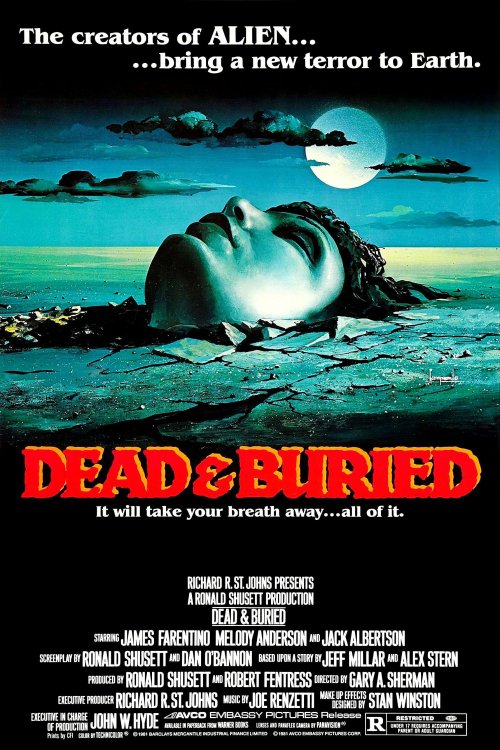
For years Dan O’Bannon was credited with creating the story and many movie posters advertised this due to his success with Alien, but O’Bannon later stated in a 1983 interview that he actually had nothing to do with the script and disown the film. Ronald Shusett apparently wrote the entire thing, but in order to get it sold he felt a big name writer needed to be attached to it, so he promised O’Bannon that they would implement some of the ideas that he had into the final revision in order to allow them to use his name on the credits, but when the film eventually came out none of O’Bannon’s suggestions had been used.

The film’s tone is yet another issue. Sherman had wanted to approach it as a dark comedy, but one of the film’s investors PSO International pushed for the gore to be emphasized more. The result is jarring as half the time it’s this quant atmospheric chiller while at other points it becomes without warning graphically gory.

Farentino is good, but Melody Patterson, who was 17 years younger than him in real-life, is miscast as his wife. Jack Albertson is the best thing in the movie. Initially I feared that his part was too small, but he comes on strong at the end, which is great and I was also happy to read that despite the fact that he was dying of cancer while the movie was being made he still remained alive long enough to attend its premiere although he had to do it while being in a wheelchair and connected to an oxygen tank.

If you’re looking for a horror movie that emphasizes atmosphere and an offbeat touch then this may hit-the-spot, but the plot needed to encompass a broader time frame as it didn’t seem believable that so much of the town’s people could be in on this secret without the sheriff becoming suspicion of things much sooner than he does. The twist ending is weak too as it’s full of loopholes and creates way more questions than it answers.

My Rating: 5 out of 10

Released: May 29, 1981

Runtime: 1Hour 34Minutes

Rated R

Director: Gary Sherman

Studio: AVCO Embassy Pictures

Available: DVD, Blu-ray (Region B/2), Amazon Video, YouTube

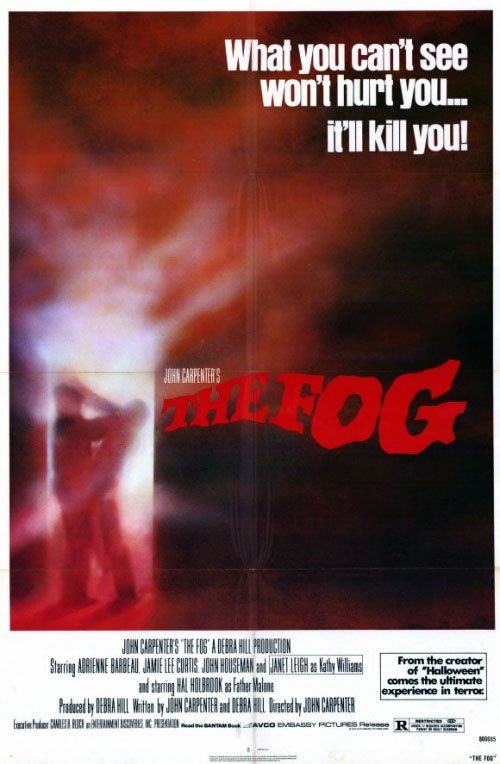
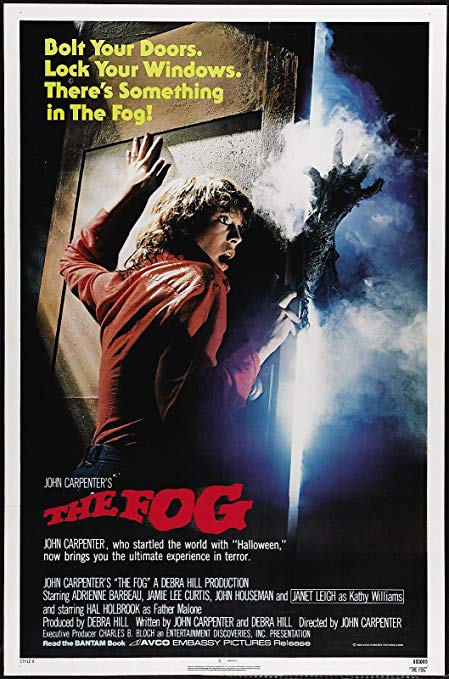
The Fog (1980)

By Richard Winters

My Rating: 3 out of 10

4-Word Review: Ghostly fog haunts town.

As the town of Antonio Bay gets ready to celebrate its 100th year of existence a mysterious fog creeps into the area at midnight and then strange unexplained events begin to occur. The town’s priest Father Malone (Hal Holbrook) finds a secret diary detailing how 6 of the town’s founders intentionally sank a ship 100 years earlier. Now the ship’s ghostly victims have returned seeking revenge by insisting that 6 people from the community must die in order to make-up for the 6 that originally killed them.

John Carpenter’s follow-up to his highly successful Halloween has gained a fervent following, but in the end it really doesn’t amount to much. Maybe my expectations were too high as I had a friend who talked this up as being great, but the scares are lacking despite a good first act that nicely builds the atmosphere and has some effective visuals particularly the shots of the fog rolling in.

The interesting premise though gets ruined by having things explained too quickly. Sometimes a little mystery can go a long way and not knowing what’s causing the strange occurrences and only having it answered at the very end, or possibly not at all, would’ve made it scarier and more intriguing. The backstory makes the ghosts come off like sympathetic victims looking for justice and therefore less threatening. Instead of being this entity with no known boundaries they become logical, emotional beings that makes the scenario too contained and civilized and less intense than it could’ve been.

You wait for things to finally gel, but it never really does. The victims get attacked in a matter of seconds and the camera then quickly cuts away before any blood or violence is shown. The ghosts aren’t seen much either and amount to shadowy figures from a distance when they are with occasional glowing red eyes, but otherwise they lack visual flair.

Having three heroines was a mistake especially since Jamie Lee Curtis seems bored in her role and almost like she didn’t even want to be there. Her real-life mother Janet Leigh conveys far more energy and she could’ve easily been the star with Curtis cut out completely. The two do share a few scenes together, but frustratingly never any lines of dialogue.

Adrienne Barbeau, who at the time was Carpenter’s wife, is okay as a late night DJ working out of a lighthouse, but her over-the-air pleas to her young son Andy (Ty Mitchell) to get out of his house to escape from the ghosts came off as unintentionally funny. The simultaneous climaxes that occur at two different locations with some cast members fighting off the ghosts inside a church while Barbeau does the same inside the lighthouse doesn’t work and if anything the finale should’ve happened completely inside the lighthouse since that was a more unique setting.

The direction is competent and it’s not like this film, which was remade in 2005, is a bad one it’s just not particularly exciting or interesting. The horror needed to be amped up and the pacing quicker particularly as it got into the second act. The only moment in the film that impressed me had nothing to do with the horror, but instead was the shot showing Barbeau walking down a long, winding outside stairwell to get to the lighthouse, which was filmed on-location at the historic Point Reyes Lighthouse in Marin County, California.


My Rating: 3 out of 10

Released: February 8, 1980

Runtime: 1Hour 30Minutes

Rated R

Director: John Carpenter

Studio: AVCO Embassy Pictures

Available: DVD, Blu-ray, Amazon Video, YouTube

The Thomas Crown Affair (1968)

By Richard Winters

My Rating: 8 out of 10

4-Word Review: Robbing his own bank.

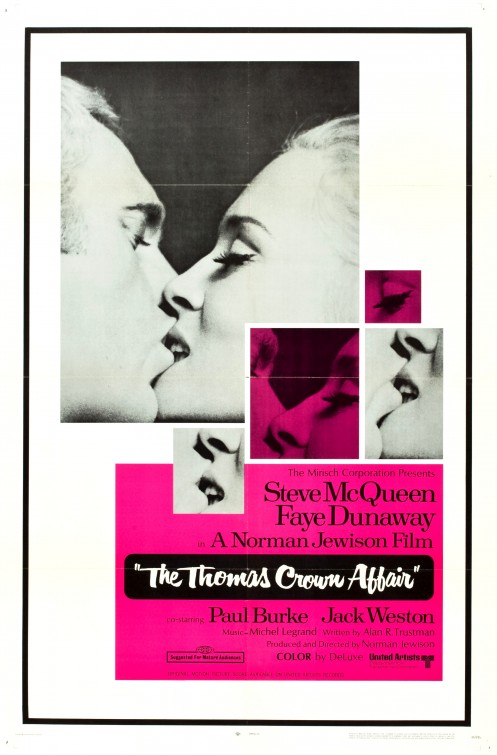
Thomas (Steve McQueen) is a bank executive who devises what he feels is the perfect crime. He hires five men who he does not know nor do they know each other to rob his bank in broad daylight and then dump the money in a trash can at a cemetery where he retrieves it. The heist works flawlessly, but then insurance investigator Vicki (Faye Dunaway) comes on the scene and she almost immediately eyes Thomas as the culprit. The two begin a torrid affair with Vicki openly telling him her suspicions and that she’ll do whatever it takes to prove it, but Thomas has other plans.

What makes this film stand out from all the other bank robbing movies is that the heist scene was shot using a concealed camera. Only the bank officials and guards were aware that a movie was being made while the rest of the people were actual customers convinced that what was happening was real making their reactions of fear genuine. The best part of this sequence though is when director Norman Jewison has the camera put onto a dolly and glides it through the tear gas that the thieves set off.

The film is famous for its use of the split screen particularly during the opening credit sequence as well as Michel Legrand’s award winning music. Legrand wrote the score after viewing a five hour rough cut and the movie was then edited to be in tandem with the music instead of being done in reverse, which is how it’s usually done. For me the music comes off as sappy and out-of-place making it seem more like a romance when it’s really a game of cat-and-mouse and the blaring score almost gets in the way of it.

The best thing is Dunaway and I really don’t care how many face lifts she may have had, or how many years it’s been since she’s had a relevant role because she’s still a great actress and her presence here proves it. She filmed this before her breakout movie Bonnie and Clyde was released and she takes complete control of every scene she is in. Her character also works in what was still traditionally perceived as a man’s role and thus making it kind of groundbreaking. I also like that she’s never seen as weak or vulnerable in the traditional feminine sense and instead remains quite determined and focused throughout while never swaying from using her femininity as a weapon and nothing more.

McQueen unfortunately, and I can’t believe I’m saying this as he’s one of my favorite actors,  ends up being the film’s weakest link as the role goes against his rugged persona, which is what he’s good at. He had worked with Jewison before in The Cincinnati Kid and lobbied hard for the part, but Jewison rightly felt that character was not the right fit, but ultimately he relented, which was a mistake. The only time he is effective is when he’s doing his own stunts or driving on the beach in a dune buggy but otherwise he’s transparent and utterly dominated by Dunaway.

The supporting cast is good especially Jack Weston as a mope who gets hired on to partake in the robbery and then works as the clumsy catalyst that helps unravel it, but I was disappointed that his character ultimately disappears too soon and would’ve liked him to have remained for the duration. Otherwise this slick production, which was written by Alan Trustman who worked at a bank and would spend his idle time fantasizing on how to rob it, holds up well and includes the famous chess game sequence that still sizzles.

As for the 1999 remake, which changes many key plot points, I’ve never seen it nor do I have any interest to. Pierce Brosnan and Rene Russo certainly make for an interesting pair, but I feel that if the original is a classic then it shouldn’t be touched and a law should be written disbarring remakes when they aren’t needed or asked for.

My Rating: 8 out of 10

Released: June 19, 1968

Runtime: 1Hour 42Minutes

Rated R

Director: Norman Jewison

Studio: United Artists

Available: DVD, Amazon Video, YouTube

The Day of the Locust (1975)

By Richard Winters

My Rating: 8 out of 10

4-Word Review: Desperate people in Hollywood.

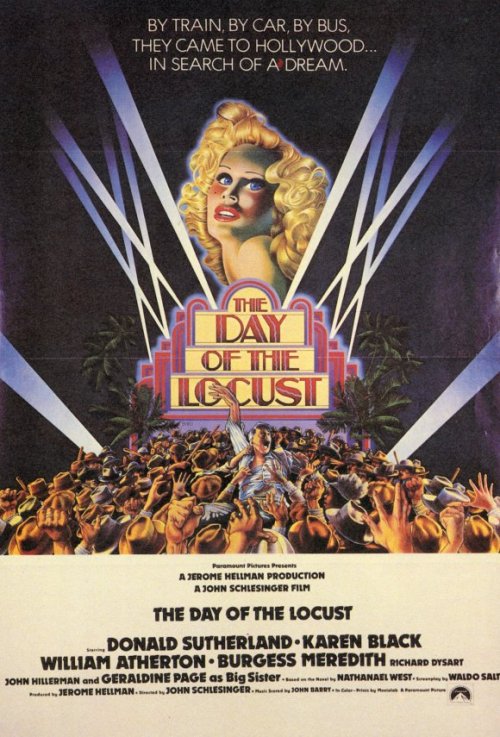
During the depression a young artist named Tod Hackett (William Atherton) comes to Hollywood to help design the set for a new movie. While there he meets a wide assortment of people, who seek fame and fortune, but find heartbreak and rejection instead. Tod falls for Faye (Karen Black) a woman striving to become the next big Hollywood starlet despite lacking any talent while her father Harry (Burgess Meredith) is on the opposite end of the spectrum. At one time he was a vaudeville comedian, but now with his failing health is relegated to selling health tonics door-to-door.

This film is the last great effort of director John Schlesinger whose films after this lacked the same visual style that made Midnight Cowboy and Far From the Madding Crowd cinematic masterpieces. From a visual standpoint it hits all the right chords and is filled with many memorable segments. The best ones include the scene where a group of bourgeoisie guests who come to Natalie Schafer’s home (she was best known for playing Mrs. Howell on ‘Gilligan’s Island’) to watch porn movies There’s also the scene where an entire film set comes crashing down and injuring the entire crew as well as the climactic moment where a large crowd waiting outside to see the premiere of The Buccaneer turn into a violent, bloodthirsty mob.

The acting is first-rate particularly Black who portrays her desperate character to a perfect tee. Meredith, who was nominated for a supporting Oscar, gives a vivid portrayal of her equally desperate father making his scenes quite entertaining. Donald Sutherland is also solid as a likable, but socially awkward outsider, which best suits his acting persona.

The script though by Waldo Salt, which is based on the 1939 novel of the same name by Nathanael West, misses out on a lot of the book’s subtext. In the movie Tod tries to rape Faye while at a party, but this eruption of his seems to come out of nowhere while in the book it gets better explained by showing how Tod continually harbors rape fantasies for Faye and makes these fantasies a running part of the story.

Donald Sutherland’s character, the aptly named Homer Simpson, which supposedly was the inspiration for Matt Groenig’s character in his famous comic strip, is a confusing enigma. In the book he is given a better backstory and revealed to be a man struggling with a lot of inner turmoil while here he’s seems more like a strange, naïve mope from another planet.

There’s also no explanation in the movie for why the word Locust is in the title, which is in reference to the Bible and the plague of locusts that descended onto the fields of Egypt. Tod symbolizes the locust in the novel’s version of the story while in the movie his character is more of an outsider observing the ugliness, but not having a hand at creating it

The biggest issue though is the film’s underperformance at the box office, which helped relegate both Black and Atherton, who at the time were considered up-and-coming stars, to supporting roles afterwards. I believe part of the reason for this is because none of the characters are likable. It’s fine showing humanity’s bad side as long as the audience doesn’t feel beaten-over-the-head with it, but the film wallows so much in the darkness that it overwhelms the viewer. Having a character that was slightly removed from the madness and not as flawed might’ve helped to balance things and make everything else that goes on more tolerable.

Overall though it’s a great film, but the statement it’s trying to make remains murky. Better efforts should’ve been made to tie it to the disillusionment of the American Dream, which is what the book does and not seemed so much like just a glimpse into a freak show of a bygone era like it ends up doing here.

My Rating: 8 out of 10

Released: May 7, 1975

Runtime: 2Hours 24Minutes

Rated R

Director: John Schlesinger

Studio: Paramount

Available: DVD, Blu-ray, Amazon Video, YouTube

The Unbearable Lightness of Being (1988)

By Richard Winters

My Rating: 6 out 10

4-Word Review: He fails at monogamy.

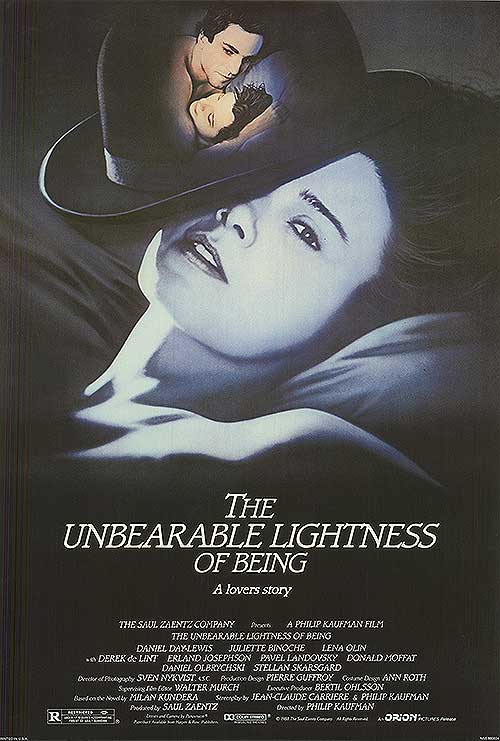
Tomas (Daniel Day-Lewis) is a successful surgeon living in Prague during the 1960’s who has a way with the ladies. He enjoys his robust sex life, but then falls for the awkward and plain Tereza (Juliette Binoche) and the two get married even as Tomas continues to see other women on the side. Tereza becomes upset by this and threatens to leave him only for the two to get swept up into the events of the Prague Spring where Soviet tanks invade their country. They escape to Switzerland but Tereza is unhappy there as well and moves back to Czechoslovakia with Tomas later following. Although their living conditions under communist rule are harsh they still find that their mutual love keeps them happy anyways.

Although masterfully directed by Philip Kaufman I still found the characters to be poorly etched. Tomas’ ability to get beautiful women to literally throw themselves at him never gets properly explained. Yes he is good-looking, but there are a lot of handsome guys who aren’t able to get women to shed their clothes for them at seemingly the snap-of-the-finger. Some clear social skill or persuasive ability had to be shown and clarified to make the women’s behavior more understandable, but this never effectively gets addressed. The scene where Tereza gets ‘overpowered’ by Tomas’ aura when all he is doing is sitting at a table in a café reading a book, but it’s enough to get her to run up to him and tell him she’s available is a big stretch and makes this supposedly profound movie look like it was built on a very superficial foundation.

There’s also the question as to why Tomas would want to marry Tereza to begin with. This is a guy who can literally get any beautiful woman he wants so why settle for the dowdy/shy Tereza? What is it about her, or about his inner mind that would want to make him commit to her and not the others?

His relationship with Sabina (Lena Olin), who is his independent- minded off-again-on-again lover is far more believable and kind of made me wonder why Tereza even needed to be in the mix at all. As much as I liked Sabina I did find the storyline dealing with her budding relationship with Franz (Derek de Lint) to be rather unengaging. However the friendship that blossoms between her and Tereza as well as the underlying lesbian subtext is interesting and yet the film introduces this in a very long, drawn-out segment inside Sabina’s apartment only to then drop it without ever exploring it to its satisfying and full conclusion.

On the technical side it’s a splendid production. I particularly liked the imagery of the tanks rolling into the city and how Tomas and Tereza’s presence gets cropped into actual footage of the real-life event and how seamlessly it goes between black-and-white and color. Sven Nykvist’s cinematography is a marvel. Initially I felt his talents were wasted as the camera only captures the bleak colorless surroundings of old-town Prague, but then when the couple returns to the city after their brief foray in Switzerland the decay and grayness becomes even more pronounced and helps convey visually the depressing feeling of the communist oppression.

The film, which is based on the novel of the same name by Milan Kundera, has an interesting message, but it failed to give me as a viewer any type emotional impact. I was never able to understand what made these characters tick. This might’ve gotten better addressed in the novel, which I didn’t read, but gets lost in translation here and ends up hurting the provocative imagery that to some degree gets a bit over-the-top anyways. This could also help explain why despite being on the set as an ‘advisor’ Kundera expressed displeasure with the film version and refused to help promote it.

My Rating: 6 out of 10

Released: February 5, 1988

Runtime: 2Hours 53Minutes

Rated R

Director: Philip Kaufman

Studio: Orion Pictures

Available: DVD, Amazon Video, YouTube

Bad Company (1972)

By Richard Winters

My Rating: 6 out of 10

4-Word Review: Two deserters go west.

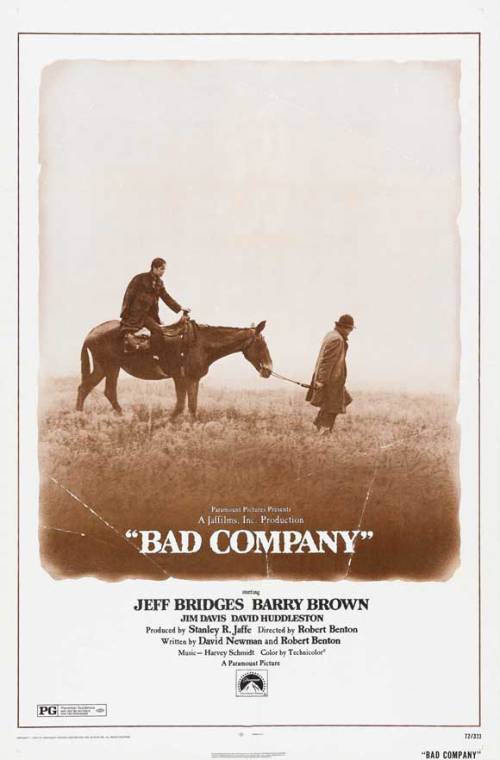
Drew (Barry Brown) is a young man living in the south during the civil war who manages to avoid going into the army by hiding from the soldiers when they come to his family home to retrieve him. After they’ve left his mother (Jean Allison) gives him $100 and tells him to go west. When he gets to St. Joseph, Missouri he meets up with Jake (Jeff Bridges) and the two form an uneasy alliance with Drew even getting invited into Jake’s young gang (Damon Cofer, John Savage, Jerry Houser, Joshua Hill Lewis) of youthful outlaws. The six ride off into the west hoping to find adventure and opportunity, but instead meet hardship and violence.

The film’s stark tone would’ve been more compelling had there not been so many other westerns coming out at the same time with a similar theme. Instead of being this refreshing change-of-pace from the old western serial it just ends up creating new clichés from the then budding revisionist  genre. At certain points it seems almost like a carbon copy of The Culpepper Cattle Company, or even The Great Northfield Minnesota Raid, which star Brown had been in just before doing this one.

The attempt to mix dry humor with harsh reality works fairly well and placing the setting amidst the sprawling wheat fields of Kansas gives it a distinctive look that is perfectly captured through the lens of cinematographer Gordon Willis although the piano score by Harvey Schmidt gets intrusive. This becomes particularly evident towards the end when the two boys get into a gun battle with a gang of outlaws and the action is choreographed to the beat of the music, which only helped to take me completely out of the story. What’s the use of spending so time creating a gritty realism if you’re just going to suddenly sell-out on it in a cheap attempt to be ‘humorous’ and ‘cute’?

The acrimonious friendship between the two leads is what I liked, but the film misses the mark by not focusing on this enough. The supporting cast wasn’t needed and the film should’ve focused solely on the two stars from the beginning making it like ‘the odd couple of the west’, which could’ve been memorable. Instead it meanders and only starts to gel by the third act, but by then it’s almost too late. I also wasn’t too crazy about the wide-open ending either, which offers no satisfying conclusion.

My Rating: 6 out of 10

Released: October 8, 1972

Runtime: 1Hour 33Minutes

Rated PG

Director: Robert Benton

Studio: Paramount

Available: DVD, Amazon Video, YouTube

Saturn 3 (1980)

By Richard Winters

My Rating: 4 out of 10

4-Word Review: Space couple battles robot.

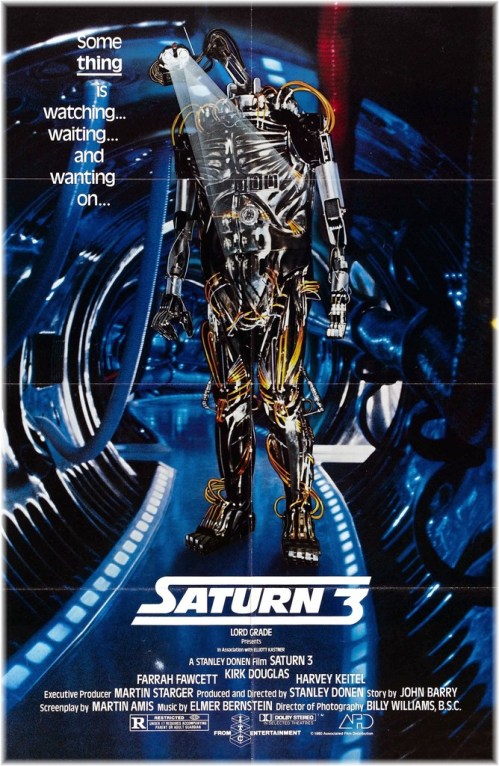
Mentally unhinged Captain Benson (Harvey Keitel) arrives on a space station that is located on Saturn’s 3rd moon along with a robot named Hector that has brain tissue made up of human fetuses. On the space station resides Adam (Kirk Douglas) and Alex (Farrah Fawcett) who are a couple researching on how to grow plants without soil. Captain Benson is assigned to assemble the robot, which will supposedly help the couple in their research, but instead it goes on a rampage killing Benson and then threatening to do the same to the other two.

The film was the brainchild of award winning set designer John Barry best known for his production design in the movies Star Wars and A Clockwork Orange. Unfortunately most of his work was done inside an office and his ability to actually direct actors was limited leading to constant conflicts between he and star Douglas, which eventually forced the film’s producer Stanley Donen to step in and takeover. Barry then left to work on The Empire Strikes Back only to collapse suddenly and die just a few months later from meningitis at the young age of 43 while never seeing the completed version of his original vision.

The sets are dazzling and clearly the film’s best element. In fact one could watch the movie for its visual quality alone with no sound and be better entertained. The robot is amazing too because he comes off looking like a genuine mechanical concoction and not just some stunt guy in a body suit. The thing doesn’t even have a head, but simply a protruding wire coming out the top with two lights on the end of it representing its eyes. Watching him being put together is mesmerizing as he looks very much like modern robots seen today at science shows making the film, at least in this area, seem astutely ahead-of-its-time.

The story though comes-off like an afterthought. Never once did I feel any tension even as the robot chases the couple all around. The characters are bland and the cast needed to be larger as the production lacks energy or liveliness. The dark, isolated space station is gloomy and depressing, which eventually crosses over to the film as a whole.

This was supposed to be a sci-fi/horror hybrid in the realm of Alien, but unlike that movie this one lacks any shocks or scares. There were two scenes that were filmed but later deleted one involved a dream sequence where Adam and Alex kill Benson while another had the robot ripping apart Benson’s dead body. These scenes sounded like they had exact edginess that the film lacked and it’s a head-scratcher why they were cut. When you’re trying to attract the same audience of another sci-fi flick that had its share of gore then you need to go for the gusto and not hold back.

The casting is cockeyed. Why is a 65-year-old codger banging a hot 30-year-old? Not only does it look like a father/daughter thing but even more like a grandfather/granddaughter situation. Kirk’s a fine actor, but not for this and his son Michael would’ve been a far better choice especially since there’s no chemistry between the two stars anyways.

Farrah’s acting skills have improved slightly from her first two films, but she still comes off as transparent and in-over-her-head, hired solely for her looks and nothing else.  Male viewers will enjoy her brief topless scene, but most likely no one, male or female, will be excited about seeing Kirk’s bare wrinkled old ass, which you’ll unfortunately also get a glimpse of.

I was most perplexed by the fact that Keitel’s voice was dubbed over by actor Roy Dotrice apparently because Donen didn’t like Keitel’s Brooklyn accent, but why hire the guy in the first place if you don’t like the way he speaks? The dubbing is obvious from the moment he utters his first word and will be a definite distraction to Keitel fans.

Ultimately the film becomes victim to what happens to a lot of big budget sci-fi productions where too much emphasis is put into one element while almost no thought is given to anything else. The result is a flimsy entry into the sci-fi genre that barely deserves any attention at all.

My Rating: 4 out of 10

Released: February 15, 1980

Runtime: 1Hour 27Minutes

Rated R

Director Stanley Donen (John Barry uncredited)

Studio: ITC Films

Available: DVD, Blu-ray, Amazon Video

Carny (1980)

By Richard Winters

My Rating: 6 out of 10

4-Word Review: Runaway joins the carnival.

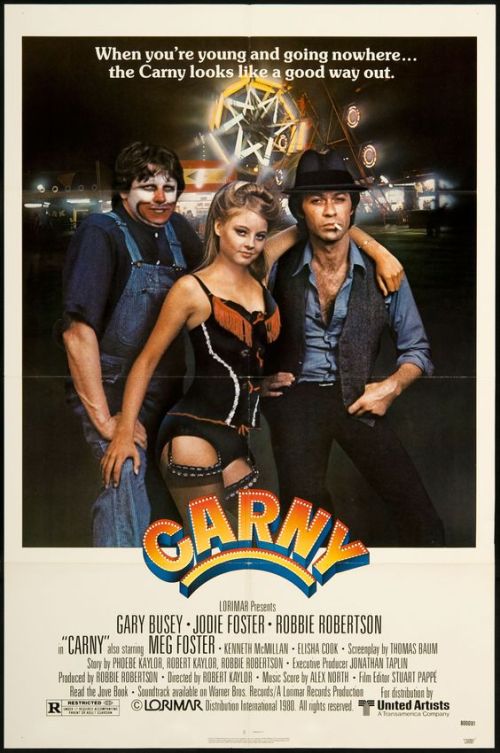
Bored with small town life and an overly-protective boyfriend (Craig Wasson) Donna decides at the age of 18 to break-free of her restraints and travel the countryside by working in a carnival. She befriends Frankie (Gary Busey) who works as a clown and she gets a job as one of the strippers before eventually working the string joint booth while slowly adapting to the shady ways of the gypsy-like lifestyle.

The carnival atmosphere is well-recreated and was directed by Robert Kaylor who years earlier helmed the documentary Derby, which was a behind-the-scenes look at life on the roller derby circuit and this film works much the same by fully immersing the viewer into the dark aspects of a tough environment while also exposing the personalities of the people who work in it. The revealing story manages to be both hard-hitting and intriguing.

The tone though stays too much on the negative side until the viewer feels almost bombarded with one unpleasant situation after another. There’s never anything redeeming and you’re made to feel tense waiting for the next uncomfortable twist to come about, which gets overdone. Certainly there had to be some good times and bonding that occurs and the film lightly touches on this at the very, very end, but I felt more of that should’ve been sprinkled in throughout.

There’s also too many con-games and underhanded shenanigans making me wonder if all carnivals were really this bad , or is it simply playing-it-up for dramatic purposes. The ending in which everyone works together to pull off an elaborate con on a meddling crime boss (Bill McKinney) comes off too much like a poor rendition of The Sting. Some potentially intriguing storylines get dropped; like what happened to Donna’s psycho boyfriend when he finds out that she has left him? I was fully expecting him to come back into the picture at some later point once he tracked her down, but instead he gets forgotten.

Robertson is a famous songwriter and musician whose been around since the ‘60s, but he grew up working in the carnival circuit and helped put his real-life experiences and insights into the script. His performance is okay, but the soundtrack he composed for the film is too upbeat and does not jive with the dark, moodiness of the plot.

The performances are the best thing. Foster usually plays characters that are confident, but here she is someone who is unsure of herself only to acquire an edge as the story progresses. Kenneth McMillan is engaging as the nervous, stressed-out owner and Meg Foster is good as a woman who’s become hardened from being on the road too long. Gary Busey is a standout too even though he sometimes gets mocked today for his weird behavior off-screen, but this guy was at one time considered a serious up-and-coming star and his presence here shows why.

My Rating: 6 out of 10

Released: June 13, 1980

Runtime: 1 Hour 47 Minutes

Rated R

Director: Robert Kaylor

Studio: United Artists

Available: DVD (Warner Archive), Amazon Video, YouTube

Thriller: A Cruel Picture (1973)

By Richard Winters

My Rating: 6 out of 10

4-Word Review: One-eyed mute’s revenge.

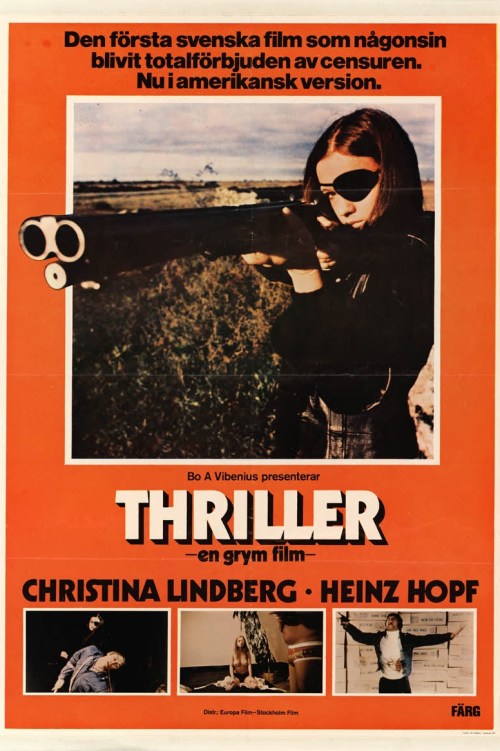
Frigga (Christine Lindberg) is a young woman in her early twenties still living at home with her father and unable to speak due to being raped by an old man at a young age, which has left her psychologically scarred. She attends therapy each week, but on one occasion she misses the bus and takes a ride from a stranger named Tony (Heinz Hopf). Tony takes her back to his place where he drugs her and then forces her to work for him as a prostitute. When she initially resists he gouges out one of her eyes with a knife. Feeling that she has no choice she eventually submits to his demands, but saves up the money she makes, so that one day she can escape from his clutches and use her funds to seek a very violent and ugly revenge on both him and all the others who were cruel to her.

In 1969 Borne Arne Vibenius, who had worked with Ingmar Bergman as an assistant director on Persona, tried his hand at directing his own film by doing the cute family comedy How Marie Hit Fredrik about a 10-year-old girl who runs away from home. The film unfortunately lost a lot of money and so Vibenius decided in an effort to recoup some of the lost funds that he would take the exact opposite route for his next project by going to the most exploitive extreme that he could, or in his words a ‘commercial-as-hell-crap-film’ which was the inspiration for this movie. However, for fear that it might ruin his reputation and stymie any future chances of making a more mainstream film he did it under a different name, Alex Fridolinski, and the actors had a clause in their contracts ensuring that they would never reveal who the real director was.

The film does successfully go to some of the most extremes imaginable which includes showing explicit hard core sex during the scenes where Frigga is shown getting it on with her customers. Apparently Vibenius used a married couple for this who went around Sweden doing live sex shows for money. Whether having the graphic sex was necessary is debatable, but it does, like with the turtle scene in Cannibal Holocaust gives the idea that there is ‘no limits’ here and if the director is willing to show this extreme what else might come next, which then gives the viewer an uneasy feeling, which I suppose if you’re doing a horror film that is the feeling to give out.

There is also a lot of extreme violence including a graphic, close-up shot of a knife cutting directly into a human eyeball, which was apparently done inside a hospital on a corpse of a teen girl who had committed suicide, which sounds ethically questionable. Yet it most assuredly will startle the viewer and some may vomit out their lunch as well.

On the cool side I loved seeing Frigga’s victims getting shot in slow-motion. Watching the blood smear all over their shirts and streams of the red stuff pouring out of their mouths has an almost poetic feel to it and clearly the film’s best moments.

There’s also a good gritty feel not usually seen in most other horror flicks. I liked the way Frigga is shown spending time learning how to shoot a gun, drive a car at high speeds and take self-defense training, so that she’ll be able to take on her enemies when the time comes instead of just showing her magically becoming this gun-toting, macho woman overnight.

The electronic music score is intense and the moody/atmospheric climactic showdown on a lonely road between Frigga and Tony is well crafted. Having Frigga not speak a single word actually gives her character a more entrenched image. Overall, the film is artsy and on the exploitative level it could be considered a trailblazer, but like its title states it’s a cruel picture that gets so excessive it leaves you cold and emotionally drained when it’s over.

My Rating: 6 out of 10

Released: May 7, 1973

Runtime: 1 Hour 47 Minutes (Complete, uncut version)

Not Rated

Director: Bo Arne Vibenius

Studio: BAV Film

Available: DVD