Category Archives: Italian Films

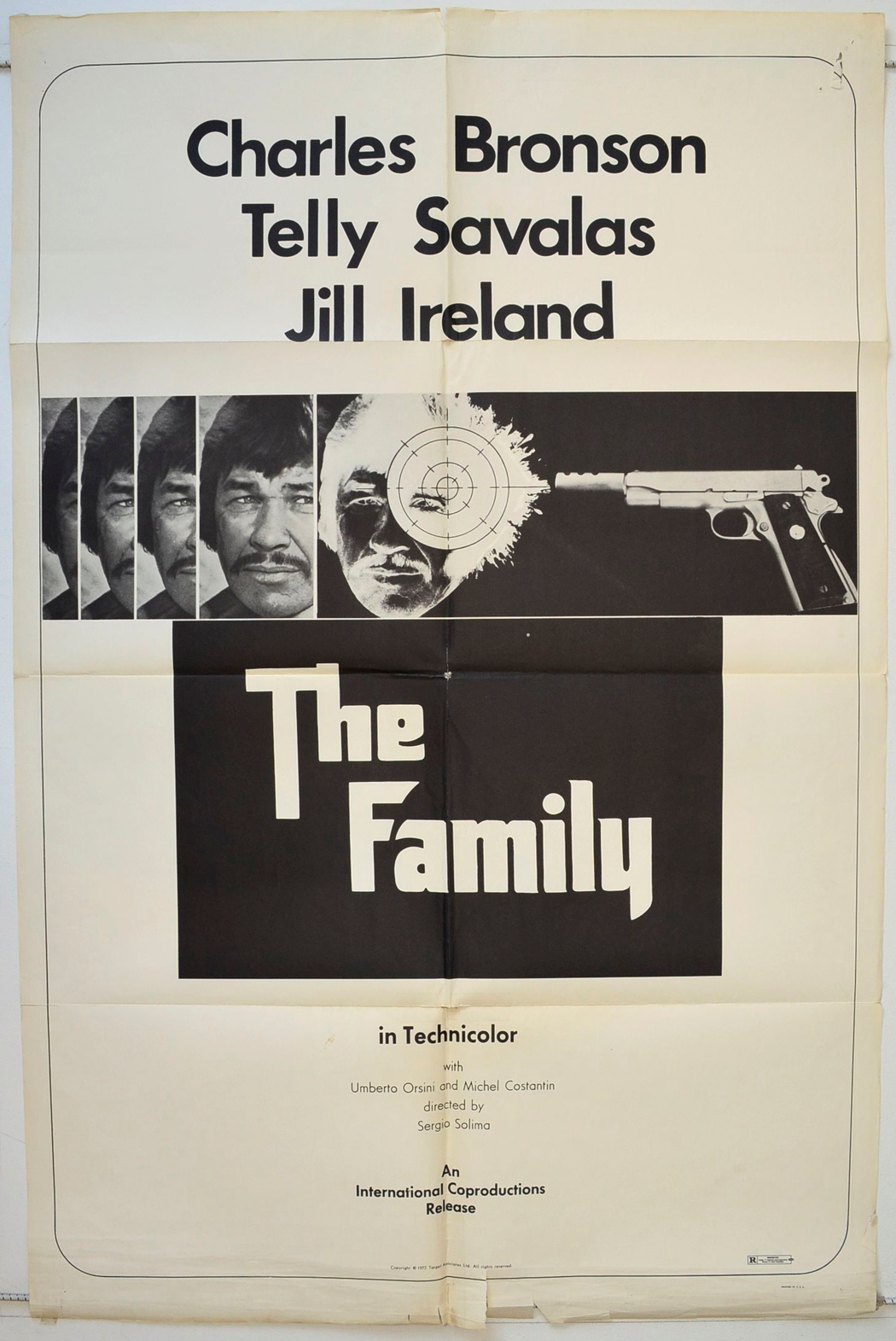
The Family (1970)

the family

By Richard Winters

My Rating: 5 out of 10

4-Word Review: Hit man wants revenge.

Jeff (Charles Bronson) is a retired hit man who finds himself set-up and nearly killed by girlfriend Vanessa (Jill Ireland). When he unexpectedly survives the ambush he plots his revenge by planning on killing her as well as her secret lover who put her up to it, but along the way he becomes harassed by Al (Telly Savalas) who wants to bring Jeff into their crime organization any way they can.

The movie features a great acid rock-like soundtrack that pumps the adrenaline and gives the proceedings a nice edgy feel. The scene where Jeff shoots a man from a distance while the victim is participating in a car race and blowing out his tire, which sends him crashing through a brick wall, is creative. However, the best part of the whole movie, which comes at the end and almost makes sitting through it worth it, is watching two people getting shot as they ride up a glass elevator by a gunman sitting on top of a roof of a building from across the street.

On the whole though the film, which credits six writers to the screenplay and includes the legendary Lina Wertmuller is rather standard. Somehow it always seems the more people that work on the screenplay the less creative it becomes and this proves no exception. The characters are one-dimensional and the twists aren’t all that clever. Outside of the action sequences the story plods at too slow of a pace and you feel the whole time you are watching it that you’ve seen it all before.

For a savvy hit-man Jeff seems to be too much of a pushover. I can understand getting double-crossed once, but then he keeps going back to Vanessa and she does it to him again and again making him seem like a schmuck. The Vanessa character is equally annoying.  She is too wishy-washy and would have gotten a better emotional response from the viewer had she been better defined, or written as being a complete and total bitch.

Bronson is okay in the lead although he doesn’t have too much to say, which is good. His best moments come when he is silent particularly the scene inside the prison cell when he allows a giant tarantula spider to crawl all over him while he serenely sits smiling and the other prisoners look on with shock and awe.

Ireland looks great as always and shows a lot of skin. There is a scene where there is a close-up of her breasts as well as her backside while she is lying in bed. There is a moment of frontal nudity when she gets out of shower and she can be seen through the slightly fogged glass of the shower door. However, her face is always conveniently hidden during all of these shots making me believe that a body double was used although none is credited.

Savalas, who is the only one that gives the film any real energy, is wasted and doesn’t appear until the second half.

The complete and uncut version of the film done on the recent Blue Underground DVD release features scenes that were omitted from earlier English language prints. Unfortunately because these scenes where never dubbed into English they are shown in their original Italian language format. This becomes quite distracting as characters will be speaking in English and then during the same scene start talking in Italian and then back to English. The DVD features subtitles during these moments, but the version on Amazon Instant Video, which is what I saw, doesn’t. What is worse is the fact that these added scenes really don’t add much and they could have just been left on the cutting room floor. Fans will many times flock to purchase the ‘complete and uncut’ versions of films while failing to realize that there was probably a reason this extra footage was cut in the first place, which is namely that they were perceived as being boring or pointless and usually are.

If you are looking for non-think formula action that has just enough style to make it passable then this film should fit the bill, but it is no classic.

My Rating: 5 out of 10

Alternate Title: Violent City

Released: September 17, 1970

Runtime: 1Hour 49Minutes

Rated R

Director: Sergio Sollima

Studio: Universal Film

Available: DVD, Amazon Instant Video (as ‘Violent City’)
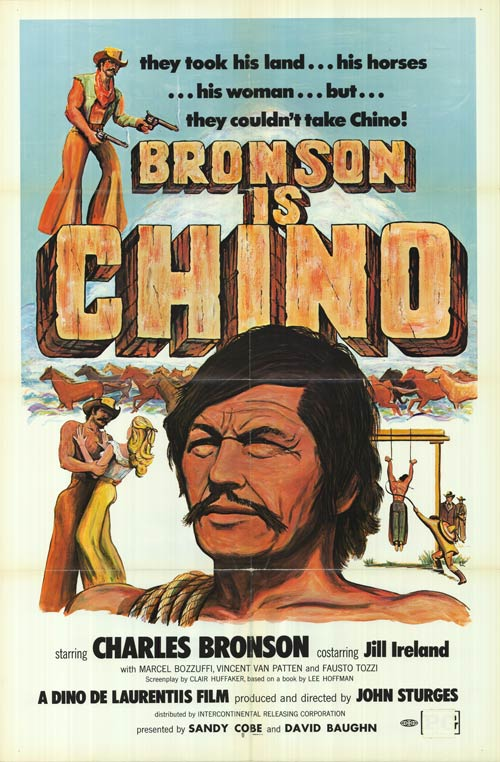
Chino (1973)

chino 2

By Richard Winters

My Rating: 3 out of 10

4-Word Review: Chuck and the kid.

Jamie (Vincent Van Patten) is a teen runaway in the old west that comes upon an isolated horse ranch run by Chino (Charles Bronson) who is ostracized by the locals for being a ‘half-breed’.  Chino reluctantly takes the boy under his wings and teaches him about how to take care of horses, but neither of them can completely escape the racism and hatred around them.

Filmed in Spain the rustic countryside has a certain visual appeal and the low-key music is a perfect score for this type of western. There is a barroom brawl and a shootout at the end, but overall this is standard stuff with little to help make it stand out. Everything this movie has to offer you’ve seen before and in most cases done better. That is not to say it is a bad movie, but it is lacking in imagination and seems content to simply borrow from an already overused formula. While the pacing isn’t exactly slow it isn’t compelling either. The characterizations, plot, and dialogue are held at the most simplistic level and if it weren’t for a brief bit of nudity by an attractive native woman I would almost say this thing was aimed solely for kids.

Bronson doesn’t show much range of emotion here and comes off in the wooden way his critics have always accused him of although he is still good in the action sequences. Jill Ireland’s appearance helps add a bit of life to the proceedings and the antagonistic banter that the two share while he tries to train her to ride a horse is fun to a minor extent as it the part where she walks in on him as he is standing buck-naked in a bathtub. However, having them fall in love so quickly and then want to get married is rushed and forced.

It is fun seeing Vincent Van Patten as a young teen, but his interaction with Bronson is dull. Their eventual ‘bonding’ is formulaic and clichéd and only helps in cementing this as a forgettable, pointless, low-budget foray.

The real stars of the picture are the horses that show much more of a screen presence than their human counterparts. In fact during the first half you see more of them than the people, which is just as well. There is even a shot showing two of them mating, which is the film’s sole unique moment and for some possibly even the highpoint.

My Rating: 3 out of 10

Released: September 14, 1973

Runtime: 1Hour 37Minutes

Rated PG

Director: John Sturges

Studio: Intercontinental Releasing Corporation

Available: DVD, Amazon Instant Video

The Valachi Papers (1972)

the valachi papers 1

By Richard Winters

My Rating: 7 out of 10

4-Word Review: Testifying against the mob.

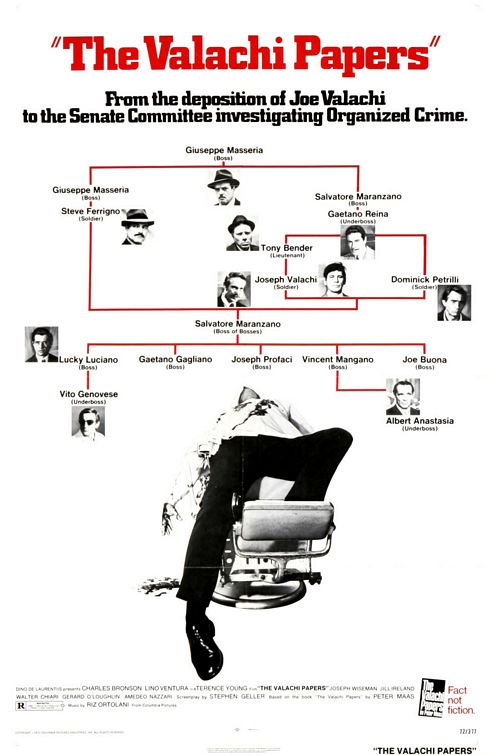
Based on the bestselling novel by Peter Maas this film chronicles the life of Joseph Valachi (Charles Bronson) who became the very first informant for the Mafia in their history. The story chronicles his life from a young man getting involved in the mafia culture to his eventual imprisonment and testifying in front of congress.

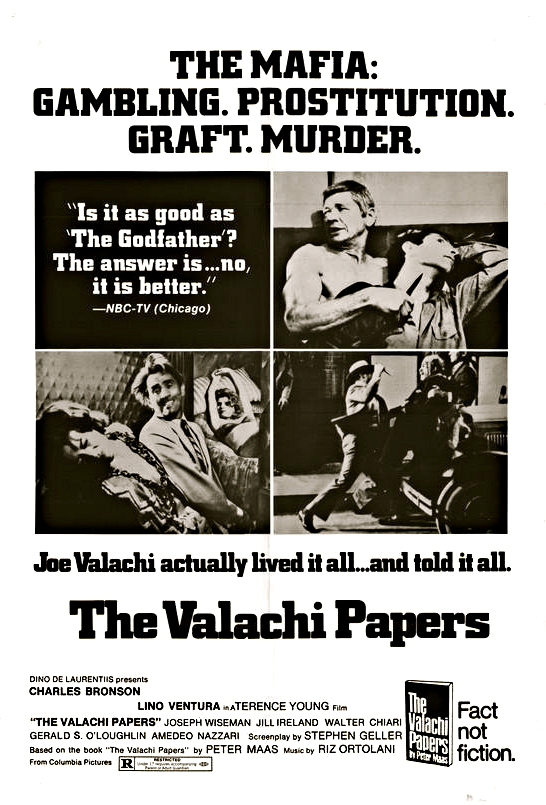
At the time of release this was compared closely to The Godfather with some critics outrageously saying it was better, but clearly it doesn’t come close. This film lacks the in-depth characterizations, lyrical quality, and an overall slick design. This film is also rather sloppily produced including one scene involving an exciting car chase taking place in the 1930’s. When the two cars go crashing through the wall of a warehouse and into the East river one can clearly see the Twin Towers of the World Trade Center, which weren’t built until 1970. There is also the Lucky Luciano character played by actor Angelo Infanti who wears a type of glasses that did not come into style until well into the 1970’s. However, as a whole the film is still amazingly compelling flick that ends up being both entertaining and somewhat informative. The music score has a terrific ominous tone to it and the prison scenes have a nice starkness.

The film was known at the time for its violence, which by today’s standards may not seem quite as startling or as excessive although the blood and bullets do come at regular intervals. My favorite was the shooting of an old crime boss inside a barbershop although the castration of a victim on top of a table inside a restaurant is pretty wild. However, for all of its violence the film does manage to have a sense of humor as well including a very amusing scene where one of Joe’s mob bosses sits in the living room of the mother of Joe’s girlfriend and asks the mother for her permission to allow Joe to marry her daughter while Joe sits nervously behind and tries to look proper.

Lino Ventura has the perfect face of a mob boss and was ideally cast. The scene of him inside the prison where he has stays in a well-furnished cell and even seems to have his own barber is funny. Joseph Wiseman displays great zest as the opposing crime boss Salvatore Maranzano and his agonizing yells of pain as he lies dying are effective.

Bronson seems perfectly cast as an uneducated simple man who is a follower and has his own quiky code of morality, which makes him strangely endearing. His wife Jill Ireland does not fare as well. She ports a brunette wig and her Italian accent borders on being horrendous to non-existent. Fortunately she is not given very many speaking lines as her British accent is constantly seeping through.

In many ways this film could best be described as an ugly cousin to Goodfellas. While this film lacks that film’s fluid directorial flair it still manages to be an engrossing true-life gangster soap opera like that one.

the valachi papers 2

My Rating: 7 out of 10

Runtime: 2Hours 5Minutes

Released: November 3, 1972

Rated R

Director: Terence Young

Studio: Columbia Pictures

Available: VHS, DVD

Girl with a Suitcase (1961)

girl with a suitcase

By Richard Winters

My Rating: 9 out of 10

4-Word Review: She likes shy guy.

This movie will start off a week long theme of romance movies in celebration of Valentine’s Day, which will be on the 14th. One romance movie from each decade will be reviewed starting with this sleeper from Italy that is well worth seeking out.

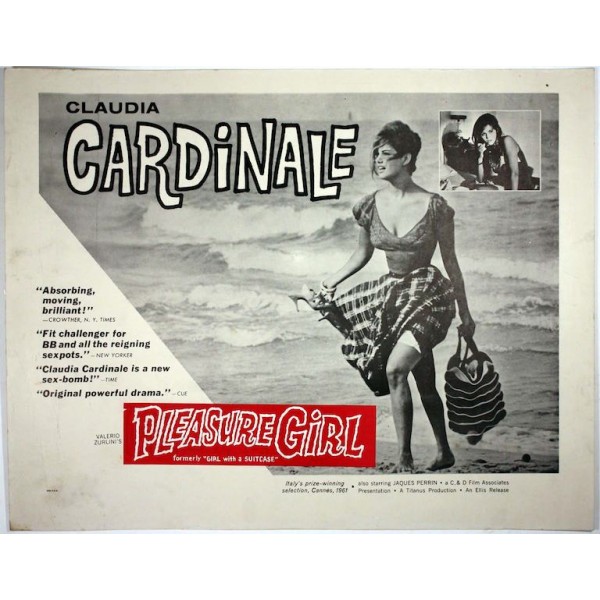
The story is about Aida (Claudia Cardinale) a young woman who is abandoned at a gas station after having a fight with her boyfriend. When she eventually tracks him down at his house she finds that she is actually more attracted to his younger brother Lorenzo (Jacques Perrin). Although Aida is more worldly-wise and Lorenzo shy and sheltered the two slowly form a bond that becomes emotionally compelling.

This is one of those films that despite being made over 50 years ago is still amazingly fresh. The characters are believable and reveal different layers of themselves in interesting ways. Claudia has never looked more beautiful and her performance here may be her best. Perrin is also excellent and the viewer cannot help but emphasize with him. The film packs some very powerful scenes and imagery that stays with you long after it is over and it manages to do it in a natural way that never seems forced.

If I have one complaint it is the fact that it becomes bit protracted especially at the end. Shaving the runtime by 30 minutes would have helped and possibly even made it stronger. However, Valerio Zurini’s direction is still top-notch.

The film features two fascinatingly fractured characters that are played to the zenith by the two leads. This is a film that deserves way more attention. The script, direction, and black and white cinematography are superb.

My Rating: 9 out of 10

Released: February 9, 1961

Runtime: 1Hour 55Minutes

Not Rated

Director: Valerio Zurlini

Studio: Ellis Films

Available: VHS, DVD

Cannibal Holocaust (1980)

By Richard Winters

My Rating: 7 out of 10

4-Word Review: They were really hungry.

A group of people go into the deep dark jungles of the Amazon looking for a missing film crew. They never find the crew, but they do find some lost film footage of theirs. They bring it back home and play it and what they see is so gruesome that it startles the imagination.

This is truly a gross-out classic. If you have ever watched a horror movie purporting to have gruesome special effects and then walked away disappointed then this one will make up for the rest and everything else in between. No cutaways here and certainly no restraint for good taste. The effects look real and, at times, almost too real. Best of all is the fact that the story is handled in a realistic fashion giving the effects even more credibility. For instance the cutting off of one of the characters legs after he is bitten by a snake looks completely authentic. There is also a castration scene that has to be one of the most vivid ones ever filmed. There is also the cutting up of man’s body into little pieces and some really graphic rape scenes.

The film also doesn’t have that cheap look like with most horror films and it gets you immersed in the jungle atmosphere. It is well paced and builds up some really good tension. The editing is seamless without any of those annoying jump cuts. The music score is melodic, but distinct and effective making it one of the best scores ever made for a horror film. The eventual showing of the lost crew’s footage packs a wallop.

Former adult film star Richard Bolla plays the professor and the leader of the search party. He is credited as the star of the film yet his character is bland and forgettable. His only memorable moment comes when he jumps naked into a river and allows the adolescent girls from a nearby tribe to grope him, which has got to be a cinematic first. My favorite character was Chaco (Salvatore Basile). He is gruff and rough and absolutely nothing seems to faze him. He is so hardened by it all that it actually becomes amusing and I wished he would have stayed on for the duration.

The actual lost film crew is a vile bunch giving the film its main message of just who is ‘civilized’ and who is the savage. Their behavior is so disgusting that most viewers will actually look forward to their eventual gruesome demise.

The same cannot be said for the animals. There are graphic, ugly scenes involving the torture and mutilation of animals and it is not pretty. The animals flail their arms and legs and scream in very real pain and fright. It’s all handled in a distasteful and mocking way with the dissection of a sea turtle making even this jaded viewer feel nauseous. This will certainly be unsettling for animal lovers, but fortunately for those people the DVD release has a version that will cut out these segments while still allowing the viewer to enjoy the rest of the movie.

My Rating: 7 out of 10

Released: February 7, 1980

Runtime: 1Hour 35Minutes

Rated: NC-17

Director: Ruggero Deadato

Studio: United Artists

Available: VHS, DVD

Yesterday, Today and Tomorrow (1963)

By Richard Winters

My Rating: 8 out of 10

4-Word Review: Gotta love Sophia Loren.

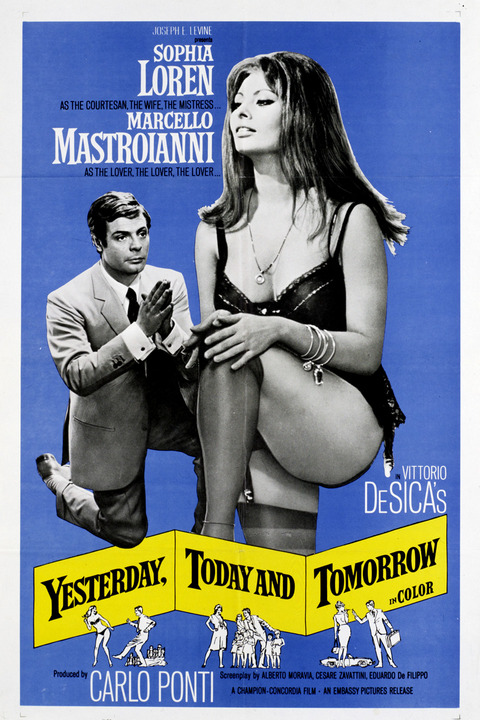
This is a delightful comedy that won the Academy Award in 1964 for best foreign film. It consists of 3 vignettes all starring Sophia Loren and Marcello Mastroianni and directed by the legendary Vittorio De Sica.

The first segment is entitled ‘Adelina’ and is a story about Adelina (Loren) who lives in poverty and sells cigarettes for a living. She is arrested for selling contraband products, but is released when it is found that she is expecting with the condition that six months after she delivers the baby she will be forced to serve her sentence. However, Adelina and her husband Carmine (Mastroianni) decide that the best way to avoid the sentence altogether is by keeping her continuously pregnant. Once she delivers one child she immediately gets pregnant with another, which creates overcrowding as well as an exhausted Carmine.

This segment is original and amusing throughout. Watching them trying to handle and maintain a household with such a large brood has its share of funny moments including one scene where Adelina tries to give one of her petulant children his medication. This setting vividly shows the poor side of Italian society, but unlike De Sica’s neo-realist films of the 40’s this one has a very engaging and even upbeat quality to it. The impoverished townsfolk become like a third character and their resiliency and support of one another proves to be a major plus to the story. Loren is fantastic in every scene she is in and makes this one special. Mastroianni is interesting playing against type as he is usually debonair and sophisticated, but here is simple and dominated.

The second story entitled ‘Anna’ deals with characters on the completely opposite end of the economic spectrum. Anna (Loren) is a spoiled rich woman who in an effort to alleviate her boredom with her husband who spends too much time working she has an affair with Renzo (Mastroianni). Renzo though fears that he is being used and that Anna has no intention of ever leaving her luxurious lifestyle to be with him.

All of the action takes place in a Rolls-Royce Silver Cloud III convertible as the two characters discuss their relationship while driving through the streets of Rome. This story is not as lively as the first and the characters aren’t as likable. However, the part where Renzo has an accident with the car and Anna’s reaction to it is quite funny.

The third and final act is entitled ‘Mara’ and deals with a prostitute named Mara (Loren) who becomes interested in Umberto (Gianni Ridolfi) a young man living next door with his Grandmother (Tina Pica) and studying to become a priest. The grandmother does not approve of Mara’s ‘profession’ and openly shuns her causing a major discord between the two, but when Umberto decide to drop out of the seminary the two work together to try and bring him back to his senses.

This story, like the first, has many amusing moments. Loren shows impeccable comic ability. I loved how the character goes from sexy seductress to a woman pleading with Umberto to go back to seminary and escape this ‘wicked world’. The shift between having Mara and the grandmother hating each other to becoming friends is equally funny. Mastroianni doesn’t have as much to do here, but still makes the most of it playing one of Mara’s customers who is just looking for a little sex, but is reluctantly thrown into the middle of the controversy.

This segment became famous at the time for a striptease that Loren does for Mastroianni. However, by today’s standards it is not much and hardly even seemed worth mentioning. I actually thought the part where Loren walks outside wearing nothing more than a towel and provocatively singing a flirtatious song to the young Umberto, who has a face that looks like it had not reached puberty, was much steamier.

My Rating: 8 out of 10

Released: December 19, 1963

Runtime: 1Hour 58Minutes

Rated NR (Not Rated)

Director: Vittorio De Sica

Studio: Embassy Pictures

Available: DVD, Blu-ray, Netflix streaming, Amazon Instant Video

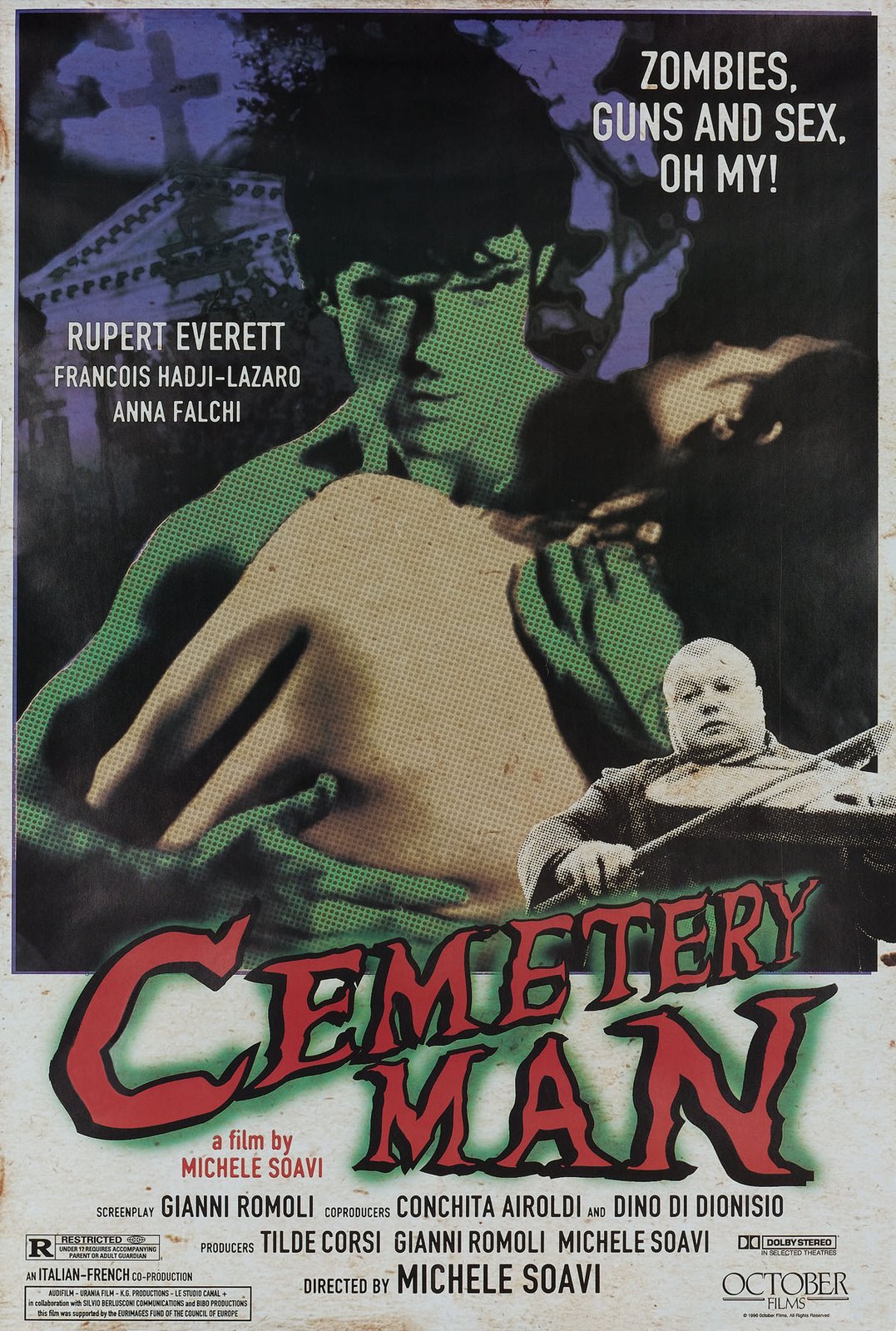
Cemetary Man (1994)

By Richard Winters

My Rating: 5 out of 10

4-Word Review: They shoot the zombies.

The film opens with a cemetery worker (Rupert Everett) talking on the phone with a friend. He hears a knock at the door and when he answers it he sees a man with bluish, decayed skin ready to attack him. The worker calmly takes out a gun, shoots the man in the head, and then goes back to talking on the phone like nothing happened.  Thus begins this very quirky horror comedy that is a send-up of all those old zombie movies and has acquired a cult following.  It was filmed in Italy and is based on the popular Italian comic book ‘Dylan Dog’ by Tiziano Sclavi.

The initial premise is fun.  The protagonist is Francesco Dellamorte, who with his mute and mentally-challenged assistant named Gnaghi (Francois Hadji-Lazaro), are stuck running a cemetery in a small Italian town where the dead will routinely come back to life. It is then up to them to shoot the zombies in their head, which will kill them permanently.  This starts a wild array of crazy scenarios that become increasingly bizarre as the film progresses.

Initially I found it to be inventive.  The tongue-in-check humor is first-rate as is the snappy dialogue.  The film though starts to bite off more than it can chew.  All sorts of weird storylines get thrown in, but are never resolved.  After about the first hour it no longer made any sense.  For instance there is Francesco’s girlfriend named She (Anna Falchi), who he accidently kills at the beginning, but then she keeps getting reincarnated as different women throughout the rest of the film.  For various reasons Francesco is forced to kill her in different ways all over again, which eventually becomes tiring. This is only one of the many convoluted surreal elements that eventually overwhelm the viewer.  By the time it got to its extensile ending I was more than happy that it was over and really no longer cared what happened to the characters.

I felt frustrated because there were a lot of cool ideas that the film brings up, but drops without explanation.  I thought the original idea was good enough that the film could have stuck with that and built around it without going off on so many tangents. The special effects were a problem as well as they looked cheap and fake.  It was obvious when they were using mannequins in the place of real people and the blood and gore were thrown in haphazardly.

I did however like the pacing, which moves quickly with no letup.  The set designs are imaginative and the dark humor is consistently funny. If I would suggest this movie for any reason it would be that one.  Even when the story was getting annoyingly out-of-control it still had me chuckling.  The best scene involves Francesco talking to a sick friend in the hospital and when anyone from the hospital staff tries to intervene he shoots them and this creates a memorably macabre imagery as the room gets filled up with bodies and blood everywhere.

I also liked the character of Gnaghi, who tends to grow on you and becomes a real scene stealer.  He is short, fat and bald and looks like a young version of Uncle Fester from ‘The Adams Family’.  He speaks only through grunts, but the way he responds to things is quite amusing and the director comes up with clever ways to make the most of it.  The fact that he was played by a rock musician and not a professional actor makes it more interesting.  The part where he falls in love with one of the corpses and wants to marry her is hilarious and should have been played out more.

I liked the character of Francessco at the beginning as well.  He comes off like a rugged cowboy from the old west with a nifty matter-of-fact attitude towards his job and is cool under pressure. However, his behavior and actions become erratic and his motivations confusing until, by the end, he is almost alienating. There are also too many segments where he gets caught off guard by an attacking zombie and panics when he does not have his gun handy, which hurts the credibility since someone who has been doing this for a long time and is as savvy as he portrayed would learn to expect the unexpected and be prepared at all times for it.

I hate to say that this film was a disappointment because it is very creative and the direction is slick.  Unfortunately it just could not sustain its potential, which makes it a misfire. The film did quite poorly with both the critics and viewing public when it was first released both in Europe and in the states. It was only after being hailed by director Martin Scorsese that it started to find new life in the DVD market. Actor Everett was in talks with American studios to do a big-budget Hollywood remake, but it fell through.  A remake would not be a bad idea and may still happen as the horror-dark comedy genre has proven to be profitable in recent years most notably with Zombieland.  A tighter script and more money on the special effects could make this a winner.

My Rating: 5 out of 10

Released: March 25, 1994

Runtime: 1Hour 45Minutes

Rated R

Director: Michele Soavi

Studio: Angelo Rizzoli

Available: VHS, DVD, Blu-ray

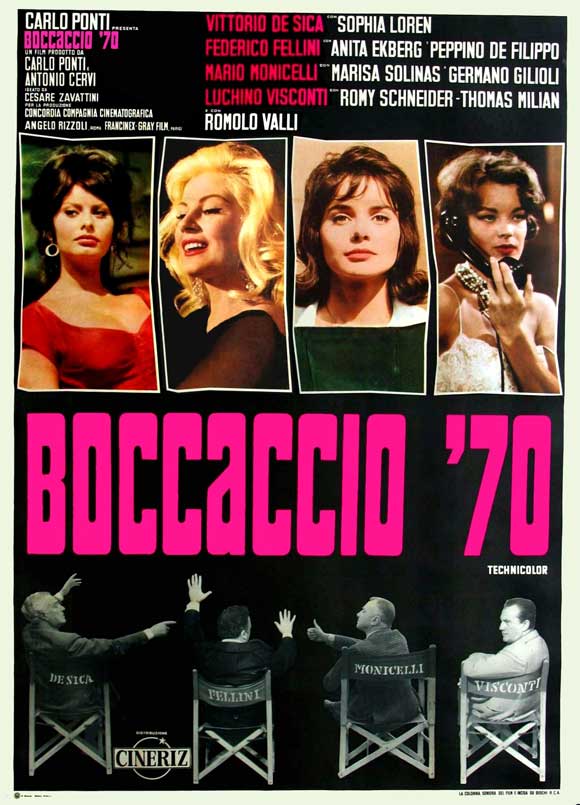
Boccaccio ’70 (1962)

By Richard Winters

My Rating: 7 out of 10

4-Word Review: It’s all about sex.

            This film, which is well over 3 hours, is a compilation of four different sex tales directed by legendary Italian greats: Federico Fellini, Vittorio De Sica, Luchino Visconti, and Mario Monichelli. The segments also star some of the most beautiful and sexiest women to ever grace the screen including: Sophia Loren, Anita Ekberg, and Romy Schneider. These ladies are at their most stunning and really light up the screen with their presence. Despite the extreme length the film moves along in a breezy fashion and I was actually surprised how quickly the time went.

The first segment directed by Monichelli and entitled ‘Renzo e Luciana’ was cut from the initial American theatrical release and it is easy to see why as it lacks the energy and flair of the others. It stars Marisa Solinas who doesn’t have the sex appeal and star power of the other leading ladies and apparently this was the reason why it was cut, but now has been restored on the recent Blu-ray release. The story is rather simple and deals with Luciana (Solinas) getting married to Renzo (Germano Gilioli), but having to move-in with her parents as they are unable to afford a home of their own. She also must keep her marriage a secret because the contract that she signed at the accounting firm that she works at strictly states that the female employees must remain single. This is so their overweight, lecherous boss can flirt and go out with them and threaten to fire them if they resist. Because of her financial situation and sparse job market Luciana is forced to put up with his advances. Although seeing two young newlyweds struggling as they start out can at times be touching this segment doesn’t have enough comedy, or drama to keep it afloat. The only lasting image one remembers from this is when Luciana goes to a public pool and sees her fat boss prancing around in nothing but a skimpy bikini bottom, which might be enough to make some viewers sick.

‘Le tentazioni del dottor Antonia’ is the second segment and directed by Fellini with his usual visual flair and style. The plot is about an older gentleman named Antonio (Peppino De Filipo) who is quite prudish and protests and tries to ban any type of public display of sexuality. When a giant billboard is erected in front of his apartment showing an alluring model (Ekberg) in a provocative pose while holding a glass of milk he becomes irate. His initial anger turns to horror as the giant model comes to life and begins to terrorize him in all sorts of comical ways. The special effects are pretty good. Filipo plays his role to a delightfully hammy level and Ekberg is striking. The ironic ending, which features a lot of surreal elements, is amusing.

The third feature is entitled ‘II lavaro’ and is directed by Visconti.  Here a rich young husband (Thomas Milian) can’t seem to avoid being caught cavorting with prostitutes despite the fact that he is married to the beautiful Pupe (Schneider). She decides that the only way to prevent this is by becoming a prostitute herself and then having him pay her to be his mistress. This segment starts out with a humorous and engaging tone, but eventually becomes talky, static, and stagy. Schneider is the best thing about it and is intoxicating in every scene that she is in. She not only speaks fluent Italian here, but German as well.

The final segment entitled ‘La riffa’ and directed by De Sica is by far the best. It is about a raffle that all the men in a small village get involved in to see who will win one night with the beautiful Zoe (Loren).  The irony here is when timid Cuspet (Alfio Vita) who looks and acts exactly like Rowan Atckinson’s Mr. Bean character, ends up winning it. De Sica nicely plays everything up to its full potential and captures the nuances and eccentricities of the characters well. Loren is both sexy and funny and shows a flair for frantic comedy. The sequence involving Cuspet and Zoe’s rendezvous is amusing, touching, and even a bit surprising.

My Rating: 7 out of 10

Released: June 26, 1962

Runtime: 3Hours 25Minutes

Rated NR (Not Rated)

Directed by: Federico Fellini,  Vittorio De Sica, Mario Monichelli, Luchino Visconti.

Studio: Cineriz

Available: VHS, DVD (Region 1 and 2), Blu-ray, Netflix Streaming

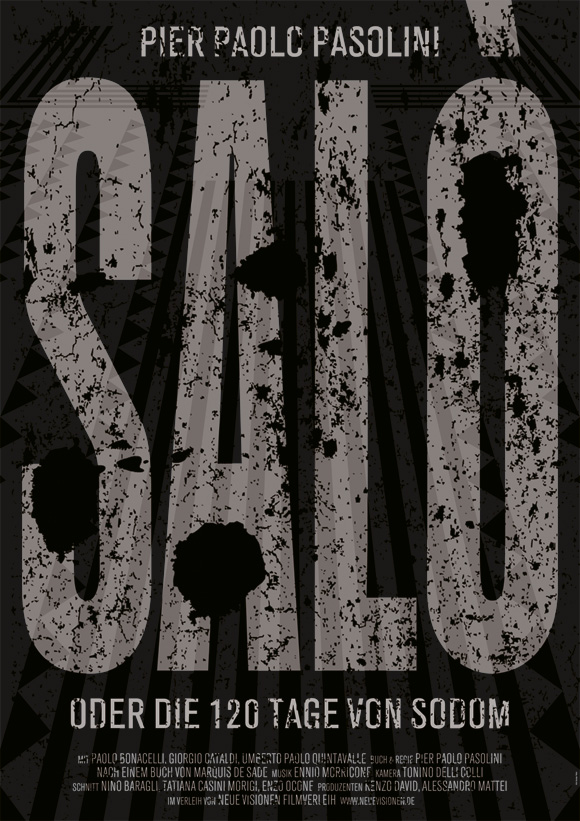
Salo, or the 120 Days of Sodom (1975)

By Richard Winters

My Rating: 5 out of 10

4-Word Review: They want sex slaves.

During the end of WW II in a northern city of occupied Italy a group of bourgeoisie men and women round up a group of teenage boys and girls and take them to an isolated mansion where they are forced to become sex slaves. They are also inflicted with cruel tortures in this story based on the writings of Marquis De Sade.

The film is interesting, but only up to a point. Director Pasolini’s natural lighting fetish really works here and he makes it into an art form. His ability to find the perfect moment in the day to shoot the scene and be able to frame the action within the shadows is amazing and along with the color schemes gives it a very distinctive look and an unusual atmosphere.

The acting by the adults is amazing as they project evilness without flaw. The perverted stories they tell in some ways is more shocking than the actual scenes and the casual way they go about their sick behavior achieves an unprecedented level.

The story itself has some good insights. It shows the veneer of civilized behavior and how the passive nature of the victims and society as a whole only helps to allow evil to flourish. There’s also the main point which is that evil is truly a part of the human make-up and hides itself in everybody and can come out if provoked including the victims themselves.

Yet the film makes its point and then hammers it home without pause. The non-stop perversity becomes excessive and the redundancy eventually makes the shock value and message meaningless. Showing the background of these captors might have helped given it more of a balance.

I have nothing against those who wish to ‘push the envelope’ and there is nothing that says movies need to be tasteful, or even entertaining, but I couldn’t help but wonder if Pasolini simply used the material as an excuse to explore his own dark fantasies. Of course DeSade’s actual writings were far more twisted and unsettling then anything you see here and the film is a significantly toned down version.

Actual teenagers were used and there is an abundance of nudity and perversity. Something like this could never have been made here in the states and exactly how it ever got made is more interesting than the film itself. If there was ever a movie begging for a “Making of…” documentary it’s this one. It is also interesting to note that Pasolini was mysteriously killed by a hit-and-run driver just a few days before the film’s official release.

My Rating: 5 out of 10

Released: November 22, 1975

Runtime: 1Hour 56Minutes

Rated NC-17

Director: Pier Paolo Pasolini

Studio: United Artists

Available: DVD, Blu-ray (The Criterion Collection)

Macaroni (1985)

By Richard Winters

My Rating: 3 out of 10

4-Word Review: He writes love letters.

            Due to a business trip Robert Traven (Jack Lemmon) finds himself returning to Italy after four decades. He hadn’t set foot on their soil since World War II. He is old, tired, and grouchy and looking like an extension of the character Lemmon played in Avanti! , which was also took place in Italy.  When he arrives he meets Antonio (Marcello Mastroianni) who tells him he is the brother of Maria, a woman Robert had a relationship with during the war.  Robert decides to go and meet her despite the fact that she is now married. When he gets there he finds that everyone acts as if they already know him. Robert then finds out that Antonio has been writing ‘love letters’ to Maria all this time, but pretending to be Robert. The letters are filled with wild stories and conquests making Robert a cult-hero to the local people.

This movie is high on the charm, but not much else. Mastroianni is engaging and endearing. I wasn’t too crazy about his mustache and I don’t think it was needed, but he otherwise sparkles in every scene he is in and gives the film much needed energy. Lemmon is fun too, but he seems old and tired here. The camera stays locked on his worn, emotionless face during his entire cab ride from the airport to his hotel, which was too much and the main problem with the film in that director Ettore Scola’s scenes are too long. However, together with Mastroianni these two legendary actors make for an interesting duo. The way their friendship blossoms and slowly progresses is natural and pleasing. The best shot of the whole film is watching the two walking along a shore of rocks from a bird’s-eye-view.  Lemmon also plays a bouncy piano piece and I wished they had let him play more of it.

The film gives one a nice sense of Italian city life.  The on-location shooting makes if feel and look authentic. There is a lot of focus on Italian food and desserts that will make one hungry by the time it is over. The soft, melodic music is relaxing and peaceful and perfectly reflects the easy-going nature of the script, but ends up getting a bit over-played.

The film’s main issue is that there is just not enough story here. It is almost a one-joke script dealing with Antonio’s fabricated letters, which is funny for a while  especially when Robert argues with him about some of the lies in the letters and how he would have preferred that they’d be exaggerated differently, but nothing else.  The film takes too long to get there and they tack on a very formuliac and contrived ending dealing with Antonio trying to avoid the mob who is after him for some unpaid debts and Robert’s attempts to save him.  There is also the fact that Maria, who Robert supposedly was in-love with at one time, never speaks a word of dialogue. In fact the two never share much of any type of conversation, which seemed odd. The other family members and friends appear too naïve for believing all of the wild scenarios that Antonio wrote in the letters that would make anyone else skeptical.  By portraying them as being so gullible makes them stereotypes and is unrealistic.

I’m surprised that these two actors of such high stature agreed to take on this limp material, or didn’t demand for more changes when they did. Even if you are fans of these leading men it still isn’t worth seeking out even for a slow night.

My Rating: 3 out of 10

Released: October 24, 1985

Runtime: 1Hour 44Minutes

Rated PG

Director: Ettore Scola

Studio: Paramount

Available: VHS