Category Archives: Foreign Films

Deaf Smith and Johnny Ears (1973)

deaf smith and johnny ears

By Richard Winters

My Rating: 3 out of 10

4-Word Review: Deaf mute saves Texas.

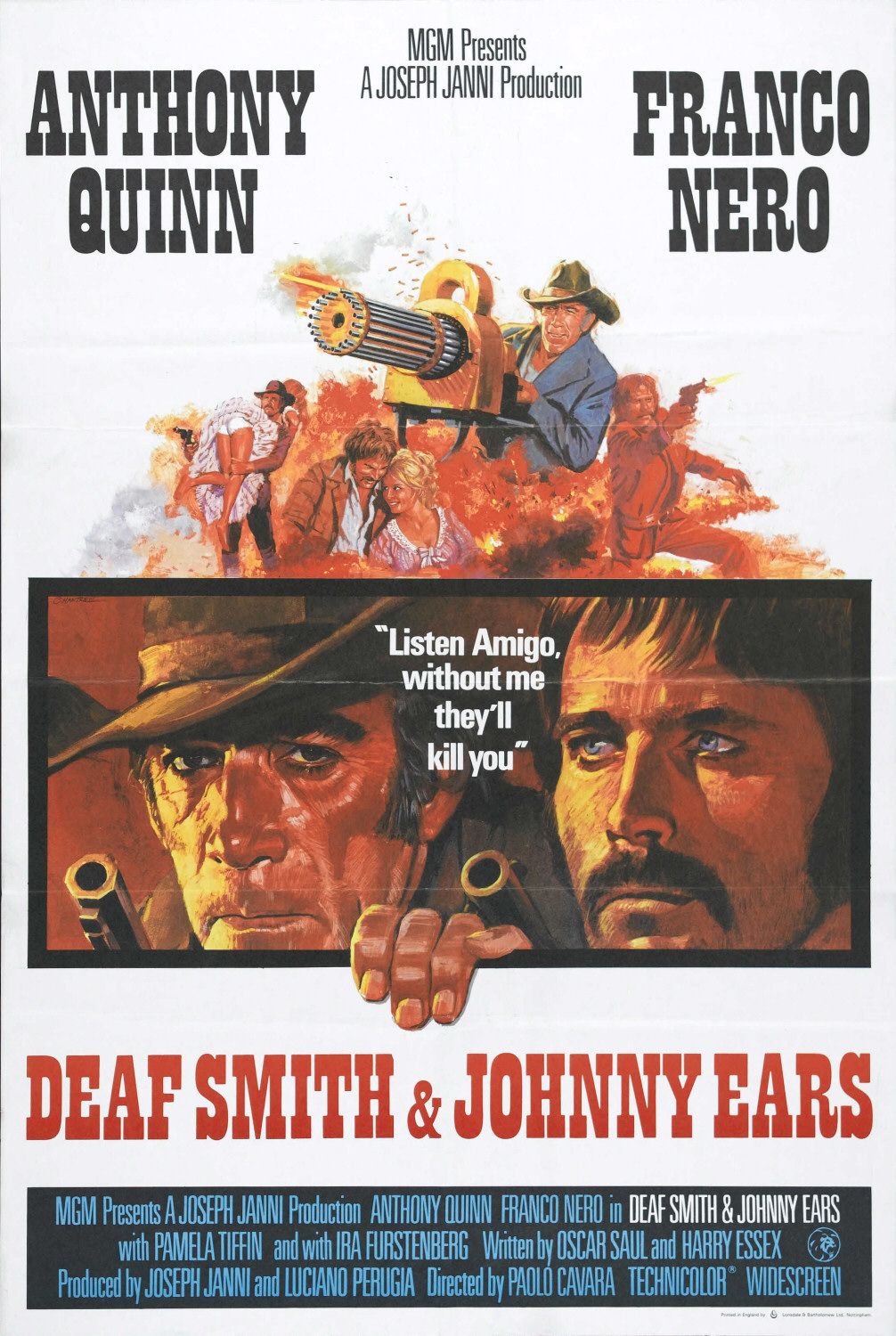
Deaf Smith (Anthony Quinn) and Johnny Ears (Franco Nero) are two special agents hired by President Sam Harris to put down any rebel factions that may try to impede Texas from achieving statehood. While Deaf, who lacks the ability to speak as well as hear, works on bringing down the bad guys by sneaking into one of their hideouts Johnny seems more interested in the women particularly a hooker named Susie (Pamela Tiffin) who he meets at the local cathouse.

These are the type of cheap, low grade, generic productions that end up giving spaghetti westerns a bad name. Had Sergio Leone been put in charge of this it might have been something special, but the director here has a poor eye for detail and lacks Leone’s poetic nuance. The action is poorly choreographed and unexciting and during a shootout inside a darkened cave it even becomes confusing and irritating. The music is loud and blares out melodies that do not reflect the period and the villain is bland and not given enough screen time to be able to create any type of effective menace.

Quinn, who doesn’t speak a single line of dialogue, is fabulous and manages to steal every scene that he is in. Nero on the other hand tends to overact especially with his exaggerated facial expressions. Tiffin, who appears nude from a distance during a segment done near a stream, shows a good campy side especially with the scene where she beats up Nero.

There was an actual Deaf Smith that the character here is loosely based on although the real Smith suffered only a partial loss of hearing and was not a mute. His real-life adventures were much more interesting than the ones portrayed here and the film would’ve done better had it stuck to those.

The movie also suffers from some anachronistic errors including having a scene featuring a Gatling Gun even though the setting for the film is 1836 and the gun itself wasn’t invented until 1862 when it was first used during the Civil War. The prop used to represent the gun looks cheap and flimsy while painted in a garish gold color that doesn’t deserve the Gatling name and only helps to cement this as barely watchable tripe.

My Rating: 3 out of 10

Alternate Title: Los Amigos

Released: March 29, 1973

Runtime: 1Hour 28Minutes

Rated PG

Director: Paolo Cavara

Studio: MGM

Available: None at this time.

The Ragman’s Daughter (1972)

the ragmans daughter

By Richard Winters

My Rating: 5 out of 10

4-Word Review: Reminiscing about old times.

Tony, who is a middle-aged man (Patrick O’Connell) working a boring job at a cheese factory and stuck in an equally dull marriage with two kids, reminisces about his younger years when he met a beautiful woman named Doris (Victoria Tennant) and they committed petty thievery while also riding around on his motorbike. The film then intercuts between scenes of him when he’s younger, which is played by Simon Rouse in his film debut, and his life now where he struggles to make ends meet.

This film marks the directorial debut of Harold Becker as well as the acting debut of the lovely Tennant. It also marked the last of the British ‘kitchen-sink’ dramas that focused on the hardships and struggles of the working class. The story is a strange mix of gritty reality and romantic fantasy that has a few good moments, but as a whole doesn’t really work and if there is one thing that holds it all together its Kenny Clayton’s soothing and distinctive melodic score.

Part of the problem is that not enough happens. Tony is able to break into shops with too much ease and the way he is able to crack open a safe in less than a minute would make even a professional safe cracker jealous. Their robberies needed to have a little more tension or comedy to help keep it interesting instead of sliding into a pace that meanders so leisurely that it eventually becomes boring.

Tennant’s character is another issue. She is incredibly gorgeous and looks ripe for a magazine cover as a fashion model, which made me wonder why she would so quickly fall head-over-heels for Tony who has no money or job and is average looking at best. To some degree I could understand her need to break free from her oppressive and strict parents, but a beautiful woman like that would have many other potential suitors in her life and not simply dependent on Tony as being her only outlet.

Spoiler Alert!

The final twenty-minutes improves as Tony ends up getting caught and going to jail, which helps add some genuine drama. However, when he finally gets out he learns that Doris died tragically in a motorbike accident, which seemed unnecessarily severe. A much better ending would’ve had them reuniting for just one day and although now married to other people still managing to share some sort of special bond.

End of Spoiler Alert!

The film, which had a very limited release, has some potential, but suffers from a visual approach that at times looks too much like a shampoo commercial and a premise that doesn’t have enough action elements to keep it compelling.

My Rating: 5 out of 10

Released: November 11, 1972

Runtime: 1Hour 34Minutes

Not Rated

Director: Harold Becker

Studio: 20th Century Fox

Available: DVD (Through Netflix)

The Killing of Sister George (1968)

killing of sister george

By Richard Winters

My Rating: 6 out of 10

4-Word Review: TV character gets axed.

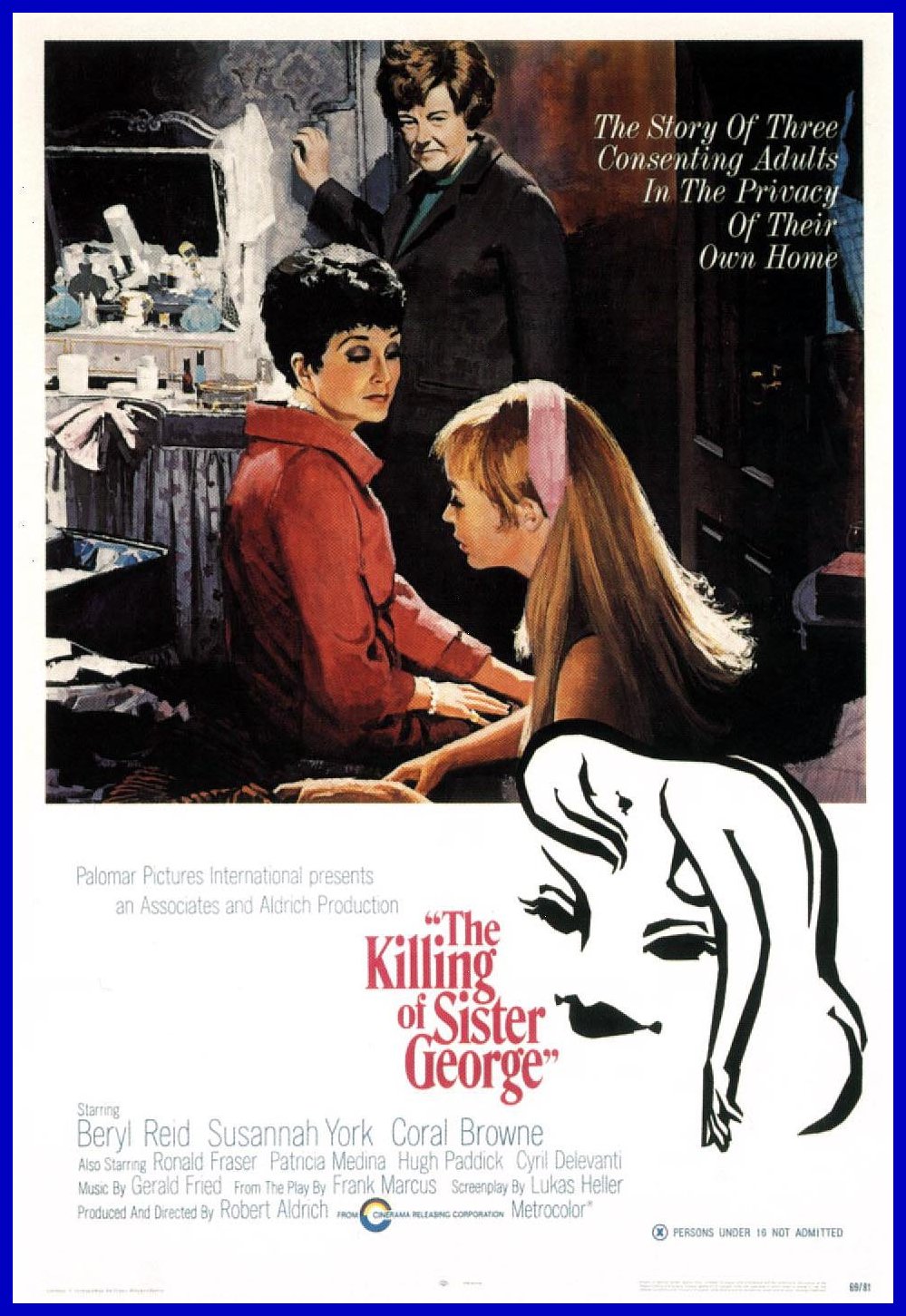
June Buckridge (Beryl Reid) is an aging actress playing the character of Sister George a scooter riding nun in a long running British TV soap opera. Her character no longer has the popularity that it once had and the producers have decided to kill her off by having her die in an ugly road crash with a truck. June is upset with this news as at her age parts are hard to come by and she takes her frustrations out on Childie (Susannah York) her much younger live-in lesbian lover, but she may lose her as well as one of the show’s producers Mercy (Coral Browne) has inklings to lure Childie away from June so she can have her all to herself.

After the immense box office success of The Dirty Dozen writer/director Robert Aldrich was given free rein to start up his own production company and he choose this as his first project. In many ways it is quite similar to his earlier and more well-known film What Ever Happened to Baby Jane?, but with sexual undertones. The film is based on the Frank Marcus play of the same name that ran for 205 performances and was nominated for the 1967 Tony Award. For its time this was considered quite controversial and groundbreaking especially the final scene that features a highly explicit sex scene between two women. It also is the first film to have a character utter the word ‘bullshit’ and one of the first to say the word ‘fuck’. Although the word itself gets drowned out by a car horn you can still clearly tell by reading Reid’s lips what she is saying.

The three female leads and their snarky exchanges with each other are the film’s chief asset especially Reid who recreates the same character that she played in the stage version that netted her a Tony. Her emotional, angry outbursts are entertaining and the scene where she forces Childie to eat and swallow the butt of her cigarette as ‘punishment’ is still quite edgy. Browne is equally good specifically during her provocative love scene with York, which was made all the more daring since she was 30 years older than York at the time.

The film’s overall staginess is a drawback. Many scenes are too talky and should’ve been trimmed while York and Reid’s Laurel and Hardy routine could’ve been cut out completely. Flashbacks showing how they first met would’ve helped and there needed to be an explanation to the weird child-like manner of York’s character, which quite possibly was based on an age-old gay stereotype. I also didn’t like the foreboding quality of the music that gets played just before Browne and York have their lesbian love scene, which seemed to suggest that something ‘creepy’ and ‘unnatural’ was about to take place and convinced me that despite the daring and ahead-of-its-time nature of the subject that the filmmakers themselves still had some very dated ideas about gays much like the majority of people from that era.

My Rating: 6 out of 10

Released: December 12, 1968

Runtime: 2Hours 18Minutes

Rated X (Reissued as R)

Director: Robert Aldrich

Studio: Cinerama Releasing Corporation

Available: DVD

The Driver’s Seat (1974)

drivers seat 1

By Richard Winters

My Rating: 3 out of 10

4-Word Review: Crazy lady goes traveling.

Lise (Elizabeth Taylor) is a middle-aged woman with seemingly no past who travels to Rome looking for someone to kill her. Her erratic behavior and weird motivations confuse those that she comes into contact with. She then meets Bill (Ian Bannen) a man who’s more interested in her sexually than anything else and he follows her around in a veiled attempt to get ‘lucky’ despite her repeated rebuffs.

The film is basically a mess that goes nowhere. It was based on a novel by Muriel Spark, who had written some acclaimed stuff in her day including ‘The Prime of Miss Jean Brodie’, so I can only imagine that the book made more sense and only bits and pieces of it were taken to create this screenplay. In either case it was a highly strange career move for Miss Taylor who made a lot of weird movie choices in the 70’s, which helped to destroy her once megastar status and tainted her other stellar work.

Her performance by itself isn’t too bad and it’s the one thing that helps keep things watchable. The way that she can go from being passive and helpless to snippy and bitchy within seconds is kind of fun and on a purely camp level even enjoyable. The whole thing seems almost like an extension of the character that she played in Who’s Afraid of Virginia Woolf? , which became her signature role during her later years.

Bannen lends good support as his leering Cheshire cat grin is a perfect counterpart to Taylor’s crazed glare and he effectively equals her nuttiness. I also loved his so-called macrobiotic diet in which he must attain one orgasm a day for it to work and if he misses one then he must make up for it by having two the next day, which ultimately gives him ‘indigestion’. Mona Washbourne a character actress noted for playing delightfully daffy old ladies is also on hand as one of the people Taylor befriends and their encounter inside the stall of a public bathroom is a gem.

Director Giuseppe Patroni Griffi manages to infuse some interesting visuals, which along with its fragmented narrative helps keep things cheaply alluring, but it eventually plays itself out and by the end becomes quite tiring and tedious. The biggest issue is that there never is any explanation for who this woman is or why she’s doing this, which makes the whole thing quite empty and pointless.

My Rating: 3 out of 10

Released: May 20, 1974

Runtime: 1Hour 42Minutes

Rated R

Director: Giuseppe Patroni Griffi

Studio: AVCO Embassy Pictures

Available: DVD-R, Amazon Instant Video

A Jolly Bad Fellow (1964)

jolly bad fellow 2

By Richard Winters

My Rating: 5 out of 10

4-Word Review: He poisons his enemies.

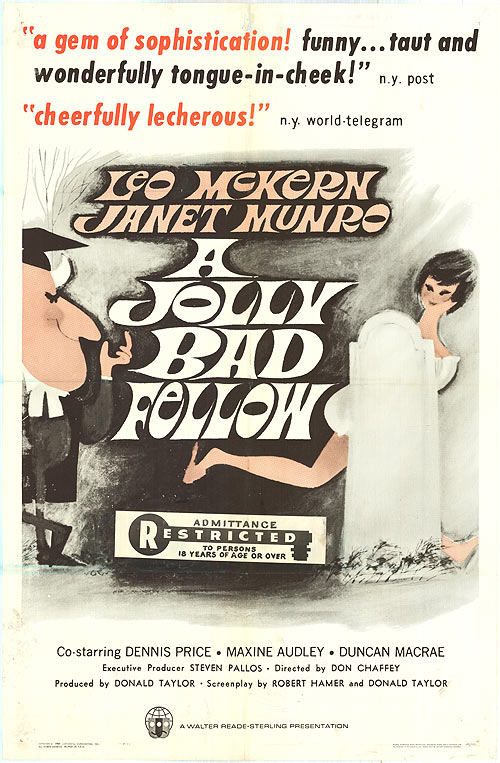
Professor Kerris Bowles-Ottery (Leo McKern) is a college professor working in the university’s science lab where he conducts experiments on mice. One day he accidently comes upon a poison that kills the mice, but only after sending them into a brief euphoric state, which he then decides to use on his enemies. Only a little bit of it is needed to work, so he is able to use all sorts of methods to get them to ingest it including putting it into their drinks, as well as the cigarettes they smoke, and even dabbing a bit of it on a tip of a pencil, which one of the character’s routinely likes to lick before he begins writing with it. Things go quite smoothly until his wife Clarinda (Maxine Audley) leaves him, which upsets him enough that he become careless and eventually culminates with ironic results.

The film’s chief asset is McKern’s presence whose acerbic delivery and facial expressions perfectly captures a stuffy, pompous curmudgeon in highly humorous fashion. He nails every scene that he is in, but his best moment comes at the very end when he hops into his car and begins driving at high speeds throughout the English countryside while giving off a loud, long maniacal laugh.

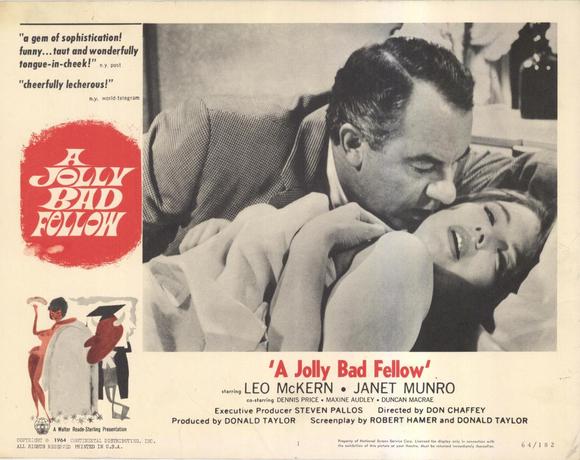
The plot is thick with satire, but doesn’t go far enough with it. Just when it seems to be catching its stride it bogs down with an affair that McKern has with a much young woman (Janet Munro) that didn’t make a lot of sense. I could see why he’d be into her, but no so much why she would have the hots for him although the fact that he does seem to truly love his wife even when he fools around on her and becomes upset when she decides to leave him was excellent irony.

The funniest element is when he poisons his enemies and rivals many of whom are as pompous and stuck-up as he is. Watching these refined, stuffy people suddenly act silly and child-like is quite amusing, but again the film stops short of packing the punch as these scenes should’ve been more extended, which is the one thing that makes this potentially hilarious film not half as funny as it could’ve been.

jolly bad fellow 1

My Rating: 5 out of 10

Alternate Title: They All Died Laughing

Released: March 15, 1964

Runtime: 1Hour 34Minutes

Not Rated

Director: Don Chaffey

Studio: British Lion Film Corporation

Available: DVD

Vagabond (1985)

vagabond 1

By Richard Winters

My Rating: 6 out of 10

4-Word Review: She has no home.

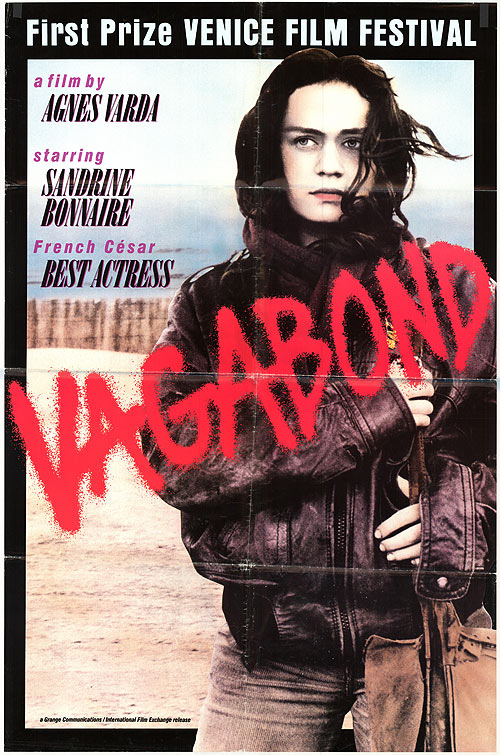
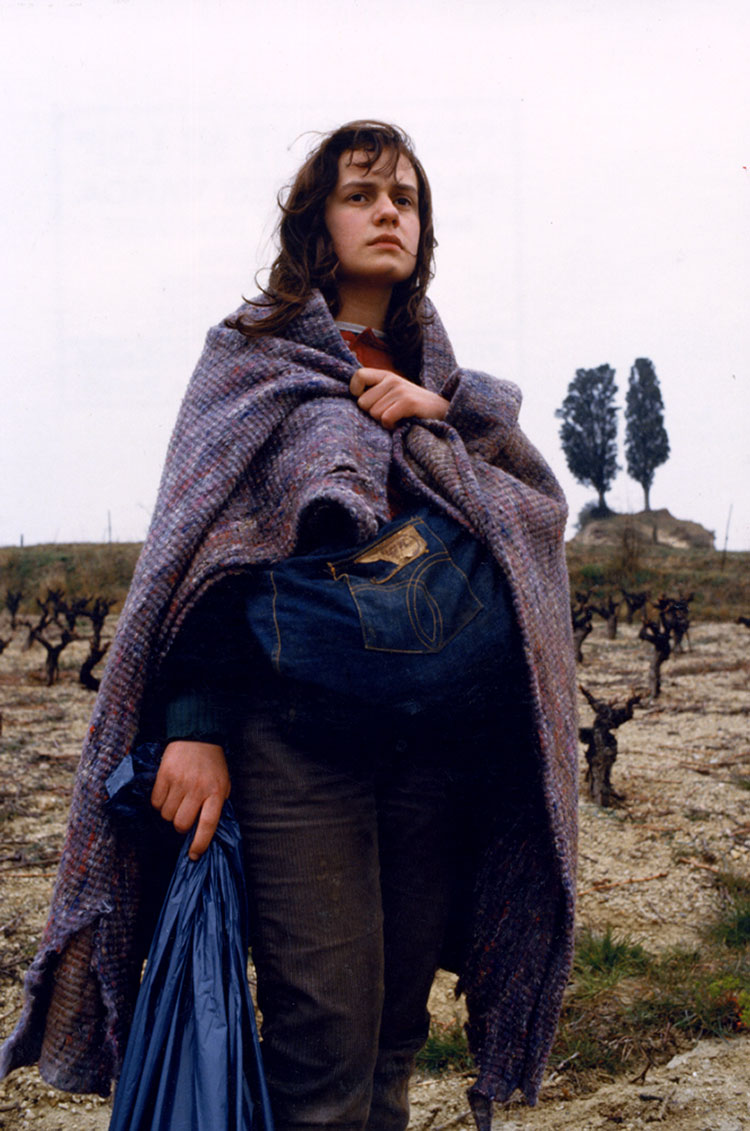
Mona (Sandrine Bonnaire) is a young woman of about 20 who wanders the South French countryside in the dead of winter searching for food and money. She camps out in a small tent wherever there is space including at one point even a cemetery. She is offered a few odd jobs here and there, but she never lasts long in them and resents being ‘bossed around’. She makes a few acquaintances along the way and even a couple of male lovers, but like with her jobs she doesn’t get settled with anyone for too long.

The best aspect of this critically acclaimed French film that is directed by the legendary Agnes Varda is that it avoids the political correctness. Most films especially Hollywood ones tend to portray the poor and homeless as humble and contrite, but the main character here is anything but. She is arrogant and aloof to those around here even the ones that offer her help. She acts strangely entitled in even in the direst of situations and in many ways almost oblivious to how truly desperate she is. Varda creates a richly textured character that while not likable and sometimes even confounding still manages to be always fascinating.

The narrative works in vignette style starting with some farmhands finding her dead, frozen body in a field and then progressing backwards showing the last few weeks of her life and the people that she met. To some degree this is interesting as it reveals how others see her some of whom are even jealous of her ‘freedom’ and ‘independence’ while also exploring how everyone can make a lasting impression on others even if they seem insignificant and the encounter brief. However, the segments where these characters speak directly to the camera comes off as jarring, clumsy and heavy-handed and it would’ve been nice had these same reactions been worked into the story in more of a subtle and sophisticated way.

My biggest issue with the film and in many ways it’s most disappointing aspect is that we learn nothing of this woman’s background. What exactly brought her to do this? Was it by choice or circumstances? Where’s her family and what about her upbringing? None of this is shown or talked about making this character study not only frustrating, but incomplete.

The character also gets sexually assaulted at one point, which to a degree brings added realism, but she is shown not to suffer any post-traumatic stress from the incident, which was not believable. Also, having the film begin with her death hurts the tension and it would’ve been more compelling had we not known her ultimate fate until the very end.

vagabond 2

My Rating: 6 out of 10

Released: December 4, 1985

Runtime: 1Hour 45Minutes

Not Rated

Director: Agnes Varda

Studio: MK2 Diffusion

Available: DVD (Criterion Collection)

The Holy Mountain (1973)

holy mountain 1

By Richard Winters

My Rating: 7 out of 10

4-Word Review: They search for immortality.

In what seems like a sort-of sequel to Jodorowsky’s cult hit El Topo this film deals with the same type of Christ-like figure and religious metaphor’s. The story centers on a man known as The Thief (Horacio Salinas) who meets up with an alchemist (Alexander Jodorowsky) who introduces him to seven people representing the planets of the solar system as well as the sins of greed, lust and power. The group is instructed to leave their worldly possessions behind as well as their individual identities so that they can become one while they trek up the treacherous terrain of the Holy Mountain where they hope to acquire immortality.

In a lot of ways this film is superior to El Topo simply because it has a bigger budget and more slickly handled. The background sets are dazzling and at some points even amazing. On a purely visual level this film borders on being brilliant and could be enjoyed simply on that note alone. I also really enjoyed the humor and satire. The war manufacturer that makes psychedelic ammunitions to appease the younger generation is great as is the naked woman implanting a giant phallic object into a robotic machine in order to allow it to obtain an orgasm and given birth to a baby robot.

Jodorowsky’s excessive use of shock elements is here as well and for some it becomes the main point of watching it. Within the first 30 minutes alone you’ll see two beautiful women being stripped naked and having their heads shaved. An old man taking his glass eye out and placing it in the hands of a young girl and a young boy being castrated and then putting his testicles into a glass jar, which he places on a shelf lined with other glass jars filled with other testicles. Later on there’s even a scene showing a cow mating with another and a shot of a naked elderly man breast feeding another man. By the end it all starts to get rather mind numbing, but on a purely exploitative level it’s kind of fun because it’s something that most likely could never be filmed today and thus cementing why 70’s cinema is so special and in many ways much more interesting and outrageous than the stuff coming out today.

In the end though it comes off like overkill with a message that gets lost amidst all of the shock elements. It also seems quite contradictory as supposedly this is a spiritual film, but with so much sex and gore it becomes more like a pornographic one and for the most part that’s what many viewers will take from it, which ultimately makes this heavy-handed, experimental production a failed effort.

My Rating: 7 out of 10

Released: November 29, 1973

Runtime: 1Hour 55Minutes

Rated R

Director: Alejandro Jodorowsky

Studio: ABKCO

Available: DVD, Blu-ray, Amazon Instant Video

Suspiria (1977)

suspiria 2

By Richard Winters

My Rating: 4 out of 10

4-Word Review: Ballet dancer battles witches.

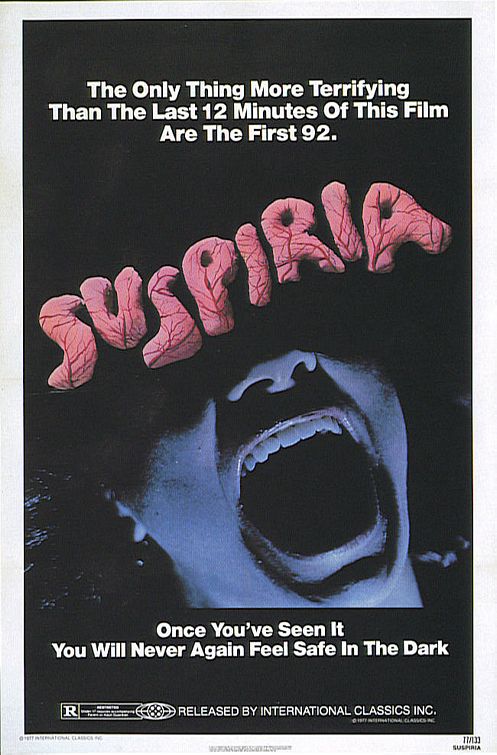
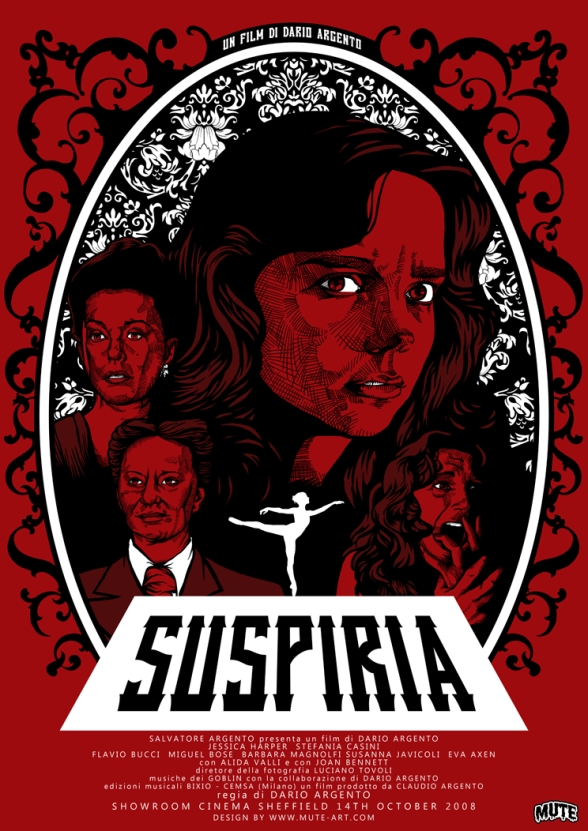
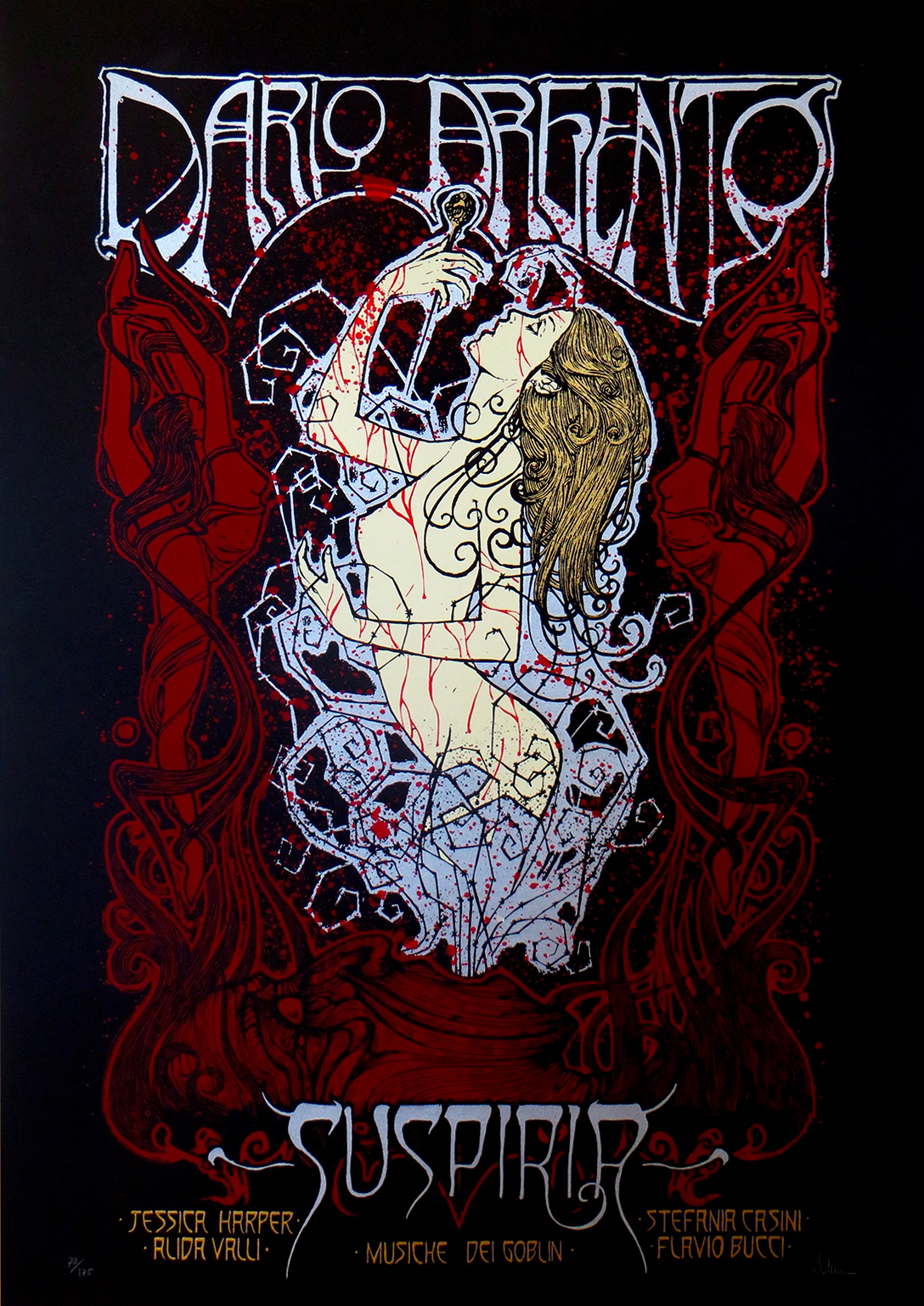
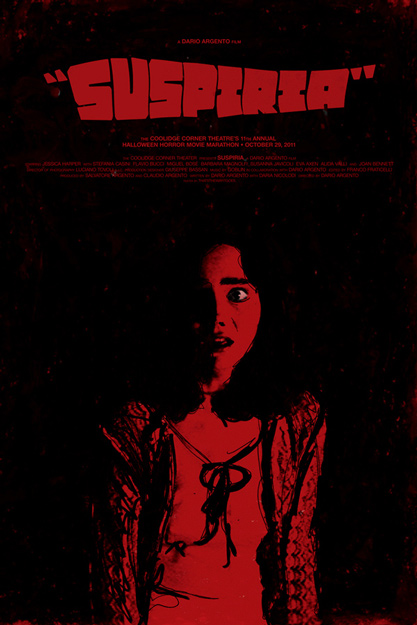
Suzy (Jessica Harper) is an American from New York who aspires to be a ballet dancer and travels to Freiburg, Germany to enroll at the dancer academy there. When she arrives she confronts another young lady who shouts something about a ‘blue iris flower’ before running out into the stormy night and then later turning up murdered. As the days progress strange events begin to occur convincing Suzy that the dance school may really be a cover for a coven of witches.

I first saw this film back in the late 80’s and it left me cold, but after reading a few other movie blogs where the critics insisted this was ‘brilliant’ I decided to give it another chance and approached it with a completely open mind only to end up liking it even less. The majority of the problem is Dario Argento’s over-direction. The sets and color schemes are wildly over-the-top bordering on camp. Had he pulled back even a little it might have been visually impressive, but instead gets obnoxious. The atmosphere, like everything else, is overdone creating a dream-like fantasy feel that has no connection to reality and therefore not very compelling.

The music, which was done by a group called Goblin, is interesting to some extent. I like the effect that to me sounded like hissing demons, but the other parts of it too closely resembled the ‘Tubular Bells’ music that was used in The Exorcist. It also gets overplayed and is too loud coming off like a spoiled child demanding your attention, which creates less tension and more distraction instead.

The special effects don’t live up to billing. When a man gets attacked and then eaten by his own dog is the only good part simply because it’s unexpected. Otherwise the blood and gore is average and even lacking. The majority of it is at the beginning where we see a young, frightened woman squirmy around on the floor while she gets stabbed and to a degree looks like some interpretive dance routine. The shot of a body coming out of a ceiling and then hung from a rope doesn’t work because it is clearly a mannequin and if you look real closely her face already has a strangled expression on it before the head goes through the noose.

suspiria3

Harper is a good protagonist and its fun seeing classic film star Joan Bennett in her last film role. I also really liked Alida Valli as Miss Tanner the dance instructor. During the 40’s and 50’s she was a stunningly beautiful leading lady, but here looks very witchy with the way her hair is cropped up into a tight bun as well as with her eyes and voice. The rest of the supporting cast have their voices dubbed, something that Italian productions during this period were notorious for and gives the already wooden dialogue a cheesy, amateurish sounding banter.

Spoiler Alert!

The climactic finish is a big letdown. For such an extravagant, garish build-up I was expecting much more of a bloody, drawn-out battle. Instead Harper just picks up a sharp object and stabs the head witch, who looks dead already, and it immediately kills her along with the others, but to me this didn’t make sense. This is supposedly some otherworldly demon, so the same laws of physics wouldn’t necessarily apply to her like it does to humans and a simple stab wound wouldn’t have the same effect like it would to regular people.

End of Spoiler Alert!

I was glad to see that other viewers on IMDB particularly those on the message board felt the same way about this ‘classic’ as I did. In my opinion the only way to enjoy it is for its excessive camp value and nothing more.

suspiria4

suspiria5

My Rating: 4 out of 10

Released: February 1, 1977

Runtime: 1Hour 38Minutes (Blue Underground 2-Disc Special Edition)

Rated R (Originally rated X)

Director: Dario Argento

Studio: International Classics (Dubbed Version)

Available: VHS, DVD, Blu-ray

The Collector (1965)

the collector 2

By Richard Winters

My Rating: 8 out of 10

4-Word Review: Collecting women like butterflies.

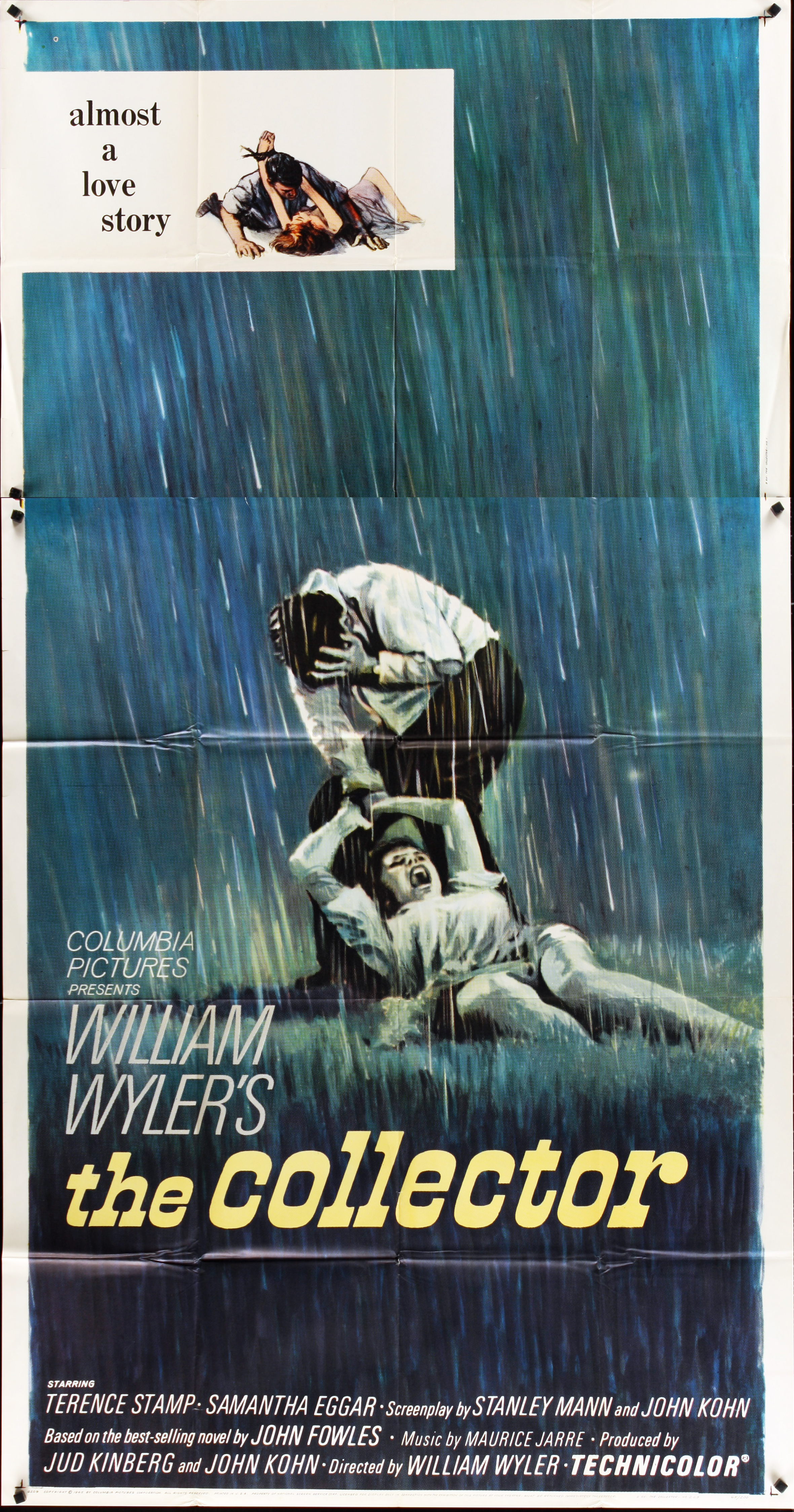
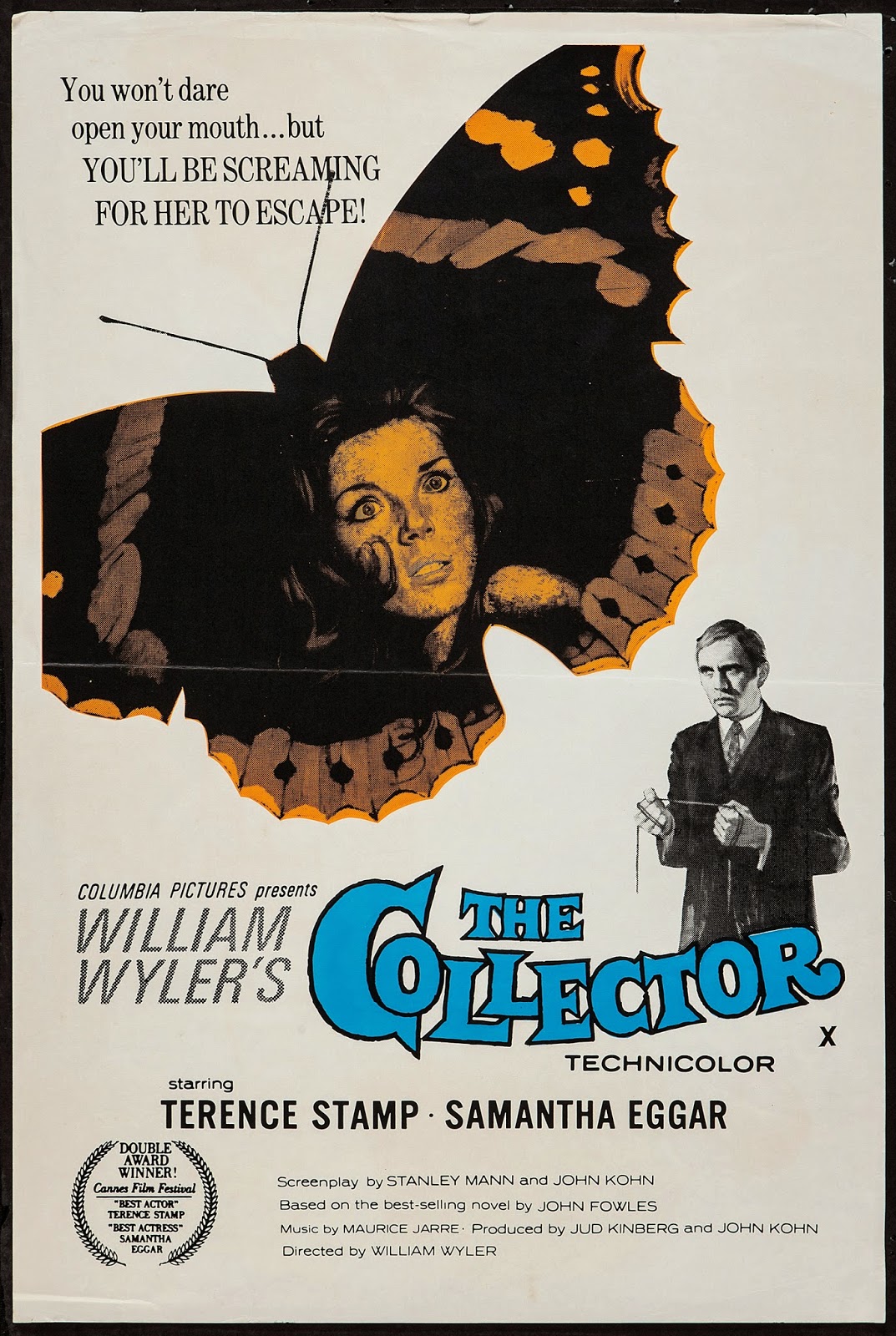
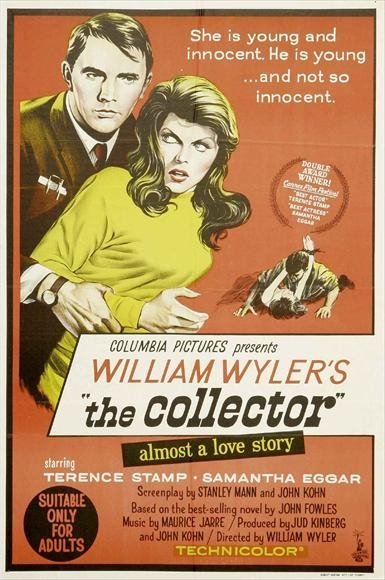
Freddie (Terence Stamp) is a withdrawn loner who collects butterflies for a hobby. One day he manages to win a lot of money in a football pool and uses it buy an old, isolated house in the English countryside. The place has a very large cellar, which gives him the idea that it can be used as a prison. It is then that he decides to kidnap beautiful art student Miranda (Samantha Eggar). He keeps her in the cellar, but fixes it up making it seem almost like an apartment. He treats her with the upmost respect and even knocks before entering her room. He buys her art supplies so she can continue her work and makes an agreement with her that he will let her go after 4-weeks, but hopes in between then that she will fall in love with him.

The film puts an interesting spin on the old ‘psycho kidnapping a beautiful woman’ theme and for the most part succeeds. The viewer ends up feeling almost as sorry for Freddie as they do his victim as it becomes clear that through his social awkwardness he is in even more of a prison than she. The way the two try to communicate and connect, which only ends up driving the them further apart is fascinating and their contrasting views about the book ‘Catcher in the Rye’ as well as the paintings of Picasso are equally revealing.

Stamp gives one of his greatest performances in his already illustrious career playing a character who weaves from being menacing to vulnerable and childlike. Eggar makes for an appealing victim and apparently turned Stamp down years earlier when he had asked for her date while the two were students in acting school.

the collector 4

William Wyler’s direction is perfect as he wisely decides to pull back without adding any unnecessary Hitchcock touches and thus allowing the interactions between the two characters to propel the film. His superimposed, colorful shots of butterflies seen over the closing credits are a nice added touch. My only minor grievance is the Maurice Jarre score, which seemed too melodic without enough of the dark foreboding undertones that music for a thriller should have.

If you’re looking for the conventional thriller you may be disappointed as the emphasis is more on the psychological than the suspenseful. There are a few good tense moments including Miranda’s final attempt to escape during a nighttime rain storm, but for the most part the compelling element comes from the way these two multi-layered people deal with each other and ultimately reveal things about themselves that they didn’t know existed. The story also makes an excellent point of how everyone to a certain degree is trapped in a prison and the challenging if not impossible effort it can sometimes be to bond with others especially when reaching across different social-economic lines. The only thing that does get ruined is the ending, which no longer has the novelty or shock value that it once did.

the collector 3

My Rating: 8 out of 10

Released: June 17, 1965

Runtime: 1Hour 59Minutes

Not Rated

Director: William Wyler

Studio: Columbia Pictures

Available: VHS, DVD, Blu-ray, Amazon Instant Video

Bells (1982)

bells 1

By Richard Winters

My Rating: 3 out of 10

4-Word Review: Don’t answer the phone.

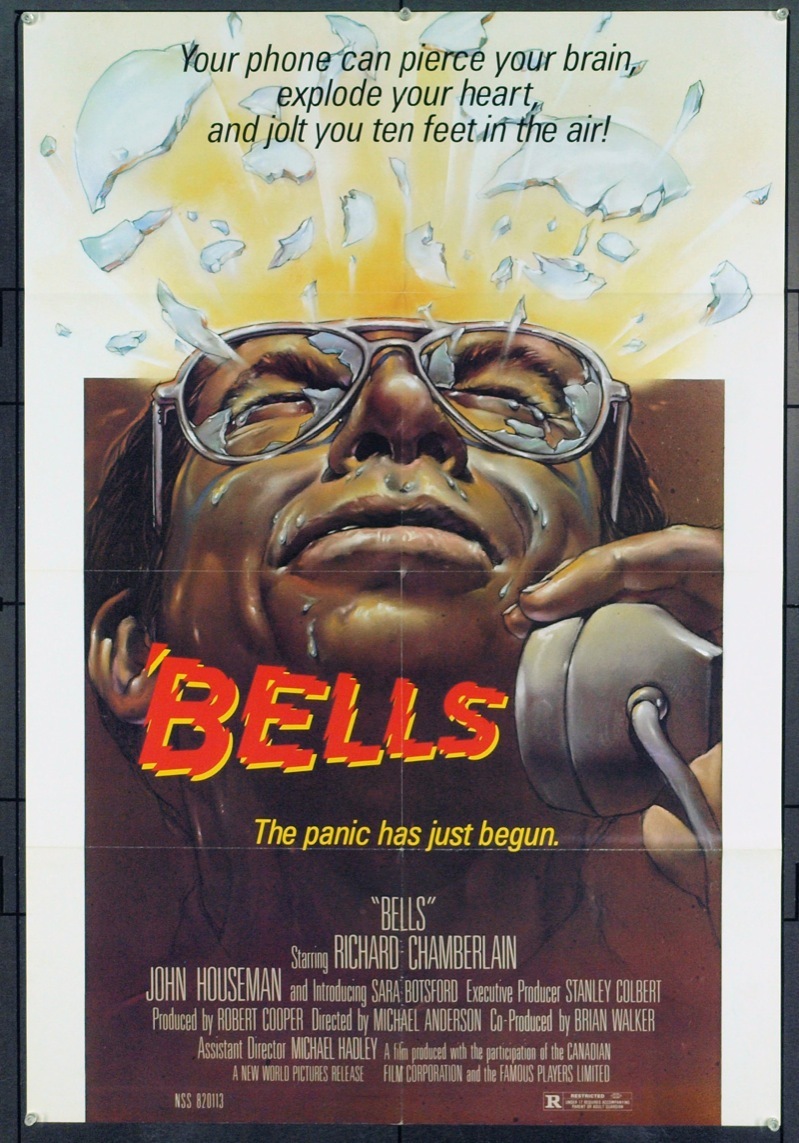
People are being killed throughout the city of Toronto by simply answering the phone. Apparently someone has come up with a device that can create a massive electronic blast that can go through the phone lines and kill anyone listening on the other end. The blast is so strong that it can even melt the receiver. Nat Bridger (Richard Chamberlain) who is a professor at a local college decides to take matters into his own hands and investigate on his own after one of his students is killed and the police seem to do nothing about it.

Initially I found this idea to be intriguing and original, but unfortunately it throws credibility completely out the window. Had it worked more with the idea of sending some loud noise at an extremely high decibel over the phone, which would then blow out the person’s ear drum, or something of that nature then I might have bought into it. Instead it has some sort of unexplained blast that literally makes the person at the other end blow off of their seat and fly backwards crashing into walls and windows, which seems utterly ridiculous and cartoonish. The film also offers no scientific explanation to how this device was created or done, which makes it farfetched and pointless.

Chamberlain’s one-dimensional acting doesn’t help and his presence in the lead role is quite generic as he plays a character that shows the street smarts and fighting ability of a seasoned cop instead of that of a college professor making things even more unrealistic. John Houseman gets a rather thankless supporting role as Chamberlain’s mentor and is pretty much wasted except for a bit where he disrupts a guided tour through a phone company which proves mildly amusing.

The technology is horribly dated making the entire thing a relic of a bygone era and irrelevant to today’s audiences.  The climatic sequence dealing with Chamberlain’s attempts to keep the bad guy on the phone while the police try to trace the number is highly clichéd and more boring than intense. Director Michael Anderson’s attempts to jazz things up a bit by photographing phones in intimidating ways with ominous music playing in the background comes off as unintentionally funny instead of scary.

This Canadian made thriller was originally released under the title above and ran for 95 minutes, but the Warner Home Video version, which was released in 1998 and goes under the title of Murder by Phone was trimmed by 15 minutes. The version reviewed here is from the original release although the film is so silly that watching the shorter cut might be preferred simply because it would mean less time wasted.

My Rating: 3 out of 10

Alternate Title: Murder by Phone

Released: May 11, 1982

Runtime: 1Hour 35Minutes

Rated R

Director: Michael Anderson

Studio: Canadian Film Development Corporation

Available: VHS (as Murder by Phone)