Category Archives: Foreign Films

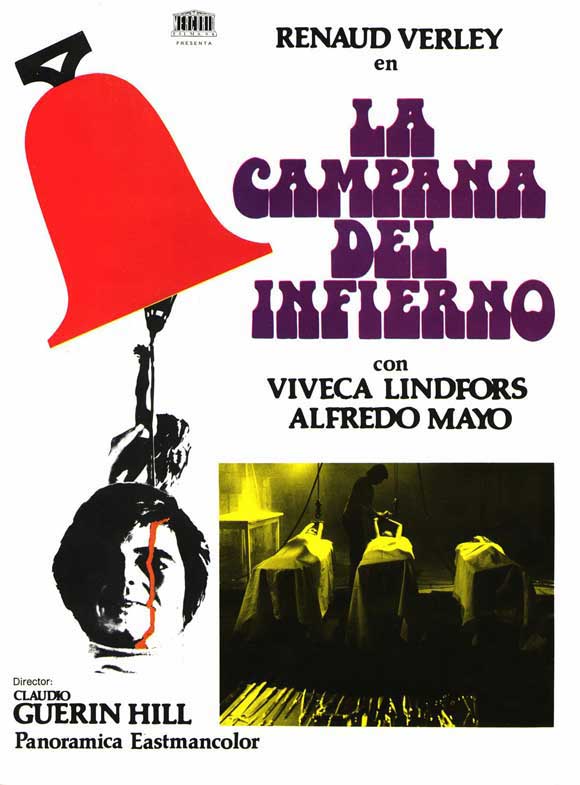
A Bell from Hell (1973)

bell from hell

By Richard Winters

My Rating: 4 out of 10

4-Word Review: A psycho returns home.

After being locked up for years in an insane asylum Juan (Renaud Verley) is released and allowed to return home to his wheelchair bound mother Marta (Viveca Lindfors) and three sisters who had him put away in an attempt to get at his inheritance. Now Juan wants revenge and does so by trying to have his mother stung to death by a horde of angry bees and his sisters cut up at a meat processing plant, but both of his attempts fail. They survive and turn-the-tables by having him encased alive at the local church’s bell tower that is being erected, but just when they think he’s dead they find that he may not be.

This film’s most notorious claim to fame is that its young director Claudio Guerin fell to his death from the very bell tower he had constructed for the movie on the last day of shooting, which is a shame since he showed strong potential for being a gifted filmmaker. If there is one thing that holds it all together and keeps it captivating it’s with its visual quality. Despite the limited budget Guerin shows a keen eye for an array of interesting camera angles and shots. The atmosphere is thick and remains creepy throughout even though it doesn’t have any actual scares.

Unfortunately the script by Santiago Moncada lacks the same type of creativity with a cliché-ridden storyline that meanders and at times feels like it’s going nowhere. The muffled English dubbing makes it hard to hear all of the words that the characters are saying and the ending plays like a tired rehashing of an Edgar Allan Poe story that provides no surprises.

The film’s most provocative moment is when Juan kidnaps his sisters and hangs them naked on meat hooks at the processing plant, which is filled with imaginative close-ups and edits and a major precursor to the so-called ‘horror porn’ that we’ve become used to today. However, the film doesn’t go far enough with it and pulls back after an interesting set-up, which becomes a testament to the production as a whole that has great potential, but only mediocre results.

bell from hell 2

My Rating: 4 out of 10

Released: October 1, 1973

Runtime: 1Hour 33Minutes

Not Rated

Director: Claudio Guerin

Studio: AVCO Embassy Pictures

Available: DVD, Amazon Instant Video

Kes (1969)

kes 1

By Richard Winters

My Rating: 6 out of 10

4-Word Review: Boy trains a kestrel.

Billy (David Bradly) is a poor working class youth living in Yorkshire who finds his existence to be bleak and pointless. He is bullied constantly by his older brother Jeb (Freddie Fletcher) and ignored by his burdened mother (Lynne Perrie) while also being picked on at school. As means of some solace he finds a nest of baby kestrels inside an abandoned building. He takes one of them and keeps it in his backyard shed where he trains it, which in return gives him a sense of purpose.

The film is based on the novel by Barry Hines who also wrote the screenplay and although the plot is basically the same it does vary in two major ways. The first one being that in the book everything takes place in one day and with a lot of use of flashbacks to explain the backstory, which I liked better, but here it’s given a linear narrative. The book also explains a bit more about the otherwise absentee father and even has one scene involving him while here the character is non-existent and never even mentioned.

On a purely cinematic level it is well made and nicely exposes Billy’s hopeless working class world without ever being heavy-handed. The drama is fresh and natural with each scene and character ringing true. The segments involving the training of the bird is the most engaging and I wished had been extended.

The children are fantastic without being too cute or precocious and respond to things in ways that are honest to their nature. The adult cast is good as well although not as likable. The teachers and school administrators, with their very old fashioned approach to discipline, come off as genuine jerks. At one point one of them even raps the open palms of the children’s hands with a cane, which makes their eyes well up with tears and is unpleasant to watch.

The worst is the segment involves Billy’s physical ed. teacher Mr. Sugden, which is played by Brian Glover who was an actual high school instructor at the time as well as a former wrestling. Here he plays a coach who brutally bullies his students in a scene that makes its point and then goes on too long with it. I also didn’t like that director Kenneth Loach superimposes the score of the soccer (football) game that the students are playing onto the screen, which wasn’t necessary as who wins the game was not important at all and hurt the film’s realism by distracting the viewer and taking them out of the story.

Some have complained about the thick dialect of the characters, which makes it hard at times to understand what they are saying. Certain American versions have been dubbed to make the lines uttered clearer although the version I watched, which was from the Criterion Collection, seemed to have the original accents intact, which I preferred as it kept it more authentic and for the most part I didn’t have any problem with it.

Spoiler Alert!

The only real issue that I had with the film is its downbeat ending. I realize that it is the same as the one in the book, but felt a bit frustrated that every time there is a movie dealing with a child taking care of an animal it always for some reason has to end in tragedy, which made it a bit formulaic. The kid never gets a break and having the falcon get killed at the end was like rubbing salt into the wound. The bird that actor Bradly buries apparently died of ‘natural causes’ but at the time he was under the belief that it had been killed simply to suit the purposes of the film and the angry reaction that you see on his face was very real.

End of Spoiler Alert!

kes 2

My Rating: 6 out of 10

Released: November 16, 1969

Runtime: 1Hour 50Minutes

Rated GP

Director: Kenneth Loach

Available: DVD, Blu-ray, Amazon Instant Video

One Wild Moment (1977)

one wild moment 1

By Richard Winters

My Rating: 5 out of 10

4-Word Review: Fling with friend’s daughter.

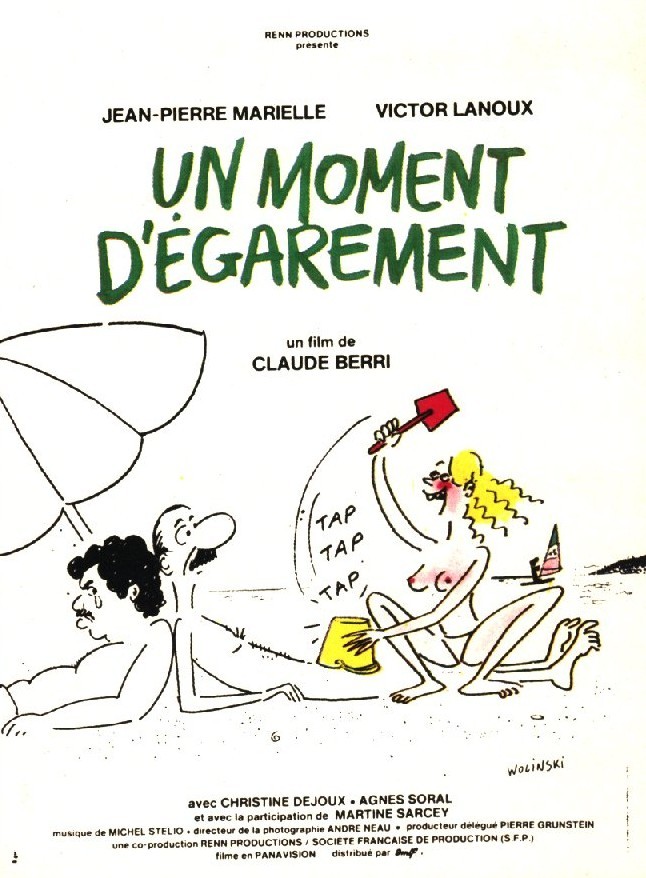
Pierre and Jacques (Jean-Pierre Marielle, Victor Lanoux) are longtime friends who decide to take a vacation together along the French Riviera and both bring along their 17-year-old daughters. One night Pierre and Victor’s daughter Francoise (Agnes Soral) attend a late night wedding party and the revelry and energy of the moment culminates with them having a tryst along the beach. Although Pierre has feelings for Francoise and vice-versa he wants to keep it from going any further for fear that it will jeopardize his friendship with Victor. Francoise though wants it to continue and the two quarrel with their mixed feelings as they ponder telling Victor about it.

Although this is not a great film it is still far superior to its American remake Blame it on Rio. For one thing it works more as a drama while the remake was played strictly for laughs. The dialogue has more of a realistic conversational quality and the characters are better rounded and more dimensional. The structure is  leisurely paced given it a day-in-the-life feel without having every scene forced to conform to contrived comedy like in the other one. The scene where the two make love has much more of a natural quality to it and less stagey. I also enjoyed more of an emphasis on subtly where the characters are not compelled to verbally describe their feelings, but instead it relies on their facial expressions, which is much more powerful.

Marielle gives a far better performance than Michael Caine did in the equivalent role who seemed awkward, stiff and uncomfortable throughout. The rift that the character has with his daughter Martine (Christine Dejoux) gets better fleshed out here while in the remake it is only briefly touched on. I also thought it was interesting that at one point Marielle’s character slaps his daughter during an argument when she comes back well after her curfew, which doesn’t get shown in the American film and I presume this is because of Hollywood’s concern that it might make the character less appealing as they always want to make their protagonists are wholly likable and politically correct, but in the process it also makes them less real.

The two daughters are much more believable and like young women ready to enter adulthood instead of a middle-aged man’s sexual fantasy like in the other one. I also found it amusing how when Francoise tells her father about her tryst he doesn’t immediately become upset about it like in the American film where sexual mores are more stringent, but only after she tells him it was with a man over 40.

Thankfully there is also no silly side-story involving one of the men’s wives having an affair with the other, which was the dumbest part about the remake and in fact there is no wife character here at all. The only real problem with this version is its abrupt ending that leaves open all sorts of loose endings and is quite unsatisfying and becomes unfortunately a major mark against it.

My Rating: 5 out of 10

Released: December 21, 1977

Runtime: 1Hour 28Minutes

Rated R

Director: Claude Berri

Studio: Quartet Films

Available: VHS

30 is a Dangerous Age, Cynthia (1968)

30 is a dangerous age

By Richard Winters

My Rating: 6 out of 10

4-Word Review: Life crisis at 30.

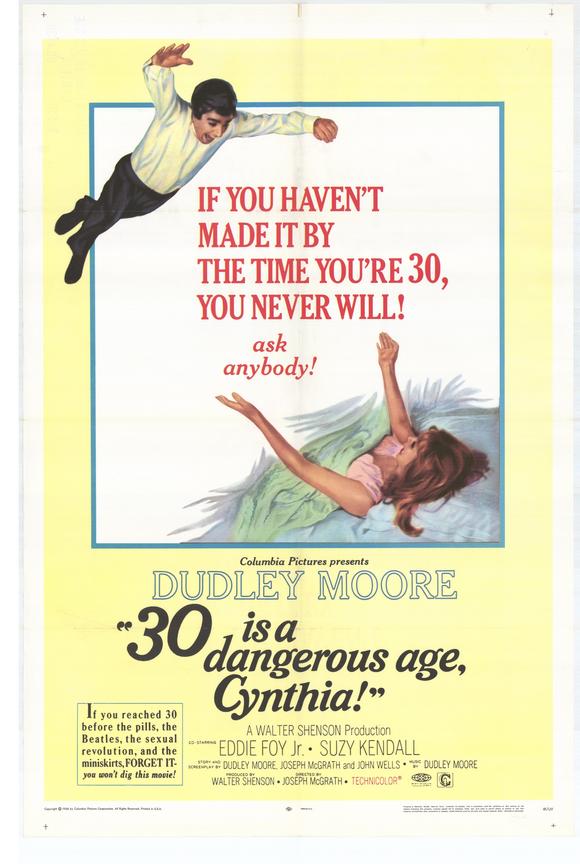
Rupert Street (Dudley Moore) is a struggling pianist and composer who with only six weeks until his thirtieth birthday feels that his life has been a failure. He sets out to change that by setting some very lofty goals, which is to write a musical and have it produced as well as getting married even though he has yet to find a girlfriend.

The film, which was directed by Joseph McGrath is filled with the wonderfully drool British humor that manages to be both lightly satirical and imaginative all at the same time. The rampant cutaways in which a character will be talking about something and then it cuts to show them doing what they are imagining or discussing lends a nice surreal quality. The banter that Moore has with a Registrar (Frank Thornton) where he tries to get a marriage license before even having picked out a woman is the high point of the film and a perfect example of the wacky humor of that era from that region of the world that balances being both subtle and over-the-top that I wish more American movies would be better able to replicate.

The supporting cast helps a lot and is full of comic pros. The elderly Eddie Foy Jr. is a scene stealer as Rupert’s best friend and so is Duncan Macrae, whose last film this was, as Rupert’s boss. Patricia Routledge is great as his kooky landlady and Suzy Kendall is highly attractive as his fiancée. There is also an amusing parody of 1940’s detective movies featuring John Bird as a self-styled film noir-like private eye.

Unfortunately the script, which was co-written by Moore, suffers from too much of loose structure. The jokes are poorly paced and many times the comic bits go on longer than they should. There is also an intermixing of musical numbers that features Moore at the piano, which does not work well with the rest of the film. Yes, Moore was also an excellent pianist, but this was no place to be showing it off and these segments only help to bog the film down as a whole. The ending, which features Moore having to witness the desecration of his musical by an overzealous director who has a different ‘vision’ for it is priceless, but in-between there are a lot of lulls and the film would’ve been helped immensely by having a tighter script and a more structured, plot driven story.

My Rating: 6 out of 10

Released: March 4, 1968

Runtime: 1Hour 25Minutes

Not Rated

Director: Joseph McGrath

Studio: Columbia Pictures

Available: VHS

The Intruder (1977)

Capture 52

By Richard Winters

My Rating: 4 out of 10

4-Word Review: Terror on the road.

Based on a story by Dean R. Koontz and filmed in France under the title Les Passagers the plot centers on Alex (Jean-Louis Trintignant) who picks up his 11-year-old stepson Marc (Richard Constantini) from school and sets off to drive him across France and into Italy where they are to meet his mother Nicole (Mireille Darc). Along the way they become menaced by a strange man (Bernard Fresson) driving a black van that begins following them. At first Alex thinks nothing of it, but when the van tries driving them off the road they go to the police who prove to be unhelpful, which forces Alex to take things into his own hands in order to save both himself and the boy.

The film starts off well with definite hints to Steven Spielberg’s classic Duel. I enjoyed how initially everything is from Alex’s and Marc’s point-of-view where we do not know the identity of the driver in the black van, which is only seen through the perspective of their rear window that gives the vehicle a creepy presence. The banter between the boy and step father is engaging and the fact that the kid is smart and shows a keen awareness of things and not just there to be cute is great. I also liked the bawdy tune they sing together and the shot of the boy driving the car while the father leans out the passenger side window.

There is an exciting moment where the van tries pushing their car off the highway while they’re on a winding mountaintop road that is well photographed and realistic. The two are subsequently forced to ride the rest of the way in a tattered vehicle that has no windshield and looks almost as beat-up as the automobile in Planes, Trains and Automobiles.

I did not like however that fifteen minutes into the movie we are shown the face of the other driver, which takes away from the intriguing mystery angle that is what made Duel so interesting. The bad guy isn’t frightening and comes off as clumsy and careless, which makes him less threatening. The fact that he does not carry any type of weapon and must resort to grabbing a nearby fire ax in order to attack Trintignant’s character when the two confront each other didn’t make much sense.

Spoiler Alert!

The film’s biggest transgression though is that its twist ending isn’t surprising at all as the mystery man turns out to be the wife’s psycho ex-boyfriend, which is something I had guessed early on and most other viewers probably will too. It also leaves open a tremendous amount of loopholes like why Alex wouldn’t have been made aware of this boyfriend earlier as I’m sure he would’ve been stalking them long before she got remarried and why the boy wouldn’t have guessed that the stranger chasing them was this man as well as most likely he would’ve known about him too. The police investigation, which gets worked in as a sort of side story proves pointless to the plot and the fact that they end up being quite incompetent makes them seem similar to the ‘comic relief’ cops from Last House on the Left, which hurts the tension.

End of Spoiler Alert!

This film has managed to acquire a small cult following and it has good set-up, but it would’ve worked better had it been done solely from the point-of-view of the father and stepson and only revealed the face and identity of the bad guy at the very end.

My Rating: 4 out of 10

Alternate Title: Les Passagers

Released: March 9, 1977

Runtime: 1Hour 36Minutes

Not Rated

Director: Serge Leroy

Studio: Warner Brothers

Available: None at this time.

Pardon Mon Affaire (1976)

pardon mon affair1

By Richard Winters

My Rating: 7 out of 10

4-Word Review: Married man wants hottie.

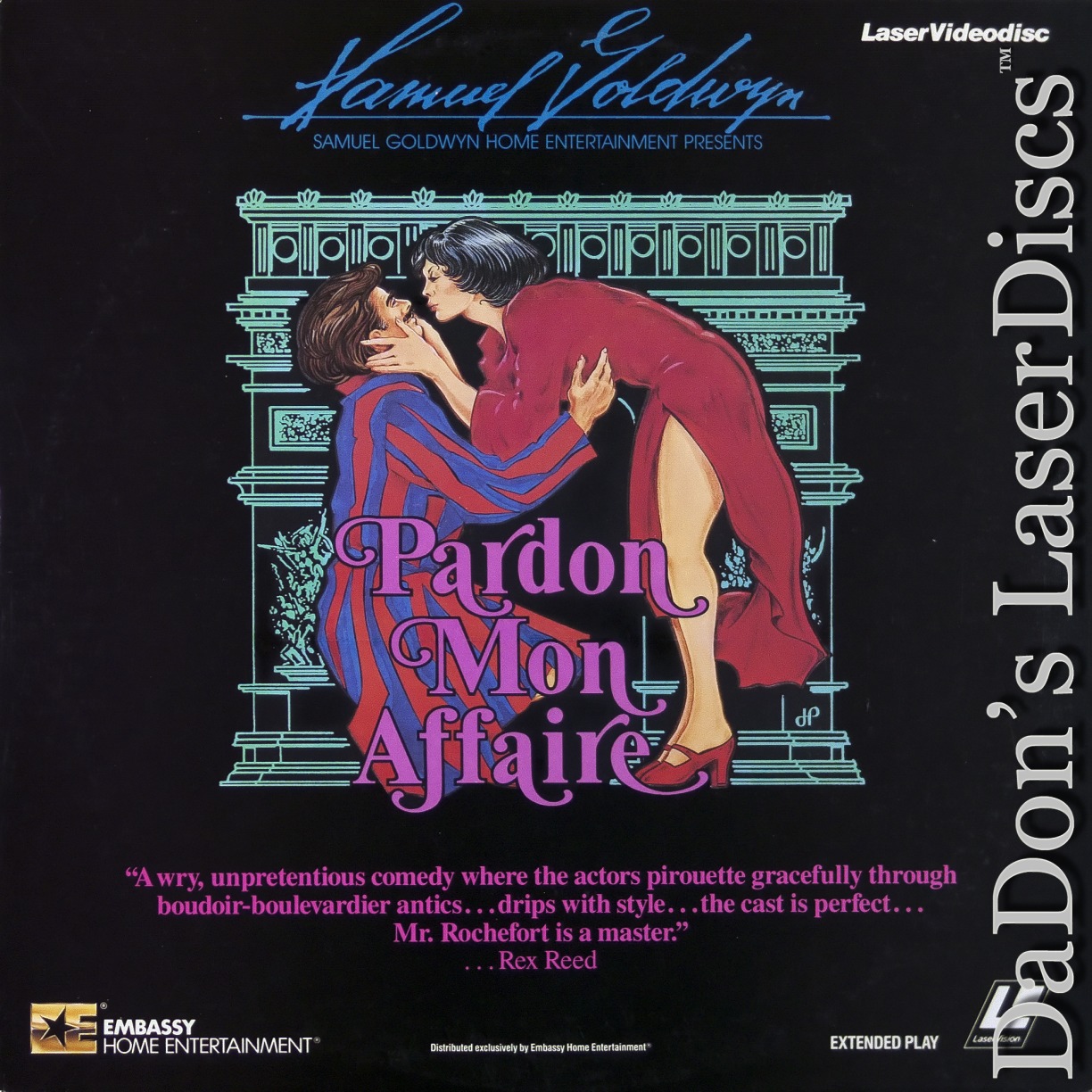
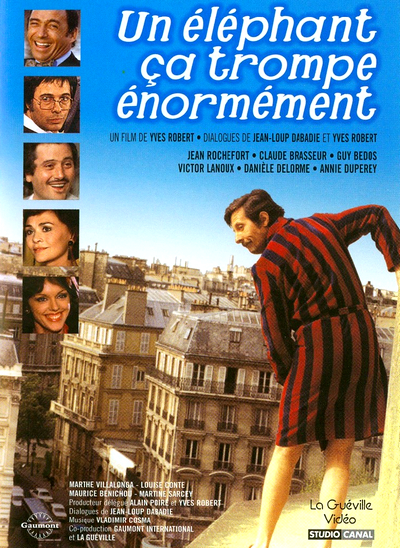
Etienne (Jean Rochefort) is a mild mannered, middle aged man who has lived a practical lifestyle both with his marriage and career and then one day goes absolutely gaga over a beautiful model named Charlotte (Anny Duperey) that he spots by chance in a parking garage. He goes to great, tireless lengths to meet her with no regard to how it is upsetting and even destroying his once quant and secure life.

This is the French version of what was later Americanized in The Woman in Red starring Gene Wilder. For the first five minutes the two films are almost identical as the opening scenario plays out in exact same fashion frame-for-frame, but then after that there are some distinct differences with this version being far superior to the remake. The disintegration of Etienne’s friend Bouly’s (Victor Lanoux) marriage is much funnier here as the philandering character gets upset when his wife leaves him we will realize its more because of his inflated, deluded ego thinking that somehow he is such a ‘great’ guy that his wife will tolerate his misgivings and when the harsh reality hits him that she won’t it’s a genuinely amusing meltdown to see. I also liked that the film cuts to a reaction shot of the main character as he observes his friend’s meltdown, which helps tie the scene more into the central plot and something that the Wilder version did not do.

I also liked how this film digs to a deeper level in regards to Etienne’s relationship with his male friends showing how competitive they are at times with each other, which is something that occurs even in the best of friendships, but when it counts they are still there to help their friend out of jam which came off as being very natural and real. The side story dealing with the homely female office worker which is played by Gilda Radner in the remake is also better handled. In the American version like with this one the character mistakenly thinks that Etienne is in love with her and not the model and when he doesn’t show up to their ‘dates’ like she expects she gets quite upset and trashes his car, but here Etienne attributes her outrage to the idea that she is aware that he wants to fool around with the model and thus does these things to defend his wife’s honor, so therefore he does not retaliate when she destroys his property for fear she will then go to his wife and tell her. In the remake this is never explained, which makes the main character’s reluctance to retaliate after his property is damaged seems strange and confusing.

This movie also has a side-story dealing with the daughter’s boyfriend hitting on Etienne’s wife something that only gets slightly touched upon in the remake. Here it gets played out more and the scenes watching this 17-year-old kid clumsily try to come on to this much older woman who has no interest in him are some of the most amusing moments in the movie.

The acting here is far better as well. The Charlotte character seems more like a real person instead of a one-dimensional sex object as LeBrock did. Rochefort is much funnier than Wilder and sports a brown mustache, which makes him seem very Inspector Clouseau-like. The American version, in an apparent attempt to make the protagonist more ‘marketable’ to a mass audience, conforms more to mainstream values by being portrayed as constantly guilt-ridden, but the character here is not shackled with such restraints and the way he recklessly chases after the woman even as it causes him more stress is what makes the movie so funny. It also has some very astute observations about marriage, middle-age, sex and the male animal while the remake is just vapid, silly escapism.

I presume the reason why the nuances of this one didn’t get transferred to the Hollywood version is because the producers felt that American audiences would not be ‘sophisticated’ enough to pick up on them, which is why I tell everyone who considers themselves to be a film lover to be sure to stay abreast of the foreign films that are out there. In most cases they are much more original, creative and observant to the human condition than anything that’s come out of Hollywood and the main reason for this is that they are treated more like an artistic endeavor with the director given full control while here the films are forced to work within a studio driven formula and treated more like a business byproduct made to give a profitable return on their investment and nothing more.

pardon mon affair2

My Rating: 7 out of 10

Released: September 22, 1976

Runtime: 1Hour 45Minutes

Rated PG

Director: Yves Robert

Studio: Gaumont

Available: VHS

10 Rillington Place (1971)

10 rillington place 2

By Richard Winters

My Rating: 7 out of 10

4-Word Review: He enjoys strangling women.

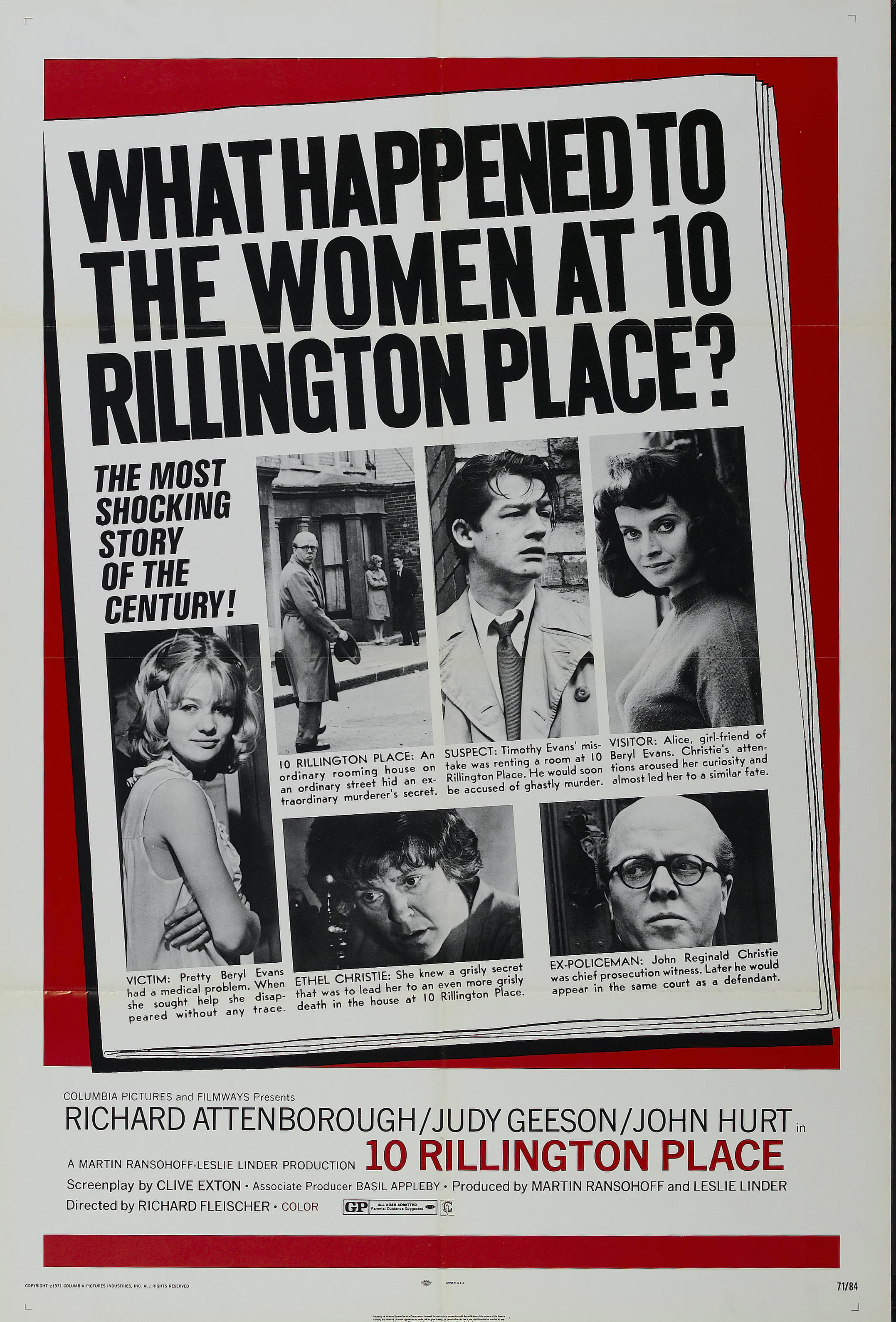
This film depicts the true life account of John Christie, played here by Sir Richard Attenborough, who strangled eight women, had sex with their corpses and then hide their bodies in his London flat at 10 Rillington Place. The story begins with Christie having already murdered several women when Timothy and his wife Beryl (John Hurt, Judy Geeson) arrive looking for a place to stay and decide to rent a room from Christie who immediately takes a fancy to Beryl. When she confides in him that she is pregnant and looking for an abortion he uses it to his advantage by pretending to be a former Dr. who can secretly perform the procedure. He then strangles her after giving her some anesthesia and tells Timothy that it occurred during the abortion and threatens him not to go to the police since it was an illegal operation at the time and Timothy was aware that she wanted it done, which would have made him an accessory. However, after moving out his suspicions continue to nag him and he eventually goes to the police, which culminate in a dramatic trial with both men accusing the other of being a liar.

The film comes off as being quite authentic to the actual events with the dialogue taken straight off of the court transcripts. The exteriors were filmed at the actual flat were the murders occurred while the interiors scenes where shot at an apartment house that was just three doors down from Christie’s real life one. Richard Fleischer’s direction is low-key with emphasis put on keeping things real almost like a documentary instead of trying to sensationalize it. The music is used sparingly and has a certain quite tone of loneliness and detachment to it almost like it is representing the feelings and mood from Christie himself.

Attenborough and Hurt give strong performances and the diametrically divergent personalities of the two characters are what drive the film. Attenborough accepted the role without even having read the script. He wore a skin-like skull cap for the part, which gives him a very pronounced bald head and a creepy alien-like quality. I also really liked the scene where he looks at himself in the mirror just before he commits the murder with his eyes conveying a frightened and ashamed look like even he himself is horrified at the murderous out-of-control obsession that drives him. Geeson does well as the sympathetic victim and Pat Heywood is memorable in an understated role as Christie’s wife Ethel who initially believes her husband to be innocent, but then slowly becomes aware of what a monster he really is.

The film would have been stronger and a more multi-faceted had it shown even in brief flashback more of Christie’s background including the fact that he was dominated by his mother and older sisters and raised by a father who showed no emotion for him as well his lifelong struggles with impotence, which all could’ve helped explain why he became the way he did. It also might have allowed for more tension had the story started with the court case and leaving it a mystery to the viewer at the beginning as to which of the men was telling the truth instead of having the narrative done in a very matter-of-fact, by-the-numbers way. In either case the film is still quite strong and great example of how a true-life crime story should be done.

My Rating: 7 out of 10

Released: February 10, 1971

Runtime: 1Hour 51Minutes

Rated GP

Director: Richard Fleischer

Studio: Columbia Pictures

Available: DVD-R, Amazon Instant Video

Wild Beasts (1984)

wild beasts 1

By Richard Winters

My Rating: 3 out of 10

4-Word Review: Animals attack innocent people.

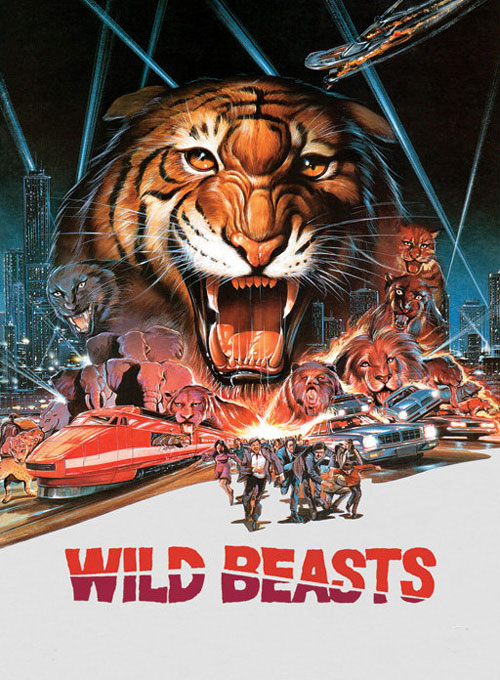
The water of a major metropolitan area becomes contaminated from all the garbage littered along the beaches. The animals of a local zoo drink it and soon go on a rampage. When the zoo’s security system fails the animals get out and start to attack the local citizens. Animal expert Laura Schwartz (Lorraine De Selle) and zookeeper Rupert (John Aldrich) work together to stop the carnage by tracking the animals down and corralling them back to safety.

The film was directed by Franco Prosperi who along with Gualtiero Jacopetti where noted for their quasi shockumentaries of the ‘60’s and ‘70’s that emphasized a lot of violence and nudity and this production works along the same vein. In fact it’s the graphic gore and a camera that lingers on the carnage that helps the film stand out from the rest of the tacky, low budget horror films from the ‘80’s. However, the film also shows a lot of animal cruelty including a mother tiger going into violent convulsions after being put to sleep and rats screaming in pain after being set on fire.

The attacks themselves become quite mechanical and monotonous. The main characters are wooden and seen only in brief intervals, so the viewer never becomes emotionally attached to anyone on screen, which seriously lowers the tension. The film actually only becomes interesting at the end when some children staying at a school drink the water and then become violent towards the adults, which has a nice creepy quality to it and the movie would’ve been better had it chosen this story thread over the other one.

The idea that showing all these discarded heroin needles along the beach and implying that this would be enough to contaminate the city’s water supply is lame and the film’s ‘important’ message about pollution is silly as well. There is also no explanation why none of the adults go crazy like the animals and some of the children do as they would presumably be drinking the same water. The opening sequence shows shots of Seattle where this story supposedly takes place, but the rest of the film was clearly shot in a European city. The production suffers from being convoluted and overblown and lacking any singular vision, which is due in large part to being financed by backers from several different countries.

My Rating: 3 out of 10

Released: February 15, 1984

Runtime: 1Hour 32Minutes

Not Rated

Director: Franco Prosperi

Studio: Shumba International Corporation

Available: VHS, DVD (Region 2)

Watch Out, We’re Mad! (1974)

watch out were mad

By Richard Winters

My Rating: 6 out of 10

4-Word Review: Replacing a red buggy.

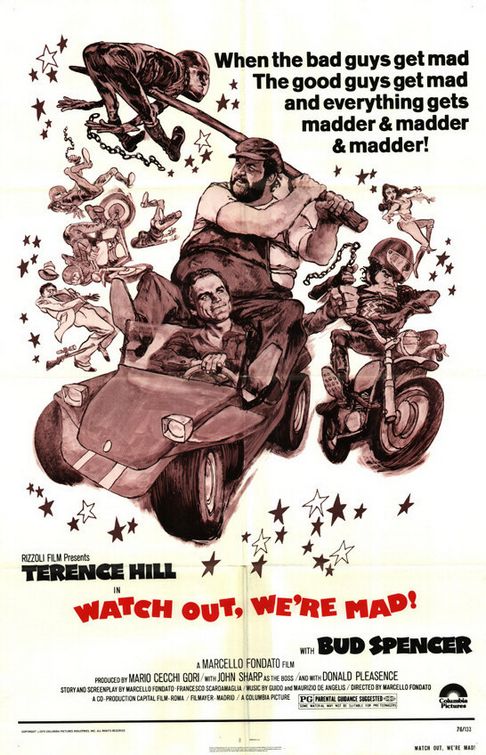
Kid (Terence Hill) and Ben (Bud Spencer) are two race car drivers who participate in a race that ends in a tie that forces the two to settle on sharing the prize, which is a red dune buggy. The two though want the vehicle all for themselves and decide to settle on who gets to keep it by having a hot dog eating contest at a local bar. As they busily eat their hot dogs a local mobster known as The Boss (John Sharp) orders his men to destroy the place in an effort to get local businesses to leave, so that they can then use the land to build a giant skyscraper. Ken and Ben don’t mind the chaos, but when the mobsters then destroy the buggy they get mad…really mad! They confront The Boss and his equally nefarious psychiatrist (Donald Pleasence) insisting that the buggy MUST be replaced and it MUST be the same red color, or there will be trouble. The mobsters initially scoff, but find that these two men are far more resourceful and determined than they could’ve imagined.

This is the seventh teaming of Hill and Spencer who did their first movie together in the 1967 spaghetti western Blood River. They work well together and it is clear that they share a deep camaraderie. The film is full of all sorts of zany slapstick and I enjoyed most of it particularly the bar scene as well as a bumper car segment at a carnival. The best moment though is when they ram their car through the doors of a ritzy restaurant where the mobsters are dining and proceed to drive the car through every inch of the place while popping hundreds upon hundreds of giant balloons that lay all over.

The biggest issue though it that it doesn’t make any sense why these two would be so cocky and arrogant in the face of otherwise dangerous mobsters. Yes, it’s funny that these two ordinary schmucks seem oblivious to danger and can more than handle themselves, but it would’ve worked better had they been initially intimated and then slowly evolved into being more confident. You also have to question how these men acquired such powerful fighting skills, which made me believe that the characters should’ve been portrayed as police or government agents with some kind of combat training instead of just ordinary car mechanics that would not in any way be able to fight these bad guys off as consistently as they do.

The story is one dimensional and there really isn’t much of a third act with the broad plot simply an excuse to showcase a lot of slapstick. The humor is clearly on a kiddie level, but funnier than you might think even though there are certain routines that go on longer than they should and some that seem to repeat themselves. Still it’s refreshing to watch a film made in an era where slapstick was still considered a legitimate form of entertainment and not simply relegated to kid flicks and cartoons.

My Rating: 6 out of 10

Released: March 29, 1974

Runtime: 1Hour 37Minutes

Rated G

Director: Marcello Fondato

Studio: Columbia Pictures

Available: DVD

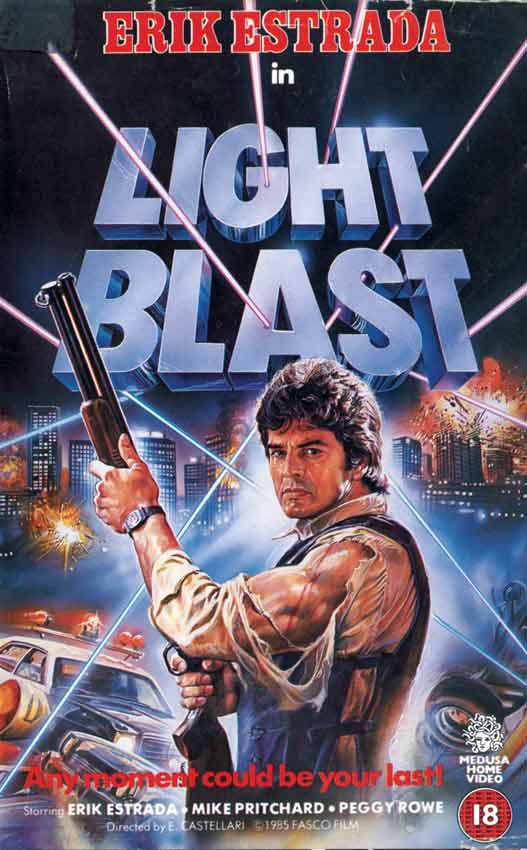
Light Blast (1985)

light blast 2

By Richard Winters

My Rating: 2 out of 10

4-Word Review: Erik Estrada saves Frisco.

A crazed scientist (Ennio Girolami) has created a laser gun that can melt people on contact. He uses it to kill a couple and then threatens to do the same to the entire city of San Francisco unless the mayor can come up with $10 million dollars. Rugged, renegade cop Ronn Warren (Erik Estrada) is assigned to track the culprit down and that he does while careening down the city streets in a race car.

The only interesting aspect about this movie is that it stars Estrada the one time big TV star from his heyday on the ‘CHiPs’ TV-series. I never cared much for that show and the only thing that I’ve seen him in where I enjoyed him was in the reality series ‘The Surreal Life’ where I found him to be humble and laid back, which I suppose happens to one when they have a long line of movies like these to their credit. I remember in the late 70’s he was considered an up-and-coming star and was known to have big ego fits on the set, which eventually lead to his co-star Larry Wilcox quitting. Then once the series ended he was trapped doing low grade stuff like this, which makes me wonder; can you really call it a ‘movie career’ if no one has seen the movies that you’ve done?

Overall if you approach this with decidedly low expectations then this film, which was produced by an Italian production company, but still filmed on-location in Frisco, is okay. Watching the laser melt people is entertaining as a sort-of cheap version of Raiders of the Lost Ark. The action is choreographed well enough to be mildly exciting and the budget isn’t so low that it makes everything look cheap. Estrada’s manning of a race car down the city streets at the end is fun, but highly improbable that he would be able to drive into oncoming traffic and not be hit or be able to find a car that was being stored inside a truck that would conveniently have its keys in the ignition and fully tanked up with gas.

The film’s biggest transgression is that it’s too predictable. It’s like they’ve stolen every other formulaic element from every other cop movie and then crammed it into this one. Estrada is dull and the actor playing the bad guy is equally bland making this at best a passable time waster.

My Rating: 2 out of 10

Released: August 13, 1985

Runtime: 1Hour 26Minutes

Rated R

Director: Enzo G. Castellari

Studio: Overseas FilmGroup

Available: DVD