Category Archives: Foreign Films

The Last Metro (1980)

lastmetro1

By Richard Winters

My Rating: 7 out of 10

4-Word Review: Hiding from the Nazis.

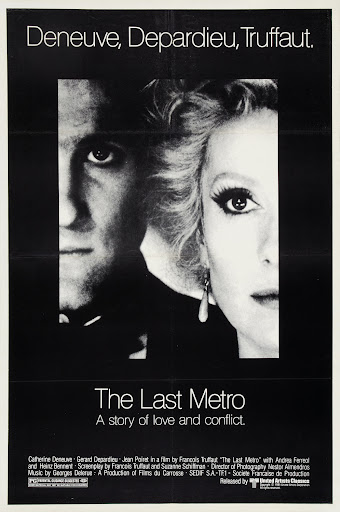
Bernard (Gerard Depardieu) is a young actor, who’s also a member of the French Resistance, living in occupied Paris during World War II. He gets a part as the leading man in a play at a playhouse run by Marion (Catherine Denueve) who has taken over the business since her husband Lucas (Heinz Bennent), who was Jewish, and supposedly fled the country when the Nazis took over, but in reality is hiding-out inside the cellar. Bernard and Marion don’t get along at first, but slowly form a bond when they find a mutual enemy in the form of theater critic Daxiat (Jean-Louis Richard) who is an anti-Semite that writes a nasty review about their play, accusing it of being pro-Jewish, in an effort to close the place down, so that he can take it over.

The film, which was writer/director Francois Truffaut’s most successful movie financially and one of the highest grossing French Films ever, remains sufficiently compelling despite very little that actually happens. One of the elements though that I found intriguing was the behind-the-scenes segments revealing all the work that gets put into a play before its opening night premiere . I especially liked Nadine (Sabine Haudepin) as a young actress who tirelessly goes from one acting gig to another, sometimes multiple ones on the same day, in order to help her career and get established.

Revealing right away, or pretty much by the end of the first act, that the husband has never left the country like everyone presumes, was a mistake that lessened the intrigue. For one thing the place he is hiding in, which is the cellar of the theater, is not too creative and even has a back door leading out to the alley way, which made me feel that anyone could’ve caught on to his whereabouts a lot sooner especially as Marion sometimes leaves her visits with him by going out the back entrance. Any passer-by/snitch could see her doing this and wonder what the door lead to, or called the Nazi authorities to have them investigate. It’s also not clear how, in seemingly a few minutes time, Marion is able to hide Lucas and his bed/personal belongings, from the Gestapo when they eventually insist on checking-out the basement.

Marion’s interactions with her husband is not particularly compelling and yet these scenes take up the majority of the runtime during the second act while Depardieu, who is excellent, barely gets seen at all. Then during the third act Marion and Bernard suddenly get really into each other, but the interactions between the two needed to be shown more for this to be organic to the viewer and in fact should’ve been more the focus of the film than Lucas. Had I been the director I would’ve kept Lucas’ whereabouts a secret until near the end when Bernard finally becomes aware of it and used the mystery of whether Marion knew more about it than she lets on as part of the intrigue.

The ending is a bit of a disappointment. The tone of the film works as a drama, but then suddenly shifts with about 10 minutes to go into a quirky comedy, which doesn’t work. The story threads get wrapped up in too tidy of way leaving the dynamics of Marion’s relationship with Bernard and Lucas’ response to it wide-open. After 2 hours and 10 minutes the character arcs should’ve been better defined and since they aren’t it makes the viewer feel like the movie doesn’t really go anywhere, or lead to anything insightful, which is a shame as it’s a nice looking, period authentic production otherwise.

My Rating: 7 out of 10

Released: September 17, 1980

Runtime: 2 Hours 11 Minutes

Rated PG

Director: Francois Truffaut

Studio: Gaumont

Available: DVD, Amazon Video
The Magic Christian (1969)

magic2

By Richard Winters

My Rating: 8 out of 10

4-Word Review: Everybody has a price.

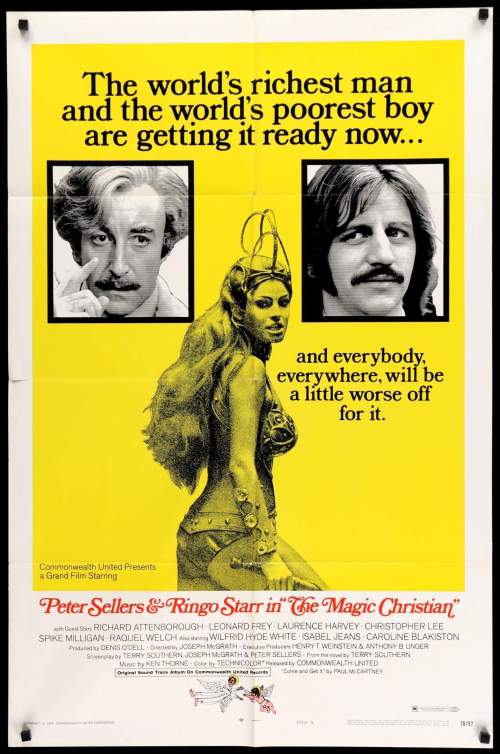
Sir Guy Grand (Peter Sellers) is a billionaire with an eccentric side, who wants to prove the powerful influence money has over other people. He meets Youngman (Ringo Starr),a homeless man in a park, and decides to adopt him as his son. Together they proceed to play elaborate pranks on the public by watching how far they can push their theory and what humiliating lengths people will go to get their hands on some money.

The film is based on the 1959 novel of the same name written by Terry Southern, who also wrote the screenplay, and while the novel was considered a success the movie, at least when it was first released, wasn’t. My critics complained of the film’s heavy-handed satirical nature and unrelenting jabs at capitalism even though all the same pranks done in the movie were also in the book. The film also has the exact same satirical theme as O Lucky Man, which starred Malcom McDowell and came out just a few years later that also took numerous potshots at capitalism and yet many of the same critics adored that one, but came down hard on this one.

Fortunately through the years the film has managed to find a cult following. I supposed if one has more of a socialist bent they may enjoy it more, but it has such a surreal, creative vibe to it that it’s fun to watch no matter if you agree with it’s message, which is kind of muddled anyways, or not. Some of my favorite bits included snotty, rich aristocrats boarding a ship cruise that puts them in increasingly more humorously challenging and bizarre situations. The final segment, which has the classic song ‘Something in the Air’ by Thunderclap Newman playing during it, features a giant outdoor vat filled with urine, blood, and animal feces and then having Grand throw money into it and challenging onlookers to jump into the mess in order to get at the money, which despite the awful stench they readily do.

There’s many cameo appearances by famous stars who agreed to take small roles as a favor to Sellers who at the time was a top star and friends with many of the big headliners of the day. Some of the best bits here include Laurence Harvey who does a striptease while onstage and in front of a packed house of onlookers while reciting ‘Hamlet’. Yul Bryner, looking almost unrecognizable in a female wig, is great as a transvestite who comes-onto a shy Roman Polanski while at a bar. Spike Milligan is hilarious as a traffic cop who agrees to eat his own traffic ticket for the right price as well as Raquel Welch as a slave commander with a whip, Wilfred Hyde-White as a drunken ship captain, and John Cleese as a perplexed auctioneer.

The problems that I had with the film dealt mainly with the relationship between Sellers and Starr. Sellers meets Starr one day in a park by chance and then begins to have a conversation with him, but there’s music playing over this, so we never hear what they’re saying, which is frustrating as the having a rich man suddenly offer a poor man the chance to be his adopted son seemed like dialogue that should be heard. Starr is also not given much to do and it seemed almost pointless for having even in the movie. In the novel there was only the Grand character creating the pranks, but it was decided for the movie to make it a two man show, but Ringo has so little to do that it didn’t seem worth it and this reportedly was due to Sellers’ insecurity of being upstaged and thus insisting that all the best lines had to go to him.

It’s also never clear why the Sellers’ character does what he does. What’s the motivation for why this rich man feels the need to expose other people’s foibles and vanities? Does he feel guilty about being so rich and therefore has decided to ‘take-it-to’ the others in his own social circle? None of this gets explained or analyzed at all, which on the character end makes the film quite superficial and confusing.

My Rating: 8 out of 10

Released: December 12, 1969

Runtime: 1 Hour 32 Minutes

Rated M

Director: Joseph McGrath

Studio: Commonwealth United Entertainment

Available: DVD, Blu-ray, Amazon Video

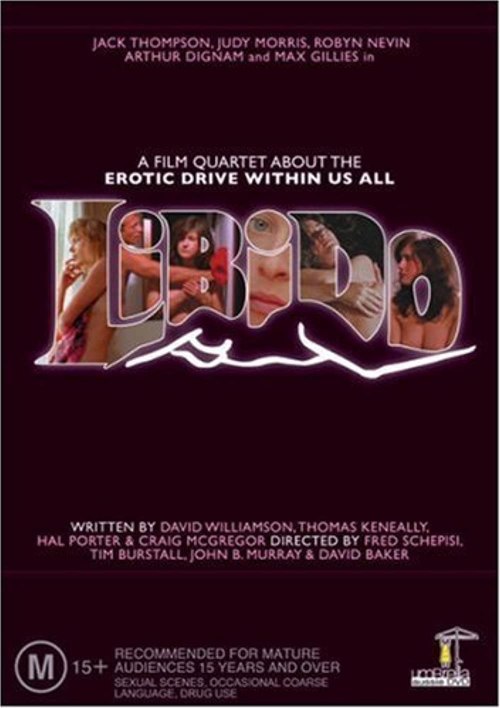
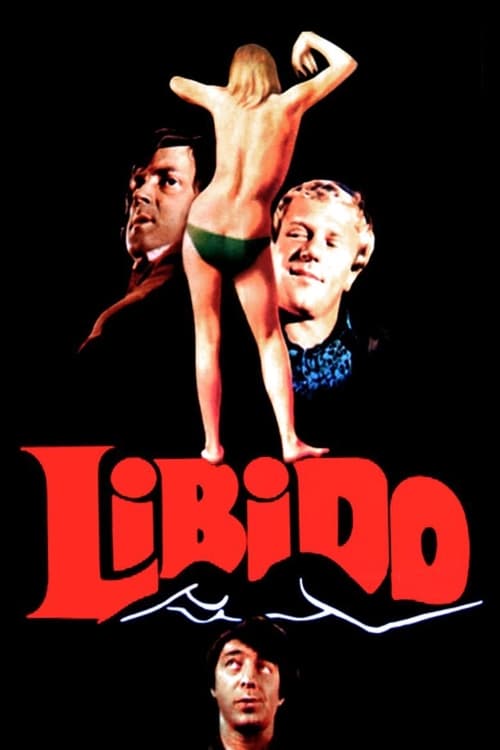
Libido (1973)

libido1

By Richard Winters

My Rating: 5 out of 10

4-Word Review: Four stories about sex.

The genesis for this movie came about during a series of workshops held in southern Australia that was sponsored by directors and producers as a way to help writers craft a good story and create believable characters. The challenge was for each writer to come up with a different story built around a same theme, in this case sex, or the sex drive. Four of the best stories picked were then produced by the Australian Council for the Arts and put into the film. A sequel was planned called ‘The Bed’, which would’ve had 4 stories dealing around the idea of a bed in someway, but ultimately the funding was never able to be attained.

The first segment is called ‘The Husband’ and was written by Craig McGregor and directed by John B. Murray and is the weakest. It details the plight of a husband named Jonathan (Bryon Williams) who becomes jealous when his wife Penelope (Elke Neidhardt) starts to openly fool around with Harold (Mark Albiston) who had been the best-man at their wedding. The segment does have a provocative dream-like moment where Penelope has sex with four different men, but outside of that it’s rather flat. The dynamics of the marriage are confusing and both the characters and relationship needed to be fleshed-out better for the situation to make sense and it relies too heavily on explicit moments thrown in to make it seem more interesting than it really is.

‘The Child’ is the title of the second segment and was written by Hal Porter and directed by Tim Burstall. The setting is the early 19th century and deals with a young boy named Martin (John Williams) whose father dies on the Titanic. His mother (Jill Foster) then begins a relationship with a suitor named David (Bruce Barry), which causes Martin to feel alone and neglected. This though changes when a governess named Sybil (Judy Morris) is brought in to take care of him while the mother is away. Martin grows a special fondness for Sybil and even begins to fall-in-love with her despite their age difference, but he then becomes shocked and upset when he finds her having sex with David in the backyard greenhouse, which ultimately leads to tragedy.

This story has a lot of potential and for awhile had me intrigued. It’s also interesting seeing Morris, who is probably best known as the uptight college professor in The Plumberplaying a polar opposite here as someone who is sexually promiscuous. Unfortunately the story leaves open too many loose ends, which I found frustrating.

The third story, which had to be cut from the Spain release as it was feared it would offend too many people, is called ‘The Priest’. The plot involves Father Burn (Arthur Dignam) who falls for Sister Caroline (Robyn Nevin). Father Burn wants them to both leave the church and get married, but she resists, which causes him to have a nervous breakdown and be sent to an insane asylum. This segment, which was written by Thomas Keneally and directed by Fred Shepisi, has a few insightful moments, but gets bogged down with endless dialogue and an ending that doesn’t offer any type of satisfactory conclusion.

The best segment is the last one, which was written by David Williamson and directed by David Baker. It deals with the story of a womanizer named Ken (Jack Thompson) who chases after women for cheap one-night stands even as his own wife lies in the hospital giving birth to his child. His pal Gerry (Max Gillies), who does not have as much luck with women, looks up to Ken and is impressed with his prowess. Ken decides to show Gerry ‘how it’s done’ by taking him out to a bar where they meet up with two women (Debbie Nankervis, Suzanne Brady) that they eventually take home to Ken’s oceanfront home. Things though start to take a dark turn when the women show more fondness to Gerry than Ken, which causes Ken to lash-out in a jealous rage, which forces Gerry to see an ugly side to his friend that he didn’t know existed.

This segment gets unexpectedly tense, but is played-out in a realistic manner. It’s great too seeing Thompson portray the playboy type, which he seems born to play and honed to an even finer level a year later in the movie Petersen. This story also features a surprise ending, which isn’t bad.

libido2

My Rating: 5 out of 10

Released: April 6, 1973

Runtime: 1 Hour 57 Minutes

Not Rated

Studio: British Empire Films Australia

Available: dvdlady.com

Weekend of Shadows (1978)

weekend1

By Richard Winters

My Rating: 6 out of 10

4-Word Review: Manhunt for murder suspect.

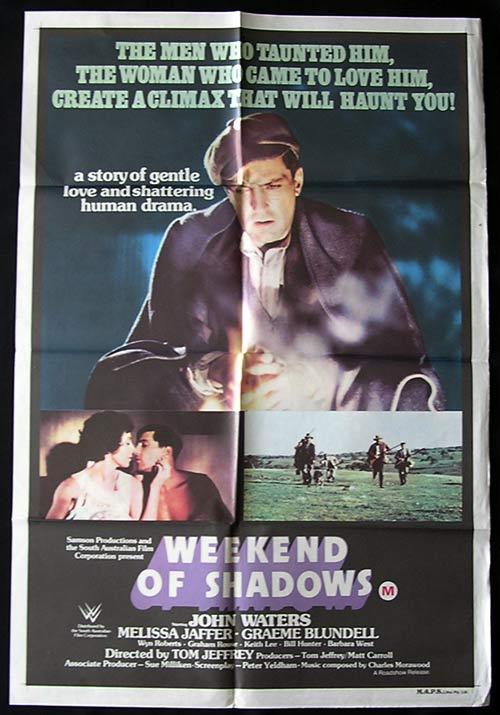
In rural Australia during the 1930’s a farmer’s wife is found murdered inside her home. Suspicions immediately fall on a Polish laborer who had always been deemed ‘peculiar’ by the locals and while there’s no other evidence pointing to his guilt it’s enough to get the men in the community together to form a posse. Sergeant Caxton (Wyn Roberts) hopes that if he can capture the suspect it will help mend his reputation, which had been tarnished while working in Sydney and got him demoted to the small town that both he and his wife (Barbara West) don’t like. Vi (Melissa Jaffer) feels this will be a perfect opportunity for her shy husband, Rabbit (John Waters) to bond with the other men by going along on the hunt, but he resists thinking that the whole thing is just a knee-jerk, mob reaction and wants nothing to do with it, but at the behest of his constantly prodding wife he eventually joins, but learns to regret it.

Out of all of the manhunt movies that are out there this one may be the most unusual in that it doesn’t focus on the suspect at all, in fact you barely ever see him, but instead on the various men in the group. Surprisingly though this manages to be quite effective and I found myself wrapped-up in the various personalities of the participants and how all of them clash with each other at various times. The budget though is quite low, screenwriter Peter Yeldham and director Tom Jeffrey were forced to make many concessions on the script just to get the necessary funding, and while the stark production values will initially be a turn-off, the overall drama, which is based on the novel ‘The Reckoning’ by Hugh Atkinson, will eventually compensate.

I didn’t though like the flashbacks showing Vi and Rabbit’s courtship, which I felt wasn’t necessary and bogged down the tension. The relationship between them is intriguing on a certain level as it shows how wives can have a strong influence over their husbands and get them to do things they wouldn’t otherwise, this same scenario also gets played-out between the constable and his wife, but the scenes showing their dating period offers no further insights and no effort is made to make the actors appear younger even though the courtship had been many years prior.

Spoiler Alert!

While the film was a hit with the critics it sank at the box office recouping only $61,000 of the $495,000 that had been put into it, which soured Jeffrey from directing movies and he helmed only one other, The Last of the Knucklemenafter this one. Ironically Hugh Atkinson was quite impressed with the finished product, which was odd since most of the time author’s of the book which the movie is based are usually not happy with the director’s interpretation of their work, but Atkinon felt Jeffrey ‘got it’ particularly with the ending, which he stated represented the crucifixion. Personally I didn’t see this connection, and neither did Jeffrey, who felt like I did that the story was more about how group dynamics can get out of hand, but Atkinson insisted the crucifixion element was the centerpiece. The ending will be a surprise to many and leaves open many questions, but what you ultimately make of it will be up to your own personal perspective.

My Rating: 6 out of 10

Released: April 12, 1978

Runtime: 1 Hour 25 Minutes

Not Rated

Director: Tom Jeffrey

Studio: The South Australian Film Commission

Available: VHS

Goodbye Paradise (1983)

goodbye1

By Richard Winters

My Rating: 6 out of 10

4-Word Review: Searching for Senator’s daughter.

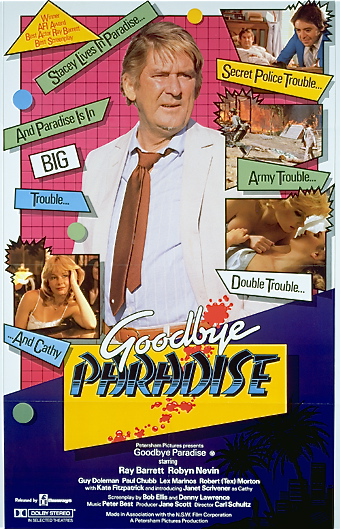
Michael Stacey (Ray Barrett) is a retired cop whose written a scathing exposé on the corruption of his former profession, which has gotten him many enemies and, along with his alcoholism, pushed to the very fringes of society. He now lives in a tiny, rundown apartment while playing chess with himself as his only means of companionship. One day he gets a call from a high-ranking Senator (Don Pascoe) who wants Michael to find his runaway daughter as he’s concerned that she’s gotten involved with an underground cult movement, which he fears could be detrimental to both her safety and to his own political career. Have no other means of income Michael takes-up the offer and soon gets immersed with an array of odd people and many twists that ultimately finds him in the middle of a military coup.

This offbeat movie starts out strong, but eventually goes overboard. The original idea by screenwriter Denny Lawrence was to have an ex-cop working as a private investigator who takes on a case of a runaway daughter who joined a religious cult run by a charismatic charlatan that eventually lead to the deaths of many of its members. However, after the Jonestown massacre, which was led by religious cult leader Jim Jones, this idea got nixed and the plot, with the help of co-scripter Bob Ellis who wanted a more political bent, got turned into a completely different direction, which doesn’t work as well.

The whole idea of a parent hiring a down-and-out, aging guy to find his long lost daughter doesn’t make much sense. The father’s a rich senator with lots of connections, so why not use the resources of the police, or a more polished detective to do the searching instead of an old bum more focused on when his next drink will be? Had Michael’s actual job, like in the original script, been as an private investigator then maybe, but in this version Michael was a struggling writer, so why pay someone to do something that they had no practice in doing, or if they did it had been a seriously long time and someone else could’ve been found to do it better?

The protagonist is a lovable loser, a sort of anti-hero who was meant to be a modern-day Philip Marlowe, and the main reason that get me hooked into the movie right away especially with Barrett’s perfect portrayal that is both raw and funny at the same time. However, the supporting characters are dull. The is especially evident with the Senator’s daughter, which due to a case of mistaken identity, he ends up dealing with two different young women, but both of them are stereotyped and cliched to the extreme. The dialogue and conversational exchanges that they have with Michael are flat making these scenes the most boring part of the movie. Nothing is worse than a film that does a excellent job of creating a multi-faceted person in one area, but then cuts-corners with the rest making the viewer like they’ve gotten stuck with only half a movie.

Spoiler Alert!

The climactic sequence, which involves an all-out military coup and lots of warfare-like action, is just too extreme and surreal especially for a story that starts out in a realistic vein. Much of the fault could be blamed on the two script writers with Lawrence wanting it to be a genre piece while Ellis preferring a more political take. The result is an imbalance that gets increasingly more wacky and implausible as it goes on until it becomes too cluttered to make much sense. Whatever statements the writers hoped to make here gets lost in the insanity and leaves the viewer feeling overwhelmed with all of the absurdity.

My Rating: 6 out of 10

Released: July 21, 1983

Runtime: 1 Hour 59 Minutes

Not Rated

Director: Carl Schultz

Studio: New South Wales Film Corporation

Available: DVD (Region 0 Import)

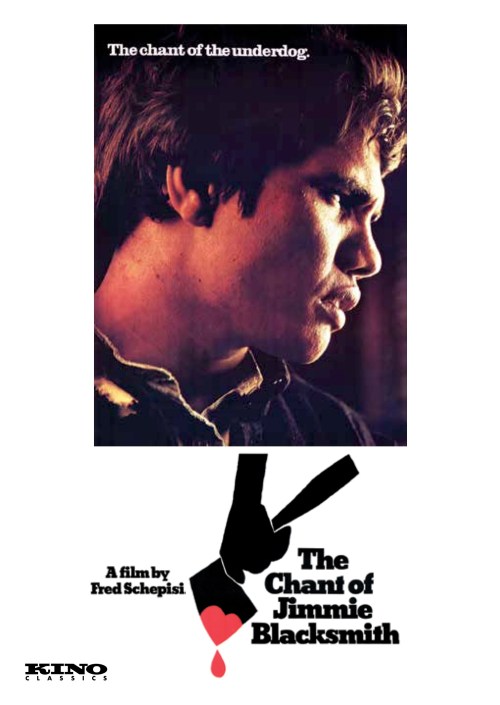
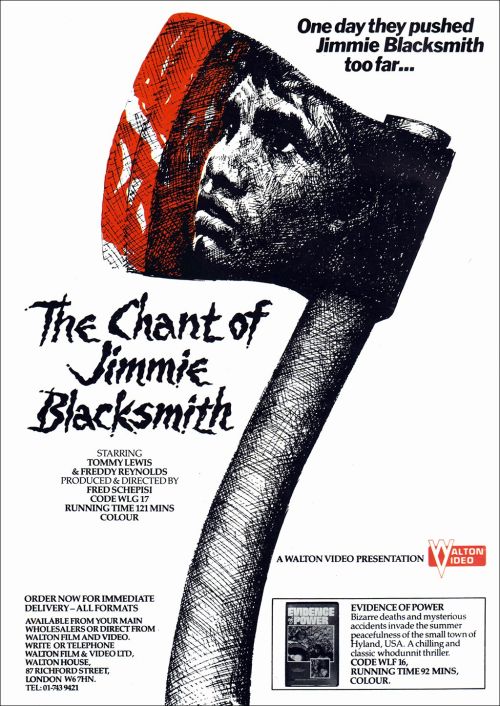
The Chant of Jimmie Blacksmith (1978)

chant1

By Richard Winters

My Rating: 9 out of 10

4-Word Review: Aborigine driven to murder.

Jimmy Blacksmith (Tommy Lewis) is an aborigine living in Australia during the turn of the century while being raised by the Reverend Neville (Jack Thompson) and his wife Martha (Julie Dawson) as his foster parents. Once he reaches adulthood he goes out into the world looking for a job, but finds racism at every turn, which affects his ability to make an honest living as he’s continually cheated out of wages by his white employers. While doing work for the Newby family he meets Gilda (Angela Punch McGregor) a white woman whom he marries after he thinks he got her pregnant only to later learn that the child was not his. Once the baby is born the Newby’s try to convince Gilda to leave Jimmy and refuse to pay him his salary or provisions for the work that he’s done. Furious at his mistreatment Jimmy enlists the help of his uncle Tabidghi (Steve Dodd) to threaten the Newby women with axes while the Newby men are away in hopes that this will scare them enough to pay Jimmy what he’s owed, but instead things get quickly out-of-control leading to the brutal slaughter of the women and forcing Jimmy and his family to go on the run.

The film is based on the 1972 novel of the same name by Thomas Keneally, which in turn was inspired by the life of Jimmy Governor an Indigenous Australian who was involved in the killings of nine people that precipitated him going on the run for 14-weeks and created one of the largest manhunts in Australian history. While the film did well internationally and was highly acclaimed it was received poorly at the box office in its native country where films dealing with Australia’s troubled history are generally avoided by the public causing director Fred Schepisi to lose his entire investment of the $250,000 that he put into the production.

The film though on its own terms is excellent particularly with its revisionist history approach where the gloss and romanticism of the past get stripped away leaving the viewer with a stark sense of the desperation and cruelty that existed back then. The terrific acting also helps including Lewis, who at the time was working as a bricklayer before being spotted by Schepisi’s wife at the Melbourne airport while he walked by her and this lead to him being given the starring role. Ray Barrett, as a corrupt constable and Punch McGregor, whose lost and forlorn facial expressions allow you to perfectly read her character without much dialogue being needed, are stand-outs as well. My favorite part though, or what resonated with me long afterwards, were the scenes filmed inside the Bundarra Dorrigo State Forest in New South Wales during the manhunt where the unique foliage and large boulders give off an almost surreal vibe.

Some of the issues that I had with the movie, which overall is quite good, centered mainly around its music. For the most part the score is subtle and nonobtrusive, but during the murder sequence it gets loud and obnoxious like it’s warning us something bad is happening, which we really don’t need since we can easily see this with our own eyes. The killings are recreated in a very vivid way and quiet horrifying, so the heavy-handed music hurts the graphic moment instead of accentuating it like it was intended. I also noticed while researching the real Jimmy Governor that he had a beard especially in the photo of him after his capture and yet here Jimmy has no beard even after being on the run, which seemed implausible.

The fact that we have a main character who commits several heinous acts, but we still emotionally side with him is what helps this movie stand-out from Hollywood films that feel compelled to makes protagonists likable to the point that they sanitize history. Here we’re shown that the ‘good-guy’ can do, even if they feel it’s justified, some ugly things and in the real-world the line between right and wrong can sometimes be merged and subjective. This is a message that Australian movies do a great job of conveying while Hollywood, in their zest to create ‘audience pleasers’ tend to modify the facts to conform to what they feel are the accepted pre-conceived narrative/tastes of the audience they’re trying to attract, which ends up creating a weaker product that doesn’t reflect reality.

chant2

My Rating: 9 out of 10

Released: June 22, 1978

Runtime: 1 Hour 48 Minutes

Rated R

Director: Fred Schepisi

Studio: Hoyts Distribution

Available: DVD, Blu-ray, Amazon Video, Tubi

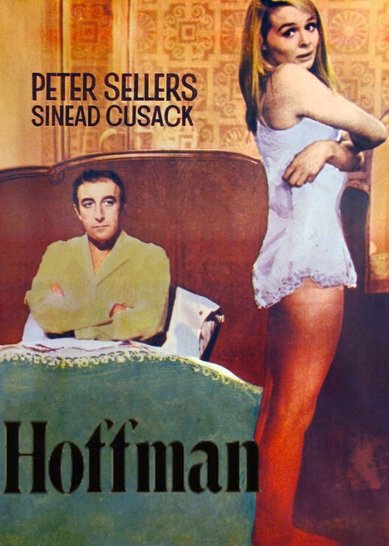
Hoffman (1970)

hoffman3

By Richard Winters

My Rating: 6 out of 10

4-Word Review: Executive blackmails a secretary.

Janet (Sinead Cusack) is engaged to be married to Tom (Jeremy Bulloch), but tells him that she must spend a week away while visiting her sick grandmother in another city. Yet what she really does is go to the residence of Benjamin Hoffman (Peter Sellers). She has no love for him and there’s a wide age difference between the two, but Hoffman is blackmailing her in hopes that, if given enough time, that she’ll fall for him and leave her fiancée, but she resists his advances and when she threatens to leave he comes up with another plan to keep her there.

This unusual movie was based on a TV-play broadcast in 1967 in the UK that starred Donald Pleasance and Judy Cornwell. It had been written by Ernest Gebler and titled ‘Call Me Daddy’. When it received much acclaim it convinced Gebler to turn it into a novel, which was called ‘Shall I Eat You Now?’ and published a year later. When the response to that was positive Alvin Rakoff, who had directed the TV version, then decided to turn it into a feature film.

Having a movie centered around only two characters and take place almost entirely in one setting is usually a recipe for a static disaster and I felt this would’ve worked better as a stageplay, which Gebler eventually did turn it into in 1975. However, the initial mystery involving what Hoffman is blackmailing Janet about, who otherwise comes off as this innocent wide-eyed young woman who you can’t imagine could’ve ever done anything that wrong to be blackmailed in the first place, is what held my interest and kept me watching.

A lot of the credit to what keeps this movie watchable also goes to the two stars. Cusack, who is the wife of actor Jeremy Irons and the daughter of legendary performer Cyril Cusack, is fantastic especially with her constant shocked and perplexed expressions, which makes the movie consistently amusing. Sellers is excellent as well in his one and only serious turn. Initially he had wanted to give it his patented comical touch and using an Austrian accent, but Rakoff convinced him to play it straight and the result is a surprisingly dark, creepy performance, which made me believe he had untapped potential to being a memorable film villain had he wanted to be.

Spoiler Alert!

My grievances involve the character motivations which are poorly fleshed-out. Initially I thought Hoffman was blackmailing Janet over some wrongdoing she had done and was desperately trying to cover-up, but instead it was a crime committed by her fiancée Tom that Hoffman became aware of. If this was the case then why didn’t she alert Tom about what Hoffman knew? If she’s going to be marrying him then she should want to let him know if someone like Hoffman has it in for him. The two could’ve conspired a defensive strategy against Hoffman in an effort to turn-the-tables, but in any case there was no rational reason why she should keep it a secret. Again, if it was something she personally did that could’ve made her look bad in Tom’s eyes I could understand, but this other scenario just doesn’t make much sense.

Having her end up rejecting Tom and going back to Hoffman and becoming his girlfriend was equally ridiculous. It becomes quite obvious that Tom was not right for her, so dumping him was fine, but she didn’t have much in common with Hoffman either. The way he manipulated her should’ve been a red flag and unless there’s some weird quirk with her character that never gets explained the eventual love angle twist is pretty stupid and ultimately makes this film, despite the great acting, a rather pointless experience.

My Rating: 6 out of 10

Released: July 16, 1970

Runtime: 1 Hour 53 Minutes

Rated GP

Director: Alvin Rakoff

Studio: Anglo-EMI Distributors

Available: DVD, Amazon Video
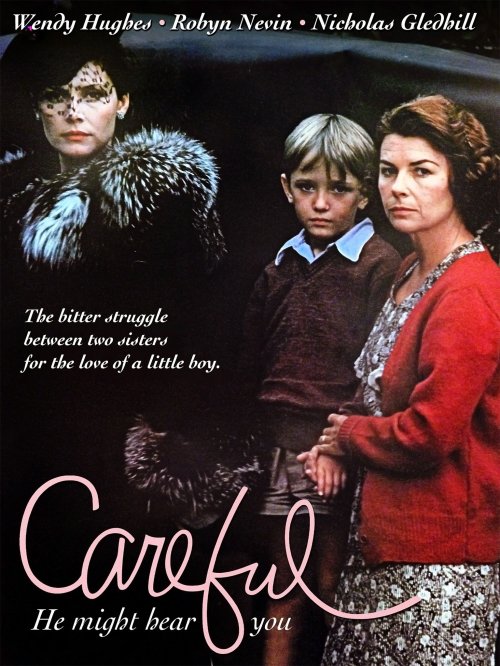
Careful, He Might Hear You (1983)

careful2

By Richard Winters

My Rating: 8 out of 10

4-Word Review: Custody battle between sisters.

When his mother dies just a few days after his birth PS (Nicholas Gledhill) moves in with his Aunt Lila (Robyn Nevin) and Uncle George (Peter Whitford). There he has a happy childhood growing up in a working-class neighborhood. Then Lila’s wealthy sister Vanessa (Wendy Hughes) arrives stating she wants custody of the child on weekdays since she has more money and because PS’s absentee father (John Hargreaves) named her as co-guardian. PS doesn’t like going to Vanessa’s as she’s much more rigid and authoritarian forcing him to go to a private school filled with snotty kids and doing other things like taking piano lessons, which he doesn’t like. Vanessa also suffers from a fear of thunderstorms while Lila and George are unemployed making it hard for the judge to decide who the better guardian should be once the battle goes to court.

The film is based on the 1963 novel of the same name written by Sumner Locke Elliot who in turn based it on events of his own life after his mother died just one day after his birth. The film succeeds mainly from the sincere performance of its child star who is quite cute, at times maybe a little too cute, but then surprises the viewer in one completely unexpected moment of nastiness near the end. I also liked the way director Carl Schultz frames of the point-of-view shots where we see things from the child’s height making the adults appear foreboding and like he’s being swallowed up into their world, which is pretty much what happens.

While the film is billed as being this big court battle between two women it really comes-off like a character study of Vanessa, who gets much more screen time and a more of in-depth personality. This is good because Nevin’s character is a bit too basic and offers no real surprises though she does have an unexpected asthma attack while testifying in court, which I felt was a bit over-the-top since this was something that should’ve been introduced earlier if it was going to come into play during a pivotal moment. Hughes though is excellent. She had been only in supporting roles up to this point, mainly that of youthful girlfriend types to the main character, but here she successfully carries the film in an atypical part of a frigid woman.

Spoiler Alert!

The film’s crowning achievement though is the way it takes a character, in this case Vanessa, who you really don’t like for most of the movie, and then turns her into someone you sympathize with and even feel sorry for by the end. A lot of movies don’t do this, especially the Hollywood ones where the good guys and bad guys must work within a rigid formula, so it’s refreshing seeing a film do something differently and it really works. I found myself thinking about this one long after it was over and feeling emotionally conflicted by it and it’s all because of Hughes’ ability to create a three dimensional person that doesn’t fit into any stereotype even though you initially think she can be. A highly recommended film for those who understand how difficult it can be to deal and communicate effectively with children and how one’s best efforts can sometimes backfire badly.

My Rating: 8 out of 10

Released: September 22, 1983

Runtime: 1 Hour 49 Minutes

Rated PG

Director: Carl Schultz

Studio: Hoyts Distribution

Available: DVD, Amazon Video, YouTube

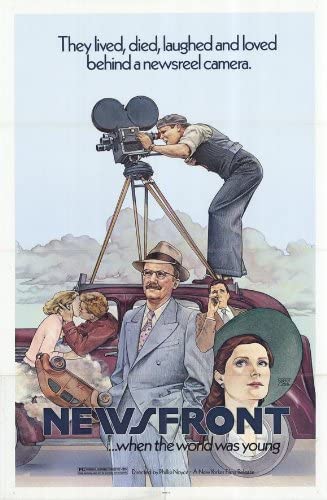
Newsfront (1978)

newsfront2

By Richard Winters

My Rating: 7 out of 10

4-Word Review: Life of a cameraman.

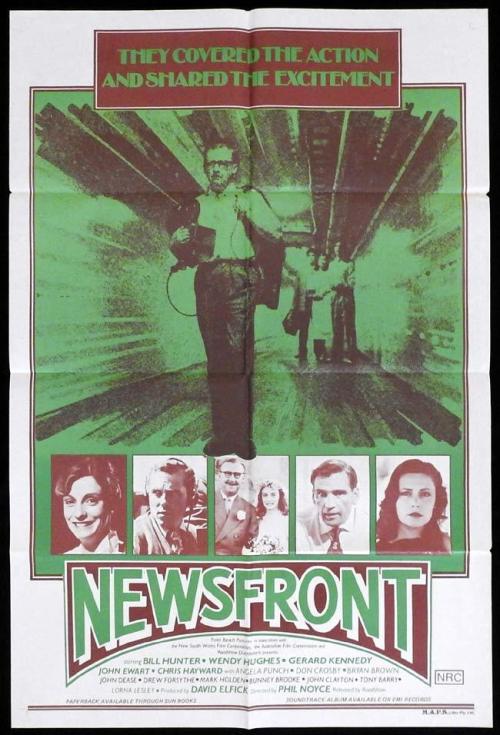
The story centers on the men and women who worked to bring Australian film audiences the latest footage of news events of the day during post World War II. It focuses on those working for a company called Cinetone, which is run by A. G. Marwood (Don Crosby), who’s a demanding boss who expects perfection in the product that he sends out as well as footage that is brought in. The movie also looks at the private lives of the crew including Len (Bill Hunter) whose brother Frank (Gerard Kennedy) works for a competitor as well as the advent of TV news, which eventually put the weekly news reels out of business since they could show the events live as they happened.

The film is unusual in that the first 15 minutes are in black-and-white looking much like the newsreel footage that is shown during the opening credits only to shift suddenly into color. It then goes back and forth between color and black-and-white at roughly 30-minute intervals where for a couple minutes the scene shifts to black-and-white for no apparent reason that I could find and then eventually back to color. I’m not sure what the significance of this was, but it’s a bit distracting and doesn’t help get the viewer into the story, but if anything drives them a bit away.

The plot is different too as it’s made up of small personal dramas versus one big one. I didn’t necessarily have a problem with this, but I did feel the conflicts should’ve been more tied to the newsreel profession, which the majority of it isn’t. For instance the story thread dealing with Len’s opposition to having an amendment added to the constitution barring affiliation with the communist party, which goes against the sentiments of the rest of the town, has nothing intrinsically to do with his camerawork and therefore didn’t seem necessary to the story. There’s also scenes dealing with his failing marriage and love affair with co-worker Amy (Wendy Hughes), which again could happen in any work place and seemed rather pedestrian.

There’s also other threads that I thought should’ve been played-out more. Len’s conflict with his assistant Chris (Chris Haywood) over his reluctance to get married to his girlfriend after he finds out she’s pregnant had potential for strong dramatic moments and it would’ve been interesting seeing them continue to work together despite the underlying tensions, but like with a lot of things in this movie, it gets briefly introduced and then quickly resolved. The same thing happens when Len is forced to work with a new assistant after Chris dies unexpectedly. It’s obvious during the short scene of the two in a car that there’s a big generational difference between them, which piqued my interest seeing if they could forge a working relationship despite these issues, but the film never goes back to it, which I found frustrating.

Overall it manages to be compelling nonetheless and much of it could be credited to actual newsreel footage that gets shown throughout. The violent ones that get shown at the start I found particularly riveting including the one where a race car careen out of control and drives right into the spectators, where it clearly injuries and kills many. I was almost hoping for a backstory to that one, but none is given yet it skillfully illustrates how vivid some of the newsreel footage was even after all of these years, which is the best point that the movie makes. I just wished the scenarios dealt more with the work aspect. In a lot of ways my favorite character was A.G. as I enjoyed the way he fretted about every little detail, was a classic chain smoker, and seemed married to his job. It’s a shame he didn’t stay on the whole way through as he was the type of obsessive guy you could’ve really built a movie around.

newsfront1

My Rating: 7 out of 10

Released: July 29, 1978

Runtime: 1 Hour 50 Minutes

Rated PG

Director: Phillip Noyce

Studio: Roadshow Shows

Available: DVD, Tubi

The Chain Reaction (1980)

chain1

By Richard Winters

My Rating: 7 out of 10

4-Word Review: Nuclear leak contaminates water.

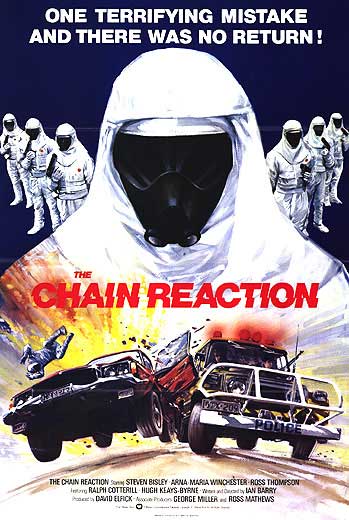
A nuclear waste site in rural Australia becomes affected by an earthquake, which causes a leak that could contaminate the ground water for hundreds of miles. Heinrich (Ross Thompson), an engineer at the facility who was contaminated by the accident and has only 3-days to live, feels it’s his duty to warn others about what happened, but the company wants the matter to kept a secret. Heinrich manages to escape from the lab, but gets into an accident during a rainstorm on a lonely country road. It is here that he’s rescued by Larry (Steve Bisley) and his wife Carmel (Arna Maria Winchester) who live nearby and take him to their isolated home. Since Carmel has a nursing background she tries to take care of Heinrich at their house even though he now suffers from amnesia and cannot remember anything past 1957. The company though has already sent out a search party looking for him and proceed to terrorize all three once they find them.

The film is a slickly shot sci-fi epic that in many ways seems similar to Mad Maxand in fact both films shared many of the same crew members and this even has a cameo by Mel Gibson who appears briefly as a bearded auto mechanic. The camera captures things in a vivid way and the sharp editing keeps the story moving at a fast pace.

While the plot gets smartly handled and I did find the two main characters to be a bit out-of-place particularly Larry whose outfits and hairstyle look almost campy. The two also don’t have an every day quality about them. Thrillers like these are more exciting when the hero is just a regular person with no special skills and yet still forced to beat insurmountable odds, which is unlike Larry who has expert driving skills and owns a trendy sports car with a souped-up engine.

The way the couple rescue the victim, who they don’t know, by taking him back to their place instead of to a hospital was odd too. Carmel has nursing experience, but not the medicines or equipment that you’d find in a medical facility. They also seem unusually trusting by allowing the man to sleep in one of their bedrooms while they sleep in an adjacent one, but don’t bother to lock their door with the wife lying openly nude for the stranger to just walk-in and attack, or gawk at since there’s a window in the hallway to the room, without any restraint.

The film is noted for its car chases, but they only make up a small fraction of the runtime. One occurs for a few minutes during the second act and then there’s another one at the very end. Both are quite exciting and had me sitting on the edge of my seat with the camera showing things from the driver’s point-of-view and many times through the cracked glass of the windshield making you feel like you’re in the car as it happens. However, I was disappointed that they’re weren’t more of them and both chases take place on the same road and essentially go through the same stunts both times.

Spoiler Alert!

The wrap-up is a bit too quick. For such a nifty, well designed and well crafter set-up I was expecting things to get played-out further. There is though the irony of having a helicopter appear with a news crew that captures the chase when it’s over with the idea that now that the news media is on top of it the truth will get out and everything will be resolved. This though is a far cry from the way things are here in this day-and-age where the media is not trusted by many and having them report on something, even a big story such as this, could only make things worse instead of better.

My Rating: 7 out of 10

Released: September 25, 1980

Runtime: 1 Hour 32 Minutes

Not Rated

Director: Ian Barry

Studio: Palm Beach Pictures

Available: DVD (Region 0)