Category Archives: Fast Cars/Car Chase

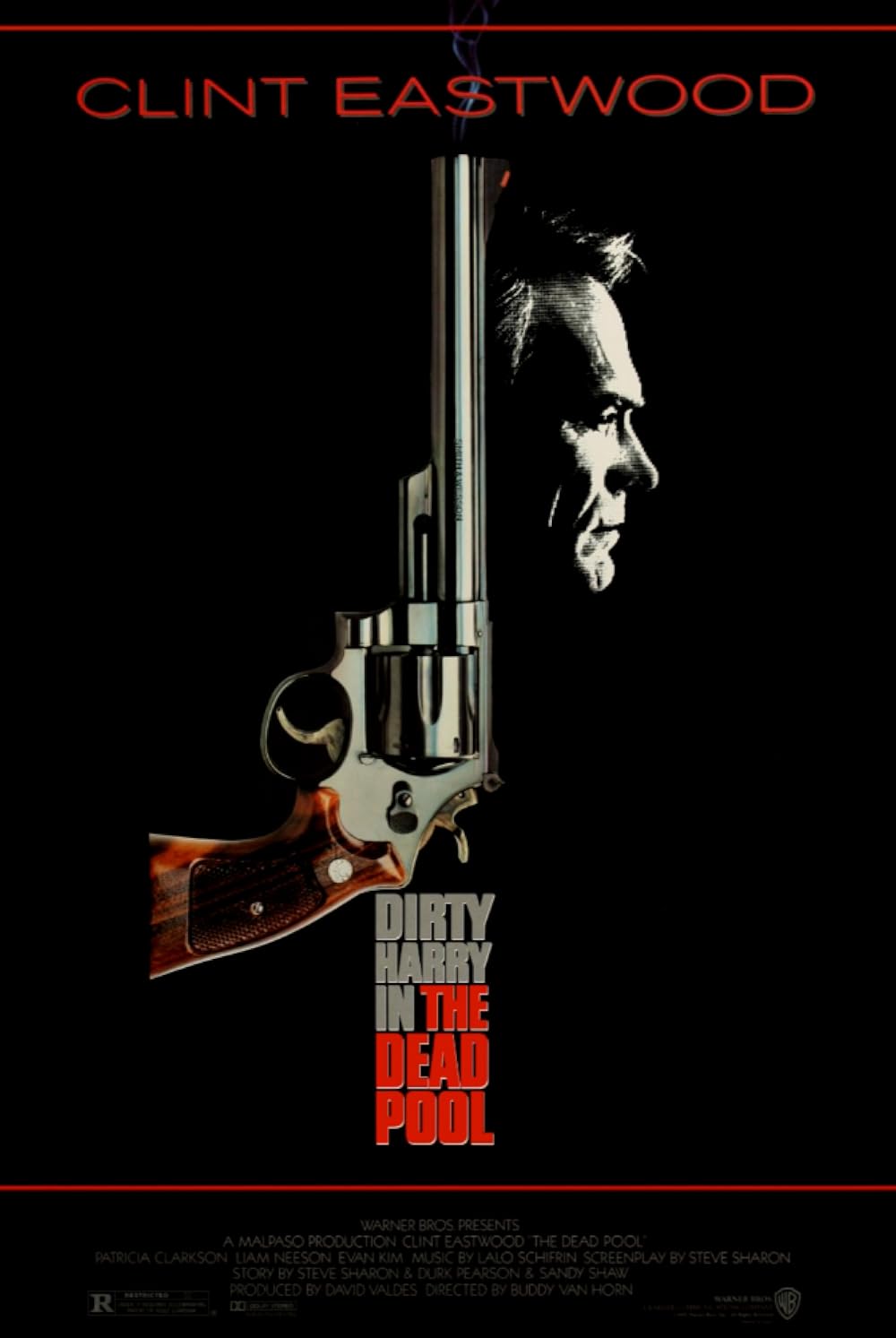
The Dead Pool (1988)

By Richard Winters

My Rating: 4 out of 10

4-Word Review: Harry marked for murder.

Inspector Harry Callahan (Clint Eastwood) is still getting ambushed by assassins hired by the criminals he puts away. The department decides to assign him with a new partner, Al Quan, (Evan C. Kim) who’s judo skills will come in handy. The two begin working on a case involving a dead pool, which is a list of San Francisco area celebrities that are expected to die soon either by natural causes, or by murder. The list was created by B-horror director Peter Swan (Liam Neeson) who immediately comes under suspicion when one of the stars of his own movie, Johnny Squares (Jim Carrey) turns up dead from what initially seemed like a drug overdose but later deemed murder. Harry is not happy to find his name is also on the list and this leads to an interview by local TV-reporter Samantha Walker (Patricia Clarkson) who wants to do a bio on him, but Harry resists convinced that she’s only trying to exploit the situation for ratings. 

This marked the fifth and last entry in the Dirty Harry series, which was a film Eastwood had not wanted to do, but was a part of the bargain he made with Warner studio in an effort to get his pet project Bird, which was a bio of jazz musician Charlie Parker, financed. Eastwood along with the studio were aware that that film most likely wouldn’t be a box office hit, so he agreed to do this one, which was sure to be a definite money maker. Yet this one ended up being the least successful of all the films from the series and ultimately helped hasten an end to ever producing another one. 

The formula had clearly run its course by this point, and the action is too predictable to be fun anymore. Things start out absurdly right away when the car Harry is driving gets hit with a hundred different bullets and yet our hero comes out completely unscathed, but there’s no way that could’ve realistically happened. Since the film’s theme is a movie-within-a-movie this part should’ve been done as a cameo appearance that Harry did for one of Swan’s movies, which might’ve offered a cute twist, or an even better idea would’ve had Harry getting injured by one of the bullets and no longer able to, at least for a while, use his hand to pull a trigger and thus forced to come up with creative ways to put away the bad guys, which would’ve added a needed wrinkle that would’ve kept this sequel fresh and different from the others versus the stale way that it quickly becomes.

Teaming him up with an Asian American isn’t interesting either. The other entries all dealt with him partnering with a minority, so by this time the concept lacked any edge. It also wastes Kim’s talents as it’s kind of cool seeing him take down bad guys using his karate talents, but unfortunately, it’s only shown once briefly when it should’ve been spread out all the way through. Having Kim and Harry not see eye-to-eye on things or even challenging his approach would’ve offered some dramatic energy, but overall, the scenes between them, where Kim is compliant and easy going just like all of Harry’s previous partners, makes their moments generic and dull. 

Spoiler Alert!

Harry’s relationship with the reporter is equally unengaging. At first the two sparred and I felt that’s where it should’ve remained but having them eventually ‘connect’ saps away all of the potential spice. Even the mystery angle gets botched. Granted we really don’t know who the killer is as his identity during the killings isn’t shown though we’re led to believe it’s Neeson then it turns out it’s somebody completely different, but it’s a character that isn’t shown upfront, so the viewer can’t try to figure out who it is on their own and the ultimate explanation for what motivates the killer is too pseudo psychological. The final confrontation that he has with the villain, played by David Hunt, who again is a weaker actor and not completely right for the part (Neeson would’ve been far better) is so achingly cliched that it’s almost laughable. 

It does feature a unique car chase, which was one of the few elements from Steven Sharon’s original script that the producers decided to leave in, that has Harry driving a regular sized car as he desperately attempts to outrun a miniature toy car that’s packed with explosives. Everything else though is quite formulaic and uninspired. It’s a good thing that this was the last one as any more would’ve just tarnished the brand further though it would’ve been good to have some finality to it. Instead of just having Harry walk-off after killing what seems to be his 500th bad guy he should’ve been shown handing in his badge and retiring as he was at that age anyways and after having gone through all the violent ambushes he had most would’ve done it much sooner.

My Rating: 4 out of 10

Released: July 13, 1988

Runtime: 1 Hour 31 Minutes

Rated R

Director: Buddy Van Horn

Studio: Warner Brothers

Available: DVD, Blu-ray, Amazon Video, YouTube
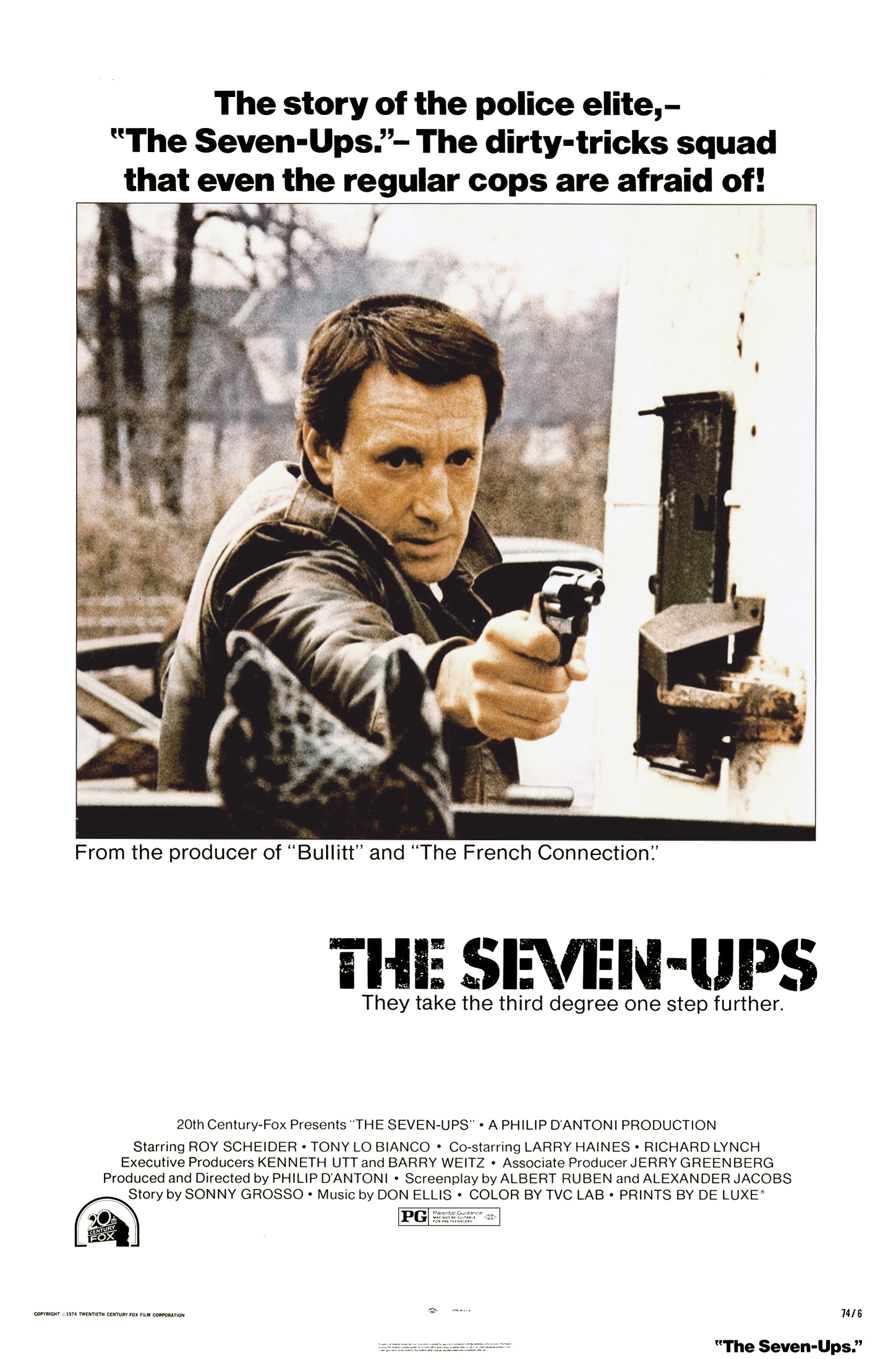
The Seven Ups (1973)

By Richard Winters

My Rating: 7 out of 10

4-Word Review: Cops use unorthodox methods.

Buddy (Roy Scheider) is a police detective who runs a group of renegade cops who employ unusual and sometimes questionable methods to nab crooks. Once apprehended the criminals they arrest usually end up serving 7-years or more in the penitentiary, which gives their group the nickname of the ‘Seven Ups’. The groups most recent mission is investigating kidnappings occurring in the city and Buddy uses the help of Vito (Tony Lo Bianco) a childhood friend who works as an undercover informant for the police, but who unbeknownst to Buddy is actually behind the recent crimes going on and even the orchestrator.

After the success of The French Connection producer Phil d’Antoni became inspired to produce another similar crime film dealing with the true-life event that occurred in the 50’s in New York that had mobsters being kidnapped by criminals posing as cops. He wanted William Friedkin, who had done so well with the first film, to direct this one, but Friedkin didn’t like the script and passed as did several other directors, which eventually lead the studio to choose d’Antoni to take the helm himself in his one and only foray behind the camera with results that are both good and bad.

The production lacks cinematic flair and shot in a flat way almost like a documentary, which to some degree actually helps it. It was filmed between January and April of 1973 and the crisp, gray, frigid look helps build an atmosphere by accentuating the grimy, cold life of the underworld and how the detectives themselves get foisted into it. The plot is basic and linear, so it’s easy to follow and not cluttered with unnecessary mystery angles and tangents as the viewer knows right away who’s behind everything. There’s also a tense scenes inside a car wash, not exactly sure the perpetrators would’ve been able to pull-off as effortlessly as they do, but it definitely keeps you riveted as you feel the same unease as the two guys in the car though having another scene come later that also takes place in a car wash wasn’t needed.

The film though doesn’t have the interesting characters like in The French Connection where Popeye Doyle’s lifestyle and temperament contrasted in fascinating ways with the man he was pursuing and in fact it was Doyle’s fractured personality that made the movie so compelling. Here, through no fault of Scheider who plays the part well for what is asked, but his character is quite one-note. We learn nothing about him, or his home life. He’s just a typical New York cop obsessed with getting the bad guys, which is fine, but doesn’t have the multi-dimensional quality to help make him memorable.

The supporting characters aren’t necessarily much better, but the actors who play them at least help give them some life. Larry Haines, probably best known for playing one of Felix and Oscar’s poker playing buddies in The Odd Couple, has a good turn here as a crime boss who’s nonchalant initially when he thinks he’s being taken to the cop station for a routine arrest only to cower in fright when he realizes he’s been duped and then when he survives shows no mercy in his unrelenting pursuit for revenge. My only quibble though is that Scheider and his cohorts are able to break into Haines’ house too easily and even able to catch him and his wife sleeping in bed, but you’d think with him being a well-known target with the police he’d have burglar alarms set-up all over his home to detect anyone trying to get in and since he’d just had a traumatic kidnapping incident earlier you’d think he wouldn’t be able to sleep soundly again, or paranoid enough to sleep lightly and aware of any noise.

The car chase sequence is by far the best moment, and some may say the only real reason to watch it. It certainly has you holding your breath, but in a lot of ways is too similar to Bullit, another film produced by d’Antoni, so it really doesn’t stand out as much as it should. There’s also the issue of Scheider pursuing the bad guys even as there’s pedestrians all around. Most real-life cops will stop chasing after a culprit’s car if they feel  it will put others at too much of a risk and this comes to a horrifying moment when school children are playing on the street and must quickly run to the curb when the bad guys drive their car through only a few seconds later to almost get hit by Scheider’s car as he plows through at high speeds without even a thought of putting on his breaks making him seem more like an irresponsible cop who’s more of a problem than a solution.

Nonetheless it’s gripping and I enjoyed how it ends with Scheider ducking under the windshield just as his vehicle hits the underside of the backend of a truck in an intended ‘homage’ to Jayne Mansfield’s wreck. It’s also great watching Richard Lynch’s facial expressions as he plays the crook sitting in the passenger’s side of the fleeing car. Some could say it’s great acting, which maybe it was, but I believe his looks of nervousness and fear was genuine, which just helps to make these shots of his face, which get intercut throughout the chase all the more entertaining and help to have a human side to the action as I and almost anyone else would be reacting the same as he does if we were in the same situation.

My Rating: 7 out of 10

Released: December 14, 1973

Runtime: 1 Hour 43 Minutes

Rated R

Director: Philip D’Antoni

Studio: 20th Century Fox

Available: DVD, Blu-ray

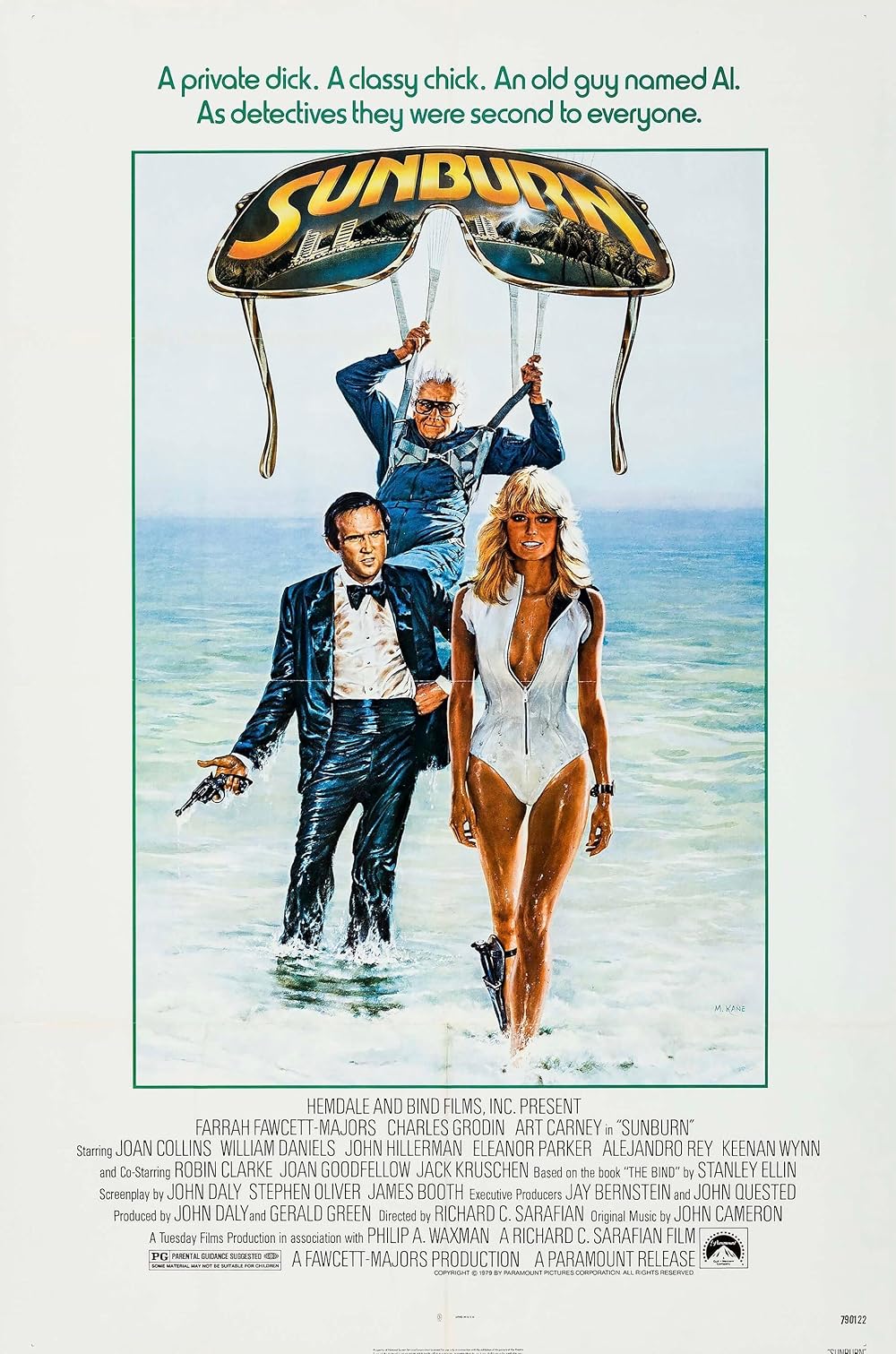
Sunburn (1979)

By Richard Winters

My Rating: 2 out of 10

4-Word Review: Couple investigates insurance fraud.

Jake (Charles Grodin) works as a private eye and gets hired by an insurance company wanting him to investigate a case that took place in Acapulco of a man who crashed his car into a building and died. The authorities have labeled it an ‘accident’, which would put them on the hook to have to pay out a large sum of money, so they’d like Jake to travel down there and find out if that were really the case, or if it could be deemed as a suicide. Jake decides to hire an actress from a modeling agency named Ellie (Farrah Fawcett-Majors) to act as his wife. Ellie takes an interest in the case and helps him search for clues while also forming a romance with him, which starts out rocky but becomes stronger as they find themselves sucked further into the mystery and the potential dangers.

The film is based on the 1970 novel ‘The Bind’ by Stanley Ellin, which had a grittier tone than the movie. Farrah’s agent Jay Bernstein felt this would be a good vehicle for her, but wanted the script turned into more of a lighter and comical story that the book did not have. This was at a crucial point in her career as the first film he got her cast in Somebody Killer Her Husbanddid badly with both the critics and public, so it was important that she prove her box office ability with this picture and when this one also bombed she fired him complaining that both movies had been ‘put together with hustle and bubble gum’.

One of the elements that really hurts it is the casting of Charles Grodin, who by his own admission was their sixth choice for the role as they had initially pursued Robert Redford and even Harrison Ford, who would’ve both been way better. Grodin can certainly be funny, but this part doesn’t give him much to work with. He has a few amusing moments when he’s trying to scare away a lizard from entering their bedroom and then in an effort ‘to protect her’ from a further ‘lizard invasion’ agrees to sleep on a nearby chair, which cause him to do nothing but toss and turn the whole night in an effort to find a ‘comfortable’ position.

His character though didn’t seem all that professional as he leaves it up to her to place a listening device into one of the suspect’s phones, but she had no background in this kind of thing, so what would happen if she screwed it up? The insurance company is promising him a lot of money so it should be up to him to do most of the legwork to make sure it gets done right and if any ditzy amateur blonde can be pulled in off the street to do what he does then what’s the point in hiring him to begin with?

Farrah does much better here than her previous film. I enjoyed her dialogue with Grodin and how just because she was hired to play his wife didn’t mean she was automatically going to be one during their off hours when he for some chauvinistic reason expects her to make him a sandwich, which she immediately declines to do. I was confused though why her character would want to get so involved in the case. She’s just there to play a part, so why not just do her job and enjoy the sun? Instead, she constantly puts herself in increasingly dangerous situations for no real reason. She’s gets paid whether the case gets solved or not, so why jeopardize her life over something that she has no emotional or financial investment in?

It’s also hard to believe that such a hot looking lady wouldn’t be in a relationship. It would’ve been far more enjoyable had there been a jealous boyfriend who secretly followed her on her mission and even threw a few monkey wrenches into the investigation, which could’ve added extra spark into a movie that’s otherwise too leisurely. For her to then fall in love with Grodin was equally dumb. The guy could’ve been her father and lacked any type of sexual pizazz. Had Redford or Ford been cast then the romance might’ve made more sense, but such a beautiful woman like her would have no reason to settle for a doofus like him and would simply be there for the payout and then be long gone.

Art Carney is great in support and actually does most of the work making it seem like Grodin’s character wasn’t even necessary and in fact having Carney and Farrah team up would’ve made it unique and more entertaining as Carney despite his advanced age shows a lot of energy particularly when he goes out onto the disco floor. The rest of the cast though gets wasted with many of them having only one or two lines making you wonder why they’d bother to sign on at all.

The film does have one memorable moment where Carney and Farrah, in an effort to escape the bad guys who are pursuing them, inadvertently crash their car into a bull fighting ring and then must avoid the bull who goes after them. This action is both humorous and exciting, but otherwise unless you’re some super Farrah fan the movie offers little else that’s interesting.

My Rating: 2 out of 10

Released: August 10, 1979

Runtime: 1 Hour 45 Minutes

Rated PG

Director: Richard C. Sarafian

Studio: Paramount Pictures

Available: DVD-R (MGM Limited Edition Collection)

White Line Fever (1975)

white

By Richard Winters

My Rating: 5 out of 10

4-Word Review: Truck driver fights corruption.

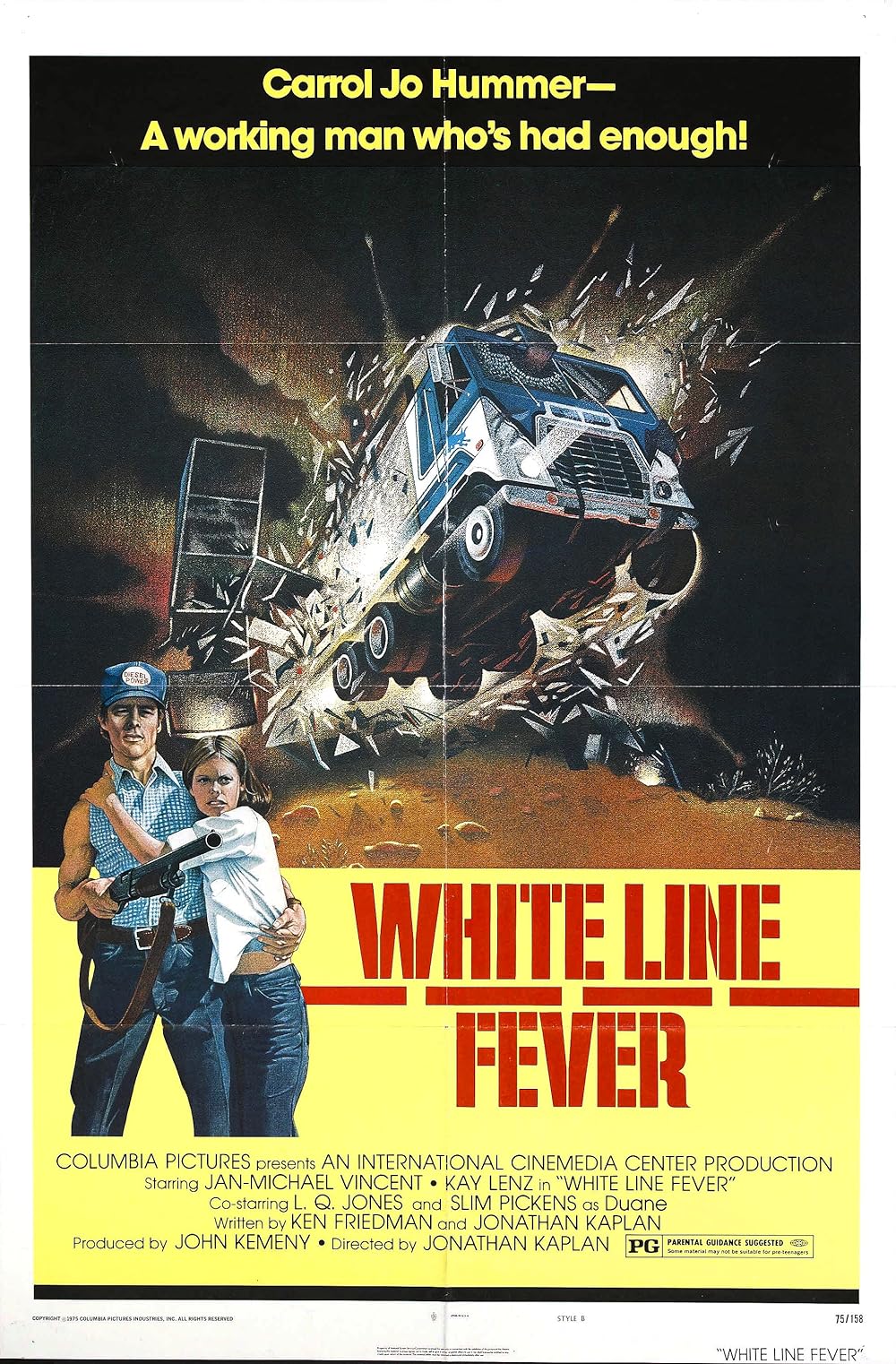
Carrol Jo (Jan-Michael Vincent) has returned from a overseas trip in the Air Force and is now set to marry his sweetheart Jerri (Kay Lenz), but to do so he must get a job. Since he grew up in the trucking business where his father was a long haul driver he decides to buy himself a rig by getting a loan at the bank. Once purchased he drives to the Red River company in town to find cargo to haul, so that he can quickly start making money and get out of debt with the bank as soon as possible. However, he realizes that the company has become overrun with corruption and if he wants to work there he must agree to haul contraband, which he refuses. He tries going into business for himself, but the folks at Red River, who secretly have deep connections to some very influential and rich people, are determined not to let his start-up get-off the ground and stymie his efforts at every turn, which causes Carrol Jo to take matters into his own hands and proceeds to instigate an elaborate revenge.

This was Jonathan Kaplan’s 5th film effort and he got hired onto the project when one of the producers mistakenly thought the film he did before this one, Truck Tanner, had been about truck driving, which it wasn’t, but Kaplan decided to just take the offer without bothering to correct the confusion. His directorial instincts helps a lot particularly at the beginning where he uses some interesting montages including showing actual pics of Vincent and Lenz as children and then progressive photos as they age into adulthood. There’s quick edits, which gives it a breezy pace and never allows it to get boring.

However, the story itself is quiet pedestrian as there’s no interesting twists. Small town bigots running a questionable trucking operation is about as cliched as it gets and it’s hard to get emotionally invested in the proceedings when you know exactly how it’s going to work out. No new angles get added in and everything from the one-dimensional characters to the paper thin plot is so painfully predictable it becomes genuinely irritating.

The story has more of a herky-jerky structure than a linear one. I thought the whole first two acts would be Vincent dealing with the repeated harassment until he’s had enough and implements a vigilante style response, but instead it becomes more violent vignettes with the bad guys doing something underhanded and then Vincent immediately responding making it seem episodic and like the plot is moving in a circular fashion instead of forward. Shooting it in Tucson, Arizona is alright though the barren, sandy wintertime desert landscape isn’t exactly eye-catching. Having police cars fitted with Confederate flags and cops behaving like southern hicks is out-of-place as Arizona is a western state far removed from the deep south as most of the people living there have come from the north to escape the cold winters and certainly not from places like Alabama like the movie seemingly wants you to believe.

The supporting cast is certainly engaging especially Slim Pickens who manages to always be fun no matter what B-movie he is in, but Vincent is weak. This was reportedly when he first started using cocaine, which culminated in both the downfall of his career and eventually his life. He mentioned that he never felt comfortable with the fame and I suspect it’s because he knew deep down he maybe didn’t really belong. He’s a good-looking guy who in supporting parts had some potential, but as someone trying to carry a film he’s incredibly blah and doesn’t add anything other than the basic reaction shots. Lenz shows a far more interesting energy and the script should’ve been rewritten to make her the truck driver trying to fight a male dominated industry, which would’ve given the movie the unique spin that it needed.

The villain side gets botched as well. Pickens would’ve been okay, but he amounts to being just a throwaway henchman as does Martin Kove, who years later would get remembered as being the mean coach in The Karate Kid. L.Q. Jones though had strong potential and had he been the so-called brains behind the thing it could’ve been forgiven and there’s even a long, drawn-out foot chase between he and Vincent near the end that isn’t bad, but the ultimate culprits turn-out to being this group of non-descript old guys headed by Don Porter best known for playing Sally Field’s widowed father in the TV-Show ‘Gidget’. Now, R.G. Armstrong, who plays Porter’s shyster lawyer, isn’t bad, but Porter doesn’t have enough sleazy flair to give the part any panache making him come-off more like he’s just another stock character. In films like these there needs to be one really nasty mastermind that needs to be taken down and having it get assimilated to an entire group of otherwise non-descript old guys dilutes it too much.

Spoiler Alert!

Even the action seems a bit lacking. Granted there are a few edge-of-your-seat moments like when Vincent gets on top of a moving rig in order to fire a rifle at the driver of another vehicle that’s chasing them and Pickens death scene, in which he gets runover by a truck is pretty shocking too, but other than that the stunts are run-of-the-mill. The ending was a particular letdown as it has Vincent driving his truck through the gate of Porter’s residence and then into the marquee that sits out front, but I wanted him to go all the way and crash through the walls of the plush mansion. I’m sure that would’ve been deemed too expensive to pull-off, but it would’ve given it a more dramatic conclusion and if done in slow motion could’ve been really cool to see and might’ve made sitting through the rest of it worth it.

My Rating: 5 out of 10

Released: July 16, 1975

Runtime: 1 Hour 30 Minutes

Rated PG

Director: Jonathan Kaplan

Studio: Columbia Pictures

Available: DVD-R, Amazon Video, Tubi

Strange Shadows in an Empty Room (1976)

strange

By Richard Winters

My Rating: 4 out of 10

4-Word Review: Cop’s sister dies mysteriously.

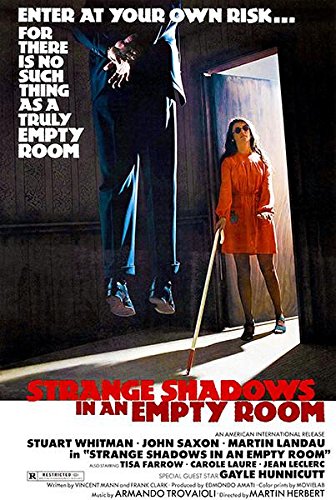
Tony (Stuart Whitman) is a tough-as-nails veteran cop who gets the shocking news that his younger sister Louise (Carole Laure) is found dead at a party she had attended. Initially he presumes it’s George (Martin Landau) a middle-aged doctor whom she’d been having an affair with and who gave her a injection at the party, but later he realizes there might be more to the story than he thought and begins investigating other avenues that leads him to a wild and completely unexpected conclusion.

The film was directed by Alberto De Martino who had done other Italian produced films that were rip-offs of better known Hollywood hits with this one clearly being inspired by Dirty Harry. It was filmed in Montreal and Ottawa, Canada, but done by an Italian film crew making it seem more like an overseas production with very little Canadian elements to it. Overall the quality looks cheap and the story has a lot of twists that don’t make a lot of sense, or are believable.

Two that stood out right away to me is during the party scene where Louise fakes illness simply to get George’s attention to make him come over there and away from his wife. Then when he tries to help her she lets him know it was all a gag. A few minutes later she passes out for real and he responds in a worried way, but you’d think since he got taken advantaged of just moments earlier he’d presume this was just another prank and not take it seriously. Also, at her funeral Tony begins to suspect there’s more to her death than what is known and requests an autopsy be done, but an autopsy is standard procedure that should be done after any unexplained death, especially since the victim was so young, and thus seems absurd that he should have to request it only as her body is already in the casket and ready to be buried.

Whitman, who was nearing 50, looks too old for this kind of thing and it’s hard to imagine he would, in reality, be able to physically keep up with these much younger suspects who force him to chase them around in airports, along crowded city sidewalks, and even in hospitals. He’s not the most ethical guy either as he has no problem drowning one of the men he’s questioning in a sink of water as a method of interrogation, which should normally get an officer in trouble. There’s also no glimpses of his personal life, so we never learn anything about him, or see any other dimension except for his rough cop persona. Most other cop movies, or at least the good ones, do have a few scenes dealing with the policeman’s private side, but here there’s none, which makes the character flat and uninteresting. Having the victim be his sister didn’t make too much sense since she was clearly quite a bit younger than him and making her his daughter would’ve been more believable and more devastating when he has to come to terms with her darker side.

The supporting characters are, just like with Whitman’s, poorly fleshed-out. It’s hard to be intrigued who the suspects are when they all seem alike and say and do nothing that’s interesting. The film does have one long car chase, which has some impressive stunts, but it seemed unnecessary as the man driving away from the cops really didn’t have much to hide and is essentially not interrogated once Whitman catches up to him, and he offers only a little piece to the puzzle, so why tear up the city streets and completely destroy two cars if he’s not in dire trouble? Better to have saved this for the finale with the bad guy who really is the culprit than just some minor player who isn’t seen, or heard of again.

I did enjoy the foot chase through the hospital that comes at the end and even goes through a maternity ward and ultimately onto the roof of the place. The story does feature many twists and I did appreciate the way it shows how policeman can make the wrong guesses on who they think is guilty and go on many long tangents that don’t lead anywhere before they realize their mistake. However, more effort should’ve been made to create unique characters as the ones provided here are wooden and banal.

Alternate Title: Blazing Magnum

My Rating: 4 out of 10

Released: March 9, 1976

Runtime: 1 Hour 39 Minutes

Rated R

Director: Alberto De Martino

Studio: Fida

Available: DVD, Blu-ray, Amazon Video, YouTube
Smokey and the Bandit Part 3 (1983)

smokey1

By Richard Winters

My Rating: 0 out of 10

4-Word Review: Where is the Bandit?

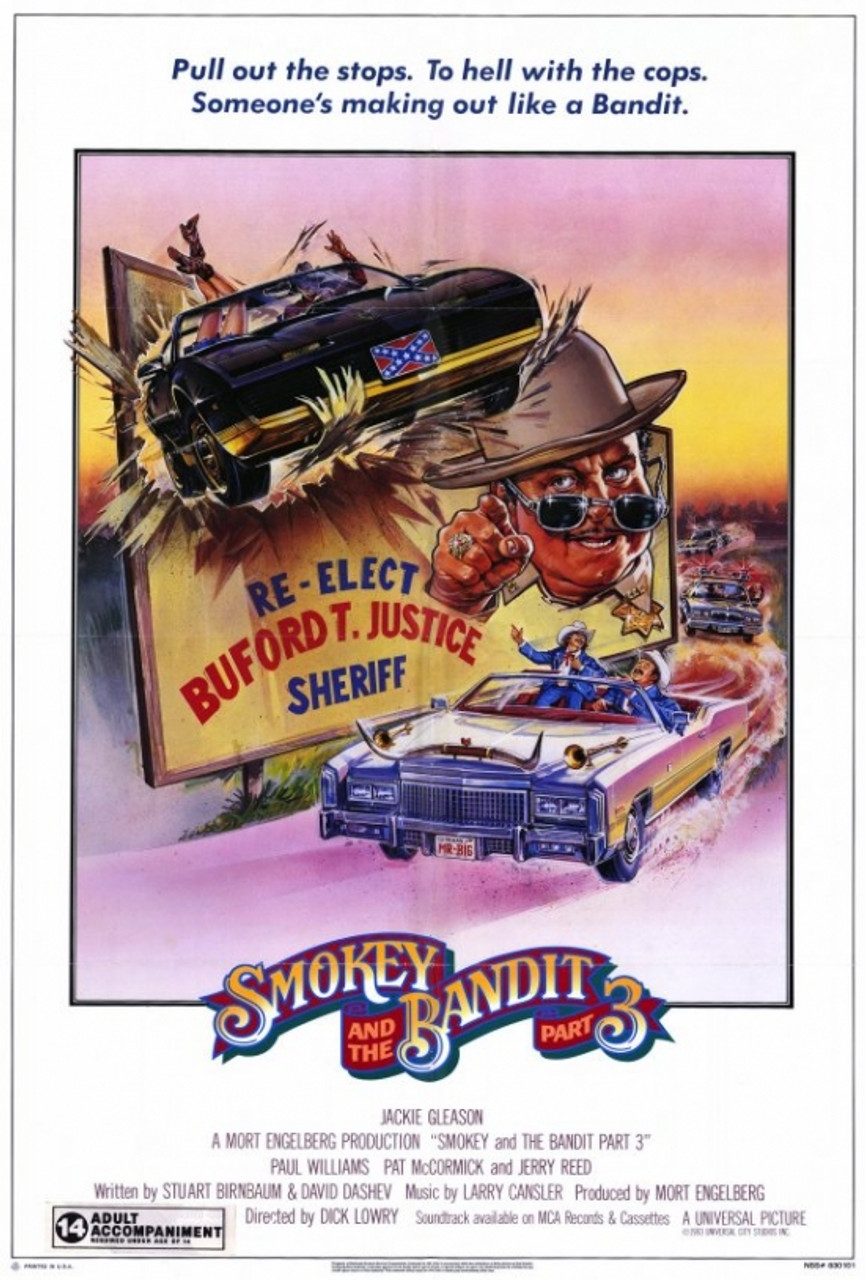
Buford T. Justice (Jackie Gleason) announces his retirement as sheriff after more than 30 years of service. He decides to spend his time in Florida where he expects to get some rest and relaxation. However, once he becomes a part of the senior community he doesn’t enjoy it and feels the need to get back to what he liked doing most, which was chasing after the elusive Bandit. Big Enos (Pat McCormick) and Little Enos (Paul Williams) offer him a deal to get back into the swing of things. They bet that he can’t drive his police car from Miami, Florida to Austin, Texas, a total of 1,400 miles, in two days with a stuffed fish tied to the top of the car. If he’s able to succeed at the challenge he’ll make $250,000, which Buford readily accepts. To keep him from getting there the two Enos brothers set-up traps along the way in order to stymie his progress, but Buford and his dim-witted son Junior (Mike Henry) manage to get out of each predicament that gets thrown at them, so the Enos brothers decide to call-in Snowman (Jerry Reed) to help them. Snowman is a trucker, but in this instance he gets to pretend he’s the Bandit and even dress in his get-up and drive Bandit’s fancy black and gold Pontiac Trans Am. The new Bandit, who picks-up Dusty (Colleen Camp), a disgruntled used car sales woman along the way, soon catches up with Buford and son and steals their stuffed fish, which turns-the-tables and forces Buford to go after them.

By 1982 both Hal Needham, who had directed the first two installments, and Burt Reynolds, who had played the Bandit in the first two go-arounds, were no longer interested in getting involved in the project for another time as both were already busy working together on Stroker Ace. The studio though didn’t want to give up on the idea of a third installment since the first two had made a lot of money, so they signed-on Gleason to reprise his role as Buford with the promise that he’d have full script approval, which proved difficult as he didn’t like any of the scripts that were handed to him and at one point made the glib remark “with scripts like these who needs writers?’. After going through 11 rejections the writers finally hit on the idea of letting Gleason play dual roles of both the Bandit and the sheriff. Initially Gleason didn’t like this either, but the prospect of hamming up two different characters, which he had already done in Part 2 where he played Buford’s two cousins Gaylord and Reginald, got the better of his ego, so it received the green light.

In October of 1982 the script with Gleason in both roles was shot, but with no explanation for why he was playing the Bandit and everyone else in the story playing it straight like they didn’t see the difference. Eventually upon completion it was sent to a test audience in Pittsburgh where they gave the film unanimously negative feedback convincing the studio that the experimental novelty wasn’t going to work. They then hired Jerry Reed, who wasn’t even in the project before then, and asked him to reprise his role as Snowman who would then disguise himself as the Bandit. Then every scene that originally had Gleason in the role as Bandit was reshot with Reed now doing the part, but all the rest of the scenes that had already been filmed without the Bandit remained intact. The reshot Bandit segments were filmed in April of 1983 and the film eventually got its release in August of that year where the response of audiences and critics alike remained just as negative.

For years this was considered by many to be an urban myth as no footage with Gleason as the bandit was ever seen, but then in 2010 a promo of Gleason playing Buford, but talking about becoming the Bandit, or ‘his own worst enemy’ appeared on YouTube with the title of Smokey IS the Bandit Part 3 and Jerry Reed’s name not appearing anywhere on the cast list. Then in 2016 the actual shooting script that was shot in October of 1982 was downloaded to IMDb’s message board (back when they still had them), which plainly detailed Gleason as the Bandit, but had no written dialogue for those scenes since Gleason was routinely allowed to ad-lib his lines. The lost footage of Gleason in the Bandit scenes is purportedly in the control of the Gleason estate where it’s kept under wraps never to be shown to anyone again by apparently Gleason himself who felt humiliated by the test audiences negative reaction.

As it is the movie is not funny at all and unsurprisingly did not do well at the box office. Nothing much makes sense and the humor is highly strained including a drawn-out segment featuring the Klu Klux Klan, which I found downright offensive. Having a Blu-ray release of the lost footage of Gleason in dual roles would most likely be a big money maker as through the years it’s built up a lot of curiosity. It might be confusing and weird just like the original test audiences said it was, but it couldn’t be any worse than what we ultimately get here, which is as bottom-of-the-barrel as they come.

smokey2

My Rating: 0 out of 10

Released: August 12, 1983

Runtime: 1 Hour 25 Minutes

Rated PG

Director: Dick Lowry

Studio: Universal

Available: DVD, Blu-ray

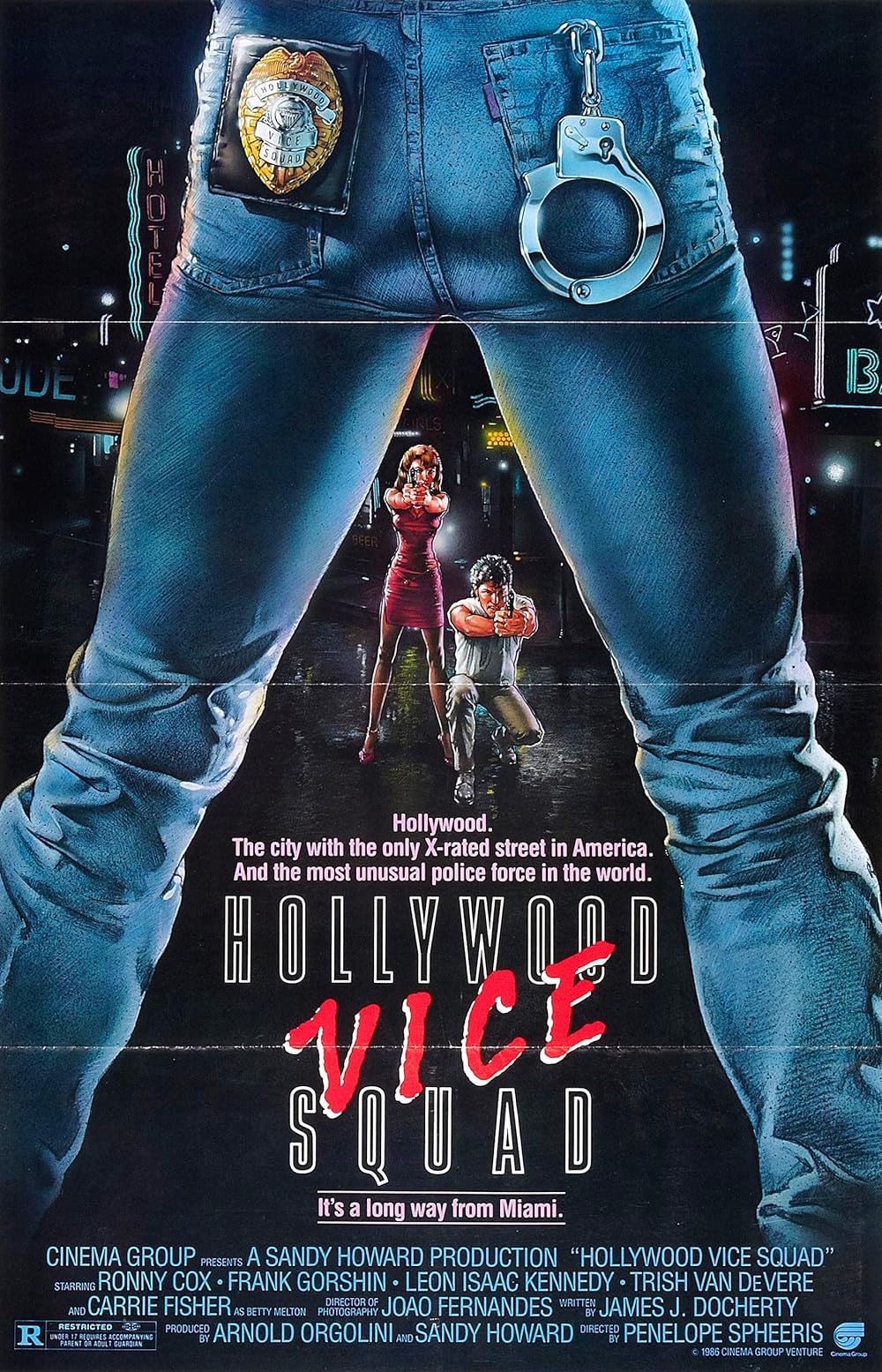
Hollywood Vice Squad (1986)

hollywood2

By Richard Winters

My Rating: 0 out of 10

4-Word Review: Trying to stop prostitution.

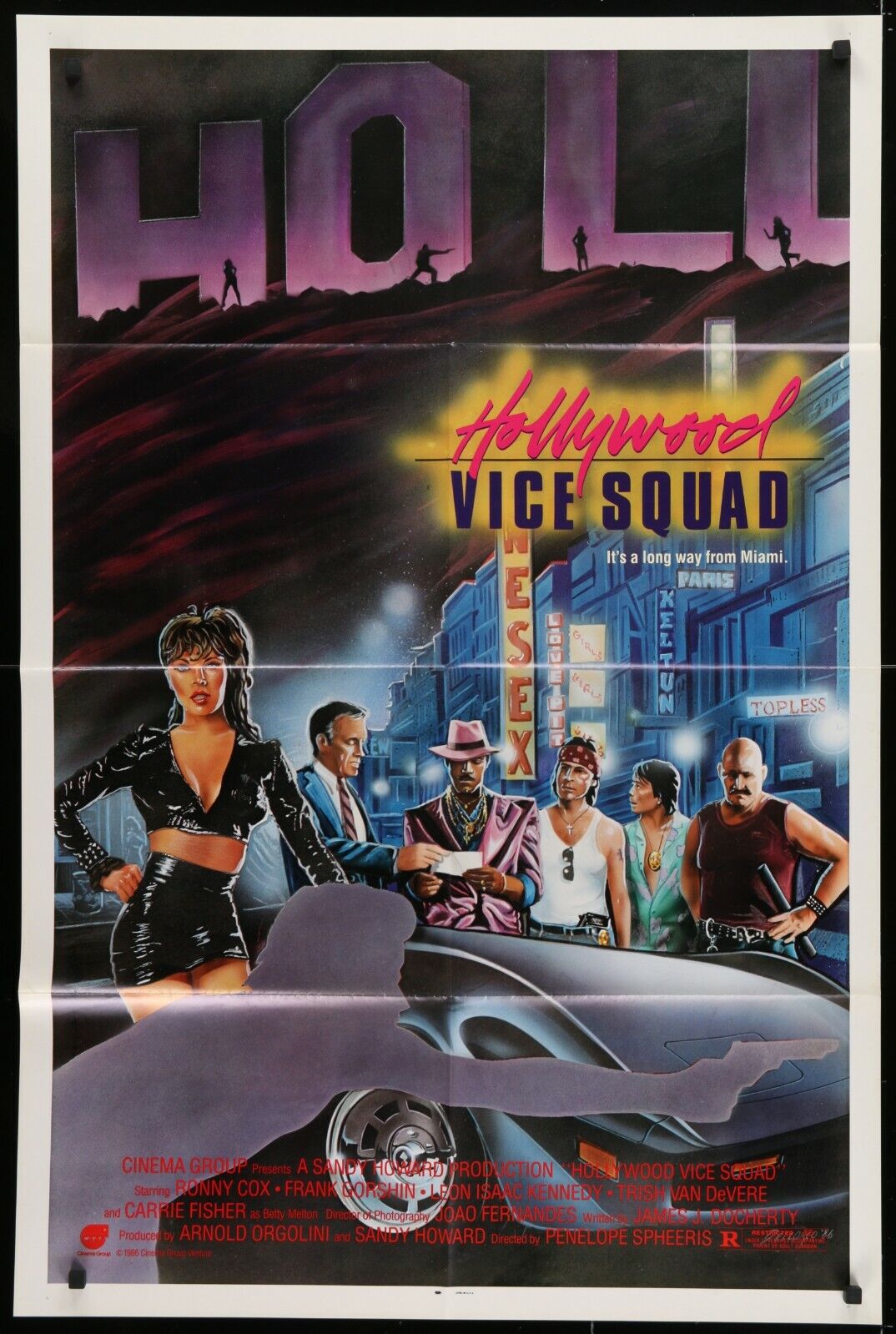
Based supposedly on actual police cases the film consists of three different scenarios that get interwoven throughout. The main one deals with a distraught mother (Trish Van Devere) who comes from the Midwest to Hollywood in search of her teen daughter (Robin Wright) who’s run away. Police Captain Jensen (Ronny Cox) informs her that her child may have slipped into prostitution, which she refuses to believe. The other two stories deals with a small town racketeer (Julius Harris) who runs a shady hustle out of his home and finds himself being harassed by both the cops and the mob. The third segment focuses on two bickering cops (Evan C. Kim, Joey Travolta) who try to stop various prostitution situations from occurring by implementing stings, which mostly prove to be inept.

The project is a misguided attempt to take Vice Squadwhich was written by the same screenwriter that did this one, Kenneth Peters, and turn it into a comedy, or at least throw in humorous elements in between the action. While I was no fan of the first one, as I found the topic in general to be uninteresting, it at least gave off a gritty feel, but this thing can’t even do that. The humor is sporadic and while some of the car stunts are okay everything else is a bore and the film offers no new insight into what is otherwise a very tired and cliche subject.

Frank Gorshin was only one of two things that I liked. Gorshin of course is best known as an impressionist and for his Emmy Award winning performance as the Riddler on the ‘Batman’ TV-show from the 60’s, but he’s also done a lot of acting roles outside of that, which were quite compelling. This one required a lot of sliminess, which he’s more than able to provide with some of it ad-libbed that makes it all the better. He even during a couple of segments offers his trademark, spontaneous Riddler laugh, which is great. The only problem with his presence is that supposedly the police are unable to find him in order to bring him in for questioning in regards to the mother’s missing teen daughter, which didn’t make a whole lot of sense since he works and lives out of a giant, gaudy mansion that most anyone should’ve been able to easily spot.

I also really enjoyed Carrie Fisher who ended up satirizing her experiences filming this in her novel and screenplay Postcards from the Edge. She had just gotten out of drug rehab when she was offered the part, but studios were reluctant to give her work and director Penelope Spheeris really had to go to bat for her, but the effort was worth it. She plays the only character that’s likable and she should’ve been given the lead and had the whole thing revolve around her exclusively. With that said though the case that she’s on, trying to put a halt to a porn production that’s supposedly employing a minor, doesn’t totally work as the kid they’re trying to save has a boyish face, but a body that made it seemed he was most likely over 18 and I was fully expecting the cops, who raid the production without a search warrant, to learn this lesson the hard way, but we’re never shown any finality to it, so the viewer doesn’t know. Also the scene where she sneaks into the sleazy producer’s garage and gazes at adult magazine covers that he has stored in a box, which features no nudity and simply depicts models wearing generic leather bondage outfits and she grimaces like she’s looking at something ‘extreme’ seemed rather silly.

The storyline dealing with Van Devere’s quest for find her daughter are unintentionally laughable. What baffled me was the way she would walk through these really trashy areas filled with dangerous looking people and appear completely content and at ease. If she’s from a sheltered small town then seeing these seedy areas should make her quite shocked and frightened and these are the reactions we should be seeing on her face. Also, she’s a good-looking milf and I was surprised some of the creepy men didn’t attempt to accost her as she ambled by them. The casting of Robin Wright as her runaway daughter, in her film debut, is problematic too as she looks to be over 20 and for shock value you really need to cast someone who’s 16 or 17 and looking it in order to create that true loss of innocence image.

I’ve always been curious why people who get into the vice squad work feel it’s worth it. The characters in the film even admit that these hookers and pimps will be right back out on the streets the next day even if they manage to make a few arrests, so why keep on spending so much time and effort if it’s really not making a difference? Have one of the police agents ponder this would’ve given the story an extra dimension that it needed.

It seemed to be almost cruel that they would stop a goofy old man, amusingly played by Marvin Kaplan, from having sex with a streetwalker who was willing. Clearly this was the only way the old guy was going to find any action, so if he’s going to pay and the sex worker, who is of age of course, is willing to perform then why not consider it a basic capitalist business transaction and be done with it? Spending so much effort trying to stop things like this when so many worse things are going on in is what makes the whole thing come-off as petty and trivial.

If anything the storyline involving Fisher’s attempts at putting a halt to what appeared to be a child porn racket should’ve been the central plot. This is something most if not all viewers could get behind and it’s a shame that it gets watered down here and then lumped in with other stuff, which isn’t compelling at all.

hollywood1

My Rating: 0 out of 10

Released: February 28, 1986

Runtime: 1 Hour 41 Minutes

Rated R

Director: Penelope Spheeris

Studio: Cinema Group

Available: DVD, Tubi, Plex, Amazon Video

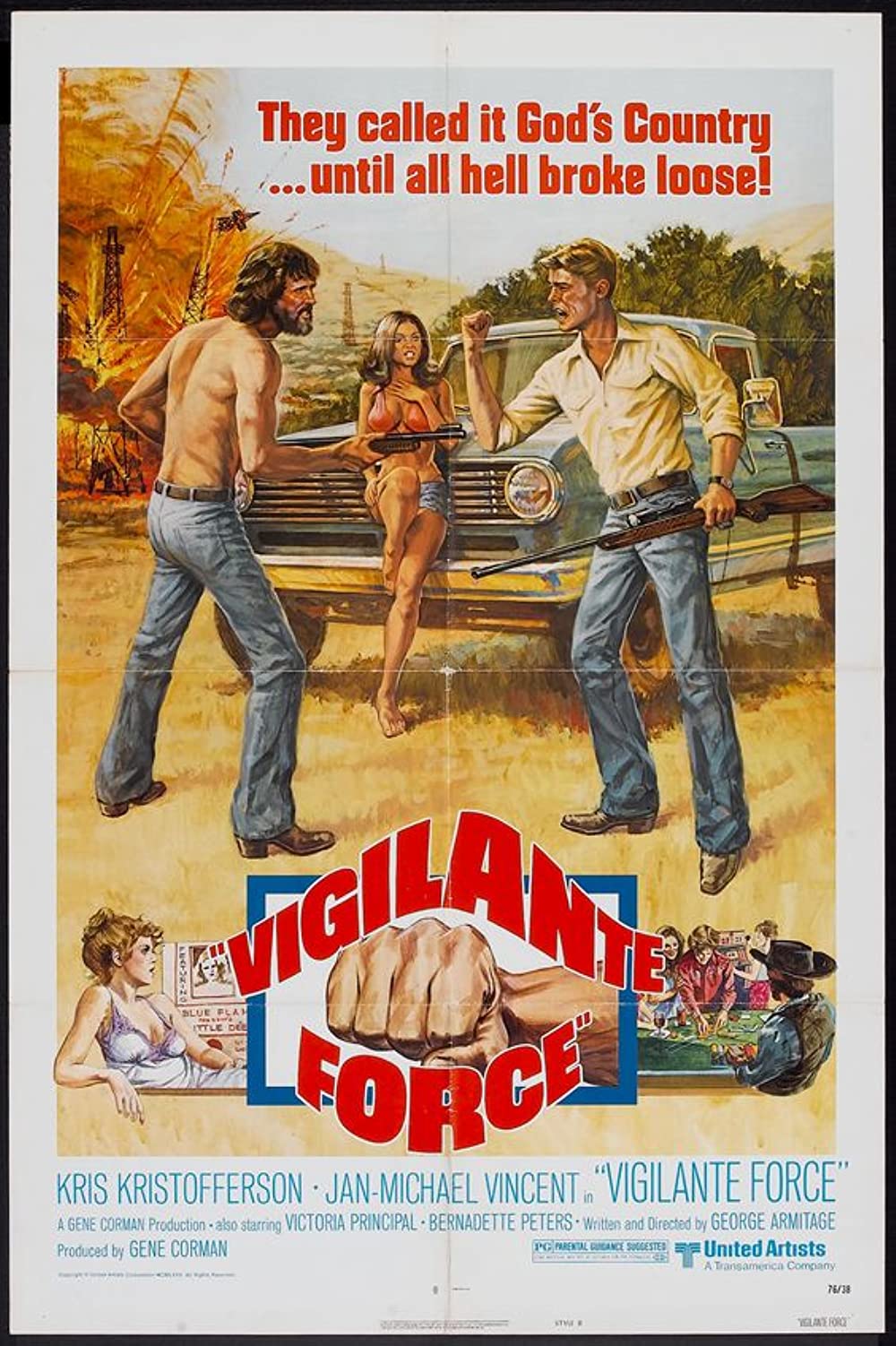
Vigilante Force (1976)

vigilante1

By Richard Winters

My Rating: 4 out of 10

4-Word Review: Veteran takes over town.

After oil is found near a small California desert town many people, including oil workers, move in looking for work. All the new people coming in causes a great deal of  crime in the community and the local police force is too small to handle the influx. Ben (Jan-Michael Vincent), a longtime resident, decides to hire his brother Aaron (Kris Kristofferson), a veteran of the Vietnam War, to help act as a peacekeeper. Aaron then brings along some mercenaries to assist him, but he and his new associates begin acting more like the bullies forcing everyone to submit to their ways of doing things, or face the consequences. This causes Ben to come to the painful realization that his brother is more of a problem than the solution and forcing him to take matters into his own hands in order to rid the town of him.

This was the third film directed by George Armitage, who did Private Duty Nurses and Hit Man before this one and all three being produced within the Roger Corman family, this one by Roger’s older brother Gene, who approached George about the project having only the title in mind and no actual story. Armitage, who had only 30-days to film, decided to make it an allegory of the Vietnam War where a group of strangers would come into a town, much like the American soldiers did when they came upon a small village in Vietnam, and take it over while focusing on the helpless nature of the residents who could do seemingly little about it.

While the concept had lots of potential the execution is rushed making the story come-off as cluttered and unfocused. It’s one of the few films made where there’s violence and action immediately before there’s barely any onscreen credits, but the motivations of why it’s happening is not clear, so it’s more confusing than exciting.  The plot doesn’t make much sense. Why are these new people all resorting to criminal behavior including robbing a bank? Other towns that boast job opportunities don’t necessarily have a  dramatic spike in crime especially if the new people coming in are actually getting employed, which the film intimates they are, so then why the anger and chaos? It seemed to me that there needed to be some sort of crime boss behind it, but there really isn’t. There’s a certain figurehead shown briefly later on, but he seems to be more of a symptom of the crime that’s already had been occurring versus the main orchestrator.

The setting also has a strong country feel with men folk walking around and behaving like blue collar cowboys making Texas a better location for the town than California. Even if for budget reasons is still had to be done in Cali I would’ve at least made it seem like it was the Lone Star state, which is considered a ‘rebel’, redneck state to begin with and thus making the behavior of the townspeople seem a little more organic.

I loved Kristofferson whose laid-back demeanor comes-off as creepy and menacing, but I would’ve liked his dark side to have been played down more at the beginning. The viewer should’ve been roped-in into believing he was a good guy, or hero, and then had the big reveal in the third act that he really wasn’t versus it being obvious right from the start that there was something not right about him.

Bernadette Peters, who plays his on-again, off-again girlfriend, is a delight, but Vincent is not as good. He’s unable to equal Kristofferson’s screen presence and way too naïve. It’s obvious to everyone his brother is trouble, but he remains oblivious for too long making him seem dumb and then when he finally does catch-on he comments that he was aware of his brother’s ‘problematic side’ ever since they were kids, but if that were the case then why did he hire him in the first place?

If you like basic 70’s action, including car chases, fist fights, and explosions, then this may suffice even with the wobbly story. Anyone though expecting anything more will most assuredly walk away disappointed as the script lacks nuance and surprise.

My Rating: 4 out of 10

Released: September 9, 1976

Runtime: 1 Hour 29 Minutes

Rated PG

Director: George Armitage

Studio: United Artists

Available: DVD-R (MGM Limited Edition Collection), Blu-ray

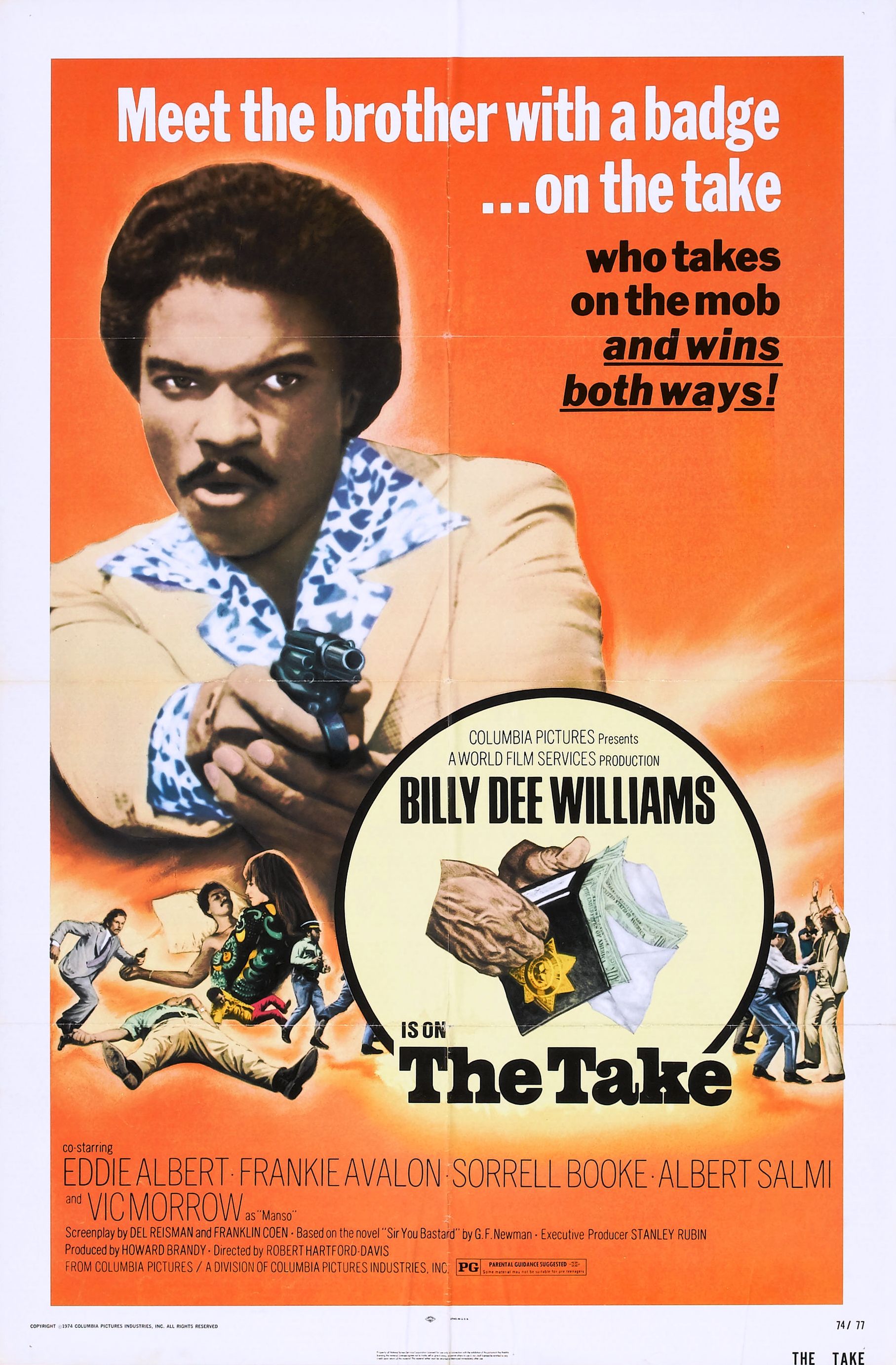
The Take (1974)

take1

By Richard Winters

My Rating: 4 out of 10

4-Word Review: Black cop accepts bribe .

Terence Sneed (Billy Dee Williams) is a San Francisco cop brought to Paloma, New Mexico to help take down local crime boss Victor Manso (Vic Morrow). The only problem is that Manso invites Sneed over to his place and offers him a significant amount of cash to get on his ‘payroll’ and thus allow him to get away with his crimes. Sneed is also informed that another top official in the police department, Captain Frank Dolek (Albert Salmi) is on the take as well. Sneed accepts the cash, but then double-crosses Manso by having Dolek secretly tailed where he finds out who all of Manso’s connections are and uses this info to try and bust Manso’s drug operation, which ends up being a tall order that gets Sneed in hot water not only with Manso, but with his police supervisor Chief Berrigan (Eddie Albert) as well.

The film is based on the 1970 British novel ‘Sir, You Bastard’ by Gordon Frank Newman, which became a bestseller and set-off a series of three books that he wrote around the Sneed character. There were though differences between the book and movie as in the novel Sneed was white and worked in Scotland Yard. The one thing though that remained the same was Sneed being unscrupulous and working outside the system.

The fact that the protagonist accepts bribes and most of the way it’s unclear whether he’s even a good guy at all is what makes the movie interesting and helps differentiate it from the other early 70’s cop action flicks. This is the complete opposite of Serpico where the cop refused all bribes and vigorously fought against it. Here we see the other angle. Instead of the main character being on the outside looking in he’s a part of the corrupt system and in order to survive in it must be willing to play along, which I found more realistic and insightful as someone who’s able to totally rise above the evil environments they’re in is rare and therefore we get more of an everyman’s perspective here. It also works against the ‘Save the Cat’ book, which has become the bible of today’s screenwriters, which insists that the main character must be likable for the movie to work. Here Sneed is anything but and at certain points when he forces an overweight suspect (Robert Miller Driscoll) to take-off his clothes and do jumping jacks in humiliating fashion to the amusement of the other cops he becomes downright nasty, but in-turn it makes the movie less formulaic, which too many movies today have become.

Williams’ skill as an actor helps to keep the character engaging and he gets great support not only by Eddie Albert as his exasperated superior, but also surprisingly by Frankie Avalon who has a small, but memorable bit as a drug dealer who initially comes-off as quite cocky, but melts dramatically once inside the interrogation room. Unfortunately for Vic Morrow, who’s played some classic villains in his career, his presence here doesn’t work. This is mainly from his get-up including dyed blonde hair and at one point a pseudo cowboy outfit, which looked campy. I also didn’t like that it’s shown right away that his character has heart problems, which telegraphs a major vulnerability that instantaneously sets the viewer into expecting that this will predictably lead to his eventual demise.

As for the action I felt it started well particularly the opening courthouse ambush, which is well choreographed with a funky score, but it becomes rather pedestrian after this. Having the main character misjudge things like when he tries the intercept Manso’s transporting of illegal goods, but ends up chasing down the wrong van each time, which were intentionally being used as decoys, was refreshing because in too many other police movies the hero cops always gets things right the first time and his hunches are never proven wrong, which again is just not how things work in reality. Either way it’s not as exciting as it could’ve been with a lot of car chases and action scenarios that ultimately prove to be generic in nature.

My Rating: 4 out of 10

Released: May 5, 1974

Runtime: 1 Hour 32 Minutes

Rated PG

Director: Robert Hartford-Davis

Studio: Columbia Pictures

Available: DVD-R

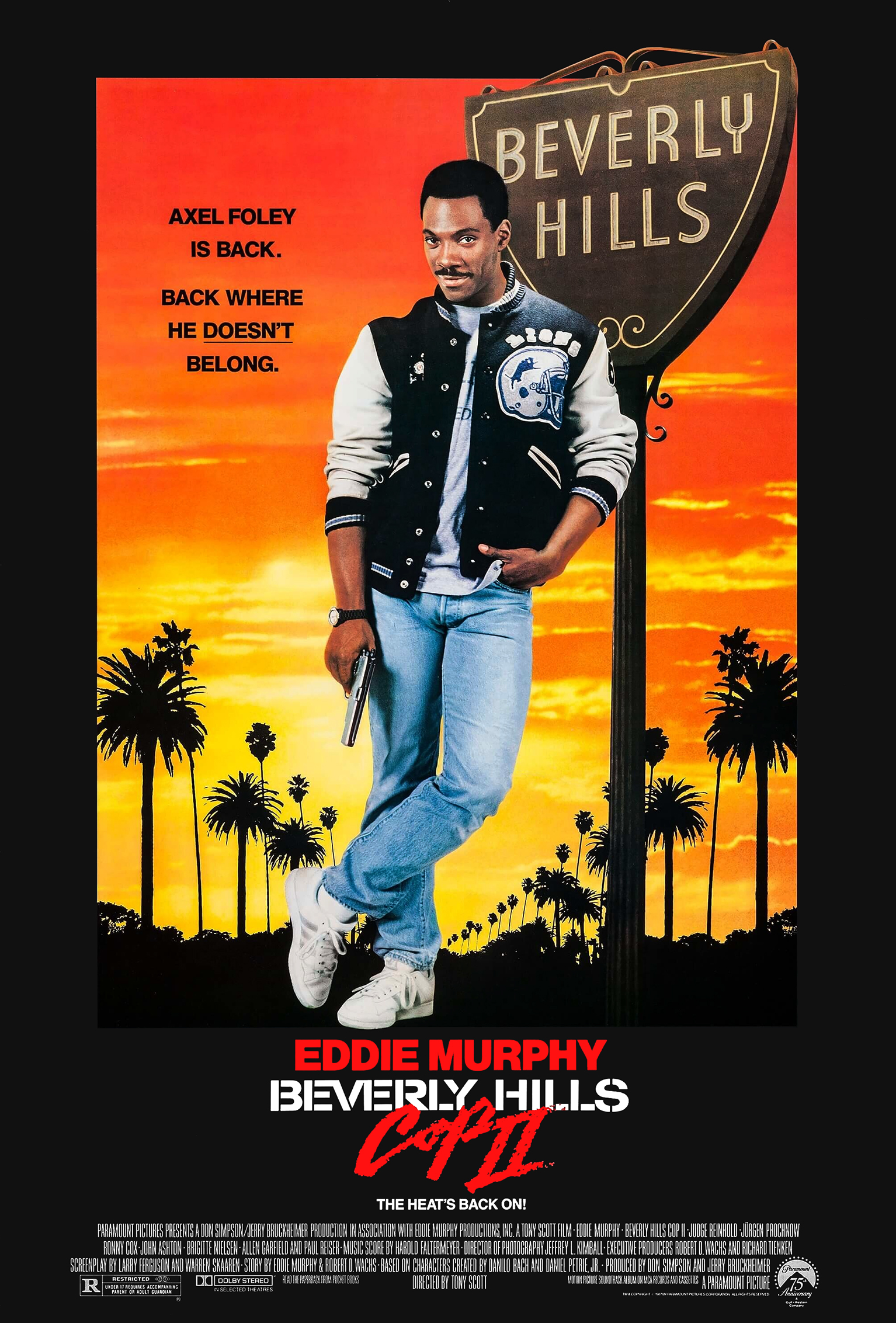
Beverly Hills Cop II (1987)

beverly2

By Richard Winters

My Rating: 6 out of 10

4-Word Review: Going back to L.A.

Captain Andrew Bogomil (Ronny Cox), Sergeant John Taggart (John Ashton), and Detective Billy Rosewood (Judge Reinhold) are working on a case known as the ‘Alphabet Crimes’ due to a monogrammed envelope in alphabetic sequence that gets left at the scene of each robbery. Billy decides to get the F.B.I. involved in order to have them help solve the case, but this upsets the new police chief, Harold Lutz (Allen Garfield), who demotes both Taggart and Rosewood to traffic duty and then suspends Bogomil when he tries to come to Rosewood’s defense. On his way home Bogomil gets shot and seriously wounded when he pulls over to help Karla Fry (Brigitte Nielson) who acts as a stranded motorist, but in reality is a part of the organization behind the crimes. When Axel (Eddie Murphy) hears about Bogomil’s shooting he immediately travels to L.A. and again hooks-up with Taggart and Rosewood to solve the case and avenge Bogomil’s assault. 

If  you can get past the overly complex crime mystery, which comes-off as a cheesy variation of Agatha Christie’s ‘The Alphabet Murders’, which apparently was the ‘inspiration’, this sequel, as 80’s sequels go, isn’t bad. Despite Leonard Maltin’s criticism in his review where he didn’t like that Bogomil and Axel had now become chummy and even planning a fishing trip together, I liked it. Maltin considered this ‘inconsistent’ with the first film where the characters were at odds through most of it, but I felt they had grown to like each other after what they had gone through previously and had no problem with it. What I didn’t like though was that Lisa Eilbacher for whatever reason doesn’t return and in her place they stick-in Alice Adair, who plays Bogomil’s daughter, that Axel is good friends with, but since she never appeared in the first one this relationship comes-off as quite forced. 

Having Ashton and Reinhold reprise their roles is great too, but they have little to do. In the first film they worked with Axel more as a team with each using their unique abilities to help take down the bad guys, but here Axel does virtually everything. This was most likely the result of Murphy co-writing the script where he vainly makes his character almost like a super hero and able to solve difficult clues and even at one point hacking into the criminal’s computer system while Ashton and Reinhold act as nothing more than observers who follow along, but add little input. I also didn’t like Reinhold’s character turning into a gun collecting nut, which was something that was never alluded to at all in the first one, but gets played-up here even though it makes the guy seem unintentionally creepy. There’s also a lot of talk about Ashton’s tumultuous marriage to the extent that I felt at some point we needed to see the wife, but never do. 

The humor is silly and doesn’t blend well with the action. What made the comedy work in the first one is that it remained on a believable level, but here starts to get downright stupid. A perfect example of this is when the three guys get into a strip club by pretending Taggart is the former President Gerald Ford, even though he doesn’t look that much like him, but it still manages to fool everybody in the place, which had me eye-rolling instead of laughing. The car chases are a bit farcical, much like the ones seen in a Disney movie, where they attempt to work-in a cheap laugh here and there as it’s going on instead of just making it exciting and realistic. 

I did like Brigitte Nielsen as the villainous and felt that given the time period having a female play a nefarious bad guy was novel. Maltin, in his review, described this as being ‘misogynistic’, but if the ultimate idea is for everybody to be equal then a woman should have just as much chance to play the occasional heavy as any man. Jurgen Prochnow, who plays the head of the evil operation, is too similar to Steven Chekoff, the bad guy from the first installment, to the extent that it seemed like that character had never really died, but instead got reborn through this guy, but his steely, ice-cold presence is cliched, over-the-top, and most of all not interesting.

Having Axel return to L.A. was a mistake and whole thing basically ends-up being a mindless rehashing with no particular point. Like with the first incarnation the producers considered many different potential scenarios before finally settling on this one including having Axel go to Paris and even London where he’d work with Scotland Yard. I would’ve preferred him staying in Detroit and then having Bogomil, Taggart, and Rosewood go there maybe to visit him while inadvertently getting caught-up in a case happening in the Motor City. This then would’ve turned-the-tables by having the three in a foreign environment and seeing how they adjusted to it and would’ve added revealing character development, which is otherwise missing.

My Rating: 6 out of 10

Released: May 19, 1987

Runtime: 1 Hour 40 Minutes

Rated R

Director: Tony Scott

Studio: Paramount

Available: DVD, Blu-ray, Amazon Video