Category Archives: Dry Humor

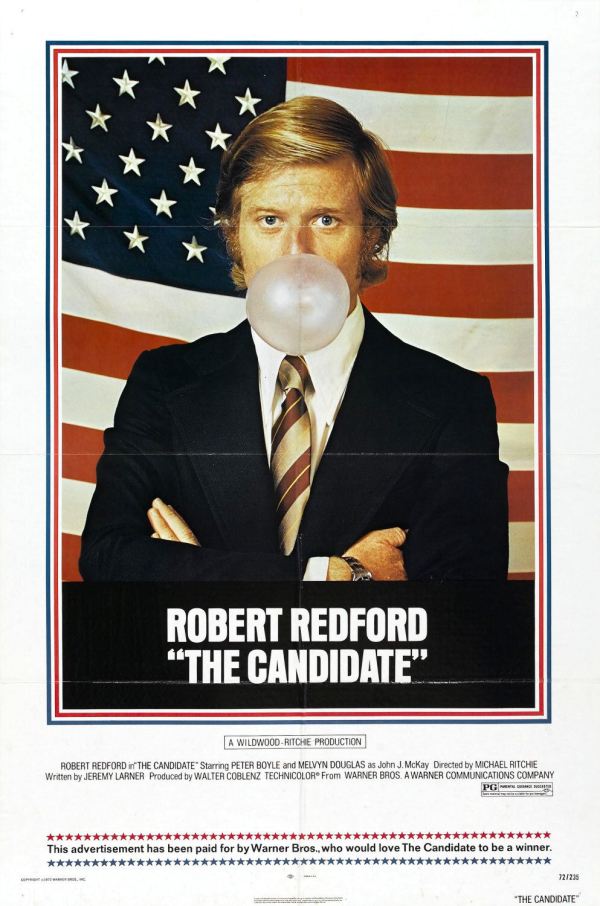
The Candidate (1972)

By Richard Winters

My Rating: 8 out of 10

4-Word Review: Robert Redford for President.

In commemoration of Election Day and the fact that all the campaigning and political punditry will finally be coming to a merciful end we present a rare Tuesday post here at Scopophilia. Although done 40 years ago this wry look at the inner-workings of the political campaign trail is as incisive and timely as ever and hasn’t lost any of its punch. The story deals with Bill McKay (Robert Redford) a young lawyer from California who is persuaded to run for senate against the incumbent Crocker Jarman (Don Porter). McKay represents the youthful idealism while Crocker is very entrenched with the establishment.

The film was directed by Michael Ritchie who may not be a household name, but he is the creator of his own genre. He took the examination of competition and how embedded it is in American culture to new heights. Through his various movies he showed how it infiltrates every aspect of our society and no one is immune to it. From Smile to The Bad News Bears and Downhill Racer he showed how even the most unlikely of individuals can become fiercely competitive when driven. He also made his characters strangely endearing no matter how sordid or ugly the competition made them become.

This film works along those same lines only it shows it from a political perspective. It is smart, fast, cynical, funny, dramatic, revealing, and entertaining all at the same time. This should rank as one of the best movies made about political campaigning. It’s still timely and cutting edge and works almost like a documentary. The quick editing creates a seamless style. The film makes interesting observations without taking away from the flow of the story. In fact one of the reasons it is so captivating is because it is downright educational. When the film is over you feel much wiser to the business of politics and as exhausted as the candidate himself.

Redford is terrific. He has a real gift for underplaying everything to the point that it looks like he isn’t even acting at all. He plays off his pretty boy looks, but doesn’t stay trapped to a heroic image. He harbors a lot of idealistic traits one would want in a candidate and yet he is still quite human. There are some definite shades of John F. Kennedy here. He has a troubled marriage and is even caught fooling around with an admiring female supporter. Although he has honorable ideas he is far from having all the answers. Probably the most interesting insight of this movie is the fact that he ends up getting as sucked into the mechanics and compromises of the political machine as his ‘old school’ foe. It perfectly illustrates how immense and encompassing the political machine is and how no one is really going to change it.

This is an excellent and well-crafted picture that not only hits the bulls- eye, but does it many times over. I love Redford’s final line and Boyle, as his campaign manager, has never been better.

My Rating: 8 out of 10

Released: June 29, 1972

Runtime: 1Hour 50Minutes

Rated PG

Director: Michael Ritchie

Studio: Warner Brothers

Available: VHS, DVD, Amazon Instant Video 
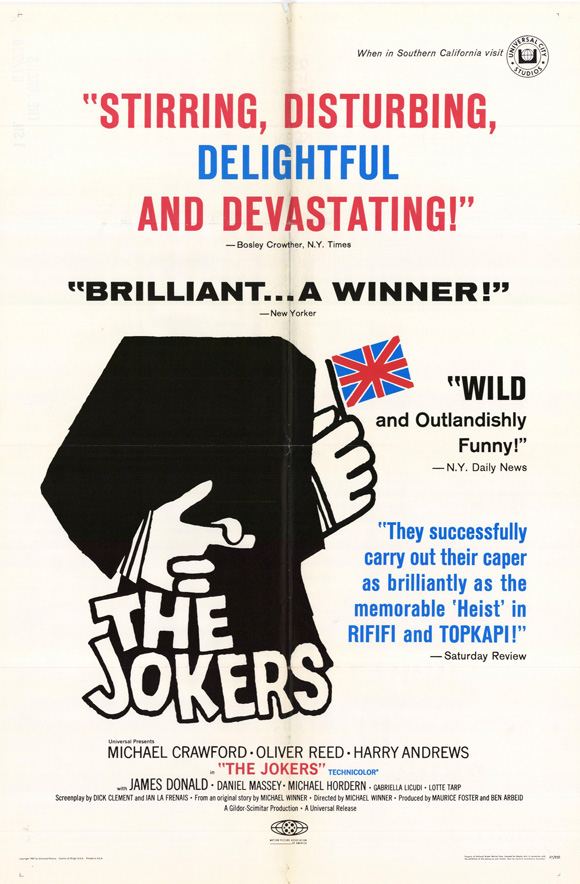
The Jokers (1967)

By Richard Winters

My Rating: 8 out of 10

4-Word Review: Rob to avoid work.

Brothers Michael (Michael Crawford) and David (Oliver Reed) decide that working life is not for them and come up with an elaborate robbery that will afford them enough money to drop out of society for good. Their plan is a clever one as they stage random bomb threats across parts of London, which creates a panic in the city. Then they threaten to blow up the tower of London, disguise themselves as military experts who can go in to diffuse the bomb and then run off with the crown jewels in the process, which they conveniently hide underneath the floor boards of their home.

The film has a great irreverent flair that was common amongst the new wave British films of the late 60’s. The quick edits, fragmented narrative, and quirky humor is similar to Richard Lester’s The Knack…and How to Get It, which also starred Crawford. The comedy, especially its potshots at the establishment, is right on target and engaging. I was surprised that it was directed by Michael Winner as so many of his later films, especially the ones he did with Charles Bronson, seemed so formulaic that I could never imagine he could show so much spunk and flair.

The crime is imaginative and plays out nicely. There is also a neat and completely unexpected twist near the middle that keeps things intriguing to almost the very end.

Crawford shows charm and his boyish looks help strengthen is character. He somehow manages to upstage Reed, which I never thought would be possible and his charisma carries the film. He does though look too scrawny and almost anorexic in parts and having him gain some weight and ‘putting some meat on his bones’ before filming began would have been advisable.

British character actor Harry Andrews is amusing as the exasperated Inspector Maryatt. However, I found James Donald as the completely clueless Colonel Gurney-Simms to be the funniest.

If the film fails anywhere it is in the fact that it loses its satirical edge and focus. It starts out making fun of the upper-crust English society, but then becomes too preoccupied with the crime itself. David and Michael’s interactions with their stuffy, conservative parents (Peter Graves, Rachel Kempson) are cute and I would have liked to see more of it as well as more jabs at ‘respectable’ society. The film’s conclusion is extremely weak. For such a clever movie I was hoping for something a little better. It is almost like they ran out of ideas and threw in some bland denouncement simply as a way to end it because they didn’t know how else to do it. Nothing is more of a letdown then seeing a writer write themselves into a hole that they can’t get out, which is what you get here and it almost ruins the entire film in the process. However, the majority of it is so slick I was willing to forgive it and almost wished there could be more movies like these coming out today.

My Rating: 8 out of 10

Released: May 15, 1967

Runtime: 1Hour 34Minutes

Rated NR (Not Rated)

Director: Michael Winner

Studio: Universal

Available: None

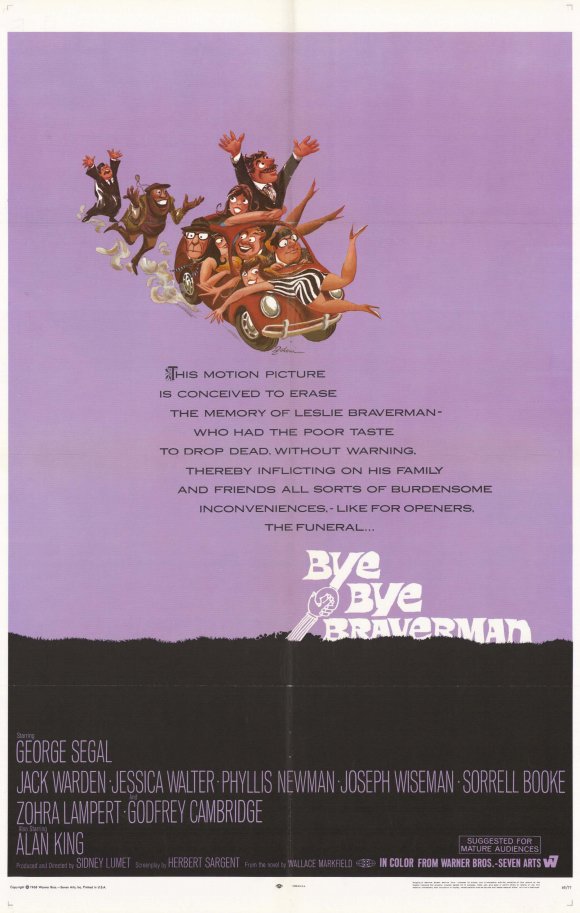
Bye Bye Braverman (1968)

By Richard Winters

My Rating: 6 out of 10

4-Word Review: Where is the funeral?

Four middle-aged Jewish men get together for a mutual friend’s funeral and find that the passage of time has changed many things between them.

There are some really nice vignettes here. The best may be Morroe’s (George Segal) conversation with all the dead people in the grave yard while amidst hundreds and hundreds of tombstones. You also have to love Alan King as the rabbi leading the funeral. Morroe as a middle-aged man becoming disillusioned with life while going through a sort of mid-life crisis is very relatable and his fantasy segments are funny. Godfrey Cambridge also has a great cameo as a black cab driver who runs into them and the group’s difficulties at finding the right funeral are amusingly on-target.

While the film does have its share of delightful moments it fails to ever come together enough to leave any impact. Some of the segments are too talky and the ending fizzles badly. There is also an extraordinarily high amount of footage given to showing a bird’s eye view of the red Volkswagen that they are in driving through the streets of Brooklyn. In some ways this does give one a great glimpse of Brooklyn during the late 1960’s, but it also screams ‘filler’ in the process.

This definitely seems to be the case where the novel by Wallace Markfield that this movie is based on would be the better choice. It’s certainly watchable and mildly entertaining, but the characters and situations need to be better fleshed out.

My Rating: 6 out of 10

Released: February 21, 1968

Runtime: 1Hour 34Minutes

Rated NR (Not Rated)

Director: Sidney Lumet

Studio: Warner Brothers/Seven Arts

Available: DVD (Warner Archive)

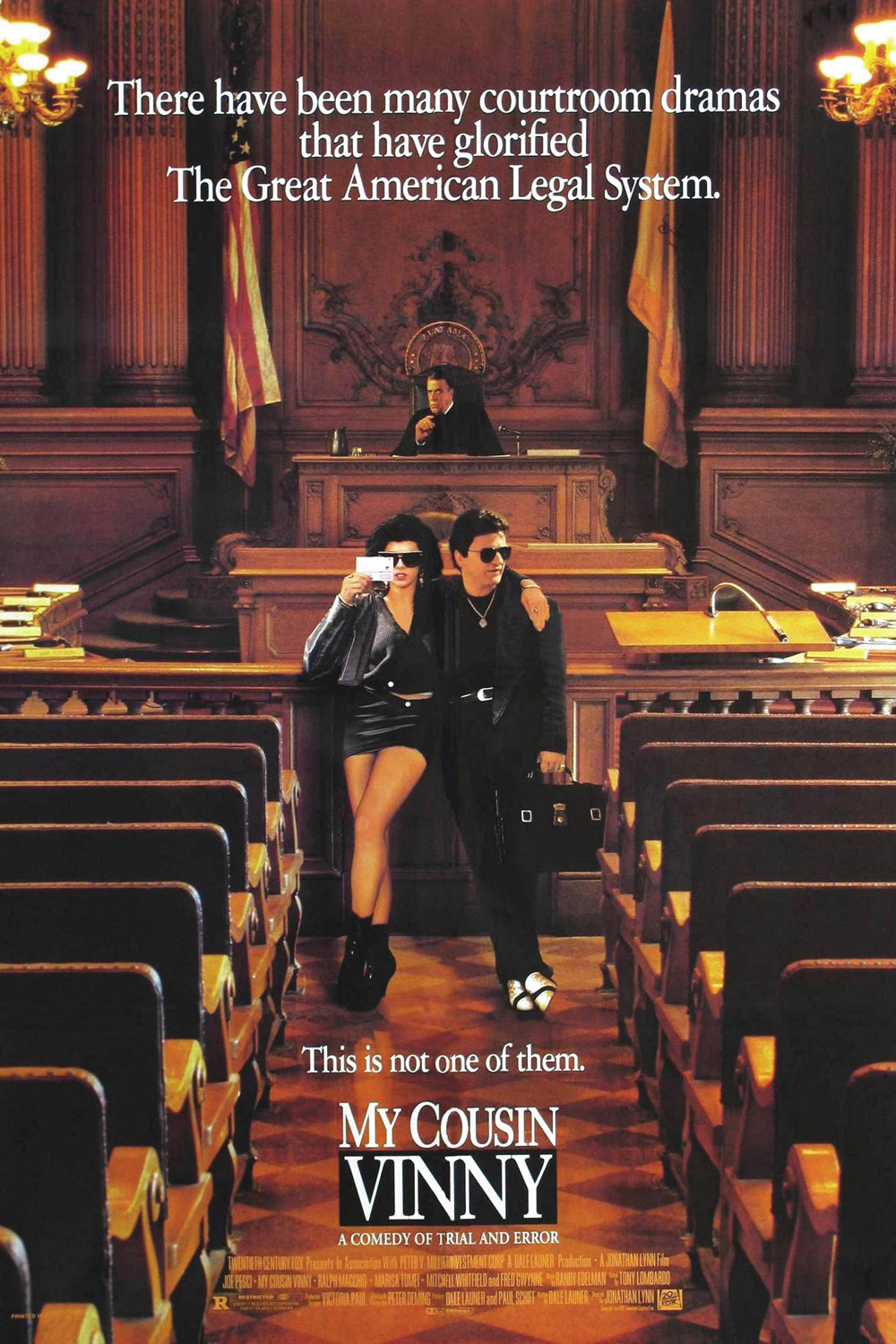
My Cousin Vinny (1992)

By Richard Winters

My Rating: 5 out of 10

4-Word Review: Don’t hire this lawyer.

A huge and much talked about hit upon its release in 1992, My Cousin Vinny is the story about two traveling college friends (Ralph Macchio, Mitchell Whitfield) who, upon going through Alabama, get implicated to the murder of a convenience store attendant that they did not commit. They’re only hope is calling up Macchio’s uncle Vinny from Brooklyn (Joe Pesci) who has only been practicing law for six weeks and has never tried a case.  Even worse is the fact that his brash Brooklyn sensibilities do not mesh well with the trial’s very strict, no-nonsense Judge (wonderfully played by Fred Gwynne in his last film role).

One thing that stood out right away with me was the way this film did not fall into age old stereotypes despite being in a setting that seemed ripe for it.  There is not a single mention of racism anywhere.  Instead the film seems to want to focus on a more contemporary Alabama where the African American characters are, by and large, on equal footing with the whites as well as having a white Sheriff who is not redneck, corrupt, or ignorant.  The two college kids also thankfully break rank from the typical Hollywood films of that era.  These kids are not the rowdy, partying, beer swilling, sex crazed teens that you usually see, but instead believable and most of all likable.  I found them to be so likable that I wished they were in the film more, unfortunately after the first twenty-five minutes they pretty much disappear until the very end, which I found disappointing.  Still it was nice seeing Macchio growing out of his Karate Kid role and looking a little more filled out and mature.

I also want to give mention to the excellent on-location shooting.  Although it was not actually filmed in Alabama, but instead the neighboring state of Georgia, it still nicely captures the look and feel of the south and it does it right from the start.  I have often said good on-location shooting (as opposed to the annoying Hollywood studio back-lot) can enhance just about any story and help create what’s almost like another character.  I have been to Alabama recently and enjoyed the many references to the red, muddy soil that is everywhere down there and the scene where the Pesci character gets his car stuck in it is great.

The comedy runs pretty well, but is much stronger at the start.  The conversations the boys have with the police are quite amusing as is Whitfield’s initial dialogue with the Pesci character who he doesn’t know is a lawyer and instead thinks he is a cellmate there to ‘break them in’.  I also enjoyed the running gag dealing with Vinny using his debating skills to try and ‘negotiate a settlement’ with a tough guy at a bar who refuses to pay up after losing a bet.

Unfortunately there is also a lot of comedy that does not work.  The running gag dealing with Vinny and his girlfriend constantly being awakened in the early morning hours by some unexpected noise at each of the places they stay at starts to get real redundant and silly.

There is also another segment featuring actor Austin Pendleton who plays one of the court appointed attorneys and, without warning or any logical explanation, starts to stutter terribly when he tries to give his opening argument.  I was genuinely shocked to see Pendleton take this part since he was a stutterer in real like and didn’t overcome the problem until he was well into his forties.  He even starred in a 1983 film entitled Talk to Me about a man coping with the affliction. Apparently Pendleton did protest the scene and even labeled it a ‘sick joke’, but eventually did it anyways because he needed the work, which was unfortunate because it comes off as being forced and uncomfortable.  Most lightweight comedies, which in the end this is, run about ninety minutes yet this film runs a hundred and twenty minutes, which is too long.  Had some of these so called ‘funny’ scenes been cut it would have shortened the film nicely and even strengthened it.

I should also mention Marisa Tomei who won the Oscar for best supporting actress as Pesci’s girlfriend.  Now her performance isn’t bad, but I didn’t see anything really outstanding about it either.  She spends most of the time wearing garish and gaudy outfits, speaking in a Brooklyn accent that borders on annoying, and playing the caricature of a ditzy girlfriend. Only at the end does she become a little more dimensional when she inexplicably displays some amazingly detailed knowledge about automobiles that for me just didn’t ring true.  I would have given the Oscar to Fred Gwynne, TV’s Herman Munster, as the judge. Some of his courtroom exchanges with the Pesci character are the best parts in the film.  I also really like Lane Smith in the role as the prosecutor. His performances are never flashy, but he is always reliable and gives his characters a nice, quiet dignity.  He is also a genuine southerner, so he fits into his role more easily.

The film is overall passable.  I had no idea how it was going to turn out and it kept me intrigued.  However, once the resolution was made and the mystery solved, I wasn’t completely satisfied.  I was hoping it would be like The Vanishing, the excellent 1988 film from the Netherlands, that went back and reenacted how it all took place.  It would have at least been nice had the film put in a little red herring at the beginning, so the viewer could have tried to figure it out themselves instead of just throwing in a wrap-up that seemed too convenient.

If you are fans of Joe Pesci then you’ll enjoy this movie a little bit more.  His performance as the volatile character in Goodfellas is so etched in my mind that I have a hard time adjusting to him in likable roles, or comedy.  However he manages to be quite engaging throughout.

My Rating: 5 out of 10 

Released: March 13, 1992 

Runtime: 2Hours 

Rated R 

Director: Jonathan Lynn 

Studio: 20th Century Fox 

Available: VHS, DVD, Blu-ray, Amazon Instant Video

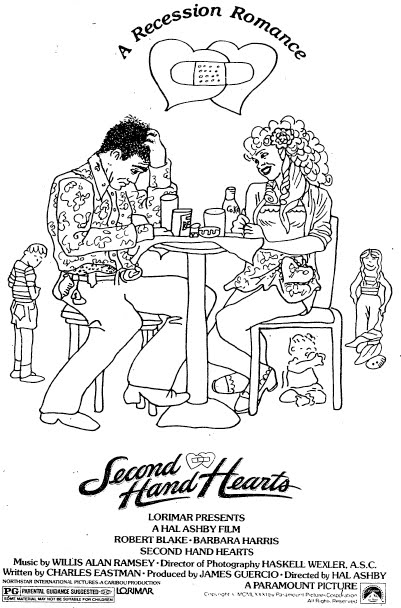
Second-Hand Hearts (1981)

By Richard Winters

My Rating: 3 out of 10

4-Word Review: Losers on the road.

                Loyal (Robert Blake) meets Dinette (Barbara Harris) and the two immediately get married. He thinks it was on a Thursday, but it might have been on Tuesday because that is the day he got really drunk. After losing his job at a car wash when he pukes all over the inside of a car that he was cleaning he piles Dinette and her three kids into a station wagon and takes them to California where he hopes to find some work and a better future. During the trip the two get to know each other and decide whether their marriage can actually work.

This was done during the time when director Hal Ashby was heavily into drugs and his behavior on and off the set was becoming more and more erratic and the results are obvious here. The first half is slow and boring with scenes that go on too long and have too much extraneous dialogue. The second half when they finally hit the road is an improvement, but not by much. I liked the gritty look of the picture. The dry desert landscape helps accentuate the raw, rough lives of the characters. The scenario is goofy enough that with a delicate touch it could’ve worked, but Ashby seems detached from the material and portrays the characters as goofballs that never seem real, or human.

The road trip itself has a lot of problems as well. The station wagon used is too over-the-top junky. I am not sure what make or model it was, but looks like something from the 50’s that was completely out of place for the time period. Obviously it was chosen to be a comic eyesore but becomes too extreme and makes the characters seem even more like caricatures than they already are. I also found it bizarre that they never ever pass another vehicle during their long trip. Wide shots consistently show them to be the only car on the road. I am a traveler myself that have been to some desolate areas of western Texas and Nebraska, but even then you will pass by another car every now and then. There is also a scene where they have a flat tire and when Luke puts on the spare he finds out that it loses its air, which sends him into a tizzy as they are in the middle of nowhere. Yet the film quickly cuts to the next scene showing them back out on the road without any explanation for how they were able to get it fixed. The only interesting scene is when they are chased down by an angry group of young Mexican men, which helps create some much needed tension, but the film doesn’t go far enough with it.

Harris is great as always. She puts on such an effective accent that for a while I thought it had been dubbed in. Blake is surprisingly good in his comic role and is actually quite funny in his constantly perplexed state. He puts a lot of energy into it and it is a shame that the film is so obscure that no one can appreciate his efforts.

The film would have worked better had it started when the two had first met and went through their whole rushed wedding. Having it begin in the middle doesn’t allow the viewer to have any understanding to the background of these characters and hence impedes any attachment to them. I also didn’t like that the film ends before they ever make it too their destination. The rule for every road movie should be that they must get to where they are going to otherwise it comes off as incomplete. I also don’t like children characters who never say a single word such as the case with the ten year old boy here named Human. This to me always seems freaky and disturbing and not funny like the filmmakers apparently thought it would be. There is also a scene insinuating child molestation that although brief still proves to be unsettling. The loud, blaring country soundtrack is annoying as well.

My Rating: 3 out of 10

Released: May 8, 1981

Runtime: 1Hour 42Minutes

Rated PG

Director: Hal Ashby

Studio: Paramount

Available: VHS, YouTube

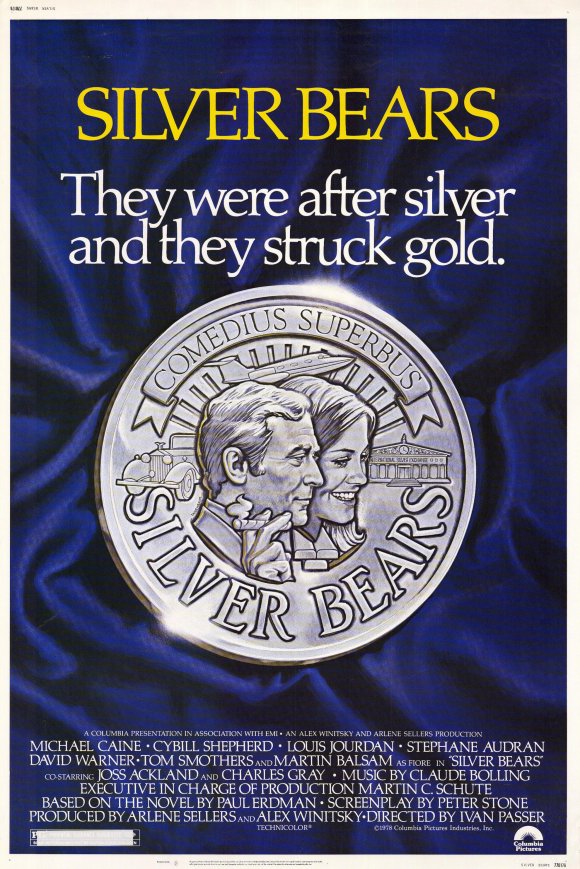
Silver Bears (1978)

By Richard Winters

My Rating: 6 out of 10

4-Word Review: Investing in Silver Mine.

This is an engaging, lighthearted look at the complex inner-workings of financial institutions and markets and how a group of con-men try to exploit it. The plot is elaborate and although it is easy to follow as you are watching it, as long as you are paying close attention, it is hard and even convoluted to explain, but I will try my best.

The basic premise works like this: Doc Fletcher (Michael Caine) is hired by underground kingpin Joe Fiore (Martin Balsam) to open a phony bank which they can use as a front for their laundered money. When they get there they find that the building is some rundown offices on top of a restaurant. Prince di Siracusa (Louis Jourdan) then tells them of a silver mine in Iran that is run by his distant cousins Agha (David Warner) and Shireen (Stephanie Audran).  Doc decides the bank can invest in the mine and use the money to create a better building premises as well as attracting rich investors. The silver in the mine begins to flood the market causing a drop in value at the London Stock Exchange and forces Charles Cook (Charles Gray) to decide to buy out the bank that is funding the mine in order to then close the mine. To do this he contacts the President of the First National Bank of California (Joss Ackland) who is looking to expand his business in Europe. The bank president sends Donald Luckman (Tom Smothers) out to negotiate a sale of the bank with Doc, but without telling Doc the true reason why. This makes Doc suspicious and to find out their true motives he decides to seduce Donald’s beautiful and free-spirited wife Debbie (Cybil Shepard). Once she divulges their secret things really get going in a high-spirited fashion.

The catalyst of the comedy comes through the many different ‘negotiating’ sessions that take place throughout the film all of which prove to be quite amusing. The first is when Doc negotiates with Agha about a suitable deposit Agha must give to the bank in order to obtain a bank loan even though the bank has no money to give. The second is when Donald tries to bargain with Doc on a selling price for the bank and the third is when Doc tries to intimidate Crime boss Joe into not accepting Donald’s offer. The final one at the end is where all the characters chase Charles around his mansion in order to get settlements to their deals, which have by then soured.

The characters are charming and delightful. Caine is superb as always playing a man who would like to be a lot more ruthless and intimidating if he weren’t surrounded by a bunch of incompetents. Jourdan is suave as the Prince and the two leads share very contrasting personalities and styles, which makes their conversations and budding friendship interesting.

This movie is also a great chance to see Jay Leno in a rare acting role. I’d say being a talk show host is more his repartee, but he is energetic enough here to remain amiable and seeing him with a big mop of curly black hair is almost worth the price itself. Shepard is fantastic and the one thing that gives the film some zest. She is best known for her bitchy roles of which she is very good, but her she plays a fun-loving hippie type and is hilarious. Although this movie is a bit hard to find fans of Shepard should really seek this out as they won’t be disappointed.

Smothers is okay as the meticulous accountant who thinks he has all the bases covered until he gets an unsettling surprise at the end. Usually he is stuck playing characters on the dim-witted side, so it was nice to see him in something that was a slight change of pace. Although Balsam’s screen time is brief I still got a kick out of the way he would look at pictures showing the bloody corpses of the victims he had ordered killed while he ate his breakfast.

The film was shot on-location in such places as Switzerland and Morocco and although it does show some of the exotic topography of the regions it wasn’t enough and I wanted to see more. The musical score is terrible and resembles a show tune from the big band era that does not fit with the mood, or action of the story. I also didn’t find it enticing to have the film begin by focusing the camera onto the naked rears of a bunch of fat, middle-aged men as they get into a hot tub.

For those looking for a diverting, original comedy that emphasizes the subtle and dryly humorous exchanges between business partners then this little known gem should hit the spot.

My Rating: 6 out of 10

Released: April 21, 1978

Runtime: 1Hour 53Minutes

Rated PG

Director: Ivan Passer

Studio: Columbia Pictures

Available: VHS

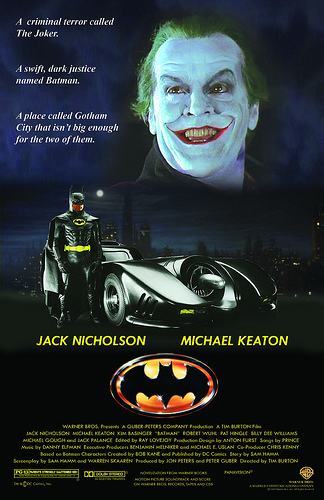
Batman (1989)

By Richard Winters

My Rating: 6 out of 10

4-Word Review: Where is Adam West?

The attempt at moving the Batman theme from the campiness of the TV series to a darker edge proves successful. Director Tim Burton’s vision of Gotham is terrific. It has a sort of weird mixture of the 1940’s and the modern day and the look is original. It is so gray and dark it seems almost like purgatory and having the citizens celebrate its 200th anniversary may be the best joke of the film.

The story nicely starts out showing how Bruce Wayne (Michael Keaton) became acclimated with this Batman character and how initially he wasn’t perceived as being a good guy. It also explains how as a little boy he witnessed his parent’s murder. Yet it doesn’t go far enough and questions still abound. Like who built the Batmobile and that very immense bat cave? Are we to believe that Bruce Wayne and his kindly butler Alfred (Michael Gough) did it all by themselves?! It would have also have been nice if they had shown what specifically inspired him to take the identity of the bat. Still it’s good that some actual bats are shown and in a brief frame even come flying right at you!

The story is slick, but nothing spectacular. Such a big budgeted and much hyped movie almost cries for a more expansive storyline. Something along the lines of a James Bond plot with some megalomaniac aspiring for world domination or destruction. Having the Joker (Jack Nicholson) simply kill people with his toxic make up seems both silly and tacky. The climatic finale in the bell tower borrows too many elements from other showdowns and is too rehearsed.

Keaton looks uncomfortable in the lead. He shows no energy or charisma and is absolutely stiff in his Batman costume. Nicholson has a little more spunk and in a way seems to be a perfect fit. Yet Cesar Romero from the TV series had a much better laugh and Nicholson’s laugh seems forced. Kim Basinger makes a nice addition as the love/sex interest. She creates a nice balance between the two adversaries. It is interesting to note though that while everyone else refuses to wear make-up (including the newscasters) because of the Jokers toxins she is still seen with plenty of it on.

Overall this is a nice attempt at keeping the theme more true to its comic book origins. It doesn’t come together completely though and is in desperate need of a more singular voice. The second feature in this series Batman Returns is far better.

Watch for Lee Wallace as the mayor of Gotham as he looks like an absolute shoe-in for former New York Mayor Ed Koch especially from a distance. Also William Hootkins has absolutely the best voice for any big city policeman character.

My Rating: 6 out of 10

Released: June 23, 1989

Runtime: 2Hours 6Minutes

Director: Tim Burton

Studio: Warner Brothers

Available: VHS, DVD, Blu-ray, Amazon Instant Video

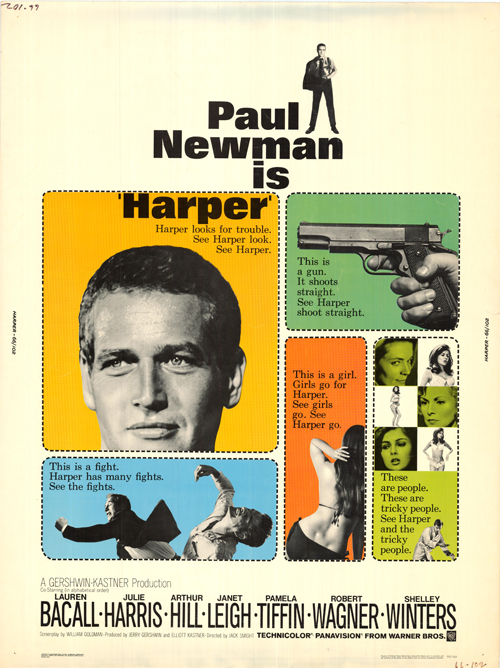
Harper (1966)

By Richard Winters

My Rating: 9 out of 10

4-Word Review: New-age private eye.

            Detective Lew Harper (Paul Newman) is hired by Mrs. Sampson (Lauren Bacall) a rich woman whose husband has gone missing. She wants a private eye to find him instead of the police due to the fact that her husband was involved in certain illegal business activities, which she doesn’t want to come to light. Harper finds himself immersed in a complex web of intrigue dealing with an array of shady characters, twists, and danger.

Newman is terrific and the Harper character is the perfect private eye for modern audiences. Watching him get out of bed in his dingy, cluttered apartment at the beginning and get ready for the day is excellent and builds characterization in a visual, subtle, and believable way. His cool, laid-back, and detached demeanor is a great contrast to the hyper, jaded, high-strung L.A. types that make up the assortment of suspects. His cynical style attaches the viewer to him right from the start and the banter that he has with everyone is marvelous.

The supporting characters are superb as well and very well-defined. Bacall gets one of her better later career roles as the bitchy eccentric wife. She gets quite a few quotable zingers particularly between her and her step daughter Miranda (Pamela Tiffin) that are close to classic. I also got a kick out of Shelley Winters playing a parody of herself as a way past her prime Hollywood star who is now overweight and an alcoholic. Harper’s attempts to get information out of her by pretending to be a hick who is totally mesmerized by her is quite amusing.

Director Jack Smight is at his directorial peak here. The on-location shooting is splendid. I particularly enjoyed the modernistic building that fronts as a church, but is really used as a cover for criminal activity. It sits out on a sandy hilltop and leaves a strong visual impression as does Harper and Miranda’s car ride along a very winding desert highway to get there. I also liked his ability to capture an abandoned airplane hangar making it almost as evocative to the eye as the foot chase that happens in it. The whole production is consistently slick with color schemes, set design and editing that are all top notch.

William Goldman’s script, which is based on the novel by Ross Macdonald is sensational and one of his best in his already legendary career. The dialogue is sharp one can view it for the lines alone and might need to re-watch it again simply to pick-up on all of them as there are so many your liable to miss some. The mystery is also intriguing and nicely layered to the point that it will keep you guessing and impossible to figure out and fortunately there is a minimum of loopholes. I saw this before and knew the outcome, but still found it an enjoyable and involving ride.

My complaints are few and fortunately do not taint the quality of the picture, which is otherwise high. I didn’t like that Harper had an ex-wife Susan (Janet Leigh) who he is constantly trying to win back. The woman seemed a bit cold and snippy and not the type I would think Harper would fall for, or want to put up with. Having him act so needy to win back her affections hurt the ruggedness of the character who is appealing because of his independent and self-assured nature. There is another scene where a man is shot dead and Harper goes through his coat pockets in order to get some clues to his identity. He finds a matchbook listing a nightclub, which Harper goes to in order to ask questions from the patrons, but I kept thinking it would have been much easier had he just went through the victim’s pants pocket and taking out his wallet and looked at his driver’s license.

If you are looking for a nifty mystery done in the best crime noir tradition then they don’t come much better than this.

My Rating: 9 out of 10

Released: February 23, 1966

Runtime: 2Hours 1Minute

Rated NR (Not Rated)

Director: Jack Smight

Studio: Warner Brothers

Available:  DVD, Amazon Instant Video

Hopscotch (1980)

By Richard Winters

My Rating: 6 out of 10

4-Word Review: Matthau goes globe trotting.

            Veteran CIA Agent Miles Kendig (Walter Matthau) is angered when his boss Myerson (Ned Beatty) decides to demote him to a desk job due to a technicality. Miles decides to get his revenge by threatening to write a book about his past exploits and divulge top secret information. He does this while traveling the globe and making it almost impossible for the government agents to find him, or keep up with him.

Matthau’s character is very similar to the one he played in Charley Varrick where we’re given someone who looks very much like an average Joe and is unwisely underestimated by those around him only to get the last laugh when he proves how very shrewd he really is. The concept is great and it is a fantastic role for Matthau, but in Charley Varrick we at least had some tension and intrigue because the bad guys where really nasty and Matthau’s cunning was a necessity for survival. Here the bad guy is nothing more than a pompous ass and Miles’s exploits, while clever and slick, are done for his own ego and to have an excuse to show-off. Without having any real threat this charade becomes derivative and redundant.

The idea to cast Glenda Jackson as his love interest and confidant is a strange one. In House Calls the two worked well because they had such contrasting personalities and styles, but here that never plays out and for much of the movie they are not even seen together. Her character is given very little to do and the sparring that made them a hit in their first feature is nowhere to be found here. However, their wine conversation that the two have near the beginning deserves a few points.

The Myerson character is over-the-top enough to get a few cheap laughs. The best moment in the whole film is when Miles hides out at Myerson’s own home and when the FBI surrounds it in order to get him out Myerson has to watch helplessly as all the windows in his place get shot out with bullets. Herbert Lom as the Russian spy Yaskov is appealing simply because after spending years playing a cat and mouse game with Miles the two end up finding a mutual friendship with the other.

SPOILER WARNING!!

            The biggest issue I have with the film is the ending. Supposedly Miles has been able to rig an old plane to be remote controlled and then when the agents track it down with a helicopter he blows it up making it look like he went down with it and thus freeing him from being chased anymore. However, aside from the fact that rigging a plane to be remote controlled should prove to be quite complex and beyond the scope of Miles, who may be smart but most likely not that smart there is also the fact that the men in the helicopter can see him on the ground running towards the plane like he was going to get into it. Of course he doesn’t, but instead somehow runs back to a shed where he controls the plane with his remote and then eventually explodes it with a press of a button. My question is, and it is the same one that I had twenty-five years ago when I first saw it, is how is he able to run back to the shed without being detected? It was an open field without any bushes, or trees, which should have made him highly visible to anyone once the plane left the ground. To me this is a cop-out ending done because screenwriter Brian Garfield had exhausted all of his clever ideas and didn’t know how else to finish it, but it is never good when a movie ends with a big loophole.

END OF SPOILER WARNING

Matthau’s laid-back charm is always entertaining even with the weakest of scripts, but he seems to be almost sleepwalking through this one. The musical score is filled with some classical works, which helps.

My Rating: 6 out of 10

Released: September 26, 1980

Runtime: 1Hour 46Minutes

Rated R (Due to a plethora of ‘F-Bombs’ said by the Ned Beatty character)

Director: Ronald Neame

Studio: AVCO Embassy Pictures

Available: VHS, DVD (The Criterion Collection), Netflix streaming, Amazon Instant Video

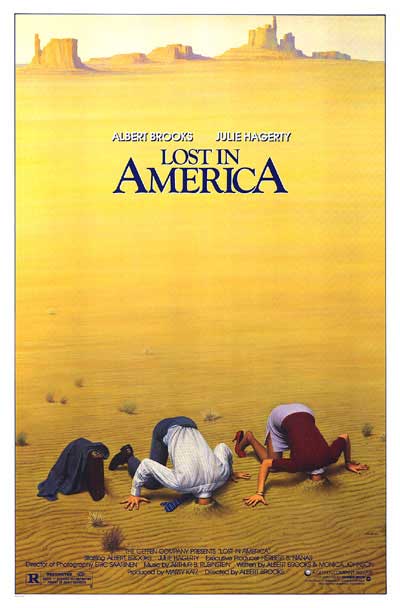
Lost in America (1985)

By Richard Winters

My Rating: 7 out of 10

4-Word Review: Living in a winnebago.

            David Howard (Albert Brooks) becomes upset when he doesn’t get his expected promotion and decides the corporate life isn’t for him and that he and his wife Linda (Julie Hagerty) will drop-out by liquidating all of their assets, buying a Winnebago, and roaming the countryside as free-spirits. Things go horribly wrong right from the start when, in a fit of gambling fever, Linda loses their entire savings at the roulette wheel. This forces David and Linda to desperately look for jobs in the first small town they come to.

The concept is fantastic. Who hasn’t dreamed of doing this at one time or another? Reportedly top executives who saw the film admitted having these very same fantasies at some point. In many ways this film is perfect testament to the 80’s where everything seemed to backtrack to the materialism and conformity of past eras and the idealism of the 60’s became lost. Writer-director Brooks plays it in a realistic and believable way with just enough subtle comedy to bring out the absurdity in each situation, which is what makes it fun.  Had the characters been over-the-top it wouldn’t have worked.

The dry, cynical wit that is Brooks’s signature is in full swing here. It may be an acquired taste to some, but it is distinct and hilarious for those that enjoy it. Some of the best moments include David’s funny rant when he tells off his boss and demands that the company give back the eight years he invested into it and won’t leave until it does. There are amusing conversations between David and the casino owner (Gary Marshall in an excellent cameo) where he begs him to give back the money Linda lost as well as his visit to an employment agency. The couple’s argument at the Hoover Dam is another highlight as is his lecture to Linda about the ‘nest egg’ concept. However, the funniest scene that had me literally laughing out of my seat was when David takes a job as a crossing guard for $5.50 an hour and some ten-year-old boys start to mock him. Even the little things, like when David tells a hotel clerk that they did not make reservations because they have ‘dropped-out of society’ and ‘just living for the moment’ is funny when done with Brooks’s impeccable deadpan delivery.

Julie Hagerty is so ingrained in my mind for her appearance in the cult-classic Airplane that I had a hard time adjusting to her here. Initially, when she is shown in the corporate setting and acting as a serious, responsible adult, I felt it didn’t work because I kept expecting her to say, especially with that high-pitched voice of hers, something dippy and spacey like her character in Airplane always did. However, when she gambles away their savings by incessantly screaming out the number twenty-two she is hilarious and when David lectures her afterwards and she looks up at him with that blank, blue-eyed, deer-in-headlights stare, she is perfect and the casting astute.

The opening sequence is probably the only part that doesn’t work. Having a taped audio interview between talk show host Larry King and film critic Rex Reed played over the opening credits is certainly novel, but David’s prolonged, whiny conversation with Linda while in bed is annoying.  A scene involving a conversation between Linda and a co-worker could have been cut. There is also the fact that everything goes downhill too quickly making the viewer feel almost cheated. It would have been nice to have seen them living the hippie lifestyle for a while and then have the problems begin gradually. There could’ve been a lot of great comedy had it been played straight without the irony of the money problem. Either way it’s entertaining, but brief. Hearing the entire rendition of ‘New York, New York’ by Frank Sinatra is worth the price as is the sight of seeing a giant Winnebago driving up a busy, downtown Manhattan street.

My Rating: 7 out of 10

Released: March 15, 1985

Runtime: 1Hour 31Minutes

Rated R (For a Couple of ‘F-Bombs’)

Director: Albert Brooks

Studio: Warner Brothers

Available: VHS, DVD, Amazon Instant Video