Category Archives: Drama

The Sailor Who Fell from Grace with the Sea (1976)

By Richard Winters

My Rating: 4 out of 10

4-Word Review: They dissect a cat.

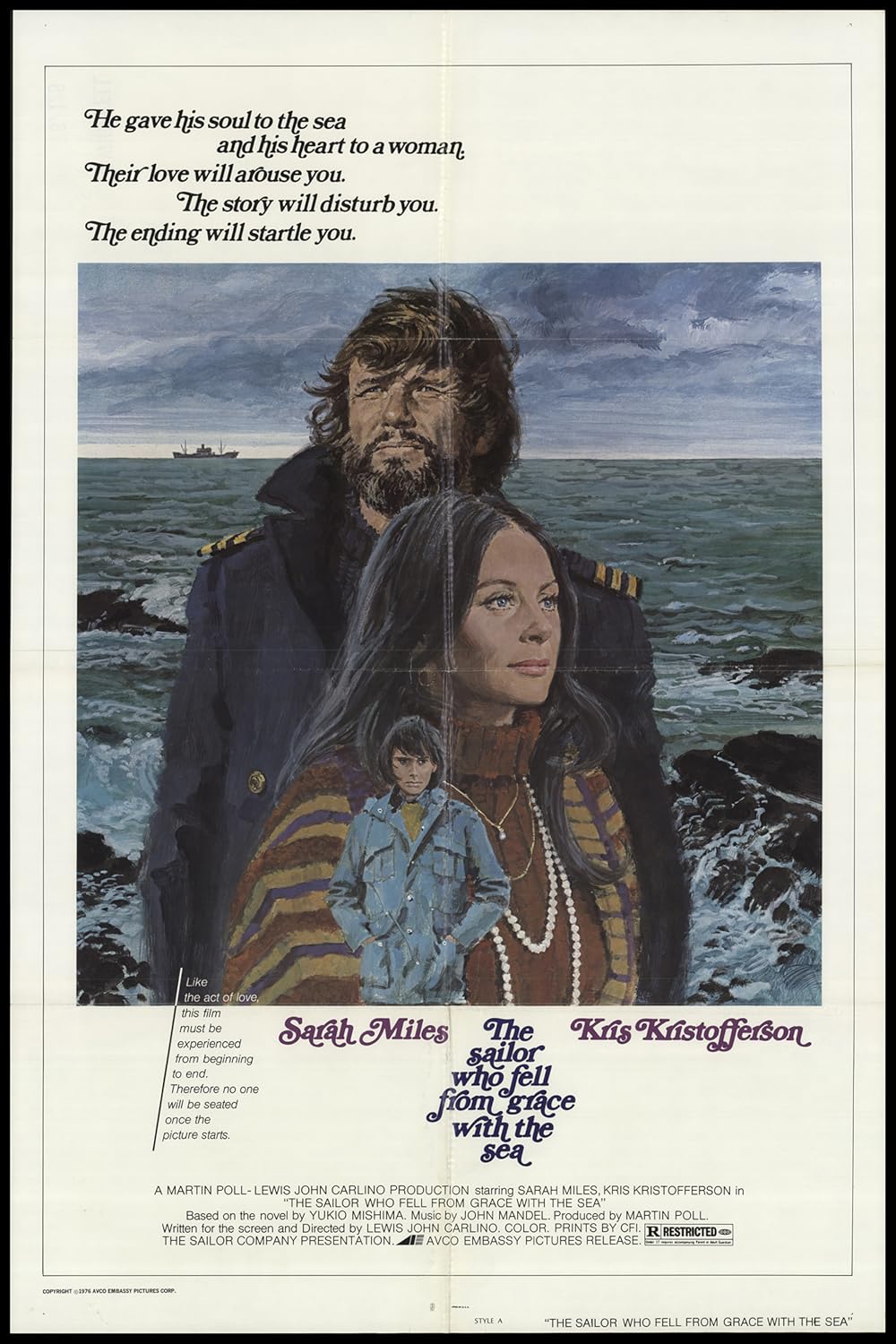
Jonathan (Jonathan Kahn) is a 14-year-old who lives with his mother (Sarah Miles) and nanny Mrs. Palmer (Margo Cunningham) in a beachfront house along the sea after the death of his father three years earlier. Jonathan enjoys his friendship with a group of boys lead by Chief (Earl Rhodes), but his mother does not approve due to Chief’s anti-social sentiment forcing Jonathan to have to sneak out on the sly to see them. One day Jonathan finds a peep hole in his bedroom wall that allows him to see inside his mother’s bedroom, and he begins to peer in on her when she’s undressed, and this creates an unhealthy arousal. When his mother begins a relationship with a sailor named Jim (Kris Kristofferson) he becomes jealous and conveys as much to Chief who devises a sinister plan to ‘solve the problem’.

Lewis John Carlino had a highly respected career as a screenwriter garnering 4 Academy Award nominations for best screenplay, but his three forays as director weren’t as successful and all started out well but ended up just missing the mark. This one was no exception as many critics at the time felt the problem lay in adapting a novel, that was written by Yukio Mishima, which was set in Japan, and trying to convert it to English society. The cultures differences that make up the complex Japanese society that were so integral to the characters in the book gets completely lost in the translation leaving the viewer feeling cold, detached, and genuinely confused when it’s over.

The on-location shooting filmed in Dartmouth, Devon, England, is excellent and the one thing that helps the movie stand-out particularly the isolated hillside house that gives the atmosphere an almost surreal-like feel. There’s also a really creepy performance by Rhodes who nails it as a highly intellectualized kid who displays no moral compass and effectively comes-off as a very believable young sociopath. However, these moments gets coupled with some very disturbing ones dealing with animal cruelty which includes a very drawn-out scene involving the killing and dissecting of a cat as well as putting a firecracker in a seagull’s mouth and while no animal was actually harmed during the production it still left many audiences at the time upset and will very likely do the same with viewers today.

The film’s biggest flaw though is that it doesn’t interpret the character’s actions in any way that helps makes sense of their motivations and for the most part they’re all quite two-dimensional. Jonathan’s arousal at seeing his naked mother needs much better explaining. Most kids aren’t this way, so what is it about his psyche that causes him to enjoy it without any guilt or shame? The movie gives us no clue, nor does it explain how his father died and when you add in the boy’s weird behavior and you start to wonder if the Jonathan maybe had something to do with it, which would’ve opened an interesting subtext if even brought up subtlety, but the script fails to touch on it.

The book makes the reasons for the son’s actions clearer. For instance in the novel the boy losses respect for the sailor when he sees him jump into a water fountain, which he considers to be undignified and the movie really needed to have some similar moment as the kid, like in the book, is initially in awe of the man, but it’s never totally clear what creates the deadly shift. Also, when the son is caught peeping in at his mom the response by his mother in the book is different as she feels the boy should receive a severe punishment, but the sailor, in hopes of becoming ‘friends’ with the kid whom he’s now helping to raise, resists, but the film flubs this scene too by treating it almost like a forgettable throwaway moment that has no impact versus one that would’ve helped reveal the sailor in a more in depth way.

Spoiler Alert!

The ending, which should’ve been a shocker, falls flat as well. In the novel it’s made clear that the boys plan to drug and dissect the sailor just like they did with the cat and they even bring along the tools to do it, in the movie we only witness him drinking the spiked tea. The camera then zooms way out showing the boys at an extreme distance where it’s not obvious what they’re doing. To really make a memorable impression we should’ve seen the boys stab the sailor several times with their knives, which would’ve been far more startling. I felt too there needed to be a reaction from the mother. Does she find out what they did, or does his violent demise remain a mystery? How does her relationship with her son evolve, or devolve afterwards? These questions remain unanswered making the movie seem less like a story and more as a concept that’s never adequately fleshed out.

My Rating: 4 out of 10

Released: April 5, 1976

Runtime: 1 Hour 45 Minutes

Rated R

Director: Lewis John Carlino

Studio: AVCO Embassy Pictures

Available: DVD, Blu-ray, Amazon Video, Plex, Roku Channel, Tubi, YouTube

Celia (1989)

By Richard Winters

My Rating: 8 out of 10

4-Word Review: Revenge for her rabbit.

Celia (Rebecca Smart) is a head-strong 8-year-old living in the suburbs of Melbourne, Australia during the end of the 50’s. She is mourning the recent loss of her grandmother while also fearing the hobyahs, which are mythical creatures she read about in school that she has nightmares about breaking into her bedroom late at night. When Alice (Victoria Longley) and her three children move in next door it allows Celia to get her mind off of things as she becomes fast friends with the kids and even Alice herself, but their relationship is soon hampered when Celia’s father, Ray (Nicholas Eadie), finds out that Alice and her husband are supporters of the Communist Party. Ray forbids Celia from seeing them and offers her a pet rabbit, something she’s wanted for a long time, as a bribe insisting that she can keep the pet as long she no longer socializes with the neighbors. However, this brings up more problems as the Australian government has deemed rabbits to be an invasive species and has outlawed anyone from having one. Burke (William Zappa), the local police Sargent, confiscates the rabbit in the middle of the night and then it’s later found dead while being housed at the local zoo causing Celia to come up with a devious plan in order to exact her revenge.

The film, which was inspired by a news article writer/director Ann Turner read when she was 24 involving the rabbit invasion that plagued Australia during the 50’s, is labeled a horror movie, though in a compromised form as IMDb calls it a ‘folk horror’ while other movie sources call it a ‘horror drama’. In any case fans of the conventional horror film may not take to this or find it off-putting as the typical scares and tension are not present. There are some creepy moments particularly the dream sequences involving the hobyhahs, which I wished had been in it more, and a segment dealing with Celia’s dead grandmother tapping on her bedroom window late one night, but overall, that’s about it. Most of the rest of the film comes-off more like a coming-of-age drama, which is excellent, but the real disturbing part doesn’t come until the very end. It’s effective and well earned, but whether all viewers will be patient enough to wait for it I’m not sure.

With that said it’s still a great movie with characters that are three dimensional, something that Australian cinema does very well, and the viewer gets wrapped up into the drama quite quickly. The best element is that the kid characters are genuine. These are like real children that I knew growing up where they could be cute and precocious one minute and mean and bratty the next. The inner rivalries that Celia has with the other kids in the neighborhood are quite real too. Kids don’t just automatically get along, there can be contrasting egos and personalities that can easily get in the way, just like with adults, that can quickly turn playmates into enemies. It’s rare that I can say this, but I really felt while watching this, that I had been transported back into my own childhood as the encounters and exchanges very closely reflected my own in many ways.

The adults are portrayed much better here too. Usually, movies that revolve around young people have the grown-ups stigmatized in one extreme or the other. Either they’re clueless dimwits that are totally out-of-it or overly controlling. Here though they’re well meaning, but so busy with their own lives that just can’t stay attuned with everything their kids are doing and much of the time is spent with them just trying to catch-up with the drama that they didn’t even know was occurring. Celia’s father isn’t mean here either, he simply has a different perspective of things and doing what he thinks is best for his child even as this gets Celia to hate him but like with many households this type of scenario can and does happen even with the best of intentions.

Spoiler Alert!

The ending should leave you with an unsettling feeling when it’s over. This is the rare time when if fully works too. No loose ends, or loopholes. Everything fits perfectly with the characters fleshed out so it all makes sense. This is also a unique film in that there really aren’t any villains. No one is ‘bad’, or ‘evil’. It’s just people, young and old, with different ideas about things and their inability, through no real fault of their own, to effectively communicate it to the other, or for the other to fully listen and understand, which is ultimately what makes it so horrifying as this could easily and believably happen anywhere.

My Rating: 8 out of 10

Released: March 3, 1989

Runtime: 1 Hour 43 Minutes

Not Rated

Director: Ann Turner

Studio: Seon Film Productions

Available: DVD, Blu-ray

Good Luck, Miss Wyckoff (1979)

By Richard Winters

My Rating: 1 out of 10

4-Word Review: Spinster teacher is raped.

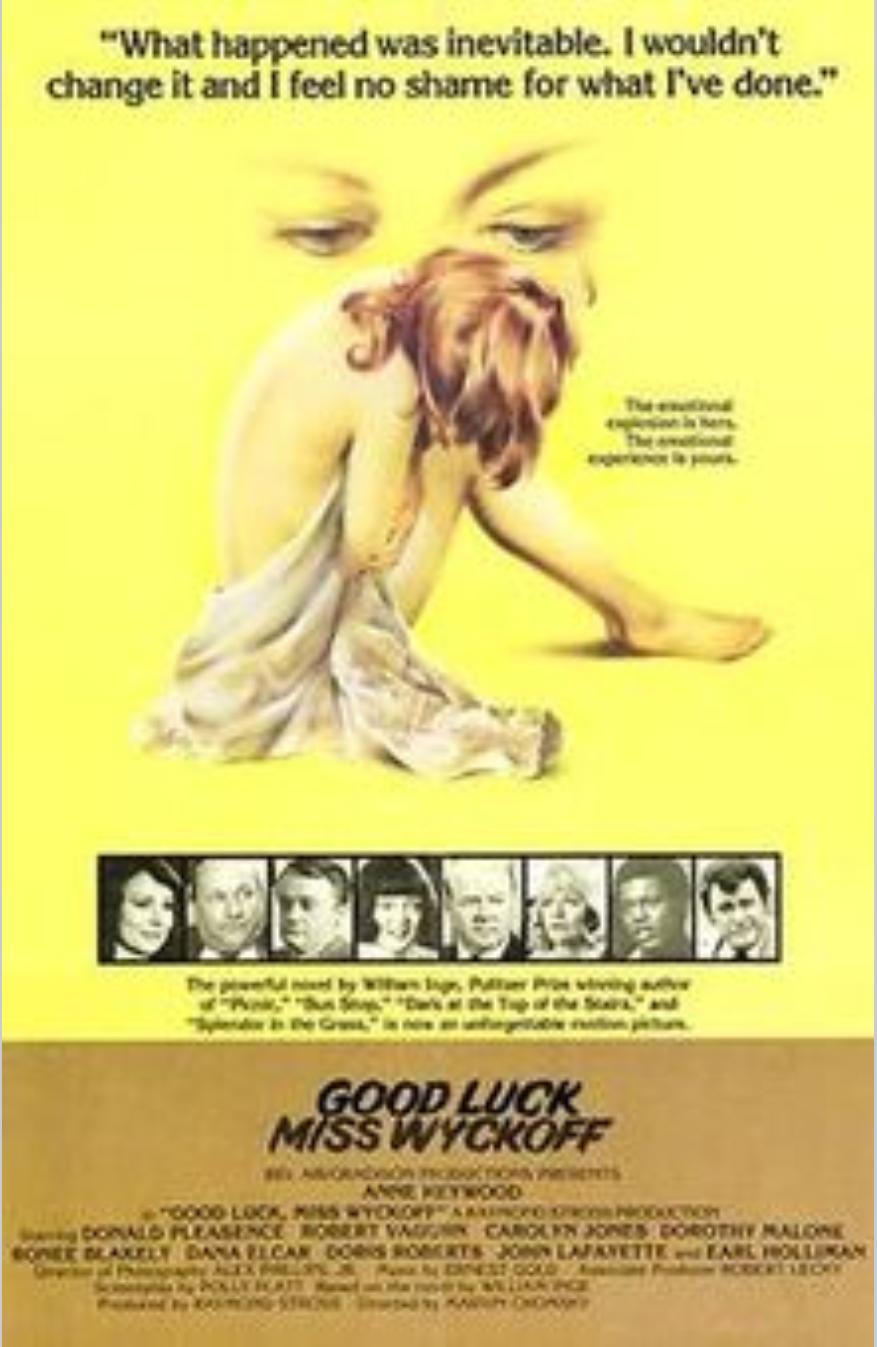
Evelyn Wyckoff (Anne Heywood) is a middle-aged single woman who teaches high school in a small town in Kansas. She has never married and is showing signs of severe depression, which alarms her best friend Beth (Carolyn Jones) as well as the older couple (R.G. Armstrong, Joycelyn Brando) whom she’s living with. Both her doctor (Robert Vaughan) and her psychiatrist (Donald Pleasance) believe it’s because she is not in a relationship or having any sex and that she needs to get out more and meet people. She attempts at starting something with fellow teacher Chester (J. Patrick McNamara) but finds him to be too shy and embattled with his own problems to be able to recognize her interests. She also considers friendly bus driver Ed (Earl Holliman) only to call it off when she learns he’s married. Left alone after school one evening she comes into contact with Rafe (John Lafayette), a black man who works as the janitor, who sees her loneliness as a weakness that he can exploit. He comes onto her strongly and abrasively eventually forcing her to submit to his sexual demands, but she doesn’t go to the authorities and instead starts to enjoy the degradation and continues to come back for more until the rest of the students and teachers find out about it putting her job and reputation in peril.

The story is based on the 1970 novel of the same name written by William Inge. The film rights were sold in 1971 but sat on the shelf for many years until producer Raymond Stross found it and felt it would be a good vehicle for his actress wife Heywood who had already made a name for herself in tackling controversial, edgy material and even sought it out, so this was considered a perfect next project. While she had received critical accolades for her earlier work, The Fox, where she played a lesbian in a  relationship with Sandy Dennis, which was envelope pushing for its era, this one did not go over as well and was genuinely lambasted causing her career to take a downfall from which it couldn’t recover and she ended up retiring from acting just a decade later.

On a surface level it’s okay. The recreation of the 1950’s Kansas, while shot in Stockton, California, is still effective and the personalities of the people isn’t as cliched. There are those that show prejudices and oppressive mind sets, but there’s a healthy balance that don’t, which helps make it feel more realistic. The supporting cast is full of familiar faces though most of them are wasted in small roles that don’t add much and Carolyn Jones, in her last feature film appearance, stands out best albeit with an awful hairstyle.

The biggest detriment, besides the flat direction and booming music score, is Heywood who doesn’t offer enough nuance to her part. I’ll commend her for taking on a very difficult role that required at age 48 to be fully nude and allowing herself to be put into some very vulnerable and demeaning positions, but her facial expressions and responses are one-note. Her constant crying for no reason, which alarms those around her, and unexplained impulsive behavior, like smashing a mirror during a party, is too dramatic. Instead of using this to reveal that she’s unhappy it makes her seem more like a complete mental case that has far worse issues than just being lonely and I felt more sympathy for her friends trying to put up with her erraticism than I did with the main character who for the most part is rather whiny and annoying.

There’s never any explanation for why she’s unable to get into a relationship. She’s attractive, so you’d expect there would be eligible suitors who’d ask her out. All we see is a bus driver who’s already married, but what about other single men who would have to be out there? Why don’t we ever see one of them make a move and if so, how would she respond to them, which would be far more revealing than anything she says to her shrink, which amounts to talky pseudo-science.

The rape scene isn’t either shocking or effective and seems to come out of nowhere. It occurs in the middle of the second act, but before then we see the Rafe character only once while cleaning the chalk boards for a few seconds, so we have no idea what makes him tick, or why he chooses to prey on this woman and none of the others. Had she made the first move in an attempt to connect with someone and relieve her of her isolation, and this then inadvertently incited some inner aggression with him it might’ve made more sense and worked with the flow of the story, but the way it gets handled here makes it seem like two different movies: one dealing with the pain of being alone and the other about a man who enjoys exploiting women.

Ultimately nothing comes together. We don’t learn much about the protagonist. Yes, she’s sexually repressed, but the root cause is never made clear. The fact that she accepts her degradation at the hands of Rafe makes her even more confusing. When her friend Beth says that she feels like she didn’t really know her at all I the viewer felt like saying the same thing. The result is shallow using shock elements that are no longer effective causing the film to be both forgettable and boring.

My Rating: 1 out of 10

Released: April 13, 1979

Runtime: 1 Hour 46 Minutes

Rated R

Director: Marvin J. Chomsky

Studio: Bel Air/Gradison Productions

Available: DVD, Blu-ray, Tubi

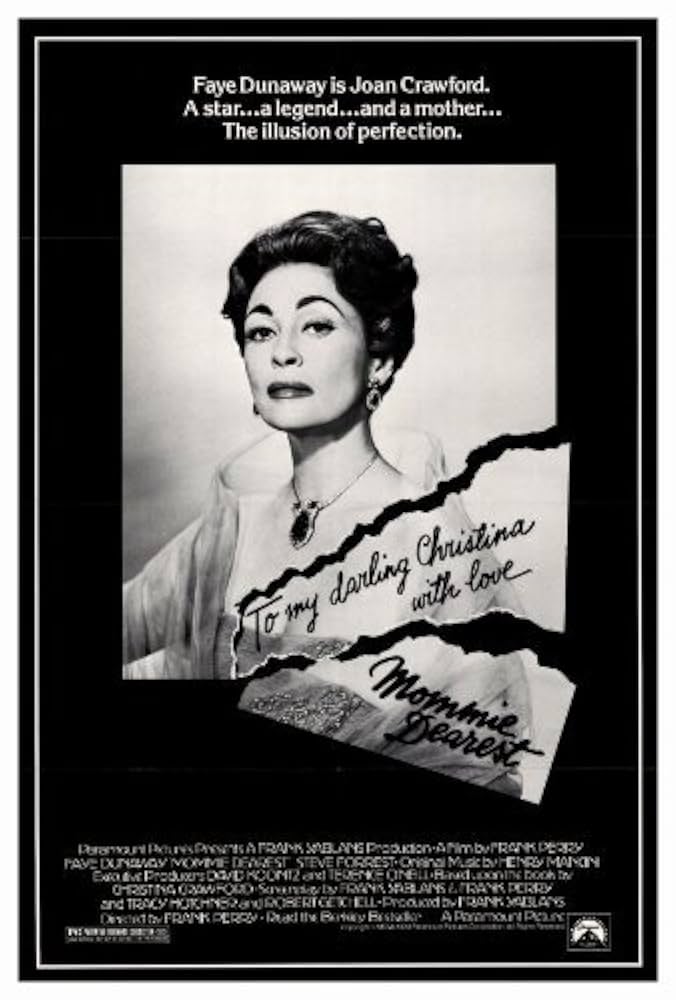
Mommie Dearest (1981)

By Richard Winters

My Rating: 6 out of 10

4-Word Review: Treating her children cruelly.

Joan Crawford (Faye Dunaway) is a famous actress who longs to have children, but unable to have any of her own. The adoption agencies reject her attempts to get a child because she’s divorced and a career woman, so she gets her boyfriend Gregg (Steve Forrest), who’s rich and influential, to pull-some-strings, which ultimately gets her a baby girl named Christina (Mara Hobel). Joan though proves to be a very strict parent and enforces harsh rules, which Christina rebels from and this leads to even harsher consequences. As Christina grows older, (Diana Scarwid) she begins a life on her own away from her mother including a fledgling acting career where she stars in the soap opera ‘Summer Storm’, but when she gets ill her mother, desperate to recharge her failing career, takes over Christina’s role while she’s recovering in the hospital that further erodes their already tenuous relationship. When Joan ultimately dies and Christina finds that both her and her brother have been written out of the will she decides at that point to write a tell-all book that will scratch away the glossy image of her famous mother and instead paint a ‘true’ portrait of who she really was.

The film is based on the autobiography of the same name written by Christina Crawford that was published in 1978 to much controversy as both family and friends denounced it as sensationalized and not an accurate portrait of Joan. Nonetheless it was a best seller, which quickly lead to a movie deal. Dunaway was excited to take the role convinced it would lead to her second Oscar, but instead, despite being directed by the talented Frank Perry, it was perceived as camp by both the critics and the public alike forcing Paramount to retool its marketing campaign selling it more as a dark comedy much to the dismay of the film’s producer Frank Yablans, who insisted it should be perceived as a serious drama.

On the one hand I think some of it is true. I have no doubt that Joan was a very strong-willed woman who had very particular ideas on child-rearing. Anyone who’s scratched-and-clawed their way to the stardom and able to maintain it over several decades would certainly have to be a driven person and I’m sure some of that would have to rub off in their home life. The scenes where she pushes Christina to be a better swimmer, so that she learns to understand the competitive world out there, made sense and parents pushing their children can happen a lot. Having her being controlling and a clean freak wasn’t all that surprising either and these scenes felt honest and revealing.

The problem is that the film makes no attempt to humanize Joan and instead becomes obsessed with portraying her as being a monstrous kook that scares everyone who’s around her including her dedicated servants who act in petrified fear every time they come near her.  The film fails to show any nuance and becomes a big trash feast intent at making her look as awful as possible and leaving no room to even consider the other side, which because she had already died by the time this movie was released, she wasn’t able to give. The most ridiculous moment, which wasn’t in the book, is when she goes into Christina’s room late at night while wearing white face cream that makes her appear almost demonic and then flies into a rage when she notices a wire hanger in her closet that is so over-the-top I’m surprised the cast and crew didn’t break out laughing while it was being shot.

There are issues with Christina too as she’s a little too good to be true. There are several scenes that had it been tweaked just a bit could’ve made her the difficult one instead of the mother. Case in point is when she refuses to do things that her mother asks that could easily be seen by some as Christina being a mouthy brat unwilling to do as she’s told and Joan simply stepping to create some discipline, which is why some attempt at balance would’ve helped and made it seem less like a cheap soap opera.

Spoiler Alert!

Another dumb scene comes near the end when Joan jumps on Christina and begins to strangle her and needs to be pulled off by two other women in the room (Rutanya Alda, Joycelyn Brando). It makes it look like she was close to dying had the two ladies not intervened, but Christina was at the time a grown woman and much younger than Joan, so she should’ve been able to defend herself and fight back. Having her essentially just lay down and take it seemed unrealistic and turning it into an all-out physical cat fight between the two would’ve far more entertaining and believable. Yet despite all this the production values are still top notch and in a tabloid sort of way it’s entertaining.

My Rating: 6 out of 10

Released: September 16, 1981

Runtime: 2 Hours 9 Minutes

Rated PG

Director: Frank Perry

Studio: Paramount

Available: DVD, Blu-ray, PlutoTV, Amazon Video, YouTube

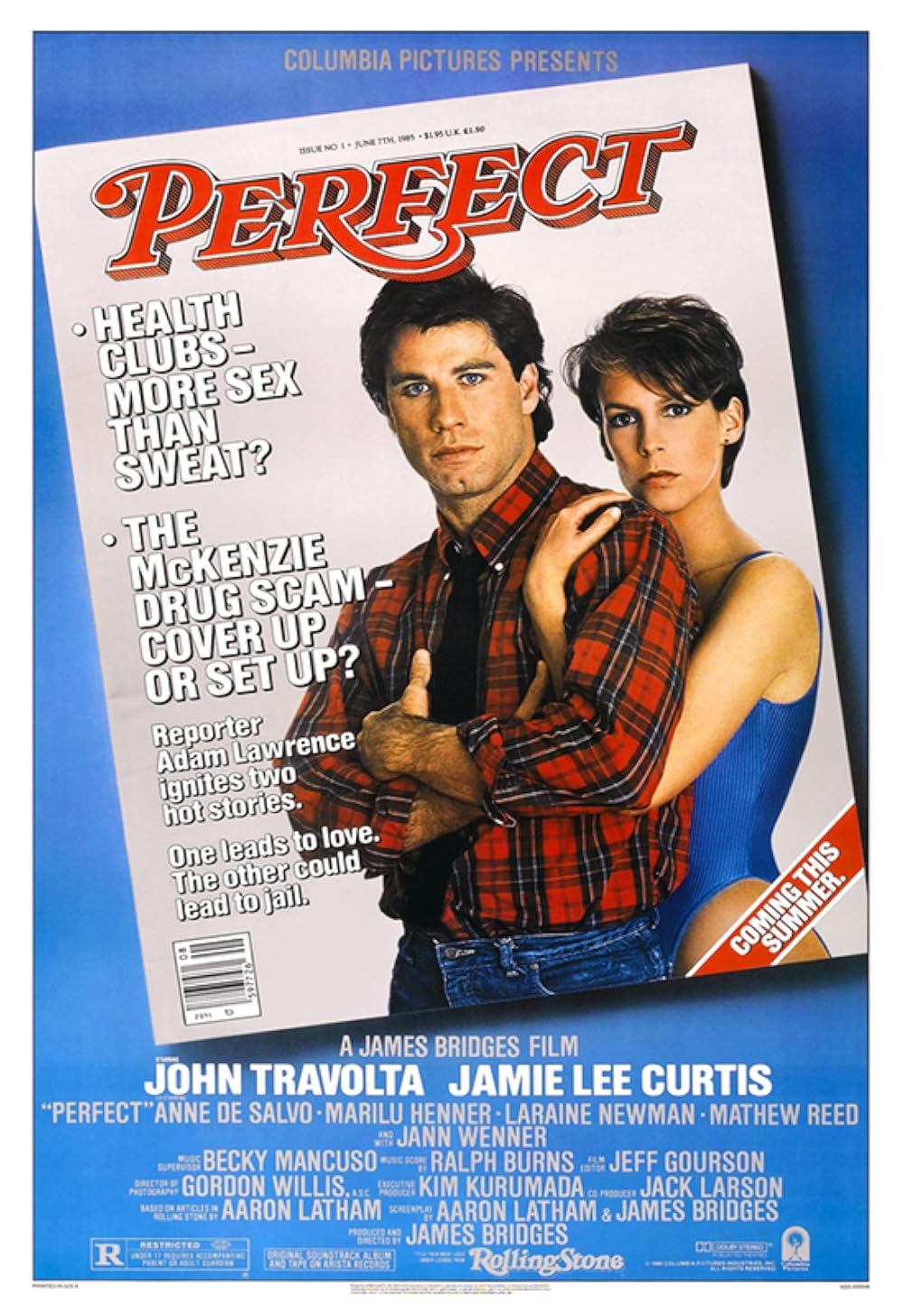
Perfect (1985)

perfect3

By Richard Winters

My Rating: 2 out of 10

4-Word Review: Reporter investigates aerobics craze.

Adam (John Travolta) is a reporter working for Rolling Stone magazine who gets sent on assignment to Los Angeles. While there he becomes intrigued with the health fitness craze and believes the workout clubs are becoming like the singles bars of the 80’s. He asks his editor Mark (Jann Wenner) permission to write a secondary story focusing on this new phenomenon and he agrees. Once he begins attending the club he becomes infatuated with Jessie (Jamie Lee Curtis), one of the instructors. He asks her for an interview, but she refuses based on a past experience she had with another journalist, but Adam continues to pressure her. Eventually the two begin dating only for Jessie’s initial fears to ultimately get exposed when she reads the story he’s written about the club, before it gets sent to the press, and realizes it’s a negative take on the people in it, many of whom are her friends, which leads to a serious strain on their relationship. 

The film is loosely based on the real-life experiences of Aaron Latham who worked as a reporter for Rolling Stone during the late 70’s. He had already written the screenplay for Urban Cowboywhich also starred Travolta and was also directed by James Bridges, so this reteaming was expected to be a huge hit, but instead it lost over $8 million at the box office despite initially doing well on its opening weekend. A lot of the problem is that journalists aren’t considered likable people and most of the American public by and large despise them. The fact that this one behaves exactly the way you’d expect, being more than willing to exploit their subject, particularly with the way he treats the Marilu Henner and Laraine Newman characters, in order to get a juicy spin on a story, just makes him all the more despicable. 

His character is quite blah as well. We never learn why he wanted to get into journalism and if some backstory had been given, and not just starting out with him working in the obituary section and trying to move his way up, then he might’ve had more depth. It’s confusing too why such a good-looking, jet-setting guy, wouldn’t have a girlfriend. Maybe if he’d been through a rough break-up and thus wanted to avoid it that might’ve been understandable but should’ve been explained. Even just having some casual dates would’ve made sense but having him just all alone with no reason only adds to make the character even more transparent. 

Curtis as an actress is excellent and the movie is worth sitting through solely because of her and she’s looking really hot here too. However, her character’s responses to things seemed a bit off. She makes it quite clear upfront that she’s not interested in an interview, but Adam doesn’t take no for answer and proceeds to continue to hound her, which should make her hate him even more, but for some reason it doesn’t. Yes, he does help get her car started when her battery dies, so as a thank you she might’ve been willing to do a simple interview, but instead her repayment is to go to bed with him while still refusing to do any interview, even though I felt realistically it should’ve worked the other way. 

The concept itself isn’t intriguing. I lived through the 80’s and really didn’t care why people got into the aerobics thing. Revealing that some of those that did was because they were lonely and looking to meet someone to hook-up, isn’t exactly groundbreaking. The entire supporting cast is incredibly dull including Jann Wenner, the original co-found of Rolling Stone magazine, who essentially plays himself as Adam’s boss, but his performance is lackluster, and a professional actor should’ve been given the role. 

Spoiler Alert!

My biggest gripe came at the end where Curtis keeps going back to Travolta even as he does all the things that irritates her about reporters like secretly recording their conversations while in a car. That alone should’ve gotten her to dump him, which she does for a while, but then she returns. One forgiveness is okay, everybody deserves a second chance, but then he does it again with the negative story. Granted having the article revealing that she had an affair with her coach years ago wasn’t his fault as his editors put that into the story later on, but she had no way of knowing that. From her perspective he betrayed her trust and therefore the relationship should’ve been permanently over. She didn’t care for reporters right from the beginning and all he did was affirm her confirmation bias. It would’ve been more believable had she instead liked journalists and maybe wanted to be one herself and therefore kept given him the benefit of the doubt, but the way it gets done her makes little sense. 

My Rating: 2 out of 10

Released: June 7, 1985

Runtime: 2 Hours

Rated R

Director: James Bridges

Studio: Columbia Pictures

Available: DVD, Amazon Video, YouTube
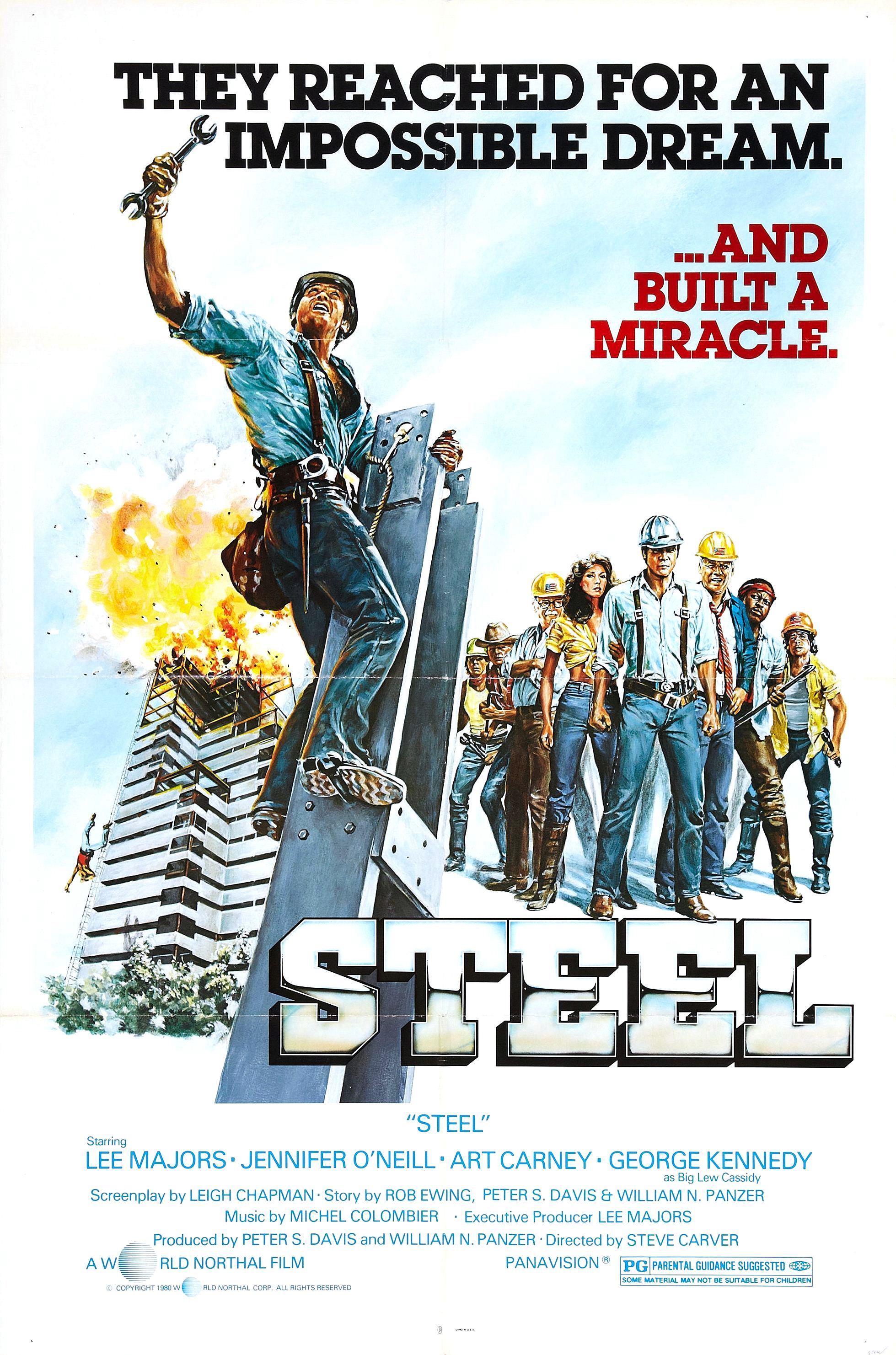
Steel (1979)

steel

By Richard Winters

My Rating: 4 out of 10

4-Word Review: They build a skyscraper.

Big Lew (George Kennedy) runs a construction company that builds skyscrapers and is under pressure to get his most recent project, which will be one of the tallest he’s ever been put in charge of making, completed under budget. While climbing onto a metal high beam, one of the other workers with him freezes and refuses to come down. Lew attempts to relax him, but in the process, he loses his balance and falls to his death. Cass (Jennifer O’Neill) is put in temporary charge, but she’s overwhelmed with the demands and thus goes to Mike (Lee Majors) to help take over the project and make sure it gets done in time. Mike used to be a part of the hard-hat team, but an accident caused him to become afraid of heights and forced him to take a job as a truck driver, but when the daughter of an old friend comes calling, he can’t refuse. He assembles a motley crew of misfits who all have eccentric personalities but also know how to build tall buildings and do it right even when put under grueling circumstances. Not all of them know about Mike’s fear and he tries to hide it from them due his concern that they might not respect him anymore if they found it, but while he struggles to keep everyone working at a near impossible pace he must also fight-off the likes of Eddie (Harris Yulin) who’s been tapped by a criminal conglomerate to do whatever he can to hijack the efforts of Mike’s crew and make sure the building is never finished.

The film is for the most part just a TV-movie if not for one brief moment when a prostitute gets into the truck that Lee Majors is driving and takes-off her shirt. It would’ve been best had it been made for that medium because as a theatrical release it didn’t do well and has been largely forgotten without any DVD, Blu-ray, or even a steaming venue to its name. Infact the only thing that stands it out is what occurred behind-the-scenes as stuntman A.J. Bakunas died when attempting the world record by diving off a construction site at 315 feet from the 22nd story where he reached speeds of 115 mph. The jumped looked perfect, but upon landing the air bag split and he died from the injuries the next day.

While his death was certainly regrettable, his father was a part of the 1.000 onlookers who witnessed it, it was not shot in a way that makes it work in the film. While the footage was kept and edited into the movie you only end up seeing a few seconds of it making it seem like it wasn’t even worth attempting if that’s all that was going to be seen. It was also used to kill-off George Kennedy, it was his character’s fall that the jump was created for, but Kennedy’s hard-ass persona is the one thing that gives the story any color and it’s a shame that he hadn’t stayed in all the way through.

The supporting cast if full of familiar B-movie faces and some of them are quite good, but they’re not in it enough. The movie might’ve been more entertaining had the workers themselves carried it, but instead we get introduced to their quirky temperaments, while Majors busily makes the rounds to beg them to come aboard as his crew, but then after that they’re largely forgotten and instead the focus gets put on Majors who is by far the dullest of the bunch and it would’ve worked better had he not been in it at all. O’Neil had great potential, seeing a woman trying her best to head an all-male crew, most of whom weren’t exactly gentile, could’ve made for some high drama and been considered even groundbreaking and the film clearly misses-the-mark by not having taken that avenue.

The building that was used for the film was the Kinkaid Towers in Lexington, Kentucky, which when compared to major skyscrapers in large cities is quite puny and unimpressive. The opening shot capturing it from the ground-up as its half-built doesn’t help to dispel this feeling and if anything seems rather laughable especially when there’s no other tall building around it, so there’s no cosmopolitan vibe at all to it.  However, the shots showing the men walking on the high beams several stories up with seemingly nothing holding them down is nerve-wracking to watch especially for those who fear heights, so in that vein it succeeds, but with everything else it’s rather flat.

My Rating: 4 out of 10

Released: July 25, 1979

Runtime: 1 Hour 42 Minutes

Rated PG

Director: Steve Carver

Studio: Fawcett-Majors Productions

Available: DVD-R

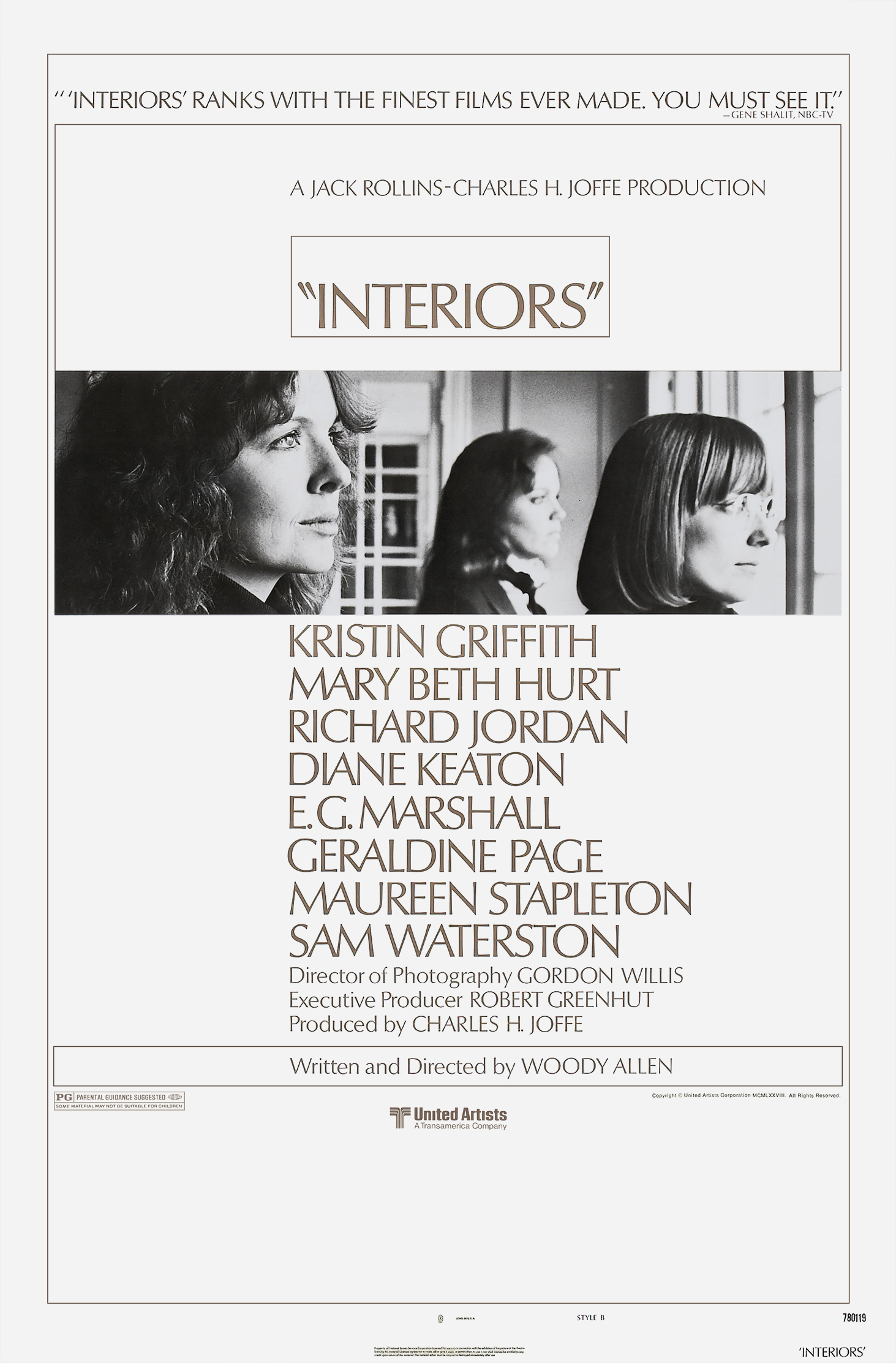
Interiors (1978)

interiors

By Richard Winters

My Rating: 8 out of 10

4-Word Review: Artistic family harbors turmoil.

Eve (Geraldine Page) is an interior decorator whose emotions she keeps bottled-up and who also has a controlling and temperamental nature to not only her husband Arthur (E.G. Marshall), but also her three grown daughters: Renata (Diana Keaton), Flyn (Kristin Griffin), and Joey (Mary Beth Hurt). One morning, while at the breakfast table, Arthur announces to not only Eve, but also the two other daughters present, that he wants a separation though he insists it’s not ‘irrevocable’. Eve becomes upset and refuses to face it. While the two do separate she continues to cling to the delusion that they’ll ultimately reunite. When it finally becomes painfully clear that is not going to happen she then attempts suicide. While she’s in the hospital recovering Arthur goes out and meets Pearl (Maureen Stapleton) whom he quickly falls in love with. When he brings her home to meet the family they’re shocked at how he intends to marry her while his former wife is still in the hospital. This then brings out the hidden hostilities that the daughter’s feel towards their parents as well as each other and in Renata’s case the repressed envy that her own husband Frederick (Richard Jordan) feels for her.

This was Woody Allen’s first dramatic film, which was a big deal when it was first released as he’d only done wacky comedies before this and many were curious and apprehensive about him trying something so completely different from his past work. While he’d been trying to get a drama produced for years his investors constantly nixed the idea fearing that because he attracted audiences through his funny stuff that anything with a serious nature would turn-off would-be theatergoers and be a financial flop, but after the monumental success of Annie Hall they finally decidedly to relent and gave Woody the chance to spread his artistic wings.

The result overall is downright impressive. It’s clearly inspired by the films of Ingmar Bergman, his cinematic idol, but in some ways this is even moodier and more poignant than some of his stuff. While his later dramas fell into becoming a cliche of themselves using many of the same elements taken from this one, namely pretentious artistic characters living in New York who suffer from pretentious problems and relationships, here it’s fresh making the issues that they go through seem illuminating versus rehearsed and contrived like in some of his later works.

That’s not to say I didn’t find some problems here. The fact that we have characters, in this case Keaton, talking directly to the screen, apparently in an attempt to show that she’s speaking with a therapist, is a bit of a cop-put as she’s able to convey her deep seated thoughts and feelings verbally without forcing the director to have to show it through her actions and conversations, which may be more difficult to do, but also more rewarding for the viewer. Arthur’s decision to tell Eve that he wanted to leave while sitting a the meal table with the two daughters present seemed rehearsed. Normally when a couple decides to split they do it privately and have it out through a discussion or argument versus a canned speech that Arthur does, which comes-off like he’s orating in front of a group of people.

Woody’s attempts though to show the struggles and challenges people have who pursue creative endeavors I felt were quite well done. In his later dramas I found it annoying how many characters worked as artists because it reality only a very small portion of the populace can make a living that way, but here I was able to forgive it. I liked how we see close-up the challenges of this by the way Renata writes a poem on paper but is constantly scratching out words that she puts down showing the many drafts an author must go through before it eventually might come-out perfectly. The fact that it’s later revealed that her father helps fund her poetic passions made sense too as a poet able to live-off of their writings is about as rare as it gets.

Richard Jordan’s character is the one I found the most fascinating and I was genuinely surprised that while other cast members were nominated for the Oscar he wasn’t even though to me he’s superb.  The way his character broods incessantly about not getting the critical accolades that he expects and how it turns him into a mopping, alcohol drinking mess who snips at his wife’s perceived shortcomings in an immaturely emotional attempt to bring her down to his level was completely on-target composite of the insecure artist. The scene where he tries to rape Flyn, so he can have the pleasure to ‘fuck someone who’s inferior to me’ fit the personality of someone who harbors frustration that they’re able to mask with a veil of civility most of the time but will allow it to come-out when alone in the presence of someone more vulnerable.

The real star though is the cinematography by Gordon Wills, who ironically went on to make his directorial debut in a movie called Windowswhich was the original title for this one. The gray, cold color schemes and shots showing an ice-covered tree branch effectively reflects the icy emotions of the family and the lack of music with long pauses of silence and empty rooms help symbolize how alienated each member is from the other. The most pronounced moment involving the crashing waves of the ocean and the almost dream-like ‘conversation’ that Joey has with her mother is by far the film’s most memorable element and something that will stay with you long after it’s over.

My Rating: 8 out of 10

Released: August 2, 1978

Runtime: 1 Hour 32 Minutes

Rated R

Director: Woody Allen

Studio: United Artists

Available: DVD, Blu-ray, Freevee, Pluto, Amazon Video, YouTube

Once is Not Enough (1975)

once

By Richard Winters

My Rating: 0 out of 10

4-Word Review: Having a father fixation.

January (Deborah Raffin) is the college-aged daughter of wealthy Hollywood producer Mike (Kirk Douglas) who spent time recovering from a motorcycle accident in Europe and now returns to the states excited to see her father of which she adores immensely. Unfortunately things have changed since she’s been gone. Mike no longer has the clout, or capital that he once did and now can’t get any of his projects off-the-ground. He’s married rich socialite Deidre (Alexis Smith) simply as a way to get his hands on some money as he no longer has any of his own, but she’s more into her lesbian affair that she’s having with Karla (Melina Mercouri). Feeling dejected at how things have turned-out January falls into the arms of Tom (David Janssen) an alcoholic semi-successful novelist who suffers from impotency. When Mike learns of this relationship he becomes enraged as Tom has long been one of his biggest adversaries and so he goes to the apartment where the two are staying determined to have it out with the both of them.

The film is based off of the final novel written by Jacqueline Susann who became famous for having penned the popular Valley of the Dolls 7 years earlier. This book, like her two other ones, shot-up immediately to the top of the Best Seller’s list and she became the first author to ever have her first three novels achieve this, but her ability to savor her success was short-lived as she was diagnosed with cancer shortly after the book went to press and she never lived to see it made into a movie.

The book, like her other ones, was widely panned by the critics, but this movie here does it no justice. When compared to Valley of the Dolls this thing has absolutely no zing and nothing that’s truly salacious or tawdry, which were the main elements that gravitated folks to read Susann’s books in the first place. The only ‘shocking’ moment comes during the lesbian segment, which was considered ‘pushing-the-envelope’ at the time, which shows two older actresses kissing each other on the lips, which by today’s standards will be seen as quite trite and forgettable. The other potentially spicy moments never come to play and it ends flatly making you wonder what were they thinking when they made it.

Raffin, a former model, is quite beautiful and the best thing in it, but her character is too innocent to be believed. She’s a virgin despite being raised in the fast lane of Hollywood, which seemed hard to believe. Supposedly this is because she’s so infatuated with her father she’s subconsciously ‘saving herself’ for him, but a person could have sex outside of a romantic context and I’d think since most of her other friends would’ve have likely done it she’d be at least curious enough to try it out. The same goes for her inexperience with drugs, alcohol, or even dealing with womanizing men such as George Hamilton’s character who fills her glass to the brim with brandy and when she asks why he says so he can ‘get her drunk, so she’ll lose her inhibitions’ and she’s shocked to hear this, but any young women living in L.A. during the swinging 70’s should conditioned and prepared to this age-old ploy and having her so taken aback by it makes her too painfully naive to be believable. Instead of being a producer’s daughter she seems more like some nun snatched from a  convent she’s been living in her whole life and completely out of whack with her surroundings.

Douglas is a complete bore and I can only imagine he took the role simply because he was on a career decline and needed the work, but despite being center stage during the first half, his character slowly fades out and is completely forgotten by the end. Alexis Smith, whose acting work had also been in a downward spiral, this was her first movie role in 16 years, and was only given the part because Lana Turner, who was the producer’s first choice, turned it down as she objected to having to do the lesbian kissing scene, is sufficiently bitchy, but overall wasted.

Brenda Vaccaro won accolades for her performance and was even nominated for the Supporting Oscar for her work, but I was a bit surprised. I’ve always found her an impressive actress, but playing some jaded California gal that likes to openly sleep around isn’t that interesting and her character lacked depth. The part where she tries to quickly clean-up her cluttered bedroom before letting a new man into it was kind of amusing, but otherwise her presence, like all the others, was quite tepid. I did though enjoy Hamilton, this marked his last serious role before he then began to venture into comedy, not so much for his acting, but more because I felt this role most closely resembled his true personality. Janssen has some potential as this brash, abrasive guy, but then having his lifelong impotency suddenly and magically ‘cured’ after seeing Raffin nude in the shower is just downright laughable.

Spoiler Alert!

The biggest letdown is the unexciting ending. In the book January gets into acid and then partakes in a sex orgy only to eventually walk into the ocean and drown after seeing a vision of her dead father. The movie though, in an attempt to be ‘hopeful’, doesn’t show any of this. It just has her walking around the city in a daze and that’s it. A movie like this needs, especially with this type of soap opera material, some sort of salacious pay-off and seeing a once innocent, naive girl in an acid driven orgy would’ve been just the ticket, so for the filmmakers not to give the viewer even that much makes this whole vapid thing pathetic beyond belief.

My Rating: 0 out of 10

Released: June 20, 1975

Runtime: 2 Hours 1 Minute

Rated R

Director: Guy Green

Studio: Paramount

Available: DVD, Blu-ray, Amazon Video, YouTube

I Am the Cheese (1983)

iam

By Richard Winters

My Rating: 6 out of 10

4-Word Review: Dealing with past memories.

Adam (Robert MacNaughton) is an adolescent boy taking a bike trip through Vermont in order to deliver a present to his father (Don Murray). During his ride memories from the past that had been stuck in his subconscious come to the surface including his on-and-off relationship with Amy (Cynthia Nixon) as well as the sometimes odd behavior of his father. Helping sort through these things including him finding in his father’s desk drawer two different birth certificates with his name on it, is Dr. Brint (Robert Wagner) a therapist at a mental hospital that Adam is currently residing in.

The film is based on the book of the same name written by Robert Cormier, who appears briefly as Amy’s father, who wrote many young adult novels with his best known one being The Chocolate War. The screenplay was written by David Lange, who was also the producer, and the brother of Hope Lange who gets cast as Adam’s mother and is a reunion of sorts for her with Don Murray, who plays Adam’s father, and whom she’d been married two from 1956-62. She had also co-starred with Robert Wagner in The Young Lions in 1957 though here they don’t share any scenes together.

The film, which was the one and only directorial foray of Robert Jiras who worked as a Hollywood make-up artist for many years, is decidedly low budget though since most of the action takes place with Adam on his bike it really doesn’t hurt the effect of the story and the lush summertime New England scenery becomes an added benefit. MacNaughton, who’s better known for playing the older brother in E.T. before leaving the acting business after the 80’s and becoming a mail sorter, is quite good as he effectively channels his character’s inner anxiety and confusion. Nixon is also a stand-out playing against the cliche of a typical teenage girl, who are usually portrayed as being giggly, insecure, and into the latest fads, but instead she is cultured, poised, confident, and smart and she adds a wonderful addition to the movie and it’s just a shame she wasn’t in it more.

The plot follows the book pretty closely including the constant shifting between the present and the past and also the therapy sessions. While I usually like non-linear narratives I initially found this structure off-putting. The publishers in fact felt, when the they read the initial manuscript, that it would too confusing for young readers and pressured Cormier to simplify the structure, which he refused. Despite this it does become genuinely riveting by the second act.

Spoiler Alert!

The twists are good and makes sitting through it worth it though the moment when the bad guys catch-up with Adam and his parents should’ve been played-out more since it’s such a traumatic moment. It’s possible that because this was aimed at teen viewers the producers felt this violent element required being toned down, but crucial scenes like these have to stand-out and the way it gets done here it just doesn’t.

In the film, like in the book, the psychiatric sessions are ultimately revealed to be a sham where Robert Wagner’s character isn’t a doctor at all, but instead part of the government conspiracy to make sure Adam doesn’t know more than he should about his parent’s past as otherwise he would be deemed a ‘risk’ and ‘terminated’. However, in the movie they have Adam escaping from the place and riding off on his bike like he’s now ‘free’, but he really isn’t. He has no job skills, no family, no money, and no place to live. He’s be better off just staying at the clinic even if it was a fake one, as he at least had a roof over his head and food to eat. Being on his own at 16 was unlikely to end well and such a sophisticated government operation such as this one was at some point going to track him down, dead or alive, so the tacked-on ‘happy ending’ doesn’t jive.

My Rating: 6 out of 10

Released: November 11, 1983

Runtime: 1 Hour 36 Minutes

Rated PG

Director: Robert Jiras

Studio: Almi Pictures

Available: VHS, DVD-R

When the Legends Die (1972)

whenlegends

By Richard Winters

My Rating: 8 out of 10

4-Word Review: Indian becomes rodeo rider.

Tom Black Bull (Tillman Box) is a young Ute Indian orphan living in the wild with his pet bear. One day Blue Elk (John War Eagle) an Indian elder comes upon the child and decides it’s time to get him acclimated into society by having him enroll into a school where Tom does not get along with the other students and forcing him to begrudgingly release his bear. Over the years Tom grows to being a young adult (now played by Frederic Forrest), but is bitter with the racism that he must endure. By chance he gets spotted by Red (Richard Widmark) who’s impressed by the way Tom can ride and control a difficult horse and decides he’d like to train him into becoming a rodeo rider. Tom sees this as an opportunity to get out of the slums that he’s in, but soon realizes that Red, who suffers from alcoholism, is exploiting him just like the other white men by forcing him to intentionally lose contests in order to trick people into betting against him.

During the early 70’s there were many modern-day westerns that focused on the rodeo circuit including Junior Bonner, J.W. Coop, The Honkers and Riding TallWhile all of those were good in their own right I’ve found this one to be at the top. The others were more a character study with the rodeo atmosphere a side-story while this one examines the training and technique that it takes to be a successful bronco rider with a meticulous detail making it more revealing and informative. The others didn’t always do a adequate job of making it seem like the lead character was actually riding the kicking horse and many times looked like a shot of the guy on top of one of those bull machines you see inside western barrooms, but here it’s captured in an authentic style including a disturbing moment where Tom refuses to get off the horse as it continues to buck, which ultimately exhausts the animal and requires it to be shot.

The story is based on the 1962 novel of the same name by Hal Borland who was a journalist who specialized in writing novels with an outdoor setting. The book though was aimed more for young adults and split up into four different sections while the film just analyzes the third portion. It also updates the time period to the modern day versus the turn-of-the century like in the book. It’s expertly directed by Stuart Miller, better known as a producer, with a well-written script by Robert Dozier that has crisp dialogue that manages to intimate a lot while saying little and never overstating anything.

Forrest plays his role with a sullen expression that remains constant throughout and some might complain it makes it one-dimensional, but I felt this helped illustrate the character’s inner anger and it’s fascinating seeing the juxtaposition of someone who’s very rugged and savvy when it comes to nature and animals, but quite virginal, literally, when it has anything to do with societal elements like women, alcohol, and other vices.

Widmark is brilliant as usual and one of the few people who can play a miserable, brash, and genuinely unpleasant old guy and still keep it on a humanistic level. Watching him go from gruff and demanding as he’s clearly the more worldy-wise at the start to more of a vulnerable and even dependent one at the end is a fascinating journey to watch. In many ways his relationship with Tom is like a father and son where the older one starts out as the stern teacher only to have it flip with the younger one, now fully accustomed to the world, taking the reins and caring, albeit begrudgingly, to someone who can no longer do it themselves.

My only complaint with the film that is otherwise close to flawless is that I would’ve liked to have seen one moment where Widmark shows some actual kindness to Tom as all the way through he’s quite grouchy and condescending even when Tom offers him some much needed support. I realize his character was a victim of the hard world he lived in and thus it wasn’t natural for him to show any tender side, which he most likely possessed very little of anyways, but one even fleeting moment of gratitude, even if it just was putting his arm around the young man and showing him a slight gesturing hug, could’ve gone a long way to giving it a bit more emotional balance and the touching image that every hard-edge drama ultimately should have and needs.

My Rating: 8 out of 10

Released: October 19, 1972

Runtime: 1 Hour 47 Minutes

Rated PG

Director: Stuart Miller

Studio: 20th Century Fox

Available: DVD-R