Category Archives: Cult

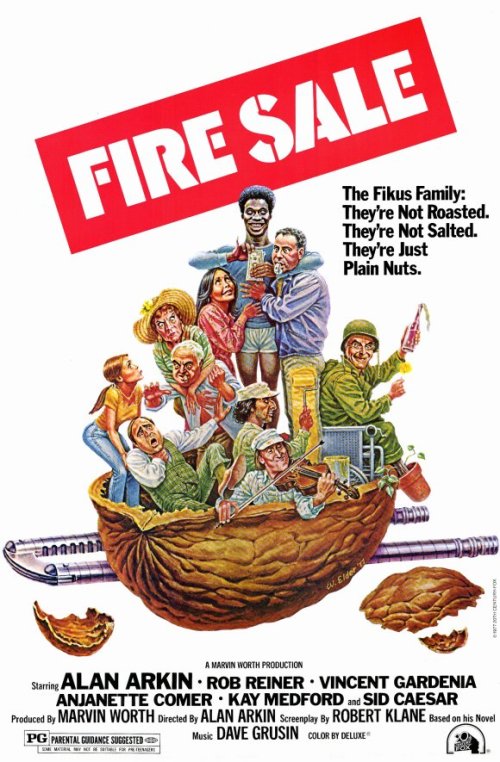
Fire Sale (1977)

By Richard Winters

My Rating: 3 out of 10

4-Word Review: Burn down the store.

Benny Fikus (Vincent Gardenia) is the elderly owner of a struggling clothing store, who has decided the only way to recoup costs will be to have it burn down and then collecting money on the fire insurance policy. He has convinced his mentally ill brother Sherman (Sid Caeser), who still believes that WWII is happening, that the store is really a front for the Nazi Headquarters and thus motivating Sherman to destroy it. To make his alibi iron-clad Benny takes a trip with his wife Ruth (Kay Medford) to Florida when the arson is expected to occur. During the trip Benny has a heart attack causing his son Russell (Rob Reiner) to take over the business. When he realizes that the place is bankrupt he decides to cash-in the fire insurance policy and use those funds to help regenerate the place. When Benny recovers from his heart attack and realizes what Russell’s done the two, along with Russell’s older brother Ezra (Alan Arkin), go on a mad dash to stop Sherman from setting the fire before it’s too late.

It’s hard to imagine just how badly botched this thing is as I approached it with high expectations. Arkin had already directed the brilliant Little Murders, which is one of the best dark comedies ever made. Robert Klane, who wrote the screenplay and book of the same name that the movie is based on, had also 6 years earlier written the screenplay for Where’s Poppa?, another cult masterpiece. So, with those great films already under the filmmaker’s belts you’d expect good things from this and yet it’s pretty awful right from the beginning.

The main problem is that there’s no running theme. Little Murders centered around the isolating effects of urbanization and Where’s Poppa? dealt with the harsh realities of caring for elderly parents.  This film though has no point to it. Lots of sloppy, slapdash comedy as director Arkin and writer Klane seem more concerned with getting a cheap laugh than telling a story. The sets have no cinematic style making it look better suited for a low-grade sitcom. The score by Dave Grusin, is too generic with overtones more on-par with a cartoon. A good movie should have music that is distinct and matches the tone of the script, which this one doesn’t.

I’ve always considered Reiner the weakest link from the classic ‘All in the Family’ TV-show and while his talents have been much better served as a director this movie was made when producers were still trying to turn him into a star, but the attempt fails. That only thing that he does that could be considered ‘comical’ is the running joke of him going into wheezing fits from his asthma every times he gets stressed-out, which gets overdone. He shares no chemistry with Arkin and they’re too far apart in age to be a believable brotherly pair.

Anjanette Comer, who was married to Klane at the time this was filmed, gets wasted in a thankless bit as Arkin’s beleaguered wife and the scene where she tries to commit suicide by locking herself inside a refrigerator is pointless because it never shows how she got rescued. Caeser as the would-be arsonists relies too heavily on  zany slapstick that is inconsistent in tone with the rest of the film.

Medford, as Arkin’s and Reiner’s put-upon mother, is alright, but the person that impressed me most was Gardenia whose frantic, over-the-top delivery as the exasperated father/business owner is quite good and his energy, even though he is not the star, helps propel the film. He’s even good when he’s in a comatose state and doesn’t move at all. I was particularly amazed during a segment where Reiner and Arkin crawl over him during an altercation and Arkin accidently kicks him in the head, but Gardenia does not flinch and remains very much in character.

My Rating: 3 out of 10

Released: June 9, 1977

Runtime: 1 Hour 25 Minutes

Rated PG

Director: Alan Arkin

Studio: 20th Century Fox

Available: DVD-R (Fox Cinema Archives)
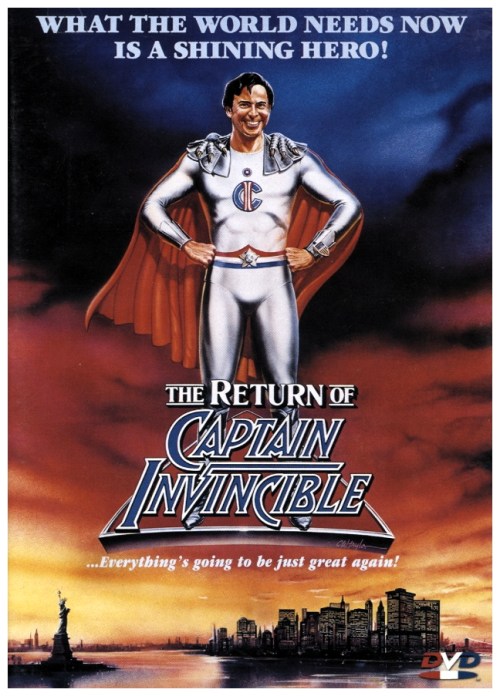
The Return of Captain Invincible (1983)

By Richard Winters

My Rating: 4 out of 10

4-Word Review: Super hero drops-out.

Captain Invincible (Alan Arkin) successfully fights off the Nazis during WWII and becomes a hero to millions, but then by the 1950’s, during the McCarthy era, he is smeared as being a ‘communist’, due to wearing a red cape.  The congressional investigators also accuse him of flying in airspace without a proper license and wearing underwear in public. All of this causes him to drop-out of the superhero business by moving to Australia and turning into a homeless alcoholic. Then his old rival, Mr. Midnight (Christopher Lee) steals a secret weapon called the hypnoray, which puts the whole world at risk. This causes the authorities to plead to Captain Invincible to return and help them stop the madman, but through the years his skills have diminished and he’s not sure he can get back into form to battle crime like he once did.

At the outset this is an inspired concoction made long before the super-hero satire was ever in vogue and there are a few funny bits here and there, but the whole thing gets too bizarre for its own good. The viewer becomes inundated with so much wacky imagery and goofy characters that instead of laughing you’re left scratching your head wondering what’s it all about.

The biggest mistake was adding in musical numbers, which turns the thing into an ill-advised version of The Rocky Horror Picture Show. The original script was not intended to be a musical, but director Philippe Mora had always dreamed of doing one, so he requested that the songs be added in. The first time this occurs it’s kind of fun particularly the line dance done by the well-dressed advisors to the President, which all helps to add to the irreverence, but then continuing to add in more songs bogs everything down  and makes the already sluggish pace even worse. Arkin and co-star Kate Fitzpatrick do not have good singing voices, so hearing them belt-out a half-hearted tune hurts the ears and with no interesting dance numbers to come along with it, these moments become boring visually as well.

Even though the story involves an aging superhero I still felt Arkin was too old for the part and would’ve liked somebody who could have offered more energy. Typical Arkin is great with offbeat material such as this, but everything is so over-the-top that he gets lost in the access and ultimately becomes just a prop. Christopher Lee suffers the same fate although some fans love his rendition of ‘Name Your Poison’ which he sings to Arkin as he tries to entice him to take an alcoholic drink from his personally made wet bar.

The film offers no special effects which becomes most apparent during the segment where Captain Invincible supposedly upends a speeding car, but the camera cuts away, so we never see him do the actual act, and just hits home how cheap the whole production really is. If you’re going to make fun of the Superhero genre you have to at least show some respect for it, which this thing never does. Instead of going off on wild tangents there should’ve been a big showdown between Invincible and Midnight, but it peters out in this area by being too busy trying to be weird when it should’ve worked harder to get a more coherent and interesting story.

My Rating: 4 out of 10

Released: June 11, 1983

Runtime: 1 Hour 36 Minutes

Rated PG

Director: Philippe Mora

Studio: Seven Keys

Available: DVD

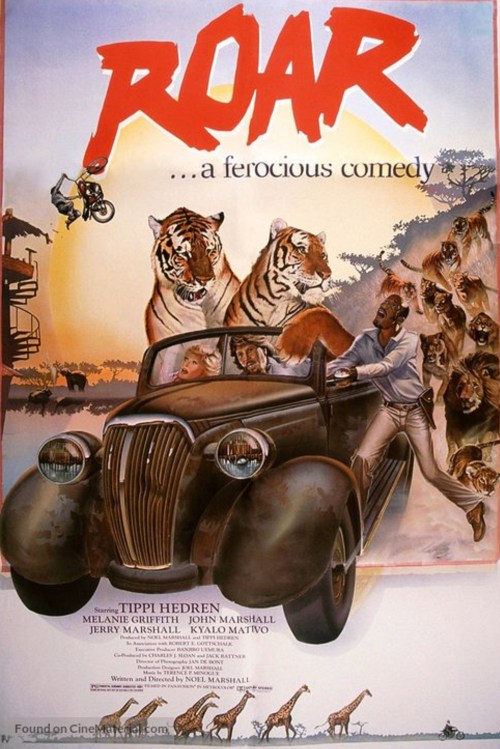
Roar (1981)

By Richard Winters

My Rating: 5 out of 10

4-Word Review: Lions takeover a house.

Hank (Noel Marshall) is a naturalist residing in east Africa where he studies the behaviors of lions and keeps several of them in his home. His wife Madeline (Tippi Hedren), daughter Melanie (Melanie Griffith) and two sons (John Marshall, Jerry Marshall) travel from Chicago to visit him. However, when they arrive there’s a mix-up causing Hank to miss picking them up at the airport. The four then travel to the home without him. When they get to the place it becomes overrun with the lions and the family is unable to handle them causing much havoc and destruction as they try to keep from getting attacked and bitten.

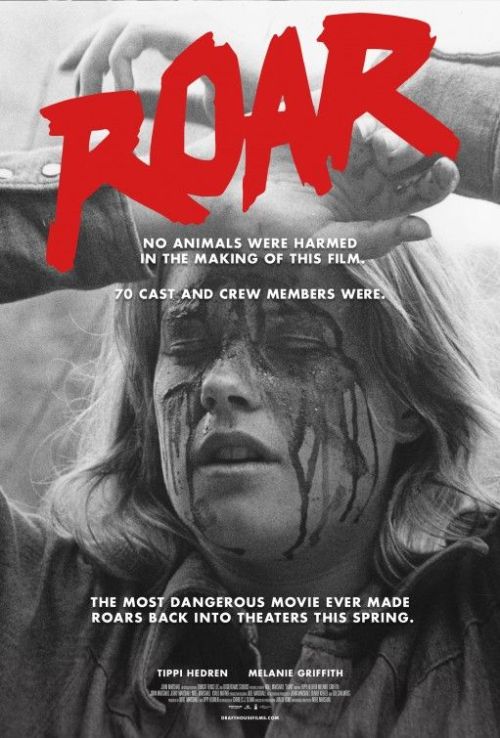
The idea for the film was inspired by Marshall and Hedren, who were married at the time, as they traveled through Mozambique in 1969. While going on a nature tour their guide pointed to a abandoned home that had become inhabited by lions and they thought this would make for a funny movie. It took them over 7 years to find the funds to be able to actually film it and then another 3 years before filming was complete. Over 150 lions were used at a cost of $4,000 a week to feed forcing the couple to sell their 3 homes just to be able to have enough money to cover the food and other expenses. Initially it was never released in the US and only abroad until in 2015 it got reissued to Alamo Drafthouse theaters were it got dubbed as being ‘the most dangerous movie ever made’ due to the many injuries inflicted on the cast and crew by the animals during the production.

To some degree the loose story works. I liked the scene where local official come to Hank’s home in their boats and become inexplicable attacked by the lions without warning even seeing actor Marshall’s hand bitten by one of the beasts, which all comes off as quite realistic and unstaged, something you rarely see in most Hollywood films. Unfortunately having to spend 90-minutes watching the family trying to get away from the lions becomes quite redundant. There’s constantly something going on and there’s a lot of chaos and running around, so visually it’s never boring, but the story goes nowhere. Ultimately it’s like gazing at a hamster inside their cage running inside a spinning wheel, which might be fun for while, but eventually pointless.

Savage Harvest, which I reviewed earlier in the week and came out around the same time, had a much more consistent tone. At least we knew that was intended to be a suspenseful thriller and for the most part it delivered, but here it gets increasingly confusing. While this budget is better and I enjoyed the opening sequence showing the beautiful topography of Kenya I still came away liking the other movie a bit better. The lion attacks are more graphic and in-you-face here, but without any sufficient tension it’s not captivating to sit through. It’s supposed to be a comedy and was marketed as such, but it gets too intense for that. Had the cast been made up of evil poachers that get harassed by the animals the prolonged scenario might’ve worked, but watching a bland family as the intended ‘victims’ isn’t enough to hold sustained interest.

I admire Hedren’s willingness, and the whole cast, for putting themselves in harm’s way and there are a few cute moments like when a lion plays with a skateboard, but it relies too heavily on the action, and the animals who are given onscreen credit along with the rest of the cast, but an actual plot was needed. With that said it’s still a one-of-a-kind movie that needs to be seen to be believed. I’m not sure if this one is included in the book ‘1001 Movies You Must See Before You Die’, as I have not always in agreement with some of the other ones that got listed in it, but this one definitely should be.

My Rating: 5 out of 10

Released: October 30, 1981

Runtime: 1 Hour 38 Minutes

Rated PG

Director: Noel Marshall

Studio: American Filmworks

Available: DVD

The Night, The Prowler (1978)

By Richard Winters

My Rating: 6 out of 10

4-Word Review: Victim turns into prowler.

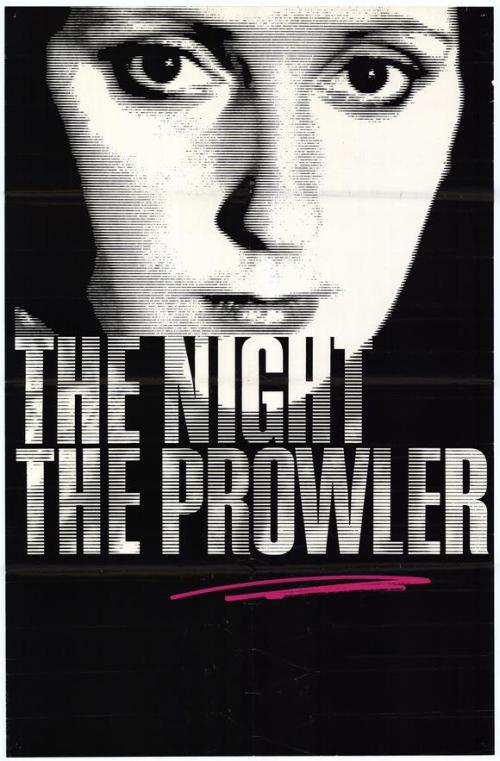
Late one night Felicity (Kerry Walker), who is an adult woman still living at home with her parents (John Frawley, Ruth Cracknell), finds that a prowler (Terry Camilleri) has invaded her bedroom. After getting into a conversation with him she is surprised to learn that he’s a married man with kids, who enjoys prowling as a side gig to make up for the monotony and stresses of his home life. Felicity then realizes that the suburban lifestyle that her parents want her to live does not fully satisfy the individual and therefore decides she doesn’t want it. She breaks off her pending engagement with her fiancé (John Derum)  and turns into a prowler herself breaking into men’s homes late at night and learning to enjoy the underbelly of society by socializing with the homeless and other people that her parents always told her to stay away from. She soon finds a sense of empowerment by thumbing her nose at the elitists that make her her suburban community and doing all the forbidden things that her former cloistered lifestyle never allowed.

The film was directed by Jim Sharman best known for having done The Rocky Horror Picture Show. The basis for this project comes from his collaboration with playwright Patrick White and the many plays of his that he directed while doing experimental theater in Sydney during the 70’s. White wanted to expand one of his short stories into a screenplay and Sharman suggested this one had the best chance of working. The two had both grown up in the eastern suburbs of Sydney and wanted to create a film that showed their inner disdain for the arrogant, privileged people that populated the neighborhoods there and how the sterility of those environments may have been a comfort to the adults, but stifling and alienating to the teenagers.

To some level the film is interesting, but the fragmented narrative becomes an intrusive turn-off. Normally I like films that to get away from the mainstream approach and use different cinematic styles to tell a story, but the presentation here never allows you to get emotionally invested into the characters or their situations. There’s too much cutting back and forth between the present day, the past, and even some dream-like segments that ultimately makes the whole thing confusing and off-putting. That’s not to say that there aren’t some provocative moments as there are, but the non-linear approach never allows it to catch its stride, or feel like its progressing forward.

I did enjoy though the scenes with Felicity in the park late at night talking to the homeless while inadvertently scaring off a gang of young hoodlums by chasing after them and demanding that they assault her. When she breaks into a rich couple’s home and systematically destroys it and their subsequent over-the-top facial reactions when they come home to witness it is a hoot too. There are though some very disturbing moments too including Felicity’s conversation with a naked, starving homeless man (Harry Neilson) that she finds lying inside the filthy squalor of an abandoned building.

The one thing that holds it all together is the acting. Walker is perfectly cast in the lead as her plain looks and perpetually despondent expression visually signals her inner angst and alienation. Cracknell though completely steals it in a campy send-up of the suburban housewife/ mother that is at times both comically absurd and over-the-top funny. Her odd behavior keeps the interest going even as the story and direction at times lull and in fact it was enough to have nominated for the Best Actress Award by the Australian Film Institute.

My Rating: 6 out of 10

Released: June 2, 1978

Runtime: 1 Hour 25 Minutes

Not Rated

Director: Jim Sharman

Studio: New South Wales Film Corporation

Available: DVD, Amazon Video

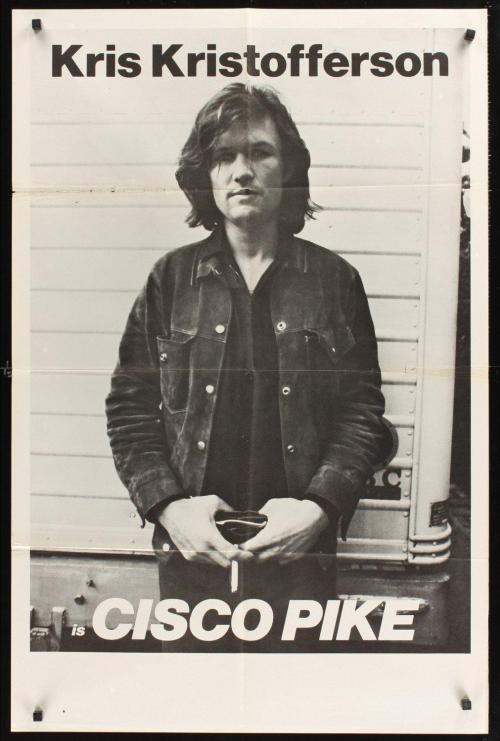
Cisco Pike (1971)

By Richard Winters

My Rating: 8 out of 10

4-Word Review: Blackmailed into dealing drugs.

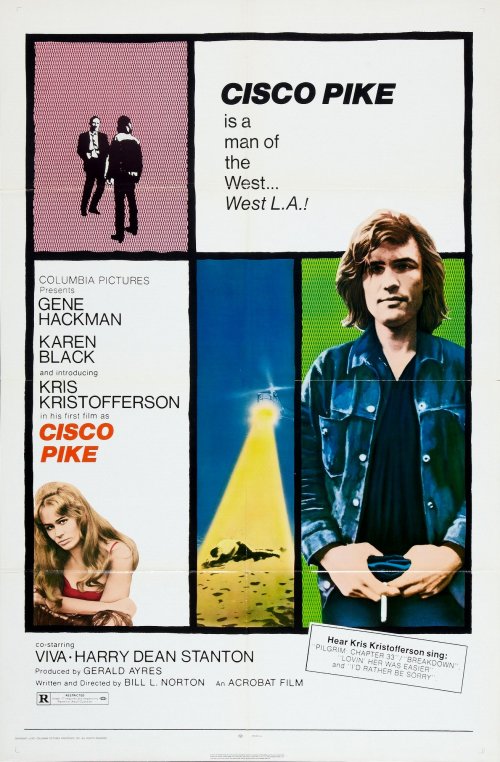
Cisco Pike (Kris Kristofferson) is a down-on-his-luck singer who once was playing to sell-out crowds, but finds his popularity declining and resorting to selling drugs to maintain a living, but under pressure from his girlfriend Sue (Karen Black) has stopped. Leo Holland (Gene Hackman) is a police detective looking to retire and needing enough money to do so. He steals a sizeable quantity of high-grade marijuana from a gang leader and then tells Cisco he must sell it within 59 hours while giving Leo $10,000 of the profits and Cisco can keep anything that he makes beyond that. At first Cisco resists knowing it will interfere with his relationship with Sue, but eventually gives in when Leo threatens to kill him unless he complies.

While this film has achieved a cult status in recent years critics at the time of its release were not kind. Many felt it promoted drug use just as the nation was starting its war on drugs, which caused the film to get a limited release and eventually bombed at the box office. Personally I found it to be a riveting look at the drug dealing culture and a fabulous directorial/screenwriting debut for Bill L. Norton the son of William W. Norton who was also a successful screenwriter.

What I liked most was the cinema vertite style that made it seem almost like a documentary. I enjoyed the camera following Cisco around in a non-stagy way and revealing the variety of people that he sold to with not all of them being hippies either, but also middle-aged suburbanites and even business executives. The film nicely shows how some of the encounters would be non-eventful while others could ended up being a trap and eventual police chase. The unpredictable quality of the transactions replicated the anxiety the dealers would face and how hyper observant they needed to be to the immediate environment around them.

Many films try to recreate things that the filmmakers themselves haven’t gone through, but here I got the feeling that the director and much of the cast had experienced the same situations as the characters which in-turn makes the viewer feel, when it’s over, that they’ve lived it too. The dialogue is excellent as well with a conversational style that doesn’t overexplain things and allows the viewer to read in a bit to what the characters are saying.

Kristofferson, who had been a singer up to that point, makes an outstanding acting debut and all the more impressive when you realize that he had no acting training before he was given the part. Many of his friends advised him not to take the role fearing his lack of experience would hurt the movie and cause him not to be given any more roles, but after reading the script he felt he could relate to the character by simply being honest with his emotions, which he does splendidly and it’s nice too seeing him in a rare appearance without any beard or mustache.

Hackman is excellent as well playing a character that was not in the original treatment, but added in later by Robert Towne when he wrote the revision. It’s unusual seeing him in such a relatively small part with large chunks of time, especially during the second act, where he’s not seen at all, but when he is onscreen he’s effective. It was fortunate that this was filmed just before he won the Academy Award for The French Connection as that turned him into leading man material and it’s unlikely that he would’ve accepted this part had it been produced any later.

Black is interesting, she usually always is, despite, like with Hackman, not having all that much screen time, but she makes the most of what she has particularly her physical reactions to Hackman when he invites himself into her apartment late at night and begins rambling on about his heart condition. Honorable mention too needs to go to Joy Bang, an attractive supporting actress during the early 70’s who later retired from show business to get into nursing. Her toothy smile always looks sexy, at least to me, and I loved when she gives her female companion, played by Viva, an open-mouth kiss while riding in a car and then turns around and gives Kristofferson, who is sitting on her other side, the same treatment.

Harry Dean Stanton, as an aging musician, doesn’t appear until near the end, but has some of the movie’s most profound moments particularly his exchange with Kristofferson were he laments about no longer being sexy enough for the stage while Kristofferson reminds him that it’s not his body that the music business wants, but his soul instead.

My Rating: 8 out of 10

Released: November 2, 1971

Runtime: 1 Hour 35 Minutes

Rated R

Director: Bill L. Norton

Studio: Columbia Pictures

Available: DVD

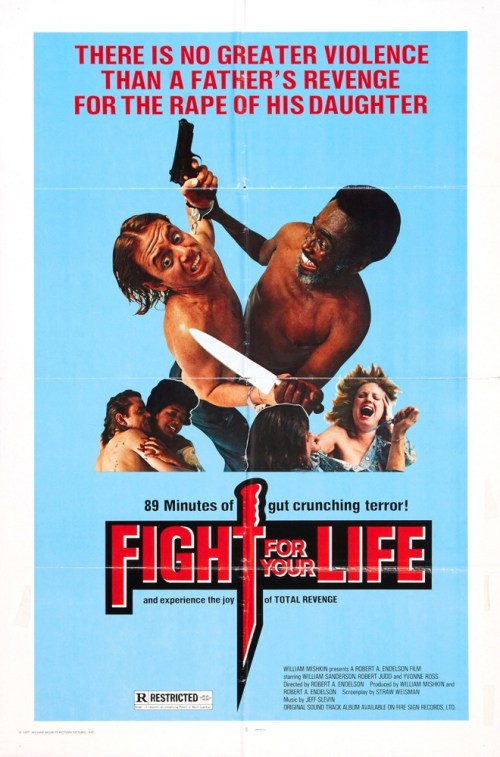
Fight for Your Life (1977)

By Richard Winters

My Rating: 4 out of 10

4-Word Review: Racist thugs terrorize family.

Three escaped convicts (William Sanderson, Daniel Faraldo, Peter Yoshida) find an isolated home in a woodsy are of upstate New York where they barge in on a black family headed by Reverend Turner (Robert Judd).  Jessie, the gang’s leader, is quite racist and uses the opportunity to spew out his hateful side forcing the home’s occupants, particularly the father, to do all sorts of humiliating things all to the amusement of the three men, but the family remains stoic determined to turn-the-tables on their captors the moment they get their chance.

The film could best be described as a variation on the Last House on the Left theme and in some ways does it much better. There’s none of the campy ‘comic relief’ humor here that almost ruined that one and the film is unrelentingly violent and grim. So many exploitation flicks from the 70’s would usually sell-out and never be half as provocative as advertised, but on that regard this movie delivers in ways that would still be considered jaw-dropping today and most likely not have any chance in this modern PC-era of getting filmed.

However, with that said, it’s still quite obnoxious and even repulsive to watch. There seems to be no other reason to have made this then to shock and appall and I’m genuinely surprised why anyone would’ve agreed to act in this particularly the black performers, who get forced to go through some truly tasteless and degrading acts.

The directing at times comes off as amateurish. It’s supposed to take place in the fall with leaves having turned color and almost fully off the trees, which is what we see when the thug’s car pulls up to a toll booth on a cloudy day and yet when the camera cuts to show the car leaving the toll booth the sky is now sunny and full green foliage on all of the trees. The music is also too loud, gets in the way of the action where natural ambience would’ve created more tension, and seems like a soundtrack better suited for a blaxploitation flick.

I wasn’t real happy with Sanderson’s presence either. Don’t get me wrong, he’s a gifted character actor, who’s best known for having played Larry in the ‘Newhart’ TV-show where he’d enter every scene by introducing himself as well as his two brothers named Darryl. In the comic realm as a backwoods hick his accent and talents are perfect, but here I could never take him seriously. His voice is too high pitched to be menacing and his wiry physique isn’t imposing. This might’ve been the intention at showing how without a gun he wasn’t much of man, but for the film to be truly scary there needed to be someone with a very intimidating look running the show.

Spoiler Alert!

The ending just about destroys what little potential this production had as it features an entire police force coming to the home, but instead of rescuing the occupants they choose to instead just stand outside and do nothing even as two of the women get raped. Supposedly this wasn’t for racist reasons, but more because they feared the victims might accidently get killed should they rush in to save them, but what’s the use fitting a police department with weapons and training if they’re going to be too timid to use it when they need to?

The idea that the black family would become aware that the police where outside, but stall them simply so they could enact their own revenge on the bad guys was too much of an overreach. The ending would’ve worked better, and been more believable, had the police not arrived at all and thus forcing the victims to use their own wits and ingenuity to overtake the brutes and then allowing their anger to spill over causing them to become far more vindictive than anyone could’ve imagined.

My Rating: 4 out of 10

Released: October 1, 1977

Runtime: 1 Hour 26 Minutes

Rated R

Director: Robert A. Endelson

Studio: William Mishkin Motion Pictures

Available: DVD, Amazon Video, YouTube

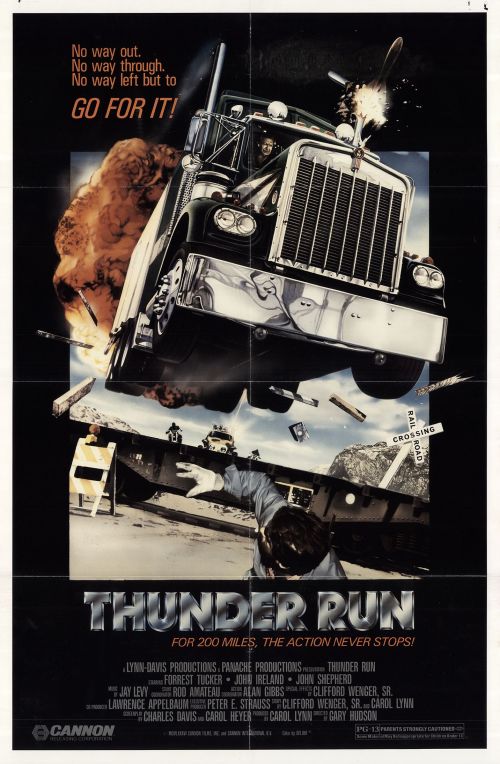
Thunder Run (1986)

By Richard Winters

My Rating: 3 out of 10

4-Word Review: Aging trucker hauls plutonium.

Charlie (Forrest Tucker) is a former trucker who spends his retirement working an old cobalt mine, but finds few prospects. He’s then given an offer by George (John Ireland) an old friend of his to haul some plutonium from Nevada to a top secret installation in Arizona. George warns Charlie that it could be dangerous as they’re terrorists after the cargo and willing to resort to violent means to steal it, but the $200,000 payout is too much for Charlie to refuse. With the help of his grandson Chris (John Shepherd) and his other teen friends the truck gets fitted with high tech gadgetry in order to fight off the bad guys when they attack.

The film starts out okay although it has all the signs of being a low budget direct-to-video 80’s venture complete with stock characters and generic music. The presence of Tucker, whose last movie this was, really helps. He’s the kind of actor who can give a performance that seems effortless and like he’s not acting at all just being himself and his persona is quite engaging allowing the viewer to become attached to him quite quickly and rooting him on in his challenge. There is some nifty stunt work too with my favorite moment being when a backhoe loader crushes a car that it literally runs right over and then also a trailer office. The scene has little to do with the main plot, but it’s still fun to see visually.

The film though starts to falter when it gets out onto the open-road. What should’ve been excited actually isn’t. There’s just too much high tech nonsense with rig equipped with stuff no other 18-wheeler has ever had. There’s very little intrigue at seeing the bad guys chase the truck when Tucker is able to just blow them all away with a press of a button. The truck seems almost indestructible as the villains aim a flame thrower right at the tires, which should’ve easily melted the rubber, but instead it doesn’t. The film is famous for a stunt that has the truck jumping over a train, but when it came back down onto the pavement it should’ve jostled the intricate parts of the rig in a way that would’ve most likely disabled it and the fact that the truck is able to continue on just fine starts to make the whole thing too ridiculous to be believed.

Having Tucker paired with Shepherd, who was 24 at the time, but looked more like he was only 18, is not interesting. Initially I thought this would allow the story to take advantage of the generation gap, but Shepherd is so squeaky clean and All-American that his presence allows for no nuance. I realize that in order to attract teen viewers a younger actor needed to be cast in a co-starring role, but the film would’ve been far better had Tucker been the sole driver, manning a rig that was just a regular truck without any of the techie jazz and forced to use his wits and cunning to fight off the terrorists instead of stuff dreamed up by a special effects wiz with an over active imagination.

My Rating: 3 out of 10

Released: May 30, 1986

Runtime: 1 Hour 30 Minutes

Rated PG-13

Director: Gary Hudson

Studio: Cannon Film Distributors

Available: DVD (Region 2), VHS

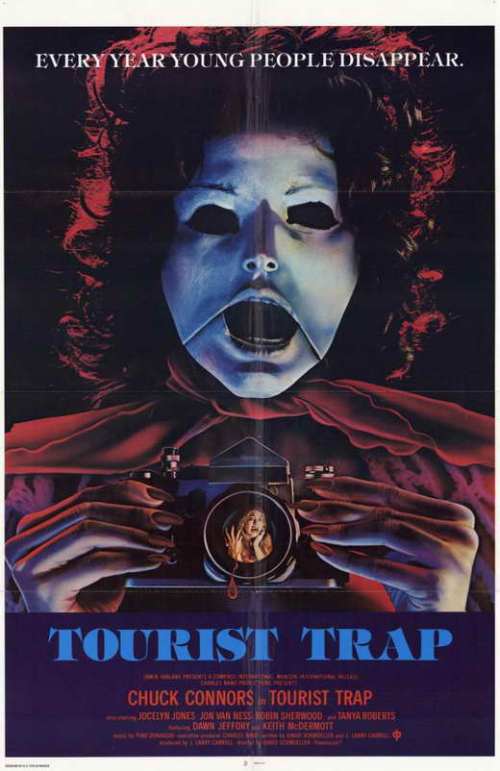
Tourist Trap (1979)

By Richard Winters

My Rating: 2 out of 10

4-Word Review: Mannequins come to life.

A group of college kids go driving through the countryside in two separate vehicles. When one of the vehicles breaks down, Woody (Keith McDermott), the driver, decides to go off looking for a replacement to his flat tire. He finds an abandoned gas station and when he enters the backroom gets attacked by mannequins and flying objects. Later the young adults in the other car also have their vehicle break down near an old museum that features wax dummies and an eccentric owner named Mr. Slausen (Chuck Connors). Soon the same fate that befell Woody starts to occur to them one-by-one.

With the critical success of director David Schmoeller’s first film, the movie short The Spider will Kill You, which will be reviewed tomorrow, he managed to find enough funding to expand the idea into a feature film. The film though did not do well when first released and sat in virtual obscurity until Stephen King lauded it in his book ‘Danse Macabre’, which brought new attention to it and eventually garnered it a strong cult following. Now, I know everyone has their own unique ideas of what’s scary, but honestly I can’t see what King found about this that was so great.

To me it comes off as just another cheesy low budget slasher flick with very little that is original or interesting. Having the bad guy able to use telekinetic powers I thought was dumb. Why would this backwoods hillbilly be able to harness special powers that 99.9% of the rest of the world’s population doesn’t have? The original version of the script did not have the telekinetic powers present, but the filmmakers were forced to incorporate it at the behest of producer Charles Band, who refused to give the money for the project unless they did.

Chuck Connors, best known for his starring role in the TV-show ‘The Rifleman’, is a bit annoying and was the third choice for the role as the part had been offered to Jack Palance and then Gig Young first, both of whom would’ve been much better, but they turned it down. It’s not like Connors is necessarily bad, but he’s too campy and comes-off like just another tired rehashing of Ed Gein. The ultimate reveal of who the masked killer is offers no surprise at all and most if not all viewers will easily predict who it is long before you finally find out.

The cast of victims are boring too and I didn’t like the sexist undertones where the women, with the exception of the very end, never really fight back at all and almost seem to surrender to their fate and it’s only the men who show any gumption to escape and be aggressive. It would’ve been nice too had their been some nudity, as the females, particularly Tanya Roberts sporting a brunette hairstyle instead of her usual blonde one, look great. Most of these types of films would usually show some skin to help keep things interesting during the slow parts and when they all decided to go skinny dipping I was fully expecting this to happen, but instead you get nothing. Apparently Schmoeller, being a first time director, was too shy to ask them to remove their clothes, but it would’ve helped the film get the coveted R-rating as Schmoeller felt the PG-rating is what ultimately hurt it at the box office.

The only time things gets even slightly creepy is when the mannequins come to life, but that doesn’t happen enough. In retrospect the Mr. Slausen character should’ve been scrapped completely and instead featured a surreal storyline where the college kids find themselves trapped inside a warehouse filled with animated mannequins and forced to single-handedly battle them one-by-one in order to escape.

My Rating: 2 out of 10

Released: March 16, 1979

Runtime: 1 Hour 30 Minutes

Rated PG

Director: David Schmoeller

Studio: Compass International Pictures

Available: DVD, Blu-ray, Amazon Video

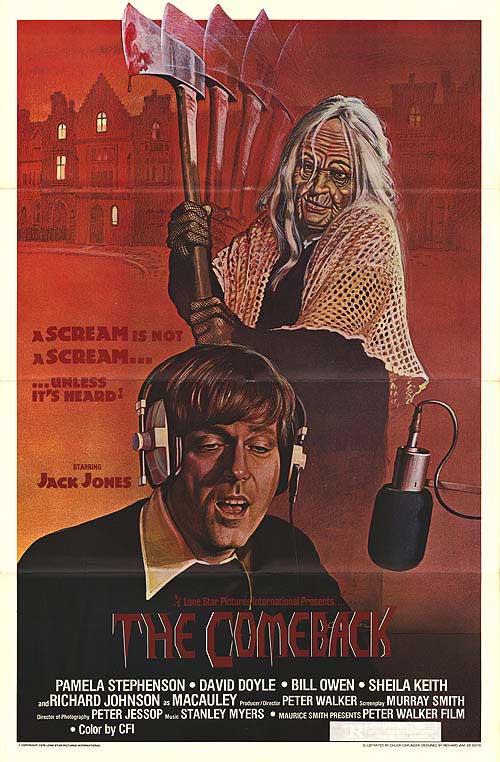
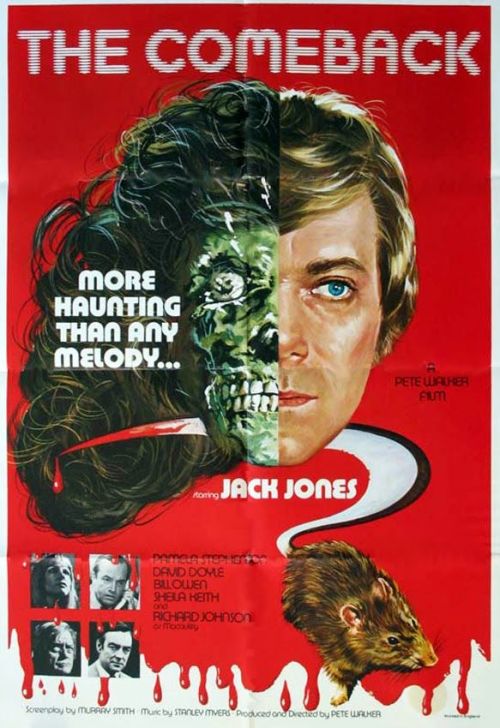
The Comeback (1978)

By Richard Winters

My Rating: 6 out of 10

4-Word Review: Singer hears weird noises.

Nick Cooper (Jack Jones) is a successful singer trying to revive his career after a 6-year hiatus. He travels to London to work on a new album under the guidance of his manager Webster (David Doyle), where the two share a hot-and-cold business relationship. Meanwhile his ex-wife Gail (Holly Palance) goes to their former apartment to collect her things, but is attacked by someone dressed as an old lady and brutally killed. After the murder Nick begins to hear noises at the mansion he is staying in that is owned by an older couple (Bill Owen, Sheila Keith) in which he hears the sound of a woman crying, but can’t detect where it is coming from.

This is another Pete Walker production who has in recent years received a strong cult following for the long line of British horror films that he directed during the 70’s and early 80’s before leaving the profession in order to start up a business where he bought and refurbished old movie theaters. While I’m not a big fan of some of his early work, which seemed kind of hooky, I felt this horror outing managed to deliver for the most part.

What impressed me most was the brutality of the murder where Gail not only gets stabbed many times, but has her hand cut off, which goes flying down the stairs. This was in the era of the Video Nasties, where the British government was banning all sorts of horror films brought in from other countries, so I was surprised why this one got a pass. What made it even more gruesome is that the camera keeps cutting back to the dead body at different intervals where the viewer vividly sees the decaying process. It starts by showing a close-up of the dried blood that covers the victim’s face, real blood was used that had been donated from a local hospital, then later on it cuts back to show maggots’ inside her eye sockets and mouth  and eventually even rats eating away at her face.

Having singer Jack Jones, who’s best known for crooning the theme song from the TV-show ‘The Love Boat’, cast in the lead seemed an odd choice. Apparently Walker was determined to get a singer for the part and first approached Cat Stevens and then Ringo Starr who both declined, so he had to settle for Jones, who isn’t bad. It’s refreshing to see a protagonist in a horror flick that isn’t a teen or college aged and instead in his 40’s, but since there is an element of teen idol worship in the story it would’ve made more sense having a younger singer cast that would’ve appealed more to the youth of the day.

David Doyle, best known for playing Bosley in the TV-show ‘Charlie’s Angels’, is surprisingly effective too and given a big role. Usually he would be relegated to small supporting parts in comical films, but here does well in a dramatic one and even seen at point putting on women’s make-up and wearing a dress, but the film never follows-up with this potential story thread, but should’ve.

The murders aren’t too prevalent, there’s only two and spread far apart, but they’re gory enough to leave a strong impression. The story moves a bit too slowly and while there is tension at times it’s not consistent. The wrap-up though is a complete surprise and pretty much comes out of nowhere, but I didn’t mind.

Spoiler Alert!

While the script is satisfactory there were a couple of moments that didn’t make much sense. One has Nick returning to the mansion after he’s seen the decapitated head of his ex-wife in a box there and tormented each night by her cries and screams, which is enough to send him to the mental hospital for awhile. If it were me I’d never go back to that place again and yet Nick does and just casually turns up the music on his radio when he again starts hearing the ghostly cries instead freaking out like anyone else would’ve. The scene where he takes an ax out of a victim’s body, who had been killed by someone else, and then is seen holding it over the dead body as someone else enters the room, made me believe he was going to be accused of committing the murder, but it doesn’t work that way, but probably should’ve.

Alternate Title: Encore

My Rating: 6 out of 10

Released: June 16, 1978

Runtime: 1 Hour 33 Minutes

Rated R

Director: Pete Walker

Studio: Enterprise Pictures Limited 

Available: DVD, Blu-ray, Amazon Video

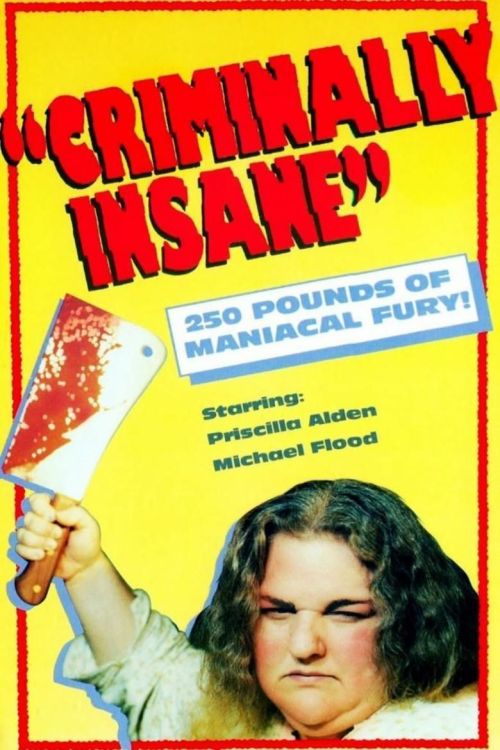
Criminally Insane (1975)

By Richard Winters

My Rating: 6 out of 10

4-Word Review: She has to eat.

Ethel (Priscilla Alden) suffers from a eating disorder that has caused her to gain a massive amount of weight. After being sent to a mental hospital she is eventually released into the care of her grandmother (Jane Lambert) with strict orders to keep Ethel away from food. However, her grandmother’s attempts to lock-up the food only gets Ethel hungrier to the point that she goes on the attack and kills her grandma with a knife and then hides her body in an upstairs room. Rosalie (Lisa Farros), Ethel’s sister, shows up and brings along her boyfriend (Michael Flood), but they start to smell the body decay and threaten to investigate what is causing it, so Ethel continues her murder spree in order to hide her secret and have the ability to eat as much as she wants.

These days if even just one person gets offended by something that they see in a movie the filmmakers are obligated to go down on their knees and beg forgiveness while in the 70’s director’s were scurrying to find the next taboo that they could topple. Not only were they unconcerned if they offended anyone, but actually relished the prospect and this movie in many ways goes even further with the shocks than the others. The result, despite the vulgarities, is quite funny and I found myself laughing-out-loud at more than a few places.

The gore is effective too. This was filmed in the Spring of 1973 long before the slasher genre was a thing making this into what’s called a prototype slasher, but the results are the same. In fact I’d say this thing is even gorier than the horror films that play-it straight and I liked the special effects showing the bodies decaying. The second-half also gets rather disturbing including scenes of one victim with a crushed skull still alive enough to try and crawl away while Ethel stands over him and laughs. She even sleeps with her victims, eats in front of them and ultimately does even worse. If you watch this thing for the sick, twisted content you should not be disappointed.

The extremely low budget does create issues though including way too much choppy editing that mainly occurs at the beginning as well as moments where the actors voice is not in sync with their lips. However, Alden’s excellent performance helps and I liked how everything gets filmed in this snazzy house in a nice, sunny neighborhood of San Francisco showing how behind-closed-doors bad things can happen anywhere even in the nice neighborhoods.

In 1987 writer/director Nick Millard and star Alden reteamed for a sequel titled Criminally Insane 2, but this reused a great deal of footage from the first film and was universally panned. Then in 2013 a new director did a remake of this film, titled Crazy Fat Ethel, with a new actress playing the part of Ethel since Alden had already died by that time. That film got shelved for many years when the producer inexplicably died during the production, but eventually it got released in 2016 to genuinely favorable reviews.

My Rating: 6 out of 10

Released: July 12, 1975

Runtime: 1 Hour 1 Minute

Rated R

Director: Nick Millard

Studio: I.R.M.I. Films

Available: DVD, Amazon Video